In the late 1960s, Marvel Comics began to truly carve out the cosmic corner of its universe. With the Fantastic Four Galactus Trilogy, Stan Lee and Jack Kirby shifted the scope of the Marvel Universe beyond Earth-based villains and into the vastness of space. With imaginations running wild, Lee and Kirby–with the Kree hero Mar-Vell at the center–created entire civilizations complete with complex histories and mythologies all their own.
For 15 years, Captain Marvel led the publishing house’s charge into space, introducing dozens of characters, many of whom became major players in their own right. Following 1982’s The Death of Captain Marvel, Cosmic stories continued–mostly via the mind of Jim Starlin–with characters such as Thanos, Adam Warlock and the Silver Surfer taking center stage. Starlin‘s spin strayed a bit from the traditional hero-vs.-villain dynamic, crafting a complex, almost philosophical, and ultimately symbiotic relationship between Thanos and Warlock.
In 2006, a new era of Cosmic story telling began, one that may ultimately be counted among the House of Ideas finest hours. Primarily helmed by writers Dan Abnett and Andy Lanning, Marvel kicked off what is generally considered to be a five-part epic story. Annihilation, Annihilation: Conquest, War of Kings, Realm of Kings and The Thanos Imperative formed a continuous saga that re-established and redefined the Guardians of the Galaxy, Inhumans, Nova Corps, and other major cosmic players while elevating Peter Quill and Richard Rider to A-listers.

While that’s not intended to be a comprehensive history of Marvel’s Cosmic continuity, it’s certainly the highlights. Though Marvel has never abandoned its Cosmic pursuits, space epics aren’t for everyone, nor can everyone write them well enough to appeal to the masses. Arguably, the biggest issue facing Marvel Comics has been its struggle to consistently leverage the legacy of Mar-Vell to sell Cosmic stories.
Primarily due to Mar-Vell’s definitive, respected death and the subsequent proliferation of his title and power set among other characters, an overt set of challenges have complicated Marvel’s own efforts. So, for every Annihilation, there’s an Empyre, which, once again, attempted to lean into the legacy of Mar-Vell to make space fun again…and fell short once again.
From those ashes came Jonathan Hickman‘s Imperial, which circumvents the half-hearted attempts to recognize Mar-Vell’s importance, ultimately placing his true successor back in his rightful place as Marvel’s Cosmic champion.
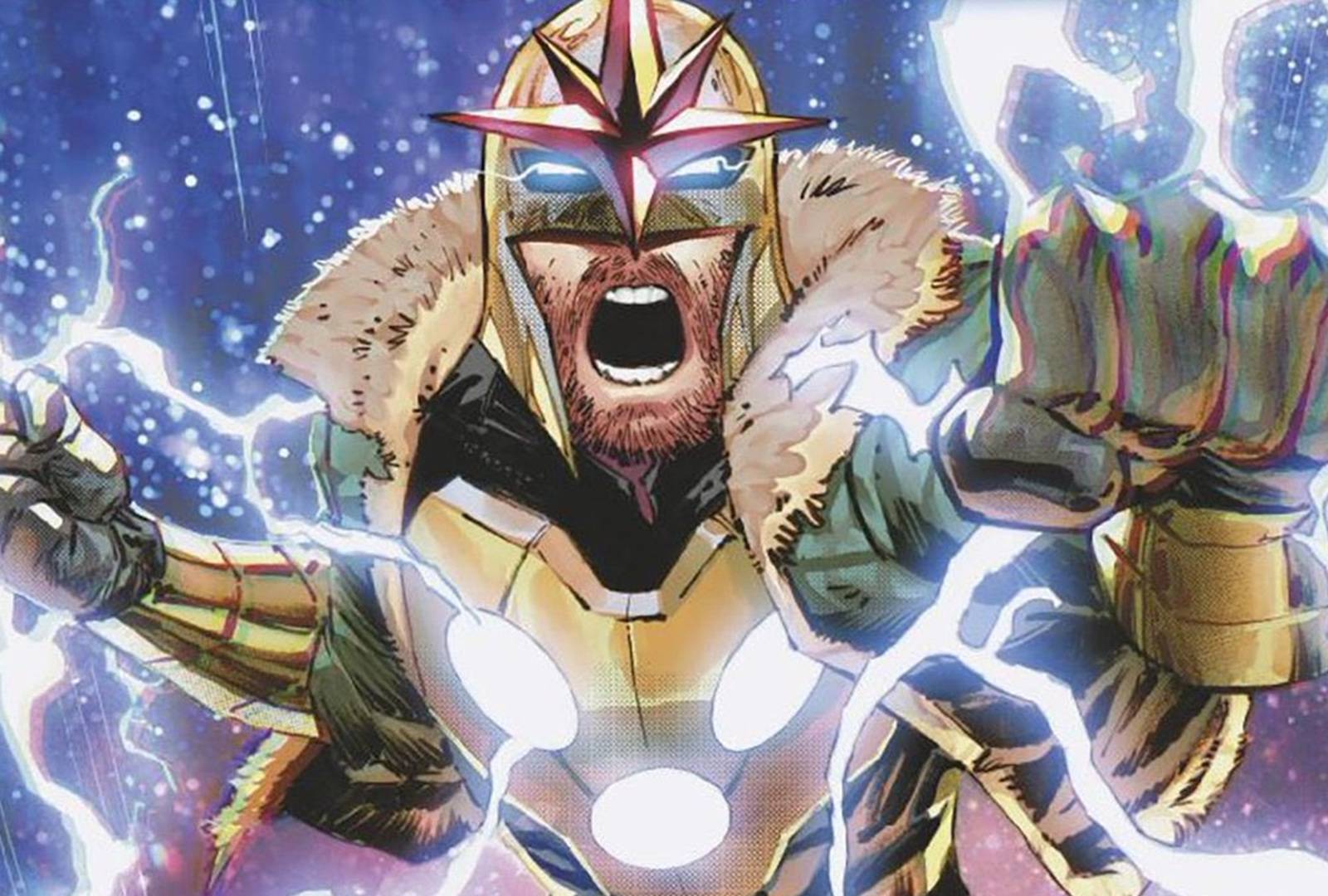
Despite its efforts to make Quasar, Silver Surfer, Star-Lord and even Mar-Vell’s own offspring the next Cosmic hero, Marvel has never done better then Richard Rider and the last-reamining Nova is front-and-center again, not only headlining his own solo series since 2017.
Under Jed MacKay, who has been perfecting his craft since 2011, Richard Rider resumes his rightful throne as the heir to Mar-Vell in Nova: Centurion #1, which sees the last remaining Nova set sail on what looks to be a stellar adventure willing to delve into the publishing house’s deep Cosmic legacy.
The issue pulls no punches, boldly boasting Rider’s own bequest as not only Nova Prime but Marvel Comics’ Cosmic Prime. Rider–reciting his own resume while, once again, rolling the dice–showcases his wide-range of heroic characteristics, which inarguably allows him to stand beside Steve Rogers and Thor as the most noble heroes to ever grace the pages of Marvel Comics. It’s only one issue but ’nuff said: MacKay gets right to the core of Rider, allowing him to shine like the Supernova he is.

With Imperial, Hickman did as he does, resetting the board by cleverly crafting a story from a corner where nobody was looking. That story resulted in a new Cosmic order in which Rider found himself on the outside looking in…and that’s always where the man has done his best work. Nova: Centurion #1 picks up with Rider–the last Nova–smartly using the terrors of space against it to save a cruise vessel before revealing the dire nature of his circumstances. And before you know it, MacKay‘s alchemical first issue pays homage to prior iterations of the Cosmic glory days, pairing Rider with the hedonistic Starlin-era scoundrel Pip the Troll while bringing Annihilation-era sideckick-turned-space bandit Cammi back into the fold as a mystery surrounding the Hickman-era X-Men precious metal mysterium points Nova in the direction of one of his old foes.
All any reader can glean from a new #1 is a glimmer of hope that the series is in good hands and on the right track. MacKay‘s Nova Centurion #1 deftly blends what’s probably nostalgia, though it might be too obscure for many readers to notice, with the best parts of modern Marvel to put the Human Rocket back in the driver’s seat and promise an adventure worth a second chapter.