Author: Charles Villanueva

  • REVIEW: BLACK WIDOW Is On The Cusp of MCU Greatness

    REVIEW: BLACK WIDOW Is On The Cusp of MCU Greatness

    There are minor spoilers in the review. So, only continue at your own risk if you are trying to avoid any context on plot points, characters, or the villain.


    If there’s one thing keeping Black Widow from sinking into the lower tier of MCU films, it’s because of Natasha Romanoff, who is undeniably one of the three most important characters in the cinematic universe. Tony Stark and Steve Rogers may be the Avengers’ brains and hearts respectively, but it’s Natasha’s humanity that makes up for the team’s soul. More than any other Avenger, she’s the most flawed, carrying a darkness in her heart that gives the character a perspective on life that no one else on the team has. It’s probably no surprise that Natasha is the only Avenger to have a close and personal relationship with all the members of the original team except for Thor. Natasha has seen, experienced, and occasionally, carried out the worst things humanity has to offer but it’s her ability to rise above that pain to turn that darkness into something heroic and meaningful that makes her one of the greatest Marvel characters yet. As the film’s own mantra goes: “Pain makes you stronger.” 

    Filling in the blanks of a past we’ve only heard anecdotes of, Black Widow sees Natasha Romanoff on the run from the authorities following the Avengers’ disastrous skirmish at the Leipzig Airport. She’s looking for a way out of the craziness but before she can do so, she’s pulled back into it by her foster sister, Yelena. Natasha learns that the program that turned her into a killer is still somehow up and running. It continues to turn girls into assassins like her, despite the fact she put an end to it a decade earlier. So Natasha and Yelena employ the help of their adoptive spy parents, Alexei and Melina, to put a stop to the Red Room’s schemes once and for all.


    The movie starts incredibly with a Black Widow history lesson I can only describe as a really good riff on The Americans, a show about a Russian family living a double life as KGB agents (which everyone should watch). Before the Red Room and the Avengers, there was Ohio in 1995, where a preteen Natasha spent 3 years living the life with her aforementioned family. It wasn’t a fancy life, mind you, but a life of comfort and love. Unfortunately, that life is brutally stripped away from Nat and Yelena when the secret spy identities of their parents are blown.

    The ensuing chase scene is nothing short of horrifying as it puts the audience right in the shoes of two children seeing their happiness and innocence be ripped apart before their very eyes. The image of two kids crying, confused out of their mind as to why their parents have gunshot wounds feels almost too intense for a Marvel movie but it hammers one point home: these kids will never be the same after this. This set-piece and the opening credits that follow make for one of the MCU’s most powerful prologues as it uses striking imagery to set the stage for its potent thematics surrounding abuse and violence against children.

    If the film’s opening has Marvel riffing on The Americans’ domestic Cold War intrigue, the succeeding set-pieces has Marvel tapping into the Bond/Mission Impossible sensibilities of the MCU’s world of espionage. Nat and Yelena are forced on this exhilarating goose chase through the streets of Budapest when they are ambushed by the Red Room. The entire sequence feels straight out of a Bond/Mission Impossible movie with its very European setting and crazy vehicular action. The same goes for that big snowy gulag prison breakout from the trailer. You can almost imagine Tom Cruise jumping off a helicopter into a fortress as an avalanche comes crashing down before him in real life. The action is engrossing enough that actually covers up a lot of the flimsier plot issues. 

    However, as fun as those scenes are, I’d be remiss if I didn’t say that I would have preferred them to dial up all the Bond or Mission Impossible riffs a lot more. More over-the-top equipment and spycraft; the MCU is weird enough to allow it. OT Fagbenle’s Mason doesn’t get to do much in this film despite being their tech guy and a sequence like that gulag breakout feels like the perfect way to utilize him as the Q/Benji Dunn analog. It’s a movie about a family of spies! Make it feel like a spy ensemble.


    But thrilling action scenes mean nothing at the end of the characters in them aren’t engaging and Black Widow has some great characters. Florence Pugh, David Harbour, and Rachel Weisz make up a wildly memorable ensemble as Natasha’s foster family of spies. They bicker, nag, hurt one another but intimately share a deep trust that feels compelling and never corny. The pitch-perfect chemistry they all have serves as the foundation for the film’s ideas of family, which I’ve always felt the Avengers films only gave us in mere doses. When this movie talks about family, it means it. 

    Individually, the three newcomers make for the best new additions the MCU has seen since maybe Thor: Ragnarok. David Harbour is Alexei Shostakov, an out-of-commission superhero who can’t stop reliving his glory days. He’s brash, dumb, lumbering, and egotistical but he’s got dad-like silliness to him that softens his rough edges. Harbour leans hard on his patriarchal role and really feels like a father to these kids at certain points. The character is, unfortunately, the butt of trite overweight jokes but the actor’s cuddly charm makes it palatable.

    Rachel Weisz is so fun in this as a former Red Room scientist named Melina Vostokoff. She has all the mom trademarks checked but adds in this hilarious layer of friskiness to the role. Melina and Alexei genuinely feel like divorced parents about to fall in love again, much to the chagrin of their kids and Weisz’s spunk makes it a blast to see. But beyond the fun, she also taps into the character’s regret and loneliness. While on the surface a fun mom, Melina carries a lot of baggage in her heart and you feel it in the moments when she gets serious.

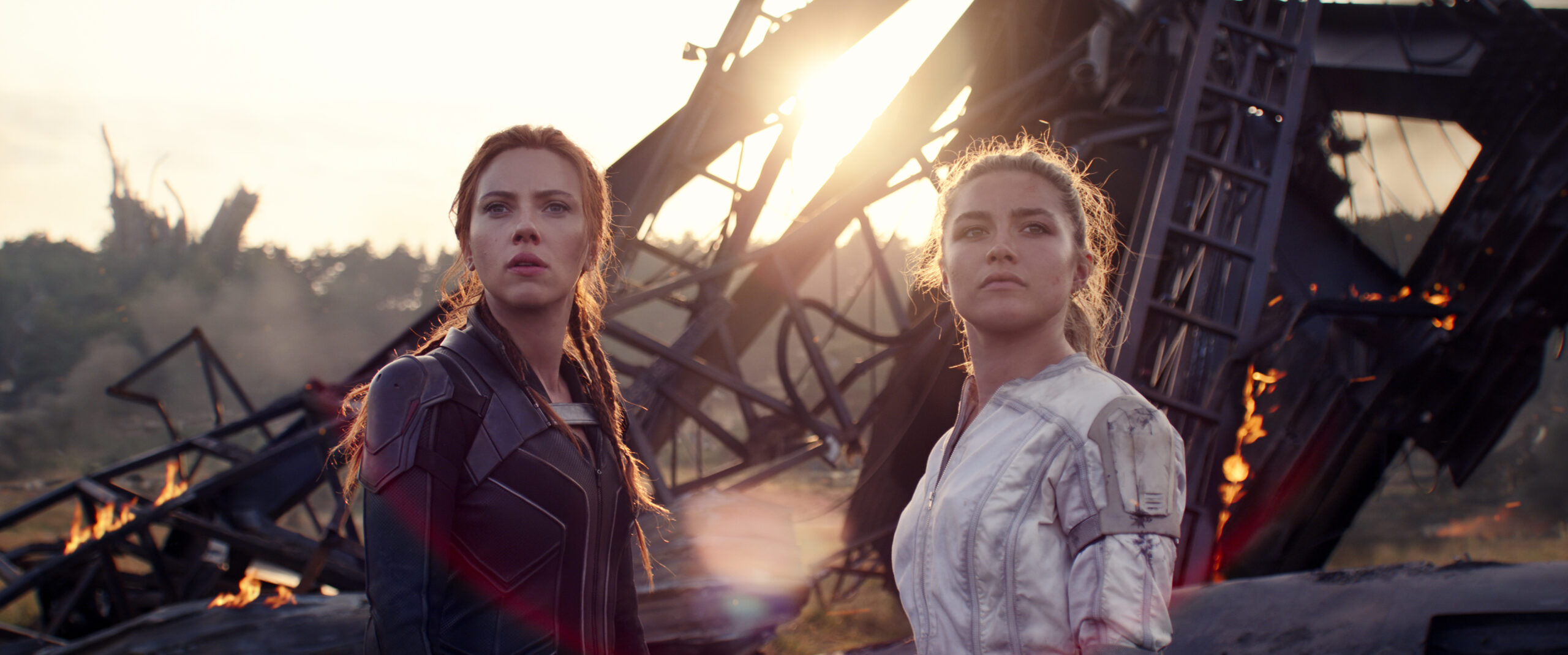
    I wasn’t convinced when word came about that Florence Pugh was to be the potential successor to the Black Widow mantle but this film proved me wrong real fast. Pugh is a godsend as Yelena Belova, bringing a childlike pathos to this world of spies. She’s deadly with a pencil in her hand but is likely to draw a cute picture with the same pencil she murdered you with. She’s cold and calculating with words but may also cry when you tease her. Pugh makes the balancing act look way too easy. As the runt of the family, Yelena has an unspoken reverence towards her famous Avenger sister but also a lot of deep angst as to how their lives panned out differently. Yelena’s dynamic with Natasha is contentious and prickly in just the right parts. You will wish that they were in more movies together.

    And then there’s Scarlett Johansson, who has truly become the best version of the character. Her decade-long performances as Natasha Romanoff have recontextualized the character in ways that deepen your perception of her appearances in the comics. The only other MCU actor I can say that for is Chris Evans, whose version of the Sentinel of Liberty is idealized in live-action. Now, I don’t think Black Widow is necessarily Johansson’s best go at the character – the two Captain America films are where you see her shape the character with her chops – but she is, unsurprisingly, great in this. The actress has embodied the character for so long now that she’s at a point where she can just autopilot it and give us the character’s greatest hits. Luckily, she doesn’t do that. There are some fun touches to Natasha in this film that we’ve never seen before and you can see how much fun Johansson had with the character this time.


    Black Widow feels like a roller coaster on descent for its first half. Exhilarating set pieces are attached at the hip and little momentum is lost. Every moment feels punctuated with some crazy ambush happening on screen. Its second half, weirdly enough, has almost no momentum and feels more like a roller coaster that gets stuck halfway just as you’re about to hit that crazy loop. You’re left hanging and waiting for things to pick up back to where it was. It’s a truly odd way to pace the film that it almost feels lacking at parts. Like some set pieces leading up to the climactic third act were missing.

    Despite its successes, the MCU for some reason, still can’t get over bad third acts. You have a handful of good ones such as the Doctor Strange and Civil War climax but a chunk of them are still egregiously bland. Black Widow is unfortunately part of that bad batch. There are some nice sleight-of-hand tricks here and there that make it exciting for a moment but it quickly becomes tedious as you realize how artless and ham-fisted the conceit comes together. Much of the third act is poorly staged, plotted, and executed.

    The entire premise of what the team sets out to do against the big bad Dreykov, frankly, sucks and is totally uninspired. For one, there’s no ticking clock which, in turn, shortchanges the premise and stakes, making everything feel inert and without urgency. A character is forced to do something boneheaded to give the mission some tension but ends up feeling like a plot hole more than anything. The big climax also doesn’t give the main heroes anything exciting to do. Red Guardian is just kind of there, Yelena strolls through a bunch of corridors, and Melina hacks a computer. That’s boring! These are super spies infiltrating an evil lair filled with a dozen more evil super spies. Why is there nothing interesting going on?

    Bad third acts don’t always come with bad villains but Black Widow comes with a doozy in the form of General Dreykov, who is the latest in a long line of boring MCU baddies. Dreykov is the guy behind the Red Room and is essentially responsible for bringing Natasha, her family, and all the Widows into this violent world. He is, in all respects, evil incarnate: a trafficker with zero regard for human life. He may even give Thanos a run for his money in the MCU’s Worst Dad race.

    However, Dreykov being evil isn’t what makes him wack. Countless movie villains are truly evil that is engaging to watch on screen (Anton Chigurh from No Country For Old Men, is an all-timer). Writing in a tragic origin isn’t the way to go either, as nothing is redeeming in regards to human traffickers no matter their backstory. The problem is that he’s played awfully one-note by a grumbling Ray Winstone, with a kind of pathetic anger that old man has when his viagra doesn’t work. The movie has big Bond energy so why not make a Bond character out of Dreykov? Make him go broader and kooky. Give him some distinction beyond his grumbles. He has the craziest evil lair that would make any Bond villain jealous and an army of deadly assassins at his disposal. There’s no need to play the character straight. He can be the evilest character in the MCU but be still entertaining to watch.


    But enough about Dreykov as he’s not really the villain we all paid to see. We’re all here for Taskmaster, who is inarguably one of the most exciting villains the MCU has ever attempted to put on screen. The trailers did a tremendous job of selling the character’s gimmick of being able to mimic any single action in real-time. It’s an ability that has stumped way too many Marvel heroes in the comics and the mere thought of seeing it in live-action was exciting to just think about. If the Winter Soldier highway fight blew everyone away, what’s Taskmaster going to be like in live-action?

    The answer is: pretty underwhelming, specifically in the ways the character is underused in the film.  The direction they take with the character is actually pretty exciting. I won’t spoil it as it has been the big talking point since they chose to keep the character’s identity a complete mystery but it is the kind of reimagining that completely feels fresh and perfect for the MCU, albeit somewhat unexplored. The problem with Taskmaster is that they don’t give the character that much to do. Taskmaster shows up to fight in all the trailer scenes and then some. The trailers give away roughly 70% of the character’s big action beats and leave almost nothing exciting for us to discover with the exception being the character’s identity. Mind you, this is the comic fan in me complaining. The character’s mileage for some comic fans may vary but I reckon a huge part of the populace won’t mind.
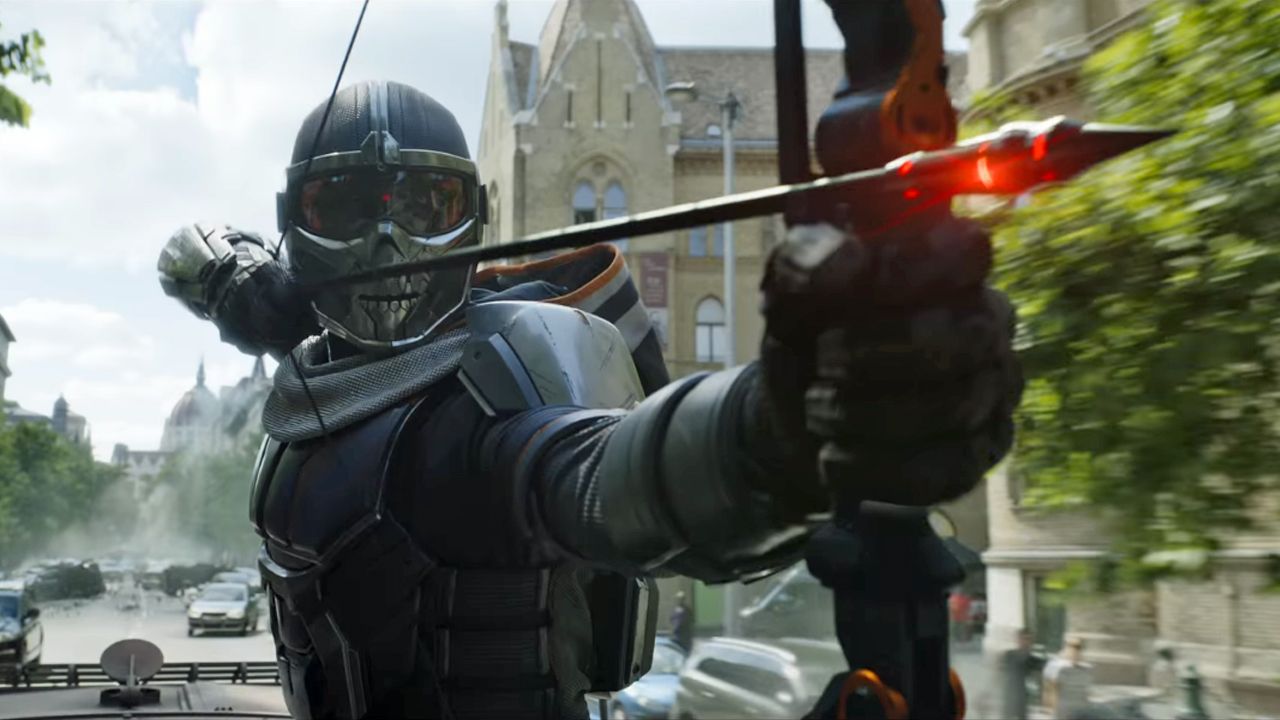
     

    Spoiler zu Bösewicht Taskmaster in "Black Widow": Hat sich ein Star (schon wieder) verplappert? - Kino News - FILMSTARTS.de


    That the character doesn’t feel like a cerebral fighter only exacerbates the frustrating lack of action. In the comics, Taskmaster’s whole schtick is that he can read, predict, and counter any move his opponent makes, making him not only a complete physical threat but a mental one. He’s a supercomputer that can kick your ass. In the fighting game community, we call his schtick downloading; the instance of fully understanding and predicting (or downloading) your opponent’s game plan. That idea is lost in this film, as it renders Taskmaster as somewhat of a computer but one that doesn’t need to be understood or as I put it, downloaded. The character is treated like a fighter simply a few notches above Natasha but one that doesn’t require a whole new set of skills to beat. The combat isn’t bad, by any stretch, but the way it lacks feels like a disservice to a character who is known for kicking everyone’s ass at an impossible level. Here you’ll see Taskmaster mimic some of Natasha’s moves here and there but it’s a footnote. There’s no sense of awe, struggle, or even tension in overcoming the character. I’m convinced Natasha had a harder time fighting Bucky.

    Now, Black Widow is not a bad film per se but it’s also not a great one. What the movie gets right is full of promise but what if whiffs on feels frustrating. If you’re a glass-half-full kind of person, you can look at that as a positive as the film does have a solid foundation of great ideas. Cate Shortland successfully made a film that does the character’s legacy justice, with a honed-in cast that elevates the film’s themes on family, and a story expands the world in exciting ways. But if you’re a glass-half-empty kind of person like me, you may be dissatisfied at how the film falls short of being a great MCU movie, especially in the back half where the seams of the film come apart. The third act is painfully dull, the film’s flagship villain is criminally underused, and it doesn’t embrace its spy trappings as much as it should have. It’s a fine MCU movie but with just a stronger emphasis on blockbuster spy fun, a tighter third act, and a generous take on Taskmaster, Black Widow could have been a truly great one. Though there probably is a variant of this film in our multiverse where it’s one of the best modern spy films.
  • REVIEW: ‘Luca’ Feels Like Pixar’s First Studio Ghibli Film

    REVIEW: ‘Luca’ Feels Like Pixar’s First Studio Ghibli Film

    To say that Luca is Pixar’s best work to date feels trite given the brilliance of each film the company puts on a consistent level, which is unlike any other animation studio. I mean, last year saw the release of the beautifully gut-wrenching existential reflection that was Soul, which I absolutely adored. In the years before that, you had Coco, Inside Out, and The Incredibles sequel! If Pixar was a band, they’d probably be the Beatles during their studio years, where every single album was of note. We live in an age of Pixar films where there’s an argument to be made that each release is their best so there’s almost no point in proclaiming why Luca is the best when their next one might just surpass it.

    But with that said, it’s hard not to look at Luca as one of “those” Disney classics. The spirit of the film feels like a homage to the quaint stories of old that brim with wonder and awe. When I spoke to director Enrico Casarosa, he mentioned the huge influence Hayao Miyazaki and the Studio Ghibli films had on his own ideations of friendship and adolescence as he was making the film. And you can truly feel that emanate from Luca; the way the film captures the innocent gaze a child casts onto its world, the nostalgia invoked by a homely summer setting, and the conflict of having to conquer one’s fears. There’s an undeniable timelessness in Miyazaki‘s and Studio Ghibli’s work and Luca bats for the same feeling by painting the perfect time with you and your childhood friends.  There’s poignancy in simplicity and the film has that in earnest.

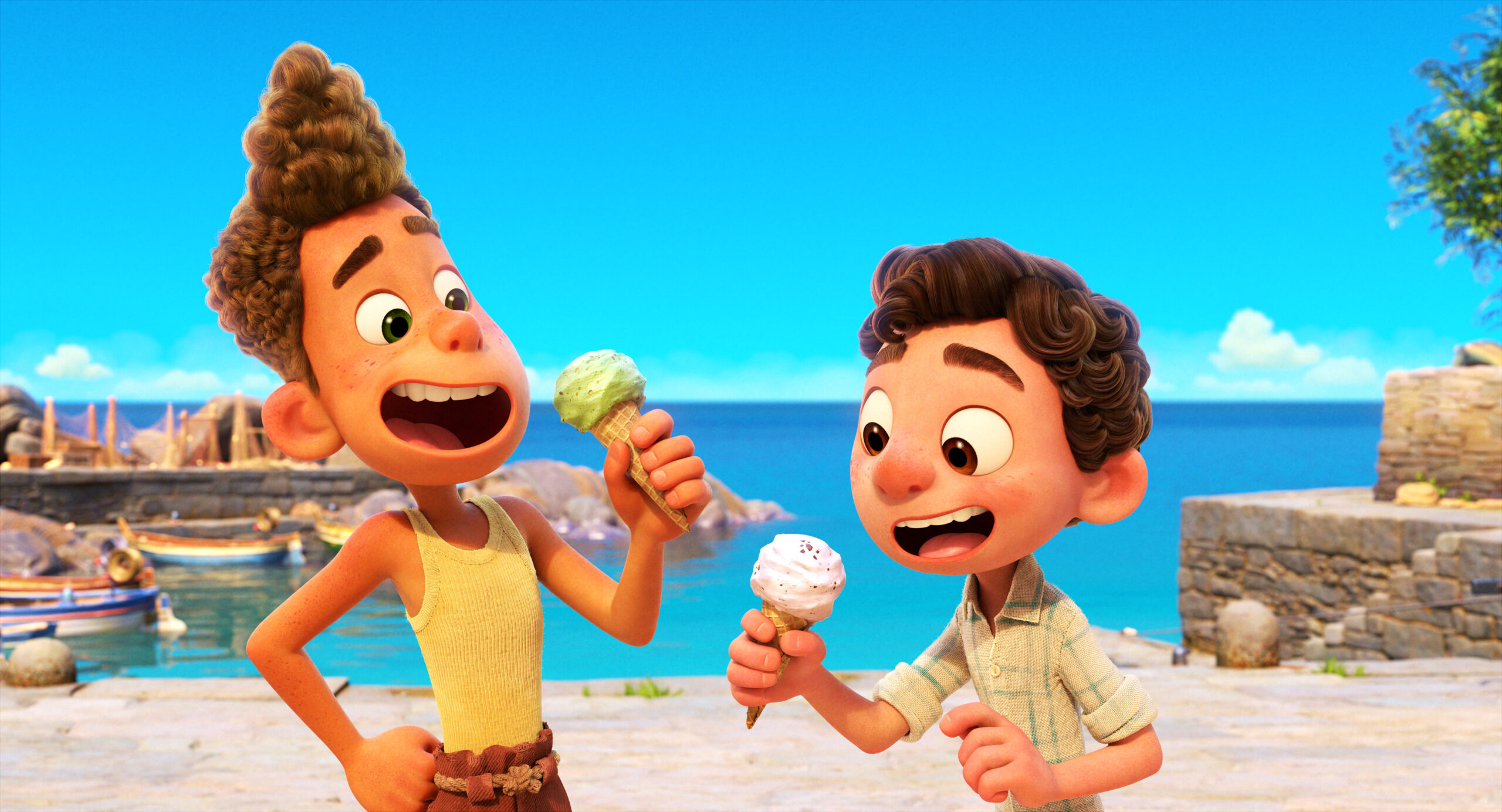
    Luca, the titular lead, is voiced by Jacob Tremblay and he’s a young sea monster who spends his days shepherding fish (fisherding?) on his family’s underwater farm while daydreaming of a more exciting life. He lives with his overbearing mother, absent-minded father, and carefree grandma. One day, his curiosity is piqued by life outside the ocean. Problem is, the surface world either means trouble or death for their kind because of fishermen hunting for sea monsters. As such, Luca spends his days cooped up under the stern rule of his mother.

    This all changes when he meets a troublemaker named Alberto, voiced by Shazam star Jack Dylan Grazer, who spends his days scavenging human belongings in the surface world (sea monsters, by the way, turn into humans outside of water). The two bond over a shared dream of one day owning a Vespa, which they believe to be the most beautiful invention known to man. Alberto, being an unruly kid, forces Luca to step outside of his comfort zone as they partake in shenanigans on a nearby remote island. This, of course, doesn’t sit well with Luca’s mom. 


    Watch Pixar's New Official Luca Trailer Deliver A Stunning Coming of Age story - The Illuminerdi


    From there on out, the story’s fabric unravels as a slice-of-life vignette across an Italian riviera. It takes place in a poor fishing village called Porto Rosso (an obvious reference to Porco Rosso). Luca and Alberto find themselves living their best days, learning the ropes of the surface world while keeping their monstrous side a secret. There, they meet a friend in Giulia, who helps them realize their dream of owning a Vespa by signing up for the local triathlon. This may all seem not exciting compared to Pixar films that have sprawling adventures into fantastical worlds but it’s in these unadorned, reserved vignettes of life where much of the film’s heart truly beats.

    Stand by Me was a movie that came to mind several times while watching Luca. Not because it had a bunch of kids cursing and smoking as they hiked to see a dead body, but for how it manages to capture the kinds of friendships a lot of people have during their youth. Alberto is the Chris Chambers here; a misfit that’s dismissive, reckless, protective, but deeply woeful while Luca, of course, is Gordie Lachance; wide-eyed, naive, and full of innocence. Their friendship feels tenuous at times, strained by the surface world they dream of living in but in spite of that, there’s a real undercurrent of love. And like in the Rob Reiner classic, the characters are inevitably faced with the hard choice of taking the first steps into maturity. “Silenzio, Bruno,” a mantra about conquering your fears is one you’ll often hear in the film and it’s one that ultimately crescendos into an absolutely beautiful finale that made my eyes bawl out.


    Tremblay and Grazer are phenomenal in this. They truly feel like the real-life counterparts of their characters. This was a movie that was wholly produced during COVID meaning the stars weren’t able to record in the same room as they normally would in these films. But their performances nonetheless feel so authentic and true. I don’t know if Grazer and Tremblay are good friends in real life but this movie convinces you they are. Grazer is fantastic in this and really carries that brazen vulnerability that makes Alberto such a resonant character. You can’t stand him at one point but then totally shed a tear for him later on. 

    The supporting characters are all so fun to watch too. Maya Rudolph and Jim Gaffigan voice the wacky sea monster parents of Luca. While they obviously play a critical emotional role in Luca’s journey, they really bring all of the laughs for a chunk of the film. Certain residents of Porto Rosso are also of note, specifically Giulia’s father Massimo and his cat Machiavelli, who feel like the most Ghibli-esque characters in the film. Even the film’s de facto bad guy/bully Ercole, while one-note at times, is entertaining to watch. 


    VIDEO: New Trailer for Pixar's "Luca", Coming to Disney+ June 18 - WDW News Today


    And then you have the obviously gorgeous visuals by the Pixar team. Their version of the Italian Riviera is breathtaking, albeit exaggerated to feel more like an impressionistic painting. Knowing Casarosa’s admiration for Miyazaki, I can’t help but imagine how even more spectacular this film would be as a hand-drawn film. Nonetheless, the film stands as a pure treat for the eyes and ears with its vibrant vistas and Dan Romer’s vintage-inspired Italian score. 

    With its big Studio Ghibli energy and old-fashioned tale of friendship and overcoming fears, Luca is a fresh kind of Pixar movie in and of itself. It may not have the existential ambition of Soul nor the superhero fun offered by the Incredibles but it has a heart unlike any other and that makes for the perfect feel-good movie to watch these days. 

  • EXCLUSIVE: ‘Luca’ Director Enrico Casarosa on Miyazaki, Morricone, and Myths

    EXCLUSIVE: ‘Luca’ Director Enrico Casarosa on Miyazaki, Morricone, and Myths

    It’s that time of the year again where Pixar unleashes another masterpiece onto the world. Their latest film, Luca drops this Friday on Disney+ for everyone to see and it’s one I adamantly recommend to anyone that loves the films of Studio Ghibli and Hayao Miyazaki. It’s a beautiful story about friendship and the growing pains of adolescence set in the Italian summer starring two sea creatures. Murphy’s Multiverse was fortunate enough to speak with the director of the film, Enrico Casarosa, who elaborated on some of the craft that went into making this emotional and stunning movie.

    As you will read in my review, the movie has big Miyazaki energy and Enrico Casarosa isn’t ashamed to admit it. We spoke to him about how his love for Miyazaki shaped the film and the magic of Studio Ghibli films.

    I just feel that Miyazaki does something magical with anything he touches. I grew up with his work. As a teenager in Italy, we would have all these Japanese cartoons and I realized a few years later, Future Boy Conan was one of the first TV series he really directed. 


    Having loved, observed, studied, and met him, showed him La Luna, he’s in my DNA. But what is the heart of what I wanted to capture is his ability to convey a child’s point of view. That was important for our movie. That point of view is made of imagination and this wondrous, curious gaze of nature. So this was really great because I could really have Luca experiencing an Italian town for the first time. Have him experience the wind, leaves, and waves for the first time. And that’s what Miyazaki is amazing at.

    Luca’s central characters are two sea creatures living on the coast of the Italian Riviera. The idea of making mythological creatures central to a very human story stemmed from the myths that surrounded Casarosa’s homeland and the rest of the world. He elaborated on what particular legends he drew inspiration from and how he formed his own version of the mythology in the process.

    The inspiration for some of the ideas of changelings comes from my love of Japanese and world folklore. The inaris (foxes) come to mind as they’re able to transform and look human. The selkies from Ireland as well. 


    But when you then do the research, you find out there’s a lot of wonderful strange stories in Liguria too because there’s fishermen. For example, St. George and the dragon are the symbol of Genoa. Almost everywhere you walk in Genoa, you will see images of someone spearing a dragon. And then there are dragons in San Fruttuoso. “Don’t go there because there’s a dragon.” We realized that some of these folktales were there so people wouldn’t go and fish there. 


    Some towns had really specific ones. There’s an octopus that saved this whole town by ringing this bell because the pirates were coming. So that’s how we connected all those things to the film.


    Lastly, we had to ask Casarosa of reports that legendary composer Ennio Morricone was Disney’s first choice to score the film before he passed.

    Yeah, for some reason, that info is online. That is not true. I mean, I love Ennio Morricone and his music. We can officially say here that it didn’t happen. But making the movie, we listened to Ennio Morricone, Nino Rota, and Nicola Piovani. Those are some of the key scores that inspired Dan Romer. Dan was my first choice. Beasts of the Southern Wild was the first time I noticed his beautiful music. 

    Luca comes out on Disney+ this Friday!

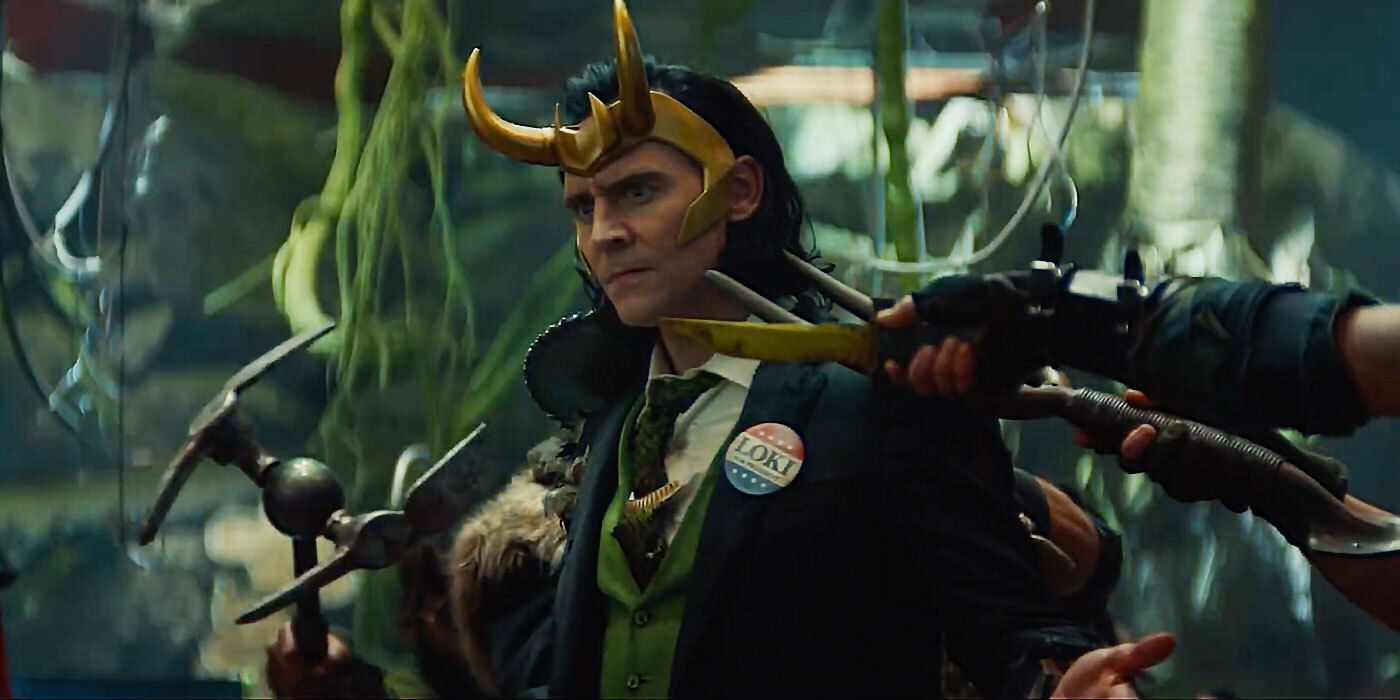
  • REVIEW: ‘Loki’ Breathes New Life Into The God of Mischief In The Best Ways

    REVIEW: ‘Loki’ Breathes New Life Into The God of Mischief In The Best Ways

    A year ago, I would’ve told you that Loki was in the bottom rung of all the stuff Marvel was slated to do. At the time of the show’s announcement in 2018, we already saw the character die thrice (!!!), only for him to show up in subsequent films beyond those deaths. “Just how many more times do we have to see Loki run the same game all over again?” said 2020 me who didn’t know better. But then the first trailer of the show came out during Disney’s Investors Day conference last December, which gave a convincing argument that this show was going to be weird and bonkers. Having now seen the first two episodes, I’ve never been happier to eat those words I uttered last year because the show absolutely destroys. 

    That’s because Kevin Feige, Michael Waldron, and Kate Herron have found new engaging ways to give more mileage to this decade-old MCU character. Mileage that will likely last the character more than many lifetimes in the MCU. This kind of longevity feels organic and untrodden for the God of Mischief himself. Not only that, the show introduces a concept that is so outrageous within the current confines of the MCU, that it almost breaks it in the best way possible. Everything you understand about the MCU will radically change after you watch these episodes. 

    The way the show treats the titular character is unlike that of what we’ve seen. While previous Loki appearances had the God of Mischief stopping at nothing in his pursuit of glory, the show exposes him for the jobber he truly is. In the world of wrestling, he’s the guy that has to lose to crown the new WWE champion. As the fates would have it, Loki isn’t destined to win; he’s born to lose. He’s only around to make people around look better and the show brilliantly forces him to come to terms with this harsh truth. For a character that’s been nothing but a sore loser and winner, there’s nothing more compelling than seeing him get humbled.

    This character turn, unsurprisingly, gives Tom Hiddleston more range for him to be the best version of Loki we’ve ever seen.  He gets to tap into that maliciousness we saw from the first Avengers film and the bumbling brattiness he gave the character in Thor: Ragnarok while bringing a new layer of weariness for the character. Hiddleston is absolutely on fire as this version of Loki. There are big emotional moments for the character in the first episode where he gets to really flex those acting chops. More than Chris Hemsworth and any other MCU star, Hiddleston might be the MCU’s greatest casting discovery to date. 

    What makes Hiddleston better this time around is that he has Owen Wilson to bounce off from. Wilson plays Mobius, an obscure character from the comics that works for the Time Variance Authority. Wilson is very much playing an Owen Wilson character here and I don’t mean that as a dig: Wilson’s quirks as an actor work so well against Hiddleston’s highbrow Shakespearean energy. You have Loki, whose thing is being grandiose and boisterous and then you have Mobius, who is just some dude trying to finish his 9-to-5 job. What’s also great about Mobius is that he’s one of the few in Loki’s orbit that is actually several steps ahead. This dynamic leads to some very fun interactions between the two; Loki is second fiddle next to Mobius and he can’t stand it. The two almost have a Jim-Dwight chemistry that almost seems unthinkable when you think about a character like Loki. Again, it goes back to the creators of this show finding engaging ways to keep you on board. People will adore the tandem these two have. 

    And then you have TVA, the most bizarre organization to make the MCU to date. Essentially, they are the timeline police. You stray from your predetermined path in the timeline and then they arrest you. The show does a fantastic job in explaining how they operate via an animated educational video akin to Jurassic Park. What intrigues me about the TVA is the larger implications the organization has for the MCU. There are some absolutely bonkers allusions to Secret Wars and Infinity Stones in the show. The TVA as the most powerful ruling order in the MCU’s plane of existence is going to lead to some crazy stuff moving forward. 

    Apart from being immensely powerful, what really makes the TVA such a bizarre organization is the way the whole thing is packaged. The set design is so striking; a mix between retro 70’s analog and old school sci-fi. Every nook and cranny of the TVA feels very lived-in. Every single thing about the set feels like the polar opposite from what we got in The Falcon and the Winter Soldier, where they literally had to use the same set over and over again. The people that inhabit the TVA rival those that live in Sakaar; just a bunch of totally lovable weirdos that steal each scene they’re in. 

    Visually, it’s the first Marvel Disney+ show to actually look truly cinematic. That’s not to say the two Marvel shows that came before this were visually bad. The VFX shots of those shows were astounding and even surpass some of the biggest movies. But beyond those expensive sequences, there are a chunk of scenes in Wandavision and, especially, The Falcon and the Winter Soldier that fall short from looking like a movie. As great as Sam’s big monologue was in the finale, that whole moment looked like an episode of Jessica Jones. Loki is the first one of the bunch to feel like a movie. 

    If WandaVision was Marvel’s attempt at doing an experimental sitcom and The Falcon and the Winter Soldier a return to their blockbuster form, Loki is them taking a stab at a Fincher-esque investigative crime thriller. You’ve probably heard of the premise by now: someone is causing all these problems in the sacred timeline and the TVA needs Loki’s help to hunt them down. The show gets the spirit of investigative thrillers correct.  It’s eerie and atmospheric at times. The investigative aspect feels very engaging. It’s not quite a whodunnit as the show is quick to give away who they’re after but the hows and whats within the confines of the TVA’s crazy world is what makes it interesting.

    The only thing I’m mixed on is how some of the mechanics of time travel are presented. Like Endgame, it’s simplified enough for you to buy it at face value until you actually start thinking of the nuances. Some of it will eat at audiences if they don’t ever clarify it. But the fact that the show is taking big swings in doing their own twist with time travel is pretty cool. The introduction of the Time Keepers results in the prevalent theme of predestination and fate; whether or not we’re actually in control of our decisions or if some cabal of time gods have it all planned out. It’s nothing we haven’t seen but when applied to a character like Loki, it becomes way more interesting to explore. The stuff they seed for his arc is gonna have some crazy payoffs by the time the finale hits. 

    Having seen only two episodes, it’s too early to definitively say where Loki stands among the Marvel shows. But if the rest of the season keeps up with what Episode 1 and 2 does, we might have the best one yet. Loki may not ever rule Midgard or Asgard but he may be poised to rule the Disney+ platform if all goes well. 


  • EXCLUSIVE: An Interview With The Creators Behind Disney’s New Dance Short Film, Us Again

    EXCLUSIVE: An Interview With The Creators Behind Disney’s New Dance Short Film, Us Again

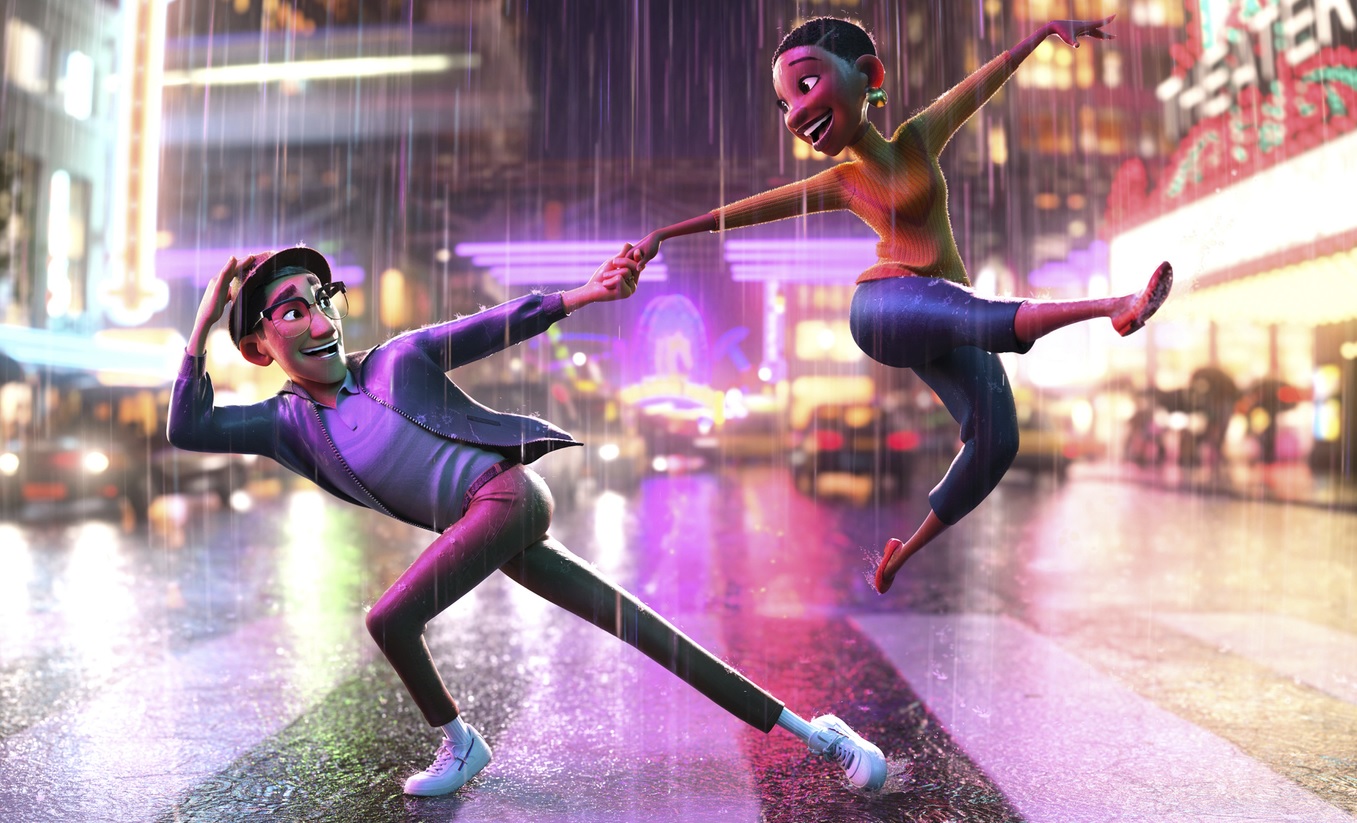
    Disney’s latest experimental short titled Us Again is now available to watch on the House of Mouse’s streaming service, Disney+. The short chronicles an aging couple dealing with the growing pains of growing old with a fun musical twist. Murphy’s Multiverse got to speak with the short film’s brilliant creators, director Zach Parrish, producer Brad Simonsen, composer Pinar Toprak, and world-renowned choreographers Keone and Mari Madrid, who were generous enough to share some behind-the-scenes details.

    Zach Parrish is no stranger to directing experimental shorts, having done one for Disney+ called Puddles that premiered last year in their Short Circuits series. We asked Zach how he came up with such a fun new concept with Us Again and he revealed how his mother played a huge part in his conceptualizing.

    It started from a very real place. Moving into my 30s and realizing that my body was getting old. Gray hairs and bad knees. I had this emotional feeling of wishing I was young again but then talking my mom who was in her 60s; she was talking about what she was going to do when she grew older. I realized I had my perspective backwards and I was looking at life in the wrong direction. That core emotional place led me to think about this fountain of youth story with the rain and how we could do this neon dance thing with the music. All of that came together fairly quickly early on. Having that core emotion that I responded to and all the visual ideas I had in my head, I needed to get it all out.

    Prior to directing his own short films, Zach cut his teeth working as an animator on a couple of Disney hits. Big Hero 6 was his first stint as a department head as the Head of Animation and he spoke about his experience in that film helped shape Us Again.

    Big Hero 6 was my first time running a department. So we had 95 animators on that film.  Managing your time and making sure that you’re very crystal clear on what the point is and what the core emotion is, I learned a ton. Don Hall, the director of that film was my mentor in the making of Us Again. I learned from him how to communicate that emotion and where I wasn’t being clear. 

    Us Again is Walt Disney Animation’s first theatrical short in 5 years as it was attached to Raya and the Last Dragon. All of us grew up watching these shorts attached to their iconic films so we had to ask producer Brad Simonsen the pressure they felt coming up with a short that could honor the huge legacy of Walt Disney Animation.

    When you’re dealing with a legacy like Walt Disney Animation, there’s always a desire to honor the tradition and history that the building and people bring. Having got to work with Zach Parrish in Big Hero 6, I really knew that if given the opportunity, he would make a beautiful movie. We supported him the right way and we brought on a team that was a yes-team that really wanted to make the movie better at all times.

    Best known for her music for billion-dollar IPs like Fortnite and Captain Marvel, Pinar Toprak was tasked with the job of crafting a contemporary score for Us Again. Given how epic and grand her scores generally are, we had to ask Pinar what it was like to compose such a modern soundtrack.

    That was Zach’s vision. We talked about what genre we were going to play with. Was it jazz? Was it more disco? But then funk and soul really fell into that sweet spot for us. I personally love funk and soul so much. It was really fun to create that because it’s not really that common for a composer to get asked, “Hey, go write a funk score.”

    You can’t have a proper dance film without amazing dancers. In comes world-renowned choreographers Keoni Madrid and Mari Madrid, who pretty much defined the film’s essence with their magnetic choreography. The couple’s dance resume is nothing short of impressive, having choreographed for huge stars like BTS and Justin Beiber. When asked about whether choreographing for pop culture’s most famous company was a challenge, they had this to say:

    Honestly, it wasn’t. Brad and Zach gave us all the tools to make sure we had all the context as possible. That’s rare. Not all projects offer that much information. We got an almost final version of the music early on. Once we had all those tools, it went back to, “Let’s do what we do. Tell stories through dance.” We don’t get to do that for all projects. But for this one, it had all the things we’re passionate about. Once you strip all the Disneyness and scale from it, it boils down to the work.


  • Square Enix Reportedly Developing ‘Guardians of the Galaxy’ Game

    Square Enix Reportedly Developing ‘Guardians of the Galaxy’ Game

    Square Enix made waves last year among superhero fans when the fabled gaming company that brought us classics like the Final Fantasy franchise published its first Marvel game, Avengers. Starring the most famous superhero IP on the planet, the game was unfortunately plagued by mixed reactions due to the early technical issues and the lack of endgame content. The game’s developer Crystal Dynamics has since made efforts to remedy some of these issues. But in spite of all the pushback the game has been getting, it seems that that isn’t deterring Square Enix from furthering their own Marvel IP, as gaming insider Jeff Grub is reporting that a Guardians of the Galaxy game is in the works.


    There’s no word on what a Guardians game could look like under Square Enix. However, word on street is that Eidos Montreal is the company developing it. We can only hope that they learned from the good and bad that came out of the Avengers rollout and end up with a really solid game. Like the Avengers, there’s so much to mine from that side of Marvel Comics. Even the films have barely scratched the surface of the full potential of Marvel’s cosmic universe. Having a game explore that definitely works on all fronts.

    Source: Jeff Grub’s YT via DisInsider

  • ‘CRUELLA’: Fun, Edgy, and Messy

    ‘CRUELLA’: Fun, Edgy, and Messy

    Disney’s choice to cash in on Cruella de Vil, arguably one of the most problematic villains in their library, and humanize her in an origin movie has always baffled me. Mainly because she’s out to harm animals. She reveled in the suffering of animals and was unashamed by the cruelty of her actions. For a company that is synonymous with the most popular animated critters in pop culture history, the choice to humanize Cruella was very questionable. But having seen the film and how they made everything work to their advantage, I can see somewhat see where their heads are at. 

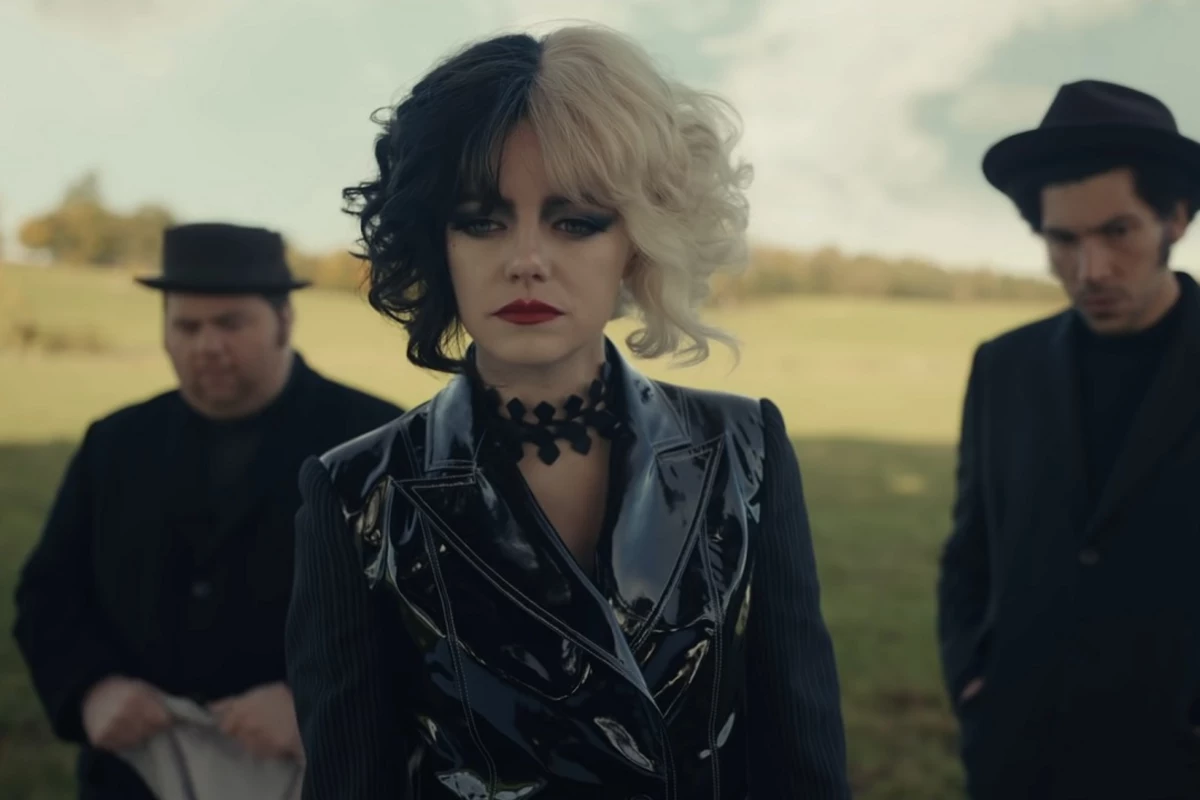
    Credit where it’s due, Disney did the assignment and rebuilt the character from the ground up. In classic retcon fashion, we learn that Cruella’s real name was actually Estella. Raised by a kind hapless woman, the young sweet girl develops a knack for defying the norm and personifies it as Cruella. Mom is quick to tell her to keep that mean alter-ego at bay So, she does not screw up her chances at getting good in life. But this doesn’t go well for Estella, as she quickly learns that the only way to survive in a cruel world is to give that cruelty back. Tragedy eventually befalls her mom and she is left to fend for herself in the streets of England. In those streets, she meets two of her closest allies, Jasper and Horace. 


    Cruella' Trailer: Emma Stone Plays Punk Rock Villain in Disney Remake - Variety


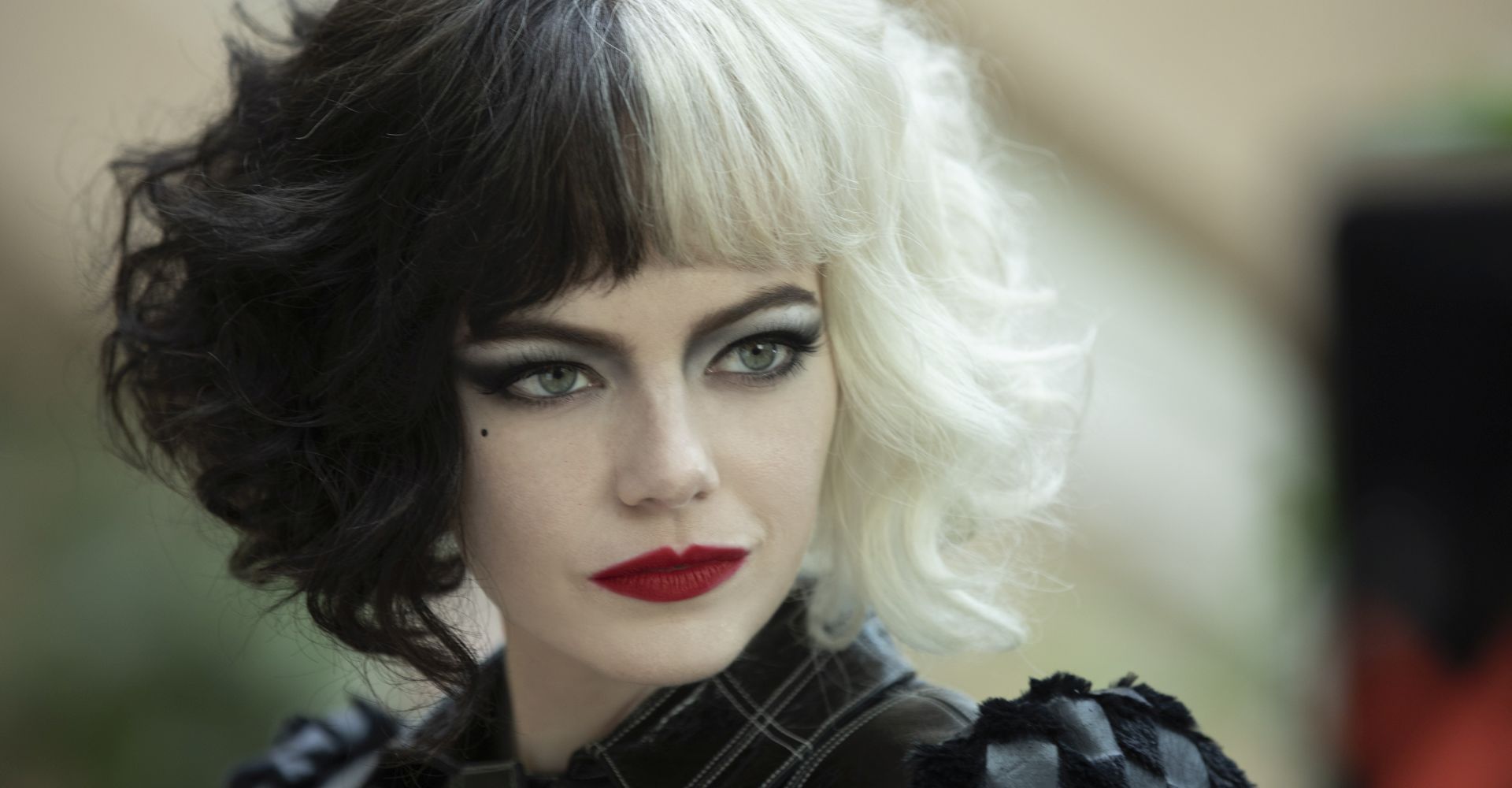
    Compared to all the other live-action adaptations Disney has ever done, Cruella might be the most fun. Part-fashion show, part-heist film, the movie has a cadence that’s been sorely missing from a villainous character piece like Maleficent. It has a distinct personality that you’ll never find in a movie like Lion King or Aladdin. For one, the movie has some actual edge, which is almost unheard of in a Disney flick. Even Maleficent, whose story and visuals have their darker moments, is still draped in a cloak of high fantasy. It makes some of that darkness distant for the viewer. But for Cruella, the edge feels palpable all thanks to its stylistic approach to a grounded cautionary tale. 

    Visually, there’s a sleekness to the film that further reinforces its style. Its visual language feels calculated and meticulous without losing its elegance nor its edge. Combine that with the absolutely stunning work of Mad Max: Fury Road costume designer, Jenny Beavan, it plays out like the most entertaining runway show in the best way possible. I mean, just take a look at that fiery ballroom costume unveiling in the trailer. Just imagine seeing moments and works of art like that throughout the film. The film will be the foundation of many cosplayers to come once COVID ends.

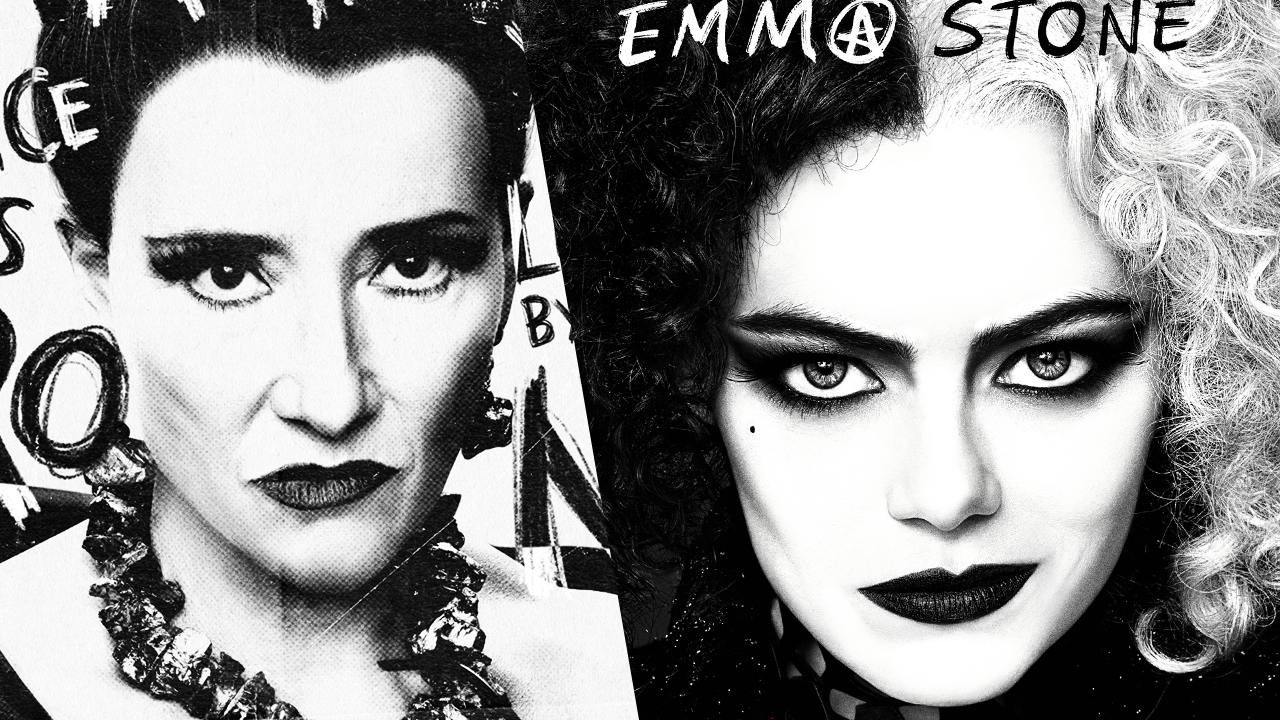
    Emma Stone has fun as the eponymous character. Her interpretation of Disney’s villain is a lot more complex and subdued than Close’s take which was a more devilish socialite than a tortured artist. As we get to see a pre-Cruella version of the character, there’s a lot more color in Stone’s palette. She flawlessly transforms with precision between the meek submissiveness that Estella carries and the rebellious ethos Cruella lives her life by. She’s a total blast to watch from start to finish. 

    Opposite Emma Stone is Emma Thompson, who plays a character called the Baroness She is a viciously mean-spirited fashion designer who the young girl takes up as a mentor. Thompson is fun to watch in the role because her stature as an on-screen legend gives gravitas to this original character. The downside is that she doesn’t really get to do much more than acting super snooty and mean, but for what it’s worth, her performance makes for a great foil for Stone’s Cruella. 


    How to Watch 'Cruella' + Everything We Know


    At the heart of the film are Cruella’s best friends Jasper and Horace, who are played by Joel Fry and Paul Walter Hauser. I’ll admit, it took me a while to accept Hauser playing a wholesome character after seeing him for years as these despicable people, but it grew on me as the film went on. Jasper and Horace get overhauled in a pretty big way here. Instead of them being just Cruella’s lackeys, they’re actually her friends. Joel Fry does the heavy lifting as the emotional foil to Stone’s Cruella. Together, the chemistry these three characters have is nothing short of endearing. 

    A glaring missed opportunity in the film is how it relegates Anita Darling to the sideline. That Anita becomes a non-character in the main part of the film despite her being introduced in an early yet definitive time of Estella’s life is a bummer. The characters don’t ever interact in a meaningful way. In a film exploring Cruella’s past, making Anita the anchor to a life she once recognized could have made for some interesting character work. 


    Cruella' Steals Dogs and Promises More Bad Things to Come in New Trailer for Disney's Villain Origin Story - Bloody Disgusting


    And then there’s the key task of handling Cruella’s reinvention. The rework is interesting as it departs from all the wickedness associated with the most infamous iteration of the character. For one, Cruella isn’t out to harm animals. In fact, she’s constantly surrounded by furry allies. The movie is quick to establish her fondness for dogs. She gets an adorable sidekick named Buddy and eventually, another furry friend in the form of Horace and Jasper’s dog, Wink. The movie does pay lip service to her tumultuous relationship with dalmatians but even by the end of the film, this version of Cruella ends up as her own thing in the best ways possible. I can’t imagine this version of Cruella ending up like Glenn Close‘s interpretation. I don’t like their choice to put heinous characters in a good light but the changes in Cruella are ones that I can get behind with. 

    The film’s biggest problem is that it is oftentimes at odds with what it wants to be and what it has to be. By design, the film is made up of varying tones that are constantly vying for control and it results in this haze that prevents it from being truly a great film. The film wants to be this edgy character study in the vein of nihilistic films like Joker but is also aware that it’s a Disney movie and has to have Disney-fied moments of wackiness. It doesn’t ever find a middle ground for these two things to mesh, resulting in a messy tone.

    And this movie gets really silly at times. The center plot of the movie has Estella interning for the Baroness while moonlighting as her nemesis in a totally silly Hannah Montana scheme. There are scenes of dogs wearing cute disguises and committing heists. Heck, there are some sequences that feel downright slapstick. Now, there’s nothing wrong with having wacky ideas but when those ideas are trying to engage the audience in a straight-faced way, it feels disjointed. Like, imagine watching The Three Stooges while a song by The Doors plays in the background. It takes you out of the scene and it just doesn’t feel cohesive.

    Luckily, with a great cast, diverse soundtrack, and stunning production, Cruella manages to bypass its own confusing DNA by delivering a palatable caper under the guise of a 101 Dalmatians spin-off. With a freshened nuanced take on the character, perhaps this is Disney’s attempt to better the character for a new generation of fans. 

  • The Emmas of ‘CRUELLA’ Dish on Their Upcoming Roles

    The Emmas of ‘CRUELLA’ Dish on Their Upcoming Roles

    Disney is no stranger to breathing new life into their classic animated films in the form of live-action ones. These films have destroyed the box office numerous times and garnered much acclaim from critics and fans alike. The latest entry from the House of Mouse might follow suit soon. A reimagining of the classic 101 Dalmations villain, Cruella DeVille, Cruella stars two of the biggest Emmas in Hollywood, Emma Stone, and Emma Thompson. Murphy’s Multiverse recently got to attend a virtual junket for the film where both Emmas were around for and dished on their upcoming roles.

    Emma Thompson plays the Baroness, a high-society fashionista who may very well give Anna Wintour and The Devil Wears Prada‘s Miranda Priestly a run for their money. Cunning and downright nasty, the Baroness is one of Thompson‘s few forays playing a villain. Thompson talked about what it was like to bring such a character to life.

    I had such fun doing her, because I think I’ve been asking for quite a number of years if I could be a villain, a proper villain. And I spent decades playing what my mother used to call,  “Good women in frocks.” And, now I got to play a really evil woman in frocks. But oh, boy, the frocks. I mean, they wore me, actually, really is what happened. I had just the best, best time. And every time Em and I would come on set, we’d just look at each other and walk around each other like we were sculptures or works of art or something, which we were. I mean, it was in a way, everyone created the Baroness, and then I sort of stepped in and just said the words.

    Playing a highly problematic character like the Baroness, Thompson was also asked whether she based her approach to the Baroness on any of the problematic individuals she’s encountered in Hollywood.

    I was very well brought up by a very kind and wonderful woman, my mom, and my dad, a wonderful man. I was surrounded by lovely, kind people. And my experience of people who were truly mean like that and truly hard and narcissistic is quite rare. But there are quite a number of them in show business. Mentioning no names but some of those people have come to light recently. Awfulness in any profession, in any walk of life, is always possible. And I suppose the Baroness is a mixture of all kinds of people. She’s quite venal, but her greed is really just for herself. It’s like she can’t bear anyone else to succeed in any way. She has to destroy all the competition, instead of thinking that the competition might bring her game up, might make her better.

    And there’s of course Emma Stone, who plays the titular Cruella. This version of Cruella is a far cry from the one we’ve come to familiarize ourselves with. The movie explores the origins of the character, her familial ties, and what she’s most passionate about. Stone talked briefly about how she feels about the controversial character and the way her story is presented in the film.

    It’s very nature versus nurture, this story.  So what she would find a weakness early on or what her mother would deem a weakness early on with just her ability to really hit the ceiling quickly, her kind of volatility, her reactiveness, becomes sort of her strength through her creativity and through her genius.  It’s interesting.  I think it really is a movie about how your weaknesses do sort of become your strengths, in a way.

    Although again, you know, this isn’t necessarily an aspirational character, so to speak, except for the fact that she’s really harnessing her creativity and who she is in a very strong way, and she’s learning to accept that who she is in her nature ha-does win in the end.  Um, so yeah, I don’t know.  Her biggest weakness in the end, well, I mean, you know, the original character of Cruella de Vil does get to some pretty dark places, and I wouldn’t necessarily call those a positive thing.  

    Stone also briefly talks about playing Cruella’s nicer alter ego Estella, whose name happens to be the character’s actual birth name, and how different she is from her dark side.

    Well, you know, it’s interesting, because there is a sort of rejection of Estella that comes at a point, and I think, you know, Estella is sweet but she’s not fully embodied.  So I would say there is something about Cruella that’s pretty enticing because she just kind of is who she is. She’s in full acceptance and autonomy there.  So I am kind of interested in that Cruella world.  But, you know, that said, she does some things that I don’t think I would necessarily cross.  But to be honest, I kind of prefer Cruella.

    Cruella is set to premiere in theaters and Disney+ Premiere Access on May 28.

  • ‘M.O.D.O.K.’: The Best Marvel TV Show Since ‘Daredevil’

    ‘M.O.D.O.K.’: The Best Marvel TV Show Since ‘Daredevil’

    It’s easy to forget that the Marvel brand isn’t as monolithic as we want it to be. It’s an enterprise that’s asymmetrical as they can come, with gear and chains that function unevenly and whose inner metrics are widely disparate from each other. The Marvel films may be Hollywood’s biggest commercial success for several years in a row, but Marvel Comics still struggles to keep their books selling. The Avengers brand is beloved worldwide, but a video game starring these billion characters was received coldly by the gaming market last year. Despite being in the same lucrative sandbox, Marvel Television and Marvel Animation have somewhat struggled to consistently churn out quality stuff that rivaled the famous films. It’s not always smooth sailing for some of the Marvel folk living in the era of Marvel domination.

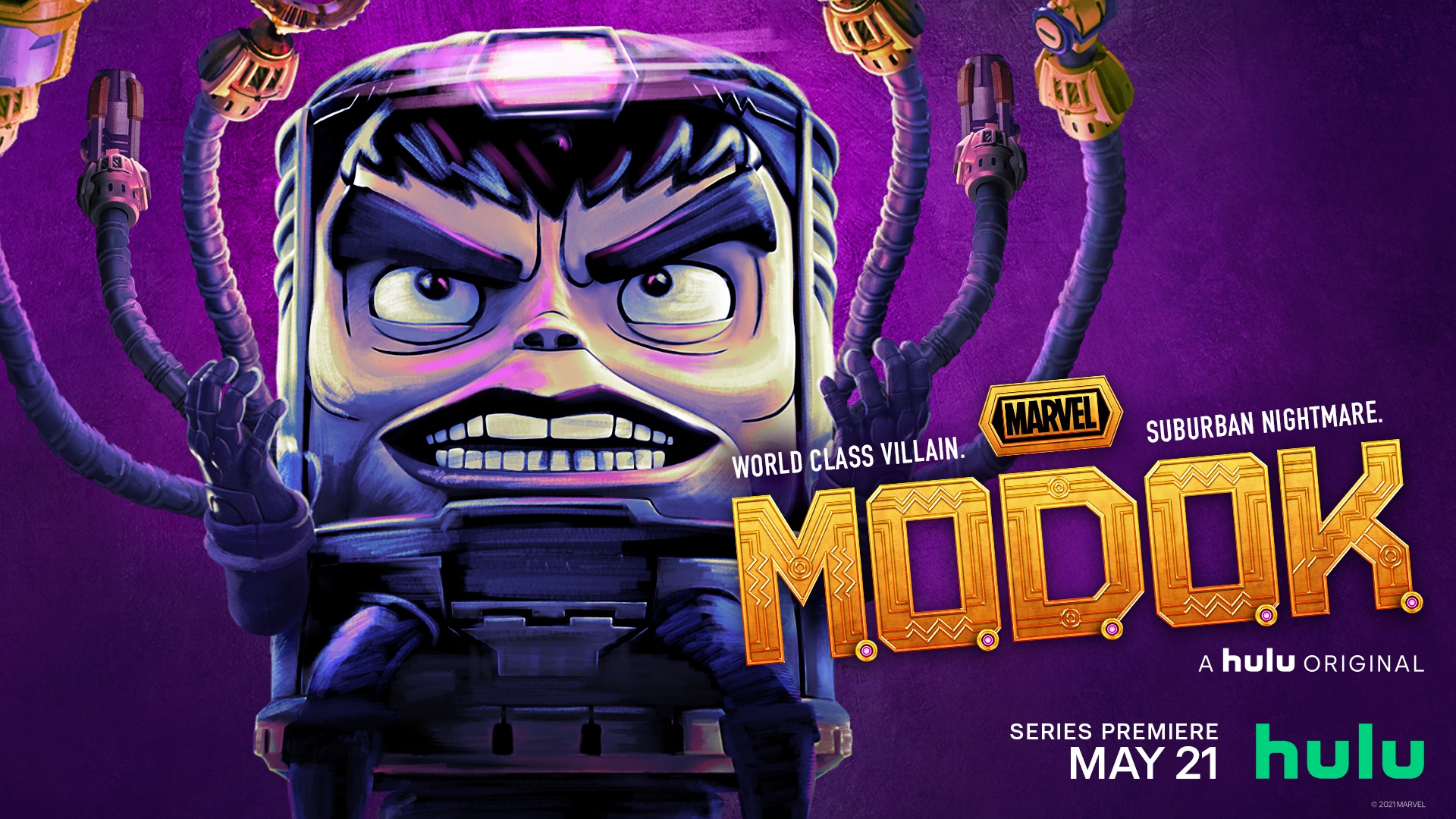
    This brings us to MODOK, an upcoming show from the underdog divisions that truly stands out in a Marvel era dominated and dictated by the Marvel Cinematic Universe. The show absolutely rules, which coming from someone who has spoken ill things about the output from Marvel Television multiple times on record, is saying something. Granted, a lot of the stuff that frustrated me with Marvel TV was rooted in their less-is-more/grounded approach to what should be imaginative genre storytelling. MODOK is absolutely untethered from all that nonsense. A boisterous explosion of everything that makes the Marvel Universe truly fun. 


    Marvel's MODOK Trailer and Release Date Revealed by Hulu - Paste


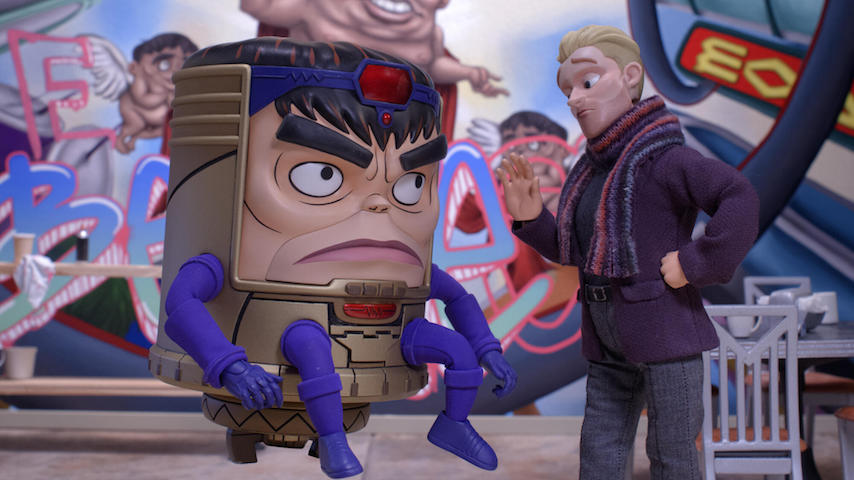
    Despite growing up in the era where Adult Swim blew up, I never really got into its network programming. It might have been too eccentric for my normie teenage self at the time. So, Seth McFarlane’s work is what I leaned towards for my adult humor. Seeing a Marvel property go the way of Robot Chicken, a self-referential, parodying, manic, stop-motion bonanza is a totally novel thing for the normie in me and I dig it because it works so damn well with a character like MODOK. This wouldn’t work elsewhere with, say, a property like Squadron Supreme.  

    MODOK is one of the most absurd characters in the Marvel universe. That the character has had a staying power this long in the lore, while his equally wacky cohorts such as Paste Pot Pete or Big Wheel disappear into obscurity, is practically a miracle. In the comics, MODOK is this mad scientist who mutates himself into this big-headed glob of a being. He’s a primary figure in the evil scientific alliance AIM and has gone on to fight the likes of Hulk and the Avengers. So he’s a heavy-hitter as far as being a looming big bad in the Marvel Universe. 

    The show takes this premise and totally craps on it in the best way possible. It’s clear how Patton Oswald and Jordan Blum are aware of how ludicrous MODOK is given the lengths they go to just to crank it up to 11. The first episode sets up the idea that this floating head, who has a day job trying to destroy the planet and fighting Earth’s Mightiest Heroes, has a home life he needs to attend to nightly. He has a human wife and son, and a daughter who looks exactly like him for no good reason. On top of all that, they have the flamboyant Super Adaptoid living with them, who they treat as the Meg Griffin of the family. And that’s just the tip of the iceberg.

    I cannot count the times I laughed hard at the stuff they explore in the episodes. There’s an episode about MODOK wanting to time travel to a Third Eye Blind concert to appease his wife. In another one, MODOK dumps his trash via a portal on Asgard. Hell, there is even an episode that showcases some of the most Z-list villains planning to steal Captain America’s shield. All those things, of course, cascade into the dumbest antics a supervillain can get themselves into

    This kind of self-awareness is key to a premise like this. Playing it straight is absolutely the wrong way to go. This is actually a gripe I have with the Avengers game that treats MODOK with the utmost seriousness. As great as that final boss fight is, there’s just something drab about a poker-faced take on the character. The man is a maniacal head that floats on a toilet and has T-rex arms. I don’t wanna see what that would feel like in a plausible reality. I wanna see MODOK deal with the true threat of not being able to stand up when he falls on his round back like a turtle. 

    So if you’re precious and uppity about the sanctity of your comics, everything that makes MODOK great might be a dealbreaker for you. This show doesn’t hold back. It’ll poke fun at everything; from its own characters to the source material. But that doesn’t mean the show thinks comics stink. There’s a reverence to the way the show is irreverent towards the trove of inspiration it draws from. It truly feels like a love letter to comics and it stems from Oswalt and Blum’s adoration for it. Sure, it craps on so much of it but it’s really done in an endearing way that’s never mean-spirited about the material or the people who love it.


    Marvel's MODOK Trailer Shows New Hulu Comedy | Marijuanapy The World News


    Easily the most evident way of expressing their admiration for the source material is the buffet of character cameos they pull from their disposal. Seriously, this show is like Super Smash Bros. but for characters that were left behind in the bargain bin of Marvel’s canon. And that’s not a bad thing at all. If anything, it’s an incredible showcase of just how rich Marvel’s villain roster is. There are bonkers cameos from characters that you didn’t even know existed in the canon. The fact that MODOK actually puts these characters in the forefront for people to enjoy is something to commend. Where else will I see Master Pandemonium host his own talk show? 

    The show wonderfully offsets all the craziness with some surprisingly real human character arcs. Never did I expect to be moved by the marital problems of a floating head or a child coping through a divorce but here we are. It’s incredible how the show manages to hone in on a lot of understated character work while treating its world with little to no regard. There are moments of tenderness in the show that make the experience. Doesn’t matter if it is MODOK doing his best to make sure his son doesn’t end up on the loser’s side of life like he is, or when he wrestles between his family’s happiness and his conflicting sense of purpose. 


    Hulu Releases New Marvel's MODOK Clip | LaptrinhX / News


    A lot of the character work is done justice by a murderer’s row of voice talent. Oswalt is pitch-perfect as MODOK that it almost seems criminal to cast someone else in a live-action iteration. There’s a moment in the season where the show hilariously and brilliantly alludes to this too. MODOK’s family is voiced fabulously. Melissa Fumero of Brooklyn Nine-Nine fame plays his daughter, who by virtue of his gene in her, is the queen bee of her high school. She is fantastic here and goes against the Amy Santiago-type by being a mean yet lovable heel for once. 

    Aimee Garcia is MODOK’s wife, Jodie, who’s somewhat of a Martha Stewart retail personality in the story. I’m in awe at the mileage they got from the character. She’s in many ways the center of the season. Garcia really gets to shine by being the heart of the story and sometimes, an antagonist to her husband. Ben Schwartz plays their son Lou, who reminds me of Steve Smith from American Dad. He’s that eccentric lovable nerd that can never follow in the evil footsteps of his supervillain dad. Schwartz emanates the spirit of Jean Ralphio playing Lou Tarleton and it’s a very welcome thing to hear.

    There exists a through-line in MODOK in the form of two sinister subplots brewing within the shadows cast by the titular character’s charming stupidity. The subplots are mostly just okay. To me, it’s the weakest link of the entire season. It’s not flat-out terrible as it starts with a lot of intrigues and ties a lot of seemingly disparate plots together nicely. But as the season moves along, it gets buried in all the funnier elements of the series that by the time the subplots start falling into place, it almost feels too late. It certainly doesn’t help that the timing of when these subplots pay off in the season are sequenced oddly.  But who am I kidding? None of those weak links matter in a show that works as smoothly as MODOK. Like the megalomaniacal narcissist he is, the show revels in its strengths maniacally in the face of all its faults and is all the better for it. I’ve never had this much appreciation for a Marvel TV joint since Daredevil ended. The show is without a question, the best thing they’ve done since 2015.

  • EXCLUSIVE: ‘Falcon and the Winter Soldier’ VFX Head Talks How They Reinvented Falcon For the Show

    EXCLUSIVE: ‘Falcon and the Winter Soldier’ VFX Head Talks How They Reinvented Falcon For the Show

    The first and, maybe, the only season of Falcon and the Winter Soldier wowed audiences with its high-caliber sequences that rivaled any Marvel feature out there. It touched them with a poignant, resonant, as well as emotional story on race and purpose. We spoke to the show’s VFX supervisor Eric Leven, who gave us some insight into how the show was crafted in light of the pandemic and how some key character moments were influenced by the VFX department.

    Along with Wandavision, Falcon took the brunt of all the effects of the pandemic delays. Disney+’s Assembled documentary for the series outlined their troubles, as they had to change their shooting locations unexpectedly from Puerto Rico to Prague. It also offered insight into how the pandemic limited their scope in location scouting. Leven gave us some details on what it was like for their department to work in spite of all the delays and how it worked to their advantage.

    We actually never stopped. The VFX department never shut down. Obviously, the pandemic is terrible for everyone but for the VFX department, it was nice because we sort of rushed into production. With a lot of productions, their train is moving before all the tracks are laid down. When we stopped shooting, we were close to being done. I think we had a month to go. So when we stopped, that was a chance for us to take a step back, breathe, and think “How do we make these sequences better?” We had all the time to work that out which was nice. 

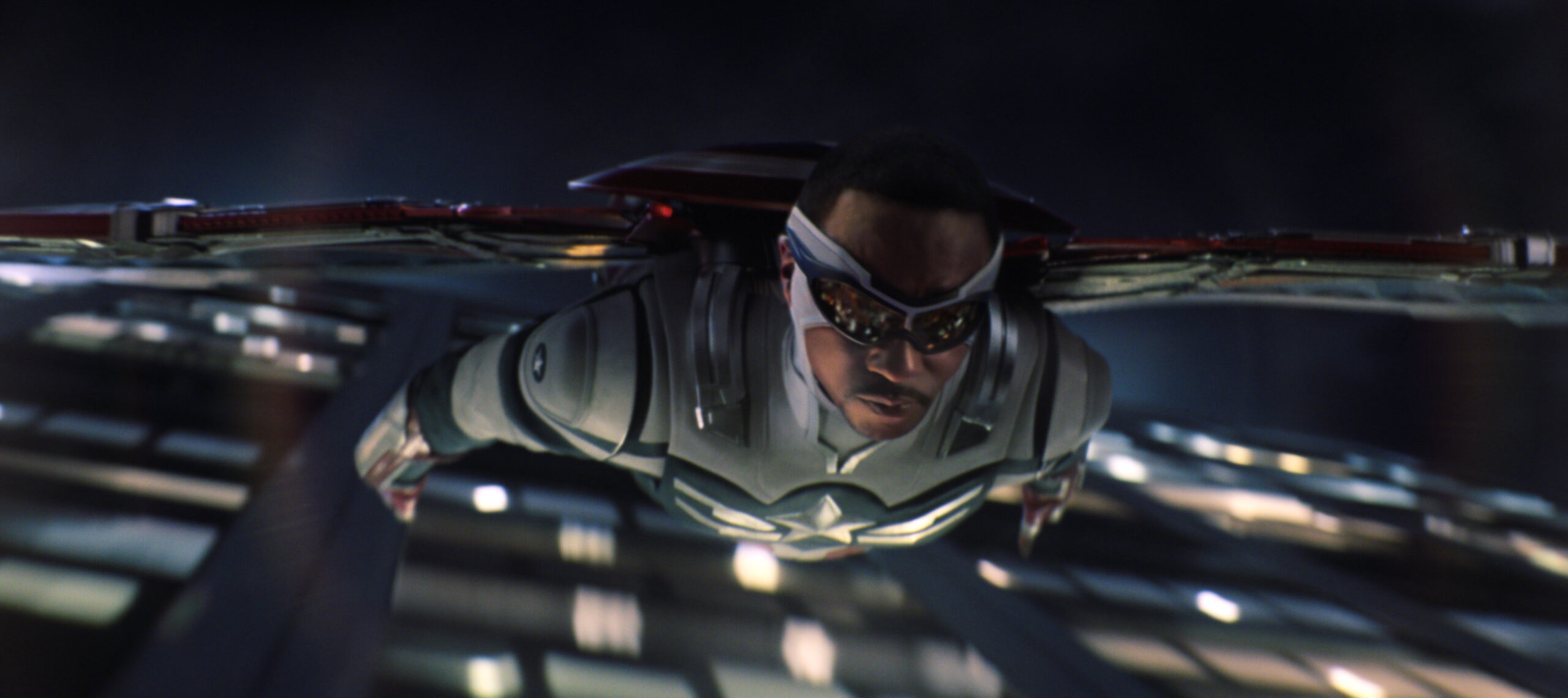
    The show didn’t just reinvent Falcon’s mantle and costume but it also changed the way he engages in combat. Now that he has the shield, Sam Wilson has an array of new abilities and tricks at his disposal. We asked Leven what the process was like in exploring his fighting style from when we first see him in the first episode to when we see him carry the shield in the finale.

    The shield was a big thing. We spent a lot of time with our pre-viz department just coming up with different ways he could be using that shield. Different poses and different things he could do with the wings. There was a lot of conversations about how active the wings were. There was a big note to make sure the wings were not too prehensile. We didn’t want them to seem like they had a life of their own. 

    One notable change was Sam Wilson’s use of firearms. All of Falcon’s previous appearances in the MCU have seen him fire a few shots from his submachine gun mounted on his wrists. Leven revealed that guns were originally supposed to be part of Sam’s arsenal in the early stages of the show but were nixed as the VFX crew was staging his sequences. It’s a very fascinating detail that a lot of people may not have noticed and one that can be interpreted as a statement of how Sam operates as Captain America now.

    I’ll tell you one of the things that came up. If you remember in all the other movies with Falcon, Falcon always has guns. The one thing we saw very quickly was, we had a pre-viz where he had the shield and he was shooting a gun over the top of it. It was just very interesting. I had a visceral reaction of, “Oh no. Captain America does not shoot guns.” So that was one of the first things to go. 

    Now, we’ve seen Steve Rogers carry a firearm along with his shield in the past. Captain America: The First Avenger showcases Steve firing a weapon multiple times all throughout while carrying the shield. Granted, it was World War 2 and every one of them had to have a sidearm but in modern-day iterations of the character, he no longer relied on it. Leven also talked about how nixing Sam’s firearm resulted in more visually interesting sequences for the character.

    In this show, Falcon never fires a weapon. He doesn’t have a sidearm and that was something that was part of the original design but we jettisoned that pretty early. One of the things I’m most proud of in this show is in the very beginning. Sam, in the script, when he approaches the wingsuit pilot he’s gonna get rid of, just pulls out his gun and shoots him. I remember talking to Zoe and Kari like, “I have a better idea that doesn’t involve him shooting this guy in cold blood. Maybe we could use it.” So that’s how we came up with the idea of him actually flying underneath him and pulling his parachute and getting that guy out of the scene. I was really happy with that.