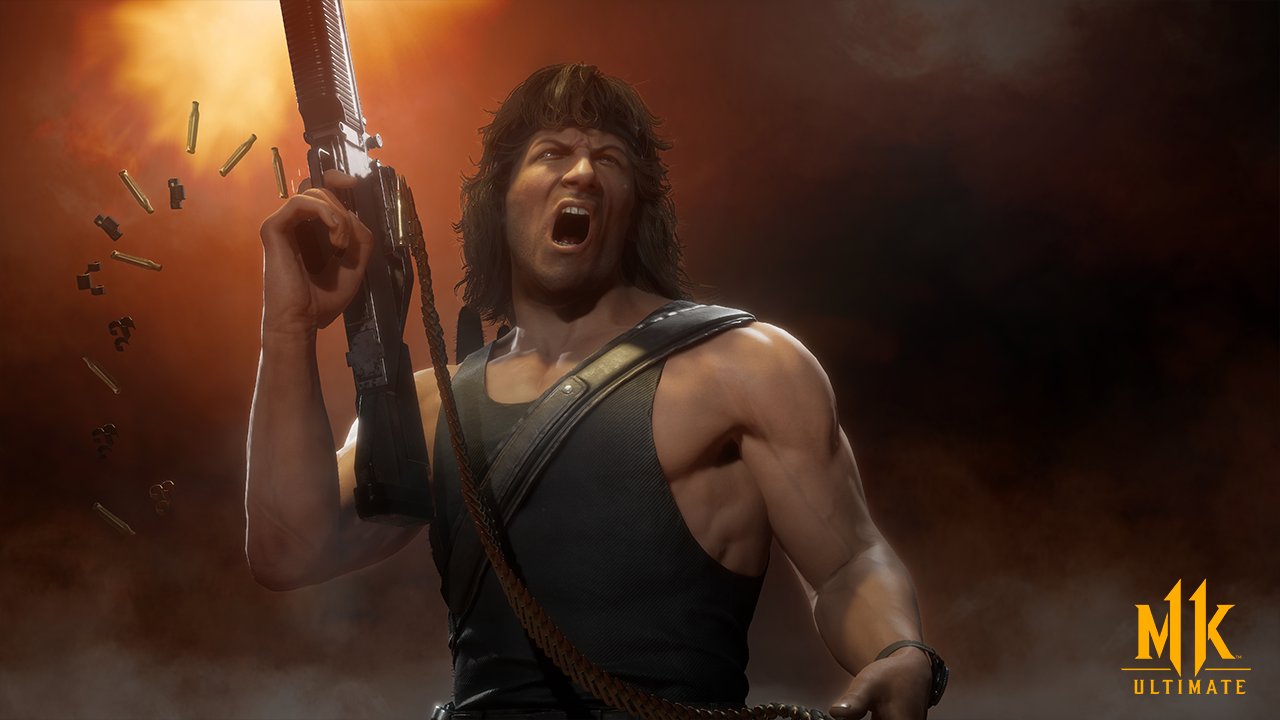
October has been real kind to us Mortal Kombat fans. First, we get the Kombat Pack 2 announcement confirming three new characters, and last night, we got a good look at Rain’s gameplay in the Kombat Kast stream. Today, Netherrealm Studios is blessing us with the first look at John Rambo’s gameplay to coincide with the 38th anniversary of the first Rambo film. Check out the footage below!
So the devs weren’t lying when they said that the character wasn’t going to be a straight-up zoning character. Right from the get-go, we see that Rambo’s main weapon of choice is his knife. With all his traps, he’s got an array of set-ups which I think will convince skeptics to give him a chance. He does seem a little bit on the slow side akin to the Terminator but I’m sure his frame data will say otherwise. As someone who plays Nightwolf, I’m seeing a lot of the character in Rambo, with the bow, knife, and the crouching roll he does. His prone position crawl looks insane and I wonder how it’ll fare in an actual game. Overall, I think NRS did a fantastic job making the character’s moveset super fun.
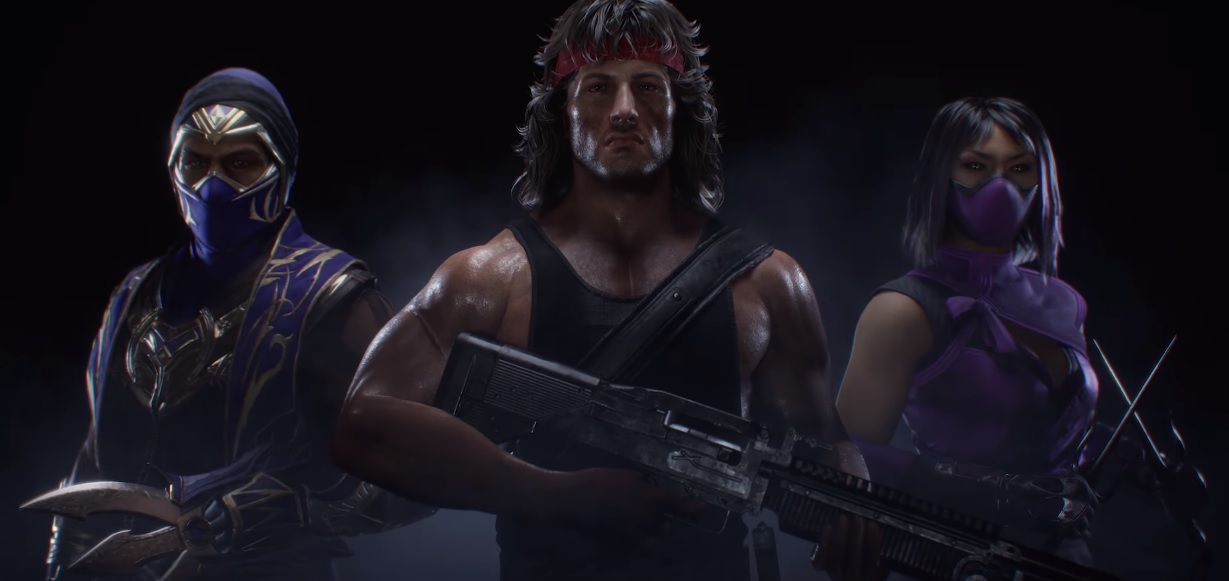
Last week, Netherrealm Studios gave Mortal Kombat 11 fans a taste of what’s to come in the anticipated Kombat Pack 2. Fans were treated to the return of fan favorites Rain and Mileena and newcomer Rambo. Today, the studio has released the first gameplay footage centered on the Edenian prince, Rain.
Right from the get-go, we see just how revamped the character is since he was last playable in Mortal Kombat 9. His classic moves like Super Sick and Weatherball look super modernized which I love. One move that is particularly surprising is his liquid phasing form, which I hope has an amount of risk to execute because I can already see those people spamming the hell out if it just to get out of an attack. Those skins showcased in the trailer look absolutely sick and I’m particularly fond of the horned royal garb he has fighting Sindel. There are tiny details in his moveset that really enrich the character such as the raindrops and thunder during his Fatal Blow. Overall, a fantastic modernized take on a classic character.
All things considered, Marvel TV lasting this long is pretty impressive. In their decade-long stint, the division has produced a slew of content, that ranged from spy shows like Agents of S.H.I.E.L.D. and Agent Carter, a surrealist fever dream like Legion, and gritty crime dramas like Daredevil and Jessica Jones. With a wide spectrum of subject matter, one can also expect a wide spectrum of results. Some of these shows ended up being duds while some became critical darlings. But when all was said and done, Marvel TV, for the most part, had something special going on for them.
Sometime last year, it was announced that Disney was dissolving the Marvel Television division as we knew it in favor of producing and streamlining new serialized content under the division’s more successful cousin, Marvel Studios aka the group that makes the movies. This sudden end for the was nothing short of bittersweet as there were a few projects still in development. This year saw the end of the series that started it all, Agents of S.H.I.E.L.D., with its seventh season and will also mark the final goodbye of Marvel Television with Helstrom, a show based on one of Marvel Comics’ premiere horror characters.
Alas, Marvel TV’s swansong is sadly, a dud, not a complete one but its flaws are more evident than its strengths.
There are great horror properties that aren’t necessarily scary but are well-written just as there are really scary ones that are contrived and awfully written. Helstrom falls in the middle of that category. It’s neither scary nor well-written. It’s a show that brands itself as a horror outing, showcasing possessions, exorcisms, and demons in its marketing material but in actuality, Helstrom itself seems scared of its own supernatural trappings as it refrains from actually giving us the scares. The trailer makes it out to be this action-packed screamfest but those moments are actually few and far in between. In an era where horror is having a resurgence on TV (Netflix’s Haunting of Hill House and Hulu’s new show Monsterland actually give some nice scares), it’s disheartening to see this show miss that mark when the comic and world it’s based is chock full of neat stuff.
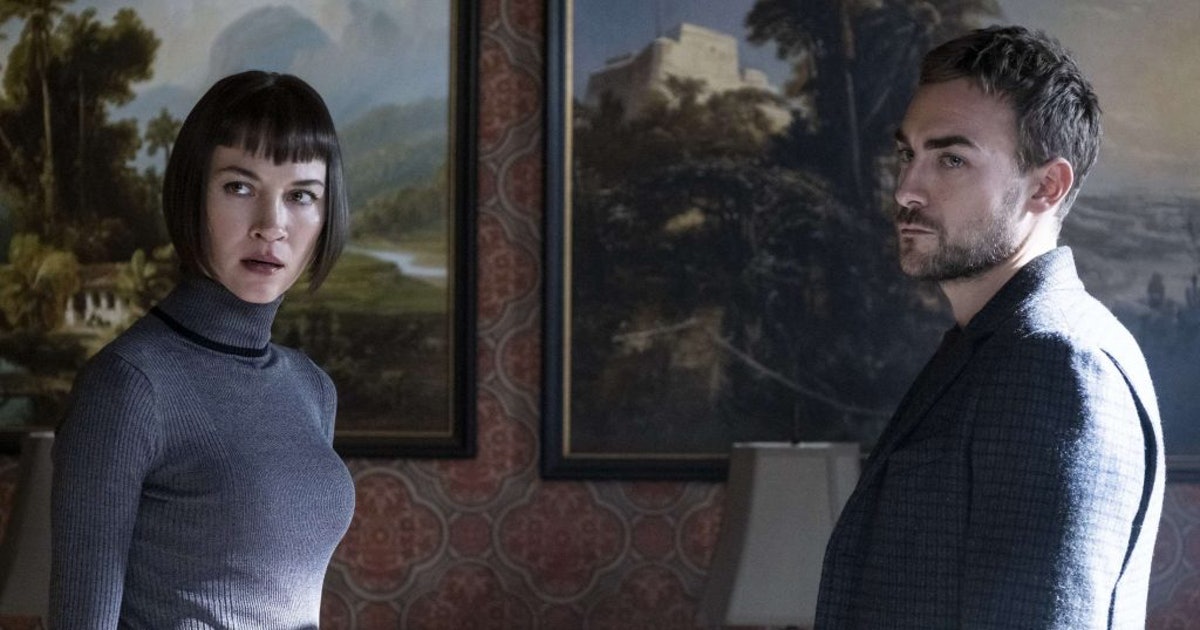
Alain Uy (Chris Yen) and Sydney Lemmon (Ana Helstrom) Credit: Bettina Strauss/Hulu
I’m a firm believer that comic books can be reinterpreted for the better in their live-action depictions just so as long as it retains the spirit of the source material and in all fairness, Helstrom stays somewhat faithful to the beats of the character’s origins. However, it’s missing one key component of the comic. In the comics, Hellstrom stories were always fun romps against the supernatural. Yes, they dabble into some dark occult stuff but it never loses its flair for making things exciting. The show is far removed from that. Its tone is dreary and takes its own world way too seriously. Visually, it’s lifeless as its colors are muted all throughout. Most importantly, the show is devoid of any excitement and fun.
The problem is that Helstrom doesn’t really get to be what it needs to be and it might be because of Marvel TV itself. Anytime a comic they’re adapting has some semblance of the supernatural and unearthly, it gets diluted to gritty realism. The first season of Iron Fist and the Defenders suffered greatly from the company’s inability to give these elements so intrinsic to the source material any justice and Helstrom suffers as well. Their depictions of the supernatural feel cheap and lackluster. A supposedly scary entity gets undercut by poor design choices. The titular character Daimon Helstrom is such a bombastic character in the comics with all kinds of powers but in the show, it gets relegated to him slightly manipulating fire. I can’t imagine what that Ghost Rider show would’ve looked like if they went through with it.
Tom Austen (Daimon Helstrom) Credit: Bettina Strauss/Hulu
Just like the Netflix shows, there’s also a good amount of wheel-spinning in this show. I don’t know what it is with Marvel TV shows in general but somehow, they’ve proven time and time again their inability to tell well-paced stories. For example, early in the season, the Helstroms come up with a plan to chase down a possessed man carrying an ancient evil relic. It’s when the show finally kicks in; where the urgency of the matter is of the utmost priority. But what happens in the actual episode? The Helstroms get bottled in a room the entire time, rendering the momentum of the subplot inert. Even more baffling is the next episode when they talk about the chase happening off-screen instead of actually showing it.
And there’s a lot of telling and not showing in Helstrom. In the comics, Daimon Hellstrom’s father is a demon and is a huge part of that entire world. Likewise in the show, they make it seem like the dad is a huge deal. They talk about him a lot, allude to the horrible stuff he’s done, set him up as this major force in the plot but it ends up being weightless for the entire half of the season because we don’t get to see what he’s capable of doing. By the end of my viewing, I was surprised at how little had progressed with the plot and how few the payoffs were in a span of several hours.
Thematically, the show has some interesting stuff to say. Just like Daredevil before it, the show tackles themes of abuse, family, religion, and faith. The Helstrom family is a really screwed up one and the show does a neat job of having the three family members deal with trauma and abuse distinctly from one another. In addition to those themes, Helstrom brings up some interesting questions about morality and necessary evils, in ways that the other Marvel TV shows haven’t explored much. The show features The Blood, a clandestine organization that puts possessed people in comas as a way to end the futile cycle of exorcisms which I thought was a nice layer of depth.
Elizabeth Marvel (Victoria Helstrom) Credit: Katie Yu/Hulu
For whatever reason, the Marvel brand has been mostly wiped clean from the show that even the iconic page flip intro is nowhere to be found which made fans question just how invested the company is in this show. So it is a bit ironic that the number one saving grace on the show is the star that happens to have Marvel as her last name, Elizabeth Marvel. Anytime Elizabeth Marvel shows up on the screen, the show gets exponentially better. Marvel brings so much weight and darkness to the character of Victoria Helstrom, a woman perpetually at war with literal demons in her head. Marvel straddles the line between sinister and tender so brilliantly; when she’s possessed, it’s genuinely unsettling; when you see her be a mom to Ana and Daimon, it’s heartwarming.
The rest of the ensemble does a bang-up job keeping an otherwise bland show watchable. Tom Austen brings a nice delicate swagger to the titular role of Daimon Helstrom though I wish the writers gave this version of the character some of the idiosyncrasies and quirks of Hellstrom in the comics just so Austen has more to do. He clearly has the chops to give a more intense and pronounced performance but the writing, unfortunately, doesn’t give room for it. Sydney Lemmon plays a fantastic foil to Austen as Daimon’s sister, Ana. Between the two siblings, Ana has the more interesting character arc and Lemmon’s icy yet tortured performance helps elevate it. Robert Wisdom, who I absolutely adored in The Wire, is Caretaker, who in the comics is like the Nick Fury of this supernatural pocket of the Marvel Universe. Wisdom plays the character with a gravitas and dignity that commands every scene he’s in.
Even with a talented ensemble cast, Helstrom is bogged down by the same things that plagued several of their shows. It’s a mishmash of neat ideas here and there but ultimately doesn’t come together in a compelling way. It isn’t outright bad like Inhumans nor is it must-watch television like Daredevil. You won’t be missing out on much if you skip this one.
After months of waiting to hear or see what’s next for Mortal Kombat 11, a game I’ve been playing every day this year, Netherrealm Studios has released the trailer for their upcoming Kombat Pack. The trailer confirms the datamine leak from last week with revealed the inclusion of characters like Rain, Mileena and John Rambo. Titled Mortal Kombat 11: Ultimate just like the old days, the DLC comes in a little over a month Take a look at the trailer below!
I’m sort of whelmed at the whole thing. While the announcement looks sick, I’m sure if NRS released this before someone was able to datamine the information last week, my reaction would be way different. NRS has been really bad at giving us information regarding the future of this game while the rest of the fighting game community has been constantly inundated with information on games like Tekken and Street Fighter. I’m really curious how Rambo’s moves will look like. A lot of fans seem to be up in arms with another gun-toting character so I’m hoping they do something really interesting with it.
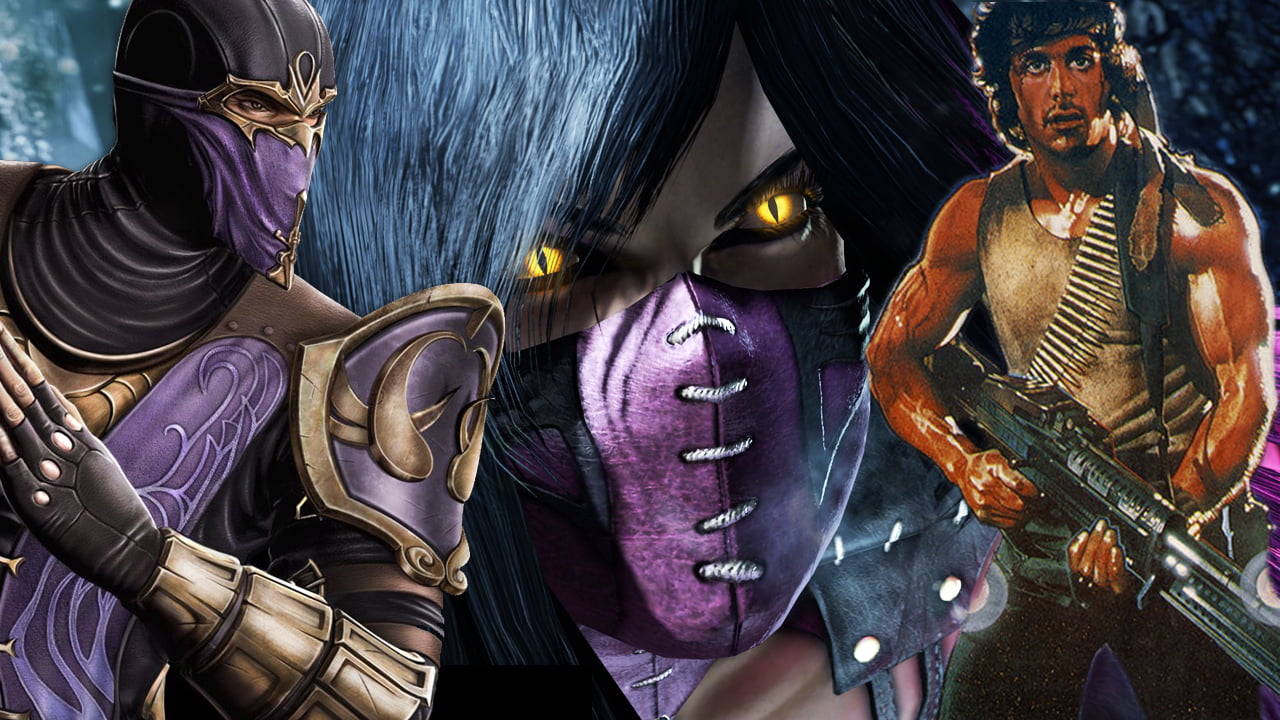
It’s been a while now since Mortal Kombat 11’s smash-hit DLC Aftermath came out. Since then, fans have been heavily anticipating any new information on the game’s next kharacter offerings. Game director Ed Boon gave us hints all through the past week which fans lost their minds over trying to figure out what Boon’s cryptic teases were. Well, thanks to the MK community’s resident dataminer, thethiny, we now know that not only are fan-favorites Rain and Mileena returning but the next DLC is also set to feature the debut of John Rambo.
As one of those MK fans biting at the chomp for any news on what’s next for this game, holy shit. Rain was last playable in the game’s reboot Mortal Kombat 9 but made an appearance in the subsequent Mortal Kombat X’s story mode. Until now, Rain’s presence in MK11 was limited to some easter egg, skins, and one of Shang Tsung’s special moves. Mileena is arguably the most requested kharacter in this game, with her stans flooding the mentions of any person remotely connected to Netherrealm Studios asking for her return. Those fans will undoubtedly be very happy. John Rambo is by far the biggest surprise here. Everyone’s predictions for the guest kharacters were generally limited to horror icons like Ash from Evil Dead. But with 80s action icons Terminator and Robocop already in the roster, it makes a ton of sense to add Rambo into the mix.
Now if only Netherrealm would give us some actual news on this!
Movies that get turned into TV shows tend to be a mixed bag. More often than not, they fail to live up to the glory of their cinematic counterparts and end up being forgotten in the bargain bin likeThe Exorcistand Minority Report series. Occasionally, you get shows like Terminator: The Sarah Connor Chronicles and From Dusk Till Dawn; shows that decently live up to their cinematic predecessors but somehow fall short from the impact their films made. Rare is when a TV show actually stands up on its own and lives up to the film it’s based on. Fargo is one of those rarities.
Released in 1996, the film the series is based on introduced the Coen brothers’ distinct eccentric style of storytelling to a mainstream audience and immortalized Frances McDormand as one of the greatest performers of her generation and her character Marge Gunderson as one of cinema’s best protagonists. Its absurdist yet deeply dark take on a kidnapping-gone-wrong set in the blinding winter of the Midwest was wildly original, turning genre conventions on its head at every step of the way. Almost 30 years later, the film is now widely regarded as one of the greatest crime films of all time. So when it announced that they were adapting the film for television, eyebrows were understandably raised.
Season one, which premiered in 2014, was about the woeful tale of the meek Lester Nygaard’s descent into corruption and the trail of bodies left behind by his Faustian deal with the devilish Lorne Malvo. At the heart of all the violence was the steadfast yet gentle pairing of Molly Solverson and Gus Grimly, two unlikely officers who take it upon themselves to make sense of all the chaos. The show was funny, dark, well-acted, and most important, really well-written. The series premiered to critical acclaim and ended up amassing more than 200 nominations from awarding bodies all over the world. With so many duds out there, no one ever expected one more TV adaptation of a beloved film to be any good. But Fargo surpassed all expectations and for a while, its success seemed like lightning in a bottle.
The second season proved that its success wasn’t a fluke. It expanded the Fargo formula as it explored more themes, introduced a more varied ensemble of characters, and got bolder and weirder with its storytelling choices. Set in the twilight of the seventies, this time it was about the Gerhardt family and their crime empire at war with itself and a ragtag couple who, as fate would have it, would cross paths with the family in the most unfortunate way possible. Season 2 was hilarious as it was Shakespearean. It had a lot of killing, a lot of betrayals, a lot of laughs, and a lot of heart. It was a masterclass on how to ingeniously push the boundaries of something that was already close to perfection. When Stephen King describes one of the episodes of Season 2 as “the best thing on TV in the last three years,” you know Season 2 means business. And you betcha, it meant business.
A deadbeat parole officer’s plot to steal a childhood stamp from his more successful business-owning twin brother goes sideways, his swindling ex-con girlfriend gets entangled with a sinister international criminal empire and a technologically illiterate officer at the heels of it all. Fargo’s third season may seem like business as usual but it was anything but. The plot was more complex and philosophical. Themes and symbolism were more abstract. Its social commentary was darker than ever. There was a heightened degree of surrealism to the narrative which made the season’s tone more eccentric than usual; the season opens with a wholly unrelated interrogation scene in Berlin, animated vignettes about a lost robot make up half of an episode, and a mythic Jewish apparition played appears throughout. The season didn’t get as much love as its predecessors but in an era of countless cookie-cutter crime shows, Fargo Season 3 still stood out from the pack.
I love Fargo for a lot of reasons. The comic nerd in me loves the worldbuilding in the show; how each season builds on one another and how these decade-spanning midwestern crime stories all connect in some way. I love the cautionary nature it posits; Fargo. in many ways. reminds me of the fables I grew up hearing. Fantastical anecdotes on life, morality, and values with cute animals to represent each and every one of us. With Fargo, it’s the same albeit with lots of violence and crime. I love the simple anthological nature of the show; the accessibility and digestibility it provides audiences with each new season. I love how the show is something me and my grandmother can bond over. Never in a million years did I imagine a show as bloody and hilarious as Fargo would be something to enjoy with a 78-year old woman. Ultimately, I love the show because it’s simply a great show. And like the film before it, what truly makes Fargo a fantastic piece of fiction are the creatives and talent behind it. Showrunner Noah Hawley and his band of like-minded writers have crafted a show that unapologetically carries the spirit of the film. The show proudly wears its namesake on its sleeve, compounding every quirky strand of the film’s DNA to tell Fargo’s story in a new way for a new generation of media.
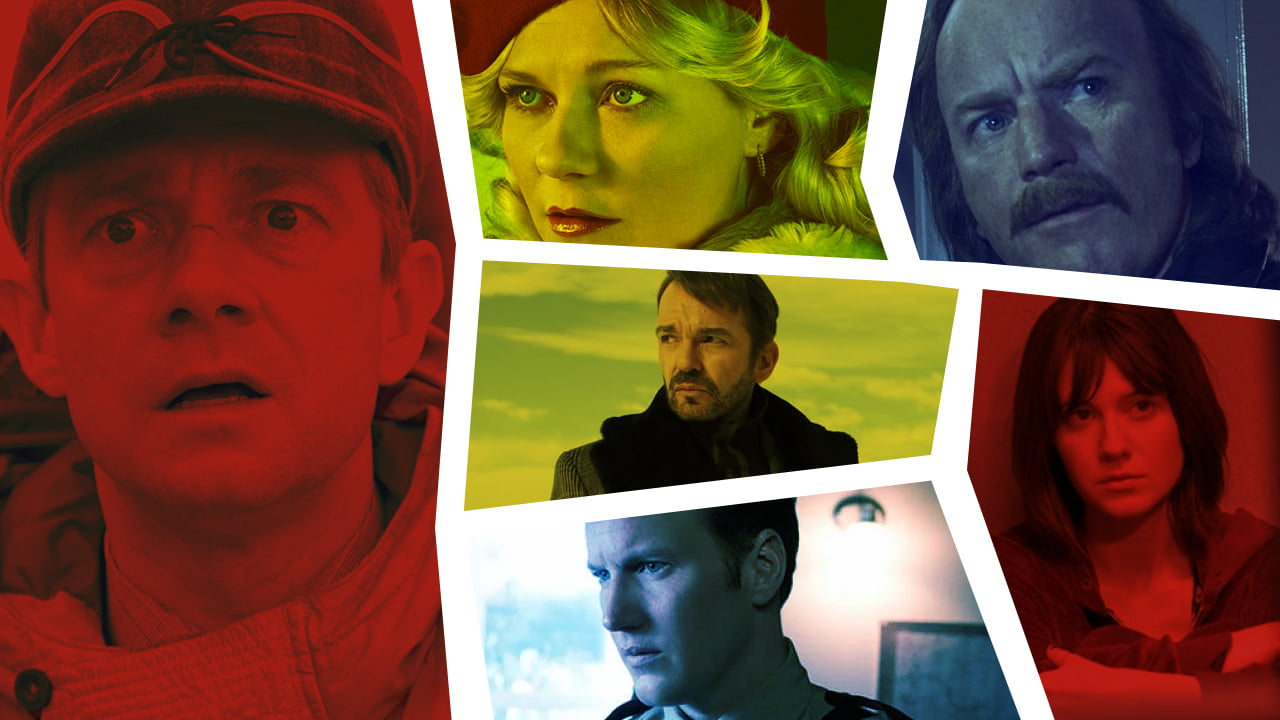
The characters the actors bring to life feel like worthy extensions of those characters in the film: Marge Gunderson, Jerry Lundegaard, Carl Showalter, and Gaear Grimsrud. Cast members like Billy Bob Thorton, Martin Freeman, Kirsten Dunst, Patrick Wilson, Ewan McGregor, Mary Elizabeth Winstead imbue so much life to the eccentric characters they inhabit and all perform at a level on par with McDormand’s Oscar-winning performance. And that’s not to mention the supporting characters that help realize this world. Nick Offerman’s role as the verbal-jousting drunk lawyer stole the show in Season 2. Season 1 had Bob Odenkirk playing a dim-witted police chief. And of course, Ray Wise as the Wandering Jew of Season 3 was a highlight for Season 3.
For this upcoming fourth season, I’m not quite sure what to expect. I haven’t seen any trailer save for the first one they put out in the pandemic nor have I fully been caught up with the who, what, and where of Season 4’s premise. It’s easy to set one’s self up with immensely high expectations especially with Fargo, a show that has been consistently good throughout the years so with Season 4, I’m keeping an open eye and mind. It’s always a pleasure to revisit the wild midwest the Coen brothers and Noah Hawley created. I cannot wait to see it return this Sunday.
The downtime caused by this quarantine has offered me some opportune time to get back in touch with my gaming roots. The last console I owned was a Playstation 2 which should give you an idea of what generation of video games I peaked on. Everything that came after, I missed out on. So as I relive the carefree gaming days of my youth, I thought it’d be a fun idea to review some of the games I missed out on.
It is a stormy night and you’re the sole passenger in a rowboat, escorted by two bickering Brits towards a lighthouse. You arrive at the door and see a bloodied note warning you of the task ahead, “Save the girl and wipe away your debt.” You enter the lighthouse and realize it is empty, save for you, a bloodied corpse, and a radio faintly broadcasting vaudevillian music. Each creaking step you take fills the lighthouse with dread. You make your way to the top where a locked door awaits you. Upon opening it, the grey sky surrounding you turns red, and from the heavens erupts deafening horns. A chair beyond the door calls for you. You sit down and the moving contraptions around you make it apparent that the lighthouse is a missile silo. All of a sudden, you are skyrocketed through the heavens. None of it makes sense until you reach the wild blue yonder where you see magnificent cities floating above the clouds. There’s that moment of clarity once the pod you’re strapped onto slowly lands on this floating city. It’s the first of many moments of clarity in the game where all the craziness you witness starts to make sense.
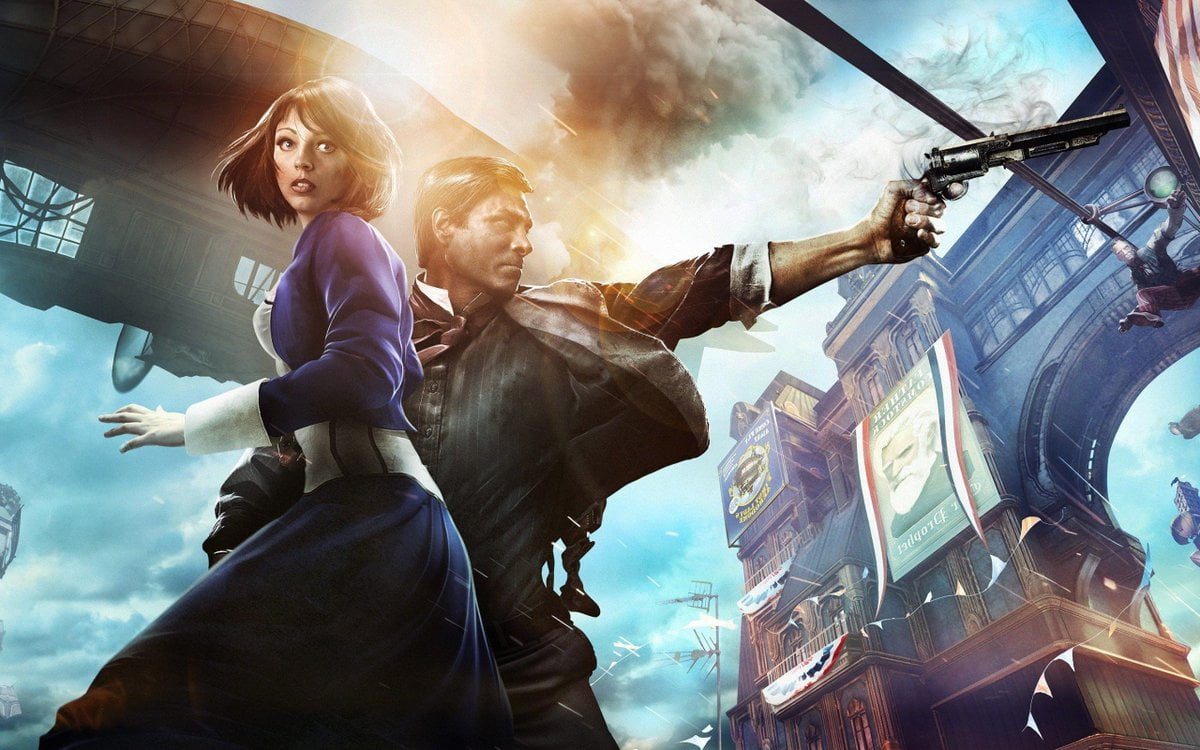
You play as Booker DeWitt, a hired gun tasked to rescue a woman named Elizabeth from the ultra-religious dystopian city of Columbia. Standing between you and Elizabeth are two warring political factions, a delusional prophet, a flying bird robot, and a series of tears through the space-time continuum that permeate the reality you inhabit. It’s a pulpy trek through this steampunk metropolis as you fight the establishment and enemies of the state alike with wacky guns and potions that give you superhuman abilities.
I’ve never been so enamored with a video game’s aesthetic way like the Bioshock franchise’s. Steampunk wasn’t a word that existed in my own vocabulary until I knew this franchise existed. The visual palette, aesthetic, and art direction of the game is simply a thing that draws you in. Even as I was phasing out of my gaming days in the late noughties, just seeing the first game’s poster and the way its underwater steampunk world was presented made me want to at least experience that. With Bioshock Infinite, I was finally able to experience what it’s like to briefly exist in a world as rich and beautiful as Bioshock’s.
The floating city of Columbia is a sight to behold. Nevermind the fact that character models resemble one another and you run into the same person every 20 steps. The city lives and breathes as you stroll through its alleys and plazas. I spent the first couple of hours of the game just simply observing every remotely interesting item I could find – a newspaper on some countertop, a print ad for magical potions, a statue of some white dude, ultra-religious paraphernalia, a mechanized human being displayed at a freak show among many others. The way the game uses the social upheaval that gripped America at the turn of the 20th century to underscore the pulpiness of the art direction and create something that’s out of this world yet wildly familiar is amazing. This world is layered to the core, with easter eggs in every corner that archive moments that led to the creation of Columbia and why the world is the way it is. There’s something in every nook and cranny of this game that’ll pique one’s curiosity which makes whatever limited exploration options you have worthwhile, to say the least.
I’ll admit that I was sort of taken aback at how the enemies were mostly composed of confederate soldiers and rebels. Part of me was expecting to fight creatures spawned from the mind of Guillermo del Toro. However, in the few instances that you get to fight the odd creature, they are a treat to against. You have these KKK sorcerers carrying coffins that are made up of crows and they teleport everywhere. You have the Handyman, disabled people that are forcibly put in mechanized bodies that go haywire – a huge pain in the ass to fight. By far the scariest is the Boy of Silence, who serve as watchmen in the asylum portion of the game. They let out a blood-curdling scream the minute they spot you and sic a bunch of powerful insane asylum patients on you. I’ve never been more terrified to sneak through a corridor since I played Alien: Isolation a couple of years ago.
Gameplay-wise, Bioshock Infinite very rustic. It’s a no-frills, uber-simple shooter that barely takes any steps to reinvent the wheel. You shoot, reload, and pick up ammo from corpses. Rinse-repeat. The Vigors and the tears, however, keep things interesting. The aforementioned magical potions keep the battlefield wildly interesting as it offers you a slew of magical traps and abilities. There’s one that allows you to summon a murder of crows to attack the enemy. A personal favorite is the one that allows you to possess grunts and mechanized enemies and have them fight for you. Again, it doesn’t change the game but it’s a nice addition to keep things interesting.
BioShock Infinite revolves around an Aristotelian tragedy with tragic heroes, grounded in a floating city set in 1912.
Arguably, the game’s biggest weakness is its linearity. With a world this expansive and rich, the lack of exploration possibilities and a progression system feels somewhat disappointing. The game literally tells you to follow a line as you navigate through the various districts of Columbia. You can take the occasional turn and peek through the door in that corner and score these upgrades called Infusions but that’s pretty much it. There are the occasional gun and Vigor upgrades but because the game is so linear, you aren’t given the opportunity to fully explore the selection of weapons the game throws at you. I get that the open-world mechanic was never in the franchise’s DNA but man, given the chance to fully explore the world they crafted, to do sidequests, and to upgrade your skills extensively, I’d lose myself in this game entirely. When all is said and done, this complaint is a testament to how just beautifully the world is envisioned and crafted.
Bioshock Infinite, in many ways, is one big theme park ride. It’s a chaotic spectacle that delivers the thrills. Sometimes a literal roller coaster ride across the sky. Your senses assaulted by a cacophonous barrage of sounds and visuals that defy your understanding of reality. But what makes the game transcend from being merely just a spectacle is the story. It’s a Kubrickian odyssey about redemption and fate. A profound journey to undo past wrongs and confront the destinies decided by the cosmos. And that ending. That goddamn ending. Part of me wishes I played Bioshock Infinite around the time it came out just so I’d partake in the collective freakout everyone must have had with the game’s ending. The last 15 minutes of the game will go down as one of the craziest endings I’ve come across in any narrative. To be in the center of this story, to experience it from the eyes and emotions of Booker DeWitt, is something that will probably stick with me for a while. Experience this game now, if you’ve haven’t.
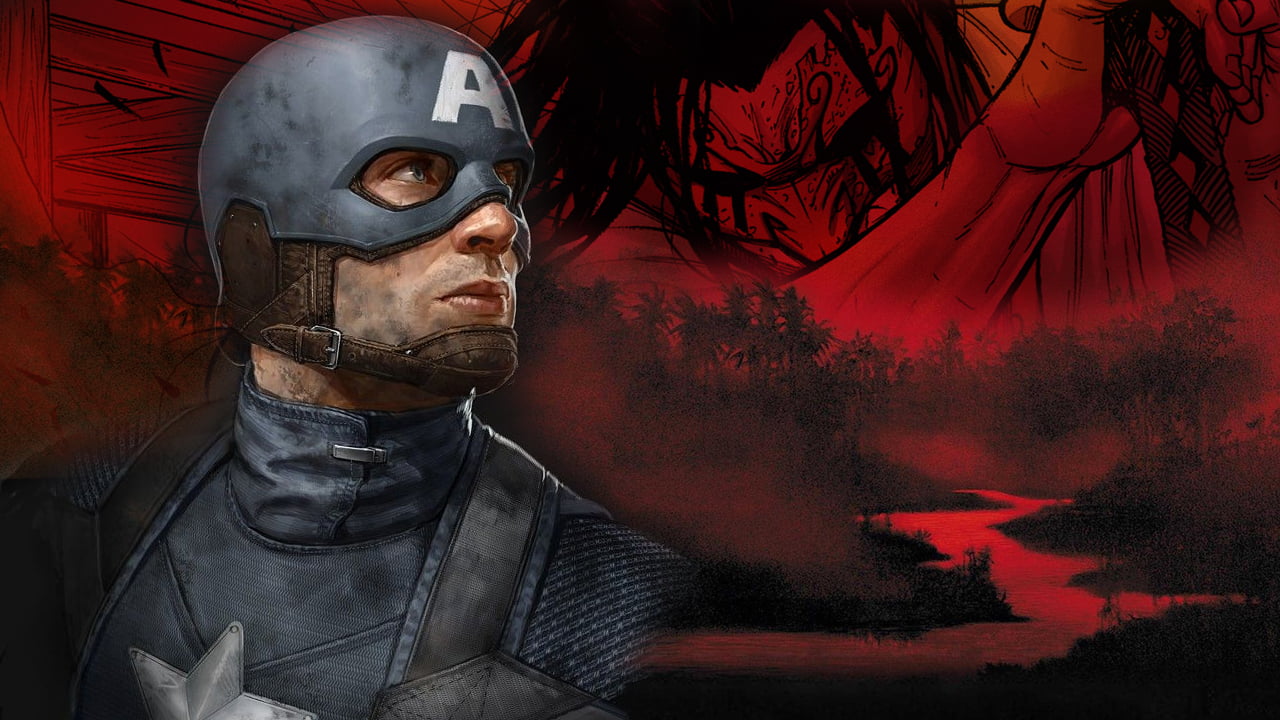
In a previous episode of Murphy’s Law, Charles and I talked about our pitches for Captain America 4 on the podcast. The caveat we agreed upon was to set the story during WW2 which gave us a lot of leeway on what stories to tell. Suffice to say, both our ideas of what we wanted the next Captain America adventure to be were very different and for good reason. We talked about eventually writing up and have fans compare the two. Well, here’s mine.
SETTING
1944. Leyte, Philippines.
Yes, this Cap story of mine is set in my home country. For all those unaware, the entire Philippines was ground zero for countless battles between Americans and the Axis Powers, specifically the Japanese, with my people pretty much caught in the middle. The Philippines was under Japanese occupation for 3 years and in those 3 years, the Filipinos suffered inexplicable horrors. A chunk of my life growing up was spent listening to horror stories experienced first-hand by my elders, like my grandmother. These stories were nothing short of horrifying and to be a descendant of Filipinos who suffered directly under Japanese cruelty makes this piece of fanfiction hit close to home. There are two Filipino characters here that are more or less based on my great-grandfather, who worked as a translator for the Japanese and who, according to my grandmother, had to kill a few of them to save his own ass when he overheard something that wasn’t supposed to be heard.
The story, in particular, takes place around the last months of 1944 and the Battle of Leyte Gulf, an event widely considered to be one of the turning points in the Allied Forces’ liberation of the Philippines. It doesn’t necessarily deal with the actual naval battle but has the events going on in the backdrop. Despite this being a war story, there’s a bit of a folkloric component to the premise which is a far cry from the science fiction action of Captain America: The First Avenger. Because the Philippines is a deeply animistic country and mostly made up of dense forests and rural mountains, local myths, and folklore have always been prevalent. To this day, I still hear stories of paranormal experiences involving spirits and mythical beasts, and the atrocities suffered by the Filipinos during the Japanese occupation have only amplified such stories. Plus, I thought it’d be cool for Cap to deal with larger-than-life things early on in his career.
Not the actual treasure.
The MCU has had more than its fair share of McGuffins and my pitch is shamelessly no different. It revolves around the fabled Yamashita treasure, alleged war loot stolen by the Japanese throughout their campaign in Asia. As the story goes, the treasure, comprised of gold and all kinds of artifacts, was rumored to be scattered and buried all throughout the Philippines and was to be shipped to Japan as soon as the war ended. Things didn’t go as planned for Japan in the history books and the treasure never made its way back. To this day, there is no clear answer as to whether the treasure actually existed. Some experts have debunked it as a myth while some treasure hunters still think it’s a real thing hidden somewhere in the country. In my pitch, the treasure plays an important part though I take a ton of liberties to tailor it to the movie.
Tonally, think of the story as an Apocalypse Now-type movie where Cap and his friends venture deep into a jungle behind enemy lines. The elements are against them, the terrain is unfamiliar, and they’re chasing their own Colonel Kurtz. Thematically, I want a story that delves into Cap’s relationship with the Howling Commandos, what the friendships were like for these people who were sent on the most dangerous missions in WW2, and what war does to people who are victims of it. Think Band of Brothers or Saving Private Ryan.
PLOT
In 1923, a blind Japanese child is awakened by visions of Japan engulfed in smoke and flame, corpses of his people turned into ash, his nation in complete ruins. In the final months of 1944, American ground troops successfully land in the province of Leyte after a grueling naval and aerial skirmish with the Imperial Japanese forces. Leading the frontlines are Dum Dum Dugan and the Howling Commandos. Meanwhile, Steve Rogers and Bucky Barnes are covertly parachuted deep into the jungles of Leyte, behind enemy lines, to extract a Filipino translator working for the Japanese claiming to have crucial information that could turn the tide of war.
After a night of fighting through Japanese platoons and freeing POWs along the way, Rogers and Barnes locate the translator, Alejo, hiding under an abandoned guerilla bunker. Alejo retells the events of the past week; he and his brother, Eden, witness the massacre of a Japanese platoon committed by Tomi Shishido, a lone blind Japanese assailant with the ability to petrify, demanding the location of a rumored cache of stolen artifacts and gold. Alejo narrowly escapes capture but his brother is unsuccessful. Barnes is apprehensive to track down the assailant until Alejo shows them an emblem resembling HYDRA’s. Fearing a wide-scale operation happening in the Pacific, similar to the one in Europe under HYDRA, Rogers and Barnes decided to track down the assailant.
The following morning, the Howling Commandos arrive at Rogers and Barnes’ planned extraction point where they encounter delirious Japanese soldiers surrendering to a small Filipino guerilla unit. Jim Morita overhears the soldiers mention demons and ghosts in the surrounding valley. Rogers, Barnes, and Alejo take control of a guarded Japanese communications outpost to message the Commandos but are ambushed by three assassins with seemingly supernatural abilities. Rogers and Barnes are quickly outmatched but the fight is interrupted by the arrival of Dark Wind, who kidnaps Alejo and escapes into the night, along with his agents. The resulting commotion attracts the attention of platoons of Japanese forces, who pin down Rogers and Barnes until the Howling Commandos arrive.
Rogers and the Howling Commandos take a boat further into the island and coordinate on a plan to retrieve the two translators and prevent Shishido and Dark Wind from stealing the treasures. However, the team is split on what to do with the treasure; Duggan argues about the merits of the US gaining that amount of gold to end the war while Steve sees it as bloodied spoils of war. Upon arriving at their destination, the team splits into two.
Rogers’ team trek towards a Japanese outpost, where they find several Japanese soldiers murdered. The team overhears a commotion in a nearby armory and see a Japanese officer get impaled. Shishido emerges from an armory, dragging Eden behind him. Rogers’ team engages Shishido and rescues Eden. Shishido initially has the upper hand but yields when Rogers and Barnes overpower him. Shishido explains the existence of a clandestine transhumanistic cult among Japan’s most elite and Dark Wind’s plan to secure an ancient powerful artifact to unlock the Emperor’s latent divine abilities, based on the belief that Japan’s emperors are direct descendants of the sun goddess Amaterasu. Shishido pleads for the Commandos to help stop him from retrieving the relic.
With Eden to help him navigate, Rogers ventures further deep into the island to locate Dark Wind’s vessel. Reaching a lake at the center of the island, they see a large amphibious landing craft surface. Rogers infiltrates the ship and rescues a brutally beaten Alejo. Just as he makes his escape, Rogers is incapacitated by Dark Wind. Dugan’s team arrives at the foot of a mountain where they find an abandoned church. They investigate and uncover an entrance to a series of catacombs leading to a large cavern. In the cavern, they uncover a massive tomb filled with gold and relics. They form a garrison surrounding the area and radio the rest of the Howling Commandos which Dark Wind hears from Rogers’ radio.
A huge firefight commences as soon as Dark Wind and his forces arrive at the church garrison. The Commandos are outnumbered despite Bucky’s team, along with Shishido, arriving to defend the garrison. Dark Wind gains the upper hand and defeats Shishido brutally in battle. The Commandos are rounded together by Dark Wind’s remaining forces but are saved by the Filipino guerilla soldiers they met earlier and a rescued Captain America. Dark Wind is killed by Shishido.
As the remaining survivors regroup, the Howling Commandos and Shishido head to the catacombs to survey the cache. On their way, Shishido tells them of the story of Hiruko, the firstborn child of the deities of creation, Izanami and Izanagi, and how the child was banished for its weakness and replaced by another named Amaterasu. He further reveals that, like Amaterasu, Hiruko had descendants. As he unearths the relic, Shishido reveals to them his intent to save Japan and his home of Hiroshima from a premonition and unleashes his power on the Commandos, leaving Rogers, Dugan, and Barnes left to fight. Rogers is almost killed by Shishido but is saved by Barnes when he uses Shishido’s own petrifying powers against him, turning Shishido into stone.
Alejo succumbs to his wounds. The Commandos decide in secret to leave the gold in the hands of the Filipinos as reparations while the relics are returned to their rightful countries by the SSR.
ARCS/THEMES
Steve Rogers
It’s always hard to think of an arc for Steve Rogers to go through when the man is so set in his heroic and selfless ways, especially in a period like World War 2. Ultimately, this is the story where you get to Steve, for the first time, deal with the bleakness of war and the world. Captain America: The First Avenger depicts Cap and the Commandos having a swell time as they take out HYDRA bases. They laugh and shrug at enemy soldiers dying and have a beer right after. This story has them witnessing what the war is like for people who are merely caught in the crossfire. Cap comes off this movie having a few realizations about people and the world. In Captain America: The Winter Soldier, Steve tells Nick Fury, “We compromised. Sometimes in ways that made us not sleep so well. But we did it so people could be free.” This story details that part of Rogers’ experience.
Bucky Barnes
One thing that was sorely lacking in the first Cap movie was an exploration of Steve and Bucky’s friendship. When you watch Winter Soldier, it’s evident that they tried to compensate by giving us flashbacks of pre-serum Steve and Bucky spending time with each other. My story has Steve and Bucky as a duo, like it was in the Golden Age of comics, going on missions and bantering with each other. We also get to see a glimpse of who Bucky really is outside of being the Winter Soldier. You have a Bucky who hasn’t gone through the wringer, who hasn’t committed all sorts of heinous crimes, and who, by and large, is still the kid Steve grew up with.
The Howling Commandos
These guys actually get to play a big part in the story for once. We get to see Dum Dum Dugan’s leadership skills rival Captain America’s and more importantly, the nuanced dynamic the team has with one another. You’ll see that some of them get along better with others while some aren’t as close. The story explores all their personalities, what they mean to each other, and how their experiences in the war shape their friendships.
Alejo and Eden
Two Filipino brothers who set the events of the film in motion when they witness Shishido murdering the Japanese officers they work for. A lot of Filipinos were historically forced into working with the Japanese in exchange for their family’s safety. The experiences of my own great-grandfather as a Japanese translator was the primary inspiration for including these two characters. I also thought it important to view this superhero larger-than-life war story through the lenses of the people caught in the middle of it. The story takes place at the height of Cap’s WW2 tour, before he was an Avenger, before he became the legend that he is, and you get to see what a figure like Captain America was to common folk like Alejo, who are so far removed from all the crazy superhero happenings in the opposite end of Earth.
Tomi Shishido/Gorgon
Shishido is the Colonel Kurtz of this story; a madman our heroes have to go after. Like Kurtz, Shishido is an enigmatic presence all throughout the story. His backstory is merely hinted at and much of it left unsaid. What we do know is that he is one of the Four Lotus of Dark Wind’s cult who goes rogue upon learning the existence of the treasure. We know he was born blind and his petrifying powers were given to him by Dark Wind in an experiment. We know that he is motivated by premonitions of a catastrophe befalling Japan, which we know to be the Hiroshima and Nagasaki bombing.
As for his origins, I’m taking a lot of liberties to fit this version of Gorgon in my story. Comic fans know Gorgon to be a mutant (and a big bad of Wolverine) but in this story, he has latent mystical abilities due to his divine heritage. Shishido is a descendant of Hiruko, the crippled firstborn god of the deities of creation, Izanami and Izanagi. Shishido seeks to use his divine heritage and power to usurp the Emperor, whom he believes to be the primary catalyst for Japan’s defeat in his visions, and have Japan win the war completely.
Akin to what Sarah Connor was in the Terminator films, he’s a bit of a sympathetic figure in that you understand his desperation to stop something as horrific as the Hiroshima bombing. Despite it not yet happening in the story, we, the audience, are fully aware of how catastrophic that event was to humankind and that real-life perspective shifts our feelings towards a character wanting to stop it, no matter the cost. The lines of morality are even more blurred when Cap and his team successfully stop Shishido from his plan, inadvertently letting nature and history take its course.
Kenji Oyama/Dark Wind
Not actually Dark Wind as it is Mortal Kombat art of Shang Tsung. However, I did write Dark Wind with Cary Hiroyuki Tagawa’s Shang Tsung as the inspiration.
Another Wolverine villain (why does the X-Men have carte blanche on all the best Japanese Marvel characters?!) tailored to fit my story. Dark Wind in the comics is known as the father of Lady Deathstrike. In this story, he is the head of Dawn of the White Light, a clandestine cult dedicated to human enhancement whose existence is only known to the Japanese royal family. One of their goals is to unlock the Emperor’s divinity. The Emperor has mostly refrained from using the cult and its assassins to help in the war to ensure the utmost secrecy. That all changes when the whereabouts of a cache of mystical artifacts buried in the Philippines surface, prompting the Emperor to send Dark Wind and his forces to secure it before anyone else.
Dark Wind and his cult are deeply loyal to the throne of Japan. He’s a brilliant scientist and a cunning warrior in his own right. He views HYDRA as inferior to his cult and Red Skull as a foe. He has a closeness with the Four Petals, his cabal of experimented assassins, and a fondness in particular towards Shishido, with whom he has a tempestuous relationship with.
2020 marks the 5th year since the Marvel-Netflix universe debuted with Daredevil. The year also coincides with the “reverting” of the character rights to Marvel, 2 years after the first set of shows were canceled abruptly. Because of this and rumors of Kevin Feige having an interest in bringing back some cast members like Charlie Cox, loyal fans of the shows are optimistic in seeing these characters played by the same actors in potential movie appearances moving forward.
It’s the age-old question among MCU fans since the inception of Marvel Television with Agents of S.H.I.E.L.D. back in 2013 that keeps coming back: when are these characters going to appear in the films? After all, they’re deeply beloved among fans and the actors themselves have it in their contracts to appear in films if the opportunity arose. But in the 11 years of the MCU, this question has never been outright addressed by the powers that be. Kevin Feige has either dodged or politely answered fluff to every hard-hitting Marvel TV question asked. For example in 2015, when asked point-blank about any movie appearances, he said:
Into the movies? No. Well…. Right now, what Jeph Loeb and the TV guys are doing is focusing on those shows. And certainly with Daredevil coming out last night and being so well received. The next one’s already in production and the one after that has been announced. So I think they’re doing quite well for themselves in that medium. We’ve certainly had discussions on where down the line, who could show up where. But I think they’ve been very smart in saying, “Let us establish this here first.” They’re off to a very good start.
That’s just one of the handful of fluff answers the mastermind of the MCU has given to the press. If you count him purposefully avoiding any Marvel TV answers in a Reddit AMA a couple of years back, his feelings on the matter are telling. During the 2015 same press tour for Avengers: Age of Ultron, Joss Whedon candidly, albeit jokingly, spoke about the film division’s true feelings about Agents of S.H.I.E.L.D. saying, “I think actually the movie people were a little bit cross about the TV show. They were sort of like ‘Well you can have this but not this. And this but not that.’ It’s complicated enough as it is without me adding another layer of complication.” Just last December, when all these brand spanking new Disney+ shows were getting announced, Kevin Feige shadily affirmed that it would be the first time TV content would interlink with the MCU.
Of course, diehards have always known why it’s always been like this; the feud between Kevin Feige and his former boss and overlord of Marvel Television, Ike Perlmutter, that made collaboration between the two divisions near-impossible. But that all changed several months ago when the current iteration of Marvel Television was disbanded following those Netflix cancelations. Right then and there, Disney announced that Kevin Feige was being promoted to Chief Creative Officer for Marvel Entertainment, practically making his rival Ike’s position obsolete in the company. The announcement’s fine print stated that all creative decisions for any property – be it in comics, animation, TV, or film – would go through Feige. This was, in many ways, the biggest status quo change for the Marvel Studios system. All of a sudden, the keys to Marvel TV’s future were now handed to Kevin Feige.
As all the Marvel Netflix characters await their return into the hands of the MCU’s showrunner, two new questions beg to be raised. Should the characters be rebooted from scratch or should they live on with continued stories in the MCU?
Believe it or not, the answer is a very complicated one and starts with the man himself, Kevin Feige. It shouldn’t come as a surprise now, following the billion-dollar success the Infinity Saga became, that Kevin Feige loves being able to do what he wants. His system at Marvel Studios has always prided itself on having the freedom to go bold and big whenever and wherever regardless of the cost. Marvel TV’s creative decisions, however, have remained separate from Feige’s purview and a lot of them haven’t been exactly great.
An amazing character like Iron Fist made his live-action debut in a show that was nothing short of lackluster. Iron Fist‘s second season was an undeniable improvement but the first season’s stench dwarfed the corrections they made that it was too little, too late.Luke Cage,Jessica Jones, and The Punisherall started out as very strong shows but slowly diminished in quality as their stories progressed. Even the highly-publicized Defenders team-up show that was the epicenter of Marvel’s multimillion deal with Netflix failed to live up to its hype despite having all the tools to make it great. And in light of reports of Jeph Loeb’s racist mandates that derailed the creative process for these shows, the whole thing seems like one wasted opportunity after another. It’s honestly a miracle that Daredevil managed to stay consistently solid amidst all that.
With hundreds of hours of content, these shows have already established their own set of rules and canon. Even though the canon initially revolved around the events of the first Avengers movie or the Incident, they’ve pretty much taken their own steps to where they wanted this corner of the Marvel universe to go. This might not lineup with Kevin Feige’s idea of a Marvel street-level universe, especially now that street-level properties like Moon Knight and Blade have been greenlit. Kevin Feige likely has his own idea of K’un L’un and Shou Lao, his own take on Frank MIller‘s iconic Hand/Bullseye/Elektra saga, his own version of Luke Cage that is primed for the Avengers, and his own vision of how he wants these characters to be. It’s hard to imagine any interest from Kevin Feige in continuing and tieing into stories that he had no hand in shaping.
People have brought up the idea of doing a soft reboot i.e. continue with the cast but start from scratch. This makes more sense than straight-up continuing the established Marvel-Netflix status quo; the fans win by getting to see their favorite actors play their favorite characters and Marvel Studios gets a fresh start on where to take them. However, going this route has its own set of problems. Netflix is, by and large, a competitor of Disney, especially now that the House of Mouse has its own streaming service. Even though the live-action “rights” of all the Defenders characters revert to Disney this year, that doesn’t preclude Netflix from airing all the existing Defenders shows, which they legally own.
To continue the cast puts Disney in a tough spot. Say they bring back Charlie Cox as Daredevil or Vincent D’Onofrio as Kingpin in a new Daredevil film. It’ll be the shit because both of them are absolutely great in that role. You go out of the theater and say to yourself, “That movie was amazing. Charlie and Vincent were killer. I sure would love to see more of them together.” Well, guess what? You can see them together in the comfort of your own home. Just queue up the show on Netflix and enjoy 39 hours of Charlie and Vincent at your behest.
Therein lies the biggest problem with continuing the cast. To continue this iteration of Daredevil will inevitably drive audiences to check out Charlie Cox’s other appearances as Daredevil and where else will they find more of that but on Netflix, Disney’s #1 competitor in the streaming wars? “But the fans! Disney has got to listen to the fans!” Fans are great and play a big part in why these things get made but at the end of the day, it’s corporate interests that drive the decision making. Remember, this is Disney we’re talking about. There’s a reason why they refuse to even give Universal the time of the day even if its to make a highly-demanded Hulk solo film. There’s a reason why the Sony-Spidey talks broke down last year. It’s hard to imagine a scenario where Disney becomes cool with its content driving audiences to Netflix.
Logistically and fiscally, it’s more sensical to just completely start from scratch. Get a new face to play all these characters and tell the stories you want right from the beginning. Avoid the trouble of turning audiences towards your competitor. Get rid of the baggage of having a pre-established canon. Yes, losing the cast members, who’ve done exemplary work on these shows, will sting hard but it’s the easiest way to move forward.
Ultimately, the one guaranteed silver lining here is that these characters will live on no matter what. Regardless of the cast returning or not, we’re a hundred percent going to see the Marvel Studios version of Daredevil, Iron Fist, Luke Cage, and Jessica Jones down the road under Marvel Studios. The Netflix shows may have clocked in longer than all the MCU films combined but there’s actually a lot in the comics the shows didn’t get to explore. A lot of that had to do with budgetary constraints, so the creative teams had to opt for a more grounded, real-world gritty tone. While that’s not a bad thing, it’s important to remember that these stories are based on source material that’s grand and exciting. Dragons exist! Sorcery exists! Demonic ninjas exist! A villain called Stilt-Man has hydraulic legs! Daredevil should be able to traverse high-rise buildings like he would in the comics. Danny Rand needs to fight an actual dragon. With the budget Marvel Studios invests in their projects, these things are all possible now.
As for the other defunct Marvel TV shows, they’re in a slightly better position than the Netflix shows. For one, they don’t have the competitor problem the Netflix shows pose since ABC, Freeform, and Hulu are all under the Mouse House. Now that Agents of S.H.I.E.L.D. has ended and in light of rumors of a S.W.O.R.D. Disney+ show happening, Chloe Bennet reprising her role as Quake is certainly a possibility. It’s logistically a lot easier to soft reboot someone like Quake and incorporate her into the MCU without worrying about helping the competitor. If anything, a film appearance might boost the syndication deals ABC has with international networks. Of course, it’ll be a matter of Marvel Studios being interested in that idea. But judging from stuff that’s been said, it’s clear that the fan demand to see the Marvel TV actors appear in the films might not be as mutual as some people think. However, stranger things have happened. We all at one point thought that neither Spider-Man nor the X-Men would ever make it to the MCU. Yet here we are.
The downtime caused by this quarantine has offered me some opportune time to get back in touch with my gaming roots. The last console I owned was a Playstation 2 which should give you an idea of what generation of video games I peaked on. Everything that came after, I missed out on. So as I relive the carefree gaming days of my youth, I thought it’d be a fun idea to review some of the games I missed out on. Spoilers ahead.
A huge fortified wall is built around the slums of Gotham, with psychiatrist Hugo Strange leading the project with a shoot-to-kill strike team called TYGER, in an attempt to quell the criminal element of the city for good. Bruce Wayne publicly lobbies to shutdown this inhumane fortress, now called Arkham City, and is arrested by TYGER forces. Bruce is brought right into the belly of the beast and therein begins his investigation into this fortress of misery.
I should preface my thoughts on the game with the fact that I clocked in 36 hours of gameplay – DLC and all Riddler challenges completed – when I finished it. Suffice to say I got the most out of Batman: Arkham City.
It’s no surprise that the game’s biggest star is the core gameplay. You put a character like Batman with all his fancy gadgets and skills in a sandbox as huge as Arkham City, you’re bound to spend hours just trying to parkour across rooftops, gliding to the next district, hanging on to patrolling helicopters, divebombing from tall structures, Batarang-ing unsuspecting villains, and drop-kicking enemies from the roof. The mobility you’re given with the character is just too damn fun.
Of course, you got the signature Arkham combat which has become the gold standard for games of this kind. There’s almost nothing new left to be said about it at this point: it’s fluid, dynamic, graceful, stylish, and whatever adjective applies to fighting mechanics. The game does a great job of keeping it dummy-proof which incentivizes players of all skills to really excel with the combat. Being able to utilize gadgets like the Batarang and grappling hook in the middle of combos takes the whole thing to another level. The combat almost has a relaxing addictive component to it; you fight waves of bad guys and it slowly becomes this choreographed dance where it becomes a fully instinctual exercise for your fingers on the controller. If I didn’t have other games queued up on my list, I would have definitely spent more time topping those Riddler combat challenges.
The stealth component is also stupid fun. The game gives you the freedom to either just brutally assault enemies head-on like the tank Batman is in a room or to use some of his League of Shadows ninja skills. Granted, I do wish the stealth mechanics were more developed (more options on how to ninja your way around a room and better level designs that accommodate it) but it’s just absolutely hilarious to watch goons react to dangling unconscious bodies from your grappling hook. I’m curious on how succeeding Arkham games improved on this component.
Much like the groundbreaking first game, one of Arkham City’s biggest strengths is how it builds on the Batman mythology. There’s a slew of classic villains waiting to ruin Batman’s day. Two-Face, Penguin, Mr. Freeze, Bane, Mad Hatter, Victor Zsasz, Solomon Grundy, Clayface, Ra’s Al Guhl, Deadshot, Hush and Riddler all make an appearance in this game. For someone like me who rarely gets to read Batman comics and see his villains, anytime I get to see pop culture’s best rogues gallery showcased is always a win.
Going through from point to point and seeing villains in different parts of the story (main mission and side missions alike) felt like I was playing various episodes of the iconic Batman: The Animated Series. There’s an episodic quality to the way the rogues gallery are spread out in the game and it keeps things varied and fresh. Overall, I do wish some villains were given the limelight more than others which brings me to the game’s biggest weakness: the actual story.
Arkham City doesn’t really know what story it wants to tell. The game oscillates between two arcs: the titular one centered on Hugo Strange’s Arkham City and a continuation of the Joker story from the first game. Now, this wouldn’t generally be a problem if these two arcs intersected in some way but they don’t. The momentum constantly shifts between you dealing with neverending Joker problems and getting to the heart of Hugo Strange’s sinister Protocol 10 plot that neither end up being a fully satisfying story. It also doesn’t help that you’re forced to play Catwoman at times in a plot that also doesn’t connect to the main story, save for one or two scenes.
The main plot, which is the Hugo Strange one, is by far the more interesting one. On paper, the notion of Arkham City as a whole sounds ridiculous. More than anything, it feels like a cheap attempt to keep the Arkham name alive in the franchise but the game actually manages to explore some intriguing ideas that pertain to incarceration, criminality, fascism, and human rights. Even though you don’t actually see Strange until the third act of the game, him being a constant voice you hear in the prison’s PAs reinforces those themes as he recites the inhumane laws that govern this city and counts down to his endgame: Protocol 10, an order to kill all inmates inside the prison.
Sadly, beneath this mammoth of a plot lies a narrative foundation that’s basically made of straws and the entire thing collapses once the nature of Strange’s role in the story is revealed. Turns out, he’s an errand boy for Ra’s Al Guhl. Now, if you’re a comic reader or have a semblance of basic Batman knowledge, you know that Ra’s and the League of Shadow masterminding the plot to get rid of Gotham’s crime makes sense. The problem is that the game doesn’t make an effort to tell you this. Ra’s makes a 10-minute appearance as a boss mid-game in a subplot that has nothing to do with Arkham City. Suddenly, he’s the big bad pulling the strings and the game just expects you to go with it. Strange is reduced to a bumbling lackey. Even worse, within like a minute of the reveal, both Strange and Ra’s die and you’re back to dealing with Joker’s bullshit. The game doesn’t care to explore Ra’s and the League of Shadows’ twisted sense of righteousness.
Joker’s bullshit by the way is just as frustrating. The effects from hulking out from the previous game are killing Joker so he devises a plan that leaves Batman and the rest of Gotham poisoned. The Caped Crusader is forced to find a cure via the Lazarus Pit which is how Ra’s comes into the picture. Of course, the pit becomes the Joker’s eventual endgame of immortality. It’s not a bad story in itself but in the wake of the more interesting Arkham City plot, it ends up being a detriment to the big picture. If the developers managed to find a way to blend the two stories and have them connect in a big way (what does Joker think of Strange’s attempts to get rid all criminality? Surely, Joker has some things to say about that!), my feelings would be a lot more different.
All that said, the weak story does not take away from how fun and immersive of a game Arkham City is. With so much to do and explore as the Dark Knight, the shortcomings of how the story comes together feel inconsequential. I groaned when I was about to face off with the Joker in the final fight but was jolted with excitement when Clayface surfaced as the final boss. The Riddler challenges were painfully grueling but the promise of getting to knock the shit out of Nigma was enough to get me to complete the damn thing. The game truly is greater than the sum of its parts. I’m probably not gonna play any more Arkham games given how this and Arkham Asylum checked those boxes for me but I am more than excited to check out Rocksteady’s next offering which is the Suicide Squad game that was just announced.
Cookie Consent
We use cookies to improve your experience on our site. By using our site, you consent to cookies.
This website uses cookies
Websites store cookies to enhance functionality and personalise your experience. You can manage your preferences, but blocking some cookies may impact site performance and services.
Essential cookies enable basic functions and are necessary for the proper function of the website.
Name
Description
Duration
Cookie Preferences
This cookie is used to store the user's cookie consent preferences.
30 days
These cookies are needed for adding comments on this website.
Name
Description
Duration
comment_author_email
Used to track the user across multiple sessions.
Session
comment_author_url
Used to track the user across multiple sessions.
Session
comment_author
Used to track the user across multiple sessions.
Session
Statistics cookies collect information anonymously. This information helps us understand how visitors use our website.
Google Analytics is a powerful tool that tracks and analyzes website traffic for informed marketing decisions.
Contains information related to marketing campaigns of the user. These are shared with Google AdWords / Google Ads when the Google Ads and Google Analytics accounts are linked together.
90 days
__utma
ID used to identify users and sessions
2 years after last activity
__utmt
Used to monitor number of Google Analytics server requests
10 minutes
__utmb
Used to distinguish new sessions and visits. This cookie is set when the GA.js javascript library is loaded and there is no existing __utmb cookie. The cookie is updated every time data is sent to the Google Analytics server.
30 minutes after last activity
__utmc
Used only with old Urchin versions of Google Analytics and not with GA.js. Was used to distinguish between new sessions and visits at the end of a session.
End of session (browser)
__utmz
Contains information about the traffic source or campaign that directed user to the website. The cookie is set when the GA.js javascript is loaded and updated when data is sent to the Google Anaytics server
6 months after last activity
__utmv
Contains custom information set by the web developer via the _setCustomVar method in Google Analytics. This cookie is updated every time new data is sent to the Google Analytics server.
2 years after last activity
__utmx
Used to determine whether a user is included in an A / B or Multivariate test.
18 months
_ga
ID used to identify users
2 years
_gali
Used by Google Analytics to determine which links on a page are being clicked
30 seconds
_ga_
ID used to identify users
2 years
_gid
ID used to identify users for 24 hours after last activity
24 hours
_gat
Used to monitor number of Google Analytics server requests when using Google Tag Manager
1 minute
Marketing cookies are used to follow visitors to websites. The intention is to show ads that are relevant and engaging to the individual user.
Pinterest Tag is a web analytics service that tracks and reports website traffic.