Author: Charles Villanueva

  • EXCLUSIVE: ‘Turning Red’ Producer on The Film’s Big Finale

    EXCLUSIVE: ‘Turning Red’ Producer on The Film’s Big Finale

    Warning: spoilers for Turning Red below

    The intimate story of Turning Red takes a huge turn in the finale when it turns into a massive fight rivaling a tentpole superhero movie. The sequence, which both director Domee Shi and producer Lindsey Collins confirmed to be hardest to get right, shows a big kaiju fight among family members.

    In an interview with both Shi and Collins, I asked how early in the writing process did they come up with such a left turn for the story. Collins had this to say:

    A version of it was in there from the get-go. Not [the final] version but we always had this desire to have this kind of normal mother-and-daughter argument set against this massive monster scale. Especially if you’ve been bottling up that kind of argument for that long, it’s what that feels like. When you finally release all that pent-up anger, frustration, and sadness, it’s like a monster.

    Turning Red’s finale almost makes the story collapse on itself but thanks to Shi’s incredible story instincts, the finale remains tethered to the movie’s most crucial themes. It’s a finale that will go down as one of Pixar’s most memorable ones undoubtedly.

  • EXCLUSIVE: Domee Shi on ‘Turning Red’s Humor and Horror

    EXCLUSIVE: Domee Shi on ‘Turning Red’s Humor and Horror

    More than any other Pixar film, it’s Turning Red that taps into the sensibilities of preteens the most. A film about a preteen going through puberty, the film tackles themes and topics that otherwise wouldn’t be covered by a Disney film. Topics like those inevitably come with a sense of humor apt for its age range, which is what allows Turning Red to be funny in a way audience haven’t seen in a Pixar movie.

    Jokes about strippers, crushes, and bodily changes are some of the things Turning Red doesn’t shy from. I spoke with director Domee Shi and producer Lindsey Collins and asked how they got the green light to do such suggestive jokes. Collins admitted that she was surprised when the executives didn’t bat an eye.

    There are certainly a couple of moments in there that I was surprised we didn’t get pushed back for. I was kind of half-expecting it. But they didn’t. For the most part, they knew the film they were getting. They knew the filmmaker they had. We were also unapologetic from the very first screening. They had the opportunity to say “Uh oh” but they didn’t.

    Shi was confident about their choices, saying that a lot of the jokes were rooted in important character work and thematics.

    We also could defend those decisions too. All of the humor was connected to themes of the movie which were girl adolescence, puberty, and generational perspectives.

    Early in the movie, Turning Red shows a dream sequence that is utterly bizarre and borderline unsettling by Disney standards. In line with the earlier question, I asked Shi what prompted them to create a scene inspired by filmmaker David Lynch and how it tied into the film’s themes.

    I’m so glad you mentioned David Lynch. He was an inspiration for that part. There was an even scarier version that we cut. The version you guys saw was a scaled-back version. I like it because it’s kind of weird and it elicited a lot of laughter from the audience. My intention behind the sequence was that it’s the night that puberty arrives. So what does puberty look like as a dream? It is very Lynchian and nightmarish and weird and funny.

  • REVIEW: ‘Turning Red’ Will Be Your Next Favorite Pixar Film

    REVIEW: ‘Turning Red’ Will Be Your Next Favorite Pixar Film

    There are two particular jokes in Turning Red that are emblematic of the comedic brilliance of director Domee Shi and co-screenwriter Julia Cho and the confident maturity that Pixar has allowed the film to reach. The first occurs early in the film where protagonist Mei reveals her newfound disposition to her best friends. Her erratic and unpredictable transformations into a red panda have put a halt in their plans, mainly their endgame of attending the upcoming concert of the boy band of their dreams, 4*Town. With a whimpering straight face, 13-year old Mei tells her friends, “Go become women without me.” The second happens shortly after when Mei’s friend Abby shares her displeasure at not being allowed to attend the concert by her parents, “Mine called it stripper music. What’s wrong with that?” 

    Humor is one of the many defiant traits that comprise Turning Red’s identity. The film, in more ways than one, is akin to its protagonist Mei Lee in that both are at constant odds with their responsibilities and selves. Within the Pixar canon, Turning Red posits itself as the true rebel of the catalog; brash, anarchic, and spunky just like Mei. Pixar films have long examined complex thematics, especially with Pete Docter’s existentialist double-feature Inside Out and Soul, from a heightened fantastical perspective, oftentimes through characters resembling small children. 

    Soul had 22, a down-on-her-luck soul who can’t seem to find her purpose in life. Then there’s Finding Nemo’s Dory, who in her childlike naivete finds the will to find lost family in the unfathomable ocean. Turning Red departs from this mold with a 13-year old protagonist on the cusp of puberty. The film’s themes, while existentially complex in every sense of the way, are no longer just emotional concepts but physical ones as well. Faced with the overwhelming deluge of hormones, Mei begins to experience everything around her change; her body no longer feels the same, boys elicit feelings she’s never felt, and her parents no longer resonate the same way they did. Both the emotional and physical conflicts Mei and her friends experience allow the space for the filmmakers to examine them through the cultural lenses of a teenager in 2002, all without mincing words. 

    Domee Shi frames this semi-autobiographical tale in 2002, the cusp of 90s nostalgia and the burgeoning days of handheld tech. A child of that era, Shi uses the cultural touchstones of the era to explore how the characters behave among them. Tamagotchis, flip phones, the first wave of Nokia (or in this case, Jokia) phones, and the boyband antecedents of the era all play a key part in defining who these kids are. The songs by 4*Town – written by Billie Eilish and Finneas – are a particular standout. The duo fuses the new jack swing sound of 90s pop with the dance-pop hooks of the 2000s and the modernity of hi-fi KPOP to create a vibe perfect for this version of 2002.

    Contrary to its unruly sense of humor, Turning Red does live up to the Disney brand with its profound and tender sense of heart. Central to this heart is Mei, her mother Ming, and their relationship that keeps that heart beating. Mei, like most Asian children, is weighed down by the expectation of duty and excellence from her stern mother. She’s the top of her class, diligent with extra-curricular activities, honors the family business yet every now and then, feels the urge to not be any of those. It’s only when a generational curse spanning centuries turns Mei into a red panda that those feelings are challenged. By extension, Ming’s role as the well-meaning yet faultless, absolute decision-maker in Mei’s life is also put to the test, as her own dormant trauma is unearthed. Their relationship soon becomes a tug of war between a daughter fighting for identity and a mother escaping from her trauma. 

    Caught in that tug-of-war are Mei’s friends, who prove to be one of Pixar’s most memorable ensembles in years. Made up of the deadpan Priya, the easygoing Miriam, and the hooligan Abby, whose frenetic wit stands out as a constant scene-stealer, the ensemble is to thank for the film’s funniest and most charming moments. Each of them brings a vibrant authenticity that holds the milieu of the early naughts together. They also not only serve as Mei’s support system but also as a tether to her identity. When the mother-and-daughter conflict comes into view, it’s the friends that are caught in the crossfire. The eventual drama that branches is not only somber but also powerful.

    Turning Red nearly falls apart when the torrential family crisis threatens to be an unwieldy explosion of spectacle in its third act; reaching near-superhero levels of scope and literal scale rather than maintaining the intimacy of its earlier conflicts. But director Shi is quick to demonstrate the control she has over the material as she tempers the climax with the emotions of all the characters involved. As the set-piece grows larger, so do the themes that underpin every character’s decision. Character is never lost in the spectacle but also given a chance to shine in a way previous scenes could not. The resulting finale is one that’s not only exhilarating but also full of heart.

    Both Mei and Ming are underpinned by fantastic performances from Rosalie Cheng and Sandra Oh respectively. Cheng, who was originally hired as a stand-in while the production looked for the actor they needed, gives a performance so dimensional that you’d be forgiven for thinking she was voicing her 20th animated film. Mei displays a charming yet weighty tenacity onscreen that could only ever work through the candor and earnestness Cheng yields from her voice. The ever so graceful Sandra Oh braces Cheng’s performance with a commanding warmth she engenders in Ming’s spirit. From the mere timbre of her voice, Oh envelopes each scene with a gravitas that gives the space for Cheng to be delicate and vibrant. Though the solemn gravitas eventually seethes into thunderous roaring, Oh never forgets to make it feel heartfelt. 

    But voice performances can only be so good as a singular element. It falls on the craftsmanship of the animators to make these performances palpable to the eye. Fortunately, Turning Red also happens to be the most expressive Pixar film to date, utilizing a spectrum of techniques derived from anime. An art form known for its stylistic excess, the film embraces the ethos of anime and uses every opportunity to be playful and experimental. Western animation sensibilities are broken frequently as facial expressions frantically contort to mischievous proportions; a star pops up in Mei’s eyes when she’s elated; her pupils shrink to a dot when startled or turn into crescent shapes; giant tears droop from her eyes in times of sadness. Because of this choice, every emote in Turning Red speaks volumes.

    Meeting Turning Red‘s anime influence halfway is Pixar’s fidelity to vibrancy and richness. The film’s palette is aptly dominated by hues of red but is also counteracted by Domee Shi‘s vision of a watercolor painting rendered in full 3D. This visual aesthetic is most present during the film’s cutaway dream sequences, where vivid images of unsettling nightmarish creatures plague Mei’s dreams or hazy fantasies of 4*Town flash onscreen, and serene moments of introspection take place in the divine astral realm.

    Turning Red marks Pixar’s third consecutive win in a streak of original ideas beginning with Soul and followed by Luca. While franchise installments like Lightyear and Incredibles 2 make stakeholders happy, it’s films like Turning Red that tap into the ethos that made Pixar so great all those years ago. Domee Shi and co. have crafted a film that has all the makings of a Disney classic while embodying a personality and attitude that hasn’t been seen in any of their animated films prior.

  • REVIEW: ‘The Batman’ Isn’t Perfect But Is Immortal

    REVIEW: ‘The Batman’ Isn’t Perfect But Is Immortal

    When Kurt Cobain wrote “Something In The Way” in 1990, he was believed to be lamenting a period of hardship and homelessness he lived through a few years prior. Legend had it that Cobain spent those days living under one particular bridge in Seattle, dreaming of befriending animals and eating fish. Over the years, people in Cobain’s circle would refute that story, saying he hung out frequently under bridges but never actually lived under one. Cobain himself later told a biographer that the song was about his fixation of being in the gutters of life. That a song about a despondent fantasy would eventually bookend the album that would catapult Cobain into one of the most financially successful musicians in the world is not without irony. That director Matt Reeves would go on to use this song as his entry point to craft a Bruce Wayne so desperate to be in the muck and grime of Gotham is of no coincidence. 

    Robert Pattinson first introduces his reclusive rock star edition of Bruce Wayne through a series of diary entries. Vivid images of Gotham in Halloween flash on the screen as Bruce Wayne broodingly walks through its filthy streets, monologuing about the damage the city has inflicted on itself. Pattinson’s intro as Bruce Wayne is rooted in such curt nihilism that audiences would be forgiven for thinking he was reading aloud Rorschach’s journal. No stranger to the most despicable of characters, Pattinson fashions a Bruce Wayne that loathes being Bruce Wayne day in and day out. His take on the fabled playboy millionaire is the coldest the franchise has seen yet; it is distant and unwelcoming, a far cry from Ben Affleck’s hedonistic Adonis. The performance speaks to the isolation Wayne wears in his sleeve daily but can oftentimes linger for too long. Even with an interpretation as sincere as Pattinson’s, there’s a lot to be desired from this version of Bruce Wayne, as the actor forgoes a lot of the character’s touchstones. 

    When Bruce Wayne sees the Bat-signal lights up the rainy sky, Reeves, cinematographer Greig Frasier, and composer Michael Giacchino pull into focus the most cinematic Gotham in the franchise’s history. Giacchino’s doom-laden crescendos make every shadow in every alley and street corner feel abyssal. The heat from Gotham’s pavements and the rain that falls on it create hazes that glimmer from the fading neon lights of its establishments. Frasier captures every bit of beauty nestled in the filth that every frame could be a postcard. It’s a Gotham whose atmosphere is so inviting and texturally rich that it feels inhabited by all kinds of Batman characters antithetical to the realism Reeves keeps insisting on. This Gotham isn’t by way of Michael Mann’s Heat. It’s Spielbergian, a masterfully crafted world bolstered by a trifecta of direction, photography, and scoring. A world that’s full of mysteries, secrets, and beings waiting to be found.

    The refrain of reactions from those who have viewed the film in advance proclaim The Batman to be one audiences have never seen. While that rings true in a certain regard, the film revisits ideas and influences prior films have covered. The Batman is indebted to Bat-authors Frank Miller and Jeph Loeb, whose work served as the foundation for the Nolan films. Matt Reeves contends that his story isn’t an origin story despite the text heavily featuring a Batman fresh on the job and the death of the Waynes as the thematic and narrative centerpiece. Year One and The Long Halloween seem to be all but permanently ingrained in these early-days, utilitarian live-action depictions of Batman and so by design, Gotham’s mobsters and police department play key roles once more in this. 

    Novel to this Batman film is its focus on the character’s hardboiled detective roots. From the film’s opening sequences alone, Reeves firmly makes his statement that his Batman is a noir thriller. Like any capable noir film, The Batman bides its time – almost to a fault – in unraveling a mystery and sees Batman and Jim Gordon devote most of their screen time gathering clues, deciphering evidence, interrogating people, and, occasionally, busting skulls. Gadgetry and intuition coalesce into highly watchable scenes of intrigue as layers of the Gotham underworld are peeled. However, even Reeve’s vision of a laser-focused and meticulous detective mystery loses its step thanks to a finale that collapses from the density of the material.

    The Batman’s finale sees the pursuit to capture the elusive Riddler vanish, like a thief into the night, to make way for a spectacle of calamity that almost feels conceived through executive meddling. The set-piece primarily functions in the plot as an adrenaline shot to its lethargic pacing to give it some much-needed urgency. Previously absentee players are jammed into the sequence in order to broaden the stakes. While the set-piece allows Reeve the space to frame his own iconic Batman action moments, it’s an unwieldy finale that’s unfaithful to the film’s own ethos. Considering it comes abruptly after nearly 3 hours of patient sleuthing, it feels unwarranted. Perhaps this was Reeves’ best way of compromising some of his vision to accommodate high-flying action expected in these kinds of films. Regardless, it causes the film to stumble the landing.

    For the handful of flaws The Batman has – such as a car chase that’s almost unwatchable and a Paul Dano that’s kept off-screen – it makes up for with a cast assembled out of a painstaking vision that begins with Pattinson’s Batman. Pattinson does little to discern the man from the cowl, so the distant Bruce Wayne is one and the same as the vigilante. Fortunately, the coldness Pattinson distills into his Bruce Wayne results in a Batman whose mere stillness in the shadows invokes fear and dread. From this stillness, Pattinson derives a spectrum of emotions ranging from seething rage to deep melancholy. The days are too early to declare Pattinson as the best Batman yet but he nonetheless makes an impressionable mark. His costume, at the very least, is the best one yet.

    Opposite Pattinson is the strongest Catwoman put to screen. Zoe Kravitz as Selina Kyle is mosaic; angry, discontented yet loving and nurturing. Much credit can be thrown at Bat-writer Tom King, who revitalized the Bruce-Selina romance in a way the comic hasn’t seen in years and whose influence is evident in the film, but it’s Kravitz who puts in the work. Kravtiz delivers a sultry and tempting performance that never feels gratuitous even during her displays of passion. That her chemistry with Pattinson is so alchemic is a testament to the emotion she wields at ease onscreen.

    There’s a lot to be said about The Batman’s fidelity, or lack thereof, to the whimsical nature of the source material. Paul Dano’s Riddler, as much as it is a blatant co-opting of the Zodiac killer, surprisingly stays true to the theatrics of the comic version. Reeves even gives us a Riddler that uses convoluted death traps on his victims, which we sadly don’t get to see. Dano even goes so far as to adopt the often gleeful and sardonic twitchiness of the character. The Batman’s screenplay, unfortunately, relegates Riddler to news splices and corny live streams, rarely giving Dano the space to display these flourishes, let alone be physically present. In the few moments Dano shows up, however, he gives Riddler a wariness that’s as contemptible as it is playful.

    Lastly, an unhinged Colin Farrell and the always-resolute Jeffrey Wright round up the principal ensemble as Penguin and Jim Gordon respectively. Farrell essentially disappears in the role, thanks to incredible prosthetics and makeup, which allows him to give the Penguin an unfounded scumminess and despicability that is highly entertaining. Jeffrey Wright’s Gordon, on the other hand, finally gets to be the ally Gary Oldman’s Gordon never was. Wright’s Gordon is stern but never callous. He understands the necessary evil of Batman but also of its pitfalls. Like Dano, Wright doesn’t quite get the space he needs to explore the character but he nonetheless gives Gordon an optimistic determination that works in tandem with Pattinson’s cynicism. The dynamic between Batman and Gordon doesn’t quite reach Riggs-and-Murtaugh levels of charm but there’s an unquestionable buddy-cop energy beneath it.

    Once more, the Bat-franchise continues to be a fruitful proving ground for auteurs. The increasingly formulaic early days of Batman manages to take on a new form through Matt Reeves’ sheer will and vision. The Batman falls shy of topping the narrative and emotional highs of The Dark Knight but manages to paint a lasting image of Batman, Catwoman, Riddler, and Gotham that the world has yet to lay its eyes on. Let this be the Batman of a new generation.


  • REVIEW: ‘The Boys’ Wishes It Was As Ambitious As ‘The Boys: Diabolical’

    REVIEW: ‘The Boys’ Wishes It Was As Ambitious As ‘The Boys: Diabolical’

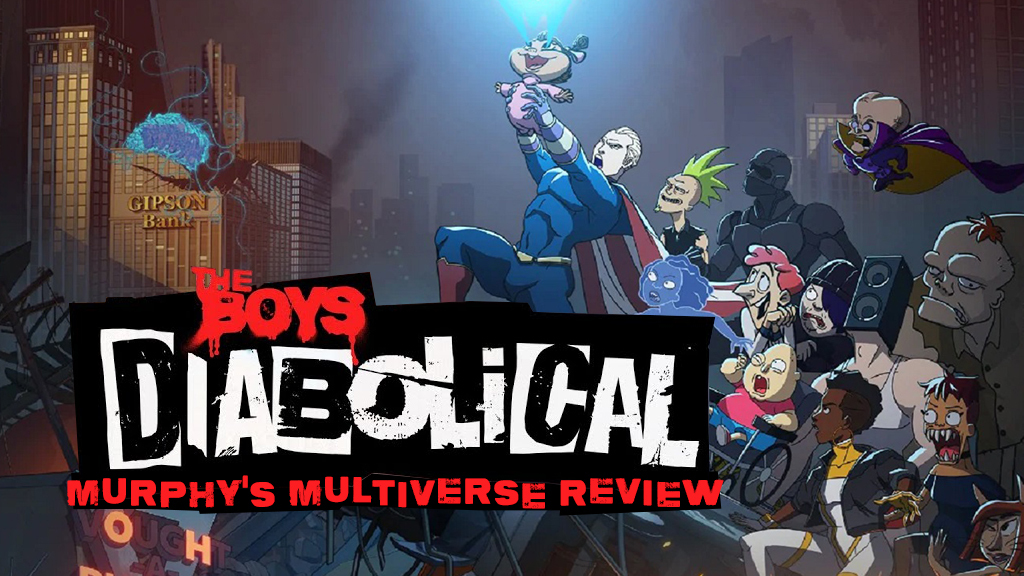
    Whether it’s telling underdog stories of the disenfranchised sticking it to the Man or making audiences feel disgusted by the real-world implications of superheroes, The Boys always delivers. Garth Ennis’ and Darick Robertson’s deviant and deconstructive superhero comic of the same name has expanded into enormous proportions under Amazon’s watchful eye, spawning a mega-hit TV show, two spin-offs, a web series, and yes, an actual canonical porno. The first of the spin-offs, an animated anthology series titled The Boys: Diabolical, proves to be a fantastic reckoning of the source material and preceding TV show’s blueprint that oftentimes exceeds it. 

    TV anthologies are in vogue at the moment, which for a universe as deep and loose as The Boys’ makes it an indisputable format to expand the canon. To helm this expansion, creators Seth Rogen and Evan Goldberg have enlisted Awkwafina, Andy Samberg, Ilana Glazer, Garth Ennis himself, and a few other writers to craft their own dastardly vignettes laid by the groundwork of The Boys, with each one exhibiting its own animation style and tonal quality. The resulting 8 short episodes tackle some of the most entertaining concepts about capes put to screen but it’s Diabolical’s thematic byproducts that make it heftier than its live-action counterpart. 

    In spite of the freedom afforded by the anthological format, Diabolical is bound by a single McGuffin: Compound V, the mysterious serum created by Vought International that turns people into superhumans. Compound V is used as a narrative device to frame most of these vignettes, centering it as a crux of ordinary life in The Boys universe.  In a span of 8 12-minute long shorts, Diabolical makes use of Compound V as a storytelling device more effectively than the entirety of The Boys’ two seasons as it epitomizes Vought’s corruption and malevolence that creeps into the lives of characters far removed from the larger-than-life antics of The Seven. 

    Rogen and Goldberg, known for their brand of edgy humor, open the season with a Looney Tunes-inspired riff on the beloved character that sold the first season to a lot of people, Laser Baby. The short puts aside the finer nuances of latter episodes in favor of mimicking the live-action show’s gore-y touchstones while laying the season’s foundation of unencumbered creativity. It’s right after this episode that Diabolical’s true qualities are displayed with Justin Roiland’s self-explanatory An Animated Short Where Pissed-Off Supes Kill Their Parents. The episode, done fully in the style of Roiland’s opus Rick and Morty, is a meta gut-busting commentary on the increasing absurdity of superhero powers that features Christian Slater voicing a character whose power is narrating things in real-time. 

    Diabolical cascades into further madness with two episodes from Ilana Glazer and Awkwafina that are explorations on loneliness. Glazer examines addiction and social media through the flask of Compound V in Boyd in 3D, a charming rom-com about a hapless man in love with his hopeless romantic neighbor. But it isn’t until Awkwafina’s BFFs that Diabolical reaches its stylistic apex. An anime brimming with children’s book flourishes, BFFs is tonally the most wholesome vignette of the bunch, as it tackles loneliness and friendship in a very encouraging light, while still observing the material’s dark humor. 

    Aisha Tyler’s succeeding Nubian vs. Nubian sees a superhero couple on the brink of divorce while their daughter saves their marriage with the help of the family nemesis. This family-friendly premise, however, is subverted by Tyler’s satirical and vulgar writing. For all its wholesome leanings, the episode bears a closer resemblance to the cult classic The Boondocks than with The Parent Trap. The big curveball of the season is John and Sun-hee. Written by Andy Samberg of all people, the vignette centers on an elderly Korean couple on the run from Vought. Samberg, against all odds, writes a deeply profound episode about hardship, love, and existentialism that taps into a spectrum of pathos that this universe has not touched upon previously.

    The show’s weakest episodes are ironically the ones that feel like deleted scenes from the live-action series. Garth Ennis, whom everything about this franchise is indebted to as its creator, gets a stab at adding a more personal touch to Rogen and Goldberg’s adaptation. True to the comic’s form, Hughie and Butcher actually look like their comic versions. Diabolical takes the authenticity a step further by having Simon Pegg, whose likeness and persona inspired the creation of Hughie, voice Hughie. But while Ennis’ episode gives audiences a glimpse of a wistful 1:1 recreation of the comic, it comes across as a mere tongue-in-cheek wink at diehards with nothing else to say about the material. 

    An underwhelming origin story for Homelander closes out Diabolical’s stellar season. It’s the episode that’s most tethered to the live-action show and, in some respects, functions as a pilot for a hypothetical animated extension of the series. Titled One Plus One Equals Two and written by Invincible scribe Simon Racioppa, its sole redeeming factor is the brief glimpse it gives to the troubled and tortured roots of the show’s best character. But within Diabolical’s framework, Racioppa’s episode pales in comparison to the ambition of the season. 

    Diabolical also follows the trend of celebrities voicing animated TV shows by assembling an ensemble of household names which includes the likes of Michael Cera, Christian Slater, Simon Pegg, and Don Cheadle among a dozen more. The marketing campaign for the show sells the enviable marquee of celebrity voice actors as its strongest asset but the actual episodes prove otherwise. Like Marvel Studios’ What If…?, Diabolical mistakenly assumes that performing in front of the camera and behind it are one and the same. That assumption is easily dispelled by the dismal voice performances of a handful of actors known for their on-screen acclaim. A portion of these performances border into the uncanny valley and sound like inauthentic digital recreations at times.

    Even in the face of its star-studded inconveniences, The Boys: Diabolical works. Simply by design, it surpasses the ambition and creativity of its live-action progenitor. It succeeds in remaining a singular piece of work while feeling essential to the deeper understanding of Ennis’ and Robertson’s twisted view of superheroes. If this is what The Boys’ spin-offs are going to be, fans are in luck.

  • How Hulu’s Thriller ‘No Exit’ Was Made

    How Hulu’s Thriller ‘No Exit’ Was Made

    Fans of thrillers have Hulu’s No Exit to look forward to this weekend. Based on Taylor Adams‘ best-selling novel, the film sees Havana Rose Liu‘s Darby holed up in a rest stop with 4 strangers during a snowstorm. Everything seems fine until Darby discovers a kidnapped child tied up in one of the cars. Murphy’s Multiverse was invited to the film’s press junket which included director Damien Power and its cast.

    Liu was asked about her electrifying turn as Darby, a recovering addict whose demons always get the best of her. Liu, a newcomer to the industry, gave a very humbling answer.

    With Darby, I barely even had time to think. It just felt like it was flowing right from me.  I find her to be gritty, bold, charming, tortured, and also very vulnerable in a way that I don’t think we always see heroic characters holding onto. And I think for me, it was just the best, most sort of complex, nuanced character I could have  asked to play, given that so many of her faults really are her strengths and vice versa. 

    Havana Rose Liu

    No Exit‘s tension stems from the premise’s wildly claustrophobic setting. The film first takes the shape of traditional whodunits but soon morphs into something crazier. Director Damien Power addressed some of the themes that come with a film like No Exit.

    This is not a film about a character or characters who go on a journey and grow and change. It’s really a film about how true character is revealed under pressure. And that applies to every single character in that room. The film the film asks the audience, you know, the audience is trying to work out who is the kidnapper. So, Darby’s trying to ask, “Who are you?” and the film asks that  question of the characters all the time. Who are you when  this happens? Who are you now? Who are you when the  pressure’s really on?

    As to why Power agreed to adapt the novel into live-action, the answer was clear cut upon reading Taylor Adams‘ work.

    I think the script that I read was already quite faithful to the novel. There are a few elements that I thought we could take from the novel though. I mean, as a novel, it had a great  character-driven plot, it’s got high stakes, it’s got these surprising twists and turns, this incredible, hostile setting, and, you know, this great ticking clock with the girl in the van. And all that was already in the script that I read. I can see why people read [the novel] and thought this would make a great movie. So did  I. 

    Damien Power

    One of No Exit‘s secret weapons is Mila Harris, who plays the kidnapped child. We got to ask the cast what it was like working with her and they had nothing but nice things to say. Falcon and the Winter Soldier star Danny Ramirez described Harris as a “powerhouse.”

    She’s like one of the best child  actresses that I’ve ever worked with. Honestly, knocked it out of the park every single time.

    Danny Ramirez

    Even the great Dennis Haysbert chimed on Harris’ scene-stealing performance. With such a dark and morbid premise, Haysbert was worried the film would have a traumatizing effect on a young girl but Harris alleviated those worries.

    I wondered if she was traumatized at  all, you know? And she wasn’t. She just wasn’t. And unless she’s an even better actress than I think she just handled it just right off her shoulders. She’s fine. She was marvelous.

    Dennis Haysbert

    The production design of No Exit’s outdoor set is one of the better aspects of the film. Much of the film’s most intense moments take place in the freezing snowy outdoors and the team nailed making that location look convincingly real. According to Power:

    There was no real snow. We filmed the entire film in a studio in Auckland in New Zealand in summer. So we had a lot of fake snow, which was not without its own hazards, as Havana can tell you. She got totally hosed by a snow tornado on day one which was pretty painful. So  we had-we had some fake snow on set and then we added a lot of digital snow. I think every time you’re looking at  some snow, there’s a digital element in there  somewhere.

  • REVIEW: ‘No Exit’ Is A Cold, Bloody Mess

    REVIEW: ‘No Exit’ Is A Cold, Bloody Mess

    No Exit has the makings of a decent thriller: an intimate premise, a best-selling airport novel that serves as its source material, a producer who wrote Logan, arguably the best X-Men movie in 20 years, and The Little Cast That Could that has Dennis Haysbert and the always-great Dale Dickey. But for every Panic Room, there are a dozen thrillers that fall into the bargain bin of basic cable fodder. The aptly named No Exit, sadly, has no way out of that hole even with all the bells and whistles it has. The problem isn’t so much that No Exit is outright awful, it’s that it fails to bring all its good pieces together, rendering the film as cold as the corpses it leaves in its wake. 

    Darby is a recovering addict who spends her days in rehab full of regret and self-loathing. When Darby receives a call from her estranged family that her mom may be hours away from her deathbed, she breaks out of rehab to visit her mom one last time. In true Murphy’s Law fashion, the night she breaks out happens to be in the middle of a blizzard and she has no choice but to shack in an isolated rest stop for cover. It’s in this rest stop where she finds herself in an inescapable predicament with four strangers and a kidnapped child in a van.

    Any exciting thriller would know to examine the pathos that comes with sobriety, addiction, and paranoia, themes that our protagonist Darby is faced with all throughout the film. To trap someone in crisis in a scenario as cruel as the plot of No Exit would be to bare their demons, exposing their true self in the process. But No Exit forgoes this when it punctures the raging tension all too soon with a reveal that’s all too dull, and a change in tone that’s all too trite. No quarter is given to the potentially fascinating exploration of Darby’s soul, which is a shame given how fantastic Havana Rose Liu is.

    No Exit lives and dies by Liu’s electrifying turn as Darby. Like a seasoned pro, Liu layers Darby with palpable self-affliction and resolve. A mere gaze from Liu conveys a depth of pain that cuts through the film’s noise, cementing her as the film’s singular best asset. That she manages to be so watchable despite the script handicapping the rest of her abilities makes for a performance that may leave audiences wanting more. And No Exit’s mortal sin is not giving her more to do. 

    Precious character work is also not afforded to the rest of the cast as they too are hamstrung by the film’s insistence on being a by-the-book survival screamfest instead of a potent mystery thriller. The great Dennis Haysbert commands what little screen time he has playing cards and standing in a room but loses footing the moment No Exit decides to get rowdy. His addition to the cast adds legitimacy to the ensemble but does little to make the movie feel legitimate. It’s through no fault of his own that his casting was in vain; the script simply does not give Haysbert the space to do anything worthwhile despite being primed to do so. 

    Indie darling Dale Dickey cushions the film’s sharp edges with a tender performance in the film’s former half, only for that tenderness to turn coarse later on Dickey’s performance doesn’t come off as thankless as Haysbert’s but a recklessly jammed twist in the third act exposes the gaps in what could’ve been a more rounded character. 

    Newcomer David Rysdahl’s Lars is central to the film’s crux of claustrophobic unrest and he surprisingly lives up to the task. His very neurotic Lars quickly proves to be a great foil to Liu’s very twitchy Darby and their combined presence coalesces into a mass of unease. Underneath Lars’ ugliness and unpredictability, Rysdahl manages to give the character troubled humanity. 

    Lastly, there’s Danny Ramirez, who goes against the clean-cut babyface type fans got acquainted with in Falcon and the Winter Soldier. Ramirez sheds the ‘aww shucks’ charm of Joaquin Torres to reveal his inner Patrick Bateman. It’s a commendable attempt that ultimately doesn’t live up to the venom of the material because he’s simply too cute to look at. 

    With all that said, it shouldn’t come as a surprise that a middling script that goes awry halfway is what holds ultimately all the film’s best players back. Screenwriters Andrew Barrer and Gabriel Ferrari are credited on the uber-delightful Ant-Man and the Wasp, and yet No Exit is sorely lacking the playful looseness of the Marvel blockbuster. Restraint and compactness are usual staples of a great thriller script but neither are native to No Exit’s screenplay. Without both touchstones, No Exit might as well embrace the range of its premise which it doesn’t.

    The screenplay is at its best in moments of stillness, when the tension calmly simmers to raging levels of unease. It’s during these scenes that the ensemble is at their most gripping, delivering performances that prove why they’re The Little Cast That Could. The screenplay is at its worst when it shifts gears into a loud mess of a cookie-cutter survival story rife with highly questionable story beats. The film makes a big deal of a sudden twist that feels empty and adds nothing to the tension. Characters are heavily dumbed down for bargain-bin levels of suspense and shock. For example, all throughout the film, certain characters make use of a very accessible backdoor to enter the rest stop. But during the story’s boiling point, when the same characters are forcibly trapped outdoors with seemingly no way in the front door, they’ve somehow forgotten about the back door they frequently used prior. 

    Like the screenplay, No Exit‘s photography is two-sided. Given its limited scope, the set is essentially split into two locations: inside the rest stop and out in the parking lot. Inside the rest stop is where No Exit looks its worst. The set’s harsh lighting makes it seem like the cast is doing a one-act play instead of a film. Staging, blocking, and camera movement feel uninspired, unwieldy and ends up making the film’s tensest moments feel lifeless. Ironically, outside in the unforgiving cold is where the film visually comes alive. The snowy set’s authentic craftsmanship allows director Damien Power the space to be aesthetically playful, utilizing the icy atmosphere to stage and compose the film’s most striking images.

    Fans of Taylor Adams‘ novel may find solace in the wanton violence No Exit dishes out to its cast of characters. The tonal shift the film takes halfway through comes with a few exciting brutal and bloody sequences that are almost bordering on comical B-movie schlock. The violent climax isn’t quite the second wind the movie so desperately needs nor does it live up to the novel’s extremities but it closes the movie with a playfulness it should have had from the beginning.

  • FX ‘Alien’ Series Is A Prequel Set on Earth and Won’t Feature Ellen Ripley

    FX ‘Alien’ Series Is A Prequel Set on Earth and Won’t Feature Ellen Ripley

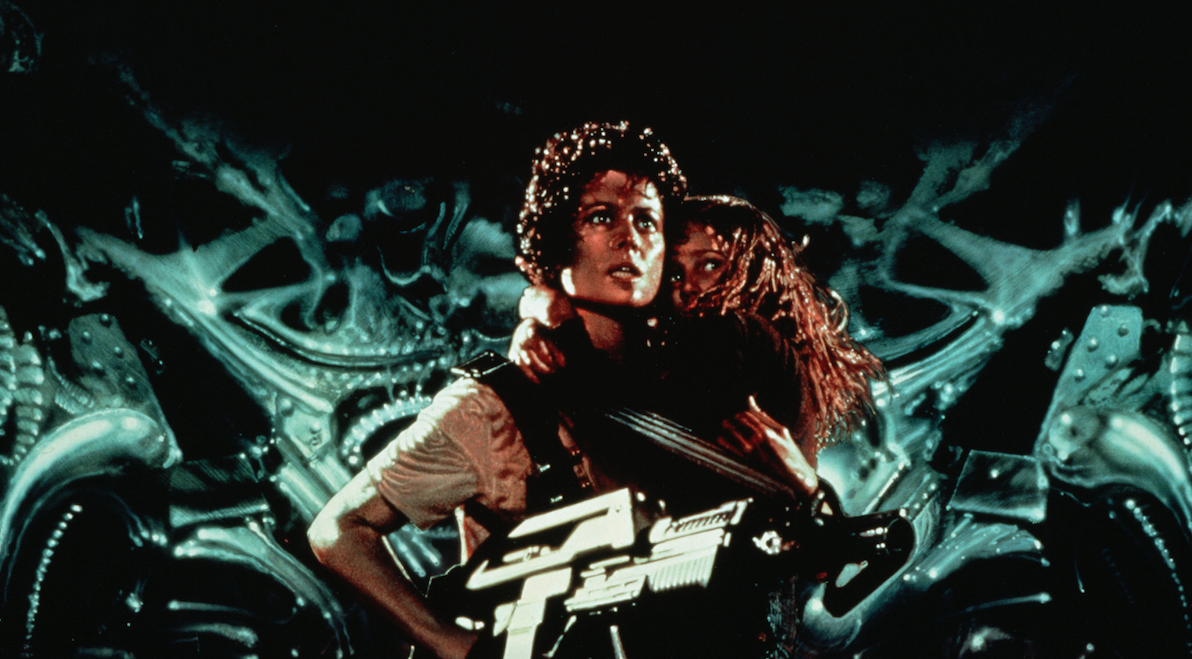
    It all seemed over for the Alien franchise by the time the verdict for Ridley Scott‘s Alien: Covenant came in. Fans were turned off by the perplexing direction of the prequels and its stuffy mythology. The magic of the original films was no longer to be found in the franchise.

    FX’s upcoming show might be keen on undoing some of the damage as it was revealed in this week’s TCAs that the series would be a prequel set several decades before the first movie. According to network head John Landgraf, series linchpin Ellen Ripley doesn’t come around until way later in the timeline:

    There are some big surprises in store for the audience. Alien takes place before Ripley. It’s the first story that takes place in the Alien franchise on Earth. So, it takes place on our planet. Right near the end of this century we’re in — so 70-odd years from now. Ripley won’t be a part of it or any of the other characters of Alien other than the alien itself.

    The series will have a bit of explaining to do as to why there would be a xenomorph on Earth decades before the Nostromo’s discovery off-planet. Thankfully, the series is being helmed by Noah Hawley, who has proven time and time and again his skill in expanding cinematic worlds onto television. Case in point, Fargo’s 5th renewal at the network. If his vision for Fargo and Alien is to be trusted, we’re in very capable hands.

    Source: Deadline

  • New Details On ‘Moon Knight’ Villain Revealed

    New Details On ‘Moon Knight’ Villain Revealed

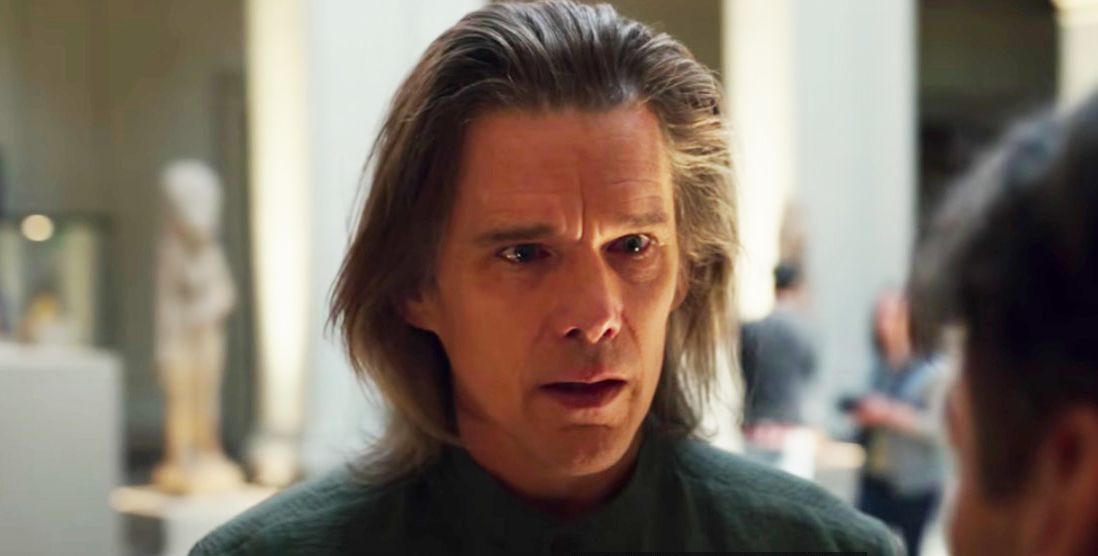
    The character of Ethan Hawke in Moon Knight has been shrouded in mystery from the moment the acclaimed actor was announced. Dr. Arthur Harrow was a name the trailer’s closed-captioning revealed to fans but even that revelation didn’t mean much to anyone due to the obscure nature of the character in the comics.

    Luckily, Hawke himself has finally shed light on just who Arthur Harrow is in the upcoming show. In an interview with Empire, Hawke said:

    [He’s] the head of a kind of certain religious sect. Like a lot of zealots. He has his own ideas about what might make the world a better place and they may not include you.

    Hawke initially raised eyebrows when he namedropped real-world evil cultist David Koresh as one of his inspirations for the character. For the uninitiated, Harrow in the comics is a mad scientist and not a religious figure. Knowing that Harrow is indeed a cultist makes the Koresh influence clearer. Hawke revealed other real-world figures he deemed essential to the creation of his version of Harrow:

    When you build a new character, you create a blender and throw things in. So I threw in David Koresh, Fidel Castro, the Dalai Lama, Tolstoy. The best villains are the ones that think they’re heroes and that’s definitely Dr. Harrow. He sees Moon Knight as an obstacle to him healing the world.

    The recent trailer of Moon Knight showcased more aspects of Harrow that we weren’t previously privy to. Scenes that revealed his tattoo coming to life and his peculiar crocodile staff summoning a burst of energy are telling of the character’s reach in the supernatural. Whether he ends up being a truly larger-than-life character remains to be seen but it’s exciting to think about.

    Source: Empire

  • Melissa Fumero Joins Randall Park In Netflix Comedy ‘Blockbuster’

    Melissa Fumero Joins Randall Park In Netflix Comedy ‘Blockbuster’

    Amy Santiago is ditching the police uniform for a different kind of uniform in Netflix’s upcoming comedy series, Blockbuster. Brooklyn Nine-Nine star Melissa Fumero is set to join Randall Park in the single-cam series about the last standing Blockbuster store in America. Deadline describes Fumero’s role as follows;

    Fumero will play Eliza, a dedicated mother whose marriage to her high school sweetheart is on the rocks. She left Harvard after one semester to start a family and now works at Blockbuster alongside Timmy (Park) as his trusty number two … and maybe more.

    That Netflix is making a series based on their former arch-nemesis feels poetic in many ways. Once upon a time, Blockbuster scoffed at Netflix’s ambitious business plan to expand into uncharted territories. Now, here we are.

    Fumero and Park should prove to be very enticing leads. Among many other big things, Park recently won the hearts of MCU fans as Agent Jimmy Woo in Wandavision. Fumero, as we all know, was a fan favorite in Brooklyn Nine-Nine. The two working together should bring a lot of eyes to this series.

    Source: Deadline