Author: Charles Villanueva

  • How ‘Lightyear’ Became a Time Travel Story

    How ‘Lightyear’ Became a Time Travel Story

    It’s hard to imagine how an in-universe movie in the Toy Story world would work, let alone one that is centered on time travel. But that’s how Lightyear, the film that inspired the toy that Andy would one day buy, posits itself.

    Pixar was kind enough to showcase to Murphy’s Multiverse the first 30-minutes of the film which unveiled the film’s core time travel mechanic. Described as time dilation by director Angus MacLane, the concept sees Buzz Lightyear undertake a recurring mission that brings him several years into the future unaged while his headquarters gets older and older.

    MacLane explained to the press that the decision to make it a time travel story had to do with their experiences working on individual Pixar movies for years on end while the world around them changes.

    So, we have a story where Buzz would be traveling rapidly through time because of his job.  And because of that, it would separate him from society and his loved ones. This felt like a natural fit for Buzz.  The hero lots of times is a well-worn story for the science fiction genre.  The idea felt like fertile ground for both our own personal experiences and the core-defining character trait of Buzz Lightyear.  So Buzz is a fish out of water story.  It’s like Rip Van Winkle trapped in a future he doesn’t recognize, desperately trying to get back to the past to correct the mistake of his youth.  A hero out of his own time.

    Having seen the 30-minute footage, it’s awe-inspiring to see the makers of Lightyear take a huge swing for an iconic character even if the time dilation concept quickly skips past a lot of potentially good character work. It’ll be interesting to see how the concept affects the larger scope of the narrative.

  • REVIEW: ‘Weird West’ Is Not So Immersive

    REVIEW: ‘Weird West’ Is Not So Immersive

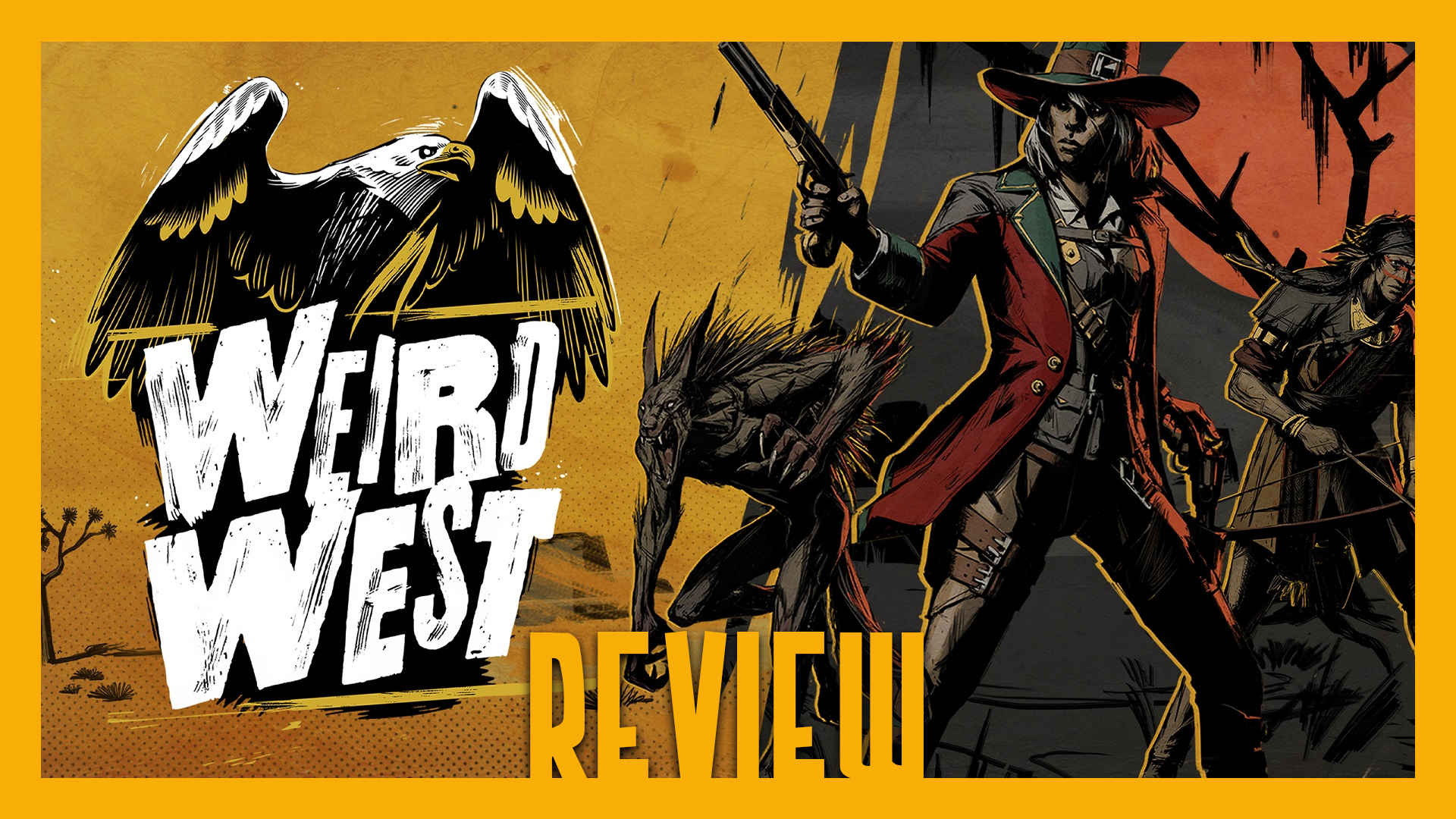
    For all its immersive sim flourishes, Weird West falls short of being the engrossing experience it promises to be. A repetitive gameplay loop, a cast of playable characters with little to no distinction from one another, clunky combat, and a tedious quest system all make Weird West an underwhelming experience.

    Developed by the creators of the Dishonored and Prey games under their new company Wolfeye Studios, Weird West is a supernatural reenvisioning of the American myths of the Wild West. Werewolves, sorcerers, zombies, wendigos, and other monstrosities inhabit this unruly land but it’s also not without your cowboys, gunslingers, trappers, and outlaws. The player is given the reigns of 5 different characters whose stories intersect in some form. You play as a bounty hunter, a human-turned-pig man, an archer, a werewolf, and a witch in that order.

    Such distinct characters would normally offer players diversified experiences but Weird West struggles to make these experiences unique. The game makes the questionable choice of allowing these characters to play very similarly. With the exception of a handful of unique skills, all characters have the same skill trees and the same access to weapons. So the werewolf can be a gunslinger if the player wishes it so, which sounds like a fun idea. However, the problem lies in how imbalanced the two systems are. A lot of the character-unique skills aren’t that particularly interesting, efficient, or economical to use. That inefficiency is oftentimes due to the clunky combat which has a severe lack of depth. So using weapons becomes the most viable option available for the moment-to-moment gameplay which in turn makes every character feel the same.

    The gameplay loop sees players traveling from map marker to map marker to go on fetch quests they need to progress the story. There’s the occasional ambush, raid, and stealth quest but similar to the skills system, there’s a lot to be desired with these encounters. The game’s stealth mechanics aren’t responsive and oftentimes succumb to the game’s jank, leaving players better off just shooting their way through a stealth mission. As for the level design, players will see a lot of copy-pasted levels throughout their journey. So much of the world is made up of unmemorable towns, temples, and outposts. For a world that’s crawling with all kinds of life, the Weird West feels empty.

    Where Weird West redeems itself is in the way it unravels its own tale. For all the numbing similarities the characters’ gameplay share, their individual stories all have a heft to them. Each facet of the story offers players a perspective yet to be experienced. Clashing political factions, warring faiths, and stories of revenge are some of the point of views to be taken. And because this is an immersive sim, players have the freedom to mold how these stories pan out. Major NPCs can be killed on a whim as well as the characters you control. Decisions impact the world on a frequent basis. Kill everyone on every outpost and soon the West becomes a wasteland. Rack up a bad reputation and everyone turns on you on sight. Kill a wanted fugitive and their posse swears revenge on you. Make the wrong decision and the next character you play will have a harder time in the West.

    Sadly, Weird West fails to make the cut in joining the pantheon of great immersive sims. Even with the dev team’s pedigree, the game’s great art style, ambitious worldbuilding, and homages to old-school CRPGs, players might be better off waiting for this one to go on sale.

  • Charlie Cox and Vincent D’Onofrio Seemingly Confirmed for ‘Echo’

    Charlie Cox and Vincent D’Onofrio Seemingly Confirmed for ‘Echo’

    Alongside Kate Bishop, Echo was one of the characters introduced by Hawkeye into the MCU. Played by Alaqua Cox, the character is slated for a self-titled spin-off in the near future. Information on the show has been kept under wraps but a new listing indicates that there are some major MCU appearances waiting to happen in the show. Charlie Cox and Vincent D’Onofrio are two of the names listed on the resume of the show’s costume designer Stacy Caballero.

    Those two names shouldn’t come as a surprise given their character’s history in the comics. With the way Wilson Fisk’s stint in Hawkeye abruptly ended at the hands of Maya Lopez, it makes sense to see the character make a return. As for Daredevil, where there’s Wilson Fisk, there’s Matt Murdock.

    This isn’t the first time some key information has been accidentally revealed through a personnel’s resume. Avengers: Endgame was infamously listed on the film’s cinematographer’s online resume which fans thought dubious at the time of the leak. Of course, there’s a slim chance this could be conjecture on Caballero’s part but all evidence points otherwise.

    Source: Cinegeek

  • ‘Multiverse of Madness’ Official Runtime Shorter Than ‘Black Widow’

    ‘Multiverse of Madness’ Official Runtime Shorter Than ‘Black Widow’

    MCU runtimes are always a point of contention among fans and this latest confirmation should be no exception. As Doctor Strange in the Multiverse of Madness begins its ticket pre-selling, ticketing site Fandango has received word on the film’s official runtime: 2 hours and 6 minutes. This puts the Doctor Strange sequel behind Black Widow‘s 2 hours and 14 minutes runtime and ahead of Captain Marvel‘s 2 hours and 3 minutes.

    A previous report from a Brazilian ticketing site claimed that the film was one of the longest MCU films to date, clocking in at 2 hours and 28 minutes. Between that site and Fandango, the primary ticketing site movie studios collaborate with, we’re inclined to believe the latter. Regardless, runtimes should never be an indicator of quality. Even with a story as expansive as the Multiverse, in Sam Raimi we trust. Raimi’s Spider-Man 2 is roughly as long as this movie and we all know how great that sequel turned out.

  • Disney+ To Retract Altered ‘Falcon and the Winter Soldier’ Scenes

    Disney+ To Retract Altered ‘Falcon and the Winter Soldier’ Scenes

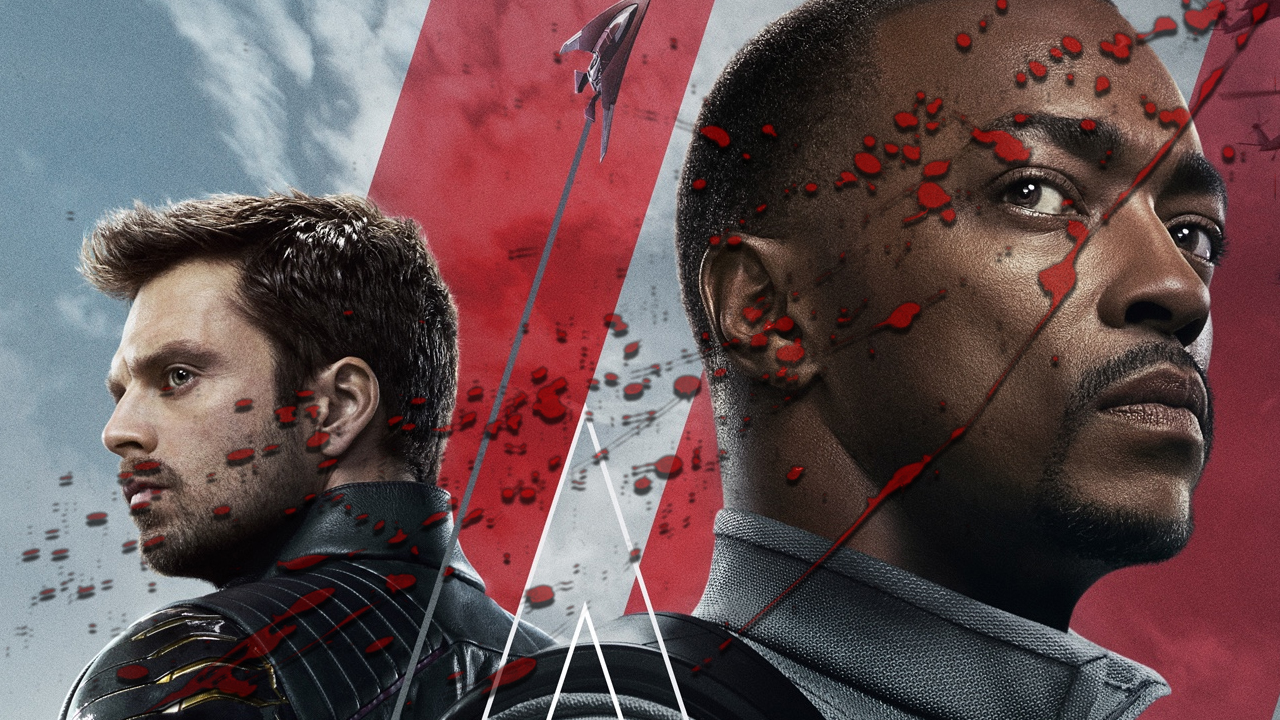
    Early this week, fans spotted scenes depicting gore in Falcon and the Winter Soldier that were altered for general audiences. This stealthy alteration understandably irked portions of the fandom for Disney’s insistence on watering down the violence in the MCU, given how Disney+ recently introduced a parental control system.

    However, according to insider Ryan Parker, these alterations were not intended to be published in the Disney+ library. Parker’s sources cited technical troubles and that the scenes were being retracted as soon as possible.

    Regardless of whether the publication was accidental or not, that scenes are retroactively being changed by Disney clearly means that the company is investing resources in censoring certain content within its original catalog. However, this could also mean that Disney is looking into offering both censored and uncensored versions of their shows. Whatever the case is, this is something people need to keep an eye out for.

  • REVIEW: ‘Coromon’ Is The Perfect Alternative To Classic ‘Pokemon’ Games

    REVIEW: ‘Coromon’ Is The Perfect Alternative To Classic ‘Pokemon’ Games

    If there’s one thing Pokemon clones are good at, it’s keeping the specific genre of creature-collectors alive in fresh ways. Coromon, the latest in a long line of creature-collectors looking to imbue the genre with something exciting, accomplishes the job charmingly. It doesn’t reinvent the wheel – nor does it need to – but it instead bridges the gap between the pixel-era Pokemon games with the modernity of contemporary indie gaming features into a fun nostalgic adventure.

    Like most Pokemon clones, you play a young blank character from a small town with big dreams to explore the vast world. This time, it’s Velua, a vibrant pixel world that doesn’t look too far from the Kanto or Johto regions. Velua offers gamers a number of biomes and environments to immerse themselves into, with each one featuring gameplay quirks unique to the biome. For example, the murky region of the Soggy Swamp has a mushroom-collecting sidequest that allows players to craft unique scents. The Scorching Sands of the Wostin Desert require players to take shade under the various tents on the map to avoid getting knocked out.

    Where Coromon first diverges from Pokemon is the kind of story it tells. The early Pokemon games lean heavily into the sport of it all, centering on the Elite Four tournament and player rivalries whereas Coromon keys into the environmental and scientific duties of creature collecting. Instead of a trainer, the character you play is a Battle Researcher for the Lux Solis Campus, a think-tank whose goal is to preserve nature. The story takes a sci-fi Star Trek-inspired turn when a race of aliens called the Wubbonians arrive to threaten the ecosystem of Velua. It falls upon the main character to explore the world and investigate the invasion before it’s too late. It’s not quite the classic sense of adventure and glory associated with the genre but an interesting approach to the genre nonetheless.

    Coromon’s most exciting change is the way it fuses modern quality-of-life features and RPG elements into the decades-old gameplay loop of Pokemon. The number of options the game offers players to customize mechanics is staggering; players can decide whether a knockout releases their Coromons permanently back into the wild or whether they can capture multiple versions of the same Coromon. Battle mechanics can also be tailored to the player’s skill level. If a player is interested in a challenge, they may tinker with mechanics such as limiting the use of the Trainer Hub, the Pokemon Center in Coromon. If they want something easier, they can activate the feature that allows Coromons to revive with any healing item and not a revive item. There’s an option for everybody.

    Such options would leave any lesser game massively imbalanced but Coromon surprisingly manages to keep everything level. Even with a generous Potential system that lets players handpick which Coromon stats to improve, the game features a hefty difficulty curve. Cheesing and spamming aren’t always viable solutions as many elements come to play in combat. Each Coromon has a certain Trait that acts as curveballs during battles; these Traits range from affecting the battle arena which debuffs/buffs Coromons to a protective Trait that poisons the attacking Coromon on physical contact to a survival trait that allows the Coromon to survive a killing blow with 1 HP remaining. Skills are rarely binary and oftentimes have nuances to them. Certain skills synergize with other skills from other Coromon so players will be switching Coromons frequently during any given match. The difficulty of Coromon is no more evident than in its boss fights which can take a while to get through. However, once you win through strategy, it’s immensely satisfying.

    On top of the mechanical flexibility, Coromon lets players dress and style their character; from the hairstyle to the design of the gauntlet, a device that helps you traverse the world. Throughout the game, more clothing options are offered to the player. Furthermore, the game constantly rewards players with consumable items through its Milestone system, a feature that incentivizes players for catching more Coromon, fighting other Battle Researchers, and exploring the world in general. Gamers looking to experience a more personalized version of Pokemon will be very happy with Coromon.

    Lastly, there’s the Coromons. One of the more exciting aspects of playing a brand new creature-collector is the novelty of seeing these monsters for the first time, guessing what level they evolve, and hoping that they evolve into something amazing. Coromon delivers mostly in that regard with exciting and ingenious creatures despite there not being a plant/leaf element in the game. There are unsettling monsters that look straight out of the Shin Megami Tensei/Persona series. Some of the monsters inevitably look like Pokemons but Coromon’s unique pixel art and animation are what splits the difference. It’s so easy to see the love and attention poured onto the animations and it’s frankly the game’s greatest selling point.

    If you’re feeling nostalgic for the classic Pokemon games yet are looking to experience something outside of that world, Coromon is a must-buy.

  • REVIEW: ‘Moon Knight’ Is Everything The Marvel Netflix Shows Should Have Been

    REVIEW: ‘Moon Knight’ Is Everything The Marvel Netflix Shows Should Have Been

    There exists a version of Moon Knight in the streaming multiverse that sees a live-action version of the character anchored by the realism that served as the mantra for the Marvel Netflix shows. In this variant Moon Knight series, the story takes place in just a few alleyways, rooftops, and office buildings. Oscar Isaac’s Marc Spector is a rich guy who wears a makeshift vigilante costume that occasionally has psychologically dissociative episodes. The show then spends an inordinate amount of time reckoning whether these episodes are a manifestation of something more fantastical or maybe just a case of dissociative identity disorder, only for it to be ambiguously revealed in the final episode, alongside a costume.

    With Marvel Studios’ Moon Knight, the series not only exhibits a full understanding of the character’s rich and complex history but also unabashedly glorifies its weirdness in spectacular ways. And central to this understanding is the overall vision for the show, wherein series writer Jeremy Slater takes the comic’s superhero idiosyncrasies and synthesizes them with the globetrotting adventures of pulp forefathers. The character, relatively known to be tethered to the cityscapes and underworld of the Marvel Universe as Daredevil would, sees himself traverse the globe in a sweeping adventure of might, magic, and vengeance by virtue of Neil Gaiman’s American Gods.

    To bolster the series’ pulpy adventure sensibilities, directors Mohamed Diab, Justin Benson, Aaron Moorhead come together to craft the most gorgeous looking images this side of a post-Chloe Zhao era of Marvel Studios. Scenic panoramas of Jordan stand in for Cairo and are captured beautifully. It’s through these sweeping shots that the scope and scale of the show are inspired, immediately surpassing the purported global scope of The Falcon and The Winter Soldier. Elaborate and ornate sets of ancient Egyptian caves and tombs invoke a true sense of adventure and wonder, showing Marvel Studios’ commitment to immersing audiences in this unseen corner in the MCU.

    It’s taken Marvel Studios more than a decade to get to an era of Celestials, dragons, infinite multiverses, time-traveling, and now, divine pantheons. Slater and his team introduce the idea of Egyptian gods walking among mortals through their avatars, a concept so distanced from the alienification of Asgardians in 2011 that the early Thor films feel like embarrassments, and even take it a step further by pitting them against each other in a war to preserve their peace. When Arthur Harrow, an avatar for the imprisoned god Ammit, threatens to unleash his god’s ruthless judgment on the world, the moon god Khonshu strikes one final deal with his avatar, the mercenary Marc Spector, to stop Harrow. Unfortunately for Steven Grant, the hapless gift shop clerk living inside Marc Spector’s head, he knows nothing of this yet is inevitably drawn into this grand adventure against his will.

    Such a sweeping premise would not work without an entry point to ease audiences in and Slater makes perfect use of Marc Spector’s alter-ego, Steven Grant, to do this. Slater writes Grant as his own being, autonomous and independent of Spector, which in turn allows Oscar Isaac to treat him as a completely separate character. Much has been said and laughed about Isaac’s British accent in the early trailers and while it’s undeniably funny, it surprisingly manages to be sweet and endearing. Isaac gives Grant such a feeble presence that when the character is forcibly drawn to big superhero action moments, it’s highly entertaining. And when Grant is given his own agency as Mr. Knight as the season goes on, it pays off like a delight.

    As Khonshu’s primary avatar and the baseline persona of the character, Marc Spector is ironically sidelined in the four episodes sent to press, with only one episode heavily featuring him as the active persona. And in the handful of times Spector comes to light, it’s played mostly straight by Isaac. Spector is the persona most tied to the mythology of the narrative and has little to do but brood and scowl. For Isaac, Spector might be where he gets to do the least so it never matches the watchability of him playing Steven Grant. Even when Spector suits up as Moon Knight, it’ll be the arresting look of the costume or the comic flair of the fights that will leave audiences breathless, not Isaac. Nonetheless, key moments in the script that allow Isaac as Spector to go broad and bounce back between voices make it a worthwhile performance. Because of it, Moon Knight ultimately accomplishes the one thing its comics haven’t: making you care about the character’s personalities.

    Marc Spector’s alternate personalities make up the lack of ensemble but so do Ethan Hawke and May Calamawy. As Arthur Harrow, Hawke’s words beam with constant pain, darkness, and disenchantment. His past is enigmatic; a puzzle waiting to be deciphered and Hawke subdues heavy emotion to maintain the illusion. The text of the narrative does little to obscure the malice in Harrow’s actions yet Hawke’s performance makes you feel indifferent to them. Playing the leader of an ancient doomsday cult, Hawke rightfully channels the terrifying charm that makes real-world cults so alluring. Harrow displays warmth and compassion to his followers while also exhibiting a wealth of understanding about the world as he as experienced it. His convictions are fueled by his vindications which makes his endgame unwavering and righteous. A step is never lost as Hawke performs all these nuances.

    Calamawy’s Layla El-Faouly, an excellent reimagining of Moon Knight staple Marlene Alraune, serves as the foil for both Spector and Grant. While Spector is brooding and guarded, El-Faouly is brazen. While Grant is helpless, El-Faouly is efficient. Much of El-Faouly’s characterization is connected to her professional and romantic history with Spector. A renegade in her own right, the character boasts connections to the underworld that help Spector fulfill his deal with Khonshu. Calamawy has the thankless job of cushioning the whiplash from Isaac’s eccentric performances, something she does in stride.

    Grace is the word best used to describe Moon Knight’s fight sequences. The scenes lack the intricacy of the Bourne-era of action that modern action films/shows have tried to emulate nor are they concerned in recreating the viscera of Daredevil fights. Rather, Moon Knight displays an affinity for tapping into the iconography of the comic splash page; compositions of Moon Knight freefalling from a building as he throws a crescent blade at a chasing monster and Moon Knight backflipping in slow-motion as he takes several goons out take precedence over shaky-cam action. The lack of intense action may irk fans wanting more choreographed complexities, but the stylized fight scenes successfully establish the character’s pause-worthy screen presence.

    With a show as ambitious as Moon Knight, it takes a while for the pieces to fall together. The first episode functions like a glorified version of the trailer as it understandably trudges through the essentials that introduce Steven Grant’s mysterious predicament. The second episode, on the other hand, is quick to realize the full scope of the series. In just under an hour, the episode manages to bridge the gap between the street-level vantage point of the heightened, larger-than-life scope of comic books before dovetailing into a pulpy adventure. As the story continues, the tone of the series nimbly shifts from transgressive character study to unsettling thriller to slapstick superhero comedy to awe-inspiring adventure. The disparate reversals between Mr. Knight and Moon Knight are playfully realized. Much like the character, Moon Knight is a prism of clashing personalities that have no business being together but cooperate harmoniously.

    The streets of Marvel have come a long way from sluggish hallway fights, skirmishes with goons in parking lots, and blatant attempts to obscure anything remotely heightened. These days, the MCU has never been prouder of its weirdness and with Marvel Studios’ Moon Knight, the future of street-level characters has never been brighter and more ambitious. Moon Knight is an indelible benchmark in Marvel Studios’ playbook.

  • EXCLUSIVE: Zach Braff and Gabrielle Union Talk ‘Cheaper By The Dozen’

    EXCLUSIVE: Zach Braff and Gabrielle Union Talk ‘Cheaper By The Dozen’

    With the way how things are turning out in the world, people could use some wholesome family-friendly warmth. Disney+’s latest offering, Cheaper By The Dozen, does exactly that. Zach Braff and Gabrielle Union star in this iconic remake of a remake about a family with a dozen kids living through life. We briefly spoke with both Braff and Union about their roles as the heads of the family Paul and Zoey Baker, respectively, and asked how they approached the characters.

    Braff drew inspiration from his own desires of being a whimsical fun dad one day:

    It’s kind of the dad I wanna be one day. I’m not a father but I hope when I am, I’m fun and silly. I’m going on adventures with them, down on the ground and playing with them. He’s the dad I daydream of being one day. I’m an uncle to a bunch of nieces and nephews and I have so much fun with them and I bond so closely with them. So I just made Paul the dad I wanna be one day.

    Union, on the other hand, drew inspiration from the film’s text on diversity and inclusion and approached Zoey as believable as possible.

    Zoey is a lot more patient than I am. If I put too much into Zoey Baker, it’s a whole different movie [laughs]. She definitely would’ve handled all the racial situations way differently. For me, I wanted to make it as realistic as possible. And when you talk about blending families and you have different races and cultures and levels of ability, when you’re talking about the best neighborhood for your family, neighborhoods without diversity and inclusion probably aren’t the best for your family. That’s still something I’m unlearning and I’m trying to do better with. But it was really important to show the reality of moving through life with a blended family that is super diverse.

  • REVIEW: ‘Windfall’ Is Neo-Noir Prestige

    REVIEW: ‘Windfall’ Is Neo-Noir Prestige

    Set in a quaint vacation home where an embittered man robs the home of a mogul, Windfall proudly touts itself as a Hitchcockian thriller and does its damnedest to feel like one. The opening credits alone, where cinematographer Isiah Donte Lee’s motionless image of a lavish patio conspires with the thumping Bernard Hermann-inspired score and vintage typography fading on-screen, paints an eerie picture of the suspense creeping up in this vacation home. As the camera dollies closer to Jason Segel‘s character named Nobody enjoying the panoramic view of a lush orchard, Danny Bensi and Saunder Jurriaans‘ score fades out, tethering dread and silence together. And when the owners discover the Nobody robbing their home and are held hostage, director Charlie McDowell begins to slowly appoint the audience as voyeurs in this uncanny unraveling of marriage, wealth, and power.

    Contrary to McDowell’s Hitchcockian virtues is Andrew Kevin Walker‘s screenplay co-written with Justin Lader, which is low on plot but heavy on themes. Walker’s celebrated screenplay for Se7en pings back-and-forth from scene to scene, building a mystery that asks audiences to connect the dots alongside its characters. Windfall, on the other hand, simmers mostly in thought, leaving wide-open spaces in the storytelling that feels too loose. The mystique the screenplay tries to construct by having all three leads unnamed and their backstories obscured mostly fails to materialize in any meaningful way. Walker’s script reckons heavily with populist views of excess and capitalism and uses it to subtly define the characters. The character referred to as the CEO, played by Jesse Plemons, rambles about hustle and opportunity while the disenfranchised Nobody preaches equality. These traits wouldn’t be so bad if the characters weren’t just those identifiers; Plemons and Segel end up caricatures rather than autonomous, with nothing else to say beyond class arguments progressives and conservatives argue about daily on Twitter.

    The Nobody may be a tiresome character but Segel’s performance is not. Segel does decent work as he aptly embodies a man clinging to what dignity he has left. Segel’s pathetic bumbling may seem like a fumble on the actor’s part but in the little we learn from his disputes with the CEO, it’s evident that the pathos comes from conviction. Plemons, on the other hand, borders on generic as an unapologetically rude man of wealth. There’s fun to be had in seeing Plemons chew up the scenery with jackassery but the performance feels uninterested in leveling itself with the taciturn of the film.

    Ironically, the character we end up learning about the most ends up the most engaging. As the Wife, Lily Collins gets to define her character in a way that isn’t encumbered by Walker’s social commentary. Little is explicitly said about the Wife but Collins fills in the gaps with hefty anecdotes that hint at a backstory that is pained and at odds with her current disposition. While the Nobody rants about the vague and cruel ramifications of the CEO’s technology, the Wife is unconcerned with neither and is musing about her own past and future. When her marriage with the CEO is put into question along with her autonomy as their cozy hostage situation draws on, Collins embraces the noirish ambiguity of it all and displays a subdued darkness. Collins’ performance is emblematic of the potential of a script concerned with character more than proving a point.

    Windfall ultimately works thanks to Collins’ enigmatic presence, McDowell’s precise understanding of Hitchcock’s work and his deftness in distilling that influence into a rambling script. With a meticulously constructed atmosphere and a haunting conclusion, Windfall is a thriller rife with noir prestige.

  • REVIEW: ‘Cheaper By The Dozen’ Should Have Been a TV Show

    REVIEW: ‘Cheaper By The Dozen’ Should Have Been a TV Show

    Disney+’s Cheaper By The Dozen has all the makings of a successful TV show. It features a wholesome family-friendly premise with two great leads in Zach Braff and Gabrielle Union, who command the perfect kind of star power a series like this would need. The film has a mostly-good ensemble of kids that may become the next big sitcom stars. Most notably, though, it has an all-star producer in Kenya Barris, whose eye for network-friendly sappiness that turned Black-ish into a massive sitcom empire is in full effect here. But that’s also a problem with the film. That it’s paced, stitched, and filmed like a TV show, it crams in so much more than any film can service. 

    Based on the Steve Martin film of the same name based on the novel by Frank Bunker Gilbreth, Jr. and Ernestine Gilbreth Carey, this new Cheaper By The Dozen follows the same concept of its predecessors as it explores the life of a family with a dozen children. The film sees Paul and Zoe Baker chase their dream of becoming successful franchise restauranteurs as a family of clashing personalities together. This new version helmed by Black-ish director and creator Gail Lerner and Kenya Barris respectively sees a more diversified Baker family with millennial cultural touches.

    Paul Baker, the quintessential white dorky dad, is going through a mid-life crisis. His restaurant has a backlog of bills to pay, he’s not maximizing his profits, he has a dozen kids to feed, and top it all off, his wife’s ex-husband and the biological father of two of his step-kids, Dom, is a glamorous football star who has everything he hasn’t. So when the opportunity to be the next Chef Boyardee comes, Paul takes it, hoping to provide for his family in a way he hasn’t before.

    For the next hour and a half, Cheaper By The Dozen rushes through one scenario after another as it tries to hit emotional beats for more than a dozen characters like a TV show would in one entire season. Storylines about racism, stealing, bullying, and dating are all shortchanged simply from the script tackling everything at a breakneck pace. It certainly doesn’t help that some of the plot points don’t fit the homely spirit the film tries to embody from its predecessors. Tiktok, glamour, and high society living are of the few things this next-gen Cheaper By The Dozen wears on its sleeve. Paul moves his family to a giant mansion in Hollywood after his hot sauce hits grocery shelves, it doesn’t quite work as the film’s attempts to engage the idea of excess and wealth fails to make a point.

    Thankfully, the cast holds most of the film together with such charming chemistry and wit. Braff and Union have an emotional foothold of Kenya Barris‘ and Jenifer Rice-Genzuk‘s script, which allows them to deepen the hastened drama from the page through earnest performances on screen. The Baker kids are a joy to watch; several of them are so fearless on-screen and steal scenes right from under Braff and Union. Mykal-Michelle Harris, in particular, is a huge stand-out.

    For better or worse, sitcom alum Gail Lerner directs Cheaper By The Dozen like it’s an episode of Black-ish, as every scene’s visual language looks ripped from a single-cam sitcom. You’re almost half-expecting Dre and Rainbow to show up at any moment. This isn’t to argue that Lerner’s direction is bad but it’s to point out how peculiar the film looks given how so much of the text is already begging to be just formatted for a serialized show. Perhaps the plan is for this film to be a proof-of-concept of just how great a Cheaper By The Dozen TV series would be.

    Once more, Kenya Barris and co. prove how strong their eye is for newly-fashioned wholesome family fun. With a cast as strong as this and relatable growing pains all families experience, Cheaper By The Dozen accomplishes the job it sets out to do in spite of all its shortcomings.