Author: Charles Villanueva

  • ‘Doctor Strange in the Multiverse of Madness’ Musical Battle Was Created in Reshoots

    ‘Doctor Strange in the Multiverse of Madness’ Musical Battle Was Created in Reshoots

    Reshoots is a dirty word among fans in this business. The general consensus is that when reshoots occur during a big-budget production, it’s a sign that everything is a total mess behind-the-scenes and fires need to be put out. While that is the case in certain situations, most of the time it’s a standard byproduct of the production pipeline. Oftentimes, it’s when a lot of unexpected magic happens as filmmakers have a better perspective of their movie now that they’ve seen it on the cutting room floor.

    Case in point, the reshoots of Doctor Strange in the Multiverse of Madness birthed the astounding musical fight scene between two Stranges fighting for the Darkhold. Fandom.com spoke with Danny Elfman who revealed that the scene was conceptualized during reshoots:

    Whereas the musical battle was very late in the game, and Sam was returning to England to shoot a second time. He says, ‘I’ve got this idea,’ and he’s describing it to me. And I said, ‘Sam, I don’t know what the hell you’re talking about.’ And he’s like, ‘Don’t worry, don’t worry, you’ll see it, you’ll see.’

    Danny Elfman

    That particular showdown is undeniably one of the most exciting fight sequences the MCU has ever had. It’s a fight scene that harkens back to the fantastical days of Disney in Fantasia as well as the audacious mindbending journeys of Doctor Strange in the Silver Age. It’s also surprising to learn that the idea wasn’t necessarily from Elfman but from director Sam Raimi himself. Regardless, the scene is a great encapsulation of Raimi’s creative relationship with Elfman, which goes back decades.

    Source: Fandom

  • EXCLUSIVE: Mohamed Diab Breaks Down Oscar Isaac’s Emotional Scene in ‘Moon Knight’ Finale

    EXCLUSIVE: Mohamed Diab Breaks Down Oscar Isaac’s Emotional Scene in ‘Moon Knight’ Finale

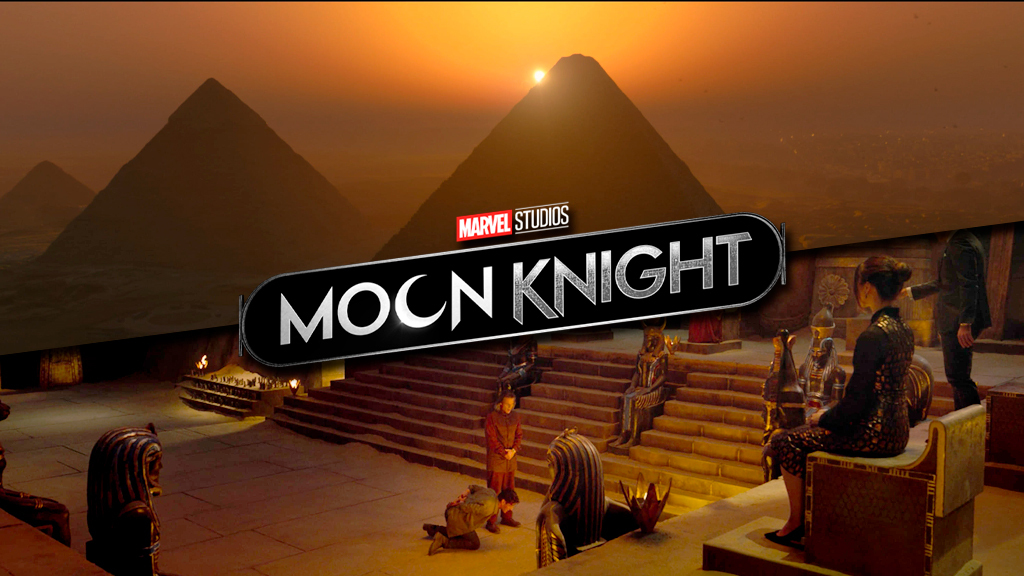
    The Moon Knight finale managed to land all its emotional and character beats in spite of the massive spectacle it displayed. Through the 6 episodes, the story reckoned heavily with Marc and Steven’s relationship which ultimately led to the finale’s touching moment. It’s a moment that had Marc accepting Steven’s presence in his life as a positive. Series director Mohamed Diab spoke to us and broke down the genesis of that scene during the writing process

    It’s the moment where the two of them really heal. This journey at the core of it is about someone who has to learn with themselves. With all sides of themselves. You and me have more than one side. We have the persona and the shadow self. You try all your life to learn to live with those sides of you. That’s what inspired that scene between the two of them. That journey had to come to a moment where Marc realizes that Steven is not just a stress ball. He’s more. He’s half of him.

    Despite its shortcomings, the series, in many ways, encapsulates the Marvel Studios DNA perfectly; it delivers on spectacle while imbuing it with human vulnerability while confronting the weirdness of the source material. Oscar Isaac has had many moments of incredible acting throughout the show and his moment in the finale is easily one of them.

  • EXCLUSIVE: ‘Moon Knight’ Almost Had All the Avatars Turn Into Superheroes

    EXCLUSIVE: ‘Moon Knight’ Almost Had All the Avatars Turn Into Superheroes

    One of the most exciting possibilities Moon Knight posited early in its season was the idea of gods having their own avatars or superheroes to represent them with Moon Knight being the most predominant one. Episode 3 unveiled the Ennead, the pantheon of Egyptian gods, and their mortal avatars. This came somewhat into fruition during the show’s finale when Layla became the avatar of Taweret and turned into the superhero Scarlet Scarab.

    Murphy’s Multiverse got to speak with executive producer Grant Curtis, who revealed their early ideas of possibly turning the avatars into costumed heroes just like Moon Knight and the Scarlet Scarab.

    When we were in the writer’s room looking at the whiteboard and trying to figure out who would suit up and who wouldn’t, that was brought up. It was definitely a possibility at a point. But as we looked at the overall journey and narrative, it became something that we didn’t need to best tell Marc and Steven’s story.

    Grant Curtis

    As solid as the Marc-Steven narrative was, it would’ve been exciting to see any of the other avatars get costumes. Ethan Hawke wearing Ammit-inspired armor sounds too good to ignore. What would Osiris’ avatar even look like, to begin with? The mere idea of having that many mystical superheroes in that part of the world is already so exciting. Maybe future stories set in this corner can follow through on this scrapped plan.

  • EXCLUSIVE: Mohamed Diab On Layla’s Missing Ending in ‘Moon Knight’ Finale

    EXCLUSIVE: Mohamed Diab On Layla’s Missing Ending in ‘Moon Knight’ Finale

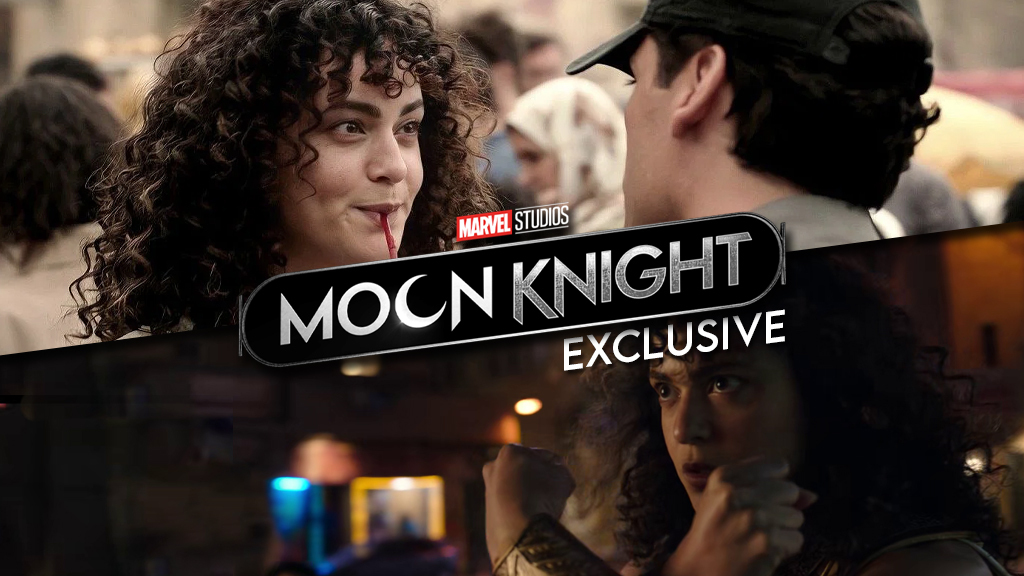
    The Moon Knight finale, “Gods and Monsters”, provided the MCU’s first Egyptian superhero in May Calamawy’s Layla, who became the avatar of the goddess Tawaret. As Tawaret’s avatar, Layla became the Scarlet Scarab and teamed up with the re-resurrected Moon Knight to stop Arthur Harrow from unleashing Ammit’s preemptive justice on the world.

    While the episode gave closure to central plot of the series and left Marc and Steven in a seemingly good place, what it did not give was any sort of closure to Layla’s arc, leaving fans wondering what’s next for the newly empowered hero. According to director Mohamed Diab, the open-ended nature of Layla’s journey was intentional:

    I would say that it’s left open so we can play with it the way we want. She can stay in Egypt. She can go back to London. She can be a superhero. I can’t wait for myself to see her and Taweret on a journey driving each other crazy. I think it’s left open for a reason because in the next journey, you need to think of all those things and flesh them out in a very thorough way.

    Diab’s creative decision is smart in that it doesn’t paint him, or whoever picks up the character next, into any corners. By letting Layla walk away without any hints as to where she might turn up next, there can be no sense of expectations on the part of audiences as to what “should” be next for the Scarlet Scarab, only myriad possibilities of what COULD be next, as Diab indicates. Whatever is next for the hero, Calamawy’s turn in Moon Knight has set her star in the sky and provided another new hero whose importance off-screen transcends whatever comes next on-screen.

  • REVIEW: ‘Trek to Yomi’ Is an Essential Experience for Samurai Fans

    REVIEW: ‘Trek to Yomi’ Is an Essential Experience for Samurai Fans

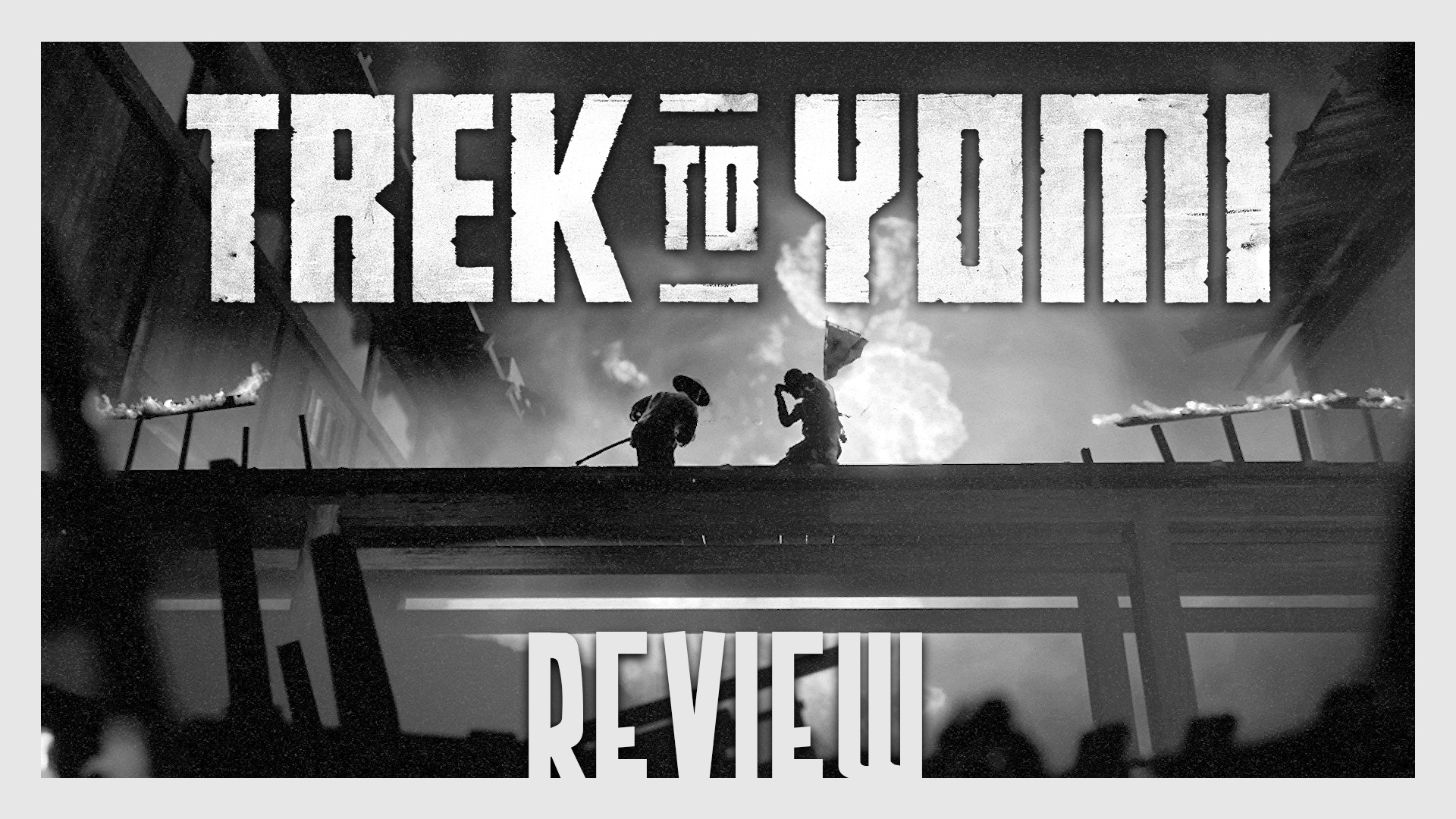
    Like Ghost of Tsushima before it, Devolver Digital’s Trek To Yomi is a contemporary celebration of Japan’s samurai history. It’s one that honors the countless samurai stories that came before it while examining the role of the sword in feudal Japan. Whereas Ghost of Tsushima was a creative reimagining of the historical invasion of Tsushima Island, Trek To Yomi mainly pays homage to the post-war samurai films of the 50s and 60s in a concise yet classical tale of vengeance and redemption.

    The near-literal shadow of Akira Kurosawa looms high over Trek To Yomi and it pays off dramatically. In fact, so many of the game’s blindspots are sheathed by the game’s cinematic presentation. Its distinct visuals, frame compositions, and engrossing atmosphere make it one of the most striking games of its kind. Never mind the fact that there are already games with monochromatic grainy filters; none of them come close to the fidelity of the way Trek To Yomi makes use of it.

    Essential to the game’s visual language is the fixed camera perspective which is bolstered by the wide canvass that is the game’s anamorphic aspect ratio. What is now considered a bygone aspect of video games is Trek To Yomi‘s secret weapon. Every frame is meticulously crafted, from the blocking to the cinematography, down to the textural flourishes of wind, flame, and shadows. Not one inch of the screen feels accidental. Throughout the 6-hour long story, there are endless amounts of scenes to traverse but they always feel dynamic and alive, despite the bleak monochrome.

    Serving as the perfect compliment to Trek To Yomi‘s visuals is its music whose aural palette is deeply rooted in traditional music from Japan’s Edo period. As the samurai Hiroki treks the land of the living and the dead, striking down bandits and spirits in his path, Trek To Yomi‘s music quietly consumes each scene with dread and serenity. Even in the face of the game’s bugs like frame drops and texture pop-ins, the music elevates everything to experiential heights.

    There are two aspects to Trek To Yomi’s gameplay: the 3D plane where all the exploring is done and the enclosed 2D plane where all the combat happens. Scenes seamlessly transition from one plane to another, allowing players to discern each moment appropriately. Exploring mostly consists of looking for secret areas and finding collectibles.

    Trek To Yomi‘s approach to kenjutsu is nothing short of authentic as the developers worked closely with Japanese cultural experts to be as respectful to the craft as possible. This in turn makes the combat a lot less flashy than players might be accustomed to. Combo strings are specific and restrictive; there’s no option to chain combos into over-the-top moments.

    While it isn’t the in-depth 2D-sidescroller it could be, Trek To Yomi‘s combat has its nuances. There’s a stamina bar that depletes with every strike and block. Throughout the game, players will amass new combos and ways to fight enemies. This comes in the form of different projectiles and button combinations that require directional inputs. The nuance in the combat is the amount of precision it takes to get combos correct. Mashing simply doesn’t work. Buttons need to be inputted at a specific moment in the middle of the combo for the full string to be executed. It’s almost akin to playing a fighting game; it takes a while to get used to.

    For the dozen of skills and combos the player will learn throughout the story, Trek To Yomi doesn’t really encourage players to try them out. Enemies can be struck down by the same basic two-hit combo repeatedly. There is the occasional armored enemy that requires a few more hits but there’s no practical incentive to use the moves frequently. On top of all that, the parry system doesn’t feel as challenging as it could be. It’s oftentimes easier to bait parries to open up blocking enemies than it is to break their guard.

    There currently is no endgame content. No NewGame+ for all your skills to carry on to your next playthrough which is a missed opportunity. However, the big feature you unlock after beating the game for the first time is Kensei difficulty, which is where the game takes on a new life. With Kensei difficulty activated, Trek To Yomi transforms into the Bushido Blade successor no one knew they needed, with the one-hit kill mechanic raising the stakes of every enemy encounter. Enemies can strike down players with one hit and vice versa. The aforementioned simplicity of the combos suddenly feels worthwhile and satisfying. Just like any good 2D fighting game, frame data and spacing take precedence over style. This is how the game should be experienced.

    On easier difficulties, Trek To Yomi is a game primarily made to be looked at and heard than it is a game to be fully engaged with. It’s a game made for the senses; stunning from start to finish with not much to do in between. But in its hardest difficulty, it becomes a totally experiential game that fans of the samurai genre need to play. Regardless, Trek to Yomi succeeds in being a love letter to a bygone era of stories.

  • REVIEW: ‘Citizen Sleeper’ Is A Sci-Fi ‘Disco Elysium’

    REVIEW: ‘Citizen Sleeper’ Is A Sci-Fi ‘Disco Elysium’

    NOTE: This game was played and reviewed by Adam Cartel

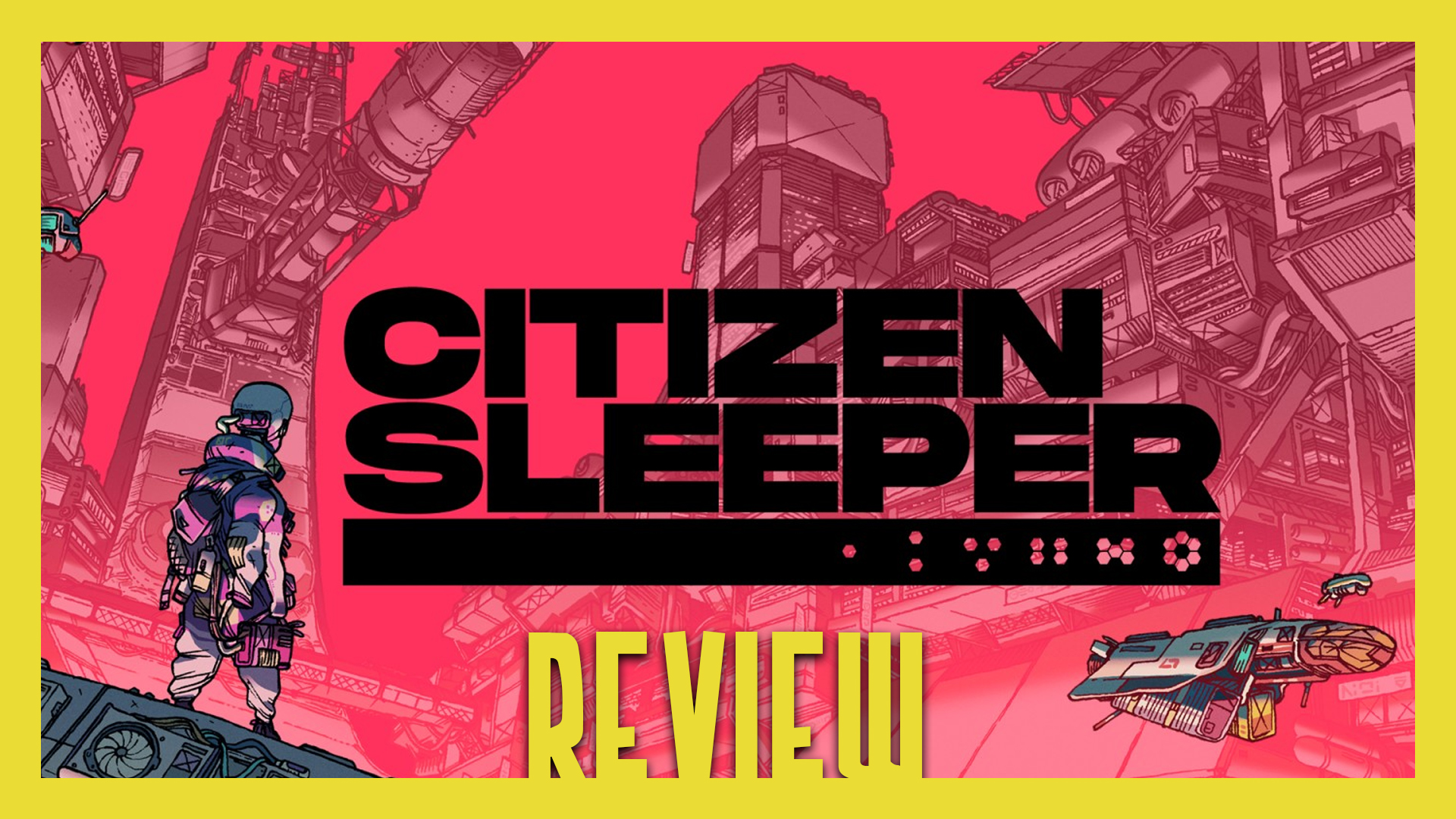
    In Citizen Sleeper, you play as the titular Sleeper, a digital consciousness residing inside an artificial humanoid body that’s slowly dying. Having escaped from an evil organization that created your kind and with very little resources on your person, you find yourself stranded on a massive space station with several factions and citizens trying to either survive everyday… or escape forever.

    You are in Erlin’s Eye, an abandoned space station that is now the home of several factions and alliances seeking freedom from corporate evil. This anarchic space town is populated with blue-collar workers, small-time businessmen, and mercenaries alike, each with their own personal or idealistic goal. This is the kind of world that your Sleeper needs to navigate in order to survive.

    If all this sounds familiar, that’s because you’ve probably played a very similar well-known game that seems like a larger-scale version of this one: Disco Elysium. They both feature an amnesiac protagonist with a deteriorating body, both set in a town with political problems, and both have roots in tabletop RPG mechanics. It’s inevitable for the two to be compared as their similarities extend beyond the base premise.

    Citizen Sleeper plays like a dice-based tabletop RPG. Every game day (called a “cycle”), the game pre-rolls a number of six-sided dice for you, which you could then spend on Skill checks in order to interact with the world in pursuit of your goals (or “Drives” as the game calls them). You have five Skills: Engineer, Interface, Endure, Intuit, and Engage. At the start of the game, you’re given the option to choose between three archetypes: the Machinist, the Operator, and the Extractor. Each of these archetypes has one Skill that’s already upgraded, and another one that’s downgraded. Whichever archetype you choose depends on how you would prefer to approach the world during the early parts of the game.

    You are then thrust into the game’s unskippable tutorial, which would make you realize that your Sleeper’s artificial body is built to die through planned obsolescence. Not only will you have to get a job, but you’d also need to find a way to stay alive by properly managing your Condition and Energy. Fewer dice are rolled for you every cycle for each time your Condition drops a stage. Your Condition, by the way, drains faster whenever you have low Energy. A typical cycle in the world of Citizen Sleeper goes like this: get your dice, pursue one of your Drives, gather resources, discover unexplored areas, spend all of your dice on required Skill checks, make sure your Condition and Energy are high before you sleep, and end your cycle.

    The graphics are above-average for a game using the Unity engine, and it’s smartly presented. It goes without saying that the character designs look great, and pair well with the cel-shaded look of the Eye’s 3D model. Despite being set in the blackness of space, the game’s aesthetic is easy on the eyes thanks to the smattering of cool blues, yellows, and pinks on its color palette.

    The lack of a controllable player avatar might be a complaint for some people, but it actually makes sense for Citizen Sleeper. Navigating a vast abandoned space station as a controllable character would be too much for the Unity engine to handle, let alone for any game developer. For comparison, Disco Elysium has a controllable character but a much smaller map in relation to it. In lieu of walking, Citizen Sleeper lets players scroll through the wheel-shaped game world and click the area that they want to explore.

    As for music, lo-fi sci-fi compositions make up the entirety of the soundtrack. It makes for a very relaxing gameplay experience… perhaps too relaxing, at times, especially after multiple playthroughs. In fact, there is no memorable song: it’s all background music that your brain would eventually forget. That may be a creative decision, but this was also one of the minor concerns with Disco Elysium’s soundtrack, which coincidentally sounds similar to Citizen Sleeper’s.

    Citizen Sleeper boasts several lines of narrative, naturally-flowing dialogue, and well-written characters that all, once again, are reminiscent of the style present in Disco Elysium. Just like the latter, it also starts with a disembodied voice doing a deep monologue about consciousness while in the void and ends with the character waking up in a sorry state. Unlike Disco Elysium, however, there is no option to turn on dubbed dialogue.

    Despite the lack of voice acting, you can still easily connect with the diverse cast of characters living in the Eye. Each one has unique personalities that are effectively portrayed through words and has backstories that make sense within the whole narrative of Citizen Sleeper. It doesn’t take long for anyone to feel invested in any one character, be it a simple street vendor or an ethereal digital entity. It’s not impossible to find yourself tearing up for a fictional character made up of pixels on a monitor screen because of this game.

    Citizen Sleeper has multiple endings depending on the choices that you’ve made throughout the game, and the game gives you enough leeway to change your mind even at the penultimate point before your final decision. However, replaying the game is somewhat discouraged by the lack of save slots and manual saves. The game only provides you with three autosave slots. With all that said, the game does get repetitive after multiple playthroughs, and eventually does feel less like an RPG and more like a cow clicker. Once you figure out the optimal way of doing things, you’ll find yourself walking down the exact same path on any other playthrough, unless you willingly deviate from it.

    Overall, Citizen Sleeper has solid gameplay for a narrative-based RPG, but it could still be better. Despite being a short game with little replay value, going through Citizen Sleeper’s well-written story is worth at least a second playthrough. Jury’s out on whether creator Gareth Damian Martin really was inspired by Disco Elysium when he came up with Citizen Sleeper or not, but it’s definitely not a bad thing for a developer to be inspired by a universally-acclaimed video game like it. Taking the good aspects of an existing game and further improving upon it is a key to innovation within the gaming industry, and Citizen Sleeper is a step in the right direction for its genre.

  • EXCLUSIVE: Every ‘Moon Knight’ Easter Egg is Intentional Says Production Designer

    EXCLUSIVE: Every ‘Moon Knight’ Easter Egg is Intentional Says Production Designer

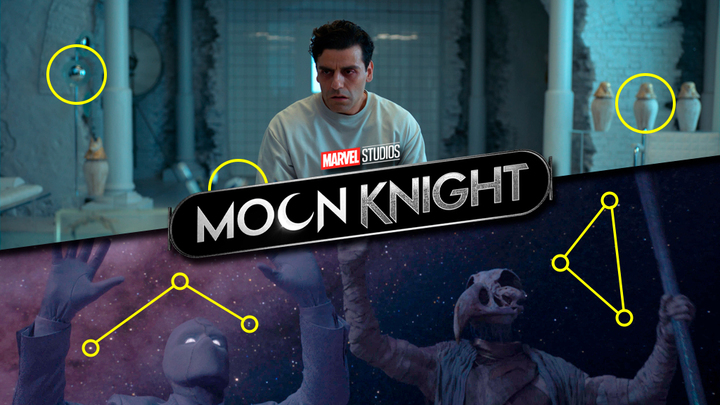
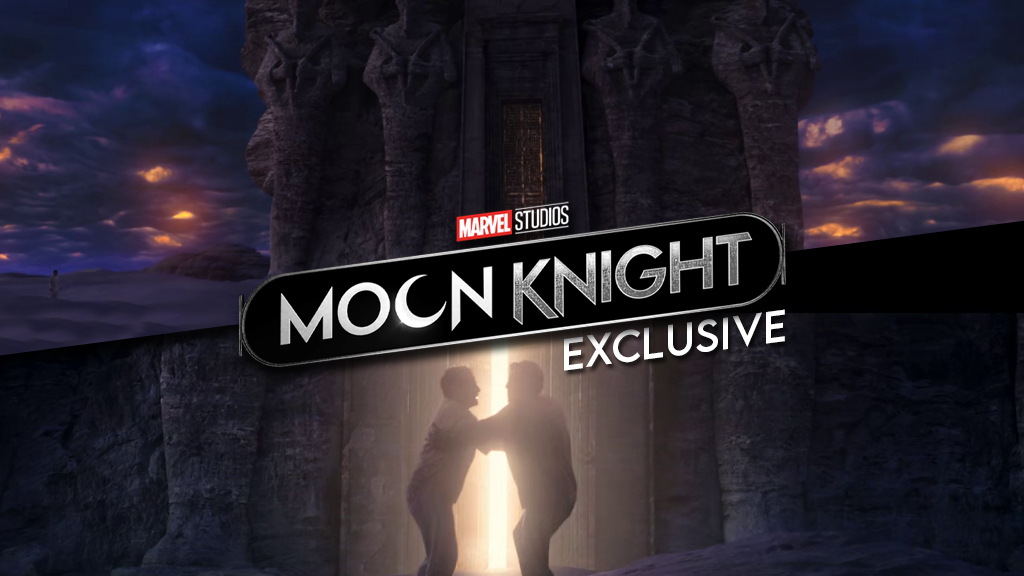
    Easter eggs can oftentimes be a double-edged sword for fans. In the case of Wandavision, the rabid hunting of easter eggs from fans proved to be a source of weekly disappointment. And because Moon Knight is a similar mystery box, fans are debating heavily whether an object onscreen is an easter egg or just a coincidence to avoid disappointment. For example, the Kang logo on one of the bad guys’ shirts.

    In our interview with the show’s production designer Stefania Cella, she revealed that every easter egg fans see on screen is intentional and not a happy coincidence.

    All deliberate. There are no accidents. Marvel is very cautious and very aware of what are the [easter eggs]. That was an educating curve for me; what [easter eggs] can be involved and what are the things to leave out. There are the usual easter eggs for comic lovers. I put them in there personally.

    Whether those easter eggs are purely aesthetic or a teaser of what’s to come, it’s nice to see the amount of detail put into the show. Compared to Wandavision where the people making it admitted that some of them weren’t intentional (the aerospace engineer, for example), the people making Moon Knight seemed to have learned from Marvel Studios’ previous mistakes.

  • EXCLUSIVE: How The Ennead Was Brought To Life In ‘Moon Knight’

    EXCLUSIVE: How The Ennead Was Brought To Life In ‘Moon Knight’

    2022 seems to be the year where the true deities of the MCU get introduced. While the early Thor films established the Norse gods as pseudo-space aliens, Moon Knight wastes no time in treating these beings like the divine pantheons they are. And in Episode 3 of Moon Knight, the Ennead, the cabal of Egyptian gods living among us through their avatars, was revealed in their full glory.

    We spoke to production designer Stefania Cella about the process of bringing these characters to life and the lengths they had to go through to keep it as respectful as possible.

    I went to Egypt to educate myself about Egyptian culture. We had an Egyptologist with us helping us translate hieroglyphs. It’s a long process of research.

    Balancing the elevated fantasy from the comic books with the historical accuracy of Egyptology is not easy feat but Cella and Marvel Studios managed to bring it all together cohesively.

    All the references to the literature on Egyptian worship, that was through proper research. We are very historically correct in the way we approach hieroglyphs and we try to be respectful because it was a religion. The way we made everything fantastic is based on the idea that there was this room inside the Pyramid where the gods meet. We married both fantastic and historic by being very proper on research but also taking creative liberties by imagining a fantastic chamber inside the Pyramid.

  • An Interview With The Filmmakers Behind ‘Polar Bear’

    An Interview With The Filmmakers Behind ‘Polar Bear’

    Our own Mary Maerz was fortunate to spend a few minutes picking the brains of Jeff Wilson and Alaistair Fothergill, the visionaries behind Disney’s latest nature documentary Polar Bear. Check out the video below:

  • Meet the Cast and Characters of ‘Lightyear’

    Meet the Cast and Characters of ‘Lightyear’

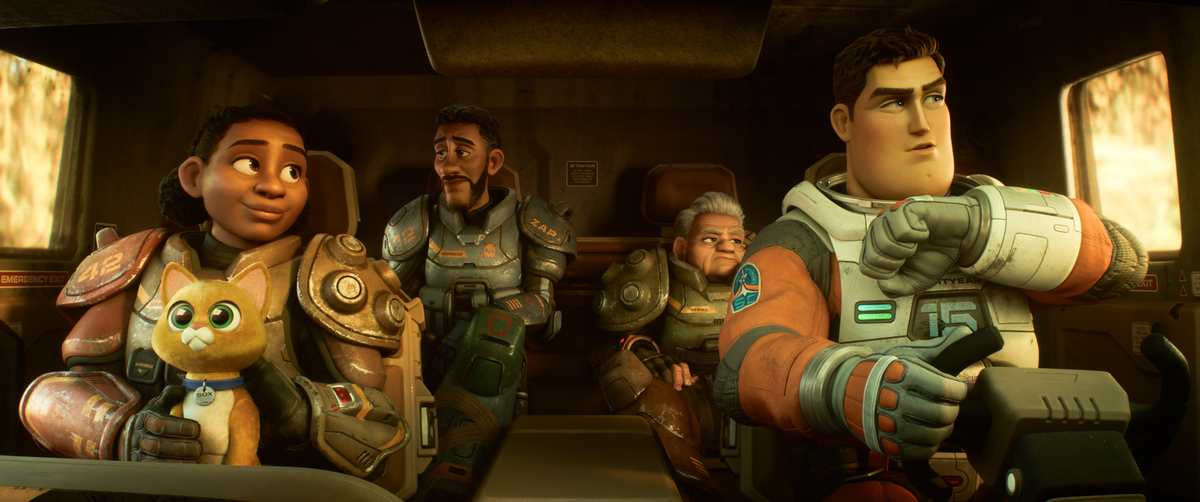
    Pixar movies don’t just come to life through animation. It’s through the voice and performances of the actors behind the visuals that these characters are fully realized. And Lightyear boasts a cast of talented performers. During the early junket of the film, members of the press, including Murphy’s Multiverse, were given a primer on who was playing who.

    It didn’t take long after Chris EvansAvengers: Endgame victory lap for him to be attached to Lightyear. It was a peculiar choice at the time of the announcement but was quickly justified in the 30-minute presentation we saw. According to producer Gayle Susman, it was a no-brainer.

    When casting Buzz, it was important to differentiate our hero Buzz from the toy that’s made on his character and represented in the Toy Story movies. So that meant we needed a new voice for Buzz.  He needed to have that nice rich sound, able to be both dramatic and comedic.  And most importantly, he needed to be heroic without coming off as arrogant or dense.  And that’s a tall order.  And we immediately knew we had to ask Chris Evans.  What we didn’t know is that he is a huge animation fan and would bring that love and passion into the project.  He even attended an animation dailies and gave the team a pep talk.

    Opposite Chris Evans is Uzo Aduba‘s Alicia Hawthorne. The film quickly establishes Hawthorne and Lightyear’s friendship, centering her as the heart of the film that compels Buzz to set out on his journey. From the brief glimpse we got of her, Aduba gives off a heartfelt performance which was only given credence by Susman’s description of her:

    The emotional anchor for act one is Buzz’s best friend and the commander of the mission, Alicia Hawthorne.  Both commanding and compassionate, a straight shooter who cares about living a good life.  If you watch just two minutes of Uzo Aduba’s Shirley Chisholm in Mrs. America, you see all of that.  She’s just an amazing talent, and we are so fortunate to have her on the team.

    The time travel element of the film means that there will be a revolving door of characters for Buzz to interact with. While the first act of the film focuses on Buzz’s friendship with Alicia, for most of the film, Buzz sees himself paired with an unlikely group of misfits decades later. The first of which is Izzy Hawthorne, played by Keke Palmer. Izzy is a character that isn’t present in the first 30-minutes that were showcased so we have yet to see what she’s like. However, from Susman’s breakdown, Izzy seems like the perfect successor to her grandmother Alicia.

    Izzy Hawthorne, Alicia’s granddaughter, has a striking resemblance to her grandmother until she’s put in a tough spot.  She has spunk, she has the courage, but she’s completely untrained and unproven, and not sure that she can live up to the family name.  Keke Palmer brought just the energy and the heart we were looking for for this role

    An ensemble isn’t complete without comedic relief and this ensemble is rounded off by Mo and Darby, played by Taika Waititi and Dale Soules respectively. Like Izzy, we haven’t a clue on what these characters are like but their descriptions and character designs all seem exciting.

    Mo and Darby are a bit of comic relief, as well as being uniquely able to challenge Buzz where he most needs to grow. Mo is a feather in the wind, never quite able to commit to any one direction. Taika is able to bring a likeability to that kind of character when they can often be a little annoying.  His improvisational skills really brought a depth and warmth to Mo.  Darby is the classic tough curmudgeon with a record.  She’s handy, inventive, and extremely salty, a great addition to the team.