Author: João RP

  • A Shift in Perspective in the Next ‘WandaVision’ Episode

    A Shift in Perspective in the Next ‘WandaVision’ Episode

    Episode 4 of Disney+’s streaming hit WandaVision is set to become a pivotal point for the show. After only the first three episodes being shown ahead of time to select reviewers (our own Charles Villanueva being one of them), one would expect that there might be a reason why Marvel Studios drew the line where it did in terms of getting even more information surrounding the show out there. And now, as we reach the half-way point of what is the sitcom-themed portion of the season, even the biggest stars of the show aren’t holding back in terms of hyping what, to them, might be the biggest episode yet.

    Paul Bettany says Episode 4 will “blow our [the audience’s] minds”, but it’s the words chosen by Elizabeth Olsen that might help us better understand what might be in store this Friday. While being interviewed by DigitalSpyOlsen said:

    I think the reason why they show the press the first episodes is because Episode 4 is quite a shift. It’s a really fun perspective swap and I think a lot gets understood at that moment.


    The keyword here seems to be “perspective swap” and how that might help answer a few questions the first three episodes set up. I remembered how on Lost, after witnessing the crash of Oceanic Flight 815 in season one, the first episode of the third season showed us the exact same event from the perspective of The Others, which was when we learned how Ethan and Goodwin first infiltrated the survivors of the crash. WandaVision might end up doing something similar, if not with an entire episode, at least with a few flashback sequences where we get to experience events we’ve already seen, but from the perspective of those coming from outside Westview. And the best thing is that there is previously released footage that seems to indicate just that.

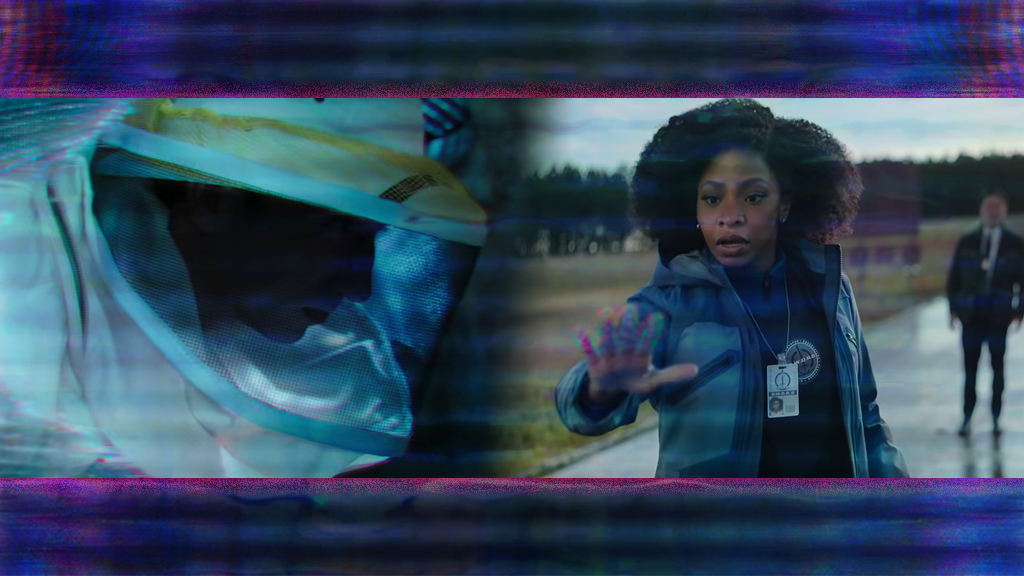
    On the story featurette released by Marvel Studios on January 15th, we get multiple shots of sequences that happened in the first three episodes that we haven’t seen yet. The fact that they are through the eyes of both Geraldine and the beekeeper instead of Wanda or Vision, who have been the audience’s vehicles so far, helps to understand how that “perspective swap” might transpire.


    First, we get the encounter between Wanda, Vision, and the beekeeper, from his point of view. When he first appeared in Episode 2 he was the focus of attention, but what we get from this other footage is that Wanda and Vision have now taken up that role. He is watching them, and it will be interesting to see if, a few seconds later, after Wanda says “No!”, he gets to see them rewind into their home or if he himself is rewound back into the sewers. Speaking of sewers, we also get a show of him entering the Westview Bubble through there. He seems to be wearing a suit that turns into the beekeeper outfit, something that the reality inside the bubble sees as a better fit to its timeline.


    We will probably also get Geraldine’s side of the story, as there are a couple of shots of Geraldine first coming into contact with the bubble in the presence of Jimmy Woo, at a time the military presence outside of Westview was still nowhere to be seen. There is also new footage of Geraldine being thrown out of the bubble by Wanda, something that might help in recapping that event. We see her flying out towards the outskirts of town while also getting a shot that explains how she left the Vision residence. Through the wall, one that Wanda is seen reconstructing. This goes hand-in-hand with what Olsen said in an interview with TvLine, that what happened between her character and Geraldine is..

    answered in the following episode

    There might be a few more sequences that we haven’t seen yet that’ll help provide that perspective shift Olsen speaks of, with several lingering questions maybe being answered, but with a few more being raised. In three days, we will all know for sure.

    Source: Twitter, Digital Spy, YouTube, TVLine
  • ‘WANDAVISION’: Time in a Bubble

    ‘WANDAVISION’: Time in a Bubble

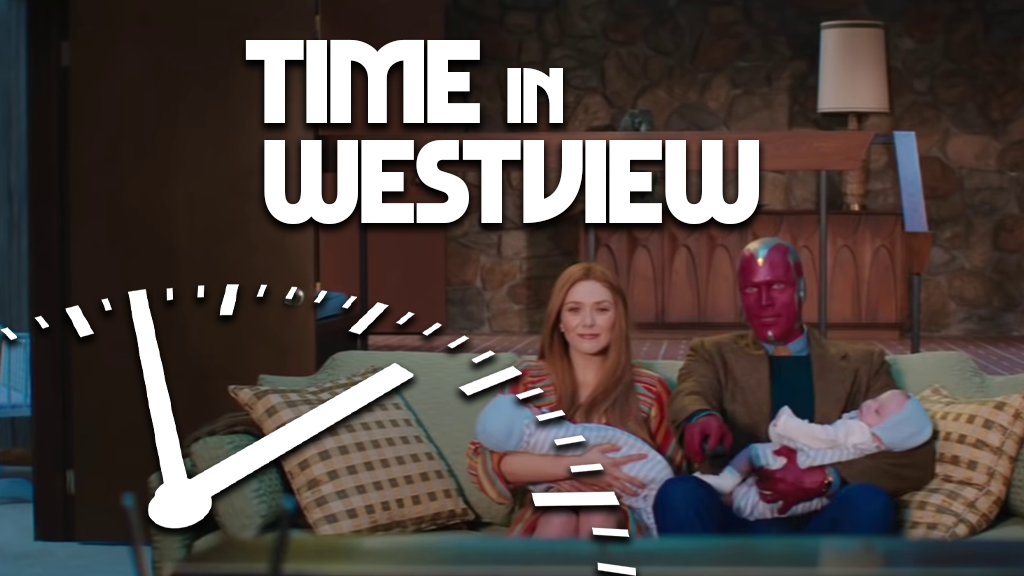
    We’ve already seen how Wanda is in control of what happens inside the Alternate-Reality Bubble that envelopes Westview. From the way she almost unknowingly affects her surroundings, which then tend to mimic her emotional state, to how she manages to rewind certain moments so that the narrative doesn’t stray too much from the one she had envisioned. One of the times she decided to do the latter was in Episode 3, after the contraction-induced blackout, when Vision seemed to become a bit suspicious about their circumstances. But the most memorable one was during Episode 2 when, after returning home from the talent show, both she and Vision crossed paths with an enigmatic figure dressed as a beekeeper. We got actual graphics and sounds of film rewinding, as the couple returned indoors and the casual meeting was avoided, showing us just how in control of that reality Wanda really is.

    Since the Bubble is exactly that, a bubble, Wanda’s powers don’t seem to have any effect on the outside world. We’ve already seen footage of the fields surrounding Westview and, besides the huge military presence, everything seems normal. What remains a mystery about those shots are the tall, floodlight-type devices directed towards the bubble that seem to be holding it back, preventing it from engulfing everything in sight.

    And, by keeping the outside world unaffected by Wanda’s powers while Wanda herself is stuck inside the bubble rewinding her narrative at will, this could mean that the outside timeline would become dissociated from the bubble’s. All of this would indicate that even though it seems like mere days have gone by inside the bubble, that could translate into weeks or even months outside, in the real world. This would be a way to explain how everything seems to be moving so fast, from small events like the Hart dinner party to bigger, usually longer and more relevant occurrences like Wanda’s pregnancy.

    Wanda’s rewinds only affect each person’s consciousness, so that each of them can forget the situation that prompted the rewind, not their physical body itself. One wouldn’t become 5 minutes younger after a 5-minute rewind, that sort of stuff. This would mean that both Billy and Tommy might have actually been carried to term after all, even if for everybody, us viewers and Vision himself included, it all seems to go by really, really fast. Having this be such a central issue of the show would also provide some context as to why the commercials shown at each episode’s intermission seem to have a common underlying theme: Time.

    There are also a few other visual clues that hint at the passing of time not being as conventional as expected. On the “Story Featurette” released by Marvel Studios, we see footage of Geraldine/Monica coming into contact with the bubble for what it seems to be the first time. She’s just outside of town, in pretty much the same place we see her getting thrown out to in Episode 3, just by the town’s Billboard. Here we notice how the surrounding fields are empty, whereas when she gets expelled from the bubble, there’s this huge military compound already set up, something that might have taken more than a few weeks to do. If that early shot was when she first entered the bubble, this might hint that several weeks/months have gone by when she gets out, an idea reinforced by both how the military seem to react to her, as a stranger they don’t know aything about, and her own reaction, like she just woke up from a long dreamlike situation, not recognizing where she was.

    Paul Bettany has recently tweeted out that Episode 4 will blow our minds, so maybe in four days, WandaVision will begin to shed a little bit of light on all of this. But having Wanda emerge from the slumber of Westview, years after she first entered it, realizing that the world moved on while she was stuck in time, both literally and metaphorically, mourning the ones she loved and still coming out of it empty-handed, would be something.

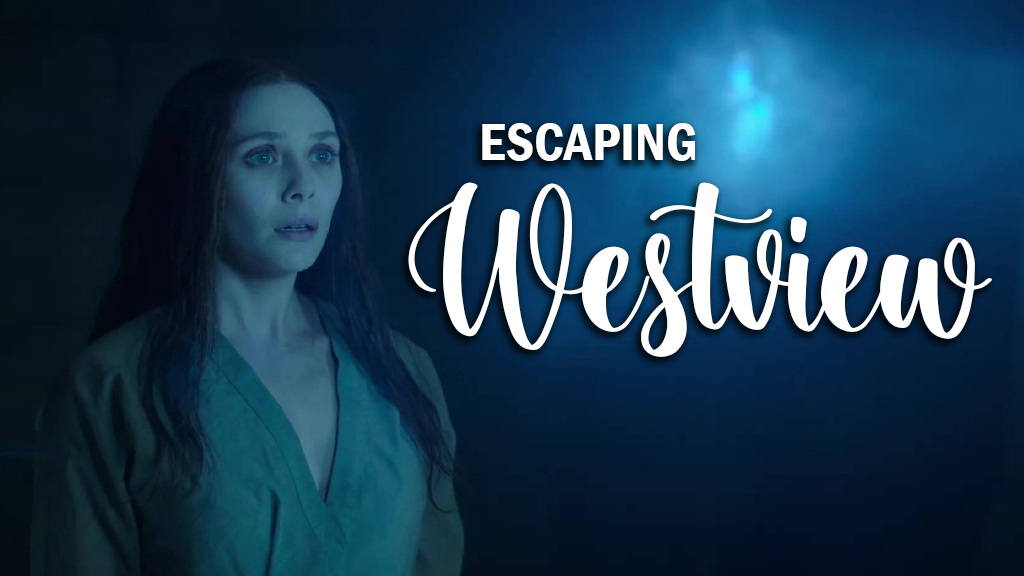
  • ‘WANDAVISION’: Escaping Westview

    ‘WANDAVISION’: Escaping Westview

    After JJ’s piece on how Wanda and The Vision might have gotten themselves where we found them, living a seemingly idyllic life in the small town of Westview, it’s time to try and figure out how they might get out of that predicament.

    It has been made somewhat clear, through TV spots and such, that WandaVision is set in a sort of Pocket Reality. We take it that it was something created by Wanda’s own reality-warping powers even if the implications of it all, on the outside world, might escape her. The fact that she was able to rewind the action at the sight of the “beekeeper” shows us she is still a bit in control, but the way we constantly S.W.O.R.D. (Agent Jimmy Woo?) trying to contact her, asking “Who is doing this to you?” shows us that she probably is being coerced by someone else. Even if she isn’t aware of it.

    Having Wanda stuck in a situation like this might bring a lot of both physical or metaphysical rewards to whoever is behind it. But to Wanda herself, the rewards are the perfect life she never had the chance to live. With Vision and her children by her side, she couldn’t be happier, even if it’s all a fabrication. This way, with her subconscious drawing from the sitcoms that shaped her “perfect life” ideals, she avoids the real world at all costs, the one filled with death and loss, while trying to remain impervious to whatever might stand in her happiness’ way.

    But we’ve already seen how S.W.O.R.D. is actively trying to get in contact with her inside that fictitious bubble. The outside world probably isn’t being able to deal with the situation she helped create, and she must be convinced to fight against whatever is compelling her to keep up the charade. This won’t be an easy task since it would mean for her to lose The Vision once again, and to lose the children and the life she envisioned having with the love of her life. She would have to face the reality that she wouldn’t be able to have it all, no matter what. She will have to destroy her life in order for others, that might not really appreciate her for being different, might have a chance to live. For a regular person, this would already be extremely hard to deal with. For someone like Wanda, that already had to endure so much loss throughout her life, that has the power to warp reality itself, this might just be the tipping point, and it might break her.

    Her next appearance is set to be in Doctor Strange: In The Multiverse of Madness. If the events of WandaVision do indeed go the way we’re expecting, Wanda might be a very different character by the time the Doctor Strange sequel comes around, and we should be contemplating the possibility of her being (one of) that movie’s antagonist(s).

  • ‘WANDAVISION’: How Family is at the Center of the Series

    ‘WANDAVISION’: How Family is at the Center of the Series

    Murphy’s Multiverse was fortunate enough to take part in WandaVision’s press junket this past Sunday, and Kevin Feige‘s long and thoughtful answer to a question by our very own Charles Murphy deserves some expanding on. Feige himself said he appreciated the question and were it not for time constraints it seemed he would be willing to dive even deeper into what WandaVision personally means to him, his team, and how those feelings could translate into the show itself.

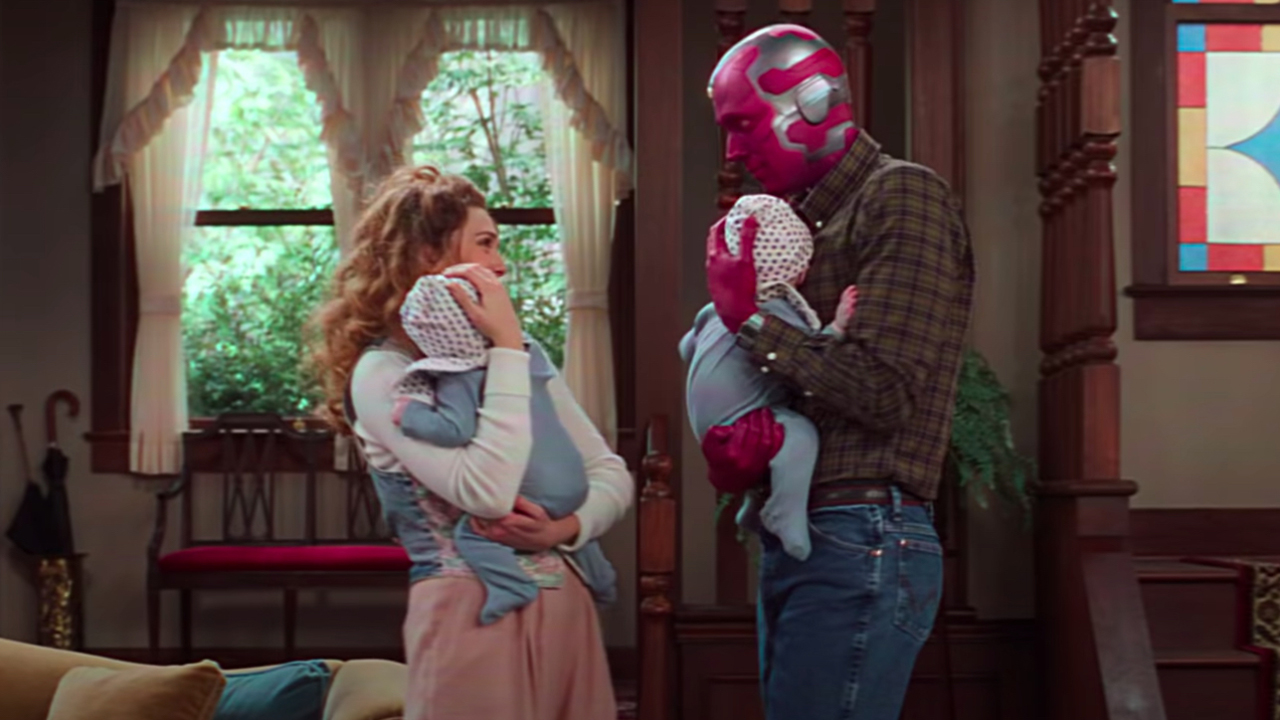
    WandaVision: How Scarlet Witch and Vision's children could change the MCU |  GamesRadar+
    The show’s initial intent was to simply allow Elizabeth Olsen and Paul Bettany to further explore the characters they’ve both inhabited since 2015’s Avengers: Age of Ultron, while expanding the story of the Scarlet Witch. As things evolved, sitcoms became an integral part of the show, as it was made clear that they would provide an exceptional vehicle to Wanda’s journey. Charles’ question focused on how a personal connection to that format, as well as the medium, might have helped to guide Feige and his team, through such a unique show like WandaVision. A show that seamlessly meshes together all the action, the twists and turns you’ve come to expect from a Marvel Studios project, but that also brings the warmth and comfort behind the nostalgic feel of one of the most iconic television formats of all time. One that brought families together both inside and in front of the television screen for over half a century. And that more often than not managed to go a step further and bring both those worlds together. Feige, Elizabeth Olsen, director Matt Shakman, and a few others that are a part of the production team, all have both personal and professional backgrounds that connect them to sitcoms, and all these ideas that they represent in our, the audiences’, collective imagination, and that shines through.

    I watched too much TV as a kid. TV meant a lot to me and I found comfort in television families.

    Kevin Feige

    It isn’t an overstatement to reinforce how sitcoms helped shape generations. At one point or another, we’ve all felt a part of the families we saw on-screen on a weekly basis. Their experiences became our experiences, and we often did learn a thing or two. The (sometimes) idyllic settings, the established and safe structure, the way issues were resolved after 20 minutes, all helped in turning the genre into a sort of comfort food for whoever sought a short but much-needed escape. And in the same way, the team behind the show has a very real-world connection to this format of storytelling, the characters within the show are now showing that same longing, respect, and nostalgia towards a, in many ways, better time. It is then through the hearts of the production team that Wanda is also turning to this safe haven to deal with Marvel Universe heartbreak.

    From Wanda’s point of view, she would describe WandaVision as a family sitcom of two people trying to fit in. And not be discovered for being different.

    Elizabeth Olsen

    Even though there have been hundreds of sitcoms through the years, the ones best suited to intertwine with Wanda’s story, and therefore the ones WandaVision will focus on, are all about family. Those are the truly timeless ones, the ones exploring family dynamics that remain relevant to this day. Nowadays we might talk differently, dress differently, act differently, but the underlying issues are largely the same. Connecting with our loved ones, understanding each other, sharing the days, the weeks and months, entire lifetimes. And that’s where Wanda finds herself. Trying to reconnect, trying to take advantage of a chance to live as normal a life as the ones she saw portraited on TV, trying to enjoy the time she was never given before.

    There were a lot of different sorts of workplace sitcoms and other types of sitcoms, but the family piece sort of kept us very very centered.

    Jac Schaeffer

    Through the years, TV ended up losing that unabashed optimism and innocence, as problems became more serious, family relations became more complex and reality began to set in a little bit more with the passing of time. The evolution that TV in general, and sitcoms in particular, went through seems to mimic what Wanda will have to endure in order to get to the present day, as hard as getting away from a more comfortable reality may turn out to be. So being, her search for family, for the normal sort of happiness her subconscious envisions as the only comfortable place for her to be in, (and that we as an audience without reality-warping powers share on a different level when reminiscing about quieter times in our youth) will need to face a tough truth. There always comes a time when the real world comes calling and there is little more to do than to turn off the metaphysical tv and soldier on. We are now left wondering if Wanda will find the remote so she can do the same.

  • ‘THE UMBRELLA ACADEMY’ Casts Its Sparrow Academy

    ‘THE UMBRELLA ACADEMY’ Casts Its Sparrow Academy

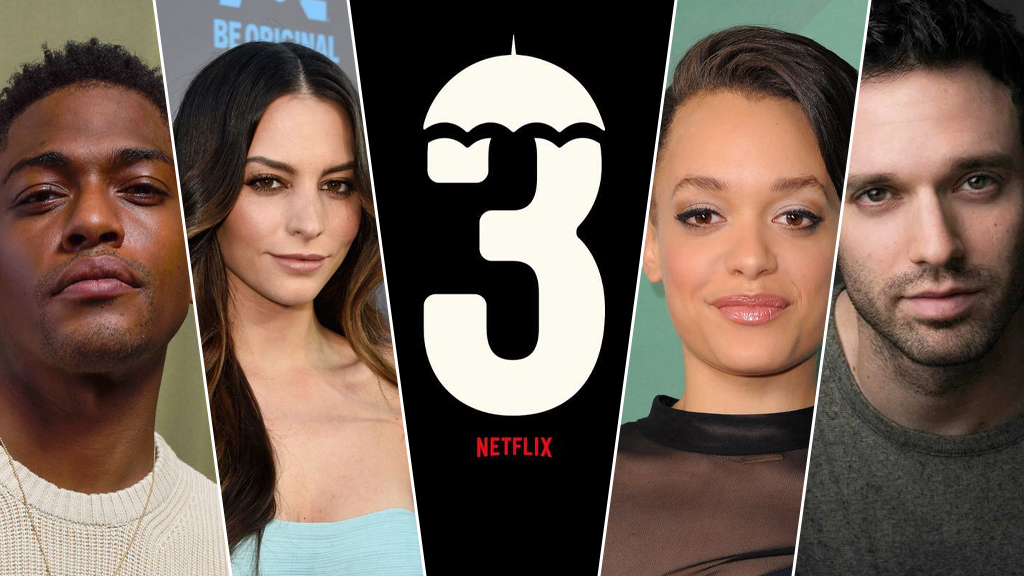
    After being renewed for a third season this past November, we now have further confirmation on how the cast for Umbrella Academy‘s new season will look like. The Hargreeves children discovered that their actions have led to a brand new timeline. This led up to the final scene of season two teasing the appearance of the Sparrow Academy. Following these events in Dallas, Sir Reginald got a glimpse of what the future held for both himself and his Umbrella Academy. In order to give himself a future, where he didn’t have to die in order to bring his estranged children back together, he decided to get different children altogether. As such, making up a team that would hopefully be able to avoid the apocalypse in a way the older ones couldn’t in the first season.

    This new team is now confirmed to feature Justin CornwellGenesis Rodriguez, Britne OldfordJake Epstein, and Cazzie David. Justin H. Min. will also be part of the ensemble after portraying the main timeline’s Ben Hargreeves in the first two seasons of the show. The third season, which will consist of 10 episodes, will hopefully begin production this February and will see the return of stars Elliot PageTom HopperAidan GallagherRitu AryaDavid CastenedaEmmy-Raver-Lampman, and Robert Sheehan. It will be interesting to see the conflict between these two families escalate throughout the next season, and how much it’ll follow the original comic. The Existential Dread Inducing Psykronium Cube is already going to be an interesting addition to an already crazy show.

    Source: Deadline

  • How Preparation and Opportunity Built the Marvel Cinematic Universe

    How Preparation and Opportunity Built the Marvel Cinematic Universe

    It’s hard to find the superlatives to qualify the level of success that Marvel Studios has achieved over the past decade as it became one of the biggest media franchises of all time. But even though its success is essentially a product of several good decisions concerning cast and director choices, having both a well thought out plan and the shrewdness to understand what storylines to adapt from the comics, that wasn’t always the case.

    There were a few instances when the situation presented itself as a blessing in disguise, and others where choices were so limited, to begin with, that there wasn’t much room for anything else other than what ended up happening. This can all be traced back to 2005/2006 when Marvel Studios announced they were working on the Iron Man.

    A limited number of characters available.

    Following a period of financial instability, the rights for the biggest names in the Marvel catalog weren’t available to develop features around. Therefore, when trying to launch a Cinematic Universe, there was no choice but to go with b-list and c-list characters, like Iron Man, and slowly develop their stories so general audiences would begin to care for these, in their eyes, unexplored origin stories. This allowed for each character to have the time they needed to be properly introduced and gain the relevance that, a decade later, has made us care about where they ended up. In a parallel universe where the rights for the entire Marvel roster were available from the start, it’s very likely that we wouldn’t have gotten so many character trilogies that truly became the backbone of the MCU, as the urge to go through the largest number of characters would make it impossible to find the time to spend three movies with each of them. All the team-ups and the ensemble movies are great, but they really stood on the shoulders of the growth each character when through on their solo outings. 

    A crowd-pleasing structure

    The limited characters available probably also led to the structure the MCU followed for the first few years, which proved to be a resounding success with audiences. By choosing to explore characters general audiences weren’t familiar with, origin stories were the way to go and this meant that team-up movies would have to wait until each member was properly introduced. Had the rights to characters like Spider-Man, the X-Men or the Fantastic Four stayed with the company, it would perhaps be expected for them to have a similar treatment that the MCU’s Spider-Man ended up having, where its origin story was skipped (since it was already fairly known) in order to dive head-first into a huge ensemble movie, and only later going into its solo feature. The structure the MCU ended up following through to The Avengers (and later replicated up until Endgame) ended up being a winning formula, as it gave audiences the time to become increasingly interested in the franchise, growing exponentially. That way, when the climactic story event did occur, its cultural impact was deepened, making the post-Avengers MCU a reasoned reality.

    An off-year

    The COVID-19 Pandemic disrupted the entire movie industry. But at a time when many were questioning what the MCU had to offer in a post-Endgame reality, the off-year 2020 became might have ended up helping to reinvigorate the hype surrounding the franchise as a whole. There is no way that this sort of hiatus would have happened unless the circumstances made it so as after Endgame there was still money to be made, and Disney wouldn’t obviously support the idea that coming to a halt for an entire year would be good for the brand. But the reality was that both production of the streaming shows and the release of the theatrical productions were impacted in a way that left fans clamoring for content throughout the year. When WandaVision premieres on January 15th it won’t be another MCU project, it will be seen as the “highly anticipated return of the biggest franchise of the 21st century”. And the way 2021 is lining up to be, Marvel won’t let their foot off the gas, for the time being, capitalizing on the drought they were forced to endure in the past few months.

    Disney+

    This return to form wouldn’t be possible without a streaming service that began to develop before Marvel Studios even knew it would be as crucial to their future as it has ended up becoming. With movie theaters mostly closed, and with audiences still turning their backs on the theatrical experience, having Disney+ at their disposal is invaluable, to say the least.

    It’s a project that obviously took a lot of investment on Disney’s part, it didn’t just manifest itself from thin air, but the timing of it all couldn’t be more perfect. By knowing that the service would be available to them by late 2019, Marvel began developing a number of streaming shows that, in the current circumstances, will prove essential for it to regain its momentum, reestablishing itself as the benchmark for cinematic franchises. And now, as they prepare their comeback after more than a year away from the public eye, having a number of properties ready to present will make said project much easier to accomplish. Streaming will also present itself as a valid alternative to theaters should it come to that in the near future. But that’s a story for another day.

  • Greenlighting ‘WONDER WOMAN 3’ is the Right Decision at the Right Time

    Greenlighting ‘WONDER WOMAN 3’ is the Right Decision at the Right Time

    Over a year after its initial, scheduled release date, Wonder Woman 1984 is now officially out, the first movie of its magnitude to be simultaneously released in theaters and through a streaming service (at least in the US). In the last couple of days, initial word of mouth hasn’t lived up to 2017’s installment, but perhaps the biggest piece of news has been the fact that Warner Bros. has greenlit the series’ threequel, with both Gal Gadot and director Patty Jenkins returning.

    It’s been a very rough year for studios and everyone involved in both movie-making and the release process itself. By theaters being closed and having audiences themselves turn away from the theater experience even when it remains a possibility, Warner will never make the same amount of money a Wonder Woman film would earn in a regular theater-wide release. Adding to that the poor reviews the movie is getting, it may sound odd how they were so quick to set their eyes on a third installment. But that decision is the right one to make, and it couldn’t have come at a better time.

    Why it is the right decision.

    Back in 2017, Wonder Woman was greeted with largely positive reviews, making it, for many, the best entry in the DCEU up to that point. Since it was the first female-led major super-hero movie, the cultural impact was also quite impressive. Audiences all over the world were presented with a strong female character that skewed away from the usual tropes, filling a gap that was long overdue. Warner also seemed to be quite pleased with the end result. It was its first DCEU character to earn itself a solo sequel, both before Superman (that had a 4-year head start) and Batman (that hasn’t yet had its own DCEU movie as of today). That alone speaks volumes about both the way the project was received inside the studios and the brands’ strength.

    More than three years later, the appreciation for what both Jenkins and Gadot managed to do with the character remains essentially unscathed. Even if overall reviews aren’t at the level that was to be expected, people are mostly taking it as a misstep, and there don’t seem to be many doubts that, if given the change, a third movie could easily reach the level of the first film, if not surpass it. When the time comes for the trilogy to be completed, the COVID-19 pandemic will hopefully be entirely behind us. This would mean that regular Box Office numbers will likely be making a comeback (for blockbusters, at least), and so Warner is acknowledging that even though Wonder Woman 1984 won’t have the expected return, the brand is indeed strong enough to handle a third installment.

    By not letting themselves get scared by bad reviews and a low Box Office result (compared to what it would earn in a non-COVID world) Warner is setting itself up for a massive payday in a few years time, and allowing audiences to watch yet another chapter of Diana Prince’s journey, something I feel everyone is still eager to experience.

    Why the timing is right

    Despite the low Box Office numbers, context still matters. We’re in the middle of a worldwide pandemic and these numbers aren’t obviously representative of the interest general audiences had in the project. In fact, these are the highest numbers ever since the pandemic started, so even though there are on the low side when compared to similar movies released in the past, they demonstrate that audiences are still connecting with the material. At the same time, and helped by the fact that no extra fee was charged, the streaming numbers have seemingly been huge, with half of HBO Max’s subscribers reportedly watching the movie in the first couple of days.

    Unlike in past occasions, Warner didn’t take long making decisions and has decided to ride this small yet positive wave and validate the movie by announcing a sequel. This decision almost makes it seem like all the bad reviews and the less-than-perfect word of mouth aren’t taken into consideration and therefore, don’t matter at all. This is obviously a bit of posturing by Warner, but the fact is that by reacting so promptly, Warner placed the movie above most critiques by deflating them with a “Despite what you have to say, we’re still following our plan” mindset.

    This is the kind of stubborn approach Warner has sort of been lacking in the past few years. They always seem to be reacting a bit too late, and their grand scheme often seems to be lacking. Making this final decision so early on, it’s one less thing to worry themselves about, so hopefully, they can now go back to other developing projects in need of focus and leave Jenkins and Gadot to their character.

  • ‘Silk’

    ‘Silk’

    Premiere: TBD

    In early September of 2020, it was announced that Phil Lord and Christopher Miller were working with writer Lauren Moon to develop a live-action streaming series based on Cindy Moon, aka Silk. The series appears to be the first of a suite of original programming being developed by the duo under their agreement with Sony. Amazon was believed to be the leader in the clubhouse to land the series though the complicated rights situation with Disney might mean it airs on a traditional TV channel first. 

    Cast

    • Unknown actress as Cindy Moon / Silk
  • ‘Spider-Woman’

    ‘Spider-Woman’

    Premiere: TBD

    In early February 2020, Sony scheduled a release date for an untitled live-action Marvel film on October 8, 2021. That date has since been moved due to the COVID-19 pandemic and as of this time, no information about the film is available, but it has been widely speculated that is might be Sony’s Spider-Woman film. Sony is searching for an actress, 25-35 for the lead role of Jessica Drew. In August of 2020, Olivia Wilde signed on to helm the film and will be working with screenwriter Katie Silberman to develop the project.

    Cast

    • Unknown actress as Jessica Drew / Spider-Woman
  • Other Projects in Development

    Sony has, over the past several years, had plans to develop a number of live-action films set in their SUMC. Here is an attempt at a comprehensive list of what’s still alive and kicking:

    THE SINISTER SIX

    MADAME WEBB

    While not clear, it is believed that director S.J. Clarkson may have been hired to helm Sony’s greatly anticipated Madame Web film. It is also rumored that Sony may have a couple of big-name actresses lined up for the role in Charlize Theron and Amy Adams.

    JACKPOT

    Sony has turned to comic book scribe and Arrow screenwriter, Mark Guggenheim, to pen the script for their solo Jackpot film.

    BLACK CAT

    SILVER SABLE