Author: Mary Maerz

  • REVIEW: ‘Peacemaker’ Episodes 1-3

    REVIEW: ‘Peacemaker’ Episodes 1-3

    Peacemaker’s comedic tone and its take-nothing-serious attitude are immediately in full force at the beginning of its premiere episode, and the series’ amazing opening credits promise that that will underlie the entire show. With that, it is successful, and it is sure to please a wide-ranging audience with those elements alone. Still, the first three episodes of Peacemaker left some to be desired with a sometimes-dragging pace. The series mostly makes up for it with its characters and the excitement and pace pick up as the series progresses. 

    Where Peacemaker excels most is its desire and fearlessness to allow itself to be the joke rather than just making jokes. In The Suicide Squad, that is essentially what the character of Peacemaker brings to the table, though with a bit more grit than the series is so far generating. Peacemaker is driven by general incompetence, and the series feels somewhat like it exists in some bootleg underbelly of a superhero universe. A universe where generally ordinary but demented people dress up in colorful costumes and casually assimilate into society. From what Peacemaker shows, there is nothing flashy or elegant about the lives of these superheroes—the titular hero lives in a cluttered mobile home—and it adds to the feeling that the series takes place in a reality closer to our own. 

    The one thing that Peacemaker nailed before it even began was John Cena’s casting. It’s hard to put a finger on it, but there’s something about him and his performance that is Peacemaker and feels effortlessly so. Cena allows himself to inhabit a character that is the butt of the joke but also portrays genuine bravado yet cluelessness at the same time. Peacemaker does not spend time trying to convince anyone that the titular character is some worthy hero, and the series even attacks the character for being racist within the first few minutes. The character also encapsulates the series’ intended tone, so even if other elements aren’t matching it, Cena’s Peacemaker rightfully anchors it all to keep it from losing its heart.

    While there is some controversy over the direction the series decided to take Freddie Stroma’s Vigilante, the character is possibly the best part of Peacemaker so far. While his scenes were sparing over the first couple of episodes, his character is being consistently built into the foundation of the series. His flamboyant, upbeat personality that overlaps with a clearly deranged and murderous individual is a Peacemaker-level character at its finest. Cena’s Peacemaker is otherwise surrounded by a bit more serious and grounded characters, so Vigilante’s personality is a strong addition that compliments Peacemaker’s in a way that others cannot. 

    Still, the supporting cast feels integral to the series to the same degree that Peacemaker does. Jennifer Holland’s Emilia Harcourt is often the most serious character of the series but can come across as one-note. Danielle Brooks’ Leota Adebayo is a welcome addition to Peacemaker’s Task Force X that underscores the premise that the team often is not exactly inspiring or competent. Steve Agee’s John Economos mostly seems there to exchange insults with others, and Chukwudi Iwuji is undoubtedly the most formidable and intriguing member but has yet to reveal much about himself. The reluctant team aspect is reminiscent of The Suicide Squad in some senses, but the group’s dynamic has room to evolve and improve. The team plays as (mostly) the level-headed backbone of the Project Butterfly plot, in stark contrast to Peacemaker who ironically is often the most incompetent around. The team, though, is not immune from the series’ desire to make fun of itself and not take things so seriously. As serious as they can be, they also suffer from silly mishaps and poor decision-making skills. Robert Patrick’s Auggie Smith or White Dragon is featured prominently in the first two episodes, and it is made clear that the white supremacist villain will have a substantial role to play other than being the source of Peacemaker’s daddy issues. 

    However, the series is surprisingly slower than expected. The first episode in particular felt rather mundane and drawn out, serving as a basic primer without much-added excitement. After that, the series picks up with Episode 3 easily being the best and well-paced of the three. Episode 3 is also the first episode where the overarching “Project Butterfly” really comes into play, though the series is still rolling out the details. The effect is a show that is currently more of a mystery than an action-thriller, but there’s every reason to assume that that will shift. For now, though, Peacemaker falls significantly flatter than maybe it intends to. The humor still carries and drives the series, so it is not left without its fun and heart, even in its blander moments.

    All in all, Peacemaker is full of plenty of promise. The first three episodes seem to have set up most of the major players and elements of the series, even though most of Project Butterfly remains under wraps. Hopefully, the show can utilize its strong cast and collection of characters to propel the series to greater heights as the story picks up the pace and the action—hopefully—follows suit. 
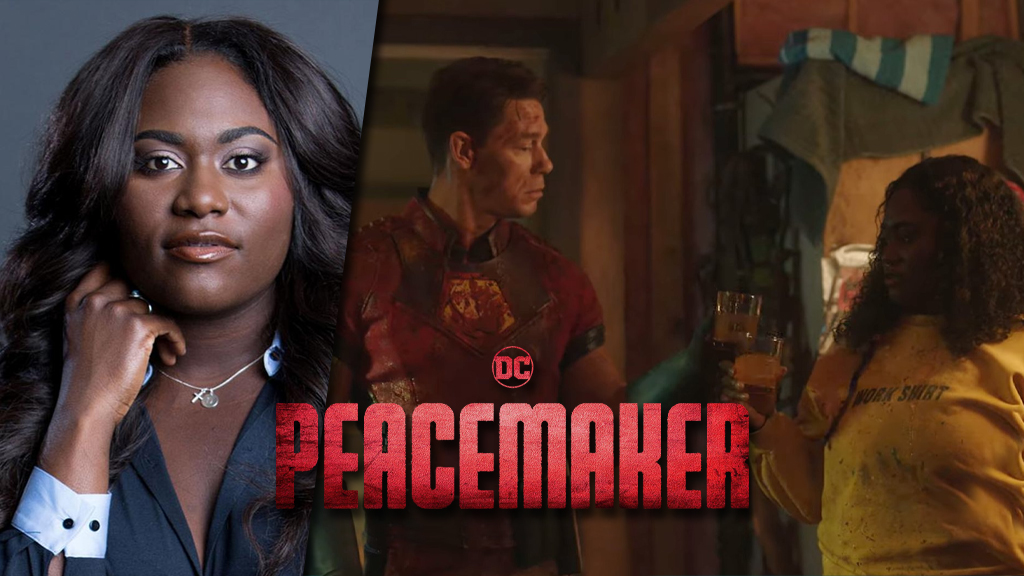
  • ‘Peacemaker’s’ Danielle Brooks Talks James Gunn’s Support of Her Casting: “You Already Fit”

    ‘Peacemaker’s’ Danielle Brooks Talks James Gunn’s Support of Her Casting: “You Already Fit”

    James Gunn‘s much-anticipated Peacemaker series makes its HBO Max debut in less than a week. The series is full of characters that look like they have jumped straight out of a comic book, including John Cena‘s Peacemaker and Freddie Stroma’s Vigilante. The series co-lead, Danielle Brooks, however, recently opened up to Variety some of the anxiety she experienced as someone who didn’t herself fitting into the superhero or comic book world the series takes place in.

    The Orange Is The New Black star revealed that Gunn wrote the part of Leota Adebayo with Brooks in mind. When it came to the casting process, Brooks stated:

    It’s [] this kind of nerve-racking experience, because you really want to fit in their world. When you audition and you get the part, you know that you were the right choice, but when you didn’t audition, you’re like, “I hope they don’t feel like they made a terrible mistake.”

    Danielle Brooks

    Obviously, Gunn and Peacemaker did not make a terrible mistake. When Brooks expressed her concerns to Gunn, the writer and creator made it clear to her that she fit in Peacemaker‘s world:

    So we ended up having a meeting, and we just hit it off. I explained to him [that] I’ve never seen anyone like myself in this world. It was really exciting for James to say, “I like you the way you are. I don’t want you to get all this training and try to lose 100 pounds” or all this stuff. He didn’t try to make me fit into his world. He said, “You already fit.” I really appreciated that.

    Danielle Brooks

    It is always great to see that level of support between members on any project, and that will almost certainly be reflected in the series’ final project. Peacemaker’s confidence to bring in characters that challenge the traditional view of what a “superhero” project character can be undoubtedly seems like it will payoff for the series. Still, Brooks also noted the importance of her character to comic books and their stories in other mediums:

    I started doing research before getting this part of, like, if I were to ever be asked which [comic book] characters I could play, who do I actually look like? There are a few that look like me, actually, but when they’re reflected on TV or film, they change them completely. Their look does not reflect what you see in the comics. I’ve always tried to manifest doing an action project, because I do feel like a big part of my driving force in this industry is changing the narrative of what leading ladies look like and what plus-size women are capable of doing. Part of that was getting out of my own way. When I had my daughter, I ended up gaining 60 pounds, so I didn’t feel confident. Before, I was doing Spartan races. Like I was out here over 200 pounds, doing Spartan races, and now I’ve gained 60 pounds on top of that, and I just felt like, “Can I do this [show]?” But I knew in the back of my head I could because I had the support of James Gunn, and not someone saying that you need to change any parts of yourself.

    Danielle Brooks

    You can see Brooks bring Leota Adebayo to the screen when the first three episodes of Peacemaker drop on HBO Max on Jan. 13.

    Source: Variety

  • ‘Hawkeye’ From Page to Screen: Episode 6

    ‘Hawkeye’ From Page to Screen: Episode 6

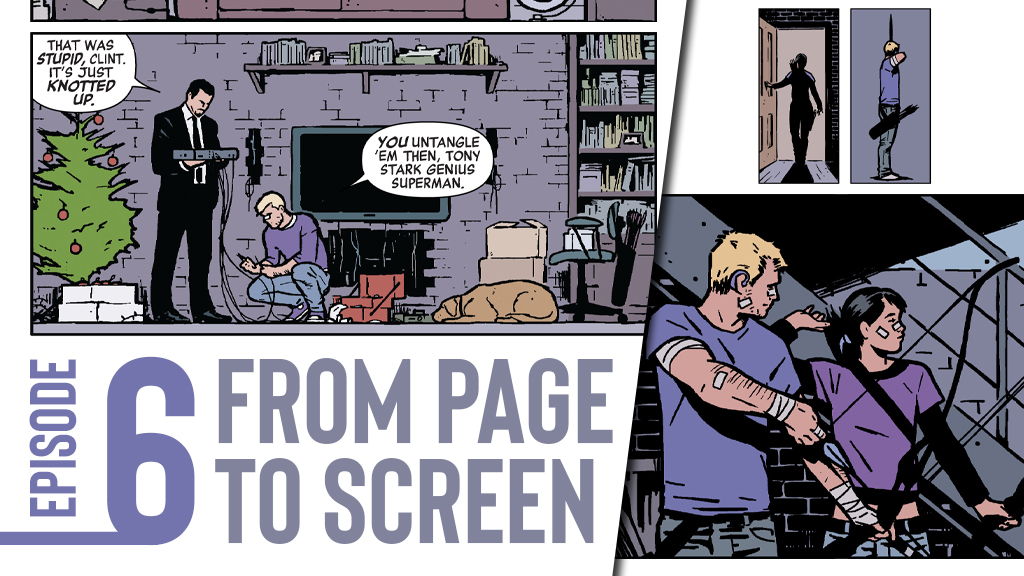
    With the finale in the rearview mirror, Marvel Studios’ Hawkeye series has come to a close. Each week we have looked at ways in which the live-action series has adapted parts of the Matt Fraction and David Aja Hawkeye comic book run. Between the origins of Lucky the Pizza Dog, Clint’s capture by the Tracksuit Mafia, Episode 3’s car chase and trick arrows, the connection between the live-action LARPERs and the comics’ neighbors, and Kingpin’s role, the series has covered a lot of ground. Looking at the finale episode of Hawkeye, a few things stand out as having strong ties to the source material: (1) the importance of Kate taking on the “Hawkeye” mantle; (2) the six-day Christmas-themed adventure; and (3) Kate’s parents’ role in the organized crime that the Hawkeyes go up against.

    Hawkeye and Hawkeye

    Marvel Studios’ ‘Hawkeye’ Episode 6
    Marvel Studios’ ‘Hawkeye’ Episode 6

    A clear goal of the live-action Hawkeye series was to introduce and establish Kate Bishop as the next “Hawkeye.” While the show follows Kate from her pre-superhero days through her first adventure with Clint, in the Hawkeye comic she is already established as Hawkeye alongside Clint’s own Hawkeye persona. While the series finale ended just shy of officially referring to Kate as Hawkeye, it’s almost certain that the next time we see Hailee Steinfeld’s character there won’t be any question about her superhero identity.

    The live-action and comic Hawkeye stories also both seem to have built a greater appreciation for Kate’s character over time. While both the series and comic are premised on Clint Barton’s story, Kate is a major character throughout his story. The Hawkeye series of course ends in a way that reflects Kate’s new role in Clint’s life and as a hero. The Hawkeye comic ends with a similar acknowledgment of the significance of the relationship between the two. On its final page, it also calls the Hawkeye comic run a “Clint Barton/Kate Bishop Comic Book,” giving further credit to Kate being deserving of the Hawkeye mantle on the same level as Clint.

    ‘Hawkeye’ #2 (2012)
    ‘Hawkeye’ #22 (2015)

    Six Days of Christmas

    Marvel Studios’ ‘Hawkeye’ Episode 6

    Hawkeye made itself a Christmas show, and it made sure you knew how Christmas-y it was as often as it could. The series was clever to use its six episodes to cover the six days leading up to Christmas, which served as a countdown for Clint to get home to his family for the holiday. Not only did the second issue of Hawkeye explore a heavy Christmas theme, it also specifically looked at the six days of Clint’s life during that time. The comic version of the six days of Christmas had cameos from Tony Stark, Wolverine, and Spider-Man, which obviously the series did not. But it did heavily feature Kate, as well as the Tracksuit Mafia like the live-action series, did. In Hawkeye, the six days were presented out of order, and that added to the intrigue of the narrative––it’s interesting to think about how the Hawkeye series would have played out if its reveals and investigative themes were similarly distorted in order.

    Both six-day stretches end with Clint having company for Christmas. In the Hawkeye series, Clint makes it home to Missouri with Kate to spend Christmas with his wife and kids. Comic Clint has a much different family life than MCU Clint, though. He is divorced with no children and is living alone. At the end of his six days, a family that lives in his apartment building comes to keep him company in a warming moment for the self-deprecating and down-on-his-luck archer.

    Bishop Family Values

    Marvel Studios’ ‘Hawkeye’ Episode 6
    ‘Hawkeye’ #22 (2015)

    One of the major reveals of the Hawkeye series was that Kate’s mother Eleanor Bishop was working for Wilson Fisk, also known as Kingpin, and her ties to New York City’s criminal underground was essentially the catalyst for the entire series. In the comics, Kate Bishop’s mother is the one who is presumed dead, and her father Derek Bishop raised her. In the live-action series, of course, the parents’ statuses are reversed, but in both iterations, they made deals with Kingpin among other criminal figures and organizations that ultimately impacted Kate and her safety.

    In any event, the Bishops were a wealthy family which gave Kate the status as a socialite on top of being a superhero. As a result, we get to see Kate bring Clint to a fancy event in a skyscraper in order to investigate some criminal activity in both the comic and the series.

  • REVIEW: ‘Klaus’ Wants You To Suffer

    REVIEW: ‘Klaus’ Wants You To Suffer

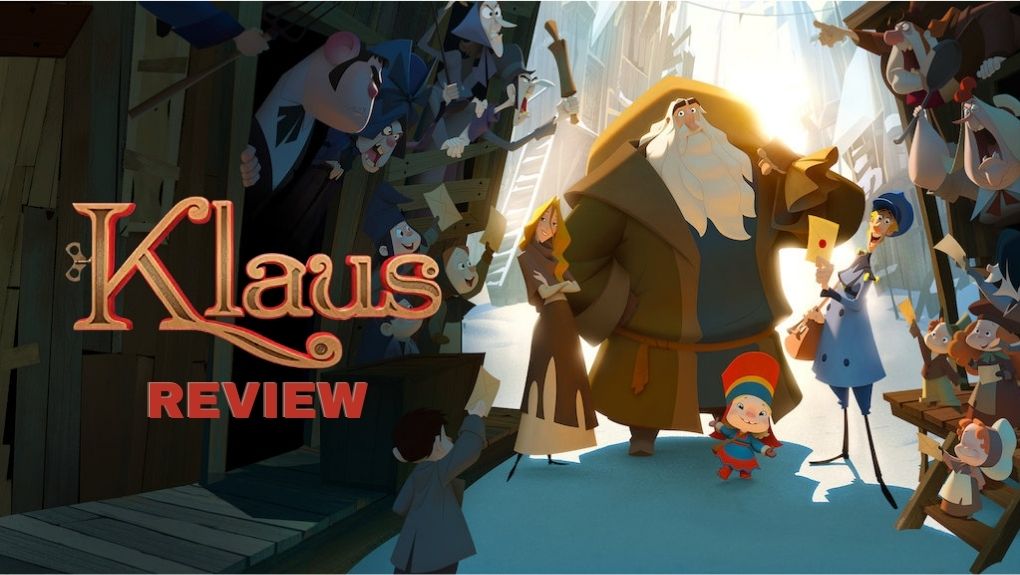
    Christmas movies are generally filled with joy and cheer. Throughout the years, that is exactly what we have come to expect. While most are filled with genuine merriment, some Christmas films are disguised as such while actually being elaborate devices to make you suffer. Klaus is a curious example of a silly animated holiday tale that would much rather have the emotional tone of Sophie’s Choice, while the creators were clearly only greenlit by Netflix to create the next Winnie the Pooh: A Very Merry Pooh Year

    But where there’s a will, there’s a way. And Klaus found that into being a drawn-out and camouflaged version of the famously emotional opening montage from Up. But this time around, the main grumpy old man becomes the ghost of Santa Claus instead of finding a new lease on life by befriending a young boy and a talking dog.

    Klaus certainly hits some of the right “I swear this is just a happy movie for kids” notes. It follows the spoiled son of some big-shot Postmaster General, who decides to teach his son, Jesper, a lesson by sending him to be the postman in Smeerensburg. It, of course, is the children’s Christmas movie equivalent of an apocalyptic warzone full of violent children and dead fish. The main character willingly places a literal noose around his neck in the first 20 minutes of this movie because he has accepted death as his fate.

    Jesper is enjoyable as the clueless, pampered man-boy attempting to solicit letters from people who otherwise spend their time carrying dead bodies through alleys, or – in the children’s case – psychopathically slowly stabbing a snowman repetitively with carrots. As anyone could guess, Jesper finally comes around by the end of the film to be a wholesome guy who loves his family and the new, less-homicidal community. But his reformation came from the real star, the titular Klaus.

    Our introduction to Klaus is as a scary, giant man who lives alone in the woods, likely chopping up both trees and people. Through Jesper’s desperate need to gather letters, he learns that Old Man Klaus is a skilled woodworker with a dusty, dark house full of elaborate children’s toys and nothing else. Don’t let that fool you, though, because this is only the beginning of an overly-elaborate secular explanation for the legend of Santa Claus where all the necessary elements are included but are instead generally sad and heart-wrenching.

    Klaus was perfectly fine – even while being extremely depressed – living in the woods and spending time with his wife, Lydia. She, unlike the classic Mrs. Claus, died years ago and takes the form of sparkly wind that gives Klaus brief moments of remembrance of his one and only love. Somehow, Jesper and he secretly deliver one of his toys to one of the infinite toyless evil children of Smeerensburg. Watching through the window, the pure joy it brought the kid inspires Klaus to continue delivering his toys in secret. Jesper acts as the intermediary, forcing children to write sham letters to the toymaker for his own gain while coincidentally making up facts about Klaus that seem familiar, such as him having a naughty and nice list.

    That plot seems good and healthy, but it’s not sad enough. To make up for it, it is revealed that Klaus has a carved-out wall in his home designed as a family tree – it is extensive but completely empty because he and his wife Lydia were unable to have any of the dozens of children they dreamed of having. While they tried and waited, they built countless toys to one day give to their own kids, but as the ghost mist of Lydia could whisper to you, the toys were left to gather dust and haunt the dark and lonely house. 

    There are entire subplots, such as the dueling war clans that try to bludgeon one another when a bell rings and Jesper’s romance with the angry schoolteacher – but they don’t really matter. The Sámi community that lives outside of Smeerensburg ends up being the warmest and most compelling secondary aspect of Klaus, as they end up taking the place of classic Santa’s elves. They even took the time to make everyone cry when they filled up Klaus’ family tree with wooden figures of themselves. 

    If watching along to the survey of Santa’s heartbreak and loss is not enough for you, the movie also ends in possibly the saddest way it could while still pretending to be jolly. As Jesper recounts the years that have passed since Klaus began delivering gifts, he talks about how one day Klaus just disappeared without any explanation and he never got to say goodbye. We see a tired Klaus say “I’m coming, love,” and merge into the sparkly wind of his dead wife. To top it all off, we vaguely see some sort of ghostly Santa entity flying around as Jesper says, “All I know is that once a year, I get to see my friend.” 

    In some seriousness, Klaus delivers a genuinely fresh and unique twist on the legend of Santa Claus by presenting Klaus, the trauma Santa. The somewhat confusing level of dark humor also makes the movie stand out from its peers and gives the film some maturity that elevates it beyond what is expected of it. If you are looking to rip your own heart out this holiday season, Klaus may be the movie for you.
  • Ranking Marvel Studios’ Series Finales

    Ranking Marvel Studios’ Series Finales

    The Hawkeye finale marks the end of Marvel Studios’ first year of Disney+ series and the conclusion of the fifth installment to date. From WandaVision to What If…?, Marvel Studios showcased its ability to pull off a wide range of stories and styles. Still, it pulled off some better than others, and we now rank the finales of all of the Disney+ series below.

    There’s something about TFATWS, other than its horrible title, that tends to land it at the bottom of lists. The series finale wasn’t bad and it wasn’t riddled with flaws. In fact, it was quite comforting, and there’s something about a straightforward series focused almost exclusively on already-established characters that is satisfying. Unfortunately, even a satisfying finale can be completely forgotten and left behind when it’s entirely bland. Even with Sam’s triumphant claim of the Captain America mantle, not much else propped the finale up.

    What If… ? will always be at a disadvantage if it has little connection to the Sacred Timeline as we know it. But it was particularly disappointing that the finale did not feature any connection whatsoever, even if that’s an unfair desire given the premise of the series. It also felt like a bit of a letdown by not capitalizing on the strong momentum that the penultimate episode had and ultimately being pretty forgettable instead. It did have the Guardians of the Multiverse, including Party Thor and Doctor Strange Supreme, up against Infinity Ultron, which was great. The pure absurdity of the situation makes it a unique and fun addition to the Marvel Cinematic Multiverse.
    The ending of WandaVision got a little murky due to wild speculations built up over the two-month-long run. While it will go down in history as not having Mephisto in it, it honestly was a good finale. It brought the series’ eccentric and creative storyline to a proper close and featured arguably one of the Marvel Cinematic Universe’s most emotional moments. It also brought with it Wanda’s formal transition into the Scarlet Witch, which was a long-awaited moment after her introduction in 2015.

    While the resolution of the series’ plot left plenty to be desired, the Hawkeye finale was easily one of the most–if not the most–enjoyable finales that Marvel Studios has delivered. All of the things that the series did well, the finale did even better. It was funny, the character dynamics were on point, and the action finally arrived. The inclusion of Kingpin was very exciting, but it can’t really compete with Loki.

    The season finale of Loki will surely always be iconic, and long after the series itself is forgotten, this episode will be remembered. Of course, the actual opening of the multiverse was stunning and marked an exciting and dramatic new chapter for the MCU, and the fact that it happened on Disney+ rather than on the big screen makes it even more interesting. The He Who Remains reveal was on another level thanks to an amazing performance by Jonathan Majors. And who can forget the opening where the entirety of the MCU was dramatically condensed into the glowing Sacred Timeline?

  • REVIEW: ‘Hawkeye’ Finale – So This Is Christmas?

    REVIEW: ‘Hawkeye’ Finale – So This Is Christmas?

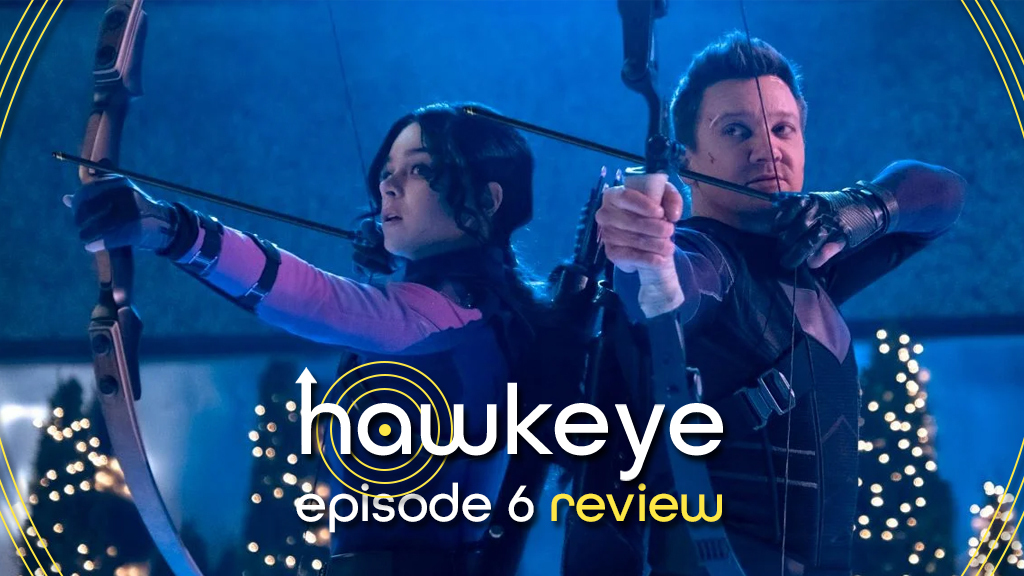
    It is still not clear if another season of Hawkeye is to come, but the disney+ series “season finale” titled “So This Is Christmas“, is the strongest installment of the series on almost all fronts including humor, character work, and action. The finale is also highly representative of the series as a whole. While it has several great components, it ultimately felt somewhat anti-climactic due to the weakness of the overarching plot. This episode emphasized how the series is more of a collection of other stories rather than its own. At the end of the day, the actual plot was Kate Bishop stepping into the shoes of a superhero, but it was flanked by the vague and stagnant criminal storyline. 

    By the end of the episode, it does not feel as though much has happened throughout the series. Even though there was an Echo, Black Widow, Kingpin, and a Kate’s-mom-is-actually-the-bad-guy reveal, none of these potential adversaries were genuinely essential to the story. Most of what happens in Hawkeye comes across as a string of crazy coincidences. As such, the lack of a central and strong adversary left the finale and the series needing more. Many interesting narratives turned out to essentially be interesting cameos rather than meaningful additions to the story. For example, the fact that the Rolex first encountered in the first episode revealed that Laura Barton was once an agent of S.H.I.E.L.D. is cool, but much of the underlying mystery was centered around that watch for the entire series for little to no plot payoff. There was a lack of connection why this watch was so relevant to the Tracksuit Mafia.

    Kingpin’s use was a bit confusing in the finale. At first, it seemed like he was going to be grossly underutilized, but did have a solid fight scene with Kate where it was made clear that he is a military tank in human form. His ending with Maya supposedly shooting and killing him isn’t convincing given the importance of his character, but it would be quite a wild decision for Marvel to have made.

    This episode and Hawkeye as a whole aced the character work, though. Clint got the first real development the MCU has given him other than a haircut, and he became a fleshed-out character that stayed true to what he experienced before the series. He’s a traumatized, mildly retired family man, and Jeremy Renner never really missed on his portrayal of the senior Hawkeye. The moments between Clint and Kate, including some of the more poignant conversations, were always strong and drove both characters’ development, and pushed the theme of what it means to be a hero.

    The introduction of Kate Bishop was obviously the series’ main purpose, and while it felt plenty forced and contrived, Kate genuinely grew over the course of the series. By the time she did her leap of faith down the side of the building, the viewer was plenty invested in watching her true hero moment. The finale made it unambiguous that she had crossed the line from idolizing superheroes to embodying one herself. It doesn’t hurt that Hailee Steinfeld’s character already had twice the amount of personality that Clint did, and her personality was fairly fresh and unique when looking at MCU frontrunners. 

    The series also handled its other characters well. Yelena, while only making appearances in the final three episodes easily outshined the main characters and will likely forever be considered one of the most iconic parts of Hawkeye. While her quest to kill Clint was a bit shallow at first, her ultimate resolution with him evoked a great performance from Florence Pugh. It added a lot of color to Natasha Romanoff’s death and absence. The series offered us a decent epilogue to Black Widow, but that is another example of how Hawkeye juggled other stories more than its own. 

    Maya Lopez’s introduction in the series was similarly used as a vehicle for another project, which was evident in her waning presence after her initial appearance. The future for Echo is bright, but setting up her series was clearly the priority for the character rather than a focus on what she brought to Hawkeye

    Unfortunately, the least interesting character at the end of the day was also – in terms of the main Kate storyline – the “big bad”. Eleanor Bishop was fine, but there was not much about the character that was overly compelling. She worked well as a narrative tool to push back on Kate’s ambition, but Eleanor being the vague reason why all of the events of the series happened is not particularly memorable. The episode even managed to fully redeem and solidify Jack as a bonafide lovable guy, but the easy switch from the main suspect to completely in the clear was too uneventful to make any of it thrilling. 

    What the finale did prove is that Hawkeye is funny. From character personalities, LARPers to Tracksuit bros, this episode and the series as a whole had plenty of humor to go around on a higher level than simple comedic relief. The inclusion of the full Rogers the Musical musical number in the credits is a testament to the lightness of the series and the more upbeat approach to its production. 

    The finale’s extended skyscraper-to-ice rink scene joins episode 3’s car chase as one of two truly memorable action sequences of the entire superhero series. Between the trick arrows and the arrival of every character – other than Lucky the Pizza Dog – to the area felt like a worthy payoff. The archery and hand-to-hand choreography were very well done. The final Hawkeye suits were extremely corny, but fitting for the tone of the series and the weak gravity of the actual plot situation.

    Hawkeye’s series (or season) finale capitalized on all of the things that the show did well. The character development and humor that it consistently mastered across all of its episodes are fairly unique to the MCU’s slate of Disney+ series, which makes Hawkeye a welcome addition for that alone. The action here is the series’ best, but overall that element was limited. Unfortunately, Hawkeye suffered a bit from a loose and varied narrative that lacked much punch. But overall the street-level, dog-loving holiday romp was a fun ride that brought plenty of lovable characters to the table. 

  • ‘Hawkeye’ From Page to Screen: Episode 5

    ‘Hawkeye’ From Page to Screen: Episode 5

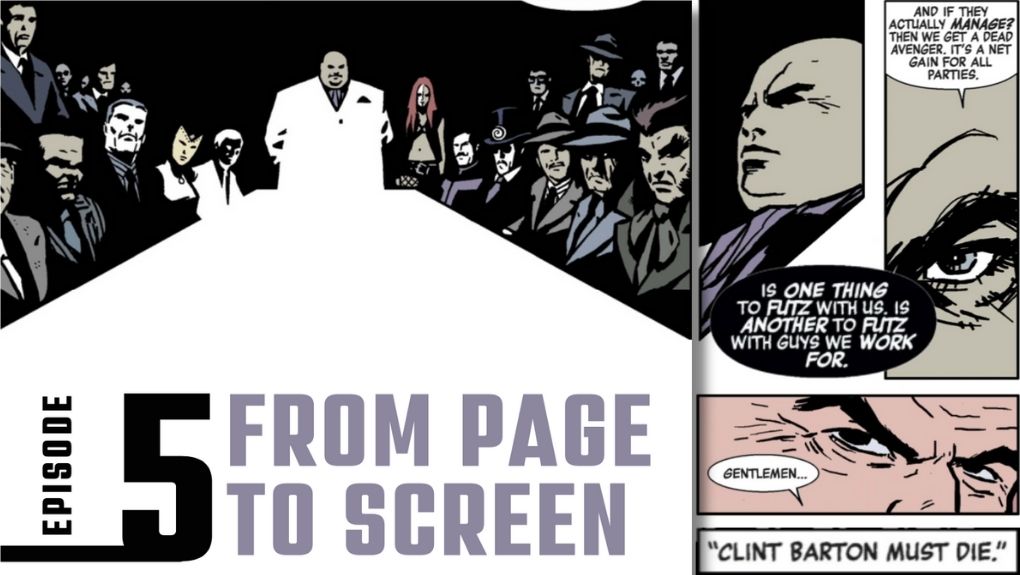
    The Hawkeye series finally introduced none other than Kingpin at the very end of its penultimate episode, after quite some time teasing the villain’s introduction. While Kingpin did not play a particularly central role in the Matt Fraction and David Aja My Life as a Weapon comic, it’s clear that his role in both the comics and show has some major overlaps worth exploring. Is the Kingpin, better known as Wilson Fisk, just the man behind the curtain, or is he more involved than it seems?

    In the comic he is heavily involved in three major areas of interest: (1) he’s at the top of the Tracksuit Mafia food chain; (2) he was at a black-market auction to buy incriminating evidence on Clint Barton; and (3) he was involved in hiring an assassin to kill Clint Barton. This article will explore each of these elements in turn and how they relate to the Hawkeye series.

    The Guy Clint’s Been Worried About

    One thing we know about Kingpin in every adaptation is that he is at the top of the New York City criminal organization pyramid. We know little so far from the Hawkeye series, but in the comics, Kingpin is a general presence that overshadows much of the crime syndicates below him. In both the series and the comic, Clint is hesitant to work with Kate or go about his general business, not because of the Tracksuit Mafia, but because of who they work for. In the series, Clint tells Kate that they do not want to get too involved, because they could run into the “Big Guy”. In the comics, Kingpin delivers a speech to a cohort of villains that “Clint Barton must die,” for interfering with their plans. The Tracksuit Mafia makes it pretty clear the Clint that they work for someone much more powerful. Later on, it’s obvious that Fisk is at least one of who they are referring to. As seen below, the comics make it much more explicit than the Disney+ series does.

    ‘Hawkeye’ #6 (2012)
    ‘Hawkeye’ #8 (2013)

    The Auction

    Curiously, both the comics and the series feature a black market auction for Barton and Avengers-related items. In the series, of course, we see people bid on the Ronin sword, but the Tracksuit Mafia break into the event to grab the still-mysterious Avengers-related watch before it goes up for sale. While Clint tells Kate that the watch could blow the cover of his friend, in the comics a tape of Clint assassinating targets on behalf of S.H.I.E.L.D. goes up for auction. Kate manages to buy the tape – in disguise as Madame Masque – and, you can guess, Kingpin is not too happy.

    ‘Hawkeye’ #4 (2012)

    In the series, the first episode shows Jack and Armand Duquesne at the said auction that featured several items found from the destroyed Avengers compounds, including Ronin’s sword, suit, and the mysterious watch. While we did not see Kingpin physically at the auction, we know the Tracksuit Mafia—that he controls—broke in to steal the watch. As little as we know about the watch, it’s clear it might have the same effect on the owner and Clint’s tape in the comics did on him.

    ‘Hawkeye’ #4 (2012)
    Marvel Studios’ ‘Hawkeye’ Episode 1

    The Assassin

    In the comics, Kingpin is one member of a group, including the Tracksuit Mafia, that decides to hire an assassin to kill Clint Barton. He hires Kazimierz Kazimierczak in the comics, who is otherwise known as the Clown. The Kazi in the series definitely strays from the Kazimierz in the comics, so we have not seen any elements of the “Clown” at this point. But in the series, Episode 5 tells us that Kate’s mother Eleanor hired Yelena Belova to kill Clint. Shortly after, we find out that Eleanor appears to be working with Kingpin, begging the question as to whether he was involved in the live-action scheme to take down Clint Barton.

    While Kingpin’s introduction was fairly small in Hawkeye Episode 5, it’s worth noting the connections he has to the Fraction-Aja comics. We’ll find out more about Kingpin’s involvement in the Hawkeye finale on Wednesday, December 22, 2021, when it airs on Disney+.

  • REVIEW: ‘Hawkeye’ Episode 5 – Ronin

    REVIEW: ‘Hawkeye’ Episode 5 – Ronin

    Hawkeye Episode 5 expanded upon the last episode’s theme of rich character development and in-series world-building, but it fell short of providing a strong platform into the finale. While the penultimate episode certainly took its time to gather a lot of pieces of the big-picture puzzle, the final episode of the short series is left to try and resolve virtually every plotline already in existence as well as provide all of the Kingpin content it has teased. 

    What Ronin set out to achieve it did beautifully. There were several standout conversations and one-on-one moments that invoked emotion arguably better than the series has done previously. Florence Pugh’s witty Yelena was easily one of the biggest highlights and received much of the episode’s focus. While her “girl’s night” with Kate highlighted the chemistry between the two characters, the look at Yelena’s own blip was an intense opening to Ronin that set the tone for a grief-filled episode. Eleanor and Kate had a moving moment where Vera Farmiga puts in quite a compelling performance as a concerned mother which is impeccably timed with the late but unsurprising reveal that she likely is on the wrong side of the criminal line.

    Clint also has moments dripping with desperation and loss. Learning that the Black Widow was Natasha’s sister Yelena sent him into another spiral of guilt over Natasha’s sacrifice. There’s a simple but moving moment where he talks to an Avengers commemoration plaque as if it were her in silence. But mourning quickly turns to action as Clint wastes little time in going on the offensive to defend his family. Through another Linda Cardellini phone call, Clint explains that he has to end it or else the “big guy” might get involved. Laura Barton is again strangely supportive, lending a lot of credit to the theory that she is an ex-agent of some kind herself. This episode marks Clint moving away from much of his self-deprecating attitude and into a much more confidently self-aware place.

    The result is Clint revealing to Maya that not only is he Ronin, but that Maya’s “Uncle” is who wanted her father dead. This weaves itself into strong moments between Kazi and Maya, where his comforting protective instinct towards her starts to look twisted after it’s implied that he had a part in Maya’s father’s death. Still, the two have strong chemistry, and it’s a bit of a shame the series didn’t show more of it. The Clint-Maya confrontation represented the only action of the episode, leaving Episode 3 as the leader of the series in that respect, by far. 

    While Hawkeye can pull off quieter, investigative storylines, it has been teasing more over the course of its run. Episode 5 was in a prime position to kick off an intense action-packed ending to the series, but it curiously kept the slower pace of the last episode throughout. The much-awaited “reveal” was a bit of a letdown. While the name “Kingpin” has finally been dropped, it came via a less-than-dramatic line from Clint that the man in a very low-quality cellphone photo with Kate’s mom was “the guy [he’s] been worried about: Kingpin.”  Yes, it was Vincent D’Onofrio, but it may have well been Bradley Cooper’s Rocket or Alec Mapa’s Animal-Vegetable-Mineral Man—the photo would’ve looked about the same. While there’s every reason to believe D’Onofrio will be a star in the finale, his reveal was not particularly exhilarating. 

    Ronin set up virtually all of the series’ plotlines on a silver platter to be resolved or concluded. The tracksuit mafia’s vendetta against Clint/Ronin, Yelena’s quest to kill Clint, Jack’s criminal ties, Eleanor’s criminal ties, Kingpin’s overarching role in all of it, Clint and Kate’s relationship, Grills’ safety, and Clint getting home for Christmas. The problem is that the finale is forced to take on all of it in, presumably, the same general run time that the rest of the episodes have been allotted. While Hawkeye has been very successful in developing strong, compelling characters, delivering interesting and emotional arcs for them, it has yet to truly prove its ability to handle its own overarching storyline. Hopefully, the finale manages to streamline its moving pieces while capitalizing on the character work the series has worked hard to execute.

  • ‘Spider-Man: No Way Home’ Is The Experience Fans Expect it To Be

    ‘Spider-Man: No Way Home’ Is The Experience Fans Expect it To Be

    Spider-Man: No Way Home is in a position to be one of the most memorable superhero cinematic experiences of all time. Its ambitious story, major character inclusions, and overwhelming audience expectations certainly place the film in a particularly bright spotlight ahead of its release. Between this movie being Tom Holland’s sixth appearance as Spider-Man and Holland’s hero being the lead of the third Spider-Man franchise since 2002, perhaps the biggest question is whether or not No Way Home is able to deliver a new, exciting, and fresh take on a Spider-Man solo flick. The second question undoubtedly is whether this film can live up to the arguably unprecedented fan excitement that became an unrelenting marketing force of its own over the past two years. Fortunately, No Way Home delivers on its own promises but also many of the promises that audiences made for themselves.

    No Way Home is without a doubt a celebration of almost twenty years of Spider-Man in cinema. It is obvious that the film draws inspiration from Sony’s prior live-action Spider-Man franchises, but it is also clearly influenced by the studio’s critically-acclaimed animated Spider-Man: Into the Spider-Verse. With the general concept of the multiverse at No Way Home’s core, the Marvel Cinematic Universe-set film is well-designed to embrace the character of Spider-Man somewhat apart from his current and popular role in the MCU. 

    The idea that an exploration of the multiverse can make a character more prominent seems counterintuitive, but No Way Home is nothing if not a love letter to Spider-Man. In a multiversal movie that also includes someone like Doctor Strange, where exactly does Holland’s Peter Parker shine? By design, he is the absolute anchor of virtually everything that moves in the film. While there are fascinating elements that have the power to outshine the main character, the fact that Peter is the glue that holds everything together is a win in the face of everything the movie is trying to accomplish in one sitting.

    No Way Home is easily one of the MCU’smost introspective and emotional films yet. Peter Parker is gifted with deeper character development here than in Holland’s previous outings. While the MCU has witnessed the character grow from an insecure teenager to a slightly more secure teenager, No Way Home delivers a more nuanced turn on the hero that manages to stand out at the end of the film. Amongst the mania of the movie, the character experiences both internal and external crises, with a primary theme being his intrinsic guilt surrounding the consequences his double life as Spider-Man has on those he loves.

    Until now, he was able to skirt most of these implications, but the reveal of his identity at the start of the film means that he’s no longer able to hide behind a mask. In this way, No Way Home offers audiences a more intimate look at Peter Parker and explores his psyche freshly and more profoundly than ever before. The film hits notes that feel dark, broody, hopeless, and generally depressed throughout.

    But while the movie certainly explores darker elements, No Way Home knows how to deliver pure joy. The film features the return of fan favorites such as Alfred Molina’s Dr. Otto Octavius and Willem Dafoe’s Norman Osborn. The movie brings back bygones from a beloved era in a way that mostly escapes the shallow feeling of fan service. The fan service is real and abundant, but it generally manages to stay on target and not devolve into a lifeless parade of callbacks and Easter eggs. Molina and Dafoe in particular are phenomenal and, quite frankly, outperform the main cast members. Their transition into playing these characters once more feels flawless, and the two veterans bring an air of seriousness to the chaotic situation, despite being much of the chaos themselves. 

    Benedict Cumberbatch’s Doctor Strange is also another well-placed addition to the film. He’s a standout character both as a plot device and in terms of Peter’s development. Without Doctor Strange casting the spell, there would be no Spider-Man: No Way Home. Luckily, the character comes across better in the film than he did in the trailers—not only was the sorcerer not overly dumbed-down, but Cumberbatch also puts in a performance that stretches the known emotional range of the character. Stephen naturally finds himself filling the role of some sort of mentor or guardian to Peter, though nothing like Peter’s relationship with Tony Stark in Spider-Man: Homecoming. Far from taking over Peter’s story, Doctor Strange feels utilized just enough to give shape to the plot and add a little extra to Peter’s emotional core. The two have an easy, comforting relationship that seems to have sprung up overnight.

    Peter and Doctor Strange’s relationship is a testament to this movie’s ability to create strong dynamics between a large number of characters. The ensemble is numerous and many of the characters do not have pre-existing relationships going into No Way Home. But somehow one of the film’s greatest strengths is the effortless way in which the many characters interact with one another. It is one of the most, if not the most, impressive aspects of the film given how conservative individual character screen times seem to have been allotted at times. 

    No Way Home’s weakest point is, unfortunately, its plot. The mechanics of the multiverse story made very little sense. There are countless questions unanswered about why someone is here or there, or why a very obvious and easy resolution is acknowledged and ignored for the entire film. The movie hardly attempts to engage any of the important details, but that might have been a calculated, intelligent move. While the plot is not strong in and of itself, No Way Home proves to be one of those rare films that can be good with a bad plot. 

    The pacing of the first act is exquisite. A lot of time passes between the reveal of Peter’s identity and Doctor Strange’s spell, but the No Way Home moves through it in a choppy but enjoyable fashion reminiscent of some of the more innocent days of Spider-Man: Homecoming. After that, the “pure joy” mentioned above generally takes over. No Way Home is a prime example of a fun movie—between the character dynamics and all of the flat-out exciting elements and moments, it is easy to forget about the plot. Or, at least, it is easy to forget that you have quite a lot of questions about it. The weak plot, easy answers, and the highly questionable ultimate resolution of the main story do put a chink in the movie’s armor. But No Way Home manages to separate the plot from the experience enough that it is far from fatal.

    Overall the action should certainly satisfy fans that felt like the MCU’s Spider-Man films were lacking in that element. Peter was allowed to be a bit more violent—it comes across at times as brutal and dripping with dark emotion that has built up over time. It’s another example of how the movie was able to explore and showcase the greater depth of Peter’s character development in the film.  But the action sequence between Doctor Strange and Peter is the visual standout of the entire movie. It lacks all of the bells and whistles that come with a hero versus supervillain fight sequence, but it is visually stunning. It certainly manages to allow the film to take a break from the typical action sequences a Spider-Man movie delivers, without feeling like it takes place in a completely different film. Unfortunately, it is still missing so much of the iconic web-slinging visuals that Spider-Man has the potential to produce.

    Spider-Man: No Way Home is a multiversal adventure that excites and delights. While its character dynamics are absolutely stunning, the action and story concept also makes for an exhilarating experience that won’t disappoint even the most anxious fans. It’s an adrenaline-filled serenade to Sony’s Spider-Man legacy that invokes nostalgia and joy as often as it can without destroying the heart of the film. Holland’s Peter Parker remains the core, even if he naturally gets eclipsed amongst the celebration. No Way Home only falters with its plot, its shaky backbone, and its many unexplained-yet-important details. Still, the film manages to do the usually impossible and deliver an experience that stays afloat above its sinking storyline. No Way Home is undoubtedly the superhero experience fans hope and expect it to be. 

  • REVIEW: ‘The Amazing Spider-Man 2’ Is Great If You Ignore A Lot Of It

    REVIEW: ‘The Amazing Spider-Man 2’ Is Great If You Ignore A Lot Of It

    Welcome back to 2014. The year was marked by several phenomenal Marvel films including Captain America: The Winter SoldierGuardians of the Galaxy, and X-Men: Days of Future Past. It had only been a couple of years since The Avengers debuted, so the comic book movie landscape was full of excitement and promise. The Amazing Spider-Man 2 also happened to be released in 2014. 

    The day before it was released, if you had told anyone that within the next two years the Spider-Man franchise would yet again be rebooted with an entirely new British Peter Parker, you would’ve sounded pretty silly. But then after audiences got the chance to see it, you would’ve sounded like a Sony executive. Full disclosure, TASM 2 is one of my favorite Spider-Man films, because if you ignore all of the bad stuff, it’s actually not a bad movie. 

    I do think Andrew Garfield is a phenomenal Spider-Man. He’s the funniest, his quips are great, and overall his masked person has the most personality of any live-action Spidey. He also had some great street-level action scenes early on, and they play up the conflict between that and his normal life. This version is actually well-connected to New York City and crime-fighting, unlike a certain Iron Space Avenger Spider (but maybe that’s your thing). However, I will not even suggest that Garfield is an ideal candidate for Peter Parker – whenever someone called him “Peter”, it threw me off. That was a grown 30-year-old man, both literally and in on-screen presence. 

    How a director with the last name Webb could not land a Best Picture Academy Award nomination for a Spider-Man movie is beyond me. The best guess of why this didn’t happen is a note I jotted down when re-watching the movie: “This plot is dumb.” But sometimes to truly appreciate a film, you have to ignore the plot – that’s just life. With the holidays approaching, the right thing to do is forgive and forget. However, there is no question that the fact that the Rhino fight scene – which played dramatically and was highlighted in every single trailer this movie ever put out – was never even a real scene is absolutely unforgivable and you are right to still be upset about it. 

    The Amazing Spider-Man 2 was plagued by the “okay, so we just did a whole Spider-Man franchise a few years ago, so how do we make it way too obvious that this is different from those?” disease. Make no mistake, this is not the same as the Goblin disease Harry Osborn had to deal with – what better way is there to enjoy a “different” Green Goblin than to actually make him a goblin? It’s art. But Harry for sure has some issues at the end of the film, the guy looked rough, mostly just greasy, but Greasy Goblin is just angry that introducing his character as some guy that Peter hasn’t seen or talked to since middle school maybe wasn’t the best choice.

    This plot is dumb” because none of the major potential plots seem to belong in the movie. This means that the movie is less of a story and more of a smattering of ideas. But if Jackson Pollock can make it work, surely Spidey can too. I have a hard time deciding if the loose idea of the Richard and Mary Parker story was just bad at face value, or just misunderstood. But after typing that sentence I realized I understand it and I’m pretty sure it’s just bad. In any event, starting the movie with what felt like an hour (it was probably more like ten minutes) of these flashbacks was not ideal. Then, throughout the movie, it’s clear it has no real importance to the actual movie, but Peter will remember it at times so that there can be montages. 

    The parents’ “plot” really only served to technically create Greasy Goblin via syringe, but yet Greasy Goblin seemed to only be there to … actually, I have no idea why. Perhaps only to technically pretend to be an emo bad boy with Electro for a hot minute – even though I’m pretty sure Electro didn’t actually need help jumping into an outlet – and maybe give Gwen Stacy a slightly more comic-accurate death. 

    Electro was, in theory, the main villain. He’s easily my favorite part of the movie, both ironically and genuinely. Max is a lot – he’s cringy, awkward, hard to look in the digital eye. It worked well for what the character was supposed to be, but I have no idea how intentional some of it was or if it just worked out in post-production somehow. Obviously, his transformation into a member of the Blue Man Group (but with more eel inspiration) is one of the most memorable things from TASM 2, and yes, it is rough. I’m pretty sure Jamie Foxx actually nailed his performance. But with lines like “It’s my birthday!” as he tries to fry some men, women, and children, it gets hard to tell. 

    Obviously, at the heart of this movie is the relationship between Peter and Gwen Stacy even if he stalked her way too much. First of all, part of the reason why TASM 2 is secretly good is that they did indeed kill Gwen. Not only does this introduce a darker element from the comics, but at the time it seemed inconceivable that a superhero movie would just (fairly violently) kill off a lead romantic interest, let alone Emma Stone. Unfortunately, the movie spent almost all of its run time leading up to this heartbreaking moment by making sure the two lovebirds were broken up. I’m not sure why that makes much sense, but maybe they needed to make sure they had enough time for Greasy Goblin to have his fake story. 

    Despite the mess that is the majority of TASM 2, this movie had some gnarly visual effects and a Hans Zimmer score. If you generally only pay attention to these two things, the film is phenomenal. Spider-Man’s swinging and action scenes were stunning. While the action scenes were fun, there were very few. An inappropriately large amount of the movie was spent watching people talk. Still, the final power plant scene was wild. It did not fit the tone of the rest of the movie whatsoever, but it was campy, dramatic, over-the-top, and I had a great time with it. TASM 2 loved its slow-motion, and I remember being in awe when I first saw it in IMAX.

    Finally, Hans Zimmer really brought it. More importantly, he really brought it for Electro. I think TASM 2 thought: “how do we make sure people know Electro is Jamie Foxx and that Jamie Foxx also does music?” The answer was for the score to go hard for the character by diving into his head as the music’s base. The Times Square Electro scene, in particular, is a musical playground. It’s so great.

    All in all, TASM 2 is just as lovable as the rest of Spider-Man movies, but sometimes love is hard work. The ending of the movie was magnificent, we see Peter’s montage through some dark times only to emerge as Spider-Man again in the city’s time of need. This movie had some of the best Spider-Man swinging and action sequences that currently exist, both in terms of visuals and Garfield being a fantastic Spider-Man. While we will never truly know how The Amazing Spider-Man 3 would have played out, the fact that the mystery of Peter’s parents’ story remains unresolved does not keep me up at night.