Author: Mary Maerz

  • ‘Olaf Presents’ Highlights Disney+’s Collaborative Power

    ‘Olaf Presents’ Highlights Disney+’s Collaborative Power

    The upcoming Disney+ series Olaf Presents features the Frozen franchise’s famous Olaf the snowman sidekick retelling classic Disney movies like The Little MermaidTangled, and The Lion King. While Olaf Presents’  main goal seems to be to get a laugh through less-than-two-minute-long shorts, it highlights the collaborative power of the Disney+ streaming platform. 

    While Disney is always free to allow collaboration among its different projects and properties, Disney+ might make it easier. At a press conference for the upcoming series, Producer Jennifer Newfield spoke about being able to build on pre-existing Disney tales:

    “It’s nice to [be able to build] off of ourselves as Disney, like using some of the tales that we’ve told that are so familiar, and which are building off of fairy tales that existed even before the time of Olaf…so the self-referential piece [] almost like grows with [Olaf’s] knowledge and self-awareness…”

    Jennifer Newfield

    When audiences have the ability to seamlessly move back and forth from projects like Olaf Presents to the actual films that are presented in the series, it changes the way content is produced and what kind of content is produced. Newfield went on to say:

    “Because I think as a lot of people probably noticed the common collective idea of that sequence in Frozen II…we kind of knew that something needed to get bigger and become a bit of some films being integrated. And so [Director Hyrum Osmond] knew that there were other people in the studio, who also had that same thought…[there was] an insane amount of collaborative ideas as we went through every script together.”

    Jennifer Newfield

    As a relatively young platform, Disney+ is likely only just beginning to realize the new opportunities it has when all of its properties are housed together. Olaf Presents starts streaming on the platform on Disney+ Day on November 12. 

  • REVIEW: ‘Doom Patrol’ Finale – “Amends Patrol”

    REVIEW: ‘Doom Patrol’ Finale – “Amends Patrol”

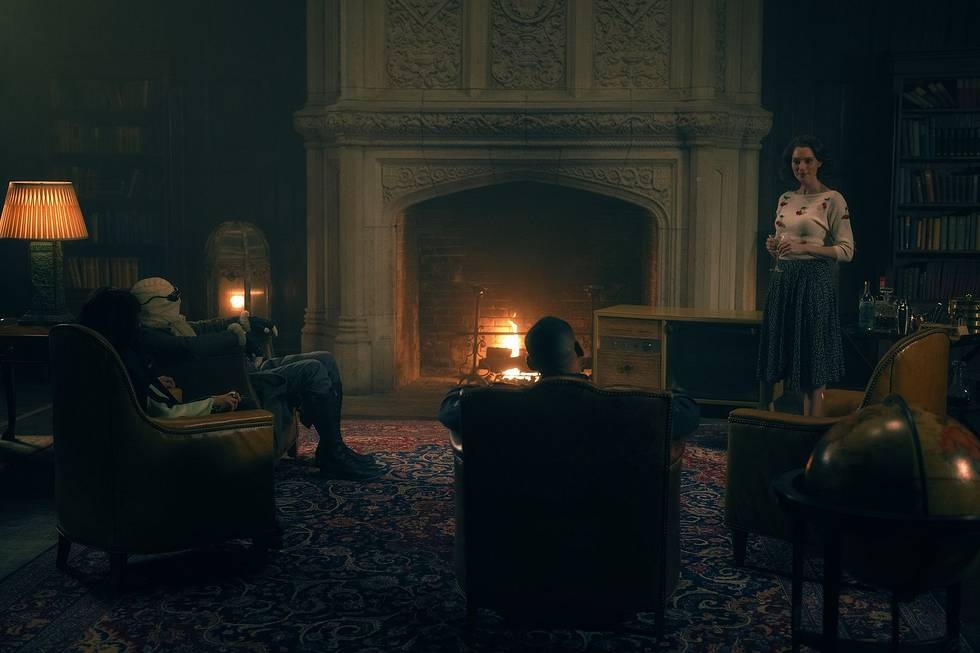
    The title of the Doom Patrol Season 3 finale is more relevant than usual. Amends Patrol is all about redemption. Redemption here is most literal—making amends—and figurative. Our main characters finally make definitive choices as to who they are and who they want to be, taking control of their often-rocky narratives and owning up to the insecurities and flaws that have held them back for three seasons. As is typical for the series, redemption happens on an individual level for the characters, but perhaps the most exciting part of the finale is that we also get a major transformation on a group level. It is still abundantly obvious that Doom Patrol keeps finding ways to be successful in ways that most superhero or comic book shows cannot. It succeeds by refusing to yield to convention or by taking an easy story-telling route. It has consistently paid off for the series, but this episode is one of the finest examples of the series’ talent.

    Where the episode ends highlights just how far the group has come. Where revelations and breakthroughs have come in the past, they are sometimes undone or overshadowed by the next conflict. Interestingly, they were often not accompanied by physical changes even though a lot of the internal struggles were pretty connected with the physical abilities or burdens of the characters. Here, there is no ambiguity—through all the turmoil, they seem to have settled into the new mental and physical places that they couldn’t previously access.

    Season 3 made the decision to take its 10 episodes to genuinely develop and play out the characters’ arcs. The show could have easily turned the group into a formal super team at the end of the first or second season. In fact, it’s arguably bold that it avoided this very expected and anticipated element for as long as they did. But the result is a slow but rewarding burn that makes the “Doom Force” moment all the more exciting and meaningful. 

    The episode begins with most of the group in the last episode’s bus wreckage after Kay/Jane screamed and Larry’s parasite baby essentially blew everything up. While Rita is still obsessed with continuing on to find Laura, Larry and Vic are done following her after it became obvious that the whole situation is based on Rita’s selfish interests, which eclipse any concern she might have had for her teammates. Vic, who had been the biggest proponent of the super team concept, breaks and yells at Rita that they are absolutely not that. The Fog shows up as well to call out Rita. She tells her that neither Rita nor Laura are completely lost.

    This sets up a make-or-break moment for Rita as a character, which was foreshadowed at the very beginning of the season. Will she take her newfound confidence and self-identity to pursue revenge and her own personal interest, or will she figure out how to direct it to something bigger? Not surprisingly, she ultimately makes it clear that she’s not truly evil, notably by coaxing the Brain into thinking she will help him only to kill him with boiling water. Her presence as a leader is finally realized in a positive way at the end of the episode as she seems to take on that type of role with the newly minted super team. If you remember the Rita of season one, it’s amazing how seamlessly and gradually she’s made it here.

    Laura—definitively known as Rouge now—ends up a member of the Doom Force after she used the time machine’s amnesia to help herself make amends to the main group. Rita, for her part, decides at the last minute not to kill Rogue, further establishing that Rita will move forward.

    Larry has a pretty straightforward path to “redemption.” The larva, a negative spirit named Keeg, needs to merge with Larry or it will die. He struggles with the decision of whether he can let himself go through it all again. Vic reminds Larry that he decided during the eternal flagellation to try and let love in. Larry ultimately takes in the negative spirit, saying “I swear I will try my best to do right by you. Always.” We later have a moment of glorious negative spirit flight and action before it suddenly fails and falls to the ground unceremoniously. He’s trying.

    Jane’s decisions are less clear. She has been in constant conflict with the other personas over her beliefs on Kay’s growth. It turns out the personas fled the Underground and are living in the Fog because they are afraid they will disappear as Kay evolves. Yet they are still dying. Apparently, Dr. Harrison is the persona behind the scheme, only looking for control. Jane makes a deal with her that if she helps the personas return and rebuild the Underground, Dr. Harrison can be primary. It seems to suggest that Jane’s redemption is geared towards the personas now, not Kay. With all the previous focus on “the girl” with last season’s Miranda plot, Jane spent this season alienating and ignoring the concerns of the other personas in order to focus on Kay. By sacrificing potentially quite a lot in both the Underground and on the surface, Jane manages to make amends to the personas—it’s unclear if this will undermine some of her journey with Kay.

    Cliff is the one who embraces making amends directly. Laura winds up early on putting his brain in a giant robot that the Brotherhood of Evil had thrown out at some point. He then convinces Laura to stop her rampage toward Rita, telling her that she’s, essentially, not completely evil. This is seemingly confirmed as Laura cannot bring herself to kill Cliff, and flies off instead. He then goes to Clara’s to genuinely apologize for being a terrible father.

    The ultimate conflict of the finale ends up being Cliff, who has Parkinson’s, losing control of the giant robot which is stampeding into Cloverton. Jane, via Flit, teleports into the robot to try and help Cliff, and they have a tender moment while thinking that they are both about to die. Ultimately, Rita grows into the size of the new Cliff and stops him. It’s a very dramatic moment for her that speaks to a level of control over her powers that we have absolutely not seen before.

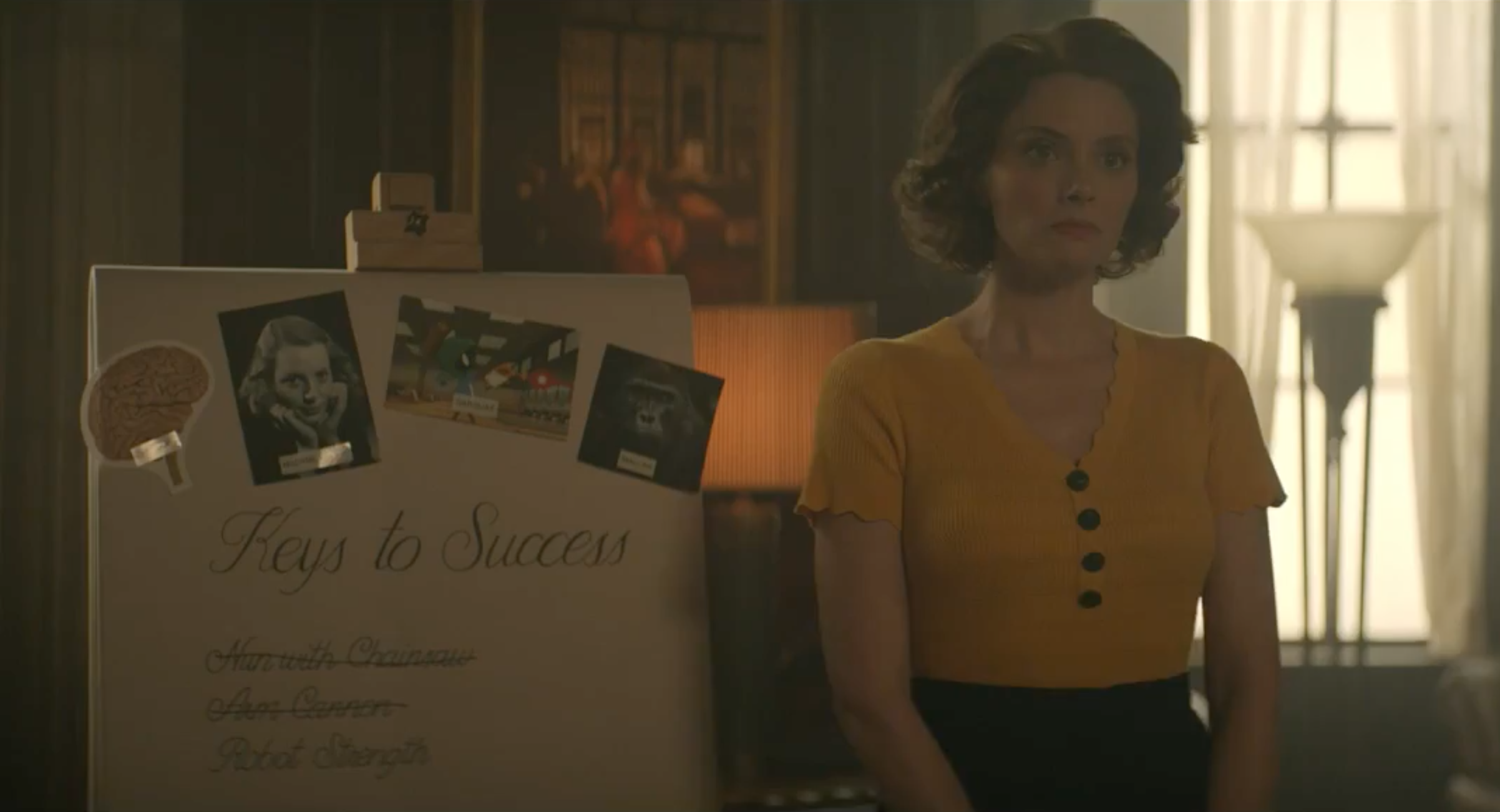
    Later, the group reacts to what they had accomplished. Rita is particularly proud that they saved a town, even though Larry reminds her that they were the only threat in the first place. They finally agree to be a super team, with Cliff hilariously proclaiming them to be the “Doom Force.” It’s going to be a wild ride because the episode ends with the team labeling themselves and making a to-do list to fight a monster that they are using the time machine to get to.

    Amends Patrol is undoubtedly one of the best episodes of the season. It leaves you excited for the next season while managing to be an engaging and compelling episode by itself. While Doom Patrol seems to finally make itself about the Doom Patrol, it’s also clear that the series is not going to be any more predictable. Yes, we now have an official team. But Vic isn’t Cyborg, Jane may not be primary, and Cliff is a giant robot. Larry still hasn’t mastered his new negative spirit, and Rita and Rogue have a tense relationship. And, of course, they are inducing amnesia to go fight monsters with all of these defects. But somehow, this episode ends in one of the most optimistic places Doom Patrol has ever been. The series is not taking the easy way into the superhero plot, which is what makes this show so unique. The individual character grind over the past three seasons made this space better and more meaningful than it could’ve possibly been had the series jumped into the super-team quickly. After this season, there’s every reason to believe that this show will only get better.

  • ‘Olaf Presents’ is the Latest Example of Disney+’s Creative Freedom

    ‘Olaf Presents’ is the Latest Example of Disney+’s Creative Freedom

    The upcoming Disney+ series Olaf Presents features the Frozen franchise’s famous snowman sidekick retelling classic Disney tales in bite-sized episodes. At a press conference for the series, Olaf Presents producer, director and star Josh Gad all praised the creative freedom the show enjoyed. Producer Jennifer Newfield discussed how “Let’s Play” was a guiding creative concept:

    “Being able to play I mean, I think I think that was throughout the entire production is let’s play. And I think that our collaboration efforts come in the way that we went about it was in that way. And we knew that we could take liberties which is not often the case, especially in animation, we have to be very precise with our decisions. And I think the playfulness of the whole the whole way through from the script, writing to the recording sessions, all the way to animators really being able to kind of take the reins a little bit and yeah, be able to just enjoy that freedom is so nice.”

    Jennifer Newfield

    Gad expressed that one of his favorite parts about voicing the titular character is that the creators just “let [him] go crazy.” Director Hyrum Osmond doubled down on the creators’ philosophy in making the show:

    “But I think one of the things is so great, you know, we talked about the inspiration of these films, but it’s also just taking the liberty to not take ourselves too seriously. And I think that is just so fun. And especially when you start telling these things, from the perspective of this, the sort of naive Olaf, right, like the way he sees it. I mean, you can’t help but have some of these fun moments.”

    Hyrum Osmond

    The Frozen spin-off isn’t the only new Disney+ animated series to apparently be allowed extensive creative freedom. Marvel Studios’ What If… ? head writer A.C. Bradley often said similar things about her experience:

    “When I took the job, one of my rules was let’s be free. We’re in the multiverse — we should be as free as can be and go and run into the wild, into the stories the movies will never do, into the stories the TV shows will never do, and show both Disney and the fans all the possibilities of these characters.”

    A.C. Bradley

    Maybe Olaf Presents is another hint as to how Disney+ intends to handle some of its original series, particularly animated ones. Allowing writers and actors to simply have fun with a project can undoubtedly be rewarding for the studio and audience alike. 

    Olaf Presents starts streaming on the platform on Disney+ Day on November 12. 

  • REVIEW: ‘Olaf Presents’ is a Lovable Recycling Project

    REVIEW: ‘Olaf Presents’ is a Lovable Recycling Project

    Olaf Presents is the latest in Disney’s obsession with rehashing and recycling the bottomless financial well of its animated films. Despite the lingering question of what exactly is the goal or purpose of the mini-series, it does manage to be genuinely delightful. Josh Gad’s Olaf of the Frozen franchise fame is a golden nugget of a character and is special enough that his overuse and excessive commercialization can be forgiven enough to truly enjoy this series. With its home on Disney+ within the complete collection of the films, the talking snowman “presents” places it in a much-needed external context. Instead of being a cute, but empty isolated concept, it feels much more like a worthy piece of the larger animated Disney film tapestry. 

    With each episode sporting a runtime of under two minutes, the length of each mini-story is perfect. It’s enough to get a laugh, but it ends almost exactly when it starts to get old. In fact, everything about Olaf Presents is miniature. The writing comes in super abrupt chunks and the editing emphasizes it. The blink-and-you’ll-miss-it narrative sections combined with the harsh edit to the next one to two-second section is quite funny. Gad is as triumphant as the silly sidekick as ever, and it’s one of those rare castings that seem irreplaceable. Gad and Olaf in Olaf Presents only need to find a way to be funny in micro-bursts, and they can do that on repeat in this series. 

    Much of the humor comes from Olaf’s more removed takes on some of Disney’s most classic animated movies. He describes scenes or plot points in ways that the “ordinary” person might. The dark, dramatic, and detailed description of Mufasa’s death in The Lion King that emphasizes just how brutal the famous scene actually is is a perfect example. Our goofy snowman surely makes people think, “Look! He’s saying what we’ve always thought!” 

    Poking fun at its own films is a refreshing move from Disney at least. The mini-series is able to call out some outdated, overly corny, or otherwise laughable themes and storylines that work best for older movies, such as 1989’s The Little Mermaid. It is interesting, though, how Olaf Presents can make an audience laugh at the absurdities in Disney movies by taking cues from the Frankenstein’s Monster of Disney movies’ culmination of their absurdities.  

    The series is a nice way to promote classic films by using a more recent but future classic as a vehicle to reintroduce them either to a younger audience who did not grow up on some of the older animated classics or to an older audience that has left them behind. The presentations are undoubtedly far less enjoyable—if at all—to a person who hasn’t seen the movie being presented. So, to that extent, it’s unclear if Olaf Presents can persuade a newbie to scroll to another part of Disney+ to watch a feature-length film for context.

    Olaf Presents is honestly a funny, cute, and amusing collection of bite-sized episodes for the Disney animated film fan. Olaf’s humor will not disappoint his fan base and it’s surely more than enough to make Olaf-indifferent audiences laugh. Poking fun at classic, and even more recent, movies for about a minute and a half proves to be entertaining. However, those who aren’t already familiar with the movies may not get much out of the series. While the series is a blatant recycling project that highlights ongoing Disney’s death grip on its iconic properties, the fact that Olaf Presents finds itself as a tiny piece within the Disney+ platform makes it feel like a more inspired addition to the conglomerate. 

    Olaf Presents premieres exclusively on Disney+ on Nov. 12.

  • ‘Hawkeye’ Producer on Drawing Inspiration from the Fraction/Aja Run in the Comics

    ‘Hawkeye’ Producer on Drawing Inspiration from the Fraction/Aja Run in the Comics

    Fans are eagerly awaiting Hawkeye, the next Marvel Studios original Disney+ series. Recently, Marvel Studios executive producer Trinh Tran spoke about how actress Hailee Steinfeld was basically made for the role of Kate Bishop, the young archer Clint Barton teams up within the series. Steinfeld also apparently feels quite attached to the character. In an interview with EW, the actress shared that, “[d]iving into all the information out there on Kate Bishop felt like a dream.”

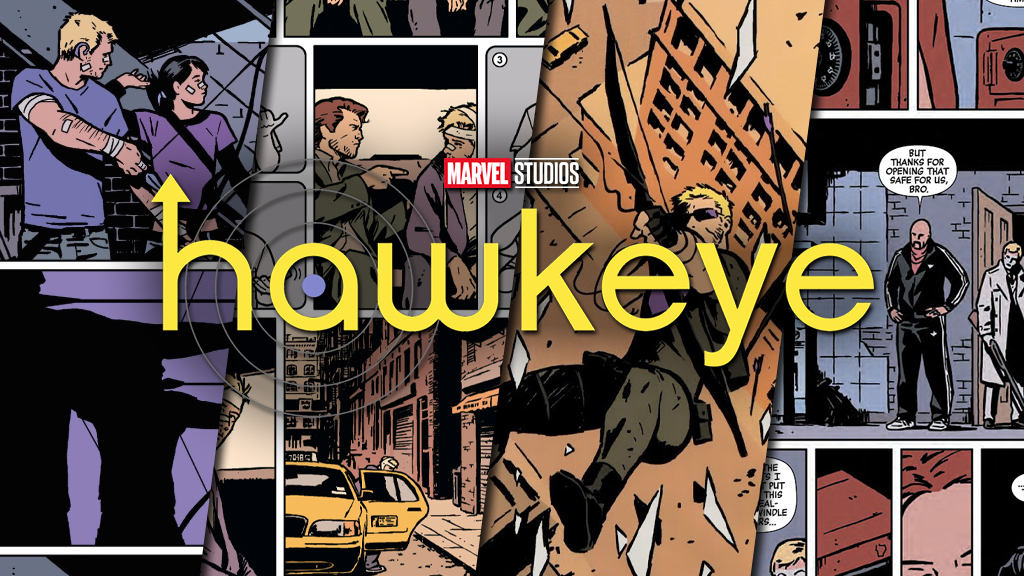
    In an interview with EW, Steinfeld revealed that much of her inspiration for her character came from the critically acclaimed Hawkeye comic by Matt Fraction and David Aja. While we already knew that the series would draw heavily from the well-known run, apparently, the comic particularly influenced the dynamic between Kate and Clint. In the same interview, Tran explained:

    “The Fraction/Aja style and tone is what we were really gravitating towards…[o]nce they encounter each other and go off on this journey together, there’s so much they can bounce off each other.”

    Trinh Tran

    The witty mentor-mentee relationship between the two archers was certainly a standout aspect of the Fraction/Aja comic– if Hawkeye can manage to pull off something similar, or successfully adapt any of the other Hawkeye comic components, the series may end up being something quite special.

    The first two episodes of Hawkeye premiere on Disney+ later this month.

    Source: EW

  • REVIEW: ‘Doom Patrol’ – 3×9, “Evil Patrol”

    REVIEW: ‘Doom Patrol’ – 3×9, “Evil Patrol”

    Season 3’s penultimate episode of Doom Patrol is all about dysfunctional relationships. In fact, it is nearly impossible to point to any element of this episode that isn’t quite clearly a representation of a rocky and toxic relationship. It’s a theme that pervades Doom Patrol as a whole, but it was certainly wrung out in all of its glory in the previous episode. Evil Patrol makes it quite clear that the bulk of this season did the messy work of getting our characters to a significantly different place than they have ever been before in the series. As a result, this episode feels like Doom Patrol is now at a spot where the audience is no longer forced to try and figure out and parse through what is going on, but rather just getting to enjoy it uninhibited. And this episode—which could also be fairly named “Plot Patrol”—does what the series does best: be extraordinarily fun.

    This season of Doom Patrol seemed to be setting up Rita as a major player at the very start of it, and it’s become more than obvious that Rita is really who is driving the show now. Even though the clearest conflict is Rita against Laura, Laura only becomes an arguably villainous figure in the present day because Rita pushes her into survival mode. Without Rita plotting to destroy Laura, the latter never would have returned to the Brotherhood of Evil or hatched any nefarious plot. Rita’s obsession with revenge is the only true adversarial threat of the story at this point—it’s pretty safe to say for certain that Season 3 does indeed lack a strong villain, but it isn’t suffering for it.

    Rita’s loss of Malcolm turns her into a staunch vengeful personality with the confidence and motivation that comes along with it. It allows her to be an extremely different Rita than ever before. She makes it clear to Laura that she won’t let her ruin anything else and that she won’t stop fighting until she’s ended her life. She doesn’t hesitate to start gathering a team to help her, but she quickly realizes that almost all of her potential “assets”—Vic, Jane, and Larry—are no longer assets. It doesn’t really deter her, and she’s more than willing to go the extra mile in keeping everyone around to help. That’s how desperate she is to get revenge on Laura, and that’s how clear it is that she has little concern for the friends she used to have much more compassion for.

    Her loss of herself seems most apparent when she becomes extremely paranoid that Cliff’s daughter Clara is actually Laura in disguise. It comes off as more of a blow to Cliff’s sense of worth, but it turns out that Laura did, in fact, infiltrate Doom Manor, but as Clara’s baby. The result is one of the funniest moments the series has put together—Laura shapeshifts into some kind of elf-sized, disturbingly proportioned creature that looks like it could have come straight out of a Shrek film. She essentially bounces around while the new and mostly depowered team swat at her with objects. The intentionally rough visual effects, including the awkward tempo of it all, fits with the series’ aesthetic perfectly, and it’s just a near-perfect moment. In the end, Laura teleports away with Cliff.

    The fight comes after Laura rejoins the Brotherhood of Evil. The group—which is just the Brain and Monsieur Mallah—is a standout in Season 3 despite being minimally involved and having little screen time. Laura finds the two living in a retirement community in Florida, done with the life of the Brotherhood. Laura convinces the Brain to work with her to both keep herself from being killed but also to supposedly destroy Niles Caulder’s legacy. While they ultimately betray her, it’s not until after the Brain puts himself in Cliff’s body—he is living his best life. While the Brotherhood stand out particularly for the humor they bring, it’s ironic how they just truly aren’t villains here. Both Rita and Laura essentially use the Brotherhood as an excuse to target the other, and the threatening-sounding organization is just sort of the connector. The Brain and Mallah were perfectly content with their retirement before these two women came along. 

    Apart from the main Rita-Laura situation, the other characters have strong moments both alone and together. Vic probably has the rawest and compelling moment with his conversation with his father after Vic has his tech removed. Joivan Wade really delivers, and the scene grows from comforting nostalgia to completely chilling. It’s also the best Vic/Cyborg mental and emotional moment the series has given us. Vic’s arc was always very interesting—and this moment doesn’t make it more or less so—but it always felt like it was missing some intensity. Vic’s pushback against his dad’s attempts to convince him that turning him into Cyborg was the right thing to do, and claiming that he is ready to be able to actually define himself undoubtedly provides that intensity. It also feels like a watershed moment in the character’s development that was a long time coming. While we arguably “lost” the character of Cyborg, the fact that Vic otherwise remains himself is pretty cool. He’s such a strong personality with a good heart. When the team asks him why he came back to Doom Manor now that he is “normal”, he simply says, “I live here.” He has no interest in not being some kind of hero or doing the right thing—losing the tech highlights that Vic, not Cyborg, was always the hero.

    Larry’s parasite baby is a delight. We get sweet and funny dad moments, but we also learn that the little larva can sense and react to everyone’s emotions leading to Larry being zapped by it every few minutes. Jane and Kay are still on rocky and fragile ground, especially now that the rest of the personas have left the Underground. Kay tries to take the reins but flees when she gets scared, and it becomes clear that the Underground will destroy itself if it remains empty. Cliff gets convinced that Clara coming to help him is too good to be true because he doesn’t deserve another second chance.

    The overall theme of “dysfunctional relationships” is at its height at the end of the episode when the team takes the bus to go save Cliff. Everyone is resentful that Vic seems to actually have figured things out about himself after the eternal flagellation. Larry confronts Rita about how the mission really has nothing to do with Cliff for her, and she admits she chose not to save them all from dying to not risk erasing the life she built with Malcolm. Larry’s parasite makes it clear that everyone is emotionally toxic. It’s entertaining and laugh-worthy, and it seems true to the “team” we have known in Doom Patrol

    Because this episode seems to have started from somewhat new ground in terms of the overall plot—notably, getting the Brotherhood of Evil involved as a major piece—it was not predictable and it makes it hard to predict where the finale is headed. This isn’t anxiety-inducing, as the series in general and the second half of Season 3, in particular, has been very successful at making stories come out of nowhere and still be great. While we can say goodbye to the idea of a “big bad”, the Rita-Laura situation can probably be seen as a villain in and of itself, with Rita in particular actually giving off the “evil” vibes. Evil Patrol sets up an entertaining finale at least, and probably an exciting one as well. While only time will tell, Doom Patrol has done the work this season to make it something special. 

  • ‘Spider-Man: No Way Home’ Might Be the MCU’s Second-Longest Film

    ‘Spider-Man: No Way Home’ Might Be the MCU’s Second-Longest Film

    Spider-Man: No Way Home seems to cause a fan uproar every day over some new details revealed or rumor tweeted. With all the information around, it’s been wondered: how long will No Way Home have to be to fit in all of its multiversal madness?

    Apparently, we now have an answer. On Ingresso, a Brazilian ticketing service owned by Fandango, the No Way Home is listed as being 159-minutes long. In other words, it looks like one of the most highly anticipated Marvel Studios films might be one of the MCU’s longest at 2 hours and 39 minutes.

    If true, it would make No Way Home the second-longest MCU film ever behind Avengers: Endgame’s 3 hours and 2 minutes. The upcoming Eternals recently made similar headlines after it was revealed that it would span 2 hours and 37 minutes.

    In any event, fans looking forward to the finale of the Homecoming trilogy will certainly have plenty of movie to sit through when it’s released on Dec. 17. 

    Source: Ingresso

  • Kevin Feige Seems to Confirm ‘What If…?’ Live-Action Crossovers

    Kevin Feige Seems to Confirm ‘What If…?’ Live-Action Crossovers

    Marvel Studios’ fourth Disney+ installment, What If…? was noteworthy for several reasons. On one hand, it was the studio’s first dive into animation which showcased shorter, mostly standalone stories that remixed movies from the Marvel Cinematic Universe. In other cases, the series managed to tell almost entirely new stories as well. But What If…?’s most important aspect may have been the fact that it was also the MCU’s first look at its own multiverse. 

    Even though the animated form of the series tends to lessen the perceived importance of the What If…? stories to the greater MCU, it has been rumored before that its characters and concepts may find their way into live-action in the future. Now, it seems as though What If…? crossovers are confirmed.

    In the new Marvel Studios: Assembled episode that showcases how What If…? was created, Producer Brad Winderbaum states:

    What If…? gives us an opportunity to tell stories with a whole new idea of what the physical reality of the universe is. That is something that’s gonna be explored in other ways moving forward in our films.”

    Brad Winderbaum

    The President of Marvel Studios himself, Kevin Feige also added:

    “I really believe the deepening fictional mythologies is a way to appreciate them more, is a way to understand them more, look at them in a different way. They’ve got now two seasons of What If…? ideas underway that’s some of the best storytelling we’ve ever had that you may see spin into other mediums. It’s really the most uniquely beautiful animated series I’ve seen in a long time.”

    Kevin Feige

    It is safe to say that down the line, some of What If…?‘s characters, or even storylines, from episodes like What If…Zombies!? will almost certainly appear in some form in the live-action MCU Universe. Whether these are brief cameos or total animation-to-live-action transitions remains unknown. Either way, we will continue to see more What If…? content as Season 2 of the series is confirmed and its episodes are already written. 

  • REVIEW: ‘Doom Patrol’ Episode 8 – Subconscious Patrol

    REVIEW: ‘Doom Patrol’ Episode 8 – Subconscious Patrol

    After the cliffhanger ending of the previous episode, Doom Patrol’s Episode 8 had some high expectations to meet. While the episode accomplishes too much to truly do justice in unpacking it, Subconscious Patrol is a masterpiece. Without being overdramatic, I can say that this is one of the best episodes of television I have seen in a long time, if not ever. There is no doubt that this episode will go down as one of the most well-written, well-performed, and electrifying installments of Doom Patrol. Perhaps the best part of the episode’s success is that it does not exist in a vacuum, but was undoubtedly gradually earned over the three years of Doom Patrol

    The series is truly at its best in Subconscious Patrol in a lot of ways, including the writing and concepts it plays with in the episode. The overarching idea is interesting on its face, but the actual execution takes it far enough to be ridiculous in the best way possible. Forcing the characters to confront their subconscious selves is one thing, but to have those “subs” first hang out together in a pillow fort while the main characters prison break one another out of old memories is another. The pièce de résistance is the ultimate combination of mains and subs huddled in the same pillow fort watching each other attempt to sort through their emotional turmoil. It is maybe the first time this season since the first three episodes that it feels like the Doom Patrol was a family, or in something together.

    The plot shines, and the convoluted—yet written well enough to easily follow—workings of the Eternal Flagellation are intriguing and exciting. But the character work is absolutely divine. Doom Patrol is known for how well it handles character development and phenomenal acting performances, but Episode 8 was on another level. It is frustrating, though, to try and generally summarize the episode when the details and complexities of it have been delicately built up for years and this is simply the payoff. In reviews of early episodes in Season 3, I criticized how some of the characters’ stories felt stagnant and repetitive at times, but it’s pretty clear to see now how all of it intentionally paved the way for what truly feels like a climax three years in the making. The writers and actors earned this moment, and it is beautiful.

    Our new and Sisterhood-of-Dada-version of Rita explains the Eternal Flagellation. Essentially, every person in the world has swapped places with a version of their subconscious selves—generally from a traumatic or guilt-inducing memory. The point, apparently, is that no one will be able to hide who they truly are, which means that no one can be evil. While that doesn’t sound like the ultimate threat of the season, Rita assures them all that “it’s art.” It’s also a revelation that the Sisterhood of Dada is maybe yet another red herring for a villain. But honestly, it looks like maybe the Dada arc was genuinely working in the shadows throughout the season to bring our characters to this breaking point. The lack of a strong adversary in Season 3 certainly is not the detriment it could have been up to this point.

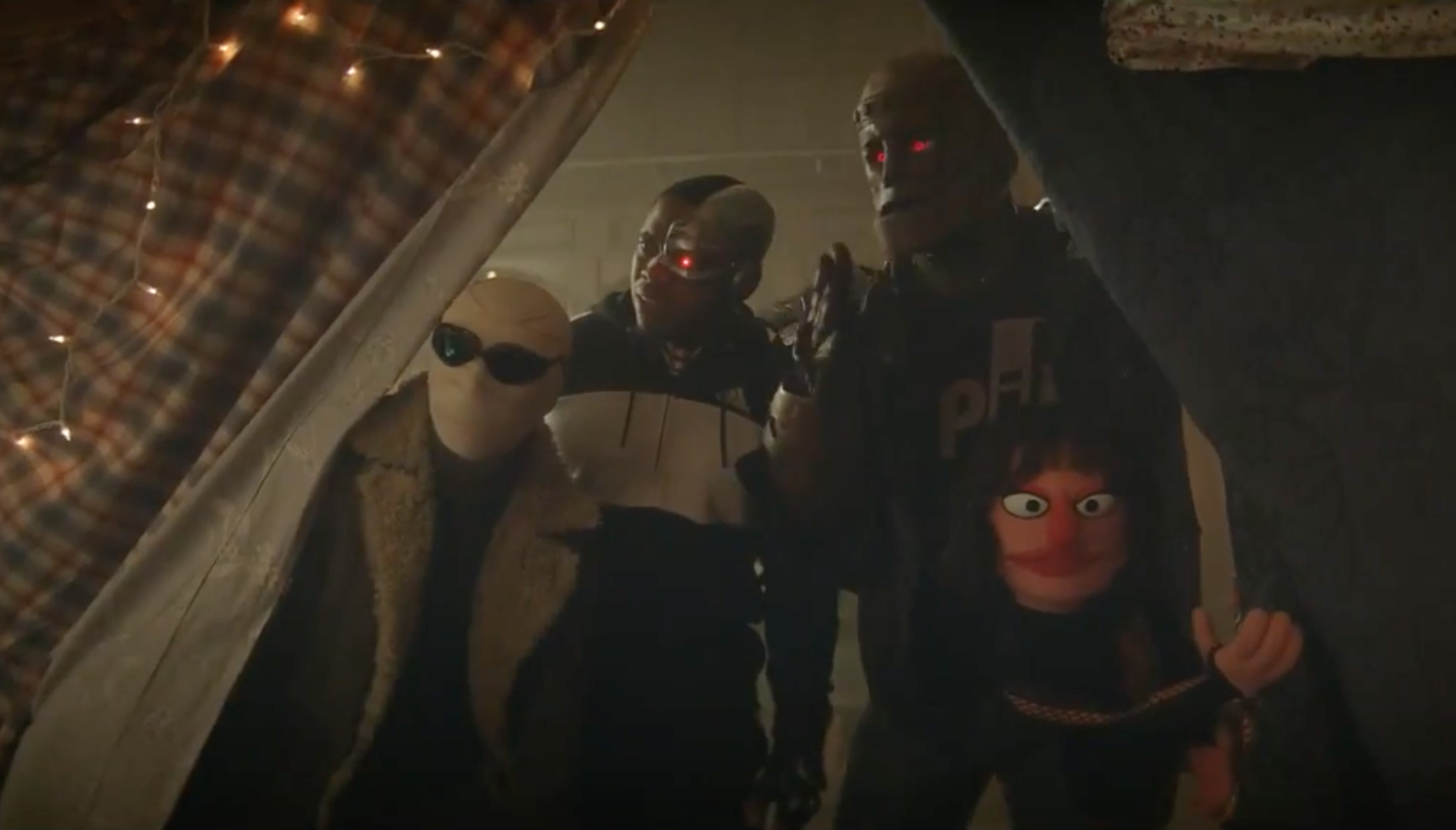
    The Doom Patrol—apart from Rita—swap places with subconscious versions of themselves. Larry finds himself in a memory from the moments before his wedding where he ultimately gives in to the homophobic hatred surrounding him (here, his mother’s) rather than calling off the wedding. Vic actually swaps places with a toy called “General Tony” from a memory where a racist toy store worker threatened to call the cops on him because he dropped several toys simply looking for a black superhero—there were none, and General Tony the soldier is what he left with. Jane is somehow in the subconscious of Kay’s subconscious where Jane and the other personas are Sesame Street-style puppets playing into Kay’s fantasy. Cliff finds himself in a memory of his own birthday party involving booze, bros, and a stripper—but the kicker is that he intentionally left his young daughter in the car to enjoy all of it.

    The characters’ subs all meet in Doom Manor and General Tony builds an elaborate pillow fort for them to convene. The way these subs interact could fill an entire other series alone, and already Matt Bomer and Brendan Fraser are absolutely phenomenal. They both benefit from getting to play very altered versions of the main characters we know—Bomer is pre-accident Larry and Fraser is pre-accident Cliff. Seeing either of the two as normal-looking humans is enough to be jarring, but allowing the actors to portray incredibly distinct versions of their normal character not within some kind of flashback is fascinating. While the subs discuss themselves, the main characters find a way to unite and break out of their subconscious realm and take a flying car (which looks like Cliff’s memory birthday cake) through a rainbow tunnel to Doom Manor to meet the subs on conscious ground.

    When everyone comes together, the magic of the episode really happens. There is so much context to these characters and the conversations they have that it is astounding that the episode did it justice. This review cannot, but to be clear: this episode alone makes the 31 previous episodes of Doom Patrol worth watching even if you didn’t think they were before (but they are anyway). 

    Larry was the only character who achieved some sort of resolution with his subconscious self. His sub confronts him that he is afraid that he doesn’t know how to love or is not worthy of it. Again, Bomer takes everything about Larry to the next level in this conversation. But the kicker is his final plea to main Larry to change his life, reminding him that he is stuck in an infinite loop of that memory: “Make it worth what I’m going through.” Larry’s sub then disappears. Larry is the first character to have that conversation with his sub, so it sets the stage for the other characters to get their resolutions as well.

    Except they don’t. Vic comes to terms with the fact that General Tony represents that he was expected to be a soldier and lost his childhood as a result. There’s an understanding that he can’t get it back, but General Tony tells him that he can make his own choices now. Vic screams, “I didn’t want a soldier!” as General Tony disappears.

    Cliff’s conversation is brutal and disheartening. Fraser is masterful here, and it’s hard not to believe he was actually talking back and forth with himself in real-time. Cliff’s “breakthrough” is that he admits that amongst his need to feel special, fatherhood makes him feel nothing. He recognizes that he’s doing the same dumb things now despite his second chance with Clara. With a lot of shouts of “Fuck you!” back and forth, the sub disappears. Cliff is left more agitated and emptier than ever, and it is a dramatic contrast to Larry’s conclusion. 

    If Cliff needed competition for “worst subconscious conversation ever,” Jane gives him a run for his money. Main Jane is still a puppet at this point, which is hilarious, but sub Kay tells her that everything Jane does brings Kay more pain. Kay says that it’s time for her to grow up and be without Jane. This conversation is the most heartbreaking—Kay disappears after she says, “I wish you would die.” Diane Guerrero doesn’t let you forget that she’s been acting the hell out of Jane since day one, and Jane absolutely loses her mind. It’s as if this is the moment she finally realized that Kay getting better means her existence is useless. It’s particularly interesting because Jane always knew this to be the case, but here it seems as though she finally let go of the illusion that they can all grow together.

    If the pure brokenness at this point was not enough, the episode has more punches left. After the Eternal Flagellation ends, our characters wake back up to the real world. Clara tells Cliff his presence as a grandfather isn’t working out, Kay has cleared the Underground of all other personas, and Vic wakes up from surgery with prosthetic skin and no tech. What we do have is Larry—sweet Larry—who goes back for the parasite he previously abandoned in the woods. 

    We also happen to learn why Laura DeMille actually time-traveled to 2021 anyway—after being fired from the Bureau of Normalcy because of Niles Caulder, the Brotherhood of Evil recruits her to travel in time, steal his technology, and bring it back so that the Brotherhood can invent it before Niles does. The Brotherhood finally gives her the name, “Madame Rouge.” Rita and Laura confront each other once again, and their duality and rapidly complex relationship is still one of the most interesting pieces of the Dada plot remaining.

    By the end of Subconscious Patrol, we are on very uncertain ground. At the very least, we know that Vic is no longer “Cyborg.” There’s also the possibility of it Jane being destroyed by Kay at any moment. Cliff is a broken (robot) man, but Larry is finding a way forward. The Dada storyline might be fading out as quickly as the fog rolled in, but the way it was able to bring the character development to a head in this episode was incredible and compelling beyond expectations. It’s pretty unclear how the season will wrap up its last two episodes after this, but Subconscious Patrol is one to remember.
  • ‘Secret Invasion’ and Cadre K Could Lay the Groundwork for Mutants in the MCU

    ‘Secret Invasion’ and Cadre K Could Lay the Groundwork for Mutants in the MCU

    Marvel Studios’ upcoming Disney+ series Secret Invasion is set to wreak havoc in the Marvel Cinematic Universe by exposing an Earth invasion by the shape-shifting Skrulls. Details on the series are somewhat scarce. While we won’t know the full extent of who is or isn’t a Skrull until the series debuts, we have managed to discover a few of the character identities of the star-studded cast. Actor Killian Scott’s role, who we previously reported would be playing a Skrull, is reported by The Direct to be playing a Skrull named Fiz in the limited series. 

    Interestingly, in Marvel Comics, Fiz is no ordinary Skrull. While obviously human mutants and the X-Men are widely known, Fiz is actually a Mutant Skrull. Like human mutants, the mutation gives Skrulls other abilities in addition to their ability to shape-shift. Fiz, in the comics, has the additional abilities to increase and decrease his size at will. Mutant Skrulls in the comics also faced contempt from their non-mutant counterparts. The Skrull authorities named Mutant Skrulls “K-Class Deviant Skrulls” and the common population simply referred to them as “Deviants”. 

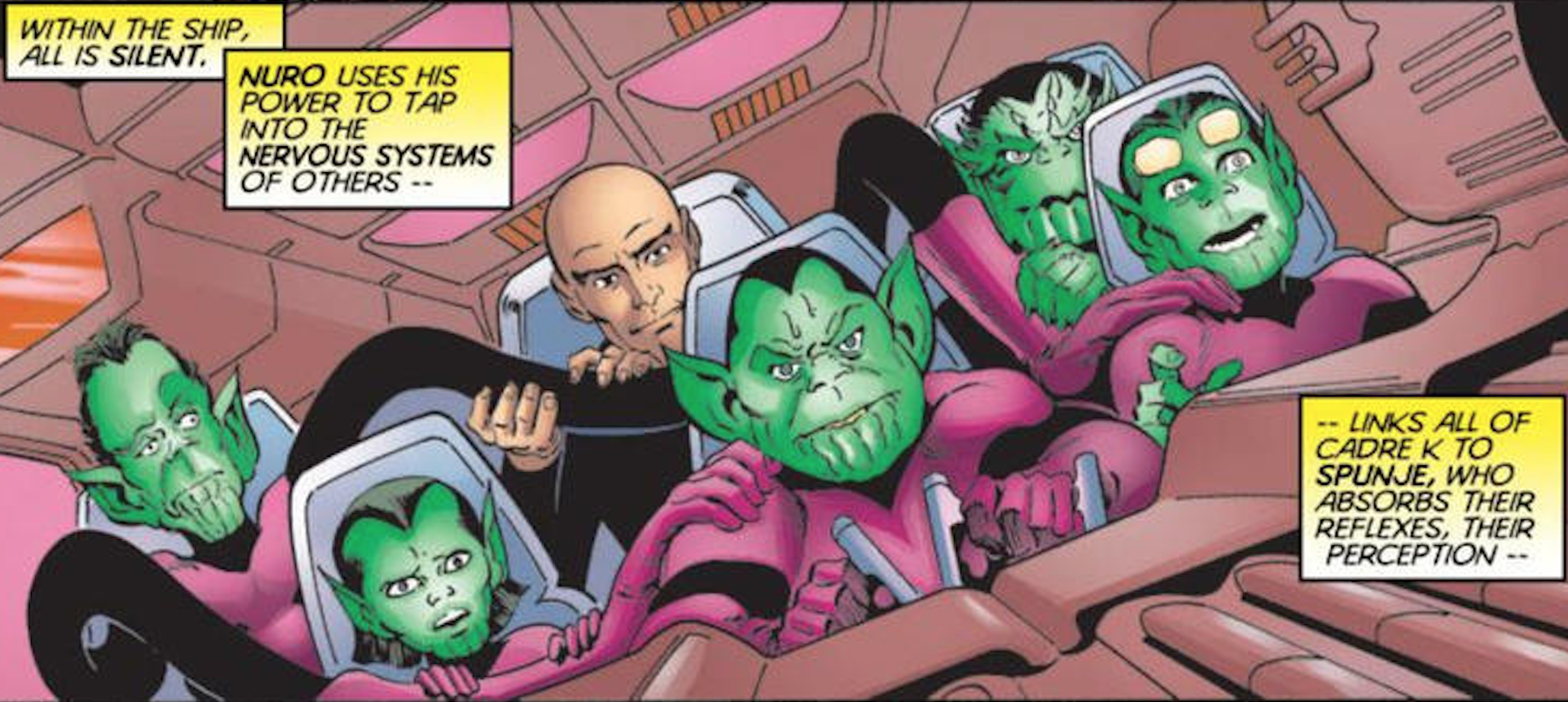
    Charles Xavier gathered Fiz and other Mutant Skrulls in space to train them, eventually forming Cadre K as an equivalent to the X-Men to fight to Skrull Empire to rescue their kind from being killed at birth and to advocate for mutant rights. Cadre K fought against the Skrull faction whose purpose was to keep the Skrulls “pure”, also known as the Purifiers. Other Cadre K members include Z’Cann (telepath and telekinetic), Spunje (energy absorption and energy blasts), Nero (plasticity), R’tee (can extend spikes from his body and fire them, enhanced strength, and accelerated healing), and Goroth (unknown mutant power).

    Despite all of this, it was later revealed during the Secret Invasion comics event that Cadre K was still rejected by the Skrull Empire. Cadre K later settled on a rural farm in South Dakota, believing they had nowhere else to go where they would not be hunted. Cadre K protects the “Skrull Cows” on the ranch—yes, Skrulls that have been turned into cows on Earth by none other than Mister Fantastic himself, Dr. Reed Richards. 

    The fact that Scott’s Skrull character is named Fiz could simply be a matter of Secret Invasion using the name only and otherwise rewriting the character. Still, it could also mean that the series has a few tricks up its sleeves, and Mutant Skrulls, or even Cadre K, could be introduced. Considering Cadre K’s connection to Charles Xavier, and mutants in general, Secret Invasion may lay the groundwork for mutants in the MCU. Either way, if Fiz is introduced as a Mutant Skrull, it will be interesting to see how this affects the character’s role in the series. After all, it doesn’t seem like the Skrull Empire is a big fan of his kind.