Author: Mary Maerz

  • REVIEW: ‘Doom Patrol’ Episode 5 – Dada Patrol

    REVIEW: ‘Doom Patrol’ Episode 5 – Dada Patrol

    Doom Patrol’s fifth episode is a well-earned lesson in giving up. From day one, our main characters have all been teetering on a 4-foot-high ledge, often actually falling off. But as “heroes” they generally get right back up again. This time, they are much more relatable. 

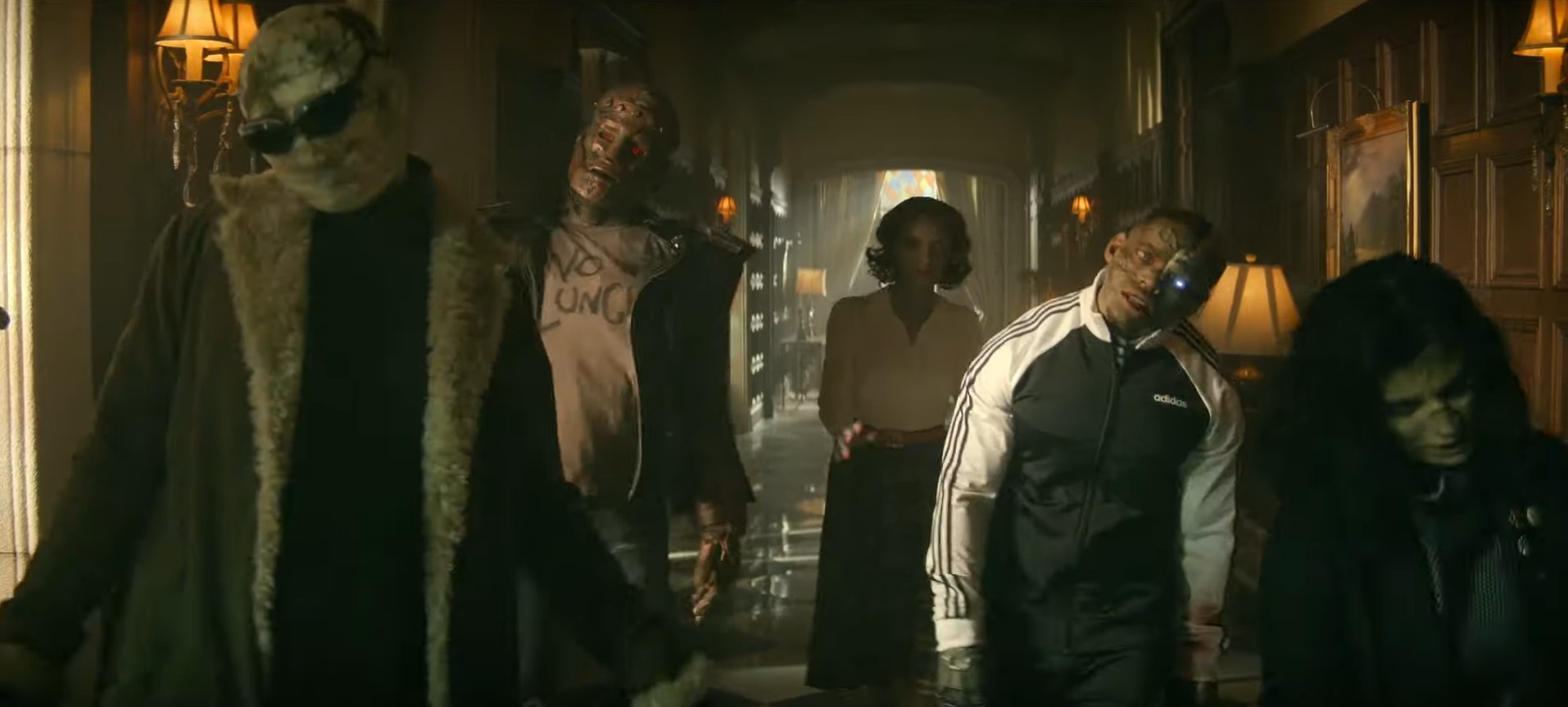
    The team bus is broken out again so that our heroes can pursue Laura DeMille’s plan to murder—but never mind, let’s just infiltrate—the Sisterhood of Dada. The whole crew ends up enveloped in a very dense fog, where they individually meet different Sisterhood members that serve mostly to mentally terrorize our already-fragile characters’ mental states. If the attempted infiltration of the Sisterhood does anything, it gives everyone a kick in the face that knocks them off the ledge into a faceplant—and the Sisterhood laughs while they do it.

    While we get a shallow survey of the different members of the Sisterhood, the most prominent and interesting one is the aptly-named, “The Fog”, or Shelley Byron (you might remember her from the hidden film last episode). The Fog is genuinely intimidating between her masterful use of her powers to casually disarm and humiliate our team in addition to her general presence. While Season 3 seems to be setting a few too many villain-related pieces up with so far no real threat—Madame Rouge, the Sisterhood of Dada, and the Brotherhood of Evil—she is one that stands out as having a formidable enough stance to be one worth looking forward to. 

    Jane is starting to struggle to find herself in this post-“Miranda” landscape where Kay herself is now more active and actually growing. There’s conflict with Jane and the rest of the personalities regarding whether or not Jane is doing what is best for Kay. It isn’t entirely clear what Jane is actually doing “wrong” but The Fog absolutely gets further into Jane’s head and spotlights her insecurity over a domain she used to run so smoothly. 

    Cliff is on his own self-journey of becoming more problematic while trying to improve. Instead of more appropriately addressing his (likely) Parkinson’s, he opts to messily self-medicate with black market drugs to try and be a better functioning grandfather. It also leads him to be absolutely useless in the fog and generally out of his mind. Larry is also a defeated mess without the Negative Spirit—his “give up” moment comes  as early as being told to stay with the bus.

    Vic stays on track with his usual inner turmoil. He’s lost in his feelings for Roni, which impacts his feelings about himself, and ultimately everything comes back to “Who is Vic?” That in and of itself is hard for Vic, because Cyborg was early-on branded as this awesome superhero, but we have never actually seen him do much of that since abandoning Detroit for Cloverton. While his heroic complex is already on the fritz, Frenzy—another member of the Sisterhood—throws him for a loop to ask, “Why are you?” Long story short, Cyborg does not come out of that conversation a winner. 

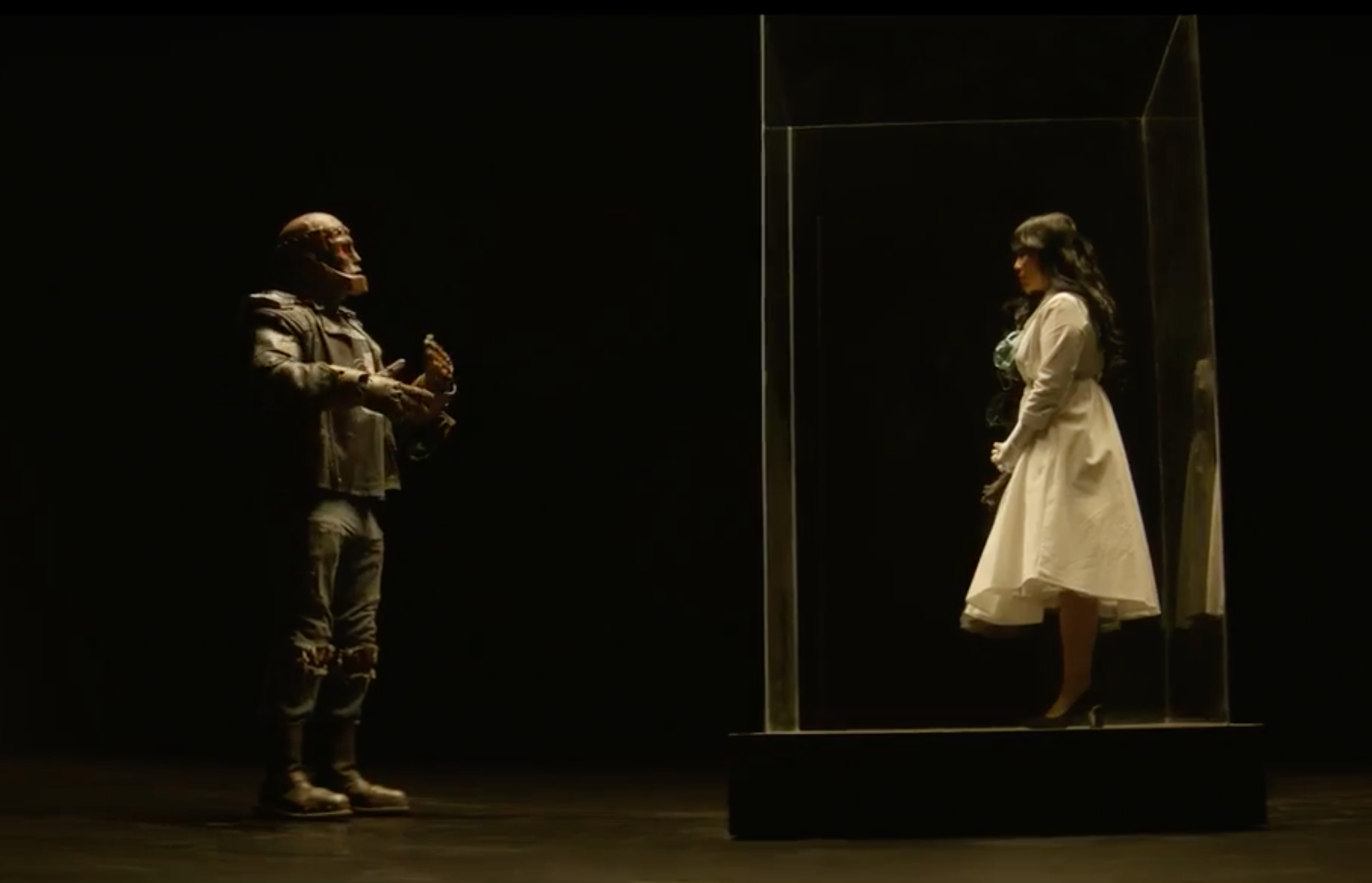
    Rita’s building existential crisis this season certainly makes the biggest move by the end of the episode. Having convinced herself that she is a world-renowned time traveler—based on images of someone who appears to be her in old footage and her being the target of the Brotherhood of Evil—she is gutted when Laura drunkenly insults her for thinking this. Rather than reevaluating herself or identifying the areas in which she is confident in herself, Rita goes all-in to drunk drive the time machine with no plan to, in effect, give in to the blackhole that is her identity crisis. 

    At the end of the day, the characters all return to the bus and pretty much just say, “Ok that was hard, we’re quitting.” In other words, after they faceplanted above, they stayed there. For a gaggle of people that are simultaneously so relatable and unrelatable, they really stuck the landing on relatable this time. The fact that their defeats came at the hands of, generally, mere conversations, is the icing on the cake of them simply giving up.

    With the characters in this state of mind at the end of the episode, it feels similar to many places we’ve been before. Doom Patrol often seems like it wants to be a journey, but it can sometimes move at the pace of a snail and feature constant, non-stop diversions. The diversions are a blast, but sometimes it is not particularly clear if the series has actually moved much or if it is all one big circular fever dream that never ends. If it is, the desire to give up makes the most sense, but it also means giving up is impossible—good luck to our characters are they keep going through the wringer. 
  • Ranking Marvel Studios’ ‘What If…?’ Episodes

    Ranking Marvel Studios’ ‘What If…?’ Episodes

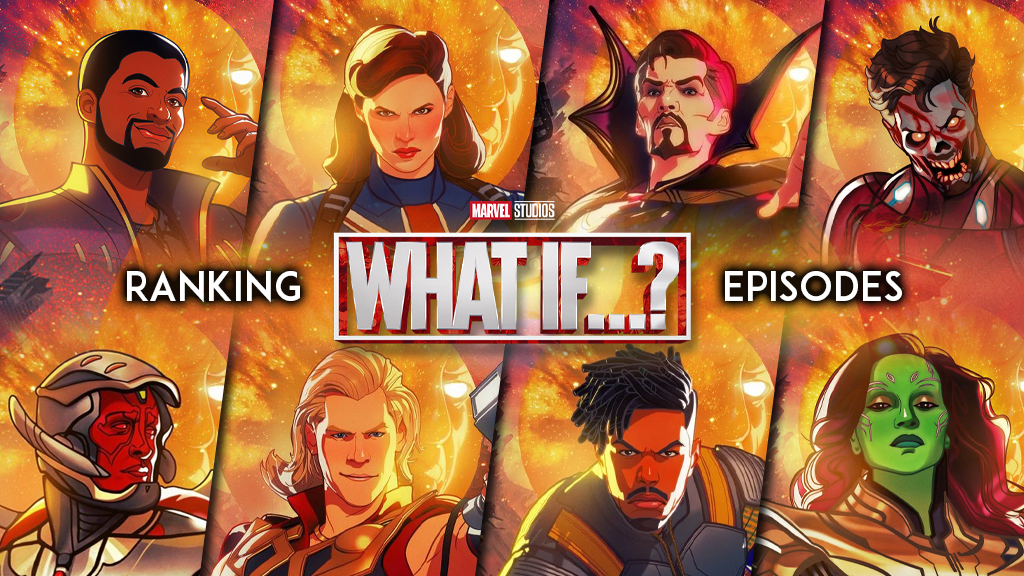
    With Season 1 of What If… ? in the rearview mirror, it’s clear that the series certainly proved that it had more up its sleeve and more to offer its own multiverse than it seemed to early on. Marvel Studios’ first animated and anthology series was an unlikely candidate to be the first to truly delve into the newly opened multiverse, but What If… ? was specifically engineered to do just that. The episodes are a mixed bag, both because the series intended for them to be and because some fell short while others exceeded expectations. With that in mind, we rank all 9 episodes of What If… ? below:


    9. What If… Captain Carter Were the First Avenger?

    At the end of the day, What If… ?’s leading episode is the plainest and least interesting of all. The premise was simply the whole plot of Captain America: The First Avenger, and virtually the only change was Peggy and Steve switching places, more or less. While arguably it was designed well to introduce viewers to the concept of the series, the story itself was bland and a three-minute version probably would have had the same effect overall. 


    8. What If… Killmonger Rescued Tony Stark?

    If Killmonger wasn’t such a great character and if Michael B. Jordan wasn’t Michael B. Jordan, this episode would have felt like a complete flop. Even though the premises are substantially altered, the episode somehow strongly embraces the restrictive concept of sticking closely to the Sacred Timeline source. In this case, it is both Iron Man and Black Panther, but it feels like the Captain Carter episode in terms of watching a condensed version of stories we already know. Killmonger’s deception and manipulation felt one-note pretty quickly, and the episode ends in a place that neither feels like a resolution nor a cliffhanger—it just sort of feels like it was cut off in the middle. 


    7. What If… the World Lost Its Mightiest Heroes?

    Nick Fury’s Big Week is where we first were introduced to the idea of What If… ? routinely killing off major characters in order to make things feel different and add some sort of stakes to the plots that are so easily cast-off as hypotheticals. The theme of this episode is that there is always hope, and there will always be heroes willing to rise to the occasion. Samuel L. Jackson’s Nick Fury gets a much-appreciated spotlight, but otherwise, the story plays out so flat that the death of five Avengers doesn’t come across as upsetting. The elements of a solid murder mystery are present, but it just doesn’t execute in terms of delivering something deeper than a surface-level concept.


    6. What If… Thor Were an Only Child?

    The Party Thor episode is a great example of an episode that everyone can both completely agree and disagree on. There is no doubt that this episode was fun with its countless easter eggs, seemingly infinite cameos, and silly let’s-have-a-good-time energy. Whether or not that makes for a satisfying episode up for debate. While there’s nothing particularly wrong with the episode, there’s nothing particularly worthwhile either. At the end of the day, it feels more like empty fan service than anything else. To be fair, that’s what a lot of people wanted from the series.


    5. What If… T’Challa Became a Star-Lord?

    T’Challa’s episode is genuinely delightful on multiple levels. There is a certain warmth that comes from Chadwick Boseman’s leading voice performance, and his own energy and presence matches well with the episode’s point that T’Challa would have made the universe a much better place than it is. This competes with the zombies episode for the funniest episode, but it is undeniably the most comforting heartwarming episode the series put out. Its themes of family and belonging hit the right notes, and something about T’Challa reconnecting with Wakanda just makes this episode feel fulfilling. 


    4. What If… the Watcher Broke His Oath?

    The finale did deliver a sense of resolution to the series and the Ultron arc that began last episode. While it was exciting to see pieces and characters of the multiverse come together in such a direct and desired way, the episode unfortunately felt shallow by completely ignoring the implications the series—and the multiverse as a whole—have on the main MCU timeline. The character team-up is gratifying, and the rag-tag group of multiversal heroes has a solid dynamic. There was a significant amount of humor that keeps the episode on a level apart from the previous episode, What If… Ultron Won?. Ultimately, while it is exciting, fast-paced, and delivered an epic showdown, the victory feels a bit cheap and the overall effect and punch of the episode did not quite meet its predecessor.


    3. What If… Zombies?!

    This episode was just great. We had a huge array of characters, and most of the ones that are not mindless zombies are characters often not given as much attention. Hudson Thanes’ Peter Parker was center stage and delivered on both humor and emotionality. So much of the episode, by nature, is violent and gruesome—it’s the closest thing the MCU has to horror at this point. Yet amongst the apocalyptic survival, the episode is also hilarious. As a result, it’s probably the most enjoyable to watch. It’s a great example of how the series can succeed by generally ignoring what the movies have done. 


    2. What If… Ultron Won?

    The penultimate episode finally gave us something that made it feel like What If… ? has a point and can provide the type of storytelling that fits within the MCU rather than just having one-off mini-stories over and over again. The concept of the multiverse actually comes into play here for the first time, and the Watcher comes alive. Ultron is portrayed as the most powerful villain of the MCU, and it fits. The Ultron versus Watcher showdown is not only great because of the strength of the two characters, but it is visually and conceptually stunning as they punch their way through the multiverse. It also features some very human moments, but the real triumph of this episode is that we finally have the multiverse as an overarching concept to play with. 


    1. What If… Doctor Strange Lost His Heart Instead of His Hands?

    The Doctor Strange episode was the first time the series felt like it had something particularly meaningful to offer. While still heavily anchored by the general events of Doctor Strange, it moves past this to intimately explore a dramatic reimagining of a character. The character-driven piece was shrouded by extremely compelling dark themes that are absent from the MCU at large. It was the definition of a tragedy drowning in grief, desperation, and defeat that resonated in the empty void that Doctor Strange left himself in at the end. Combine all of this with a mystical twist that Doctor Strange had been time-split in half, this episode was truly phenomenal. 

  • REVIEW: ‘What If… The Watcher Broke His Oath?’ – Episode 9

    REVIEW: ‘What If… The Watcher Broke His Oath?’ – Episode 9

    The finale of the experimental first season of What If… ? delivered a sense of resolution to the series and the Ultron arc that began last episode. While it was exciting to see pieces and characters of the multiverse come together in such a direct and desired way, the episode, unfortunately, felt shallow by completely ignoring the Sacred Timeline implications the series—and the multiverse as a whole—have on the main MCU timeline. 

    The collection of the Guardians of the Multiverse is obviously the stand-out aspect of the episode. While the episode title implies that the Watcher really gets involved, he actually just, essentially, forces certain hand-selected heroes to fight Ultron for him. It’s unclear where the battle-involved Watcher of the previous episode went, but it was a noticeable absence. 

    Included in the Guardians of the Multiverse, of course, are characters highlighted throughout the season. Captain Carter, Party Thor, Strange Supreme, Star-Lord T’Challa, and Killmonger all are selected by the Watcher. The newly-introduced Gamora, Destroyer of Thanos, is also part of the squad and lone survivor Natasha from Ultron’s original universe eventually joins the fight. Killmonger’s inclusion realistically makes little sense other than to set up a double-cross and make him a villain once more, which is exactly what happens.

    It is fair to say that Captain Carter was immensely more enjoyable in the finale than she was in the premiere episode. Whether it was her modernization into the Winter Soldier era or the watering down of the corny perfect soldier theme from her solo episode, she’s more down-to-Earth and more energizing and compelling as a character. Her return to future seasons of What If.. ? or live-action films feels more organic now. The episode also gives the character space to explore her relationship with her own Natasha and a set-up for her future stories via Steve’s return in the post-credits scene.

    Strange Supreme essentially felt like the Hulk of the team considering he was vastly more powerful than everyone around him.  He protected everyone from crazy-powerful Ultron while landing some of the biggest blows against the villain, including multiplying Mjolnir and going wild with that. He also purposefully turns himself into some of the monsters he consumed in his episode, which is in a move so unfamiliar with respect to our regular Doctor Strange. 

    Episode 8 Natasha also received special treatment from the episode and the Watcher specifically. In maybe his most uncharacteristic move of the series, he allows her to enter the universe where nearly all of the original Avengers were killed, rather than return to her own barren wasteland. 

    The episode was definitely one of the best—competing only with its immediate predecessor—when it comes to action, big superhero battle battles, having meaningful stakes, and embracing the full series. The Guardians of the Multiverse debut is a fun companion to Avengers: Infinity War or Endgame, and the Ultron battle is first-class. We even see the zombie universe pour in, with a brief dramatic zombie Scarlett Witch set-up for fight.

    The battle was massive, explosive, and probably worthy of a live-action battle—it certainly puts Avengers: Age of Ultron to shame there. It was exciting, and it definitely felt like this is what we’ve been waiting for from What If… ?. It almost felt like the excitement of Phase One where the various pieces are finally brought together for one epic story. All of this is great until Ultron is cheaply defeated by the unrealistic simple answer of an Arnim Zola virus corrupting the multiverse’s most powerful and intelligent being.

    This episode could have so benefitted so much from an extended runtime. There’s not too much of a problem with rushing through the character introductions—it’s not clear how much we would have gained from that—but the battle could have been much more exciting and entertaining if it wasn’t so condensed. The frantic pace is both a blessing to the episode by bestowing upon it a certain amount of intense energy, but it is also a curse in that it didn’t allow great moments to fully shine.

    The end of the series very much had a Nick Fury end-of-Avengers speech vibe. All of our heroes go back to their own lives, but there’s a strong sense that they will come back together when the multiverse needs them to. 

    The only major lingering situation is Strange Supreme having guardianship over the pocket dimension he created that trapped Zola Ultron and Killmonger in the midst of their fight over the infinity stones. While this also seems like a rushed and unearned resolution, the prospect of dark and internally-tortured Strange obsessing over this potentially catastrophic mini-universe while in his own void pocket dimension is intriguing. It leaves the door open for those two villains to return, though they aren’t that exciting compared to the Ultron we just lost. It also implies that Strange Supreme might have a continuing role and presence, and it could be deadly. He seems to possess a dry sense of humor and a more peaceful acquiescence of his situation than he did in his own episode, but there is still something menacing about how he looks at his pocket universe of power. 

    There is, honestly, a pretty solid amount of humor in this episode given the high stakes and dark intensity of the mission. Party Thor no doubt had a major hand in it, but quite frankly Strange Supreme in his dark broodiness deliverers well in this department too with some signature Strange dry humor. This aspect of the episode strongly distinguishes it in a positive way from the tone of the previous Ultron episode.

    Unfortunately, the episode fell short in terms of meeting expectations and hopes that the finale and the season would connect in some way at some point to the Sacred Timeline, or even provide greater answers to the multiverse conundrum. Knowing that Captain Carter is likely going to make a live-action debut in the future and that Spider-Man: No Way Home and Doctor Strange in the Multiverse of Madness are set to heavily feature the multiverse, it would have been awe-inspiring to see some of those connections teased. While the series was not necessarily created with the sole purpose to connect heavily to our familiar universe, it still would have made sense—and would have been extremely exciting—if something related to the Sacred Timeline made any appearance or was acknowledged at all. 

    So while ultimately the finale was rewarding in the sense that the character team-up felt long-awaited and tied the series together in a fairly smooth way, it was also disappointing that we did not get more of how this series will impact our main MCU. It really lost an opportunity for an explosive ending. Still, the Guardians of the Multiverse are the animated versions of strong competitors for best team-up, best battle, and best villain in the MCU at large. The episode was exciting and pulled together the entire season in a very satisfying way. We’ll see soon enough how Season 2 will build on what this first season has accomplished.

  • ‘What If… ?’ Season 2 Will Feature More Characters and Less Death

    ‘What If… ?’ Season 2 Will Feature More Characters and Less Death

    While fans are awaiting tomorrow’s finale of What If?, head writer A.C. Bradley is already giving us a taste of what Season 2 of the animated series will be like and how it compares to Season 1. A second season of Marvel Studios’ multiverse anthology has been confirmed for some time and, according to Bradley, every episode of Season 2 has already been written. The writer indicated that the series will start to focus on new characters and will be able to pull ideas from Phase 4:

    Going into the second season, we’re sticking with anthology form, and it’s going to be all-new stories, lots of fun, new heroes, and pulling more from Phase Four than we were obviously able to this season…[t]he fun of What If…? is that we get to explore the entire infinite multiverse, so we try and bounce around as much as we can. I want to play with all these characters, and as much as I love Captain Carter, we’ve got to share the love. I’m very excited to show new worlds, new heroes.

    A.C. Bradley

    Interestingly, Bradley also hints that Season 2 may not be quite as dark as Season 1, or at least may not kill off characters as many times. She noted that while many of the first seasons episodes featured “big, let’s end the world, let’s kill everyone” arcs, but also says that next season is more character-driven. She hopes he series can show “a different side to [characters] that people don’t expect and hopefully they can relate to.”

    Bradley added that What If… ? is not “designed to set up Avengers 5,” and emphasized how she approached the series as an opportunity to focus on entertaining and exploring what MCU heroes mean to us:

    When I took the job, one of my rules was let’s be free. We’re in the multiverse — we should be as free as can be and go and run into the wild, into the stories the movies will never do, into the stories the TV shows will never do, and show both Disney and the fans all the possibilities of these characters.

    A.C. Bradley

    Bradley’s comments about What If… ? utilizing its creative freedom definitely echo some of fans’ desires for the show that weren’t necessarily met in Season 1. Either way, it looks like Season 2 could be significantly different in tone and potentially explore far more possibilities of the multiverse than the MCU has so far.

  • Breaking Down the Venom 2 Post-Credits Scene

    Breaking Down the Venom 2 Post-Credits Scene

    In an odd move for any film, in the weeks leading up to the release of Venom: Let There Be Carnage, Sony put a lot of effort into marketing the movie’s post-credits scene specifically. Marvel movies are, of course, no strangers to including exciting material throughout a film’s credits, but generally, the movie itself is what studios advertise. While it may have been one of the worst-kept secrets around, the post-credits scene does have major implications for future Marvel projects. This article goes into detail on the Venom 2 post-credits scene (technically, it’s a mid-credits scene) and why it caused such a stir. As should be obvious, there are MAJOR SPOILERS below.

    ***SPOILER WARNING!***

    After the events of Let There Be Carnage, Eddie and Venom are lying low and hiding out in some hotel room watching a soap opera. This leads Eddie to ask Venom if he’s been hiding stuff from him. Venom gets a bit ominous and suggests if he told him everything, it would blow his mind. “80 billion years of hive knowledge, across universes, would explode your tiny little brain.” He then offers to give Eddie a taste of “the smallest fraction of things” symbiotes have experienced. 

    Just as Venom starts to do this, something that can be best described as an almost earthquake-like happens. A bright light shines into the room and the entire place seems to phase in and out and alter itself in a dramatic, jarring fashion. Once it stops, the two are in a similar but differently-colored hotel room and with all new furniture. A man then steps out of the bathroom and asks Eddie why he’s in the man’s hotel room.

    We see that both Venom and Eddie are completely confused. Venom then tells Eddie that “it wasn’t me.” The next part is where people go crazy. J.K. Simmons’ J. Jonah Jameson, last seen in Spider-Man: Far From Home, reporting from his Daily Bugle show on the TV. It’s the same information we heard him give us before–Spider-Man is a murderer named Peter Parker. It’s not just any Peter Parker, though, and Tom Holland’s maskless Spider-Man is shown on screen. Venom gets close to the screen, says “this guy…,” and then licks the screen.

    There’s obviously a lot that can be read into this scene. It creates countless questions with essentially no answers. What we do know, most likely, is that Eddie and Venom apparently found their way into the Marvel Cinematic Universe. While the MCU opened its own multiverse with Loki’s finale and is exploring it more in What If… ?, this is the first time that any Sony-owned character — that didn’t debut in the MCU itself alongside Holland’s Spider-Man — has been confirmed to exist within the MCU.

    It’s also the first official live-action multiverse “jump” of the MCU, if that is indeed what happened. It certainly raises a lot of questions over the mechanics of multiversal travel considering how random, unintentional and yet relatively smooth it seemed. With Spider-Man: No Way Home and Doctor Strange in the Multiverse of Madness on the horizon, it will be interesting to see how this squares with depictions of the multiverse in those films.

    tom holland reveals spider-man 3 title

    Marvel Studios and Sony deciding to, at least in part, cohabitate in the same universe may have a huge impact on the MCU going forward. If the door is open, Sony could bring more of its Spider-Man properties in–including Jared Leto’s Morbius, Aaron Taylor-Johnson’s Kraven the Hunter, and Olivia Wilde’s Spider-Woman project. The Morbius teaser trailer that dropped in January 2020 include details suggesting it could potentially have tie-ins to the MCU.

    But will we see Venom again in the MCU anytime soon? Venom: Let There Be Carnage director Andy Serkis thinks so. He recently said that Venom and Spider-Man would “of course” meet at some point. But he also hinted it might not be as soon as the post-credits scene would suggest:

    Look, it depends when you want to get there, and also, what the appetite is. If people want more Venom stories, then, to jump straight to Spider-Man, you could be missing out on so many great supervillain characters in between now and then. So, in a way, by rushing to it, you might be closing the door.

    Andy Serkis

    The Venom 2 post-credits definitely sent fans into a spiral of excitement and speculation. It seems clear that Sony and Marvel Studios have the intention to play nice together in the near future. This, of course, is a big win for both studios. The Marvel Cinematic Multiverse gets to be a bit more comprehensive, and Spidey fans get to see his world expand. As to the potential, and likely, Venom and Spider-Man meet-and-greet, though, people might need to be a little patient.

    Source: GQ

  • ‘Shang-Chi’ Director Open to Romance Between Katy and Xialing

    ‘Shang-Chi’ Director Open to Romance Between Katy and Xialing

    It’s hard to believe that it has been exactly one month since Shang-Chi and the Legend of the Ten Rings first hit movie theaters. While some thought it would flop, the film received critical acclaim and is currently the highest-earning movie of 2021 in terms of box office performance.

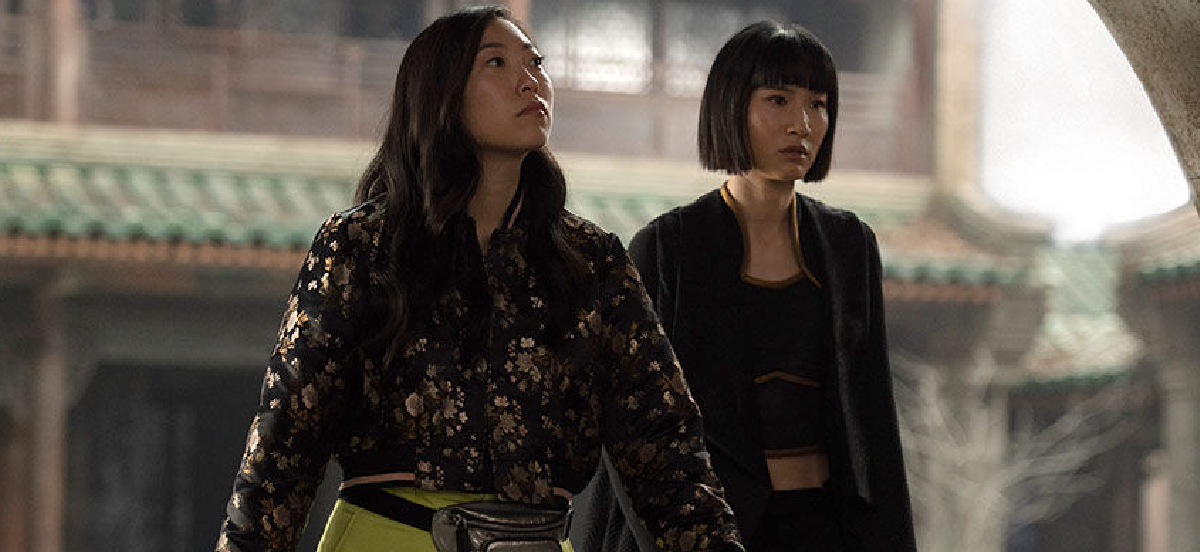
    Over the past month, fans have been able to experience and discuss their favorite aspects of Shang-Chi, including characters that created from scratch solely for the film. The movie highlighted the now-popular friendship between Simu Liu‘s Shang-Chi and Awkwafina‘s Katy, and many fans specifically enjoyed that the two never became romantic. Director Destin Daniel Cretton has revealed that platonic friendship between the two was always the plan:

    Early on… when I did my initial pitch, it was like Sam and Frodo was the relationship that I had, like, in my pitch… that Shang-Chi needed… the Asian-American sidekick…When we started talking together with Dave about that relationship, we started talking about how many girl friends we have, like legitimate friends… and I think that’s something that we both — it’s very normal to us to have friends who are… and they’re not surface friends, they’re real intimate friendship relationships that are not romantic. And that was exciting for us to do.

    Destin Daniel Cretton

    Still, romance could still very much be in the future of the Shang-Chi franchise. Another standout character from the film was Shang-Chi’s sister, Meng’er Zhang’s Xialing. When asked about the fact that some fans have been vocal about wanting a romantic pairing between Katy and Xialing, Cretton stated:

    I would not be opposed to that.

    Destin Daniel Cretton

    Whether or not Katy and Xialing pair up, Cretton being open to the idea is a huge. As it stands, LGBTQ+ representation is virtually absent in the MCU. It might also signal Marvel Studios’ growing willingness or intention to include more queer characters or storylines. Eternals will make MCU history next month by featuring Brian Tyree Henry’s Phastos and Haaz Steiman’s character as a gay couple raising a family together and kissing onscreen, a long-awaited first for the MCU.

    Shang-Chi and the Legend of the Ten Rings is in theaters now.

  • REVIEW: ‘Paw Patrol: The Movie’

    REVIEW: ‘Paw Patrol: The Movie’

    PAW Patrol: The Movie gives the franchise’s popular characters the feature film treatment. The animation and action supply enough entertainment for the movie’s intended audience, with some particular moments that clearly benefit from a larger budget. PAW Patrol unfortunately leaves a few puppies behind, and rescue events leave some to be desired from the fluffy heroes. Overall, the film sets forth a coherent and organized story that leans on the pre-existing success of its brand. While it is not unforgettable, it is decent, and its portrayal of emotional trauma in its lead character does allow it to stand out. 

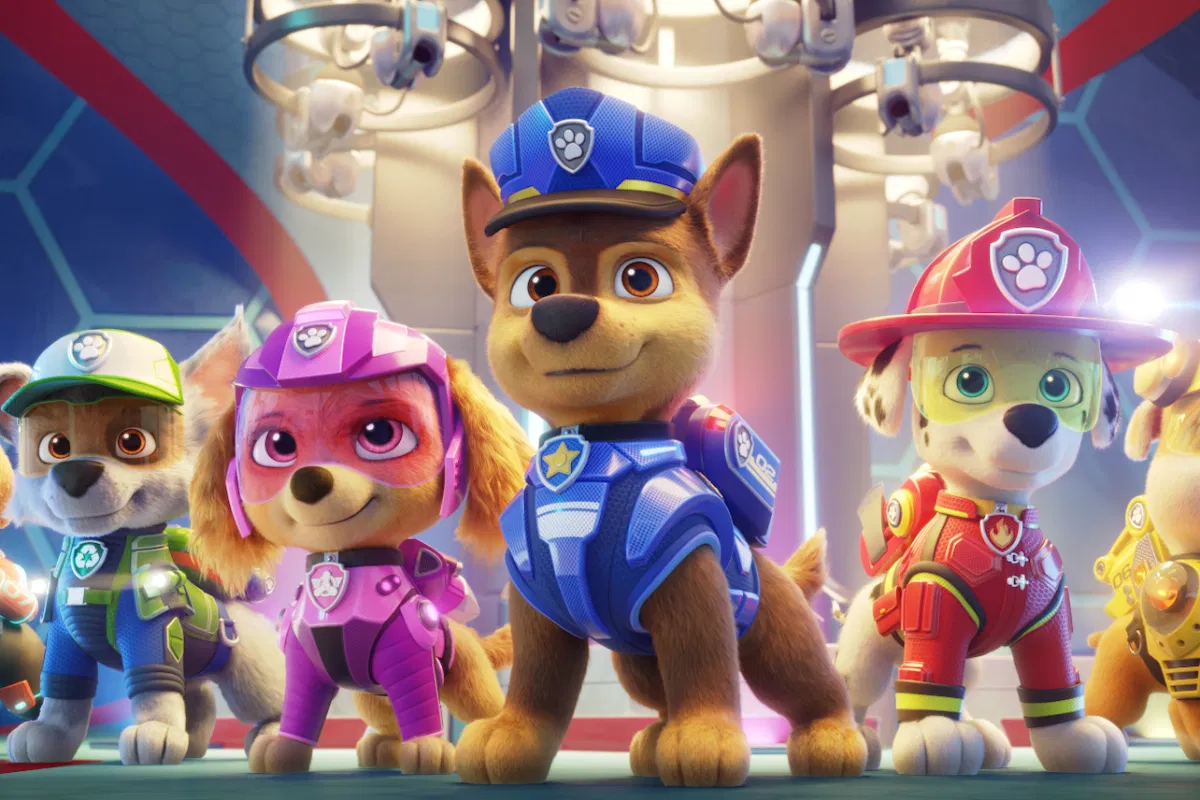
    The PAW Patrol is a group of puppies, led by a human boy named Ryder, who specialize in search and rescue-type operations. Each puppy has a specific set of skills that render them big-eyed icons of emergency and/or municipal services professions such as a police officer, a firefighter, or a pilot. There’s even a recycling-focused puppy. More importantly, each puppy has an elaborate vehicle with every possible function and tool in existence that might even put Transformers to shame. 

    The group ordinarily works together on missions in their hometown of Adventure Bay, but they are called to action in nearby Adventure City by newcomer puppy Liberty because the notoriously bad Humdinger has become the mayor of the City and his newfound position generically threatens the City. While Mayor Humdinger has several snafus to keep the PAW Patrol employed throughout the movie, the main threat is his abuse of a cloud-catching machine that ultimately creates a massive superstorm that threatens serious damage to Adventure City. 

    The appeal of PAW Patrol is, obviously, the cute puppies. The movie definitely devotes ample time to watching the puppies frolic around just for the sake of it, and each one has a dedicated identity and color-scheme to distinguish him from the others. Similar to franchises like Power Rangers or Care Bears, the intended audience likely has an easy time picking a favorite and latching on to her. If your favorite is not Chase the police dog, Skye the pilot, or Liberty the brand-new street-smart dog, PAW Patrol might be disappointing. Anyone watching the movie likely has some history with the crew, but if you are not familiar you might not have even learned several of the puppies’ names by the time the credits roll. 

    The PAW Patrol itself is without a doubt an innocent and fuzzy version of a superhero team, and the movie and franchise benefit from the comparison. Instead of fighting or having direct confrontation with a threat, however, the puppies are passive heroes. As rescuers in the form of, essentially, law enforcement, the underlying message of what a “hero” is in PAW Patrol is distinguishable from most of its more mature counterparts. Here, the value is in adhering to rules, following instructions, and knowing your place. 

    Typically, in the “hero” story, the hero’s worth is based on their individual merit and respective skills. In PAW Patrol, that message is greatly diluted if not mostly absent. The Patrol and their work are not actually a product of the puppies’ skills, unless you count driving some sort of car and pushing some buttons. All action in the movie is centered around the wildly extravagant and nearly omnipotent tank-like vehicle they each control. Because there is virtually no function that the vehicles do not have, all problems are immediate solved with some simple paw-to-button effort. Problem-solving or technical skills are not highlighted, and the cars can be better idols than the puppies. 

    But PAW Patrol is still shiny enough and had a satisfyingly organized plot to be effective for its intended viewers. Not only do you have the animation style that emphasizes how adorable baby animals can be, but watching the puppies take on the City with the most high-tech gear in existence provides enough fast-paced excitement. It is simple enough that a younger audience can keep up with it, and the new and larger setting likely distinguishes the movie from the television series. Plenty of the humor seems to rely on running jokes and gags that already-existing PAW Patrol fans would be familiar with, so the comedy in the movie probably hits the right note though does not steal the show. 

    Somewhat surprisingly, the movie depicts “danger” more aggressively than one would think. While there is generally nothing scary about any situation, there are a couple of moments that come across far more destructive and brutal than the puppy energy could match. The final rescue sequence is visually strong between the dark foreboding superstorm cloud in the sky, the rain, the lightning, a glowing puppy-led motorbike scaling a skyscraper, and a giant puppy-caused explosion in the sky.

    Mayor Humdinger is an interesting character. While not unique to the movie, his political aspirations are what make him stand out to an older audience here. He is depicted as grandiose, self-indulgent, politically corrupt, media-obsessed, scientifically ignorant, generally incompetent, and has childlike immaturity. It is somewhat difficult—though maybe not for a child—to not immediately see a potential real-life counterpart. To the extent that a comparison of that sort can actually be made, it does add a curious additional layer to the story considering we are watching young puppies literally clean up his messes. 

    In any event, the real backbone and highlight of PAW Patrol is Chase the police dog’s emotional journey. Amongst the colorful puppy joyrides, Chase is forced to deal with the trauma of his past. Scarred by his abandonment in Adventure City as an even younger puppy, returning means relieving the fear and pain he thought he had left behind. It is a concept that is more than just glossed over, as Chase experiences actual panic attacks that almost cause some of the rescues to fail. The lead puppy ultimately feels worthless and unworthy of being a PAW Patrol member. Of course, it is all resolved by the end of the movie after Ryder’s encouragement allows Chase to accept his past as something that makes him stronger. Still, the movie gave the situation more depth and grit than expected, and the extra attention could potentially lead it to helping a younger audience cope with similar issues.

    While the puppies go above and beyond to protect, PAW Patrol stays fairly average. There are no glaring defects in the movie itself and, in terms of adapting its source material into a feature-length film, it does a fine job at making the story coherent for the PAW Patrol uninitiated and still paced appropriately for those with background knowledge. At the end of the day, PAW Patrol’s key stand-out feature is its surprisingly genuine take on trauma and coping.

  • REVIEW: ‘Venom: Let There Be Carnage’

    REVIEW: ‘Venom: Let There Be Carnage’

    The long-delayed Venom sequel finally hit theaters this weekend three years after the original film was met with mixed reviews. Back for another shot at the Lethal Protector, Venom: Let There Be Carnage is a marked improvement over its predecessor while ironically seemingly trying to do more yet accomplish less. The film is no masterpiece, but it is somewhat refreshing in its lax ambition. Let There Be Carnage is self-aware and unpretentious in putting on the screen what it enjoyed about itself and what it likewise assumed the audience would also enjoy. Overall, the film is a gratifying superhero action flick that’s 97-minute long runtime prevents its imperfections from taking up too much time.

    The movie’s greatest achievement is making its main characters, Eddie Brock and his companion symbiote Venom, extremely likable. Tom Hardy’s performance as both was the single most positive takeaway from Venom, and the sequel aptly utilized it extensively. His interactions with his self-voiced Venom are almost exclusively what made the film funny and by consequence, fun. It must be inferred that Let There Be Carnage is aware that the duo’s popularity may mean something significant down the road in the franchise and the heavy focus on Eddie and Venom over other pieces of this film might have been a very calculated decision rather than an unfortunate outcome in the making of this movie. 

    You’d never guess it by its subtitle. Let There Be Carnage is absolutely a story of love, albeit a platonic one. While it often feels like there are two separate movies fighting for control, the Eddie-Venom love story is undoubtedly the story the film truly wants to tell. The movie keeps that aspect simple and by-the-book. While their love is platonic, examining their relationship is an effective way to explore the symbiotic relationship, which in Let There Be Carnage’s terms is trying to find a way to coexist between being “made for” one another and devolving into parasitism. 

    The first and second acts of the film devote much of its energy to this dynamic. The first act begins in a place that feels a little too much like we have not left Venom. It in fact almost feels like it belongs in act two of the first movie. Eddie and Venom, while accepting their relationship as it is, struggle to find common ground on what they consider the best way to live harmoniously. Eventually, the still humorous back and forth creates a significant tear between the two and Venom emotionally and dramatically leaves to prove he is better without Eddie. 

    Without Venom, Eddie is honestly a bore and does not hold the presence that a main character should. The film exposes that alone Eddie has little to offer the overarching narrative and that his main contribution is in the form of winning Venom back. On the other hand, Venom, even without Eddie, at least has a personality but has little else to offer. He feels the rush of independence but is ultimately empty and aimless without Eddie. In this way, Let There Be Carnage does a great job portraying the two as a true “match” and additionally highlighting why it is such a joy to watch Hardy talk to himself. The two reuniting for the purpose of defeating the villain is certainly cliché, but given how simple the film wants to be, it fits and does not take away from the story as a whole. 

    At the end of the day, Let There Be Carnage felt isolated in a number of ways, one of which was the lack of variety of supporting characters. Honestly, the only other character to truly note is, of course, Woody Harrelson’s Cletus Kasady. Virtually all other characters felt either expendable, forgettable, or were involved so little that they made little to no impact overall. Harrelson is absolutely the right actor for Cletus—he is creepy, he can come across as psychotic. He is uncomfortable to watch and in this role oozes violent, murderous potential. Unfortunately, the film fails to fully tap into his potential. 

    Similar to Eddie and Venom, the movie attempts to make a love story out of Cletus and Naomie Harris’ Shriek. Unfortunately, it is not compelling. This in part could have been due to the limited runtime and how little of that time was devoted to it. The film essentially tells the audience in the first few minutes that Cletus and Shriek were in some sort of relationship but that is the extent of it. They do not give or her character much to work with and Shriek’s role is mostly condensed into serving Cletus after his escape, rather than her being a force of her own. Ultimately, this side plot adds little to nothing to Let There Be Carnage and actually muddles Cletus’ potential quite a lot.

    While Harrelson had so much to offer here, the film misses the mark in terms of utilizing his potential. Cletus’ primary motivation upon escaping execution is to find and marry Shriek. His overarching romantic motivations greatly hindered the violent, chaotic, murderous, crazed, and horrifying action from Carnage. While he has his one major action sequence at Ravencroft before the final battle, it still falls short of establishing Carnage as a true and terrifying threat.  As a result, the character simply was not as compelling or interesting as a villain as he could have easily been.

    The Carnage symbiote—which we learned little to nothing about—could have so easily taken on Cletus’ psychotic serial killer persona and taken it to a wild new level, but it never happens. His eventual defeat does not even feel like a relief. It was reminiscent of a mediocre threat that could have passed more organically in a generic superhero origin movie, but Harrelson, Cletus, and Carnage had the ability to be so much more—and as a sequel, Let There Be Carnage had some duty to bring more to the table.  

    The sequel also felt somewhat isolated in that our two sets of characters—Eddie and Venom versus Cletus and Carnage—had noticeably little interaction throughout the film. Eddie and Cletus have a couple of run-ins in the first act, but Eddie and Venom have absolutely no interaction or knowledge of Carnage until the very final battle scene. Obviously, Let There Be Carnage would have benefitted from the two symbiotes having some kind of relationship or dynamic—it would have been great if the audience were given a simple explanation for Carnage’s existence and how it relates to Venom. The fact that the two seemed completely separated from one another lessened the impact of the final fight. 

    Similarly, Cletus shines, if ever so briefly, in his final moments where he admonishes Eddie for not questioning why Cletus became the killer he did, particularly acknowledging how Eddie never thought to consider Cletus’ abuse as a child. Had there been more moments of this relative moral ambiguity, deeper dives into Cletus’ mind, and Eddie coming to terms with those moments, Harrelson would have been put to greater use, and Cletus may have been a villain worth thinking about once the movie is over. 

    Areas where Let There Be Carnage falls short may be due to its shockingly low runtime. At 97 minutes, including credits, this superhero film is glaringly short. Still, it has pros and cons. On the negative side, of course, is the lack of depth afforded to Cletus and Carnage. At times, the pace of the movie comes across like it was edited to fit certain runtime requirements for network television. The first and second acts also feel like they are ninety-percent of the movie, while act three sort of arrives unannounced and leaves within minutes. On the other hand, the short runtime means that the film generally does not waste much time on imperfections, bloated scenes, or additional bad side plots. Most importantly, though, Let There Be Carnage gets its point across. The film clearly knew what it wanted to do and the story it wanted to tell—it did not play around with making it more complex than it needed to be. 

    The result is a film that seems acutely aware of its assets and less concerned with spending too much time or effort perfecting everything else. Let There Be Carnage is an entertaining movie that evolved past the original Venom by letting Tom Hardy’s unique humor and charisma guide the way. While the titular villain falls short, it does not impact the heart and core of the film—Eddie and Venom’s love for one another. 

    As a final note—yes, there is a post-credits scene. Only time will tell what it all means but it may be worth bearing in mind what Venom says early in the movie: “responsibility is for the mediocre.”  

  • Sam Raimi Opens Up on Why He Decided to Direct the ‘Doctor Strange’ Sequel Even After ‘Spider-Man 3’s Heavy Backlash

    Sam Raimi Opens Up on Why He Decided to Direct the ‘Doctor Strange’ Sequel Even After ‘Spider-Man 3’s Heavy Backlash

    Director Sam Raimi is well-known for directing the generally beloved and well-received original Spider-Man trilogy starring Tobey Maguire as the titular hero. While the first two installments of the trilogy were standouts in the early days of comic book superhero movies, Spider-Man 3 received overall poor reviews from both fans and critics. The negative reception and backlash to the threequel halted plans for Raimi to direct the fourth film in the franchise. However, he is back to tackle Marvel Studios’ Doctor Strange in the Multiverse of Madness. In a recent interview, the director opened up about the stress of returning to helm another Marvel film:

    I didn’t know that I could face it again because it was so awful, having been the director of Spider-Man 3. The Internet was getting revved up and people disliked that movie and they sure let me know about it. So, it was difficult to take back on.

    Sam Raimi

    The Doctor Strange director, Scott Derrickson, ultimately backed out of the sequel due to creative differences. While the sting of Spider-Man 3 has certainly not gone away, Raimi ultimately decided to tackle Multiverse of Madness after learning that it had an opening:

    My agent called me and said, ‘They’re looking for a director at Marvel for this movie and your name came up. Would you be interested?’ And I thought, ‘I wonder if I could still do it.’ They’re really demanding, those types of pictures. And I felt, ‘Well, that’s reason enough.’ I’ve always really liked the character of Doctor Strange. He was not my favorite, but he was right up there with the favorites. I loved the first movie, I thought [director] Scott Derrickson did a wonderful job, an incredible job. So, I said, ‘Yeah.’ They left the character in a great place. I didn’t think I would be doing another superhero movie. it just happened.

    Sam Raimi

    Doctor Strange in the Multiverse of Madness is certainly a massive and highly-anticipated film within the Marvel Cinematic Universe. While Raimi’s work on Spider-Man 3 may always remain infamous, taking on the challenge to direct the Doctor Strange sequel could serve as the director’s redemption story for superhero films. The second entry in the franchise is currently eyeing a March release.

    Source: Collider

  • REVIEW: ‘Doom Patrol’ Episode 4 – Undead Patrol

    REVIEW: ‘Doom Patrol’ Episode 4 – Undead Patrol

    Undead Patrol is a hodgepodge of different elements framed as a zombie flick right off the bat given the title. There’s actually a lot more that goes on throughout the episode which is ultimately positively overshadowed by the zombie elements. It begins by keeping Niles (or just his head) alive and in play for a bit longer. Niles was completely absent for a solid one episode, so feels a bit redundant to yet again have him return. But his ultimate utility in the episode does find a way to fit into the larger story of grief. There’s an obvious irony in that eating Niles’ head cured the team of their undead-ness, whereas Niles had taken advantage of each of them in the past to avoid death. Maybe this is more apt closure on a Doom Patrol level, but it isn’t hard to imagine that cannibalizing the Chief could give them more of a complex over his death.

    Preview — Doom Patrol Season 3 Episode 4: Undead Patrol | Tell-Tale TV

    The episode is again packed with character plotlines and extensions of each’s individual stories. Of note, Larry is dying because of the negative spirit left, Cliff is attempting online therapy, and Rita is genuinely concerned about all of the suspicious and dangerous circumstances they have all been in, but no one seems to actually care yet. But Rita’s self-motivation to become involved is pulling more strings behind the scenes than might be apparent at the moment. 

    Vic is caught in the seemingly endless cycle of his self-identity crisis as a hero, his responsibilities as such, and his actual “rebellious” actions that depart from what is expected of him. Now, his dad lost his job at S.T.A.R. labs because Vic helped Roni escape, and Cyborg’s systems are shut off. While Cyborg has one of the more interesting arcs of the series, in theory, his constant back and forth with his dad feels stagnant and is beginning to take away from Vic’s journey with the team. It feels like it pulls him out of the show’s general context to a dangerous point where it sometimes comes across as though he doesn’t truly belong. But his constant battle of man vs. machine is no doubt a strong anchor for the character, but it feels stuck at the moment, much like Vic himself who is turned offline. 

    Doom Patrol Season 3 Episode 4: September 30 Release and Speculations Based  on Previous Episodes

    “Madame Rouge” (she is not named that yet) remains in the spotlight as some sympathetic character at the moment. She has no memory of who she is and only knows that she traveled in time via her underground drill-type time machine to find Niles. Her personality is very hard to pin down, but it works for now. It also arguably makes sense given her shapeshifting abilities that we have been teased that her identity would also be fluid. She and Rita learn from a hidden film that Rouge, actually named Laura DeMille, was previously associated with the mysterious Sisterhood of Dada and convinces herself she is a bird. Still, it appears that the hoped-for savior Niles actually recommended she be killed back in the day for being “insubordinate”. Hopefully, this kickstarts a graceful climb into a place of purpose and power for DeMille.

    But yes, amongst all of the above (and more), this episode is, indeed, a zombie episode. The hell demon vomit the characters were sprayed with at the end of the previous episode has caught up to them, apparently kickstarting the undeadening. There ends up being relatively little horror in it, though, and it actually plays out quite hilariously. The zombies are generally just locked out of a room that Kipling and DeMille are plotting in, but the zombie growls and moans are given coherent subtitles with often non-zombie thoughts and apparently, everyone can understand them. But the main benefit we get from their zombification is the big, over-the-top, and violent battle with the butt monsters first seen escaping the Bureau of Normalcy in Season 1. The sheer adrenaline of it all is a reminder that this aspect of the show is truly lacking, if not missing. 

    Doom Patrol Season 3 Episode 4: September 30 Release on HBO Max and  Speculations Based on Previous Episodes - Gizmo Story

    Despite the buzzwords/phrases in this episode – zombies, eating Niles’ resurrected head, butt monsters, etc. – the episode also managed to feel slow and sometimes tedious throughout. It certainly kept delivering quirky, small, bizarre elements, and similar moments were thrown into the pot almost non-stop. Overall, the episode felt like one the creators had a blast with, even if their play had a bit of an issue balancing its conventional plot points and story expositions with wild diversions.