Category: Features

  • Deadpool Should Be the MCU’s LGBTQ+ Icon

    Deadpool Should Be the MCU’s LGBTQ+ Icon

    Pride Month is in full swing, meaning people, organizations, and even companies are celebrating or showing support for LGBTQ+ persons across the globe. Marvel is certainly one of those companies, and the brand is eager to highlight its queer representation in its properties. Previously, we have taken a look back at one of Marvel Comics’ milestones. And while the comics certainly have more history to draw from, the Marvel Cinematic Universe notably lags in LGBTQ+ representation across its franchise.

    The MCU is absolutely gaining momentum here, with recent additions such as Phastos in Eternals and America Chavez in Doctor: Strange in the Multiverse of Madness. The franchise even promises more inclusion in the near future with characters like Valkyrie in Thor: Love and Thunder. As with any underrepresented group, there is always pushback from an unfortunate corner of the supposed fandom when any major (or minor) character is explicitly queer.

    While we can celebrate the progress the MCU has made and is continuing to make, there is room for the Disney-owned company to make a significant and bold statement in support of LGBTQ+ representation on screen. The MCU needs a strong queer icon, and there is no better choice than the Merc with a Mouth himself. Below are four major reasons why Deadpool should be MCU’s LGBTQ+ icon.

    Deadpool Has Long Been Established as LGBTQ+

    Important to any conversation about queer representation is an understanding of the character themselves. In Deadpool’s case, there is no question that Wade Wilson is an out member of the LGBTQ+ community. The comics antihero was first confirmed as pansexual by writer Gerry Duggan, though the terminology to describe Deadpool’s sexuality has fittingly been in flux—the character’s co-creator Fabian Nicieza emphasized this back in 2015.

    Deadpool has become well-known as a pansexual symbol for many, including Fox-universe Deadpool director Tim Miller, who previously expressed his support for showcasing Deadpool’s sexuality in the movie franchise. While the character clearly has a female love interest in the live-action franchise, any viewer simply has to pay attention to Deadpool and Deadpool 2’s dialogue to know that the character’s interests go beyond the opposite sex.

    In any event, the fact that Deadpool is already a well-known queer character in the comics and has the support of many of the films’ creators, including actor Ryan Reynolds (see below), to bring that aspect of the hero into live-action is a perfect starting point for the character to further embrace that when he makes his MCU debut.

    Deadpool Is High-Profile

    When any franchise begins to embrace and increase diversity among its characters, those characters tend to often get assigned more minor roles. It does not take rocket science to understand why, but it is another reason why the MCU should wholeheartedly embrace Deadpool as LGBTQ+. Of course, the more prominent a queer character is, the more backlash they will receive. But frankly, Deadpool is already beloved across wide demographics. While he has not made his MCU debut yet, the character is established in the greater Marvel film universe, so opinions of the super-powered mercenary have already been formed. If Deadpool were to act as one of the leading LGBTQ+ characters of the MCU, it would give the character a huge platform for representation that other characters simply do not have yet.

    Deadpool’s Fan Base Spans a Wide Demographic

    It goes without saying that LGBTQ+ people—and fictional characters by extension—are subject to a wide range of stereotypes and discrimination based solely on their sexual orientation or gender identity. Certain segments of the population, including MCU fans, support queer inclusion less than others. When new LGBTQ+ characters are introduced, it is quite easy for those people to immediately be hostile toward the idea that a single character in a movie may make them uncomfortable. For example, both Phastos and America Chavez were queer characters of color, which led to hatred and accusations of “wokeness” long before their respective films were ever released.

    Make no mistake, all LGBTQ+ characters—including women, trans, and those of color—should be fully supported by the MCU, Disney, and the vast majority of fans who have no issue with characters reflecting the real world. But in an age where the ignorant backlash is so common, Deadpool is a character that, for several reasons, has the advantage to cut through much of that in the MCU. That can be a win for the character, but it should be recognized that it could help pave the way for other queer characters.

    Deadpool is well known for being vulgar and hyperviolent among plenty of other traits. He is loved for his mature themes as well as his basic charisma and humor. The character is a hit across nearly all adult and teen demographics, and that includes demographics that may otherwise not be so supportive of LGBTQ+ representation. If the MCU’s Deadpool 3, for example, made the hero’s sexuality explicit and left no room for audiences to argue whether or not he is queer, Deadpool then becomes a symbol or icon for LGBTQ+ people across the board. In addition, it may force certain groups of people to question their assumptions and biases if one of their favorite characters also happens to not be straight.

    Deadpool’s LGBTQ+ Identity Has Ryan Reynolds’ Support

    There is no dancing around the fact that actor Ryan Reynolds, the epitome of Deadpool, is well-loved and respected in the entertainment community generally as well as for his embodiment of Wade Wilson. Reynolds has several times made it clear that he would love for the Deadpool franchise to explore Deadpool’s pansexuality, and very much wants Marvel to let the character be explicitly queer in the future. Deadpool 3 will actually be Marvel Studios’ first non-Spider-Man co-production, with Reynolds’ Maximum Effort Productions also in the producer’s role. While Reynolds will not have unilateral control over the character’s future, he undoubtedly has a lot. With the support of someone as powerful as the actor/producer/businessman is, though, the amount to which MCU could push the envelope with Deadpool’s LGBTQ+ identity could be significantly increased.

    In conclusion, no one character is the perfect icon for an entire group, including the LGBTQ+ community, nor should they be. Queer MCU fans, and queer people in general, deserve to have major franchises better represent them and better represent reality. If the MCU were to fully embrace Deadpool’s LGBTQ+ identity, whether it is explicitly pansexual or described/defined in some other way, it could be one of the strongest moves Marvel Studios could make in terms of supporting the diversity of their characters and audiences.

    The character is already well-known to be queer; the Deadpool franchise creators, producers, and actors strongly support the move; and the character’s more formal cinematic coming out would have a ripple effect through numerous groups and demographics that would almost certainly strengthen the general MCU fanbase’s support, acceptance, and love for LGBTQ+ characters.
  • How ‘Thunderbolts’ Could Setup MCU’s ‘Dark Reign’

    How ‘Thunderbolts’ Could Setup MCU’s ‘Dark Reign’

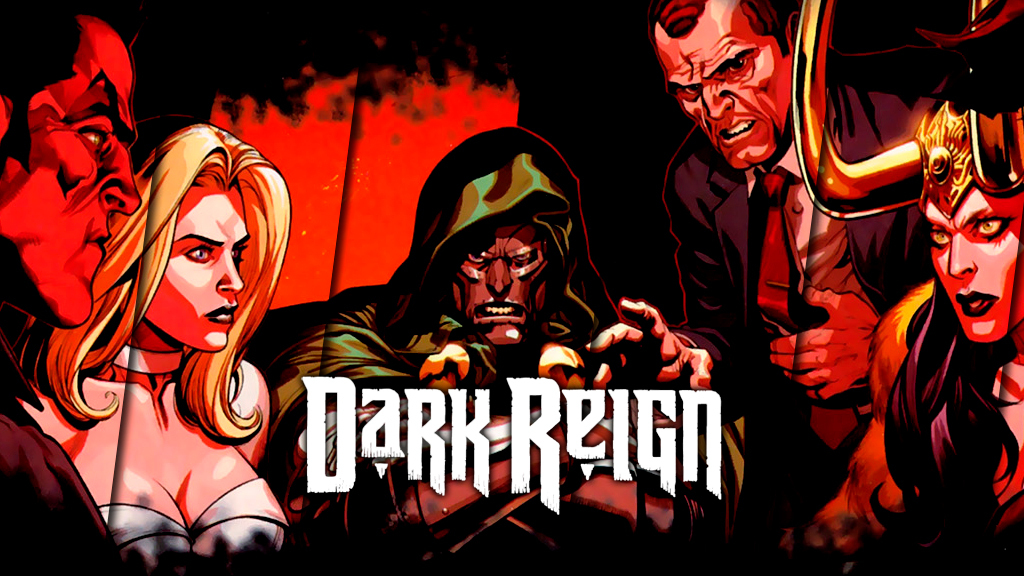
    With the official announcement of a Thunderbolts film in the upcoming film slate of Marvel Studios, many have begun to theorize how both the film and the team will fit into the developing landscape of the Marvel Cinematic Universe. Though after some time reflecting on the news, it seems possible that Thunderbolts will not simply just “fit into” the landscape of the MCU, but rather become a critical lynchpin for the narrative direction of many franchises within the shared universe.

    From my perspective, Thunderbolts will be the coup de grace in ushering in an interpretation of the comic-inspired Dark Reign storyline to the film version of Earth-616. In this piece, I will be mapping out the road that hypothetically leads to the formation of this massive status quo change, how the team can function in the midst, and the catalyst of their downfall.

    Origins

    This part of the MCU storyline is the easiest to trace as it has already begun. Julia Louis-Dreyfus’ Valentina Allegra de Fontaine has very much been positioned to become the figurehead of this new arc. This is especially the case with the passing of Thaddeus Ross’ actor William Hurt and the impossibility to have Norman Osborn exist outside the Spider-Man bubble of the MCU. As seen in Black Widow and The Falcon and The Winter Soldier, Val is in the midst of forming partnerships with characters that have morally gray allegiances in Yelena Belova, John Walker, and (potentially) Helmut Zemo. Logic greatly dictates that these are the first steps towards the formation of the Thunderbolts team, and is seemingly all but confirmed with the film announcement earlier this week. 

    Audiences should absolutely expect to see Louis-Dreyfus back in the numerous Marvel Studios projects throughout 2022. Ms. Marvel, Black Panther: Wakanda Forever, and especially She-Hulk (a superhero legal-based series that is bound to have ample amounts of morally gray characters) feel like natural points for where Val could show up next. One specific concept in my mind is Julia Louis-Dreyfus making a surprise appearance in a Thor: Love and Thunder post-credit scene to recruit a scorned Ares after the decimation of Olympus at the hands of Christian Bale’s Gorr the God Butcher. While Val can certainly be involved in recruiting more characters beyond 2022, there needs to be a turning point for this storyline at some point and there is a natural point at which this can occur.

    The Catalyst

    The MCU has often made major alterations to their interpretations of comic storylines but ultimately kept similar ramifications to the future of their stories. With that in mind, Marvel Studios has the perfect opportunity to use the upcoming Secret Invasion as a means to launch their version of a Dark Reign like the comics. No matter what direction Marvel takes with this series, it would be a logical decision for it to end with Val and her fully actualized team of “approved” heroes taking the place of Norman Osborn in the comics and being the ones who very publicly eradicate the threat of Skrulls.

    This event can serve a two-fold purpose for the immediate future of the MCU. Firstly, Secret Invasion could very well be seen as the last straw for the world as its citizens have had to deal with growing dangerous threats to their lives since “The Blip” and have officially turned on the superheroes that have saved them many times before on a large-scale level. Secondly, people within positions of power would only trust and allow the government-sanctioned Thunderbolts team to regulate the issues that arise on Earth.

    The Dark Reign

    And from there, the MCU version of the Dark Reign can commence and could play a major role in a large swath of future projects. The Thunderbolts team can and should be present in different forms in essentially any project-based predominantly on Earth. For instance, the Thunderbolts should be the main opposition for the Hulk(s) on Earth within the World War Hulk film rumored to be in development (assuming it takes those cues from the comic event).

    As well, they should serve as a foil for whatever political espionage mission Anthony Mackie’s upcoming Captain America film. Essentially, the new status quo for pure heroes post-Secret Invasion should be dealing with their ostracization from societal acceptance and working towards proving the trust they should deserve from the general public. 

    Another angle I would further develop in this Dark Reign is the bureaucratic mission to prevent young heroes from becoming active in the world as has been developed in the likes Spider-Man: No Way Home and Ms. Marvel. This would set the stage for the Young Avengers to form as a counter-response towards the world generally losing faith in the Avengers team that has been instrumental in saving the world numerous times.

    Meanwhile, the Thunderbolts film can serve as an exploration of the core team of reformed villains as they deal with the very public spotlight attached to them and how they react to it. Some fully buy into the Kool-Aid of their role as heroes, while others grow skeptical that what they’re doing is actually the “right thing”. There is certainly lots of room to play with this type of social commentary through the lens of bombastic superhero action within the MCU, both in the film itself and in the duration of this phase of the MCU.

    Endtimes

    However, this storyline won’t last forever as the status quo and much like the comics, a new Heroic Age can rise in its aftermath. In terms of how Marvel Studios should sunset Dark Reign, I would use the formation of a new official Avengers team and film (not to be confused with the Young Avengers) as the means to end this phase. Specifically, the Siege comic storyline should be adapted with Val completely breaking bad and using her influence and team to begin an attempted conquest of places that serve as “threats” to the safety of the rest of the world (i.e. New Asgard, Wakanda, and Ta Lo).

    At this point, the world needs the Avengers and their reuniting with a fresh line-up could serve as a massive event that would be satisfying both emotionally and commercially. From there, the stage can be set with an Avengers team leading the charge in whatever the endgame of the multiverse saga will be within the Marvel Cinematic Universe. As well, the Thunderbolts team could still exist within the framework of the MCU as a place for villains and anti-heroes looking to reform their image, but this time without the baggage of being a front for Valentina’s nefarious scheme.

    In addition, the idea of a prejudiced world against super-powered individuals can still ruminate beyond the end of Dark Reign and into the introduction of mutants in the not-too-distant future. Ultimately though, no matter what specific direction they take when it comes to Thunderbolts and its surrounding future projects, the stage is set for Marvel Studios to transition its universe into a new long-term dynamic that can be as defining as the Infinity Saga.

  • 7 Years Later: A Look Back at Bobby Drake’s Coming Out

    7 Years Later: A Look Back at Bobby Drake’s Coming Out

    It’s been 7 years since Marvel Comics made the decision to have Iceman, one of the most iconic original X-Men characters, come out as gay. As a gay man who understands the impact of proper mass media representation of minority communities, this was a big deal for me. The X-Men comics have always been an allegory for marginalized and oppressed communities, so all of these characters’ stories have helped me learn how to face the same type of discrimination and bigotry in the real world. When it was announced in 2015 that we would see Iceman coming out of the closet, I was so excited about the potential to show general audiences an authentic gay character through a name they would recognize. Now that it’s been years since the announcement, we can reflect on how the character has developed and how well Marvel has represented the gay community through this character.

    First, a little context. In Brian Michael Bendis‘ 2012 The All-New X-Men, the young versions of the original 5 X-Men were sent to the present by Beast to attempt to change how some of the older versions of themselves had turned out. This resulted in normally aged adult versions of the X-Men interacting with the teenage versions of the original members in our modern time. It was at this point that Marvel decided to reveal the teenage version of Iceman as a gay man.

    The backlash was predictable: “Why change a character that’s been around forever?” “But Iceman has been with women in the past!” “They’re shoving the gay agenda down our throats.” The only thing I’m going to address with the homophobia surrounding this character coming out (besides that hatred is obviously wrong) is that bigots should really avoid the “down our throat” analogy when it comes to criticizing gay content. It just makes us giggle.

    The All-New X-Men #40

    Marvel created a major problem by robbing Bobby of his agency with the way they handled his coming out. Long story short, in issue #40, teenage Jean Grey reads some of Bobby’s thoughts without permission and discovers he’s gay. After this brazen invasion of privacy, she confronts him after he makes an objectifying comment about Magik, literally dragging him out of the closet. Setting aside the fantastical concept of telepathy, it is never okay to force someone out of the closet. Instead of pulling Bobby aside to corner him about the gay thoughts she spied on and forcing him to admit he was gay, Jean Grey should have been ashamed of violating his privacy and respected his decision not to tell anyone. As someone who was forced into the closet at age 12, I can confirm that there are an infinite number of reasons why someone would choose to stay there. Coming out of the closet is a moment that the person themselves decides to admit to everyone that matters to them (including themselves) that they’re gay, and it is no one else’s business how or when that happens. In this regard, Marvel really messed up with Iceman’s coming out story.

    A year after young Bobby was forced out of the closet by Jean, Marvel used the older version of Iceman to portray the struggle some gay people face with the internalized homophobia that comes with living a long time in the closet. They addressed his previous relationships with women, which we gays would call a “beard” because being in a heterosexual relationship is part of the mask we wear to hide our sexuality. In 2015’s Extraordinary X-Men #6, Old Iceman has a great conversation with Anole, a younger gay mutant. He explains to Anole how much he admires the Young Iceman’s bravery to live out of the closet after he had lived his own life making the opposite choice. Old Iceman tells Anole that he chose to come out to him now because he figured Anole “already dealt with the stuff I’m grappling with now.” This was a great example of how coming out happens differently for each of us, and how a younger openly gay person can be a role model for older people still struggling to come out.

    Extraordinary X-Men #6

    Since the initial debacle with young Bobby’s coming out, Marvel has taken steps to listen to gay fans about telling more authentic representations of gay stories. Iceman has had two solo comic book runs that have explored his life as an out gay man, and the stories seem to have struck a good balance between his personal life and his duties as a superhero. My favorite place to find Iceman outside of his solo books is in The Marauders as he sails the sea under the Red Queen Kate Pride. The storyline has really brought him back to his roots as a wise-cracking Omega-level mutant without ignoring the progress the character has made.

    I can definitively conclude that, seven years after Iceman was revealed to be a gay character, and despite some of the missteps along the way, Marvel has done a great service to the gay community by giving us more mass media representation through the character of Iceman. His storyline is a great example of how being gay is not the same experience for all gay people in many ways. Marvel has also done a wonderful job showing how being gay isn’t at all the only aspect of life that’s important to a gay person. Iceman has become a truly spectacular representation of the gay community and I’m excited to see where the comics take his story next!

    #HappyPrideMonth

  • The History and Future of The Thunderbolts

    The History and Future of The Thunderbolts

    Justice like lightning is coming to the Marvel Cinematic Universe. Having been set up for years and rumored for even longer, a Thunderbolts film has been given the green light, with Jake Schreier directing from a script by Black Widow writer Eric Pearson. Thunderbolts will certainly be an ambitious team-up film, with (apparently) Julia Louis-Dreyfus‘ Val bringing together a group of disparate characters who she’s been collecting over the years.

    As with all things MCU, the project won’t be a straight adaptation of any certain storyline, but will more likely focus on the dynamic of forging a team made of people of questionable character. In the comics, the roster of the Thunderbolts has frequently rotated members in and out and been remade multiple times. Many of the characters who might be thought of as “core” members don’t even exist in the MCU at this time. But to get a handle on what the team might get up to, regardless of who is on it.

    Origins

    The Thunderbolts first appeared in 1996 in Peter David’s Incredible Hulk #449, though the team was created by legendary writer Kurt Busiek. Marvel Comics launched the first volume of Thunderbolts a few months later in early 1997, with Busiek writing. Busiek pitched the Thunderbolts to Marvel Comics following the line-wide Onslaught event that saw the “death” of nearly all of Marvel’s heroes. In the absence of those heroes, Busiek envisioned a team stepping into fill the void, but with one twist: the team is actually the Masters of Evil, led by Baron Zemo, in disguise.

    https://twitter.com/KurtBusiek/status/1000128046903406592

    The original lineup consisted of Atlas (Erik Josten), Citizen V (Zemo), Mach-1 (Abner Jenkins), Meteorite (Karla Sofen), Songbird (Melissa Gold) and Techno (Norbert Ebersol). Contrary to a popular misconception, the original team had no association with General Thaddeus “Thunderbolt” Ross, but rather was named by Zemo who found the moniker “crypto-fascist but friendly”, though the in-continuity public was told the name was inspired by a couple of lines from a poem by 17th-century writer Thomas Randolph:

    “Justice, like lightning ever should appear / To few men ruin, but to all men fear.”

    Ironically, Busiek lifted the lines from an earlier issue of Captain Marvel and it turns out it’s not exactly clear if they were written by Randolph or not; however, “Justice like lightning” became the team’s slogan and has stuck with most iterations of the team over the last 20+ years.

    Thunderbolts Annual (1997) #1

    Evolutions

    As you might imagine, Zemo’s ruse was exposed and the team became fugitives, went on the run and eventually ended up in Colorado, a place that would go on to become well-associated with the team a decade later when they set their base on Thunderbolts Mountain near Coyote Springs. Of course, the team that occupied that base was a much different one from “the original.

    As Zemo’s team was on the run, a few new members joined the roster, including former Avenger Hawkeye. This group, known as Marvel’s Most Wanted, was convinced by Hawkeye that they’d be pardoned for their crimes if they turned themselves in. Unfortunately for them, that didn’t work out and many of them found themselves imprisoned for their past crimes. Eventually, however, many members of the team did reform and went on to perform some truly heroic deeds, including Zemo saving Captain America.

    Many iterations of the team came and went over the years (most including Zemo), but the Thunderbolts regained popularity when Warren Ellis took over the book and introduced a new team under the control of Norman Osborn. The team of villains was ultimately viewed as heroes after the events of Secret Invasion. Ellis’ run was short-lived and, eventually after several writers moved on and off the book, Jeff Parker took over that title and the team became the Dark Avengers. Following the Siege event, Luke Cage was appointed leader of the T-Bolts by Captain America; during the Marvel NOW! line-wide relaunch, General Thunderbolt Ross, who was then the Red Hulk, assembled a new team; Bucky Barnes, the Punisher and, most recently, the Kingpin, also assembled their own Thunderbolts teams.

    While the names changed, most of the teams had one thing in common over the years: they consisted of a group of villains out to “do some good” while being “handled” by a hero or two. In that regard, they could be compared to DC’s The Suicide Squad, but it would be an oversimplification to conflate the two teams.

    The MCU

    With so many of the major players associated with the Thunderbolts over the years not present in the MCU, it should be obvious that the team fans get won’t be lifted off the page. What does seem possible, maybe even probable, however, is that the team being assembled in the MCU under the control of Val, might find itself in the midst of some sort of line-wide MCU event and have to step in to deliver justice like lightning and save the day, even if they are morally questionable.

    It’s also very likely that the name of the team is an homage to Secretary of State Thaddeus Ross, played by the late William Hurt. It’s hard to imagine the MCU recasting Hurt, who passed away in March of 2022. Rather, it seems likely that they’ll write Ross’s death into an upcoming project and the team will be named in honor of a man who fought like hell to see heroes under the control of the government. So who is Val ultimately working with? And who else will join the team? Phase 4 has a lot to do to answer those questions.

  • What to Expect From the ‘Resident Evil 4’ Remake

    What to Expect From the ‘Resident Evil 4’ Remake

    It’s Summer Game Fest time in the gaming world, which means announcements, news, updates, and a whole lot to look forward to in the near and long term futures in the gaming space. The first major event of the season is now behind us, with PlayStation airing its June State of Play earlier this month. We got plenty of news from third-party developers as well as what to expect to play on the PlayStation VR 2. While there is plenty to comb over, I’d like to take a look at what to expect from the announced lineup. While there was plenty to choose from, I think the most interesting title in terms of speculation to come from the event may just be the remake of Resident Evil 4.

    Resident Evil as a franchise has gone through a massive transformation in recent years, and for good reason. What started as a benchmark zombie-horror franchise quickly rose to mainstream attention after the massive success of the original four games, even spawning multiple film adaptations. However, the franchise was in a slump following Resident Evil 5 & 6, the two games of the franchise that many argue are more action and less horror. When I first began paying critical attention to the games industry, I remember the sentiment towards the franchise being rather low. However, following the massive success and revitalization of the franchise with Resident Evil VIII, from my own experience, the games seem to be more popular than ever, which, of course, spawned re-releases and remakes of the first three games by fan demand. One game in the franchise has always had the attention of gamers more than any other, and that game is Resident Evil 4.

    Resident Evil 4 went through a bit of a development hell of sorts, going through 4 massive iterations before finally releasing in 2005 (one of said iterations would become Devil May Cry, as a fun fact). I won’t go into specifics in this article (but you can read up on the development on Wikipedia) but due to the massive changes made to the game over the course of the development cycle, many fans argue that the game, while delivering a new and refreshed Resident Evil experience, the game could have been even better if it didn’t suffer such a struggle filled development. The remake of Resident Evil 4 could very well be the game’s second chance for an even bigger success.

    Set to release on March 24, 2023, Resident Evil 4 Remake promises to reimagine the game’s storyline while modernizing the game world and gameplay in order to deliver a new experience suitable for the new generation of consoles it is arriving on. Complete with content available for PlayStation VR 2, the game is definitely promising to deliver an entirely new experience, and hopefully one that can learn from the amazing Resident Evil: Village, the newest entry in the franchise.

    While news on the game is still a little sparse, we know that the game will see a change to the original game’s tone and story, but no further details on that have emerged. Based on the trailer, we can expect a darker atmosphere, which hopefully means a lean into the horror aspect that the Resident Evil games are known for, especially considering that while 4 was a massive hit, some fans still consider it to be the reason 5 and 6 fell flat on their face, starting the more actiony vibes and the move away from scary. I suspect we will likely be seeing this game a lot in the upcoming months. We can expect to see more of the game at the upcoming Capcom Showcase set to air on June 13th. Further out, I would bet on the game appearing at whatever is next for PlayStation, considering the strong partnership Sony and Capcom have had on Resident Evil as of late.

  • Sana Amanat on Balancing Comic Accuracy with Reimaginings in the MCU (EXCLUSIVE)

    Sana Amanat on Balancing Comic Accuracy with Reimaginings in the MCU (EXCLUSIVE)

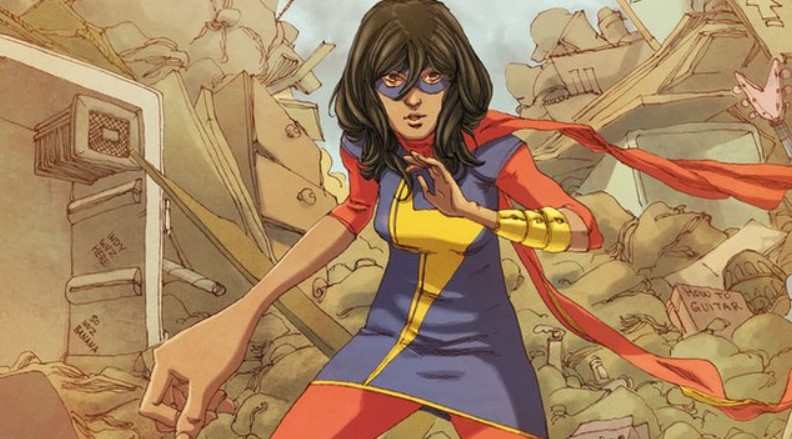
    Before audiences had seen a single episode of Marvel Studios Disney Plus streaming series Ms. Marvel, the online discussion centered on the changes being made to Kamala Khan as they adapted her character for the MCU. New powers. New villains. No Inhumans (?). These things had fans of the character wondering exactly what about the MCU version was going to resemble the one they’d grown to love in the comics.

    Marvel Studios has made it clear over the years that they have no interest in the MCU becoming a collection of direct page-to-screen projects and Ms. Marvel is no different. Charles Villanueva asked Sana Amanat, who co-created the character in the comics and also shepherded her into the MCU, how they worked on balancing a story that was faithful to the comics while also becoming its own thing.

    Marvel Studios and Kevin Feige in particular are very respectful of the source material. He’s a fan, through and through. So for him, he really wanted to adapt [Ms. Marvel] but really brought what worked, which was Kamala, her family, and her world. So the first thing that was important to us was that the casting was there and that the tone and style of the show were there.

    Sana Amanat

    Amanat notes that the casting of the character was of the utmost importance and, in Iman Vellani, the studio seems to have found an actress who truly captures the essence of Kamala Khan. So while the series, and the future of the character, might diverge from the comics in some ways, the heart of the character looks to have made the jump to the MCU.

    Ms. Marvel is now streaming on Disney Plus.

  • ‘Ms. Marvel’: MCU’s Captain Marvel Is a Bad Role Model

    ‘Ms. Marvel’: MCU’s Captain Marvel Is a Bad Role Model

    The Marvel Cinematic Universe just debuted its newest hero in Iman Vellani’s Ms. Marvel. One of the foundational premises of Ms. Marvel is that young Kamala Khan aspires to be like her hero, Captain Marvel. When she learns she has powers, she dons a Captain Marvel-themed costume in her journey to become her own superhero. But in the MCU, Captain Marvel has truly never been much of a hero to Earth, so the connection is not as meaningful. Basically, the MCU’s Captain Marvel is not a great role model.

    In the comics, the notion that Kamala is inspired by Carol Danvers is more poignant for several reasons. On one hand, Danvers had been a prominent superhero on Earth for a long time and the public witnessed her save the day many times. Captain Marvel had been a major member of the Avengers, and so she was easily a household name. Her first moniker was, in fact, “Ms. Marvel,” which is why Kamala adopts the title when she does in Ms. Marvel (2013). But the adoration does not feel as earned in live-action.

    The MCU has not spent as much time with Captain Marvel. She has been established as being incredibly powerful and potentially a major ally to the Avengers. In reality, though, Captain Marvel has—from what we know—never really been a superhero to the people of Earth. Her 2019 solo movie takes place in the 1990s, and it is revealed that after the moment she gained her powers, she was no longer on Earth. She returned to Earth in Captain Marvel by accident, the events of the film were very isolated and secret to the rest of the world, and then she left Earth again afterward. She returned when Thanos snapped and briefly seemed to help the Avengers, including saving Tony Stark’s life. But early on in Avengers: Endgame it is shown that she was nowhere near Earth, would not be for a long time, and presumably had not been there much since the first few minutes of the film. Obviously, she returned late in Endgame’s Battle of Earth with impressive strength, but even Ms. Marvel’s opening sequence describes how Captain Marvel once again “abandoned the people of Earth” since the battle.

    Going out on a very safe limb here, the MCU likely wants Captain Marvel to be a more prominent character in its universe than she is right now. She has not been given many appearances or a presence in the franchise at this point, so there is no reason Carol Danvers cannot become this much bigger and more important character in the future. In theory, to be fair, she could have been around for a small period of time after the events of both Avengers: Infinity War and Endgame and become known to Earth then, but otherwise, she seems to be known exclusively as the superhero who came in and put up a good fight against Thanos in the Battle of Earth.

    Carol Danvers could be the greatest person that has ever existed in the MCU and the strongest hero of all time, but it still makes little sense that the people of Earth would consider her one of their superheroes, an Avenger, or a household name. Obviously, the MCU version of Kamala Khan is going to be inspired by Captain Marvel, because Kamala was always going to be Ms. Marvel. But other than what she knows about the Battle of Earth from her own research, the connection between the two at this point is based on a very small portion of one major event. The future for The Marvels is bright, but in terms of being a superhero, Captain Marvel simply has not been one on Earth. It will be interesting to see how Kamala even take on the mantle of “Ms. Marvel.”

    Even still, the fact that Carol has been very absent could be embraced. In WandaVision, Monica Rambeau seemed actively disappointed or upset by the mention of Captain Marvel, likely because she resents how Carol was not there to help her mother, Maria, when she died during the Blip. Whatever the exact reason, it definitely seems like it is connected to the general absence of Captain Marvel. Perhaps during Ms. Marvel or early in The Marvels, Kamala comes to feel as though Captain Marvel is not the hero she thought she was—a sentiment that would also echo events in the comics—and that would bring some unity to her and Monica. Or, maybe Carol makes an appearance in Ms. Marvel, Kamala loves her even more, and Ms. Marvel is the one who ends up making Monica have a change of heart.

    Whatever the ultimate connection to Captain Marvel may be, fans can meet Kamala Khan in Ms. Marvel. The first episode is now streaming exclusively on Disney+.

  • Dynamic Duo

    Dynamic Duo

    Premiere: June 30, 2028

    Announced in October 2024, Dynamic Duo is an animated film that will tell the story of “the early days of Dick Grayson and Jason Todd aka the Robins. The duo call themselves the Dynamic Duo. They’re orphan thieves, best friends who share dreams of a better life, but their friendship will be tested by competing visions of a future out of which will come a new Dynamic Duo.

  • Clayface

    Clayface

    Premiere: September 11, 2026

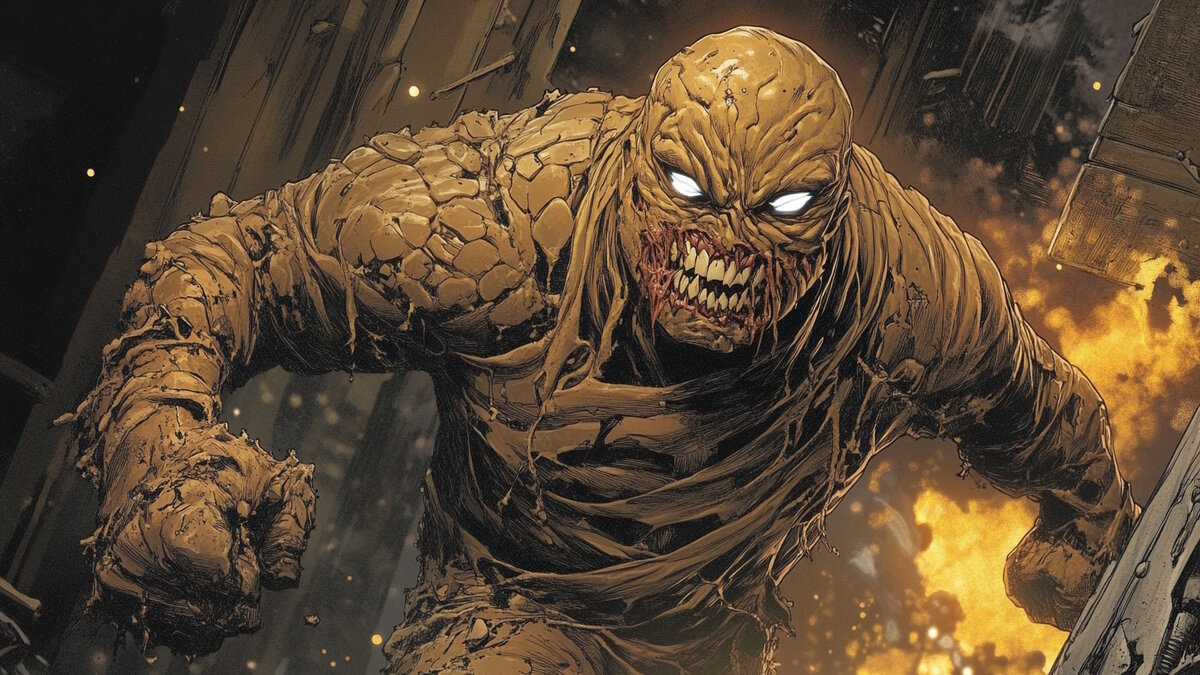
    Based on a script from modern horror meister Mike Flanagan, DC Studios’ Clayface will feature the classic Batman villain in his own solo film. The creator behind Netflix’s horror series The Haunting of Hill House and its subsequent follow-ups, Flanagan reportedly pitched a Clayface solo film to DC Studios co-chair James Gunn in 2023. In December 2024, Gunn officially announced the film and slated it for a September 11, 2026 premiere date.

    Cast

  • ‘Ms. Marvel’ Reveals What the Public Does (and Does NOT) Know About the Battle for Earth

    ‘Ms. Marvel’ Reveals What the Public Does (and Does NOT) Know About the Battle for Earth

    The newest installment of the Marvel Cinematic Universe, Ms. Marvel, has made its debut on Disney+. While there is plenty to unpack about the first episode, the charming opening scene brought back questions that have been on the minds of MCU fans since 2019. What do the ordinary people of Earth know about the events of Avengers: Infinity War and Avengers: Endgame? It is something that has never been directly dealt with, and we have received bits and pieces about it since Spider-Man: Far From Home. But the first episode of Ms. Marvel gave viewers a few more answers.

    The animated opening montage features Kamala Khan’s own reenactment of the final battle of Endgame, apparently termed the “Battle of Earth.” So clearly, the citizens know a good amount about what transpired there—the Avengers fought Thanos, who was trying to use the stones. Even the detail as to Captain Marvel coming in last minute and punching Thanos in the face is common knowledge. How did people even come to learn those kinds of details?

    Far From Home offers one answer to that question. From glimpses of airplane movie options, there were documentaries about “The Snap” floating around. So the Avengers must have made some of their knowledge of the Battle for Earth available to the public. It also stands to reason that those who did survive the Blip would have been given some sort of explanation as to why half of Earth’s population disappeared all at once. So half of the planet post-Endgame likely already had information about Thanos and the stones for years. 

    The Battle of Earth took place without warning and out of the public eye, so it did not seem observable. It is possible that there could have been satellite imagery or that Stark Tech could have recorded parts of the battle, which would make the most sense in terms of the public knowing precise details of the battle, as noted in WandaVision. But Kamala revealed that Scott Lang, aka Ant-Man, is a frequent guest on podcasts where he would be interviewed about the battle. So, details about who did what during the fight may make their way to the public from things like that as well. Still, if Scott Lang is a major source of what the public knows, it might make us question the accuracy or version of the main version story circulating.

    So there are some obvious ways that citizens of Earth came to learn some of the information, but just how much do they know? This might be a little trickier, because they certainly do not know every detail of Infinity War and Endgame, and there are good reasons for that. On one hand, they clearly seem to know about Thanos and the Infinity Stones, so information on basic Infinity Gauntlet assembly is probably out there. The public deserved an explanation of what had happened, so this makes sense.

    But they probably were not told in detail about how there are universal threats that could annihilate them at any moment. Do they know what happened to the Stones after the Battle of Earth? This is unclear. Considering it would be worrying to think that the Stones were all still floating around, the public was probably told they were destroyed. But past that, it would be surprising if they knew much more. 

    For them to know that the Stones were returned to their original timelines, ordinary citizens would have to know that the Avengers invented and used time travel, which is knowledge they almost certainly do NOT possess. If time travel was common knowledge, there would surely be more interest in it. And if they knew about it, they would have to completely understand the mechanics of it for there not to be a segment of the population demanding it be used to fix certain events, like the Blip. Plus, it was not fully understood by the Avengers themselves, and a true understanding of it would lead to discussions of the multiverse. Peter Parker, who surely has a bit more information about how the Blip was reversed than others, was shocked that the multiverse was real in Spider-Man: No Way Home

    The public knows that Natasha Romanoff and Tony Stark sacrificed themselves, but questions would seem to linger about the fate of Steve Rogers. No one seems to believe he is dead, and Sam Wilson was asked in The Falcon and the Winter Soldier if the rumors of Rogers living on the moon were real. Ordinary citizens likely do not know that he aged dramatically, either, as it has never been mentioned and that would potentially require them to know about the time travel. 

    Lastly, will the public learn more as time goes on? The easy answer is yes, as naturally more information comes out over time. But will anything major or of consequence be revealed within the MCU to ordinary people? Probably not, with the exception of Steve Rogers. The MCU does not seem to be wrestling with the concept of keeping certain things from the public. But considering the viewers have yet to find out what happened to Rogers after Endgame, it is possible that the greater reveal (if ever) of that could be simultaneous to the real world and MCU people. For example, if we find out he died or has been dead, we might learn because the public learns and mourns. However, if we find out he has been a secret moon agent, that might remain a secret. 

    You can watch Kamala’s reenactment of the Battle of Earth in the first episode of Ms. Marvel, now streaming exclusively on Disney+.