Category: Features

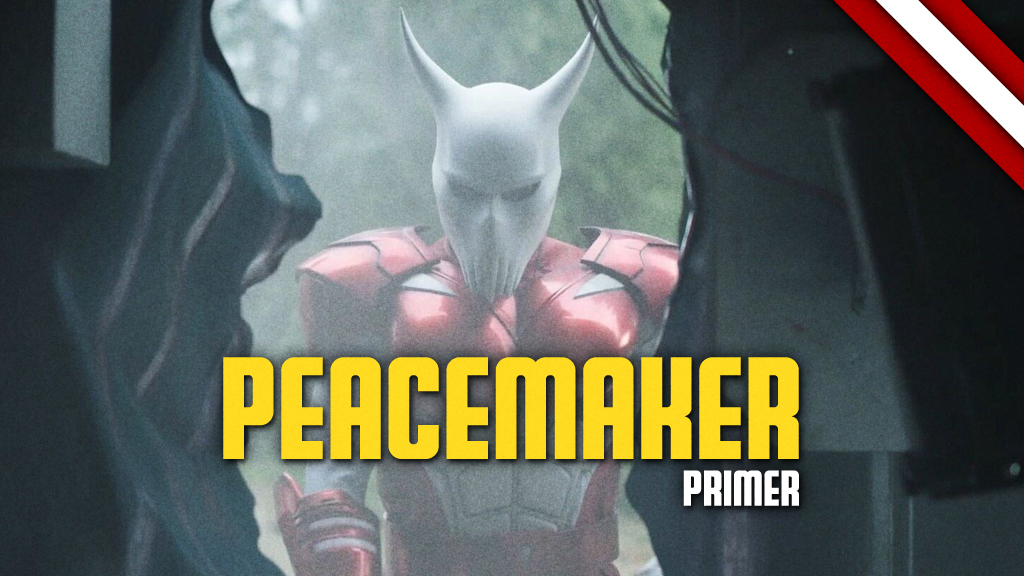
  • ‘Peacemaker’ Episode 7 Primer

    ‘Peacemaker’ Episode 7 Primer

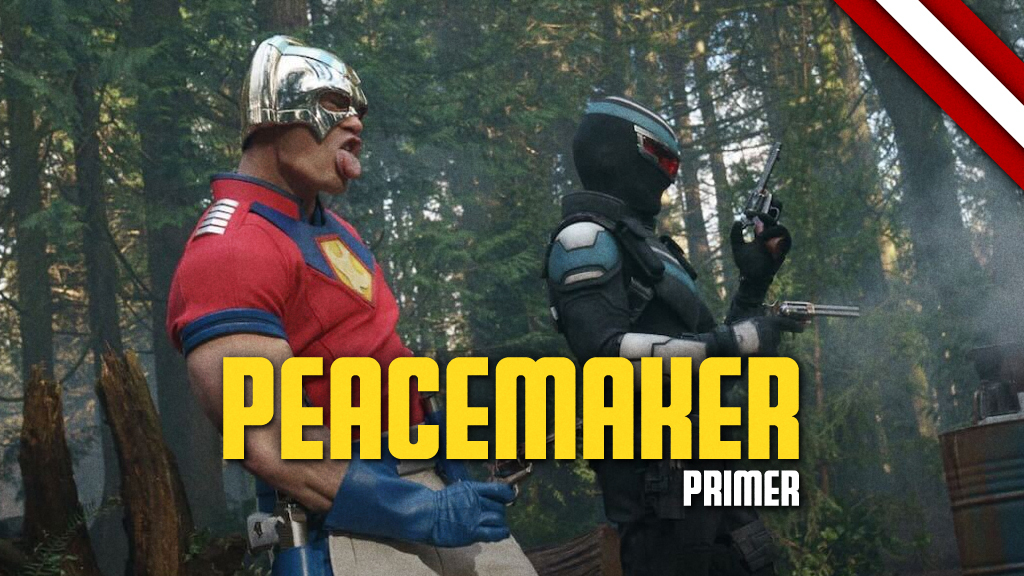
    It seems like just a week ago we got the first few episodes of Peacemaker, featuring the return of John Cena as the titular character. As we enter this new week, we grow closer and closer to the finale with the penultimate episode set to premiere tomorrow on HBO Max. Throughout this season, we’ve seen the secrets of Project Butterfly unravel and Murn\ come clean about his true identity… and that there’s a giant cow?!

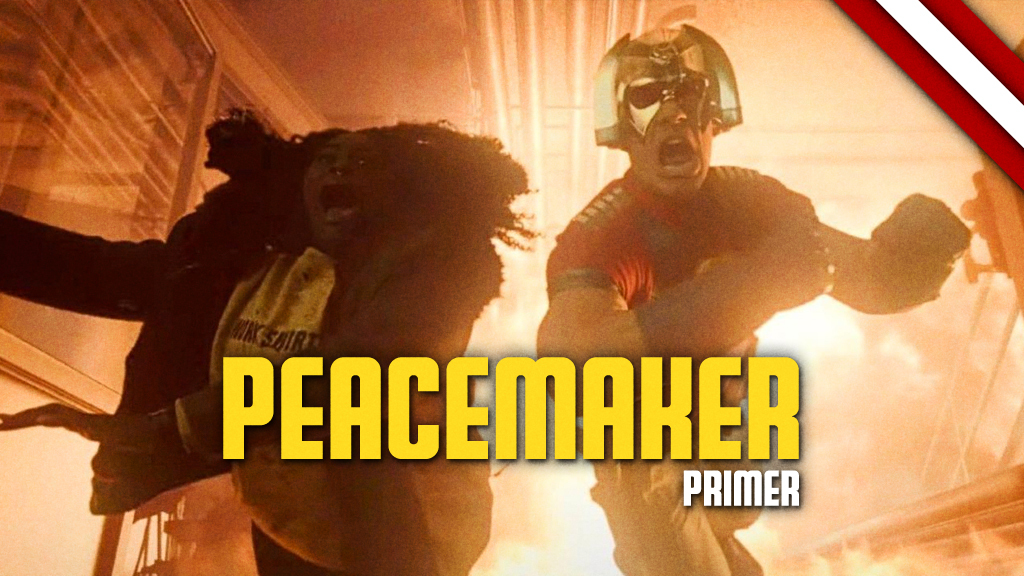
    Picking up directly after the cliffhanger ending of ‘Monkey Dory’, the last episode opened with Murn confronting Adebayo in the streets following her learning he is one of the butterflies, but not before Harcourt seemingly pulls up the rescue. Harcourt explains that she figured it out early on, realizing Murn took a hell of a hit at the Goff residence with little damage. Murn reveals that the butterflies were initially here peacefully before the queen and others began planning ulterior motives, plotting world domination. Murn is a defector who inhabited the past mercenaries’ bodies to put a stop to them and save the earth. He reveals the pain he wakes up with daily, living with Murn’s memories of his past heinous actions.

    The previous episode also saw Detective Song and Fitzgibbons go over Locke’s head in order to get a warrant to arrest Peacemaker and free Auggie Smith. Mission accomplished, as the White Dragon was freed and the Evergreen police department readies to lead an assault on Peacemaker’s trailer. Learning of this at the very last second, Peacemaker and Vigilante escape through the skylight with Eagly and Goff, climbing through trees to evade the cops. Vigilante ends up falling, freeing an encased Goff, who flew into the mouth of Detective Song and took over her body.

    Vigilante and Peacemaker escape through the woods, with Eagly swooping down and taking out cop after cop. The two of them are then aided by Locke, who killed the remaining cops and left a getaway vehicle for the duo at the edge of the woods, pinning the crimes on an assailant vaguely similar to the Hamburglar.

    New Butterfly Sophie Song returned to the police station and used their equipment to reach out to the others, summoning them all to Evergreen. The Butterflies converged on a hill near the station, exiting their ships and following Goff inside to which ‘Monster’ by Reckless Love plays over the butterflies swarming the police station, inhabiting all within.

    The final moments saw Peacemaker’s faux diary read to the country as he’s framed for countless murders, as the secret of the butterflies remains as a conspiracy to the world. As Peacemaker deals with this, the White Dragon suits up as his followers have rallied to his side, and just like that it seems just about everyone is after Peacemaker.

  • ‘Star Wars Racers’: Podracing Deserves a Disney+ Series

    ‘Star Wars Racers’: Podracing Deserves a Disney+ Series

    The fifth episode of The Book of Boba Fett gave us a nostalgia-filled ride down memory lane to the prequel era. The Mandalorian got a new N-1 Starfighter that he took out for a quick test drive. What stood out was that we revisited the race track from The Phantom Menace, where a young Anakin took on podracers like Sebulba and Ben Quadinaros. While watching this sequence, I thought back to loving the sequence and how I ended up playing hours of Star Wars Racers on the Nintendo 64. It made me wonder how Lucasfilm still hasn’t announced a Disney+ series yet. So, here’s my pitch so that we can soon make our return to the world of podracing.

    While Episode 1 mainly focused on the Tatooine racetrack, the game took us on a cross-galaxy tour exploring some of the most dangerous race tracks a podracer has to face, may it be on Malastare, Theron, or even Cantonica. So, a Disney+ series could explore a different race track with each episode, as the danger continues to grow with each new track. not only do we get to explore parts of the galaxy we haven’t seen in live-action yet, but it can also build up tension as you never know which racer might make it out alive.

    Speaking of, while there’s a risk of losing your favorite character at any point in the race, it adds a similar element that The Suicide Squad toyed with as you never know just who might make it out alive. Imagine we get introduced to an interesting set of characters, each with their arcs only for a wrong turn to instantly end their story. It would not only cement the dangers to the drivers, but also the viewer. The prequel film did give us explosions but most of the racers got out pretty unscathed.

    Imagine the story of a young hotshot racer, who has always dreamed of his time as part of the pod racers. Suddenly, he lucked out as they suddenly needed a new driver and he took his opportunity. Surprised by the fact that no one else would jump at the opportunity, he slowly learns just how dangerous the races truly are. The only thing keeping him moving forward is a promise he made a long time ago that he refuses to give up on. Perhaps it’s exactly the thing he needs to keep going no matter what heads his way.

    He makes friends along the way, an unrelenting rival, and witnesses the galaxy like never before. Maybe throw in some Speed Racer-like conspiracy, as fixed games are dragging down his chances of making it to the top but he makes some unlikely allies that may be the key to his success. While the story may be disconnected from the other shows, it would offer some fun distracting that helps further establish the galaxy with locations that we may end up visiting in other stories. It’s just time to finally bring podracing back Lucasfilm.

  • Everything You Need To Know About ‘Turning Red’

    Everything You Need To Know About ‘Turning Red’

    March 11th sees the release of Pixar’s first offering of this year, Turning Red. Directed by Academy Award-winner Domee Shi, the film centers on a kid named Mei, a diligent, studious, and sassy pre-teen who one day wakes up as a giant, fluffy red panda. It’s up to Mei and her support system of friends and her mom to help her navigate life as she enters her first phase of adulthood.

    Murphy’s Multiverse were given the chance to attend the film’s press junket that had certain members of the production including Shi herself, producer Lindsey Collins, and their talented crew of production designers and animators. Here are a few things we learned from Turning Red:

    Director Domee Shi wanted to create a Pixar film with a female protagonist that was different from the other films

    Pixar films have always leaned towards the fantastical and otherworldly. Whether it’s about a superhero family trying to normal lives, a robot living in isolation a millennia later, or a journey through the afterlife, these films are usually far removed from what we recognize in real life. Turning Red seeks to upend that. According to director Domee Shi:

    When I first pitched the film, I really wanted it to feel different and unlike any Pixar film you’ve seen before.  This is going to be Pixar’s first contemporary teen girl protagonist and I really wanted the world to reflect her character: colorful, chunky and cute, bold and in your face just like Mei.  The term I used a lot to the crew was ‘Asian tween fever dream.’  We really wanted a fun, specific backdrop to tell this coming-of-age story, so we decided to set it in Toronto, Canada in the early 2000s. 

    The decision to keep it contemporary goes beyond the surface. The culture and norms of the era play a big part in giving the film such a distinct vibe. Shi adds:

    Not just because it’s when I grew up as a tween, but it was also the height of tween-of teen pop mania in the late 90s, early 2000s, you had those boy bands, pop idols.  We also just wanted to avoid social media and just kind of tell this story in a simpler time of flip phones, CDs, jelly bracelets, and Tamagotchis. 

    Rosalie Cheng was originally the film’s stand-in voice actor and not the star

    Rosalie Cheng had no idea she was going to be the star of Pixar’s next big film when she signed on for Turning Red. The plan was to have her voice the protagonist Mei to give the production crew a sense of the character while they were looking for the right talent for the job. As fate would have it, they eventually realized that Rosalie was the right person. Producer Lindsey Collins says:

    In our earliest version of this film, we found this local 12-year-old girl right here in the East Bay to record our temp voice for our lead character. And over the next year, we tried to look for other actors to replace her in the final film.  Frankly, nobody came close.  Rosalie Cheng had become the main character Mei and there was no other choice in our minds. 

    During the junket, they showed me and several members of the press a heartwarming clip of the moment they told Rosalie she was starring in the film.

    It’s a film about growing pains

    Turning Red is a lot of ideas rolled into one. It’s about puberty and the confusing physical changes that come with it. It’s about transitioning into adulthood while honoring yourself in the process. It’s about navigating through the cultures of your immigrant family while assimilating in a world that feels alien. As director Domee Shi described it, all of these ideas are distilled into a mother-daughter story about “finally embracing change and all of its messiness even if it means saying goodbye to the relationship they once had.”

    Expect some fourth-wall-breaking inspired by Lizzie Maguire and Ferris Beuler

    Protagonist Mei is as sassy as they come and with that sass comes the opportunity to have one with storytelling. Turning Red opens with a fun opening sequence that has Mei breaking the fourth wall. The inspirations for that choice are unsurprising but are welcome nonetheless. Shi said:

    I just wanted it to feel different, in every way.  And I don’t think we’ve done a fourth wall breaking sequence yet in a Pixar film.  And, you know, I grew up loving those classic teen movies like Ferris Bueller but also those terrible but awesome Disney TV channel movies, where they had very precocious, sassy fourth wall breaking characters, like Lizzy McGuire. I kind of wanted to just take that energy and put that in this movie.  It also kind of sets it in this nostalgic time period as well.

    Black Panther and Mandalorian composer Ludwig Goransson is doing the score

    Producer Lindsey Collins set out to form the best team, from top to bottom, to make Turning Red as great as possible. That task includes hiring the right composer to breathe new life to the striking animation. Collins settled on Ludwig Goransson, a composer and producer who has worked with the biggest artists today and has scored music for the biggest films. Collins had this to say about Goransson’s work on the film:

    He brought this perfect mix of traditional score and also a deep early 2000s pop knowledge to the movie. I will say that the leap Ludwig’s score took from early demos to final recording was mind-blowing.  I think largely because he added so many unique sounds and tracks on top of the traditional musicians’ tracks, it just made the film pop for us in a way that we were just thrilled for.

    Billie Eilish and Finneas wrote original songs for the film’s in-universe boyband, 4*Town

    Just as they set out to hire the best composer with Goransson, the production team also had the undertaking of hiring someone to compose songs for Turning Red‘s fictional in-universe boyband 4*Town. The boyband plays a huge part in Mei’s journey and therefore needed to be a realized thing. With the help of her kids, Collins’ first choice ended up being the songwriting partnership of Billie Eilish and her brother, Finneas.

    Billie Eilish was relatively unknown but adored by my kids in 2016, and her song Ocean Eyes was playing on repeat in our house.  So when we started thinking about songwriters who could capture the early 2000s sound and bring something fresh to it, Billie’s name came up.  After further research with the Disney music team, we had a better sense of Finneas and Billie and their influences, their style, and figured, you know, why not start with our dream choice? 

    To nab the biggest popstar and her equally successful producer of a brother, the production set out to make a notebook containing pictures, sketches, and diary logs – as if they were made by Mei herself – to convince them to board the project. The production was successful as Eilish and her brother said yes to Turning Red not too long after receiving the notebook.

    Their songs truly brought 4*Town to life.  Finneas actually even sings as one of the band members.  He’s Jesse.  In the end, they wrote three original songs for us. 

    4*Town was inspired by your favorite boy bands

    Being a kid of the 90s, it’s unsurprising to know that Shi drew inspiration from that particular generation of pop culture. 4*Town is made up of a hodgepodge of boy band influences that spans Backstreet Boys and the present-day crazy of K-pop.

    They’re definitely a homage to all the boy bands I loved growing up in the late ’90s and early 2000s: Backstreet Boys, N’Sync, O-Town, 98 Degrees.  We really wanted them to also feel like multicultural and even though they are like a homage to the boy bands of that era, we wanted to bring like a little bit of a modern touch to them too.  One of the boy band members, Tae Young, is a homage to the K-pop boy bands that I got into in-in college.

    Anime is a big part of Turning Red’s DNA

    Turning Red breaks the Pixar mold in a lot of ways, not the least of which is its distinct animation style that heavily draws from anime, a genre that Shi grew up loving. Animation supervisor Aaron Hartline revealed to the press the ways they sought to imbue a recognizable anime touch with Pixar’s signature hi-fi animation.

    We wanted to tap into Domee’s passion for the two genres of animation that she loves, anime being the East and Pixar Disney animation being the West.  Turning Red lives somewhere in between these styles.  We took influences from both genres and merged them together.  We often referenced anime eyes on this film.  And one of the great things about anime is that it’s not afraid to push the characters’ designs to the extreme.  The character’s eye shapes can be drastically different depending on the mood of the character. They even add hearts.  Basically, anything to help the characters emote.  In Turning Red, we wanted to use this same eye language.  We added stars, highlights, shrink the pupils down to tiny dots and create crescent shapes for her eyes.  Luckily, Domee had a really strong design sense.  She would give us drawings for how the characters should look.

    Aaron Hartline

    Turning Red premieres on March 11 in theaters everywhere and Disney+.
  • Murphy’s Team-Up Volume 16: MCU Team-Ups

    Murphy’s Team-Up Volume 16: MCU Team-Ups

    Nathan Miller

    It’s really hard to choose the MCU team-up I’d most like in Phase 4. Normally, I’m most interested in 2nd or 3rd order interactions. The kind of question that usually gets me going is something like, ‘who will be teaming up with each other in 3 years time?’ but right now the source of my thoughts seems to come from projects we saw in 2021. The feeling that seems to follow around potential selections, is excitement for seeing familiar characters reactions to newness in other characters. As one of my favourite characters, I’m supportive of whatever Wanda does in Doctor Strange in the Multiverse of Madness and am enthused to see reactions to her development as The Scarlet Witch. I’m also ready to see familiar Avengers characters react to Sam Wilson as Captain America, and I’m ready to see Sam lead a team of Avengers. Finally, I’m intrigued to see where Yelena Belova pops up next, so, no matter who she connects with I’ll be absorbed by her interactions with the rest of the MCU. Out of those three, I’m definitely most excited to see what Wanda gets up to, and what the reactions to it are!

    Mary Maerz

    Sam Rockwell as Justin Hammer in Iron Man 2... : Through The Roof 'n'  Underground

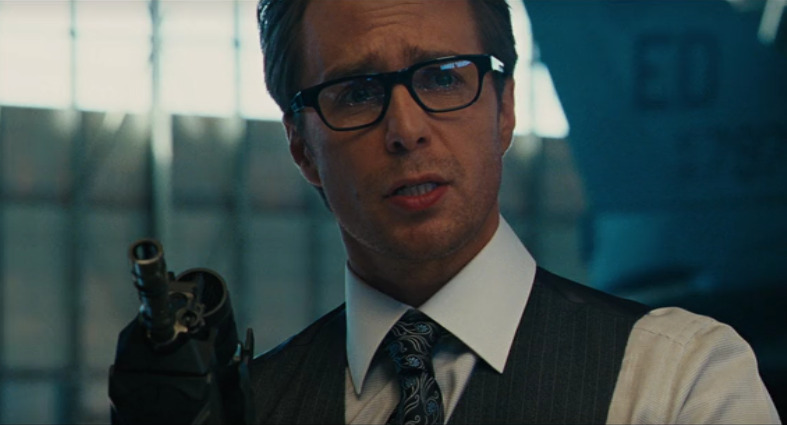
    Sam Rockwell’s Justin Hammer with just about anyone. I don’t have any deeper thoughts about it. Put him with Doctor Strange. Spider-Man. Sersi. Abomination. Korg. Miek. Jack Duquesne. Party Thor. Zombie Iron Man. Guy who filmed Shang-Chi on the bus. I don’t care.

    Charles Murphy

    Despite being surrounded by gods and monsters, there’s no more down-to-earth hero in the MCU than Sam Wilson. The Falcon and The Winter Soldier allowed us to get a better handle on who Sam is and, simply put, he’s a no-nonsense guy with a straightforward approach to solving problems. He speaks from his heart. He wears his emotions on his sleeve. He knows EXACTLY who he is.

    By the time we see Sam in the MCU again, a character who has absolutely no idea who is will have joined the fray. Given who Sam is, teaming him up with Moon Knight might provide some killer character interactions. Sam’s training as a counselor might make him feel as though he can connect with the Fist of Khonshu, but he’s not ready for Moon Knight’s particular set of issues. The Lunar Legionnaire could be an absolutely fascinating fly in Sam’s ointment in Cap 4.

    Dalbin Osorio

    For me, I’m really anxious to see a team up between the new Captain America and the new Black Panther. There’s a scene in the comics where Sam Wilson asks that his suit be made by the Wakandans, and he goes on to explain the importance of the African nation and how he should be connected to them in some way. In the MCU, we’ve now seen the beginning of that play out with Sam getting his new costume from the Wakandans. Seeing the new Black Panther’s reaction, and subsequent dialogue, to the new Cap being Black would be a a bad ass moment.

    Hunter Radesi

    The Friendship of Spider-Man and Human Torch | Marvel

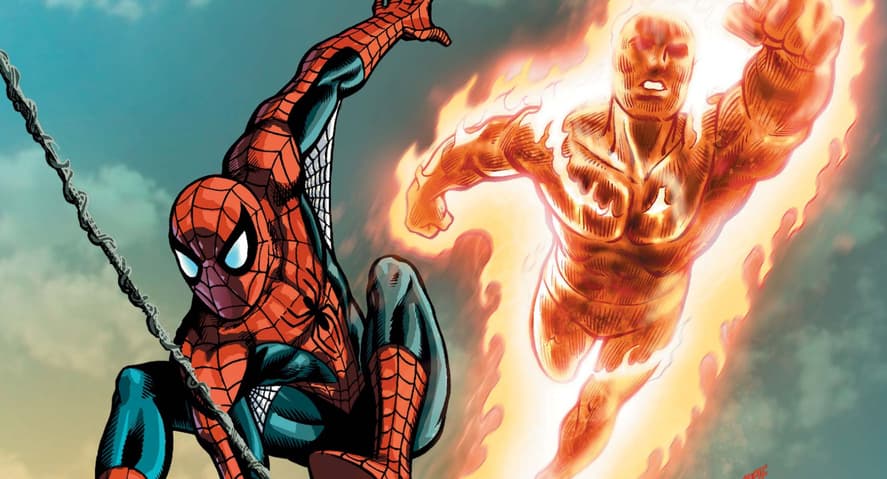
    This isn’t exactly a unique choice, but there probably isn’t a live-action Marvel pairing I’ve fantasized about more than Spider-Man and the Human Torch. Anyone who’s read the original run of ‘Marvel Team-Up’ knows this is the foremost duo, with meetings both humorous and touching coming in their respective solo titles as well. Peter and Johnny have an interesting chemistry, as young heroes with something to prove operating on opposite ends of the personality spectrum. Sure, the MCU may not have even cast it’s Torch yet, but this is a team-up that’s finally (finally!) possible for the first time on the big screen and I have a sneaking suspicion it will happen sooner than later.

    Anthony Canton III

    Considering the way Spider-Man: No Way Home ended, there’s one team up I feel would give Peter Parker not only the family vibe but a little bit of fun. What if Peter, in trying to stop a criminal, runs into Scott Lang? They never interacted in Captain America: Civil War, so it would be a fresh pairing, and while Scott doesn’t know who Peter is it could be used for some fun dialogue. Spidey and Luis could trade some stories and Ant-Man could help Spider-Man deal with whatever problem he has in the interim. Imagine a story where there’s an arms dealer (Justin Hammer perhaps?) and Spidey needs a little help against some formidable robots. Scott being a family man could give Peter some advice on whatever he’s currently dealing with. You get Scott, Hope, Cassie, and the rest of the crew and you have a fantastic team up movie.

  • ‘Peacemaker’ Episode 6 Primer

    ‘Peacemaker’ Episode 6 Primer

    At the tail end of Peacemaker‘s fourth episode, Leota Adebayo made a breakthrough in Project Butterfly, connecting multiple dots to one place: the Glan Tai Bottling Company. The team believes that the Butterflies may be using the factory as a plant to ship the amber fluid seen consumed by multiple Butterflies in the previous episode. They believe they’re getting closer and closer to the truth, and if they can cut off the supply of the Butterflies nourishment, they can end their attempted secret invasion. 

    On top of the Glan Tai situation, they’ve still gotta deal with Auggie Smith, aka the White Dragon, who was previously framed for the murder of Annie Sturphausen, the first butterfly Peacemaker encountered. The framing of Auggie has led to some internal conflict within the team between Economos and Peacemaker. To deal with the White Dragon issue, Murn brings in Caspar Locke, placed within the Evergreen police as its new chief to deter Captain Song and Fitzgibbon.

    Arriving at Glan Thai, the team is still unsure if the factory is indeed being operated by the Butterflies. With the aid of Peacemaker’s X-Ray helmet, the team is able to quickly figure out the place is overflowing with infected. Not only is it full of Butterflies, but it also looks to be the main hub of distribution for the amber fluid.

    Upon further investigation, the team becomes aware of the guardian angel of the factory, Charlie, the gorilla that escaped from the Evergreen zoo. The ape gives the team quite the beatdown, throwing them through desks and walls. Things seem grim as they are seemingly defeated by the enhanced ape, until the revving of a chainsaw and a fountain of blood covers the team, revealing Economos as the hero after all.

    A successful vision that leads to some great moments, and even better development between the characters, brings them closer together as they learn to have each other’s backs. Much of the team’s conflict has come from their anonymity to one another, they’d been so focused on getting the mission at hand done as quickly as possible that it took the heat of battle to bring them closer together.

    The episode brought its core characters closer together, with all of them believing themselves to be nothing like one another. It’s Peacemaker and Leota who are much more similar than they think. Leota is still feeling the pressure from her mother, Amanda Waller, to plant the forged diary in Peacemaker’s trailer, betraying her team with yet another Waller alternative goal, most likely to use Peacemaker as a scapegoat if things go awry. The two are blinded by the perception they have of their parents; Auggie and Amanda are bad people, but to Leota and Chris, they’ll also be their mother and father. It’s hard to accept the fact that the people who created and raised you aren’t the idols you looked up to as a child, something both of them will need to face.

    Leota plants the diary, something she’d dreaded doing and something that will obviously weigh down on her conscience. She returns to the base of operations to clear her mind and get some work done, but not before taking the X-ray helmet for a test run. This leads to Leota finding out Murn is a butterfly and him chasing her into the street where her fate remains unknown.

  • ‘The Book of Boba Fett’ Shifts the Focus of Star Wars From World-Building to Fan Service

    ‘The Book of Boba Fett’ Shifts the Focus of Star Wars From World-Building to Fan Service

    Star Wars has always been a great, big galaxy. When A New Hope, simply titled Star Wars at the time, hit theaters in 1977, part of it’s alluring charm was the way it felt like an old friend. Audiences were meeting characters for the first time, but the universe they were being introduced to had clearly existed long before they ever got to see it. It was the perfect example of world-building, executed with more casual grace than perhaps any movie before it. This trait held true for most of the remaining entries in the “Skywalker Saga”, with each new installment giving us familiar designs and brand-new concepts in equal measure. The balance struck between expanding worlds and a concentrated, singular storyline made Star Wars feel special. While franchises like the Marvel Cinematic Universe packed as many references and cameos as possible into every new project, Lucasfilm maintained a large-scale sandbox that also somehow felt finite. So why, after decades of successful storytelling, has Star Wars lost this magic?

    When the first season of The Mandalorian dropped in 2019, it seemed a perfect callback to those early days of George Lucas wizardry. After the magnificent Star Wars: Episode VIII – The Last Jedi tore through the fandom with it’s bold ideas and fresh direction, it was nice to see something that was both original and recognizable. At a certain point, it becomes nearly impossible to institute novel ideas without alluding to entities already known. So, it was a delight to see The Mandalorian play this chord flawlessly. However viewers may have felt about the movies being produced at the time, it was with near unanimous agreement that Pedro Pascal‘s dumb-good-dad-who-wears-armor found himself dubbed a perfect baseline for the franchise. Exciting, identifiable references, a hero with a thousand faces, and a focused story fans hadn’t seen told in a context they felt comfortable with. The downside to this massively positive response, it seems, was that Lucasfilm became a little confused.

    Perhaps it had something to do with the aforementioned, uber-prosperous Marvel Studios’ films and companion Disney+ shows taking over the box office. Maybe it was done in an attempt to find middle ground between sides in a wildly divided fanbase. Whatever the case, it seems each successive Lucasfilm production since that initial season of The Mandalorian has been less and less of what made it so great in the first place. 2020’s second batch of live-action Star Wars episodes saw tantalizing verbal remarks transition to full-blown character appearances, done with the intention of setting up multiple future spin-offs and side projects. The surprise seventh season of The Clone Wars was less guilty, but also dedicated chunks of it’s precious little screen time to propping up other works in development at that point. Luckily, these minor offshoots were, at the very least, also able to tie-in and support the stories they were a part of, so the slow Marvelfication of Star Wars was less noticeable and more tolerable.

    Then came The Book of Boba Fett. After making his grand re-entrance to the universe in The Mandalorian‘s second season, the legendary, fan-favorite character was finally set to have his own story. The brilliant Temuera Morrison, who had previously been relegated to mostly helmeted action sequences, voice-overs, and CGI duplicates, would finally have some dramatic meat to chew on. And he did, for the first few episodes, before being cast aside in his own show. The last two episodes of The Book of Boba Fett have been a surfeit of on-the-nose shout-outs and holy-crap-I-can’t-believe-they’re-in-this cameos. If that wasn’t bad enough, Fett himself has barely been in them. The title character appeared for, at best, a few minutes, with no spoken dialogue, over the course of two whole episodes, replaced as the main protagonist by Din Djarin, who already has his own series.

    This is not to say that the past few weeks of Star Wars haven’t produced some of it’s best moments yet. It’s simply to acknowledge that the franchise no longer seems interested in the saga format it once did so well, and it’s hurting the significance of their own protagonists. With a franchise like Marvel, it can be expected that large parts of any given solo project will be used to propel a different character’s story forward. That’s how their system is designed, and what they’ve been doing since the beginning. Yet, even Marvel appears to have an idea of when enough might be enough. Despite the controversy surrounding the weak third acts of their Disney+ series, the creatives involved have had enough sense not to force in characters that might take away from the spotlight and development of the titular characters. Din Djarin’s story is as compelling as it’s ever been, but it shouldn’t be taking place in the middle of Boba Fett’s show.

    The first four episodes of The Book of Boba Fett took their time to set up some sort of bigger payoff down the line, which may still come in the series finale, but has since been put on hold to tell entirely unrelated tales and continue plot lines established in completely separate series. It feels as though creatives Dave Filoni and Jon Favreau deem this sort of interconnectedness as a heightened form of Lucas’ praised world-building. Star Wars has now been around forever, and thus every reference and name-drop can be about something the fans will know. Unfortunately, in their attempts to weave all their projects together, the current focus of Star Wars has shifted from world-building to fan service. Audiences are no longer being given what they didn’t know they needed, and instead are being spoon-fed the things they’ve been demanding for years. The general reaction to The Book of Boba Fett so far has been that it’s failed to keep Fett’s story interesting, and that’s because right now, they aren’t even telling Boba’s story. He is simply a vehicle for whatever grand scheme is being devised. Whatever the endgame of the story begun in The Mandalorian is, one can only hope it’s worth the damage it’s caused to the projects that precede it.

  • ‘The Book of Boba Fett’: The Mysterious Gunslinger Explained

    ‘The Book of Boba Fett’: The Mysterious Gunslinger Explained

    Chapter 6 of The Book of Boba Fett, “From the Desert Comes a Stranger”, was another strong entry into the overall mythology being created through the live-action Disney Plus streaming series. Serving as another episode of The Mandalorian-set interlude ahead next week’s finale, the episode saw the return of several characters introduced in Season 2 of The Mandalorian and left a lot of threads untied as it concluded. And while we could talk about the returns of Grogu, Luke and Ahsoka all day, it was the return of Timothy Olyphant’s Cobb Vanth that led to the chilling introduction of a mysterious gunslinger that has social media buzzing.

    Shortly after Din Djarin wrapped up his discussion with Vanth, the stranger coming from the desert that the title warned fans of appeared on the sandy streets of Mos Pelgo, now called Freetown. After issuing a stern warning to Vanth to stay out of the Pyke’s business, the stranger enters into a shootout with Vanth and his dumb deputy, killing said dumb deputy and wounding Vanth before heading back out into the desert without so much as revealing his name. The stranger made a big impression in a short time but, as it turns out, he’s not much of a stranger at all. While Chapter 6 marked his debut in a live-action project, the stranger has been a part of the Star Wars universe for more than a decade! For those unfamiliar with him and his exploits, read on.

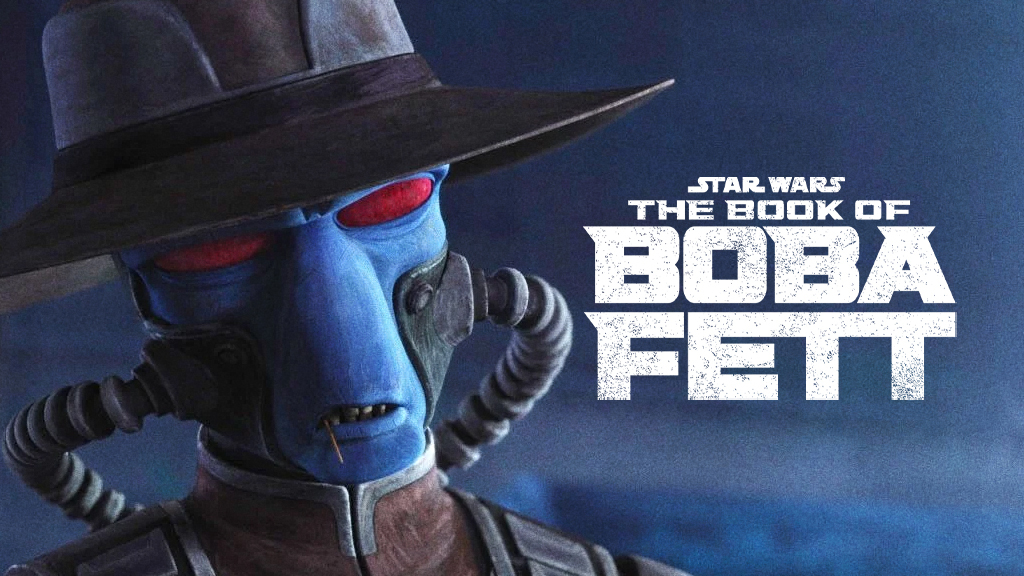
    First introduced in Season 1 of the canonical animated series Star Wars: The Clone Wars, Cad Bane is, much like Boba Fett himself, a dangerous and notorious bounty hunter. Created by The Mandalorian and The Book of Boba Fett creator Dave Filoni, Bane’s inclusion in the live-action series has been rumored for some time and continues a trend wherein Filoni continues to extend the stories of many fan-favorite characters introduced in The Clone Wars by bringing them to live-action. In addition to that, it also makes a whole lot of sense given Bane’s long history with Fett.

    Bane’s ties to Fett began when Fett’s father, Jango, mentored Bane as a bounty hunter. Following the death of Jango, Bane eventually took on Boba and mentored him, completing the circle as it were. Their exploits are detailed over several seasons of The Clone Wars, but Fett’s not the only bounty hunter on Tatooine that has a history with Bane. The events of another canonical animated series, The Bad Batch, saw Bane square off with Fennec Shand with potentially force-sensitive clone Omega at the center of their dispute.

    How Bane came to be working for the Pykes is a story for another day, but his entrance into The Book of Boba Fett is full of promise. As seen in Chapter 6, the Duros bounty hunter is nobody to be trifled with, but he’s now put himself directly in the sights of Boba and Shand, creating some serious intrigue heading into next week’s final episode.

  • A Tour of Malta Film Studios

    A Tour of Malta Film Studios

    I had the honor of attending the first-ever Malta Film Awards, as the small country south of Italy celebrated its long history. Besides their local productions, we were given a tour of their Malta Film Studio. The country’s film commissioner, Johann Grech, gave a personal tour to showcase their 54 years of history with filmmaking. Yet, even with that extensive history, they were truly put on the global film market through Ridley Scott‘s Gladiator. They went on to become the backdrop for Troy, Captain Phillips, World War Z, and just recently Jurassic World: Dominion. The Apple TV+ series, The Foundation, was also filmed at this studio, and some parts of the production remain.

    Of course, this has catapulted the island to embrace its cinematic history and start investing to ensure it keeps building upon its success. As part of our attendance at the Film Awards, we also had the chance to visit their film studio with a tour by Film Commissioner Grech. The biggest selling point in their pools lies in how it creates a natural horizon, similar to how infinity pools work. They have two exterior tanks with one’s function being to recreate exterior shots above water. With the help of a variety of tools to replicate terrible weather even if it’s a sunny day in Malta.

    The biggest tank is quite deep, which allows them to shoot underwater sequences. Commissioner revealed that their big plan for the future is to build a soundstage that connects to their diving pool. As an example, he highlighted that the soundstage would include its tank. So, you could, for example, have a submarine in one pool while a battleship is in the exterior. It’s certainly an ambitious project, which is described as only the beginning of their endeavors to further establish Malta as a hotspot for Hollywood productions.

    We also got a chance to visit Fort Rinella, where they famously built the colosseum that became the centerpiece of Gladiator. It was also the backdrop for Game of Thrones and Sadly, most of the set is long gone, but there is one remnant left. The stairs that Russel Crowe‘s Maximus took to enter the arena still remain to this day. Rinella has a rich history for Malta, as highlighted by Film Commissioner Grech during the tour.

    It’s rich in its history of filmmaking, as it is rich in its history of safeguarding Malta. This is the biggest fort that the Knights of St. John ever built here.

    Johann Grech

    Of course, they don’t film everything directly at the studios, as World War Z and Jurassic World: Dominion filmed on location throughout the island, such as their city Valletta. The latter was especially an exciting project for Malta, as they aren’t just a backdrop but also have the film’s story take place on the island. Malta’s investments are a big step towards leading more international productions to the country and they are also hoping to draw in a stronger film tourism crowd. It’ll b interesting to see just how much their studio lot may change as they start work on their expansions.

  • Netflix’s ‘All of Us Are Dead’ Proves the Zombies Are Not the Monsters

    Netflix’s ‘All of Us Are Dead’ Proves the Zombies Are Not the Monsters

    Spoiler Warning: The below piece contains spoilers for the first season of All of Us Are Dead.

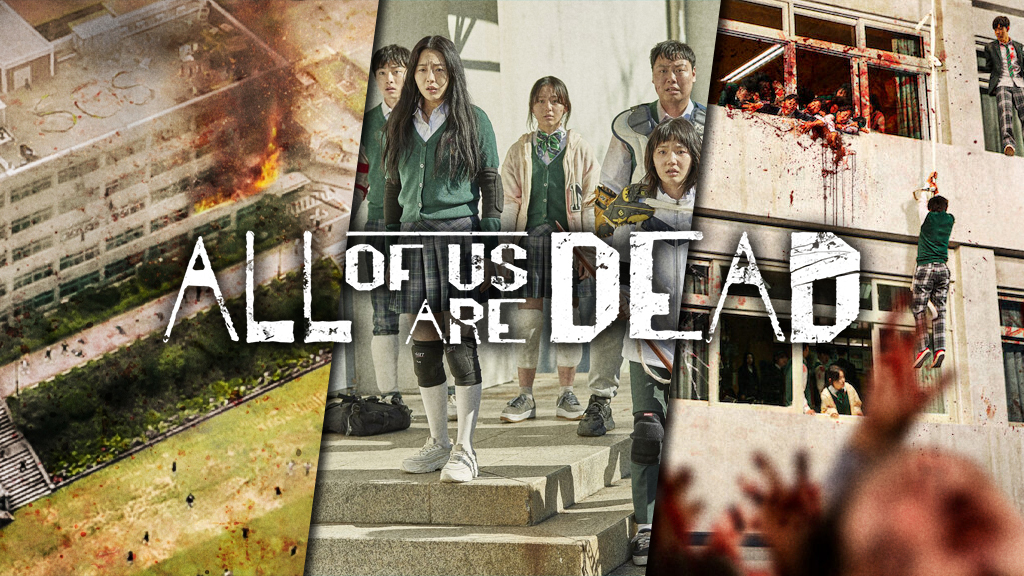
    What would happen if we created a monster and then, unknowingly, nearly killed the rest of the world? That’s essentially the question at hand in Netflix’s All of Us Are Dead. After seeing his son be bullied for so long, Lee Byeong Chan decides to do something about it. However, while most parents would seek more traditional routes — talking to the principal or teaching the child to fight defensively — Byeong-cheol Kim‘s Chan takes things to a new extreme. He opts, instead, to create a new type of monster by injecting his son with a new virus he’s been working on. Little does he know, that very virus will nearly destroy Korea, all while killing the one person he so desperately tried to save.

    It’s a horrifying concept that shows how far humans are willing to go in order to get what they want; essentially showcasing that families — namely children — are disposable. While the zombies are the focus of the series, it’s the humans that are truly the monsters of All of Us Are Dead. It is because of one man’s inability to be there for his son that a high school has become ground zero in a zombie attack. It is because of his choice that he has lost both his wife and son. More importantly, though, the choices throughout the series showcase how willing people are to kill those around them for the sake of safety.

    We see this first among the students with bullying and sexual harassment/assault in the first couple of episodes. Then, as the outbreak continues to reach more of their fellow classmates, the students waste no time casually throw their classmates to the hordes in hopes of escaping. It becomes fight or flight and the strongest are the ones that’ll survive. Morality goes out the door the moment the undead take over. When it comes down to it, the staff seems to all but abandon the students in favor of surviving — with one or two exceptions along the way. Even the students soon find themselves warring, eager to stay alive and away from those that’ll do harm to them. In some instances, this may mean aiding another student in becoming a zombie, abandoning a friend for the sake of getting away or pretending not to hear cries for help in order to save yourself. There are plenty of screwed-up scenarios in All of Us Are Dead in which the humans are the true monsters, however, the worst comes closer to the midway point of the series.

    After being trapped in the high school, unable to reach the outside world due to phones and internet being cut off, the students that have survived become desperate to find some sort of help. They’re tired of running from room to room, trying to barricade themselves from the dead. It only becomes harder when a new form of zombie is introduced — one that still retains its humanity. So, they take to the roof for safety, believing if they make an S.O.S sign, a helicopter will come save them. And it works, or at least, it seems like it’s working.

    What the students don’t realize, however, is that the last student rescued by the soldiers — and the one who left them for dead — has just been attacked by one of the human-like zombies at the basecamp. This leads the people in charge to order a halt to the rescue mission. The safety that was so close within reach for the teens is immediately ripped from their grasps. They are left to die at the school as the helicopter flies off without them, despite promising to recuse them initially. It’s a screwed-up situation, one that is later made worse when the same people decide to bomb the high school after a short warning, barely allowing the kids to escape.

    As terrifying as the zombies are in All of Us Are Dead, the series also shows how cruel humans can be as a whole. The zombies might’ve been created by one naïve and selfish man, but they ultimately helped to unveil the monsters in those still living.

  • ‘Peacemaker’ Episode 5 Primer

    ‘Peacemaker’ Episode 5 Primer

    We’ve passed the halfway mark on the first, and hopefully not last, season of Peacemaker on HBO Max. Episode 5 is set to hit HBO Max tomorrow and fans are waiting to see what’s next following that jaw-dropping revelation at the end of last week’s episode. Episode 4 featured some emotional moments and revelations for the team, especially Peacemaker himself, who may finally be realizing his father was never trying to toughen him up, just abusing him and taking his anger on the world out on the only person he had left.

    Following the mission in which the team exterminated Royland Goff and his family, who were indeed butterflies as Murn suspected, and with Judomaster in tow, the gang heads back to their rundown base of operations with one less toe than before and Vigilante claiming that he may never walk the same again.

    Following a brief team meeting, Peacemaker and Vigilante return to Auggie Smith’s house where the nosey neighbor explains that Auggie has been arrested, but only after he gets into an argument with Peacemaker about Batman, similar to spats you see on Twitter daily.

    This is where Peacemaker begins to realize who his father really is. It’s obvious that Auggie is a repugnant and awful man, but as his son, Smith only saw that through rose-colored glasses, believing it to be tough love. It took Auggie telling Chris that he wished he had killed him the second he was born, but Chris seems to have finally had a breakthrough.

    After a bit of not-so-subtle manipulation by Adebayo, Vigilante gets the sudden idea to kill Auggie and rid Christopher of him once and for all. Vigilante was the stand-out this episode. While he may be a complete psychopath, he’s one with good intentions who cares about people and things, but just has a funny way of showing it. Getting himself arrested, he takes the Aryans head-on and proceeds to ridicule them for all their backward thoughts and actions, provoking them into attacking him first so that he can make his way to Auggie and take him out.

    The episode ends with a montage between characters to “House of Pain” by The Pussycats. We see Peacemaker facing a lot of crucial events in his life: him being forced the kill a man by his father, presumably the first life he’d taken; a flashback to the events of The Suicide Squad, in which we see Peacemaker kill Rick Flag, someone he looked up to and believed to be an American hero, in which Flag calls him a joke; finally, we see the death of Christopher’s brother. Although we aren’t exactly sure how it happened, it’s a moment that deeply haunts him.

    The most shocking revelation in this episode, however, takes place in the final scene in which we see Murn revealed as a butterfly as he releases his proboscis to consume the amber nectar. Just why is Murn trying to take down the butterflies if he is one?

    Episode 5 of Peacemaker debuts tomorrow on HBO Max.