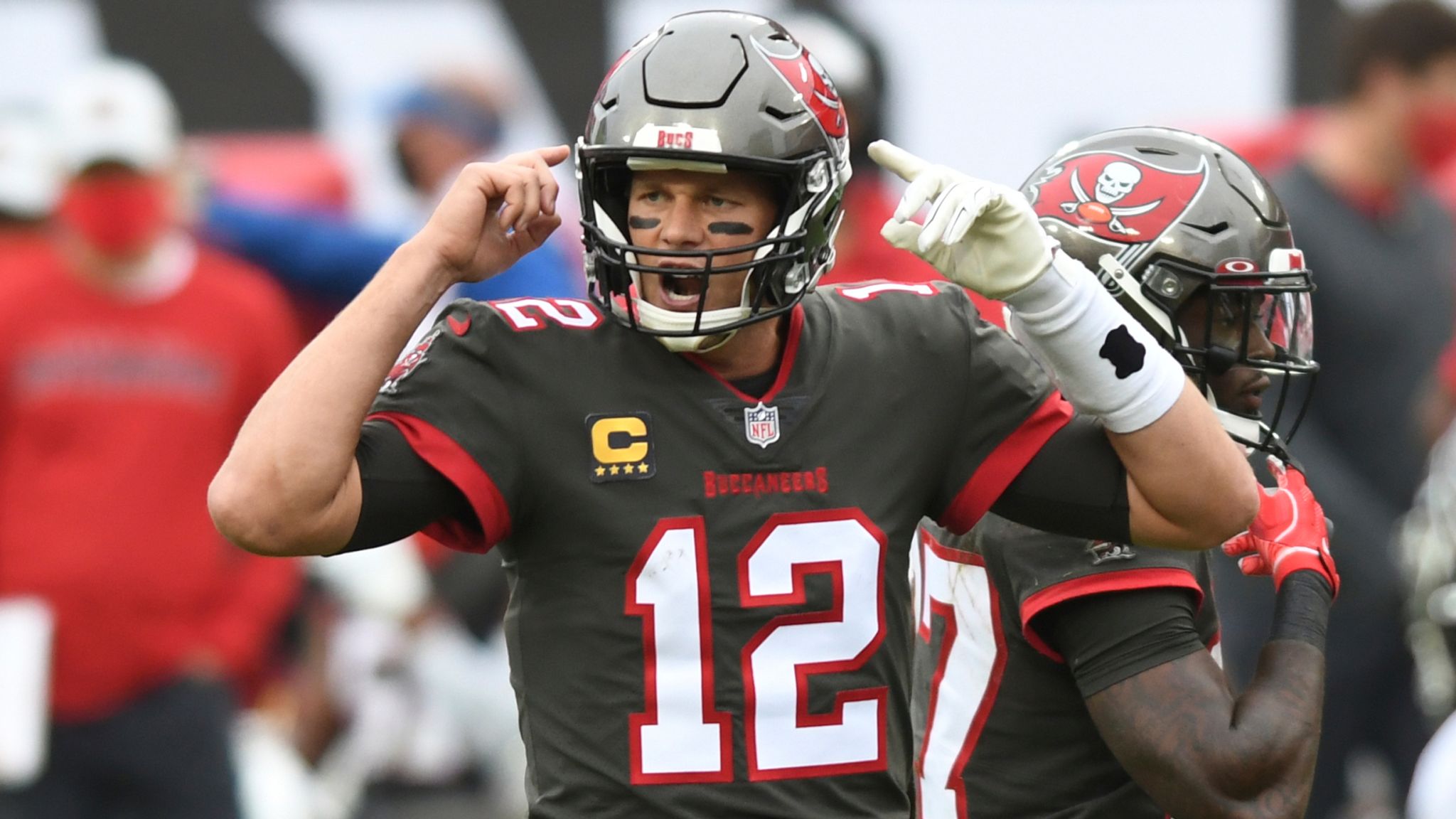
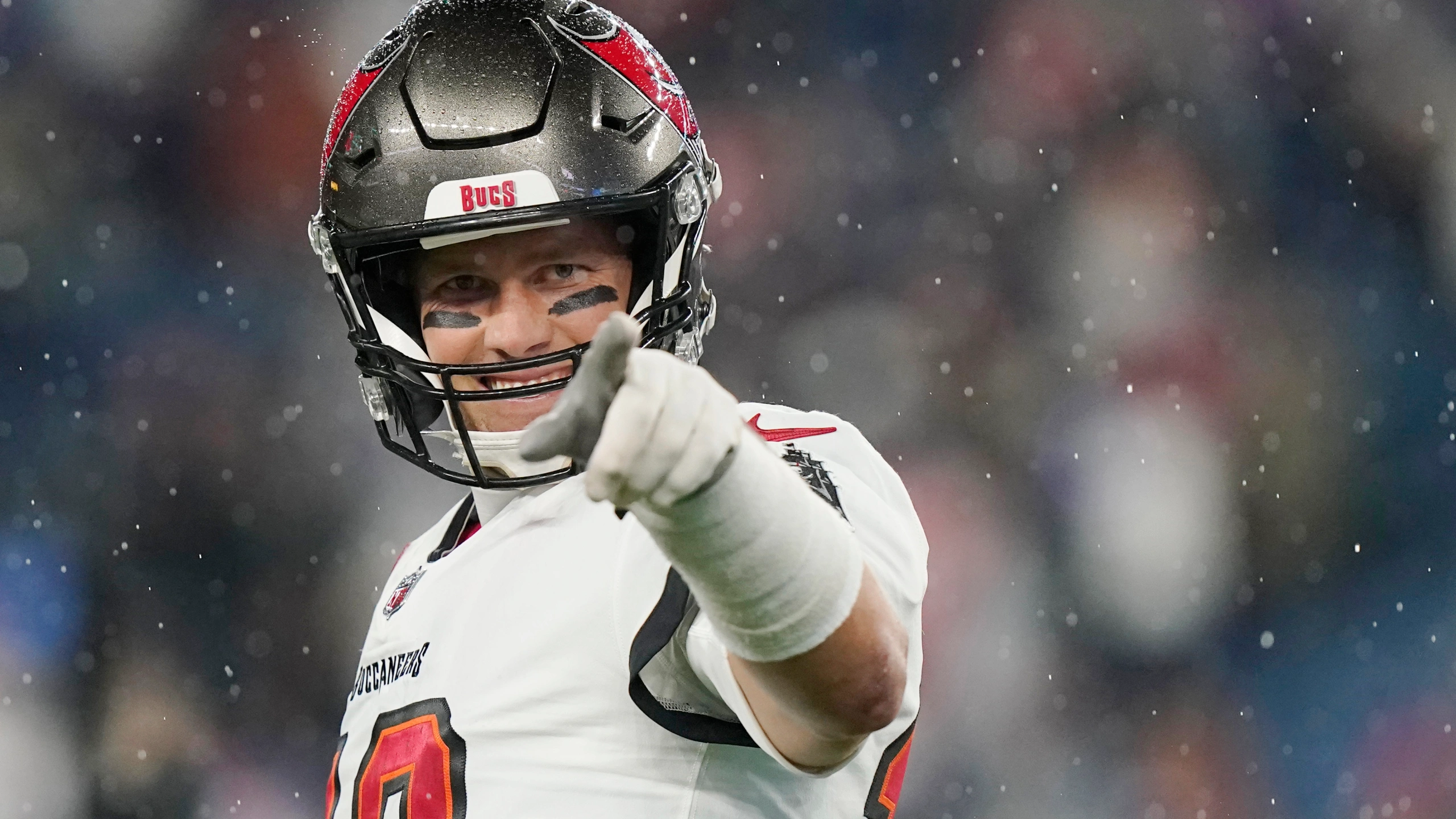
Tom Brady is the greatest football player of all time. There’s no debating this, especially not now, after his 22nd season. Career highs in attempts (719), passing yards (5,316), and this season’s touchdowns (43) and completion percentage (67.5%) were only eclipsed by his 2007 MVP season.
As great as he has been, his recently announced return doesn’t come with the promise of future greatness. In fact, Brady may be about to fall off a cliff due to a couple of key factors.
Offensive Line
While the Buccaneers just resigned Ryan Jensen, arguably the league’s top center, there are some questions regarding the offensive line. Ali Marpet just retired, and Alex Cappa is a free agent, so there are two holes on each hole alongside Jensen, and so far the solution has been to re-sign a backup guard. The Bucs have stars at Center and Right Tackle. Can they fit pieces in to plug at the other 3 positions to mesh well? We’ll find out.
History doesn’t repeat itself, but it sure does rhyme
Think back to 2009. Brett Favre is finally on a team that wasn’t green (nobody remembers his early Falcons days). It was a pretty striking image, seeing him in bright purple on the Vikings. Let’s use these years to compare to Brady’s Buc’s career, skipping the Jets because I, and the rest of history, would like to forget Favre’s Jets career. I listed out Brady’s accomplishments for his 2022 year, let’s list out some of Favre’s 2009 year. Career high in completion percentage (68.4%), QB rating (107.2), and top five in yardage (4,204) and touchdowns (33). Vikings were rolling with a young Adrian Peterson and a dominating Sydney Rice, with a Super Bowl well within their reach. Until that infamous cross body interception in the NFC Championship to the eventual Super Bowl champion Saints. If that throw doesn’t happen, maybe Favre beats Peyton two weeks later and he rides off into the sunset. The same could be said for Stafford’s late game heroics to Cooper Kupp. If Stafford doesn’t nail that throw to get them into field position and win, does Brady even think about unretiring with an 8th super bowl ring on his finger? I don’t think so. But he should look at every QB who has decided to put on the pads one last year, and the results don’t tend to be pretty.
Tom Brady may have outsmarted Father Time all of these years, but Father Time is a hurricane. And Tom, at this point in his career and life, seems to be trying to hold back the tide with a broomstick.
Well, folks. The inevitable has happened. After two blissful months of a Tom Brady-less National Football League, the legendary quarterback has announced that he will not retire. Instead, he will return to the Tampa Bay Buccaneers, intent on looming over the sport for at least one more year. No doubt this is music to the ears of Bucs fans, who have likely just released a breath they’ve been holding in since the beginning of February. It’s also probably great news for any celebrity whose only knowledge of football is that Tom Brady is good, and own a version of his jersey to prove it. Unfortunately, for the rest of the world, it means yet another season in which nobody is allowed to shine brighter than TB12.
Brady, now entering his 23rd year in the league, is indisputably the greatest player of all time. Statistically speaking, it’s just impossible to argue against. Nobody in the history of football has had a better career, with 7 Super Bowl wins stacked on top of 10 appearances, 3 NFL MVPs, 15 Pro Bowls, and countless individual NFL records broken. The man is a monster who just keeps going, and going, and going, and going. Yet, his endless employment may not be the blessing his numbers suggest it would be. In fact, whatever deal the oddly youthful quarterback may have struck with the Devil is probably going to be worse for the NFL than it is good. Not necessarily in a competitive way, but more so in qualitative one.
You see, just like any other television program, live sports are dependent on ratings. Television ratings tend to go up when your show has a famous lead that people would like to tune in and see, and there has not been an athlete since Michael Jordan that’s felt like as big of a leading man as Tom Brady. The NFL knows this, and it’s been apparent since they joined the modern age of social media that Brady would be the face of their sport. When Tom is doing well, the NFL seems to be doing well, and somehow Tom is always doing well. What this means is that every year, without fail, no matter how incredibly well other younger quarterbacks may have performed, the conversation always comes back to Brady.
While this may seem impressive for now, it actually has the potential to stunt the league’s growth in the long run. As with most natural cycles, football must be allowed to usher in new eras as the old take their leave. Fresh young stars, duking it out in exciting newborn rivalries, telling original stories and letting them live on the field. A game adapting to new play styles and a wide variety of teams with drastically different skillsets. Think about those glorious few weeks of playoff football in January, the ones after Brady had been eliminated from Super Bowl contention. They were unpredictable, thrilling, and most importantly, the general public were rooting for good games instead of a good player. There is a place for veteran players with “unfinished business”, as Brady claims to have, but he simply doesn’t fit satisfyingly in the narrative.
A lot of what keeps fans invested in the NFL is it’s storytelling. One would hope the games aren’t rigged, but if they were, one might at least hope they were rigged to be enjoyable. There is nothing fun about watching the same person win repeatedly for decades. This is not to say Brady hasn’t earned his victories, or that anything should be done to stop him from winning. That wouldn’t be ethical, and it’s not the point of the article. It’s just to say that the 5x Super Bowl MVP should have a better idea of when to make way for the next generation. By sticking around, Brady ensures that the NFL remains more or less the same one fans have come to know. Any hope of seeing a competition for his G.O.A.T. successor, any enthusiasm for other veterans who’ve yet to snag a ring to maybe finally get one (a la Matthew Stafford). Compelling storylines thrown to the wind for yet another year of “but can he do it again?”
To link the message being conveyed with another recent hot topic, think of this in terms of Batman movies. People have always loved Batman, from the whimsical 1960s Adam West series to the gothic Tim Burton movies of the late 1980s. Of course, certain takes had more fans than others, but there was a place for each version of the character to be appreciated. That was, until Christopher Nolan changed the game by dropping his trilogy of critically acclaimed films. Since then, as they are still considered the greatest Batman adaptations out there, any and all Batman film or television projects have been graded based on how they stack up to The Dark Knight. No live-action Joker can exist without being compared to Heath Ledger, and every frame of every one of Batman’s movements will be put in an hours-long YouTube video explaining why the former is still the better. If this was not obnoxious enough, imagine The Dark Knight re-released in theaters every year to remind people it was still the best, casting a huge shadow over any other mint editions that dare come after it. It would get old, quickly, and people might stop caring for Batman movies altogether.
Tom Brady is an excellent, time-defying football player. It’s just that every year he stays in the league, it prevents the league from crafting any sort of identity away from him. There is a new dawn on the horizon in football, we might simply have to wait a little longer for it. Cross some fingers that it’s another early playoff exit, because it’s time to move on from Tom. Even if he won’t admit it yet.
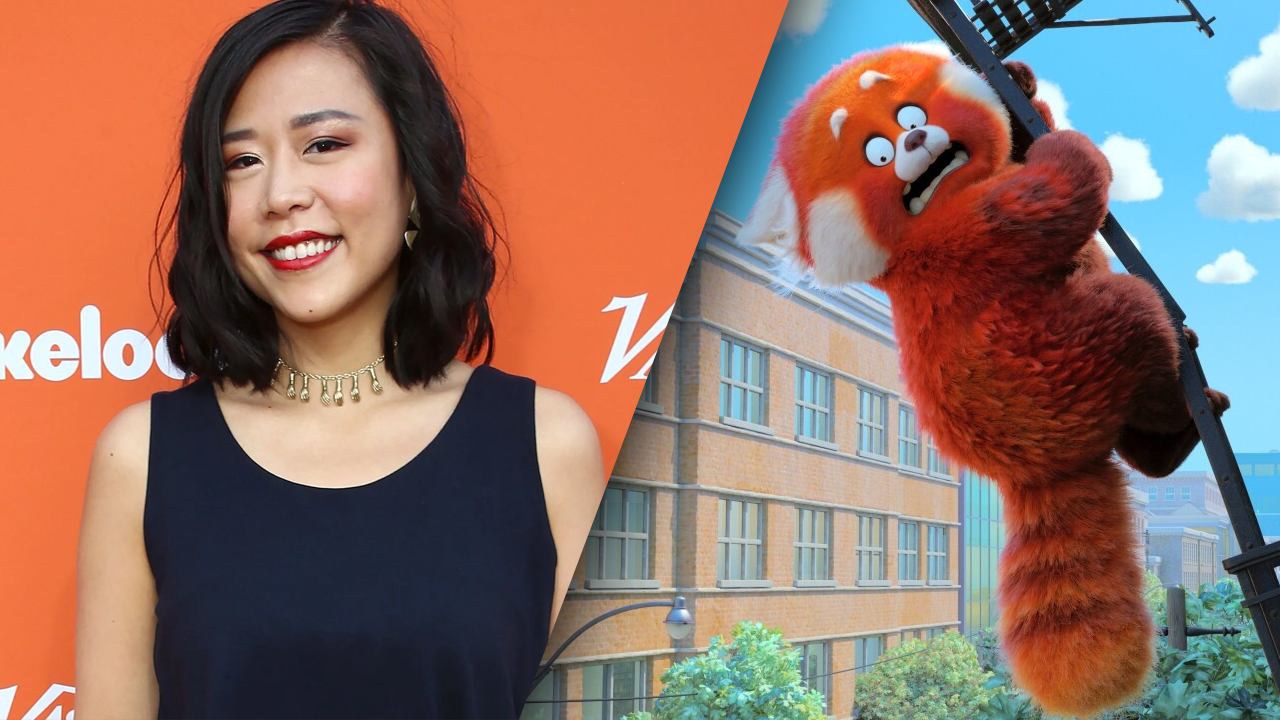
The intimate story of Turning Red takes a huge turn in the finale when it turns into a massive fight rivaling a tentpole superhero movie. The sequence, which both director Domee Shi and producer Lindsey Collins confirmed to be hardest to get right, shows a big kaiju fight among family members.
In an interview with both Shi and Collins, I asked how early in the writing process did they come up with such a left turn for the story. Collins had this to say:
A version of it was in there from the get-go. Not [the final] version but we always had this desire to have this kind of normal mother-and-daughter argument set against this massive monster scale. Especially if you’ve been bottling up that kind of argument for that long, it’s what that feels like. When you finally release all that pent-up anger, frustration, and sadness, it’s like a monster.
Turning Red’s finale almost makes the story collapse on itself but thanks to Shi’s incredible story instincts, the finale remains tethered to the movie’s most crucial themes. It’s a finale that will go down as one of Pixar’s most memorable ones undoubtedly.
More than any other Pixar film, it’s Turning Red that taps into the sensibilities of preteens the most. A film about a preteen going through puberty, the film tackles themes and topics that otherwise wouldn’t be covered by a Disney film. Topics like those inevitably come with a sense of humor apt for its age range, which is what allows Turning Red to be funny in a way audience haven’t seen in a Pixar movie.
Jokes about strippers, crushes, and bodily changes are some of the things Turning Red doesn’t shy from. I spoke with director Domee Shi and producer Lindsey Collins and asked how they got the green light to do such suggestive jokes. Collins admitted that she was surprised when the executives didn’t bat an eye.
There are certainly a couple of moments in there that I was surprised we didn’t get pushed back for. I was kind of half-expecting it. But they didn’t. For the most part, they knew the film they were getting. They knew the filmmaker they had. We were also unapologetic from the very first screening. They had the opportunity to say “Uh oh” but they didn’t.
Shi was confident about their choices, saying that a lot of the jokes were rooted in important character work and thematics.
We also could defend those decisions too. All of the humor was connected to themes of the movie which were girl adolescence, puberty, and generational perspectives.
Early in the movie, Turning Red shows a dream sequence that is utterly bizarre and borderline unsettling by Disney standards. In line with the earlier question, I asked Shi what prompted them to create a scene inspired by filmmaker David Lynch and how it tied into the film’s themes.
I’m so glad you mentioned David Lynch. He was an inspiration for that part. There was an even scarier version that we cut. The version you guys saw was a scaled-back version. I like it because it’s kind of weird and it elicited a lot of laughter from the audience. My intention behind the sequence was that it’s the night that puberty arrives. So what does puberty look like as a dream? It is very Lynchian and nightmarish and weird and funny.
In addition to producing live-action streaming series that are a part of the DCEU, Warner Bros has begun development on a few DC films that will be exclusive to the streaming service as well. Batgirl, which will introduce Barbara Gordon to the DCEU, is currently the first of what is presumed to be many HBO Max exclusive DC films, but recent shifts in the DC film release slate may have given it a window of opportunity for a theatrical release.
Substantial changes to many upcoming DC film release dates were part of a cascade begun by Black Adam being pushed back from its July release date to October 21st, 2022. Shazam: Fury of the Gods jumped forward on the calendar, taking the December 16th, 2022 slot previously held down by Aquaman and the Lost Kingdom, knocking the sequel into March of next year. Also moving into 2023 is The Flash, streaking to June 23rd, 2023, 7 months later than previously scheduled. Following the release of Blue Beetle on August 18th, 2023 there is nothing set moving forward, meaning Batgirl would have a perfect window to release in late 2023.
The Flash being delayed means Batgirl’s reported 2022 release is highly unlikely as the events of that film directly lead into the The Flash, reintroducing Keaton as the main Batman of the DC Extended universe. So what should Warner Brothers do with this new opportunity? Move Batgirl to a late 2023 release date and give the film the opportunity for a theatrical release instead of only putting it on HBO Max.
We’ve seen quite a bit from the set of Batgirl and we know the film is set during the holiday season with the set in Glasgow being covered with a ton of Christmas decorations. Instead of creating another Shazam! situation, where a film centered around one season is released in the opposite, the film could thrive with a a theatrical release during the 2023 holiday season.
Blue Beetle was originally set to be an HBO Max exclusive film but was moved to a theatrical release, so its possible for Batgirl to get the same treatment. Batgirl is an instantly recognizable character for many people and has had prominent roles in many DC projects. This move seems like a no-brainer for Warner Brothers, who could bring in more money with a more strategic release. It would also give the film additional time during production, as it always seemed a bit risky to shoot and release a film in the same year.
Batgirl’s release date is still unknown as production on the film continues in Glasgow. The film will be directed by Adil El Arbi and Bilall Fallah with Leslie Grace in the titular role. Alongside Grace will star J.K. Simmons, Michael Keaton, Brendan Fraser, Ivory Aquino, Jacob Scipio, and Rebecca Front.
For the past year, it seems the only Marvel projects anyone has talked have been the smash-hit Spider-Man: No Way Home and the upcoming Doctor Strange in the Multiverse of Madness. This is with good reason, of course, as both films were surrounded by whispers of insane cameos and exciting character reveals. However, fans shouldn’t be so quick to forget about an entirely different MCU project that also looks to have it’s hands full in the guest department. She-Hulk is set to debut on Disney+ later this year, and the 10-episode “comedy” series is rumored to be just as jam packed with surprise appearances as it’s higher-profile siblings.
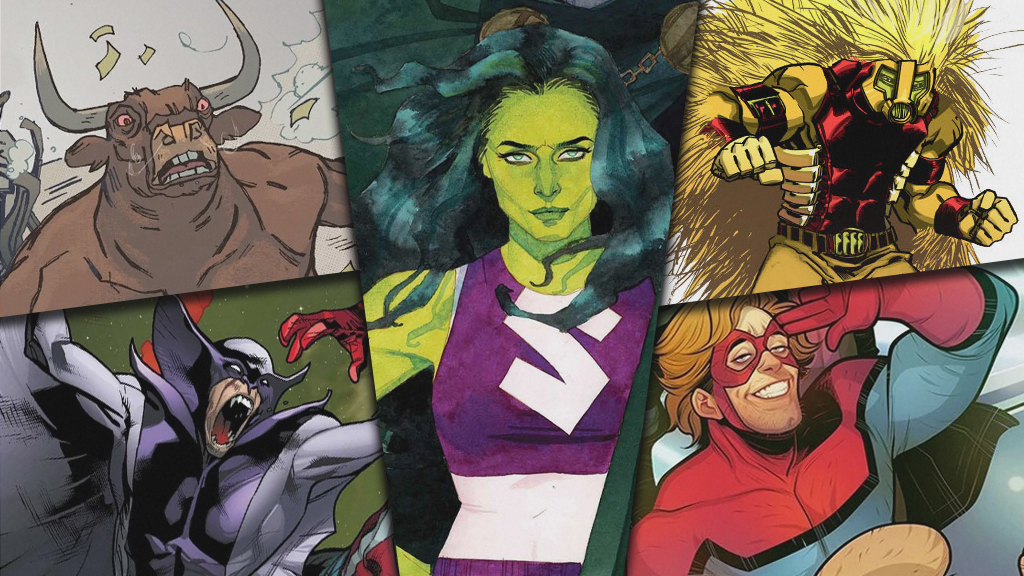
The difference is that, aside from some previously established stars like Benedict Wong‘s Wong and Charlie Cox‘s Matt Murdock, most of the rumored cameos will supposedly be from characters even hardcore Marvel fans may not know. A recent Reddit post named a handful of C-Listers as potential guests on the show, and gained a bit of credibility when an audition tape for one of those characters, Mr. Immortal, seemingly leaked online. If you’re not sure who that is, have no fear. Articles like this one exist to keep people informed. Read on to discover a few more of the relative unknowns, and learn about their brief comic book histories.
Mr. Immortal
Craig Hollis, better known as Mr. Immortal, made his biggest impact on the Marvel Universe as a founding member of the Great Lakes Avengers. As a child, Hollis was visited by a cosmic entity calling itself Deathurge, which often attempted to put him in life-threatening situations. After a tragic event which resulted in the death of his father, Craig learned that Deathurge had granted, or cursed, him with immortality. Every time Hollis dies, he is immediately resurrected. In his adult years he would decide to put this ability to good use and become a costumed superhero, creating a team of similarly mediocre do-gooders operating out of the Great Lakes region.
Mr. Immortal was rumored to appear in She-Hulk asking Jen to help with a divorce from his wife, something the leaked audition tape supported when it’s dialogue involved the character mentioning both a failed marriage and a failed suicide attempt. In the leaked video, actor Tom Archdeacon is trying out for the role, but he isn’t the first person to go for the red-and-blue tights. Derek Theler, of Baby Daddy fame, was once attached to play Hollis in a loose adaptation of New Warriors for the Freeform channel. A pilot was filmed, but never released, opening the door for a new performer to possibly take the role for Disney+.
Man-Bull
Another rumor from the same Reddit leak claims that Tim Roth‘s Abomination will at some point set up a mountainside retreat for “various low-tier villains and other side characters”. Among those named as inhabitants of the retreat is Man-Bull, a lesser known antagonist from the pages of Marvel’s Daredevil comics. William “Bill” Taurens (a clever last name) was a low-class thug hired to round up human test subjects for a mysterious scientist’s new experimental serum. The serum was seemingly designed as an enhancer, taken from the genetics of a bull, and Taurens was forced to undergo the procedure himself after Daredevil prevented him from kidnapping anyone else. Transforming into a large, bull-like creature, Taurens took on the name Man-Bull and sought his revenge.
He would go on to clash with Daredevil on multiple occasions, though he never managed to rise to arch-villain status. Man-Bull’s story would get more interesting in later appearances, coming into conflict with characters like Hulk, the Scarlet Witch, and Hercules. He even once found himself infused with extra power, becoming a version of the Minotaur from ancient Greek legend. Unfortunately, it’s likely none of this will come to pass if he shows up in She-Hulk, where Man-Bull is an odds-on candidate for comic relief.
Porcupine
Alongside Man-Bull at the mountainside retreat is purportedly Porcupine, who has had a few iterations in the comics. The original character to don the identity was actually a member of the United States Army, one Alexander Gentry. A weapons designer, he crafted a military battle suit inspired by the abilities of a porcupine. Anyone wearing the armor would be coated in a layer of powerful quill-like weaponry, which doubled as self-projectiles or tubes to fire other ammunition such as poisonous pellets, gas, fire, and other objects of the sort. Obviously, things with the army didn’t go as planned, and Gentry instead used his invention to turn to a life of crime. His first superhero opponents were the original Ant-Man and Wasp, but he would also eventually come into contact with other big name heroes like Captain America, Moon Knight, and the Fantastic Four.
Over time, a man named Roger Gocking would also begin using the Porcupine suit. Though he lacks an established background, he did follow in his predecessors footsteps by joining a variety of supervillain teams to support his own middle-of-the-road status. Around the same time as Gocking’s emergence, a mutant teenager named Billy Bates would develop porcupine-like powers and take the name for himself. It’s unclear which alias of Porcupine is allegedly scheduled to appear in She-Hulk, but Bates’ mutant origin may knock him from contention.
Baron Blood
Perhaps the most interesting claimed constituent of Abomination’s little club is Baron Blood, who actually has sort of a long history in Marvel’s comics. Blood, born as English aristocrat John Falsworth, originally came to prominence as an adversary of The Invaders during World War II. He is the younger brother of longtime Invaders feature Union Jack, who, after losing his fortune to the elder Falsworth, travels to Transylvania to pursue his love vampirism. An encounter with Dracula turns John into an undying bat-like vampire, which apparently also results in a lapse of moralism as the newly-christened Baron Blood sides with the Nazis and begins battling his brother’s super heroic allied forces.
Blood’s importance in the comics has diminished since his early appearances, but he has continued to surface occasionally and cause trouble for his former World War rivals. Other versions of the character have been introduced in later stories, like an undead version of Doctor Strange’s brother and John Falsworth’s great nephew Kenneth Crichton, but it’s most probable the original is who might appear in She-Hulk. His brother James is already canon to the MCU, having been portrayed in a minor role by JJ Feild in Captain America: The First Avenger. Maybe Blood’s rumored cameo will allow more World War II stories to be told in the future of the MCU, or even establish an unexpected connection with Marvel Studios’ upcoming reboot of the Blade franchise.
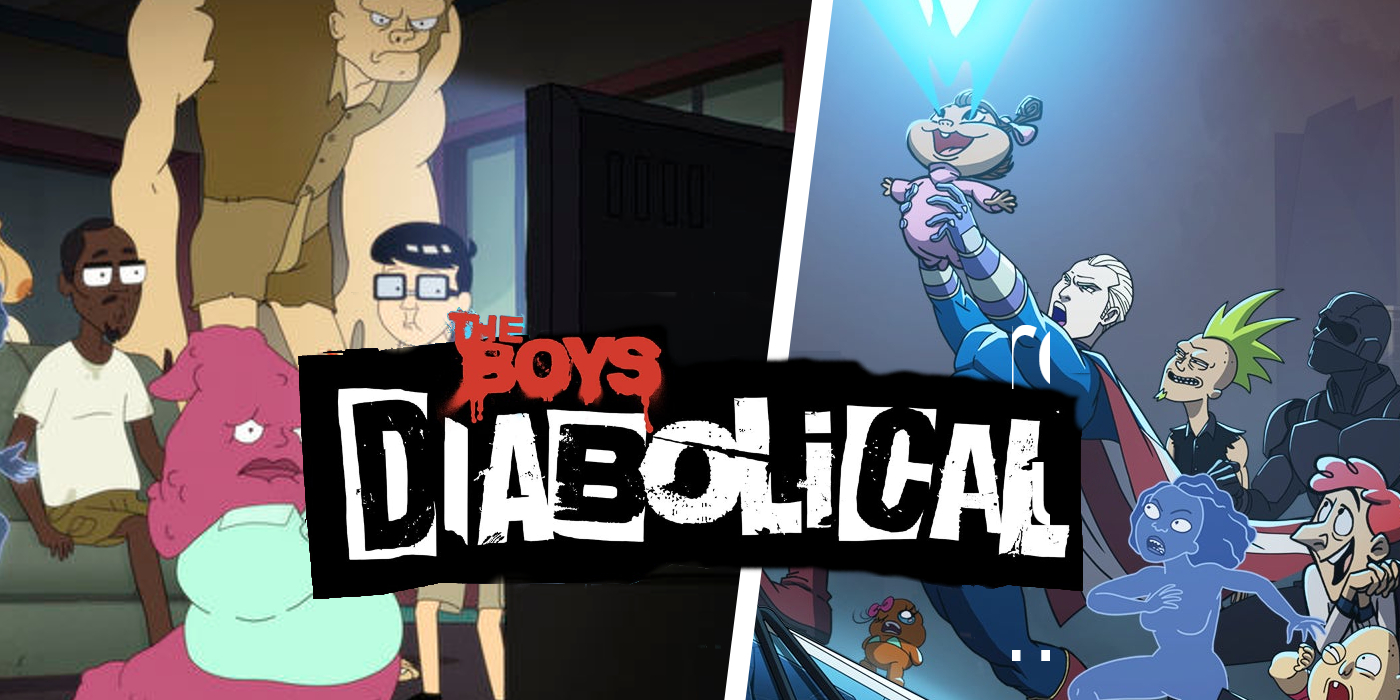
Amazon recently released its very first The Boys spin-off, Diabolical. In the same vein as the popular Disney+ experiment Star Wars: Visions, the project is an anthology series made up of animated shorts from a wide range of creative teams and directors. As a result, no two episodes are exactly the same. In fact, more often than not, they are shockingly different. The short stories, likely non-canonical and clocking in at around twelve minutes each, range from grand spectacle pieces to small, personal tales set within the context of The Boys‘ universe. Those working behind the scenes on each installment were seemingly given a fair amount of freedom, allowing for multiple unique explorations of Vought International, the Seven, Compound V, and their collective impact on the world at large.
Unfortunately, despite a fairly strong first season overall, not every episode can be a home run. While no entry is entirely bad, some are definitely better than others. Which episodes are better, of course, is subjective, and will ultimately be up to the viewer. However, that fact hasn’t stopped me from compiling my own ranked list of the episodes. So, without further ado, here is The Boys Presents: Diabolical, ranked for Murphy’s Multiverse from worst to best:
8. Boyd in 3D
This might end up being a controversial last-place pick among fans, but I’m sticking to it. Boyd in 3D was conceived by sibling Broad City alums Eliot and Ilana Glazer, and directed by DreamWorks’ Naz Ghodrati-Azadi. The story, which focuses on an insecure man using experimental new Vought facial cream to land the girl of his dreams, is designed to comment on superficiality and popularity in the age of social media. Maybe it’s because there are already countless versions of this story in existence, but something about the episode just isn’t all that engaging. Aside from a nice little twist at the end, it’s mostly predictable and cringe-inducing. Though, bonus points for using a traditionally family-friendly animation style to tell a rather adult story.
7. One Plus One Equals Two
One Plus One Equals Two is perhaps the only episode of the season that could potentially be viewed as canon, and that’s exactly its biggest problem. Helmed byAvatar: The Last Airbender director Giancarlo Volpe,alongside veteranBen 10 animator Jae Kim and Invincible writer Simon Racioppa, the short acts as a sort of origin story for Homelander’s time as Vought’s poster boy. The problem is that, while it would probably make for a good sequence in the mainline series, it misses the point of Diabolical altogether. It’s essentially just a lot of stuff we’ve seen before placed at the tail end of an otherwise inventive season. A handful of fascinating scenes between Homelander and the mysterious Black Noir are the only reason it’s not ranked lower.
6. I’m Your Pusher
I’m Your Pusher, the second directorial effort from Volpe, largely suffers from the same problems as One Plus One. With art ripped straight from The Boys comics and a script from franchise creator Garth Ennis himself, I had pretty high hopes for this one. Sadly, it doesn’t have much to offer aside from some truly hyper-violent antics and the short-lived excitement of seeing Simon Pegg‘s Hughie come to life. It only ranks this high because it dares to try something fun and charming with its presentation.
5. Laser Baby’s Day Out
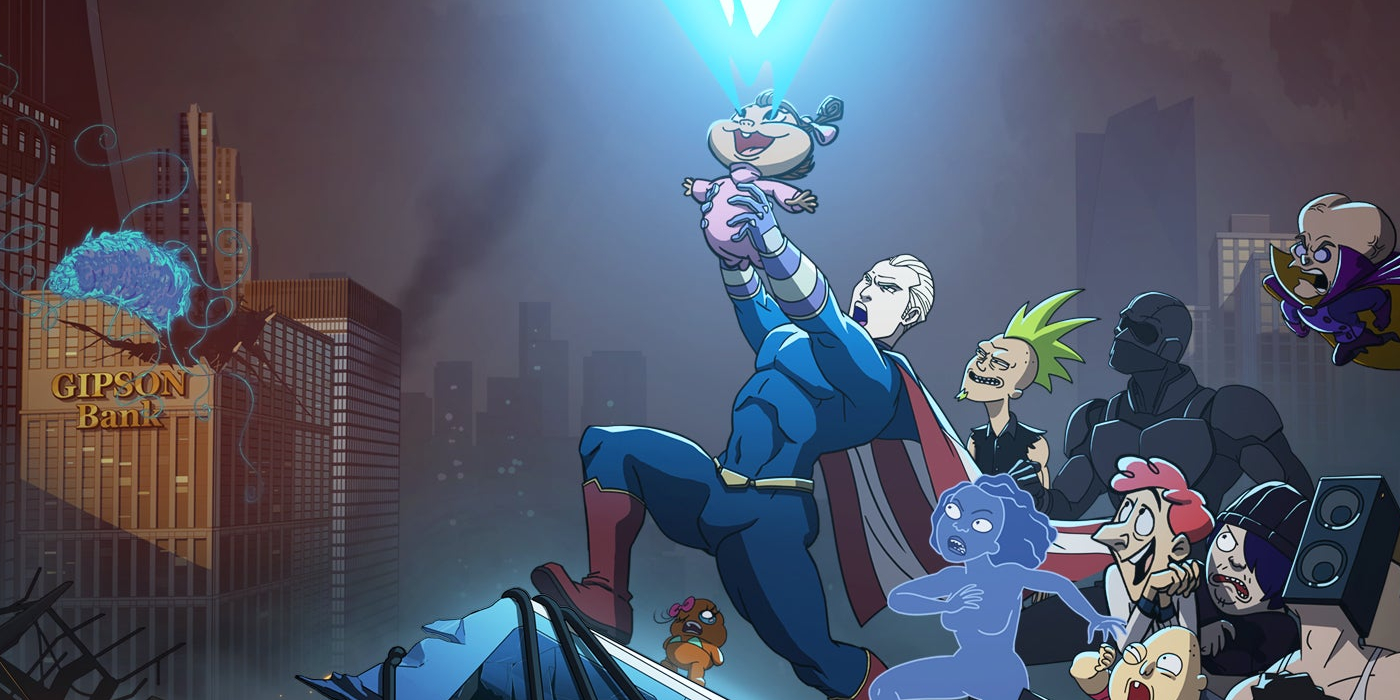
This is where things start to get really fun. Laser Baby’s Day Out is an ode to Saturday morning cartoons and a parody of, as the title implies, the 1994 John Hughes‘ film Baby’s Day Out. The straightforward and comedic story comes from series producers Seth Rogan and Evan Goldberg, and is directed by Futurama‘s Crystal Chesney-Thompson and Phineas and Ferb‘s Derek Lee Thompson. It concerns a downtrodden Vought scientist stumbling after a super-powered baby he helped escape, causing immense violence and chaos along the way. It’s the perfect first episode for the show, an entertaining example of how concepts from The Boys can be displayed in new and original ways. It’s ranked in the middle of the pack strictly because of its simplicity.
4. Nubian vs Nubian
Nubian vs Nubian, the better relationship episode from the season, comes from the mind of Aisha Tyler and Young Justice‘s Matthew Bordenave. Dissecting the fake realities conjured by Vought, the story revolves around a young girl attempting to save her parents’ failing marriage by way of their former nemesis. It’s a genuinely interesting look behind the curtain of Vought’s staged, WWE-like heroes and villains, and how fulfillment on paper doesn’t always translate to the real thing. Its ranking is also helped by an excellent performance from voice acting legend John DiMaggio.
3. BFFs
There is no doubt this will be the most divisive episode of the season. Its ranking was frequently moving up and down in my head before it finally landed near the top. Written by Awkwafina and directed by Madeleine Flores in her signature Star vs. the Forces of Evil style, BFFs is about a lonely teenage girl who gets her hands on Compound V and is granted the power to bring poop to life. No, that is not a joke. The ensuing shenanigans, which put her at odds with Chase Crawford‘s The Deep, are wholly original and often hilarious. Once you get past the shell-shock of the premise, you realize it’s actually exactly the sort of thing Diabolical promised to deliver. High marks.
2. John and Sun-Hee
The emotional tour de force of the season, John and Sun-Hee packs a heavy punch and is sure to be ranked highly on nearly every list. In what feels like a surprise reveal, the episode was written by comedian Andy Samberg and directed by Voltron: Legendary Defender maestro Steve In Chang Ahn. Done in the style of a classic anime, the story sees a humble Vought janitor steal Compound V to save his dying wife, only for her cancer to take on a life of its own. It’s a surefire tearjerker, combined with some striking visuals that make it must-watch television. It was very close to taking the number one spot on this list.
1. An Animated Short Where Pissed-Off Supes Kill Their Parents
This one may be unbeatable. I won’t retype that title, but it’s a pretty self-explanatory plot synopsis. A group of “Supes” with ridiculously terrible powers team up to exact revenge on the parents that left them behind as children, with results that are somehow both extremely grotesque and sidesplittingly funny. Of course, this balance could only be achieved by the writing team of Justin Roiland and Ben Bayouth, known for their work on Rick & Morty and Blark and Son, and director Parker Simmons, of Mao Mao fame. It’s everything that makes The Boys great, wrapped in an exceedingly clever bow. It remained ranked at the top spot from my first viewing through my last, and will likely stay there for its sheer rewatchability.
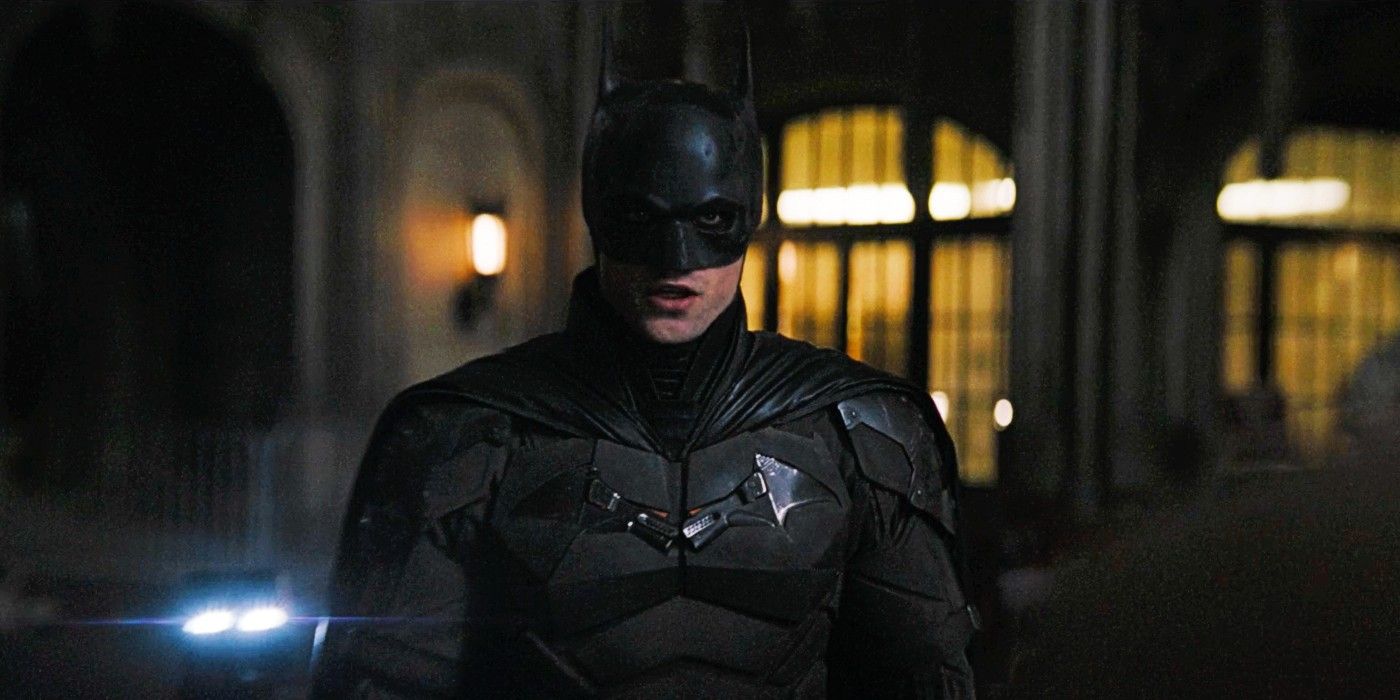
It’s not The Dark Knight: I feel like we need to get that out of the way. It isn’t flawless either, nor is it the game changer you’d expect from a director of Matt Reeves’s caliber. What it IS is a grounded take on Batman during a time period we haven’t yet explored on film, and the first two acts are brilliant in that respect. Colin Farrell is money, John Torturro is excellent, and Zoe Kravitz is downright cat-like as Selina Kyle. I love that they had Selina be Falcone’s daughter: it worked in the comics and it worked here. However, Paul Dano tries really hard to chase Heath Ledger’s performance for some parts, although he redeems himself at the end with his monologue in Arkham. Having watched it twice, it now is apparent that the Riddler’s plan was that the GCPD would arrest Wayne for being Batman, put him in Arkham with him, and then they’d be safe from the flooding. In that respect, he failed, but I had to watch it a 2nd time to figure that out so I left my first watch thinking he won. The third act was uneven, and the introduction of Barry Keoghan as the Clown Prince of Crime doesn’t do enough to save it in much the same way Sinestro’s heel turn at the end of Green Lantern didn’t save that film. The difference being the two acts work really well here, with it feeling equal parts Departed and Saw. My gripes with it are that Reeves doesn’t appear to gibe much time to Bruce Wayne (focusing the spotlight on Batman in this is either a choice or just the struggle of directing a exciting portrayal of the billionaire playboy philanthropist), and that there are literal shot for shot remakes from TDK. Namely, the shot of the sniper rifle overlooking the town square is lifted from when Bale is trying to save the Mayor and Gordon gets shot and the Riddler taking out the folks in power almost exactly like The Joker did. Also, you can’t say comic-accurate doesn’t work in this universe he’s crafting, and then have Bats inject himself with Venom. Those are my issues with it, but I give it a 4/5. The third act prevents it from being a classic, but it smokes The Dark Knight Rises and Batman Begins.
Anthony Canton III
The Batman is a film that spoke to the kid in me who read the Long Halloween. There are elements of Year one as well and those are mixed together seamlessly by Matt Reeves. Is it an incredibly long movie? Sure, but the movie’s length doesn’t take away from the story they told here. Robert Pattinson did a tremendous job playing a Batman who had no interest in being Bruce Wayne. It’s a character development that should be exciting going forward. Zoe Kravitz, Jeffrey Wright, Colin Farrell, and John Turturro all have exceptional chemistry with Batman. They really make the film sizzle throughout. Finally, Paul Dano deserves his flowers for making this version of the Riddler as scary and intelligent as possible. This movie had tension, suspense, and great nods to the comics. The most important thing this movie accomplished was it gave some runway for this Batman/Bruce Wayne to grow and not make him fully formed from the jump. I look forward to future installments with different sets of villains as they set up No Man’s Land. The Batman gets a 9.5/10 from yours truly.
Mary Maerz
Overall, I really enjoyed it. At the same time, it didn’t redefine Batman cinema for me and I’m perfectly fine if I could not ever see it again. The visuals and score, unsurprisingly could be incredible. While it was stunning at times, it kind of hit the same note at all times. It was very cohesive, but pretty monotone. For me, that’s why it felt way too long—I’m not against 3 hour movies, but I felt a bit defeated when I realized there was still another 30 minutes left. I would have brought more snacks in hindsight.
I liked the supporting cast more than I expected to, which is saying a lot because I was expecting them to be good. Robert Pattinson was great, but I have no idea how someone gets “best Batman ever” out of that. He just did not have the specific presence enough to be irreplaceable in this movie. And that is not a shot at Pattinson, but more of a comment on the script and the way this movie portrayed Bruce Wayne/Batman.
The Riddler was great in the first act, I felt like he disappeared completely in the middle, and then flopped a bit in the final act. While the build up of the character is awesome, but his end game sort of erased his “grounded serial killer” attitude and turned him into a much cornier and pretty average comic book villain. I think a lot of the nuance was lost when his motivation and final move were revealed.
Overall, I’d give it a 7.5/10. But it seems like it’s easier to talk about the negatives when I’ve heard that it was the greatest comic book movie of all time for years. It was good and extremely well-made with its cinematography and score in particular, which is a very standard take. It knew how to be dark, grungy, and delightfully uncomfortable. And it did what it did well a lot. Zoë Kravitz stood out more than anyone, and I really really enjoyed Jeffrey Wright. Like all movies, it was not perfect and not for everyone. I do not personally think it will singlehandedly change the genre, but it’s great that it adds a relatively unique vision to the conversation.
Charles Murphy
For the time being, The Batman is going to remain a riddle to me. Wonderfully acted and beautifully shot, the film left me with some questions and concerns about the future of the character. I appreciated the patience with which director Matt Reeves set up the film’s mystery; I never felt like I was bored nor that the film wasted time. That patience gave the film time to show a side of Batman that hasn’t been properly explored in live-action films and I enjoyed it. Robert Pattinson’s pensive Batman might be my favorite version of the character so far, though further viewings of the film will be necessary before I can really be sure. The film gave him some great Batman lines (the your blood or mine one was a favorite) and provided a wonderful foil in the from of Zoe Kravitz’s Selina Kyle, who certainly had an impact on the Caped Crusader. Between his “loss” to the Riddler and his time with Catwoman, Batman will be forever changed and the film ends with the hint that when we next see him, he’ll be a very different man, and that fits wonderfully with where the character is in his journey.
My concern is that, for a film that is meant to be a jumping off point for a decade worth of Batman-related content, it feels VERY narrowly-inspired. Watching this film, it’s easy to get the idea that Reeves’ model of Batman was developed by reading the works of Frank Miller and Jeph Loeb. While each of those writers brought something absolutely fascinating to the character, honing in on their takes could potentially mean forsaking some of the other things that have truly defined the character over 83 years of stories. Could Ra’s al Ghul exist in this world designed by Reeves? If not, a wealth of stories and characters that come from that corner of mythology can’t either. Could any of the more fantastical characters exist here? If not, another corner of what has defined Batman over the years can’t be explored. Reeves’ Gotham seems like a bad place with bad mob guys and dirty cops, and if that’s all it is, I don’t care to see more of it. I want to see Clayface. I want to see Robins, all of them! Those things all seem like they’d take a huge leap from where Reeves feels comfortable. Had this been a one-off and not a film meant to kickstart a whole universe of spinoffs and sequels, I think I would have enjoyed it more.
John Sabato
After three viewings of The Batman, it is everything I’ve wanted to see in a Batman film. We have a Batman that lives by his code, who is vehemently against the use of guns and killing. Pattinson embodies Batman perfectly and is the first to truly embrace the world’s greatest detective aspect of the character. Every single one of his supporting characters and antagonists are perfect and feel definitive to me. Jeffrey Wright as Gordon works incredibly well alongside Batman; Zoe Kravitz is the perfect parallel to Batman; Colin Farrell’s Penguin was hilarious. Paul Dano’s Riddler, however, was a fantastic reinvention of a character who has previously only seen quite goofy adaptions. Dano especially shined in the scene between him and Batman in Arkham. Overall, while at times I do think the film could drag a bit, and it is long, the third act really shined for me and by the end I just wanted it to keep going. The thought of having to wait so long for a sequel is killer.
Hunter Radesi
If Matt Reeves did anything right in The Batman, it was the atmosphere. There’s been a lot of comparing this film to The Dark Knight, once considered the definitive take on the character, and in this regard, Reeves blows Nolan out of the water. From the film’s opening moments, it plays with the iconography of Batman and Gotham in ways that make you fear the vigilante and his city right alongside its fictional inhabitants. It often feels like a Black Series comic come to life, teetering on the edge of brooding noir and cornball camp. A lot of the film is what I’ve always wanted to see in a Batman adaptation, with secrets of Gotham unearthed and the protagonist used as both a true detective and a force of nature. However, it’s not without its flaws. Parts of the overlong plot tend to lose their steam, and some baffling choices are made in regards to the Batman mythology. Overall, the film is a beautiful take on the character with room for improvement in an inevitable sequel.
Joseph Aberl
The Batman is a curious piece that echoes David Fincher‘s noir era of storytelling. In his second year, Robert Pattinson‘s take on Bruce Wayne is damaged and lost to his own obsession with vengeance. The film plays strongly with those emotional ties and intersects it with a strong noir mystery that keeps you on your toes throughout. The sound design is what truly grips you in, especially with some shots focusing primarily on the threat that is Batman. The use of shadows for the character in making it believable why criminals fear him is a standout moment and may be the character’s best on-screen introduction. Yet, I will say the soundtrack does tend to feel like it is on repeat at times and doesn’t truly stand out as it could’ve. A lot about this film relies on subtlety to focus on the atmosphere it creates rather than becoming a pure fan-pleasing film. Still, it may be one of the best adaptations of the comic’s version of the character and a great start into what may be a very unique franchise.
There is no shortage of cartoonish absurdity in Amazon Prime’s latest animated offering, The Boys Presents: Diabolical. The series, an anthological spin-off of the streaming service’s hit live-action comic adaptation The Boys, has everything from boob-faced killers to poop-throwing heroines. No limit appears to be in sight for the creatives behind the show, and as a result, most of the short story installments come across as probably non-canonical. This is why it’s so surprising when the season’s final episode, One Plus One Equals Two, offsets everything by feeling so in line with the show it’s based on. In fact, it feels so in line that it might just take place within the same continuity, and if so, it could have major implications for the franchise’s future.
The story, brought to life via animation is less dramatically stylistic than some other episodes, revolves around Homelander’s earliest days in the employ of Vought International. While there are many hints of his mental instability, the character is actually portrayed as slightly more innocent than viewers may be used to seeing him. It appears as though he genuinely wishes to do good in the world, even if his methods eventually descend into vile madness and destructive chaos. The Boys has given us glimpses into Homelander’s past, showing his early life as a child test subject and discussing his reasons for turning to violence, but this is the first real look fans have gotten into his first days as a celebrity superhero. He is shown to be less cynical, and incognizant of the ways his reactive nature can hurt people.
After being introduced to the public at an official Vought-sponsored event, Homelander gives his first big televised speech and wiggles his way into the hearts of the American people. A momentary lapse in the façade comes when the mysterious Black Noir, a fellow member of “The Seven,” is brought on stage to help welcome the new Vought inductee. This sets up an arc of distrust between Homelander and Black Noir, egged on by handler Madelyn Stillwell, who insists Noir has been assigned to ensure the former remains subservient to Vought’s planned schemes. A small surprise for Homelander comes in the third act of the episode after the twisted hero’s attempt to save civilians at a chemical plant ends in accidental slaughter. Noir arrives, and after a brief conflict in which Homelander is unable to put his teammate down, the mute avenger reveals his support for Homelander’s antics and aids him in covering up any misdeeds.
One Plus One is perhaps the most the relationship between the two characters has been explored outside of the comics. The lack of interaction in Eric Kripke‘s adaptation has always been an interesting move, as Black Noir and Homelander are the crux of The Boys’ biggest plot twist within the pages of Garth Ennis‘ books. There, it is famously revealed that Noir is actually a clone of Homelander created by Vought as a fail-safe should they ever lose the authority of their original experiment. Unfulfilled by Homelander’s apparent self-control, Noir orchestrates all of the events that eventually lead to Homelander’s self-destruction and the formation of “The Boys” to give himself a reason for existence. There has been little-to-no indication of this happening on the show, which seems content to milk the inner workings of Homelander’s mind instead. However, Diabolical looks to be the first place any potential seeds of this have been planted. It may not end up being a canon story, but there is some evidence that it may have an impact on future seasons ofThe Boys.
The strange thing about this episode is how casually it breaks from the rest of the season’s main premise. While the grand majority of Diabolical episodes don’t directly contradict anything from The Boys, the events therein often seem big enough that they likely would have been mentioned on the flagship series had they really happened. Furthermore, they often use their creative freedom to come up with outlandish plots or make drastic departures from the confines of Amazon’s designed world. One Plus One instead makes an effort to abide by The Boys‘ established rules, with series stars like Antony Starr and Elisabeth Shue returning to their respective roles and character designs adhering closely to their live-action counterparts. It almost feels as though the episode was intended to be a departure, segueing viewers from the outlandish identity of Diabolical back to the relatively grounded essence of the mainline project.
It’s just a theory, but maybe The Boys’ third season will begin taking a look into the psyche of Black Noir in relation to Homelander, and One Plus One will age well in regards to setting it all up. After all, the title of the episode is a hint in and of itself. “One” and “One” could stand for Homelander and Black Noir’s equivalency, being put together to make two of the same. It is possible none of this comes to pass, and this is all just a massive reach, but remember this idea should Noir ever be unmasked in a future season finale of The Boys.
Cookie Consent
We use cookies to improve your experience on our site. By using our site, you consent to cookies.
This website uses cookies
Websites store cookies to enhance functionality and personalise your experience. You can manage your preferences, but blocking some cookies may impact site performance and services.
Essential cookies enable basic functions and are necessary for the proper function of the website.
Name
Description
Duration
Cookie Preferences
This cookie is used to store the user's cookie consent preferences.
30 days
These cookies are needed for adding comments on this website.
Name
Description
Duration
comment_author_email
Used to track the user across multiple sessions.
Session
comment_author_url
Used to track the user across multiple sessions.
Session
comment_author
Used to track the user across multiple sessions.
Session
Statistics cookies collect information anonymously. This information helps us understand how visitors use our website.
Google Analytics is a powerful tool that tracks and analyzes website traffic for informed marketing decisions.
Contains information related to marketing campaigns of the user. These are shared with Google AdWords / Google Ads when the Google Ads and Google Analytics accounts are linked together.
90 days
__utma
ID used to identify users and sessions
2 years after last activity
__utmt
Used to monitor number of Google Analytics server requests
10 minutes
__utmb
Used to distinguish new sessions and visits. This cookie is set when the GA.js javascript library is loaded and there is no existing __utmb cookie. The cookie is updated every time data is sent to the Google Analytics server.
30 minutes after last activity
__utmc
Used only with old Urchin versions of Google Analytics and not with GA.js. Was used to distinguish between new sessions and visits at the end of a session.
End of session (browser)
__utmz
Contains information about the traffic source or campaign that directed user to the website. The cookie is set when the GA.js javascript is loaded and updated when data is sent to the Google Anaytics server
6 months after last activity
__utmv
Contains custom information set by the web developer via the _setCustomVar method in Google Analytics. This cookie is updated every time new data is sent to the Google Analytics server.
2 years after last activity
__utmx
Used to determine whether a user is included in an A / B or Multivariate test.
18 months
_ga
ID used to identify users
2 years
_gali
Used by Google Analytics to determine which links on a page are being clicked
30 seconds
_ga_
ID used to identify users
2 years
_gid
ID used to identify users for 24 hours after last activity
24 hours
_gat
Used to monitor number of Google Analytics server requests when using Google Tag Manager
1 minute
Marketing cookies are used to follow visitors to websites. The intention is to show ads that are relevant and engaging to the individual user.
Pinterest Tag is a web analytics service that tracks and reports website traffic.