Category: Features

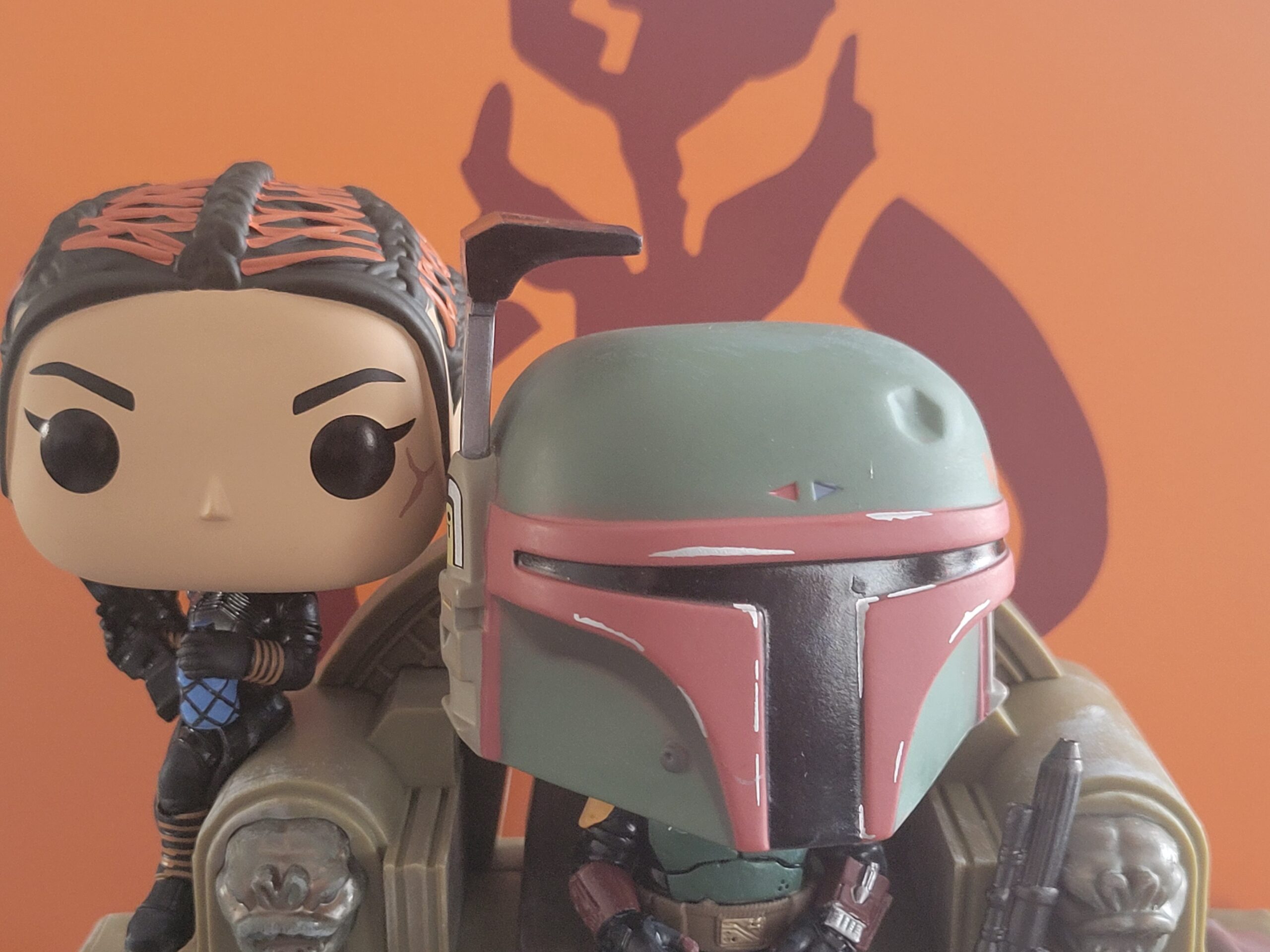
  • REVIEW: Star Wars Television Moment Funko-Boba Fett and Fennec on the Throne

    REVIEW: Star Wars Television Moment Funko-Boba Fett and Fennec on the Throne

    Star Wars fans can probably remember just how excited they were when the post-credit scene to the season finale of the second season of The Mandalorian showed Boba Fett, with the help of Fennec Shand, marching into Jabba’s palace, killing Bib Fortuna and taking the throne. This, of course, was followed by the official announcement that the legendary bounty hunter would get his own series, The Book of Boba Fett. While that series, which has now completed its run, may not have lived up to everyone’s expectations, there’s no debate that the post-credit scene is a moment that lives on in fan’s minds as it held the promise of something wonderful. Thanks to Funko, fans can hold onto that moment forever with a wonderful Star Wars Television Moments Funko Pop!

    The deluxe set nearly perfectly captures the mood of the moment in which the iconic bounty hunter staked his claim as the crime lord of Tatooine. Impeccably detailed, the set has everything from the throne’s engraved lettering to the staff that Fortuna dropped upon his death. It also comes complete with a background featuring Fett’s mythosaur sigil, allowing collectors to show off the set against the most well-known symbol of the bounty hunter.

    Collectors can order the Pop! Moment, which comes in a perfect window display box, at Entertainment Earth for $29.99.

    Murphy’s Multiverse is an Entertainment Earth affiliate.

  • REVIEW: ‘The Batman’ Isn’t Perfect But Is Immortal

    REVIEW: ‘The Batman’ Isn’t Perfect But Is Immortal

    When Kurt Cobain wrote “Something In The Way” in 1990, he was believed to be lamenting a period of hardship and homelessness he lived through a few years prior. Legend had it that Cobain spent those days living under one particular bridge in Seattle, dreaming of befriending animals and eating fish. Over the years, people in Cobain’s circle would refute that story, saying he hung out frequently under bridges but never actually lived under one. Cobain himself later told a biographer that the song was about his fixation of being in the gutters of life. That a song about a despondent fantasy would eventually bookend the album that would catapult Cobain into one of the most financially successful musicians in the world is not without irony. That director Matt Reeves would go on to use this song as his entry point to craft a Bruce Wayne so desperate to be in the muck and grime of Gotham is of no coincidence. 

    Robert Pattinson first introduces his reclusive rock star edition of Bruce Wayne through a series of diary entries. Vivid images of Gotham in Halloween flash on the screen as Bruce Wayne broodingly walks through its filthy streets, monologuing about the damage the city has inflicted on itself. Pattinson’s intro as Bruce Wayne is rooted in such curt nihilism that audiences would be forgiven for thinking he was reading aloud Rorschach’s journal. No stranger to the most despicable of characters, Pattinson fashions a Bruce Wayne that loathes being Bruce Wayne day in and day out. His take on the fabled playboy millionaire is the coldest the franchise has seen yet; it is distant and unwelcoming, a far cry from Ben Affleck’s hedonistic Adonis. The performance speaks to the isolation Wayne wears in his sleeve daily but can oftentimes linger for too long. Even with an interpretation as sincere as Pattinson’s, there’s a lot to be desired from this version of Bruce Wayne, as the actor forgoes a lot of the character’s touchstones. 

    When Bruce Wayne sees the Bat-signal lights up the rainy sky, Reeves, cinematographer Greig Frasier, and composer Michael Giacchino pull into focus the most cinematic Gotham in the franchise’s history. Giacchino’s doom-laden crescendos make every shadow in every alley and street corner feel abyssal. The heat from Gotham’s pavements and the rain that falls on it create hazes that glimmer from the fading neon lights of its establishments. Frasier captures every bit of beauty nestled in the filth that every frame could be a postcard. It’s a Gotham whose atmosphere is so inviting and texturally rich that it feels inhabited by all kinds of Batman characters antithetical to the realism Reeves keeps insisting on. This Gotham isn’t by way of Michael Mann’s Heat. It’s Spielbergian, a masterfully crafted world bolstered by a trifecta of direction, photography, and scoring. A world that’s full of mysteries, secrets, and beings waiting to be found.

    The refrain of reactions from those who have viewed the film in advance proclaim The Batman to be one audiences have never seen. While that rings true in a certain regard, the film revisits ideas and influences prior films have covered. The Batman is indebted to Bat-authors Frank Miller and Jeph Loeb, whose work served as the foundation for the Nolan films. Matt Reeves contends that his story isn’t an origin story despite the text heavily featuring a Batman fresh on the job and the death of the Waynes as the thematic and narrative centerpiece. Year One and The Long Halloween seem to be all but permanently ingrained in these early-days, utilitarian live-action depictions of Batman and so by design, Gotham’s mobsters and police department play key roles once more in this. 

    Novel to this Batman film is its focus on the character’s hardboiled detective roots. From the film’s opening sequences alone, Reeves firmly makes his statement that his Batman is a noir thriller. Like any capable noir film, The Batman bides its time – almost to a fault – in unraveling a mystery and sees Batman and Jim Gordon devote most of their screen time gathering clues, deciphering evidence, interrogating people, and, occasionally, busting skulls. Gadgetry and intuition coalesce into highly watchable scenes of intrigue as layers of the Gotham underworld are peeled. However, even Reeve’s vision of a laser-focused and meticulous detective mystery loses its step thanks to a finale that collapses from the density of the material.

    The Batman’s finale sees the pursuit to capture the elusive Riddler vanish, like a thief into the night, to make way for a spectacle of calamity that almost feels conceived through executive meddling. The set-piece primarily functions in the plot as an adrenaline shot to its lethargic pacing to give it some much-needed urgency. Previously absentee players are jammed into the sequence in order to broaden the stakes. While the set-piece allows Reeve the space to frame his own iconic Batman action moments, it’s an unwieldy finale that’s unfaithful to the film’s own ethos. Considering it comes abruptly after nearly 3 hours of patient sleuthing, it feels unwarranted. Perhaps this was Reeves’ best way of compromising some of his vision to accommodate high-flying action expected in these kinds of films. Regardless, it causes the film to stumble the landing.

    For the handful of flaws The Batman has – such as a car chase that’s almost unwatchable and a Paul Dano that’s kept off-screen – it makes up for with a cast assembled out of a painstaking vision that begins with Pattinson’s Batman. Pattinson does little to discern the man from the cowl, so the distant Bruce Wayne is one and the same as the vigilante. Fortunately, the coldness Pattinson distills into his Bruce Wayne results in a Batman whose mere stillness in the shadows invokes fear and dread. From this stillness, Pattinson derives a spectrum of emotions ranging from seething rage to deep melancholy. The days are too early to declare Pattinson as the best Batman yet but he nonetheless makes an impressionable mark. His costume, at the very least, is the best one yet.

    Opposite Pattinson is the strongest Catwoman put to screen. Zoe Kravitz as Selina Kyle is mosaic; angry, discontented yet loving and nurturing. Much credit can be thrown at Bat-writer Tom King, who revitalized the Bruce-Selina romance in a way the comic hasn’t seen in years and whose influence is evident in the film, but it’s Kravitz who puts in the work. Kravtiz delivers a sultry and tempting performance that never feels gratuitous even during her displays of passion. That her chemistry with Pattinson is so alchemic is a testament to the emotion she wields at ease onscreen.

    There’s a lot to be said about The Batman’s fidelity, or lack thereof, to the whimsical nature of the source material. Paul Dano’s Riddler, as much as it is a blatant co-opting of the Zodiac killer, surprisingly stays true to the theatrics of the comic version. Reeves even gives us a Riddler that uses convoluted death traps on his victims, which we sadly don’t get to see. Dano even goes so far as to adopt the often gleeful and sardonic twitchiness of the character. The Batman’s screenplay, unfortunately, relegates Riddler to news splices and corny live streams, rarely giving Dano the space to display these flourishes, let alone be physically present. In the few moments Dano shows up, however, he gives Riddler a wariness that’s as contemptible as it is playful.

    Lastly, an unhinged Colin Farrell and the always-resolute Jeffrey Wright round up the principal ensemble as Penguin and Jim Gordon respectively. Farrell essentially disappears in the role, thanks to incredible prosthetics and makeup, which allows him to give the Penguin an unfounded scumminess and despicability that is highly entertaining. Jeffrey Wright’s Gordon, on the other hand, finally gets to be the ally Gary Oldman’s Gordon never was. Wright’s Gordon is stern but never callous. He understands the necessary evil of Batman but also of its pitfalls. Like Dano, Wright doesn’t quite get the space he needs to explore the character but he nonetheless gives Gordon an optimistic determination that works in tandem with Pattinson’s cynicism. The dynamic between Batman and Gordon doesn’t quite reach Riggs-and-Murtaugh levels of charm but there’s an unquestionable buddy-cop energy beneath it.

    Once more, the Bat-franchise continues to be a fruitful proving ground for auteurs. The increasingly formulaic early days of Batman manages to take on a new form through Matt Reeves’ sheer will and vision. The Batman falls shy of topping the narrative and emotional highs of The Dark Knight but manages to paint a lasting image of Batman, Catwoman, Riddler, and Gotham that the world has yet to lay its eyes on. Let this be the Batman of a new generation.

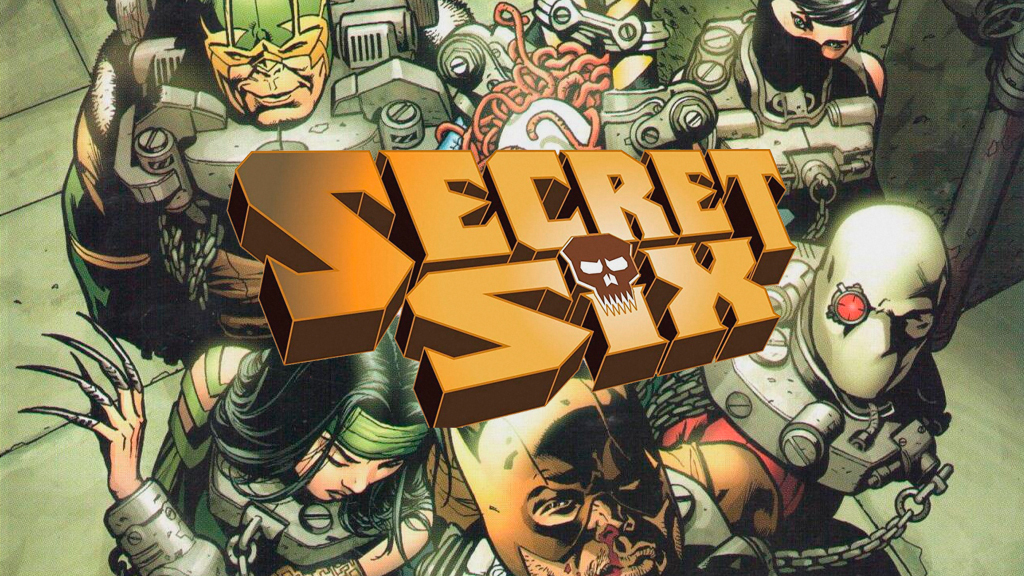
  • The DCEU Should Develop ‘The Secret Six’

    The DCEU Should Develop ‘The Secret Six’

    Over the past few years, the DC Extended Universe has gone through a bit of a development period with a few leadership changes and course corrections. It took a while, but things in the DCEU finally feel consistent and projects that are announced are happening, resulting in the shared universe finally finding its groove. In the past year, we’ve seen the DCEU march into mature content, led by James Gunn projects The Suicide Squad and Peacemaker, opening a window of opportunity for another niche team from DC Comics.

    Back in 2005, comic book writer Gail Simone took over The Secret Six, an off-beat team introduced all the way back in 1968, and reinvented them, making them instantly more interesting than before. The difference between the two incarnations is that Simone’s was comprised of mostly villains and mercenaries who took on jobs of questionable morality. She introduced this new team in the villain crossover event Villains United, where the new Six would be comprised of Catman, Scandal Savage, Cheshire, Deadshot, Ragdoll, and a Parademon, all villains who refused to join Luthor’s society of supervillains.

    In the few years, the DCEU has done something the MCU has yet to attempt: making R-rated projects for mature audiences. With this shift came a willingness to explore more mature content with their characters and they’ve seen resounding success. WhileThe Suicide Squad didn’t do gangbusters at the box office, it soared on streaming, quickly becoming the highest viewed DC film on the service, topping Zack Snyder’s Justice League and Wonder Woman: 1984. Following the success of The Suicide Squad, its spinoff, Peacemaker, followed probably the most disliked character from the film and crushed it on HBO Max.

    With success like this DC and WB should be gazing through their gallery of characters to find their next big thing, and should look no further than The Secret Six. Consisting of a colorful cast of characters with a few revolving chairs, the Six are one of DC Comics’ hidden gems and could be perfect for another trip down the R-rated avenue the DCEU has been visiting. The comics feature a much more mature, violent, and at times vulgar tone than many other comics and the series would work quite well as a streaming series on HBO Max.

    The current path of the DCEU seems as promising as ever and should continue to pull from the obscure regions of their universe to make some new household names. Characters like Catman, Ragdoll, Scandal Savage, Jeanette, and Black Alice could quickly become fan favorites. The series could also feature the return of Will Smith’s Floyd Lawton, as well as King Shark, and even introduce new heavy hitters like Bane. Never did we think someone like Peacemaker would make his way to screens around the world but here we are. Let’s give The Secret Six a chance.

  • Taking One Last Look Back at Marvel’s Netflix Era

    Taking One Last Look Back at Marvel’s Netflix Era

    It was 2013, Marvel had just recently finished wrapping up their first phase of films with the release of Avengers in 2012. Agents of Shield, Marvel’s first TV program set in the Marvel Cinematic Universe, had just premiered. After the success of the Avengers team-up, Marvel was obviously looking to capitalize on the momentum by setting up new teams, on the big screen and on TV. With that, Netflix and Marvel announced a smorgasbord of new shows set within the MCU, starting with Daredevil and culminating in a Defenders team-up, similar to the strategy that made Avengers as big as it did.

    Now, all of these years later, the Netflix era is over, with all shows in their wheelhouse being canceled. The shows are leaving Netflix to take their place in Disney’s streaming services, and the characters are being integrated into the MCU proper after debates about their status in the canon. I want to take this time to take a look back on this era of the MCU, to appreciate what it brought us, and to theorize about where we go from here.

    When Daredevil was announced, I was 16 – a teenager already obsessed with Marvel after liking the characters when I was younger – but fell in love with them through the MCU’s first introduction in Iron Man when I was 11. When news came of that these series are M-rated, with blood and gore and more adult themes, you can guess how excited I was. The possibility of Marvel always having something going on. Different themes from action adventures, comedies to even horror seemed promising, especially with the atmosphere promised from the initial reveals and fanfare. We know now that this dream wouldn’t come to fruition until Disney+, and even then, new genres are still only being played with. The hype and possibilities were high over my head in 2013, creating the vision of a perfect MCU.

    Daredevil delivered on its promises. When it was released in 2015, I was a senior in High School. At the time, I was overhyped for the new shows and the anticipation was killing me. Finally, the show launches, and I’m there watching day one. Oh boy, did the show start slow for someone that was hyped as I was. However, after the second episode, I was hooked. Easily becoming my favorite TV show at the time, Daredevil was exactly what I wanted. Following one of my favorite characters, witnessing awesome combat with all the blood a teenager could want, and all set within the MCU. What more could a person ask for? The rest of the shows didn’t matter to me since I didn’t know the characters, Daredevil was what mattered to me, and not only did it deliver, it almost immediately was ordered for a second season. So, I was content.

    I was content until Jessica Jones released in late 2015 and showed me that Daredevil was just the tip of the iceberg. Without any knowledge of Jessica or her villain, it didn’t immediately click with the show as I did with Daredevil. I was, of course, going to give it a try. From the first episode, Jessica’s attitude and sarcasm gripped me. Being a bit of a sarcastic person myself – emphasis on a bit – and growing up with more of the same, I love characters that speak their mind. Not only did her character grip me, but the ominous Purple Man has stood firm in my top 10 villains of all time. The abilities of the character on top of the stellar performance by David Tennant is definitely a force to be reckoned with. However, aside from the two lead characters, Jessica Jones also introduced me to the incredible Luke Cage, and apparently, I wasn’t the only fan impressed with the character. Originally slated to be the last show to premiere before The Defenders, Marvel wanted to ride on the momentum of the new fan-favorite character being introduced in Jessica Jones and fast tracked production.

    Arriving in 2016, Luke Cage followed up the storyline established in Jessica Jones. At this point, I was addicted with Netflix’s Marvel properties during my time in college. After two absolutely steller seasons of Daredevil and the arrival of the Punisher into the fold, as well as a tremendously good season of Jessica Jones, Luke Cage had a lot to deliver. Arriving with positive reception, I look back at that time and remember the fans not welcoming the show with open arms like with the two previous entries. Likely due to Cage’s decline in the second half of the season, the show was great, I even skipped a lab class to binge it in my college library, but it was the first minor dip from Marvel and Netflix. The show also introduced Iron Fist, which fully lead to the decline.

    Iron Fist was constantly criticized and for good reason. The fighting choreography is lackluster at best, the writing was sloppy, and the entirety of the first season is a definite stain on Marvel’s pretty great track record. At this point only having negative reviews for Thor: The Dark World and The Incredible Hulk on the movie side of things and the lukewarm reception to Agents of Shield, Iron Fist definitely marked a critical point for Marvel TV. Lead by Scott Buck, the show ended with fans severely disappointed. I remember going into the show incredibly hyped after everything so far. Reviews started to hit the day before, but most of them were only for the first few episodes. So, I thought maybe it gets better. Even with some good characters, the show just did not deliver. Leading into The Defenders, this was definitely a bad look and a momentum killer going into the long promised team-up.

    The Defenders launched on my birthday in 2017. Even after Iron Fist, I remember being cautiously optimistic. Even if that show wasn’t great, this one was no longer in Scott Buck‘shands and has had time to develop. Alas, the show launched to mostly positive reactions, but suffered from pacing issues, a pretty lackluster story, and a crutch of once again using the Hand as villains. The show definitely could have delivered on those initial great seasons of TV that lead us there. It was said to be the least viewed show of the Netflix-Marvel shows, with a considerable drop in viewership. To me, this marked the downfall of the Netflix-Marvel era, even if we still got some great projects after.

    Following The Defenders, Marvel and Netflix attempted to capitalize on the success of the previous shows, without the major team-up this time. Daredevil got an incredible third season, largely considered to be one of the best seasons of Marvel TV to this day. Jessica Jones received two more seasons after an agonizingly long wait. Luke Cage and Iron Fist got another season each. Daredevil even received a spinoff in the form of two seasons of the gruesome series The Punisher. Even a few more spinoffs like Heroes for Hire were rumored. The Netflix shows looked to be getting back on track, and then in October 2018, the cancellations began.

    Shortly after its second season, which started to deliver a more quality experience compared to the first Iron Fist was cancelled by Netflix. Considering it was the worst reviewed show in the bunch, and rumors were flying of a possible Heroes for Hire spinoff, doom and gloom didn’t quite set in yet. Then, just a week later, Luke Cage was the second causality. Once again thanks to the Heroes for Hire rumors, fans felt like this could just be in anticipation of that show, I mean, both of those characters are in the team in the comics.

    Then came December 2018: Daredevil, the flagship show in Netflix’s Marvel arsenal, was cancelled despite a critically acclaimed and adored third season. At this point, we all knew the Netflix era was over. The Punisher and Jessica Jones both ended their final seasons and were also added to the cancellations. By February 2019, all of the Netflix Marvel shows were cancelled, finishing the era for good.

    Up until recently, you could watch the back catalog of these shows on their original home over at Netflix, but as the deal ends, Disney is regaining those rights. They are expected to remove the shows in March 2022 and move the shows to their international streaming services like Disney+, Star+, and Hulu. A definitive home is not yet known.

    While the Netflix Marvel era might be done, the characters they shaped and the stories they have built are not forgotten. From Matt Murdock appearing in Spider-Man: No Way Home to Wilson Fisk’s return in Hawkeye, it is clear that the story of these beloved characters may be just starting. The history will always be there for generations of new True Believers to adore, but their return may be some of my most anticipated moments in the MCU even with things like Secret Invasion coming up. I literally grew up with these characters as you can tell from my writing above, and I cannot wait for a new generation of Marvel fans, even if just a few years later, to discover these stories for themselves.
  • Marvel Studios Already Teased the End of the Multiverse Arc

    Marvel Studios Already Teased the End of the Multiverse Arc

    Avengers: Endgame Director Joe Russo made a great statement earlier today that “too much of one thing is a bad thing.” It was about the current trend of superhero films embracing the multiverse in their storytelling. To be fair, we’ve been quite spoiled with Spider-Man: No Way Home‘s way of handling its multiversal guests from Spider-Man’s cinematic past but not every project will manage that balance. Doctor Strange in the Multiverse of Madness is just around the corner and has already teased the return of another legacy actor from Marvel. Yet, doesn’t it seem like we’re rushing through it?

    The next entry in the MCU’s Multiverse Arc could’ve been dragged out quite a bit with multiple storylines exploring various multiversal scenarios. Even No Way Home could’ve split up its cameos and had one film introduce Andrew Garfield before building up to Tobey Maguire. Even Strange’s next adventure is introducing multiple cameos from across the multiverse in one neat package that is very likely the film’s version of the Illuminati.

    They could’ve dragged this out quite a bit more, especially if you consider Loki, the series that kickstarted the multiverse, technically focused primarily on a single character’s “variety.” It eased us into the concept with the TVA, the rules of the concept, and opens the gateways to the fact that the same actor doesn’t have to play every version of the character. It’s strange to think how it eased us into the project before No Way Home just went: “Here are five classic villains, two former Spider-Man actors, and if Strange didn’t do his job there would’ve been millions more!”

    It almost seems like the speed-up was on purpose. Yet, not to bank purely on the fact that the nostalgia will be strong with viewers, but to use the concept before it overstays its welcome. Revisiting the series that started it all, you start to realize why they are taking this route. They know exactly where it is heading and are spacing out the project in a way to build up to a film that may even surpass Avengers: Endgame in its size. Even if was indirectly teased, there’s no way it won’t end with a film based on Secret Wars.

    The multiverses will collide and Kang the Conqueror is at the center of it all. So, it wouldn’t be too surprising to think that his storyline will end in a Secret War crossover. If we look at time as a flat circle, they are bound to repeat history and a new TVA would be formed in its wake. The Sacred Timeline will once again form only to be destined to break again. Our favorite heroes don’t know it but their stories are trapped in a loop. Even if they win the fight with the future He Who Remains being left behind, the story would still manage to find a nice way to end it.

    Once we’ve exited the Secret Wars event, we might continue the stories of the various heroes, but the multiverse will no longer be a focal point moving forward. While it’s unclear if it’ll take three phases to get to that point, it seems that Marvel Studios has unshackled itself from a single overarching narrative but rather splitting up multiple roads. One thing is for sure, we already know where this one path will end and it seems that we’re on an express train towards it before it loses any momentum.

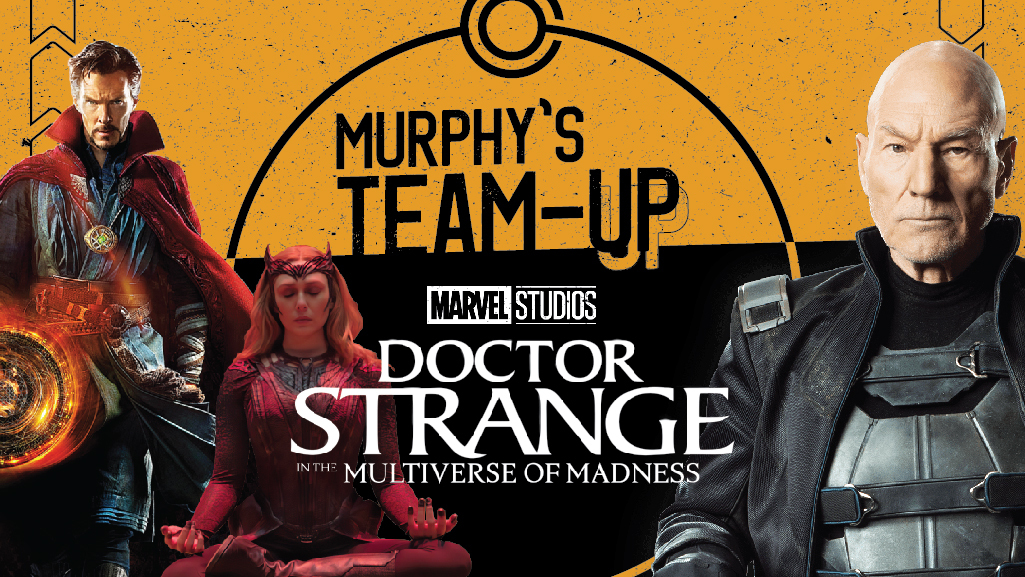
  • Murphy’s Team-Up Volume 18: MoM Trailer Reactions

    Murphy’s Team-Up Volume 18: MoM Trailer Reactions

    Anthony Canton III

    The trailer really gave us an inkling of what’s to come. Visually, it makes this movie feel like a spectacle of epic proportions. The multiple Strange variants and Wanda variants were quite the treat. It leans into some of what we know as far as Wanda being the real villain of the story. Seeing the Ultron bots and what seems to be Charles Xavier and the Illuminati was quite the shot. It was just enough of an appetizer to make us speculate and think what’s next.

    One of the bigger questions personally, is we see what clearly seems to be a variant version of Mordo. Where’s the original one? With his plan of no more sorcerers from the end of Doctor Strange, it has to feel like he’ll be in direct conflict with someone like Wanda who’s been studying the Darkhold. To bottom line the trailer, you get the sense that the MCU is in the process of big change. When it’s all said and done you have to wonder if Kang will be waiting at the end to pick the bones of what’s left of this multiverse of madness.

    Filip Manka

    The new trailer looks fantastic to me and that board with Sam Raimi’s name on it is not a lie, because indeed his style is evident in this trailer. It was already clear at the teaser trailer that visually the film would be interesting and better than the “standard” Marvel movie, but this trailer has raised the bar and my expectations. It looks insane and conceptually it’s inventive and creative (the shot of Strange’s face falling apart or the zoom in on Wanda’s eye). Moreover, the special effects aren’t plastic this time and look spectacular, at least at the trailer stage, and the improved color grading and photo saturation enhance that layer.

    Still my most anticipated MCU movie this year. I’ll swallow the cameos and fanservice, but let’s hope the direction and visuals will deliver because the trailer gave me an appetite for more. Finally, we get Ditko’s weirdness in a proper release. Raimi, I trust you <3

    Joseph Aberl

    I didn’t expect a full trailer drop during the Super Bowl, but what a way to let people know there’s a big one heading our way. The multiverse opens up many possibilities, and it was uncertain just how much the marketing might lean into it. Luckily, the trailer did exactly that while still offering a grounded focus on Strange as its central figure. The Patrick Stewart tease was fitting, as they leaned into the rumors without giving it fully away. We get small bits of the story here or there, as they still keep America Chavez as somewhat of a mystery. It did add a lot of excitement to its release and I cannot wait to see what the first 2022 Marvel Studios film has in store for us.

    Mary Maerz

     I absolutely adore how intense and eerie the trailer is–I think it is worth noting that there is not a single joke or moment of comic relief in the entire thing. The visuals so far look phenomenal and on point with what I would want in a Doctor Strange story. It was no secret that the movie would have horror-inspired elements, but the trailer really showcased that Multiverse of Madness might genuinely have a dramatically different tone than other MCU films. It’s pretty clear that Marvel is putting a lot of importance on this one, which is cool to see for a solo film, and for a film without the traditional A-team MCU heroes. I’m actually so excited! I really think it has the potential to be one of the most visually exciting, adrenaline-pumping, awe-inspiring MCU film. I’m ready for Wanda to go nutty. Mentally unstable, confident, evil-adjacent or adversarial women are vastly underrated. I have yet to see better villains or threats than those.

    It did completely hide the ball when it comes to…the plot. I get that it wants to preserve some sort of secrecy, but it is hard to gauge from the trailer if the substance of the movie is going to live up to the grandiosity of the trailer and the potential I think it has. Honestly, I barely care about all the teases and surprise cameos at this point. Maybe it is No Way Home fatigue, but the idea of seeing mostly (I’m guessing) one-off cameos is cool but not something that is going to make or break the film for me. Big cameos are exciting, but less so after Twitter has thoroughly broken down every single one of them, and once they’re revealed, they lose that “wow!” shine pretty quickly. Don’t get me wrong, when we’re talking about a dive into the multiverse, there should definitely be some multiversal characters, but I hope they add quality rather than just fan service quantity.

    Nathan Miller

    I loved the trailer! I’ve watched it quite a few times since it debuted, and am still stunned by small discoveries I pick up with each new viewing. I’m fascinated by the fact that the story seems to be building for Stephen Strange from his debut, through other appearances and into this film. I love the themes that seem to be developing around control, corruption and complexities. I can’t wait to see Wanda and the spectacle it seems she will deliver! The trailer gives just enough hints and the things to come without giving too much away. Really intrigued by how it pushes the Marvel Cinematic Universe forward. The sign for whether I really enjoyed a trailer is how much I go back to watch it and whether the music sticks with me and both seem to be the case. In some ways, I can’t believe this film is real. I’m counting down the days until we can buy tickets and then go see it!

    Charles Murphy

    Not your run-of-the-mill Marvel Studios trailer…and I love it. Obviously, we’ll have to wait to see the movie until we know for sure, but it feels like Marvel Studios is working hard to move away from their standard fare and to begin creating some truly unique experiences for audiences. This seemingly began with Eternals and will continue with Moon Knight and Doctor Strange in the Multiverse of Madness. That starts with having a director on board with a strong vision and that, in this case, is Sam Raimi. I’d say this trailer looks more like a trailer for a Raimi film than a Marvel Studios film…and that’s just fine with me.

    Dalbin Osorio

    One word: amazing.
    Marvel’s decision to give us as much as they did (a Captain Marvel that isn’t Carol Danvers, Patrick Stewart’s Xavier, a Sanctum that looks like it’s residing at the very end of time and may have Kang waiting for Dr. Strange) leads me to believe that a) we don’t know as much as we think and b) we know enough to continue piecing where we are headed. 


    Whispers Secret Wars.

    The theme for Phase 4 seems to be that our heroes get put through the ringer post-Endgame: as if the fight to save the universe didn’t take enough, you now have Wanda losing Vision again, Strange losing Christine Palmer, and this is after Spider-Man lost MJ. This movie has the distinction of building out three new teams, I’d suspect: the Defenders, Illuminati, and the Young Avengers, all with very distinct missions going forward. The trailer gave us pieces of all 3, and left us with more questions than answers, and in that respect it accomplished it’s mission. Oh, and Professor Xavier has never sounded so regal.

    John Sabato

    First of all, Sam Raimi back in the directors chair and on a comic book film is just absolutely perfect. He’s such a bright mind and his filmography is amazing, so this movie is surely going to have that classic Raimi flair.  Multiverse of Madness looks pretty nuts and, based off that new trailer, I feel like it can definitely live up to NWH and even exceed it. I’m definitely even more interested to see Cumberbatch and Olsen return as Strange and Maximoff after the ending of WandaVision. I feel like we’re gonna see a real push forward on the mystical/supernatural side of the MCU and see that expanded like crazy. But what really has me excited is how close the movie is and how we won’t have to spend months and months listening to awful fan theories and “will they wont they” like Superior Iron Man compared to how annoying the lead up to Spider-Man: No Way Home was.

    Joao Pinto

    he trailer certainly did its job in hyping up a movie that’ll prove pivotal to the MCU’s future. The Doctor Strange IP has managed to bring us some of the most innovative visuals ever since its 2016 debut, the battle between Strange and Thanos on Titan in Avengers: Endgame and even the Mirror Dimension sequence in Spider-Man: No Way Home. By taking advantage of these insane visual cues the trailer made the movie truly feel like a big cinematic event, that’ll manage to breathe fresh air into the MCU as a whole by moving away from the usual landscapes and moving into whole new realities. These new realities, apparently inhabited by not-so-new characters, are yet another huge draw that the trailer manages to bank on.

    I’m personally mostly against bringing specific versions of characters into the MCU that perhaps should have been simply rebooted in this new universe. But the concept of the Multiverse basically permits infinite versions of each reality and/or character, and this allows for the best of both worlds. We now can get iconic actors playing iconic roles that bring the intended emotional resonance to the movie without really needing to bring all the useless baggage from their earlier features. And in that sense, the references to the cameos that we are all sure to get in a couple of months are immensely gratifying, making the trailer a home run on all fronts.

  • The ‘Peacemaker’ Finale and Peace In Our Time

    The ‘Peacemaker’ Finale and Peace In Our Time


    The long lingering shot at the end of the season finale of Peacemaker felt appropriate. Christopher Smith had found what felt like a modicum of peace. He had Eagly by his side and the relationship he built with Goff (the last living butterfly) felt like an agree-to-disagree but closing with friendly terms. In watching that moment, there was an ease in Smith as he came to grips with who he is and is ready to move on. It was short lived however, as his father reappeared as a ghost. There can be speculation about what that means for season 2, but there’s something that James Gunn nailed in this moment. Sometimes we are left to carry our trauma as if a butterfly was sitting in our heads.

    The closing montage to the season found Peacemaker and his crew dealing with new realities. Adebayo outing her mother Amanda Waller; Harcourt recovering and rehabbing her injuries in battle; and Economos right back to Belle Reve. Vigilante gets to be Vigilante so at least there’s that, but the point is the fight doesn’t just end. There’s more. Peacemaker, as it seems, doesn’t get to move forward. Even though he killed his father, that part of it doesn’t end in his death.

    In a lot of ways, whether intentionally or not, Gunn’s writing reflects the time we’ve spent since 2020 sitting and wading in our collective trauma. As the global pandemic has affected everyone in different ways, it’s illuminated the weight we carry. Like Peacemaker, we all have had to keep moving despite those effects. Whether mental, emotional, physical, or spiritual it feels like a price has been paid. As Economos is baring his soul to a butterfly just to attempt to stay alive, you can’t help but feel the weight of that. These are the words we’ve all held onto because life doesn’t wait for us to recover.

    Adebayo speaks poignantly to Peacemaker at the beginning of the episode, referring to the accidental death of his brother: ”Don’t forgive me that’s fine, but don’t let that shit define who you are.” It feels like great advice, in fact it is. However, like all things in life, these are easier problems to think about than the act of forgiveness. The familiarity of trauma for Peacemaker allows him to stay in it because its the easy thing to do. It’s a hard truth for many of us in life to just move on instead of dwell.

    The beautiful thing, whilst heartbreaking, is these characters continue to fight. Adebayo battles Amanda Waller’s influence and voice to become something more. Harcourt grows to understand that while the job is the job, there is room for others in her life. Economos, much so the same, finding friends in the midst of trouble.

    Christopher Smith has been through a great deal, and that last shot of the episode felt like what peace could potentially look like. He can forgive himself for his brother’s death, and feel like there’s a chance for redemption. He can find and cultivate friendships, meaningful ones, that grow through honesty. There was a feeling of accomplishment in that shot. Seeing Auggie again was a reminder of the passengers we carry. It was sad, yet so identifiable. In ways that we can all understand, this is peace in our time.

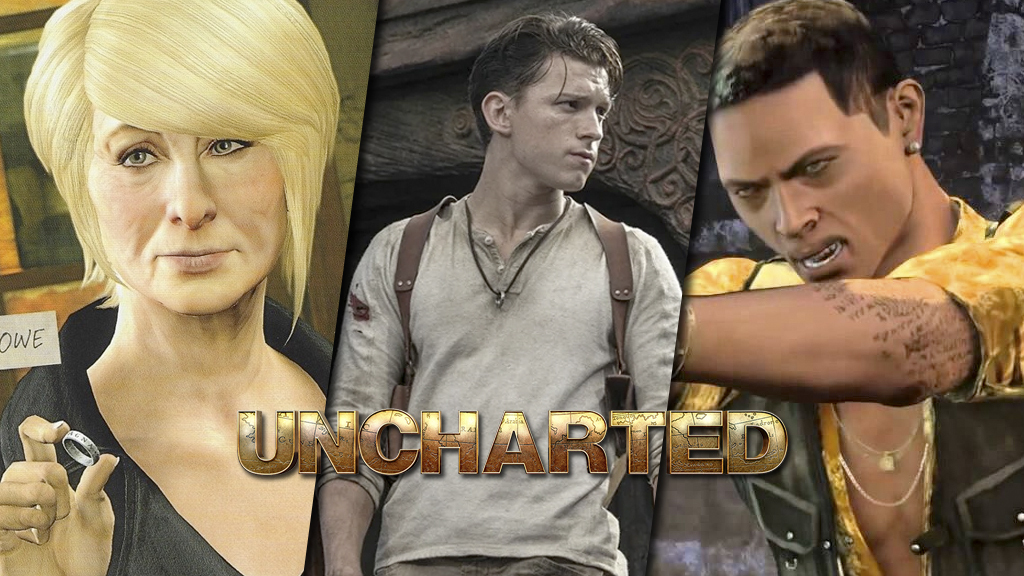
  • ‘Uncharted’: Mid-Credits Scene Explained

    ‘Uncharted’: Mid-Credits Scene Explained

    Uncharted has only just landed in theaters, but that never means it’s too early to start speculating about a sequel. Like any good modern blockbuster, the movie ends with an extra scene that plays after the credits begin rolling, teasing the potential future of the franchise. Director Ruben Fleischer recently expressed interest in coming back for another treasure hunting adventure but made sure to clarify a second installment would be entirely dependent on the financial success of the first film. Luckily for Fleischer, and those hoping for more Uncharted, the movie’s opening weekend is doing just fine. Hopefully, this means the filmmaker will eventually get the chance to capitalize on that intriguing mid-credits stinger.

    The scene in question features Tom Holland’s Nathan Drake, now a fully-fledged fortune seeker, doing business with a suspicious-looking individual named Gage, played by Game of Thrones star Pilou Asbæk. Of course, the deal quickly goes south, and Nate has to be bailed out by his new partner-in-crime, Mark Wahlberg’s Victor Sullivan. Although only a few moments longer, the sequence is an absolute delight for fans of the series. Not only does it feature the protagonists in game-accurate outfits, including Sully with a freshly grown mustache, but it’s chock-full of hints and references that may reveal where the next film is headed.

    During Nate’s conversation with Gage, it’s mentioned that the eye-patch-wearing criminal works for an employer by the name of “Roman.” That bit of information should have set off alarms for any informed fan, as it refers to the very first threat players ever saw Nate and Sully face. Gabriel Roman, a wealthy British crime lord, and collector of artifacts, served as the main antagonist of the original Uncharted game. In Drake’s Fortune, the villain hires mercenary Atoq Navarro and pirate leader Eddy Raja to oppose the two protagonists in their search for the fabled El Dorado. With a small army of outlaws under his thumb, he nearly succeeds in killing Sully (who owes him a large debt) and proves to be a major thorn in Nate’s side. That is, until he’s betrayed by his accomplice, Navarro, and tricked into opening a cursed statue.

    Though fairly similar in look, story, and demeanor to Antonio Banderas‘ Santiago Moncada, the mid-credits scene makes it likely that some version of Roman has been set up to be Nate and Sully’s next major adversary. Adding to this theory is the presence of Gage, who shares some things in common with the aforementioned Eddy Raja. Audience members with a keen eye might have noticed that Gage wields a golden pistol in the movie, the same weapon that Raja used for the duration of Drake’s Fortune. The pirate is also known for having a bit of a dramatic flair, which Gage demonstrates with his white suit and big temper. Perhaps Gage is intended to be a reimagined version of Raja, working in accordance with Roman? He could even be an amalgamation of Eddy and Navarro, condensed into a single character for use in a hypothetical Uncharted 2


    The events of the Uncharted movie drew inspiration from nearly every game in the series but seemed to primarily focus on elements from Uncharted 4: A Thief’s End. With the inclusion of Roman and the Raja-esque Gage, it’s possible that the next film travels backward in series order and adapts the first game directly. However, a specific comment made during the Nate and Gage exchange could hint at another mishmash storyline, comprised of factors from multiple entries. In Drake’s Fortune, the only thing Roman wants from Nathan is his knowledge of El Dorado. In the movie, he instead seems interested in possessing Drake’s iconic necklace ring, which Gage implies is important to Roman’s goals.


    If this sounds familiar, it’s probably because it’s one of the main plot points from Uncharted 3: Drake’s Deception. In the series’ third game, Nate and Sully go head-to-head with Katherine Marlowe, the ruthless leader of a secret Hermitic cult hellbent on finding the Atlantis of the Sands. Marlowe needed Drake’s ring to unlock a cipher device that would aid in locating the lost city and used all of the vast resources in her power to obtain it from around Nate’s neck. It’s not far-fetched to think Roman could need the ring for a similar purpose in the sequel, either to find El Dorado or take over Marlowe’s role in the story of Uncharted 3. After all, both villains are elderly and British, so it could be another case of amalgamation.

    Also of note is the object Nate considers trading his ring for in the mid-credits scene. Gage, and by extension Roman, are the owners of a World War II Nazi map, something Nate is hoping to swindle away from them. In Drake’s Fortune, Nate uses a Nazi map in his quest to find El Dorado, and first encounters Roman and Navarro outside of an old grounded Nazi Uboat in the rainforest.

    Ultimately, the mid-credits scene points the film franchise in a fairly specific direction. Unless the next project ignores this tease completely and goes with a wholly original storyline, a la Psych 2: Lassie Come Home, the second Holland-led Uncharted appears to be readying some sort of mix between the first and third games. Let’s not forget that Rudy Pankow’s Sam Drake, probably played by a new actor, will doubtlessly make a return, and Fleischer has stated he’d love to adapt the fourth game’s car chase sequence if he has the chance. So, maybe throw some more of Uncharted 4 in there as well?

    Uncharted is now in theaters.

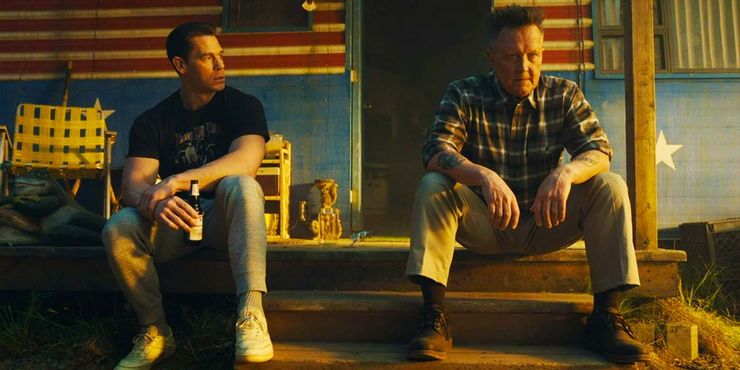
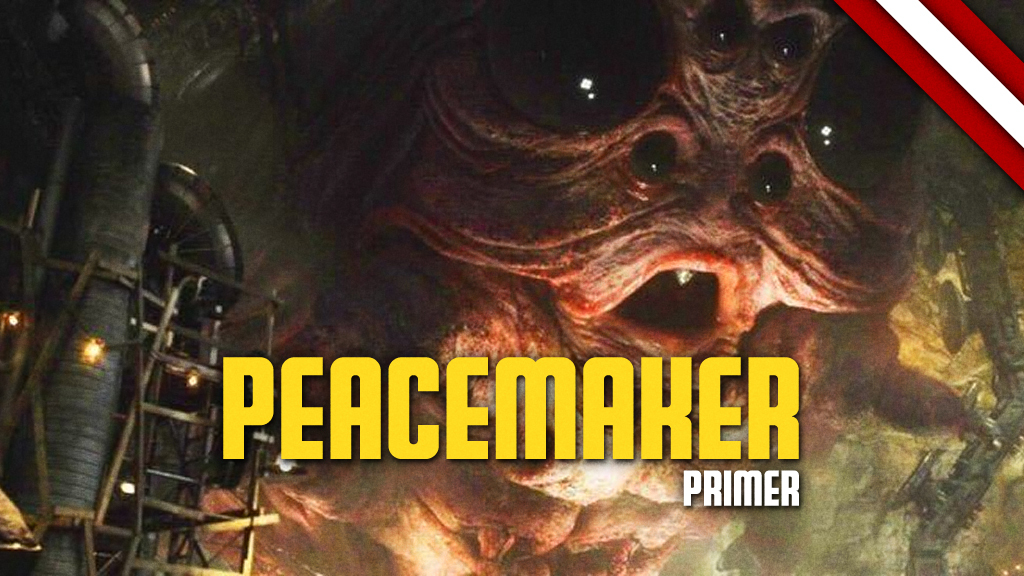
  • ‘Peacemaker’ Episode 8 Primer

    ‘Peacemaker’ Episode 8 Primer

    The very first series set within DC’s extended universe is about to reach the end of its first season. Peacemaker gave us a chance to get even closer to the character we once only considered “douchey Captain America” (John Cena’s words, not mine) and over the past seven episodes, we’ve seen some fantastic development with the titular character, winning over the hearts of many skeptics who’d held a grudge since the murder of Rick Flag. Now the finale is almost here and soon enough we’ll be pining for more.

    The penultimate episode, ‘Stop Dragon My Heart Around’, finally answered the question we’ve been wondering since early in the season: what happened to Christopher Smith’s brother? The answer: Chris happened. In a pit match between the two brothers, set up by Auggie and his friends, in an attempt to look tough and not let his father down, Chris wailed on his brother a little too hard, injuring his brain and killing him.

    The present day saw Christopher Smith on the run with Vigilante and Economos, split off from the rest of the group to face the “cow” on their own. This plan was blown to pieces as the White Dragon and his group followed them, striking first and throwing the mission off course. Vigilante bravely provided a distraction for Chris and Economos, by unpinning a grenade and being caught in the blast, nearly killing himself.

    Elsewhere, the rest of the team fell into shambles as Harcourt clashed with Adebayo after her betrayal (she planted the fake diary in Peacemaker’s trailer) was revealed. Things were cut short when the Butterflies arrived, presumably after Murn. Goff quickly dispatched of Murn and the Murn butterfly in sight of Harcout and Adebayo. And just when it seemed things could not possibly get worse, they do indeed as Judomaster returned! giving Harcourt and Adebayo a good fight before eventually escaping again.

    The White Dragon and his followers find Peacemaker and one of the show’s biggest conflicts finally came to a head. This fight is a big moment for the character, as he faced the source of his abuse, ending in Peacemaker shooting his father in the head, and ending the torment he’s faced since he was a child.

    The team regrouped at a local vet where Eagly is given medical care after being backhanded by the White Dragon and they decide to put aside their differences and finish the mission. The final scenes revealed the “cow”, which wasn’t actually a cow at all, but rather a giant slug-larva that’s the source of the amber fluid.

    However this ends, it’ll surely be quite outlandish. Lets just hope we don’t have to wait too long to see Peacemaker officially renewed for season 2 at HBO Max.

  • Murphy’s Team-Up Volume 17: Biggest Oscar Snubs

    Murphy’s Team-Up Volume 17: Biggest Oscar Snubs

    Jesse Hassenger

    I generally think the term “snub” is overused when applied to Oscar voting, because it implies intentionality that is often overwhelmed by the chaotic whims of the voting body. For example, I thought Simon Rex gave one of the best performances of the year in Red Rocket, but given the movie’s subject matter, unusual tone, and lack of other nominations, I think it’s fair to wonder if enough voters bothered to watch it, or really understood it. On the other hand, enough people in the writing branch and directing branch loved Licorice Pizza enough to nominate it in those categories, and it made the cut on the Best Picture ballot, where everyone votes, so it’s safe to say a fair number of folks watched that one–and liked it, too! So I do think it comes across as a snub that Alana Haim, the rock musician and first-time actress who helps anchor that movie, didn’t make it in for Best Actress. Granted, Best Actress has been one of the most consistently competitive categories these last few years, and these nominees were lighter on actresses impersonating real people than I feared. But it’s still three-fifths based-on-a-real-person performances (one of which — Kristen Stewart — I think is absolutely terrific and deserves to win) and, again, that does feel like a conscious decision, to rate Jessica Chastain‘s Tammy Faye Bakker or Nicole Kidman‘s Lucille Ball a higher degree of difficulty than Haim. I understand the thinking: Kidman and Chastain are both beloved, respected, talented performers pretending to be other performers–while Alana Haim is playing someone literally named Alana, whose real-life family plays her family in the movie, and so on. Yet what Haim does in Licorice Pizza is so complicated–funny, charming, angry, anguished, relatable, occasionally inscrutable–that attributing so much of the movie’s success to writer-director Paul Thomas Anderson doesn’t seem right to me (and I doubt it would seem right to him, either). And she does all of this as, essentially, a first-timer! Licorice Pizza is my favorite movie of 2021, and as much as I love Anderson, I don’t know if it would have hit me the same way without Alana Haim.

    Mary Maerz

    One of the most talked-about snubs is Denis Villeneuve not receiving a Best Director nod. I think Adam McKay also deserved a nomination in that same category for Don’t Look Up, or par with his nomination for Best Original Screenplay. But I also believe Cate Blanchett was overlooked for Best Supporting Actress for both Nightmare Alley and Don’t Look Up. Both managed to get Best Picture nominations with no acting nods, but she really stood out in both. Her character was a bit more comedic in Don’t Look Up, which is probably why none of the actors from the film ended up with nominations. But she was probably even more of a force in Nightmare Alley and carried that story.

    Filip Mańka

    Without a doubt, the biggest snub from this year’s Oscar Nominations is the absence of Denis Villeneuve in the Best Director category. Villeneuve is the creator, the architect for the biggest blockbuster of the year, which garnered 10 Academy Award nominations. The lack of a nomination in best director seems ridiculous and reprehensible, considering how strong Villeneuve’s presence was throughout the season, advertising Dune with his name. Dune is an auteur film, steeped in Villeneuve‘s vision, which manifests itself in his revolutionary approach to IMAX and the portrayal of scale on-screen. As a big fan of the Canadian director’s work, I can say that Dune is his most personal film, mixing many styles and dealing with themes close to his heart. A couple of years from now, we’ll be looking at the 2022 Oscars in disbelief that the mastermind behind one of the best sci-fi films hasn’t been nominated for an Oscar, while Kenneth Branagh has. The difference is that Dune will remain in Hollywood history, while Belfast will be forgotten by people relatively soon.

    JJ Sabato

    The biggest snub this year was for The Suicide Squad. I believe it should’ve been recognized for Best VFX and Best hair and makeup. For King Shark alone the film deserved this nomination, he looked incredible in every scene he was in and looked so real. Of course, Starro as well, him and his extensions as they rampaged through the streets of Corto Maltese. The makeup as well was incredible especially for characters like Polka Dot Man and Mongal. I think the VFX category this year just really dropped the ball when films like Godzilla Vs Kong, Eternals, and The Suicide Squad just were not acknowledged for their achievement in visual effects.

    Hunter Radesi

    It’s been a weird couple years for movie theaters. Audiences have largely opted to experience their cinema from the safety and comfort of their own home, and who could blame them? There’s a global pandemic occurring at the moment. Yet, the wild success of blockbuster films like F9 and Spider-Man: No Way Home sort of put a limit on that argument. If everyone is willing to throw their lives on the line for big-budget action, were they ever really concerned at all? And if not, what type of movie will get them off their couch? The answer, apparently, is not The Green Knight. David Lowery’s epic retelling of the Arthurian classic was one of the most unique experiences I’ve ever had in a movie theater, for more reasons than one. From its heightened realism to its gripping Shakespearean dialogue, nearly every aspect of the film was executed to mesmerizing perfection. It is exactly the kind of project designed to simultaneously bait the Oscars and put people in theater seats. Which is why it’s so baffling Knight received exactly zero Academy nominations. If not for Best Picture, the movie should have at least scored noms for Adapted Screenplay or Cinematography. And Dev Patel? Robbed.

    Joseph Aberl

    The biggest Oscar snub in my opinion is that they still haven’t added a new nomination category for stunt work in the industry. It’s an essential aspect of cinema and it still gets no recognition by what is claimed to be one of the biggest award ceremonies of the industry. There has been some amazing stunt work done throughout the year and it just seems like a shame that they still refuse to give it any love.