Category: Features

  • ‘Moon Knight’ From Page to Screen: Episode 1

    ‘Moon Knight’ From Page to Screen: Episode 1

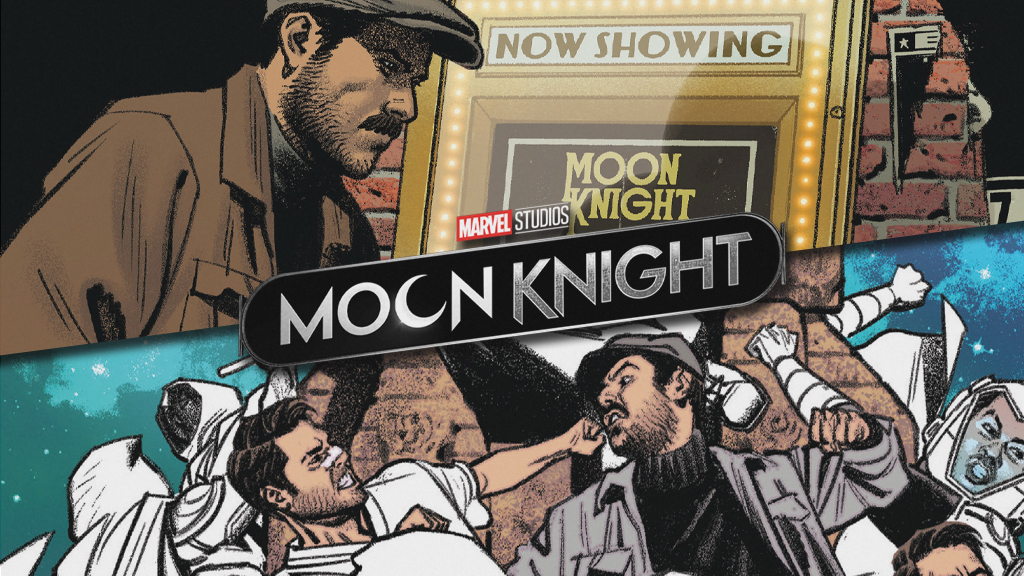
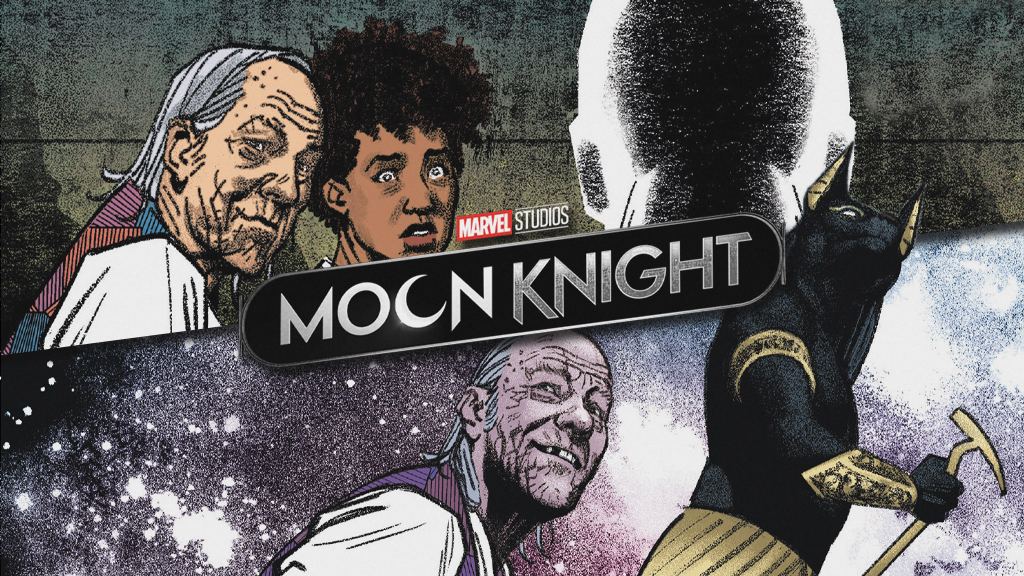
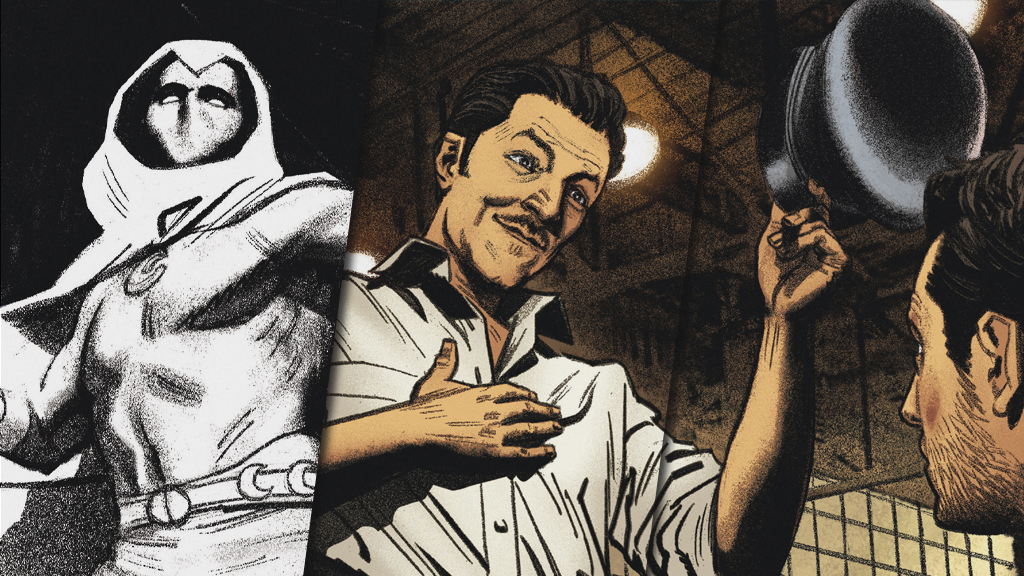
    Unlike the last Marvel Studios series, Hawkeye, Moon Knight has made it pretty clear so far that the series does not draw its inspiration from any particular comic book run. While that makes it more difficult to pull any particular page or panel from the comics and compare it to the live-action series, it does give us an excuse to explore much more of Moon Knight’s comics history. The premiere episode of Moon Knight had a heavy focus on Steven Grant’s dissociative identity disorder (DID) and his discovery of Marc Spector, his alter. Here, we give a rundown of Marc Spector’s DID throughout the character’s history.

    The origin of Spector’s DID was not explored until much more recently. But the first appearance of Moon Knight’s personalities came with Moon Knight #1 (1980). After Spector died under the statute of the Egyptian moon god Khonshu, he was seemingly revived. He vowed to act as the human fist of Khonshu as Moon Knight. Causally, though, it was mentioned that Marc Spector had two other personalities as well: millionaire Steven Grant and taxi driver Jake Lockley. In that first story, the caped Moon Knight persona was referred to as a combination of Spector, Grant, and Lockley, though later stories have considered Moon Knight his own personality. In Episode 1 of Moon Knight, Jake Lockley has yet to appear or be referenced. Spector has also had other identities including Mr. Knight, Captain America, Spider-Man, and Wolverine.

    ‘Moon Knight’ #1 (1980)

    Some Moon Knight stories had a tendency to downplay the fact that Spector had multiple identities, not mention it at all, or inaccurately reference it as schizophrenia. In 2016, the Jeff Lemire and Greg Smallwood run first acknowledged that Spector’s DID manifested as a child:

    ‘Moon Knight’ #10 (2016)

    Not too long after that, Max Bemis and Paul Davidson exposed that Spector’s DID may have been triggered by a traumatic event. Specifically, a family friend, whose real name was Ernst, was actually a Nazi and a serial killer, who brutally tortured and killed members of Spector’s Jewish community. Spector escaped, though his DID was apparently a coping mechanism to handle the trauma.

    ‘Moon Knight’ #194

    Generally speaking, Spector, Grant, and Lockley are aware of one another. Often, particularly in Moon Knight’s early days, they worked together as a unit in order to make the whole caped vigilante deal work.

    Episode 1 of Moon Knight, however, depicts a Steven Grant that has no idea Spector or Khonshu exists. A similar moment in the comics also comes from the Lemire-Smallwood run where Spector confronts his alters (or at least versions of them) in order to gain control.

    Marvel Studios ‘Moon Knight’ Episode 1

    The episode also depicts Steven blacking out when Marc takes control of his body. That also is not something that the comics Moon Knight seems to have much issue with, although there are times when certain personalities–often Marc–are intentionally suppressed for long periods. But in the Bemis-Davidson run, it’s revealed that Jake Lockley had a relationship with Marlene and fathered a child with her, and Marc was completely unaware of it. 

    ‘Moon Knight’ #190
    Marvel Studios’ ‘Moon Knight’ Episode 1

    How Moon Knight will continue to explore the titular character’s DID will be interesting, to say the least. It could take on the primary focus of the series like it did for the Lemire-Smallwood run, or it could remain somewhat on the sidelines as it has for most of Moon Knight’s comic book history. For now, enjoy one of the most iconic Moon Knight pages out there:

    ‘Moon Knight’ #14 (2016)

    Moon Knight is now streaming on Disney+.
  • Exploring the Inspiration of Luffy’s Gear 5 in ‘One Piece’ Chapter 1045

    Exploring the Inspiration of Luffy’s Gear 5 in ‘One Piece’ Chapter 1045

    Chapter 1045 of One Piece has been quite the wild ride for readers. The previous entry has already pushed our understanding of just how Monkey D. Luffy’s powers work. Up to the revelation that his Gomu Gomu no Mi was actually the Hito Hito no Mi: Model Nika, he simply had a rubber body. While he could stretch his limbs in creative ways, it never reached the level it has now. Kaido’s Thunder Bagua left an imprint on his face as if he shaped permanently like the spike club that hit him. Hell, he even runs back like a Looney Tune after being pushed off the floating island. So, what exactly is going on?

    While it seems quite bizarre, mangaka Eiichiro Oda is still sticking to his rule that Luffy’s powers are based on rubber. The only difference is what kind he is currently referencing. Up to this point, most of our theories were connected to the concept of synthetic or even natural rubber. That was why most of theories pointed to it potentiality being the Resin fruit, as natural rubber is commonly created through latex from the so-called rubber tree. Yet, Oda threw us a curve ball like no other with Luffy acting on some more cartoon-inspired moves.

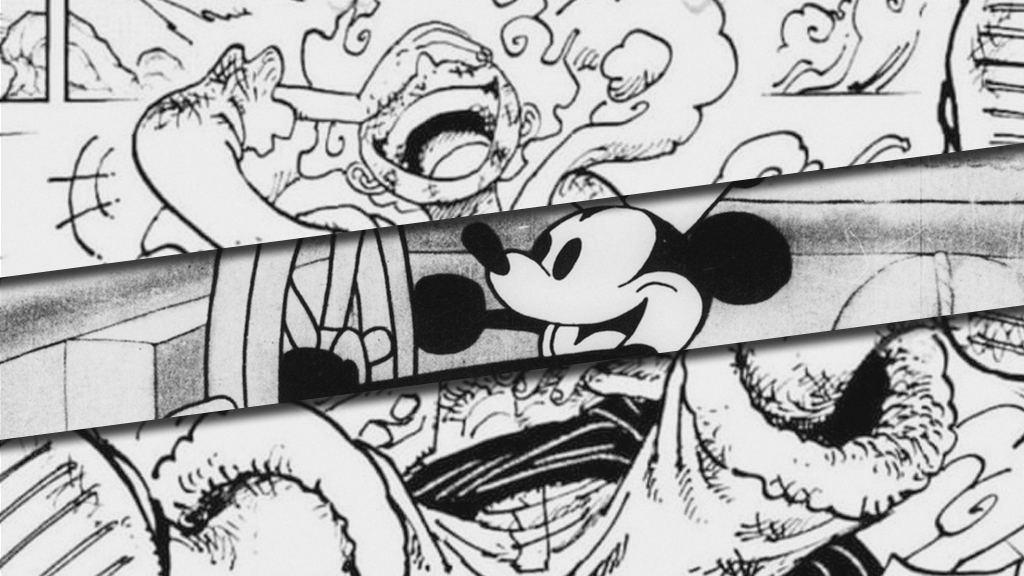
    Luffy’s power are technically still based on rubber, but one that is non-tangible. Most of the way Luffy is moving is clearly inspired by cartoons. It’s common knowledge he was inspired by watching the German-Austrian-Japanese animated series Vicky the Viking. So, the franchise has its roots in cartoons, especially looking back at the creative ways Luffy tackled each encounter throughout his travels in the East Blue and the Grand Line. Yet, now he’s truly embraced that aspect with his new powers that are based on rubber hose animation.

    The name of this animation style is based on how limbs of characters are simple, without any specific articulation. It’s the grandfather of all modern animation before running out of style in 1930s, yet has seen a bit of a revival as of late. Steven Universe introduced the character of Spinel that moved in a similar fashion. The recently released The Cuphead Show! bases its entire animation style from that very era. So, it technically could be seen as the origin of the entire Western animation industry.

    It even connects with the origin of his power. Nika was teased as the Sun God, a being that has quite the history. He was known to bring smiles to the faces of many’s for centuries. Perhaps that is why Oda took inspiration from the grandfather of all animation as the basis for the Devil Fruit’s abilities. Kaido has no idea what is happening, as his abilities seemingly force everything to apply to his rules. We literally see him grab the Beast Pirates’ nostril through his eyeballs before yanking himself out of the dragon’s stomach.

    It’ll take some time to adjust to the ability, as it is quite a bit different from the Haki-focused combat from the New World. Yet, the power does also call back to some of his earliest and quite “inventive” ways of taking on his enemies. We’ve discussed it frequently on our Den Den Murphy podcast, but Water Luffy from Alabasta was one of the funniest and most out-of-nowhere ways of taking on his most fearsome foe yet. So, as we near the end for the franchise, we might see him get even more creative beyond what we already saw here.

    Oda‘s creativity seemingly has no limits and the idea to stick true to Luffy’s powers being based on rubber. It always had some “cartoon”-inspired elements. So, rubber hose animation as part of his newly awakened power set is such a perfect way of staying true to what he set up while still catching people off-guard. This series never was about someone becoming the most powerful like Dragonball Z. It’s always been about freedom. If you’re powers are so ridiculous, you seemingly can do anything, why not embrace it?

  • ‘Moon Knight’ Might Be Teasing Another of Marc Spector’s Personalities

    ‘Moon Knight’ Might Be Teasing Another of Marc Spector’s Personalities

    With the first episode of Marvel Studios’ Moon Knight in the books, practically everything is still a mystery. We did learn Ethan Hawke’s villain Arthur Harrow appears to be some cult leader figure with connections to the Egyptian deity Ammit, and he wants to create a future where evildoers are eliminated before they commit any bad acts. We also learn that Steven Grant has another personality named Marc Spector living inside of his body who has some connection to Egyptian deity Khonshu and transforms into the titular Moon Knight at the very end of the episode.

    The trailers and marketing for Moon Knight have suggested that Marc Spector and Steven Grant are the only two non-costumed identities in Marc’s mind in the series. Moon Knight comic book fans were the first to point out a major missing piece: Marc Spector’s third primary personality, Jake Lockley.

    Moon Knight

    Traditionally, Marc Spector is the mercenary who is revived by Khonshu before becoming Moon Knight, Steven Grant is a millionaire playboy-type who uses his money to fund Moon Knight’s adventures, and Jake Lockley is rougher Taxi driver who uncovers street-level intel about crime that is afoot. Jake is also sometimes portrayed as the most violent and guiltless personality. Obviously, Moon Knight has already ripped up that script by transforming Steven Grant into a lonely British giftshop employee, so clearly the series is willing to forego classic elements from Moon Knight comics. Still, only one episode in, Moon Knight may already be teasing the third personality for Oscar Isaac to eventually portray.

    First, the episode has a tendency to show a third Isaac in a few places in what looks like very intentional ways. For example, when Steven is in the museum towards the end of the first episode just prior to him encountering the jackal, Steven’s Marc reflection remains in place while he walks away. However, there are two reflections in the mirror. Mirrors are tricky, but other than the imagery of the infinite reflections in the museum bathroom, it’s usually just Marc looking back at Steven. This mirror moment is eerie already, but the added face behind Marc’s is very specifically positioned.

    Marvel Studios Moon Knight

    Another example comes from the end credits. While the credits are not the substance of the series, they often hide plenty of easter eggs. In Isaac’s card, Steven/Marc’s face is broken up into three. Again, there’s certainly something to be said for aesthetics, but interestingly enough, the three faces aren’t totally identical. The middle face is definitely sporting slightly different hair, so there was some intention to make the faces/heads unique.

    Marvel Studios Moon Knight

    Another clue is the appearance of the human statue “Crawley” who the episode credits note is played by Shaun Scott. Bertrand Crawley is a classic Moon Knight character tied specifically to Jake Lockley–he is a homeless man in New York City that befriends Jake and is a key source of information for him. While it could simply be a fun nod to the character, the human statue certainly seems to be a well-placed person in terms of watching what happens around him.

    Marvel Studios Moon Knight

    Obviously, if the series is planning on introducing Jake, it wants to keep that a surprise. It makes sense to grow viewers accumstomed to two personalities first before throwing in a third, especially on top of another supernatural and mythology-heavy mystery. There’s a lot going on. While Moon Knight has not tied itself to any particular comic run or even felt particularly similar to one, it is still a strong guess that the series would not leave out one of the most significant and intrinsic aspects of Marc Spector’s character. Time will tell if the series is slowly unveiling the third idenity.

  • ‘Moon Knight’: The Crawley Cameo Explained

    ‘Moon Knight’: The Crawley Cameo Explained

    The newest installment of the Marvel Cinematic Universe, Moon Knight, finally premiered its this week. The series feels determined to keep the viewer in the dark (for now) similar to how the protagonist Steven Grant is taking everything in. The Disney+ show has not given the impression that it intends to take much of its direction from any particular comic book run or even any Moon Knight era. While that makes theorizing where the series is headed much more difficult, the first episode is already leaving major clues and Moon Knight easter eggs to work with. For one, there is a clear nod to classic Moon Knight character Jean-Paul “Frenchie” Duchamp. But Frenchie is not the only long-established comic’s character to be referenced.

    In fact, another major character may have actually already appeared. Actor Shaun Scott is credited with playing “Crawley”, who is the gold-painted human statue Steven Grant seems to be very one-way friendly with. Moon Knight fans will reconize “Crawley” as a reference to Bertrand Crawley, a classic comics character. And he could have major implications for the series and its hero.

    Marvel Studios Moon Knight

    In the comics, Crawley is a homeless man living in New York City, who befriends and becomes an informant for one of Moon Knight’s personalities, Jake Lockley. It is emphasized how close this character is to Moon Knight in comic runs such as the popular Jeff Lemire and Greg Smallwood run, where the character plays a major role in Marc Spector grappling with psychological and supernatural chaos. While that certainly seems on par for Moon Knight, Crawley’s introduction could say a lot more about our protagonist’s past and future.

    Moon Knight

    While the Crawley in the comcis is quite a bit more mobile and talkative than the human statue in Moon Knight, he could be the perfect plant for Moon Knight…or one of his personalities. In a busy area of London, Crawley can blend right by looking like a tourist magnet or street performer. By staying quiet and still, he would not bring much attention to himself and might simply have unfettered ability to observe things happening nearby and act as a fly on the wall without suspicion. But why would Moon Knight be interested in that?

    Crawley is generally the definition of a street-level character. While Moon Knight is currently set abroad, the titular hero spends most of his time in the comics as a caped vigilante in New York, Chicago, or Los Angeles. We have little to go off now with respect to Marc Spector and Moon Knight’s history within the MCU, but everything points to a larger-than-life supernatural conflict against Ethan Hawke’s Arthur Harrow. If Crawley is someone in Moon Knight’s life, though, that would suggest that the hero may have spent a significant amount of time as a crime-fighting vigilante in London. That could connect the hero to other classic characters and villains like Midnight Man, who is meant to appear in Moon Knight. In other words, the classic comic book portrayal of the character might still be in play.

    It also raises interesting questions about the relationship between Moon Knight’s separate identities. In the comics, Crawley is very much connected to the Jake Lockley personality, who has yet to appear or be advertised. While Crawley could certainly tease Jake’s future introduction, there’s also something to be said about Steven’s own interactions with the human statute. Steven seems very drawn to him, which emphasized how lonely and awkward the character seems to be. But if another personality knows Crawley and works with him, maybe Steven subconsciously gravitates towards him. That would be another indication that Marc Spector, Jake Lockley, or Moon Knight are already using him as an informant by the time we meet Steven in the first episode.

    There is always the possibility that Crawley the human statue is meant to be no more than an Easter egg and an acknowledgement of the character. But while the Frenchie reference was merely a name in a cell phone, Crawley is an actual flesh-and-bone character that has physically appeared in Moon Knight and has passively interacted with Steven Grant. While that could mean that Crawley is an already-existing and significant part of the MCU’s Moon Knight’s activities, it could also be a setup for the future. If Moon Knight does mostly explore an Egyptian mythology storyline, Moon Knight and his personalities could very well find themselves at a somewhat fresh start at the end of a wild and weird psychologically-dense series. Perhaps he leaves some of his obedience and dedication to Khonshu behind him–as he does several times throughout his comic book history–but still decides to use his skills and background for fighting crime in London. If he needs help, he already knows a guy.

  • ‘McClane’: Looking Back On the Unmade Bruce Willis Send-Off

    ‘McClane’: Looking Back On the Unmade Bruce Willis Send-Off

    Bruce Willis is stepping away from acting and, in doing so, leaving a genre-defining career behind him. A recent statement from his family revealed the actor is suffering from aphasia, a cognitive disorder that affects a person’s ability to communicate properly with others. As a result, the icon will end his decades-long stint of performing and begin a new phase of his life. This is sad for a multitude of reasons, not the least of which is the way it will undoubtedly complicate things for himself and his loved ones. However, for the rest of us, we’ll be losing out on the possibility of a late-stage Willis renaissance, in the same vein as Robert Forster or the more-popular-than-ever Michael Keaton. Instead, the actor’s acclaimed time in the spotlight will have petered out with a long string of low-budget, direct-to-video features.

    Despite having a sometimes tumultuous public image, Willis’ impact on Hollywood and American culture cannot be understated. Although he started as the face of a hit rom-com series, an impressive string of roles in films like Pulp Fiction12 MonkeysThe Fifth Element, and Armageddon established him as the epitome of “cool guy action star” mixed with a bit of “grumpy old dad.” A niche market to corner in the global eye, for sure, but one no celebrity may ever hold the same way again. Of course, none of this would have been possible for the actor if it weren’t for the late-80s phenomenon that was Die Hard. Still regarded as one of the greatest action pictures of all time, the movie’s success flung Willis into stardom and exemplified what every film of the genre would try to achieve after it. The initial flick spawned four sequels, made over twenty-five years and ranging in quality from a worthy follow-up to “why did they make this?”

    As his career began to wane, it often felt like Willis was reaching back to his glory days in hollow imitation pieces. While Red was admittedly enjoyable, it failed to live up to the height of it’s star’s highest peaks, and 2013’s A Good Day to Die Hard ran through a series of predetermined motions without any of the edge that made the franchise so great. The series’ protagonist, John McClane, never even said his famous R-rated catchphrase, which was instead replaced by the more tongue-in-cheek “yippee-ki-yay, Mother Russia”. Once it became clear that Willis may be in the final stretch of his profession, a push was seemingly made to capitalize on the actor’s increasingly reclusive nature. M. Night Shyamalan brought Willis’ famous David Dunn character back for a send-off in 2019’s Glass, and Edward Norton gave him his last big-budget appearance with a supporting role in the noir drama Motherless Brooklyn, a sub-genre Willis had enjoyed dabbling in.

    Yet, as recently as a couple of years ago, there was still an idea in the air to bring the personality’s biggest role out of retirement for one last go-around. Following the dismal premiere of A Good Day, Fox Studios was trying to find a way to revive the once-adored franchise with some sort of unique twist. There was an idea for a crossover film with Kiefer Sutherland‘s televised 24 series, tentatively titled Die Hard 24/7, that never materialized after certain contract negotiations stalled and the plot was retooled as a simple 24 sequel series instead. Inspired by this, there was then a plan to continue the Die Hard legacy with a 12-episode prequel mini-series called Die Hard: Year One, based on the graphic novel of the same name and starring a new actor as a young John McClane with Bruce Willis narrating events as his future self. However, Willis despised the script and refused to contribute to or endorse its creation. As such, the project fell through and the franchise reset once more.

    This brings things to 2018, when producer and writer Lorenzo di Bonaventura handed in a treatment for a sixth, and potentially final, Die Hard film simply titled McClane. The concept was similar to Year One, with a story that would venture away from the usual tropes of Die Hard to focus on the actual life of John McClane and reveal the origins of the character. Bonaventura described the movie as being a lot like The Godfather Part II, bouncing back and forth between McClane in both his sixties and twenties, with Willis returning as the older version of the one-time beat cop. Intentions were good, with the creative team aiming for a more thoughtful character study that would invest fans in McClane “more than ever before.” Unfortunately, despite support from big names like producer Tobey Maguire and probable returning actress Mary Elizabeth-Winstead, scheduling issues with Willis, who had recently committed to making his string of direct-to-video appearances, started to make it look like the film may never enter production.

    Now, it’s becoming more clear that the scheduling issues were in large part due to the actor’s declining health. It’s been rumored that Willis focused on taking easier work when his symptoms began, so that he could continue acting without the demands of a high-profile film. While this has not been confirmed, the timeline does add up, and it would make sense if Fox was hesitant to invest big money into a movie they weren’t sure Willis could finish. Ultimately, the acquisition of Fox by Disney in 2019 resulted in any plans for McClane being scrapped, with more unconfirmable rumors abound that the mega studio would eventually just reboot the series under their own power. At the very least, we now know that Bruce Willis will not be involved if Die Hard ever reemerges.

    In many respects, it sounds like the McClane would have been the aging actor’s grand finale, literally and metaphorically ending his time in the spotlight and passing the torch to a new generation of action stars. A genre-bending franchise departure to blend his best acting roles with his most iconic fictional character, giving up the role with the grace of Hugh Jackman‘s Logan. Perhaps it’s overly wistful to assume the movie would have been at all worth watching. It’s just more heartening to pretend McClane is a lost masterpiece than it is to accept that Willis, and his character by extension, went out with barely an explosion.

    Source: Variety, MTV, Deadline, CBR, Entertainment Weekly, Fandango, Bloomberg

  • The State of the Brooklyn Nets

    The State of the Brooklyn Nets

    The Brooklyn Nets 2021/2022 season has been a tumultuous one, from Kyrie Irving being unable to play home games, to Kevin Durant’s injury woes, and even to the James Harden trade demand fiasco. It almost seems that their season is being defined by everything outside of the court, but as we head into to playoffs, where do they stand now?

    Offensive Juggernaut

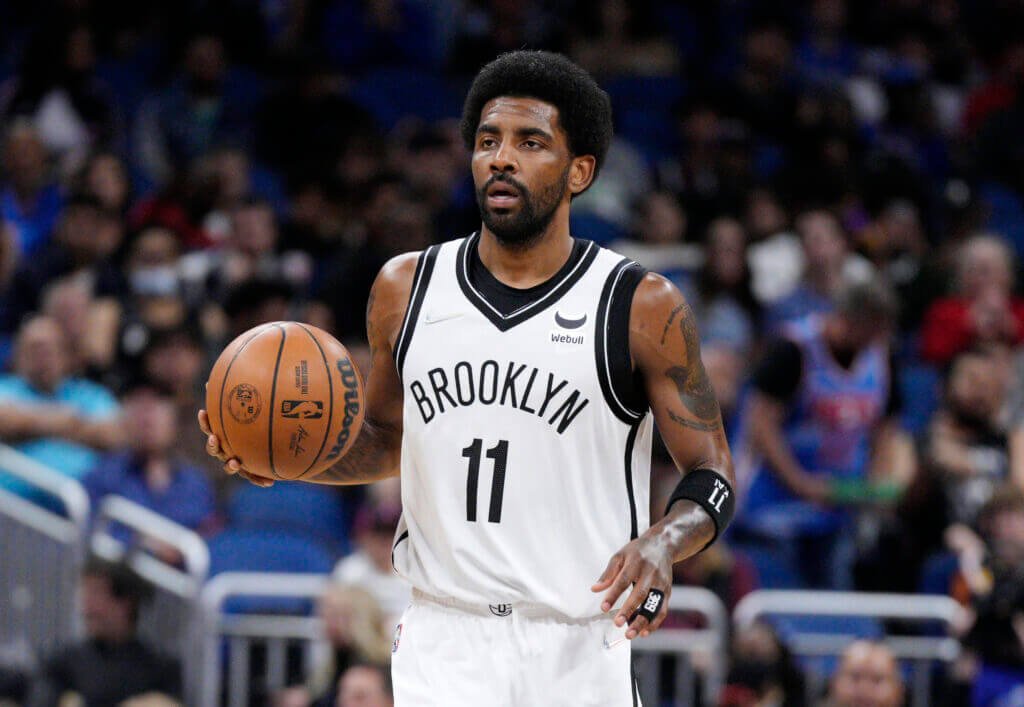
    The Nets are currently a top ten offensive team in the NBA, led by All-Stars and future Hall of Famers Kevin Durant and Kyrie Irving. Even in a deficit, it never feels that they’re out of contention as Irving, Patty Mills, and Seth Curry are all currently shooting above 40% from 3. With so many elite shooters around him, the Nets are the most dangerous running pick and rolls with the ball in Durant’s hands. This was most evident during the infamous Sixers game, as they were able to shoot 45% from 3.

    Is Steve Nash a Good Coach?

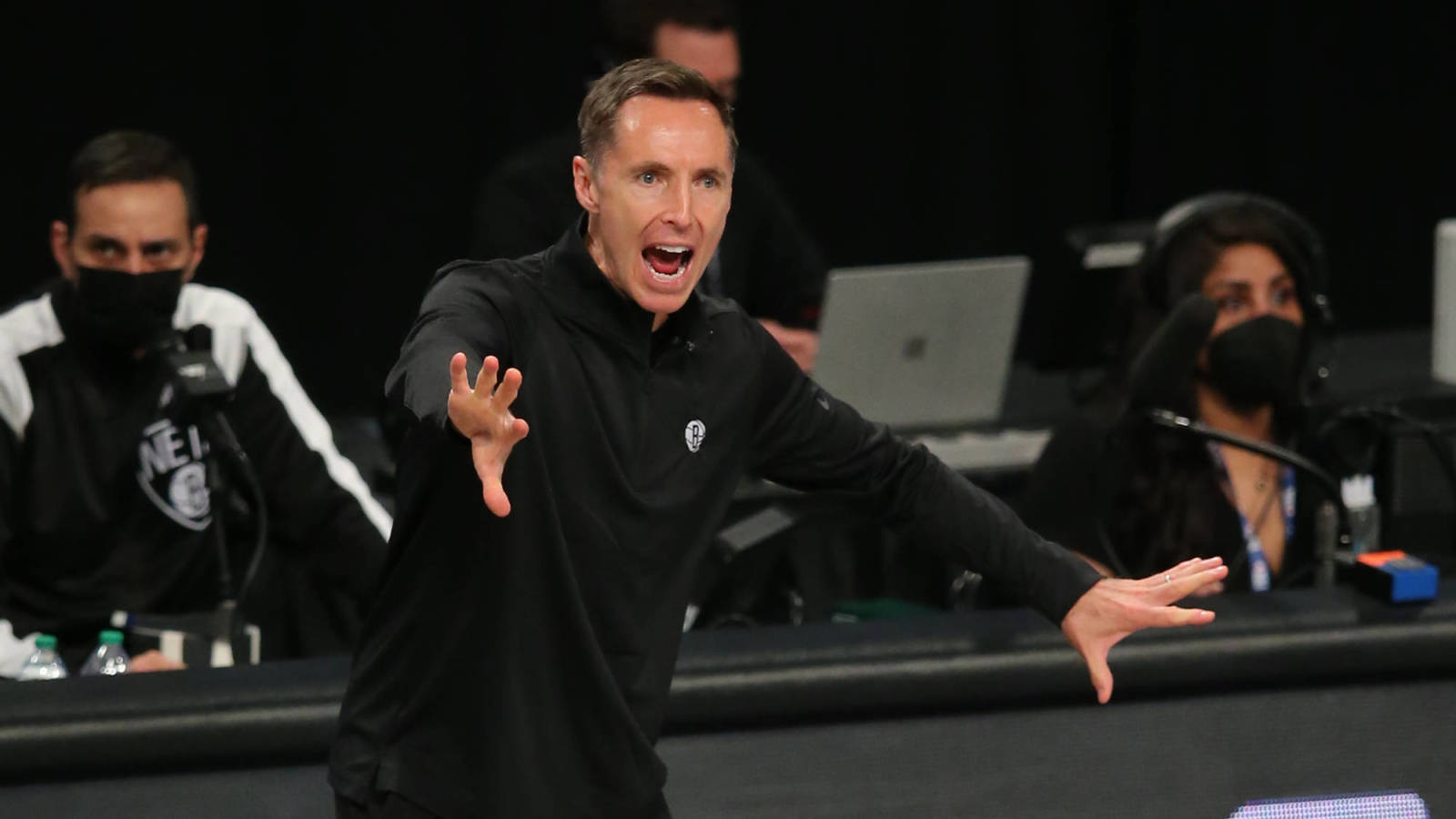
    Nets coach Steve Nash defends playing Kevin Durant all 48 minutes |  Yardbarker

    Second year coach Steve Nash has a lot to prove this year given the disappointing way the previous season ended. My expectations for him involved better plays coming out of timeouts, lineup consistency, and better usage of his timeouts. None of those expectations were met. The Nets had over 30 different starting lineups this season, with various players being removed from rotation, being added back in, and then getting removed again. The consistency is not there, and I’m not sure that Nash has any idea on who his best seven guys are, which is very important as they head into the Playoffs. Nash may very well be a savant at managing egos (ala Doc Rivers) but his on court performance has been severely lacking and I can help but wonder if the Nets are wasting their Playoff window with Nash at the helm.

    Will Ben Simmons Play?

    In theory, Ben Simmons is the perfect front court player to add to the Nets. A playmaking forward that can guard 1-5 is exactly who the nets need. With a bottom 10 defensive rating, Simmons would be asked to guard the best opposing player while also leading fast breaks and back cutting to the dunker’s spot. It’s such a good fit for both Simmons and the Nets that it feels too good to be true. Well, I guess it is as Simmons is currently sidelined with back pains. Will he even play for the Nets this season? Even if he does, will he become a liability, as the Nets and Simmons will have to integrate to each other’s styles. Will little playing time together, I worry about Simmons impact as we get closer and closer to the Playoffs.

  • A Look At The NBA Play-in Tournament

    A Look At The NBA Play-in Tournament

    The NBA Play-In tournament has been great for fan interest in the product since it’s debut last season. Having the ability to play meaningful games down the stretch of the season has been fruitful. The best part of this is the jockeying between all of the teams from top to bottom in each conference. 

    In the East, is everyone worried about playing Kevin Durant and Kyrie Irving in the first round? Can the Nets stay out of the dreaded 9-10 game where it’s single elimination? In the West, with the Los Angeles Lakers season hurdling towards a disastrous conclusion we have the San Antonio Spurs still alive and well for the 10th spot. There are tiebreakers to determine some of these matchups. Otherwise, some teams are just going to have to finish strongly or poorly depending on your vantage point. Let’s take a look at it.

    Eastern Conference

    7. Cleveland Cavaliers 42-33 

    8. Brooklyn Nets 40-36

    9. Charlotte Hornets 39-37

    10. Atlanta Hawks 38-37

    Directly above them 

    5. Chicago Bulls 44-32

    6. Toronto Raptors 43-32

    Here’s what we know in the East: the Charlotte Hornets are 8th but secured the tiebreaker against Brooklyn with their win against them this past Sunday. Now the Nets have a relatively easier schedule the rest of the way, plus Kyrie Irving available for all of the games. This result does put pressure on them now to finish ahead. No one wants their season to come down to a one game scenario against Trae Young. 

    The Hornets schedule is a bit more tricky, with games against the Sixers, Heat, and Bulls. They have to capitalize on the games against lesser competition. They can still get 8th but it’s still a young team. Will they recognize how important it is to get to the 7 vs 8 game?

    Atlanta has struggled all season to live up to their run to the Conference Finals last season. They’re incredibly inconsistent and have suffered from injuries as well. However, with Trae Young they’re incredibly dangerous and easily can get hot in these limited sample sizes and get into the playoffs on the right night.

    The 7th seeded Cavaliers have experienced a ton of injuries that have landed them in their current predicament. Rookie sensation Evan Mobley sprained his ankle Monday night against the Magic. They’ve lost star guard Colin Sexton already for the season. All-Star center Jarrett Allen has been out with a fractured finger. Those are just to name a few. No one has expected this type of season from Cleveland and anything they do in the postseason would be gravy. It’s just unfortunate that the injuries have hit them so hard. The Raptors are one game ahead of Cleveland but the Cavs have the tiebreaker. Moving up is still a possibility as both the Raptors and Bulls could easily slip up. It’s such a competitive conference.

    Western Conference 

    7. Minnesota Timberwolves 43-33

    8. Los Angeles Clippers 37-39

    9. New Orleans Pelicans 32-43

    10. San Antonio Spurs 31-44

    11. Los Angeles Lakers 31-44

    The eye popping thing here is the Lakers’ situation. With LeBron spraining his ankle the other night in New Orleans, the Lakers’ season is in serious peril. Now some Laker fans may prefer the season to end, but as long as they still have a chance the players and coaches are going to compete. The Lakers have the toughest schedule remaining, with games against the Jazz, Warriors, Suns, and 2 games with the Nuggets to top it off. The Lakers also play the Pelicans this Friday and probably without LeBron.

    L.A. has no tiebreaker advantage against either New Orleans or San Antonio. They’ve lost the season series to New Orleans and lose the conference record to San Antonio. When the obituary is written on the Lakers; season, it’s going to be full of disappointment. There’ll be plenty more to be written about them.

    New Orleans is in good shape as they’ve gotten healthier and have been playing better for a significant stretch of time since their 3-16 start. The trade for guard CJ McCollum has transformed their offense and Brandon Ingram when healthy has taken a step forward as an offensive player. They have the inside track on hosting the 9 vs 10 game. 

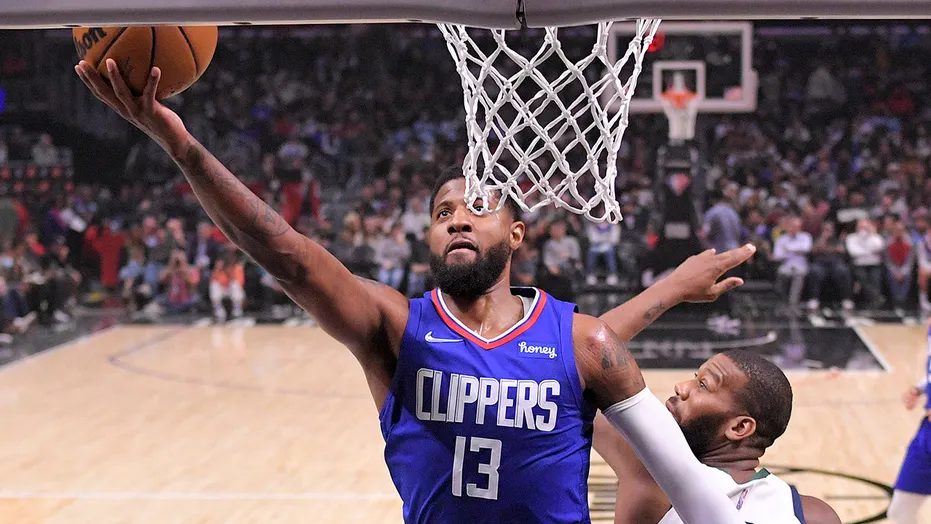
    As far as 7 vs 8, the Wolves and Clippers are almost assured of playing each other. Minnesota has a chance to catch Denver if they can beat them this Friday to claim the tiebreaker. The Wolves have been the surprise of the season as Karl Anthony Towns, Anthony Edwards, and D’angelo Russell have formed quite the competitive trio. As far as the Clippers go, they’ve been the walking wounded for quite awhile. They did get some good news as star forward Paul George returned from a torn elbow more that had him out three months tuesday night. He galvanized the team with 34 points 6 assists and 5 steals in a comeback win against Utah. With this win, the Clippers have now pulled the Jazz into this race to stay out of the Play-In.

    The seventh seeded Wolves are now 2 games back of Utah. As we head to the end of the regular season, the difference between having a set playoff seed and fighting for your life could be as simple as who’s healthy. The race is on, and for these teams everything is at stake.

  • Explaining that “Duchamp” Easter Egg in ‘Moon Knight’

    Explaining that “Duchamp” Easter Egg in ‘Moon Knight’

    The new MCU series Moon Knight seems to be taking a somewhat unique path to introduce and explore the titular character. We see nearly the entire first episode through Steven Grant, who knows nothing of the conflict among the Egyptian gods happening around him. So far, Moon Knight is not tracking any particular comic run, so predicting what comes next is not easy. But the first episode did supply an interesting Easter egg that might have legs to be more than just a nod to the comics.

    When Steven discovers what turns out to be Marc Spector’s stash, he goes through the flip phone and sees countless missed calls from Layla. Placed amongst all of those missed calls was a “Duchamp.” A Moon Knight comic reader might recognize that name as Jean-Paul Duchamp, otherwise commonly called “Frenchie.”

    Marvel Studios’ Moon Knight

    Duchamp made his first appearance alongside Moon Knight himself in 1975’s Werewolf By Night #32. In that way, Duchamp is actually older in the comics than Marc Spector or Steven Grant. Like Moon Knight, Duchamp has a long and colorful history in Marvel comics. He is an ex-member of the French Foreign Legion and met Marc Spector while they were both mercenaries. Duchamp became, most notably, a close friend of Marc’s as well as a sort of sidekick to Moon Knight, and he was a long-time pilot of the Mooncopter.

    Marc Spector: Moon Knight

    But was Duchamp’s name on the phone simply an easter egg or could the character make an appearance in Moon Knight? Simply having the name listed somewhere a fan could spot seems like one-off reference territory, but the shot curiously lingered on the name for longer than you would expect it to if it didn’t pack more meaning. The episode barely introduces Marc, so there is plenty of room down the line for Marc’s character to be developed. That could include not only his personality and relationship to Khonshu and Moon Knight but also the other relationships–like Layla–that identity has made throughout his life.

    From the little the first episode showed, it looks like Moon Knight has been around for some time. Steven seems to have had control over his own life for a significant period of time, meaning that Moon Knight may have been established or created potentially years ago. That is plenty of time for Marc to have a network around him. What’s more, it looks like Steven is scrolling through relatively recent missed calls on Marc’s phone, meaning Duchamp may have tried to reach out recently. This could suggest that they are still in contact or that Duchamp is at least trying to get involved. Perhaps he had been helping Marc carry out his Moon Knight activities, or maybe he is just a close confidant. If the classic character makes it into Moon Knight, by all guesses he would not have the screen time to truly develop. But there could be plenty of room for Marc Spector and his classic supporting cast to be explored more in the future.

  • ‘One Piece’: How Netflix’s  East Blue Saga Could Differ From the Manga

    ‘One Piece’: How Netflix’s East Blue Saga Could Differ From the Manga

    We’ve still got quite some time ahead of us until the live-action adaptation of One Piece hits Netflix. The team has been hard at work bringing the manga to life, as we even saw some set photos find their way online. We’ve gotten glimpses at ships being worked on and even a first look at their take on the Marines’ design. They offered our first look at some of the tweaks and changes that will result from the new medium. Of course, it opens the question what else might change and I thought I’d give it a shot to theorize what aspects of the original East Blue Saga that might get adapted from the original manga.

    Nami’s Anime-Inspired Introduction

    Just like how the live-action Cowboy Bebop introduced Faye Valentine in its first episode, we can probably expect the same with Emily Rudd‘s Nami. Alvida’s ship was one of the first to be spotted on set, and she was the first to share a photo from the set. Plus, her character arc is at the core of the East Blue Saga, as Arlong technically acts as the “big bad” before they set out to the Grand Line. Her early introduction alongside a potential set-up for the later part of the season would work to also establish a few plot points that you usually see introduced in the pilot episode

    Ironically, this wouldn’t the first time that Nami gets an earlier introduction, as it happened in the anime. While in the manga we first meet her in Orange Town, the first animated adaptation took a different approach. We meet her earlier in the story, as she’s looting one of Alvida’s ships. There’s even a chance that we’ll see her lurking in the background in Shells Town, as Luffy makes his way to recruit Zoro and face Captain Morgan. Taking inspiration from the anime would work to switch up the opening of the manga, which was still finding its footing at the time with each island acting like a self-contained story.

    Morgan’s Expanded Role

    Speaking of Captain Morgen, I do believe he’ll likely have a bigger role in the live-action adaptation. Not only did we get a glimpse of Garp’s ship, where he was arrested and then fled from, but it’s not uncommon for adaptations to combine characters. Morgan has ties to Kuro and was one of the reasons the former pirate captain was able to pull of his scheme. Yet, he doesn’t really factor into the story after that, but there is one potential role expansion he could get. We later meet a Marine captain named Nezumi during the Arlong Park Arc. It was a new character that pretty much also solidified the corruption within the Marines.

    Even after fleeing, Morgan could still be in his uniform with some corrupted soldiers that stuck by his side. Perhaps he tries to find refuge at Arlong Park, where the Fishman uses the opportunity to make use of the fleeing Marine. As Nami wasn’t directly involved with his arc, she might have no idea who he is. So, him arriving and taking her treasure away, forcing her to start over, would fit within story and add an extra layer of connectivity between the East Blue. Plus, we won’t need an additional character introduction while also further fleshing out what was once a one-sided villain.

    Garp’s Increased Role

    Garp’s ship being built is a potential tease that we’ll get Coby and Helmeppo’s training arc sprinkled throughout the series. It’s unclear how much time it’ll take up, but there’s a potential to include them as a showcase of the aftermath that the Straw Hats leave in their wake. We get a few more moments with characters otherwise would’ve left behind and see how this pirate crew influences the world around them. Lieutenant “Double Ironfist” Fullbody could even be part of his Marine group that ended up going ahead to the Baratie, which might even work as a little reference early on if Garp shows up in the pilot episode.

    We also learn in the manga that he wants Luffy to join the Marines. So, it wouldn’t be too surprising for him to arrive in Windmill Village hoping to recruit him before he goes his pirate ways only to be too late. It isn’t until later that we find out that’s the only reason he’s in the East Blue to begin with, as everyone is confused why he’s so focused on a small-time pirate. Plus, his inclusion is a great move to also show the two-sides of the Marines. We want to root for Coby joining the group, but mostly meet very corrupted captains throughout the East Blue. In a way, he a perfect counter balance that there is more to this group, especially to set up Smoker’s apperance in Loguetown.

    Less Islands, More Ships

    This change is something I thought off during our recordings of Den Den Murphy, which you can listen to the latest episode by clicking here. We’re seeing a lot of big ships being built and it would seem strange to do so if they are only set dressing. Just like in the anime, I do believe that Alivda’s storyline will be directly on her ship rather than a random island. It works well for the story and adds a nice flair to the series, as it’s odd how little we spend on boats given it’s a pirate story. Yet, I do believe it’s not the only time and would even argue they’d cut one of the bigger islands in addition to the one Gaimon is stuck on, and move it to a ship.

    I went back-and-forth on this a lot, but my theory would be that we might skip Straw Hats’ time in Orange Town. Not the storyline, but them taking on Buggy on the island. The only important landmark is the pet store protected by Chouchou. The Buggy pirates could have already destroyed it in the series, and the little dog is trying to retrieve the only thing that remains of his owner. As such, he chased the the circus-inspired crew to their ship where the story takes place. Recent set photos by the South African President revealed a circus tent, which was part of Buggy’s ship named Big Top. It would work as a creative backdrop and mix the story up as we mostly traveled from one town to another in the original.

    More Foreshadowing

    As you’ll likely notice, most of my theories on the changes are based on building more connectivity. The East Blue Saga is the most “independent” storyline as each arc doesn’t necessarily built into the next. Seeing them interweave some minor plot points that build or or connect to later makes a lot of sense to grab viewer’s attention across its first season. Morgan referencing his capture of Kuro before we realize what truly happened, people discussing Don Krieg being the first in a long-time to attempt the Grand Line, and so much more could be sprinkled throughout to add some foreshadowing.

    Yet, I’d also go one step further and say that I do think they might add elements from later storylines that are hinted at before they even enter the Grand Line. References to Sanji’s real backstory and the Germa 66 would make sense as a small indication, even if it’s just him reading the comic “Sora, Warrior of the Sea.” Zoro being confronted by a member of Baroque Works makes sense, as it is referenced in the manga but never got to see it happen. Even just thinking about the infamous execution of “Gold” Roger opens up so many possibilities.


    With still some time until we even get a trailer for the adaptation, it’s fun to speculate and theorize how they might adapt Eichiiro Oda‘s famous manga. There’s a whole community that has built around this series and if you’re interested you can check out the Discord by clicking here to share your thoughts on the project.

  • Morbius Before Leto: The Original Plan for ‘Blade II’

    Morbius Before Leto: The Original Plan for ‘Blade II’

    Sony’s latest entry in its Universe of Marvel Characters, Morbius, is finally set to hit theaters on April 1st. The film, which follows in the weirdly popular footsteps of Venom, will feature the origin story of its leading character, a pseudo-vampiric antihero by the name of Dr. Michael Morbius. With the casting of Jared Leto in the title role, and constant studio hints at some sort of coming crossover event, it’s likely the movie will set Morbius up as a major recurring player in the future of superhero cinema (or at least, Sony’s future of superhero cinema). Yet, despite the many years it spent in development hell, a solo Morbius flick was not always the plan for the character’s first live-action appearance. In fact, his cinematic roots date back over two decades to a franchise that helped start it all.

    Blade, a 1998 Wesley Snipes vehicle based on the iconic Marvel character, is still a cult favorite with fans. Not only did it permanently redefine its titular vampire hunter, but it also ushered in a new generation of comic book adaptations that would eventually transform into the cultural powerhouse that it is today. It told the story of Blade, a vampire-human hybrid known as the “Daywalker,” who funneled his supernatural abilities and born hatred for the bloodsuckers into a lifelong war aimed at their extinction. Its success would lead to two sequels, Blade II and Blade: Trinity, before the franchise petered out and entered an extended hiatus. The trilogy’s chief creative, David S. Goyer, would eventually go on record to say that it was always his intention to craft a three-film saga, and a little-known deleted scene from the end of the first film might just prove it.

    After defeating the villainous vampire lord Deacon Frost and getting his love interest, Dr. Karen Jenson, to safety, Blade is offered the chance to cure his vampirism and live a normal life. As the finished product goes, Blade rejects the offer and travels to Russia to continue his eternal war against the damned. However, an alternate version of the ending was filmed in which, after hearing Blade’s rejection, Karen looks across the rooftops to see a shadowy figure watching them from afar. Though the mystery man is not wearing any identifying clothing, he was meant to be none other than Dr. Michael Morbius – in the flesh.

    The scene was available on YouTube for quite some time in low-quality, though it seems to have been recently removed. Obviously, the stinger would have laid the foundations for a sequel with Morbius as the big bad, long before the Marvel Cinematic Universe popularized this method of promoting films that haven’t been made yet. Unfortunately, the ending was cut in favor of the Moscow action bit, which Norrington later revealed to be the studio’s choice. While no real reason has ever been given for this, it’s likely that New Line simply wanted a safer epilogue in case the project flopped and the story was never continued.

    Speaking on the cut scene after Blade‘s release, Goyer confirmed that Morbius was always his plan for the second installment. Though some have speculated that the change in directors between films resulted in a creative overhaul of Blade II that kicked Morbius to the curb, that doesn’t seem to be the case. When filmmaker Stephen Norrington, who actually played Morbius in his brief cameo, backed out of his involvement with the sequel, the idea was still for maestro Guillermo del Toro to use a version of the character in his movie. Plans only changed when Marvel told del Toro and New Line outright that they would not allow the use of Morbius in a Blade film, as they wanted to reserve the villain for another franchise. Ultimately, del Toro and Goyer would rewrite their script to replace Michael Morbius with an original villain named Jared Nomak, a genetically enhanced vampire who gives Blade quite a lot of trouble.

    Though not revealed specifically, it would make the most sense if the “other franchise” Marvel referred to was its then-upcoming Spider-Man series with Sony. As the new films will probably spell out, Morbius is truly more web-head adjacent than he is connected to Blade, despite the evident vampire relation. Known as “The Living Vampire,” Michael Morbius made his debut in a Spider-Man comic as a scientist with a rare blood disease. A series of unfortunate events would lead to Morbius becoming less of a true mystical vampire and more of a failed biology experiment, but dangerous nonetheless. He’s spent the majority of his history both fighting and partnering with the wall-crawler on numerous occasions but has had a few notable encounters with Blade as a member of the Midnight Sons. In the comics, he’s even the one responsible for biting Blade and turning him into a “Daywalker,” an ability the character was shown to birth within the movies.

    Whatever the case, the Spider-Man franchise would go through two reboots and multiple versions of the same villains without ever once using Morbius like they claimed might happen in 1998. Now, all these years later, Sony has retained the rights to the character and is giving him his own picture, with a big screen meeting between Living Vampire and Human Spider a fairly certain deal down the line. Meanwhile, Marvel Studios has given an official Blade reboot the go-ahead with Academy Award winner Mahershala Ali now wearing the famous leather ensemble. With the way the Marvel multiverse is going, it seems any character interaction is on the table, so perhaps fans may one day get to see Blade and Morbius duke it out in cinemas after all. Funny how that works out.

    Source(s): Revolutions, Bloody Disgusting, Take a Look Around