Category: Reviews

  • REVIEW: ‘LEGO Star Wars Summer Vacation’ is All About Letting Go

    REVIEW: ‘LEGO Star Wars Summer Vacation’ is All About Letting Go

    LEGO adaptations have been breathing new life into the Star Wars franchise for nearly two decades, and LEGO Star Wars Summer Vacation is a lovely way to carry on the tradition. The project is the latest in a yearly string of comedic animated short films that began with 2020’s The LEGO Star Wars Holiday Special, and is the kind of delightful storytelling that makes a person hope Lucasfilm never stops producing this joy-inducing series. Summer Vacation has something for everyone, as long as they’re open to it, and an almost weirdly good handle on what specifically makes the world of Star Wars and all its characters so great. It also may be a bit deeper than its wacky exterior implies.

    Maybe the nicest aspect of the LEGO Star Wars shorts are their place outside of the franchise canon. Most Lucasfilm content these days, whether it be on the big screen or on Disney+, finds itself almost immediately bogged down by questions of legitimacy. Internet arguments break out over the most minute choices and details, and the hostility often spills over into the real world. It can make it hard to simply enjoy what one enjoys, with the constant threat of having to defend an opinion looming around every corner. With Summer Vacation, there is no such stress. It’s just good vibes from beginning to end. The movie’s existence within a separate, goofier, brick-filled timeline allows the story to be as silly as it wants without breaking any unwritten rules of the fictional universe it takes place in. It’s frankly sort of freeing, and truthfully, that may be exactly what Summer Vacation is all about.

    In the film, which is hypothetically set after the events of Star Wars Episode IX – The Rise of Skywalker, Finn takes his friends on a galactic cruise for one last group expedition before everyone goes their separate ways. He’s accompanied by the likes of Rey, Poe, Rose, Chewbacca, R2-D2, C-3PO, and BB-8, and is quickly dismayed when nobody seems to understand the point of their time away from saving the galaxy. From there, Finn encounters a few familiar Force Ghosts who use tales from past vacations as a way to explain that, sometimes, you have to let go of expectations if you really want to enjoy yourself. This is maybe not a purposeful allegory to the way a lot of people now consume media, but it works all the same. If a person can let go of preconceived notions, and the seriousness that can come with them, then the adventure will be better for it. To simplify – the journey is not about anything, it’s all about the journey.

    One could say this sounds too spiritual for a children’s program, but to be fair, George Lucas has always said Star Wars is for kids, and those movies have more spiritual implications than any other blockbuster franchise there is. Thematically speaking, Summer Vacation is just as valid as any other installment in Lucasfilm’s vast catalog. It’s potentially even better, because, unlike prior Star Wars projects, this one is unafraid to show Darth Vader in a full-body swimsuit. Yes, as previously mentioned, Summer Vacation is also truly great at just being a fun time. Between the life lessons are a boatload of self-deprecating franchise jokes and insanely accurate character bits. In the same way this story understands what makes Star Wars what it is, it firmly doubles down on what fans love about their favorite protagonists. There are also references and plot points from every Star Wars timetable, except the ongoing High Republic line, that include both fairly obscure Clone Wars-era name drops and instantly recognizable Mandalorian-era needle drops.

    This is all a roundabout way to say LEGO Star Wars Summer Vacation is not only fun for the whole family, but a fantastic little chapter of storytelling as well. It’s every bit as zany as oner might expect, if not more endearing than they signed up for. A nice, beach-side breeze of fresh air for a hot, hot season. Plus, Weird Al Yankovic sings an original song in the middle of it, so it’s worth watching by default.
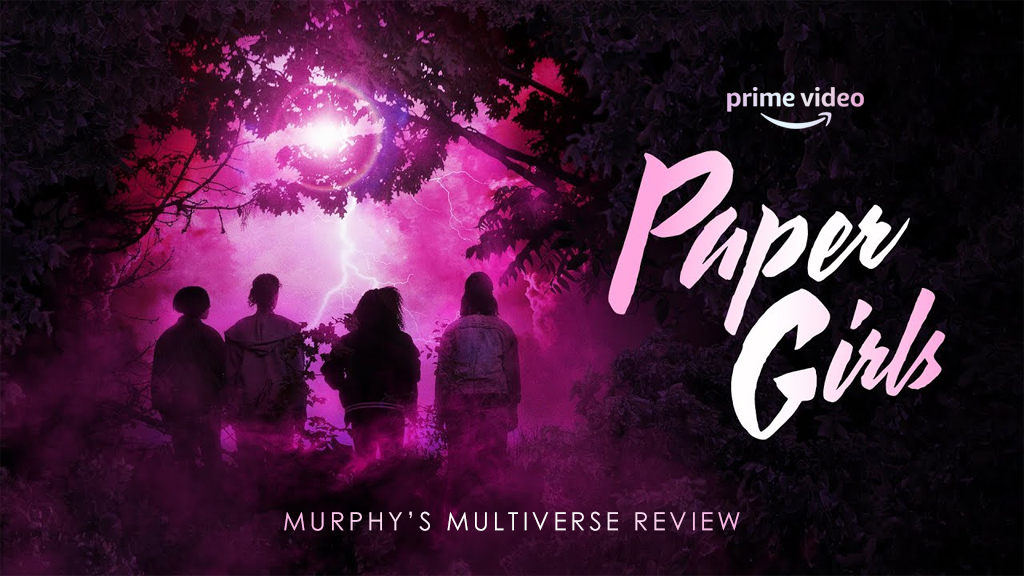
  • REVIEW: Prime Video’s ‘Paper Girls’ Doesn’t Deliver

    REVIEW: Prime Video’s ‘Paper Girls’ Doesn’t Deliver

    Over the past few years, there have been enough comic book adaptations for audiences to understand that the medium can either work tremendously well when made into a live-action TV series or turn into a failure of epic proportions. From the incredible Deadly Class, the long-running The Walking Dead, and the utter disgrace that was Jupiter’s Legacy, comic book TV adaptations come in all shapes and sizes. In most cases, not even being extremely faithful to the source material proves to be a guaranteed winning formula making it easy to accept when certain changes are made to make the show work better through a different medium. But in other cases, such as with Prime Video’s Paper Girls, some of the charm, scope, and even ambition that the original comic series displayed, which to a point were at the very heart of it, seems to have been lost along the way making the show worse for it.

    Brian K. Vaughan and Cliff Chiang‘s Paper Girls, published by Image Comics, began its run on October 7, 2015, and ended on July 31, 2019 with its 30th issue. It won the Eisner for Best New Series in 2016 with its creative team winning multiple awards throughout its run. For several years it remained as one of the best-regarded series being published thus making a TV adaptation being greenlit in 2020 a not-so-surprising validation of the broader appeal of the source material.

    Prime Video’s Paper Girls

    As for the show, when the story begins, much like in the comic series, four Paper Girls cross paths on November 1st, 1988, Hell Day. They are soon brought into a timestream conflict between The Old Watch (similar to the Marvel Cinematic Universes’ Time Variance Authority) and the STF Underground. Following a random encounter with two STF time-travelers, they find themselves in 2019 where they learn a bit more about what is really at stake. Initially wanting no part in the war, wishing only to get back home to their 1988’s Stony Stream, they soon realize where their loyalty should reside as new friends, and older versions of themselves find themselves targeted by the Old Watch with the four girls needing to play a big part in the fight in order for the war not to be lost.

    The heart of the series is, obviously, in its four leads: Erin, Mac, Tiffany, and KJ (played by Riley Lai NeletSofia RosinskyCamryn Jones, and Fina Strazza). It is through their eyes that the story beings to unfold, and it is their fears and expectations that move the story along. But albeit the portrayal of all four girls is on point with the source material, the way audiences are expected to get to know them and, from there, connect with their personal journeys is somewhat sabotaged by the pacing in which the story is being told.

    Prime Video’s Paper Girls

    For context, the first episode, Growing Pains, manages to fit the entirety of the first arc of the comics. Such a breakneck pace doesn’t leave enough room for audiences to breathe. Events just happen without being fully explored, both in their meaning and in the way the girls are experiencing them. Several whoa moments from the comic series are left out making the story feel flatter and more generic than the source material deserved it to be treated. The pace throughout the rest of the season is staggering, to a fault. Some moments are borderline boring and should probably have been a bit more dynamic and fast-paced. Had the show been able to maintain a constant rhythm the entire season, taking a bit more time with the setup but not letting go once all the plot pieces were set in place, the benefits would likely be enormous. 

    The slow pace is also made worse by the choice to have the girls time travel to relatively similar periods. Unlike the comics, where there they either go to or reference the year 20000 and 11706 BCE, in the show we see them go from 1988 to 2019, to 1999, and eventually to somewhere in the late 50s or 60s. This dramatically reduces the impact of the possibilities presented to the girls through time travel and just how big of a scope the story is missing out on. We still get the mech robots, the pterodactyls, and the giant steampunk blimp, but all that craziness seems more like an exception rather than the norm that Paper Girls deserved.

    Prime Video’s Paper Girls

    What still manages to be present in the show, albeit in a not very focused way, is how it manages to capture both sides of expectation management towards the future. And the past. Paper Girls is all about how the envisioned future always seems to find a way not to present itself, and just how much that sometimes has to deal with the inability people have to move and work towards it. But that can be okay, sometimes life happens and people just have to manage to do the best they can with the cards they are dealt with. Other times, we find the best versions of ourselves in unexpected places, even if somehow we should have really seen it coming a mile away. The perfect future isn’t always the right one, and the possibilities ahead are always more important than the ones left behind. And in that regard, Paper Girls might still also have the time to make better choices in its own future.

    All in all, Prime Video’s Paper Girls is overall a letdown when regarding expectations that a fan from the comic series would naturally have ahead of the show. But even with all its troubles in terms of pacing, the diminished scope that takes away from the epicness of the plot, and even some issues when it comes to sound mixing, shot composition, and editing, this might not be it for the show. Both the season finale and the main cast, which will continue to grow and perhaps lift the entire show to new heights, could still help turn things around in season two, which has already been greenlit. That display of confidence ahead of the series premiere is something not to be taken lightly, and the fact that there is still much to improve should be an opportunity to bring the series one step closer to the unforgettable nature of the source material.

    Paper Girls season one is now streaming, in its entirety, only on Amazon Prime Video.

  • Book Review: ‘Squirrel Girl: Universe’

    Book Review: ‘Squirrel Girl: Universe’

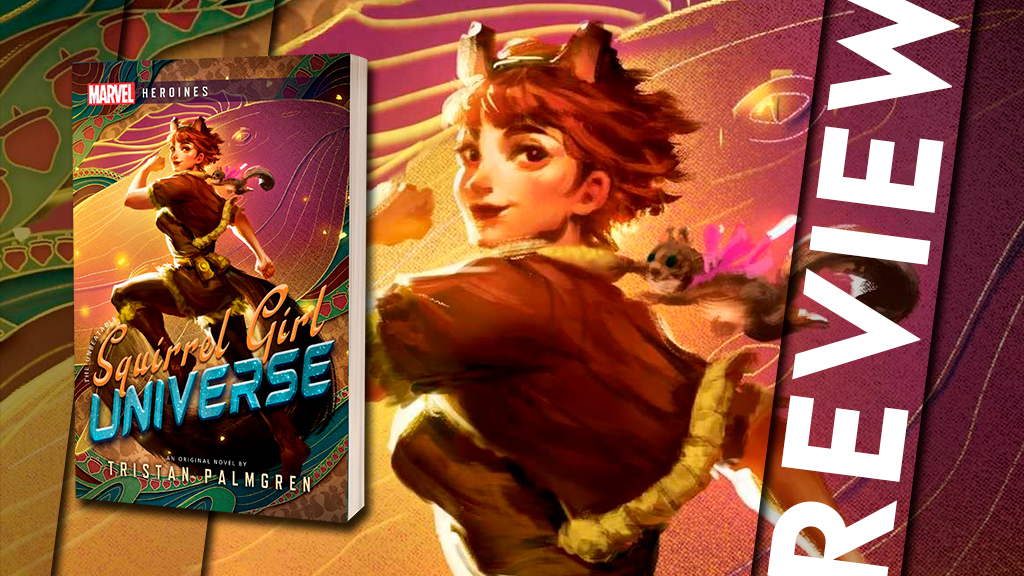
    The latest adventure for the ever-popular Squirrel Girl is heading towards bookstores in the not too distant future. I’ve had the opportunity to read an advanced copy of the latest novel in Simon & Schuster’s Marvel Heroines series. Squirrel Girl: Universe by author Tristan Palmgren is scheduled to be released on August 2, 2022.

    Squirrel Girl: Universe follows the story of Computer Science student Doreen Green, though best known as the superhero Squirrel Girl, on her latest adventure alongside her best friends as they aim to solve a mystery involving strange occurrences involving New York City landmarks. What they come to encounter becomes a plot larger than they could’ve imagined and brings the characters to numerous unexpected locations beyond their comfort zones. Their journey brings the protagonist face to face with impending massive universal stakes and potential galactic doom. Though while having to deal with such large external stakes, the internal struggles with Doreen could weigh just as large.

    Ultimately, Squirrel Girl: Universe was an enjoyable read that has the ability to leave the audience excited for what narrative twists and turns may occur. And this is a novel that certainly places its characters in unexpected situations on multiple occasions. Framed through the literary device of a time capsule, the novel does a strong job in making these events seem like the largest-scale adventure Squirrel Girl faces in her young life as a superhero. Readers will face a major challenge in trying to put down this book based on what may happen after each chapter. In addition, this novel is quite fast-paced and readers are immediately thrown into the crux of the main adventure by the end of the first chapter.

    A make-or-break for the reader’s opinion on this book will be its connection to the larger Marvel Universe. This is a story deeply tied into the lore of Marvel Comics, including numerous references beyond the scope of Squirrel Girl’s immediate world and lexicon. It isn’t enough to necessarily dissuade most readers from being able to appreciate the central plot of the novel, but Squirrel Girl: Universe would certainly be most appreciated by those who can understand at least most of the references sprinkled in throughout.

    In terms of which character will most likely connect the most with readers, Brian Drayne, aka Brain Drain certainly is the most distinct and unique character that’s part of Squirrel Girl’s ensemble. Especially with how he is framed from a literary standpoint, he will be hard to not connect with when reading the novel.

    Though what makes this novel most standout is its thematic messaging. Without delving too deep into the specifics, Squirrel Girl: Universe is a story about internal guilt and how we respond to making the incorrect decision. It’s a challenge often found in humanity, and this novel serves as a resonant way for young readers to have a better understanding of how to deal and move past mistakes made. What makes some of the best young adult novels so powerful is the ability to hold deeper philosophical discussions with the backdrop of some sort of fun action set-piece. And Squirrel Girl: Universe adeptly accomplishes this task with both excitement and heart.

    The Verdict: Squirrel Girl Universe is absolutely worth a purchase for any young adult who is an avid reader, and especially one that already has a penchant for the Marvel Universe. The one caveat might be that a reader could be even better served to have at least some understanding of the Squirrel Girl character before jumping into this novel. Though past that, Tristan Palmgren has successfully provided young adults with an exciting superhero adventure worth reading about.

  • REVIEW: ‘Stray’ Is Death Stranding But With a Cat

    REVIEW: ‘Stray’ Is Death Stranding But With a Cat

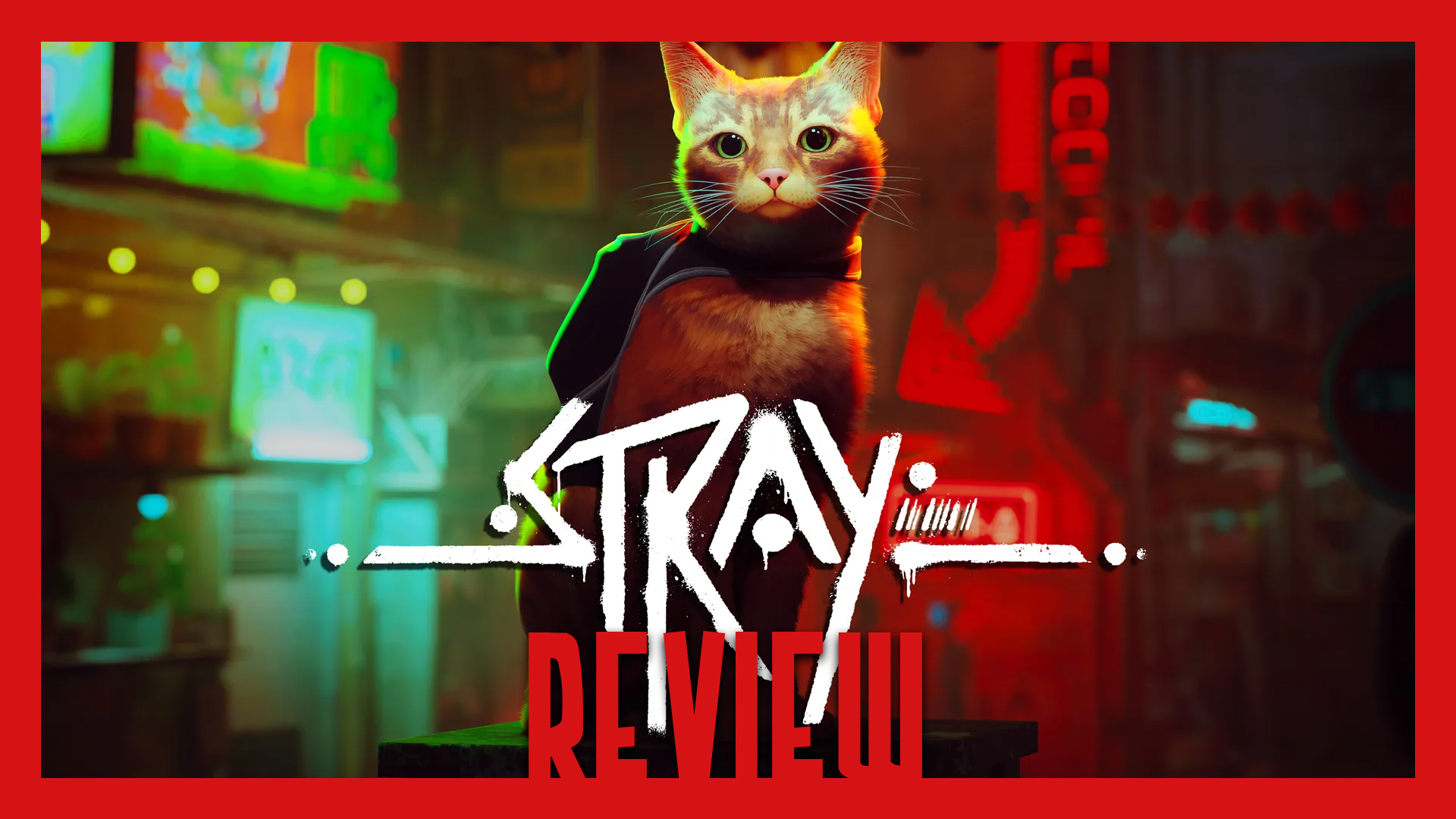
    It’s easy to reduce Stray down to its simplest form: a modest walking simulator with little to no action or a basic platformer with light puzzles that even the most novice gamer can solve. But Stray is proof the simplest things can bear the most meaning. It’s not a game made to be formidable or to challenge. It’s a game keen on examining the meaning of home, community and the mystery of its own world. It’s a game meant for anyone longing to be moved by a journey of curiosity and awe. Stray isn’t a gamer’s game but rather, an experience to be remembered.

    Set in a very distant future in the remains of underground human civilization where sentient computers have assimilated as humans, players take control of an unnamed cat who is separated from its family in the lush outside world. As the stray makes its way through the neon-tinged labyrinth, players will encounter quirky robotic NPCs, tiny bacterial enemies called Zurks, oppressive law enforcement, and B12, the amnesiac robot who serves as the guide throughout the adventure back home. Much of the world is unraveled through B12’s perspective, whose reactions serve as the emotional core of the game. The cat, along with the audience, is the spectator while B12’s journey of self-discovery is what drives the narrative. 

    The adventure, as mentioned, is simple. Stray takes a no-frills approach to its gameplay loop, focusing on the barest essentials. The game is fairly linear with no backtracking involved. There are hubs such as The Slums or Midtown where players can freely explore without advancing the story and where players can do fetch quests. The story is divided into a couple of chapters with each one seamlessly flowing into the next.  A stripped-down traversal system is Stray’s most predominant mechanic where all it takes is one button for the cat to jump from platform to platform with no precision required. Unlike our real world where cats practically can and will jump on anything, Stray only allows certain objects for platforming. These objects are signified by a button prompt which may be turned off for a more seamless experience. There is no combat in this game save for a portion where the cat is given the means to fend off Zurks. A very basic stealth section is present in the latter parts of the game where the cat needs to hide from patrolling sentinels. Beyond those segments, players may only avoid and run from enemies they encounter.

    Stray compensates its lack of gameplay depth through its relatively immersive design. It isn’t quite an immersive simulator but it has elements that make the world feel seamless. In true feline form, Stray’s world is meant to pique every ounce of the player’s curiosity. This is achieved through a beautifully crafted post-apocalyptic world that marries the urban aesthetics of countries like Hong Kong and Taiwan with retro-cyberpunk flourishes. The game’s concrete neon world is nothing short of spellbinding with each of its corners meticulously designed to tell its own story. Not to mention the world’s sense of scale and perspective which is utterly breathtaking. From alleys that are overcast with striking neon lights to the towering concrete that overlook it to the horrific mutations that grow underground, there’s always something to look at in Stray. 

    Stray also never bogs players down with objectives or map markers, giving players the freedom to immerse themselves in the story at any level. There’s a menu for items picked up but it hardly gets in the way. NPCs will tacitly bring up objectives that can be fulfilled but the game never presses players to complete it. Instead, the game gives players the space to intuitively connect a random item they may have picked up exploring with an NPC’s random line of dialogue. Intuition is Stray’s driving philosophy and its gracefully integrated into the gameplay by developers BlueTwelve Studios. 

    But perhaps the most significant and defining element of Stray will be the things players can do as the cat. Scratching, sleeping, meowing, and nuzzling are some of the things players can do, which in turn, Stray’s world responds to. Meowing elicits reactions from the robots surrounding the cat. Nuzzling up to them garners affection. If players are feeling mischievous, the cat can even trip NPCs on a stroll. The cat may even find its own head stuck inside a paper bag. These are things that seem insignificant within the totality of the game but it’s inarguably the most essential part of it. To experience the journey and world through the eyes of a lost cat finding its way home is Stray’s greatest offering and it does it in strides.

    Even as its imperfections persist, Stray lands on its own four feet. And like a true cat, it will outlast and outlive all the things working against it. It’s not a perfect game by any means but it’s one that will resonate profoundly.

  • REVIEW: ‘Love Accidentally’

    REVIEW: ‘Love Accidentally’

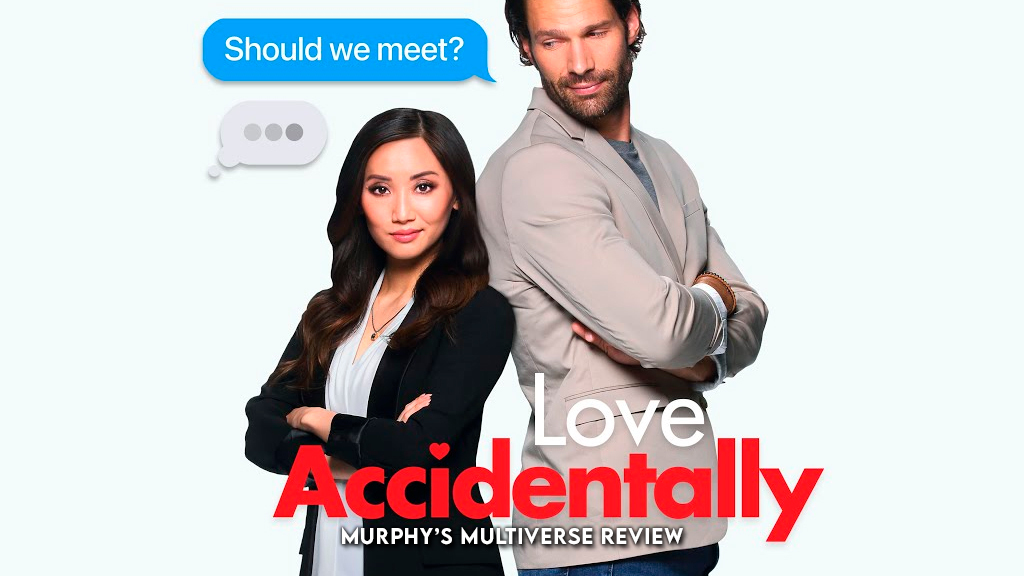
    Freevee’s Love Accidentally is everything fans expect from a Hallmark movie, but perhaps not in a good way. This cheesy romance is an easy watch, but it’s far from good. While the cast is decent – Brenda Song is the leading lady – the film is impractical and poorly acted.

    Love Accidentally follows Song’s Alexa Parker as she seeks to earn a promotion at her job. This being a cheesy rom-com, however, Parker finds herself facing competition in Aaron O’Connell‘s Jason, who will do absolutely anything to earn the promotion over Parker. They despise each other, so naturally, their story soon turns into a mysterious love story, right? (This is not a spoiler as it is evident in the trailer.) It’s a love story that sees plenty of issues as it unfolds, and ultimately ends with the truth being unveiled.

    After her boyfriend dumps her in a restaurant on her birthday, Parker accidentally drops her phone into liquid and ruins it. Even worse? She forgot to back it up in the cloud, so when IT gives her a new phone, she’s lost all of her contacts. Eager to talk to her friend about her broken heart, Parker texts a number she believes to be her friend, only to discover it is a wrong number. That wrong number? None other than Jason, who was also dumped earlier in the day. They spend the rest of the movie secretly texting – well, using voice to text – throughout the rest of the movie, failing to realize who they are talking to all along. At last, not for some time.

    It’s a very cliché storyline, which is fine. Romantic comedies are great when they embrace clichés and Love Accidentally would’ve easily been one of them if the story was stronger. While the whole voice to text thing was more than likely used to keep the audience engaged, it does come across as awkward, especially when they’re doing it in public and spelling their hearts out to one another. It’s an odd choice, and in it is those moments were the acting seems to suffer because of how awkward it is. Song and O’Connell make for an attractive couple, but there is absolutely no on-screen chemistry between the two of them. It’s all the more evident in the final moments they share together on screen. They work well with the banter part of the film, but when they’re brought together and supposed to share a connection, it fails to come across the screen.

    The film was written by Robert Dean Klein, whose biggest film is perhaps Little Fish, Strange Pond, and directed by Peter Sullivan, who has directed a slew of television movies. While there’s certainly nothing wrong with two men working on a romantic comedy, there are eyeroll worthy moments in the film that feel like this was written by men who had no business crafting a romantic comedy. There’s a comment made in the film regarding the leading man’s reading material, where a character dubs it chick-lit and gives him crap for reading it. It’s a scene that feels entirely unnecessary; it serves no real purpose other than to get a jab in.

    In the end, Love Accidentally has all of the ingredients for a cute romance, but the film doesn’t know what to do with them. Overall, the basis of the story just feels unrealistic and it is made all the worse by the poor acting. It might not be the worst rom-com out there, sure, and I did enjoy it to an extent… but it’s painful to watch at times. Still, Love Accidentally is not the worst way to spend a rainy afternoon.

  • Book Review: ‘Zatanna: The Jewel of Gravesend’ by Alys Arden and Jacquelin de Leon

    Book Review: ‘Zatanna: The Jewel of Gravesend’ by Alys Arden and Jacquelin de Leon

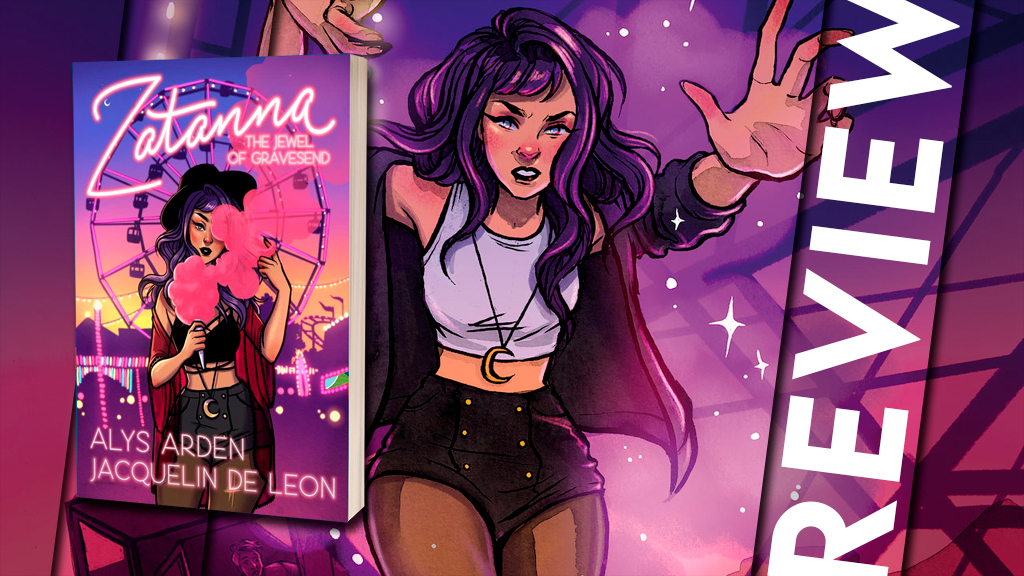
    Zatanna Zatara made her first appearance Hawkman #4 from DC Comics back in 1964. She was created by Gardner Fox and artist Murphy Anderson and has gone on to become one of DC’s most magical characters. So, it’s not entirely surprising that the character was next in line for her own graphic novel origin for young readers. While the graphic novel stumbles occasionally, Zatanna: The Jewel of Gravesend by Alys Arden and Jacquelin de Leon proves to be an exciting take on Zatanna’s origin.

    Zatanna: The Jewel of Gravesend focuses on Zatanna’s search for the truth. The story takes place in Coney Island and follows Zatanna and her family, the Starr family, during their life at the Golden Elephant. Her parents, Ezra Starr and Lola Starr, run an illusionist show on Coney Island along the boardwalk. For the young Zatanna, life in the Golden Elephant and on the boardwalk is all she knows. However, after a series of mysterious events, she soon finds herself questioning everything as she goes on the search for Giovanni Zatara. For fans of the character, Zatanna’s search for Zatara will come as no surprise. However, for those unsure of Zatanna’s origin, the search for Zatara will come as a well-executed surprise.

    Arden does a great job of crafting Zatanna’s beginnings. The way she goes about introducing her magic and the mystery surrounding it is wonderful. There are, of course, some hiccups along the way, though. At times, it feels as though The Jewel of Gravesend spends too much time on the little moments and not enough time on the big moments. This is especially the case in the second-half of the story. While it is great to see Zatanna’s relationships with her friends and Alexei develop, sometimes it felt as though some scenes weren’t entirely necessary. The most frustrating bits came as Zatanna began to come to terms with who she was and what she was capable of doing.

    As she begins to use her newfound abilities, the entire story changes as the bad guys of the story are finally introduced. While that bit is handled incredibly well, it’s frustrating seeing how quickly the story changes because it’s all over so quickly. It’s often expected these books will get sequels, or that new fans will go to the comics in hopes of learning more about the characters. Still, The Jewel of Gravesend could’ve benefited from a somewhat tighter ending. Sure, it’s okay to leave readers wanting to know more and to tease a potential continuation, but most of the bigger questions should be answered by the end to allow for new stories in the next installment.

    Even with an open ending, though, The Jewel of Gravesend is delightful. It’s a great take on Zatanna’s origin story and the artwork is absolutely stunning. The coloring, the shading, the design — all of it is great. It’s hard not to get lost in the pages of the story when the artwork is so expertly crafted.

    These stories might be crafted for a younger audience, but The Jewel of Gravesend is a graphic novel all ages can enjoy.

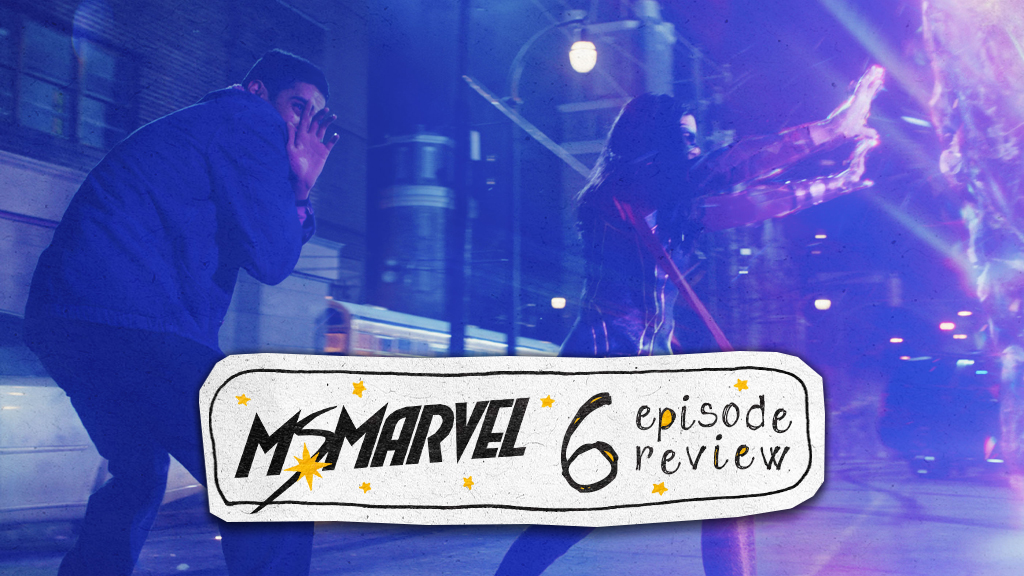
  • REVIEW: ‘Ms. Marvel’ Finale—”No Normal”

    REVIEW: ‘Ms. Marvel’ Finale—”No Normal”

    While the finales of Marvel Cinematic Universe series have generally struggled to stick the landing, the Ms. Marvel finale managed to do justice and provide closure to Kamala’s story while still setting up massive implications for the future of the MCU. It did gloss over most of the unanswered questions about Kamala’s powers, which is disappointing. Still, it seemed to “answer” them in one of the most exciting—and likely polarizing—ways possible.

    Kamala’s story in Ms. Marvel began as a relatively small-scale tale of a superhero fangirl in Jersey City. So much of the absolute charm of the early episodes of the series is centered around her family and friends in this context. The second act of the show brought forth her mysterious and eye-opening history that brought the show to new levels of depth and intrigue. While the penultimate episode left the status of her main adversary precarious, the finale skillfully but simply brought it back to where it all started—high school.

    Like any classic satisfying finale, the entire ensemble got involved in meaningful ways. The high school sequence with the Department of Damage Control was a warm reminder of the innocence and youth of the main hero and showed a glimpse of what “Ms. Marvel” could be as a hometown hero. Fans of Ms. Marvel comics will appreciate the subtle nods to the comics and the ways certain elements were rearranged in order to fit the live-action story. While much of Kamala’s reckoning with her friends and family after her reveal that she is the masked hero was too quick and smooth, it was likely the better route for the ending of such a short series. 

    Kamala finally got her “Ms. Marvel” moment(s) this episode as she donned her final costume, adopted her name, and took on her greatest challenge yet. Anyone familiar with her “embiggening” from the comics would be giddy to see the resemblance they gave her to her comic book counterpart in the finale. It was a mystery how Kamala would adopt “Ms. Marvel” as a mantle in live-action, but it was ultimately grounded in the name given to her by her parents, which nicely ties in the heavy family themes of the series into her superhero identity. 

    The main villain of the finale was set up in the post-credit scene of the first episode, though Damage Control did not play a particularly large role in the bulk of the series. So while the switch from the Clandestines back to the DODC as the adversaries is not seamless, there was enough Damage Control before the finale to require some resolution to that aspect. The organization represented a lot of Kamala’s ordinary-life struggles, so her overcoming the racist, xenophobic, and enhanced-individuals-hating villain makes the win fulfilling. The question of Damage Control still lingers, and the willingness to take the “bad apple” approach to the DODC calls into doubt how aggressive the future of that organization actually is. Similarly, Kamran ends the series in a surprising way as not quite a villain but with no real resolution.

    Of course, the moment of this finale that will gobsmack countless fans is Bruno’s reveal to Kamala that she has “a mutation” in her DNA. Considering the long-running debate over Marvel Studios not making Kamala an Inhuman, the fact that she may be the first confirmed mutant of the MCU is nothing light. It is too brief to draw any major conclusions from it yet. Are there others? How long have mutants been around? How does it actually play into her powers? It is all unclear. Part of the problem is, as mentioned, that the series declined to fully explain Kamala’s powers and ultimately left the Noor dimension a vague resource to draw from in lieu of Inhuman lore. In any event, the “mutation” drop was one exciting way to finish out the finale. Because it was mentioned so late, it did not affect, confuse, or overpower the rest of the story that came before it, and it without a doubt will keep eyes on Ms. Marvel going forward.

    Just as the mutant reveal sparked curiosity for the future of the character, the post-credit scene set up a predictable—but major—next step for Kamala. For whatever reason, Kamala’s bangle goes haywire and seemingly causes Carol Danvers and her to switch places, with Carol popping up in Kamala’s room. Brie Larson’s cameo is a fun, high-profile inclusion, but the fact that she and Kamala still never actually meet in the series leaves something wanting. Clearly, The Marvels will take on a huge role in exploring the next steps of Kamala’s story. Her powers are likely tied to something bigger that will play a role in that story. Even with that knowledge, the downside of Ms. Marvel was the eventual lack of answers on the mystery it created.

    Looking past all the implications of Kamala’s “mutation” and The Marvels tease, the finale did an expert job of tying the series in a bow with respect to Kamala’s origin as a Jersey City superhero. The transition between the threads being weaved in Episode 5 and the final episode is a tad choppy, but ultimately the right call. Ms. Marvel ends its tenure on arguably the best finale of any MCU series, and arguably as the best series itself. Iman Vellani and the rest of the stellar cast brought the charm and heart of the beloved character to the screen, and the show is one of the few to manage the 6-episode format in a satisfying and rewarding way.

  • REVIEW: Netflix’s ‘Resident Evil’ is Surprisingly Enjoyable

    REVIEW: Netflix’s ‘Resident Evil’ is Surprisingly Enjoyable

    SPOILER-FREE REVIEW!

    When it comes to video games, Resident Evil is one of the most beloved video game franchises. It is also one of the worst-reviewed film franchises, which, unlike its inspiration, continued to see a decline in profit throughout the years. So, knowing that Netflix’s adaptation of Resident Evil would draw inspiration from both the games and the films was worrisome, to say the least. And yet, the series manages to be everything that the films were not. Yes, there are drastic changes from the characters fans have come to love – or hate – in the games. Yet, they somehow work.

    Fans of Resident Evil will most likely know Albert Wesker as one of the most memorable villains of the video game series. He’s the captain of the Raccoon City Police Department’s Special Tactics And Rescue Service unit in the video games. In the series, however, Wesker is a scientist who works for Umbrella and has been working with them to develop a product called Joy that can present some issues for those that take it. While fans are sure to expect the asshole Wesker from the games, the Wesker presented in the series – at least, initially – is a much more levelheaded character who is eager to protect his kids: Billie Wesker and Jade Wesker.

    The first episode of Resident Evil is a bit of a slog at times. In fact, it almost feels like it wants to be a Resident Evil take on The Walking Dead. However, as the story progresses, it becomes an exciting story of family, deception, love and pain. It is of note that Resident Evil moves between the past and present frequently and often without warning. While it can be frustrating, there is a reason the story is told this way. It allows for the world and its characters to be established quickly, while also propelling the story forward. It’s an odd choice, sure, but by each episode’s end, the story manages to come together with ease.

    Ella Balinska is wonderful as Jade Wesker. As frustrating as the character’s choices can be from time to time, Balinska proves to be a star in the making. She commands the screen and often outshines the rest of the cast, including her “twin.” The character is reckless, but operates from a good place and when Balinska nails those moments of conflict within Jade? She does so wonderfully. Then there’s the always excellent Lance Reddick who is a force to be reckoned with in Resident Evil. Not only is his casting in the series stellar, but Reddick delivers some of his best work in the series.

    This is very much a story about a father and his daughters, but it’s also a story about the Umbrella Corporation, the T-virus, and corruption. Perhaps that is one of the best things Resident Evil manages to successfully do: craft two connecting stories that blend seamlessly when all is said and done. The story of the girls and their father is just as vital to the story as are the various creatures that occupy the screen. It’s the perfect blend of horror and heart. Especially when the series introduces some of the most iconic elements from the video games.

    The series serves as an origin story. Not just for the characters, but also the world of Umbrella and the T-Virus. It tells a cohesive story that weaves together into one larger-scale story that moves between timelines. It’s massive in scope, and yet grounded at the same time. Perhaps not a phrase one expects to hear when referencing a horror video game franchise, but it’s the most accurate description. And while these characters and their stories are only getting started, Netflix’s Resident Evil doesn’t waste any time teasing its future.

    The only place where Resident Evil stumbles occasionally is with its cinematography. That isn’t to say all of the shots are muted and unaesthetically pleasing – in fact, that’s far from the case. The set pieces are so well constructed that, when shot appropriately, the imagery can be stunning. As for the music, Resident Evil does a great job incorporating music here and there, and even manages to include some of the piano music from the video games.

    The first season of Netflix’s Resident Evil proves a good adaptation of these games is entirely possible. The films might’ve been a disaster, but Andrew Dabb has been very vocal about his love for the games and, despite some changes, that love is evident in the final product. From the well-thought-out Easter eggs, to the inclusion of key story points, Netflix’s Resident Evil is the only adaptation of the video games that matters. (Sorry, Resident Evil: Welcome to Raccoon Citythis is a Resident Evil story worth watching.)

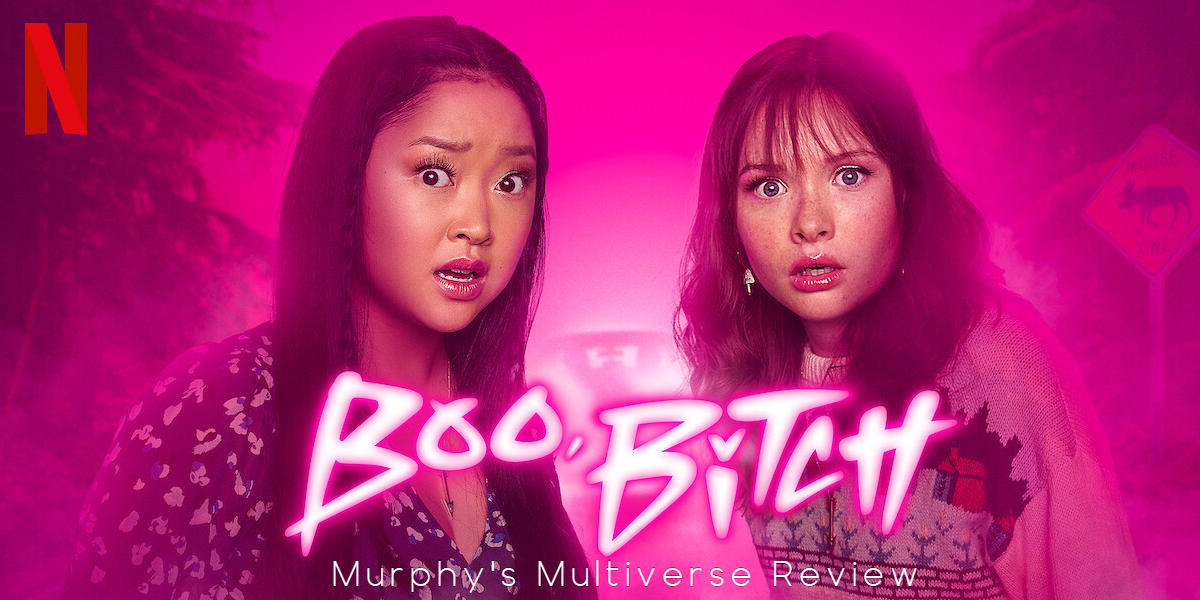
  • REVIEW: ‘Boo, Bitch’

    REVIEW: ‘Boo, Bitch’

    When it comes to life, there’s only one certainty: death. It’s a subject we often see in mainstream media, however, that doesn’t necessarily mean it is handled all that well all of the time. In fact, death is often used as a ploy to elicit sadness and then all but ignored in most instances. Netflix’s limited-series Boo, Bitch takes a much different approach. It tackles death head on and brings its characters through the grieving process, all while reminding its audience to stop fearing life until death becomes a possibility. The name of the series could be off-putting for some – although it totally works for the show — but Boo, Bitch is easily one of the best young adult shows to debut in some time.

    Lana Condor received her big break courtesy of Netflix’s adaptations of the To All the Boys I’ve Loved… books by Jenny Han. So, it’s not entirely surprising that the actress opted to reteam for the streamer for her next project – in which she also serves as an executive producer. That series proved she was able to headline a project and Boo, Bitch only reaffirms as much. Condor stars alongside Zoe Margaret Colletti (Scary Stories to Tell in the Dark) who holds her own against the actress. Both Condor and Colletti are fantastic and easily outshine most of the supporting cast. They manage to sell the emotional moments just as well as they sell the humorous moments, which isn’t always an easy task to do. One could only hope that their performances in Boo, Bitch will continue to open doors for them going forward as Condor and Colletti prove they’re both leading ladies with Boo, Bitch.

    Boo, Bitch tells the story of two best friends in their senior year of high school as they try to make it a year to remember. Having spent most of their high school lives on the sidelines, Erika Vu (Condor) and Gia (Colletti) are eager to leave a legacy at their school and finally be “seen” by their fellow seniors. It’s a simple enough concept, except that things don’t necessarily go as planned. As the trailer teases, one of the girls ends up dying and becoming a ghost, and they’ll both seek to live their best lives before it becomes too late. It’s during this journey to live that Boo, Bitch excels in its storytelling. Sure, there are moments that are ridiculous – the shorthand used between the girls can become too much at times – but the moments are few and far between, thankfully.

    One of the most satisfying bits of Boo, Bitch is that it takes on the usual stereotypes we’ve come to know in high school and somehow manages to make them work within its own story. The high-school’s resident bitch is there and incredibly important to the story, as is the school’s dreamboat. While those characters are woven into the story wonderfully, Boo, Bitch does stumble in its tackling of bullying – in that it feels like the bullying subplot is there merely to move the story along. It doesn’t really offer any true substance to the story. Even with that in mind, Boo, Bitch proves to be an exciting young adult series worthy of a watch.

    Most limited-series will initially sell themselves as limited, only to leave things open for the hopes of another season. Boo, Bitch is very much a limited series with a complete storyline. Sure, if the creators wanted to, they could continue the story, but there’s no need to because the ending is satisfying. It’s a nice change of pace to have a limited series truly present itself as limited with a story that provides a true beginning, middle and end.

    Given the twists and turns that take place in Boo, Bitch, this is a series it’s best to go in with little to no knowledge. The element of surprise only helps to sell the emotional aspect of the story. Overall, Boo, Bitch is a joy to watch. It’s a heartwarming dramedy sure to make us question what we’re afraid of in life and what we’re willing to do to be happy.

  • REVIEW: ‘Ms. Marvel’ Episode 5—”Time and Again”

    REVIEW: ‘Ms. Marvel’ Episode 5—”Time and Again”

    In typical penultimate episode fashion, Ms. Marvel’s “Time and Again” spends the thrust of its runtime in 1940s India following the mysterious Aisha. On some level, the episode did what was somewhat expected of it—the viewer got to see the entire “last train to Karachi” story that the series had been hinting at since the second episode. So much of Kamala’s story and super-origin rest on Aisha and her death, so watching it play out resonated on another level than dealing with it through exposition. While every moment of the episode had the potential to reveal an answer to a major question, it was almost surprising how little the audience’s understanding has changed by the end of Episode 5. The episode is another prime example of phenomenal storytelling by the series, but it is the first time it has felt somewhat frustrating in the lack of details and foundation. The rushed Clandestine demise also opened up the door for a very uncertain and unpersuasive final adversary for Kamala. Considering Marvel Studios’ Disney+ track record, the fact that so much is seemingly left for Ms. Marvel’s finale is as nerve-wracking as it is exciting.

    And the larger flashback sequence was beautifully human, even with freckles of Najma and bangle treachery sprinkled in. It invoked pure warmth and love between Aisha and Hasan, and the family stronghold of Ms. Marvel has proven once more to be one of its most expertly crafted elements. Not only was the human element noteworthy, but Marvel Studios took a (relatively) bold step into depicting the real historical world events of Partition. While Captain America: The First Avenger certainly brought a campy, sanitized, and fantasized version of World War II to the table, Episode 5’s portrayal of Partition and the events surrounding it is a far cry from what the Marvel Cinematic Universe has been willing to acknowledge before.

    Even though “Time and Again” undoubtedly tread the path of resolving the underlying mystery of Kamala’s powers, it somehow left even more questions to be answered. Most significantly, Kamala clearly did some version of time traveling to lead Sana back to her father. Such an act has countless and far-reaching potential consequences in the MCU, yet it is not explicitly confirmed or further explained in the episode. It potentially answers the question as to where the second bangle is—Kamala brought her own into the past—but that still is far too uncertain. Sana’s comment that, while everyone would love to know what is going on, is simply just the product of two people in love making something bigger than themselves, is a bit concerning for those wanting answers. That note almost seems to signal that the finale does not intend to fully flesh out the inter-dimensional elephant in the room, which is frustrating.

    The “veil” breakdown toward the end of the episode, unfortunately, fell a bit flat for a similar reason. The Noor Dimension had been built up as the driving plot device and, in a way, adversary. It seems to have come and gone quickly with little explanation for why it opened up a portal in the first place. Moreover, Najma having the ability to close it and transfer completely out-of-nowhere powers to Kamran also invokes far more questions in a series that previously felt like it carried just the right amount of secrets.

    Still, the ups and downs of Episode 5 were genuinely entertaining. While Ms. Marvel has not reinvented the MCU wheel, the edge-of-your-seat feeling during the train station scenes and the longing for answers is a happy consequence of the series’ ability to tell a moving, gripping, and intriguing story. While this penultimate episode maybe did not provide the number of surprises expected or hoped for, the thrill of the ride thus far is, for the most part, unmatched in the MCU.

    Overall, “Time and Again,” is immensely enjoyable as its own story, but it manages to be frustrating in how much it holds back. The MCU series are notorious for rushed and forced-feeling finales, and where this episode leaves off is not particularly encouraging in that context. It is unclear if the ultimate villain is supposed to be Damage Control (which we have not seen do anything of substance or character since Episode 2), or if Kamran will keep the Clandestine adversarial line afloat. Either way, neither of those two options make much sense going into the finale, particularly since Kamran’s status has been so consistently fluffy as to have no real impact. 

    The Ms. Marvel finale certainly has a lot of work to do to wrap up what has so far been a very satisfying series. If a second season lingers, it would make sense that so much still feels unsettled. But if Kamala’s bangle and powers are not legitimately explained in the final episode, the series will be leaving itself a hole considering the gradual reveal has been the most enjoyable part of the series’ plot by far.