Category: Reviews

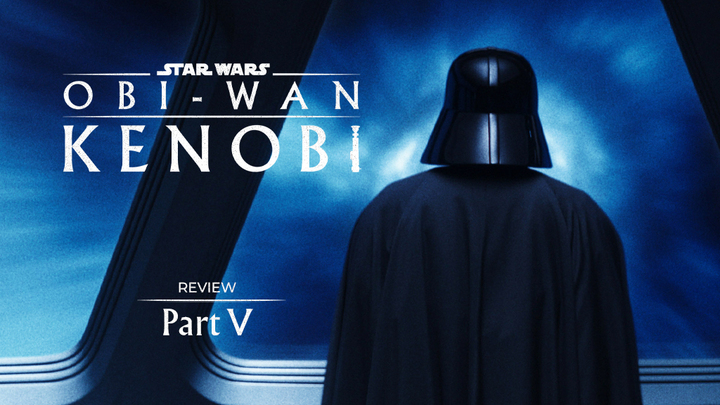
  • REVIEW: ‘Obi-Wan Kenobi’ Part 5

    REVIEW: ‘Obi-Wan Kenobi’ Part 5

    Darth Vader’s hunt for Obi-Wan Kenobi continues as we’ve entered the endgame for the Disney+ series. After a more lukewarm bridge episode, we’re back into the final confrontation as Darth Vader closes in on his former mentor and we finally unravel the secret of Reva’s obsession. While the episode keeps one wondering how exactly they’ll close out the series, it did offer a more thrilling experience than its predecessor. Yet, is it building up to become one of Star Wars best entire son Disney+?

    Let’s get one thing clear from the get-go, Darth Vader is the definite highlight once again. The force of nature that is being showcased continues to stand out and there’s something haunting about the way he blindly follows his rage. Yet, he’s also showcased to be fully aware of his surroundings; no matter the distraction. The best part is how they finally gave us a sequence with Hayden Christensen out of the suit, showcasing a lesson he seemingly has still not learned to overcome.

    Though as great as that sequence was, it once again highlighted just how many cuts are used to keep a flow going in this show. When we’re in the bunker under attack, the camera goes on a free-for-all and it sadly still is one of the show’s weakest parts. Yet, you can see the diamond under the rough when we get a final lightsaber showdown to cap off the episode. There’s a purpose for the camera work but it feels a bit too disjointed from the rest of the show’s more focused approach.

    Speaking of, Reva finally getting the necessary reveal on her overly ambitious goals; which were perfectly hinted at through the posters as uncovered by our own Hunter Radesi. In a way, it was a bit predictable in how it connected to the opening of the series and she isn’t truly “redeemed” by the end. They play on her having a different kind of ambition than the rest of the Inquisitors, but she isn’t suddenly a good person saving Kenobi. She simply has her own goals and is willing to use anyone to accomplish them.

    The stand out moment is an emotional one in the episode, which I don’t want to spoil. But, I will say I was surprised in how it did hit me and it was another highlight of the path that Kenobi has gone down in his life. There’s also a hilarious twist that kind of seemed obvious but still managed to keep people wondering if Obi-Wan Kenobi killed canon for weeks. Either way, it’s setting up what might be an exciting finale but does sometimes feel like they could’ve tightened the script up in some places, but it still was the best entry so far.
  • REVIEW: ‘Ms. Marvel’ Episode 2

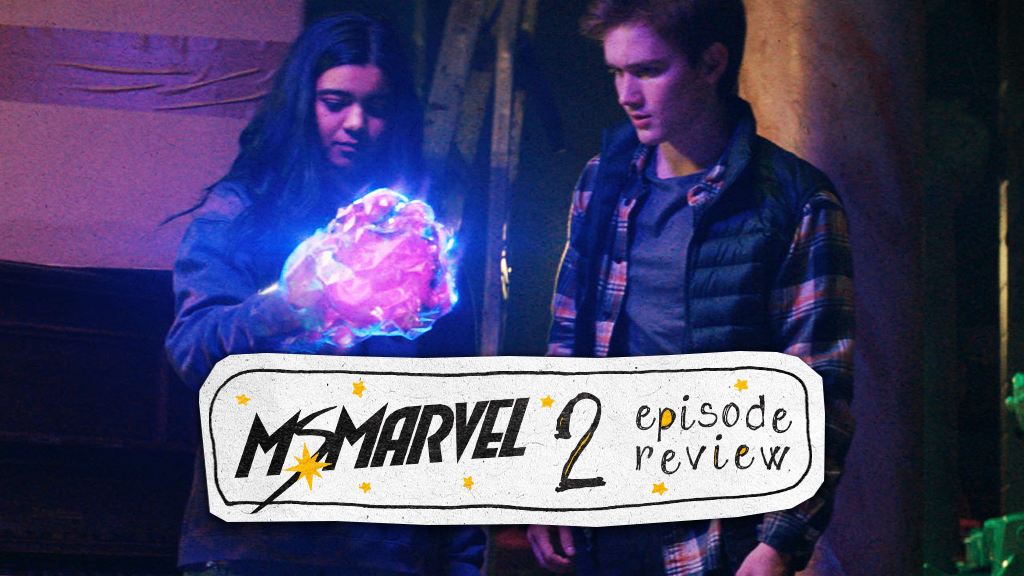
    REVIEW: ‘Ms. Marvel’ Episode 2

    After the triumphant first episode of Ms. Marvel, the series is back for its second installment. It brings most of the same shine and quirkiness, but it competes with a deeper, darker narrative as well as classic Marvel Cinematic Universe storytelling. It is still a bit too soon to figure out what exactly Ms. Marvel’s ultimate tone will be, but Episode 2 proves it has the potential to be just about anything. A coming-of-age comedy, a superhero origin story, or an emotional mystery—all of those elements can be easily teased out of this episode.

    While the series’ premiere felt emphatically unique, the second episode’s venture into more rigorous superhero territory fairly brings up concerns as to whether Ms. Marvel might eventually suffer from being “too MCU.” After all, Kamala Khan is directly connected to other heroes in the universe, and there is no denying that she will make her way into a variety of future projects. Episode 2 undoubtedly took on more conventional superhero or superpower-type tropes, though no one would expect the series not to feel like part of the universe. Still, the personality of Episode 1 felt slightly diluted in this episode, which may be something to keep an eye on as the series continues.

    The second episode aptly showcases a couple of dualities. The layers to Kamala’s story not only reflect the nuance of her character but also the complexity of the story being told. It is easy to pick out the fact that she now has two identities—“Night Light” and Kamala—but it goes further.

    On one hand, Kamala is a regular teenager with concerns such as crushes and parties. In regard to that part of Kamala, Episode 2 featured lighter subplots and more trivial (but genuine concerns). On the other hand, she is gradually getting engulfed in a clearly darker narrative surrounding her newfound powers and her family history. There is almost an awkward tension between the two levels of Ms. Marvel, though given the awkwardness of teenage years perhaps that is the point.

    While Kamala’s superhero tale unfolds, it is looking like the future Ms. Marvel will be facing two major adversaries as well. Obviously, the Department of Damage Control has made a strong racist and xenophobic entrance as a comic book DIY United States Homeland Security. Her escape from them and their drones at the end of Episode 2 cements their role as ongoing foes, but signs are pointing elsewhere for the true threat of Ms. Marvel. With nothing but some visions and an ominous final scene, Kamran’s mother is already radiating big bad energy. Kamran himself is a villain in the comics, so there is little reason to think that Kamala has not encountered her match for the series in him and his family. Given the strong familial themes of both the live-action series and Ms. Marvel comics, there is a good chance Kamala might see these new faces as trustworthy before the truth comes crashing down.

    The second episode of Ms. Marvel proves that the series did not peak in its first episode. While concessions may be made to support the ever-present greater MCU (both in front of and behind the camera), Kamala still outshines most freshman heroes across the board. Not only that, but the series is doing something that virtually no comic book adaptations can actually do: make it all a mystery. Because Kamala’s powers and origins have seemingly been overhauled from the comics, casual and hardcore fans alike have no idea what to expect with the revelation of her backstory. To keep all audiences on the edges of their seats in the MCU is not an easy feat, and it might be another reason Ms. Marvel ends up as one of the most successful Marvel Studios projects. 

    The first two episodes of Ms. Marvel are now streaming on Disney+. 

  • REVIEW: ‘Lightyear’ is More Than Just Science Fiction

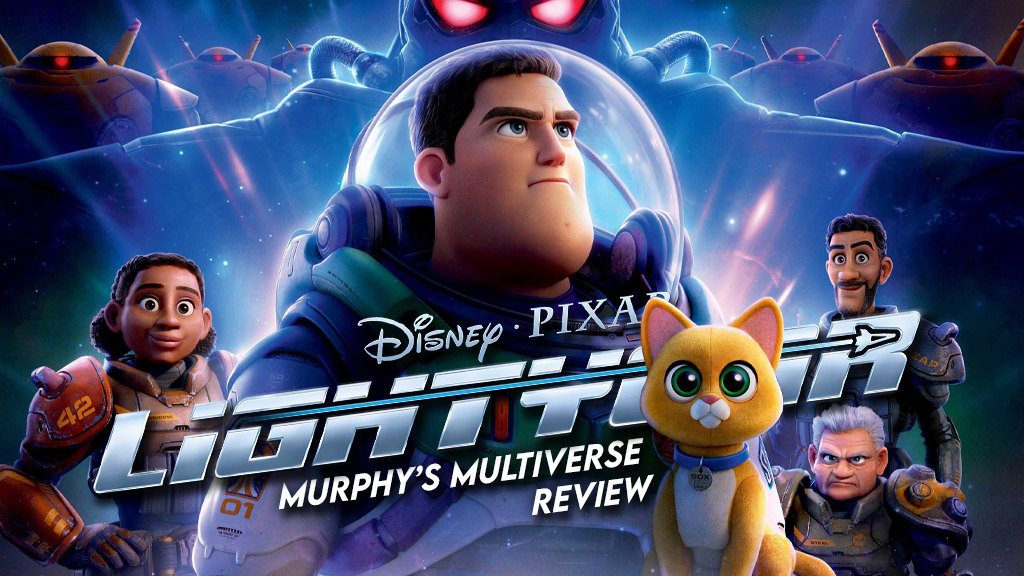
    REVIEW: ‘Lightyear’ is More Than Just Science Fiction

    In the words of director Angus MacLane, science fiction is a mustard. This is simply to say that, when applied to the sandwich of storytelling, genre is just the condiment you spread on top of a meatier center to spice things up. Lightyear, the latest creation from Pixar’s acclaimed kitchen, is absolutely coated in mustard. It’s an unabashed love letter to every space-faring, reality-warping, robot-fueled adventure that came before it. Science fiction is seeping from every corner, a preparation which only serves to enhance the spread’s flavor. However, a movie cannot survive on aesthetic alone. The dish needs something else to make it really worth consuming. Luckily, Lightyear is a fully nutritional meal.

    Let’s run through the recipe. First, as with any good sandwich, you must select a satisfying bread. This is important because the bread functions as the face of the whole platter. It’s the first thing people see when they look at the art, and when they take a bite, it’s the initial majority of what they’ll taste. In film, this would be the production value. It’s the look and feel of the movie, not just in genre, but in cinematography and score as well. As it turns out, the team behind Pixar’s first major Toy Story spin-off can bake one heck of a bread. MacLane and his crew of animators have designed what might be one of Pixar’s most gorgeous projects yet. Massive set pieces give the film a surprisingly large scope, and colorful designs give life to beautiful environments. There are moments where animation gives way to a visual perception of reality, and Michael Giacchino delivers with yet another awe-inspiring score. Truly, a gift to the senses.

    Next comes the meat. The main event. It’s what fills people up and leaves them wanting more. It’s where teeth sink in and don’t want to let go. As previously stated, a common mistake is to believe that science fiction would be the element that fills this area. It is not. With Lightyear, that honor belongs instead to its encompassing theme – love, or more specifically, family. There is no part of this movie that isn’t about family. Of course, Pixar has a long history of playing with humanity’s heartstrings, but something about the way it’s handled in this project feels different. It’s not showy, or too blunt. Here, it’s earnest, kind, and raw. It takes a movie about a man who prefers solitude, in the cold recesses of space, and injects it with a warmth that must be experienced to be believed. This is what makes Lightyear such a triumph. For all the amazing sequences and pulse-pounding action, all eleven herbs and spices, it’s the tear-inducing moments of tenderness that really bring the whole meal home.

    Obviously, none of that magic could be accomplished without an incredibly talented cast. These fine folks act as the cheese that binds meat and bread together. They add to the warmth of the dish, diversify it’s texture, and make the sandwich believable as a cohesive unit. It’s their performances, and understanding of the project and their characters, that allow for everything around them to fall deliciously into place. First and foremost, Chris Evans is the perfect Buzz Lightyear. All the gravitas of a galactic Space Ranger, with delivery set to match his grandiose surroundings, and every bit of the hidden emotion needed to bring him back down to Earth. Uzo Aduba and Keke Palmer are similarly impressive, playing original characters who are arguably as likable and central to the plot as Lightyear is himself.

    Taika Waititi and his fellow supporting cast, Dale Soules and Peter Sohn, are included in the cheese analogy, but also factor into this next bit as well. On top of the cheese, and the last thing before the aforementioned condiment, are the vegetables. On a sandwich, the lettuce and tomatoes are there to add some crunch and some health to your lunch. So, where do they fall in terms of film? Well, it’s been said for decades that laughter is the best medicine, and therefore, it must also be the healthiest part of Lightyear. What this means is the movie is seriously funny, and Waititi, Soules, and Sohn are a big part of why. In fact, Sohn‘s Sox, a robot cat companion who accompanies Buzz throughout the film, may very well become the next sidekick sensation. If laughter is good for you, then Sox is likely a cure-all.

    With that, the sandwich is complete. A specialty meal, available for the whole family where tickets are sold, on June 17th. Lightyear is a worthy addition to Disney’s ever-growing vault, and an unexpected gem from the Toy Story treasure chest. It’s hard to imagine audiences not loving this upon release, and with any luck, it may even spawn an entirely new franchise for Pixar, and Chef MacLane, to continue playing with.

  • REVIEW: Bonus Features for ‘The Northman’ Blu-Ray

    REVIEW: Bonus Features for ‘The Northman’ Blu-Ray

    The Northman is a film that seemingly came and went with little to no fanfare. The R-rated feature only pulled in $68 million at the worldwide box office, which isn’t all that impressive when the film was estimated to cost $90 million. While The Northman is technically ‘fresh,’ according to Rotten Tomatoes, with 89%, the general audience didn’t seem as enthusiastic with an audience score of 64%. With the release of the Blu-Ray last week, however, The Northman has a new lease on life with plenty of bonus features that’ll (hopefully) intrigue audiences enough to give the film a second chance.

    Included on the Blu-Ray for The Northman are a total of nine deleted and extended scenes. That’s a pretty impressive amount, unfortunately, though, the only one that is seemingly worth checking out is “Yule Murmur Dance and Aurvandil’s Speech,” which is admittedly ridiculous and yet features a strong performance by Ethan Hawke, who is severely underused in the film. Most of the other scenes seem pretty useless, although the extension of the “Bosa Saga” could have benefited the film, with “Hel’s Gate Open” being an exception. Would it have strengthened the movie? No, but it is a beautifully crafted scene and Nicole Kidman commands every second of it.

    As for the featurettes, they’re… okay. Honestly, unless you’re a fan of the film? It’s hard to get excited over the content of the featurettes. “The Faces of Vikings” and “An Ageless Epic” are both semi-interesting, but that’s mainly due to hearing what the stars involved with the project have to say — especially leading man Alexander Skarsgård, who speaks about the movie with such passion. It’s evident all involved wanted to stories of the old Icelandic sagas and the history of the Vikings. One of the most fascinating things of “An Ageless Epic” is that it delves into all of the hard work director Robert Eggers put into the film. It’s evident this was a passion project for him, and the cast clearly felt the same way during production.

    The Northman‘s Blu-Ray release might not contain a plethora of bonuses, but for fans of the Eggers film, it’s a great addition to the collection. Some of the deleted scenes are honestly impressive, as are some of the extended scenes. As for the featurettes, well, while they are nothing to write home about? They are enjoyable and do offer a good look behind-the-scenes of this epic. For those eager to look more into the story Eggers crafted, then the limited bonus features offer just that.

    In the end: The Northman wasn’t this writer’s cup of tea, but the extra features are worth a look for those that loved the Eggers film.

  • REVIEW: ‘Scare Zone’

    REVIEW: ‘Scare Zone’

    When it comes to watching indie horror movies, every so often you’ll come upon a true gem of a movie. Scare Zone is not one of those gems. At all. Scare Zone is something that feels half-baked. It truly never comes together and it’s all the more evident in the final scenes of the film. The best way to explained Scare Zone is that it feels like a project that was filmed for some friends to gain experience making movies. The scares are terrible, as is the acting for the most part. The most frustrating thing about Scare Zone, however, is that the premise for this film was promising. So, how does such an interesting premise go so wrong? That’s the question you’ll be asking yourself after watching this indie horror movie.

    The press release for Scare Zone notes that the movie hails from the creator of such rides as Shrek 4D in Universal Studios and Pirates 4D! in Sea World. It’s odd that these are used as selling points. A Shrek ride isn’t exactly something viewers will want to consider when debating to watch Scare Zone, even if the ride is enjoyable. Perhaps the most frustrating part of the movie, though, is that it was filmed at Halloween Horror Nights. In a film that is supposed to tease what would occur if a killer nested in a haunted house, Scare Zone could have easily taken advantage of its setting and yet, it doesn’t. It never feels as though the movie understands how to tell its proposed story. Sure, horror films have a habit of trying to be funny before all hell breaks loose, but Scare Zone seems determined to be funny more so than scary. It’s a mixture of the acting and the poorly written dialogue that kill this movie as soon as it starts.

    An idea is nothing if it is poorly executed. While writer-director Jon Binkowski had a great idea, it didn’t translate to the screen. What if there was a killer that lived on set of a haunted house-type attraction and was driven to kill unsuspecting workers? It is a great concept and something that would make sense to film at Halloween Horror Nights. Unfortunately, Scare Zone feels like a minimal effort take on the premise. It spends a fair amount of time trying to build a relationship between two of the haunted house workers, and a majority of the kills aren’t even shown. The ones that are? Well, they’re more amusing than scary.

    If Binkowski had the budget along with better talent and a tighter script, Scare Zone could’ve been an enjoyable little horror movie. But this isn’t about what-ifs, this is about a movie that falls apart almost instantly. It’s described as a well-received indie horror film, so perhaps there are others that enjoyed Scare Zone despite its problems. This writer sadly was not one of them.

    One final note: There are some flashing lights in the film. Unfortunately, though, the film has no warning, so please keep this in mind.

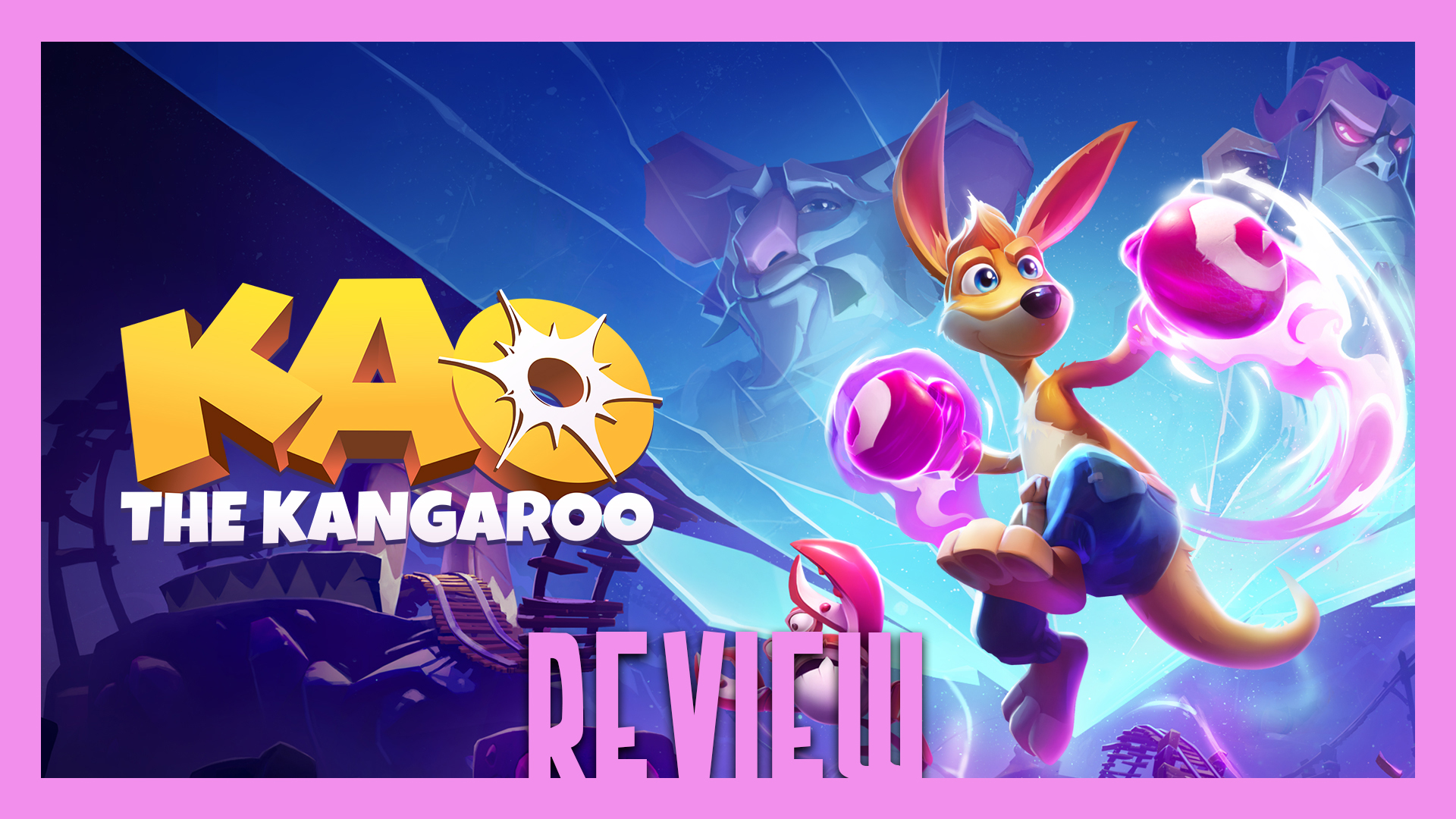
  • REVIEW: ‘Kao the Kangaroo’ Falls Short of the Knockout

    REVIEW: ‘Kao the Kangaroo’ Falls Short of the Knockout

    In the silver age of gaming, console mascots reigned supreme. SEGA belonged to Sonic the Hedgehog, PlayStation was carried by Crash Bandicoot, and Nintendo was practically owned by Mario. No gamer was worth their salt unless they had a favorite, and no gaming environment could be great until it was stuffed with images of big, cartoonish characters. Never among those company symbols, however, was Kao the Kangaroo. The Polish platformer hopped his way onto the Game Boy and Dreamcast in 2000 but was never able to secure the kind of following that studio Tate Multimedia was hoping to acquire. As a result, the series was shelved in 2005 after a measly three games, and Kao, quickly forgotten by popular culture, fell into obscurity. That is, until now.

    Somehow, Kao the Kangaroo returned. After a re-release of the franchise’s second game landed on Steam, the series developed a surprise cult following that convinced Tate Multimedia to give the whole thing another shot. Unfortunately, the Kao reboot is anything but a knockout. Instead of a triumphant re-imagining of the character and his universe, fans receive a rather sub-par retreading of the same old thing. Not only in relation to the previous games in the franchise, but also to the countless other platforming mascots in existence. Nothing much stands out when playing through the story, and the gameplay itself is a pretty standard affair.

    The plot concerns the titular kangaroo as he discovers his long-lost father’s magical boxing gloves. A gifted fighter, he begins using them to make his way through hordes of dark creatures, locate his missing sister, and uncover the mystery of the “Eternal Warrior” who threatens his world. The premise has a lot of potential but ultimately falls flat in its execution. Kao and his supporting cast lack the charm required to draw the player in and oftentimes come off as more obnoxious than they do likable. It feels mean to say, but the voice acting is also laughably terrible. Kao himself has the energy of the infamous Tommy Wiseau, causing many of his sentences to come out as total meme material. His dialogue is supposed to be funny, but not in the way it ends up coming across.

    Kao the Kangaroo‘s best attribute is its level design. The look of the world is colorful and alive, and the arrangement of its platforms provides the biggest challenge of an otherwise simple game. Players who aren’t skilled in platforming may find the traversal aspect of the game a welcome challenge. In fact, the project might have been better off if it leaned further into Kao’s kangaroo features than it does his boxing gloves. Encountering moments of combat was usually a bit disappointing, with underwhelming enemies dispatched easily. While the design of the malevolent, anthropomorphic baddies is pretty fun, they’re typically done away with after just a few punches or tailspins and only really served to break the flow of travel.

    More interesting than the actual story of Kao are its side quests, which aren’t truly side quests. In actuality, they’re just little offshoots from the main path that lead to collectibles and treasure chests filled with coins. These tend to be the best part of any level, and are always worth seeking out during the main objective. The coins can be used to modify Kao in the central hub area, which doubles as the protagonist’s hometown and base of operations. Players are brought back here after each level, where they are then able to train, explore, and find dark runes that open doorways to further progress the plot. Whether or not a monetary system belongs in a mascot platforming game is debatable, but here it at least adds something to the experience. Kao can also interact with the citizens of this little town, which is actually quite entertaining. Much like Kao, they usually say something ridiculous with the utmost confidence.

    Truthfully, it’s a shame that Kao the Kangaroo isn’t better than it is. Mascot platformers are becoming far and few between, and there was a real hope that Tate Multimedia might be able to turn that trend around with their latest effort. Unfortunately, this doesn’t appear to be the case. The project ends up being a pretty lame, deflated attempt at the genre. It almost feels as if the studio only put a portion of its energy into developing Kao, resulting in a marsupial that can’t seem to land on his feet.

  • REVIEW: ‘Ms. Marvel’ Episode 1

    REVIEW: ‘Ms. Marvel’ Episode 1

    As the 7th Marvel Studios Disney+ series and 14th project of the Marvel Cinematic Universe’s Phase 4, Ms. Marvel’s first episode manages to shine as the beginning of an origin story that, so far, feels distinct from the constant influx of MCU content throughout the past couple of years. In other words, Ms. Marvel stands out, and it does so despite not teasing fans that the series will be a game-changer for the franchise. The character of Kamala Khan makes a triumphant leap from comics to screen, and the way the episode is shot, edited, and visualized gives the start of Ms. Marvel a texture that makes it arguably the most unique-feeling project of the MCU in years.

    Of course, at the heart of the first episode and series is Iman Vellani’s Kamala Khan. Kamala is a Muslim American-Pakistani teenager from Jersey City who is obsessed with the Avengers. The character has been a comics favorite for nearly a decade, so Ms. Marvel exceeds in Vellani’s seemingly flawless portrayal of Kamala. The first episode treats Kamala’s family and cultural background like any other; for the casual viewer, Episode 1 does not subtitle basic phrases spoken in Urdu and does not baby the audience or other the Khans by explaining every detail of Pakistani- or Islamic-influenced element in Kamala’s life. She is noticeably different in terms of her background from the heroes and characters of the MCU thus far, but her culture is not treated as something mysterious or otherworldly—Kamala Khan is Kamala Khan. And her inclusion into the MCU makes Earth-616 a bit more real and a bit richer.

    Speaking of richness, the mechanics of this episode are mesmerizing. The inclusion of animation, the fast-paced editing, and the quirky shots give Ms. Marvel a visual but intangible texture that genuinely feels unique in the MCU. To achieve this, it does not have to be on the same terrain as Guardians of the Galaxy or Thor: Ragnarok. The subtlety itself is brilliant, as it feels like the viewer is in a new world without having to leave the old one. 

    Plenty of fair concern was levied against Ms. Marvel in advance due to the fact that the series changed her power set from the comics. What we see in Episode 1 is not enough to begin to truly decide whether the changes are a true downgrade. But an undoubted positive to the change is that now her powers and their origins are a mystery. In that way, the series moves into uncharted waters—even the viewer doesn’t know where the journey will ultimately take Kamala and how she could connect to the greater MCU. 

    Fans have also never truly seen the MCU from the angle Ms. Marvel has created. Kamala is all of us—obsessing over the Avengers, wishing she had superpowers, and living in an age of heroes. This “regular citizen” angle has never been explored before and Kamala’s coming-of-age and coming-of-superhero story takes place in a world fully aware and mindful of most of the events of the MCU. So seeing how Kamala works her way into the overarching MCU will surely be something special.

    The premiere episode of Ms. Marvel achieved something miraculous—standing out while fitting in. Vellani is a perfect casting and driving force for Kamala charm, and the series’ placement in the MCU feels natural. Still, between the charisma of Kamala herself and the texture of the episode, Episode 1 feels uniquely Ms. Marvel, and so far Ms. Marvel has built a world for itself that can’t help but make the future of the rest of the MCU look brighter. 

  • REVIEW: ‘Ms. Marvel’ is The Best Marvel Origin Story Since ‘Spider-Man’

    REVIEW: ‘Ms. Marvel’ is The Best Marvel Origin Story Since ‘Spider-Man’

    No Marvel origin story has captured the lightning-in-a-bottle magic of Peter Parker’s origin like 2014’s Ms. Marvel. Much like Stan Lee and Steve Ditko, G. Willow Wilson and Sana Amanat succinctly keyed into the cultural and social crossroads of the time – minus the Randian objectivism – and through Kamala Khan’s journey of self-discovery and angst, created one of the most important stories Marvel has ever published. So it comes as no surprise that, like the comic, no live-action Marvel origin story captures the same Spider-Man magic as Ms. Marvel

    Writer Bisha K. Ali does the thankless feat of transposing Kamala’s origin on the page to an origin fit for the Marvel Cinematic Universe’s slate of the upcoming films, with the biggest change being the source of her powers. Kamala goes from being an Inhuman, a race of aliens damned by Marvel Studios, to an average teen with a magical weapon. It’s a change that’s yielded much derision from comic loyalists and applause from more apologetic fans. Yet in spite of such a massive change, audiences will be pleased to see how the rest of the Kamala Khan magic remains intact. In spite of all the worldbuilding and slate building mandates, Ali keys precisely into the heart of the comic.  And this is what ultimately makes Ms. Marvel Kevin Feige‘s nth consecutive winner: the family, friendships, and the hardships on full display.

    Through a charming supporting cast and a transcendent lead in Iman Vellani, Kamala’s life unfolds in earnest ways. Her parents Muneeba and Yusuf, played by Zenobia Shroff and Yohan Kapur respectively, are Amblin-esque in the way they raise their children. They’re stern but never callous; wary of the cultures of the West but aren’t out of touch. There’s a perpetual warmth to their words even as they scold Kamala for screwing up. In a cinematic universe where awful parental figures are baked into its DNA, the Khans loom large.

    The same can be said for Kamala’s best friends Bruno and Nakia, who give Ned Leeds and MJ a run for their money as the quintessential buddies in the MCU. Bruno and Nakia serve as sturdy support systems for Kamala, both practically and emotionally. Bruno is her guy-in-the-chair; a tech wunderkind with a foundational knowledge of all things superhero. Matt Lintz plays him with an exciting eagerness that doesn’t feel like a rehash of Ned Leeds. His concern for Kamala borders on the romantic and is treated by the writing with such profound maturity. Even though his longing for Kamala is brushed aside by her own interests, he’s never bogged down by bitterness and goes far as to be a close friend to the Khans.

    Whereas Bruno is Kamala’s connection to her superhero business, Nakia is Kamala’s connection to her community. Part of Kamala’s inner conflict over her identity and duty is examined in her moments with Nakia, who is more faithful to the community Kamala finds herself always rebelling against. And like Bruno, the writing treats this contrast with dignity and understanding that their differences never come across as antagonistic. Nakia is sharply defined by the sincere idealism and determination evoked by Yasmeen Fletcher. Her arc seems minute compared to Kamala and Bruno’s superhero adventures but nonetheless feels meaningful thanks to Fletcher’s performance.

    All the wholesomeness and positivity emanated by the strong cast of characters coalesces into the vibrant ball of energy that is Kamala Khan, played by a rapturous Vellani, whose puppy-dog eyes instantly captures the upbeat, wide-eyed naivete of Kamala in the comics. The cadence Vellani brings to each moment is so infectious that the show sees itself morph stylistically around her. Much of Kamala’s perspectives are contextualized visually by the striking cinematography and editing. Scenes whip pan into one another, mirroring Kamala’s quick wit and frantic enthusiasm for the world around her. The show’s diegesis is constantly disrupted by Kamala’s musings that bring life to her superhero sketches onscreen. These quirky, animated sketches give the show a comic-like two-dimensional flair. Even Vellani’s musical tastes bleed into the show as composer Laura Karpman‘s bubblegum electropop soundscapes permeate each scene. Vellani’s performance is so deeply indisputable that this version of the show would not exist without her.

    Whether it’s intentional or not, Ms. Marvel is rife with sentimentality. Sentimentality over the MCU’s own mythology and for heroism that’s hopeful and optimistic. The big Captain Marvel question is lampshaded at the very beginning but it’s an unconvincing attempt to bridge Carol Danvers’ glaring lack of Earth adventures with Kamala as an heir to the mantle. While The Marvels is obviously slated to resolve that issue, its impact, or lack thereof, on Ms. Marvel is faint at best. Kamala’s impetus to be heroic is better contextualized through the legacy of the Avengers and all the superheroes of the MCU as a whole rather than Carol herself. Nonetheless, it’s through this legacy that new heroes are created and the show examines that purposefully.

    In the wake of Moon Knight and Doctor Strange in the Multiverse of Madness, the lack of grit and cynicism in this show feels deliberate. Ms. Marvel is ultimately a story of identity and finding hope in that identity. Even as Kamala’s teen angst begins to intersect with the grim ramifications of superheroism, the optimism in the writing never runs dry. The end result is a deeply feel-good coming-of-age tale that, in many ways, serves as the quintessential Silver Age origin story of the MCU.

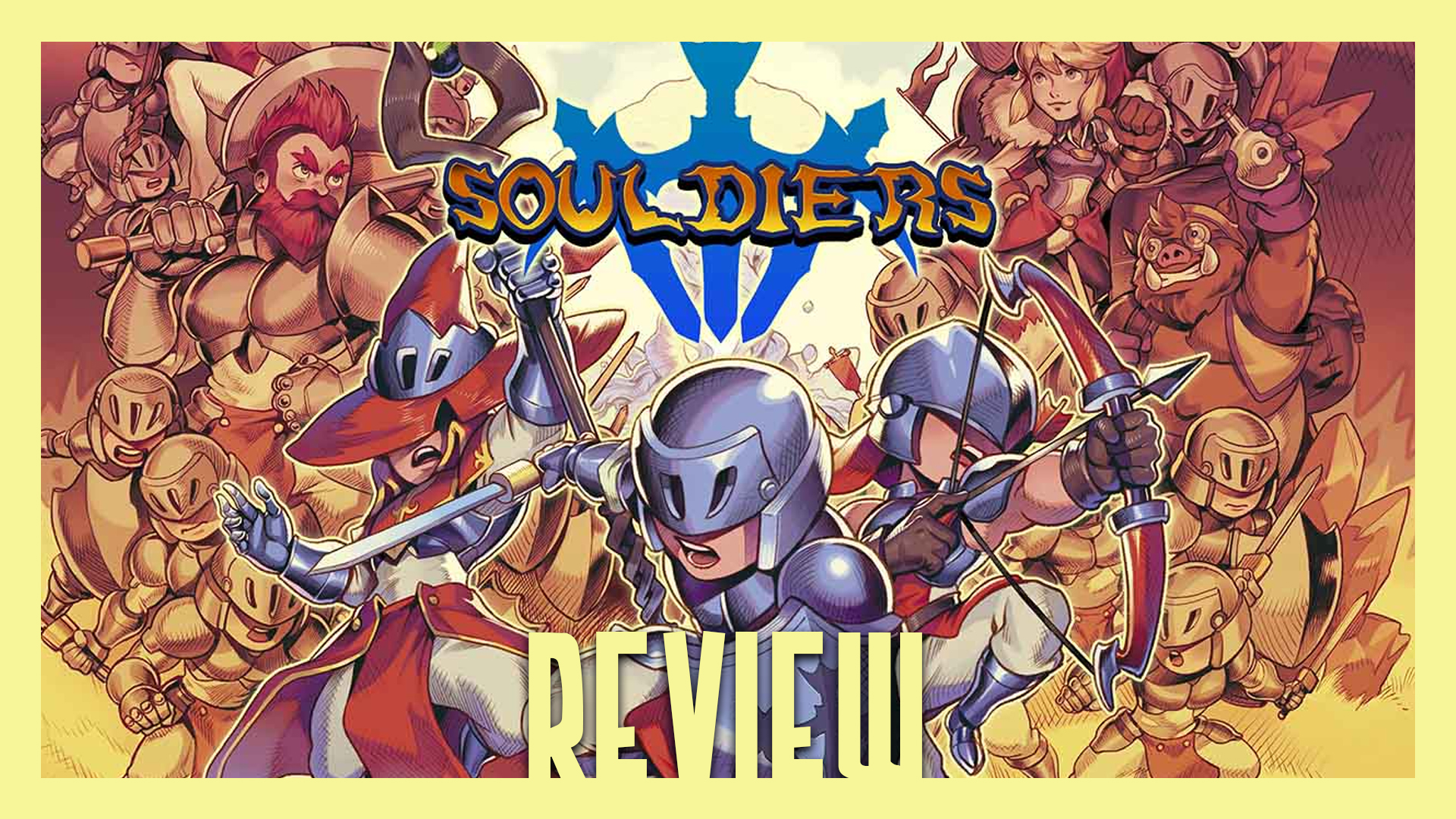
  • REVIEW: ‘Souldiers’ Is A Promising, Punishing Metroidvania

    REVIEW: ‘Souldiers’ Is A Promising, Punishing Metroidvania

    Whether it was intentional or not, the latest Metroidvania from 6-man team Retro Forge, Souldiers, has a strong JRPG essence that permeates it. Despite being a self-described Souls-like Metroidvania, nearly everything about is begging to be presented in turn-based combat. Its aesthetic harkens back to the old-school JRPG games from the 90s. Its sense of high-fantasy adventure echoes that of Dragon Quest and the original Final Fantasy. And you might as well as slap JRPG veteran Nobu Uematsu’s name on Souldier’s music. All this isn’t to say that Souldiers is better off as a completely different game. It’s to recognize how much of a love-letter Souldiers is to adventure stories of yore.

    You play as one of three unnamed soldiers who, along with the rest of their battalion, are suddenly transported into the afterlife by mysterious Valkyries. With the help of the surviving soldiers, your goal is to find out why you were transported into this unknown land between life and death in the first place and how to get back to your homeland. All this while traversing different biomes, solving puzzles, and fighting all kinds of creatures. 

    There are three soldiers to choose from. A scout, archer, and caster. Like any RPG, each soldier has their own set of attainable skills and comes with their own pros and cons. For example, the caster has low health but has a mid-ranged basic attack that homes in on enemies. The archer, on the other hand, has a full-ranged arrow attack that needs to be refilled when the arrows run out. 

    For better or worse, whichever character you pick will drastically alter your experience. Despite the game’s attempts to give each character equal footing, the punishing scenarios you are likely to find yourself in makes the experience feel unbalanced. You’re likely to run out of defensive and mobility options in a second when you run into a section where multiple enemies with unique attacks come at you at the same time. In the case of the caster, it’s a frequent scenario. 

    That sense of imbalance and difficulty make up the game’s Souls-like elements. Like any game of the same vein, the mechanics are designed to keep players constantly on their feet. You run out of stamina blocking and parrying. Anytime you use a save point respawns enemies in the area.  But unlike most of the good Souls-likes, Souldiers’ progression system doesn’t feel rewarding. It takes a long while for your character to amass a good number of skills as some enemies just don’t drop enough experience points. On top of that, the currency items are scarce and basic healing items too expensive. 

    Souls-likes are hard by design but they’re also very rewarding. You want to be rewarded with cool items for overcoming a tough fight or a tricky platforming section. Souldiers’ doesn’t quite feel satisfying or gratifying in its moment-to-moment gameplay. Its difficulty oftentimes feels questionable, with no engaging reason behind it other than to make a game hard.

    This gets in the way of the fun as it takes a while for Souldiers’ best systems to open up. You spend the first couple of hours with only basic skills and little maneuverability. The platforming starts off as generic and uninspired. It isn’t until you invest roughly 10 hours and get to the third biome that the combat and platforming elements get fun. Combined with its conservative sense of progression, players will really have to commit to get the most out of Souldiers.

    Despite these issues, Souldiers offers a depth of engagement with the most prominent being its combat system. There’s a lot to experiment with in Souldiers. One of the early skills acquired by the caster is the ability to automatically create a reflection anytime to you dodge. This reflection can be detonated, damaging all enemies nearby which add a layer of strategy to all your encounters. As the story progresses, you acquire the ability to imbue an element to your attacks which you can switch on a whim. Occasionally, these elemental attacks also serve platforming purposes. 

    Like most RPGs, items and weapons can be upgraded at a price. Secondary weapons such as throwable bombs, axes, and spears can get a small damage buff. However, one missing component is the ability to sell items. In a game where it takes some time to save enough money, being able to sell useless items should be allowed. As a Metroidvania, Souldiers meets the usual requirements. Maps are vast and intricately connected and are sometimes gated by specific skills. Sadly, the exploration isn’t as intuitive or exciting as Hollow Knight as there’s some handholding on where to go to advance the story. Nonetheless, it fulfills its purpose.

    Solely through its beautifully rendered pixel art and the polished animation that gives it life, Souldiers bypasses all its flaws and manages to be a truly impressive piece of work. Pixelated colors of endless hues that pop on screen make up the detailed sprites of characters and landscapes. Every inch feels lively; even something as insignificant as the leaves in the background moves with the wind. Character stances look graceful and attack animations are brimming with style. Souldiers perfectly captures the visual essence of iconic anime-inspired 16-bit games.

    For all its problems, Souldiers has an ambition that is commendable. It successfully commits to being a decent Metroidvania with a steep Souls-like difficulty while paying homage to its JRPG influences. If you’re looking for a challenging game that rouses nostalgia, Souldiers can’t be missed.

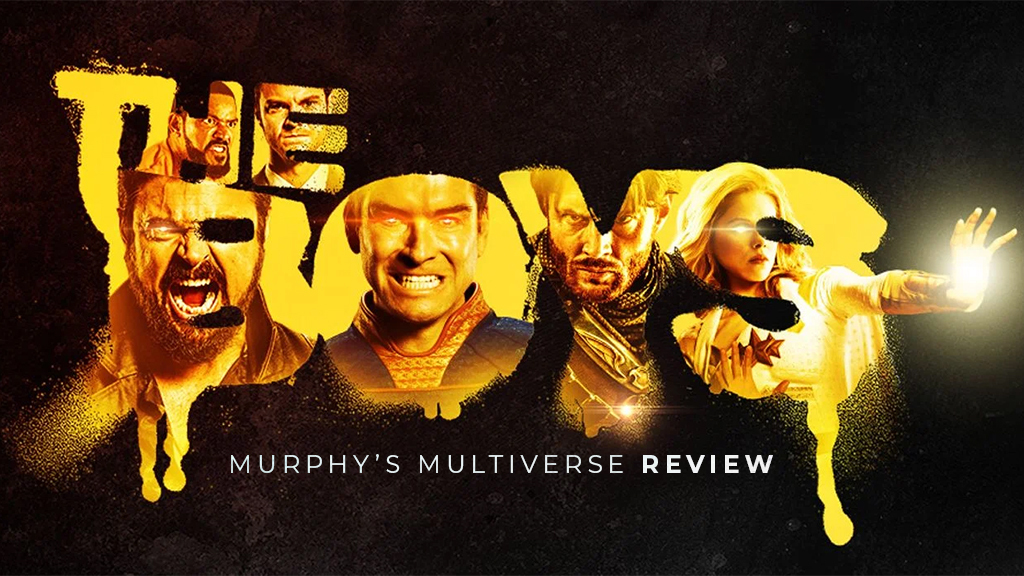
  • REVIEW: Season 3 of ‘The Boys’ is a Chaotic Ride Worth the Trip

    REVIEW: Season 3 of ‘The Boys’ is a Chaotic Ride Worth the Trip

    Over the course of two seasons, Prime Video’s The Boys has quickly become one of the best superhero series on the small screen. It achieved this not only due to its stellar cast, which is led by Karl Urban‘s Butcher, but also the willingness to play into campiness and gore. So, it’s not entirely surprising that Season 3 of The Boys decided to push the limits even more. Perhaps there are no moments nearly as memorable as a self-pleasuring Homelander as seen at the end of Season 2, but the series manages to successfully make use of its eight episodes in ways most shows could only hope to do.

    Following the events of Season 2, The Boys kicks off its third season still dealing with the aftershock of Stormfront. Naturally, her true nature has divided fans of the Seven – those that agree with her, aka Nazis, are upset over what happened to her. While others are glad to see her go. The person struggling the most, however, isn’t Stormfront. It is evident he loved her, but as this is Homelander, there’s also a sense of arrogance as he struggles to deal with his feelings. He’s very much still the unpredictable man-child we’ve seen before, and it seems Stormfront’s predicament has only made him worse. He’s more volatile than usual, and is no longer keen to be the poster boy of Vought.

    As entertaining as his shenanigans can be, they do quickly become tiresome, though. Thankfully, the creatives seemed to understand it was time to introduce a new character to focus on because as great as it is to see the boys eager to takedown Homelander, the story can become stale at times: Enter Jensen Ackles‘ Soldier Boy. Perhaps the most developed character in the series, Soldier Boy brings with him a much-needed energy boost to the latest season.

    His story is set up perfectly to weave a new and exciting tale that ultimately ties together with the Boys and their original mission with ease. More importantly, though, Ackles‘ Soldier Boy plays off of Urban‘s Butcher perfectly. When the two are together on screen, it’s hard to look away, which is saying something given Urban‘s onscreen chemistry with his team members. These two are dynamite.

    Those that are eager to see the series move away from trying to takedown Vought should be excited to know that The Boys Season 3 finally gives its secondary characters time to shine. This isn’t just a story about Butcher and his journey of revenge anymore. It’s not all about Robin and Becca. And while Ryan is an essential character this season, this isn’t a story that’s centered around him either. The overall theme seems to be that of family and self-discovery, and it’s the best dang decision the writers made this go-round. Heroes that viewers might’ve hated before? They’re given the chance to flourish. While others that the audience might’ve liked before? Well, there’s a good chance viewers will be rethinking their favorites by season’s end.

    One of the most exciting parts of The Boys has always been its willingness to poke fun at other comic book properties. Yes, there are moments of predictability, but Season 3 has largely moved away from those moments. It’s chaotic in the best type of ways and is a hell of a ride that’ll leave viewers smiling by the season’s end. As for what lies in store for Season 4, it’s clear the writers still have plenty of stories left to explore, and it seems likely the crazy train is a ways off from stopping.

    Overall: The Boys Season 3 is a bumpy ride full of chaotic twists and turns and a hell of a performance by series newbie Jensen Ackles.