Category: Reviews

  • REVIEW: ‘Card Shark’ Will Test Your Skills and Sometimes Your Patience

    REVIEW: ‘Card Shark’ Will Test Your Skills and Sometimes Your Patience

    Have you ever dreamed what it would be like as a cheater in 18th century France? Ever wondered if you could untangle a web of lies and intrigue to take your claim amongst the noble? If yes, then Devolver Digital’s Card Shark might be exactly for you, as you set out on a journey to traverse the politics of the 18th century with only your wit and deck at hand. Though, it raises the question if you’re playing the game or the game plays you? In a world of trickery, who knows if the game can deliver.

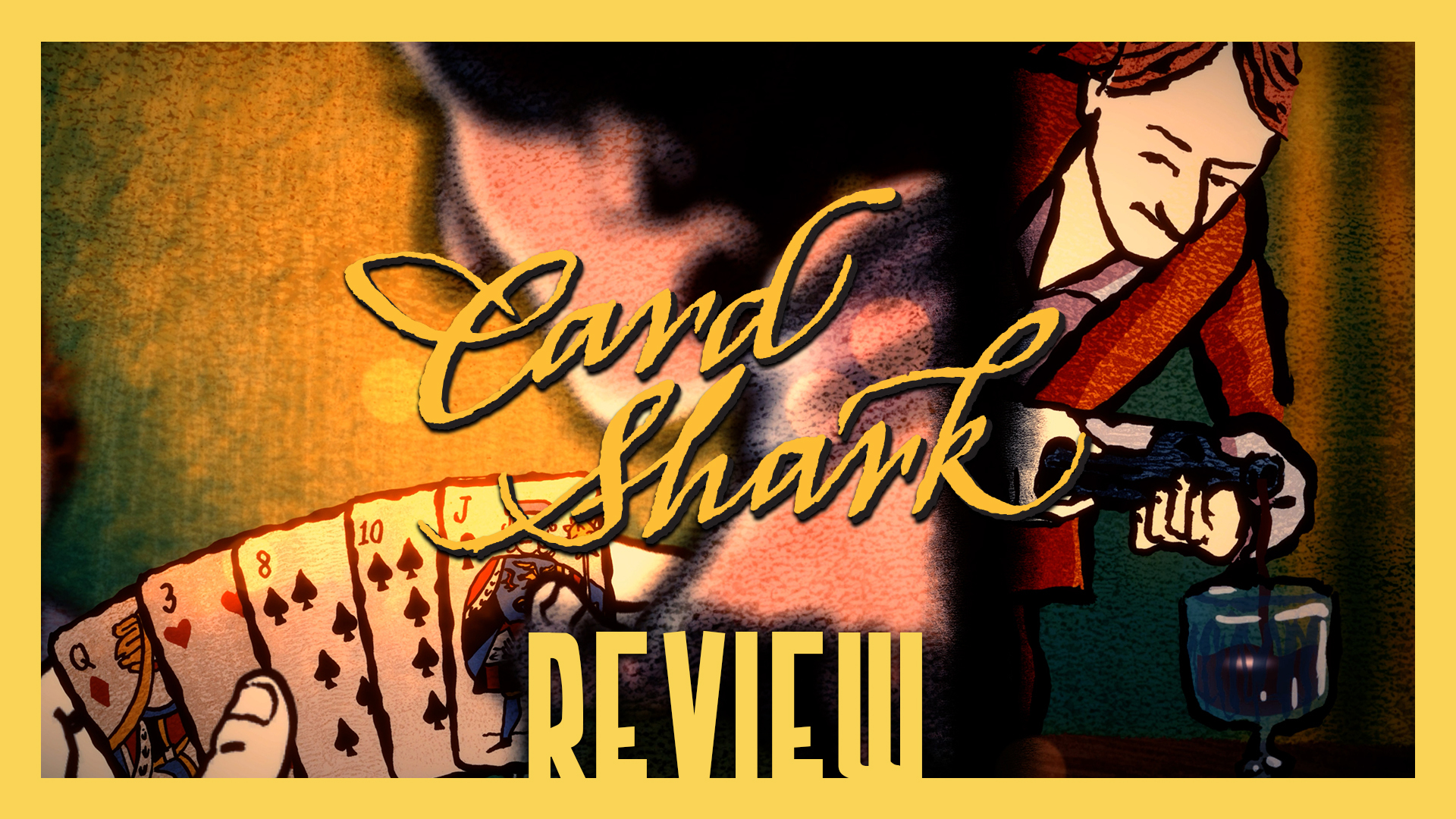
    There’s one thing that is unmistakable about Card Shark and that is it’s style. Every scenery and location feels like a painting come to life and there’s quite the variety at play here as you progress from one deceit to the next. Accompanied by historically-fitting music by Andrea Boccadoro, the art of Nicolai Troshinsky drags you into the 18th century and adds its own flourishes to even bring some nice comedy. Even something as simple as your silent protagonist making a strange gesture to show his reaction adds that little charm and personality.

    Yet, the game is, appropriately so, all about the game itself. This isn’t your traditional card-based video game. You’re not building a deck throughout your adventure like with Inscryption but rather learning various ways to cheat and gamble your way through France. While a base knowledge of the suits is swiftly taught, you go though a wide variety of tutorials that continue to increase in difficulty. With your trusty teacher Comte de Saint-Germain, inspired by the real-world historical figure, you start to find your way into nobles’ pockets.

    The game, however, isn’t just about tricking people out of their money. There’s actually an interesting historical mystery at play, as each new game helps you find your way closer and closer to unraveling of the so-called Twelve Bottles of Milk. It adds a wonderful splendor to the experience, as you swindle money and information out of your prey, which leads to some rather tense moments. Don’t be surprised if you find yourself facing the barrel of the gun or forced to duel to save your hide. Nothing is more sacred than information, and people will make sure to keep that as safe as possible.

    There’s a charm to this game, as its a simple concept at heart. Each new trick comes with specific control inputs; and some quite memorable names. Some even include unique flourishes where quick-thinking will be your friend. Don’t be alarmed if you make mistakes, as a lot of the game is practice. Sometimes you jump into one and think you have it all figured out, only for the complexities or the timings to just not work out in your favor, especially when it throws you a curveball. There’s a learning curve that mainly depends on you investing the time to figure out some of the tricks, especially as it starts mixing and matching them later on. It’s less about the difficulty but more about the execution and how the game surprises you.

    There are times where failing seems like nothing more than a slap on the wrist if you fail, but that slap can get frustrating at times. There’s no checkpoint during a game and you can’t just re-enter an area to play the again instantly. You collect cash throughout your journey, and if you run out, you have to go back to your base as a separate loadable area and it only gives you the minimum amount. You can’t determine how much money you get; the game does it for you. So, if you lose over and over again, you have to repeat the process of returning to the base, going through dialogue to get the money so you can start the mission again. At least you tend to get a shortened intro to that mission, but if you’re having a bad day, it’s not going to get much better by having to repeat this process.

    To be fair, they do add a special area where you can farm money. However, it only gives you the option to choose between three types of cheats. Once you reach this point, there is one aspect of the game that gets quite apparent. Throughout your journey, you learn 28 different techniques. Some of them aren’t card-focused but there are enough that make it a bit difficult to remember where and when you use specific techniques like injogging. It’s not that the tricks are difficult, it’s just that you get bombarded with so much information that it’s difficult when you suddenly have to revisit a technique you probably have already forgotten at that point.

    There’s a menu with the overview of what kind of techniques you’ve learned, but you do not have an option to rehearse them in case you, for example, took a break for a few days and are having trouble getting back into the swing of things. So, if you haven’t kept every step of every technique memorized, you’ll face some trouble until you get the next tutorial. Ironically, you can try out some techniques at your base of operations, but it’s only for very specific non-card tricks, which you use the least. So, the game could use an NPC or location, where you can try out the scam you learned 20+ games ago and might be having an issue remembering.

    Otherwise, you are very dependent on if that trick will return in your travels to a new location which most of the time is with something new added in. And sadly, this is the one big gripe with the game. It’s a great experience and the trickery combined with the politics makes for a great gameplay loop, but most of the game is a tutorial. You learn how to do the trick on your way there, put it together with the pressure of not being found out, and doing it for a few rounds until the other player runs out of money. If it weren’t for the various tricks and some of the stories surprises, it could get quite repetitive. Yet, you also don’t spend enough time either with one trick to really master it. You’re only option is to redo the tutorial multiple times but it’s commonly a simpler version of what you’re about to face.

    Card Shark will test you and make sure you can think on your feet. It’s a special kind of experience that even with its more “tutorial”-esque nature gives you some really challenging moments. It’s at its best when it even surprises you, such as someone else using some familiar strategies. If you’ve ever been interested in sleight of hand and just want a somewhat different type of card game, this is definitely one to not miss out. Even as it can test your patience at times, it’s stunning visuals and music will definitely keep you calm.

  • REVIEW: ‘Obi-Wan Kenobi’ Part 3

    REVIEW: ‘Obi-Wan Kenobi’ Part 3

    As the third episode of Obi-Wan Kenobi already arrived in just a few days, we didn’t have to wait too long to see where the journey leads Obi-Wan and Leia, as they find themselves on a new planet and facing some familiar threats. The story still is very much about Kenobi’s internal struggle with the past and having the literal future face him every step of the way. Now that he realizes his biggest mistake is still out there, it may come to haunt him sooner than he might’ve imagined. The question remains: can the series carry the momentum as we now reach the halfway point?

    The series continues at a slower pace, as we take our time having our two main leads interact and try their best to stay out of sight. Obi-Wan continues to cry out to his former master, which continues to build up the momentum of Liam Neeson to appear as Qui Gon Jinn. Still, the main focus is the arrival of our duo on a mining system. Kenobi remains untrusting and it ends up forcing them into a situation that could’ve been avoided, but thankfully made for good storytelling. The moment he pretends to be Leia’s father was a nice moment, especially when she realizes that he knew her real mother. It was kind of heartbreaking when she also asked about her father, whose ghost is currently haunting the former Jedi Master.

    The strengths of Obi-Wan Kenobi continue to come to the forefront with its writing, as the dialogue scenes and especially the final confrontation of this episode are some of the best the series has to offer. Yet, the action sequences have made rather a curious choice that just doesn’t seem to hold up as well. The show looks great and is visually impressive with how it uses its cinematography to highlight Kenobi’s loneliness through the environment.

    Yet, as soon as action sequences take over it becomes this shaky, uncoordinated experience. They aren’t bad sequences, it just takes you out of the experience and it feels like the camera movement is reflective of Kenobi’s inner turmoil. The once elegant and prideful Jedi Master barely even wields his lightsaber, generally even tries to avoid using it at all cost. It may be a more thematic choice that could become relevant later on once he and the camera steady at some point. However, I have to highlight the poor Stormtrooper that fell on top of the laser gate and getting split in two was quite the fatality in this otherwise somber series. Also, they really didn’t need to reactive the fence, could’ve just walked around it.

    Moses Ingram continues to give an energetic performance with Reva that is only lacking in fully understanding her character, which is likely a revelation kept in the dark for later. They seemingly hinted at what her ambitions are, which fits the Sith we know from the original and perhaps reflects the Master and Student dynamic being disrupted with these groups of former Jedi and force-sensitive people. There are too many Sith that lead to a whole new problem even Vader isn’t happy to deal with.

    Speaking of, we finally have the return of Darth Vader on-screen and he’s as intimidating as always. The version we meet here is not the one we see in Rogue One, as he feels a bit rougher around the edges. Anakin is shining through here and that seems intentional given he’s still holding on to a very important grudge. Every time he is on screen though, it’s an absolute highlight for the series. The intensity remains even with the rougher edge, and the cinematography used with him is quite something. Especially how they used fire to have it reflect in his eyes to highlight his anger towards his former Master was a perfect touch.

    Also, the way he simply “took care” of the townsfolk without even batting an eye leaves quite the impression, especially on how unhinged he is as Vader. You can even see the fear in the eyes of the Inquisitors and hopefully, we’ll get a conflict later on that highlights his overwhelming power that further solidifies Obi-Wan’s journey to once again standing toe-to-toe with his former pupil.

    The series is already at its halfway point and it does feel like the story is going to ramp up for the eventual final showdown. Kenobi learning to trust people and find his inner peace again is a perfect story to explore here. It was a surprise to see Vader’s arrival this early but it felt like the perfect way to escalate the story and force him to face his past. The only issue remains that the action sequences just feel a bit off in comparison to the rest. What makes the episode stand out is it’s final third and it hopefully builds into the final few episodes and we see Kenobi’s journey come full circle as he lets go of that blaster.

  • REVIEW: ‘Hollywood Stargirl’ Offers Less Quirk But More Heart

    REVIEW: ‘Hollywood Stargirl’ Offers Less Quirk But More Heart

    While the first Stargirl film was inspired by the original novel by Jerry Spinelli, its sequel, Hollywood Stargirl, is a very different story. While her name was in the title of the last entry, it wasn’t truly her story. This time around, Grace VanderWaal is taking the spotlight with director Julia Hart returning as well. Yet, the rest of the cast and the location has changed to offer a subtler yet heart-warming film. Hollywood Stargirl uses its new location to tell a story of what it’s like chasing your dreams, and even finding out what those could be.

    When the film starts off, you know something is different. The narration of the original is gone, and we swiftly get our reintroduction to Stargirl Caraway. While things have changed, some aspects stay the same like her love for singing. We even get to meet her pet rat Cinnamon. What changed is that Stargirl is the center point of the story, and we actually get an inner turmoil of her not wanting to constantly move across the States. Her mother, now played by Judy Greer, promises that she’ll get to at least end her first year.

    VanderWaal gives a charming performance once again, but there’s one aspect that definitely stands out. While she still has her quirky moments, it definitely feels quite toned down in comparison to the first. What is pushed to the forefront is her love for money, and she’s become quite a bit more selfish. She isn’t the same girl from Mica, Arizona that did her best to make everyone around her feel better; it’s her time to think about what she wants.

    That is especially challenged when she meets brothers Evan (Elijah Richardson) and Terrell (Tyrel Jackson Wiliams), who both inspire her to do the thing she loves, not because it makes someone else happy but because it’s something she adores. It creates a nice change of pace from the first film, as it moves away from the manic pixie dream girl scenario of the first. The trio carries the film, as their filmmaking venture certainly evokes that feeling of what one thought of as a kid: if I never try, I’ll never know.

    Yet, it does suffer from a somewhat perfect ending. perhaps it’s a more cynical outlook but most of the drama happens off-screen for this project with one vital moment when things simply don’t go the way Stargirl expected towards the final act of the film. Yet, there’s no real solution that is worked for, but rather something that conveniently falls together as required by the story. It’s a feel-good story at the end of the day, but it doesn’t challenge its characters throughout to push them beyond the way they were at the beginning of the film.

    The problem is that most things conveniently fall into the lap of our young trio while the adults seemingly suffer throughout the story. Uma Thurman‘s Roxanne Martel and Greer‘s Ana Caraway are reflections of the core themes yet while everything seemingly goes swimmingly for the new generation, they are the main focus of the drama. Yet, that very drama is something that’s told mostly off-screen with us catching up with them in-between rather than spending time to really get a feeling for what’s going on.

    There are definitely teases throughout, most notably with Ana, but it felt more like a set-up than exploring the very emotional core of that experience. It doesn’t take away from the heart of the narrative, which is generally a charming reflection of working to make your dreams come true. Judd Hirsch‘s Mr. Mitchell felt like the perfect balance, as while he’s left that work behind, he’s swept away by the inspirational events unfolding with his neighbors. His place in the story feels like the balance that the others required; an anchor in a way.

    Of course, there’s a lot more to this film than just its overarching story. Julia Hart is once again bringing that visual charm from the first but gives it a different visual flourish to stand out from its predecessor. There’s a more mature tone to the sequel that builds upon the visual flourishes of the first but highlights the move from the deserts of Arizona to the unique offerings of California. It’s not a reinvention but definitely an evolution.

    The music is once again a highlight, especially with VanderWaal‘s original song “Figure it Out” being a standout in the film. There’s a certain charm to this kind of music that adds a little something to these projects and it’s great to see her once again leave her mark on the film. Though a big part of the film’s charm also lies in composer Michael Penn‘s soundtrack, who took over from Rob Simonsen.

    Overall, Hollywood Stargirl focuses more on what made the first film stand out, especially in the heart it brings and the message it conveys. While it does somewhat undermine that very message by keeping a generational focus on success, it still offers a feel-good story that stands on its own to inspire those still trying to find their path. Even with a lack of conflict, there’s a charm in the direction offered and sometimes, especially these days, it’s good if the hurdles laid in front of us can be stepped over rather than requiring a considerable start-up to overcome. Dreams sometimes come true, other times they don’t, but at least one tried.

    https://www.youtube.com/watch?v=Y5HjvOZW_VA
  • REVIEW: ‘Stranger Things’ Season 4 Starts Disjointed But Ends on a High Note

    REVIEW: ‘Stranger Things’ Season 4 Starts Disjointed But Ends on a High Note

    It’s been a long wait since we got the last season of Stranger Things but it has finally come to an end. We return to our motley crew of rebellious teenagers as they face teenage angst, being accepted in high school, and an interdimensional threat. You know, normal teenager stuff with some 80s flair. Yet, the latest season sees our crew split up across the United States as a new threat arises to haunt the innocent town of Hawkins. Can the story keep up the momentum after almost three years?

    Jumping back into the world of Stranger Things took a bit. We catch up with what has happened in the meantime since the events of the original. There’s a lot that happened off-screen which the show tries to make up for with a quick catch-up. One thing that does become a bit of a hindrance for the earlier episodes is that after splitting them up in the last season, most of the time is spent on them once again reuniting. It does feel like the beginning could’ve been shortened at times, but they were at their own mercy from how they ended the last season.

    The thing that sticks out this time around is that we have a very clearly defined bad guy early on. While the Upside-Down will always be this malevolent force behind everything, we get introduced to a more humanoid creature, which will later be called Vecna. While visually stunning with the practical suit, it doesn’t quite live up to the Flayed from last season with his more humanoid appearance. He’s still intimidating and the concept of how he uses his abilities to prey on people’s regrets is certainly a nightmarish concept. The way he kills his victims adds to the horrific body horror at play this season.

    Yet, as early as we find out who our main threat is this time around, it does feel like it takes a while to get to a point where the conflict arises. We get an entire sequence on Eleven being bullied at school, which was terrible and highlighted the challenges she was facing given her past. It serves a much stronger purpose later on but it does feel like it dragged on a bit. Her reaction towards it also serves as a red herring for a later reveal, which softens the blow on the event a bit. It just depends on if you stick with it until the end.

    The issue early on is that there are just way too many characters at this point which leads to some getting left behind along the way. The original cast returns but we also have the new characters of Eduardo Franco as Argyle and Joseph Quinn‘s Eddie Munson–who are both fantastic additions to be fair. We even have the return of Matthew Modine and Paul Reiser as Martin Brener and Sam Owens respectively. While it didn’t grow by too much, we already have a big cast of characters and sadly the one that gets lost in the shuffle is Noah Schnapp‘s Will Byers and Charlie Heaton‘s Jonathan Byers. They have conflicts that tie into the story but it just feels like they got sidelined quite a bit this time around, especially due to them being mostly sidelined to keep the plot moving.

    However, while saying that, once the plot of Stranger Things gets going; it really gets going. The first episode ends on quite the cliffhanger, which sadly highlights the drawback of its binge model as that would’ve kept people talking for quite a while. It also highlights that this might be the scariest of the seasons so far, as while we had body horror last time around, it was more gross than scary. This time, there’s actual tension built up as we get inside the heads of the various characters before their eventual fate catches up with them.

    An interesting highlight was the deep dive into the era of “Dungeons & Dragons is worshipping satan” and integrating it into the escalation of the plot. We actually get a conflict with their parents, especially as the Upside-Down starts seeping more into their world. The series is at its best when we spend time in Hawkins, where the actual threat is unleashed and it builds up this horror-mystery concept around the events. Yet, we are not only busy spending time in California but also in Russia.

    There was no secret that David Harbour‘s Jim Hopper survived the events from last time and it was great to see him take the character down a darker path. Considering what he went through, the elephant moment being an absolute nightmare on screen, and how it ties back to the Cold War plots from the last season. The plot in this does build up some great tension but in the episodes provided it’s unclear how it’ll connect back into the overarching plot. So, we’ll see how the final two might pull it back into the main plot.

    The issue the series faces early on is that it needs to set up many different elements to bring it all together by the end. While a bit of a drag early on, the ending is the highlight of the season besides the amazing episode “Dear Billie” with an amazing performance by Sadie Sink as Max Mayfield. Even Eleven’s little side adventure that starts off as this strange setback for her character comes together in the finale in a big way, which had me rewatch the final moments to just see what I may have missed. I am quite excited to see how this lead into the final two episodes and the eventual final season.

    The new season doesn’t reinvent the wheel. The iconic music and 80s Amblin-inspired cinematography return at full force. The new characters bring something fun to the table with Eduardo Franco being quite the standout comic relief. There is some effects work that did stick out and highlight how the pandemic has slammed the VFX industry, but with any other show, it doesn’t take away from the overall experience. Stranger Things is something special and continues to be that, it just needed a little this season to get that usual flow going.

    It may be a bit of a disjointed start but it pulls it back together by the end. With only two more episodes set to release in July, it’s unclear if the true season finale can pull off the same, especially with the final episode being over two hours long. Still, the setup with Vecna may be of its interesting, and knowing that the fifth will be its final season creates a really interesting atmosphere on how they continue beyond this season. So, be sure to check it out and avoid as many spoilers as possible.

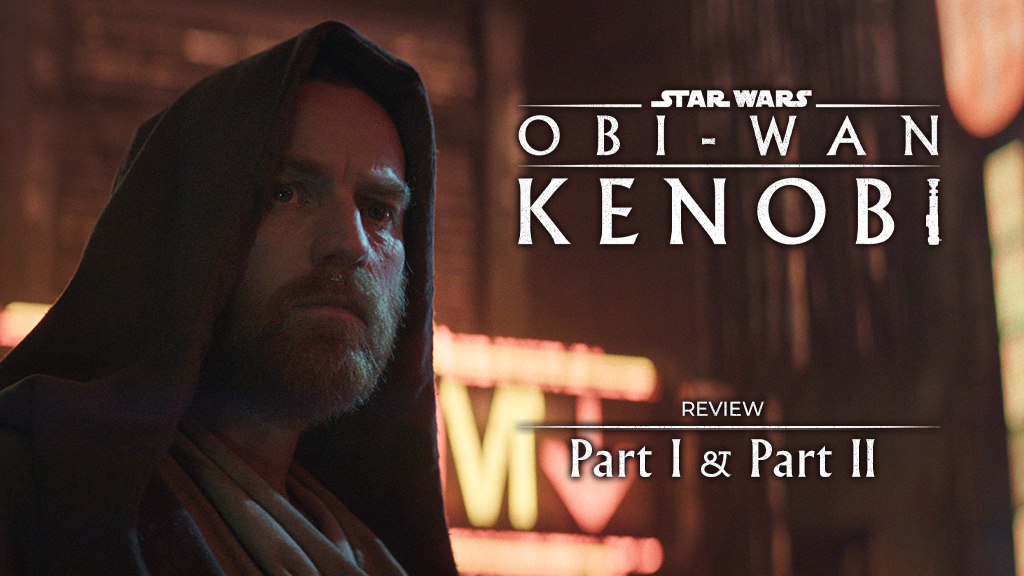
  • REVIEW: ‘Obi-Wan Kenobi’ Part 1 & Part 2

    REVIEW: ‘Obi-Wan Kenobi’ Part 1 & Part 2

    After a long wait, Obi-Wan Kenobi has finally arrived on Disney+. Deborah Chow takes a look back at the era that connects the events between the Prequel and Original Star Wars trilogies. Ewan McGregor returns to the role of Kenobi, who has gone into hiding keeping a close eye on Luke Skywalker and living with the regret of what transpired during Order 66. We meet a very different man than the one that heroically leaped into action all those years ago, as he’s also faced with quite a different kind of challenge as he soon finds the Inquisitor hot on his heel.

    The review will include spoilers. If you haven’t watched the episode yet, take this as a spoiler warning and only continue at your own risk.

    With the premiere of the Disney+ series, we get not one but two episodes. Obi-Wan Kenobi picks up quite a few years after Order 66, which is given a brief recap early in the episode. We see a group of younglings escape with their teacher before they are surrounded by the Clone Troopers. It’s a smart way to just showcase the regret that Kenobi lives with as we also get a few flashbacks to the previous films that highlight the inner turmoil he is going through. It was his former Padawan that unleashed the events of that night and he made it his responsibility that his children would not repeat the same mistake.

    Many of us speculated that something was going to drag the Jedi out of hiding, but I am surprised by the direction they took it. At first, I believed it was the Inquisitors lucking out in stumbling upon a Jedi in need, which forces him to come out of hiding but they swiftly get rid of that idea in the series’ first episode. We spend quite a bit of time with his daily routine and even see the conflict when another Jedi pleads for his help only for him to push him away. He’s given up on everything and you can really feel the way he’s just lost faith in the Force. A lot of the series’ conflict is carried by McGregor‘s performance which is definitely a standout so far.

    What truly caught me by surprise is that it’s not Luke that drags him back into the fold but rather Leia Organa. We get to spend some time on Alderaan, which is a novelty given its eventual fate, and actually see her life for a bit. It plays as a nice contrast to Luke’s as they both share similar traits from their parents; especially their love for what’s beyond their humble homes. It also finally fills in the blank on why Leia knew who Obi-wan was in A New Hope, as well as highlights their relationship that was mostly implied in the original. All it took for them to build a bond was one trip into the forest too many for a group of thugs to kidnap her, which turns out to be a trap by the new Inquisitor Reva (Moses Ingram).

    Speaking of, Reva is an interesting character that is swiftly hinted at having a personal vendetta against Kenobi. Perhaps something even connected to the earlier flashback to Order 66. While later hints may suggest it is more due to Darth Vader seeking him out, it makes her stand out from the rest. Sung Kang’s Fifth Brother is seemingly being built up as someone she’ll have quite a few confrontations with, but the biggest surprise came in the handling of the Grand Inquisitor.

    Rupert Friend gave a great performance but the fact he was taken care of in the second episode is rather surprising. It does feel like a “gotcha” moment for fans that may lead to some mixed reactions from those hoping to see more of the character in this season. Though, they may still keep that window open but it does feel like a way to take him out of this story to not overshadow the newly introduced Reva.

    He had his time to shine in the animated series, but it still seemed like a bit of a wasted opportunity to not show this tug of war between him and Reva. Inquisitor feeling betrayed that she was given a direct command by Vader could’ve made for some interesting drama but it still was a surprising twist that’ll keep even long-time watchers on their toes. She’s definitely turning into quite the threat though she could reduce her backflips by one or two when chasing someone down to save on time.

    Chow has made reference that the series was the Star Wars equivalent of Logan, and the second episode highlights that very direction. Most of this series will seemingly explore Obi-Wan’s relationship with Leia, as they try to flee Reva and the other Inquisitors. Her interactions with him and the distrust made for an interesting arc, as it also forced Obi-Wan to finally use the force again. While he still seems a bit lost, it wouldn’t be too surprising to see him find some faith once again, which he’ll carry over to Luke when the time is right.

    Kumail Nanjiani has a surprising amount to do as Haja Estree, and was a stand-out in the second episode. The idea of him using magnets to fake being a Jedi was a cute idea, and while I wished he was fleshed out more, him helping Obi-Wan and Leia was a sweet moment. Especially when he pretends to be some famous Jedi only for Reva to kind of shove him to the side. It did feel like he was more of a plot device to bring these two together, but he definitely had a great time playing the character.

    Though the best supporting cast is the brief return of Joel Edgerton as Uncle Owen. I expected we’d see more of him but even with a limited time we get a very strong characterization and see just how much he cares about Luke. Even if we spend little time with him, he does a lot with just emoting and staring daggers at Obi-Wan whenever he could, which added a lot to the growing feud between them.

    We’re two episodes in and it’s already promising a fun adventure. McGregor carries the show and you can see he’s putting in all his heart to bring this character back to life. The Clone Trooper cameo alone of Temuera Morrison actually hit harder than I expected, and there’s a lot of heart that makes this limited series stand out. The ending reveals of the second episode cemented the eventual clash between Obi-Wan and Vader, which will definitely be quite the build-up and hopefully give us that same feeling it did when we first witnessed it back in Revenge of the Sith. So far, Obi-Wan Kenobi feels like the tightest written of the Star Wars Disney+ series and may offer us the most emotional-driven story yet.

  • REVIEW: ‘Shoresy’ is Even Better Than ‘Letterkenny’

    REVIEW: ‘Shoresy’ is Even Better Than ‘Letterkenny’

    Every so often, a show comes seemingly out of nowhere and takes the world – and internet – by storm. Hulu’s Letterkenny is that series. The series spun out of a YouTube video by series star/creator Jared Keeso and was initially titled Letterkenny Problems. Since being ordered to series, there have been ten seasons of Letterkenny. It’s a simple concept that excels in great character development and storytelling. Which is why it is unsurprising then that Hulu and CraveTV opted to crate a spinoff focusing on the fan-favorite, wise-cracking, and often inappropriate hockey player that loves to give Riley and Jonesy a hard time. Shoresy has a lot to live up to and yet it succeeds with flying colors.

    With a single episode, Shoresy proves Keeso isn’t a one-hit-wonder. After the blazing success of Letterkenny, a series that seemed to garner attention almost overnight, it’s no wonder why Hulu and Crave TV ordered the spinoff. Shoresy recaptures that magic from the first season of Letterkenny with such ease. In fact, while Letterkenny might’ve spent time on trying to get Wayne to fight again, Shoresy spends time trying to make the character more than a fighting asshole.

    Those expecting Shoresy to talk about banging everyone’s moms will be delightfully surprised to learn the character is given room to be more than the naked handstand guy who thrives on torturing others. Yes, he’s still frustrating. And yes, his trademark “give your balls a tug” line is still very much there. But there’s also a heck of a lot more to the show. In fact, there are moments in which Shoresy feels like a more defined series than its predecessor. Unlike the original series, Shoresy doesn’t need to take time to establish itself – the series knows what it wants to be and delivers on its intent from the very beginning.

    One of the things that makes the series all the more enjoyable is seeing how Keeso successfully navigates the character. Playing two characters that exist within the same universe can be a bit difficult; it’s also probably why Shoresy’s face is hidden in Letterkenny throughout his appearances. Trying to make viewers understand these are two very different characters despite Keeso playing both roles can be a hard sell. And yet, Keeso does such a great job at changing up his mannerisms and speech to ensure Wayne and Shoresy are not one in the same. It’s a pretty difficult task, given the characters do share a fair amount of character traits, but Keeso manages to do so with ease.

    More impressively, though, the supporting cast manages to shine just as much as Keeso. When the series focuses solely on hockey players, it is vital that the show makes it a point to make the characters feel like a proper team. The sense of comradery needs to be felt by the audience. Sure, the other players don’t get as many lines as Shoresy, but the supporting cast is a delight and they do get in on the action. Unfortunately, those looking for Letterkenny actors to pop-up, don’t expect too many. There are a few that do appear – J.J. Frankie is one of them as he’s on Shoresy’s new team. However, there is a nice little surprise for fans of a certain chaotic Glen. (No, he’s not there as Glen, but the always great Jacob Tierney does make an appearance.)

    On one hand, it seems wrong to compare Shoresy to Letterkenny. Yes, they are within the same universe, and yes, Keeso created both series. But they are incredibly different. There’s no denying Letterkenny is great – there’s a reason millions around the world have taken to the series – but Shoresy feels like an upgrade to an already great world.

    The series is being billed as a limited series, however, by the end of episode six, it is clear that Shoresy isn’t over just yet. With most shows that bill themselves as a limited series, an open-ended ending could be frustrating. That isn’t the case with Shoresy, though, because by the end of the season there’s such a rich amount of character development that it becomes difficult to part with these characters. For leading man Keeso, balancing two hits shows could prove troublesome, but one thing is for certain: Keeso knows how to deliver a smart television series and Shoresy is proof that he’s one of the best talents on the small screen these days.

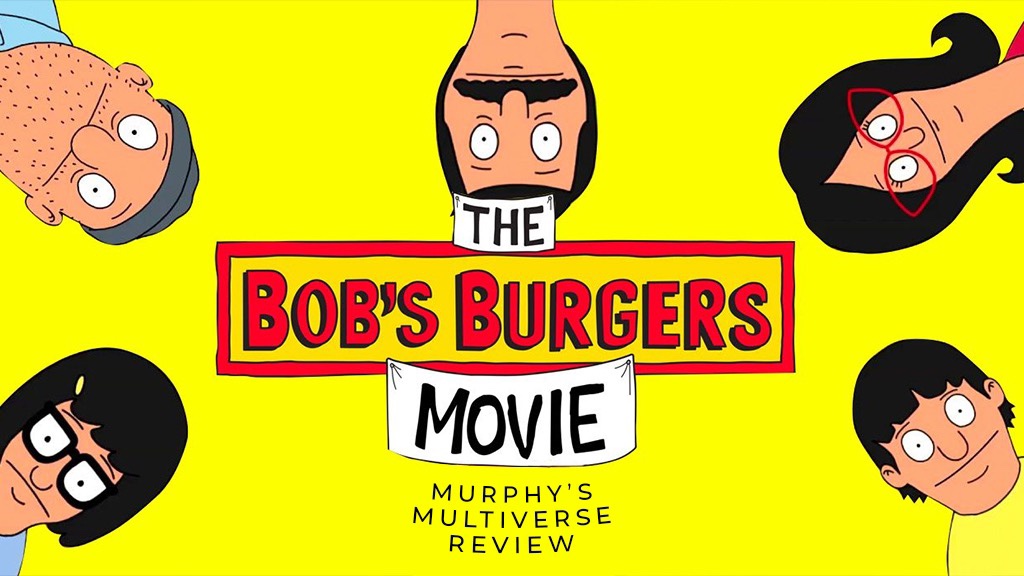
  • REVIEW: ‘The Bob’s Burgers Movie’ Delights in Stupidity

    REVIEW: ‘The Bob’s Burgers Movie’ Delights in Stupidity

    People are kind of stupid. They’re also smelly, anxious, stubborn, and unpleasant. It’s something we learn at an early age, that other human beings are packed full of everything we’d like to hide about ourselves. We’ve all been to the slumber party where one of the other kids lets a big one rip, followed by a moment of silence and an appalling scent filling the air. By all accounts, this should be the end of that child’s social life. Expelled for unrepentant nastiness. Yet, this is almost never the case. Instead, in the seconds following a loud fart, most of us do the unthinkable. We laugh. We laugh because we know deep down that we’re just as gross and silly as our friend who might need to change their pants, and, most importantly, we know that’s okay.

    The Bob’s Burgers Movie succeeds because it engrains this knowledge into every crevice it has to offer. Loren Bouchard and Bernard Derriman weave a tapestry that, despite being made of comedy, comes together to create a beautiful image about family and all of its flaws. Don’t get me or my fancy wording wrong, the movie is still very much what you’d expect it to be. It has all the trappings of a typical Bob’s Burgers episode, right down to the daily special displayed on Bob’s chalkboard and the ever-changing business next door. There are goofy musical numbers, blink-and-you’ll-miss-them one-liners, visual gags, and all the familiar guest stars. However, the thing that truly helps the film soar is the major, aforementioned core trait that’s carried over from the series to the big screen – the lovable dysfunctionality of the Belcher family.

    A lot of the story’s action takes place outside of the show’s normal environment, so the movie relies heavily on the group dynamics of everyone’s favorite burger-flipping brood. The story concerns a giant sinkhole opening in front of the Bob’s Burgers restaurant, preventing access to customers and threatening to close the joint for good. Bob and Linda form their own plan to raise money with the help of loyal patron Teddy, while the kids take a dramatically different path and try to solve a murder Louise is convinced will solve all their problems. Impressively, both plots work in equal measure, and the movie manages to organically sow them together in the kind of hilariously chaotic style only Bob’s Burgers could pull off. Every moment with more than one Belcher on-screen was guaranteed pleasure.

    There’s a lot of humor from the jump in this film, and the jokes come at a relentless pace. Surprisingly, almost all of them land. There were several moments where I found myself cackling in the theater, something I haven’t done at a comedy showing in years. It’s often difficult in comedy to maintain that high of a joke rate without tiring the audience out. Sometimes, even if the comedy is well done, the schtick gets old by the time the credits begin to roll. Jackass Forever, for example, is a brilliant slapstick piece that almost became too much to laugh at as it crossed the finish line. Well done and actively funny, but most of my screening stopped laughing out loud about an hour in from fatigue. Conversely, The Bob’s Burgers Movie had everyone in their seats until the post-credits scene made us burst into laughter a final time.

    It took me a while to figure out how this worked, but I think I finally came to a conclusion. As stated previously, the best kind of humor is typically rooted in truth. We can’t help but be amused by other people doing and saying stupid things, because really, we know we’re entirely capable of being just as dumb. Bob’s Burgers rattles off an endless stream of material, all of it based in characters being brainless, and more than once, I caught myself thinking “that feels like something I would do”, or, “that reminds me of [insert friend here]”. Because of this, I was completely engrossed the whole time, and let out an audible chuckle for every fart joke and nonsensical sentence the Belchers and friends emitted throughout.

    Finally, to bring it all home, are the last few words from that opening paragraph. Bob’s Burgers never forgets that, no matter how empty-headed its protagonists can be, it’s all okay as long as they still love each other at the end of the day. This is a movie about embracing your weirdness and being comfortable in it because with any luck, you have other weird people around you to accept it. Even the overly-rich, eccentric landlord has an overly-rich, eccentric brother to understand him. The Bob’s Burgers Movie delights in cherishing stupidity, and the people who’ve allowed it to endure for millennia. Sometimes that’s enough to warm your heart, and it’s definitely enough to justify a trip to the movies.

  • REVIEW: ‘Love, Death & Robots’ Volume 3 Has Some of the Anthology’s Best

    REVIEW: ‘Love, Death & Robots’ Volume 3 Has Some of the Anthology’s Best

    After a long wait, the third volume of Love, Death & Robots has finally arrived. The anthology series by Tim Miller, Joshua Donen, and David Fincher. As its title implies, it’s full of love, death, and robots but it’s grown to be more than that. Inspired by the 1981 classic Heavy Metal, it explores animation and concepts in an anthology series that have no real limitations. It’s as bloody, sex-driven, thought-provoking, or anything the creative staff wants it to be. With the involvement of various iconic animation houses like Blow Studio, Blur Studio, Axis Animation, Titmouse, Inc., and more, it offers a wide variety of animation styles. So, without further ado, let’s take a look at this new batch of nine episodes and what they bring to the table.

    Three Robots: Exit Strategies

    While a fun re-entry into the latest Volume of Love, Death & Robots, it felt like more of the same. Even the punchline by the end was a bit of a rehash and didn’t offer much new to make you feel like there was more to the first Three Robots storyline. It still was a fun return to the goofy three we saw in the first Volume, it just lacked that punch to make it stand out from an already great first entry. Seeing mankind’s downfall and some jabs at tech millionaires are always welcome, but it sadly just didn’t do enough to make it stand out from its predecessor; no matter how loveable the three robots are.

    Bad Travelling

    It’s surprising David Fincher didn’t tackle an episode of Love, Death & Robots earlier considering he’s one of the producers, but it finally happened. “Bad Travelling” is a really interesting entry. A strange crab-like creature known as a Thanapod makes its home in an unknowing crew’s ship and makes a deal with one of its crew members. What ensues is the battle for survival and an ongoing mutiny that makes you question if the Thanapod will get its way by the end. It’s visually interesting with a grimy ship as its backdrop. The ocean’s current is as tumultuous as the emotions that everyone aboard feels, as the bodies start to pile on. Its unpredictability was a highlight and makes me hope Fincher decides to dedicate an entire film to this concept in the future. It was just that good and felt like it could’ve done even more.

    The Very Pulse of the Machine

    If you’re out of options, how far would you go for survival? That’s at least what you’d think the episode would be about at first, but it turns into something quite a bit different. I really don’t want to give it away, as it’s quite an introspective episode that scratches the surface of what my personal favorite, “Zima Blue,” portrays in its story. High concept and simple execution sometimes have the effect of elevating an experience that makes you think about your own existence. Capped off with a perfect open ending, which makes you want to rewatch and re-question every step once again.

    Night of the Mini Dead

    Whoever had the idea of exploring a Night of the Living Dead parody as if it was a living diorama deserves a reward. It felt like watching an episode of the Sims with everything going wrong. It doesn’t reinvent the wheel (besides the visual design) but it adds some fun flourishes. You have some little jokey clichés with the muffled miniature sounds making them feel fresh. What sells it is how over-the-top it is. At first, it seems like a miniature retelling of the original Night of the Living Dead until it just goes bananas with the concept. By the end, it feels like they just saw what stuck to the wall and it definitely worked no matter how insane it got by the end.

    Kill Team Kill

    “Just a fun time” is the perfect way to summarize “Kill Team Kill” as a story. It doesn’t take itself too seriously and has a great 2D art style. The simple concept of a ragtag team of soldiers facing off against the perfect bionic killer bear was thrilling. It surprised me this was from director Jennifer Yuh Nelson, who created the iconic Kung Fu Panda trilogy, as it’s quite raunchy. Yet, it made me hope she gets a chance to direct more of this style, especially in how much energy she brings to the project. Though Volume 2’s “Pop Squad” is still my favorite entry by her in the anthology. though “Kill Team Kill” is definitely a great time I’d gladly come back to rewatch.

    Swarm

    “Swarm” is a curious entry, as the concepts it explores are quite interesting but ends up following a predicted path. The title gives away what the scientists are exploring, but leads to its downfall at the hands of their own hubris. It’s more an exploration of the value within existence as part of a swarm or your own intelligence. The ending sequence is a highlight, especially how it combines this gruesome perspective and some haunting visuals. Yet, it could’ve used a bit more time to explore the concept, as it feels over before it even truly begins. While the open nature of the story is fitting, it does feel like there was more to get out of it than what we got.

    Mason’s Rats

    Evolution really isn’t your friend if you’re running a farm in the middle of nowhere. When a farmer realizes his rats ate enough GMOs to learn how to use weapons, modern pest control is his only option moving forward. It’s a fun and creative concept, as the weaponry he uses gets more and more advanced, as do the rats. At first, I adored the episode but confessed that the more I thought about it, the ending was a little convenient. While the lesson of the episode is quite a strong one and it’s generally a great episode, the ending sadly takes away from it and just wraps in a nice little bow way too easy.

    In Vaulted Halls Entombed

    You can never go wrong with a good Lovecraftian-inspired story. A group of soldiers tries to free a hostage, but end up in a much worse scenario than anyone could’ve imagined. It’s not adding anything to the concept that we’ve seen many times before, but it doesn’t need to technically. Probably the most straightforward story of the bunch because there is no real foreshadowing to what happens, it just leads from one event to the next. Still, the ending was perfectly Lovecraftian and is something that stuck in my mind on how it could continue; even if I’ll never know.

    Jibaro

    The final entry of the anthology series, “Jibaro,” might be its most ambitious yet. While its stylized visuals aren’t too far off from Bad Travelling and Mason’s Rats, it stands out for its artistic value. The short film feels like a deadly dance is spiraling out of control between a deaf soldier and a siren of unknown origin. I don’t want to give more away, but its simple premise feels like a prelude to a metaphorical look at a deadly romance. Steeped in mythology, it uses its visuals in interesting ways. The camera does move a lot which can be quite disorienting at times, but it creates a visual panic perfect for the chaos that ensues. A high recommendation and a great finisher to what is overall a strong new volume of Love, Death & Robots.

  • REVIEW: ‘Chip ‘n Dale: Rescue Rangers’ Is Nostalgia Done Right

    REVIEW: ‘Chip ‘n Dale: Rescue Rangers’ Is Nostalgia Done Right

    Ever wonder what it would look like if The Lonely Island were put in charge of a Disney movie? Wonder no more. That movie is here, and it is Chip ‘n Dale: Rescue Rangers. The newest animated comedy from the House of Mouse is a perfect example of nostalgia done the right way. Director Akiva Schaffer manages to find a perfect blend between classic story of friendship and the admittedly insane amount of cameos and references pulled off during the film’s tight runtime. It’s family friendly, with lots for the little ones to love, but with plenty of jokes aimed specifically at the adult crowd as well.

    Those jokes, however, aren’t necessarily the kind one might expect from a Chip and Dale picture. Gone are the high-pitched chipmunk voices of old, and in are the vocal chords of comedians Andy Samberg and John Mulaney. Naturally, this leads to a lot more deadpan quipping and observational humor than the cornball antics of the original animated series. The strange tonal pivot, which works surprisingly well, is explained away with a rather Roger Rabbit-esque revelation. Chip and Dale were never those famously squeaky detectives that folks tend to think of when their names come up. Instead, they are simply actors, living in a world where humans and cartoons co-exist peacefully. Now, decades after the end of their hit show, they’ve broken up and live relatively normal lives, working jobs that don’t exactly bring them the same kind of fulfillment as the Rescue Rangers once did.

    From here, the movie gets pretty cliche. The duo’s old partner Monty, now voiced by Eric Bana, goes missing, forcing them to reunite and resolve their differences to save their friend. Most of the plot points and story beats are ones audiences will recognize, and most of what goes on is pretty predictable. It’s a really simple movie obviously designed with children in mind, paced quickly for short attention spans, making it easy to follow. However, the fact that so much of the film treads familiar water while also remaining fun for grown-ups is a testament to just how entertaining the rest of it is. Despite not breaking much new ground, Chip ‘n Dale is genuinely pretty funny from beginning to end.

    The movie is injected with that specific style of new-age satire that allows it to be both earnest and self-aware at the same time. For every joke made at the expense of animation and it’s classic characters, there’s also a sense of pure love and admiration for the genre that the filmmakers so clearly grew up on. There are quite a few deep cut references to the history of animation too. Some are more on-the-nose, like Los Angeles’ slum being called the “Uncanny Valley” because it’s filled with poorly rendered CGI avatars from the “early 2000s.” Others, like a surprise appearance by the Tigra from Marvel’s flopped Avengers: United They Stand  cartoon, are just weirdly obscure and specific enough to put a big smile on the face of an older audience. There are many more I’d love to get into here, but I wouldn’t want to spoil the fun of seeing it all for the first time.

    Mercifully, most of the cameos and references happen in a pretty organic way. Trailers for the film made it seem like the Easter eggs may overpower any actual storytelling, but this isn’t the case. The Roger Rabbit setting allows for a litany of references and appearances to happen without anything being forced, with a multitude of famous faces popping in and out as the plot unfolds naturally. It’s essentially what many fans had hoped Doctor Strange in the Multiverse of Madness might be, without the limitations of applause breaks or fear of “being too much.” There are quite a few vocal surprises as well, with guest stars voicing different characters than were advertised leading up to the film’s release. A lot of them produced excited chuckles from myself..

    Ultimately, Chip ‘n Dale: Rescue Rangers succeeds in being a heartfelt tale for kids while also being a viable entertainment option for adults. Truthfully, the movie sort of plays like a project made specifically for people who grew up on the cartoon while simultaneously introducing the characters and concepts to a new generation. Most of the best jokes and surprises are really for the parents. So, get ready to sit down and gear up for a fantastic new family adventure. Sometimes some crimes go slipping through the cracks, but these two gumshoes are picking up the slack.

  • REVIEW: ‘They Talk’ is Great Until it Forgets What it Wants to Be

    REVIEW: ‘They Talk’ is Great Until it Forgets What it Wants to Be

    There are plenty of indie horror films that hit every year. Some are good. Some are terrible. (Thanks, Heckle and Trip.) Then there are some that are great, until they’re not. They Talk is one of the latter.

    When the movie first starts, They Talk seems promising. It’s well-shot, the story seems intriguing, and it essentially throws viewers directly into the chaos. If only the movie managed to keep it together. It’s frustrating watching They Talk at times because it does have potential. It’s a different type of indie horror film. The acting is shockingly good for such a low-budget title. Heck, even the cinematography and music are enjoyable. And yet, it is as though the film forgets what it wants to be by the end.

    The movie tells the story of Alex Browlin (Jonathan Tufvesson), a sound engineer who accidentally records mysterious voices of those in the afterlife. Despite the voices warning him of imminent and terrifying danger, Alex initially ignores the warnings. When someone from his past suddenly re-emerges, it triggers a chilling paranormal phenomena that leave behind a trail of corpses. It’s clear something has triggered these events, and it’ll be up to Alex to try and figure it out before it’s too late.

    Giorgio Bruno, who has worked on all of nine titles to date, is the director of this film. While Rocco Marra, who has been working since 2001, is the cinematographer. While it’s hard to say whether to not Bruno leaves his mark on this film, as it can be uneven in its direction, Marra does seem to have a clear eye regarding cinematography. The cinematography is often what makes the film work when the dialogue and acting are subpar. The framing work is very good for the most part, as is the saturation. The moments that need to scare? They do because of Marra.

    Unfortunately, though, while They Talk has promising moments – and perhaps even some decent scares – the entire third-act tanks the movie. Nothing else comes to make sense by the end. It’s almost as if the writers forgot what they were attempting to do with the film. It loses focus and tries to be something more only to become like every other indie horror film before it. Overall, for those looking for a good scare, steer clear of this one. Don’t waste the time on a film that doesn’t seem to care about the audiences’ time.