Category: Reviews

  • REVIEW: ‘Moon Knight’ Episode 5

    REVIEW: ‘Moon Knight’ Episode 5

    After the hard twist at the end of the previous episode, Moon Knight managed to channel the momentum into arguably one of the best episodes of Marvel or Marvel Cinematic Universe television to date. It does so by leaning almost exclusively into the emotional and mental health elements of the character rather than the superhero aspect. Such an angle will always be divisive among fans of the superhero-based franchise, but when the series handles the character work of a complex character this well there really is no loss. In the short term, Episode 5 is simply an excellent episode and piece of Moon Knight. In the long term, it serves as a brilliant and colorful foundation for the hero that is mostly unrivaled in the MCU.

    While Episode 5 certainly feels fresh, it is reminiscent of WandaVision’s penultimate episode in terms of plot advancement and structure. The bulk of Episode 5 involves Marc Spector and Steven Grant working through Marc’s memories—in the form of rooms in a mentally-projected psych ward—that reveal the bigger picture of who Marc Spector is and how he ended up in the position we see him in in Moon Knight. It is confirmed that Marc’s background as a mercenary and his original connection to Khonshu is virtually the same as his comic book origin. Khonshu asked him to be his avatar while Marc was dying at the foot of the god’s statute after his ex-partner (and classic nemesis) Bushman massacred a team of archaeologists, including Layla’s father, in a raid. Even this memory and revelation is somewhat rushed, making room for a much more human perspective.

    Meanwhile, an indulgent and high-stakes plot plays out throughout Episode 5, yet it does not steal the show still. We learn early on that Marc and Steven are supposedly on a journey to the Egyptian afterlife, traveling on a dramatic ship while trying to balance their hearts on the scales of justice in order to be admitted into paradise rather than succumb to the sands of the Underworld. As Marc revealed more of his past to Steven, he presumably makes himself more complete and more favorable on the scales. Still somewhat confusingly, the scales only balance once Steven sacrifices himself overboard to save Marc from the sandy unbalanced soul monsters. Up until that point, the fact that the scales were imbalanced seemed like a clear indication that the third alter (presumably Jake Lockley) would need to be revealed. So, Marc’s entrance into the Field of Reeds raises a lot of questions. Is Marc “whole” because his alter “died”? If so, considering all the evidence points to a third alter existing, why is their absence not preventing the hearts from balancing? Otherwise, is it just an unfortunate timing issue or the work of an outside influence? It is highly doubtful that this is where the main characters remain through the end of the series, so those questions will likely get answered soon.

    But the lingering contents of Episode 5 that exist beyond the more pressing plot are surely Marc’s childhood memories. It is revealed that his dissociative identity disorder developed from the loss of his little brother and ensuing trauma. In a nutshell, Marc’s little brother drowned while the two were on a playful adventure—one in which Marc roleplays as Dr. Steven Grant from the VHS movie we saw last episode. After the death of the brother, Marc’s mother blames him and harbors extreme anger and resentment towards the young child. She screams at him when he tries to attend the funeral, refuses to acknowledge him, and actively accuses him of purposefully killing his little brother for years. Ultimately, it is revealed that Steven’s personality was developed in an episode where he was beaten (presumably not for the first time) by his mother as a means of escape. 

    His story is absolutely heartbreaking and arguably one of the darkest and saddest backstories in the MCU that we’ve seen play out. The way it is presented in this episode adds to the inherently sorrowful nature of the story and makes the cut so much deeper. For example, the highly stressful and desperate moments where Steven is in the flooding cave trying to save the children is on another level. There is something so much more brutal, heartbreaking, and gut-wrenching about childhood loss and abuse, particularly when it is not as filtered as much as a similar project with such wide appeal might be expected to. Marc’s story is obviously not the first of its kind both in general and in the MCU, but it is showcased in a way in Moon Knight that hits harder than the target audience is likely used to. While superhero origins and later stories often involve themes of escape, the typical picture is the hero prevailing over the adversary and the suffering—here, Marc was in such anguish in a situation he could not escape that his mind created a separate person to try and do so.

    What is framed as a major revelation is likely not a shock to many viewers. Marc Spector, not Steven Grant, is the original personality and Steven Grant is the alter. Despite a straightforward approach, the psychological torment it puts Steven through, and the mental warfare on the part of Ethan Hawke’s excellent performance as Dr. Arthur Harrow, allows for the episode to substantially develop not one but two personalities at the same time. We do learn specifically about Marc’s violent past. Interestingly, his time as a mercenary is not what haunts him here. Instead, it is the people he killed during his work as Moon Knight under Khonshu’s guidance. Themes regarding rebirth are present in a number of ways, but Marc’s obvious discomfort with his past work as a “superhero” seems to be signaling a changing of ways—at least on Marc’s part.

    Oscar Isaac remains supreme in terms of his MCU performance. Despite the fact that the final product had to constantly handle two of him on screen at the same time, it felt seamless and almost natural. Not only does Isaac have to play two separate physical entities that exist and interact with each other, he plays two unique people as well that come with specific accents and affects. The way Episode 5 captures Marc and Steven’s dynamic would have been extremely impressive if it involved two separate actors for two characters. Obviously, Isaac’s solo performance goes far beyond even that in this episode and in the series as a whole.

    The penultimate episode of Moon Knight is an emotional punch to the face in the best way. It manages to succeed on delivering that aspect in a way that most stories, MCU or not, cannot quite reach. The series’ arc has blossomed into a rather beautiful story and introduction to the titular character. Moon Knight as a costumed persona happens to be part of it, and that phrase “happens to be” is bound to lose a few fans. However, Episode 5 demonstrated more than anything that the series is creating its own origin story for the MCU’s Fist of Vengeance that may define the character more than any other character in the universe that we have so far seen. One of the biggest and routine questions remains, perhaps with even more on the line, of whether the series can stick the landing. The progression of episodes has the right momentum, but there are so many potential threads, twists, and writing choices that make the fact that there remains only a single episode a bit daunting. 

  • REVIEW: ‘Undone’ Season 2 is Trippy, Engaging Family Drama

    REVIEW: ‘Undone’ Season 2 is Trippy, Engaging Family Drama

    There’s nothing more relatable than family drama. Everybody has scars they don’t want others to see, and even the tightest of broods can fall apart at the seams when those wounds are exposed. While this is rarely a good experience for those personally affected, it’s almost always a source of interest for those who aren’t, and frankly, it makes for some great television. Perhaps this is why there are countless shows on the air about dysfunctional families, all doing more or less the same series of tropes with varying degrees of success. From This Is Us to A Million Little Things, it’s simply large groups of people in small towns who consistently refuse to give each other their whole truths. This is why Undone‘s unprecedented second season, coming soon to Amazon Prime, is so wildly refreshing.

    It’s been a long while since the show’s first season dropped in 2019. The world was a vastly different place, and it’s easy to forget about anything “normal” that happened just before a global pandemic permanently changed society’s way of life. However, it would be a shame if nobody came back for another round of Undone, which is the best “family drama” program produced by a studio in the last several years. Developed by BoJack Horseman creators Raphael Bob-Waksberg and Kate Purdy, the series revolves around a young woman played by Alita‘s Rosa Salazar, whose near-death experience reveals she has a unique connection with time. Her character, Alma, can travel through memories (both her own and others) to interact with time in a non-linear fashion, and as she discovers at the end of the first season, even hop between different timelines and dimensions. The initial set of episodes featured Alma attempting to access a world where her father, played by the always delightful Bob Odenkirk, never died, leading to a surprising series of revelations about her family history.

    The second season continues this plotline with a twist. After leaping from her own universe to a better one, in which pops avoided making some critical errors and Alma is not considered the family screw-up, she quickly learns her dad wasn’t the only parent with a dark past. It turns out her mother has secrets too, and Alma can’t stop herself from using her abilities to figure out what they are. The problem is, Alma’s abilities are on the fritz due to some to-be-determined inner turmoil, and now she must recruit her more responsible sister to help in the investigation. That’s the set-up, and from there, chaos ensues in the only way the creative team of Bob-Waksberg and Purdy know how to construct. It’s a string of glorious, trippy, emotional, well-written lineal squabbles that might make you laugh and cry at the same time. Or at least do both in the same episode.

    Despite the surreal imagery and off-kilter framing device, the real magic of the series is how genuine it manages to feel through all the increasing absurdity. As far down the chronological drain as they go, Alma and Becca, played by Angelique Cabral, never become detached from the task at hand. Where some shows may lean too heavily into the time travel device, Undone is able to use it as a complimentary utensil in its storytelling. The series maintains its focus and uses its distinctive traits to heighten the drama instead of bogging it down. Most importantly, all of the characters involved remain incredibly human. Very rarely is the entire main cast of a series fleshed out so wholly, and even more rare that’s executed with such cleverness. Constance Marie especially, stepping up to a central role in this season, shines with an emotional realism against a dreamlike world.

    Speaking of which, the series continues to make good work of its novel appearance. In case anyone is in the dark on this, Undone is animated using a stylistic rotoscoping technique. Live-action performances are drawn over, giving them a cell-shaded outward form, and then placed on top of oil paintings used as backgrounds. The result is something familiar, if not just a little bit off. It’s the perfect imagery for a show whose purpose is to explain that nobody is normal, or completely sane, and that embracing what’s hurt us and what makes us different is the only true path to fully healing. In the eyes of Undone, the world is a beautiful place and everyone in it is just a tad bit obscured from perfection.

    It doesn’t seem like a shoo-in for the show to get a third season, but it would be alright if another volume never came. The latest batch of episodes are a perfect conclusion to a two-season arc, wrapping up everything with a purposefully messy bow. If Bob-Waksberg and Purdy are able to think up any more installments to the Undone saga they’d better be every bit as refreshing and satisfying as their previous outings, because what they have right now is a perfectly lovely hidden gem. It’s strange, but I almost hope this is it for the series. Happily ever after, or at least as close as a person can get.

  • REVIEW: Jackass Forever Blu-Ray w/ Bonus Features

    REVIEW: Jackass Forever Blu-Ray w/ Bonus Features

    The Jackass crew is back! After Jackass 3, fans of the franchise have been eagerly been awaiting the return of the Jackass crew. There were plenty of bumps along the way, but the film finally arrived in theaters this past February. After a pretty successful run at the box office followed by its release on Paramount+, the movie finally arrived to purchase on digital, and now Blu-Ray with some bonus features, including some never-before-seen stunts that didn’t make it in the final cut of the film.

    Jackass Forever is definitely the Jackass fans know and love with some new faces added to the mix. The franchise has always pushed the boundaries of what audiences are willing to accept in a film, from the original Jackass‘ infamous butt x-ray to Jackass 3‘s poo cocktail supreme. Unsurprisingly, Jackass Forever takes things even further, and is not for the feint of heart. After all, there is a penis dressed as a Godzilla type monster in the opening scenes.

    While Jackass 3 remains the pinnacle of the series in terms of pacing, Jackass Forever certainly ups the ante in terms of stunts. The latest film is sure to bring fans back to the old days of watching this group of guys perform outlandish stunts with makeshift ramps, to now having the budget to build a human cannon that seemingly stands 50 feet in the air. It has definitely been a massive evolution, but it begs to question whether it really was for the better. While the advancements have been amazing to see, it is hard not to wonder if some of the hook of the original, being normal guys make-shifting stunts and pranks, was lost because of it. 

    On top of the original film, the Blu-Ray release is packed with bonus features. It comes with 16 deleted scenes that include a VR prank and extended looks at some of the pranks done in the film. What stands out most is that, while the film added multiple new cast members, we never really got to know them the same way we got to know the original crew. Thankfully, the deleted scenes do managed to provide fans with more footage of the new cast. Unfortunately, that’s not nearly enough to help keep fans interested in the new cast. Rather than include the various celebrity cameos in the film, surely these new characters could have received the spotlight instead of being shoved to the bonus features.

    Jackass Forever on Blu-Ray is definitely worth the purchase for any Jackass fans out there. If you loved the film, you get more of what you’d expect. While the film’s release made it seem like this was the end of the franchise, one might wonder if the new cast members are a look into the next evolution. You can currently purchase Jackass Forever on Blu-Ray and Digital, or stream it without bonus features with your Paramount+ subscription.

  • REVIEW: ‘Polar Bear’ is a Memorable Documentary

    REVIEW: ‘Polar Bear’ is a Memorable Documentary

    Disneynature’s newest wildlife documentary, Polar Bear, is an astounding achievement. It is directed by Alastair Fothergill and Jeff Wilson, the team behind Disneynature’s Penguins, and narrated by two-time Academy Award nominee Catherine Keener. While it accomplishes what it set out to be—a beautiful and engaging family-friendly film—it also manages to go a bit deeper due to the inescapable reality of climate change on the film’s subjects.

    Polar Bear is almost as true to its title as any film could get. The documentary follows one specific female bear for over 15 years in the Arctic. While it is somewhat framed from the perspective of this bear when she is a mother herself later in the film, most of the runtime seems to explore her coming of age. Indeed, perhaps the most memorable moments of Polar Bear come from her youth when she is living and learning from her mother alongside her twin brother. The true artistry of the story comes from the meticulous process of selecting a bear and committing to her for well over a decade. While she ultimately has a cub of her own, her journey is permanently set against the backdrop of her adventures with her own mother and the documentary emphasizes how significant ice bear heritage is to the continued survival of the species, both in the short- and long-term. 

    Polar Bear is undoubtedly a family-friendly movie that does not “talk down” to a younger audience. The pure joy of watching furry, cuddly-looking cubs play and learn new behaviors is a basic treat in and of itself. The majesty and power of watching adult bears in their native environment is captured brilliantly by the filmmakers. The visuals and cinematography are absolutely stunning. From the close-ups to the aerial shots, Polar Bear does not leave anything wanting in that space. Much of what makes the documentary special is that it captures polar bear behavior never before seen on camera. And while that might not be obvious while watching it, some moments are undeniably special, and the visuals, score, narration, and more work together in unison to paint those moments in an unforgettable light. 

    While the documentary is clearly an engaging and fun family-friendly movie, as a wildlife documentary Polar Bear does inevitably include somber moments. One of the most powerful aspects of the film ae the occasional flash-forwards to our bear with her cub, navigating an Arctic environment drastically changed by climate change since her youth. Despite the unavoidable presence of climate change, Polar Bear does not spend much time detailing or unpacking it. The documentary is the story of our bear—but the story of our bear cannot be told without showing the environment she is raising a cub into. The film ends on a noticeably much more optimistic and resilient note than it feels in the most recent footage. While the bear (through narration) struggles through harsh new terrain, she proclaims that her daughter will learn to be a great ice bear and will survive.

    Polar Bear is a strong installment in the Disneynature collection. The documentary’s ability to capture scenes in such an extreme environment over such an extreme period of time undoubtedly paid off in the final product. The result is a memorable look at the lives, behaviors, and environments of one of the most charismatic species on the planet. 

  • REVIEW: ‘Moon Knight’ Episode 4

    REVIEW: ‘Moon Knight’ Episode 4

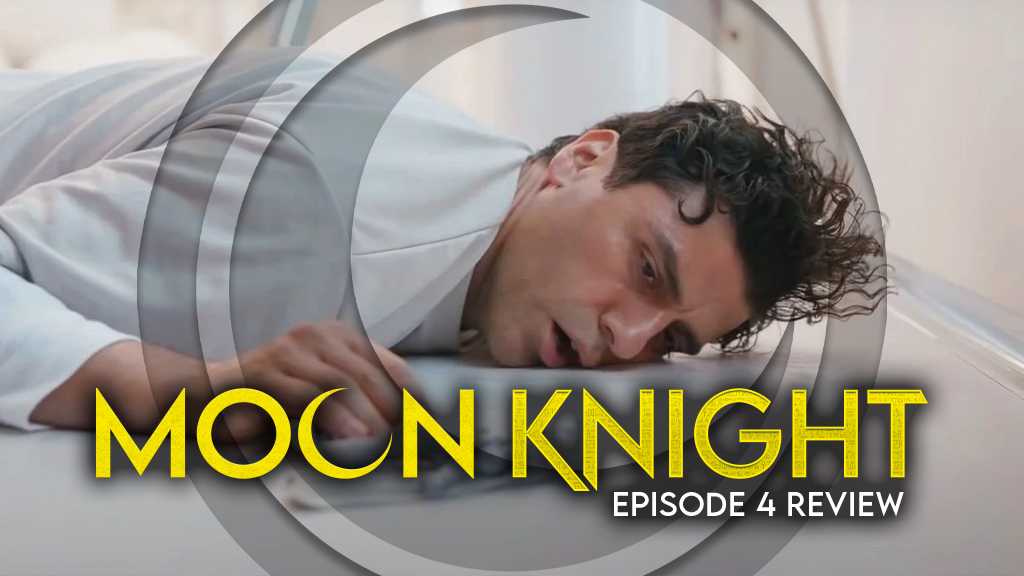
    Viewers finally got to see the Moon Knight episode that creators and critics have been teasing for weeks. The series’ fourth episode packs quite a lot into its runtime, but the only part that viewers are going to cling on to going forward is that twist of an ending. It was quite the exciting changeup, and it truly revamps the narrative on multiple levels and allows the psychological mystery setup to pay off dramatically. Comic book fans might recognize how eerily similar the psych ward at the end of the episode is to the popular Jeff Lemire-Greg Smallwood run, but it does not need that connection to carry its excitement forward. It does beg the question—between where the episode left the previous “reality” and where this new reality could go, how can Moon Knight possibly wrap this story up in a satisfying way with only two episodes left?

    The episode pre-twist was notable for several reasons. It brought with it its own genre because with Khonshu out of the picture it turned into a more recognizable adventure a la Indiana Jones or Tomb Raider. Admittedly, it was not the most thrilling plotline the MCU had ever explored, but the wealth of Egyptian lore in Episode 4 was extremely interesting and packed a lot of potential into the series. Still, the pre-twist episode spent time adding major detail to not only the main story but also several of the characters. Had the episode not ended in a twist, there would have been a great deal of speculation leading out of this episode purely on the Arthur Harrow and Ammit plot. But, as we know, Harrow seemingly kills Marc Spector who drifts away through water only to reawaken someplace very different.  

    While the information in the pre-twist episode still, hopefully, brings value to the series later, it is difficult to expect any viewer to truly pay attention to that when Marc wakes up in what looks like a mental institution or psych ward. Everything we thought we knew is turned upside down, which brings the theme of wondering what is real and what isn’t back into the spotlight after the first episode. Moon Knight gave a sense of security with the reveal of Marc and Khonshu, and nothing had really suggested that they were not real or that the story was not taking place in reality. Now, Episode 4 spends its last ten minutes or so trying to convince you that none of it was real—sort of. The odd amount of Egyptian imagery and, of course, what looks like Egyptian goddess Taweret (whose stuffed animal we saw in the gift shop in Episode 1) suggests that this mental institution is not simply the true reality either.

    So now Moon Knight is genuinely and beautifully under the “What is real?” umbrella. The already-phenomenal psychological aspect of the series will take center stage in a grand way going forward without a doubt. A psych ward—or some kind of projection of it—is the perfect place to dive deeper into the Marc/Steven psyche. There are many obvious Easter eggs (such as the cupcakes, Gus, maps, the adventure film, etc.) to suggest that what we watched of the series so far may have actually all been in Marc’s head. There is also a very eager extra sarcophagus like the one Steven was found in that has to be the most obvious tease of another personality of the entire series. Given how the episode ended, it looks like the next episode could have an escape-oriented theme with Marc and Steven working together as two different bodies. This is a perfect way to “bring to life” to both alters the amazing performance that Oscar Isaac has already put in with the characters so far. Watching them interact may very well be the highlight of Moon Knight.

    While previous episodes felt as though they sometimes gave too little information or background on the major subjects of Marc Spector and Khonshu, it is almost certain that the events of Episode 4 and what it teases is coming will blow that whole issue wide open. We end in such an introspective place where the pieces of Marc’s life and mind are literally just scattered around him. It could be a perfect opportunity to journey into his mind and past.

    As mentioned, the twist looks a whole lot like the Lemire-Smallwood run. That might mean the last two episodes of Moon Knight borrowed heavily from it. But even if the series does attempt a direct adaptation of the comic—which it almost certainly will not—it is not reasonable to fit that into two episodes. Even if the series seeks to merge elements of the Lemire-Smallwood story with the very original plot from the series so far, it still seems unlikely that two episodes is enough time. Overall, it is hard to picture how a twist of this magnitude could lead to a comprehensive and satisfying ending so quickly. Moon Knight could be another victim of the MCU Disney+ series curse of not quite sticking the landing. Or, it could keep surprising us like it has been. 

    In any event, Episode 4 might have just been the biggest “twist” of the entire MCU. Obviously some fans of the Moon Knight comics might feel less lost than those unfamiliar with them, but nearly the entirety of the first four episodes of Moon Knight were a far cry from how it looks like the series might try to tell the story from here on out. The jarring transitions between the two was one of the most enjoyably “What the f***?!” moments in MCU memory. It means that the series has to take the character’s psychological origins and backgrounds seriously story-wise and that requires going to places that other projects are usually uncomfortable with. There is certainly something wildly unnerving about what just happened in this episode. It is not unreasonably optimistic to think that the final two episodes of the series will make Moon Knight one of the most triumphant MCU installments. 

  • REVIEW: ‘Bubble’ is a Beautiful Film With a Messy Pacing

    REVIEW: ‘Bubble’ is a Beautiful Film With a Messy Pacing

    Netflix’s latest anime film to grace the streaming service is Bubble. Tetsurō Araki‘s latest film after his work on Kabaneri of the Iron Fortress: The Battle of Unato is based on a script by Gen Urobuchi and its character designs are from the mind behind Death Note, Takeshi Obata. So, the film has gathered quite a talented group to explore a world where strange bubbles have scattered across the world and turned Tokyo into a strange post-apocalyptic world that has been flooded after a mysterious explosion created a new world for the young people to turn into their personal playground. Can the latest film by WIT Studio offer a compelling mystery and heartfelt story?

    Our story mainly focuses on a young boy named Hibiki, who is voiced by Jun Shison, and a group of kids that made the best of the strange gravity phenomenon that has reshaped Tokyo. Various groups have formed that started their own game to capture the flag while running around the overgrown and flooded city. Hibiki is his team’s ace as he has the strange ability to use bubbles as a way to get across dangerous rifts, but prefers working on his own. That is until a mysterious girl saves him and he starts to open up to others.

    Hibiki’s story is generally the strongest aspect of this film, as we see this longer slowly open up and fully embrace the importance of working with his team. Uta, the name given to the girl, becomes a key part of that journey and there also are some underlying romantic teases added in to further build their relationship. At the core of the story, it’s more a character study than anything else and it’s given a beautiful package, as the animation is definitely a stand-out in this project.

    It really needs to be praised for just how beautifully animated the film is. The bubbles from the title are visually stunning and there’s a great combination of 3D with traditional animation. Yet, when the series decides to close in on a character’s face, especially Uta, they push their animation budget to its limit. The finale especially had some stunning visuals that were quite memorable, as they make the most out of a simple concept of a bubble-filled world. It also has some creative camera work to add some tension to the Parkour that is heavily present in this film, as they jump from one collapsed building to the next.

    With all this praise, I sadly have to say that the overall experience with the film didn’t quite land for me. The world they live in is quite memorable, and while I do wish I spent more time with it, the way it ties its world-building to the core narrative feels quite disconnected. We set up a grand mystery on why Tokyo ends up being flooded, especially as it’s the only location that is going through this scenario. The youth seemingly used it as a safe haven to live their life and barter resources through competitions of capture the flag. All sounds good and helps flesh out this world, but the problem is that it acts more like a distraction than an integral aspect of the story.

    The games feel like a great bridge to introduce characters at a fast pace, while also giving us some genuine fun action sequences. At first, the parkour inclusion felt natural but as the film went on, you slowly get this sinking feeling that the film was built around that concept rather than vice versa. The film takes a sudden break for a music video of parkour and bubbles. It looks great, but sometimes it just turns into a music video or the biggest threat is the environment. We get introduced to concepts that should add, but we never get a feeling of just how dangerous it really is. At times, there’s a lack of really letting sink in just how dangerous this post-apocalyptic environment truly is.

    Throughout the film’s runtime, it feels like two separate stories are meshed together rather than them weaving in and out of each other. There’s a moment that comes out of nowhere to paint and briefly derails the story for a bit before introducing the actual threat for the finale. There’s no real build-up throughout the film to really sink in what their life is like, which isn’t helped by the pacing throughout. The only real connective tissue from one event to the next is Uta and a musical theme that introduces a rather abstract concept into the story.

    Bubble‘s strongest moments are when we just get some slice of life. Every time this cast of characters interacts or talks, it’s a fun film as they play off of their dynamic. You get a feeling of how they live in this world. While I do think it could’ve used more showcase of how dangerous it is, especially as later moments suddenly amp up the dangers which weren’t present earlier, it was great to see this group make the best of the situation. We get some adorable moments, and great character development but sadly just not a strong enough focus on what exactly the story wants to be about.

    It’s definitely a visual spectacle and the team behind it must be huge fans of parkour for how many movements they threw in. Sadly, it does seem like that takes over and downplays a really interesting world to play around with. I would gladly revisit a story in this world, but I do feel like the one presented here struggled to really bring its ideas together. So, even with my complaints the film is worth checking out but may be a one-time watch.

  • REVIEW: ‘Roar’ on Apple TV+

    REVIEW: ‘Roar’ on Apple TV+

    Every now and then, there comes a series that leaves you dumbfounded. Perhaps the acting is too over the top. Or maybe the writing is subpar. It’s even possible the concept is a disaster, that seems to be hanging together by a tattered string. Roar is one of those shows that should work. It has a stellar cast, it’s an anthology series, allowing for numerous stories to be told and it is based on a book of short stories by Cecelia Ahern. Unfortunately, Roar is a series that’ll leave many scratching their hand and wondering if it needed to be made.

    Each episode of Roar is around a half-hour and features modern dramas with magical elements. The first episode, “The Girl Who Disappeared,” stars Issa Rae and features a concept that is, unfortunately, something many can relate to in this day and age. The “magical” aspect of it works because it is something people experience in daily life. The problem is, though, that the episode gets good just as it cuts off. This is an issue that continues with each new story. Yes, the stories are based on short stories, however, Roar would have been better had it expanded upon the stories instead of trying to squish them into half-hour episodes.

    It’s frustrating, honestly. There’s top-tier talent here – Nicole Kidman! Rae! Alison Brie! – and Kidman is even on board as a producer. And yet, this feels like a half-baked anthology series. What is most frustrating about this series is that the magical elements are not handled all too well. While “The Girl Who Disappeared” handles the magical element decently, the Kidman episode “The Woman Who Ate Photographs,” is just a disaster. The problem is, while the idea of Rae being invisible to the white men is relatable, and therefore, works, Kidman’s character eating photographs and reliving moments briefly just… does not. It takes the viewer out of the shower. And then it continues to be uneven throughout the remainder of the season.

    There’s no denying Roar tackles important topics. Racism, the idea of a trophy wife, women and their biological clocks, doctors not taking women patients seriously, etc. Each topic is something that viewers can relate to on some level, which is wonderful. Everything is just underdeveloped. Even worse, despite being billed as a feminist series, Roar never truly hits the right notes to become the series it thinks itself to be, which is unfortunate.

    In the end, I found myself wondering if this was a series that even needed to be made. Yes, it’s great that it has a heck of a lot of female talent involved. That’s absolutely wonderful, and I’m excited to see it. Sadly, though, it just seems as though the premise could have been handled a lot better. Magical realism is an exciting genre – if done right. Roar does not handle it properly, and the stories ultimately suffer because of this.

    Roar is now available to stream on Apple TV+.

  • Review: Marvel’s ‘What If…?’ Doctor Strange Supreme Pop!

    Review: Marvel’s ‘What If…?’ Doctor Strange Supreme Pop!

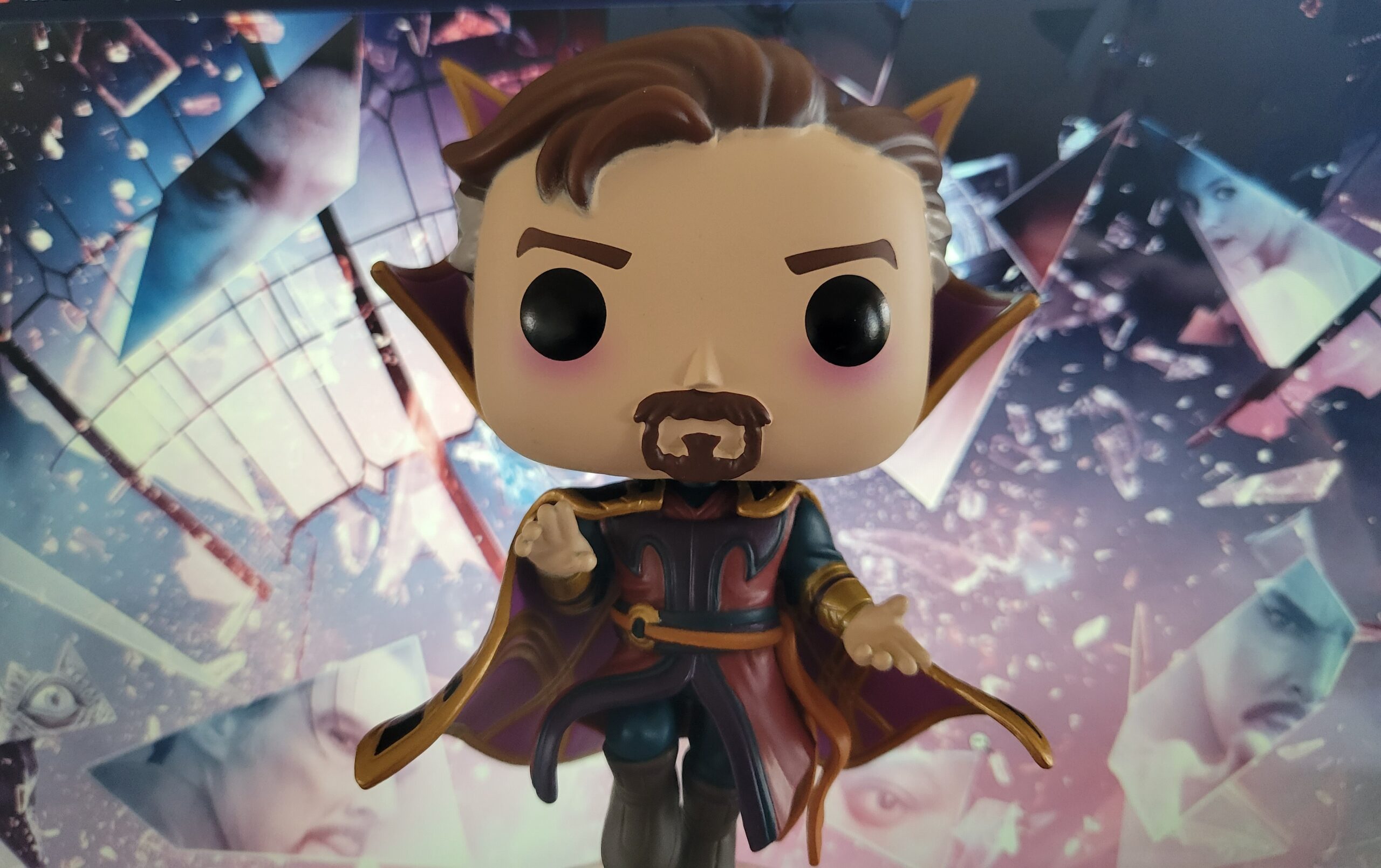
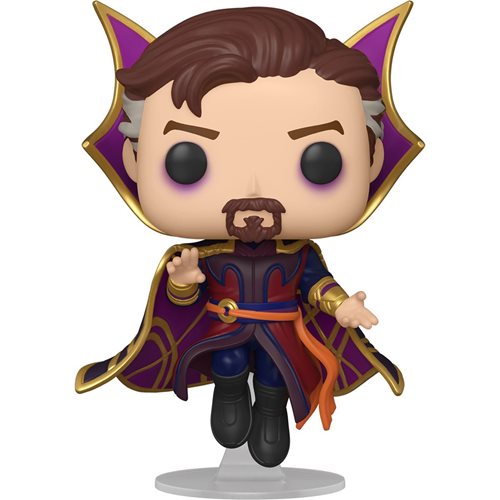
    Marvel Studios first canonical animated series, What If…?, introduced fans to a Variant of Doctor Strange whose life turned out quite differently than the one from the Sacred Timeline. This version, who couldn’t bare to live in a world without Christine Palmer, sacrificed everything, including his universe, to find a way to keep her alive. Doctor Strange Supreme became one of the most powerful figures in the Marvel Studios Multiverse and now, ahead of his rumored return in Doctor Strange in the Multiverse of Madness, you can add a fantastic looking Funko Pop of the character to your collection.

    Much like the Star-Lord T’Challa figure, Strange Supreme comes with a nice stand that allows him to levitate amongst your collection.

    Marvel's What If Doctor Strange Supreme Pop! Vinyl Figure

    The Strange Supreme Funko can be ordered from Entertainment Earth by clicking here for $11.99 and become a part of your own Multiverse of Madness!

    Murphy’s Multiverse is an Entertainment Earth affiliate.

  • REVIEW: ‘Outer Range’ is a Must-Watch

    REVIEW: ‘Outer Range’ is a Must-Watch

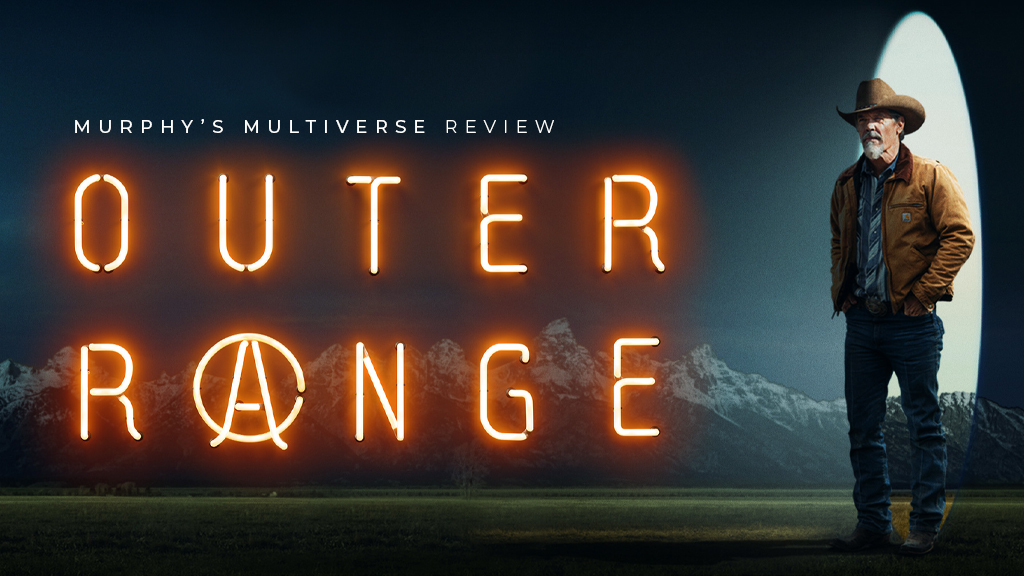
    There’s something immensely scary about the unknown. We’re seeing the resurgence of projects further exploring that concept more and more, especially taking inspiration from Lovecraft’s famous stories. After Lovecraft Country‘s cancellation, I’ve been hopeful that a new series would come around to offer that same feeling. Luckily, Amazon Prime’s Outer Range manages to not only scratch that itch, but even tell a compelling family drama as things start to unfold in the small range of the Abbott family in Wyoming.

    I have to say, I am immensely impressed that this series is Brian Watkins’ first. There’s something very meticulous about its pacing, as we follow Josh Brolin‘s Royal Abbott, as his life starts to unravel around him. The moment he discovers a strange hole in the middle of his field, one that seems beyond our own comprehension, everything around him slowly starts to unravel. He is a man that seemingly has everything in control and does anything for his family, yet someone who has his own secrets to hold. Events throughout the series runtime will push him beyond his breaking point, as he tries to make sense of it all.

    The project has an all-star cast with Josh Brolin, Imogen Poots, and Tom Pelphrey being the standouts. Even saying that there’s no weak link in this cast as everyone is seemingly giving it their A-game throughout. Even some crazier characters like Noah Reid‘s Billy Tillerson are designed to fill their role. Brolin is still the man carrying the entire series, and the former Thanos actor truly carries every scene he is in. There’s this amazing subtlety in his performance, as he tries not to let a single weakness break out. It adds to a lot of the tension throughout that the series aims to build.

    Speaking of, it would be a disservice to give away any plot points. While it doesn’t make my job reviewing it any easier, I believe it needs to be seen without giving away any of the major plot points throughout. There are a lot of curious twists and turns in this series that not always are connected to the main void, which is heavily teased in the promotional material for this series. Amazon describes it as “genre-bending” and I can definitely agree that remaining vague with this series was the best way to promote it. In a way, the series feels like a more restrained version of Lost.

    There are some beautifully done shots throughout, which really highlighted the themes and sometimes dread of being lost in the middle of nowhere. The rancher backdrop works in the show’s favor beautifully and adds a special flair that you wouldn’t normally see in this kind of story. The open fields create that illusion of just how small and insignificant we are in the bigger picture. Subtle camera tilts and the right shot composition can make something as simple as a hole in the ground feel eery and endless. There are many shots and moments that still stick with me to this day.

    Of course, the right sound design can truly bring the ambiance together for such a story. In a way, it might even be the strongest element in this story. You know you’re watching something special if moments are punctuated through its audio design. The show knows exactly when to amp up its music to keep you on your toes. There were moments when I had shivers when the music hit just right throughout my time with the series. It’s one of those soundtracks that you’ll listen to even after you finished your watch, as it just conveys a certain feeling.

    Not everything is perfect, as there are moments where the story drags a bit and there’s a lot of exposition throughout. Yet, it ironically also kind of works to the series’ benefit given the way it continues to build up the tension once those moments come back into play. Still, there are times when you do wish it got back to the juicy part of the series. Just highlights how difficult it is to talk about the series without spoiling anything, but there is a lot of set-up at play here. I cannot recommend the series enough, especially if you’ve been looking for something to scratch that same itch as Lost, Annihilation, Lovecraft Country, and similar projects.

  • REVIEW: ‘Russian Doll’ Season 2 is Slow-Moving, But Worth the Ride

    REVIEW: ‘Russian Doll’ Season 2 is Slow-Moving, But Worth the Ride

    The first season of Russian Doll was a stellar season of television, with excellent acting, tight writing, and a concept that hooked viewers almost immediately, it was hard not to love the Netflix series. Unfortunately, the second season of Russian Doll seems to lose its footing early on, stumbling to craft a second season as strong as its predecessor. While still enjoyable and carried by strong performances by series leads Natasha Lyonne and Charlie Barnett, Russian Doll Season 2 spends more time crafting questions than it does providing answers.

    Season 2 of Russian Doll picks up a year after the events of Season 1. Nadia (Lyonne) is approaching her 40th birthday, and things seem to be back on track with Alan, the two are still a mess together — with Nadia continuing to be more carefree and reckless than Alan. Unfortunately, though, rather than try to give viewers answers from Season 1 – including why they’re able to come back repeatedly – the series takes the duo in a completely different direction, one that can be incredibly frustrating at times.

    Lyonne shines more than ever in Season 2. She is absolutely dynamite every moment she is on screen. While the writing is still good, without Lyonne’s magnificent acting, it’s hard to believe the story being told in Season 2 would work. Every poor choice, every moment of shock and awe, and the emotional bits tossed here and there? She sells each moment with ease. And while Barnett doesn’t get as much screen time as he does in the first season, the moments he gets on screen are memorable. More importantly, though, their on-screen chemistry remains electric — they play off of one another perfectly, it’s hard to imagine any other actors in these roles.

    As for the story, it’s not as strong as the first season, which isn’t entirely surprising. It’s normal for sophomore seasons to hit a bit of a slump. Thankfully, though, Russian Doll still manages to tell a tightly wound story that is a heck of an adventure if viewers are willing to stick through the slow moments. There are moments that are chaotic that seem to move too fast to truly allow viewers to catch up, but once they do? It’s a ride that is ultimately worth the trip.

    The most interesting thing about Season 2, however, is that it opens up the possibilities for future stories. In a series that isn’t afraid to take risks, it is hard to grasp what the creators might have planned for future installments. The ending of Season 2 allows for a new tale to be weaved with endless possibilities. One can only hope, though, that future seasons will provide more answers than questions.

    Season 2 of Russian Doll is a slowburn, but when it comes together in the end, it’s a hell of a ride you’ll be thankful to have taken.