Category: Reviews

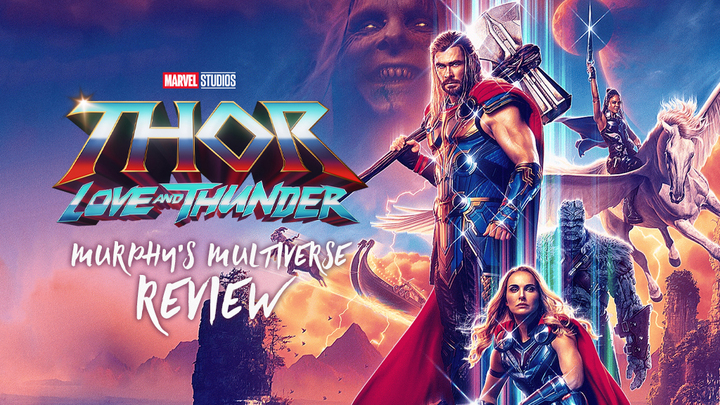
  • REVIEW: ‘Thor: Love and Thunder’ Is a Comic Book Come to Life

    REVIEW: ‘Thor: Love and Thunder’ Is a Comic Book Come to Life

    When superheroes first became a fixture on the big screen, they were saddled with a pretty specific caveat. Studios seemed to believe that if these movies were going to land with the mainstream culture, they had to find a way to ground themselves in reality. Cartoonish oddities would only be allowed if they were coated by some form of gritty, down-to-Earth paint job. Whether it be swapping colorful spandex for solid black leather or trading the Batmobile for a speedy tank, the unwritten rule was that comic book movies should not actually feel like comic books. On July 7th, when Thor: Love and Thunder hammers its way into theaters, audiences will learn this is no longer the case.

    One of the best sketches to come out of Key & Peele‘s impeccable run was Gremlins 2′ Brainstorm, in which Hollywood’s greatest “sequel doctor” raids the creative meeting for Gremlins 2 and radiantly exaggerates every idea the writers have. “What about a brainy Gremlin?,” one scripter asks. The doctor replies excitedly, “You’re talking about a Gremlin with glasses who can talk and sing ‘New York, New York’? That’s brilliant. It’s in the movie. Done.” This is how I imagine the writers’ room for Love and Thunder played out, but with Taika Waititi at the helm instead. The level of absurdity that the film operates on suggests that the famously eccentric writer/director never encountered an idea that he wasn’t able to use. It’s Ragnarok on steroids, filled to the brim with vibrant hilarity, energetic chaos, and ball-breaking action.

    Most importantly, however, it feels like watching a comic book. Marvel Studios has spent the past few years dipping further and further into full-blown funny paper territory, and the fourth Thor may be the project that has finally put the studio over the edge. Fans have known since the release of the film’s early trailers that several shots during its runtime are lifted directly from the illustrated page. Yet, it’s the essence of nonconformity that really sells the schtick. There’s a certain emotional freedom that comes with watching a movie so completely free of expectation. Of course, no direct adaptation can exist without some degree of presupposition, it’s just that Love and Thunder doesn’t care what logic says it’s “supposed” to be. It simply lives as itself, and viewers will be better off surrendering to the magic of the moment than they will be trying to fight it off.

    The title, Love and Thunder, has more than one meaning, which will become apparent to fans by the time the credits roll. Taken literally though, the titular nouns represent the two main aspects of the film. “Love,” for the central plot concerning the protagonist’s growing dependence on his own emotions, and “Thunder,” for the absolute exuberance emitted from every scene. The backbone of the movie is composed of “Love,” which is why it works as well as it does. Always present amongst the madness is a central theme connecting it all back to an admittedly endearing sense of humanity. Fantasy is fun, but it can’t work if it isn’t somehow relatable. It’s the “Love” that permits the “Thunder” to continue rolling, and roll it does. Thor, Mighty Thor, and their supporting cast have never been funnier or, simultaneously, cooler than they are here. The action is often creatively jaw-dropping, and the project’s unending well of energy means you probably won’t find a good time to use the bathroom.

    Adding to the joy is the movie’s cast, arguably the only ones having a better time than the viewers themselves. Chris Hemsworth, who was once ready to throw in his godly towel, appears to be more comfortable in the role than ever, and Natalie Portman, who really did once walk away from the franchise, no longer seems to be playing Dr. Jane Foster against her will. The actors also suddenly have genuine chemistry with each other, something that was never present in their previous interactions, perhaps as a result of both actually wanting to be there. Tessa Thompson is a predictable delight, portraying a more developed Valkyrie than we’ve seen before. It’s truly a feat when a performer can be in the majority of a movie and still leave the audience wishing she was around for more.

    In actuality, though, it’s likely Christian Bale‘s scene-stealing Gorr the God Butcher who deserved more screen time. The villain isn’t in a ton of the film, even if his presence is always looming over the general merriment, and that may be the story’s greatest weakness. Nevertheless, when he is on screen, the Academy Award winner demands to be watched. Bale plays the character with an unexpectedly terrifying glee. His menacing, sickening smile, combined with an intensely threatening aura, makes for one of the more intriguing Marvel Cinematic Universe baddies in recent memory. Gorr’s motives take up the recent trend of superhero antagonists with a tinge of sympathy, but make no mistake, he’s still out for blood. When the God Butcher enters the room, all manner of commotion stands still.

    Altogether, Thor: Love and Thunder is the most entertaining a comic book adaptation has been in a while, and it feels like Hemsworth and Marvel Studios are just getting started with this fresh take on the God of Thunder. While this sort of thing has been said about most recent blockbuster releases, this time it could actually be true. It’s a comic book come to life, with all the vibrant colors and out-of-this-world surrealism one might expect from the pages of a Walt Simonson, or more accurately, Jason Aaron monthly magazine. If you don’t believe me, go find out for yourself. I promise it’ll be worth it.
  • REVIEW: ‘Stranger Things 4’ Final Episode Were Worth The Wait

    REVIEW: ‘Stranger Things 4’ Final Episode Were Worth The Wait

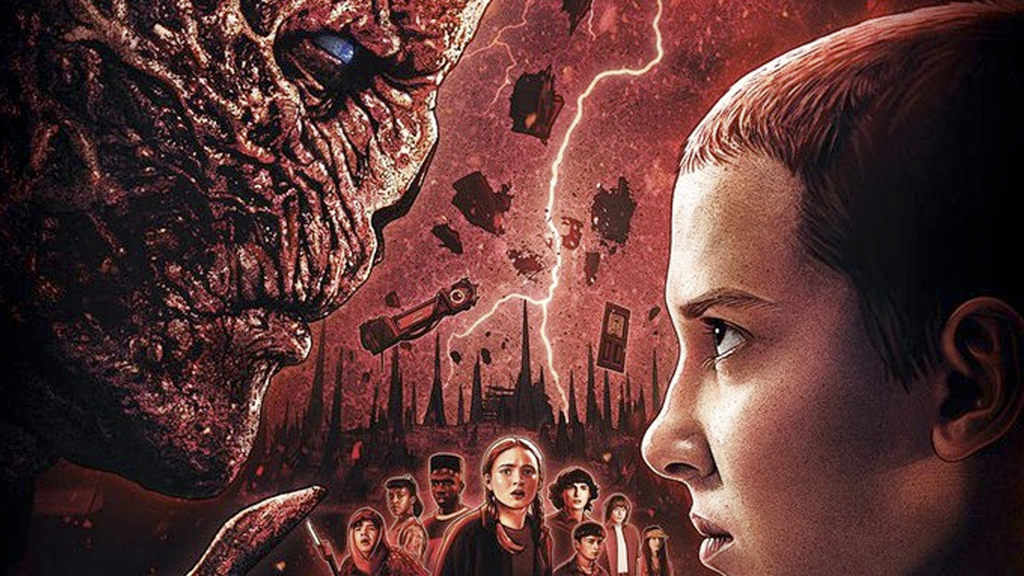
    Finally, after a prolonged wait, we got our hands on the final two episodes of Stranger Things‘ fourth season. After ending its first part on quite the high note, we’ve only had two more episodes left that would wrap up the storyline around the latest threat to Hawkins in the form of Vecna, or the originator of eleven’s powers as we’ve gone on to learn. Could the final episodes provide that send-off ahead of the final season that we’ve been waiting for?

    As I pointed out in my review of the first part, there’s a lot the first part did right but it also suffered ab it from juggling way too many subplots throughout the season. It mostly was the result of scattering its cast across the United States and Russia, but it still offered some memorable set pieces and moments throughout; there’s a reason Running Up That Hill is back in the charts. The highs were definitely high but it still stumbled at times. In a way, the final two episodes continue that trend but pull it all together with a strong emotional finale.

    Vecna once again proves why he is the threat that he is, as the team tries to put together a plan to take him down before he can enact his plan. There are times when we’re playing catch up with the big reveal of what he’s up to, everyone preparing for thSurprisingly,fore we head into the Upside Down. It’s surprising they didn’t set up the final episode as its second part as a movie finale, a lot is going on in its two-hour-plus run time. Still, there’s a lot going on with many of the subplots “kind” of coming together.

    The time spent in Russia with Hopper, Joyce, and Murray still feels disconnected from the rest. Though it ends up with one of the most visually stunning moments in the finale as Hoppeets that moment. So, it definitely delivers in the ways that you want it to. Also, Hopper and Joyce getting the moment everyone has been waiting for was the tip of the iceberg to make you forget that it’s just very loosely connected to the overarching storyline. Who knows if it feeds into the finale more. But I also won’t complain about more Brett Gelman‘s Murray in the Netflix series.

    Millie Bobbie Brown once again gives it her all as Eleven, as she not only has to find a way to help her friends but also faces the consciences of her own actions. The biggest selling point of this season was the connection between her past and the events that continue to unfold throughout Hawkins. Vecna has a personal grudge after the reveal we got last time, and she gets her moments to shine. I still think her character going back a few steps to move forward was a bit of a shame.

    Also, it should be once again highlighted how Jamie Campbell Bower continues to be a great antagonist in the series. The reveal from the last “finale” was a powerful one but I do continue to feel that the character is still a bit too “human” to compete with some of the iconic monsters that we’ve seen throughout past seasons. There’s an additional reveal in these moments that could’ve easily been kept in the actual reveal of this season, but I hope it gets further explored due to the implications for the final season moving forward.

    There are a lot of standouts in this season, but Joseph Quinn‘s Eddie Munson swiftly became a fan favorite for a reason this season. Probably the fastest turnover for a character in the show with a beautiful arc that came together nicely towards the end. His rock-out moment that was teased in trailers made for a memorable moment and wished there was more of it. The same goes for Eduardo Franco‘s Argyle who probably had some of the funniest moments throughout.

    Though, the season continues to belong to Sadie Sink and Natalia Dyer‘s Nancy Wheeler, who continue to pull some powerful performances. The latter gets a truly badass time to shine while Sink‘s Max Mayfield offers that emotional gut punch we got from her earlier in the season. It’s hard not to talk about who gives some of the strongest performances throughout without giving anything away, but the final moments definitely hit the right notes.

    Overall, the season has been strong but with some bumps along the way. In a way, the same is true for the final two episodes. Its emotional moments are the ones that truly hit strong and will play with your heart. Parts of it definitely bank on the Netflix show’s strengths and also let the series breathe where it needs to. We’re definitely entering the final part of this journey and if this season is anything to go by, we’ll likely be fighting back tears as the final moments wrap up over an upside-down Hawkins. I for one cannot wait to see how they wrap up this story.

  • REVIEW: The Princess

    REVIEW: The Princess

    What do you get when you try to mash The Raid with The Princess Bride? You get The Princess, a roaring concoction of martial arts, claustrophobic thrills, and medieval swords that may very well turn Joey King into the next rising action star. Like those aforementioned films, The Princess has cult classic written all over it. It has an unabashedly over-the-top approach to its gore and sense of flair, is light on story but very generous on sweaty fight sequences, and borders on satire, subverting a lot of tropes associated with its genre. While its own conflicting attempts to be taken seriously prevent the film from being great, the film manages to fill the ever-widening gap of mid-budget action films.  

    King plays the eponymous Princess who wakes up one day locked in her castle’s highest tower. When bandits enter her room to accost her, the Princess quickly brutalizes them, revealing that she’s more Hit-Girl and less Princess Buttercup. She soon realizes that the entire castle has been overrun by the man she refused to marry, Dominic Coopers’ pompous Julius, and that her family has been imprisoned in the dungeon. The Princess then begins a descent down to rescue her family trapped in the dungeons, with banquet halls and stairwells filled with bandits and all sorts of buffooning warriors. 

    The Princess takes immense pride in its conceptual conceit, flipping the convention of the damsel in distress on its head and executing it without restraint. Throats get impaled, people are burned alive, and heads fall off. The action, which toes the line between modern martial arts films and 80s schlock, serves as the exhilarating foundation upon which the gore builds. Set pieces are intuitive, cleverly designed, and constantly entertaining. Cinematographer Lorenzo Senatore’s eye for movement allows sequences such as the big close-quarters stairwell fight to feel boundless.

    Much of the well-executed action is what allows King, mostly known to the masses for a string of huge romcom successes, to live up to the caliber of action set by martial arts director Le-Van Kiet. King settles into the role with enough grace and finesse to convince audiences she’s been doing roles like this her whole career, even as a threadbare script robs her of any opportunity to meaningfully act. The Princess won’t be King’s seminal entry into the pantheon of action heroes but it nonetheless remains a promising start to what might be a very successful stint in the genre. 

    Flanking King’s freshman status in the action world are genre staples Olga Kurylenko and Veronica Ngo. Both Kurylenko and Ngo’s statures as action heroes legitimize a film that painfully underserves them. Moira, the lover and second-in-command of Julius, is played with an undercurrent of lethality by Kurylenko that comes off as subtextual more often than literal (she is, however, quite deadly with a whip) as the film never goes beyond her locking lips with him. Were it not for the film’s focus on the dull failed marriage plot, Moira as the big bad would elevate the film. The same can be said for Ngo as Linh, the Princess’ mentor and close confidant, whose enigmatic presence alone pervades every scene she’s in. The few flashback scenes of her in the film reveal a familial story that’s waiting to be told. 

    Quite possibly the film’s biggest failing is its reluctance in embracing the material. The script lingers between a rock and a hard place as it struggles to maintain a somber tone in the face of all its excesses. It refuses to acknowledge just how silly some of the characters are, how audacious the fights are, and how its efforts to subvert the fantasy genre counts as satire. A great version of this film would have gone the way of The Princess Bride; self-aware and self-referential, and where every side character is a character. Instead, the film trudges through scenes of Cooper playing a live-action version of Lord Farquaad with the fervor of an A24 drama. Its thematics somberly examine the patriarchy as characters ripped from the WWE are beat to death. The Princess doesn’t quite find its footing in balancing themes with tone and the end result is a film that is both confident yet unsure of itself.

  • Arlyn Reviews ‘BAYMAX!’

    Arlyn Reviews ‘BAYMAX!’

    I always am so excited when Disney releases a new project because they never fail to entertain me. Their latest project, BAYMAX! has done just that. In 2014 (when I was 6), Disney released Big Hero 6, a movie about a robot named Baymax and a group of heroes saving their city, San Fransokyo. Baymax started out as a personal healthcare companion and was designed to help people in need; however, he ended up being a superhero. BAYMAX! returns the character to his intended purpose and the result is one of the year’s best feel-good projects.

    This show isn’t only hilarious it’s also very heartwarming which is one of the many aspects I like about it. Baymax is loveable here not only because he helps random people but also because he is very funny. As runs around San Fransokyo helping everyone, he heals not only their injuries but also helps them face their fears. And when Baymax finds himself in need of a helping hand, the show reminds us just how important good deeds can be.

    Almost everything Disney produces seeks to teach a life lesson to the audience. This show is no different in that regard. At the forefront is the fact that if you are kind to others, others will be just as kind to you. Baymax helps all these people without them asking, and then they all help Baymax.

    The series really shows who Baymax really is and it also shows us all who we could be if only we all had someone there for us like Baymax. It’s definitely the kind of show that needs to be out in the world and remind us all how important it is to be kind.

  • REVIEW: ‘Ms. Marvel’ Episode 4—”Seeing Red”

    REVIEW: ‘Ms. Marvel’ Episode 4—”Seeing Red”

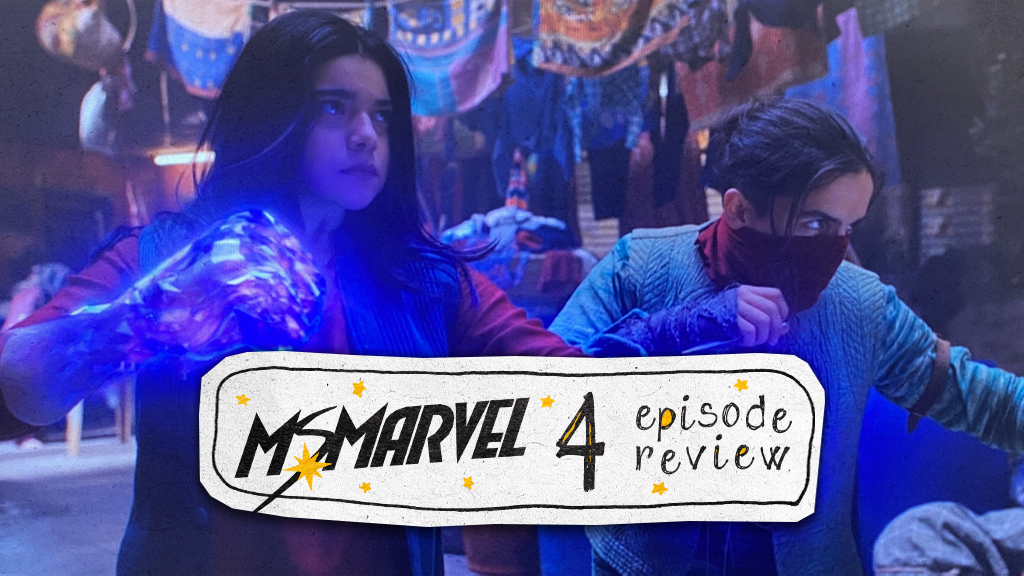
    While Ms. Marvel still has to stick the landing in its final two episodes—something that Marvel Cinematic Universe shows tend to struggle with—its Episode 4 was yet another triumph for Kamala Khan’s series. In fact, it manages to follow the MCU series template for four episodes, but yet surpasses all expectations set by previous Disney+ installments. Ultimately, the conclusion, so far, on Ms. Marvel is that from inception to execution it is the highest quality MCU series to date. And it is not particularly close.

    While the mystery of Kamala’s origin continues in Episode 4, it is still developing in more interesting ways in each episode. Quickly, we learn that there is much more depth and nuance to the “Djinn” classification we were introduced to in the previous episode, and we get a hint that the Noor connection may have stronger connections to the more traditional super-aspects of the MCU. What that connection actually is remains the driving energy of the series, and Ms. Marvel expertly stretches the reveal out much like Kamala can stretch out her own hard light energy.

    But one of the most delightfully perplexing aspects of Ms. Marvel is uncovering why exactly this is so well played out. While many substantive aspects of Ms. Marvel are certainly unique from other MCU entries, the actual structure of the series is not. For example, virtually every MCU series has a major cliff-hanging plot twist-type ending to its fourth episode. In WandavIsion’s  Episode 4, Wanda’s sentience in the Hex is formally revealed. In Loki, the titular character wakes up to different variants of himself at the end of time. In Moon Knight, Marc Spector is killed and is awakened in what appears to be a mental asylum. Here, in Ms. Marvel, Kamala seems to have been somewhat transported to the past, as she finds herself engulfed in the scene of the last train to Karachi the night her great-grandmother Aisha disappeared.

    So while this sort of ending was not a true surprise—and the structure of the penultimate episode can likely similarly be guessed to an extent—Ms. Marvel executes it on an absurdly impressive level. The final shots are breathtaking and rely mostly on a realistic reimagining of the past rather than supernatural, magical, or fantastical elements. While the knowledge of Partition and Kamala’s family history has been known to this extent since the second episode, Episode 4 fully opened the door for what Kamala’s very human origin means to the character, and frankly, the world at large. Even Kamala is completely at a loss for words at the tragedy, suffering, and pain she sees around her. 

    Much of the beauty of the series’ focus on Kamala’s mysterious origin is the fact that, as emphasized and written in stone in this episode, Kamala’s origin is as much intertwined with traditional reality as it is with whatever inter-dimensional tie-in is. All superheroes carry the weight and strengths of their non-super past, but Ms. Marvel is unique in truly expressing that Kamala’s foundation is in her family and its history. The bangle is certainly the most important force in her superpowers, but it is every bit as important to Kamala’s character as is her relationship with her mother, her mother’s relationship with her mother, and whatever happened to Aisha during Partition. 

    In the midst of the incredibly rich storyline, even the action sequences of Episode 4 stand out. In particular, the extended chase scene could without a doubt be plopped into a feature film as is and no one would question it. While often in MCU series, even Ms. Marvel, action is rushed and sparing, this scene proved that that is a choice and not a necessity for these shows. 

    So, to go back to the earlier question of why Ms. Marvel seems to be ahead of the curve, there are numerous unique things that the show brings to the table. But it would not be fair to say that the series radically upended the Disney+ MCU model. Not everyone will personally prefer the series over all others, and no one has to. But at the end of the day, in all truthfulness, Ms. Marvel has been written and executed with such quality that it truly stands out. On no level is that an attack on other MCU shows, either—Ms. Marvel is simply that good.

  • REVIEW: ‘The Terminal List’ Feels Like Chris Pratt’s Attempt at His ‘Breaking Bad’

    REVIEW: ‘The Terminal List’ Feels Like Chris Pratt’s Attempt at His ‘Breaking Bad’

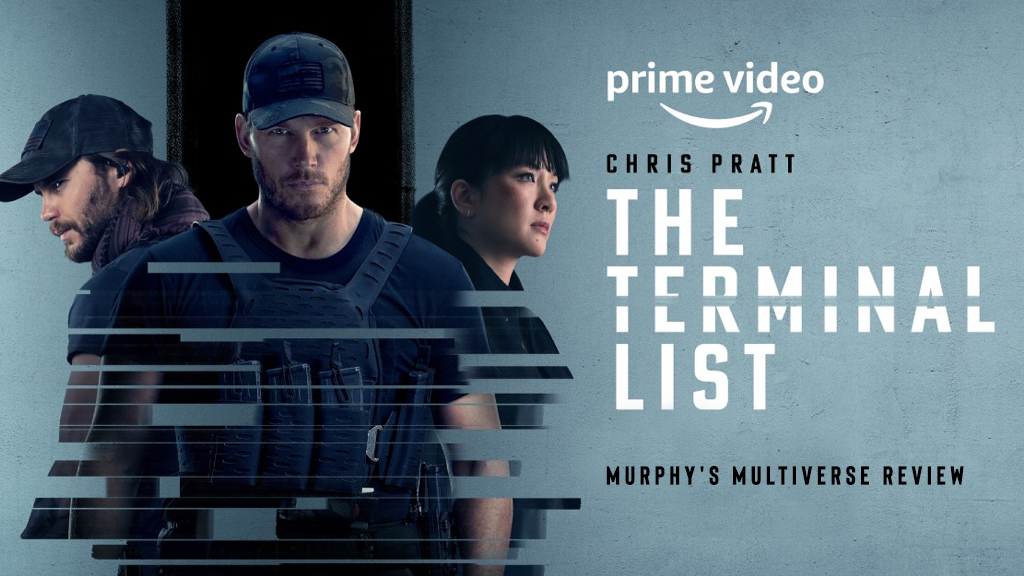
    Amazon Prime Video has been building quite the rapport with Chris Pratt. Not only did he bring in quite the success during the pandemic with The Tomorrow War, but he’s now also working on a series adapting the novel by Jack Carr, The Terminal List. The series follows the story of James Reece, who after facing the loss of his entire Navy SEALs platoon starts to question his own memories and loses grip with reality as the story around him starts to unravel, which may endanger the ones he loves. Can the premise also deliver with this new series?

    One thing is for sure, the base premise is quite a promising one. Especially in the first two episodes it starts to play with the viewer’s understanding of what is and isn’t true. Audio clips and flashbacks start to intertwine in ways that make you wonder what exactly is real or isn’t. Pratt sells the performance as Reece, and it does push you to question what exactly is going on. The dramatic turn of these earlier episodes also adds some weight and further solidifies the difficulty of discussing topics like posttraumatic stress disorder in combat veterans.

    Yet, the series slowly devolves into a rather simplistic plot of vengeance with some political turmoil. There are some interesting ideas at play, but it does continue to throw in new characters and unravels the “bigger picture” at the expense of what was the initial personal drama that gave the series an amazing hook. It’s not bad mind you, but it does feel like a missed opportunity as its strongest moments still remain with elements from that core concept that help develop Reece as a character.

    There’s a lot of gray in this series, and no person is truly good. Some are definitely more corrupt than others, but it does become a boiling point where if you can’t go with Reece’s vengeance, you may lose interest in the series as that’s the main driving force. Chris Pratt gives a great performance and it is always strange to see comedic actors take on some rather dark roles. In a way, this is Pratt‘s Breaking Bad in a way, as he tackles a complex and broken character. It simply hinges on if you are going to join his journey or not to truly invest in this eight-episode series.

    There is a strong supporting cast here,e especially Taylor Kitsch’s Ben Edwards who plays a vital role in supporting Reece throughout his journey. Though Constance Wu may be a personal standout in this series as journalist Katie Buranek alongside Jeanne Tripplehorn‘s Lorraine Hartley. Though, I can’t help but highlight the hilarious twist on casting Jai Courtney as a war-loving multi-billionaire CEO given his perchance of action roles. The way they play with his character was probably the one thing I least expected from the series and it worked in its favor.

    The series is, at its core, a military conspiracy drama and works quite well as such. When they pull out their action sequences, they are great and you can see the influence of director Antoine Fuqua‘s experience with Training Day and Equalizer at play here. Though Ellen Kuras also offers some strong work here, especially echoing her work on projects like Ozark and The Umbrella Academy. Action is tight and purposefully dramatic when it needs to be, even if it does pull its inspirations from various military and gun-focused projects.

    You can tell this was a passion project for Pratt, who also was an executive producer on the series. The series hits its stride when it comes to emotional moments, as Reece is pushed further and further throughout the story, especially as he starts to have a hard time connecting what is and isn’t real. And, as a personal taste in what could’ve been shouldn’t overshadow what the series is going for, it should be praised for what it delivers. There’s an interesting intrigue at play that caught me off-guard even by the end, as sometimes the camera would play with us on where certain characters stand.

    There’s a middle section where the series seemingly takes a brief detour to introduce new characters that don’t have a stronger play into the overarching story. It was interesting as it added a new perspective on some characters, but it felt like the aspect of this story could’ve easily been tightened for the adaptation, as it pretty much feels like a brief detour in the middle of the story.

    I repeatedly caught myself wondering if that was the end until realizing I was only halfway through the series. It does come at the expense of dragging at times and making me wonder if they may have had to pad out the eight-hour run, but it was still interesting to see how the series continues to just escalate. It also has something to say about PTSD and how strongly it affects soldiers. It doesn’t paint a pretty picture of the military; not even a little bit. It doesn’t indulge in the violence but adds a visceral aspect that forces you to keep watching.

    For what the series is, The Terminal List pulls off what it’s trying to be. While I still wished it played a bit more with its audience, there’s something genuine at play here and it could’ve played a bit more morally grey on some character decisions. Yet, your enjoyment of the story strongly depends on how you feel about Pratt‘s character and his emotional journey throughout. There’s a strong supporting cast and while it has some moments where it could’ve tightened the plot, the series still has something to say that was worth telling.

  • REVIEW: ‘Rise’ is an Inspiring Retelling

    REVIEW: ‘Rise’ is an Inspiring Retelling

    It’s never easy adapting a real story like the tale of the Antetokounmpo family. These are real people that are seeing their own story romanticized to tell a story within a specific format. Disney+ has undertaken this tale with Rise, as Nigerian director Akin Omotoso explores the story of basketball stars and the history that their family faced moving from Nigeria to Greece before they’d eventually find themselves in the NBA playing field making a name for themselves. Yet, can the Disney+ film pull off their story?

    Surprisingly, this film takes a heartfelt direction and avoids the general trappings of any sports film by simply not really being about the sport. Yes, we do get elements of that sprinkled throughout, but it’s not a basketball film. It’s more about the family of Antetokounmpo and their journey to the point that Giannis (Uche Agada) and Athanasios (Ral Agada) find their passion in the sport. The National Basketball Association is a big part of their journey but it’s mostly the big tension builder within the climax that brings their journey together into the successful career the brothers have built.

    What this film is about is the Antetokounmpo family. It’s exploring their roots as they fled Nigeria and started their life in Greece, which is where most of the film takes place. It was great to get a focus on their story and a lot of time is spent with their parents Veronica (Yetide Badaki) and Charles (Dayo Okeniyi). Especially with an emotional speech at the end, you see why this choice was made. It’s a story about immigrants and the challenges they faced being undocumented. It’s a story that will always be relevant and it doesn’t shy away from the harsh treatment they had to face.

    Still, there’s a hopeful message here. It’s about finding your passion and going for it. Charles Antekounmpo‘s past as a soccer player and he wants his kids to enjoy sports the same way he did. Yet, there’s the constant fear of losing everything due to their undocumented status and putting his family at risk throughout. The story isn’t creating a definite “villain” but does showcase various people as selfish that are trying to benefit from the family’s situation. The conflict is simply the constant fear of them being discovered and fighting the system that refuses to give them documents, to begin with.

    Once the spark of passion is discovered for Giannis and Athanasios, it gives us some truly heartwarming moments. Seeing the brothers share shoes due to them only being able to afford a single pair is powerful. We don’t have traditional “bullies” but have some typical reactions from people, but the story isn’t then suddenly about them handling people mocking them for poverty. The film focuses on the hopeful message at its core and it does that wonderfully. There are times when the story drags slightly, but it’s an emotional tale that takes its time.

    Rise is a film about inspiring people and it does that well. It also needs to be highlighted to not focus only on their NBA history. This is a story about a Nigerian-Greek family struggling in that environment and trying to get by. Finding hope and passion in basketball, but never purely focusing or defining its story by it. The act that Akin Omotoso tells this story is a delight, as the Nigerian director brings something to the table that makes this project stand out in interesting ways. Nothing is truly glorified in this story, it feels grounded and human with many influences from the many countries that represent the Antetokounmpo.

    If you’ve been looking for a film to just give you that spark to follow your dreams again, this film might be exactly the one you’re looking for. It’s also a story that definitely was worth telling and gives some talented newcomers a chance to tell this story. The ending hits you emotionally, even for those that may not have a connection to the NBA and these players’ stories prior to watching this film. There’s something powerful about a hopeful message and just seeing a success story that seemingly beats the odds.

  • REVIEW: ‘Obi-Wan Kenobi’ Part 6

    REVIEW: ‘Obi-Wan Kenobi’ Part 6

    I won’t lie that my feelings about Obi-Wan Kenobi were a bit mixed throughout my viewing experience. There are strong personal moments sprinkled throughout and Ewan McGregor once again showcases why he was the perfect choice for this role. There were interesting plot threads and while it did seem to drag out at times, the story cohesion and personal touches made it feel just that, personal. Yet, some gripes still gathered throughout especially when it came to the action and some sequence staging. Even with all that, I can’t deny that the final episode hit me emotionally in all the right ways.

    I am not going to call this a perfect finale, as the limited series still had to do some jumping to keep its plot threads together. The Vader conflict wasn’t really directly tied to what would be the final sequences, as Obi-Wan had to rush home due to Reva going on a rampage while chasing down a young Luke Skywalker. While many will try to point to canon issues this sequences causes, Luke never sees Reva’s face or even her lightsaber. So, he just fled from whatever he thought might be chasing him due to what Beru and Owen were warning him about.

    Still, that’s jumping the gun on this episode’s true strength; it’s an emotional rollercoaster throughout in all the best ways. A lot of the emotional core depends on the previous episodes as well as your own investment into the Prequel Trilogy. May it be the showdown between Obi-Wan and Vader with its strong emotional climax; or just the tender greetings with a young Luke Skywalker. The series is definitely focused on Kenobi and many of the characters surrounding him reflect that very tale.

    There still is a conflict if that many pieces are truly moved from the Prequels going into the Originals, yet it’s less about story development but character exploration. Owen’s powerful line as he says that Luke is his son while fighting off Reva was definitely a moment the character truly deserved. After his harsh criticism earlier on, it gave him a nuance and highlighted the journey we never got to see in the originals. It adds context and seeing him fight Reva alongside Beru to protect the kid highlighted that very thing.

    Yet, even Reva’s arc comes to an emotional arc. Her vengeance had pit her on a path of no true return, if it weren’t for that last bit of humanity catching up with her. She’s definitely highlighted as fighting as much as she could to stay alive, and she knows Luke’s connection to Vader, but she lost herself in the rage thinking if she can’t take the man himself, she’d do it to his legacy. Even if he may never truly find out given that it was a secret kept from him. The flashes to her simply becoming the same as the man she vowed to kill reflects her arc in this story. Even if it was a bumpy one, Moses Ingram gives one hell of a performance in this episode.

    It’s an emotional climax that might be among the better final episodes of a Disney show. Yet, the road to it simply was one of its bumpiest as well. At least this time around, the action is quite a bit more focused and the camera stops shaking. We get Kenobi’s iconic pose and see him regain his strength with some spectacular visuals of the Jedi Master showcasing what he is truly capable of. Him actually forcing Vader to his knees was a rather surprising direction but echoed the flashback that we watched in a previous episode. Vader’s rage is what defines him and it’s also the obsession that becomes his downfall.

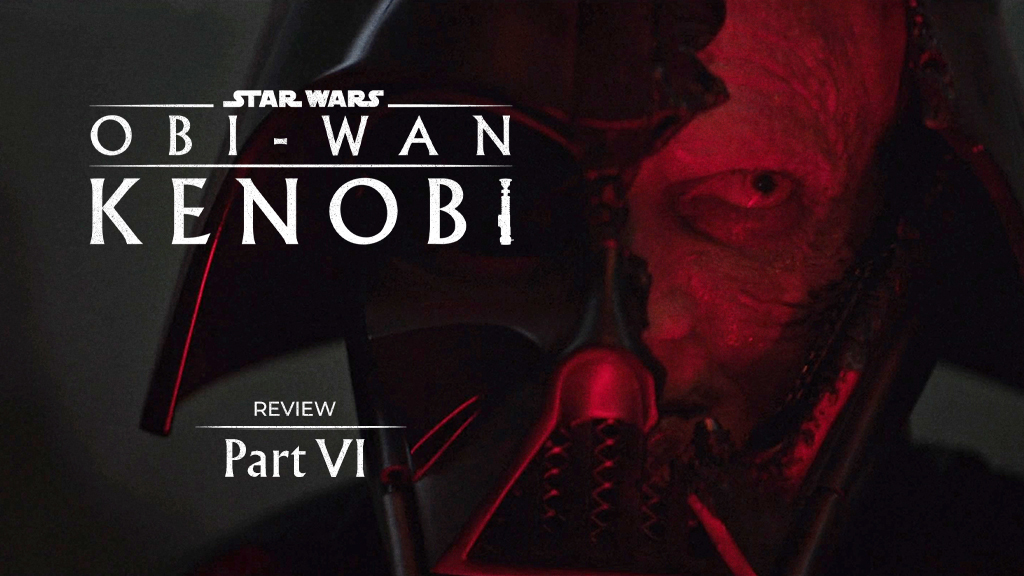
    Finally, we got a good look at Hayden Christensen behind the mask, and he really gave it his all. The way his voice overlaps with that of James Earl Jones added a unique showcase of how these two sides of the same coin meld together. The way he takes away Obi-Wan’s grief and points to his actions being his own were powerful to say the least. His obsession then continuing even beyond the mercy shown by his master once more, only to continue his hunt with a fitting cameo by Palpatine trying to discourage him and keep his focus on the Empire’s growth.

    Leia also gets a small farewell, as we see her put on a rather similar outfit that combines elements from her future look and even some Padme in there. Didn’t expect an origin for her blaster, but it was a nice touch and rounded out her design. Kenobi coming to visit to bring her back the droid was a nice little touch, as it also shows that the Jedi Master has finally broken free from his old life. Though the ending especially seems to hint at him going on a journey, which muddles the concept of this series being a limited series even more.

    Also, the cameo finally happened. After all the theories after the first mention of Qui-Gon Jinn and Liam Neeson pretending he’d never do it, there he is just waiting around for his former Padawan to figure things out on his own. There does seem to be an open aspect to this ending that may lead into another story, and we don’t quite see what the future has in store for Reva. At first I assumed she succumbed to her wounds, but Kenobi helps her up; ironically highlighting how he did for her what he couldn’t for Anakin.

    Overall, Obi-Wan Kenobi definitely ended on a high note. perhaps one strongly dependent on your nostalgia, but a high note nonetheless. while I do wish aspects of the show were tweaked a bit and the action wasn’t as jumbled as it was, it definitely was a series I am glad I got to witness. The cast carry the show and its emotional storyline that is more a love letter to those that grew up with the original series, while also giving some characters a bit more character development they otherwise only had in our memories.

  • REVIEW: ‘Ms. Marvel’ Episode 3—”Destined”

    REVIEW: ‘Ms. Marvel’ Episode 3—”Destined”

    Ms. Marvel’s third episode, “Destined”, does a remarkable job at maintaining the heart and integrity of the series while also bringing it to new heights in an exciting way. The episode hit the ground running straight off of Episode 2’s cliffhanger in Kamran and his mother’s car. There is a very welcome shift in pace throughout the beginning of the episode, which also takes the series in a very bold new direction. While the bangle remains mysterious, Kamran’s mom, Najma’s, explanation of its history to Kamala suggests that Najma (along with her family) and Kamala’s mysterious great-grandmother Aisha are Clandestines, or Djinn, from another dimension. While their narrative should be taken with a grain of salt at this point, they seek Kamala’s power to get them back to their home Noor dimension from which they had been exiled. The very end of the episode suggests there is more to the story of Aisha’s disappearance still, as Najma shows both Kamala and her grandmother Sana a vision of a train marked “Karachi”, which seems to be a callback to Sana’s family’s escape from India and Aisha’s disappearance. 

    The rest of the third episode once more brought the Kamala Khan charm to the screen. Particularly in the wedding scene, the episode proves that Ms. Marvel is one of the most colorful Marvel Studio’s projects in existence and is filled to the brim with personality. The teenage drama involved in Kamala’s story is amplified here, as she struggles to maintain trust, confidence, and honesty with and from her friends and family. Bruno begins to hesitate about Kamala’s plans with the bangle and tells her he is headed to CalTech, which complicates their adorably awkward crush-type relationship. Nakia angrily discovers that Kamala is actually the masked person who has caused problems for the community, and Kamala’s relationship with her family is further strained by her inability to tell them what she is going through. 

    The episode spends much time celebrating and dissecting the concept of family. This theme was introduced, foreshadowed, and explored in the first two episodes, but Episode 3 featured multiple scenes back to back that explicitly state the importance of family through dialogue. Kamala’s relationship with the Clandestines is yet another layer to that discussion—assuming they are to some extent her family, what is her duty to them? How can Kamala honor her lineage or heritage while not betraying her closer family and community?

    While we have still yet to see Kamala go into full superhero mode, the episode’s first major action scene set to Bon Jovi’s “Livin’ On a Prayer” was a strong start for the series in that regard. This episode also solidified the villains of Ms. Marvel even if there was no surprise to it. The tease of the mask Bruno made Kamala tees up her eventual triumphant debut as her own bona fide superhero, but that moment still seems potentially distant on the horizon.

    Overall, Episode 3 of Ms. Marvel dramatically raises the stakes and implications for both Kamala and the series. While the more “classic” elements of the series are still going strong—teenage awkwardness, crushes, family responsibilities, and self-discovery—there is now an additional element of inter-dimensional or multiversal travel and Kamala’s direct connection to it. The fact that there is a missing bangle is a mystery that foreshadows its inclusion down the line. Sana’s request that Kamala and her mother come to Karachi is clearly setting up an adaptation of the Ms. Marvel comics “Mecca” arc, but it also is the prime (or closer to it) location for exposing the truth about Kamala’s family history, the significance of the bangles, and Kamala’s powers.

  • REVIEW: ‘Keeping Company’

    REVIEW: ‘Keeping Company’

    Keeping Company is billed as a movie that mixes ruthless corporate salesmen with vicious suburban serial killers, and boy, does it do so beautifully. It’s hard to sense what Keeping Company wants to be when it starts. Is it going to be a comedy? Is it going to be about two murdering insurance salesmen? Off the bat, it’s pretty unclear, and that’s something the movie uses to its advantage.

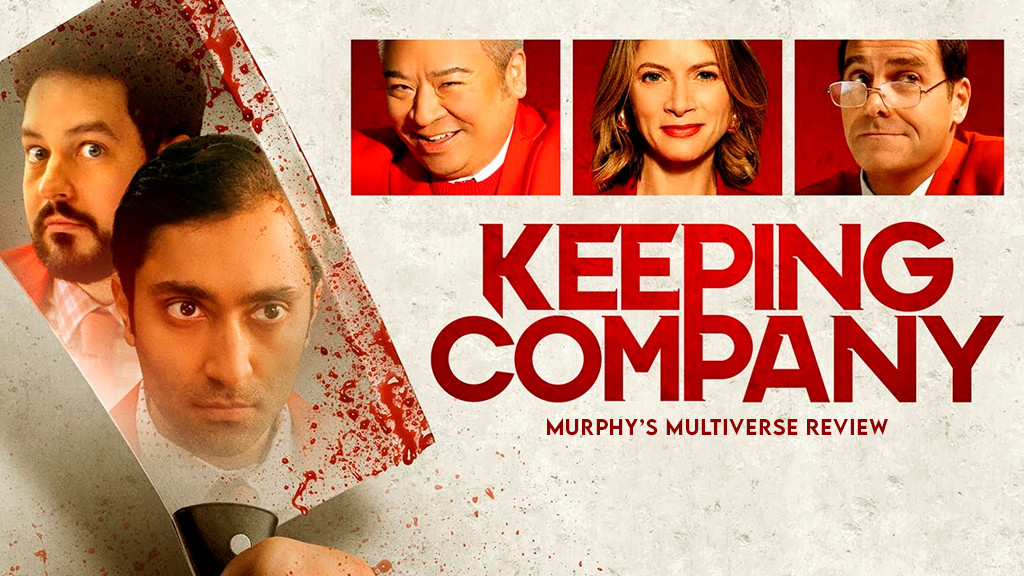
    The movie begins with two men, Sonny and Noah, who are door-to-door insurance salesmen. They’re always looking to get their numbers up, no matter the cost, whether it is to impress a parental figure (in Sonny’s case) or simply to climb the corporate ladder. Their methods are questionable, and they’ll stop at nothing to raise their numbers — even if it means harassing a questionable man. Enter Lucas. After he hits their car, Sonny and Noah are unwilling to let him go free and insist on following him despite his pleas for privacy. Is it the smartest move? Absolutely not. But their ignorance prevents them from thinking of the consequences of their actions.

    It is in this moment that Keeping Company becomes one of the rare indie horror movies to get it right, and it’s a thrilling ride until the end moments. There are plenty of what-the-hell moments including one involving Sonny’s dad’s restaurant. It’s such a surprising moment that will surely leave a taste in the mouths of viewers – and not necessarily in the best way. As the movie moves away from Sonny and Noah, turning the focus toward Lucas and his grandmother, Keeping Company thrives.

    One of the most impressive bits of the movie is that it does successfully mark the similarities between the sinister household and the ruthless worth of business as promised in the synopsis. The corporate world is a vicious one and it’s not entirely surprising that a movie might try to compare serial killers to the business world. However, Keeping Company succeeds in making the serial killers look no worse than the money-hungry insurance folks desperate to up their sales numbers. When a woman goes in trying to claim the money from her plan for her husband? They tell her that, by the company’s rules, her husband is still considered alive and she’ll need to continue paying the premium to receive the benefits should she be able to prove his death. It’s a messed-up scene in a film full of death, but it hits harder than those because it’s realistic.

    Is Keeping Company perfect? No. Is it enjoyable? Yes. Its relatively short run-time of an hour and twenty-two minutes flies by with ease. The only issue with the film would be its editing. The cutaways are frustrating and do take away from some of the emotional impact. And the score isn’t exactly memorable. But even still, Keeping Company is a fascinating look at how despicable humanity can be when it comes to achieving their desires; they’ll do whatever is needed to benefit themselves, even if it means murder or robbing a financially insecure person blind.