Category: Reviews

  • REVIEW: ’The Marvelous Mrs. Maisel’ Proves Timing is Everything

    REVIEW: ’The Marvelous Mrs. Maisel’ Proves Timing is Everything

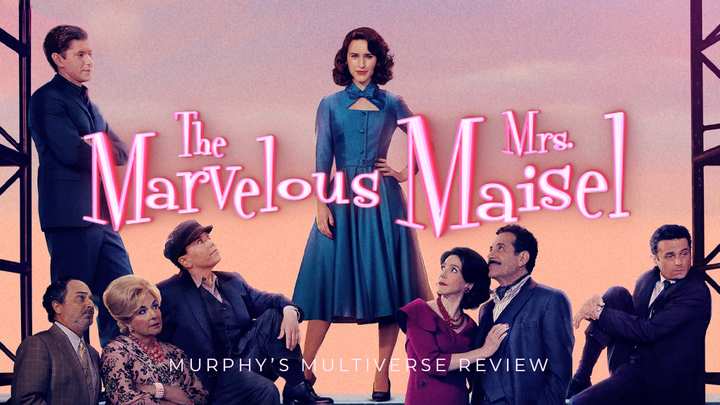
    Ever since its first, Emmy-award-winning episode dropped in March of 2017, The Marvelous Mrs. Maisel has thrived on timing. As has been mentioned on numerous occasions, the show moves at a speed that can only be described as “really fast.” Scenes transition like they’re stuck on LaGuardia’s moving walkway and characters speak at a tempo that could spin a windmill. It’s everything a high school drama director tells their students they should strive for, landing beat after beat in a tight, functioning hour. This exquisite meter is the series’ trademark, and its greatest secret weapon, as the writers seem to remember something the rest of us may have forgotten. In Maisel’s latest batch of episodes, Amy Sherman-Palladino reminds everyone that timing is sometimes most effective when slowed down.


    Everything is Bellmore”, the first of this week’s two new installments, is the show’s official tribute to Brian Tarantina. The actor, known for playing lovable Gaslight emcee Jackie, passed away unexpectedly in 2019. While Tarantina was undoubtedly a cornerstone for the series, one of those little unsung pieces that make the whole thing tick, it never felt like a surefire bet he’d get an entire episode made in his honor. One may have expected a line inserted quickly into an early-season episode, commenting on his absence with a little dedication card appearing after the credits. What one may not have expected was for the writers to take his death and turn it into one of the most poignant moments in Maisel’s entire run.

    Bellmore is a showcase for Alex Borstein, who steps up to deliver an unforgettable bit of acting during the episode’s climactic minutes. A lot of shows have a lot of scenes, where performers stand up to produce tears and spit out dramatic monologues, it’s simply par for the course. However, very few manage to achieve the raw authenticity that Borstein displays during her big moment. While the leads of Maisel may be wealthy Upper West Siders, the series always has truly been about the little guys. Jackie, and by extension Tarantina himself, was one of the little guys. As Susie points out, the man was a hard worker and lived a life full of immense ups and staggering downs. Like any person, he was simply out there trying his best. And yet, it never seemed good enough. No matter how hard he worked, or how many minor successes he had pulled off, his life still ended in a dirty, cramped, one-room apartment. Why? Because, as Maisel has always made apparent, timing is everything.

    Rachel Brosnahan, while magnificent as usual, has taken a back seat to her supporting cast, but it is still her storyline that thematically threads everything together. Now working at a strip club, the resolute protagonist makes it her mission in life to take an otherwise discount presentation and get it off the ground. Though production value does increase, at the end of the day, it’s still a strip club. Try as she might, Midge isn’t yet able to achieve the sort of fulfillment that she desires. Whether or not the club itself is part of the problem remains to be seen, but in the end it boils down to the commentary Bellmont and its follow-up “Interesting People on Christopher Street” are trying to make. Life is short, and sometimes the timing just doesn’t work out. Whether it’s whatever boat Jackie missed, Midge’s dependence on low-rent venues for creative freedom, or Susie’s refusal to do anything about her romantic life until she gets her business afloat, the idea of timing is ever looming.

    The other character who shoulders this theme, and who gets a little extra spotlight this week, is Tony Shalhoub‘s Abe Weissman. A personal favorite member of the cast, as his comedic timing is consistently top-notch, the former Monk star navigates two separate b-plots with sublime expertise. In both, Abe deals with the consequences of not knowing when he should and shouldn’t open his mouth. He publishes a devastating review of a play written by a family friend, resulting in the social exile of the Weissman couple from their community. His frets about the romantic history between his wife and best friend get Jason Alexander‘s Asher and himself in trouble with the federal government. It’s a lesson in balancing truth with timing, done with the mix of comedy and dramatics that only Maisel can pull off.

    Ultimately, this week’s duo of episodes is dedicated to the element that helps the show stand out in more ways than one. Pacing, music, production design, costumes, and everything in between are up to their usual snuff. From a filmmaking standpoint, the show only continues to prove the importance of timing. Only now, the story is starting to as well. Just remember, even if Midge is able to get the technical aspects of that strip to show up and ticking, she still finds a way to fall in the pit at the end.

  • REVIEW: ‘Batman Returns’ Could’ve Used More Batman

    REVIEW: ‘Batman Returns’ Could’ve Used More Batman

    Tim Burton‘s return to Gotham City was surely going to be bigger than before, as his notorious gothic style might get more focus this time around. His work on the first brought the Caped Crusader and the Clown Prince of Crime to life, especially with Jack Nicholson’s performance as the Joker quickly becoming a cultural icon. Even in its sequel, Batman Returns, the villains are its crowning achievement that often overshadows its titular protagonist.

    Throughout the first hour of the film, the main character is barely in it, as we spend most of its runtime setting up its main foes, Catwoman and Penguin. While the setup is well done, it’s just a noticeable absence and feels more like we’re walking into a Catwoman film than we are one focused on the titular Caped Crusader.

    While what we do get of Keaton throughout the film is an interesting duel of identities, the antagonists just outshine him. The standout performance and possibly one of the best in a comic book film belongs to Danny DeVito’s Penguin. He could waddle around without saying a peep, and still speak a thousand words. His work as the character is deliciously repulsive in all the right ways. It is a much more feral take on the character but DeVito shines with his barbarous line delivery even rising from the sewers beneath Gotham City. All of this is hiding a man desperate of reclaiming what he feels owed. It is also implied that Penguin is only 33 years old so take that into consideration if you ever debate living under a zoo.

    Along with Penguin, we see a bit more of a wild and untamed take on Catwoman. Probably the weakest part of this character is her origin. She simply gets pushed from a window high up and resulting in a few screws knocked loose. Next thing we know, she’s running around in a noticeably DIY leather suit whipping it like a Devo song. Once we get to spend time with Catwoman, Michelle Pfeiffer does indeed shine in the role and her chemistry with Keaton‘s Bruce Wayne is undeniable. They are perfect parallels of each other throughout the film.

    Probably the weakest villain in the film is Christopher Walken‘s Max Shreck. His main function is to create the film’s actual antagonists and is then quickly overshadowed. It makes sense, as they are infinitely more interesting than the dude who looks like he stuck a fork in an outlet. His whole shtick at the beginning of the film is getting his capacitor built to store Gotham’s energy, but it’s quickly abandoned once the film realizes who is way more interesting. There definitely could’ve been better ways to push Selina and Oswald in the right direction without Shreck taking up as much screentime.

    As mentioned previously, one of the film’s most underutilized elements is its titular character. The problem is that Batman feels more like a supporting character in his own film. It’s a waste of Keaton‘s talents who is not only a great actor but someone who nailed both personalities of his character. It would’ve been more beneficial for the character and his relationship with Selina Kyle if they played more into his inner conflict with Bruce Wayne being the real mask.

    What is worth praising is this version of Gotham. It still remains one of the best adaptions of the fictional city. You can see Burton‘s influence in the set designs with his Gothic background clashing with the comic roots of the city in the best way possible. Even if the city is dark, it is very much alive and full of interesting characters. It was always meant to feel at odds with its aesthetic and the people that inhabit it.

    Batman Returns is a solid film that’s provided some iconic performances from DeVito and Pfeiffer. That mixed with some beautiful set design and costumes just offer a unique experience. The film has its problems and but you’ll spend too much time focusing on the parts that are good because they’re just so attention-grabbing. Sadly this was the last we saw of Burtons‘ run in Gotham, but it won’t be the last time we see Keaton in the role, as he’ll put on the cowl once again in the DC Extended Universe’s The Flash.

  • REVIEW: ‘No Exit’ Is A Cold, Bloody Mess

    REVIEW: ‘No Exit’ Is A Cold, Bloody Mess

    No Exit has the makings of a decent thriller: an intimate premise, a best-selling airport novel that serves as its source material, a producer who wrote Logan, arguably the best X-Men movie in 20 years, and The Little Cast That Could that has Dennis Haysbert and the always-great Dale Dickey. But for every Panic Room, there are a dozen thrillers that fall into the bargain bin of basic cable fodder. The aptly named No Exit, sadly, has no way out of that hole even with all the bells and whistles it has. The problem isn’t so much that No Exit is outright awful, it’s that it fails to bring all its good pieces together, rendering the film as cold as the corpses it leaves in its wake. 

    Darby is a recovering addict who spends her days in rehab full of regret and self-loathing. When Darby receives a call from her estranged family that her mom may be hours away from her deathbed, she breaks out of rehab to visit her mom one last time. In true Murphy’s Law fashion, the night she breaks out happens to be in the middle of a blizzard and she has no choice but to shack in an isolated rest stop for cover. It’s in this rest stop where she finds herself in an inescapable predicament with four strangers and a kidnapped child in a van.

    Any exciting thriller would know to examine the pathos that comes with sobriety, addiction, and paranoia, themes that our protagonist Darby is faced with all throughout the film. To trap someone in crisis in a scenario as cruel as the plot of No Exit would be to bare their demons, exposing their true self in the process. But No Exit forgoes this when it punctures the raging tension all too soon with a reveal that’s all too dull, and a change in tone that’s all too trite. No quarter is given to the potentially fascinating exploration of Darby’s soul, which is a shame given how fantastic Havana Rose Liu is.

    No Exit lives and dies by Liu’s electrifying turn as Darby. Like a seasoned pro, Liu layers Darby with palpable self-affliction and resolve. A mere gaze from Liu conveys a depth of pain that cuts through the film’s noise, cementing her as the film’s singular best asset. That she manages to be so watchable despite the script handicapping the rest of her abilities makes for a performance that may leave audiences wanting more. And No Exit’s mortal sin is not giving her more to do. 

    Precious character work is also not afforded to the rest of the cast as they too are hamstrung by the film’s insistence on being a by-the-book survival screamfest instead of a potent mystery thriller. The great Dennis Haysbert commands what little screen time he has playing cards and standing in a room but loses footing the moment No Exit decides to get rowdy. His addition to the cast adds legitimacy to the ensemble but does little to make the movie feel legitimate. It’s through no fault of his own that his casting was in vain; the script simply does not give Haysbert the space to do anything worthwhile despite being primed to do so. 

    Indie darling Dale Dickey cushions the film’s sharp edges with a tender performance in the film’s former half, only for that tenderness to turn coarse later on Dickey’s performance doesn’t come off as thankless as Haysbert’s but a recklessly jammed twist in the third act exposes the gaps in what could’ve been a more rounded character. 

    Newcomer David Rysdahl’s Lars is central to the film’s crux of claustrophobic unrest and he surprisingly lives up to the task. His very neurotic Lars quickly proves to be a great foil to Liu’s very twitchy Darby and their combined presence coalesces into a mass of unease. Underneath Lars’ ugliness and unpredictability, Rysdahl manages to give the character troubled humanity. 

    Lastly, there’s Danny Ramirez, who goes against the clean-cut babyface type fans got acquainted with in Falcon and the Winter Soldier. Ramirez sheds the ‘aww shucks’ charm of Joaquin Torres to reveal his inner Patrick Bateman. It’s a commendable attempt that ultimately doesn’t live up to the venom of the material because he’s simply too cute to look at. 

    With all that said, it shouldn’t come as a surprise that a middling script that goes awry halfway is what holds ultimately all the film’s best players back. Screenwriters Andrew Barrer and Gabriel Ferrari are credited on the uber-delightful Ant-Man and the Wasp, and yet No Exit is sorely lacking the playful looseness of the Marvel blockbuster. Restraint and compactness are usual staples of a great thriller script but neither are native to No Exit’s screenplay. Without both touchstones, No Exit might as well embrace the range of its premise which it doesn’t.

    The screenplay is at its best in moments of stillness, when the tension calmly simmers to raging levels of unease. It’s during these scenes that the ensemble is at their most gripping, delivering performances that prove why they’re The Little Cast That Could. The screenplay is at its worst when it shifts gears into a loud mess of a cookie-cutter survival story rife with highly questionable story beats. The film makes a big deal of a sudden twist that feels empty and adds nothing to the tension. Characters are heavily dumbed down for bargain-bin levels of suspense and shock. For example, all throughout the film, certain characters make use of a very accessible backdoor to enter the rest stop. But during the story’s boiling point, when the same characters are forcibly trapped outdoors with seemingly no way in the front door, they’ve somehow forgotten about the back door they frequently used prior. 

    Like the screenplay, No Exit‘s photography is two-sided. Given its limited scope, the set is essentially split into two locations: inside the rest stop and out in the parking lot. Inside the rest stop is where No Exit looks its worst. The set’s harsh lighting makes it seem like the cast is doing a one-act play instead of a film. Staging, blocking, and camera movement feel uninspired, unwieldy and ends up making the film’s tensest moments feel lifeless. Ironically, outside in the unforgiving cold is where the film visually comes alive. The snowy set’s authentic craftsmanship allows director Damien Power the space to be aesthetically playful, utilizing the icy atmosphere to stage and compose the film’s most striking images.

    Fans of Taylor Adams‘ novel may find solace in the wanton violence No Exit dishes out to its cast of characters. The tonal shift the film takes halfway through comes with a few exciting brutal and bloody sequences that are almost bordering on comical B-movie schlock. The violent climax isn’t quite the second wind the movie so desperately needs nor does it live up to the novel’s extremities but it closes the movie with a playfulness it should have had from the beginning.

  • REVIEW: ‘Batman’ is a Love Story for the Ages

    REVIEW: ‘Batman’ is a Love Story for the Ages

    The Batman‘s release is just around the corner, and it seemed fitting to take a look back at the many films that defined the character on the silver screen. So, welcome to our latest review-a-thon revisiting the Caped Crusader’s cinematic history. To kick it off, you can’t really talk about the franchise without mentioning Tim Burton‘s 1989 film simply titled Batman. Even back then, people doubted Michael Keaton in the titular role, but he would go on to define not only his career but also comic book history by bringing the character to life. Later this year, he’ll even return in the role for a new generation to meet THE Batman that defined many people’s childhood. Yet, after over 30 years, does the film still hold up, or is it hiding behind a Gothic mask?

    After rewatching it, I’ve remembered that most of the main plotlines of this story surround Vicky Vale. Not only is Bruce Wayne strangely obsessed with her, but even the Joker has a liking to the young reporter. He ends up ditching his romantic interest, who he uses for questionable experiments, as soon as she catches his eyes. Wait, that’s not even it, as her reporting partner, Alexander Knox, seemingly you – guessed it – has a crush on her. This rhombus of a love triangle permeates throughout the entire film, it makes you wonder why they didn’t have Bob join in just for the hell of it. Though that’s the same guy who thought a dude in a rubber bat suit had a wallet on him somewhere; he probably has other worries at the time.

    But you can’t forget that Bruce Wayne, the moment he sees Jack Napier return as the Joker, just wanders around starring at him. While I know Jack Nicholson‘s performance is mesmerizing throughout the film’s runtime, he already saw the guy earlier when he threw him into the vat of whatever can turn a man into the human equivalent of an eggshell. So, either he just really loves clowns, or it was love at first sight. He is the greatest detective after all. So, he must’ve known that quietly following a murderer – in broad daylight mind you – won’t get him killed but a flirty wave goodbye. The moment Vicky steps in, he just bolts without a word. If you ask me, that’s suspicious.

    The more I think about it, was the line “let’s get nuts” bit more a test. I mean, Joker goes on to pull off the line “never rub another man’s rhubarb” and the whole room really thinks there’s no sexual undertone at play here? I think not! The more you think about it, everything the Clown Prince of Crime does is to get Batman’s attention. Yes, he claims it’s about being more famous than the bat-themed Power Ranger, but he can’t lie. He knows the guy is going to show up if he makes enough people smile to death. The guy walks around with a gun in his pants that screams “compensating for something” and definitely trying to show off. Batman is no exception with his “Batmobile” that can’t take a turn even if its life depended on it.

    Before he turned into a mad clown, he was a calculating gangster. Just because he is selling make-up that puts permanent death grins on its victims, and starts obsessing about a woman’s photos of dead people – by the way, what the hell was up with that, Vicky? – that doesn’t mean there’s a plan at play here. If you ignore the dramatic implications of Joker turning out as the murderer of Bruce’s parents, you start to realize where the inspiration of their relationship in The LEGO Batman Movie came from. It was in our faces since 1989, but we were just too focused on the fun superhero action and a great story to really look a little deeper.

    Let’s be honest, the Vicky Vale romance may have been hiding the true love story all along, as two different worlds collide and are desperate for each other’s attention. Even during the finale, he’s just waiting for his prince in plastic rubber. Dancing with Vale in his arms, while Batsy is desperately trying to get close. If he really was as obsessed with her as the film is implying, they would’ve been gone a long time. Hell, he could’ve taken out Batman if he wanted to. Even as they are hanging, the one to fall is Vicky and not the Caped Crusader. He’s obsessed with the man that just manages to put a smile on his face, a permanent one.

    There’s just something about the romantic setting of Burton‘s Gotham and the slower pace that lets you take it all in. We’ve really been enjoying a superhero epic that was hiding an unlikely love story for so long. Vicky Vale is in the middle of a story that may not actually be about her. The true reason Batman wasn’t there to meet her wasn’t because of the Bat symbol, but the memory it holds for what was lost during the final confrontation. Perhaps he really did want to dance with the devil in the pale moonlight.

  • REVIEW: ‘How I Met Your Father’ Episode 7 – “Rivka Rebel”

    REVIEW: ‘How I Met Your Father’ Episode 7 – “Rivka Rebel”

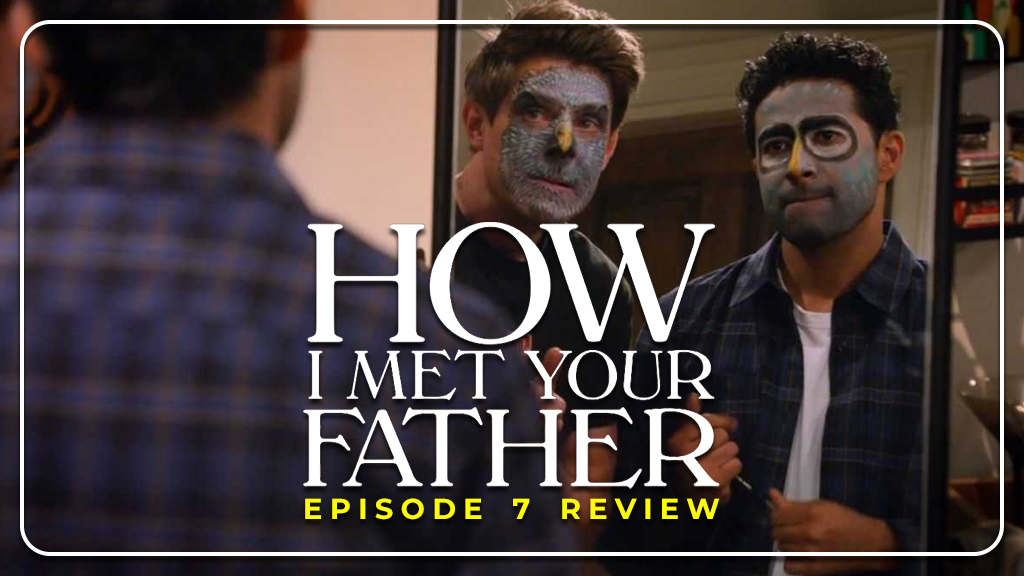
    Episode 7 of How I Met Your Father takes a break from Sophie’s love life and focuses instead on development with the core cast. Considering the two previous episodes were easily the best of the season, and were heavily involved with her love life, it is interesting going into an episode not fully knowing if it is going to land on the same level as those which directly preceded it.

    The episode follows each character as they try to develop in problem areas. Sophie and Valentina are tasked with performing a photoshoot for the head photographer of Sophie’s dream job. Meanwhile, Charlie and Ellen take on adjustment to living in New York, as well as Sid and Jesse spending the time dealing with procrastination. The duo pairings are already starting to seem like patterns. So far the cast is really falling into a weird place where each person has a best friend of the group and the cast all get together every few episodes to establish that they are a cohesive group. This has been ongoing, but I didn’t really catch onto it until this episode.

    Every episode pairs up Valentina and Sophie, Charlie and Ellen, and Sid and Jesse. Sure, we see them all interact, but when it comes to the personal moments where only two characters are there, it gets a bit underwhelming. This is largely because those types of relationships are being developed continuously while there is still no big development in other areas. Valentina and Charlie are a couple, but only two episodes have involved their relationship for example. Jesse is obviously in love with Sophie at this point, but we don’t see him actually do much about it, whether it is jealousy, chasing her, or any other type of emotion. This weird disconnect is my new big complaint about the show, not that there are many complaints, but I do hope we see this corrected in the final three episodes, or if not, in season 2.

    While the pairings have me critical, the actual development between the characters did progress well. Jesse is starting to move on from the tragic ending to his last relationship. Sid is getting closer to marrying Hannah, with them agreeing on more and more. Sophie is finding herself and taking leaps for what she wants. Valentina is admitting to her true feelings about where she is in life. And Ellen and Charlie are getting more comfortable with each other. I do like how the characters are progressing. Sophie is obviously the most interesting due to her being the main character, but Valentina and Jesse are early standouts. Valentina is quickly breaking away from the free-willed and confident character we were introduced to and becoming a very interesting character with lots of real-world problems and reactions, such as lying about how glamorous her life is to not worry her friends. Jesse is also great because of his struggle moving on from his ex, especially since it left him a semi-famous internet sensation. The struggles are very 21st century, relating to the target audience as much as it can, but it feels real all the same, especially as a twenty-something like myself.

    While we have talked about my major complaint about this episode, I do have a second. As I have stated before, the show really has no time to waste in its short 10 episode season, especially now as we near the end. However, this episode seemed like a disconnect from the really big momentum they had coming into it. Due to this, the episode felt like filler, even if it did help develop some of the main cast. I think this largely stems from my first complaint of the pairings being more of the same, since it is starting to be smaller and smaller jumps in development, we as viewers don’t perceive the new changes as well, and therefore the episode falls into this weird place that it feels like a filler episode despite being a normal episode for a traditional sitcom. Filler is usually an episode that does little to progress the plot, such as the rhyming episode in How I Met Your Mother‘s final season. While they can be fun, they have to be used in appropriate places. This episode doesn’t fit the filler category because it did develop the plot, but it just didn’t land as well as the last two episodes since there were no real standout moments.

    How I Met Your Father has definitely improved a lot since its premiere just a short few weeks ago. While almost every episode has gotten progressively better, there have been two small dips so far, and sadly, episode 7 feels like one of them. With only three episodes left, I feel like there could have been a better balance of time in this one, but hopefully, this means a killer winddown. I wouldn’t be surprised to see next week’s episode as another one like this, but that should hint at an amazing final two-episode performance. Let’s just hope I’m right and we don’t see a significant slide.

  • REVIEW: Netflix’s ‘Worst Roommate Ever’ Feels Like a Rehash

    REVIEW: Netflix’s ‘Worst Roommate Ever’ Feels Like a Rehash

    True crime documentaries are always a must-see. They’re thrilling and terrifying, but most importantly, they’re captivating because it’s more often than not, the circumstances behind the crimes are things we try to tell ourselves do not happen. Unfortunately, though, as true crime continues to become more popular, most big stories have already been covered in detail through other streamers or networks. In fact, true crime is what Investigation Discovery has built its entire brand on. So, it can be hard for shows like Worst Roommate Ever to feel fresh. This is, ultimately, what keeps it from being must-see television.

    While Worst Roommate Ever is a thrilling watch, one that’ll surely keep viewers hooked until the end, it’s nothing new. These stories – especially the first two – have been featured on Investigation Discovery, and Netflix’s approach offers little new for those that are familiar with these stories. It’s unfortunate, really, as the concept of Worst Roommate Ever is a great one. It just feels like a long rehash, making it hard to understand why it was greenlit to begin with.

    One subject featured in Worst Roommate Ever is Dorothea Puente. Those that follow true crime stories have probably heard about Puente. Throughout her life, she was responsible for committing numerous crimes against those she was meant to help. To say she is a monster would be putting it lightly. The problem with using Puente for the first episode, though, is that her story has been told time and time again. There’s The House is Innocent, World’s Most Evil Serial Killers, and The Boarding House all of which have tackled Puente’s crimes, so by the time “Call Me Grandma” comes around, viewers have probably already been made aware of the terrible things she has done.

    That isn’t to say the interviews don’t make the stories fascinating. In most instances, the interviews do enhance the stories being told. It’s just that most of them are so familiar, even those being interviewed have been showcased in previous documentaries or episodes on these terrible crimes. If Worst Roommate Ever took the same concept and, instead, opted to focus on smaller stories for a potential second season, it would only be beneficial. As it stands, though, Investigation Discovery has already tackled these stories and, honestly, it makes Netflix’s Worst Roommate Ever feel outdated.

    All in all, Worst Roommate Ever is still worth a watch — solely for the latter episodes. Beyond that, though, it feels like its trying too hard to do what has already been done. If the series should return for any future installments, it should opt to seek out smaller tales if it wants to rightfully claim its space among other great true crime.

  • REVIEW: ‘The King’s Man’ Blu-Ray is Full of Special Features

    REVIEW: ‘The King’s Man’ Blu-Ray is Full of Special Features

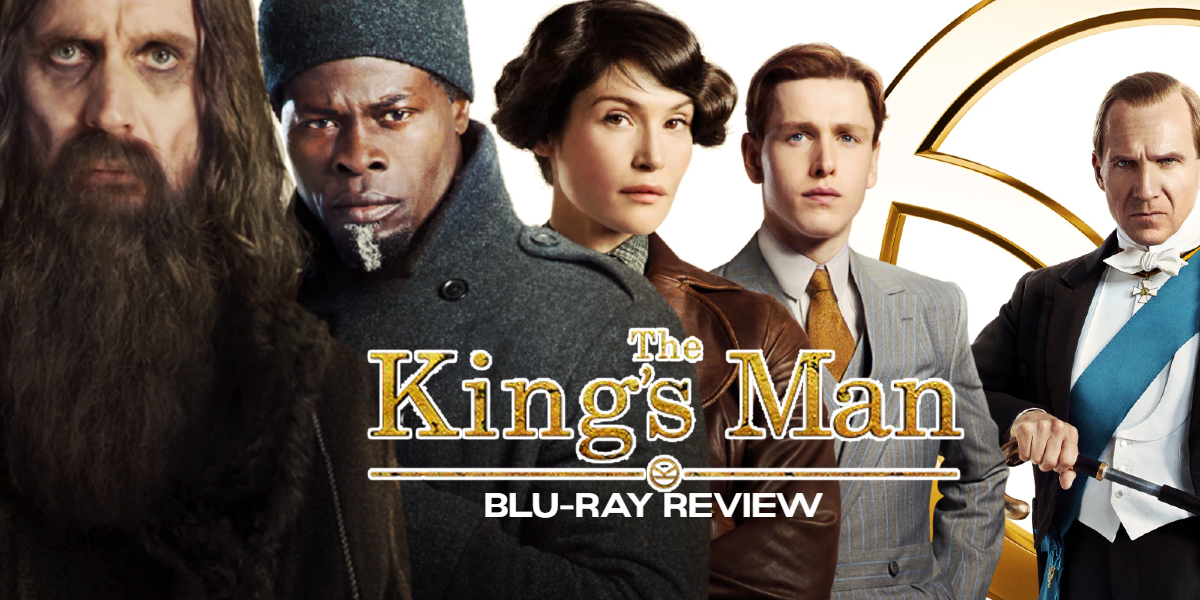
    There’s no denying The King’s Man is arguably the weakest installment of the franchise. It is never truly sure what it wants to be, and while there are fun moments, they are few and far between. While The King’s Man comes with plenty of extras, they’re not enough to make fans want to revisit the film.

    The Blu-Ray for The King’s Man is packed full of extras including The King’s Man: The Great Game Begins. For fans of Rhys Ifans‘ over-the-top performance as Grigori Rasputin, there’s plenty to enjoy. “A Generation Lost” has director Matthew Vaughn explaining his decision to go back to the beginning with this latest installment. As he reveals, he initially envisioned the prequel as a television series rather than a movie. He ultimately wanted to make a war epic, though, and thus he decided to make it into a film instead. The segment spends most of its 11-minute timeframe reflecting on the franchise as a whole and the birth of the prequel. It’s not the most interesting bit on the extras.

    “Oxfords and Rogues” features Vaughn and the cast talking about the film, with the director acknowledging the cast is what makes the film. At eighteen minutes in length, “Oxford and Rogues” doesn’t have too much to offer, but for those looking for the cast’s input, it’s a fun watch. “All the World’s a Stage” is one of the longer featurettes, clocking in at twenty-six minutes. It delves into how the crew went about crafting this vast world. Of the featurettes, “All the World’s a Stage” is one of the more interesting clips because you get to see how Vaughn and the others built this stunning world; from war zones, to the Kingsman storefront and a goat filled mountain, the stage work remains one of the better parts of the film.

    “Instruments of War” breaks down the variety of weapons in the film. Oddly enough, the featurette on the weapons is more exciting than the use of the weapons on screen. The reasoning for this? The fight scenes were lacking in The King’s Man, so it makes it difficult to truly care to be familiarized with the weapons. “Fortune Favors the Bold” turns the focus to the film’s score as it takes viewers behind the scenes to see the orchestra at work. The final featurette is “Long Live the Kingsman.” The shortest of the featurettes, “Long Live the Kingsman” focuses on the future of the Kingsman series, as well as its impact. As far as features go, this is, unfortunately, the weakest of the bunch. It’s something that could’ve easily been used to advertise the Blu-Ray, rather than as a bonus feature.

    The No Man’s Land featurette, “The Silent Knife Fight Sequence Breakdown” is one of the better featurettes. It showcases actual footage from stunt practice, as well as a look at the storyboards and actual footage from that time used as a guide. Although the film fails to have great fight scenes, the silent knife fight is admittedly one of the most fascinating scenes in the film — it’s powerful, thrilling and well-executed.

    The final featurette “Remembrance and Finding Purpose” honors actual members of the military. While this doesn’t necessarily focus on the film, it’s a nice touch given that it’s set during WWI. It’s one of the best extras because it offers a real-world aspect to this otherwise fictitious world.

    Overall, if you enjoyed The King’s Man, you’ll love the extras on the Blu-Ray. If you didn’t care for the movie, though? It’s sadly not worth the time.

    You can read our review of The King’s Man here.

  • REVIEW: ‘Batman: The Imposter’ is an Artistic Ode to Despair

    REVIEW: ‘Batman: The Imposter’ is an Artistic Ode to Despair

    The Batman mythos come in a plethora of delicious flavors. Perhaps this is why the character and his world have been able to appeal to such a wide variety of audiences during their time in the cultural spotlight. As times change, so do Gotham City and its iconic hero. For example, in early stories, Gotham and the Dark Knight weren’t actually that dark at all. The Caped Crusader paraded around his bright city with an upbeat sidekick in Adam West‘s live-action series, engraining himself in the public eye as a campy, lovable do-gooder. As time continued, and the world became more complicated, the comics became edgier. Alan Moore and Frank Miller took the character’s troubled youth and turned it into decades of violent, gothic storytelling. Batman became angry, and the lights in his city began to dim. For a while, it’s seemed readers had already witnessed the darkest places a writer could take the protagonist. In all honesty, that may have been true, until Mattson Tomlin stepped into the ring.

    Batman: The Imposter, a three-issue limited series from the Project Power creator, isn’t especially dark because of any specific moment or event. Although, to be clear, it does have plenty of those. It earns it’s anguished tone by nature of it’s most prevalent recurring thematic device: soul-sucking despair. The story sees a young, inexperienced Bruce Wayne encountering his greatest career challenge in the form of a murderous copycat vigilante, while simultaneously falling for and running from GCPD detective Blair Wong. The world in which the book takes place is maybe more realistic than anywhere we’ve ever seen the character operate before, made evident by constant sobering revelations about the consequences of his supposedly heroic actions. When he was still credited as a writer for Matt ReevesThe Batman, the creative gave multiple interviews claiming the protagonist to be representative of “sheer human will and determination.” In his comic, now the most authentically Tomlin take on the character, he puts this opinion to the test. For every minor victory the hero manages to take, it feels there are twice as many setbacks.

    Cops are able to keep a healthy track on Batman by cutting down his deserted ziplines and confiscating his poorly-hidden equipment. Crooks are afraid of the Bat, but never fail to leave him bruised and bloodied after a fight. His single ally, Commissioner Gordon, has been run out of Gotham after only a year of Wayne’s war on crime, with a wave of criminals put back on the street for his mistakes. To top it all off, this version of the character is also without the ever-loyal Alfred Pennyworth, who is shown to have abandoned a young Bruce after the child’s sociopathic tendencies drove him to a near mental breakdown. Yes, that is correct. This is a book in which Bruce Wayne is shown to be an actual sociopath, trading in the typical socialite playboy personality for an angsty, bull-headed recluse convinced the world will never understand him. While all that may sound like a progressive downfall for Batman over the course of the Black Label series, it’s actually just the way Tomlin sets the rest of his story up.

    It’s a strange thing to read about a Batman who, having only just entered the costumed scene, really feels like he may also be facing the end of his crusade. Truthfully, it’s not really until the end of the comic that the intention of the whole thing becomes clear. The Imposter puts Bruce Wayne through the wringer not because it wants to prove how much he can take, but because it wants to show what obscenely deep-rooted emotions can drive a person to do. It is an ode to the complexities of depression. This is not to say it celebrates how immense sadness can manifest inside its host, just that it’s not afraid to explore both the highs and lows of that cerebral rollercoaster. It does this most effectively when it puts Bruce up against other characters with the same depressive qualities. Readers see his willpower when he’s put against would-be villains succumbing to their anxieties, determination when he puts everything on the line to confront his malicious doppelganger, and that small inkling of hope when he meets those that would seek to help him.

    The comic is aided by the use of a Sopranos-esque plot point, where the stubborn Bruce is forced into therapy sessions to prevent his identity from being exposed. These direct conversations are often lapped over incredible artistic design from Andrea Sorrentino, who manages to transform entire splash pages into the same symbols that the characters fear will one day take over Gotham. The added effect increases the impact of the words on the page in the same way a gorgeous score may take a good film to the next level. Ultimately, it makes for a unique comic that achieves a certain ‘film noir’ aesthetic in both its visuals and its script. Batman: The Imposter may not be directed reading for the titular character, but it’s certainly worth checking out if one would like to take a darker look into their favorite hero’s psyche.

    Source: Inverse

  • REVIEW: ‘Vikings: Valhalla’ is a Slow Burn With Potential

    REVIEW: ‘Vikings: Valhalla’ is a Slow Burn With Potential

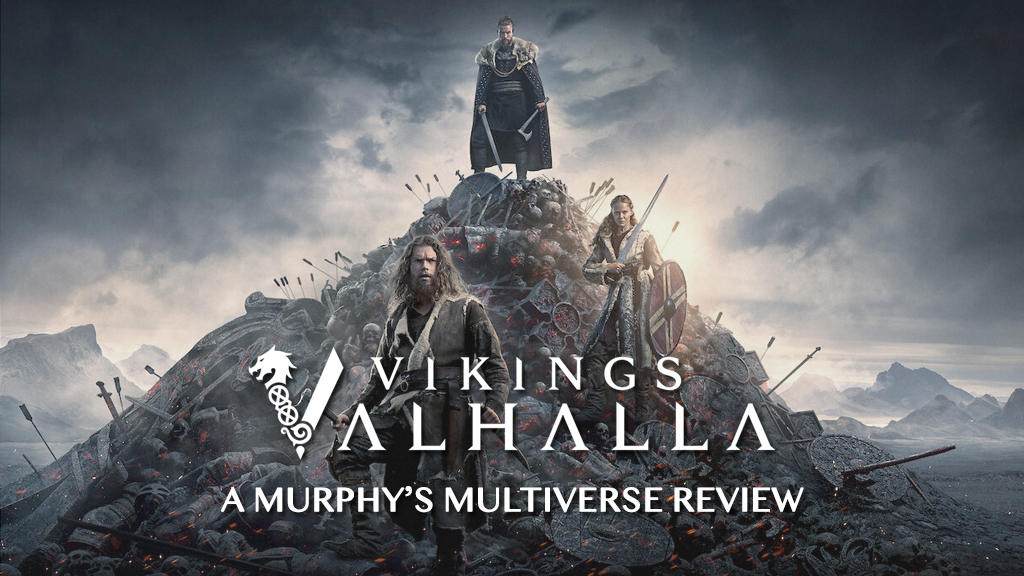
    Vikings: Valhalla is technically a spinoff to the original Vikings series, which ran from 2013 until 2020, but isn’t burdened by its legacy. The story takes off a century after Ragnar’s legacy and further explores the aftermath and history that surrounds the characters of Leif Eriksson (Sam Corlett), Freydís Eríksdóttir (Frida Gustavsson), and Harald Sigurdsson (Leo Suter). Not only does it explore the invasion of London but also the inner conflict between Christian and Pagan beliefs within the Viking community. Does it manage to offer a compelling story while continuing what made the Vikings franchise popular?

    I’ll confess that I’ve not seen the original series. So, I went into this blind and without much knowledge, but luckily the 100-year gap made it quite easy to jump in as a newcomer. You are quickly caught up with the main story, an opening text does hint at Ragnar and his story from the original before jumping directly into the conflict that defines this spinoff. The English royals betray the Vikings that lived in their land. As they gather for vengeance, the conflict between their changing culture also reaches a boiling püoint. In a way, it allows for an ongoing conflict within and outside of their ranks.

    This divide was the most compelling storyline throughout the season, especially with how its portrayed. It never is a simple “good or bad” view, but two beliefs at a constant front. We regularly see members of both sides pick a fight because of their difference, while the leadership struggles to keep them in line. It establishes a constant tension between the parties, which makes you wonder when or how people will try to take it out on each other. Yet, it also feels oddly held back by the series trying to juggle more than it can chew at times.

    In a way, the show drags early on and also rushes through storylines. There’s a lot of history here that is complex and worth exploring, but the way it goes from one plot point to the next, it kind of feels like a cliff notes version. You could perfectly split this season into two halves without really changing much, as it suddenly introduces new characters late into the game. While one of them might be my personal favorite just for his general attitude – I don’t want to spoil who that is – it still feels like some of these conflicts could’ve used more time.

    Leif Eriksson, whose history is very much defined by his discovery and not his war prowess, is certainly a kickass character but just along for the ride. His main storyline ties into the overall conflict but it feels somewhat unrealized. Outside of a literal symbol and a heartfelt goodbye, we don’t spend too much time with his conflict. This is war and it takes sacrifices. One of the highlights was seeing him come to grips with the loss and his potential new belief does make a very compelling storyline. Yet, it feels convenient when the story needs it rather than an actual arc throughout.

    Even Freydís’ storyline focused more on build-up than the end execution. Though I will say, I felt like she had the stronger arc throughout this season in comparison to everyone else. I especially loved exploring the Pagan culture and mystical elements surrounding her character. It helped her path stand out from the rest, as the actual England invasion was a bit rushed to get everyone to where they needed to be. They tried to tell so many storylines that it comes to the detriment of its pacing

    I quite enjoyed the back half – even if I believed it should’ve been its season overall to flesh it out more – and it made me happy that I sat through it. Yet, I struggled to get through the earlier episode. There are quite a few characters to keep track of, and it ends up overshadowing our main cast which should be the guiding light throughout the story. We not only have to keep up with our main cast, the Viking royalty, their goals, those that are Pagan and Christian, a side story with a compelling villain played by Asbjørn Krogh Nissen, and the English royalty.

    It’s this weird effect where a lot is happening yet it feels dragged out until suddenly it’s just resolved. Everything else about the series is well-made. The costume design is fantastic, even as many Vikings are similar in design, you can still pick out Leif from the crowd. It doesn’t shy away from brutality from that time, even as we’re watching Pagan rituals. It all comes together at the end, but some might’ve jumped ship as the series doesn’t truly get going until quite a few episodes in. As a weekly release, it could’ve been its detriment but the Netflix binge model may help it out. And with a second season on the horizon, perhaps the best parts are yet to come.

  • REVIEW: ‘The Legend of Vox Machina’ Closes One Door and Opens Another

    REVIEW: ‘The Legend of Vox Machina’ Closes One Door and Opens Another

    It’s not always easy to remain consistent. In life, sure, but especially in storytelling. Take HBO’s hit series Game of Thrones, for example. Once adored by fans the world over, most adulation for the show came skidding to a controversial halt when the final season failed to meet fans’ immense expectations. On the other side of the coin, one might find a series like Marvel’s Agents of S.H.I.E.L.D., which managed to find it’s footing in later seasons after a rough start out of the gate. Obviously, neither of these situations are ideal for a writer’s room. In the first scenario, you have years of hard work seemingly derailed by a single batch of faulty episodes. In the latter, you have a glorious comeback seen only by those who were willing to stick with the show through the worst of times. It is with immeasurable pleasure that I state The Legend of Vox Machina has avoided the second prognosis, and shows no signs of being diagnosed with the first anytime soon.

    In my last review of the series, it was mentioned that Vox Machina was doing an excellent job of bringing its multiple plot lines together towards a satisfying payoff. As the last three episodes of the season played out, they proved this theory was even more correct than initially believed. Nearly every major character on the show receives a proper conclusion to their arc, often overlapping with each other in ways not expected but wholly rewarding. It almost feels as though the story could not have happened this well on accident, despite its humble beginnings as a recorded tabletop game improvised among friends. There are also quite a few moments of genuine surprise sprinkled throughout the final first season installments, keeping the viewer on their toes and managing to avoid a lot of the unsavory finale tropes that plague multiple tales of the genre.

    The passion behind the project is so evident in the way its writers and performers take care of the titular group, each emotion felt by the main cast feeling as though the chaos was actually happening in the recording studio. These lively bits of vocal recording help to heighten the show’s finest moments, adding an extra push to triumphant climactic battles and forcing out that first teardrop in emotionally weighted scenes. Speaking of which, the finale of Vox Machina proves more than willing to venture in the direction of sadness than the early previews of the series ever suggested. After a full season of expertly executed bonding with the merry band of misfits, the surprisingly frequent instances of true drama hit fairly close to home. Yet, the adult cartoon is able to balance these bits with its signature humor and violence quite well, resulting in a wonderfully calculated assault of emotions on the audience.

    Perhaps the best aspect of the season’s close is the way it sets up the series promising future. With a second season already in the bag, it makes sense to leave the show off on some sort of tease for what’s to come. But what’s impressive is the way the Critical Role crew is able to leave their characters open for another chapter. So far, the plot has mostly revolved around the hidden personal life of emo gunslinger Percy de Rolo. As that story comes to a close, the door opens for another to begin, and the follow-up could center around any one of the team’s many intriguing members. All the remaining adventurers have been put into a position to succeed going forward, and I can’t wait to see where the series takes them next.