Category: Reviews

  • REVIEW: ‘The Last Possession’

    REVIEW: ‘The Last Possession’

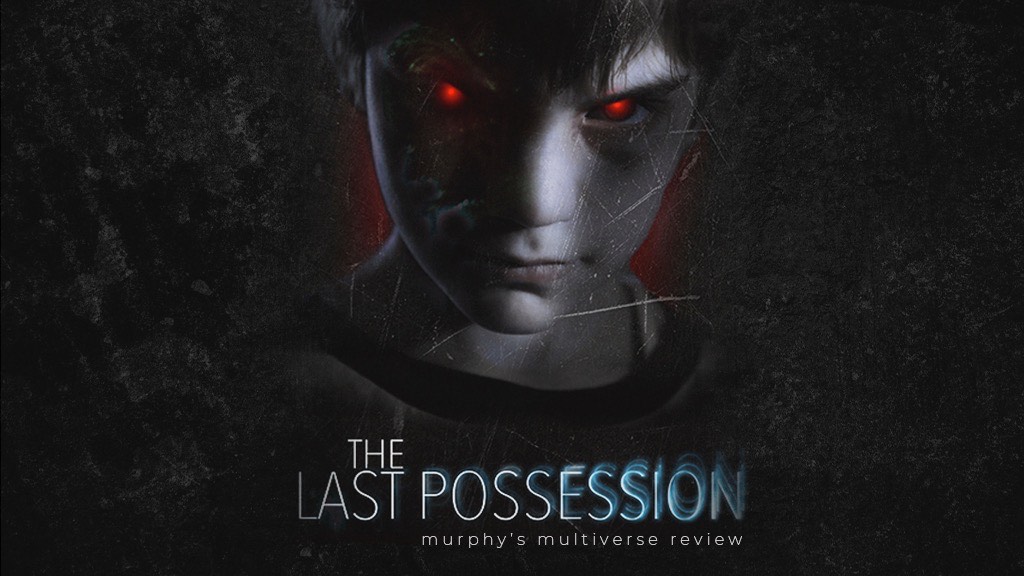
    Every now and then, there manages to be that one indie horror film that surprises. The Last Possession appears to be just that; on the surface, it seems like the everyday horror, one that relies on sounds and quick glances to scare. And sure, that is true to an extent, it still manages to produce an impressive ending that is impressively terrifying. However, The Last Possession takes unexpected risks that craft an interesting horror story.

    When The Last Possession begins, we meet a young family that is in the midst of moving. The two parents and their children are unpacking their boxes and moving into the house left to the husband following his father’s death. It’s the pretty standard opening for a horror flick, especially a B-horror title such as this one. There’s an uncertainty among the four family members, with the son questioning why he was left the house and the kids trying to make the new place feel like home.

    The film stars Stephen Brodie as Kent, Cassie Shea Watson as his wife Stephanie and Sawyer Bell and Lourelle Jensen as their children, Jack and Gabby. The foursome are relative newbies, all with minor credits to their names, for the most part. While all manage to successfully capture the sense of a family on edge and questioning the unknown, the kids manage to be the standouts — especially Bell’s Jack.

    As for the cinematography and soundtrack, both are admittedly a bit underwhelming, but they do serve their purpose in crafting the environment. It’s just that neither are memorable once the credits roll, which is a bit unfortunate. Especially as the final scene in the movie allowed for some great moments on both.

    Director Dan Riddle does a good job helping to bring life to Greg Shouse‘s screenplay. This marks the first full-length feature for both, and it’s clear if given the chance, both parties can craft something magical. One can only hope Hollywood gives them more chances to tell their stories.

    The Last Possession is a thrilling little horror movie that is sure to leave viewers on the edge of their seats.

  • REVIEW: ‘How I Met Your Father’ Episode 8 – “The Perfect Shot”

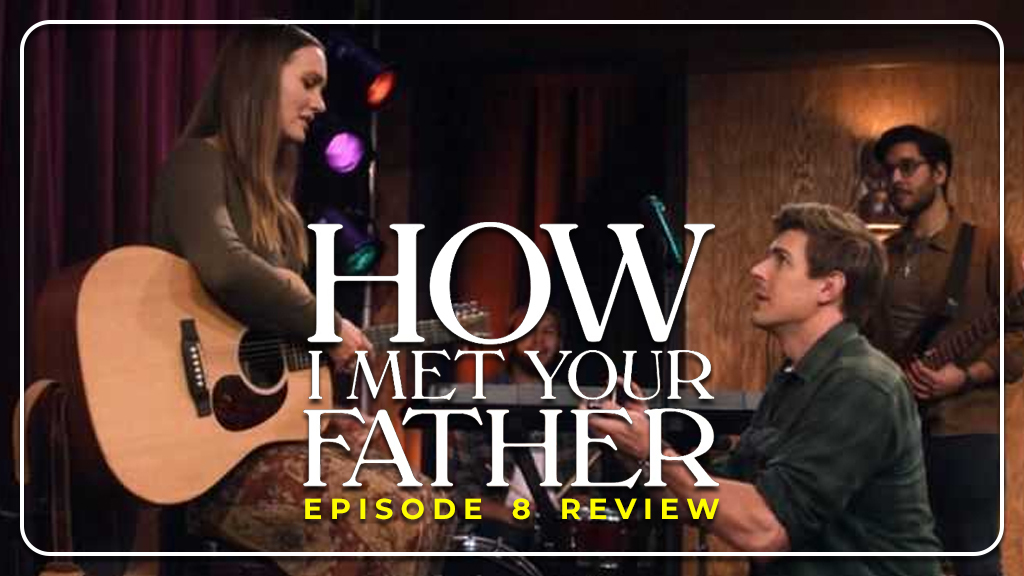
    REVIEW: ‘How I Met Your Father’ Episode 8 – “The Perfect Shot”

    The race for Sophie’s love is full steam ahead but now things are murky. We follow her as she continues her relationship hunting and further develops what she built with Drew. Yet, things take a turn in episode 8, as we see a relationship bloom rather unexpectedly. So, without further ado, let’s just dive in.

    The latest episode does start off slow, looking to be a typical sitcom story in the same vein as the previous one. Yet, as it progressed, however, I liked more and more of it. Random civilians on the streets are now getting involved in comedic moments, much like How I Met Your Mother. The silly humor was captivating whereas in some previous episodes it could get a little cringy. The character’s situations this time around were far more relatable, as instead of the usual pairings, this episode certainly changed some things up.

    Last week, I complained that for being in a relationship, Valentina and Charlie hadn’t had a lot of development ever since their heart to heart earlier in the season. Luckily, this week was different. While still presenting their relationship as a comedic duo, the two still managed to progress in this episode as Charlie begins to do things for Valentina that aren’t selfish. Compared to when we first saw him with his higher-than-thou attitude, it’s nice to see him break out of his shell more and more, especially when it comes to his love.

    Sid and Ellen have paired up this episode, as they attempted to cover for Jesse with his ex-girlfriend who has suddenly appeared. The two haven’t been majorly involved up until now, but as they are both the closest to Jesse–being his sister and best friend–it was nice to see them together to help her out. Speaking of his ex, it’s great to see her in the picture for some added tension going into the last two episodes, but I’ll dive deeper into that later on.

    The largest moments from the episode, of course, surrounded Sophie. But this time it did not only involve Drew. We know that Jesse has had a crush on Sophie since day one, but up until now, the two have agreed neither of them is ready for something serious and that they are better off as friends. However, this episode may put a knife in those plans. As Sophie suffers from drama with Drew, Jesse seizes the opportunity. No further spoilers on that, however.

    With Drew and Jesse both competing for Sophie now, and on more equal footing than before, Meredith, Jesse’s ex showing up, and multiple other suitors still in play, the final two episodes are definitely being set up for something big. I have said before that Ian, a gentleman that Sophie had an immediate connection with in the first episode, is definitely in play still and I feel he might make his return. I don’t see why they would have set him up with Sophie if they weren’t going to do something with him.

    Considering they did not know they were being renewed for a second season until after production was already over, I’m betting we see that comeback sooner rather than later. Having three established relationships in play, drama in at least two of them, and plenty of more possibly fathers out there, the race is on and more confusing than ever. This emotional attachment is definitely what the show needed, as it was what made How I Met Your Father so popular during its run time.

    The finale is just two weeks away, and I currently believe How I Met Your Father is on track for an unforgettable end to its first season. I currently cannot wait to see how all of these loose plotlines come together for what’s looking like a major decision for Sophie, and a possibly amazing twist for fans. The show needs to end on an iconic moment, as it is going up against How I Met Your Mother‘s original conclusion with Robin and Ted getting together, as well as the unfortunate break-up between Marshall and Lilly. That moment would set the tone for the entire rest of the show, with those iconic moments coming into play multiple times per season. It’ll surely keep viewers coming back week to week. Hopefully, How I Met Your Father will be able to deliver, and so far with what has been set up, I believe they can.

  • REVIEW: ‘The Dark Knight Rises’ Struggles To Stick The Landing

    REVIEW: ‘The Dark Knight Rises’ Struggles To Stick The Landing

    Following The Dark Knight, which is arguably one of the greatest comic book films, was always going to be an unenviable task for Christopher Nolan and his team. That the conclusion of the trilogy had to be almost entirely repurposed after the tragedy of Heath Ledger‘s death meant that his original premise for Batman’s three-film arc was never going to be completed. In that respect, The Dark Knight Rises feels like a movie that didn’t really know what story it wanted to tell, and suffered as a result.

    We begin with the canonization of Harvey Dent as a hero by the Gotham City Police Department after his death trying to stop Batman, which we know is a lie given the events of the previous film. Harvey was the Joker’s ace in the hole, and he was meant to bring Gotham crumbling down. In Rises, we see Gary Oldman‘s Commissioner Gordon desperately to make things right. His role is perfectly summarized in the line “I have to save Dent” from the previous entry; manic depression and all. Sadly, The Dark Knight Rises really doesn’t do his arc justice. His role is seemingly reduced by quite a bit and is cast to the side for other characters.

    Speaking of, we meet Anne Hathaway‘s take on Selina Kyle doing what she does best, trying to rob Bruce Wayne. He easily tracks her down to start their dysfunctional relationship from the comics. However, putting aside the missed opportunity that this Selina Kyle is never presented as Carmine Falcone’s daughter, Anne plays her like a socialist who wants the wealthy class to get what’s coming to her. It’s a very weird turn if you compare it to her character in the comics. While I get that directors update and adapt characters as they see fit, Nolan still kept recognizable elements in his last two entries. This time around d, it just doesn’t work as well as it could’ve, and I can’t help but wonder if she wasn’t even meant to be part of this story.

    Let’s turn our attention to the real villain in the story: how it wasted Marian Cotillard as Talia Al Ghul. The reveal is supposed to act as a gut punch but is telegraphed throughout the entire film. Furthermore, she’s never really built up as a threat. Even though she managed to steal Bruce’s company from him, cut Gotham off from the rest of the world in a half-assed take on No Man’s Land, and threatened to end the entire city, I never bought that she could pull this off.

    There are, however, some bright spots in the film. Tom Hardy taking on the role of Bane was an inspired choice, especially in him breaking the bat. This is a historic moment in the comics, and Hardy sells the threat that his character represents. Even with his weird accent, he is incredibly quotable to this day. He’s not angry with Bruce. This isn’t personal to him. He’s just disappointed in Bruce. Their fight in the sewers is brutal, as there’s no music playing, and all we hear are Bruce’s bones cracking. He does his best Frazier impression but Bane delivers the Ali-like beating.

    Of course, we can’t forget the titular Dark Knight. Christian Bale is one of the better actors of his generation, and he carries this film more than anyone else. Yet, Nolan seems to have trouble fitting Bruce into this story. He makes him disappear from Gotham to rehab his broken back in and tries to sell us on him healing up within a short span of time to return to Gotham. Keep in mind, he has no assets at this point in the film: it’s why he had to sell his company to Talia Al Ghul. Even with those restrictions, he still offers a cunning performance.

    This time around, he does get a sidekick in the form of Joseph Gordon-Levitt‘s character. Yes, he has a name but they make it a point to call him Robin later on and he was clearly being set up to be a version of Nightwing. However, the pain he feels when describing how the Wayne Foundation deserted the less fortunate and how betrayed he was when Gordon lied still hit hard. He, also, isn’t jaded by what he’s seen and still believes that Gotham can be saved. It would’ve been exciting to see Nolan try to crack a film starring a rookie Nightwing living in the shadow of Batman.

    If there is one thing the film nailed better than the previous entry is in its action choreography. The police taking on the League of Shadows is filmed beautifully, and the modified Batwing scenes fighting the repurposed Batmobiles are a blast. With most of the finale’s action shot in the daytime– quite a departure from the two previous entries–you really get to see every punch.

    When I watched this in theatres 10 years ago, I tweeted “Nolan did it.” At the time I meant killing Batman. I’m still of the belief that Alfred was imagining everything and nothing more in that Italian Cafe. I didn’t think Warner Bros. would let him kill one of the most iconic DC heroes, but Nolan had the cache to really do as he pleases with the character. While rewatching the film for this review, I find myself annoyed at some of the choices he made. He sadly didn’t end the trilogy on a high note all of us hoped for. It’s still the best Batman trilogy, but something tells me Matt Reeves might have something to say about that soon.

  • REVIEW: Netflix’s ‘The Andy Warhol Diaries’

    REVIEW: Netflix’s ‘The Andy Warhol Diaries’

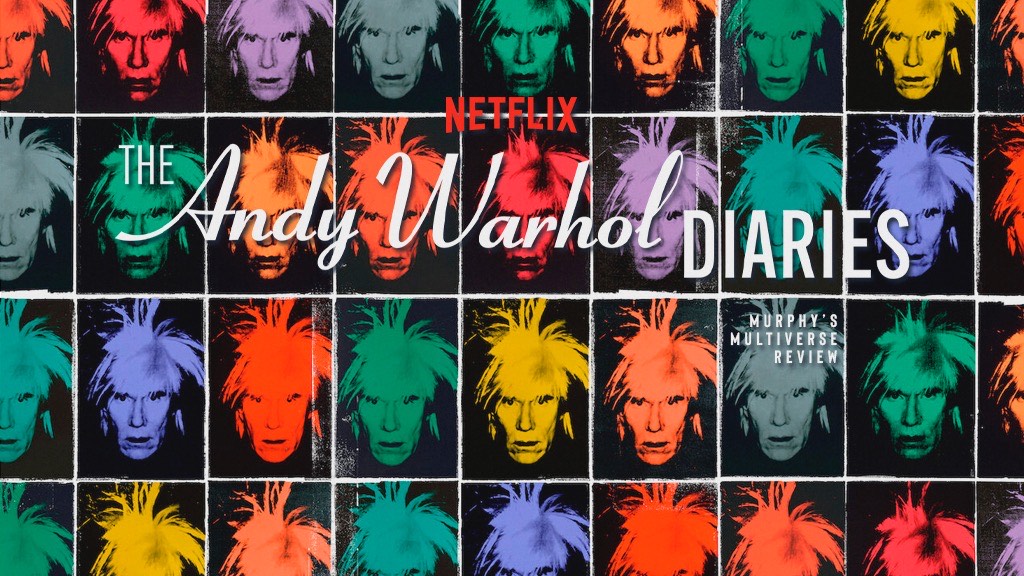
    Fans of the legendary artist Andy Warhol quickly devoured The Andy Warhol Diaries when the book was first published in 1989. The 840-page paperback features the dictated memoirs of the American artist Andy Warhol that were posthumously published. The book took fans behind the scenes of Warhol’s life, with the last entry taking place just days ahead of his death in 1987. The diaries allow fans to see the world through Warhol’s eyes, from the famous people he spent time with to his life outside of the spotlight. There’s a reason he remains a consistent seller — the publication is a real treat for fans.

    Unfortunately, Netflix’s take on The Andy Warhol Diaries is a bit of a mess. It seems unsure of what it wants to tell and how exactly it wants to tell it. While it is based on the book of the same name, The Andy Warhol Diaries often feels like a story about everyone around him rather than Warhol himself. It seems to forget about Warhol and his legendary artwork, instead choosing to focus on his confidence issues and his unwillingness to comment on his sexuality publicly. With so much to Warhol and the legacy he left behind, it seems an odd thing to focus essentially the entire series on. And sadly, that’s not the strangest decision this documentary makes over the course of six episodes.

    The series uses a computer-generated take on Warhol’s voice to narrate the series. It’s rather off-putting, although it’s safe to presume it’s something Warhol would’ve been entirely fine with. (After all, he had dreams of being a robot.) As it’s an AI voice, it lacks any sense of emotion, coming off as monotone and dull. While I understand this is something the artist would have been behind, judging by what is said in the documentary series, it’s still an odd choice to make in a series that is so reliant on bringing in others to comment on Warhol. Had the series used footage of Warhol while he was alive and then added in the interviews, it would have flowed a lot better. And perhaps, it would have been a lot easier to endure.

    The Andy Warhol Diaries is produced by Ryan Murphy, and it clearly has a Murphy feel to it. When Murphy is at the top of his game, he can deliver some quality television. Sadly, The Andy Warhol Diaries is not among his strongest work. It’s frustrating, really. There are so many reasons as to why this series should’ve been more enjoyable than it was. It seems half-baked. The ideas are good, they’re just poorly executed.

    There is one minor bright spot in the series and that is the fourth episode, where we get to meet some of the other artists Warhol came into contact within New York in the 1980s. This part of the series allows fans to see Warhol appreciating artwork from those who would’ve been ignored otherwise because they didn’t belong to the typical white artist clique. While he might not have understood the artwork, he allows a light to shine on these young artists and their work. It’s a pretty important moment. If only the series was this strong and interesting for its entire run.

    Overall, The Andy Warhol Diaries is frustrating. It wastes its potential by focusing on the least interesting bits of this massive art icon. Warhol did some amazing things in his lifetime, it just seems odd to focus on his love life in a limited series on his life.

  • REVIEW: ‘The Boys’ Wishes It Was As Ambitious As ‘The Boys: Diabolical’

    REVIEW: ‘The Boys’ Wishes It Was As Ambitious As ‘The Boys: Diabolical’

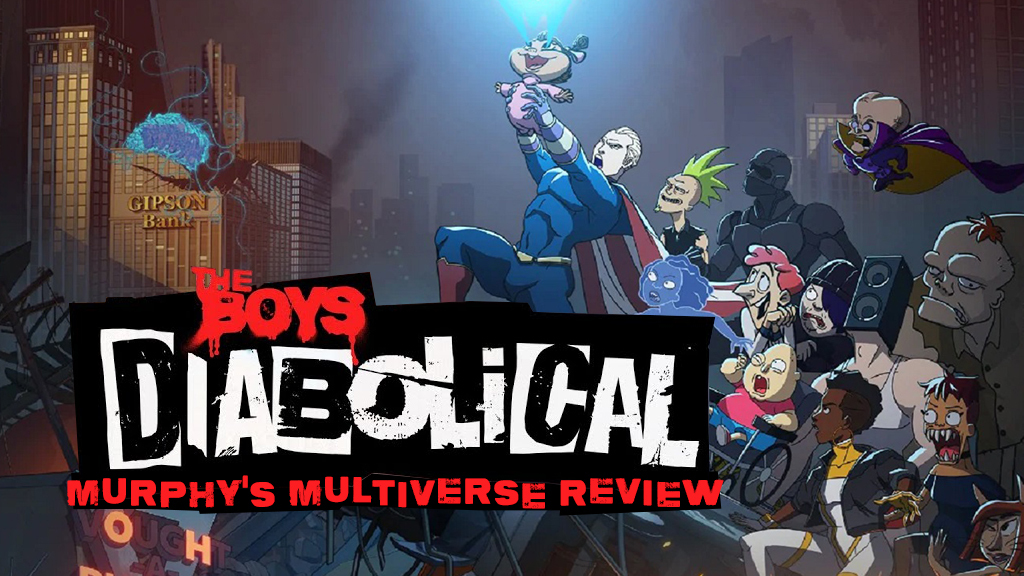
    Whether it’s telling underdog stories of the disenfranchised sticking it to the Man or making audiences feel disgusted by the real-world implications of superheroes, The Boys always delivers. Garth Ennis’ and Darick Robertson’s deviant and deconstructive superhero comic of the same name has expanded into enormous proportions under Amazon’s watchful eye, spawning a mega-hit TV show, two spin-offs, a web series, and yes, an actual canonical porno. The first of the spin-offs, an animated anthology series titled The Boys: Diabolical, proves to be a fantastic reckoning of the source material and preceding TV show’s blueprint that oftentimes exceeds it. 

    TV anthologies are in vogue at the moment, which for a universe as deep and loose as The Boys’ makes it an indisputable format to expand the canon. To helm this expansion, creators Seth Rogen and Evan Goldberg have enlisted Awkwafina, Andy Samberg, Ilana Glazer, Garth Ennis himself, and a few other writers to craft their own dastardly vignettes laid by the groundwork of The Boys, with each one exhibiting its own animation style and tonal quality. The resulting 8 short episodes tackle some of the most entertaining concepts about capes put to screen but it’s Diabolical’s thematic byproducts that make it heftier than its live-action counterpart. 

    In spite of the freedom afforded by the anthological format, Diabolical is bound by a single McGuffin: Compound V, the mysterious serum created by Vought International that turns people into superhumans. Compound V is used as a narrative device to frame most of these vignettes, centering it as a crux of ordinary life in The Boys universe.  In a span of 8 12-minute long shorts, Diabolical makes use of Compound V as a storytelling device more effectively than the entirety of The Boys’ two seasons as it epitomizes Vought’s corruption and malevolence that creeps into the lives of characters far removed from the larger-than-life antics of The Seven. 

    Rogen and Goldberg, known for their brand of edgy humor, open the season with a Looney Tunes-inspired riff on the beloved character that sold the first season to a lot of people, Laser Baby. The short puts aside the finer nuances of latter episodes in favor of mimicking the live-action show’s gore-y touchstones while laying the season’s foundation of unencumbered creativity. It’s right after this episode that Diabolical’s true qualities are displayed with Justin Roiland’s self-explanatory An Animated Short Where Pissed-Off Supes Kill Their Parents. The episode, done fully in the style of Roiland’s opus Rick and Morty, is a meta gut-busting commentary on the increasing absurdity of superhero powers that features Christian Slater voicing a character whose power is narrating things in real-time. 

    Diabolical cascades into further madness with two episodes from Ilana Glazer and Awkwafina that are explorations on loneliness. Glazer examines addiction and social media through the flask of Compound V in Boyd in 3D, a charming rom-com about a hapless man in love with his hopeless romantic neighbor. But it isn’t until Awkwafina’s BFFs that Diabolical reaches its stylistic apex. An anime brimming with children’s book flourishes, BFFs is tonally the most wholesome vignette of the bunch, as it tackles loneliness and friendship in a very encouraging light, while still observing the material’s dark humor. 

    Aisha Tyler’s succeeding Nubian vs. Nubian sees a superhero couple on the brink of divorce while their daughter saves their marriage with the help of the family nemesis. This family-friendly premise, however, is subverted by Tyler’s satirical and vulgar writing. For all its wholesome leanings, the episode bears a closer resemblance to the cult classic The Boondocks than with The Parent Trap. The big curveball of the season is John and Sun-hee. Written by Andy Samberg of all people, the vignette centers on an elderly Korean couple on the run from Vought. Samberg, against all odds, writes a deeply profound episode about hardship, love, and existentialism that taps into a spectrum of pathos that this universe has not touched upon previously.

    The show’s weakest episodes are ironically the ones that feel like deleted scenes from the live-action series. Garth Ennis, whom everything about this franchise is indebted to as its creator, gets a stab at adding a more personal touch to Rogen and Goldberg’s adaptation. True to the comic’s form, Hughie and Butcher actually look like their comic versions. Diabolical takes the authenticity a step further by having Simon Pegg, whose likeness and persona inspired the creation of Hughie, voice Hughie. But while Ennis’ episode gives audiences a glimpse of a wistful 1:1 recreation of the comic, it comes across as a mere tongue-in-cheek wink at diehards with nothing else to say about the material. 

    An underwhelming origin story for Homelander closes out Diabolical’s stellar season. It’s the episode that’s most tethered to the live-action show and, in some respects, functions as a pilot for a hypothetical animated extension of the series. Titled One Plus One Equals Two and written by Invincible scribe Simon Racioppa, its sole redeeming factor is the brief glimpse it gives to the troubled and tortured roots of the show’s best character. But within Diabolical’s framework, Racioppa’s episode pales in comparison to the ambition of the season. 

    Diabolical also follows the trend of celebrities voicing animated TV shows by assembling an ensemble of household names which includes the likes of Michael Cera, Christian Slater, Simon Pegg, and Don Cheadle among a dozen more. The marketing campaign for the show sells the enviable marquee of celebrity voice actors as its strongest asset but the actual episodes prove otherwise. Like Marvel Studios’ What If…?, Diabolical mistakenly assumes that performing in front of the camera and behind it are one and the same. That assumption is easily dispelled by the dismal voice performances of a handful of actors known for their on-screen acclaim. A portion of these performances border into the uncanny valley and sound like inauthentic digital recreations at times.

    Even in the face of its star-studded inconveniences, The Boys: Diabolical works. Simply by design, it surpasses the ambition and creativity of its live-action progenitor. It succeeds in remaining a singular piece of work while feeling essential to the deeper understanding of Ennis’ and Robertson’s twisted view of superheroes. If this is what The Boys’ spin-offs are going to be, fans are in luck.
  • REVIEW: ‘The Dark Knight’ is the Batman Film We Deserved

    REVIEW: ‘The Dark Knight’ is the Batman Film We Deserved

    Much like the spoken lines of the film, The Dark Knight is the film we deserve, but without the “not the one we need right now“. It is without a doubt that the Batman franchise has seen better days. What was once one of the front runners in superhero films with Christopher Nolan and Christian Bale‘s take on the character, has mostly gone down in quality since one of the greatest superhero trilogies wrapped up with The Dark Knight Rises. His next two appearances, Batman v Superman: Dawn of Justice and the Justice League were panned by critics. Not only was The Dark Knight the movie we deserved from the franchise, but also an inspiration for the movie we need right now. One to restore Batman as one of the best superhero properties in media.

    The Dark Knight is largely considered one of the best Batman movies of all time. Thinking back to watching the trilogy for the first time, I remember watching The Dark Knight most out of the films. The dynamic between the Joker and Batman is a match made in heaven. Not only does Heath Ledger remain as my favorite iteration of the infamous villain – even if not comically accurate – but his ability to so easily bounce off of Christian Bale‘s Batman is one of those dream pairings in modern media. The two actors act out the relationship between these opposites amazingly. Batman is portrayed as the morally aligned superhero that does not care about fame and only cares about the people of Gotham. Joker, on the other hand, is the perfect portrayal of “some men just want to watch the world burn”.

    This dynamic between the hero and villain carries this movie. Not to say the rest of the film is bad, the movie basically perfected the modern superhero genre. However, when you have such a standout part of a movie, it’s hard not to accidentally overlook the rest of the film’s strengths. That being said, not all of the movie has aged well 14 years later. The plot still stands firm, the cinematography is still amazing, yet the combat, however, stood out to me in my recent rewatch. Once again, I do not think this is a fault of the movie, the combat was definitely ahead of its time and nothing in the film is going to be considered qualified for eternity. It was a tad jarring going back to one of the most beautifully shot superhero films and going back to stiff action scenes compared to the fanfare we see in today’s films in the genre.

    Superhero films today are flashy, from acrobatic magical martial artists to colorful guns with a mix of explosion and beauty. Modern technology has progressed the abilities for moviemakers to put us into the colorful and flashy pages of a comic book. While this does make the combat of the film feel stiff nowadays, I can’t help but feel this departure from the common superhero tropes of the modern-day really makes The Dark Knight stand firm as one of the most unique superhero films. And in a good way, opposed to the unique but odd Batman Forever.

    The Dark Knight is gritty, dark, and violent. The Joker in this form just couldn’t be done without this atmosphere. The man with no morals is sinister, manipulative, and even worse, fearless. This excellent villain to the already serious Batman really puts the character on his toes, I don’t think I have quite seen a hero so powerless since this film. Not even mind control in Jessica Jones and Avengers: Age of Ultron can quite compare. When powers or physical control are involved, there is a thing to break, a thing to fix.

    The thing with Joker is that none of that is involved. This is a man with no powers or high-tech machines, just a desire to take down the heroes of the world and prove humanity’s flaws. This desire and his cunning makes him powerful. His insanity and his unpredictability, that is what give him power. That power makes him real, a man that could exist, one that would terrify even the best of us in the real world. That is what makes the Joker easily one of the best villains in modern media.

    I didn’t have a definitive ranking of my favorite Batman films, but upon rewatching many of them leading up to The Batman releasing next month, I think it’s safe to say The Dark Knight easily tops my list. The Nolan trilogy of movies is easily the highest quality in my eyes, and this is the movie that makes the trilogy. From a perfect atmosphere to an amazing villain and hero, the film is almost perfect. Now looking back, not only is this easily my favorite DC film, but one of my favorites of all time, and that is coming from a die-hard Marvel fan. The Batman is looking like a snapback to this amazing quality, and I truly hope it leads Batman back to being in the spotlight like when The Dark Knight launched to critical and financial success more than a decade ago.

  • REVIEW: IMDb TV’s ‘Bug Out’ is ‘Tiger King’ Lite

    REVIEW: IMDb TV’s ‘Bug Out’ is ‘Tiger King’ Lite

    In 2020, at the height of a global pandemic, the nation found a strange amount of comfort in the wild antics of living fake person Joe Exotic and his divisive rival Carole Baskin. Netflix introduced its subscribers to a secret, underground world of big cats and cutthroat politics by way of Tiger King, the once-limited documentary series that took popular culture by storm. While it’s hard to say exactly why that series was a hit with so many viewers, it feels like it had something to do with its willingness to proclaim “at least you’re not them” in a time when society really needed to hear it. Unfortunately for IMDb TV’s Bug Out, a new free-to-stream docuseries with equally ambitious “I bet you didn’t know these people existed” energy, that time has passed. Or at the very least, it probably won’t come back for ‘Tiger King Lite‘.

    It may be unfair to compare the underdog Bug Out to it’s wildly successful forefather, but it’s a hard thing to avoid when the new series is so obviously trying to accomplish all of the same things, albeit with a new skin. The overall concept is eerily similar, with a plot revolving around immense criminal activity that takes place within the confines of a universe the audience has presumably never seen before. Instead of giant midwestern compounds filled with deadly felines, viewers are taken inside of the suburban Philadelphia Insectarium, a building filled to the brim with wacky characters and exotic creepy crawlers. Here, we are told, is where an infamous bug heist took place, resulting in the theft of countless insects worth over $50,000 combined. The investigation into what may have happened, on the part of both the police detectives and the documentarians, opens a door into the unrevealed underworld of black market bug trafficking and all the unexpected worldwide connections that come with it.

    Much like Tiger King before it, Bug Out relies heavily on two things to keep the audience interested; slowly fleshing out it’s increasingly bizarre universe and embellishing the sort of larger-than-life personalities that inhabit it. The difference in the initial topic is, where King managed to bring all of it’s universal offshoots back to the main storyline, Bug often finds itself going on long tangents that lead to nowhere. While tales of the Mexican tarantula cartel and legendary Japanese butterfly dealers are certainly intriguing enough to keep people from changing the channel, they don’t really resolve in any sort of fulfilling payoff. The series’ four episodes often feel like multiple separate stories stacked on top of a base mystery that isn’t actually all that complicated. Latter revelations in the show’s prime case make it clear just how much of the production is simply exaggerated fluff, resulting in a diminished feeling that can only be described as the equivalent to “this meeting could have been an email.”

    As for the cast of Odd Fellows that viewers will meet along their journey, only a few of them are really able to live up to the entertaining heights the synopsis for the series promised. For the most part, these aren’t the cartoonish characters that make it easy for viewers to love or hate. Sure, there are a couple standouts that linger in the mind for a while after the credits roll. Yet, where King had a collection of vile ne’er-do-wells for the audience to rally against and a handful of benighted bystanders to get behind, Bug just has a lot of people who are doing their best. The majority of the interviewees had very little to do with the crimes at hand, and are mostly just normal folks impacted rather negatively by the actions of the documentary’s few major players. Of course, their appearances and interests may not align with the standards of the common man, but that alone does not make them appropriate storytelling fodder. Yes, there is a personal and professional rivalry that tries to be on par with Exotic and Baskin, but there just isn’t enough there to make the conflict soar.

    Ultimately, Bug Out is carried mostly by the pure delightful x-factor that comes with learning about an abnormal way of life. The docuseries goes to great lengths to convince the audience of its own merits, and ironically, its most lasting moments are found in the segues director Ben Feldman uses in an attempt to prove the main storyline’s worth. It wants so desperately to be the next big thing, it spends too much time trying to replicate what came before it. Every face worth remembering and concept most ingraining comes from the sidebars into the deeper world of the bug trade, where the documentary might have been better off focusing on. It’s not what the employees of the Philadelphia Insectarium have to do with the loss of 7,000 bugs that will keep people coming back after each and every episode. It’s what they dabble in during their free time, and in the museum’s back rooms, that’s truly worth watching.

  • REVIEW: ‘Batman Begins’ Made Everyone Take Superhero Movies Seriously

    REVIEW: ‘Batman Begins’ Made Everyone Take Superhero Movies Seriously

    Batman Begins kicked off Christopher Nolan’s Dark Knight Trilogy, which has gone on to become an integral part of the world’s conception of not only Batman but also superhero movies in general. While debuting in 2005, Batman Begins is a far (at least 4,350 miles) cry from the last Batman flick—1997’s critical Titanic Batman & Robin. While Batman Begins no longer feels like anything particularly special, there is no doubt that it ushered in an era where superhero movies are taken seriously, both by critics and broad audiences. 

    The production value of the film is off the charts. Seventeen years later, it still feels natural to watch and does not struggle too much with outdated visuals or storytelling. Helmed by 11-time Academy Award winner and acclaimed director Christopher Nolan, it is obvious that the film’s baseline quality was one of the most important characteristics of Batman Begins. This next paragraph is about to be obnoxious, but it makes a point. 

    The movie stars Academy Award winner Christian Bale as the titular Batman, Academy Award winner Michael Caine as Alfred, Academy Award winner Gary Oldman as Commissioner Gordon, Academy Award nominee Liam Neeson as the villain as Ra’s al Ghul, Golden Globe nominee and the guy with the super intense eyes Cillian Murphy as Scarecrow, and Academy Award winner and global treasure Morgan Freeman as Lucius Fox. Batman Begins is scored by Academy Award winner and legend Hans Zimmer, and the Batsuit was even designed by Academy Award-winning costume designer Lindy Hemming. These likely only scratch the surface of the level of talent brought in for Batman Begins and The Dark Knight Trilogy

    Aside from the output quality, the story comes across quite differently than most—if not all—superhero movies to come before the film. The focus is on Bruce Wayne himself. His own personal demons and battles drive the narrative rather than fantastical, caricaturized, and shallow shiny-costumed heroes or villains. Rather than the adversary being campy or corny villains taken straight out of a classic comic book, Batman’s fight is ultimately against the manifestations of long-lasting systemic crime in Gotham City. There is an element of realism in Batman Begins that frankly did not exist before in the cinematic genre. The film takes its time—albeit a lot of time—to try and explain Bruce and his origin like a fully-established character. We are not just given the Bat. We have to earn the Bat. 

    Batman Begins is certainly not perfect. Watching it now, it can be rather dull and boring at times. While systemic crime is the real culprit, a somewhat messy mixture of Ra’s al Ghul, Scarecrow, and Carmine Falcone make up the individual villains. Because each is diluted, none have the presence of an actually foreboding villain, but the combination and realism influence gives the movie more of its well-rounded and structurally-solid qualities. One thing that the movie provides that was surprisingly refreshing upon re-watch is the steady building of Batman’s arsenal. As far as previous Batman movies are concerned, Batman already existed and had his awe-inspiring collection of gadgets, gear, and Batmobiles. Here, watching it all play out with genuine attempts at describing how Batman’s stuff works is nice. 

    At the end of the day, Batman Begins feels now like an overtly middle-of-the-road, standard high-quality superhero movie. With its level of realism, it honestly simply feels like a “not bad” general action film. Still, the fact that the quality of Batman Begins is now something ordinary to talk about in the genre is something taken for granted now. As another reminder, Batman & Robin was released only eight years before Batman Begins. Now, the internet goes insane over a 4-hour, black-and-white director’s cut of a superhero film fans felt let down by, and perfectly OK Eternals is absolutely slammed for each and every potential weakness because it touted itself as being both “cinema” and a superhero movie. That type of discussion only exists because of the legacy and influence of The Dark Knight Trilogy, which in turn came into existence with Batman Begins

  • REVIEW: ‘Batman & Robin’ Is a Masterpiece If You Have Taste

    REVIEW: ‘Batman & Robin’ Is a Masterpiece If You Have Taste

    The fourth and final film of what was originally the Michael Keaton-led Batman franchise is famous for being a disaster. Twenty-five years later, the 1997 Batman & Robin is still looked at as one of the worst – if not the worst – superhero movies of all time. Countless things are wrong with humanity, but this might take the cake. Batman & Robin is, quite possibly, one of the greatest films the genre has ever produced and easily one of the most enjoyable things one could possibly do on a Wednesday night after a bottle of wine. I have no problem comparing it to The Godfather or Citizen Kane, maybe because I haven’t seen them. But I can say for certain that Batman & Robin is a cinematic masterpiece for anyone with taste. 

    Batman & Robin doesn’t mess around – it is about Batman & Robin. George Clooney’s Bruce Wayne alongside Chris O’Donnell’s elderly Dick Grayson is a masterclass in the exploration of complex character relationships. From the moment the Batman & Robin logos form a bond in the opening credits, the movie screams “two’s a party, but three’s a crowd.” It is incredibly weird and uncomfortable that the two of them spend most of the movie fighting over Uma Thurman’s Poison Ivy, especially considering Robin is supposed to be…a kid? Realistically, that man looks 57-years-old, so this secondhand embarrassment of a dynamic is a little less creepy. Not really. But this nails-on-chalkboard-adjacent feeling is one of the many unique experiences on the emotional tapestry that is Batman & Robin.

    Otherwise, Dick spends the film in either adolescent angst or midlife crisis demanding respect from the man who brought him straight home after witnessing the deaths of his entire family to throw him in a suit with detailed nipples and give him a moped instead of Batmobile. To be fair, considering he could be 74-years-old, it is hard to blame him for being angry that he is treated like a child. But still, much of his motivation to stray from Bruce revolves around their shared interest in being erotically murdered by Poison Ivy without consent. Is there any better way to show that two men can have an emotionally close and healthy relationship than to bond over the downfall of an attractive evil woman? No.

    Past that, whatever train wreck Poison Ivy was is better left mostly unacknowledged, among others (Bane). The real villain of Batman & Robin – the future governor of the State of California when it was filming – is, of course, Arnold Schwarzenegger’s Mr. Freeze. There is so much to say about the guy, but it’s pretty simple: he is great. He looks amazing – even if his personal traveling hockey team is less impressive – he only speaks in ice pun so that you don’t forget he has ice powers, and his background motivation is relatively fleshed out (his wife is floating in a tube). Mr. Freeze (and Poison Ivy as well to be fair) has global-destruction-level ambitions. It is not entirely clear why someone trying to reverse climate change on the entire planet has such a Gotham fixation, or why the New Jersey National Guard never gets involved when the City is constantly overrun with overindulgent mass murder with no defense but squabbling homoerotic father-son rubber-suited bird people.

    At a certain point, you realize that Alicia Silverstone’s Batgirl/Barbara Gordon is also in the movie. She is not necessary. None of this is strictly necessary, but anyone watching Batman & Robin is just trying to be involved in a Mr. Freeze/Poison Ivy/62-year-old Robin plot smoothie. Frankly, no one cares if she breaks out of a mansion to go street racing or soul-crushingly guesses passwords to top-secret information given to her by Alfred: “ALFRED”. She also ruins the “three’s a crowd” analogy because the moral of the story is apparently that three makes a happy Bat Family, but getting into “keeping it in the family” is maybe too much right now.

    Batman & Robin does give a touching ode to Michael Gough’s Alfred, the only consistent part of the four-movie franchise. Gough is basically the only person who was willing to see Batman all the way to the end. Even when you said, why is Batman fighting penguins? Gough was there. Even when you said hey that’s not Michael Keaton .. or Val KilmerGough was there. Even when you said why is Robin 47-years-old? Gough was there. 

    I know what you’re thinking. Why am I reading this review at all? More importantly, how has this gone on so long without mentioning how Batman & Robin sparks more joy than Marie Kondo could even dream of? If you cannot enjoy nature or tents, or fires, or nights, then yes, Batman & Robin – the campiest piece of media that has ever been produced – is probably extremely painful. I wouldn’t know, because even though I’m normally not the biggest fan of camp, I have never laughed so hard in my life as I did while watching this movie, and it is the most fun I’ve had with a movie in a long time. When I said this movie was for people with taste, I meant that anyone who can laugh alongside this movie is in for the time of their life. 

    Every single frame of Batman & Robin is cornier than 300 dad jokes combined. It is entirely consistent, and it has no crisis of identity. Everything matches. The sets match the costumes which match the characters which match the dialogue and on and on. There is no way in Mr. Freeze’s frozen hell that it is unintentional. The dialogue and delivery throughout the film are also the worst and corniest you can possibly come by. You have to work hard to stay at O’Donnell’s impressive level of convincing the audience this is the worst acting they have ever seen. 

    The only tragedy of Batman & Robin is that it can’t be summarized coherently. It just absolutely makes no sense but in the best way. Poison Ivy dressed as a gorilla does a sexy dance 20 feet in the air at a benefit where costumed Batman and Robin are acting as props to a crowded auction that they intentionally lured a mass murderer (the sexy gorilla) to. The action level in this movie compared to its predecessors is off the charts. The Dynamic Duo flies around in ways that make Olympics gymnastics look like walking. At one point, they surf the air. Not much to add to that. Robin is 49-years-old, and he owns it. There are gender-neutral but extremely aggressive closeups of Bat people putting on their suits. I would say you can’t make this stuff up, but clearly, someone already did. And for that we give thanks. 

    True, director Joel Schumacher has indeed publicly apologized for how bad Batman & Robin is. And listen, if you want high-quality cinema, character development, storytelling, dialogue, or logical thinking, look elsewhere. This is not for you. It will probably always be a mysterious and unhygienic-looking cocktail of joy, but it is pure joy if you have a taste. Were the 1990s hard on Batman? Sure. But Batman has his 56-year-old Robin by his side and if that doesn’t make you smile, nothing will. 

  • REVIEW: Hulu’s ‘The Dropout’ is a Well-Done Exploration of the Theranos Scandal

    REVIEW: Hulu’s ‘The Dropout’ is a Well-Done Exploration of the Theranos Scandal

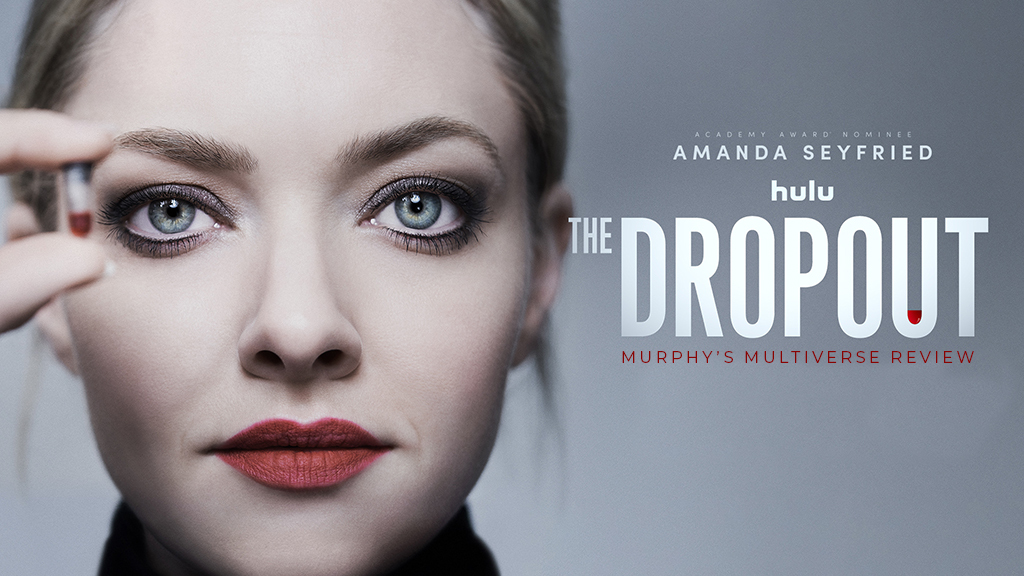
    The Dropout has all of the makings of an excellent series, and yet, it tends to fall just sort of being great. Amanda Seyfried does her best to carry the series, however, while she plays the role of Elizabeth Holmes with ease, her forced accent can at times be jarring. Even worse, the series tries to make Holmes the victim a fair amount of the time. However, despite its flaws, The Dropout is a well-done exploration of a well-known scandal, unlike Netflix’s Inventing Anna.

    With 7 episodes, The Dropout has a lot of story to pack in just seven hours. So, it shouldn’t be entirely surprising then that while Hulu is dubbing the show as a limited series, it’s evident there are plans for a second season. In most instances, this could be rather frustrating. In the case of The Dropout, though, it’s frustratingly understandable as the case is still seeing its day in court.

    The Dropout focuses on Seyfried’s Holmes, a young woman who idolizes Steve Jobs and wants to create a company after dropping out of Stanford. She’s the odd-duck out, so to speak, finding that she doesn’t belong among her peers. This only becomes more evident during a trip to China, where she eventually meets Naveen Andrews‘ Sunny. What Elizabeth doesn’t realize is that Sunny will change her life forever… and not necessarily for the better. The two soon find themselves romantically involved and, as Holmes launches Theranos after dropping out of college, she finds herself leaning on him often when things go wrong. 

    For those unfamiliar with Theranos and Holmes, it’s a massive story of fraud and deception. Not only did Holmes defraud her investors, including some big-name pharmacies, but she also deceived countless patients. It’s a fascinating story because of how conning she was; this was a woman who managed to be named the world’s youngest self-made woman billionaire by Forbes in 2014. She somehow managed to deceive some of the biggest businesses in the world, selling them simply on an idea rather than an actual product — and it was a lie that she continued to sell time and time again.

    Seyfried is a great actress, there’s no denying as much. However, the accent can make it hard to take her seriously at times. (There are moments, too, where she seems to share mannerisms with Kristen Stewart — and that’s not a dig at Stewart.) When she shines, though, she shines brightly. Her chemistry with Andrews is thrilling. Their toxic relationship is hard to look away from because of how well they play off one another. Outside of Seyfried and Andrews, the true shining star of the series is Stephen Fry‘s Ian Gibbons. The character has a tragic backstory in reality, one that the show doesn’t try to hide. Fry nails every bit of emotion, from anger to depression. He feels like the heart of the show. 

    Here’s the thing about The Dropout, though. As strong of a series it is, the ending is less than ideal. There is seemingly no ending. This is the problem with shows billed as limited series. With such a huge story, there’s so much to unpack, so the idea of a continuation does make sense. Still, there should have been a more conclusive ending. Instead, what should have been a shocking ending full of emotion, contained a happy ending for a story that has anything but.

    As for the look and feel of the series, The Dropout is a nice-looking series. From the color schemes to the framing of shots, The Dropout doesn’t try to ignore the minor details. Where it does fall short, though, is the score. For such a fascinating story, the music is anything but memorable. Thankfully, though, the soundtrack music sprinkled throughout is memorable, if only for Seyfried’s corny dancing.

    All in all, The Dropout is worth a watch. It’s a good exploration of Holmes and the story of Theranos. It isn’t without its flaws, but it is safe to say The Dropout is everything Netflix’s Inventing Anna should have been.