Category: Reviews

  • REVIEW: ‘Gibbon: Beyond the Trees’ is a Short Yet Important Experience

    REVIEW: ‘Gibbon: Beyond the Trees’ is a Short Yet Important Experience

    Gibbon: Beyond the Trees is quite a simple game at first glance. Most of the time, you’ll spend swinging from tree to tree, building up momentum so that you can cross some dangerous gaps and enjoy the visuals. There’s no dialogue or text to tell a grand story, but that is not necessary for what the game truly is about. It’s an interactive reminder of what humanity has done to nature and how it affects animals as a result. A soothing and relaxing experience transforms into a dark reminder of the dangers these animals face; all packaged in a memorable but brief experience.

    As a mobile game, there’s not much you can say about its gameplay. You press the screen to hold on to a branch or object, where your gibbon automatically climbs up. If you hold it with both fingers while ready to land, you’ll end up in a sliding motion. Later on, you get an additional move by flicking to the right that adds some extra momentum while swinging from one branch to the other. The only real consequence you face is a slowdown if you don’t keep a consistent flow from branch to branch. At worst, there are some bigger gaps that challenge you to stick to the higher point of a tree.

    The big focus point of this game is in the actual experience and seeing the environments change. What starts off with a beautiful forest, swiftly turns into a dark look at deforestation and the rise of humanity taking over the land. There are segments where it purposely takes away anything to swing off to force you to slowly make your way to a new point to start your climb once again. Especially in one section, there’s a sudden spark in danger that also has a thematic reason to exist. I just don’t want to give away what it is, because it caught me off-guard and reminded me what the game is truly about.

    It’s a very short experience that you can probably get through in one sitting. Yet, it’s quite a memorable one with the sound effects of the gibbon’s soft cries. There’s a soothing soundscape that adds to the experience throughout, may it be a waterfall in the background or even a lively populated area. Everything you witness is there to relax and take it in, especially as the earlier parts try to comfort you into this experience. It even purposefully has that section I mentioned previously to pull you out of it at a time you least expect it to highlight the connection of your experience with the gibbons.

    If you end up falling down a pit, the worst thing that’ll happen is that you respawn at an earlier point to build up the momentum you need to jump over that gap. I do believe it’s more of an interactive experience that has a very important cause behind it and it’s very admiring what Broken Rules have accomplished here. The game is currently available through Apple Arcade but is eyeing a release on Steam and Nintendo Switch. I highly recommend giving it a shot, it’s a short yet important experience that’ll surely pull at your heartstrings.

  • REVIEW: ‘The Adam Project’ is a Delightful Time Travel Movie

    REVIEW: ‘The Adam Project’ is a Delightful Time Travel Movie

    When it comes to time travel, it often feels like it has been overdone. Most of the time, the concept of time travel in the media we consume can be overly complicated for no apparent reason. And then there are the instances in which it feels as though little to no thought was put into the science of it all. Thankfully, The Adam Project seems to comprehend how to tell a good story with the use of time travel, opting not to complicate things, but also ensuring it tries to explain the science for the general audience. The film is everything viewers can want from a time-travel moment; it’s smart, it has heart, and the cast is pretty dang stellar, but more importantly, it never forgets to tell a good story throughout it all.

    The Adam Project kicks things off with Ryan Reynolds‘ Adam in a ship seemingly crashing down to Earth. It’s a hell of a sequence, and one that immediately pulls viewers in. It doesn’t waste time trying to set anything up, it wants to let viewers know they’re in for a bumpy ride. What follows is the introduction of young Adam and his mom, played by Jennifer Garner, as he finds himself at the center of a fight in school. Much like the introduction to Reynolds‘ adult Adam, this helps to set up the character of young Adam, proving he’s always been a bit of a troublemaker. Naturally, the two soon come into contact, resulting in a chaotic story that soon follows.

    There’s much to love about The Adam Project. It’s a family film that is full of adventure and heart. It’s visually stunning with a soundtrack that perfectly matches the tone of the film. As for the action? There’s one particular action sequence involving Zoe Saldaña‘s character that is so well-done, it feels like it is pulled from a superhero film. The action is big and explosive, and yet, it still feels as if it’s purposeful; the action doesn’t exist merely to look cool. Each sequence serves a purpose and helps to move the story forward. 

    Where the film truly excels is in its small moments. For such a large story that takes place across multiple timelines, The Adam Project knows when to scale things back. Shawn Levy does a great job directing the film from a script penned by Jonathan Tropper, T.S. Nowlin, Jennifer Flackett and Mark Levin. The scenes between Mark Ruffalo and the Adams are heartfelt and wonderfully shot. They feel intimate and provide some of the best character development throughout the movie. The only issue with the film? It doesn’t make nearly enough use of Ruffalo and Saldaña.

    All in all, The Adam Project is a blast. It’s full of fantastic performances — especially Jennifer Garner, who plays the role of a widowed mother so heartbreakingly well — and wonderful character moments. Sure, it might occasionally fall into the typical Reynolds humor, however, it works in this film. This is the perfect family film to watch over the weekend. There’s plenty of action, the dialogue is well-written and the small cast allows the creatives to maintain control of what could have otherwise been a cluster of a film. If you’re looking for something to watch this weekend on Netflix? Give The Adam Project a watch, you won’t be disappointed.

  • REVIEW: ‘Tyson’s Run’ is Well-Meaning But Unfocused

    REVIEW: ‘Tyson’s Run’ is Well-Meaning But Unfocused

    It’s never easy tackling sensitive topics like autism in media. While some have explored the honest side of how it affects people and families, like Amazon’s As We See It, others tend to veer off into very stereotypical territory. Sadly, Planet 9 Productions’ latest film Tyson’s Run falls into the latter category. A story about a 15-year old boy with autism, who finds the passion to run a marathon while also finding a way to mend his family. While there’s a heartwarming story of a broken family bonding once again at its core, the film is distractingly unfocused in a world without consequence that leads to an unsatisfying payoff.

    There will be spoilers in this review. So, if you want to watch the film spoiler-free, only continue at your own risk.

    It’s odd to say, but there are so many moments in this film where I couldn’t pinpoint where it fits into the overarching narrative. The Kim Bass-directed project has a very straightforward story set out from the beginning but has an issue with weaving every story beat cohesively. It’s trying to sell a lot of moments as a sporadic character action, but it happens for the sake of happening. There’s no real natural lead into Major Dodson‘s Tyson wanting to run a marathon, which is the grand finale of the story.

    He only gets into running once he sees Barkhad Abdi‘s Akilu randomly showing up in the background while he’s helping his dad. We don’t meet this character or get any teases in advance. Tyson then just suddenly runs alongside him, which is played off as part of his autism but there’s never a hint or slow build-up that eases the viewer into seeing his interest in that topic. For all we know, he just really wants to learn algebra. Glances or stares at the marathon, seeing people run in the background to build a rapport for the character would help ease viewers into the idea and make it a stronger moment, but it’s just there.

    The biggest issue I have with this film is that there is a complete absence of consequence. Even handling a sensitive topic like autism, the actions characters take would still have some kind of effect on their environment, something a show like As We See It handled very well. Yet, in this film, Tyson starts running away at random points. There’s a massive storm, flood warnings, and after overhearing his parent’s fight, he runs off. Now, that makes for drama and there’s a reason why he does it, but later on, we learn it was just him running to see how far he can do it in the rain. No one’s mad at him for running off–for the second time mind you, especially after almost drowning.

    No, I am not kidding, he randomly gets trapped under a branch. Still not sure how that happened. The spot he’s at is getting flooded and if his dad (Rory Cochrane) didn’t find him he’d have drowned. Actually, his father also gets injured in the process. So, if Akilu also didn’t somehow find his way to the same location after Tyson’s mother (Amy Smart) asks for his help after meeting him once, they’d both be dead. We spend so much time on the hunt for this kid that it’s full of unnecessary scenes. We meet a cop, he catches up with the dad with a team so that they go through the woods. Yet, no joke, one of them randomly gets bitten by a snake so that the father is alone again in the woods.

    Somehow, Tyson running away only makes the family stronger without anyone getting mad at him. Both parents are hinted at having some massive weights on their shoulders, their marriage is on the brink and now he realizes he should spend some time with his family. What just drags an actual heartfelt moment down, is that Tyson shows absolutely no remorse, learns nothing from the event and the film doesn’t try to grow him as a character. There was such a disconnect to the rest; they’ve could’ve just cut chunks of this sequence out and the film would’ve actually benefitted.

    There are moments where the acting is very over-the-top which just adds to that disconnect. Smart‘s approach to being mad is mostly awkward yelling, and Cochrane‘s Coach is the epitome of a cliché football coach. You can tell Dodson cared about the role and is trying to make it more than just a cliché but the lack of actual character development just takes away any nuance it could’ve had. We get to a point when he suddenly has a girlfriend, but we’ve only spent like three scenes with her. It’s a sweet moment but we don’t spend time with how that affects him. He just ends up having a girlfriend and nothing is done with it. We even have a bully character who literally laughs at him while pointing like a cartoon character and he never learns his lesson. One guy stands up to him, and he’s never seen again.

    Speaking of a bully, on top of all of it, we randomly get a villain moment with Reno Wilson’s mayor near the end of the film. And again, there’s no payoff or consequence to him threatening Tyson’s dad. The only thing that happens is a sudden has big reveal that is swiftly solved minutes later by Tyson. It just makes you wonder why no one in this family thinks to lock their kid’s window, especially if he has a tendency to run away constantly. It highlights the problem that Tyson is a plot device and not a character. It is a disservice to a story exploring the topic of autism and the challenge for families that deal with it daily.

    It’s all perfectly encapsulated in the titular run of Tyson’s Run. We have news reporters that are there to explain word-for-word what we know, or even explain running terms in the most obvious exposition I’ve ever witnessed in a film. There’s such a perfect bow on everything that it just adds to the fact that everything comes together as it needs to be. Without any consequences, no one changes by the end of the story outside of the workaholic dad spending time with his family. There’s not even a consequence to him just ditching his job randomly. The film has good intentions, but it really doesn’t know how to bring it all together.

  • REVIEW: ‘Human Resources’ is a More In-Depth Story Than its Predecessor

    REVIEW: ‘Human Resources’ is a More In-Depth Story Than its Predecessor

    Netflix’s Big Mouth is a huge success for the streaming service. The story of a group of teens who find themselves struggling with puberty was a well-done take on the things adolescents often find themselves dealing with — mostly due to the inclusion of the often ridiculous hormone monsters. So, it’s not entirely surprising that Netflix moved ahead with a spinoff series focusing on not just the Hormone Monsters and the Shame Wizard, but the rest of the various creatures that make up the Human Resources department. While many might have felt that the fifth season of Big Mouth spent too much time establishing the spinoff, Human Resources manages to successfully craft a strong story without relying on its predecessor.

    Part of what makes Human Resources such a delight to watch is that it truly tries to be its own thing. It might take an episode or two, but once the series finds its own voice? It establishes itself as one of Netflix’s best-animated series — and yes, that’s including Big Mouth. Although the Hormone Monsters feature frequently in Human Resources, this series moves beyond them. In fact, the entire first season has an impressively well-structured storyline that, while allowing for their explicit behavior, manages to succeed without relying on them. Instead, the Lovebugs take center stage this go-round, and while they could appear off-putting initially, by season’s end, the Lovebugs might just become a new fan favorite.

    Human Resources revolves around various creatures — including the Lovebugs, Hormone Monsters, Logic Rocks and Shame Wizards — aiding humans journey through every aspect of life from puberty to childbirth to the twilight years. Unsurprisingly, though, as the series goes on, the creatures begin to find a bit of humanity within themselves, too. This is the type of animated series that, while being advertised as raunchy and funny, is more than meets the eye. It’s packed full of emotion, from grief, to love, to depression and acceptance. There’s a heck of a lot here to unpack, and yet, the series manages to tell such a well-balanced story within so few episodes. It’s honestly impressive just how well the writers handle the variety of topics and the massive cast of creatures.

    Human Resources focuses on one individual for the most part and the creatures that try and help her journey through life. However, over the course of the series, we are slowly introduced to a few other key characters that’ll become entwined in the main storyline in various methods. The fascinating part about Human Resources is that it successfully plays the long game with its background characters. Some of these individuals are introduced merely as background characters at first, but by the end of Season 1, they become fully incorporated into the story with the series somehow successfully tackling their tales alongside Becca’s journey. It’s a juggling act and, somehow, the series juggles each storyline so wonderfully.

    Big Mouth might’ve come first, and it might be a hit, but when it comes down to it? Human Resources is everything Big Mouth is and more, in all of the best ways. Romance. Grief. Love. Vulgarity. Comedy. It’s a mismatch of everything and it works so wonderfully. Just don’t be surprised when, by the season’s end, tears escape your eyes because the ending is an emotional one, and it earns every moment of emotion it delivers in the final episode. 

    Human Resources hits Netflix on March 18, 2022.

  • REVIEW: ‘Upload’ Season 2 Avoids the Sophomore Slump

    REVIEW: ‘Upload’ Season 2 Avoids the Sophomore Slump

    It has been nearly two years since Upload first premiered on Amazon, and now, the second season is finally upon us. Even better? It was worth the excruciating wait.

    Living in the pandemic era, it’s hard to imagine a series about death and the afterlife could be exactly what audiences need, and yet, Upload continues to be exactly that. Season 2 of the Amazon Prime series wastes no time picking up where Nathan and Ingrid’s story leaves off. After Nathan opts to go to the 2 Gigs as a means to break free of Ingrid, he soon finds himself approached by her as she comes to tell him she’s uploaded. Unfortunately, though, he’s out of data following his decision to try and help Nora. This brings us to Season 2, which brings Nathan back to Lakeview and back to Ingrid.

    It is very normal for most shows to suffer a sophomore slump. It’s even more natural for a show that takes such massive breaks between seasons to lose momentum. Upload manages to avoid both of these issues. In fact, Season 2 of Upload manages to be an improvement upon an already stellar first season. Still, the season isn’t without its issues. As thrilling and captivating as Upload Season 2 is, the series does encounter hiccups occasionally. They’re incredibly minor, though, and are often resolved by episode’s end. One of the biggest hiccups this season is the character arc Nora undergoes. The Nora we met during Season 1 of Upload is long gone; she’s been replaced by someone on a mission, even if she’s not entirely certain her actions are in the right. There’s still a compassionate part of her who is desperate to do the right thing, but she’s also more confident and developed. The issue, however, is that the reintroduction of Nora nearly sees her abandon everything that was so important to her in Season 1 within a single episode.

    This, thankfully, is addressed fairly quickly and it becomes clear what her true motives are. It’s just a frustrating bump along this tale that goes well beyond a simple satirical love story. Upload Season 2 still puts love at the forefront, of course, but it becomes a story about self-discovery more so than anything, for all of the main characters. The amount of character growth over these seven half-hour episodes is impressive. Even our Angels get the chance to shine outside of Horizen and their avatars. It’s a nice change of pace that takes viewers outside of the virtual reality of Horizen for a bit.

    As for answers, though, it’s best to go into Upload Season 2 knowing there will be more questions than answers. One big question will be slightly resolved, however, it’ll only lead to a handful more, making the ending all the more frustrating. It’s a valid ending, one that properly serves the story being told, but it’ll leave fans eagerly awaiting a third season that’ll, hopefully, come sooner than another two years.

    All in all, Upload Season 2 is everything fans have been waiting for and more. It’s thrilling, it’s fun and it’s full of surprises. More importantly, though, every character undergoes a transformation of sorts this season and it opens up potential seasons to even bigger storylines. It’s must-see television.

    Upload Season 2 hits Amazon Prime on March 11th.

  • REVIEW: ‘Heckle’ Often Feels Like a Copycat

    REVIEW: ‘Heckle’ Often Feels Like a Copycat

    When it comes to indie horror films, some of them can be truly exciting. There’s a sense of passion that drives them, allowing these types of films to succeed in place of their small budgets. (Perfect example: The Last Possession.) Unfortunately, Heckle is not one of those films.

    From the moment it begins, it’s evident that Heckle is a cold, stale film. It tries so hard to try and replicate the magic of films before it and ultimately fails. The script is so poorly conceived, and the plot just makes no sense. It’s baffling that the movie exists, and yet, it does. As a fan of horror films, I was thrilled to watch Heckle because the synopsis made it sound like a fascinating new horror tale. If only. Heckle likes to think of itself as smarter than it actually is.

    The story focuses on comedian Joe Johnson. He’s supposed to be a big-time comic who is starring in a movie about Ray Kelly, a comedian he looked up to in his younger years. During his most recent show, though, he finds himself dealing with a heckler in the crowd, who makes it clear it will be the worst heckle of his life. What happens next is a bunch of absurdity that never quite makes sense. The heckler goes on to stalk him, or so it seems. It’s hard to tell what’s real and what’s not. The only thing that is certain is that Johnston is a poorly written character with a storyline that is all over the place.

    The biggest issue with Heckle is that it tries too hard to be an iconic slasher flick. It tries to pull the best elements from ScreamFriday the 13th and Halloween. The issue is that it doesn’t know how to make use of these elements. Copy and pasting does not make for a good title. It makes for a poor imitation that is sure to leave a bad taste in the mouths of viewers. Even worse? The kill scenes are so poorly crafted. The sounds are off, the acting is just downright terrible and the movements are so stilted. 

    I wish I could say something positive about Heckle. Unfortunately, there are no redeeming qualities to this film. It feels like a rough draft that needed more time baking but was rushed into production. None of the plotlines truly receive an ending. It’s as if those involved forgot the story they were telling and forgot how to go about ending it. If you’re looking for a good indie film, try The Last Possession. Don’t waste your time on Heckle.

  • REVIEW: ‘Green Arrow: Stranded’ is Everything ‘Arrow’ Wasn’t – And It’s Delightful

    REVIEW: ‘Green Arrow: Stranded’ is Everything ‘Arrow’ Wasn’t – And It’s Delightful

    These days, it seems like everybody loves a hero with a bow and arrow. Marvel is doubling up on Hawkeyes, Katniss Everdeen is still the gold standard for young adult readers, and Legolas will probably always be the coolest member of Tolkien‘s Fellowship. Yet, one could likely argue that none of these characters have managed to achieve ‘definitive archer’ status in the cultural hive mind. That honor, for at least the last decade, has seemingly belonged to Oliver Queen. While Marvel’s early Avengers films became the cause of an industry-changing uptick in comic book movies, it was DC’s costumed bowman who managed to prove television could pull from the same bag. The CW’s Arrow debuted in 2012, and with it came a new appreciation for the titular vigilante. Green Arrow somehow found himself the center of DC’s most successful live-action universe and a genuine nominee for “most popular superhero.” The only problem was that Arrow never really showed fans why Ollie was so special.

    Stephen Amell‘s take on Oliver was dark, angsty, and violent. These attributes were explained away by the character’s time on a hellish island, with claims that nobody could go through that experience and not come out the other end bent on revenge. It’s fine when an adaptation takes creative liberties like this with its protagonist, but it can be frustrating when that altered version takes over as “the one people think about” going forward. The Oliver Queen found in DC’s comic books is a jovial romanticist, who overcame a dark past and appealed to his better nature. Arrow eventually leaned towards this concept but never committed. Luckily for all, actual comic books still undertake an existence on store shelves and online libraries. This means parents still have the opportunity to introduce children to their favorite heroes via the printed page, which facilitates a special kind of bonding you’d be hard-pressed to find anywhere else. Author Brendan Deneen seemingly agrees, as his latest retelling of the Emerald Archer’s origin, Green Arrow: Stranded, might be the perfect way to get kids into a hero whose most well-known series isn’t meant for them. 

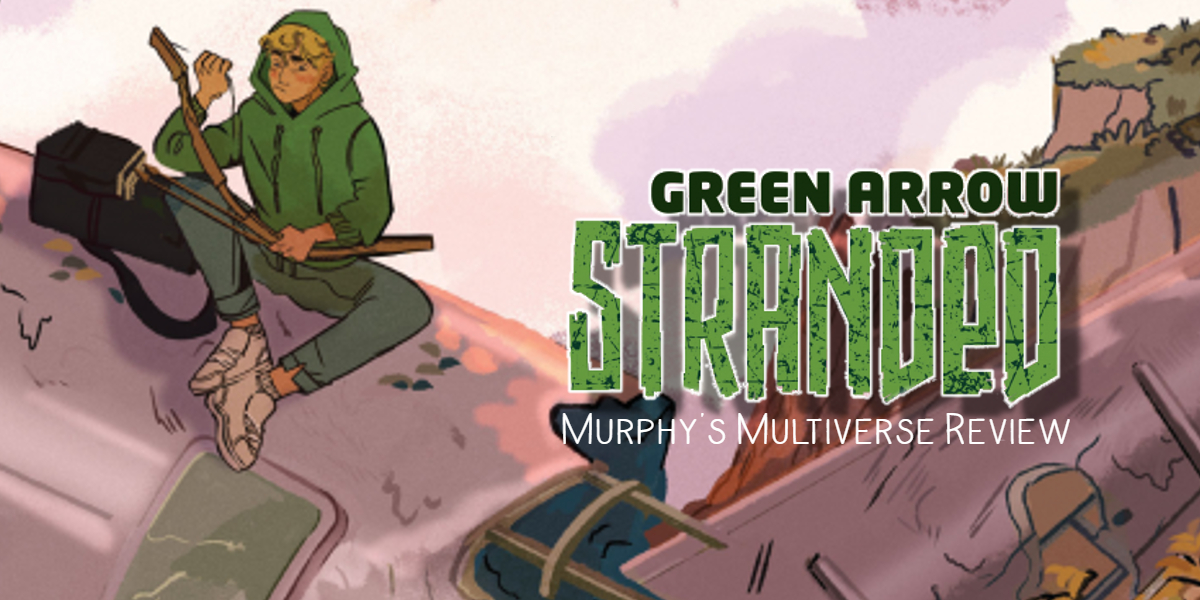
    Stranded is likely the softest, fluffiest iteration of the rather tragic Green Arrow genesis we’ve seen yet. To be clear, this is because the comic was designed to be perused by beginner-level readers and not to scar the nation’s youth. However, the reframing of a once-depressing tale as an optimistic story for kids may have accidentally, or purposefully, brought out the best attributes of its title character. Drawn with beautiful simplicity by Bell Hosalla, the plot sees Oliver, at only 13 years of age, survive a terrible plane crash alongside his dad and a fellow father-son duo, the brutish business associate Sebastian and his angry offspring, Tyler. The adults are severely wounded, and Tyler is mostly inept, so Oliver must find a way to overcome his situation. In a traditional account, this is where things would go downhill for the family, with a dying Robert Queen leaving his son to survive alone on an island for years to come. Instead, Deneen puts a more positive spin on the narrative.

    Not yet a superhero, but still wearing a green hoodie, Oliver maintains his faith and never gives up hope. The other characters in the story, especially Tyler, are shown to be less than kind to Oliver before the fateful wreck. He is made fun of for lacking guts and skill, demonstrated by his inability to take the life of an animal on what appears to be an important hunting trip. He desperately wants approval from his father, who refuses to give it to him out of some misguided belief that he’ll grow more without it. But even with all this against him, Oliver is not full of angst, or spite, or self-pity. He chooses instead to help those who wronged him, and does so without ever breaking his own youthful moral code. Ultimately, Ollie proves that his heart was simply bigger than his desire to meet the traditional standards of masculinity. For some, this notion may induce an exaggerated eye-roll, but it’s actually exactly the kind of comic book story young boys should be reading.

    With StrandedDeneen displays a redefined type of hero. The type Green Arrow has always been. He makes an effort to prove that you can find ways out of even the most worrisome scenarios without succumbing to violence or anger. In the same spirit that made Spider-Man: Into the Spider-Verse so wonderful, the message of this book is that a real hero stays true to themselves and always gets back up. Though clearly not the intent, Stranded almost functions as the anti-Arrow. Obviously, it’s strange to compare a short-form comic to a long-form television series, but Stranded soars everywhere Arrow sank. The limited series is a perfect read for any kid looking to get into comics, and does its best to teach all the right lessons along the way.

  • REVIEW: Action Comics’ ‘Warworld Rising’ is More Brains Than Brawn

    REVIEW: Action Comics’ ‘Warworld Rising’ is More Brains Than Brawn

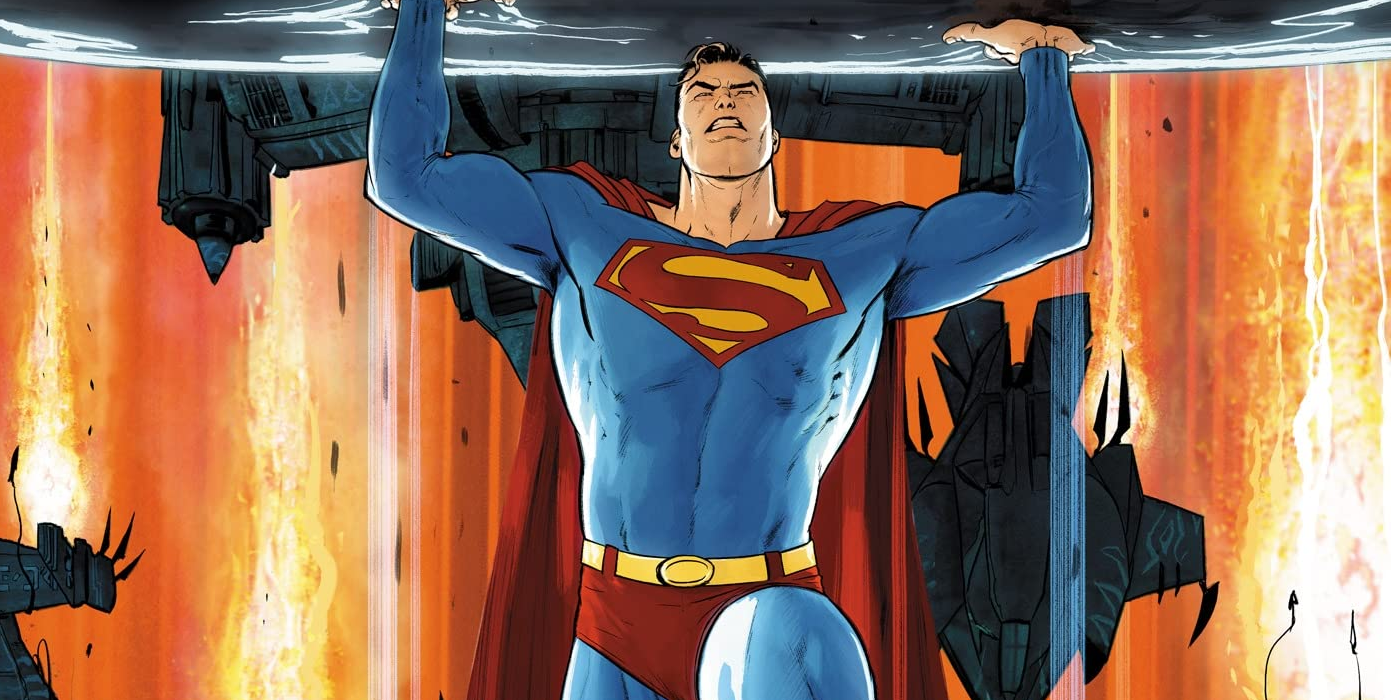
    Admittedly, I’ve never been much of a Superman guy. This is not to say I don’t appreciate his value as a character, which I’ve actually really come around to in the past few years. It’s just that, in the Man of Steel’s extremely long history, I’ve come across very few stories that have managed to grip me. The age-old complaint about the Last Son of Krypton, one that anyone reading this review has probably heard on numerous occasions, is that he’s a little too powerful to be interesting. If he can survive anything, and save anyone, then the stakes can never really be high enough to engage the reader on any significant level. The solution to this, of course, is to challenge the hero mentally rather than physically, a tactic that has been tried time and time again. While a lot of these psychological threats have obviously paid dividends for plenty of fans, they just never really pulled me in the way I’d hoped. Then I read the latest from Action Comics, Warworld Rising, and realized just how intriguing Superman can be.

    The genius of Rising, expertly written by Phillip Kennedy Johnson, is in the type of mental anguish it chooses to push upon its protagonist. Instead of simply squaring Superman up against somebody smarter or more dangerous, the story gives Clark a moral conundrum that impacts nearly every facet of his life. Surprisingly, this is achieved through the use of a villain typically better known for his pure brutality than any form of advanced trickery. Mongul, the masochistic ruler of Warworld, sends a group of ancient, enslaved Kryptonians (or so they seem) to Earth with the aim of emotionally manipulating Superman toward his untimely demise. The plan works like a charm, with a distraught Clark knowingly heading straight into the trap. Normally, this would not be a cause for concern among fans. A fully powered Superman should have no problem jetting off to another planet, kicking it’s leaders bum, and then heading home in time for dinner. However, Johnson uses several pre-existing plot points to install reasonable concern around the situation for both the characters in the story and the readers at home.

    It is established early on that Clark’s powers, for whatever reason, are starting to falter. While Kent himself is not overly concerned, Batman shows a decent amount of hesitation, which usually means there’s a genuine problem at hand. This information, coupled with Jon Kent’s chilling warnings from time spent in the future that Clark is scheduled to soon disappear from history books, aids in heightening the suspense around every decision Superman makes. The character no longer feels infallible, which suddenly makes his and Lois’ constant assertions that he “always comes back” appear foreboding. If Mongul’s plan wasn’t already good enough, he also finds a way to take any form of help from the Justice League off the board. Along with the Kryptonians, an immensely powerful Warworld artifact finds its way into the ocean, causing a political conflict between the United States and Atlantis that threatens large-scale war. With the League preoccupied with humanity’s inability to find peace, Superman is left to deal with his personal obligations alone.

    The book leaves off on a massive cliffhanger, leading directly into a follow-up arc that presumably concludes the whole shebang. Having previously stated that I’m not a huge fan of Superman comics, the fact that I’d like to purchase the next volume should speak to just how good this collection of issues truly is. On top of giving its leading man some juicy drama to chew on, the commentary on human nature and the evils of war and slavery are reason enough to buy the comic on their own. I would support the creation of an entire series of stories that’s just the members of the Justice League sitting in their war room, discussing how they should approach matters of international concern. The issue in question is akin to the excellent Japanese film Shin Godzilla, in which the first Kaiju attack is shown entirely from the perspective of government officials who have more than just human safety on their minds.

    Warworld Rising is Superman at his very best, willing to sacrifice everything if it means even one innocent person can go home to their family. It’s moral and political intrigue on a level few Superman stories have achieved with such palpable authenticity. We’ve seen writers claim that they’ve devised the final Man of Steel story in the past, but the thing that sets this one above and beyond its competition is that it really does feel like Superman may not make it out alive. Of course, he likely will, but any comic that makes you doubt that even for a second is one worth putting on your shelf.

  • REVIEW: ‘Turning Red’ Will Be Your Next Favorite Pixar Film

    REVIEW: ‘Turning Red’ Will Be Your Next Favorite Pixar Film

    There are two particular jokes in Turning Red that are emblematic of the comedic brilliance of director Domee Shi and co-screenwriter Julia Cho and the confident maturity that Pixar has allowed the film to reach. The first occurs early in the film where protagonist Mei reveals her newfound disposition to her best friends. Her erratic and unpredictable transformations into a red panda have put a halt in their plans, mainly their endgame of attending the upcoming concert of the boy band of their dreams, 4*Town. With a whimpering straight face, 13-year old Mei tells her friends, “Go become women without me.” The second happens shortly after when Mei’s friend Abby shares her displeasure at not being allowed to attend the concert by her parents, “Mine called it stripper music. What’s wrong with that?” 

    Humor is one of the many defiant traits that comprise Turning Red’s identity. The film, in more ways than one, is akin to its protagonist Mei Lee in that both are at constant odds with their responsibilities and selves. Within the Pixar canon, Turning Red posits itself as the true rebel of the catalog; brash, anarchic, and spunky just like Mei. Pixar films have long examined complex thematics, especially with Pete Docter’s existentialist double-feature Inside Out and Soul, from a heightened fantastical perspective, oftentimes through characters resembling small children. 

    Soul had 22, a down-on-her-luck soul who can’t seem to find her purpose in life. Then there’s Finding Nemo’s Dory, who in her childlike naivete finds the will to find lost family in the unfathomable ocean. Turning Red departs from this mold with a 13-year old protagonist on the cusp of puberty. The film’s themes, while existentially complex in every sense of the way, are no longer just emotional concepts but physical ones as well. Faced with the overwhelming deluge of hormones, Mei begins to experience everything around her change; her body no longer feels the same, boys elicit feelings she’s never felt, and her parents no longer resonate the same way they did. Both the emotional and physical conflicts Mei and her friends experience allow the space for the filmmakers to examine them through the cultural lenses of a teenager in 2002, all without mincing words. 

    Domee Shi frames this semi-autobiographical tale in 2002, the cusp of 90s nostalgia and the burgeoning days of handheld tech. A child of that era, Shi uses the cultural touchstones of the era to explore how the characters behave among them. Tamagotchis, flip phones, the first wave of Nokia (or in this case, Jokia) phones, and the boyband antecedents of the era all play a key part in defining who these kids are. The songs by 4*Town – written by Billie Eilish and Finneas – are a particular standout. The duo fuses the new jack swing sound of 90s pop with the dance-pop hooks of the 2000s and the modernity of hi-fi KPOP to create a vibe perfect for this version of 2002.

    Contrary to its unruly sense of humor, Turning Red does live up to the Disney brand with its profound and tender sense of heart. Central to this heart is Mei, her mother Ming, and their relationship that keeps that heart beating. Mei, like most Asian children, is weighed down by the expectation of duty and excellence from her stern mother. She’s the top of her class, diligent with extra-curricular activities, honors the family business yet every now and then, feels the urge to not be any of those. It’s only when a generational curse spanning centuries turns Mei into a red panda that those feelings are challenged. By extension, Ming’s role as the well-meaning yet faultless, absolute decision-maker in Mei’s life is also put to the test, as her own dormant trauma is unearthed. Their relationship soon becomes a tug of war between a daughter fighting for identity and a mother escaping from her trauma. 

    Caught in that tug-of-war are Mei’s friends, who prove to be one of Pixar’s most memorable ensembles in years. Made up of the deadpan Priya, the easygoing Miriam, and the hooligan Abby, whose frenetic wit stands out as a constant scene-stealer, the ensemble is to thank for the film’s funniest and most charming moments. Each of them brings a vibrant authenticity that holds the milieu of the early naughts together. They also not only serve as Mei’s support system but also as a tether to her identity. When the mother-and-daughter conflict comes into view, it’s the friends that are caught in the crossfire. The eventual drama that branches is not only somber but also powerful.

    Turning Red nearly falls apart when the torrential family crisis threatens to be an unwieldy explosion of spectacle in its third act; reaching near-superhero levels of scope and literal scale rather than maintaining the intimacy of its earlier conflicts. But director Shi is quick to demonstrate the control she has over the material as she tempers the climax with the emotions of all the characters involved. As the set-piece grows larger, so do the themes that underpin every character’s decision. Character is never lost in the spectacle but also given a chance to shine in a way previous scenes could not. The resulting finale is one that’s not only exhilarating but also full of heart.

    Both Mei and Ming are underpinned by fantastic performances from Rosalie Cheng and Sandra Oh respectively. Cheng, who was originally hired as a stand-in while the production looked for the actor they needed, gives a performance so dimensional that you’d be forgiven for thinking she was voicing her 20th animated film. Mei displays a charming yet weighty tenacity onscreen that could only ever work through the candor and earnestness Cheng yields from her voice. The ever so graceful Sandra Oh braces Cheng’s performance with a commanding warmth she engenders in Ming’s spirit. From the mere timbre of her voice, Oh envelopes each scene with a gravitas that gives the space for Cheng to be delicate and vibrant. Though the solemn gravitas eventually seethes into thunderous roaring, Oh never forgets to make it feel heartfelt. 

    But voice performances can only be so good as a singular element. It falls on the craftsmanship of the animators to make these performances palpable to the eye. Fortunately, Turning Red also happens to be the most expressive Pixar film to date, utilizing a spectrum of techniques derived from anime. An art form known for its stylistic excess, the film embraces the ethos of anime and uses every opportunity to be playful and experimental. Western animation sensibilities are broken frequently as facial expressions frantically contort to mischievous proportions; a star pops up in Mei’s eyes when she’s elated; her pupils shrink to a dot when startled or turn into crescent shapes; giant tears droop from her eyes in times of sadness. Because of this choice, every emote in Turning Red speaks volumes.

    Meeting Turning Red‘s anime influence halfway is Pixar’s fidelity to vibrancy and richness. The film’s palette is aptly dominated by hues of red but is also counteracted by Domee Shi‘s vision of a watercolor painting rendered in full 3D. This visual aesthetic is most present during the film’s cutaway dream sequences, where vivid images of unsettling nightmarish creatures plague Mei’s dreams or hazy fantasies of 4*Town flash onscreen, and serene moments of introspection take place in the divine astral realm.

    Turning Red marks Pixar’s third consecutive win in a streak of original ideas beginning with Soul and followed by Luca. While franchise installments like Lightyear and Incredibles 2 make stakeholders happy, it’s films like Turning Red that tap into the ethos that made Pixar so great all those years ago. Domee Shi and co. have crafted a film that has all the makings of a Disney classic while embodying a personality and attitude that hasn’t been seen in any of their animated films prior.
  • REVIEW: ’The Marvelous Mrs. Maisel’ Explores the Price of Showbiz

    REVIEW: ’The Marvelous Mrs. Maisel’ Explores the Price of Showbiz

    The Marvelous Mrs. Maisel, the show and the character, have spent the last several years chasing a rather specific dream. Quick-witted, engaging, and full of prospective, the two have sought to break through their respective barriers and achieve a level of renown typically reserved for more customary counterparts. In other words, they’d like to become famous and they’d like to be themselves while they do it. After a season comprised mostly of personal exploration, the latest round of Maisel episodes have finally taken a dive back into the realm of show business. Only this time, things feel a little different.

    Prior to this season, the marvelous misadventures of Rachel Brosnahan’s Midge Maisel and Alex Borstein’s Susie Myerson always seemed rooted in the idea that Midge was meant for stardom. No matter the setback, Maisel remained determined and Susie maintained her staunch belief in Midge as the golden ticket. Then the duo was left sputtering on an airport tarmac, and things started to go a little sideways. While it doesn’t seem like either of the pair have given up working towards their goals, it is starting to appear that their goals may no longer be what they once were. The first half of the show’s fourth season made it very clear that Midge is no longer interested in doing business the traditional way. As their work hiatus comes to a close, and she once again takes the stage at a higher level, one might find themselves questioning if she is still interested in doing business at all.

    Brosnahan’s lead is forced to face this with the return of two major figures from her past. First up, the man behind her most recent downfall demonstrates the dangers of choosing fame over family. Midge and Susie get an unexpected invite to the wedding of Leroy McClain’s Shy Baldwin, and there discover that their one-time friend has abandoned any semblance of his former life. A bathroom face-to-face between Midge and Shy, followed by an attempted back room deal with his agents, reveals the singer was willing to let go of everything he loved in order to grow his career and reap the rewards. Already disgusted by the self-important regality of his wedding and having now seen the sadness in Shy’s life, Midge leaves feeling more pity than regret.

    Next, she must handle her emotions surrounding Jane Lynch’s Sophie Lennon and her recent reinstatement to the spotlight. It’s not lost in Midge, or the viewer at home, that Sophie’s arc is symbolic of Hollywood’s cyclic nature. The same type of person, dealing with the same type of problems, jumping through the same social hoops, only to once again put others down so they may rise to the top. Midge hates Sophie for all of these reasons, but she is part of the game she’s decided to play, and therefore accepts an invitation to work for Lennon on her new television show. This goes about as well as expected. Meanwhile, Midge’s self-produced show at the strip club is thriving. The comic’s methods of madness are working wonders for the business, so much so that it’s newfound attention begins to nerve the men who use it as a front. 

    The quandary all this unearths is one that’s been at the heart of the series since it began. What does Midge’s future really hold if she can draw a crowd but can’t work with Hollywood? With any luck, this is something the show aims to answer in the final season and a half. The hope, however, should be that Midge is on a path to unprecedented greatness. It’s easy to look at the combination of unexpected run-ins and decide that they’ll drive Midge away from what she loves to do, but Midge has never been one for determent. Instead, it’s possible this brilliant one-two punch from the writer’s room is only serving to teach Midge what she shouldn’t do along the way to her accomplishments. Perhaps one day the Marvelous Mrs. Maisel will get to be one hundred percent herself on the big stage, with both friends and family still at her side.