Category: Reviews

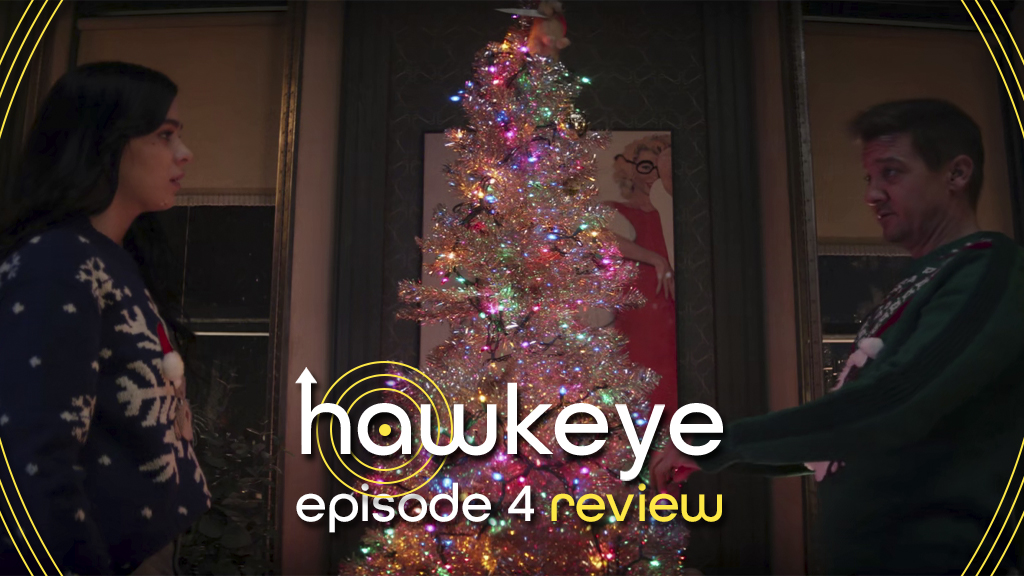
  • REVIEW: ‘Hawkeye’ Episode 4—Partners, Am I Right?

    REVIEW: ‘Hawkeye’ Episode 4—Partners, Am I Right?

    Hawkeye Episode 4, Partners, Am I Right?, slowed down from last week’s episode to focus more on psychological themes and more investigative-type activity, in contrast to the action-heavy previous episode. While the episode’s slower and more character-based work is well-executed, the episode advanced the plot very little. With so many elements and unknowns still on the table, it begs the question of whether or to what extent the final two episodes of the series can succeed. 

    Episode 4 is generally dedicated to themes of family and loss, particularly the loss of Natasha Romanoff. Clint has his ongoing dilemma of trying to be there for his family at Christmas. This episode is pulling back on that further by delving into his psyche surrounding his time as Ronin after he lost his family in the Blip. There’s more recognition now about how his 5-year reversion into a hell-bent weapon affects who he is and his relationship to his family, even though Ronin is “dead” at this point.

    It’s fun that his wife Laura can be so involved in what he is doing—it’s certainly a fresh change of pace than the usual keep-spouse-in-the-dark story. Still, we learn this episode that Maya is keeping tabs on Clint’s wife and kids, so Clint’s family situation seems like it could go beyond simply trying to return for Christmas. This should be a major issue for Clint, even though the episode ends before he can really react to it. He’s still dealing with the grief and consequences of losing his family once, so one can only expect that this news would be met with a wave of emotion, and likely, a reversion back into some violent and vengeful places out of fear.

    Natasha Romanoff’s death is given more attention in this episode, too. There are brief references to her and her death every episode, but Clint finally gives a more formal statement on how he’s dealing with the loss by opening up to Kate about the “best shot he ever took” being the one he didn’t take when he was sent to assassinate the Black Widow. Through a brief and quiet moment with Clint, we get insight into his ongoing messy and dark psyche—he’s plagued by memories of the loss of his family and Nat, and it looks like it haunts him all too frequently. The focus on Nat definitely led up to Yelena’s brief cameo, but it further teases that a darker, more Ronin-like Hawkeye could be on the near horizon. Jeremy Renner is only getting better with these moments, and Clint’s subtle under-the-surface suffering is compelling

    Perhaps the only person who can save him, if that happens, is Kate. On one hand, this is also Hailee Steinfeld’s and the character’s best episode in terms of charisma and performance. While the episode ends with Clint telling Kate that they’re done, common sense suggests that their partnership will return. Their relationship is built up extremely well throughout the episode, which is clearly in part to make the ending more dramatic. The two share their best banter and back-and-forths of the series between their interrogation by Jacques and Eleanor and Kate bringing Christmas cheer to Clint.

    But while the two’s partnership/friendship/relationship looked stronger than ever, it was not free from the ails of the themes of the episode. Eleanor Bishop is the first to bring up Natasha’s death to Clint, pleading with him to leave Kate out of their investigation and not let her get hurt. Clint acknowledges that he plans to keep her safe, but he seems relatively unphased at this point. Kate’s confidence in and of itself likely makes it easier for the elder Hawkeye to feel comfortable with her involvement. It isn’t until Kate is thrown off of the roof of a building, narrowly surviving, that Clint reacts all at once. Between the parallel to Natasha’s falling death and his promise to keep someone’s child safe, his panic and emotion burst out, leading to his proclamation that his and Kate’s time together is over.

    Another interesting part of their dynamic this episode is that Kate discovers that Clint was Ronin. It seemed like this would be a much bigger moment than it was—Kate was certainly a bit shocked and upset at the idea, but by the next scene she had moved on. Knowing her hero was the notorious vigilante assassin probably should have affected her more, but perhaps her infatuation with Hawkeye blurs her perception of the situation. That, or, it simply wasn’t explored enough.

    Episode 4 was definitely slower than the previous episode, but it left all of its high-intensity moments for the end. The final, but relatively brief fight featured Clint, Kate, Maya, and Yelena Belova. Yelena arrived, as promised, and her hand-to-hand combat style made everyone else look incompetent and added a lot of strength to the scene itself. She says nothing, and we only see her face revealed right before she escapes. There’s also a nod to Clint’s introduction to Natasha when Kate refuses to take a shot at Yelena. Is a more personal friendship between the two being foreshadowed?

    While Yelena’s appearance is undoubtedly exciting, it’s hard not to notice that the final two episodes of Hawkeye will have quite a few elements it needs to resolve or address. A quick list includes Yelena, Maya, Kazi’s likely attempt to persuade Maya to stop going after Ronin, the Rolex from the Avengers compound, the rumored BIG reveal next episode, the LARPers and the Hawkeyes’ new suits, Jacques’ role as a money launderer for the Tracksuit Mafia, the Tracksuit Mafia itself, Clint still getting home in time for Christmas, the Hawkeye mantle being passed down, clearing Kate’s name as Ronin, Clint’s family potentially being in direct danger, Clint’s psychological turmoil, and Lucky the Pizza Dog eating more pizza. 

    Overall, Episode 4 does well with its slower pace in terms of addressing overarching themes, including family and grief stemming from loss. It was important for Clint in this series to have moments where he lives within his own trauma, and some of that is definitely highlighted. The relationship between Clint and Kate gets more depth as well, between the growing friendship and partnership combined with Clint’s fear and guilt pushing her away at the end. Yelena’s introduction is exciting and promising, but the burden that the next two episodes carry seems at risk of being too much to handle effectively. 
  • REVIEW: ‘Wheel of Time’ Episode 1×5, “Blood Calls Blood”

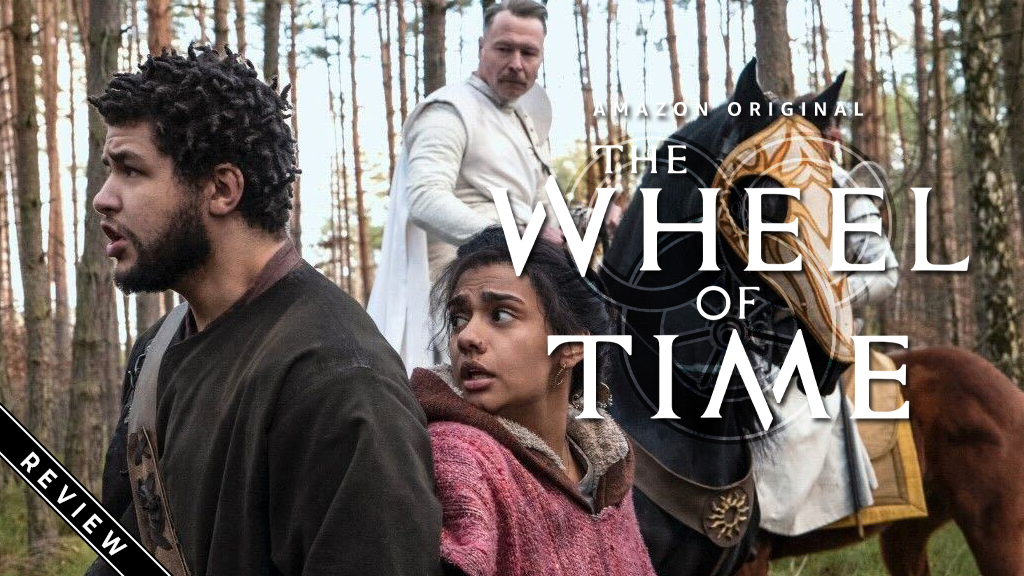
    REVIEW: ‘Wheel of Time’ Episode 1×5, “Blood Calls Blood”

    Amazon’s Wheel of Time has done a rather impressive job of adapting Robert Jordan’s novels. While the adaptation has not always been perfect, the series has successfully captured the feel of the novels, while also allowing for new viewers to jump into this immersive world without having read the novels. Unfortunately, though, as strong as the episodes have been thus far, “Blood Calls Blood” feels like a filler episode.

    “Blood Calls Blood” picks up where “The Dragon Reborn” leaves off. After the Aes Sedai gentle Logain, the women and their Warders take to burying the bodies of the fallen. Kerene’s death is one of many, but it’s clear her fellow sisters are still struggling to accept her faith. However, their grief is nothing compared to that of her Warder, Stepin. He’s having trouble accepting her loss and what life entails without Kerene and his duty as a Warder. Despite having only appeared in two episodes, Stepin’s storyline feels vital, for his grief is palpable throughout the episode.

    Stepin’s storyline is the best part of “Blood Calls Blood.” It’s a deep study into a minor character, while also further helping to explore the Warders much like the fourth episode focused on the powerful women of the Aes Sedai. Unfortunately, though, the episode realizes it has a story to elevate far too late. It is at this point it becomes clear “Blood Calls Blood” is an episode of convenience.

    When the episode finally remembers that Rand and the others are still trying to find one another, it doesn’t really do much more with them than the episodes before it. They’re all still trying to make their way to the White Tower. Mat is still fending off the corruption of the madness, something further teased by Logain’s minor appearance this episode. More importantly, though, the only characters to see their stories truly move forward are those of Egwene and Perrin. After seeking safety with the Tuatha’an for some time, the pair are captured by the Whitecloaks this episode, with death seemingly certain for one of them. However, both Egwene and Perrin have secrets that ultimately help to save them.

    This episode is the first we truly get to see of Perrin’s connection to the wolves on screen. While it has been hinted at in earlier episodes, “Blood Calls Blood” is the first to show the wolves coming to his aid in battle. It’s, honestly, one of the better scenes in the episode. It’s well-shot with tense action that’ll leave viewers on the edge of their seats. What follows, however, is a somber note in which the episode ends.

    Unable to accept his loss, Stepin makes the decision to end his life. It’s a heartbreaking scene that is only made more powerful by the ritual that follows. Stepin’s body lay in the middle of the room as his fellow Warders gather around him dressed in white. Lan, his closest friend, leads the ritual to let go of their grief. Moiraine stands nearby, enduring the grief of her Warder, while Nynaeve stands behind her with her eyes glued on Lan. It’s the first time the relationship between the two is truly teased. Of course, with just three episodes left to go, it remains to be seen how Wheel of Time successfully brings the two together romantically.

    Overall, “Blood Calls Blood” is not the strongest episode of Wheel of Time. It is, however, the most heartbreaking episode viewers will endure so far. With three episodes left, it’s only a matter of time before our group is finally reunited. Or so we can hope.

  • REVIEW: ‘Harlem’ is a Celebration of Women of Color

    REVIEW: ‘Harlem’ is a Celebration of Women of Color

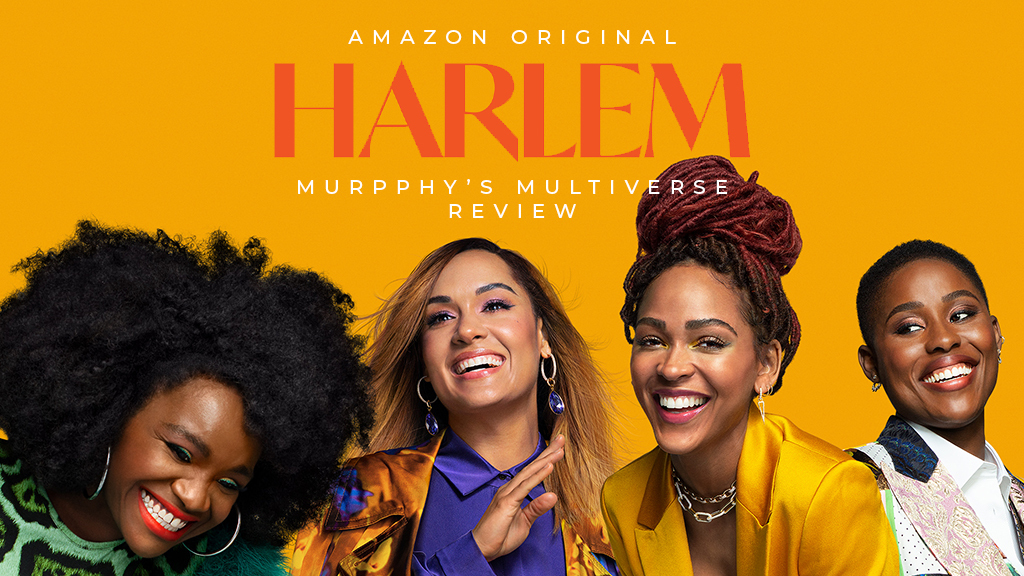
    At a time when Sex in the City is coming back, courtesy of HBO Max’s And Just Like That…, Amazon is set to deliver its own female-led drama titled Harlem. Unlike And Just Like That…, though, Harlem is a diverse series that manages to empower women without shying away from the ugly realities of the world.

    Harlem tells the story of a group of four best friends trying to navigate their thirties while living in Harlem. Their love lives are a mess and there’s plenty of drama throughout. However, there’s also a heck of a lot of heart. While its own thing, Harlem will undoubtedly be compared to And Just Like That… when it hits later this year simply because of the premise. It’s so much more than that, though, that the comparison would simply undermine Harlem.

    Each episode opens with a voice-over by Meagan Good‘s Camille, who is undoubtedly the show’s main protagonist. She’s an anthropology professor at Columbia who is trying to rebuild her life after she implodes her future because of her own fears. While most of the series revolves around her and her chaotic life – both intimately and professionally – Harlem makes sure to shine a light on her best friends, too. Quinn, Angie and Tye are still given time to shine on their own while Camille’s story unfolds.

    It’s not always easy to juggle multiple storylines with an ensemble cast, and yet, Harlem seems to have no trouble. The storylines shift almost effortlessly, always ending with the group reunited in the end. You will laugh with these women, and you will cry with these women, enjoying the rollercoaster ride the entire way.

    A half-hour drama like Harlem is a rarity. Its main cast is exclusively women of color. Some of those characters belong to the LGBTQ+ community. It’s sex-positive and doesn’t shy away from the problems black Americans continue to face daily. It’s light-hearted at times and is full of heart. It’s also a strong exploration into life in Harlem. More importantly, though, Harlem is the type of show that is needed in this day and age. 

    It’s a show that not only celebrates women – it specifically celebrates women of color and members of the LGBTQ+ community. That’s something we don’t see nearly enough in media. So, as streaming services continue to fight for your viewership, Amazon’s Harlem is a show that is rightfully worthy of your time. With each studio seemingly launching its own service these days, it’s easy to get lost in the mix, especially as they continue to build upon their popular IPs. However, Harlem is the rare gem of an original that should not get buried or ignored.

    The series hails from Girls Trip writer Tracy Oliver who brings her sense of raunchy comedy to the Amazon series. The relationship between these four women is front and center. We see them as they struggle, we see them as they thrive, and every moment of it is wonderfully realistic. Give yourself a present this holiday season and enjoy the rollercoaster of a ride that Harlem will inevitability take you on. It’s worth it.

  • Arlyn Reviews ‘Diary of a Wimpy Kid’

    Arlyn Reviews ‘Diary of a Wimpy Kid’

    I’ve had quite a history with Diary of a Wimpy Kid. As a young kid, I read every book in the series created by Jeff Kinney. I’ve also seen the live-action movies, some of them several times each. I really liked the books in the sense that they made me laugh and just enjoy the characters. I really enjoyed the book The Long Haul because the Heffleys have a series of hilarious misadventures, including picking up a baby pig at a county fair. After having read many of the books, I was very excited to see the characters brought to life in the four live-action movies. Now, Kinney is bringing animated versions of his books to Disney+ in a series of short films beginning with Diary of a Wimpy Kid.

    Diary of a Wimpy Kid presents the events of the first story in an easy-to-watch 56-minute film. Swinton Scott, who has directed episodes of animated hits such as The Simpsons and Futurama, directed the film which was written and produced by Jeff Kinney. Kinney’s involvement kept the plot of the film almost identical to the book. The film introduces Greg Heffley, voiced by Brady Noon (Good BoysThe Mighty Ducks) and his best friend, Rowley, voiced by Ethan William Childress, as they learn the ropes of middle school. The animated film deals with many of the same themes as the book including, friendship, respect, maturing, and an unhealthy obsession with being popular. It’s a coming-of-age story that is full of humor and drives home lessons about what it means to be a true friend.

    The book dials right into the friendship of Greg and Rowley and highlights Greg’s efforts to force Rowley into growing up so he doesn’t “embarrass him.” In this way, Greg is not a great friend. This aspect of their relationship is featured heavily in the movie. There is one particular scene that takes place at lunch where Rowley asks Greg if he wants to come over and play in the crowded cafeteria. This makes Greg feel embarrassed of Rowley because it’s not the “cool” way to say it (Rowley should’ve asked to hang out), showing an example of Greg’s obsession with being popular. This part makes me feel bad for Rowley because he is still a kid and Greg forces him into growing up so they can be cool. Greg behaves like that again when they are hanging out at Rowley’s house and Greg makes fun of him for having all of the childish stuff in his room like dinosaur bed sheets and stuffed animals. All of these scenes support the claim that Greg is not a great friend to Rowley.

    Disney+ Drops New Trailer For Upcoming 'Diary of a Wimpy Kid' Movie – Watch  Now! | Brady Noon, Diary of a Wimpy Kid, Disney Plus, Ethan William  Childress, Movies, Trailer | Just Jared Jr.

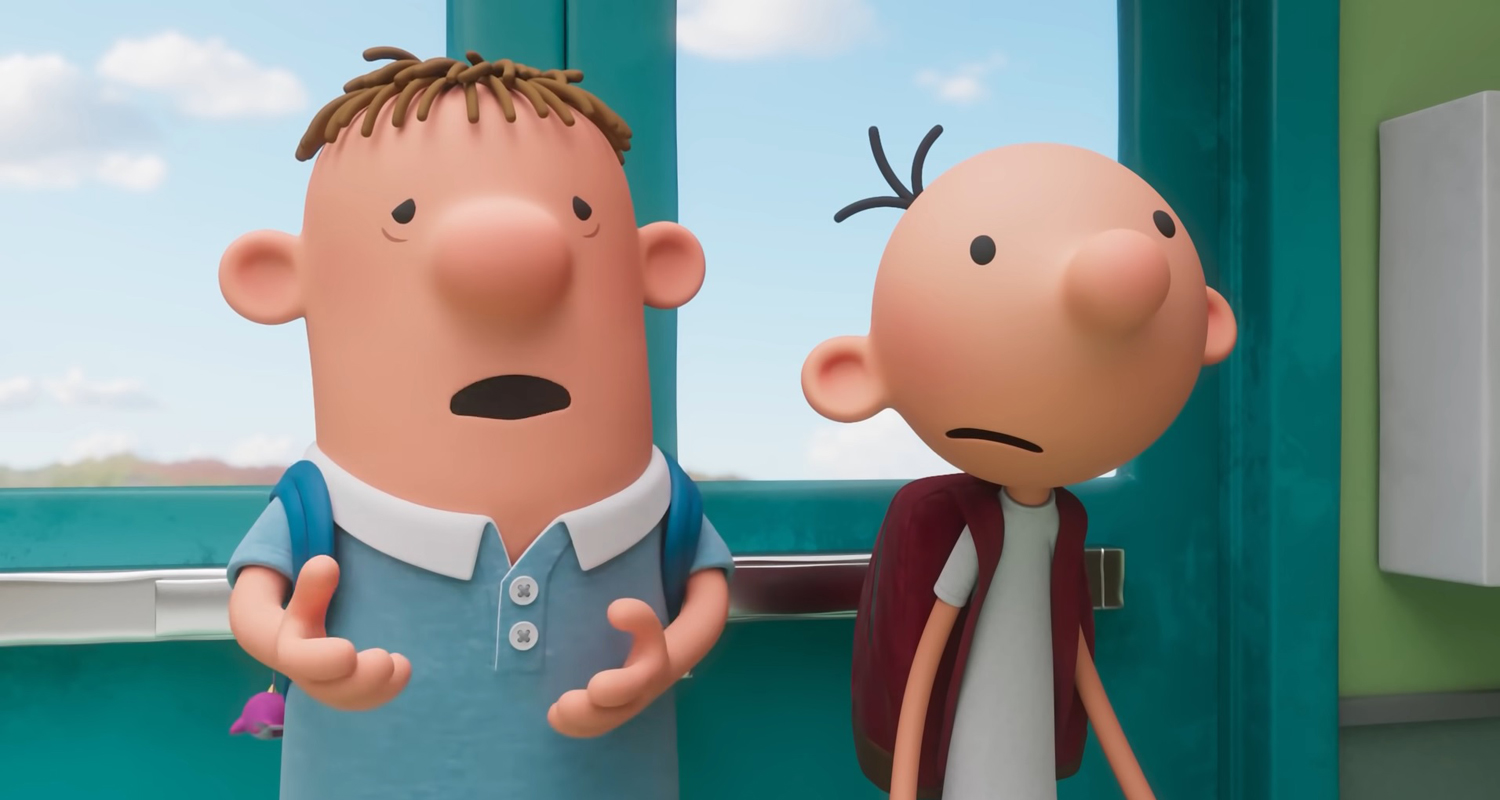
    The film’s animation brings the 2-D cartoons from the book into 3-D animation. The animation of the characters resembled the animation from the book very well, making it an easy film to watch. There were even some small touches to the animation that made the body language of the characters give off more emotion.

    I felt connected to the characters. When Greg was mean to Rowley, I felt bad for Rowley and angry at Greg. I also found the film to be very funny. One scene, in particular, is when Rodrick, voiced by Hunter Dillon, was terrorizing Greg about how bad middle school will be by coming up with a bunch of unrealistic scenarios Greg’s reaction was hilarious and on point. And, of course, there’s the classic “cheese scene” that will always cause a laugh. While watching the film, I felt myself empathizing with different characters at different points in time, which is a win for the film. The voice cast really worked well and sold the emotion of the characters.

    I really enjoyed the movie. In summary, it captures all the humor from the book but also includes an added focus on heartfelt moments that weren’t necessarily featured in the book. The Disney+ movie is an upgraded version of the already classic kid’s book. If the adaptations of the other books in the series are as emotionally stirring, I hope they adapt them all.

    Diary of a Wimpy Kid is now streaming on Disney Plus.

  • REVIEW: Spielberg’s ‘West Side Story’ Is a Gorgeous Reminder on the Importance of Love

    REVIEW: Spielberg’s ‘West Side Story’ Is a Gorgeous Reminder on the Importance of Love

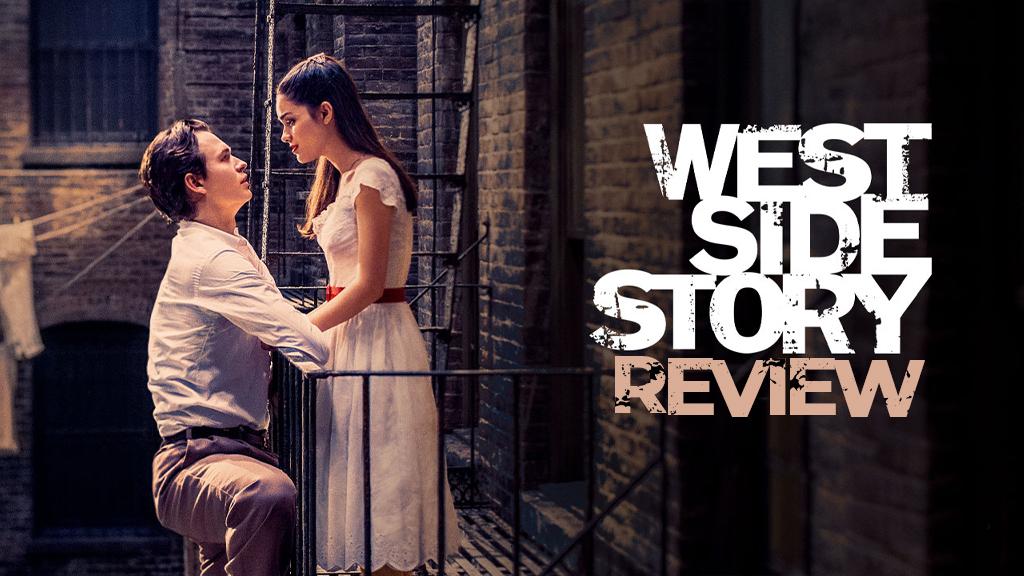
    It’s a tricky thing adapting beloved classics. The process is, for lack of a better example, much like falling back in love with an ex. There’s an unhealthy temptation to go back and do what you already know. A desire to revisit all of the highs and ignore every low. Yet, much like a seasoned therapist, a filmmaker must realize that it’s not worth retelling a story unless it has something new to say. With a vibrant, lively, updated take on the musical staple West Side Story, the legend Steven Spielberg has done just that.

    From a technical standpoint, the tale of Tony and Maria has never been prettier. Every shot, from the moment the film begins, feels like an ode to a time just out of reach. It’s a colorful, glowing, real-life fantasy set on the mean streets of 1950s New York. The admiration for the movie’s titular twenty blocks is apparent, with Spielberg and screenwriter Tony Kushner packing their two-and-a-half-hour runtime with plenty of knowing nods to a beleaguered city that starts to take on a life of its own. It’s everything the greatest generation wanted you to think about New York, including grime that sparkles and subway brakes that sound like musical notes.

    Justin Peck works wonders with his choreography, crafting the kind of iconic dance numbers that tell every bit as much of the story as any lyric could. Almost every choreographed sequence pulsates with emotion, something especially true of bits like “America” and “Gee, Officer Krupke,” which allow their performers to exhibit a charming amount of joy amidst the pain of the film’s later acts. Interviews with the cast and crew indicated an enormous amount of fun was had on set, and the film’s final product proves this to be true. There’s an admirable energy that radiates off this movie, led in large part by breakout star Ariana DeBose and her formidable take on Anita.

    While the wildly talented Rachel Zegler does appear to be one gem of a find for Spielberg, it’s her character’s family that really pushes large portions of the film past the finish line. Debose‘s Anita and the wonderfully subtle David Alverez, as Bernardo, are the backbone of a story about love, family, and the downfalls of pride. Their chemistry is off the charts, and it becomes easy to find yourself rooting for them over anybody else in the film. That being said, big-screen newcomer Mike Faist puts in a commendable display as Riff, the troubled and ignorant leader of the Jets, as he expertly maneuvers their tragic downfall and shift from child-like tomfoolery to heartbreaking deviance.

    This new rendition of West Side Story is a feat of practical narration, on the part of cast and crew alike. However, it was not simply the dazzling visuals that resulted in so many of us leaving the theater with a gleam of both sadness and hope in our eyes. It was the magnificent Stephen Sondheim, whose timeless lyrics were supported by the swelling sounds of the New York Philharmonic and Kushner‘s impassioned dialogue, that really drove the point of the film home.

    The true beauty of this movie can be found in its steadfast assertion that love conquers all. There is not a single moment in West Side Story that cannot be traced back to a character’s ability, or lack thereof, to show compassion. Sondheim‘s lyrics somehow seem more relevant than ever, telling tales of racial divide, unfortunate upbringings, and the tragic, youthful inability to simply give in and go home. Humans are creatures of relation, and we’ve spent the better part of our recent lives deprived of that. Perhaps this is why it’s so hard to watch characters with so much potential, in families found and families bound by blood, throw it all away in the name of vanity. Innocence is destroyed when people choose power over love, something that feels more apparent in 2021 than it did sixty years ago.

    Ultimately, Spielberg and company have crafted what may be one of the rare improvements over an original production. An energetic cast brings to life a story with every bit of the magic you’d expect, with more commentary than you might be used to. It’s necessary viewing for fans of musical theater, and something I’d recommend any moviegoer attempt to see while it’s still on the big screen. Just make sure you bring something to cry into.

  • REVIEW: ‘Cowboy Bebop’ 1×07 “Galileo Hustle”

    REVIEW: ‘Cowboy Bebop’ 1×07 “Galileo Hustle”

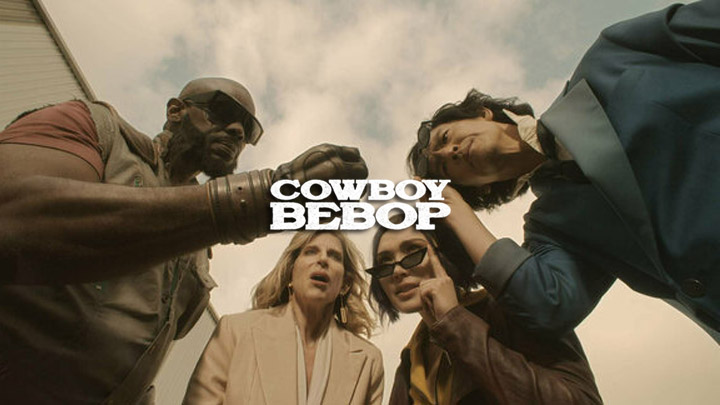
    After taking a backseat in the last episode, Faye Valentine takes the leading role in the seventh episode “Galileo Hustle.” Yet, most of the episode does have our crew interacting (always a plus) and we get some tension between Jet and Spike, as we get a set-up for an eventual betrayal later down the line. Can Netflix’s take on Cowboy Bebop pull off one of the calmer moments from the original series and can it continue the momentum built from the previous episode?

    Cowboy Bebop: Faye Valentine Is Queer in Netflix Series | CBR

    We finally get a pay-off from a few episodes ago on the arrival of Whitney. Early on, we find out how this gender-bent version of the character played into Faye’s origin. Right after she got out of cryo-sleep, this version of the character pretended to be her mother and conned her out of her Identikit. I like this take a tad more than the original. These two characters build a relationship throughout the episode that is a twisted take that kind of works.

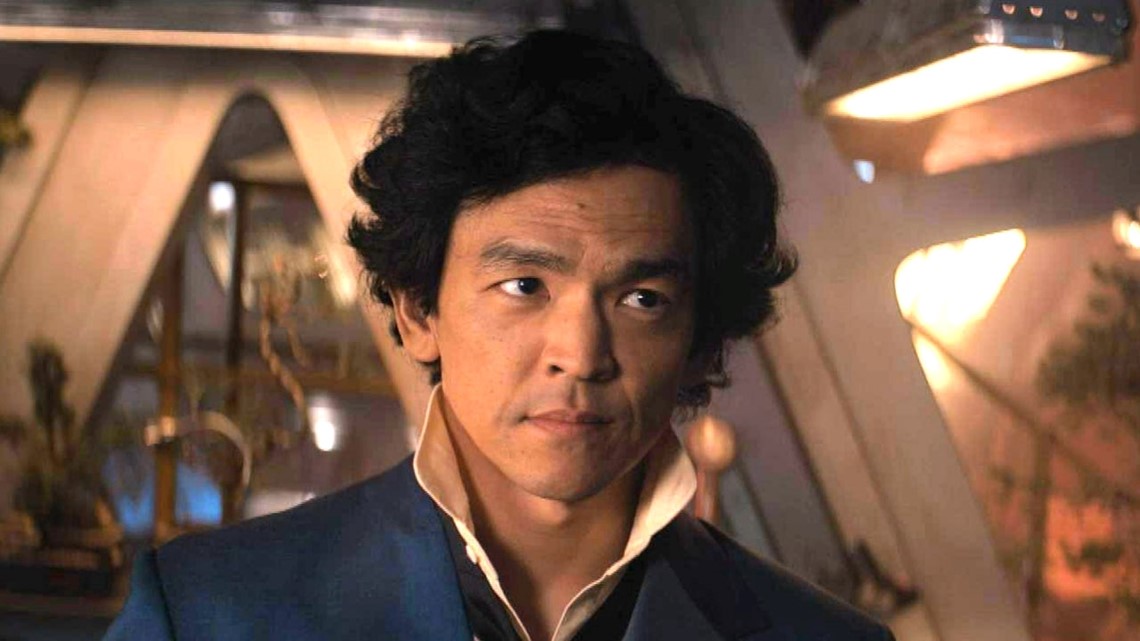
    Jet gets some great moments, as we also build upon some character development between him and Chalmers, which was sweet to see. It’s a bit fast considering where they started this season, but I like that we see episodes that seemed a bit out of nowhere continue to build into the next. The same goes for Spike still recovering from the events of “Binary Two-Step” adding a nice layer of continuity that also lets you know that this takes place directly after the previous one.

    2021 - Cowboy Bebop: Faye Valentines Hintergrundgeschichte erklärt |  Bildschirm-Rant - Gettotext.com

    The episode does have an important set-up surrounding Jet’s emotional reaction to being betrayed. While he does forgive her for lying about her not-mother being a con artist, it sets up a bigger betrayal later down the line. It’s a great way to build up the point made in the previous episode when the fake Julia confronted Spieka bout lying to his long-time partner. Heartbreak is on the horizon at this rate, which won’t go over so easily this time around.

    As much as I enjoy this take on Whitney, I do think the episode wraps up the cassette mystery way too fast. It seems convenient that their ship happens to have the player they need. Yes, it was a distraction in the original but that was fun seeing Jet and Spike going out of their way to solve the mystery surrounding it. It seems that their focus is more on setting up Faye’s actual mother at the end of that episode. We know little about how old this version of Faye actually is and if she even has the debt from the original. We’ll see what the future has in store for our protagonist.

    Cowboy Bebop: Faye Valentine's Childhood Video Is Tear-Inducing

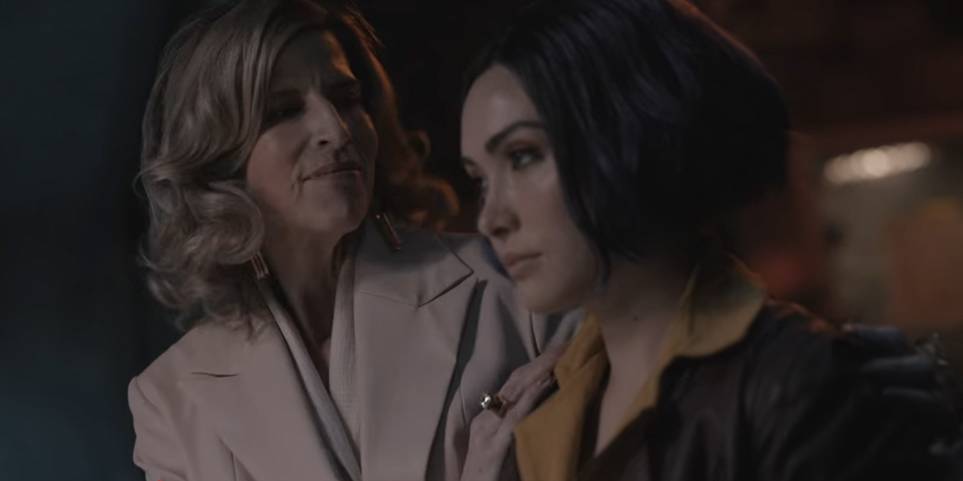
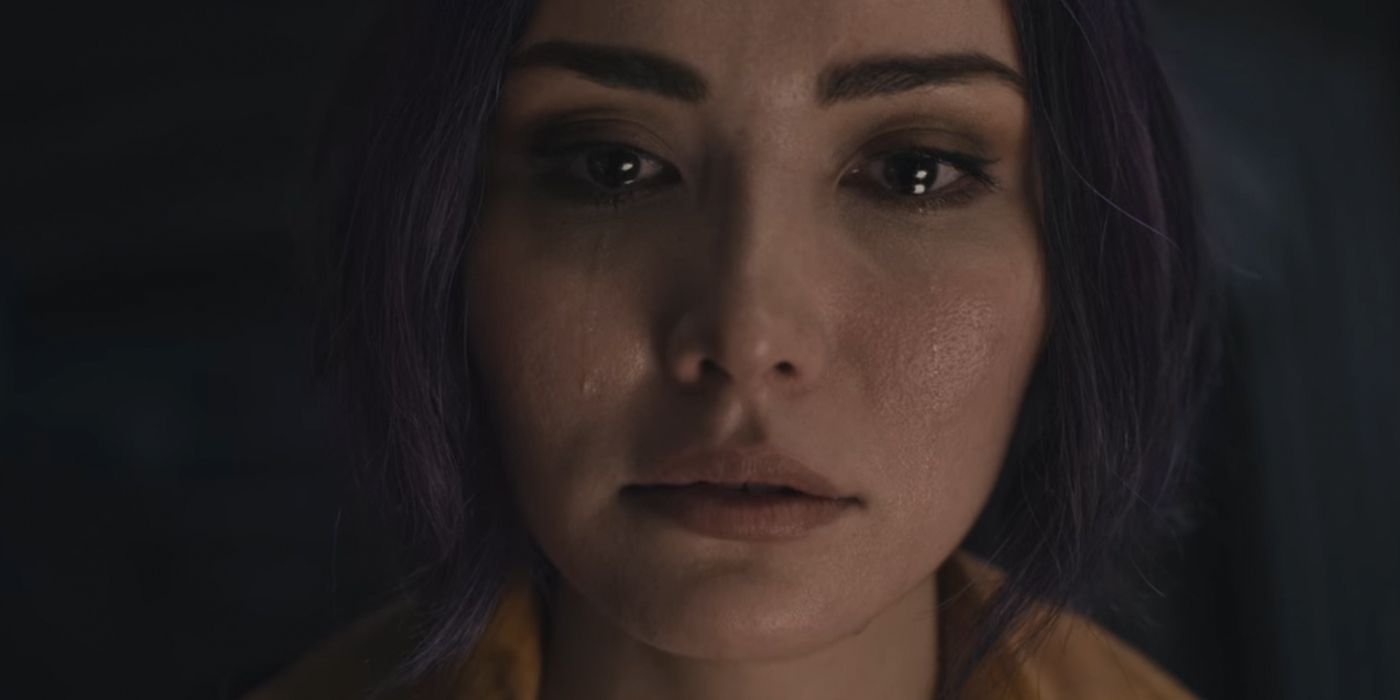
    Overall, a strong episode once again that continues to build up from previous storylines. It’s good that after the halfway mark we finally see some payoffs. I’ll say that Daniella Pineda is a highlight in this episode, especially in the emotional moment in the end. It probably was one of the highlights and was the show at its most restrained. Oh yeah, Vicious and Julia continue their plans to take over the syndicate. Overall, was a very good episode that isn’t quite on the same level as the previous one but it’s a close one.

  • REVIEW: ‘Cowboy Bebop’ 1×06 “Binary Two-Step”

    REVIEW: ‘Cowboy Bebop’ 1×06 “Binary Two-Step”

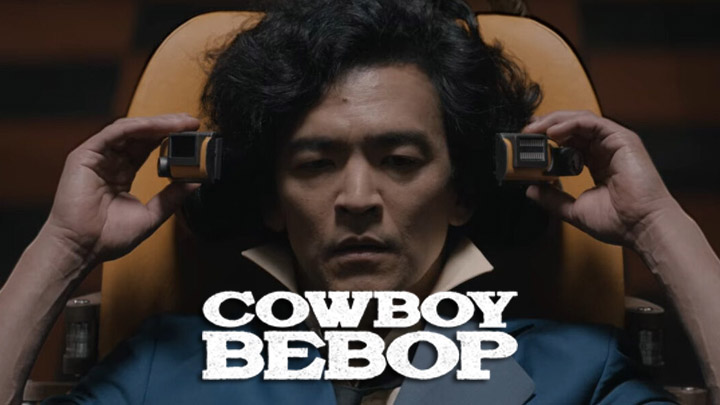
    Now that is what I call a step in the right direction. The sixth episode titled “Binary Two-Step” is quite the highlight of the season. Mostly due to the plot actually primarily focusing on our main trio. Yes, they are still refusing to stick together, but the dynamic feels less forced this time around. While it doesn’t fully capitalize on every aspect that is presented, the concept of Spike getting lost in a virtual space and facing his past actually pay off the side story that’s been dragging it down through most of the season.

    COWBOY BEBOP Recap: (S01E06) Binary Two-Step

    We get the Dr. Londes, who goes by Cy-Baba now, set up very early in the episode alongside the first mentioning of Radical Ed. They don’t appear in the episode but we get our first confirmation of their existence within this adaptation. Still, the focus of this episode is an adaptation of one of the later releases “Brain Scratch.” While it’s less of a cult this time around, the biggest departure is that Faye isn’t directly involved with this storyline. While she has her own little adventure involving a mechanic and a rail gun, Spike is the one to get sucked into Londes’ offerings.

    John Cho Gets a Tempting New Lead in Netflix's 'Cowboy Bebop' Sneak Peek  (Exclusive) | kare11.com

    Once he enters the machine, he is stuck in a loop where he tries to save Julia from Vicious. Londes, once again a machine rather than an actual person, wants to force him into a scenario where he gives up on life to make way for the AI to take over. Jet is briefly taken out of the picture as he tries to repair the Bebop while fighting the already teased mechanic. It’s a decent setup to force him into this solo scenario but does once again highlight how this team just cannot stick together.

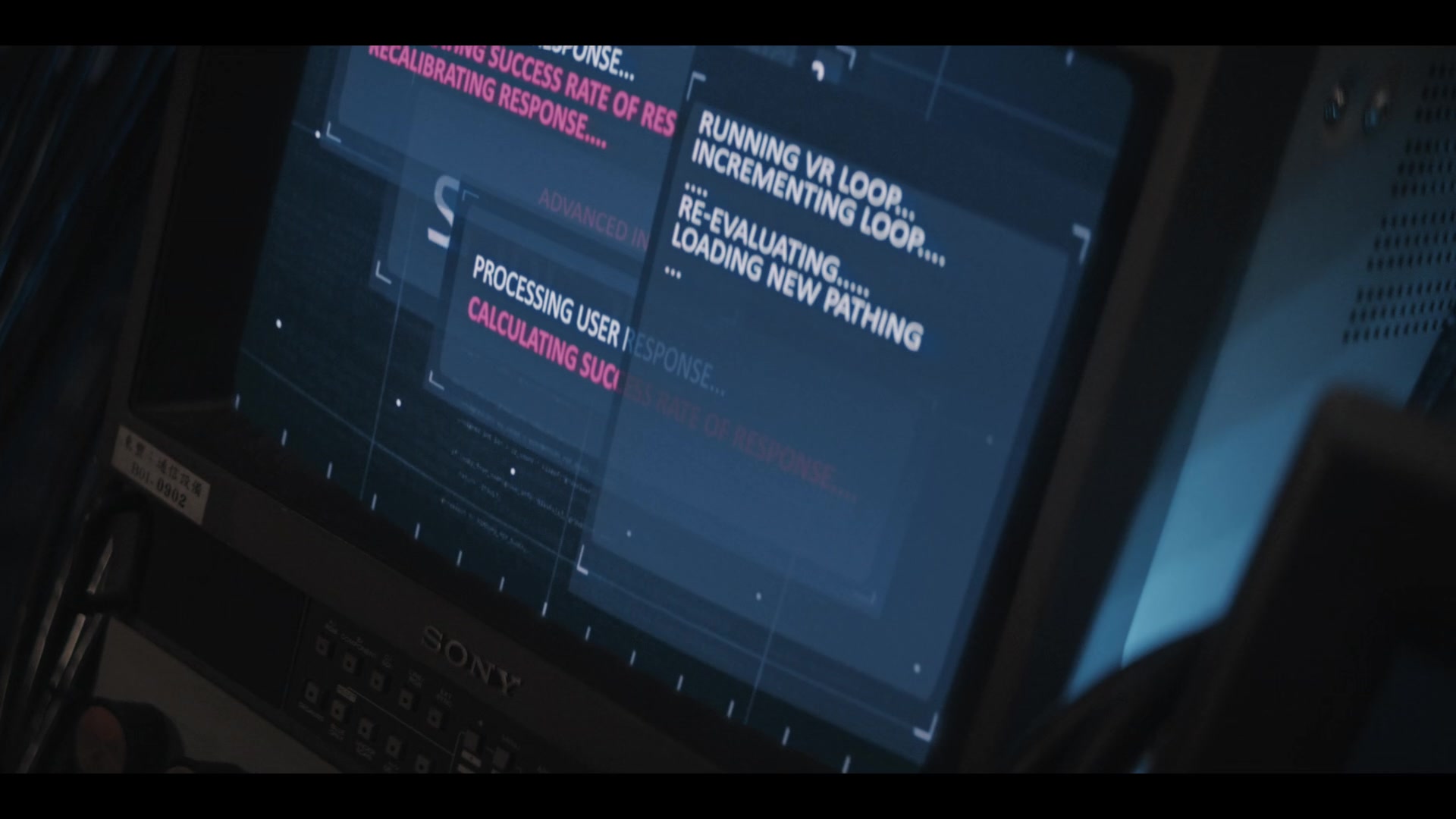
    The VR nightmare is quite an interesting concept that is even realized quite well. As the AI keeps fighting Spike’s mental fortitude, the world around it starts falling apart with an interesting visual effect. Taking a closer look at how it changes over time, especially as he recalculates to break Spike’s love for Julia adds a nice bit of character development. Especially, when the moment we think he “gave up” turns out to be quite different after a last-second save.

    Sony Monitor In Cowboy Bebop S01E06 "Binary Two-Step" (2021)

    I did like Jet a lot in this episode. The moment he realizes what is happening to Spike and the desperation of getting to Earth at all cost was a great moment. We do get the tease of what it would mean if he found out about his friend’s time as “Fearless” but you really get the feeling these two would go through hell for each other. Here’s hoping we get a similar scenario from the other’s perspective as well.

    The funniest bit is (sadly) probably Alex Hassel’s face when he is getting ready to shoot Spike in his last flashback from that virtual world. It just once again cements this is a very different take on the character but also highlights the way Spike sees him as well. Most of this episode is here to give our characters some character development with Faye on her own journey of self-discovery adding a nice step into the next episode where she takes centerstage again.

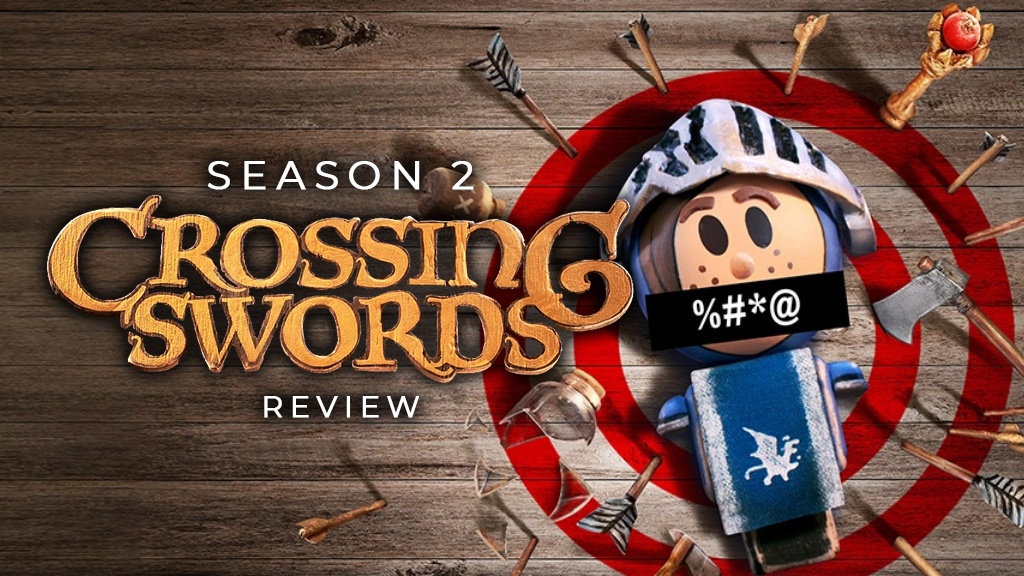
  • REVIEW: ‘Crossing Swords’ Season 2 Fails to Capture the Uniqueness of Season 1

    REVIEW: ‘Crossing Swords’ Season 2 Fails to Capture the Uniqueness of Season 1

    The first season of Crossing Swords introduced audiences to an interesting new take on the raunchy adult animated series. Inspired by Robot Chicken, John Harvatine IV, and Tom Root took what they’d learned on the adult-oriented cartoon and applied it to this series, with an original project set in Medieval Times. The second season sees the return of Patrick the squire, still on his own personal quest to become a knight, and it’s when the show focuses on this plotline that it shines. Unfortunately, though, this season often feels astray and distracted when it decides to follow a linear path whenever it feels.

    The show’s most defining feature is probably its cast, which features the likes of Nicholas HoultLuke EvansSeth Green, Alanna UbachTara StrongTony HaleTara Strong and Maya Erskine. The cast is truly at their best this season. In fact, some of them are unrecognizable and seem to have become lost in their roles. This is particularly true of Hoult, Evans and Erskine, who are the standouts once again. It wasn’t until the episodes concluded that I was able to comprehend the actors behind the voices.

    I just wish the series used these characters to their full potential, with Patrick being the only character to get proper development in the series. This is where things begin to feel disjointed. Crossing Swords feels like it’s trying too hard to separate itself from another adult animated series by randomly deciding it wants to tell a linear story. The show quickly tries to wrap up the said story up and throw viewers right back onto an aimless path. The one-off episodes begin to lead up to a little story-arc, and this is where the show starts to get really interesting and felt like it wasn’t dragging for once, but it quickly wraps up the short burst of story development and throws you back into the outlandish nonsense that the series survives on.

    The series will have its moments and, if there’s a line they won’t cross, they have yet to stumble across it. Some jokes hit as they’re supposed to, and the humor is there, unfortunately, though, it’s missing the heart that many other animated series like this have. Crossing Swords feels as if the gas tank was low, so you decided to fill up, but then realized there was a hole in your tank and you’ve lost all momentum. The series ultimately feels as if it’s coasting by on its vulgar humor, but the act gets old fast. 

    Crossing Swords often feels like a modge-podge between Robot Chicken and something Like Rick and Morty, and could truly be something special and unique, but it doesn’t feel committed enough. The cast and distinctive animation style are some of its saving graces, but without a solid story, it can feel about as alive as its old king.

  • REVIEW: ‘Hawkeye’ Episode 3 — Echoes

    REVIEW: ‘Hawkeye’ Episode 3 — Echoes

    The third episode of Hawkeye gave the series quite the boost. In fact, Echoes seemed to upgrade nearly every element of the show. The action-packed episode stands out from the first two in terms of its energy level and tone-shifting scenes—Hawkeye now feels like a bonafide superhero romp while its potentially intricate street-level organized crime plot still grounds the episode. While the action is undoubtedly loud, the quieter moments in Echoes spoke volumes and let the characters shine in competition with the high-speed car chase and explosive trick arrows.

    Right off the bat, the episode jumps into action sequences that feel miles beyond Hawkeye’s first two episodes. It emphasizes that Clint Barton is, in fact, pretty cool, and can fight off an entire gang both with and without a bow and arrow. We know that Clint pulled this off as Ronin, but it’s a different experience to see family-man Clint in action. Kate Bishop’s skills were also upgraded and highlighted in this episode, as we see her holding her own hand-to-hand against the Tracksuit Mafia and later showing off her masterful archery skills during the car chase. 

    The car chase was certainly the prized action sequence of the episode, and it gave the series as a whole a needed and appreciated extra dose of adrenaline after a fairly sleepy start to the series. The camerawork and editing allowed it to play out as hectic and wild. The high-speed chase was clearly heavily inspired by Matt Fraction and David Aja’s original in the Hawkeye comic. While the iconic red 70’s Dodge Challenger was inexplicably not used as Clint and Kate’s getaway vehicle, nearly all of the listed trick arrows from the comic—putty arrow, suction arrow, electric arrow, etc.—were given a nod, though with Kate in the archer’s seat this time around. But the episode also fit in a broader MCU reference with Clint’s Pym arrow, which gave an ordinary arrow a larger-than-life moment.

    As given away by the episode title, Echoes prominently features Alaqua Cox’s newcomer Maya Lopez, or, Echo, who is introduced as one of the highest-ranking members of the Tracksuit Mafia. Cox is phenomenal in the role and no doubt was pivotal in the wonderful and stunning debut. Maya’s and the actress’s own deafness was highlighted and portrayed as a personal and physical strength, and Cox’s prosthetic leg—lent to Maya as an unbreakable weapon—took the character to new heights. It was not ambiguous in the slightest whether Maya was a crushing force and an extremely powerful character. 

    The episode also gives the first real “look” at Kingpin, referenced as Maya’s “Uncle” and his iconically large body was briefly teased. Clint hints that this character is at the very top of the Tracksuit Mafia food chain and, more importantly, is incredibly dangerous. It is revealed that Clint killed Maya’s father when Ronin attacked the Mafia during the Blip. This gives Maya her motivation to stay connected to Clint and Kate. Combined with Kingpin’s stronger introduction, this episode gave the Hawkeye plot more shape. While Kate’s own investigation into Jacques remains on the side, Episode 3 painted a clearer picture of the story the series is trying to tell.

    While the action was flashy, the scaled-down moments in the episode were extraordinary. Maya’s origin managed to be both heartwarming and heartbreaking in the same moments, as well as hitting notes purely at each end of that spectrum throughout. It’s not an easy feat by any means, but it was the perfect start to the episode that set the tone for all character moments.

    Clint struggled with his own hearing loss, which the episode used as much to its comedic benefit as it did to Clint’s own development. But seeing an Avenger in such an isolated space added new layers to the elder Hawkeye, which Jeremy Renner continued to excellently portray. The scene in which he struggles to talk on the phone with his youngest son, needing help from Kate, was a standout moment. Not only did we see Clint as a tender father—a role which was barely explored in the larger MUC—but we see his emotional range between the joy of speaking to his son and the guilt of not being with his family. 

    Clint and Kate’s relationship took off, rendering their reported chemistry in the first two episodes virtually void. The two moved past their introductory phase and started to look and act like partners rather than simply two entirely separate characters. Their banter throughout definitely improved, though Clint’s hearing loss did a lot of work at times in that regard. For the first time, Clint compliments Kate, specifically giving her credit for her self-proposed “World’s Greatest Archer” title. It’s refreshing that Clint spent very time or effort trying to dissuade Kate from getting physically involved in the conflict, and he ultimately even casually joins her in her further investigation of Jacques. 

    A particularly noteworthy moment for the two Hawkeyes came as they discussed Clint’s views on heroism. In particular, he says that he is no role model, which Kate vehemently disagrees with. While Kate has her suspicions about Ronin, Clint’s identity as the assassin is still a secret, and it’s unclear what effect the reveal might have on Kate down the line. It highlights a series theme about the Hawkeye symbol being important. What is the series trying to tell us about Hawkeye’s significance and place in society versus how Clint views himself? Like the Captain America mantle—and the upcoming onslaught of other legacy heroes—the MCU has an opportunity to tap into the franchise’s masterful amount of underlying story to truly say something about what makes a hero in this series.

    To sum it up, Episode 3 of Hawkeye delivers on many of the series’ promised elements that had yet to truly be seen in the first third of the show. While the Tracksuit Mafia is still delightfully entertaining, the introduction of Cox’s Maya gave the story a threat to actually care about. The character development, mostly of Maya and Clint, was exceptional. The action in this superhero series went from virtually zero to one hundred almost immediately, giving Hawkeye a much-needed edge. With the episode ending with Jacques holding a sword to Clint’s throat, it seems likely that more physical battles are to come. 

  • REVIEW: ‘One Piece’ Chapter 1033 Finally Gave Zoro That Moment

    REVIEW: ‘One Piece’ Chapter 1033 Finally Gave Zoro That Moment

    The latest chapters of One Piece were a well-balanced mesh of action, drama, and character development. Sanji was the main act for quite a few chapters due to his conflict of embracing the alterations inflicted upon him by wearing the Germa 66 raid suit. Yet, the latest chapter has fully moved over to Zoro, who’s still in his ongoing conflict with King. Ever since the post-time skip, it seemed he never had a true challenge. So, Eiichiro Oda gave him exactly that in the mysterious Lunarian who seemingly takes each strike without a scratch. Will Zoro finally meet his match?

    Let’s not waste any time and just focus on the biggest aspect of this chapter. Yes, there has been quite a bit of foreshadowing by Kaido and even the anime release, but Zoro finally has unleashed his Conquerors Haki. He has definitely been pushed to his limit and we once again are reminded by Raleigh’s lesson that it is formed through combat. Seeing the underlings of the Beast Pirates foaming at the mouth and seeing the lightning around all three swords is a great visual flair to confirm it. His ambitions have finally broken to the point that he can not only wield Enma – likely turning it into a black blade by the end of this fight – but also solves the question of what a sword curse is all about.

    I love the flashback to Zoro’s time as a kid. Didn’t expect we get an explanation where he got the two swords for his fight against Kuina from, but it’s a nice detail. The introduction of Shimotsuki Kozaburo and confirmation of his connection add a nice layer. Though the hints that Zoro is also a member of the Shimotsuki family due to his father potentially being Ushimaru does raise a few questions. We’ll likely find out more once Onimaru makes their return to the story. For now, we got a confirmation about his backstory set-up a few episodes ago and the mangaka manages to make a joke drawing for one of the swords as a person into an actual character design.

    His opponent, King, is given a lot more weight this time around. A short discussion between Queen and Sanji hints at some kind of underlying weak spot that’ll probably get exploited by Zoro. It makes me wonder if the Lunarian’s “defeat” might be connected to Mihawk that builds up a parallel with his pupil. While great foreshadowing, it does take away from the momentum that we had with Sanji when he kicked Queen full force a few chapters ago. Still, the built-up is strong and Oda will very likely take a detour before getting back to Zoro’s big payoff.