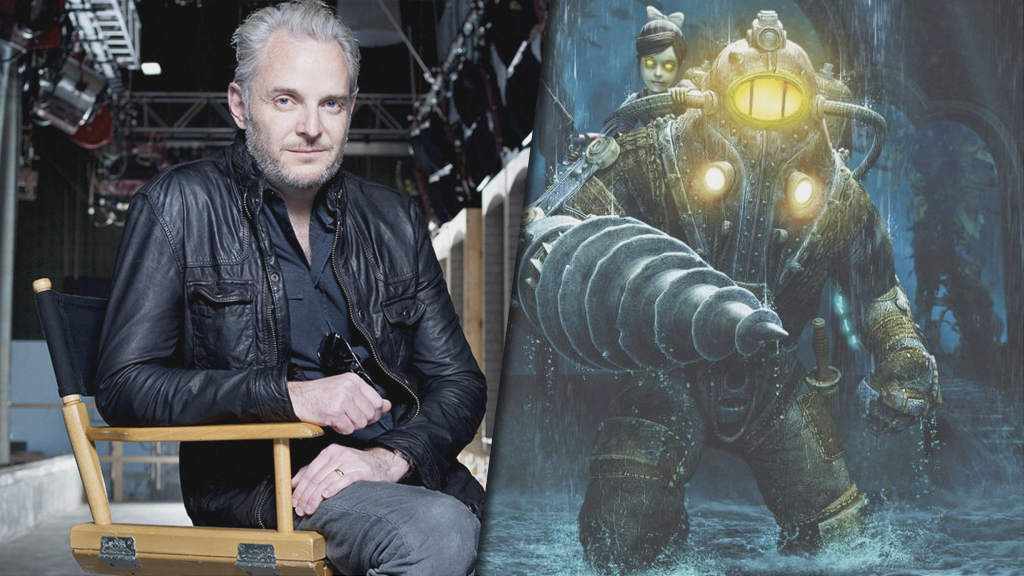
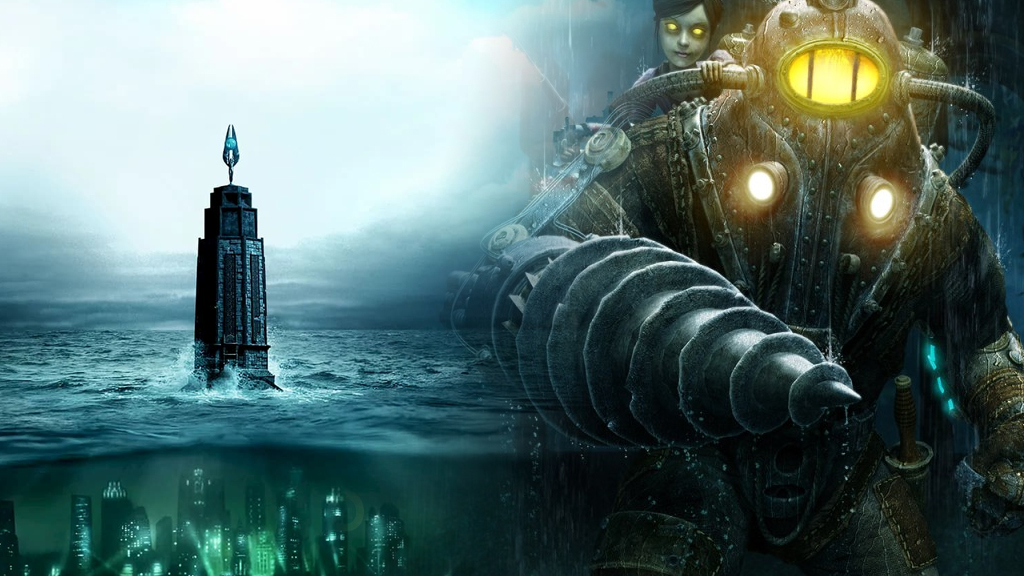
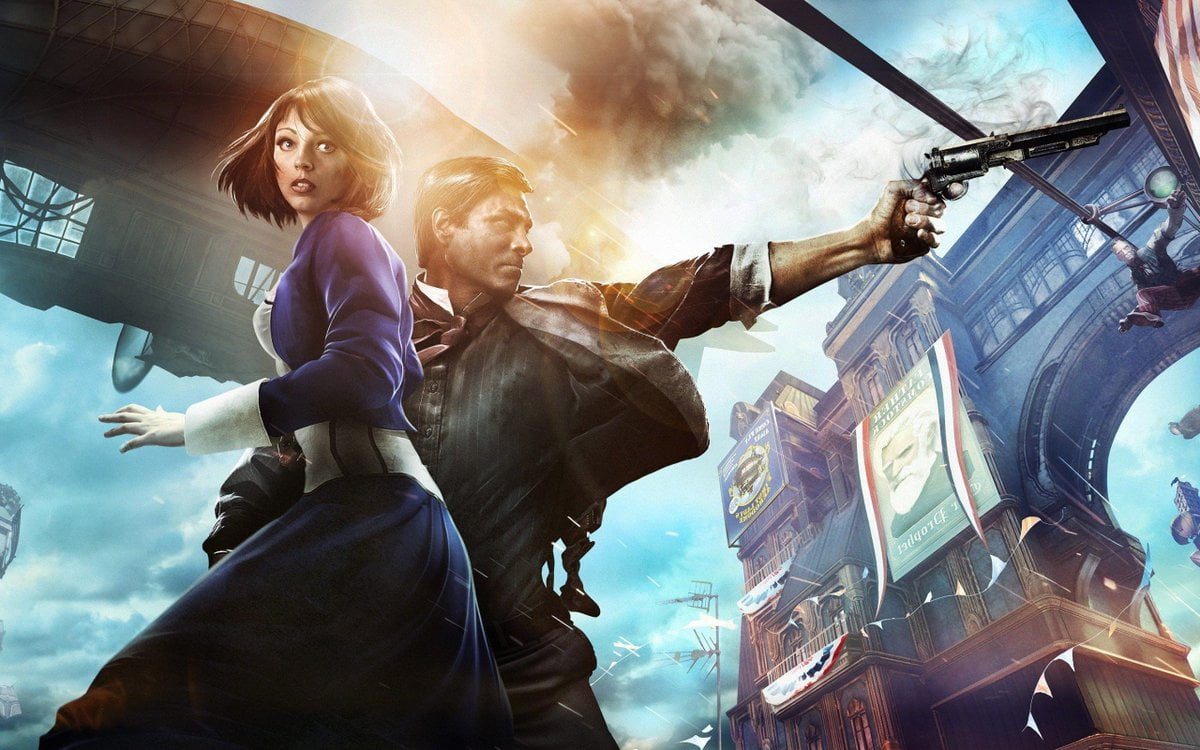
The Hunger Games director Francis Lawrence has lined up his next project. Lawrence is set to direct the adaptation of the renowned video game franchise, BioShock. The news comes courtesy of Deadline, with the outlet reporting that Netflix has been looking at A-list directors and writers for the job since it was announced earlier this year, recognizing the large scope of the property. Lawrence has been on their radar since Spring given what he has done with the Hunger Games franchise. The studio has also brought on Michael Green, who penned Logan, to write the script.
With Lawrence in production on the Hunger Games prequel, Hunger Games: The Ballad of Songbirds and Snakes, the plan is to have Green write the script while Lawrence is hard at work on that project. This will make it so that Lawrence can easily move on to BioShock once The Ballad of Songbirds and Snakes is completed. Lawrence, of course, took over the Hunger Games franchise after Gary Ross left ahead of the sequel, The Hunger Games: Catching Fire. He went on to complete the franchise with the two-part Mockingjay before returning for The Ballad of Songbirds and Snakes.
BioShock is set across multiple dystopian and visionary landscapes gone wrong with the games featuring a unique blend of horror and science-fiction. The first game was released in 2007 and has since sold more than 39 million copies worldwide. The franchise consists of BioShock, BioShock 2 and BioShock Infinite.
The movie will be produced by Roy Lee through his Vertigo Entertainment along with Lawrence for his about:blank banner. As of now, BioShock does not have a release date on Netflix.
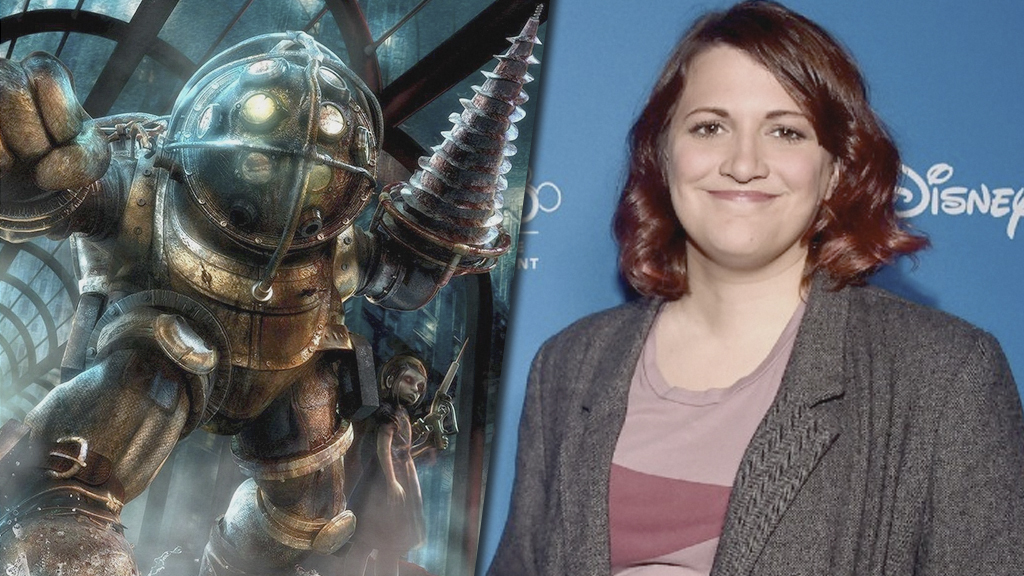
Just earlier today, we found out that the long-awaited Bioshock adaptation is finally moving forward as Netflix was the lucky winner to get its hands on the iconic gaming IP. Sadly, the project currently has no writers or directors attached to the project, but it looks like one director is quite interested in the project. In a tweet reaction o the new post by Netflix Geeked, Loki showrunner Kate Heron has thrown her hat into the ring to take on the project.
Given her hand in creating the iconic atmosphere and world of the Time Variance Authority, she’s definitely someone to keep an eye out in the industry right now. As she isn’t returning for the second season of Loki, this would make for a great next project of hers to tackle. The Bioshock adaptation is planned as a film, but there’s also a lot of chance to build multiple projects around it, such as a spinoff series that further explores whatever world they decide to tackle with this project.
It would be interesting to see how exactly they tackle this adaptation, as there is no necessary need to revisit pre-existing environments. Whoever ends up getting their hand on the project could create their own adaptation, but only require to ensure there’s always a man and a lighthouse. That way, it also isn’t shackled by the expectations of tackling the first game or Infinite. We’ll have to wait and see what heads our way.
BioShock fans may have a real reason to celebrate, as it looks like an adaptation of the famed franchise is finally underway.
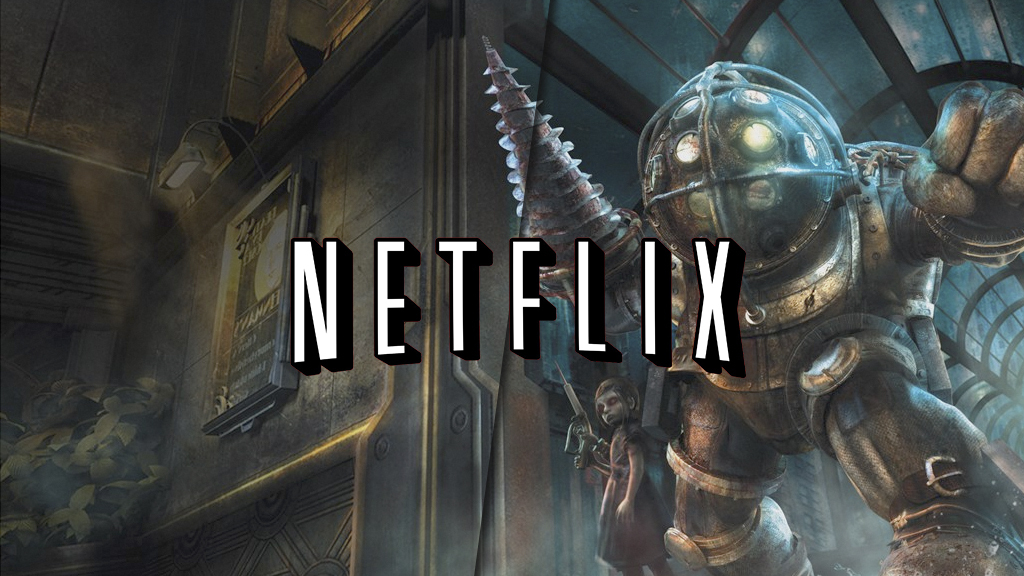
The Hollywood Reporter has revealed a film version of the popular video game series is now in early development at Netflix. The news comes after a year-long battle for BioShock‘s rights, which resulted in the original king of streaming coming out on top. Netflix will partner with Take-Two Interactive, the game’s parent company, to create what they believe has the potential to be a new cinematic universe. Take Two will also serve as the project’s producer, alongside Vertigo Entertainment. There are currently no writers or directors attached to work on the movie.
The first BioShock released in 2007. The plot centered around a protagonist named Jack, the lone survivor of a plane crash, as he attempted to navigate the dark, mysterious underwater city called Rapture. Featuring a steampunk vibe rooted in horror, the game saw Jack encounter drug-enhanced residents of the crumbling, fragmented civilization as well as terrifying mutated humans known as ‘Big Daddies.’ It’s still considered one of the best games ever created, and spawned two equally successful sequels in BioShock 2 and the critically acclaimed BioShock Infinite. A film adaptation from Pirates of the Caribbean filmmaker Gore Verbinski was once in the works, but fell apart due to conflicts over budget and rating. Hopefully the same doesn’t happen with this latest effort, as live-action takes on famous video games have historically done quite well on Netflix.
It looks like the long-teased next entry in the popular BioShock franchise may have leaked online. Twitter user @oopsleak (fitting name) has shared a curious document that seems similar to what the company Cloud Chamber has used for quite some time, as pointed out by ComicBook.com. It reveals a potential title for the next entry, which might be Bioshock: Isolation. It’ll explore an isolated dystopian city once again, but no details on how it might differ from previous entries. Here’s hoping the potential Q1 announcement next year comes true with a closer insight into the project.
#Bioshock Isolation (title may change) logo variant
– Set in a new-to-franchise isolated dystopian city – Unreal Engine 5 – Developed by Irrational Games veterans and people who worked on Watch Dogs: Legion, Shadow of the Tomb Raider, Mafia 3, Deus Ex: MD – Announcement Q1 2022 pic.twitter.com/BwyXKp1LKK
Some early job listings hinted that the next entry might take a very different approach for the latest installment. While you can explore the cities of Rapture and Columbia, there were quite a few restrictions. They are story-driven games that push you through a mind-bending narrative rather than just focusing on gameplay. So, it might add a new twist on how you experience this new dystopian city. The subtitle of Isolation might change but it’s a curious idea. Perhaps you are left alone in this new location and have to find your way out. So, an underground theme might take focus this time around. Here’s hoping the wait isn’t too long.
It looks like some job listings at the developer studio Cloud Chamber may have given us our first glimpse at the next entry of the BioShock franchise. At the tail-end of 2019, 2K Games founded the studio to tackle the first-person gaming franchise. Kelley Gilmore took over the studio and is spearheading the next project. Bloody Disgusting noticed something rather interesting in their latest job listings that may offer a glimpse at the next entry’s direction.
They are currently looking for a Senior Writer, who is required to ha e a talent for weaving stories in “an open world setting.” The job details also include the fact that they will be required to brainstorm primary and secondary mission content. Now, the position of Senior World Designer also points to a game concept, where players are encouraged to explore the world rather than the franchise’s usual straightforward storytelling. Cloud Chamber is also actively looking for someone to create an urban crowd.
This information would also hint at the game moving closer to 2013’s BioShock Infinite, which had a living world throughout specific sections. It is uncertain if we might even be returning to the underwater city of Rapture or the city above the clouds, Columbia. It is likely that the story will be a self-contained story that pays tribute to those that came before. Still, the concept of an open-world BioShock game sounds intriguing.
The downtime caused by this quarantine has offered me some opportune time to get back in touch with my gaming roots. The last console I owned was a Playstation 2 which should give you an idea of what generation of video games I peaked on. Everything that came after, I missed out on. So as I relive the carefree gaming days of my youth, I thought it’d be a fun idea to review some of the games I missed out on.
It is a stormy night and you’re the sole passenger in a rowboat, escorted by two bickering Brits towards a lighthouse. You arrive at the door and see a bloodied note warning you of the task ahead, “Save the girl and wipe away your debt.” You enter the lighthouse and realize it is empty, save for you, a bloodied corpse, and a radio faintly broadcasting vaudevillian music. Each creaking step you take fills the lighthouse with dread. You make your way to the top where a locked door awaits you. Upon opening it, the grey sky surrounding you turns red, and from the heavens erupts deafening horns. A chair beyond the door calls for you. You sit down and the moving contraptions around you make it apparent that the lighthouse is a missile silo. All of a sudden, you are skyrocketed through the heavens. None of it makes sense until you reach the wild blue yonder where you see magnificent cities floating above the clouds. There’s that moment of clarity once the pod you’re strapped onto slowly lands on this floating city. It’s the first of many moments of clarity in the game where all the craziness you witness starts to make sense.
You play as Booker DeWitt, a hired gun tasked to rescue a woman named Elizabeth from the ultra-religious dystopian city of Columbia. Standing between you and Elizabeth are two warring political factions, a delusional prophet, a flying bird robot, and a series of tears through the space-time continuum that permeate the reality you inhabit. It’s a pulpy trek through this steampunk metropolis as you fight the establishment and enemies of the state alike with wacky guns and potions that give you superhuman abilities.
I’ve never been so enamored with a video game’s aesthetic way like the Bioshock franchise’s. Steampunk wasn’t a word that existed in my own vocabulary until I knew this franchise existed. The visual palette, aesthetic, and art direction of the game is simply a thing that draws you in. Even as I was phasing out of my gaming days in the late noughties, just seeing the first game’s poster and the way its underwater steampunk world was presented made me want to at least experience that. With Bioshock Infinite, I was finally able to experience what it’s like to briefly exist in a world as rich and beautiful as Bioshock’s.
The floating city of Columbia is a sight to behold. Nevermind the fact that character models resemble one another and you run into the same person every 20 steps. The city lives and breathes as you stroll through its alleys and plazas. I spent the first couple of hours of the game just simply observing every remotely interesting item I could find – a newspaper on some countertop, a print ad for magical potions, a statue of some white dude, ultra-religious paraphernalia, a mechanized human being displayed at a freak show among many others. The way the game uses the social upheaval that gripped America at the turn of the 20th century to underscore the pulpiness of the art direction and create something that’s out of this world yet wildly familiar is amazing. This world is layered to the core, with easter eggs in every corner that archive moments that led to the creation of Columbia and why the world is the way it is. There’s something in every nook and cranny of this game that’ll pique one’s curiosity which makes whatever limited exploration options you have worthwhile, to say the least.
I’ll admit that I was sort of taken aback at how the enemies were mostly composed of confederate soldiers and rebels. Part of me was expecting to fight creatures spawned from the mind of Guillermo del Toro. However, in the few instances that you get to fight the odd creature, they are a treat to against. You have these KKK sorcerers carrying coffins that are made up of crows and they teleport everywhere. You have the Handyman, disabled people that are forcibly put in mechanized bodies that go haywire – a huge pain in the ass to fight. By far the scariest is the Boy of Silence, who serve as watchmen in the asylum portion of the game. They let out a blood-curdling scream the minute they spot you and sic a bunch of powerful insane asylum patients on you. I’ve never been more terrified to sneak through a corridor since I played Alien: Isolation a couple of years ago.
Gameplay-wise, Bioshock Infinite very rustic. It’s a no-frills, uber-simple shooter that barely takes any steps to reinvent the wheel. You shoot, reload, and pick up ammo from corpses. Rinse-repeat. The Vigors and the tears, however, keep things interesting. The aforementioned magical potions keep the battlefield wildly interesting as it offers you a slew of magical traps and abilities. There’s one that allows you to summon a murder of crows to attack the enemy. A personal favorite is the one that allows you to possess grunts and mechanized enemies and have them fight for you. Again, it doesn’t change the game but it’s a nice addition to keep things interesting.
BioShock Infinite revolves around an Aristotelian tragedy with tragic heroes, grounded in a floating city set in 1912.
Arguably, the game’s biggest weakness is its linearity. With a world this expansive and rich, the lack of exploration possibilities and a progression system feels somewhat disappointing. The game literally tells you to follow a line as you navigate through the various districts of Columbia. You can take the occasional turn and peek through the door in that corner and score these upgrades called Infusions but that’s pretty much it. There are the occasional gun and Vigor upgrades but because the game is so linear, you aren’t given the opportunity to fully explore the selection of weapons the game throws at you. I get that the open-world mechanic was never in the franchise’s DNA but man, given the chance to fully explore the world they crafted, to do sidequests, and to upgrade your skills extensively, I’d lose myself in this game entirely. When all is said and done, this complaint is a testament to how just beautifully the world is envisioned and crafted.
Bioshock Infinite, in many ways, is one big theme park ride. It’s a chaotic spectacle that delivers the thrills. Sometimes a literal roller coaster ride across the sky. Your senses assaulted by a cacophonous barrage of sounds and visuals that defy your understanding of reality. But what makes the game transcend from being merely just a spectacle is the story. It’s a Kubrickian odyssey about redemption and fate. A profound journey to undo past wrongs and confront the destinies decided by the cosmos. And that ending. That goddamn ending. Part of me wishes I played Bioshock Infinite around the time it came out just so I’d partake in the collective freakout everyone must have had with the game’s ending. The last 15 minutes of the game will go down as one of the craziest endings I’ve come across in any narrative. To be in the center of this story, to experience it from the eyes and emotions of Booker DeWitt, is something that will probably stick with me for a while. Experience this game now, if you’ve haven’t.
Cookie Consent
We use cookies to improve your experience on our site. By using our site, you consent to cookies.
This website uses cookies
Websites store cookies to enhance functionality and personalise your experience. You can manage your preferences, but blocking some cookies may impact site performance and services.
Essential cookies enable basic functions and are necessary for the proper function of the website.
Name
Description
Duration
Cookie Preferences
This cookie is used to store the user's cookie consent preferences.
30 days
These cookies are needed for adding comments on this website.
Name
Description
Duration
comment_author_email
Used to track the user across multiple sessions.
Session
comment_author_url
Used to track the user across multiple sessions.
Session
comment_author
Used to track the user across multiple sessions.
Session
Statistics cookies collect information anonymously. This information helps us understand how visitors use our website.
Google Analytics is a powerful tool that tracks and analyzes website traffic for informed marketing decisions.
Contains information related to marketing campaigns of the user. These are shared with Google AdWords / Google Ads when the Google Ads and Google Analytics accounts are linked together.
90 days
__utma
ID used to identify users and sessions
2 years after last activity
__utmt
Used to monitor number of Google Analytics server requests
10 minutes
__utmb
Used to distinguish new sessions and visits. This cookie is set when the GA.js javascript library is loaded and there is no existing __utmb cookie. The cookie is updated every time data is sent to the Google Analytics server.
30 minutes after last activity
__utmc
Used only with old Urchin versions of Google Analytics and not with GA.js. Was used to distinguish between new sessions and visits at the end of a session.
End of session (browser)
__utmz
Contains information about the traffic source or campaign that directed user to the website. The cookie is set when the GA.js javascript is loaded and updated when data is sent to the Google Anaytics server
6 months after last activity
__utmv
Contains custom information set by the web developer via the _setCustomVar method in Google Analytics. This cookie is updated every time new data is sent to the Google Analytics server.
2 years after last activity
__utmx
Used to determine whether a user is included in an A / B or Multivariate test.
18 months
_ga
ID used to identify users
2 years
_gali
Used by Google Analytics to determine which links on a page are being clicked
30 seconds
_ga_
ID used to identify users
2 years
_gid
ID used to identify users for 24 hours after last activity
24 hours
_gat
Used to monitor number of Google Analytics server requests when using Google Tag Manager
1 minute
Marketing cookies are used to follow visitors to websites. The intention is to show ads that are relevant and engaging to the individual user.
Pinterest Tag is a web analytics service that tracks and reports website traffic.