Tag: Marvel Movies

  • Every Thorsdóttir and Thorson from Marvel Comics Explained

    Every Thorsdóttir and Thorson from Marvel Comics Explained

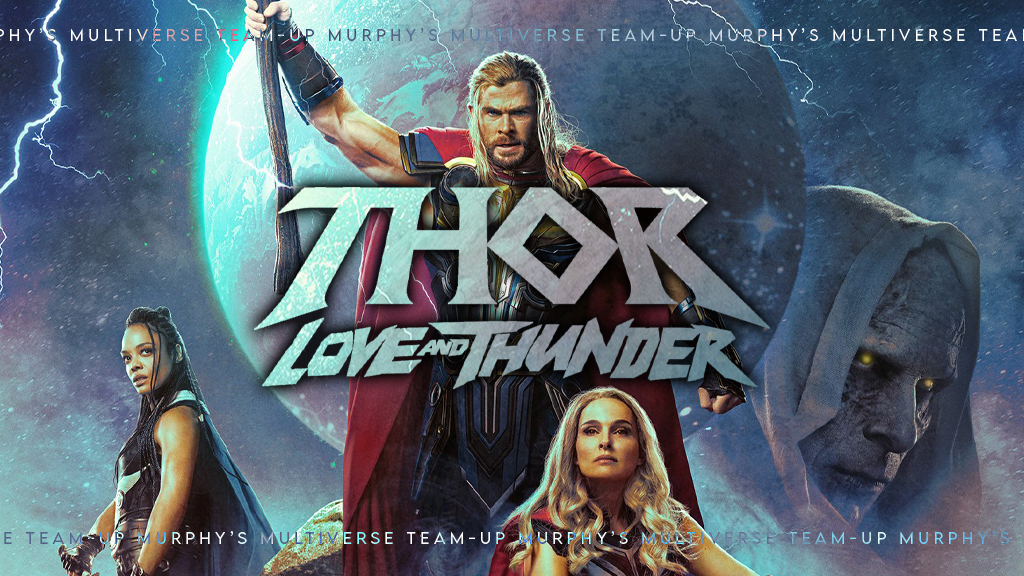
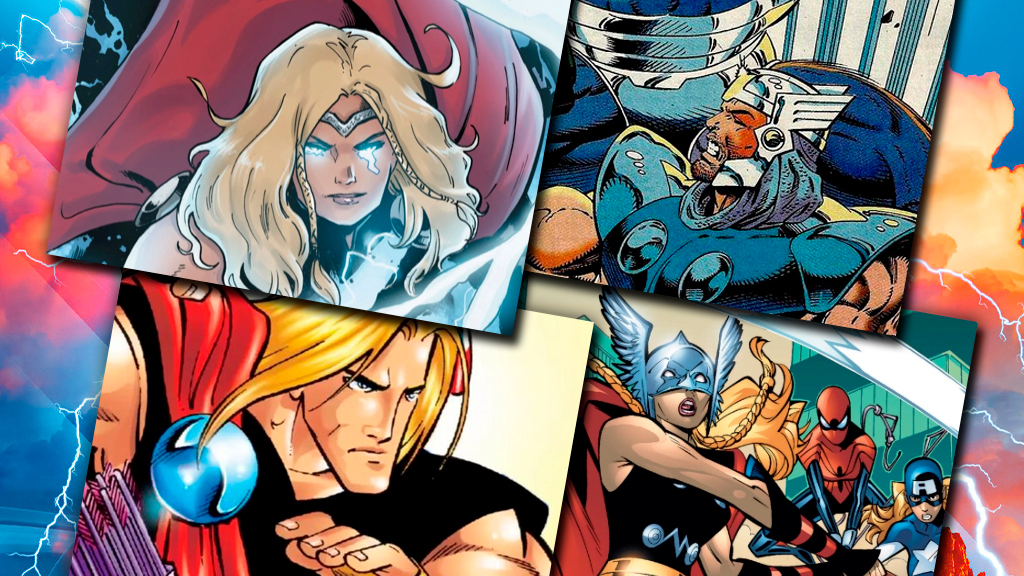
    Anyone who’s seen a Thor movie knows Chris Hemsworth is a daddy, but only those who’ve seen Thor: Love and Thunder know his character is now too. The latest installment in the Marvel Cinematic Universe ended with the God of Thunder taking on a little more responsibility than he’s used to, adopting the daughter of his deceased foe Gorr the God Butcher and stepping into the role of father. While this might have been a shocking turn of events for global audiences, it’s actually not the first time Thor has been depicted raising a child. In fact, it’s happened a few times in the comics, and the concept has even made it to animation in the past. Follow along as we at Murphy’s Multiverse take you on a trip down memory lane, discussing every time the Odinson has ever been a Thorfather.

    Torunn Thorsdóttir (Earth-555326)

    When Next Avengers: Heroes of Tomorrow went directly to home video in 2008, a lot of fans missed out on a pretty charming-and creative-animated adventure. Set in a future where Ultron has slaughtered Earth’s Mightiest Heroes and taken over the planet, Next Avengers follows the teenage children of the original team as they emerge from hiding and go on a journey to save the world. Among them is Torunn, voiced by Brenna O’Brien, the daughter of Thor and his wife, Lady Sif.

    In this timeline, Thor is actually one of the very few Avengers to have survived Ultron’s vicious attack. Unfortunately, he couldn’t stick around to keep helping Earth, as the sudden death of Odin forces him back to Asgard to replace his father as King. With duty calling, he chose to leave Torunn behind, hoping a childhood among mortals would teach her the same lessons of humility he had once learned in his own banishment. His plan works, and dodgy parenting tactics aside, Torunn grows to become a humble warrior who protects Midgard in the way her father did before her.

    Created by Christopher Yost, Greg Johnson, and Craig Kyle, this version of the Thorsdóttir possesses all the same abilities as her pops, but wields a giant enchanted longsword into battle as opposed to a hammer. She is also every bit as fierce and brash as Thor once was, always acting quickly to defend those she loves. A few alternate Torunns have popped up in the comics as well, but typically only as background characters on different Earths related to Next Avengers.

    Thena Thorsdóttir (Earth-982)

    Before Marvel came up with the Ultimate line of comics, there was another attempt made to reboot the mainstream continuity in an accessible way for new readers. Far less successful and not as well-remembered, stories told in the “MC2” timeline are set in a present where the first Marvel heroes have mostly aged out of costumed activity. In their stead are a new generation of Avengers and superpowered do-gooders, and while it took her a while to show up, another version of Thor’s daughter did eventually make her way to the universe.

    Created by Tom DeFalco, the same guy who launched the “MC2” brand with 1998’s Spider-Girl, and Ron Lim, Thena Thorsdóttir made her comic book debut in 2006’s Avengers Next #1. There, it’s revealed that Asgard has been destroyed by a very hungry Galactus, and that Thor and Loki’s children, Thena and Sylene, are among those who escaped the disaster. Unfortunately, Sylene disappeared in the chaos, and somebody has to go find her.

    In her brief arc, Thena is sent to Earth by her father and uncle with two goals in mind – find her lost cousin, and restore Thunderstrike’s powers so he can continue to guard Earth in the Asgardians’ absence. Initially believed to be an enemy, Thena fights the new Avengers and loses her magic hammer in the process. Of course, she later makes amends with the team and joins them to battle Ultron, and later Sylene, when she turns out to be the real threat (it is Loki’s kid, after all). If you’re worried about the lost hammer, don’t fret. Thena gets a fancy new titanium weapon designed by Jarvis for all her troubles.

    Brigid Thorsdóttir (Earth-20368)

    The most recent addition on this list, Brigid Thorsdóttir has only been around since Captain Marvel (Vol. 10) #23 released in 2020. Hailing from an alternate future where a lethal cataclysm scorched Earth and left it bathing in leftover radiation, Brigid stays in New York City working as a blacksmith to aid other survivors. She is initially unworthy of lifting her father’s hammer Mjolnir, which has been dormant since Thor lost his life in the world-ending blast, and is unable to use it until a time-traveling Carol Danvers arrives in 2052 A.D.. Pulled into conflict alongside Captain Marvel, Brigid finds herself able to summon Mjolnir just before she’s killed by the forces of the Enchantress. It’s implied that, even after Carol leaves her timeline, the Thorsdóttir will use the hammer to continue protecting what’s left of humanity.

    Brigid was created by Kelly Thompson and Lee Garbett, and unlike the previous Thorsdóttirs, whose time in the spotlight has pretty much ended, we may see more of her in the future. Fun fact: Brigid’s name comes from the Irish Goddess of Smithing, in reference to her unique skillset, and is not Norse at all. Nothing is known officially about her parentage, but it’s entirely possible Thor fell for a red-headed lass in this universe before things went south.

    Magni & Modi Thorson (Earth-616)

    The only known time Thor has had children in the main Earth-616 continuity. In accordance with Norse mythology, it’s revealed way back in 1980’s Thor #293 that the God of Thunder had two sons before the previous end of the Ragnarök cycle wiped them from existence. A story from Roy Thomas and Keith Pollard explains that Magni and Modi Thorson, based on the actual Norse deities, sacrificed themselves to bring back Odin so he could rebuild Asgard, father Thor once more, and start the Ragnarök cycle anew. Not much else is known about the brothers aside from this, but it can be assumed most of their whole deal would be the same as it was in actual mythology. If that’s the case, then their mother would be a giantess named Jarnsaxa.

    Woden Thorson (Earth-691)

    The Guardians of the Galaxy may be household names today, but in 1993, they were still just little-known characters living in an alternate 31st Century timeline. In that universe, Thor and Sif had a son named Woden, who was created by Michael Gallagher and Dale Eaglesham for an appearance in Guardians of the Galaxy #42. Described as a brooding bully, Woden grew up mostly without a father figure, as Thor found himself unable to give up a life of adventure for the role of dad. As a result, Woden had a troubled upbringing, with only his mother Sif around to help where she could. Eventually, Thor would be made to stay in Asgard by Odin, but his resentment of the situation would lead to his becoming an alcoholic and Woden leaving home as a bitter soul.

    Years later, Woden would return to action in order to stop his uncle Loki and an army of Inhumans from tearing Asgard to the ground. With a bloated Thor now unworthy to wield Mjolnir, a disgruntled but worthy Woden would pick up the hammer and team with the Guardians and his grandfather Odin to end Loki’s latest assault on the Gods. Following the battle, Woden takes up his father’s once-righteous quest to protect Asgard as it’s golden son, even teaming with Heimdall later on to fend off a dangerous creature on the Bifrost Bridge.

    Magni Thorson (Earth-3515)

    Originating in a short arc titled Thor: The Reigning (which plays out in Thor (Vol. 2) #67-69), this reality continues the trend of Thor being a shockingly bad dad. In a story created by Dan Jurgens and Scot Eaton, the Odinson makes the decision to merge Asgard with New York City, creating a version of New Asgard that an organization called the Consortium of Nations deemed too dangerous to stick around. Their dramatic assault on New Asgard results in Thor slaughtering what’s left of his humanity and using his God power to forcibly take control of Earth, establishing his reign as “Lord Thor” and eventually crafting a variable paradise on Midgard. Two decades later, he would have a son with Amora, the Enchantress, and name him Magni.

    Magni is raised as the beloved and loyaly crown prince of New Asgard, adventuring throughout the Eight Realms and conquering enemies in the same way his father had done in his youth. However, once he reached adulthood, the Son of Thor would come to resent the brutal way in which the Asgardians treated humanity. A relationship with a mortal woman named Jordahl pushes him over the edge, and Magni ends up leading the charge against his father to restore decency to Asgard’s legacy. This act enables the Thorson to wield Mjolnir, an ability his pops lost after murdering innocents. After a bunch of violent shenanigans, Thor realizes the error of his ways and relents, fixing his own timeline and collaterally erasing Magni from ever being born.

    Modi Thorson (Earth-1610)

    Thor may not have done too much papa-ing in the mainstream Marvel universe, but he did have a rather unfortunate brush with fatherhood in the Ultimate timeline. Jeph Loeb and Frank Cho‘s Ultimate New Ultimates #5 introduces readers to Modi Thorson, the God of Thunder’s child born out of, well, nothing comfortable. In this reality, Thor makes his way to Valhalla to retrieve the lost soul of his lover Valkyrie, only to come face-to-face with the Goddess of Death, Hela. The villain cuts a deal with the Odinson – he can have Valkyrie back, but first he must bare Hela a child. Yeah, as previously stated, nothing comfortable.

    That child would quickly be discovered by his uncle (and sort of grandfather, but maybe don’t think about that too much) Loki, who brings Modi back to Asgard and reunites him with his father. Unfortunately, an unexpected assault on the realm causes Thor to lock Modi in “The Room Without Doors”, where he ages years in a matter of days, develops a hatred for his old man, and begins to resemble his uncle (grandfather). Upon escaping the room, Modi heads to Midgard and attempts to usher in a second American Civil War, partnering with Hydra to enact his complicated plan. Chronically terrible father Thor consequentially teams with Steve Rogers, who is President of the United States in this universe, to smite his own child and put an end to the chaos. The Ultimate timeline was messy, to say the least.

    Balder Blake (Earth-9811)

    What If…? #114, by Jay Faerber and Gregg Schigiel, explored a world where the heroes of Battleworld were never allowed to leave. There, they were forced to settle down and continue living their lives with whoever else had been unwillingly transported to the alternate dimension on which they defeated Doom and the Beyonder. Thor ended up pairing with the Enchantress, and together the two had a son named after Thor’s brother Balder. Each year on his birthday, Balder would attempt to life his father’s hammer Mjolnir, but consistently found himself to be unworthy.

    Though he would never be shown to pick up the weapon, an encounter with the villain Malefactor (son of Victor von Doom) revealed his friend Sarah Rogers could, and together they would stop the threat and return peace to their universe. After a time, the heroes of Earth-9811 found an opening to make their return to their original homeworld, but instead are stranded in a new timeline ruled by an army of Sentinels. True to his parentage, Balder commits to making the world his next home, and helps form a new team of Avengers alongside Sarah and the other superheroic teens from Battleworld.

    Woden Thorson/The Goddesses of Thunder (Earth-14412)

    This child of Thor is at the bottom of the list because, frankly, we know almost nothing about him. Conceived by the maestro Jason Aaron and Esad Ribic for their run on Thor: God of Thunder, a second variant of Woden Thorson has been mentioned more than once but never shown. In this universe, Thor would eventually become King of Asgard and the All-Father, living a complex life that would see him spend time as both a Living Planet and an enforcer for Omnipotence City’s Ministry of Inter-Deity Justice. Along the way, the God of Thunder fathers a child with a Frost Giant general called She-Blizzard (which is awesome). Their half-Asgardian, half-Frost Giant son would apparently grow up to have three children of his own – daughters Frigg, Atli, and Ellisiv.

    While Woden never actually shows his face in the comics, his daughters do. The grandchildren of Thor aid him and his past selves in the fight against Gorr the God Butcher. Each of the trio are taken as slaves by Gorr and forced to help him build his Godbomb contraption, until they are rescued by their grandfather’s younger self and freed to do some damage of their own. Following the Gorr conflict, all three Wodendóttirs return to Asgard and help Thor fend off Galactus and a variety of other threats to their kingdom. The Goddesses of Thunder would ultimately become players in 2015’s Secret Wars, before they form a new team of Avengers on their version of Midgard.

  • ‘Thor: Love and Thunder’: The Good, The Bad, The Ugly

    ‘Thor: Love and Thunder’: The Good, The Bad, The Ugly

    There’s a lot of riding on Thor: Love and Thunder as the Marvel Cinematic Universe’s first fourth outing of a solo franchise. As successful as the MCU is, the Thor films have always struggled to reach the same acclaim as their counterparts. While Captain America saw a complete reinvention by the second film, it took Thor a third film for the character to get a proper second wind. And in a metaseries that’s keener on introducing new franchises and ending legacy ones, it’s a blessing to get a fourth chance at continued redemption. Sadly, even this late into the series, Love and Thunder fumbles more than it scores thanks to director Taika Waititi’s impulsive comedic habits and narrative ideas that furiously clash with one another. The result is a film with an unbalanced dose of good, bad, and ugly.

    THE GOOD

    For all of his blindspots crafting this film, Waititi once more illustrates his impressive grasp on characters. Love and Thunder has its fair share of endearing goofballs, hopeless romantics, and tragic sinners. Even as the story fails to sustain Waititi’s wacky instincts, his characters cut through the noise. Christian Bale’s Gorr, the latest addition to the Thor mythos, is a zealot devoted to ending the reign of the gods. Bale carries the entirety of Gorr’s arc on his shoulders even as his scattershot presence in the film disservices the character’s arc. A performance epitomized in the character’s redemptive moments in the film’s climax. Gorr doesn’t quite reach the tension and dread wrought by his counterpart on the pages of Jason Aaron’s comic but it’s a role that salvages a fledgling film.

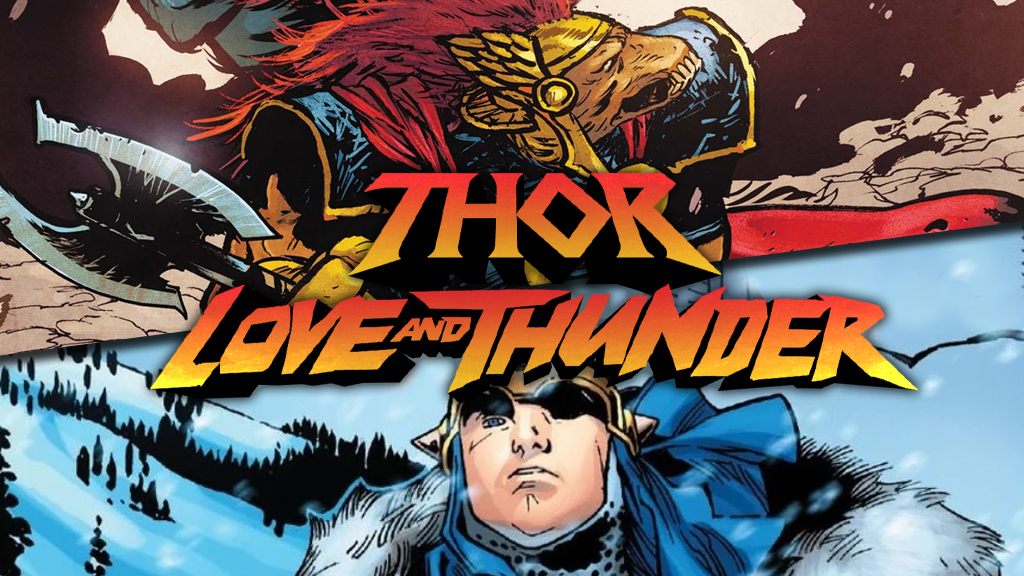
    Like Ragnarok before it, Love and Thunder also has the privilege of being a film populated by bizarre visuals. From the opening planet with the Guardians and the muppet-looking Mad Max bandits to the monochromatic battle with Gorr, there’s a lot of eye candy in the film. Not the least of which are the array of costumes the film showcases. Thor alone has multiple wardrobe changes spanning eras of comic book runs. That Taika Waititi has him wear the maximalist gold helmet from the 90s and the Thunderstrike outfit in a single movie shows a commitment to making Thor the most stylish Avenger yet.

    Powers in the MCU are often ill-defined and the full range of Thor’s abilities are no exception. So in a surprising turn during the film’s third act, Thor bestows a portion of his presumed Odinforce powers to a battalion of children. The result is a roaring, somewhat cheesy yet fist-pumping set piece that sees Gorr’s shadow monsters decimated by children. In a film that desperately needed a pick-me-up from the film’s trudging plot, a sequence like this is a win for the film.

    THE BAD

    Love and Thunder‘s fall from grace stems from a haphazard narrative where character development is abridged, pieces of the story are omitted, and the overall plot is contrived. For example, a B-plot about kidnapped Asgardian children takes place in order for the film to have a ticking clock with some semblance of stakes. It may pay off nicely in the end but the story that gets to it is messy.

    Waititi eschews much of Aaron’s iron-clad blueprint for Gorr, a killer hellbent on personally slaying gods across eons, to service a father simply seeking Eternity to wish them away in a bloodless solution. A huge swing by any Marvel metric but one that spirals outward to an array of contrivances which includes a wasted set in Omnipotence City, home to all the gods. This bloodless endgame for a villain is a unique one but for a character whose moniker is the God Butcher, it’s a regretful choice considering how there’s minimal god butchering in the film. Furthermore, an argument can be made that the Eternity subplot and the Omnipotence City set piece overlap have overlapped. Imagine a sequence where Gorr destroys Omnipotence City and its gods in an attempt to find Eternity’s door.

    There’s also an issue with its runtime. A handful of minutes are devoted to inane comedic sequences that overstay their welcome. A dull rehash of Thor: Ragnarok’s theater gag goes on for nearly 3 minutes. Russell Crowe’s scenes as Zeus is a distended mess of a comedy routine. It certainly doesn’t help that most of the jokes don’t land. An egregious example is a dying Sif being the butt of a joke about Valhalla. Meanwhile, Jane Foster’s battle with cancer is barely explored and her crucial transformation into Thor is kept off-screen. The same can be said for Gorr’s actions as the God Butcher; the movie keeps insisting that he slays gods but never shows it. Runtime should never preemptively define a film’s quality but a post-mortem of Love and Thunder shows how much extra screen time it could have used. 

    THE UGLY 

    Jane Foster can’t seem to catch a break even as she achieves godhood. Love and Thunder may be a well-meaning attempt to rectify the first two Thor films’ crime of demoting Oscar-winner Natalie Portman into a soulless love interest but it goes through the same pitfalls as its predecessors. Whereas Aaron’s comic proved Foster worthy of Mjolnir’s might by virtue of her own will and bravery in fighting cancer, in Love and Thunder, Jane is deemed worthy thanks to… Thor’s love for her. Even as she becomes the epicenter of the film’s best action sequences, the script doesn’t give the character the space to reckon with her newfound purpose. The worst comes when she succumbs to her cancer in order for Thor to have his climactic epiphany on life. Foster’s arc is indebted to Thor and her conclusion is to service Thor. 

    Gorr is similar to Thanos in a lot of ways. Both are victims of circumstances beyond their control. Both have villainous duties they deem as righteous. Both have a sliver of humanity beneath all their menace. Yet what separates Thanos from Gorr is that Thanos’ essence is aptly examined in Infinity War while Love and Thunder does the minimum effort in reckoning with Gorr’s agenda. For all the gods and divine characters that appear, Waititi never examines the themes most relevant and obvious to his story: godhood, prayer, faith, devotion, and worthiness. The apathy to such touchstones is what ultimately robs the film from having a lasting weight that the MCU has had in strides. Most of the gods in the film are presented as one-dimensional jackasses, signifying Waititi’s indifference in engaging with their POV and mostly proving Gorr’s point. And because the film doesn’t do anything to thematically challenge Gorr until the very end, the core of the film feels weightless. 

  • ‘Thor: Love and Thunder’ Director on How They Made Natalie Portman Taller With Movie Magic

    ‘Thor: Love and Thunder’ Director on How They Made Natalie Portman Taller With Movie Magic

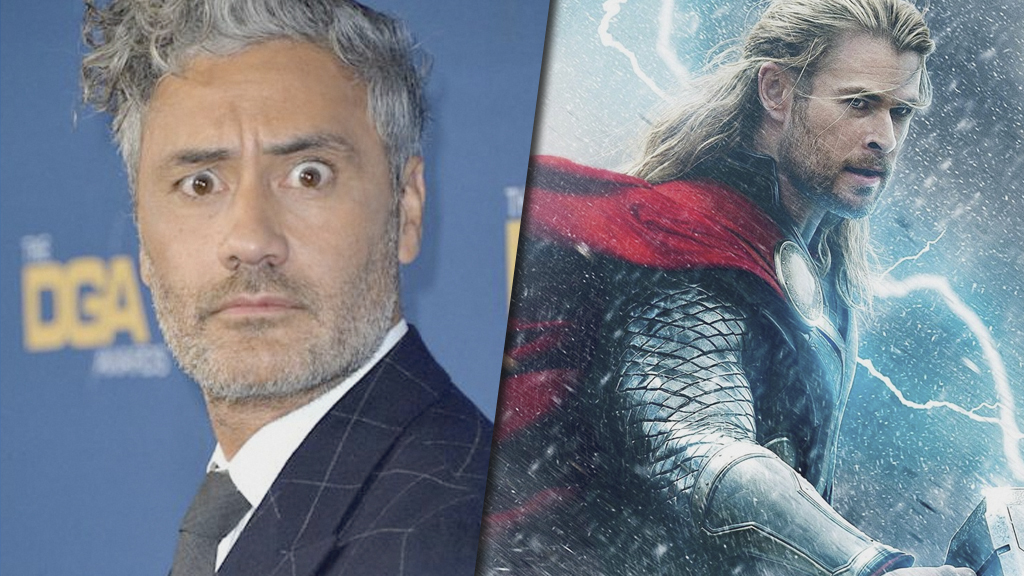
    Most discussions surrounding Marvel Studio’s films have been seemingly hyperfocused on CG ignoring most of the other work that goes into these projects. If you paid close attention, you’ll notice that Natalie Portman has grown a bit whenever she transforms into Mighty Thor. Well, it turns out that they used some movie magic to make her taller. In an interview with Insider, Taika Waititi revealed just how they accomplished that very feat.

    As it turns out, all they had to do was build a small deck for her to stand on. So, while everyone else is walking, she’s walking alongside them on a deck of some kind. It seems the challenge they faced was that Chris Hemsworth and Tessa Thompson had to walk alongside him. So, it seemingly brought a few challenges of its own.

    We built a whole bunch of decking around the set. First we would block out the scene — mark out where the actors have to go so the crew knows the whole layout — and once we did that we build an elevated platform that was 4 feet high from the floor that she would walk on. But we also had to leave room so Chris and Tessa could walk around at regular height. It was a weird maze. But it worked.

    Taika Waititi

    It’s always fun to get a little look behind the scenes and hints at how exactly they accomplish these things. Robert Downey Jr. also used to wear higher heels in his shoes to seem taller on camera. So, it’s not the first time they pulled off something like this. It’s also great that they added this detail to highlight how she changes through the powers of Thor granted to her through Mjolnir. Sometimes it’s the small details that add that extra attention from the production team.

    Source: Insider

  • Taika Waititi Would be Open to Return for a ‘Thor: Love and Thunder’ Sequel

    Taika Waititi Would be Open to Return for a ‘Thor: Love and Thunder’ Sequel

    Thor: Love and Thunder is certailny a surprisingly divisive film, as Taika Waititi brought his own humor to the latest Marvel Cinematic Universe entry. As the internet is ripping itself apart over its quality and the implications of recent hints regarding the VFX industry, the director sat down with Insider to discuss his future with the franchise. In it, he highlighted that Chris Hemsworth is returning as Thor while also hinting that he’s certainly open to returning for a fifth Thor film.

    Waititi does confirm that he wasn’t aware of Hemsworth returning for future entries and it seems that the “Thor Will Return” tag was something added at a later point. It’s always unclear just how much insight the directors have on sequel plans.

    Well, guess what? That was a surprise to me, too. I’m not joking. I saw it in the theater and I was like, “Oh, shit. Really?” Even Chris was like, “What?” But, of course he’ll be back. He’s the best character. I mean, I may be a little biased, but he’s the most fun to watch

    Taika Waititi

    The big question however is if we’ll not only see a fifth Thor entry but also if Waititi is open to returning. There’s been quite the backlash as of late in regards to the MCU entry not performing as some “expect” from the franchise, and the film has faced some harsh criticism. The big aspect of him returning however is only if Chris Hemsworth is also down to make another film.

    Now, I don’t know what would be next. I would definitely do one, but only if Chris did it. But it would need to be something surprising and unexpected for me to want to do it. Like what would be the new take? The battles and all the fighting is fine, but I would want something that feels unexpected when it comes to the story. Like making just a $5 million movie with no fighting at all, just Thor on a road trip. Like “Nebraska.”

    Taika Waititi

    Given Thor has dabbled in space and on Earth, there are quite a few stories they could tackle. While personally exploring the darker storylines within the Norse mythology would be a preferred direction, there are quite a few stories still worth pulling from to explore just what exactly the future has in store for the franchise.

    Source: Insider

  • From Page to Screen: Gorr the God Butcher

    From Page to Screen: Gorr the God Butcher

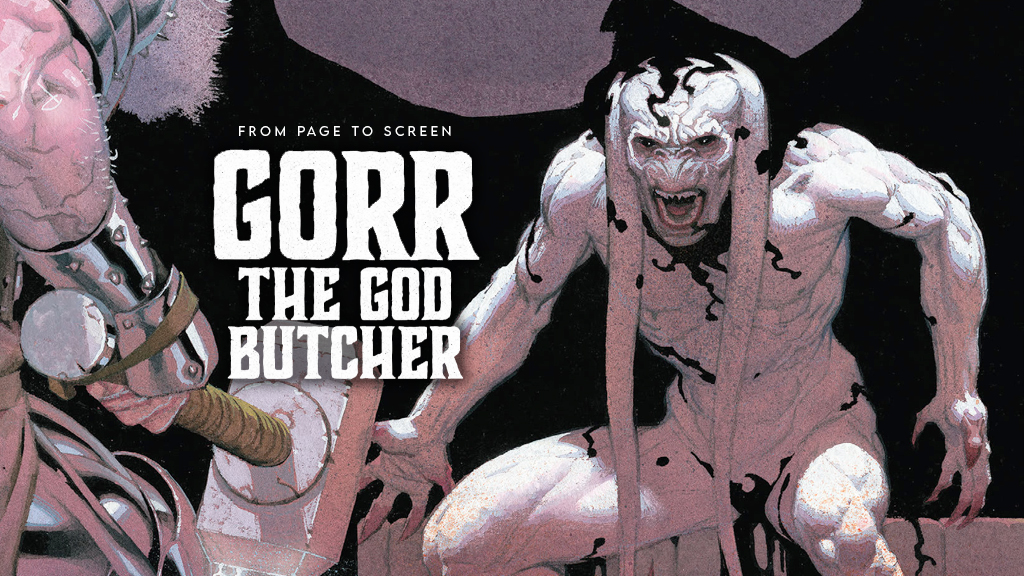
    All Gods must die.” These are words uttered by the horrifying Gorr in both Thor: Love and Thunder and in the world of Marvel comics. The character, played by Christian Bale in his Marvel Cinematic Universe debut, was created by Jason Aaron and Esad Ribic for 2013’s Thor: God of Thunder run and has since become a fan-favorite member of Thor’s extensive rogues’ gallery. Known as the God Butcher, the villain’s main objective is to wipe all living deities out of existence. This remains his goal in the MCU, an adaptation that actually manages to match up quite well with its iconic source material. Although, very few things can ever be exactly the same. Join us as we take a look at Gorr’s transition from page to screen, exploring what the MCU borrowed accurately from the comics and what it decided to change.

    Design

    Let’s first address the elephant in the room. Gorr is still pretty scary in Thor: Love and Thunder, but his design is a far cry from the look comic book readers grew accustomed to. Christian Bale‘s antagonist is still chalk white, but he’s not nearly as undressed as the original model. The MCU puts Gorr in a flowing white robe in place of the skin-tight black speedo look the God Butcher rocks in the 616. Both versions of Gorr wear an ominous hood, but the colors are different for each one. Comic Gorr dons black, in contrast to his skin, while MCU Gorr wears more white, perhaps as a means of making him appear sort of nude from afar. Lastly, Bale‘s Gorr has a fairly humanoid head and body, doing away with the comic’s more alien, tentacled monster.

    Origin

    Thor: God of Thunder #6 (2012)

    Gorr has one of the more tragic origins of any Marvel villain, but of course, that may have been a requirement to explain why his desires are so extreme. In both the comics and the MCU, Gorr’s hatred of the Gods stems from the death of his loved ones. It’s just that, in Thor: Love and Thunder, the details are simplified for the sake of streamlining the story. Aaron‘s original books had Gorr losing his mother, his mate, and his son, all succumbing to the barren conditions they were subject to living in on their alien planet. Taika Waititi‘s version of this is incredibly similar, only on film, Gorr is only shown losing his child. There are no other relatives mentioned, and Gorr’s son Agar is replaced by a daughter mostly referred to as “Love”. That being said, MCU Gorr does still lose his daughter to the intense drought on his unnamed homeworld, just like his illustrated inspiration.

    After Agar breathes his last breath in the 616, Gorr comes across two gods duking it out in the lifeless environment he is barely surviving. One a god in golden armor, and the other a god of pitch black. The duo severely injure each other in battle, with the golden god falling at Gorr’s feet and requesting his help. Enraged by the fact no god had ever helped him, Gorr instead picks up the weapon of Knull (the aforementioned dark being, more on that later) and slays the golden god before him. Embued with new, lethal abilities by this weapon, called All-Black the Necrosword, Gorr vows to take revenge upon all gods and takes off into the unknown to begin his new journey in earnest.

    Thor: God of Thunder #6 (2012)

    This general concept of Gorr finding two gods is adapted for the MCU, but it doesn’t play out exactly the same. The live-action version of Gorr does not actually see two gods fighting to the death. Instead, he stumbles across an Oasis-like patch of greenery inhabited by the golden god of Light he had prayed to for his daughter’s safety. Initially relieved, believing he has finally found mercy, Gorr is shell-shocked to discover that the golden god is an arrogant, vain, gluttonous fool with no regard for the mortals he is supposed to protect. After insulting Gorr’s faith and family, the golden god reveals he has just killed a being corrupted by the Necrosword, gesturing to an all-black corpse on the ground. Enraged, Gorr renounces his devotion and uses the Necrosword to decapitate the god of Light, before making his famous vow and embracing his newfound powers. Many of the beats are the same as in the comic, it’s just adjusted slightly to fit Waititi‘s vision for the character.

    Abilities

    Thor: God of Thunder #2 (2012)

    Gorr’s abilities were going to have to change a little bit for the MCU. In the comics, the Necrosword is created by Knull (told you we’d get back to it), who is the progenitor of the Klyntar race and the black god-figure seen by Gorr in battle. For the uninitiated, “Klyntar” is the scientific term for “alien symbiotes”. The same symbiotes Spider-Man can never seem to stop running into, and the same symbiotes whose film rights are still firmly owned by Sony. The 616 All-Black operates using symbiote-like power, allowing its user to form large black tendrils and gooey black wings among other constructs. It also grants an accelerated healing factor and enhanced durability, and assists Gorr in creating a small army of shadow monsters to aid him in accomplishing his goals.

    Thor: God of Thunder #2 (2012)

    The MCU’s take on the Necrosword is very similar, but it drops all connections to the Klyntar. Gorr is still able to summon creatures and strange black tendrils, but everything is related to a shadow world instead of oozing symbiotic material. The Necrosword also still has the unique ability to slay any god and continues to grant Bale‘s Gorr with enhanced capabilities. One major difference is that the live-action Gorr does not sprout wings to travel. Instead, the sword seemingly allows him to travel via shadow, disappearing and reappearing in darkness as he pleases.

    Plot

    Both versions of Gorr begin their quest by quietly slaughtering pantheons of “lower-level” gods across multiple planets. There’s even a shot-for-shot recreation of the death of Falligar, the large animal-like god that Thor finds dead next to a wounded Sif in the movie. They both also have the same endgame – using a MacGuffin to wipe out the rest of the gods in one fell swoop. 616 Gorr uses an army of kidnapped god-slaves to create the “Godbomb”, which when detonated would purge the universe of all its deities. In the MCU, however, he’s looking for Stormbreaker as a means of getting to Eternity, the wish-granting higher power he could use to magically make all gods pop out of reality.

    Comic book Gorr uses a lot of timey wimey shenanigans to carry out his plot, but the movie adaptation gets rid of all that to make things less complicated. Bale’s Gorr simply kidnaps the children of the gods to lure Thor and his valuable weapon directly to him. Both Gorrs, however, use an odd, colorless planet as their base of operations. In Aaron’s books, it’s the Black World while in Waititi‘s film, it’s a place known as the Shadow World. Close, but not exactly the same.

    Death

    Thor: God of Thunder #11 (2013)

    Neither Gorr makes it out of their initial story alive, which is maybe in the universe’s best interest. MCU Gorr gets the better end of the deal, though, getting a touching reunion with his daughter before entering the final frontier. The final act of Love and Thunder sees Thor and Jane Foster convincing Gorr to use his wish to bring his child back instead of killing all gods, which enables him to give her a tearful goodbye before the corruption of the Necrosword ultimately kills him. In the comics, Gorr also sees his child one last time before death, only there it’s an evil construct of the Necrosword that berates him for the path he’s gone down. Not quite as cute.

    616 Gorr is also not killed by any sort of infection and is actually decapitated by the combined efforts of three different Thors from across the Marvel timeline. Thor: Love and Thunder manages to replicate this with a clever plot twist, where Thor temporarily passes his power to the group of kidnapped children he’s trying to save. This results in Gorr and his army having to deal with “three Thors” in the same way his comic counterpart did; Thor, Mighty Thor, and the combined force of all the Kid Thors.

    Thor: Love and Thunder is now in theaters.

  • Murphy’s Team-Up Volume 22: Reviewing ‘Thor: Love and Thunder’

    Murphy’s Team-Up Volume 22: Reviewing ‘Thor: Love and Thunder’

    João Pinto

    At the end of the day, while featuring a few outstanding elements well worthy of praise, Thor: Love and Thunder doesn’t quite deliver. Going beyond all the talk about wonky CGI and overuse of StageCraft technology (that honestly isn’t an issue at all), the main problems seem to have to do with both the plot and script, in terms of pacing and tone-specific verisimilitude. While understanding that this is a movie about space gods, space goats, and space dolphins you still want it to be engrossing and to make sense, even if only within its own specific set of rules. Also, the fact that the movie shied away from truly exploring what should have been at its core (Gorr and Godhood) in a more in-depth way comes off as a disservice to the comic story arc it loosely adapted.

    There seems to be a lot of praise when referring to Thor: Love and Thunder as being very comic-booky mostly in the sense that it doesn’t take itself that seriously. That, in and of itself is not a bad thing, but it certainly doesn’t feel like the right approach when addressing the God Butcher storyline. Much like we got to see a different side of Thor following Ragnarok in Avengers: Infinity War (due to the more somber nature of the storyline) by choosing to make Gorr a central piece of Love and Thunder I’m not entirely convinced that the tone made sense. Jason Aaron‘s original Thor run eventually evolves into a more light-hearted tone (in my opinion the shift from Esad Ribic‘s art to Russell Dauterman‘s sort of exemplifies that) but a feature film adaptation of its beginning, the first arcs featuring Gorr, certainly deserved a more ominous approach in order to sell what made it one of the truly remarkable Thor storylines.

    Not only does the tone feel a bit off but by doubling down on gags that already worked and had their time in Thor: Ragnarok comes off as lazy and downright dull at times, with the new Asgardian Theater scene being a prime example of that. Some other running jokes felt flat (looking at you sulking Stormbreaker) and remarkably little of that traditional Waititi sense of humor, clever wording, and comic timing felt fresh. While Ragnarok was mostly set on Asgard and Sakaar making Waititi‘s bonkers take have an otherworldly setting that meshed well together, the Love and Thunder action taking place in a more earthly New Asgard felt a bit cosplay-y, maybe explaining why the Omnipotent City sequence (a location that deserved a bigger spotlight and further exploration) worked a bit better with the established tone of the movie.

    The fast pace that allows us to get straight into the action is, again, something that while not being a bad thing should really be used according to the specific situation. In other projects that seemed like the right approach. Again going back to Infinity War, everything started moving hastily since the main players’ motivations had been set up in previous features and there wasn’t really a need for a large amount of setup. But in Thor: Love and Thunder, regarding Gorr but especially regarding Jane Foster’s transformation into the Mighty Thor, everything felt rushed in a way that took some of the emotional punch out of the journey both characters went on. Jane Foster deserved to have her initial Mighty Thor transformation on screen, even if the comics themselves do not show it. But while the comics thrived on the mystery behind the character, as who was holding the hammer wasn’t revealed until later, Thor: Love and Thunder made that pretty clear from the moment the movie was announced, making a similar delayed reveal pointless and honestly a bit anti-climatic.

    But not all was lost to the “bigger and louder and more bombastic” version or Ragnarok Waititi sold us on, as there are some hilarious gems spread out through the script (“Maybe your arm is in Valhalla!”) as well as being introduced to, in my opinion, the most obnoxious but also the more hilarious running joke on any Marvel Studios movie: Toothgnasher and Toothgrinder.

    All in all, it’s hard not to wish that such compelling story arcs featuring Gorr and The Mighty Thor could have been given a bit more room to truly live up to their potential. What could have been an amazing Thor sequel, given the cast and characters, and especially following the tremendous success of the previous installment that reinvigorated the franchise, instead takes us back to pre-Ragnarok levels of interest in what the future might have in store for the character. Thor: Love and Thunder while aiming at being a Thor: Ragnarok 2.0 but doesn’t manage to go beyond a meager 0.5.

    Or perhaps a 0.6. Because of the goats.

    Mary Maerz

    I liked it a lot more the second time I watched it. I’m a big fan of Taika Waititi’s vibe and the movie’s general goofy tone. Not every joke landed for me, but I will survive. I also love everything colorful and visually interesting so it was a good time for that. I’m not the VFX police, and I don’t think a movie that has Bao the god of dumplings in it needs those people in its life, but the tone of Love and Thunder is bold and wacky, so it really doesn’t need to look like an Avatar sequel. It was fun, and it had unexpected heart in the ending. It was the first MCU film I haven’t spoiled for myself in many years, and I am glad I didn’t.

    That being said, and please don’t murder me, I think it was…too short. Gorr was a letdown for me on the first viewing. Once I accepted that into my heart, I could enjoy the second round more. But he felt underdeveloped, both in terms of character and actual villainy. The guy didn’t butcher gods. But his underlying motivation, conviction, and the critical thinking that comes along with it could have used some extra time. He felt like a hypothetical threat the whole movie rather than a real one. Bale is great though; without his performance, Gorr would have been one of the most forgettable villains in the MCU for me. I also wish Jane’s story got some more time. Her journey was abrupt and abbreviated. It makes sense in terms of her role in the Thor franchise, but the story itself deserved its own solo project so it felt disproportionate.

    Charles Murphy

    In 2017, Taika Waititi made a Marvel Studios movie. Thor: Ragnarok breathed new life into the character by undoing everything that had been done with him before. In 2022, Marvel Studios made a Taika Waititi movie. Thor: Love and Thunder, for better or for worse, was Waititi fully unleashed. And, unfortunately, it seems that Waititi took all the wrong lessons from the success of Ragnarok and spent too much time in Love and Thunder giving fans more of the same from Ragnarok while not spending enough time on the things that could have made this movie truly great. Love and Thunder isn’t a bad movie, but unlike its immediate predecessor in the Thor franchise, it’s far too forgettable and a bit disappointing.

    The uneven nature of the film is summed up pretty well by what the audience gets (and doesn’t get) in the first 25 minutes or so of the film. The cold open introduces the film’s villain, Gorr, before he becomes the God Butcher, played wonderfully by Christian Bale. A tragic scene unfolds as Gorr’s daughter dies in his arms as Gorr’s god ignores his pleas. Summoned by the Necrosword, Gorr stumbles into an Eden-esque garden where the shiny gold god killed the dull black god that used to have the Necrosword, and then Gorr kills the shiny god with the evil weapon. Fairly quickly after that, one of the most balls-to-the-wall, insane action pieces in the history of Marvel Studios unfolds as Thor dispatches the evil bird people while also laying waste to the nice blue peoples’ planet.

    As amazing as Thor’s action scene is, I have to wonder why we weren’t treated to an equally amazing action scene in the cold open. Rather than have Gorr stumble into the aftermath of the battle between the gods, why didn’t we see it? And that question, “why didn’t we see it?”, is the core of the film’s issues. Allegedly based on Jason Aaron’s legendary run, this film did little to honor it. Instead of seeing Gorr butcher gods in the opening act, his acts are relegated to stills that pop up on a low-quality monitor. In fact, the audience is told about Gorr more than they get to see him be terrifying. Instead of seeing Jane Foster’s first transformation in New Asgard (a scene we KNOW they shot, by the way), we have to listen to Jane tell Thor about it. And the frustration only mounts because I can’t reasonably understand why the time wasn’t taken to allow the audience to see things that would have enriched the story. Was it so we could get the shitty breakup flashbacks?

    Magically, however, the mess coalesces into one of Marvel Studios’ ballsiest and best third acts. While the whole magic wish to kill gods isn’t really in line with the Gorr from the comics (he would never have cheated himself out of the pleasure of torturing and killing the gods personally), there are clear and high stakes as the final act begins. The final battle with Thor and Mighty Thor vs. Gorr is going to hold up well over time and the crazy idea to empower the kids worked better than it had any right to. And most importantly, Eternity looked GREAT. Thor has now lost pretty much everything he ever held dear to him and looks set to head in a totally different direction with Love at his side. And coming from the guy who hates post-credit scenes, the first one is an example of how they can still be done right.

    Ultimately, Thor: Love and Thunder will go down as a missed opportunity. Not a bad movie, but a cautionary tale for Marvel Studios. It’s hard to judge a movie on what it could or should have been, but this one had all the opportunity in the world to be great and ended up good.

    Anthony Canton III

    Thor: Love And Thunder is a movie if I were looking for a sports comparison I’d say it were Shaquille O’Neal. A dominant player; one of the best we’ve ever seen. A unique force that changed the game. Yet, we always wished he gave a little bit more. Let’s break it down. Portions of Jason Aaron’s God Of Thunder and The Mighty Thor were adapted to this movie. Was that done well? I’d say it wasn’t really done at all.

    When we hear about Gorr The God Butcher, we think of him torturing gods before he kills them. He kills one god. Not enough butchering. Christian Bale is excellent in the role with not enough screen time. Natalie Portman came back inspired as Jane here with a better energy. The action worked in ways that the story did not. I thoroughly enjoyed Russell Crowe’s comedic performance as Zeus. We did not get enough of Valkyrie. Hemsworth was solid. But again I needed more.

    Is this a Taika fatigue issue? Perhaps. Ragnarok is one of the greatest MCU films of all time. This one? Solid, but there wasn’t enough meat on the bone to really get to the levels it needed to. Thor: Love and Thunder, meet Shaquille O’Neal. 7 out of 10. Extra half point for the goats.

    Mister Anderson

    I loved the latest chapter of Thor for several reasons. The character development was great for several of the characters, but I’m most impressed with the newfound depth they gave Thor. His evolution from aloof and aimless to a purpose-driven empathetic hero made this story completely worthwhile. Jane’s turn as The Mighty Thor also brought a lot of emotion and strength to the narrative as well, making Thor challenge a lot of his past decisions and helping him learn, like Xavier teaches Doctor Strange, “Just because someone stumbles and loses their path, doesn’t mean they’re lost forever.” We’re reminded through the movie of Thor’s previous stumbles, but this story really seems to set the hero back on a path with purpose and meaning.

    Dalbin Osorio

    I’ll get this out of the way right out the gate: I liked it a lot. Chris Hemsworth is Thor, and he owns every role. Natalie Portman was dope, and I wish she would’ve taken his place. That takes me to my one gripe with the film: I wish the God Butcher would’ve butchered a few more Gods onscreen. Namely, I wish he would’ve killed Hemsworth’s Thor. This Phase has been about the passing of mantles, so to speak, and having Gorr kill Thor (and Zeus, which would then set Hercules on a path to revenge for who he thinks is responsible), and then having Mighty Thor be the one to convince him to bring his daughter back would’ve made for a much better movie.  Instead, we didn’t get much god killing, which kind of lessened Gorr’s appearance and a great performance by Christian Bale. It didn’t rise to Hela levels, but definitely another very good villain by Marvel. The two scenes at the end were both great, though, again, if you killed Thor, then I think the last scene hits different for people (in a good way). I give it a 7/10. Better than Black Widow and Eternals, for sure, but not as good as the cream of the crop in Phase 4 that was No Way Home, Shang-Chi, and Multiverse of Madness.

    Torbjorn Frazier

    For me, Thor: Love and Thunder has become ever-challenging to form a definitive opinion on. I certainly consider the film to be a net positive and an enjoyable watching experience, but also find a number of the dissenting opinions on Marvel Studios’ latest film to be at least understandable. A prime example of this notion is the comedy style of Taika Waititi: I greatly enjoyed a majority of the absurdist running gags, but understand those that felt it took away from further developing the fast-paced plot. Though my most overt qualm with the film comes from Christian Bale’s Gorr the God Butcher, who only butchers one god for the entire movie in his limited screen time (even one other god killing scene or montage could’ve rectified this).

    My issues with Gorr tie into what is my biggest issue with this film: a lack of definition on the severity of stakes our protagonists are dealing with. I for one have zero issue with the idea of smaller scale stories in the Marvel Cinematic Universe (I’m a defender of Ant-Man and The Wasp for this reason), but the more personal mission of saving the Asgardian children could’ve been better served as a separate project away from the high-stakes, esoteric mission of stopping Gorr from reaching Eternity and killing all the gods. Especially with the rapid-fire pacing (which for the record, I’m a fan of), I struggled to connect with the overall story of Love and Thunder more than I did with Waititi’s Thor: Ragnarok.

    Though I don’t want to just lay out my grievances without acknowledging the truly strong and interesting elements of this film. My personal MVP of the film is Natalie Portman, who gives a killer performance as the Mighty Thor and a Jane Foster who wants to be in the film she’s in. As well, Love and Thunder certainly leaves the Thor/Asgardian franchise and the Marvel Cinematic Universe at large with some compelling stories and status quo changes in its future. And even with my qualms, I remain appreciative of Marvel Studios being willing to take the larger creative swings in their recent projects as a means to tell different stories than before. I’d much rather view a film taking these types of swings than attempting to “play it safe” and lose a distinct creative vision.

  • ‘Thor: Love and Thunder’: Every Rumored Character Who Did NOT Appear

    ‘Thor: Love and Thunder’: Every Rumored Character Who Did NOT Appear

    Thor: Love and Thunder is another non-stop rollercoaster from director Taika Waititi, filled to the brim with colorful characters and thrilling moments. Unfortunately, like any good ride, there’s a limit to how many people can get on. Leading up to the film’s release, it felt like a countless number of names and faces were rumored to be making an appearance. Some of those personalities actually did squeak their way into the movie’s 120-minute runtime, like Jamie Alexander‘s long-lost Sif and Brett Goldstein‘s spanking new Hercules, but the film otherwise stuck to focusing on established leads from the previous entries. For the sake of humility, let’s take a look at some of the most heavily rumored characters that didn’t actually end up in Thor’s fourth solo adventure.

    Beta Ray Bill

    From the beginning, nearly every comic fan hoped Love and Thunder would be the place they finally saw Beta Ray Bill in the Marvel Cinematic Universe. The character is the perfect mix of weird and cool for a film written by Waititi, and a visual tease in Thor: Ragnarok meant the director definitely had Bill on the brain. At different points in time, everyone from Barbie star Ryan Gosling to the film’s actual villain Christian Bale were talked about as potential castings for the heroic Korbinite. Heck, even Beta Ray’s traditional weapon Stormbreaker has become a staple of Thor’s on-screen journey. Yet, the entirety of Love and Thunder comes and goes without so much as a mention of the intergalactic warrior. It might be for the best, considering how much is already going on in the movie, as long as Bill gets a shot at stardom somewhere down the line.

    The Grandmaster

    This one seemed all but confirmed until the film was actually released. In Thor: Ragnarok, Taika Waititi introduced the world to Jeff Goldblum‘s Grandmaster, an Elder of the Universe who used his less-than-iron fist to rule over the planet Sakaar and use its citizens for entertainment in gladiatorial combat. Though removed from power by the end of that project, the Grandmaster did survive all the way to the film’s end credits. Goldblum was never officially announced as returning to the role, but photos of the actor hanging out with Waititi and a bunch of the confirmed Love and Thunder cast led everyone to believe he’d be back. Alas, there’s no trace of the master manipulator in the fourthquel.

    Of note, however, is that Christian Bale did actually confirm in an interview with Screen Rant that he filmed scenes with Goldblum that were cut from the film’s finished product. This might imply Gorr would have killed the Grandmaster in an original cut of the movie, so perhaps him not showing up is better news for Goldblum than fans thought.

    Eitri, King of the Dwarves

    More or less the same scenario as Goldblum‘s Grandmaster. Months ago, Game of Thrones star Peter Dinklage teased during an interview with Empire Magazine that he would soon be back for another shot at Eitri, the King of the Dwarves, after debuting as the character in Avengers: Infinity War. Not only that, but a short while later IMDb listed Lane Friedman‘s job on the Love and Thunder production team as “Hair Stylist: Peter Dinklage.” It turns out, much like the Grandmaster before him, Eitri was intended to appear in a scene featuring Gorr the God Butcher, as revealed by Christian Bale himself in a recent interview. Whether or not this means Gorr was supposed to kill the downtrodden Dwarf remains a mystery, but it’s worth mentioning Gorr isn’t exactly known for letting deities off the hook. Either way, fans don’t have to worry, because Eitri isn’t in the movie and lives to see another day.

    Gamora

    It was never a secret that the Guardians of the Galaxy would be showing up in Thor: Love and Thunder. The last time audiences saw Thor, he was flying away with them on their ship, and the team of quirky characters featured prominently in the film’s early marketing. However, never shown among them was Zoe Saldana‘s Gamora, who died during the events of Avengers: Infinity War only to have an alternate version of herself from a different timeline appear and then run away in Avengers: Endgame. There was never a lot of evidence to back up the idea that she’d be with the team in Love and Thunder, but that didn’t stop the internet from speculating wildly that she’d at least cameo on a screen somewhere in the Guardians portion of the film. While she does get an indirect mention from Chris Pratt‘s Star-Lord during a crucial thematic moment, that’s about the extent of her involvement in the story.

    Loki

    Another rumor that never had much behind it was the cinematic return of Tom Hiddleston as Thor’s maybe-more-popular brother Loki. Ever since the character cheated death, again, to lead the Disney+ series Loki, the God of Mischief’s fans assumed he’d find a way to make his presence known in Thor: Love and Thunder. After all, Hiddleston played a large role in all three previous Thor films, and his baddie-turned-sympathetic anti-hero is central to the hero’s extensive mythology. The conversation about a potential Loki cameo revved back up after the actor stated in an interview with Total Film that he had no idea if he’d be in the movie or not, jokingly commenting that he wasn’t even “doing an Andrew Garfield.” Well, it looks like Hiddleston won’t have to wonder anymore, as Loki is definitely not in the film. His face, and name, make a few quick appearances via archival flashbacks and a comical tattoo, but it doesn’t seem any new footage was ever shot.

    Captain Marvel

    It would seem fans shouldn’t believe everything they hear. Rumors began to run rampant about a Carol Danvers appearance in Thor: Love and Thunder after online scoopers claimed there’d be a romance between her and Tessa Thompson‘s Valkyrie happening in the near future. There was even talk that Brie Larson had filmed additional scenes as her character during reshoots in Los Angeles. A comment made by Thompson during an interview with The Wrap pushed the rumor even further, with the fan-favorite actress mentioning the queerness of her Asgardian warrior would be further explored in the latest Marvel outing. Obviously, Danvers doesn’t even come close to popping up in Love and Thunder, even if Valkyrie’s bisexuality is addressed briefly. For those disappointed by this turn of events, the new rumor is that Valkyrie could turn up in The Marvels to keep the romantic ship alive. So, maybe there’s still hope?

    Throg

    At one point, word circulated that Thor: Love and Thunder would embrace the multiverse theme of Phase 4 and feature multiple variants of the titular character and his cohorts. It didn’t take long for the internet to assume this meant another live-action appearance for Throg, the amphibious God of Thunder made popular by memes and an often-talked about cameo in Loki. Interviews with creatives behind the aforementioned Disney+ series revealed that Throg originally had a greater presence in the show, which seemed proof enough for a lot of fans that the character, voiced by Chris Hemsworth, could hop his way onto the big screen. Lamentably, this was not the case, and the only other version of Thor in the movie was Natalie Portman‘s Mighty Thor. Although, that’s really not so bad, considering how great she turned out to be.

    Balder the Brave

    The forgotten brother of Thor and Loki. Balder the Brave, or Balder the Bro, as I like to call him, has been considered for almost every entry in the Thor franchise, but has yet to actually make the cut. When Christian Bale was initially cast in Love and Thunder, and it was still unknown who the thespian would be portraying, many fans jumped at the idea he would be the one to finally bring Balder to life. It’s been known for a while now that isn’t true, but nobody can be blamed for thinking Marvel might want to bring the Asgardian into the fold. Old concept art from Charlie Wen revealed Balder came close to making his MCU debut in both 2011’s Thor and 2013’s Thor: The Dark World, and Deadline’s Justin Kroll recently broke the news that Daniel Craig had once been tapped to play the character as a member of the Illuminati in Doctor Strange in the Multiverse of Madness. Sadly, the COVID-19 pandemic prevented that from coming to fruition, and Balder remains on the outskirts of cinematic notoriety.

    Lena Headey (as Unknown)

    This is the trickiest one of the bunch. Lena Headey, of Game of Thrones fame, spent a considerable amount of time in the rumor mill attached to Thor: Love and Thunder. After word began making the rounds on Twitter that she may be involved with the production, fans started piecing together via social media posts that the actress was staying in Australia at the same time the movie was filming. A rather recent bit of news, involving a lawsuit, finally confirmed that Headey was definitely set to join the MCU in Thor’s newest adventure, but for whatever reason, her part was cut and left out of the final product. It’s not known who the former Dredd star would have brought to life, considering the film leaves so little room for anything that’s not already there, but it’s likely she would have portrayed yet another God. It’s a shame she was removed from the film, but at least this leaves her open for a different role down the line.

    Source: Screen Geek, News, The Direct, Total Film, The Wrap, Screen Rant, CBR,

  • Former VFX Artist Shares Experience Working for Marvel Studios

    Former VFX Artist Shares Experience Working for Marvel Studios

    There have been many discussions made on Social Media in regards to Marvel’s use of CG. While some tend to drag it down for one reason or another, there’s been an overall industry issue at play for quite a few years now. One former VFX artist for Marvel Studios has opened up on the experience on Twitter.

    Druv Govil has shared his side of working on a Marvel TV series and how that experience also led to him leaving the industry. He calls the production house as a “horrible client” but also highlights that this is mostly due to their deep pockets that they support the industry with.

    https://twitter.com/dhruvgovil/status/1546256207219871745?s=21&t=T61Lp8NE3FTG9kj1wqDSQw

    We, of course, have no detailed insight into how exactly Marvel functions. Yet, there are instances that hint at them having the habit of changing elements shortly before release, which would naturally slam any industry.

    There will likely be people who had positive experiences as well, as we’ve seen in the past such as some statements. Everyone’s mileage can vary but there definitely is an industry problem with VFX agencies. We’re seeing many face issues throughout and might see more statements in the future.

    Stranger Things recently was highlighting how their VFX teams worked until even after the series released on the show. Only to push a tweet claiming that Vecna’s design is without CG. Cats’ production even re-released a version after hitting theaters with better effects.

    This issue is also sadly not unique to the VFX industry, as a rise in demand for cheaper and cost-effective services has become the norm in many others. The advertising industry also works on a sink-or-swim survival tactic with the biggest clients inquiring last second changes repeatedly. Internal management also plays a big role as works get dumped on the various team that have little to no say. We’ll have to see if this current movement will potentially be the point where the VFX industry unionizes.

    Source: Twitter

  • ‘Thor: Love and Thunder’ Pulls in $300M Worldwide, Third Highest Domestic Opening of 2022

    ‘Thor: Love and Thunder’ Pulls in $300M Worldwide, Third Highest Domestic Opening of 2022

    The numbers are finally in and it looks like even with what some deem mixed word-of-mouth, the film has already pulled in $300M worldwide. While the film is on the lower end of its predictions, the film pulled in $143M domestically, which is certainly shy of the $150M to $170M projections. In a way, it’s closer to Guardians of the Galaxy Vol. 2‘s release which is fitting given some of the discussions surrounding the latest entry. Still, the film has pulled in the third highest opening of the year just behind fellow Marvel release Doctor Strange in the Multiverse of Madness and Jurassic World: Dominion, which it was only $2M shy of passing it.

    As pointed out by Forbes Scott Mendelsohn, July releases aren’t as dominant as the pre-summer blockbuster releases and have showcased better legs. What is helping Marvel’s latest release is the fact that its only four-quadrant competition will be Black Adam in late October. While the smaller jump of 17% from Thor: Ragnarok isn’t their usual power push but the film wasn’t sold in the same way as the franchise changers like Captain America: Civil War and Multiverse of Madness.

    Even if it’s on the lower end of projections, closer to the conservative ones from Marvel and Disney, the big question is where does it head from here. A harsh drop in the second weekend has become a norm for the franchise, but if it does end up sticking around 60% like Spider-Man: Homecoming and Ant-Man and the Wasp could get it to $400M. Yet, that B+ CinemaScore is likely going to drag it down a bit as those films bounced back. Yet, the lack of any real competition outside of Bullet Train and still ongoing power players Minions 2 and Top Gun Maverick.

    At the moment, it does seem like the film will likely end domestically somewhere beyond $300M domestically. The film is also still showing a strong international release and won’t find its way to China and Russia, where the previous entry made around $135M. So, if the current film passes $715M worldwide it’ll still be a strong showing alongside other releases this year like No Time to Die ($774M) and The Batman ($770M). So the lowest bar to pass would be F9‘s $721M.

    Source: Forbes, Twitter

  • ‘Thor: Love and Thunder’s Production Budget Among Marvel Studios Highest

    ‘Thor: Love and Thunder’s Production Budget Among Marvel Studios Highest

    Currently, Thor: Love and Thunder is setting the box office ablaze and making its mark among the Marvel Cinematic Universe offerings. While not a critical darling, it does seem that audiences have enjoyed the film for the most part going by its 83% liked rating on Google and 81% Audience score on Rotten Tomatoes. It was once again a Marvel film that pulled in a B+ after Doctor Strange in the Multiverse of Madness and Eternals both landed in that category. Many have been pointing to a doom and gloom scenario for the future of the franchise.

    In the many discussions online in regards to the quality of the film’s overall effects work, Variety has revealed that the film’s budget has topped the previously assumed $200M and now stands at around $250M. While from a box office perspective, this merely adds weight to the project needing to at least hit $500M, which also doesn’t include the marketing costs. There’s no definite reason given why the production budget for this film ballooned up to this price mark but it should be noted that VFX isn’t the biggest part of the pie.

    Given that they’ve done reshoots on the film with some rather expensive cast, it wouldn’t be too surprising that they may have wanted to invest slightly more. It’s only speculation mind you, but it’s interesting if you consider Doctor Strange in the Multiverse of Madness is still reported with a $200M budget. There’s also the chance that the use of the Volume has skyrocketed due to the rising interest. It does put the film on the same level as Captain America: Civil War and Avengers.

    Yes, people will probably boggle down this to “why the VFX looks bad if that’s the budget” but there’s a lot we don’t know about how this production came together. Marvel films also have the added benefit of profiting off of merchandise sales that aren’t a key factor in its box office dominance. The bigger question remains if the current phase is still the aftermath of films being shot during COVID and that is a leading cause for many qualms people have; especially as it is something that’s affecting many films throughout the industry.

    Source: Variety