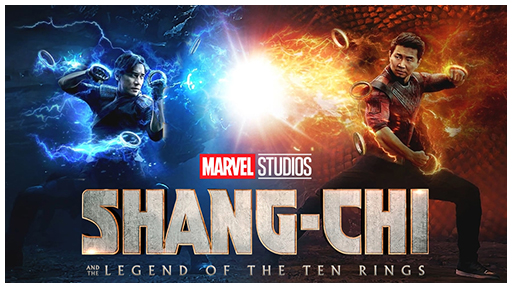
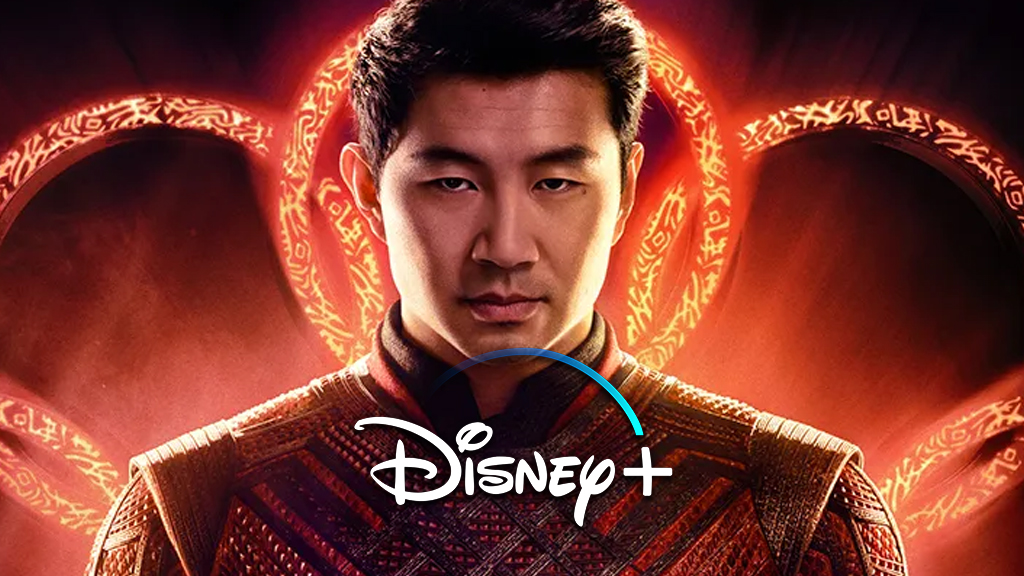
Marvel Studios’ Shang-Chi and the Legend of the Ten Rings has achieved a pandemic first.
After topping the box office for four weeks, Shang-Chi and the Legend of the Ten Rings has crossed $200 million at the domestic box office in its fifth week. The film officially crossed the mark on Thursday night, becoming the first film to achieve the milestone during the pandemic.
Since being in theaters exclusively, Shang-Chi has secured countless box office records, with the most recent being surpassing Black Widow ($183.4 million) as the biggest movie of the year stateside. Black Widow, of course, was released simultaneously in theaters and through Disney+ Premier Access; it would finish its theatrical run at $183.4 million domestically and $379 million worldwide.
As of right now, Shang-Chi is nearing $370 million at the global box office and may finally have some competition this weekend with the release of Venom: Let There be Carnage.
Marvel Studios Shang-Chi and The Legend of The Ten Rings has done better at the domestic box office than any film during the COVID-19 pandemic era; however, it’s yet to be released in many countries where theaters aren’t open, leaving fans waiting on a digital or home release. Shang-Chi was one of Disney’s first films to have a 45-day theatrical window, about half the time of the usual window, meaning fans wouldn’t have as long to wait and now we know exactly when the film will come available.
Shang-Chi and The Legend of The Ten Rings will make its digital debut on November 12th. This will include the film streaming for no additional charge on Disney Plus. It’s interesting timing as it’ll hit Disney Plus one week after their next big release, Eternals, bows exclusively in theaters, meaning the studio will generate some heavy buzz in November leading up to the November 24th streaming debut of their next Disney Plus series, Hawkeye. The month will end on November 30th with physical 4K, Blu-Ray and DVD copies hitting store shelves.
Both the physical and digital copies will come with a heavy load of extras including a gag reel, director’s commentary, 11 deleted scenes and a couple of features centering on Shang-Chi and Wenwu.
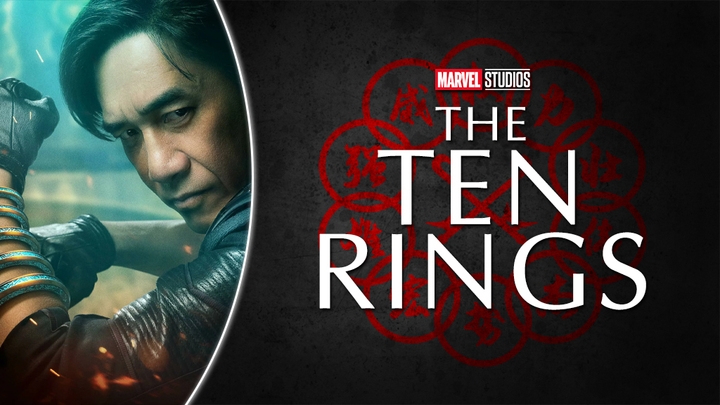
Shang-Chiwas one of Marvel Studios’ first attempts at a martial arts-inspired film. We got a lot of action and heart with the conflict between Shang-Chi and his father, Wenwu. As the leader of the Ten Rings, he had quite a reputation, but the story focused on the humanity behind his actions. He won’t win a medal for father of the year, but Tony Leung‘s performance made him one of the most memorable antagonists within the franchise. Sadly, it seemed like his time as part of the MCU was limited. Yet, a recent recording of the podcast They Call Us Bruce might’ve changed that.
Journalist Jeff Yang, who acted as a cultural consultant on Shang-Chi, used the opportunity to discuss the recent Marvel release. In the podcast, he discussed the film and added some nitpicks he had about the film. One rather curious statement might’ve raised some eyebrows regarding Leung‘s future with the franchise. In the podcast, he states that:
Given what they had in Tony Leung, I would have hoped that they would have made it a little more clear that he has other places to be in the Marvel Cinematic Universe. I’ll just leave it at that
Jeff Yang
It’s not definite confirmation, but the way he highlights that “he has other places to be” makes you wonder if we’ll see Leung‘s return at some point. His character did meet a tragic end during the final clash of the film, but the way he moved on could still leave the door open for his eventual return. Plus, there’s a lot we still don’t know about the Ten Rings that could get explored in future sequels or even spinoffs.
Of course, there’s the question if the actor is even interested in returning. There’s a chance that they may have changed their plans due to limited availability for a Western Hollywood franchise. Though in an interview with GQ, he did highlight his interest in Hollywood and the lack of a fitting role that kept him from joining any productions. As he now has the chance, he might have a larger role in the West moving forward. It would be a fun idea to give the secret organization its Disney+ series to explore its history and potential future within the MCU. Here’s hoping we might get a clearer picture once Disney+ Day arrives of what Marvel Studios has planned for the future.
Shang-Chi has been surprising many throughout its box office run. Not only did it surpass its earliest expectations by a mile, but it also continued to perform far beyond what people expected. It’s a great statement for the return of cinema movie-going and a showcase for Asian-American-led projects. Only a few days ago, the film became the highest-grossing domestic earner passing Black Widow‘s $196M. Predictions already had it at passing the other Marvel Studios giant and adding an additional $10M over the weekend. They were on the money, as it has now added another $13.2M over the weekend taking the top spot.
#ShangChi will become the 1st movie of 2021 to spend 4 weeks at #1! FRI #boxoffice was $3.6M, down 39% from last FRI. Wknd gross looks headed to about $13M for drop of 40% on 4th wknd. It beat #BlackWidow last night to be 2021 domestic champ, cume shd rise to $196M thru SUN.
As such, Shang-Chi and the Legends of the Ten Rings is only one of three Marvel Studios films to take the top spot four weeks in a row. It’s now joining the exclusive club alongside Black Panther and Guardians of the Galaxy. The film currently stands at $196.5M domestically in 24 days. Internationally, it has garnered §360M without opening in China. In a way, Venom: Let There Be Carnage’s delay helped the film get an additional weekend. Newcomer Dear Evan Hansen opened to only around $7.5M.
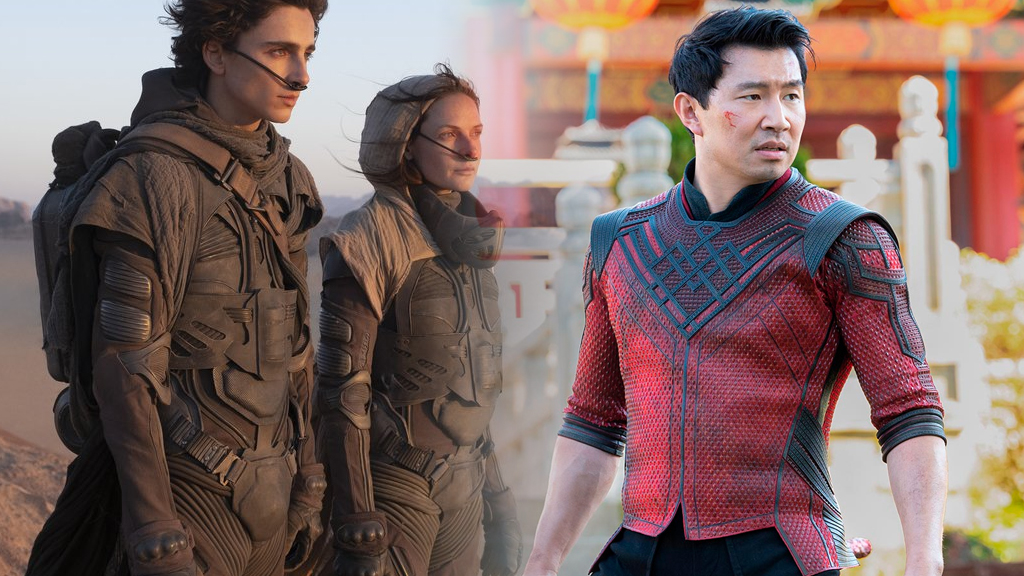
October is going to be tough competition with the Venom sequel, No Time to Die, Halloween Kills, and Dune. Predictions would put it at around $225 until 235M, which is ahead of other Marvel films like Ant-Man and the Wasp, Thor: The Dark World, and The Amazing Spider-Man 2. Its higher point could compete with Doctor Strange or Logan. Eternals might benefit from all the upcoming releases and the hype for Spider-Man: No Way Home could become the final turning point for the box office.
Shang-Chi has been making headlines as it dominates the box office throughout the last three weeks. Naturally, some have been wondering when we can expect the series to finally premiere on Disney+, as it’s one of the first pandemic films from Disney not to get a simultaneous release. Luckily, it seems the wait isn’t as long as one feared. Disney has unveiled its plans for Novembers’ grand Disney+ Day. The day will feature specials on Star Wars‘ popular bounty hunter and even a glimpse into the MCU’s future. Disney took the opportunity and will also release Shang-Chi and the Legend of the Ten Rings alongside this special occasion. As such, the film will be available on November 12th for subscribers of the streaming service.
It’s not the only thing to release on that day, as Jungle Cruise will also be available to all subscribers. It was the last film to release under the Premier Access banner, which is uncertain to return in the future. The box office has been doing better as of late, but Disney might keep it in their back pocket in case the pandemic acts up again. It’s curious they wouldn’t try to also get Free Guy on the service, as it’s also PG-13 and a major theatre-only release this year. Of course, it’s not part of the new 45-release window deal that was made with Shang-Chi, but it’s curious they didn’t try to re-negotiate after its success at the box office. Either way, it’s great that more people get to see one of Marvel Studios’ best origin film.
It looks like Denis Villeneuve‘s upcoming Dune film is off to a great start, as it managed to nab $36.8M internationally in 24 markets. Currently, it is ahead of Black Widow (which didn’t have a China release) and even Villeneuve‘s last film, Blade Runner 2049. It’ll have some smaller releases ahead of its domestic debut in late October which may work in the film’s favor of having an HBO Max release in the States. Perhaps it’s part of Warner Bros.’s strategy to avoid the piracy aspect that’s been hurting these day-and-date releases.
Shang-Chi has been doing quite well internationally, as it now stands at around $320M worldwide. It’s passed A Quiet Place Part II and Sonic the Hedgehog putting it at the higher end of this year’s earners. Its toughest competition remains the Chinese releases of Godzilla vs. Kong and F9, who managed to add an extra $200M in the market respectively. Yet, current predictions still put it at a strong $414M on par with Ant-Man. It may even pass Black Widow domestically at this rate. No small feat for a theatre-only release during a pandemic.
As Forbes’ Scott Mendelsohn points out, the benchmark for potential sequels lies with a $350M box office. Tenet‘s early release set the current industry standard as it still tries to recover from the pandemic, which still has no end in sight. With this trajectory, it seems safe to assume that Dune will get a sequel, as it only adapts the first half of the original novel. Shang-Chi also seems like a safe bet to explore a new legend now that went beyond everyone’s expectations. We’ll see how the rest of the year plays out as more films hit the market.
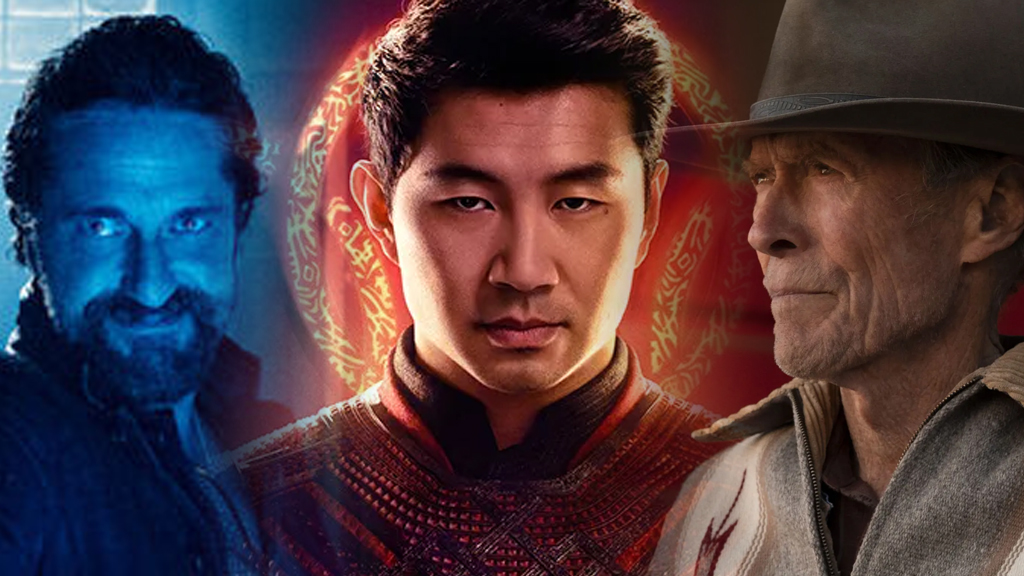
Another weekend has passed and it seems Shang-Chi is still holding on to the top spot. It’s currently eyeing to end the Sunday with a total domestic of $176.1M after an incredible hold of 61%. It’s the second-best third weekend in September with $21M only beaten by the horror film It with $29.75M. The film is showing healthy legs and also benefits from a lack of competition. It went up against the new release of Clint Eastwood‘s Cry Macho, which is only eyeing around $4.7M over the three-day weekend. Unlike the Marvel Studios production, it’s also currently available via HBO Max and could see a strong drop on Sunday.
Currently, it looks like Ryan Reynold‘s Free Guy will take the second spot as it may pass the $5M mark this weekend. Other releases aren#t doing much better, as Cop Shop featuring Gerard Butler might miss hitting the $3M this weekend even with glowing reviews by critics. Its reception by viewers is telling a different story. It’s likely to end up on the sixth spot with horror films Candyman and Malignant ahead.
Shang-Chiand the Legend of the Ten Rings seem to indicate that the core audience is back in theatres, but not everything is quite where it used to be. Venom: Let There Be Carnage moved back to its October 1st release and with Dune on the horizon, the films might add some much-needed energy. The lack of a Chinese release is hurting some films, as it’s been the saving grace for F9: The Fast Saga and Godzilla vs. Kong. The latter pulled in almost around $200M from that market alone putting it ahead of the current domestic leaders.
We’ve previously written about how Marvel Studios continues to innovate and where it could improve. Marvel Cinematic Universe projects are often critiqued for prioritizing spectacle over emotional and thematic resonance in its third acts. At the same time, it’s clear from interviews that the studio seriously contemplates the decisions that go into their finales. This deliberation allows the studio to experiment. While experiments can result in occasional falters, it is a long-term approach that succeeds more often than not in resonant finales.
Marvel Studios’ films and tv series are often reviewed as sacrificing satisfying conflict resolution for spectacle in their third acts. This is also an element those making the films are aware of and are always working to improve. Nat Sanders, one of the editors of Shang-Chi and the Legend of the Ten Rings, described on The Rough Cut podcast how the third act was a main focus to improve during the pandemic shutdown:
“We had a hiatus period, we had to shut down and before we came back up, along with really cutting and refining the 6 weeks worth of material we had at that point, our other main big focus was pre-vizing the third act and really continuing to develop the third act because it felt potentially just a hair underbaked in the script, compared to everything else, and we thought there was more to keep working on, so it ended up before a really great thing that we had that time for that part.”
Nat Sanders
The editors also spoke about how Marvel Studios emboldened them to make big decisions with the director Destin Daniel Cretton. They mention cutting half an hour out of the third act, and how these were considered good value even if a change in look for one character cost more than the entire budget of another film. Harry Yoon, another one of the editors, mentions how this empowered decision making met with an experimental attitude that focused towards continually improving the film’s emotional conclusion:
“[With the Marvel Studios producers] there was this attitude of ‘if we can make it 5% better or 3% better by addressing this one comment, then let’s try it.’ […] After a while you start to feel like you have permission within Marvel to make bold decisions […] That’s where it got very exciting towards the end, once we started to understand that character, story and audience were the big priorities and not these other things.
Harry Yoon
All of this suggests Marvel Studios keeps its collaborative spirit from within the Parliament, and extends it out to their project-based collaborators. This in of itself keeps fresh while also consistent. Regardless of personal opinions on the matter, it is a process that strives to keep improving.
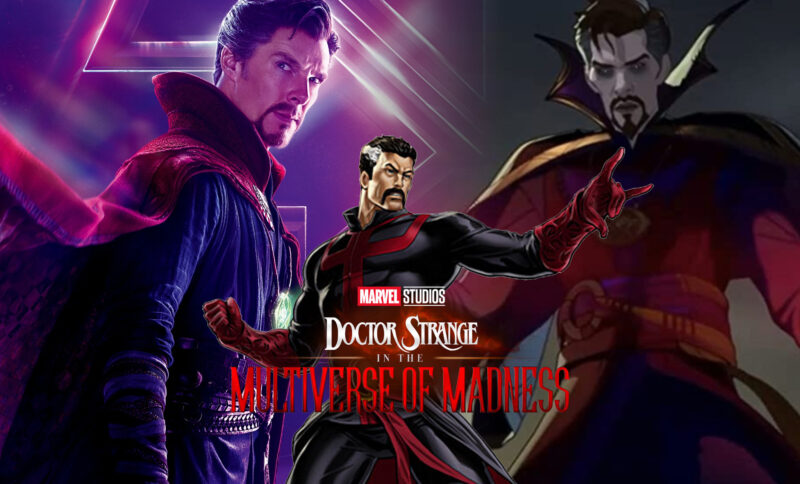
It’s fairly commonly received wisdom that a singular vision rather than an interdependent conception is what empowers creative and successful films. Yet Marvel Studios seems to empower its collaborators to make impactful decisions throughout the process and potentially change aspects of the result as they go. Benedict Cumberbatch recently reflected on this experimental attitude in regards to his Doctor Strange sequel:
“With the first film, you’re always locked into a script, because it’s the origin story,” he says. “But there was a lot more freedom this time around. I guess, because we were … not literally making it up as we go along, but sometimes it feels like that. Marvel has this amazing ability to come into production: ‘We really just have to start shooting now. It doesn’t matter that the third act is not quite where you want it to be.’ You really do things on a wing and a prayer sometimes.”
Benedict Cumberbatch
This experimental attitude will always result in hits and slight misses. On one hand it’s brilliant that Marvel Studios gives its creative collaborators freedom to keep improving a script or scene they are not quite happy with. This can, with different perspectives or more thought, often help a scene arrive at a better place. On the other hand, however, an impending production timeline might mean a completely satisfying conclusion is reached. It also suggests that we might get different kinds of conclusions as the studio as a whole works on improving, which we know is a key motivation of the producers there. It seems as though the difficulty of third acts is a studio wider discussion. Jac Schaeffer recently spoke about how hard it can be to resonantly blend scale with emotional conclusions:
It’s the third act of a Marvel movie. I’ve been around the block on some of those, and they’re so fun — but that’s always the hardest to land. The emotional part of the finale was always very clear to me: their goodbye and the goodbye to the children. That was the grounding force. All the pyrotechnics and making sure that Wanda’s win against Agatha at the end really sings, that’s stuff that takes a long, long time.
Jac Schaeffer
The Marvel Cinematic Universe at large is a work-in-progress and this filters down into the production elements of each project. Loki featured a conclusion that was largely an amazing set of Jonathan Majors’ monologues. Yet it was also satisfying through aspects of action, scale, emotion and theme. Post-credit scenes as a feature, are significantly part of the additive delight which makes these films and streaming series so compelling. Characters and concepts are introduced, and for the creatives, part of the fun becomes figuring out how these characters and concepts play into the larger narrative. That wider narrative is perhaps the most significant point. While there might be immediate conclusions in particular projects, the wider narrative remains a work-in-progress. This gives Marvel Studios the freedom to produce better endings that delight us all.
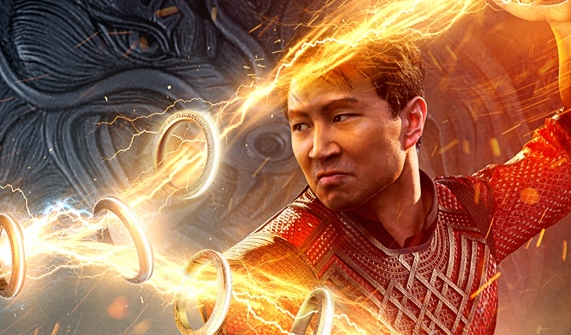
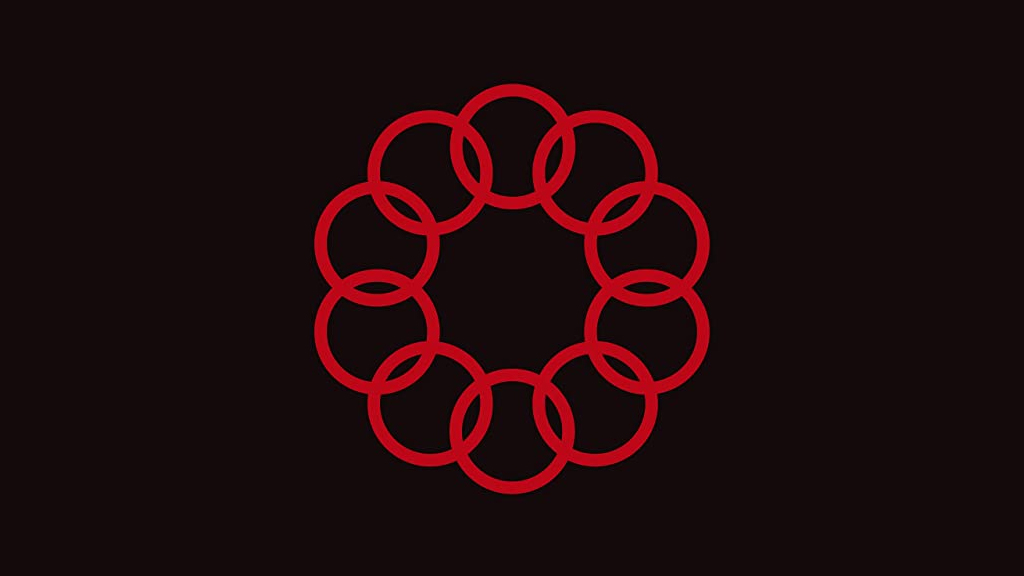
Audiences have been praising Shang-Chi and the Legend of the Ten Rings for the way it smoothly translates complicated comic ideas to the big screen. Among these adapted concepts was the function of the titular Ten Rings, which were simplified in the MCU for the sake of storytelling. However, Marvel VFX artist Sean Walker has revealed that this almost wasn’t the case. He explained in an interview with Comic Book:
The Ten Rings actually went through a range of color changes. At one point, each individual effect had its individual styled use of the Rings. For example, when Wenwu is creating a bustle out of them, or a whip, or projectiles, they actually had their own unique color scheme, they were all in a similar color palette.
Sean Walker
In the comics, the rings did not function as a singular unit like they do in the film. Instead, each ring had its own unique power and color-coding that its wearer could use at will. Walker’s comments indicate that the MCU almost stayed true to this before slimming the idea down. He continued to reveal that the different colors were almost used as a way to convey the story’s themes in a visual manner:
But in order to really clearly define this is Wenwu and this is Shang-Chi, we stuck to a much narrower color palette. So Shang-Chi’s colors actually mimic his mum’s color palette, so we looked to her for her greens and for yellows and greens. Especially in the initial fight between his parents.
Sean Walker
As anyone who has seen the movie would know, this range of color was eventually trimmed to just solid blue and orange. While the original idea was a good one, it’s probably for the best that the VFX team chose to simplify their effects. The result is a simple and appealing vision for the film’s climactic battle, and the rings functioning as a unit proved beneficial for the project’s action choreography.
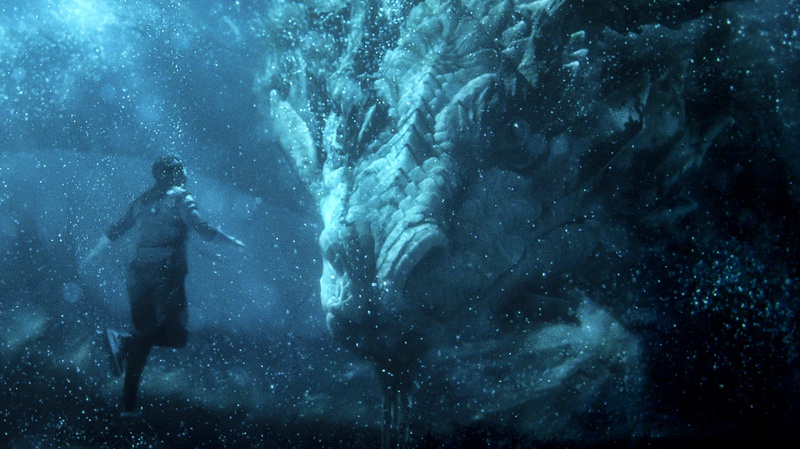
There’s a lot to be excited about when a new Marvel Studios film hits theatres. Not only do we get a new entry in the ever-expanding Marvel Cinematic Universe, but get a new perspective on the world. Shang-Chi and the Legend of the Ten Rings introduced us to the dimension of Ta Lo, which introduced the world to the MCU’s first dragon. The existence of the Great Protector left us with many questions and it seems that there’s one aspect of the character we may have not noticed.
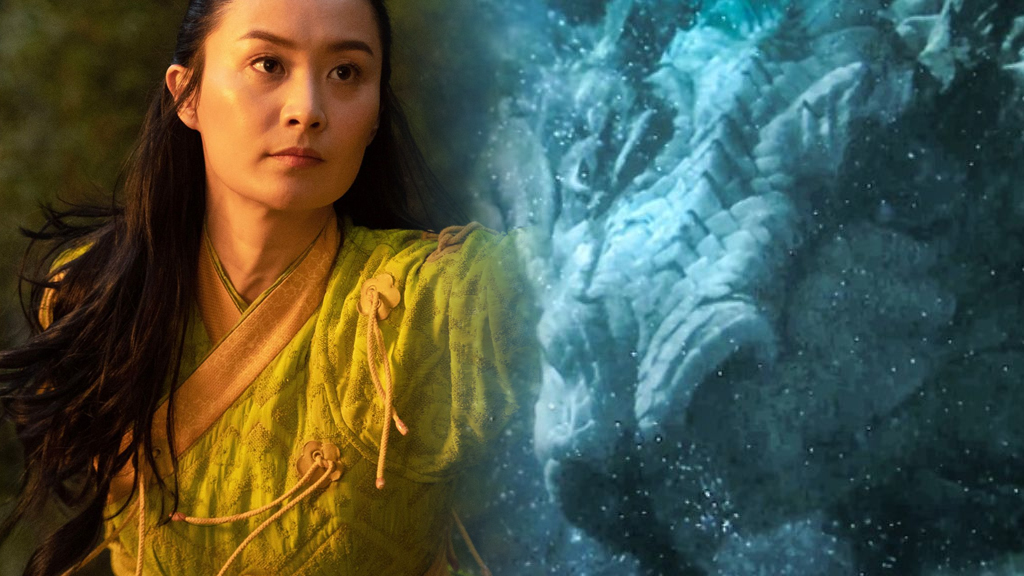
In an interview with ComicBook.com, one of the Weta Digital VFX supervisors, Sean Walker, revealed that they wanted to tie the film together with Easter eggs inspired by its theme of family. One of those being that the Great Protector’s eyes are based on Fala Chen, who plays Shang-Chi’s mother, Jing Li. They also tease that there are many other details that keep the character alive throughout the film.
We kept looking at Shang’s mother for reference for almost everything. Even the Dragon’s eyes were initially based off by Fala Chen’s eyes, the actress who played Shang’s mom.
Sean Walker
It’s a clever idea as his mother’s death plays an integral part in his journey, as it parallels that of Wenwu. His father’s grief lets him get manipulated by the Dweller in the Darkness while Shang-Chi works alongside the Great Protector. In a way, these two mystical creatures act as representations of what path they chose after her tragic death. It’s great to see how a simple Easter egg also can turn into a strong story-telling device similar to how Dormammu was played by Benedict Cumberbatch in Doctor Strange. It’ll be interesting to see what other hidden details are in the story.
We use cookies to improve your experience on our site. By using our site, you consent to cookies.
This website uses cookies
Websites store cookies to enhance functionality and personalise your experience. You can manage your preferences, but blocking some cookies may impact site performance and services.
Essential cookies enable basic functions and are necessary for the proper function of the website.
Name
Description
Duration
Cookie Preferences
This cookie is used to store the user's cookie consent preferences.
30 days
These cookies are needed for adding comments on this website.
Name
Description
Duration
comment_author_email
Used to track the user across multiple sessions.
Session
comment_author_url
Used to track the user across multiple sessions.
Session
comment_author
Used to track the user across multiple sessions.
Session
Statistics cookies collect information anonymously. This information helps us understand how visitors use our website.
Google Analytics is a powerful tool that tracks and analyzes website traffic for informed marketing decisions.
Contains information related to marketing campaigns of the user. These are shared with Google AdWords / Google Ads when the Google Ads and Google Analytics accounts are linked together.
90 days
__utma
ID used to identify users and sessions
2 years after last activity
__utmt
Used to monitor number of Google Analytics server requests
10 minutes
__utmb
Used to distinguish new sessions and visits. This cookie is set when the GA.js javascript library is loaded and there is no existing __utmb cookie. The cookie is updated every time data is sent to the Google Analytics server.
30 minutes after last activity
__utmc
Used only with old Urchin versions of Google Analytics and not with GA.js. Was used to distinguish between new sessions and visits at the end of a session.
End of session (browser)
__utmz
Contains information about the traffic source or campaign that directed user to the website. The cookie is set when the GA.js javascript is loaded and updated when data is sent to the Google Anaytics server
6 months after last activity
__utmv
Contains custom information set by the web developer via the _setCustomVar method in Google Analytics. This cookie is updated every time new data is sent to the Google Analytics server.
2 years after last activity
__utmx
Used to determine whether a user is included in an A / B or Multivariate test.
18 months
_ga
ID used to identify users
2 years
_gali
Used by Google Analytics to determine which links on a page are being clicked
30 seconds
_ga_
ID used to identify users
2 years
_gid
ID used to identify users for 24 hours after last activity
24 hours
_gat
Used to monitor number of Google Analytics server requests when using Google Tag Manager
1 minute
Marketing cookies are used to follow visitors to websites. The intention is to show ads that are relevant and engaging to the individual user.
Pinterest Tag is a web analytics service that tracks and reports website traffic.