Tag: WandaVision

  • Analyzing the Influences of the 50s and 60s Episodes of ‘WANDAVISION’

    Analyzing the Influences of the 50s and 60s Episodes of ‘WANDAVISION’

    WandaVision has finally premiered on Disney+, which means we’ve finally got our first real showcase of the way the cast and crew incorporated various sitcoms into the story. Each of the first two episodes was not only rooted in a different decade, but a specific show from that decade…well, sort of.

    The 1950s

    Did You Catch This Easter Egg in the WANDAVISION Trailer? - Nerdist

    Episode 1 begins the series in the era which marked the dawn of television sitcoms: the 1950s. I was expecting a lot more imagery and references to the most iconic of 1950’s sitcoms, I Love Lucy, and that it would be the main inspiration behind the episode, but that show has been parodied and referenced so much that it seems almost like a cliche at this point and to do too much of that would have probably felt cartoonish.

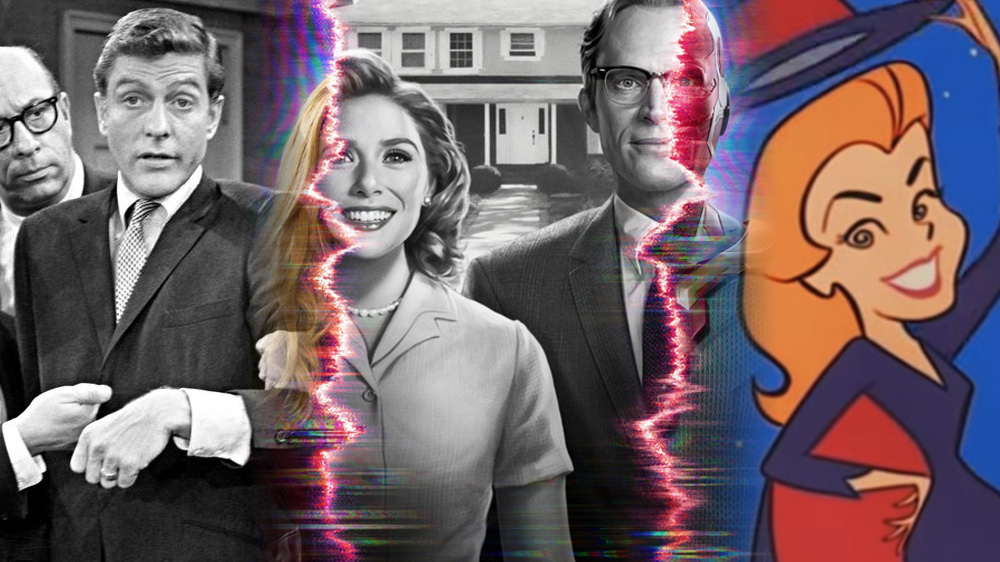
    So I was totally game to see different way of taking on the era. But it was odd that the main overall inspiration for the 1950’s set episode is clearly The Dick Van Dyke Show…which first aired in 1961.

    Thankfully, the clothing, manner of speech, and music (“Yakety Yak” came out in 1959) are all grounded in the intended decade. The main things inspired from The Dick Van Dyke Show are the house set and the episode’s plot. While the storyline isn’t directly lifted from the series, the very first episode of Dick Van Dyke sees the show’s central couple attend a dinner party in order to impress the main character’s boss and being coerced into entertaining the guests at the event.

    The other element of the episode that is reminiscent Dick Van Dyke’s is the theme song, from the similar music and tune to the imagery, specifically the moment with Vision trying to carry Wanda into the house bridal-style but dropping her as he walks through the door without opening it. (On Dick Van Dyke the bridal carrying is ruined by tripping upon entering the house).

    The 1960s

    WandaVision Episode 2 Recap: 1960s Magic, for the Children | NDTV Gadgets  360

    The creators of WandaVision probably elected to pass off The Dick Van Dyke Show as a 1950’s series so they could reserve the 1960’s episode for the show most obviously suited to a show about Scarlet Witch, Bewitched.

    The references to Bewitched in this episode are similar to that of The Dick Van Dyke Show in the previous one. The set is very similar to the one seen on the classic sitcom, and the theme song for this era of WandaVision is mostly instrumental and the video for it is entirely animated. While Bewitched is the show most famous for this theme song format, several others of this era used it as well, including I Dream of Jeannie and Angel.

    Like the first, this episode’s plot also takes inspiration from the show it’s emulating; the Bewitched episode “It’s Magic” sees Samantha, the “witch” referenced in the show’s title, subbing in for a magician’s assistant at a charity show and secretly using magic in order to help him perform successfully despite his drunkenness.

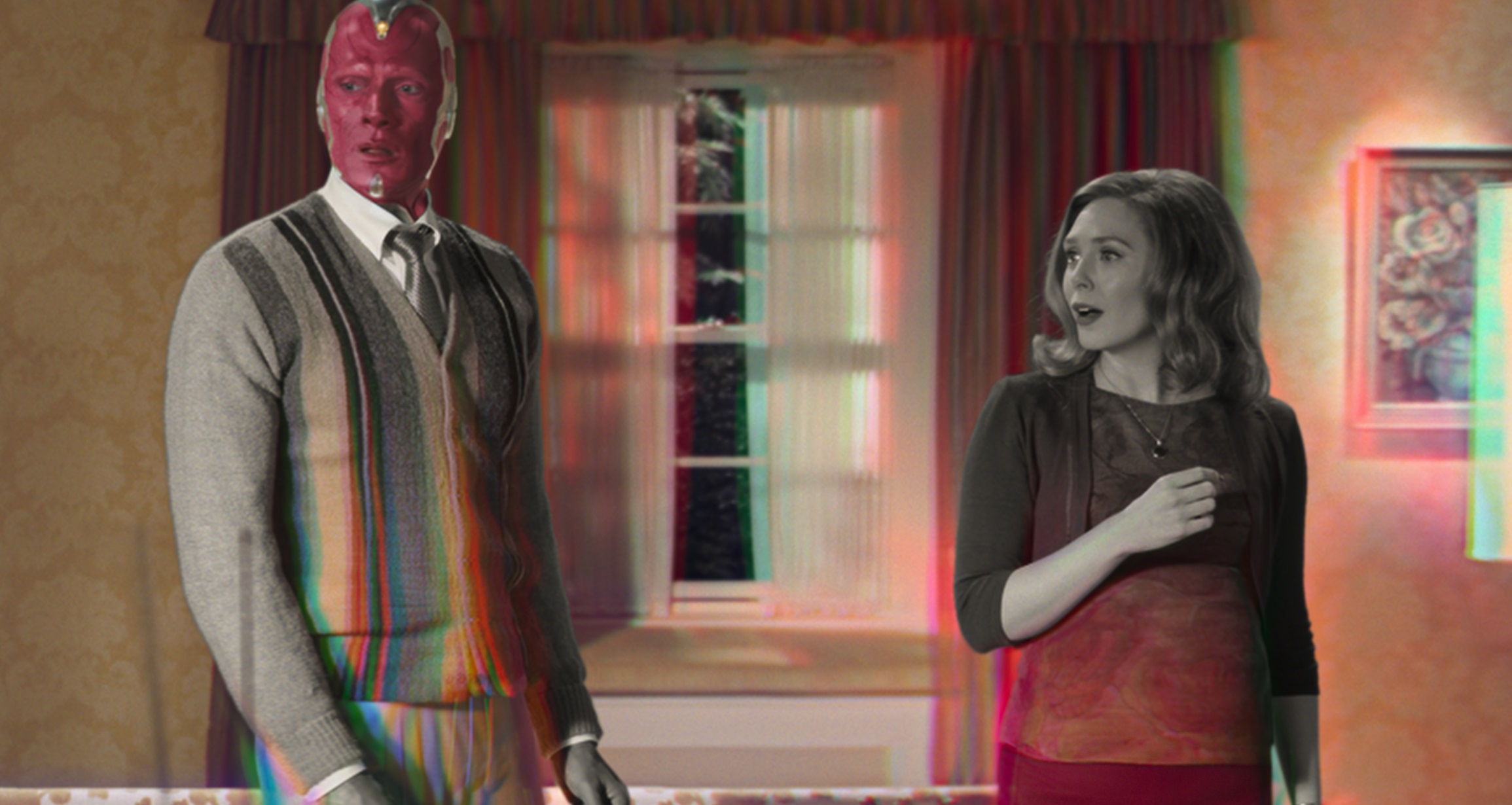
    Another aspect of this episode’s storyline that also references Bewitched (and many other shows that were produced during the 1960s) is the change from black-and-white to color; Bewitched similarly began its run in black-and-white, but switched to color a few seasons into its run in 1966.

    Not a Crutch, But a Tool

    What I’m finding interesting about the sitcom elements of WandaVision is that some of the more minor references aren’t necessarily from shows that were on the air during the episode’s set time period. At one point in the first episode, Agnes brings a pineapple over for Wanda to use in the dinner party’s dessert, which some have speculated to be a reference to “The Pineapple Incident” on How I Met Your Mother (2005-2014). Later in the episode, a lobster appears as a door-knocker (which was not on the door when it was opened earlier in the show) which could be a reference to the famous lobster/soulmate comparison on Friends (1994-2004).

    So far it appears that WandaVision isn’t necessarily trying to make a lot of specific references to a bunch of famous sitcoms (other than the one inspiring the episode’s overall aesthetic and tone) but incorporating various tropes and using the style of the genre to tell its own story, which is ultimately the wisest decision for a show that will ultimately help propel the MCU forward.
  • ‘WandaVision’s Is Committed to Authenticity and Sitcom Cinematography

    ‘WandaVision’s Is Committed to Authenticity and Sitcom Cinematography

    Stories get told through many mediums, such as movies, television, video games, and so on. There is, however, a large misconception that stories are merely just words one character says to another or the overall plot. In reality, that is far from the truth. Many different things go into making a story happen, especially when it comes to mediums like film or television. There’s the cinematography, sound design, set design, character interactions, and so much more. WandaVision‘s first two episodes provided something rare in terms of cinematography. Their attention to detail is outstanding, so why don’t we take a closer look at how far Marvel Studios went with this series.


    Here is a spoiler warning for WandaVision’s first two episodes. If you haven’t watched the show yet, then only continue at your own risk.


    The Aspect Ratio


    Aspect Ratio is defined as the ratio of an image’s width to its height. Simply put, it’s the way we see films when we’re either watching them on the television or an IMAX screen in cinemas. Most movies tend to have an aspect ratio of 2.35 nowadays, which many might recognize from their cinema visit. This ratio wasn’t always the case, as back in the day, aspect ratios actually would vary quite a lot. Back in the day, the standard was 4.3, which is that square image many might remember from their childhood. Marvel’s attention to detail already shows itself at the very beginning of WandaVision, when the Marvel Studios fanfare changes from a 2.35 ratio into black and white 4.3.

    I find the use of the aspect ratio to have both a literal and symbolic meaning. The literal meaning is Marvel Studios’ commitment to recreating the various sitcom eras, so they opted to follow the aspect ratio dependent on the tribute. I do believe there’s also a symbolic meaning behind it. At the end of WandaVision‘s first episode, credits start to roll and reveal that someone is watching this sitcom reality. As such, the aspect ratio converts back from 4.3 to the standard 2.35 as it zooms out into a SWORD lab. It turns the 4.3 ratios into a figurative prison. That is why the real world is in familiar 2.35, which is a curious notion to ponder.


    The Camera Work


    Stories are only as good as the lens that conveys them. WandaVision does exemplary work at pulling it off. In their way to pay homage and recreate the different eras of television sitcoms, Matt Shakman went off to make something that felt authentic and natural to the times, and you can see that in several ways in these past two episodes. For example, in the first episodes, you’ll notice that the camera work followed the I Love Lucy and The Dick van Dyke Show 3-camera approach. Each camera has a deep focus, which means that everything from the background to the foreground remains in focus at all times. You won’t find any flashy or dramatic camera movements, as they only pan to the left or the right with some cuts in between.

    The second episode’s Bewitched approach introduced a shallow focus with more close-ups of the actors. As the episode progresses, you’ll notice that the camera work modernizes the instant that the outside world seeps in. There is a glance in the first episode when Mr. Hart starts choking on his food. When he asks Wanda and Vision why they came to WestView, the camera is still in that immobile position, with all four people at the dinner table in frame. It’s not until Mrs. Hart tells Arthur to stop it for a second time that we see the camera angles come in with the slow zoom and the shallow focus. Even the lighting on set turns dark. Once Vision helps Mr. Hart, everything returns to the sitcom format as if nothing happened.


    The Effects Work


    It even shows in their approach to utilizing technology from the sitcom era they are exploring. In an age where CGI is so commonly used nowadays for even the simplest of things, Matt Shakman went out of his way to use strings and wires to prop all these set pieces up. It sold the authenticity of the first episode and could easily be mistaken for an episode of Bewitched. It makes the episode feel authentic, as they aren’t taking the easy way out. They are committed to recreating these sitcoms in a way that anyone would instantly recognize the inspiration. Everyone involved in this production did their homework and it shows. We’ve only got a glimpse with these first two episodes, so we can expect a lot more authenticity with each era we visit.

  • LockeDown #4: Wanda Maximoff Sighted Near Strange Occurences in WestView

    LockeDown #4: Wanda Maximoff Sighted Near Strange Occurences in WestView

    WestView faces a strange phenomenon, and your host John Locke is on location to give you the latest coverage. The once suburban town got surrounded by government vehicles and a strange static. To top it all off, Avenger Wanda Maximoff has also been on location. Could it all be connected?


    If you enjoyed the episode, don’t miss out on getting early access by subscribing to our Patreon to be one of the first to listen to the next entry:


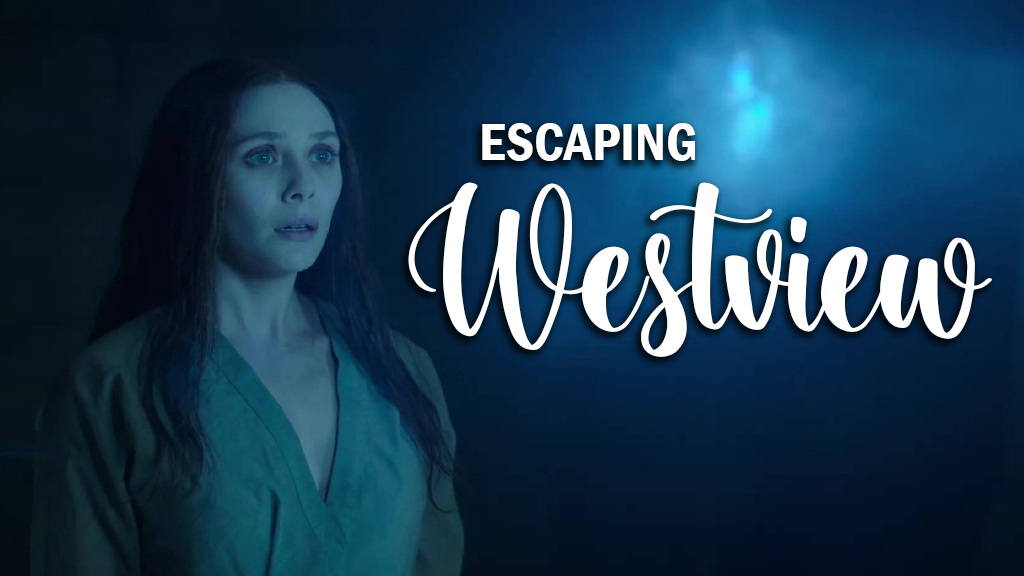
  • ‘WANDAVISION’: Escaping Westview

    ‘WANDAVISION’: Escaping Westview

    After JJ’s piece on how Wanda and The Vision might have gotten themselves where we found them, living a seemingly idyllic life in the small town of Westview, it’s time to try and figure out how they might get out of that predicament.

    It has been made somewhat clear, through TV spots and such, that WandaVision is set in a sort of Pocket Reality. We take it that it was something created by Wanda’s own reality-warping powers even if the implications of it all, on the outside world, might escape her. The fact that she was able to rewind the action at the sight of the “beekeeper” shows us she is still a bit in control, but the way we constantly S.W.O.R.D. (Agent Jimmy Woo?) trying to contact her, asking “Who is doing this to you?” shows us that she probably is being coerced by someone else. Even if she isn’t aware of it.

    Having Wanda stuck in a situation like this might bring a lot of both physical or metaphysical rewards to whoever is behind it. But to Wanda herself, the rewards are the perfect life she never had the chance to live. With Vision and her children by her side, she couldn’t be happier, even if it’s all a fabrication. This way, with her subconscious drawing from the sitcoms that shaped her “perfect life” ideals, she avoids the real world at all costs, the one filled with death and loss, while trying to remain impervious to whatever might stand in her happiness’ way.

    But we’ve already seen how S.W.O.R.D. is actively trying to get in contact with her inside that fictitious bubble. The outside world probably isn’t being able to deal with the situation she helped create, and she must be convinced to fight against whatever is compelling her to keep up the charade. This won’t be an easy task since it would mean for her to lose The Vision once again, and to lose the children and the life she envisioned having with the love of her life. She would have to face the reality that she wouldn’t be able to have it all, no matter what. She will have to destroy her life in order for others, that might not really appreciate her for being different, might have a chance to live. For a regular person, this would already be extremely hard to deal with. For someone like Wanda, that already had to endure so much loss throughout her life, that has the power to warp reality itself, this might just be the tipping point, and it might break her.

    Her next appearance is set to be in Doctor Strange: In The Multiverse of Madness. If the events of WandaVision do indeed go the way we’re expecting, Wanda might be a very different character by the time the Doctor Strange sequel comes around, and we should be contemplating the possibility of her being (one of) that movie’s antagonist(s).

  • ‘WandaVision’ Running With The Devil

    ‘WandaVision’ Running With The Devil

    Fans around the world have begun rejoicing in the fact that the Marvel Cinematic Universe has returned an unpredictable hiatus that saw many projects delayed due to the ongoing pandemic. This return was rung in with the premier of WandaVision, set within the town of Westview. Wanda Maximoff and The Vision have settled down to live out the perfect life in an ideal, all-American town that isn’t all of what it seems. Throughout the first two episodes, fans will notice that things are always slightly off, whether it be the fleeting feeling of reality slipping or the realization that no one knows just what is going on most of the time. Throughout the two-episode premiere, many sly and seemingly innocent lines and details are scattered throughout the episodes that may lead fans to believe there may be something much larger in play.

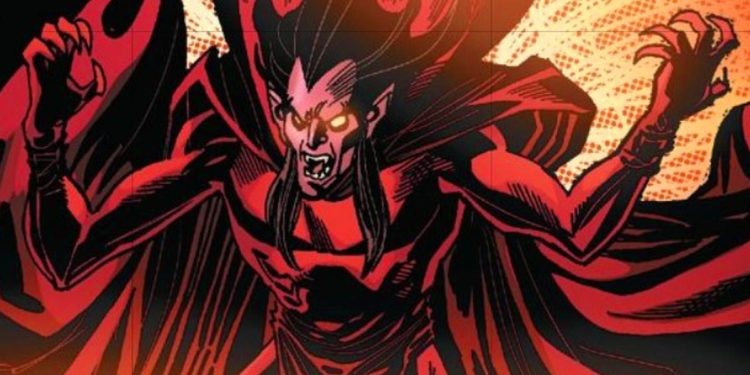
    In the second episode, we see Wanda and Vision participate in the local talent show; throughout the episode one thing is consistently mentioned: the show is “For The Children.” On the surface level, you believe that it’s just a whole-hearted charity fundraiser, but towards the end of the second episode it’s revealed that Wanda is indeed pregnant. My running theory is that a grief-stricken and desperate Wanda, made a deal with the devil, commonly known as Mephisto within the Marvel Universe, bringing the Vision back to life in exchange for her firstborn. Wanda would soon realize that she’d made a mistake and is determined to keep her children and her Vision and live the perfect life, and in order to protect her family, she’d unintentionally created this false reality where life was like the perfect American family reminiscent of sitcoms past.

    Witches of New Salem (magic New Salem residents)

    Playing into this Devil’s deal theory, The citizens of Westview, who I believe to be a Coven that Wanda’s made a part of her reality, and while this may be a stretch, I believe we’re a big part in helping Wanda make this deal with the devil. The way Dottie makes a few mentions of the devil and how Agatha acts so careless around her leads me to believe the two could be leaders of the coven, specifically Abigail and Agatha Harkness in what could possibly be what was once New Salem before it was shifted to fit Wanda’s ideal life.

    The long-awaited premier of WandaVision has left plenty of fans with a mind full of questions that will all be answered….in due time, but for now we’re left speculating as to what’s really going on in the town of Westview, above and below.


  • ‘WandaVision’ Featurette May Tease a Potential Wonder Man Appearance

    ‘WandaVision’ Featurette May Tease a Potential Wonder Man Appearance

    WandaVision has finally released after a long wait. The first two episodes are filled to the brim with easter eggs and references to the wider Marvel Cinematic Universe. As a last little promotion, Marvel Studios also released a small featurette that gives us a good look at what happened behind-the-scenes. We get a first look at the production with a live studio audience. It also features interviews with various members of the production team including the show’s head writer Jac Schaeffer. Eagle-eyed viewers may notice an interesting image on the wall to her left.


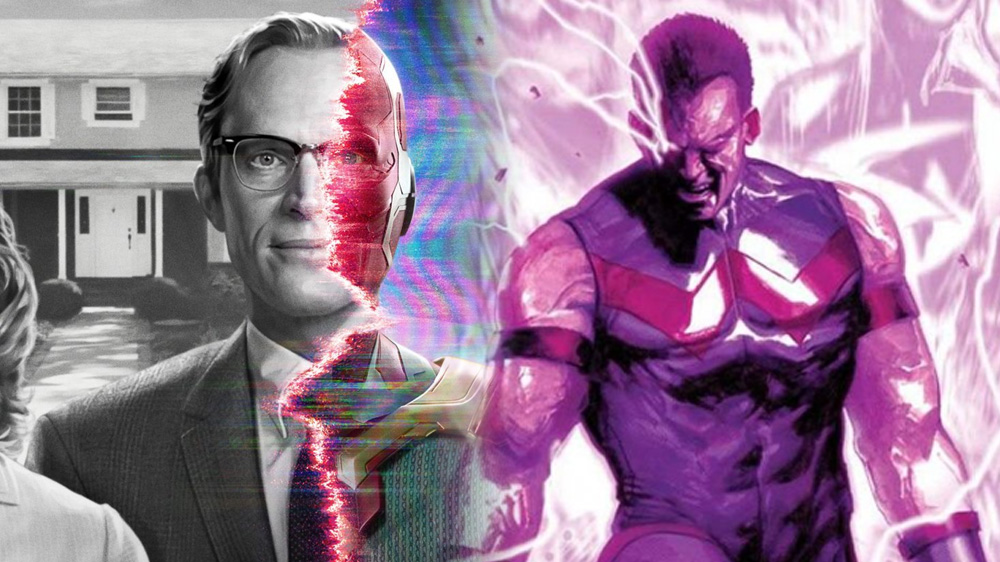
    Yes, the image on the right is that of Wonder Man. Simon Williams has been a character I wanted to see introduced in the MCU for a long time, yet I am surprised to see him in this featurette. It would hint at him potentially making an appearance in this show. There is a reason to introduce the actor in this show, as he originally was the template for Vision in the comics. To be more precise, his brain pattern was the basis for Vision’s personality. JARVIS ended up taking on that role in the MCU, but that doesn’t exclude this storyline getting revisited in live-action.

    The character almost appeared in Guardians of the Galaxy Vol. 2 as a small cameo. There were posters prepared with Nathan Fillion in the role, where he was already a well-established actor. It is uncertain if they are using this chance to revamp the character. In the animated show, Avengers: Earth’s Mightiest Heroes, Williams was a scientist who was infused with ion powers by AIM. The MCU may stray from his actor background and introduce him as someone who works for SWORD. They can take any angle, even if I would prefer him as an actor that shows up in the commercials that appear throughout the show. He would also be a perfect addition to the Disney+ line-up to explore film productions creatively.

    Source: Twitter

  • ‘WandaVision’ Proves That Sitcoms Are Timeless

    ‘WandaVision’ Proves That Sitcoms Are Timeless

    WandaVision has finally aired its first two episodes. It certainly is a unique project, as it avoids the classic superhero action and focuses on sitcom-inspired comedy. It isn’t just inspired, but it is recreating sitcoms from different eras. The first two episodes focus on The Dick Van Dyke Show and Bewitched. These shows aired back in the 60s and 70s, so they are digging deep. Of course, comedy sensibilities have changed substantially over the years, and many wondered if going this far back may be counterproductive. The newer generation won’t recognize most of the references, and the humor might not click the same way for those that grew up with it. Now that the show has aired, it proves that we underestimated the strength of sitcoms.

    To this day, sitcoms are still some of the most popular shows that air on television. Even today, there is a wide variety within this genre, such as the police sitcom Brooklyn Nine-Nine, a family-focused Modern Family, or the never-ending animated sitcom The Simpsons. The latter proves the staying power of this genre, as the series has been airing since 1989. Even as these shows have adapted to modern sensibilities, the core aspects that define them have been there since the first TV sitcom titled Pinwright’s Progress kick-started the genre in 1946. We see it in how WandaVision adapts these classic series, but somehow still manages to keep them fresh


    Even a younger audience can appreciate the jokes in large part due to the performances by the cast. Elizabeth Olsen and Paul Bettany are a perfect leading pair that bring new life to classic tropes. They also brought in some veterans of the genre, such as Fred MelamedDebra Jo Rupp, and potentially many more in future episodes. What WandaVision does incredibly well is it knows how to use the awkward phases of older sitcom shows. There were always pauses for a laugh track that tends to go on for too long nowadays. Instead of just leaving them in, they use these out-of-place sequences to add the overall mystery and darker atmosphere slowly seeping out.

    Jac Schaeffer and her team did their homework and found ways to re-energize older aspects and avoid the feeling of them being outdated. It’s a love letter to the past that anyone can appreciate and proved its staying power as a genre. In a way, many of us learn to love these older shows through our peers, as many might have grown up on older shows through parents and grandparents. One of my fondest memories was spending time with my mother watching shows she spent her childhood watching. It may also be a gateway for families to discuss the originals after a viewing. It creates a platform to ask your family about their knowledge of these sitcoms. To this day, my grandfather still watches re-runs of The Dick Van Dyke Show and shares his favorite memories surrounding the show. I cannot wait until WandaVision starts to explore sitcoms that I grew up with and remember when I was just a kid watching them. One day, I’ll be able to share the same experience that I had with the MCU.

    Source: Guinness World Record

  • Theory Thursday: ‘WandaVisions’ Mysterious Cameo

    Theory Thursday: ‘WandaVisions’ Mysterious Cameo

    We’re just hours away from the premiere of WandaVision on Disney+. With a star-studded cast of Elizabeth OlsenPaul BettanyKat DenningsRandall ParkTeyonah Parris, and Katheryn Hann, this show certainly set to be quite the spectacle. It seems like that cast is only going to get bigger, as, during an interview with Black Girl Nerds, Vision actor Paul Bettany teased the appearance of a surprise actor. He’s stated that this actor is someone Bettany has wanted to work with for a while. Now, one of the key elements of any sitcom is the incorporation of guest stars. From John Wayne appearing in I Love LucyAdam West in Bewitched, and Christopher Lloyd in Malcolm in the Middle, it is quite common to have an unexpected cameo from a recognizable face appear at least once. So, why don’t we explore who the mysterious guest might be?


    1. A Former Sitcom Star


    There have been hundreds of sitcoms over the course of television history. We know that WandaVision based itself on quite a number of these like The Dick Van Dyke Show, Bewitched, The Brady Bunch, Full House, and so on. So, it would make sense for one of these actors to appear as a resident of Westview. Imagine the likes of sitcom legends like Dick van Dyke, Erin Murphy from Bewitched, Maureen McCormick from The Brady Bunch, or someone from Full House. We know that Marvel already has included a few former sitcom stars, like Debra Jo Rupp from That 70’s Show, so there might be many more that haven’t gotten revealed yet.


    2. James Spader as a Human Ultron


    This theory has been something I have hypothesized for quite a while, and I hope it becomes a reality. James Spader was such a key piece in the MCU back in 2015. He had a considerable role in the development of Wanda and Vision in Avengers: Age of Ultron. Hell, he created the body that would eventually become Vision. Imagine someone knocks on Wanda and Vision’s door, and it turns out to be James Spader. He is in a human body and posing as Vision’s father. Perhaps some fans might not recognize him right away without his robotic form, but his voice is certainly something fans will remember. His appearance could even serve as a perfect representation of Wanda’s psyche and trauma. We see it starting to merge with her seemingly perfect suburban life. His appearance in this show, in my opinion, could bring the newly-wed couple’s story full circle.


    3. Benedict Cumberbatch’s Doctor Strange


    Having Dr. Stephen Strange appear in WandaVision feels like it’s nearly a given due to the connection this show will have with the upcoming Doctor Strange film. If I had to take an educated guess as to how we might see Doctor Strange in the series, there are two possibilities. One way would be to take a page out of House of M by making Strange the doctor who helps Wanda give birth to her twins. The other option would be near the end of the show, where he will try to help Wanda not fall into the madness that might befall her throughout the story.


    4. A Former Avenger


    Wanda’s connection with the Avengers has grown over the last couple of films. Should any of the original members of the Avengers appear in WandaVision, I would suspect it would be characters that have helped Wanda overcome her fears and traumas. My main choices would be Clint Barton and Natasha Romanoff. Clint helped Wanda find her inner courage through which he became a mentor figure. He was the one that dubbed her an Avenger during the events of Age of Ultron. And as for Natasha, she took Wanda under her wing and trained her to blend in as a spy, which we saw during Captain America: Civil War.


    4. Hidden in Advertising

    We know from an interview with TV Line that Kevin Feige teased that we should pay close attention to the various commercials. I suspect we might see ads from companies that have affected Wanda directly in her past. One notable company would be Stark Industries. Wanda had to witness her own parents’ death when a shell with Stark’s logo on it hit their apartment building. It was one of the reasons they took on the villainous roles in Age of Ultron. Not only that, but I suspect we might see Hydra showcase a commercial that’ll serve as a bit of backstory to how Wanda and Pietro got recruited into the ranks of Hydra before the events of Captain America: The Winter Soldier. Just imagine Dominic Cooper or Thomas Kretschmann appearing in various commercials as Howard Stark and Baron von Strucker. They keep trying to sell their unique products to Wanda with empty promises. They could be giving cheesy, expositional commercials about their companies to represent the sitcoms era.


    6. Evan Peters


    Thanks to our very own Charles Murphy, we know that Evan Peters is joining the show in a mystery role. Now, I have several suspicions as to who Peters could be playing. No matter the way I look at it, Peter’s role will mess with Wanda’s psyche. His experience playing antagonistic characters in the American Horror Story series certainly would make him the perfect candidate. Many people suspect he could be portraying an interdimensional villain, who comic fans might know as Nightmare. Others claim he could be Marvel’s resident devil, Mephisto. Some have even mentioned the possibility of Evan taking on the mantle of Pietro Maximoff. The one thing that these characters have in common is the ability to convince others to do their bidding. And if he did end up portraying Wanda’s brother, it would be nice for him to pay homage to the House of M story arc by being the one that convinces Wanda into making a new reality, where everything can live their dream life.

  • Weekend at ‘WandaVision’s: Theorizing How Vision Was Resurrected

    Weekend at ‘WandaVision’s: Theorizing How Vision Was Resurrected

    Can you believe it? Tomorrow, WandaVision is finally released. After a year hiatus, the Marvel Cinematic Universe returns in style. It isn’t just the first entry in Marvel Studios’ fourth phase, but it is also their first brand new series on Disney+. Of course, they are returning in style by featuring our starstruck lovers, Wanda, and Vision trying to live a suburban life. Of course, it wouldn’t be a Marvel Studios’ story if something wasn’t going wrong. We know that Vision died at the hands of Thanos in Avengers: Infinity War. So, the question remains how is he alive again? If you’ve read the title for this feature, you might already know where I am going with this theory. I sadly believe that while we see Vision interact on his own in the various trailers, he still is dead. 

    The version of the character we see is, in fact, just the remnants of the android hero through Wanda’s powers. In a way, she is just controlling his body the way Larry and Richard handled their CEO in 1989’s Weekend at Bernie’s. In Wanda’s case, her powers are giving him the ability to act independently. Her memories of the android are giving him life, but only as long as he remains within Westview. Yet, if someone from the outside is looking in, it might just be a lifeless husk floating around with the red hex surrounding it. I actually got the idea when I saw Marvel Studios president’s cap from the WandaVision press release. It featured Wanda’s red outfit combined with a white version of Vision, which just added more to this theory. The more I thought about it, the story’s climax may be quite similar to that of the recently released Wonder Woman 1984


    The eerie feeling conveyed throughout the trailers may be a clear sign of something going wrong. Every idyllic life has its secrets to hide. She made a deal with Agnes, who is still theorized to be the cause for her powers going out of control, to bring him back. Little did she know, it was just a temporary fix that would give her the life she dreamt of for a limited time. At the end of the series, she would have to make a clear decision. Will she embrace her illusion or accept that she would have to let go eventually. The moment the hex surrounding Westview gets broken, she sees what he was the entire time. Yet, that doesn’t stop her from still loving him as she gives him one last embrace and hears his voice echo in her head. Hopefully, I am wrong, and there is a future for Vision in the MCU beyond this project.

  • REVIEW: ‘WandaVision’ Represents the Future of the MCU

    REVIEW: ‘WandaVision’ Represents the Future of the MCU

    THIS REVIEW IS SPOILER FREE


    To say that WandaVision’s sitcom trappings are merely a gimmick to bring something new to the smorgasbord of superhero fare is a disservice to what it actually does. There’s an actual sincerity to the way WandaVision is designed. A profound appreciation for what the American sitcom has meant to pop culture and to the intricate world the MCU has built. Under the guise of the shows of old, Wandavision celebrates all that came before it and what will come in a way that hasn’t been done before. The show is a representation of the MCU’s future. 

    In true comic fashion, the show pretty much throws you right in the middle of this idyllic town of Westview with little to no exposition as to why Vision and Wanda are living in their own Truman Show. The vignettes that make up each episode provide a glimpse at the happy day-to-day life these two Avengers have made for themselves.  Life has been good for the Visions since we last saw them; their romance is flourishing; they just moved into this great neighborhood, and the people around them are welcoming. But all good things must come to a slow and painful end. For the Visions, it begins with them noticing the many glitches in the matrix and the proverbial red pill they have yet to take is the mystery box of the show. 

    As bleak as that premise sounds, the show is surprisingly fun. The absurdity of two superheroes trying their dandiest to carry on with a normal life is at the forefront here which allows for fine situational comedy. Wanda struggles to make dinner while Vision tries to join the neighborhood watch. There’s honestly nothing more to ask for in a show like this.  

    It’s honestly hard to pinpoint what doesn’t work in WandaVision. The complexity of the premise might be inaccessible to newcomers who have no idea who these characters are, to begin with. At the same time, the show’s quirky format provides autonomy from all its overwhelming world-building needle drops. The singular day-to-day adventures Wanda and Vision go through to fit in their neighborhood of Westview work perfectly without any exposition. Each decade they adapt is its own thing with its own set of threads. These threads don’t necessarily carry over to the next episode. There’s almost no semblance of a larger story arc with the exception of the needle drops at the end of each episode. Even the character arcs are left vague to service the mystery of what the hell exactly they’re building up to. 

    Having the arcs shrouded in a mystery box, in addition to the surrealist nature of the show, allows for Wanda and Vision to be completely different characters from their previous appearances. It’s a very unusual way to develop these characters but it also gives stars Elizabeth Olsen and Paul Bettany carte blanche to play it however they want. And boy, do they really have their fun with it.


    For me,  Bettany is, by far, the MVP of this show. He grounds the show’s sitcom pastiche in a zany performance that is equally self-aware as it is charmingly ignorant. My condescending highbrow self certainly didn’t expect to laugh out loud at 50’s humor, but I did thanks to Vision acting like a believable buffoon. Bettany is totally hilarious in this and steals so many scenes in more ways than one. 

    Olsen unsurprisingly stands her ground to Bettany’s wacky performance and delivers a tour de force act of her own. While Bettany brings in some grade-A levity to the show, it’s Olsen who balances it with depth and range. She has a jaw-dropping moment in the third episode that will surely elicit some exciting reactions from fans. More than Bettany, the show asks the most out of Olsen, and will likely spotlight the full spectrum of her talents when Wanda becomes the bigger focus in the season’s latter half. 

    As of the first three episodes, there’s not much yet to grasp with the ensemble cast. Kathryn Hahn’s wink-wink tongue-in-cheek performance as Agnes lends itself to the seeming sinister nature of what Westview really is. She’s fun to watch and is totally hamming it up for good reason. Teyonah Parris as Monica Rambeau brings an aura of warmness to an ensemble filled with unsettling Stepford Wives characters.  As a fan of her work on That 70’s Show, seeing Debra Jo Rupp channel in her inner Kitty Foreman once more, in a Marvel show no less is a blast to watch.

    The way the show commits to authenticity as they navigate through the various eras of the sitcom world is impressive as hell. With a few exceptions of a few frames that look too modern and anachronistic, the shows stay true to form as to how these sitcoms actually looked and felt. It even manages to nail the cultural and social sensibilities of the past down to the ridiculous gender norms. For someone like me who finds pop culture of all eras fascinating, WandaVision functions as a nice history lesson on what came before, albeit with a synthezoid and a witch.


    Most MCU properties have a rewatchability thanks to the proven and tested Marvel Studios formula that perfectly marries levity, spectacle, and good old comic book fare that make their films worth watching. However, WandaVision just might be the property that takes the cake, as far as rewatchability goes. Kevin Feige, Jac Schaeffer, and Matt Shakman have crafted a make-believe world within a make-believe world so intricate that every detail on screen seems to have a life of its own. So much of what you see in the show feels like it means something, even though it might not. Be it the silly gags or the jokes, there’s a purpose to it. Every innocuous detail feels like an easter egg that’ll lead tinfoil-wearing fans into a rabbit hole and keep them rambling for weeks. Even the less nuanced callbacks to previous MCU moments and arcs have a heft to them as they allude not only to the MCU’s past but also to its future. It’s one of those shows where once they finally unveil the ace in their sleeve, every episode that came before will feel completely different.

    WandaVision makes a truly convincing argument that the future of the MCU rests within the world of serialized television. The chilling moment where the monochromatic world of Wanda and Vision bursts into Technicolor is emblematic of this new era of the MCU that’s being ushered in front of our very eyes.