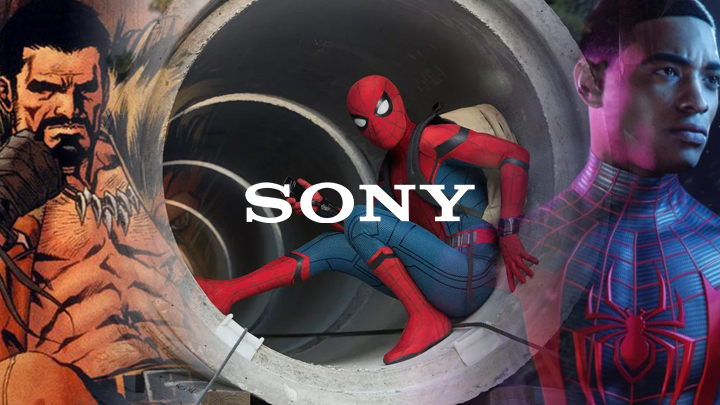
After a long wait, the Spider-Man: No Way Home trailer has finally arrived. Not only that, but it also gave us our first look at the return of Alfred Molina as Doctor Octopus and a tease of Willem Dafoe’s Green Goblin. Of course, it continues to build the existence of other Spider-Man Variants making their appearance even if they got denied in the past. Sony even gave their new franchise a brand new name with Sony’s Spider-Man Universe. In a way, that new branding might offer a glimpse into where the franchise is heading and could hint at what the future holds for Spider-Man beyond his third entry in the latest franchise.
The first that seems curious about the naming is that they didn’t go with the Spiderverse moniker. It’s not only strongly connected to the character but also adds to the multiversal storyline introduced in Spider-Man: Into the Spider-Verse. Yet, they went out of their way to make sure we know that this is Sony’s Spider-Man. They even left out any mention of Marvel, as the original name was Sony Pictures Universe of Marvel Characters.
No Way Home introducing multiple versions of the same character could give both Marvel and Sony a way to create their franchises separately. Tom Holland‘s version of the character can continue his journey through the Marvel Cinematic Universe. Sony, on the other hand, can take a different route by introducing a new version of the character that is unique to their universe or even bring back a legacy actor. The Spider-Verse animated film introduces multiple versions of Peter Parker and Sony isn’t dependent on a specific one. So, there are quite a few options on how they can tackle their new Sony’s Spider-Man Universe.
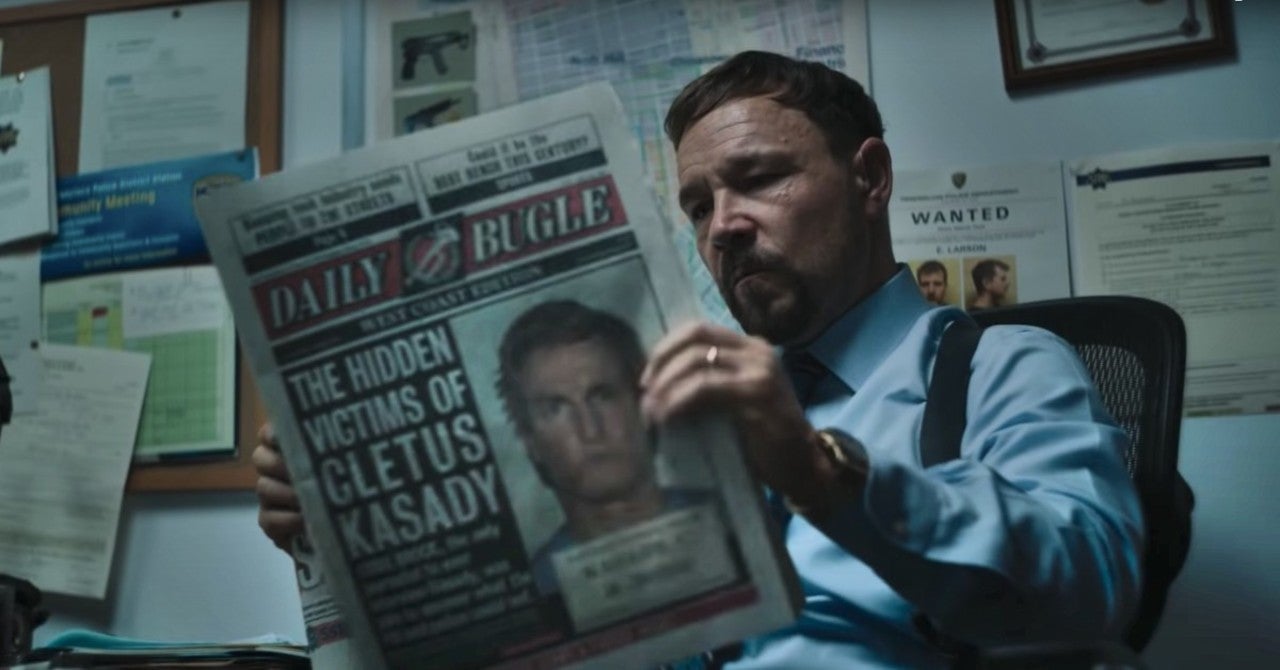
There have been no hints at Venom having connections to the current version of the character. In the film, we see the Daily Bugle as a newspaper while the MCU introduced it as an Info Wars parody. Plus, Morbius combined multiple elements adding a sense of confusion as to what exactly is in continuity or not. There’s always the chance they change these elements in the final film, as some effects work for trailers get rushed out, but it still opens up more questions about Sony’s plans. They don’t unveil their master plan as Marvel Studios does. So, we mostly can only guess based on what little information we are given.
The most present version of Spider-Man’s mythos in Sony’s extended franchises is the Sam Raimi version. It just seems unlikely Tobey Maguire would return to acting as a recurring character in Sony’s various films. Yet, if they introduce him as an older mentor figure, they could take the route of Miles Morales becoming that franchise’s version of the character. We might learn he was going to pass on the torch before the return of his old enemies draw him back into the spandex suit. Whatever direction they are taking, there’s a good chance the ending of No Way Home will finally confirm if we can expect more of Tom Holland in the MCU.
Any anime fans shutters when they hear the word “filler.” In the past, there have been too many story arcs invented for the anime adaptation due to them having already caught up with the manga they are adapting. As they play for time, they rush out story ideas that don’t truly match with the rest of the story, especially when following closely planned projects like One Piece. Netflix’s upcoming live-action adaptation will likely stick to what was set up in the manga, but there’s one filler arc I believe does deserve attention. It’s time to introduce the G-8 arc into the canon.
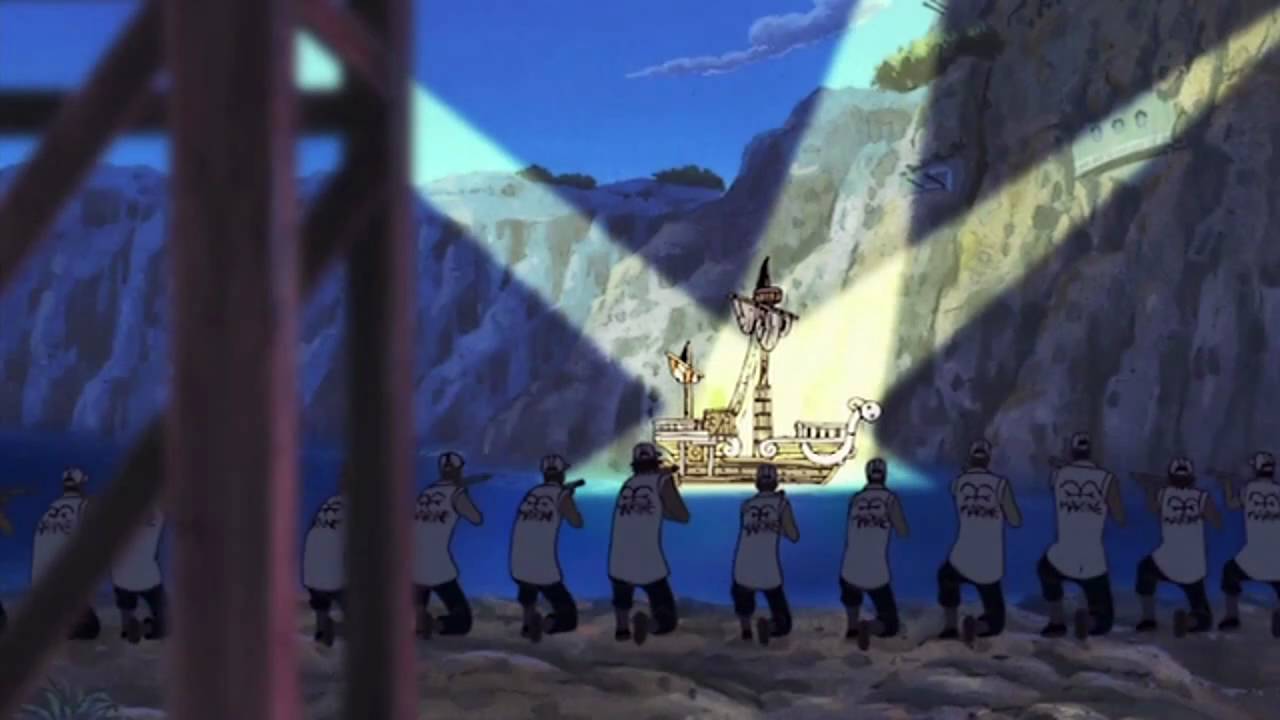
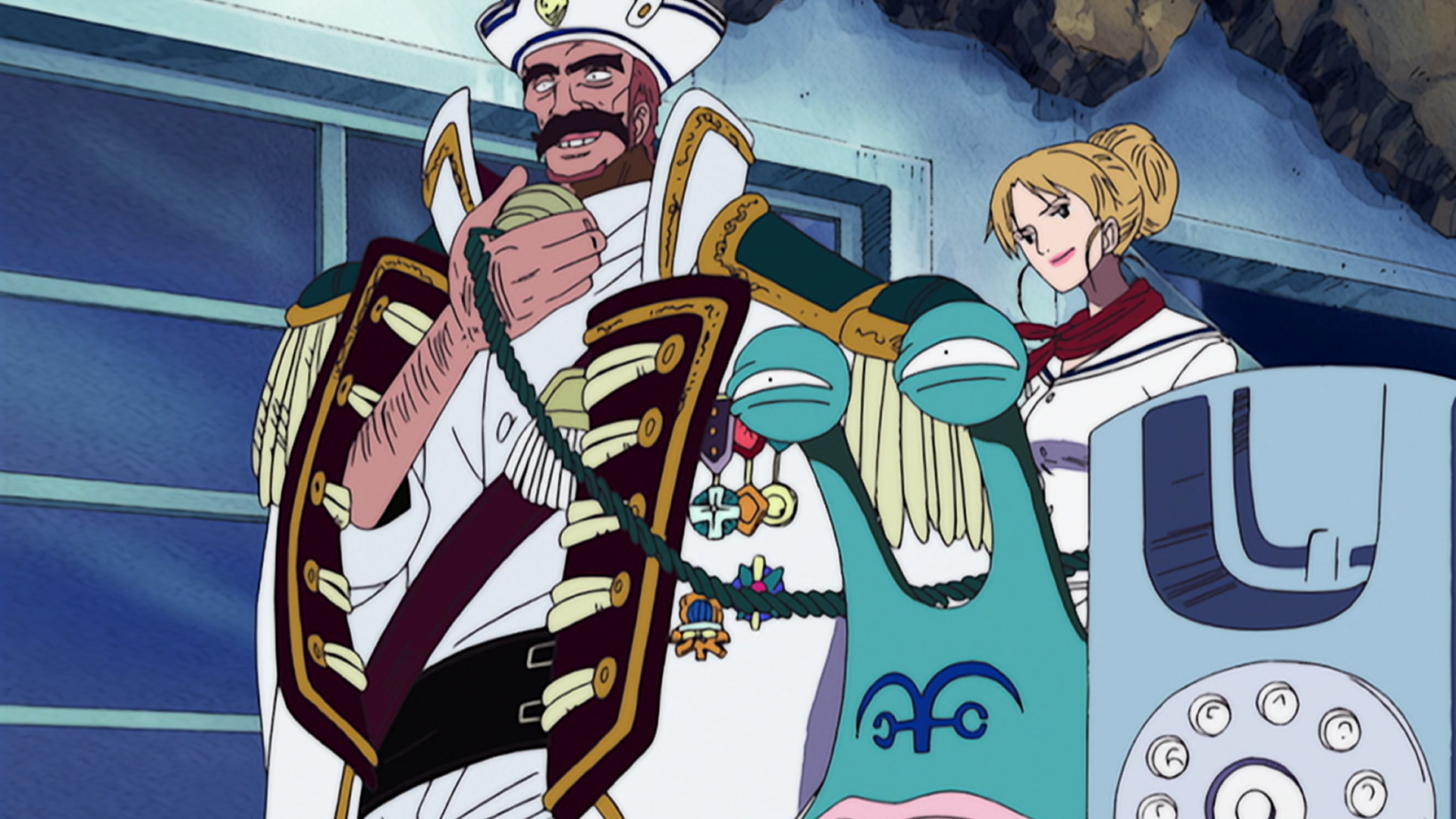
In 2014, the anime caught up with the manga and had a void to fill when the Merry Go drops from the sky islands into the open sea. So, the team took a different route and had the team land in the middle of the marine base known as G-8. They had to find a way to survive and infiltrate enemy ranks. There we meet the Marine vice admiral Jonathan and his wife, the head chef Jessica. Unlike most filler storylines, it has left quite the impression on viewers to this day.
As it’s a filler arc, there are no references to this location throughout any other adaptation. Also, the mangaka Eiichiro Oda has been very specific about what chapters he includes, as he loves utilizing parallels. Of course, a non-manga storyline would require some inversion to keep that theme alive and well between the Paradise and New World eras. The team behind the Netflix adaptation will very likely follow his original vision primarily.
Yet, there is the possibility of how they can include the storyline. It would be a waste not to explore one of One Piece‘s most fascinating members o the Marines, Jonathan, and further explore their history. In the anime, he is the protégé of Akainu. So, his inclusion would allow the series to introduce the character earlier on. His first appearance was during the Ohara Incident, which got explored in the Enies Lobby arc. They could also tease the CP-9’s existence and flesh out the Marines. It works as one or a maximum of two episodes after the end of the Sky Island Saga. Plus, the season-ending with them in the middle of a marine fortress would be quite an attention-grabbing way to end.
There’s also an existing parallel to this arc in the manga, which would keep Oda’s type of storytelling alive. This fact gets highlighted by a popular theory of the so-called “checkered fate.” YouTuber Totally Not Mark made the parallel between our favorite pirates’ journey on Jaya, Skypiea, and Long Ring Long Land to the Zou arc. G-8 takes place right before the confrontation with the Foxy Pirates in a Davy Back Fight, which writer Matt Owens has openly stated will get included. In a way, the Zou arc already has parallels to G-8. Rather than escaping a fortress they fell into, they need to enter a mysterious city on top of a wandering giant elephant. Also, it’s not the Strawhat pirates pretending to be someone else to save themselves, but its inhabitants, the Mink tribe, pretending to keep someone safe. It works as a parallel even if loosely. The theory actually would still work with G-8 getting included in the series’ canon.
We don’t know how closely the Netflix series will follow the original manga series, as they have quite a bit of story to bring to life. We might even see game stories or films make it into the series as additional entries due to Netflix not abiding by classic seasonal structures. Yet, it seems unlikely as Oda is heavily involved with the series and, as revealed by Owens, wants the core story to remain. Still, G-8’s inclusion might also help define a seasonal arc, as they can build up to the Water Seven arc and keep the massive Enies Lobby for a follow-up season. It’s also an arc storyline that fits right in with any other arc, for some even more so than the Davey Jone Fights. The big twist of that arc would be a perfect way to end that to keep viewers on their toes. So, one of the best filler arcs ever put to the screen might help the live-action adaptation’s structure and remain within Oda‘s original vision. Also, it would just be great to see more of Jonathan in the series.
Let The Right One In. Thirst. What We Do In The Shadows. The Castlevania series. Shadow of the Vampire. Legacy of Kain. Vampyr.
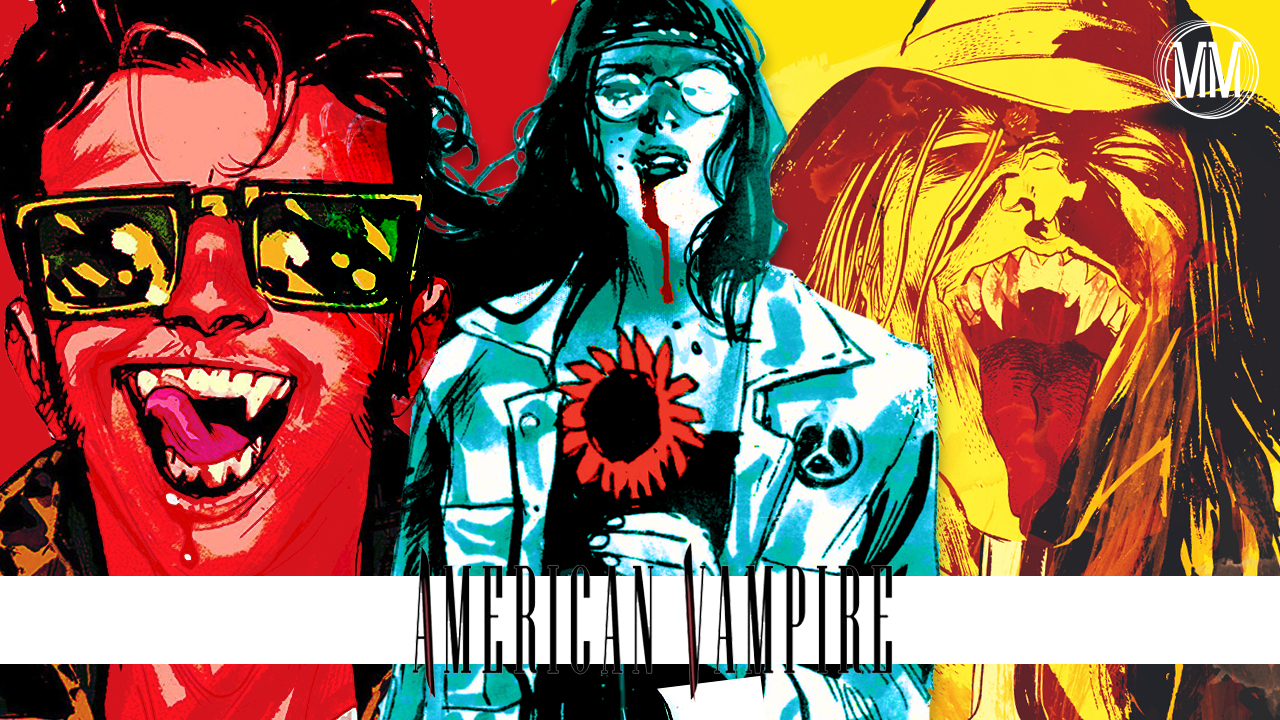
There’s really never been a shortage of amazing vampire media in the last 20 years. Yet by the 2010s, vampires had been run into the ground. Twilight, True Blood, and other vampire teen dramas had exhausted the idea of vampires in the mainstream and with it any semblance of cool. But in the world of comics, a truly great vampire story was gestating in the mind of writer Scott Snyder. Just as vampires were becoming passe, in came Snyder and artist Rafael Albuquerque with American Vampire, a neo-western horror saga spanning decades of lives and countless people.
At the center of this saga is Skinner Sweet, an outlaw from the Wild West who in a twist of fate ends up being the first in a line of American-bred vampires. Opposite Skinner Sweet is Pearl Jones, an aspiring actress in 1920’s Hollywood whose life forever changes after an unfortunate encounter with a vampire coven made of Hollywood’s most elite. Together, their intertwined fates put them at odds with the vampire race.
The modern anthology runs deep in American Vampire’s blood. Each arc deals with a different character’s perspective, often set in a totally different time period from the last, with lots of genre trappings. The first arc starts as your quintessential Hollywood fairy tale but then switches gears into a bloody horror movie. Some arcs go full Western when Snyder explores vampirism in the age of frontiersmen and cowboys. The book goes even bigger with two vampire WW2 stories: one set in the Pacific Theater of the war ala Band of Brothers and an Indiana Jones caper set in the Carpathian mountains of Nazi-occupied Europe. Hell, if you’re itching for something lower stakes (pun intended), there’s a coming-of-age story set in the 50s that taps into the delinquent cruising culture of the era.
That’s not even counting the standalone short stories written by the medium’s best writers and artists, including Stephen King, set in this world. Skinner and Pearl may serve as American Vampire’s linchpins but they aren’t the only stars in this joint as the comic explores the stories of other numerous characters in the saga, all the while connecting them in very meaningful ways.
And goodness does American Vampire boast an ensemble of characters that would give the most famous movie vampires a run for their money if this book is ever adapted for the live-action big leagues. You have Skinner Sweet, whose arc spans an entire century; he starts off robbing trains in the Wild West, becomes a soldier in WW2, a gangster running a brothel, a highway smuggler in the 60s, and by the end of the book, he’s an Evel Knievel death-defying stunt man in the 70s. Pearl Jones, who begins as a meek country girl seeking to make it big in Hollywood transforms into a battle-hardened crusader for her kind. Travis Kidd is a teenage vampire hunter in the 50s who poses as a womanizing delinquent in order to sniff out vampire families in the suburbs. His secret weapon is a pair of wooden fanged dentures he uses to bite vampires back.
Central to the story are the Vassals of the Morning Star, an organization dedicated to the eradication of vampires. Leading this organization are Linden Hobbes, a ruthless company man, and Felicia Book, a star agent with deep ties to Skinner Sweet. Calvin Poole is the resident genius and taxonomist, who himself gets caught in the hellish path carved out by Skinner Sweet. The Vassals also have an agent who moonlights as a traveling musician and relays information to other traveling Vassal agents via the color of the suit he wears on stage. This book is as nerdy as any Marvel or DC comic.
Scott Snyder and Rafael Albuquerque have created a world so immersive, lived-in, and intricate that they’ve even created their own elaborate vampire taxonomy. Usually, you think of vampires, you think of the most generic kind. In American Vampire, those are the Carpathians; standard, basic bitch vampires who have the most famous of weaknesses. This kind makes up most of the vampire status quo in America. Synder brilliantly establishes that a lot of Carpathians were included in the first settlers of the New World.
In addition to that, you have the Gaelic Prime; vampires that can transform into monstrous bat-creatures, the Canis Asiatic; this book’s version of werewolves, Iberian and Caspian breeds, mummified vampires from Ancient Egypt with corrosive fluids, mindless bloodsuckers in the Pacific, and of course, the Abominus Americana; the titular strain that sets the vampire world on fire. Unlike the usual vampires, the American vampire has a unique set of traits and weaknesses, which make them feared by most breeds. Snyder even goes as far as introducing ancient vampire gods within the lore of American Vampire.
With numerous characters, storylines, and minute details, it’s easy to get lost in a saga as complex as American Vampire but its emotional storytelling makes it a very welcoming read. Be it Pearl Jones’ decades-long romance with her mortal, everyman husband Hank Preston or Agent Cash McCogan’s desperate mission to rid his infant son’s disease at any cost, there’s always something human beneath the blood and fangs. Snyder and Albuquerque masterfully interweave all these elements together for most of the run.
American Vampire recently bid its final farewell with issue #10 of its 1976 run. That final run was frankly, disappointing. The finale was paced at a breakneck speed that disserviced a lot of the stories and character work that came before it. One of the best things about this book prior to the ending was how it took its time in exploring the world, showing perspectives of everyone, and letting us readers grow with them. The finale does none of that and plays out like those big Marvel/DC event miniseries where the 5 main issues make no sense if you don’t read the 100 tie-ins. Except here, there are no tie-ins that flesh out what’s happening in the main event. It’s all gracelessly shoved in together.
The finale goes big in a save-the-universe kind of way which takes away from a lot of the smaller personal conflicts that made most of American Vampire amazing. The scope feels ambitious but the ambition doesn’t pay off. It instead dilutes a lot of the magic of the comic. You’re invested in this book for the characters, their aspirations, their conflicts with one another, so when the story becomes about defeating the devil himself, it’s just not as exciting.
I can’t help but wonder what exactly happened to the story during its lengthy hiatus. The first run ceased production around 2013 and then resumed for a brief run that ran through 2015-2016. It was slated to resume the year after but never did. During that time, Vertigo was dissolved and was replaced by DC Black Label. Did the hiatus cause them to rethink how the story was getting told? Was Snyder just too busy working on his countless new projects that they decided to just rush through the ending? Were they only contracted to do 10 issues only?
Nonetheless, American Vampire will go down as one of the best reading experiences I’ve had as a comic reader. Even in the face of a rushed and unengaging finale, getting to know these characters was worth it. I was 22 and still in college when I first picked this book up. There are specific songs from that time period that was on heavy rotation when I was reading this book that I can never ever separate from certain panels. If I could discover the book’s emotional revelations and the surprising connections between each character for the first time, I would all over again.
Thanks, Scott and Rafael for creating my favorite kind of vampire.
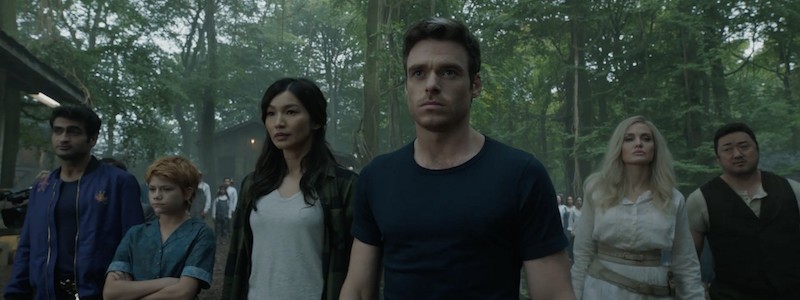
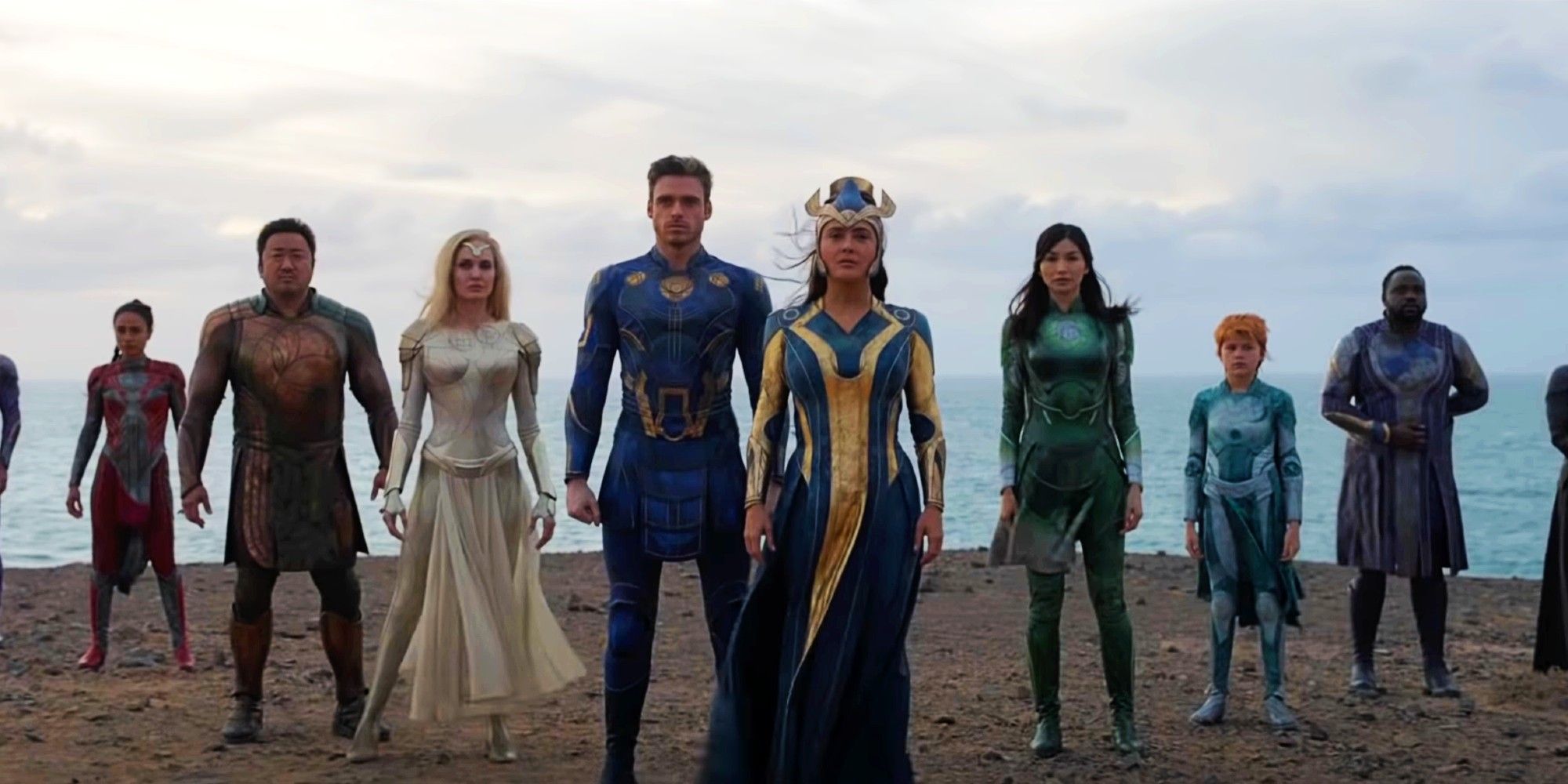
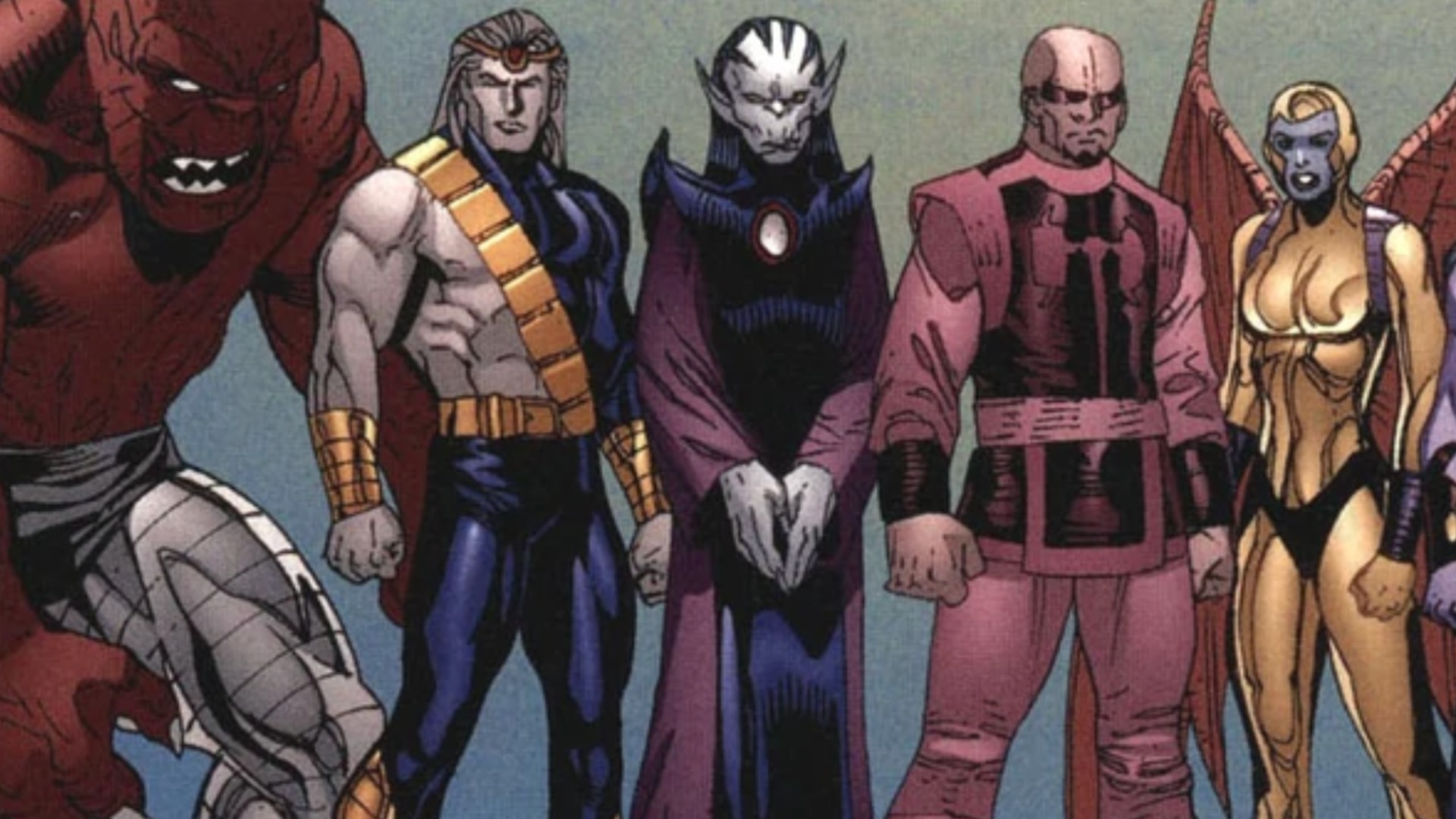
The final trailer for Marvel Studios’ Eternals gives us a closer look at the titular alien race, the Deviants, and even the Celestials. Yet many fans are not only intrigued by the main cast but also how they might fit into the wider Marvel Cinematic Universe. There are many questions the trailer still leaves us with, but also some intriguing hints that could be built upon. So using comic runs and promotional materials let’s guess as to where the Eternals might go next.
Created in 1976 by Jack Kirby, the Eternals are tied to the cosmos and Earth. They are a result of Celestial experiments on archaic humanity. Despite being immortals the “minds [of the Eternals] remained all too human” as noted in Avengers #361 Vol 1. This is perhaps where, as Thena suggests in the trailer, their love of humans comes from amidst their long-standing watch over them. As they are pulled in opposing directions between being amongst humanity and learning more about their Celestial creators in the cosmos, we might see our group of ten Eternals split between those different overarching stories of the MCU going forward. This is perhaps even more likely if the film follows some elements of Neil Gaiman‘s (Vol 3, 2006) and Kieron Gillen‘s (Vol 5, 2021) comic runs. What made these two stories stand out was that there’s a betrayer amongst them.
Sersi’s fondness for humans and her romance with Dane Whitman seems to suggest she might be amongst the top candidates to stay on Earth. Sersi was a member of the Avengers between issues #314 (Vol 1, 1990) and #375 (Vol 1, 1994) along with Dane Whitman. It suggests she might have a role to play alongside the cinematic version of Earth’s mightiest heroes. In the trailers, we’ve seen Kingo enjoying life as a famous Bollywood star, meaning he might not have any interest in the isolation of space. It’s not too hard to imagine him being a famous hero on Earth once the Eternals reveal themselves.
Sprite as the Eternal trickster child, who wants to experience fun amongst humans as she does in the 2006 Gaiman run, seems bound to the planet as well. Similarly, Makkari is repeatedly seen saving humans and Phastos’ home setup seems to suggest he has a human family, indicating each of them having a preference for being rooted where they are, regardless of whether they join a team of adventurers or not.
One of the leading candidates for space adventures is Ikaris. Although he volunteers to lead the Avengers in the teaser trailer, it’s also clear that his relationship with Sersi might be changing. Although it has been teased before, thanks to the update that Sersi and Dane are dating in the modern era rather than the past, perhaps might motivate Ikaris to head out into space. He has sometimes shown more reticence than other Eternals to help humans and join the Avengers in the comics. So, it’ll be curious to see whether that translates into the film or whether he goes in search of the Celestials or even others of their race.
In the most recent comic run by Gillen, Druig is another Eternal who has come under suspicion of being a traitor. In the trailer, it looks like he might be running some kind of a cult in a forest, suggesting he disagrees with how other Eternals have interacted with humans, as earlier character descriptions have suggested. Perhaps his disdain toward humanity might lead to a mission to get involved in the cosmic politics soon to engulf various planets and races of the universe.
There are some Eternals whose destinations are less foreseen. Ajak has often performed the role of the communicator with the Celestials in the various comic runs. Whether she stays on Earth to protect humanity or goes off into space to find out more about their otherworldly masters is an open question. The trailer teases a connection with Ikaris, which might hint at a joint journey. Thena and Gilgamesh have complicated comic histories. She’s been involved with the Deviant leader Kro and even bore him twin children in the comics, while Gilgamesh has been an on-off Avenger. In the trailer, he seems bound to Thena in some way. They are still hiding quite a bit of detail to really pinpoint these character’s future journeys.
Even if any of Eternals die, as they have done a myriad times, The Machine, the narrator of the recent Kieron Gillen run, is their resurrection protocol in the comics. It is an artificial intelligence that is composed of and thinks of itself as Earth. This is particularly interesting as EW recently noted that Chloe Zhao “loved the idea of treating the Earth itself as an 11th character in the film.” Fully introducing The Machine as a disembodied voice for a character could be an intriguing prospect for an antagonist in a sequel.
Another aspect could be how the various other hosts of Eternals that might be on different planets similar to Titan, Thanos’ planet could factor into a sequel. Perhaps we might even see some other Eternals in Thor: Love & Thunder, as Gorr The God Butcher goes on a tour of destruction. Drawing the Eternals team back together again seems like it will again represent a tension between planetary and cosmic conflict.
There are plenty of different places for the Eternals to join various overarching stories on the streets, across the globe, and beyond the stars. Whether it’s keeping to themselves and trying not to interfere again, saving people on street corners, joining The Avengers, or going in search of the Celestials, there are plenty of opportunities for each of them to go in different directions before coming back together for a sequel.
Marvel Studios caught fans off guard with their early morning drop of the first full trailer for their upcoming film, Eternals. The trailer not only showcased the beautiful scenery we’ve heard so much about alongside impressive displays of power from the group, but also seemingly gave a major clue as to what exactly the ancient aliens will be fighting against in the film.
While the trailer finally showcases the Deviants, the changing people who are forever pitted against the Eternals, it also indicates that while they pose a formidable threat, they’re not the biggest threat to Earth. In the trailers opening moments, Salma Hayek’s Ajak explains that when Bruce Banner snapped half of the Earth’s population back into existence, it provided enough for something called “the emergence” to begin. The way the trailer is cut, it’s easy enough to believe that the emergence refers to a new wave of Deviants coming forth to threaten the Earth; however, given the trailer’s heavy emphasis on Celestials and the fact that part of the film seems to be about assembling the team for a larger threat, it seems like a more terrifying, underlying threat may be looming.
Underlying may be the key descriptor for the film’s true threat, if comic book (alternate) history is to be followed. In 1999, Marvel Comics published Earth X, a limited series from creators Alex Ross, Jim Krueger and John Paul Leon. Taking place on Earth-997, Earth X was notable for Ross’ incredible redesigns of several characters who inhabited a wild dystopian possible future. Central to the series’ plot (and potentially to Eternals) was the seemingly crazy idea that the Celestials had implanted an egg at the center of Earth that, after eons of gestating and being protected by the Eternals would “emerge” and destroy the Earth. Interestingly enough, the Celestial eggs are also used to explain why that universe’s Galactus (revealed to be Franklin Richards) gets busy eating planets.
Earth X was enormously popular and spawned three additional series, the most recent having been published in 2020. That said, it’s still relatively unknown, as are the Eternals, so it would provide a wonderful bit of influence for Marvel Studios big screen adaptation. If the “emergence” Ajak is talking about is indeed that of a Celestial emerging from the Earth’s core, the Deviants are going to seem like small potatoes to the team of Eternals.
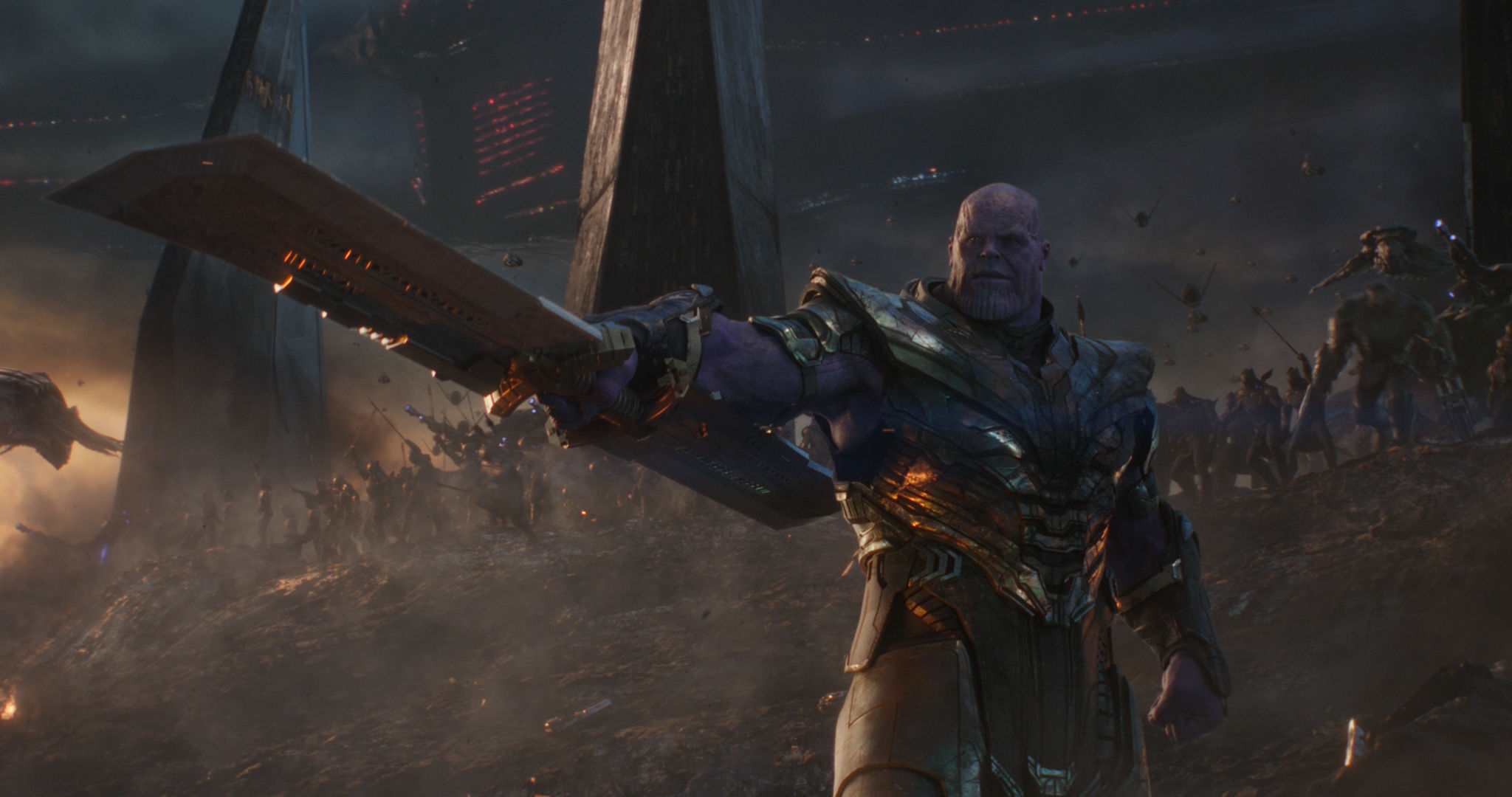
Finally, the new trailer for Eternals has arrived. It offers a closer look at the unique take on a Marvel Cinematic Universe story. After remaining hidden for centuries, they return to face an event known as the Emergence. Yet, we also get the confirmation that they are only allowed to interact with humanity to protect them from the evil Deviants. It’s the franchise’s way of explaining how they weren’t there to take on Thanos and other world-ending catalysts. The trailer gave us our first look at these twisted creatures that are a far cry from the humanoid figures we’ve grown up with within the comics. Yet, these small details may have confirmed that the Mad Titan has a very different origin from the comics.
Thanos was the son of Eternals A’lars and Sui-San alongside Eros on the moon of Titan. We briefly visited his destroyed home, but it’s still uncertain if the race has a connection to this planet. Thanos’ purple skin turned out to be the result of him carrying Deviants gene. His mother Sui-San feared what he became and tried to kill him. Yet, she got stopped even though she warned them what he might become when he aged. In his early years, he was a pacifist until he fell in love with Death.
So, if he is, in fact, part of the Deviants, wouldn’t that constitute that the Eternals would have to stop him? Yet the designs, even that of the only humanoid Deviant, are far removed from what we know from the race. So, it almost seems safe to say that they won’t explore his direct connection to the Eternals and the Deviants. There are also no signs of others from this race outside of the core group teased in the trailer.
So, who knows if the Eternals even exist beyond these members, which means Thanos’ parents and family might simply be from the planet Titan. When talking about his past, he implied they lived for quite some time on the planet before it met its untimely end. He could still have a genetic defect that makes him stand out from his race but has no direct connection to the Deviants.
The big question is also why the Eternals can only act when Deviants are involved. It almost seems like the Celestials, who gave them this order, are just trying to hide the genetic mistake they’ve unleashed upon the world. The films didn’t focus much on his past, which we thought might get explored in the Eternals film. Yet, this approach lets them tell a unique take on these characters and the Celestials’ influence over them without treading old ground. In reality, there’s no necessity to connect this race with Thanos.
As much as the Marvel universe intertwines, we’ve seen them take unique approaches to bring the comics to life. The unique take also opens up the question of how they might approach his brother Eros, also known as Starfox if he makes an appearance at some point in the MCU. We also have rumors that we’ll get introduced to other alien races that are known as “Gods” to humans. Perhaps, their introduction is the set-up to further exploring the concept first introduced with Thor’s arrival on Earth. Either way, it’ll be interesting if the trailers are hiding some details that might connect them after all.
The Infinity Saga saw the average box office of the MCU continue to grow even as Marvel Studios increased output from one film per year to three. They’ve maintained this quality and growth to this day with five additional streaming series on Disney+. This is a result of how this studio approaches its overall innovative process. Yet while these shows have attracted much of the cultural and critical appraisal this year, Marvel Studios collaborated on a massive project, which paves the way to a future frontier of engagement with fans that is, at the moment, unparalleled, the Avengers Campus.
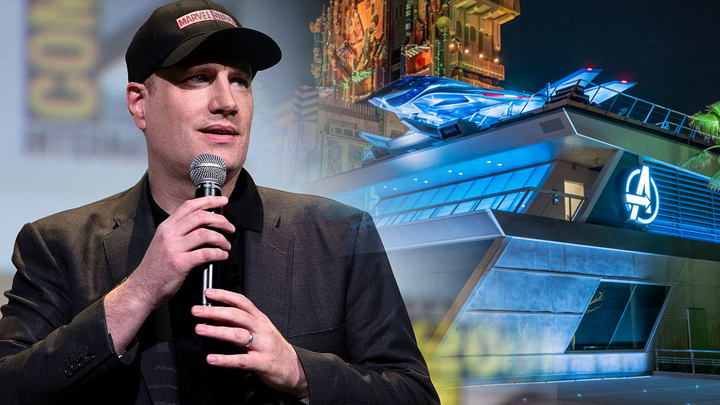
Avengers Campus is an MCU-inspired theme park area created in collaboration between Marvel Studios and Disney Imagineering “that will grow and evolve as [the] cinematic universe grows and evolves” according to Kevin Feige at the opening ceremony. Less than a week after Avengers Campus’ opening alongside Loki’s premiere episode, there were already sightings of Loki Variant L1130 in his TVA arrest costume alongside some Hunters. This continued to progress as the show aired.
Although it doesn’t take place in the MCU itself, Feige noted that the “studio’s filmmakers, artists, costume designers, and production designers have worked in lock-step with the Imagineers and the Parks team to create” much of what visitors experience, suggesting there is a certain amount of coherence between the two types of storytelling worlds. The fact that Marvel Studios have devoted some of their resources normally used in their films and streaming series to an interactive area suggests that they are aware of interactivity and engagement as a key aspect of evolving with their fans.
Marvel Studios’ work on Avengers Campus recognizes their fans “yearning to stimulate the other four senses outside of the visual.” That is according to Jeff Gomez, CEO of Starlight Runner, a transmedia production company he co-founded with Fabian Nicieza, where they have consulted on worldbuilding for the theme park area Star Wars Galaxy’s Edge as well as the films Avatar and Pirates of the Caribbean. Gomez knows what he’s talking about in regards to the rise and fall cycle in thepublic consciousness of these story world franchises and suggests there is a “five-stage cycle” of how both projects are made and received.
It goes through stages of experiments, classics, refinements, reflexives, and deconstructions, where “if we get to stage five … it’s very hard to go back, which means we’re near the end” which is similar to comparisons to the decline of the Western film genre. When talking about where the MCU is in this cycle “if multiple actors show up as a Spider-Man,” referring to the Spider-Man: No Way Home rumors, as a “reflexive element” which Gomez suggests is nearer the latter end of that cycle. While he also refers to WandaVision having self-reflective elements, it’s clear that Wanda Maximoff’s appearance in Doctor Strange in the Multiverse of Madness will be a narrative experiment, as subsequent film appearances from characters in Falcon and The Winter Soldier, Loki and What If…? will also be part of the same experiments.
Kevin Feige has repeatedly said that the Disney+ series “will tie directly to MCU feature films” and that Marvel Studios is learning as they go with Disney+ their experiments, meaning we can likely look forward to more classics and refinements in the TV-film narratives in the years ahead. All of this is to say, while it seems distant that Marvel Studios has interactivity as a key part of their narrative experiences, they’ve shown they are prepared to integrate new media formats into the main narrative, in order to keep their experiments fresh.
Given the standards, Marvel Studios always aims to improve and it opens up the question of what next media frontier they might explore next after entering streaming? The answer might well be in the clue of collaborating on the updating interactivity of Avengers Campus. Matthew Ball, a venture capital investor, notes that the amount of hours of engagement Fornite attractsprobably dwarfs that of the MCU (it would be a hard maths challenge to actually try and work out the monthly engagement hours of the MCU). In a 2019 earnings report, Netflix stated “We compete with (and lose to) Fortnite more than HBO” suggesting the competition for attention goes beyond the so-called streaming wars. Marvel Studios cannot afford to overlook this type of engagement.
It’s likely these kinds of things won’t happen until the art forms and the technologies have matured, just as Disney did not immediately dive into streaming. But what might the MCU crossing into the frontier of interactivity look like? Narrative space would have to be left for the films and streaming series, but I’ve thought of a couple of ways participants could interact with the MCU outside of those visual experiences.
Firstly, an in-MCU game of sorts could act as an Interactive Live Event (see #8 here) where participants don’t play as main characters but watch the computer generated heroes interact with their storyworld and vote upon their activities concurrently. This kind of integration would lend itself to the kind of behavior in interacting with video game streamers. Another route could take inspiration from The Marvels comic storyline, as players take on the roles of non-heroes amongst a graphical MCU New York, taking part in small activities at The Daily Bugle, Stark Enterprises, or Hellfire Trading Company.
They get to contribute to heroic missions and occasionally meeting our heroes, while witnessing what happens in the world above like Fortnite Events. The outcomes in both of these set-ups could lead to missions participants see play out, and also outcomes that appear in films and series which would allow fans to experience the MCU in an unprecedented way in contributing to the stories of our heroes.
There’s no guarantee that an interactive MCU integration would end up happening either of the ways mentioned above, just as Avengers Campus exists in a Marvel Theme Park Universe so could an online Marvel Gamerverse exist as part of the multiverse. Perhaps we could see existing franchises integrate into the overarching narrative in some way. Even before such a narrative integration could take place there would have to be a breakthrough in computing power, as well a storytelling maturity that is in its earliest stages as streaming competitors like Netflix just starting to move into gaming.
There is however a clear and constant fan desire to spend time in fictional storyworlds, and the excitement around the interactivity of Avengers Campus shows that a Marvel fan that spends many hours a week in a digital theme park contributing to the stories of their heroes is way more valuable to Marvel Studios than even the most regular rewatcher. This kind of evolution toward a Marvel Transmedia Multiverse seems at the start of a journey to that interactive horizon.
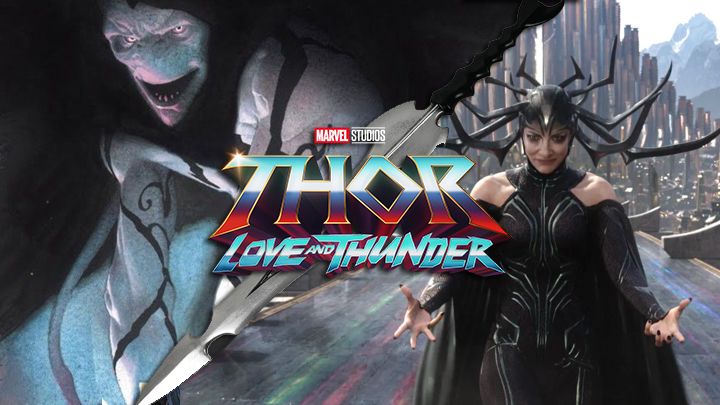
There’s been a burning question for many comic fans when Thor: Love and Thunder announced it will introduce Christian Bale as Gorr the God Butcher. The iconic weapon of the alien was the infamous All-Black the Necrosword that turned out to be the original symbiote forged into a sword by Knull. Yet, we’ve already gotten introduced to the weapon in Thor: Ragnarok through Thor‘s sister, Hela. At least, we believed it was the same weapon and didn’t get a confirmation until now.
She wielded an unnamed blade that seemed to be based on the comic’s design of the Necrosword rather than her usual Nightswords. Her summoning them into her hands seemed to stem from the comic version. It opened up the question of if she was even wielding the same weapon and, if she was, how it might connect to Gorr in the upcoming sequel. Well, the latest episode of What If…? may have given us the set-up to that very answer.
In a part of the multiverse where T’Challa became Star-Lord, the Collector became the new galactic crime boss after Thanos joined the good side. In his collection, he has a bunch of familiar weapons. It includes Mjolnir, the arm of Korg, and even Captain America’s shield. Suddenly, he pulls out the headpiece of Hela. The moment he wars it, he confirms that it is, indeed, a Necrosword. It also confirms she was using this weapon through the headgear rather than inherent ability. Of course, there’s no mention of All-Black or symbiote, but the first name drop seems relevant even in a What If scenario.
Now, the only question remains if Gorr gets his hands on this version of the Necrosword. There’s a good chance that after the events of Ragnarok, her helmet flies off into space and the hands of Gorr. While the Collector doesn’t seem to change its shape when putting it on, the heat from Surter could have warped it in the aftermath. There’s only the question about Hela’s connection to Asgard, which the What If…? episode negates with Collector wielding it. We’ll see if they potentially utilize this connection or take a different route, but it is our first naming of the Necrosword in the Marvel Cinematic Universe.
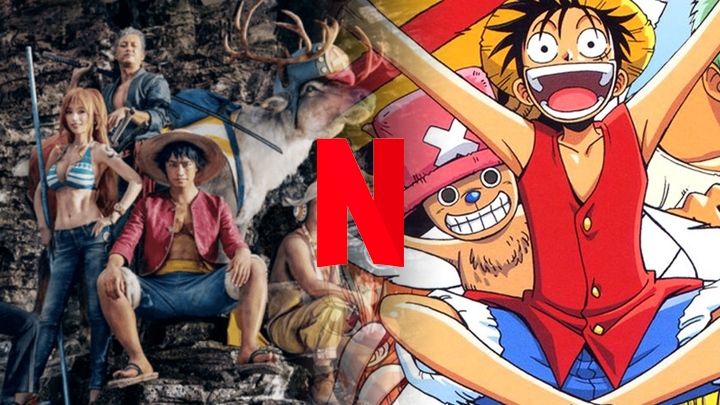
Netflix has the tendency to greenlight a plethora of projects to bank its growing success on. It recently started venturing into live-action adaptations of classic animes. While their attempt with Death Note was questionable, the upcoming Cowboy Bebop series seems promising, but we’ve only seen the cast so far and a tease of the soundtrack. A personal highlight was the announcement to adapt the manga series One Piece.
Eiichiro Oda‘s manga series started all the way back in 1997 and still continues to this day. The upcoming series was initially announced back in 2017, it wasn’t until 2020 that they got the backing of Netflix for the series. There hasn’t been a lot of details revealed since its announcement but with hints at its production starting soon, it’s the perfect timing to explore how much we actually know about the project and what is heading our way.
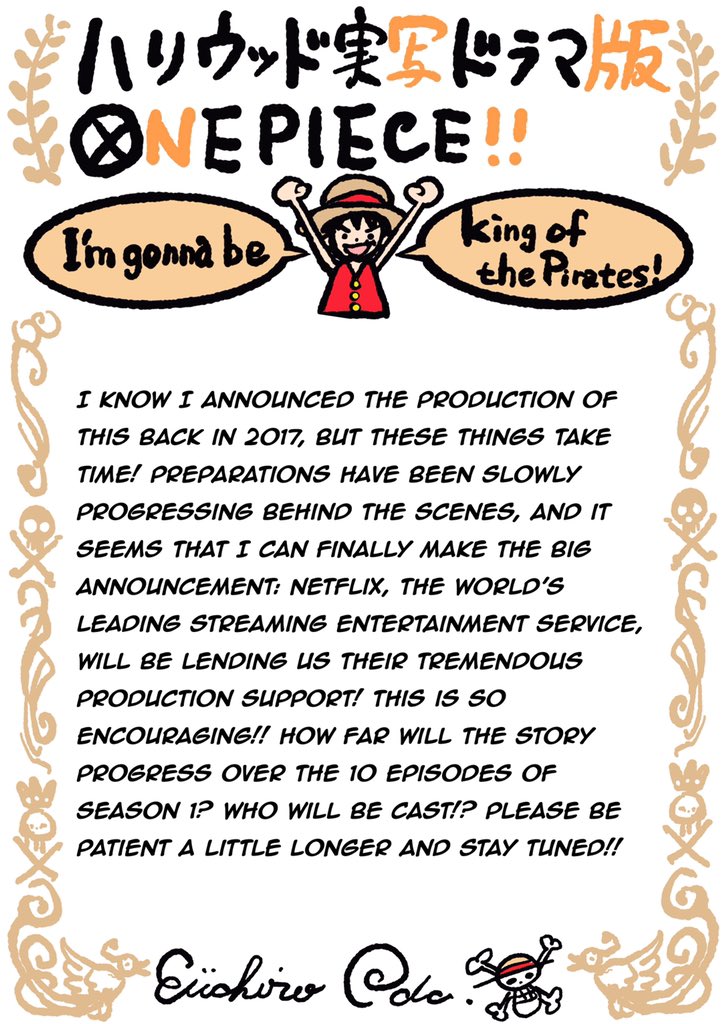
As the letter above showcases, the mangaka behind the series is an active executive producer on the series and will oversee its production. X-Files‘ Steven Madea joined the project as its executive producer and is currently still the only official talent attached to the project. Cowboy Bebop‘s Becky Clements will also act in the same role on the series. Agents of SHIELD and Luke Cage writer Matt Owens has publicly confirmed his involvement with the project during the podcast The Reverie, and was mentioned on the official Twitter page. He even confirmed that Oda supervised the scripts. In March, the working title “Project Roger” was revealed on Madea‘s Instagram account.
This brief tease was also followed by a brief interview by SyFy with Tomorrow Studios’ Marty Adelstein, who was working on the Snowpiercer series at the time and Netflix’s adaptation of Cowboy Bebop. He also gave the following update on when we can expect casting to begin and production:
We were supposed to start filming in August in Cape Town, South Africa. We anticipate the date being able to film [now is] September, at the latest. We have basically all 10 scripts written. We will start casting when we go back. My suspicion is June 1, but we will start doing our casting. We have a lot of names that we’re talking about, and we should be in production in September. We have been working very closely with Sensei Oda. So, we’re going to get started, and this one is very big. I mean, Snowpiercer was a big production; this is even bigger.
Marty Adelstein
There hasn’t really been any news since with only glimpses and rumors hitting the internet. If they are on track, they should be finishing up casting in the coming weeks before starting production in Cape Town Film Studios. There are rumors floating that Junie Lowry-Johnson joined the project as casting director alongside Black Sails‘ Marc Jobst as director, but these were never confirmed. The only movement that has been seen from the production is what looks like the Merry Go being built from all the way back in March as well.
There hasn’t been much of an update since until Illuminerdi dropped the character descriptions, which hints at the ongoing casting process. It seems the only one they could hint at is Ludi Lin for the role of Zoro, but that’s it. If their schedule still holds, we might hopefully get the official castings in the coming weeks before they officially start produciton on the project. It’ll be interesting to see if we get any set photos featuring the cast and when we can expect the project to finally hit Netflix after an almost five year long wait.
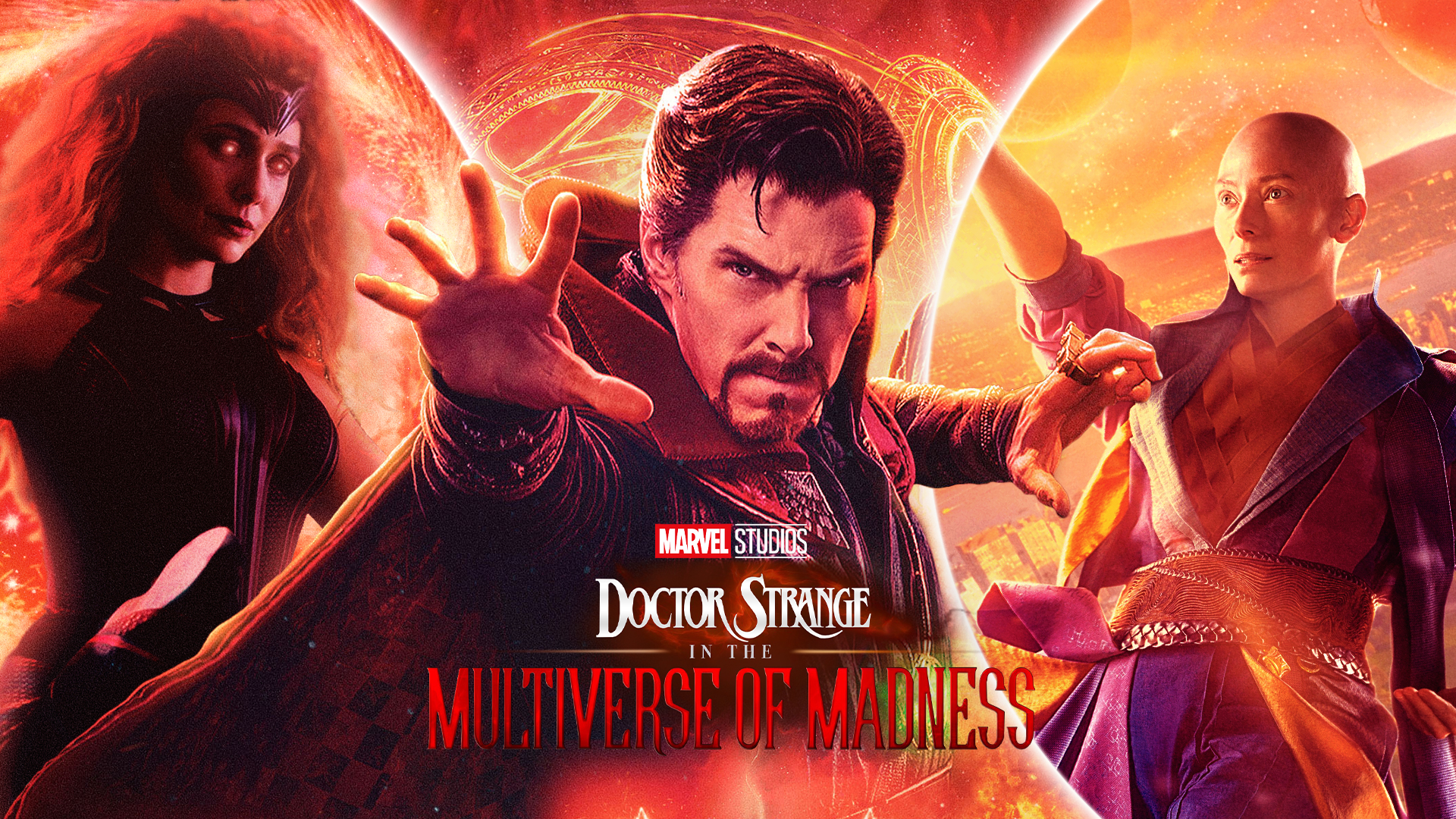
With more than a month since the season finale of Loki and with the story-altering events of What If…? well underway, the prospect of an ever-expanding multiverse mens countless possibilities for the Marvel Cinematic Universe. It appears that all this talk about character variants, alternate timelines, and multiple universes will all come to a climax during the highly anticipated film, Doctor Strange in the Multiverse of Madness. The sequel to 2016’s Doctor Strange is set to face the consequences of the events set into motion during WandaVision, Loki, What If…? and Spider-Man: No Way Home. However, even with all of these discussions about the branching timelines across the multiverse, very few details are actually known about the Doctor Strange sequel. However, some evidence indicates that there’s a good chance that we could potentially see the return of one of the most important characters during Stephen Strange’s upbringing in the mystic arts.
According to an IMDb listing, Julia Schunevitsch has been added to the stunts team for the upcoming Doctor Strange sequel as a stunt performer. What makes her addition particularly interesting is thatJulia also participated in the MCU previously in 2016’s Doctor Strange as Tilda Swinton’s stunt double for the role of the Ancient One. At this point in time, it is merely speculation that Swinton could return as the Ancient One, given that her character is already technically dead given the events of Doctor Strange. However, even past her death, Swinton has returned to the MCU on a number of occasions. She reprised her role in 2019’s Avengers: Endgame and she is also set to make an appearance during an upcoming episode of What If…?. So, her death in the main timeline of the MCU may not have completely sealed the fate of this character.
With the number of events that have transpired in the MCU regarding the timeline and the multiverse, it’s no doubt that Doctor Strange will need all the help he can get to face what’s coming, and having the former Sorceror Supreme on his side would potentially make a great asset as both he (and us) navigate across the Multiverse of Madness when it hits theaters March 25, 2022.
We use cookies to improve your experience on our site. By using our site, you consent to cookies.
This website uses cookies
Websites store cookies to enhance functionality and personalise your experience. You can manage your preferences, but blocking some cookies may impact site performance and services.
Essential cookies enable basic functions and are necessary for the proper function of the website.
Name
Description
Duration
Cookie Preferences
This cookie is used to store the user's cookie consent preferences.
30 days
These cookies are needed for adding comments on this website.
Name
Description
Duration
comment_author_email
Used to track the user across multiple sessions.
Session
comment_author_url
Used to track the user across multiple sessions.
Session
comment_author
Used to track the user across multiple sessions.
Session
Statistics cookies collect information anonymously. This information helps us understand how visitors use our website.
Google Analytics is a powerful tool that tracks and analyzes website traffic for informed marketing decisions.
Contains information related to marketing campaigns of the user. These are shared with Google AdWords / Google Ads when the Google Ads and Google Analytics accounts are linked together.
90 days
__utma
ID used to identify users and sessions
2 years after last activity
__utmt
Used to monitor number of Google Analytics server requests
10 minutes
__utmb
Used to distinguish new sessions and visits. This cookie is set when the GA.js javascript library is loaded and there is no existing __utmb cookie. The cookie is updated every time data is sent to the Google Analytics server.
30 minutes after last activity
__utmc
Used only with old Urchin versions of Google Analytics and not with GA.js. Was used to distinguish between new sessions and visits at the end of a session.
End of session (browser)
__utmz
Contains information about the traffic source or campaign that directed user to the website. The cookie is set when the GA.js javascript is loaded and updated when data is sent to the Google Anaytics server
6 months after last activity
__utmv
Contains custom information set by the web developer via the _setCustomVar method in Google Analytics. This cookie is updated every time new data is sent to the Google Analytics server.
2 years after last activity
__utmx
Used to determine whether a user is included in an A / B or Multivariate test.
18 months
_ga
ID used to identify users
2 years
_gali
Used by Google Analytics to determine which links on a page are being clicked
30 seconds
_ga_
ID used to identify users
2 years
_gid
ID used to identify users for 24 hours after last activity
24 hours
_gat
Used to monitor number of Google Analytics server requests when using Google Tag Manager
1 minute
Marketing cookies are used to follow visitors to websites. The intention is to show ads that are relevant and engaging to the individual user.
Pinterest Tag is a web analytics service that tracks and reports website traffic.









/cdn.vox-cdn.com/uploads/chorus_image/image/67305181/Fortnite_C2S4_BPLineup.0.jpg)