Blog

  • Stop Panicking: Breaking Down the Marvel Lawsuits

    Stop Panicking: Breaking Down the Marvel Lawsuits

    On Friday, news exploded that Marvel filed several lawsuits against the heirs of certain late comic book legends including Stan LeeSteve Ditko, and Gene Colan in order to keep full control of major Avengers characters such as Iron Man, Spider-Man, Doctor Strange, Ant-Man, Hawkeye, Black Widow, Falcon, Thor, and more. Misinformation and misunderstanding spread like wildfire, and headlines at times even suggested that these characters are at imminent risk of somehow being lost forever. 

    The internet, of course, immediately went up in arms at the thought that Marvel and Disney are on the cusp of losing iconic characters that we see daily in films, television, comics, toys, and everything in between. Some have even taken to social media to despair about how we are about to lose Spider-Man forever. There is good news—you can take a deep breath, and we’ll tell you why in our breakdown of the situation. If you take anything away from this let it be that the Avengers and friends are perfectly safe, but you should still probably care about what’s going on.

    The Lawsuits

    While Marvel’s lawsuits were filed yesterday, the dispute started well before then. The key point to understand is that Marvel has the right to use its comic book characters because the original creators of the characters—for example, Stan Lee—gave the company that right by allowing the publisher to have copyright protections for the property.

    Having copyright protections allows Marvel to exclusively use a character. DC can’t just start using Iron Man and neither can Hyundai without the go-ahead from Marvel. Without the transfer of copyright protections to Marvel, the exclusive right to use these characters would have remained with the individual creators. Right now, these creators are simply asking for copyright rights back from Marvel. 

    Marvel’s lawsuits are asking a court to declare that the creators have no legal right to reclaim copyright protections in these characters from the company. If Marvel wins, essentially nothing will change in the way the company gets to use the property. Very importantly, if Marvel, or Disney, loses this battle, it does not “lose” the characters. Marvel would lose full ownership of the characters but it is expected that the company would share ownership of the property with the creators’ estates. So, Marvel would still retain some rights in the characters, but the multi-billion-dollar corporation would have to share profits with the creators as co-owners.

    How Does It All Work?

    Multiple creators have notified Marvel in the past few months that the company’s copyrights on certain characters are legally about to expire—this is known as copyright termination. In copyright law, copyright protections are only granted for a certain period of time. The point of this is so that creative works can eventually be used freely by the public after creators have a chance to make money off of them. The precise time limit has changed throughout the decades, but under the Copyright Act of 1976, the duration of copyright protection became 56 years. So, the comic book creators here in theory have the legal right to terminate Marvel’s current copyrights if they choose to within a five-year window after the company has held the copyrights for more than 56 years. 

    For example, in August, the administrator of Ditko’s estate filed a notice of termination on Spider-Man, who first appeared in comic book form in 1962. Using the 56-year time frame, that would mean the window for copyright termination began in 2018 and will finish five years later in 2023. This is why some are panicking at the thought of Marvel losing Spider-Man in a couple of years. But as noted above, win or lose the legal battle, Spider-Man is surely going nowhere.

    The Characters Aren’t Going Anywhere

    If you are rooting for Marvel being able to use its characters, the good news is that you will be happy at the end of this legal fight pretty much no matter what. If you’re starting to question whether or not it seems right that creators have so few if any rights to their creations, you will probably be disappointed, but the fact that this type of conversation is being amplified is incredibly important (more on that below). 

    This is not the first comic book copyright termination debacle. The heirs that are currently going head to head with Marvel are being represented by attorney Marc Toberoff, who famously represented Superman creators Jerry Siegel and Joe Schuster in an unsuccessful termination attempt against DC. Interestingly, at the time, DC was represented by Dan Petrocelli who is now representing Disney and Marvel in this case. 

    Toberoff more importantly also took on a case eerily similar to the one at hand which involved Marvel. In the early 2010s, the attorney represented the estate of comic book legend Jack Kirby to determine whether he could terminate a copyright grant on Spider-Man, X-Men, The Incredible Hulk, and The Mighty Thor. While it never reached the Supreme Court, the courts below held that Kirby’s heirs were out of luck because the former Marvel freelancer had contributed his materials as a “work made for hire.” 

    In terms of copyright law, a work made for hire is a work—in this case, a character—that was created by an employee as part of their job. Considering that these creators generally were employed or had some working relationship with the publishers of the comic books that their characters found their way into, it seems like an easy fit. It’s not always that simple—however, Marvel has another trick up its sleeve. 

    Marvel will surely rely on their use of the “Marvel Method,” which was an in-house collaborative effort between writers and artists. Writers would discuss baseline ideas with artists being responsible for the more essential details. Importantly, if you believe in the Marvel Method, all of these classic characters currently up for termination were in theory created through this collaborative process using Marvel personnel and resources. 

    The simplest way of understanding the outcome is recognizing that Marvel has a very strong argument that all of these characters were created for Marvel. If a court finds that to be the case, the company will not lose its copyright protections. As explained, legal precedent is also on Marvel’s side. Disney also has a passion for settling legal disputes out of court—these creators might simply be paid off, to put it bluntly. The real question is whether or not we should want the current precedent to change.

    It’s All About How Creators Are Treated

    So now that we’re all on the same page that Spidey and friends aren’t about to disappear, do these lawsuits actually matter? The answer depends entirely on what you think the original creators of these iconic characters deserve all these decades later. Not only that, but it depends on what you think current and future creators should be owed. 

    It’s well known that Disney does not pay much at all to original creators even in light of the extreme financial success of their characters in the Marvel Cinematic Universe, among other channels. Earlier this year, former Captain America writer and Winter Solider co-creator Ed Brubaker spoke out about the lack of recognition and credit he and other creators receive in light of the big- and small-screen success of properties such as Captain America: The Winter Soldier and The Falcon and the Winter Soldier

    Whatever your viewpoints on employment, corporations, or law are, it’s undeniable how purely unfair it seems for a creator of Spider-Manfor example, to receive little if any meaningful compensation for their work that became a multi-billion-dollar franchise. While processes such as the “Marvel Method” might be great for business, they can also create an environment where the worker, writer, or artist is taken advantage of and credit is simply not given where credit is due.

    While this flurry of lawsuits will likely have little to no impact on how companies like Marvel control their copyright-protected properties, it does yet again reignite dialogue surrounding how creators are treated and compensated. The legal strategy being taken by the estates and heirs of legendary creators is not favored to win by a long shot, but perhaps incessantly knocking on Marvel’s and Disney’s door is the way forward. 

    Sources: The Hollywood Reporter, The Direct
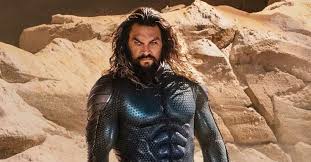
  • ‘Aquaman’ Sequel Adds 3 to Its Cast of Characters

    ‘Aquaman’ Sequel Adds 3 to Its Cast of Characters

    The king of the seven seas is set to make his big return in Aquaman and the Lost Kingdom. Plot details are still very much under wraps and much of the films casting has yet to be made public but looks to be making some moves as multiple new cast members have joined the upcoming sequel to the 2018 hit.

    If you couldn’t get enough of King Shark in The Suicide Squad, another shark seems to be making their way too the DCEU as Indya Moore has been cast as Karshon. Jani Zhao will play Stingray, an original character created for the movie, though it is unknown if she will be friend or foe.

    Vincent Regan will play King Atlan in a recast from the original film. The role was originally played by Graham McTavish and is unknown why the role was not reprised, possibly due to his involvement in House of the Dragon. Randall Park will also return as Dr. Stephen Shin who featured in a smaller role in the original film.

    Aquaman and The Lost Kingdom Is currently set to release in theaters on December 16th, 2022.

    Source: THR

  • Ranking ‘STAR WARS: VISIONS’ Episodes

    Ranking ‘STAR WARS: VISIONS’ Episodes

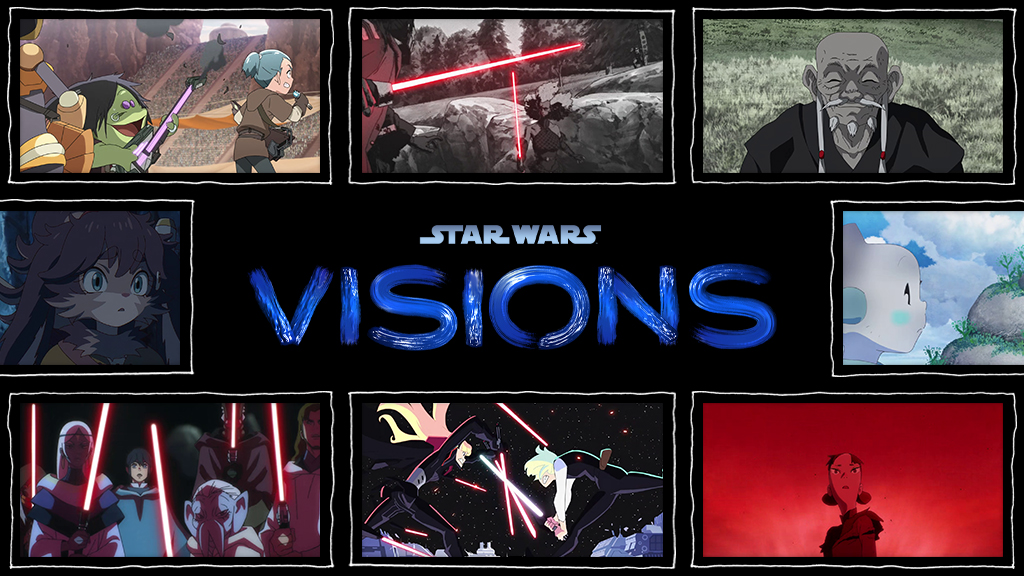
    The anime anthology series ‘Star Wars: Visions’ premiered earlier this week to generally favorable reviews (you can read ours here). With seven studios developing nine shorts between them, audiences were due for lots of variety in what concerns to tone, animation style, and overall feel for each of the episodes. Even the two repeating studios (Studio Trigger and Science SARU) managed to deliver immensely different projects, making this first batch of Visions (hopefully) feel fresh with every page turn.

    With each short being its own thing some clearly stand out, and even though ranking art of any sort sometimes feels a bit wrong, here is a ranking of our most enjoyable episodes:


    8 – 9

    With Star Wars being all about family, both the one you are born into and the one you find along the way, both The Village Bride and Lop & Ochō offer us different perspectives on such matters. Ultimately doing right by what you believe in, and not complacently accepting the ground rules you are presented with. Even if that means fighting your family or meddling in issues not your own. What both these episodes seem to lack is a sense of wonder, which makes you want to know more about the characters and locations we are shown.


    7

    The mystery ambiance is quick to grab the attention of the viewer, as we are left to wonder what sort of evil might be around the corner for the Jedi protagonists. The action set pieces aren’t all that inspired and thematically we left with the exploration of what the Prequels expanded upon, the smugness and lack of vision the Jedi demonstrated, something that allowed for a long-lost evil to resurface. It’s a pretty straightforward episode, one that doesn’t seem to lead anywhere, past its ending.


    6

    Feeling like a snapshot taken from a crazy Dragon Ball Z episode, The Twins gives us God-like force powers in Karre and Am (the Twins), where one can split an entire Star Destroyer using just a lightsaber. The entire episode is focused on their battle and how absolute power corrupts absolutely. Sadly, a lot of the emotional heft gets lost in the crazy spectacle which makes this episode feel a bit less special than the rest.


    5

    What’s not to like about a Jedi that decides to go into hiding only to try and turn himself into the biggest rockstar the galaxy has ever seen? Keeping in mind the tradition that all anime series should come with a kickass opening track, we are presented to a musical act hardly ever seen in the Star Wars universe. With special appearances by both Jabba The Hut and Boba Fett, we realize that music can ultimately save the galaxy. It may not be the best episode of the season but inarguably is the best representation of what Visions could be, unique perspectives and all.


    4

    One of the darker Star Wars: Visions shorts, Akakiri takes inspiration from Kurosawa‘s The Hidden Fortress, something Lucas also did in the late 70s when developing the first chapter of the Skywalker Saga. The ominous (but brilliant) soundtrack and animation style help to present the viewer an epic tragedy that echoes Anakin Skywalker’s fall from grace, with a likewise heartbreaking end.


    3

    In terms of visuals alone, this was the most intense episode, with its charcoal drawing look, that managed to bring to life the franchise’s Kurosawa DNA in an extraordinary way. This combined with the hints of brights lights and the dynamics of lightsaber fighting made for what is surely the poster child of the entire project. The story behind the main character only referred to as Ronin, can be further explored this October in its own novel written by Emma Mieko Candon.


    2

    Star Wars isn’t just the cool lightsaber fights, the technology, and aliens. While most of this is present in T0-B1, the feeling of pure happiness, the sense of wonder, hopefulness, and discovery, all distinctive Star Wars features, is what makes this particular episode stand out. Astro Boy and Le Petit Prince are both very much present in the exploration of the Star Wars universe we are taken on, personified in the title character.


    1

    Turning lightsabers into mood rings has never seemed like a better idea. Sure, it’s not exactly how we’ve learned lightsabers to work but the way it allows for a wonderful narrative to develop is not something to sneeze at. One of the biggest tells this was my favorite episode is that it’s, of all 9 of them, the one I wished could be continued in some shape or form.

  • Marvel Files Lawsuit Against Heirs of Classic Comic Creators

    Marvel Files Lawsuit Against Heirs of Classic Comic Creators

    Marvel filed multiple lawsuits today in an effort to keep its rights to iconic Avengers characters including Iron Man, Spider-Man, Doctor Strange, Black Widow, Hawkeye, Ant-Man, Falcon, and more.

    While it is easy to assume that these classic Marvel characters are actually owned by the company, surprisingly that is not the case. The original owners of the characters were the actual creators themselves, such as legendary comic book creators and writers Stan Lee, Steve Ditko, and Gene Colan, until they gave up the copyright. Back in the day, it was a much easier discussion to give these character rights up simply because there was no big TV, film, or video game adaptation of it. Now that billions are being made from their creations, it’s a whole different discussion.

    Marvel holds its current rights to characters like Iron Man through copyright protections. Essentially, holding the copyright in the character means that Marvel is the only entity that can legally use Iron Man in comics, movies, advertisements, products, and more.

    Under copyright law, the original creator can reclaim rights to her character after a certain period of time has passed. Last month, Ditko’s estate filed to terminate Marvel’s copyright on Spider-Man, who first appeared in comic book form in 1962. According to Ditko’s estate, the law requires that Marvel’s copyright end in June of 2023. While the idea of Marvel losing Spider-Man in less than two years is terrifying, Ditko’s estate’s claim most likely will not be successful.

    Marvel is countering Ditko’s estate’s claim and preemptively acting to protect its rights to other characters. Marvel filed five lawsuits today, asking a court to declare that these characters on the chopping block are ineligible for copyright termination because they are “works made for hire”. A work made for hire is a work–in this case, a character–that was created by an employee as part of their job. Certainly, Marvel employees creating characters for Marvel comic books arguably falls under this definition.

    History is on Marvel’s side as well. In 2013, comics legend Jack Kirby’s estate tried to terminate Marvel’s copyright on Spider-Man, X-Men, The Incredible Hulk, and the Mighty Thor. The court held that Kirby’s estate could not reclaim its rights from Marvel precisely because the Marvel freelancer had contributed these characters as works made for hire.

    In any event, the ongoing lawsuits certainly highlight tensions between powerful billion-dollar companies like Marvel and the creators who made these companies what they are. If Marvel does happen to lose against these creators and their estates, it and its parent company Disney would be forced to let ownership of characters worth billions go. Still, it is incredibly hard to mentally or emotionally separate these iconic and beloved characters form Marvel, and the idea of them at a new home is hard to imagine.

    Source: The Hollywood Reporter

  • EXCLUSIVE: Details on Olivia Colman’s ‘Secret Invasion’ Character

    EXCLUSIVE: Details on Olivia Colman’s ‘Secret Invasion’ Character

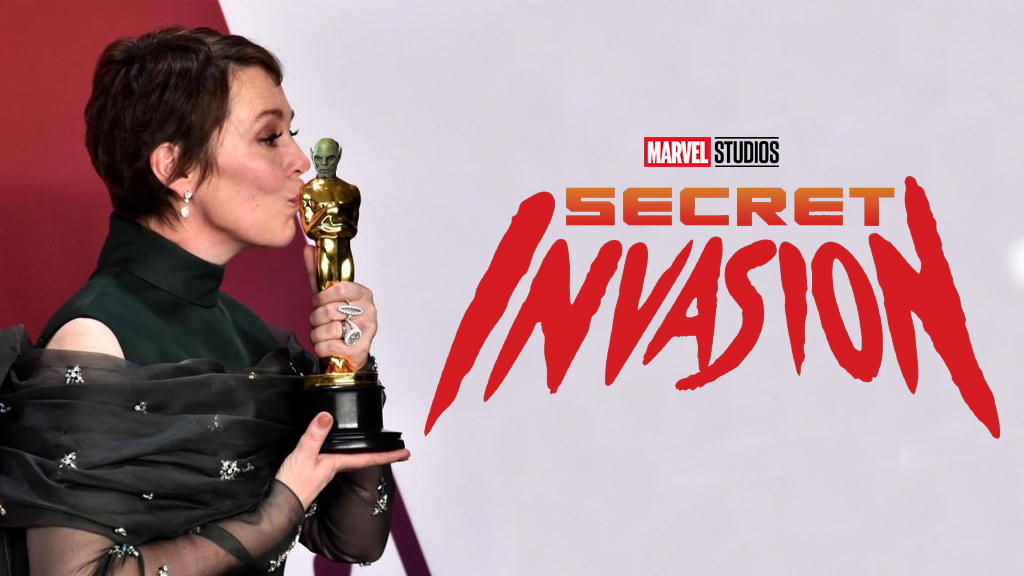
    Information on Marvel Studios Secret Invasion streaming series has been tough to come by with little more than a handful of casting announcements making their way out via the trades. Of those announcements, Academy Award-winning actress Olivia Colman’s generated a great deal of buzz. Her role, like co-stars Emilia Clarke’s and Kingsley Ben-Adir’s, have been kept secret, but Murphy’s Multiverse is now able to share a few tidbits about Colman’s character.

    While Disney and Marvel Studios are working hard to keep her character’s identity a secret, we can share that Colman is portraying a mysterious spy with a commanding “Fury-esque” presence. Indeed the series will be as spy-heavy as expected, with a half-dozen spy roles, including this one. Like Fury, Colman’s character will be a bit of a puppeteer who does and has done a lot of her dirty work behind the scenes. We’ve also learned that in addition to Colman’s character being a major player in Secret Invasion, she’s also set to return in the role in other projects down the road.

    We’ve already seen Marvel Studios introduce Julia Louis-Dreyfus‘ Valentina Allegra de Fontaine into the mix of shadowy characters with their own agendas; adding Colman as another master spy with a bit of a European influence (as you know from previous reports, Secret Invasion is doing a lot of location filming in and around the UK) will expand the universe and also make it a little less trustworthy. Secret Invasion should begin principal photography soon and is expected to stream on Disney Plus in 2022.

  • James Gunn Teases Secrets in ‘The Guardians of the Galaxy Holiday Special’

    James Gunn Teases Secrets in ‘The Guardians of the Galaxy Holiday Special’

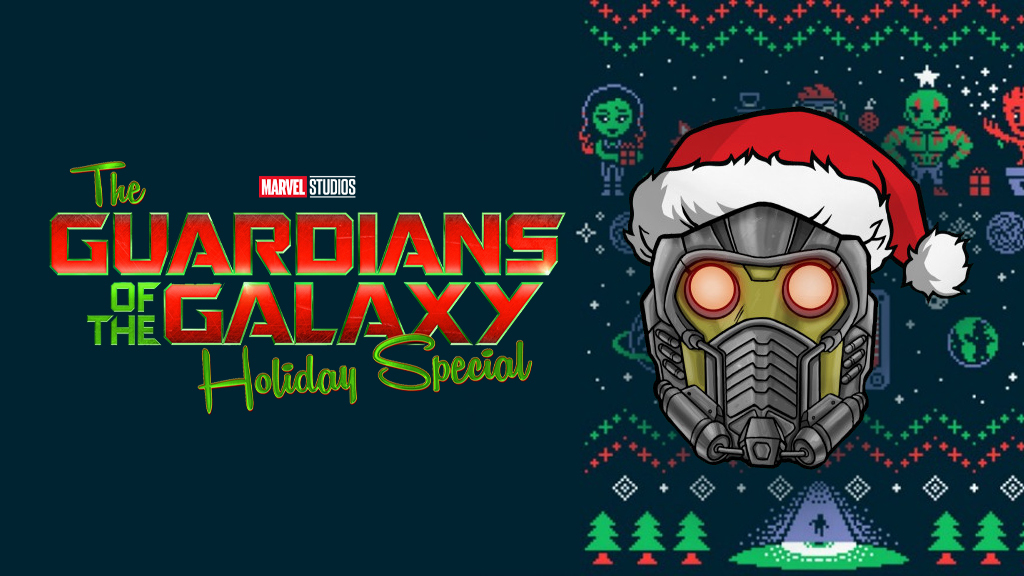
    After a long wait, we’re finally getting the third and final entry of the Guardians of the Galaxy trilogy. James Gunn will return to the director’s chair after his time with DC’s The Suicide Squad. The best part, we’re also getting a Disney+ Christmas Special ahead of the third film’s release. Gunn did confirm in July that it’s going to connect with Vol. 3, but it seems some curious secrets will be revealed in the upcoming special.

    https://twitter.com/JamesGunn/status/1441421919199264770?s=19

    Of course, he doesn’t reveal what exactly that means, but the special will likely connect Thor: Love and Thunder with the third film. So, we’ll get our first hint a the main plotline that will drive the Guardians on their final journey. The secrets in question might also reference some curious revelations between the team, such as the origin of Rocket. There were some hints that the upcoming threequel will focus on Gamora and Nebula, which could come into play as well.

    Source: Twitter

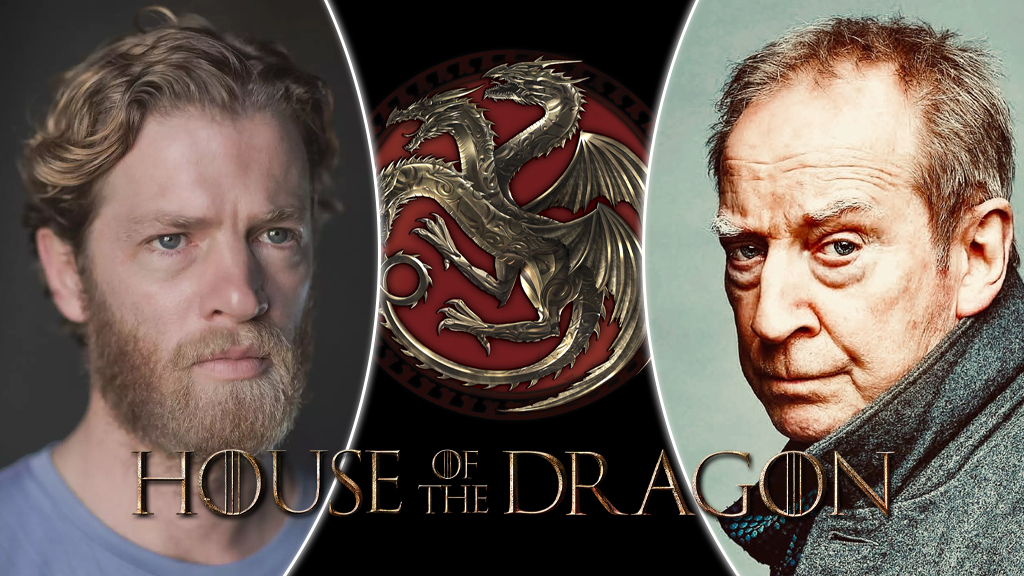
  • HBO’s ‘House of the Dragon’ Casts Jefferson Hall, Bill Paterson, and Many More

    HBO’s ‘House of the Dragon’ Casts Jefferson Hall, Bill Paterson, and Many More

    There has been a dry spell when it comes to the upcoming prequel series House of the Dragons. It’ll explore the time when the House Targaryen’s ruled. The series will have five leads, which we already got a glimpse of Matt Smith‘s Prince Daemon and Emma D’Arcy‘s Princess Rhaenyra Targaryen in some leaked set photos. It looks like they finally rounded out the cast, as Deadline is reporting seven new additions to the cast. One curious addition to the list is Preacher‘s Graham McTavish, who confirmed his involvement back in May. The series will see the addition of Wakefield‘s Ryan Corr, Devs‘ Jefferson Hall, Miss Marple‘s David Horovitch, Chernobyl‘s Matthew Needham, Hamilton‘s Gavin Spokes, and Good Omens‘ Bill Patterson.

    The series will take place 300 years before the original Game of Thrones occurs. So, it won’t be shackled by characters or storylines set up in the HBO success story. We still haven’t gotten a trailer or tease when it’ll release, but there’s a chance it is still busy filming. These casting announcements have been involved for some time, as McTavish confirmed his involvement a few months ago. HBO has high hopes to bring back the franchise, as its only one of many spinoffs that are currently in development. There’s a lot riding on its success to confirm that the Game of Thrones franchise still has a big future ahead.

    Source: Deadline

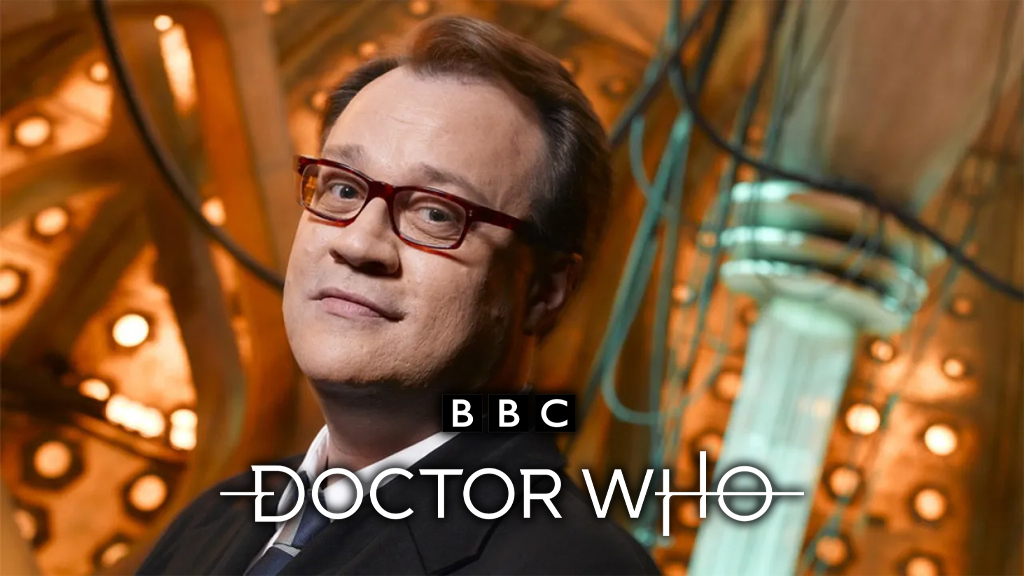
  • Russell T. Davies Returning as Showrunner on ‘DOCTOR WHO’

    Russell T. Davies Returning as Showrunner on ‘DOCTOR WHO’

    Showrunner Russel T. Davies is returning to Doctor Who. Davies will take over showrunner duties from Chris Chibnall who will depart the series in 2023. He is, of course, responsible for the show’s revival back in 2005. Davies is also credited for its ever-expanding popularity, catapulting it into a global phenomenon. Along with helping to relaunch Doctor Who, Davies created the fan-favorite Torchwood and The Sarah Jane Adventures. Davies ultimately left Doctor Who in 2009, which is when Steven Moffat took over.

    Davies is returning just in time to celebrate Doctor Who’s 60th anniversary, and to say goodbye to the latest Doctor as Jodie Whittaker will soon exit. Whittaker’s Doctor will feature in one more six-part series and three specials for 2022.

    On returning to the series, Davies expressed his excitement. “I’m beyond excited to be back on my favorite show,”  he said. “There’s a whole series of Jodie Whittaker’s brilliant Doctor for me to enjoy, with my friend and hero Chris Chibnall at the helm. I’m still a viewer for now.”

    Source: BBC

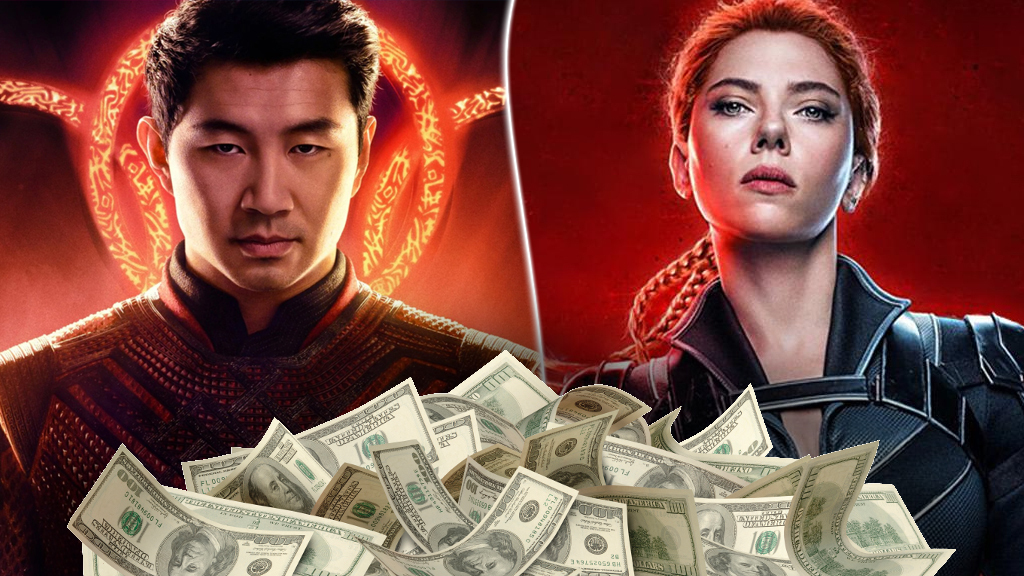
  • ‘Shang-Chi’ Set to Become the Highest Grossing U.S. Film of 2021

    ‘Shang-Chi’ Set to Become the Highest Grossing U.S. Film of 2021

    By the end of business today, Marvel Studios Shang-Chi and The Legend of The Ten Rings will surpass Marvel Studios Black Widow to become the highest grossing U.S. release in 2021. The Pandemic Box Office has been fickle but Shang-Chi has held course through 3 weeks and now actually looks set to be #1 at the U.S. box office for a 4th week.

    Shang-Chi enters September 24th only $200,000 behind Black Widow, has been averaging a little more than $1.6M the last 3 days and should have enough momentum to earn another $10M at the box office this weekend which should be plenty to keep the #1 spot, especially as Dear Evan Hansen looks to be a bomb. If everything stays on track, Shang-Chi should cross the $200M mark in the U.S. sometime next week, making for an impressive theatrical haul in the midst of the pandemic.

    Shang-Chi‘s success has emboldened Disney to keep its next Marvel Studios film, Eternals, as a theatrical exclusive opening on November 5th. The film will feature another set of unknown characters, like Shang-Chi, but boasts an ensemble cast full of big names. ShangChi is the champ but the question now becomes how long will it hold the belt.

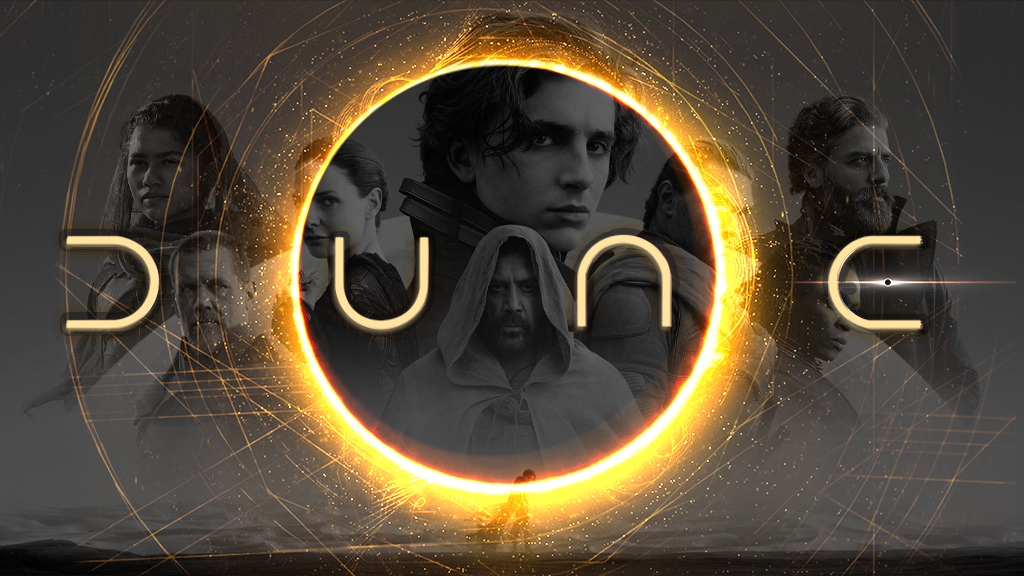
  • REVIEW: ‘DUNE’ Is A Mesmerizing Cinematic Experience

    REVIEW: ‘DUNE’ Is A Mesmerizing Cinematic Experience

    Dune was without a doubt my most anticipated movie ever. After years of waiting, I had the chance to finally see the movie (twice!) and I can confidently say that Dune is another brilliant film in Villeneuve‘s career. Is it the best? I think not. But it’s certainly the most personal in terms of form as well as themes. It is the kind of film that will go down as one of the most unique blockbusters of this century, one that has brought a lot of fresh air into the landscape of mainstream cinema.

    Dune is a coming-of-age story of a young man named Paul Atreides who is frightened of leaving Caladan – his home planet full of water and a variety of life. House Atreides is supposed to go Arrakis, also known as Dune, which is a desert planet with a rough ecosystem. However, Dune is full of spice called melange, a psychoactive chemical that is the main natural resource in the entire Empire. Melange enables interstellar travels and without it, the economy of the empire would collapse. As soon as Paul enters the Arrakis’ environment imbued with spice, his powers awaken.

    Denis Villeneuve has created a work that is enthralling in its immersion and scale. The editing makes the film feel like a dream, which resonates with Paul’s storyline and the film’s narrative. From the very beginning, we step into the shoes of Paul Atreides who is faced with strange dreams, and from a certain point, he loses his footing and stops fighting both his nature and the environment of Arrakis.

    Dune delivers a solid story about adapting our bodies and subconsciousness to a new environment, showing the power of nature over our petty human issues. Paul, being the (false) messiah, is faced with the sandworm Shai-Hulud, a sacred and religious manifestation of the power of nature. From the beginning of the movie, it’s clear that Paul’s journey isn’t a pleasant one but a sad one and at the very end of the film, I felt the emptiness and imprisonment that Paul suffered.

    Dune’s source material is very dense and comprehensive, as it deconstructs the journey of a white hero while providing readers with a treatise on many sociopolitical issues. The filmmakers had a tough task to fit all of this neatly into the film’s narrative without losing focus on the main plot. I had a lot of concerns about this but as a fan of the book, I am really satisfied with how skillfully they were able to adapt 2/3 of the book’s material.

    While Villeneuve’s vision has an emphasis on the sacred and metaphysical parts of Dune, he doesn’t lose sight of the sociopolitical issues. From the very opening scene, the movie criticizes colonialism and the exploitation of the planet’s natural resources by the Empire’s great houses. It is a theme that is consistently built upon by Villeneuve, including Fremen’s tribalist lifestyle and their relationship with the otherworldly people. Moreover, Paul’s journey fits symbolically into the ecological thesis of the Dune universe and provides a good foundation for the sequel.

    As the movie adapts 2/3 of the book, some conscious flaws in the production are hard to judge after one movie. I have to state that my biggest disappointment and simultaneously the movie’s biggest flaw is the pacing. After the director’s work and the characterization of Dune itself, I had expected the picture to be calmly paced, in a style similar to Blade Runner 2049.

    But the movie is spectacle after spectacle with little room to breathe in between. The beginning of the second act, where the heroes find themselves on Arrakis, suffers the most as it never takes time to deepen the relationships of the characters. At this point, I felt that the movie was just ticking off some of the scenes from the book that only bring us closer to the midpoint of the story, robbing any weight from the build to the story’s pivotal moment.

    Denis Villeneuve is a genuinely talented filmmaker and presents the story gracefully but either the film should have paced better or should have been 10 minutes longer. Many relationships would have benefited from it. One of those characters that suffered from the pace is Doctor Yueh. I don’t want to reveal too much, but his character and his tragedy were completely swept under the rug.

    Villeneuve makes the most out of his canvas, using sound and design to tell stories, and building the atmosphere with Greig Fraser‘s cinematography. The entire film evokes a sense of historic real-world scale because of many vast panoramic shots, which takes us back to the first films of the Canadian filmmaker from Quebec. Arrakis, the culture, ecology, and religion of this planet are treated with non-fictional aesthetics. On the other hand, the more intimate, personal character moments are shot in a slightly more static tone. Many wide frames show us the scale and size of this universe and it never feels empty. It feels alive, breathing, and lived-in. Villeneuve and Fraser brilliantly draw the contrast between the humid and wet Kaladan and the sultry and hot Arrakis. Every frame is treated with reverence and care.

    As for the music, Hans Zimmer has probably delivered the best soundtrack of his career. The soundtrack is extremely diverse and feels a lot of electronics, oriental music, or strong vocals. The soundtrack in itself is a distinct character in the story.

    However, the most important element, which was supposed to highlight the internal state of the characters, is of course the acting. Overall, I would rate it as really good and I wouldn’t be able to point out a bad performance. I would say that some of the performances are simply unsatisfying due to lack of screen time or script problems, like Josh Brolin as Gurney Halleck or Chen Chang as Doctor Wellington Yueh, among others.

    The rest of the cast brings stellar performances The absolute MVP of the film is Rebbeca Ferguson as Lady Jessica. She is outstanding and brilliant in this role, providing a wealth of emotion and character simply with the most nuanced of expressions. She is genius in the fluidity of her mannerisms and switching between being a mother, Bene Gesserit, a concubine of a duke, or a warrior. Her interpretation of Lady Jessica perfectly corresponds with my idea of this character who from the beginning of the film plays chess with everyone.

    Timothée Chamalet as Paul Atreides is also great, and I could say he was born for this role. As in the case of Jessica, his performance matched my idea of the character. Timothée smuggles in a lot of nuances and also smoothly transitions from this scared boy to a person who has to face the fatalism of his existence.

    Dune is an event-like film and an experience that has stuck with me. I feel as if I have entered someone’s dream and seen images that have been in the mind of the creator for decades. It’s not a film without flaws, and I think it may turn a lot of viewers from it. In my opinion, it’s a film that breaks out of the blockbuster mold and tells a story through a visual and aural experience. This is a film that must be seen in a cinema, preferably in IMAX. This is the kind of movie that breathes and lives its own life, introducing us to this alien world with grace and a touch of style.