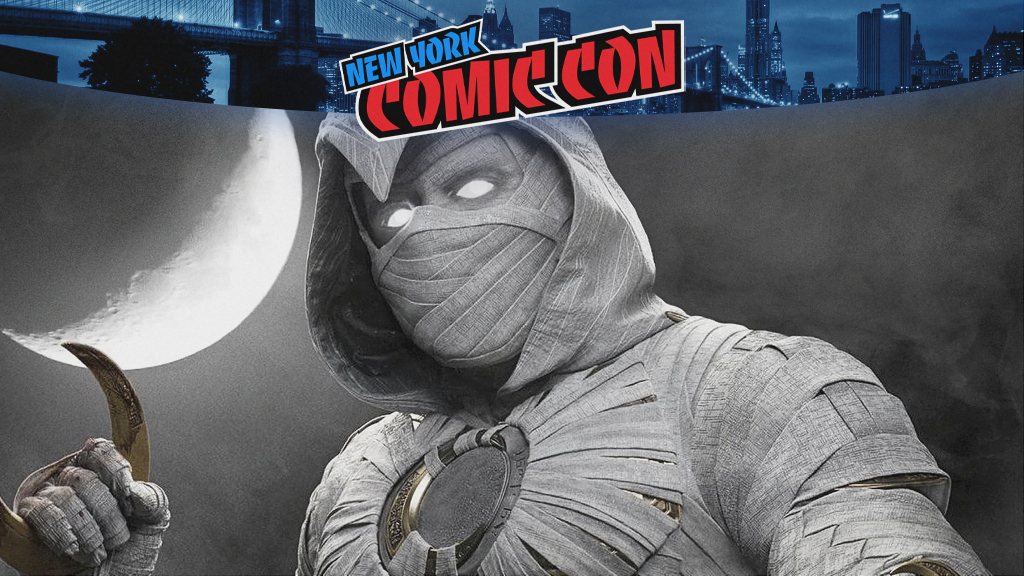
We’ve long wondered what the future might be for Moon Knight. There still hasn’t been an announcement for a second season even if the first one ended on a perfect note to continue the storyline of the newly introduced personality Jake Lockley. Still, we’re still anticipating some kind of update on the project.
Luckily, it seems that Moon Knight star Oscar Isaac was asked during a panel at New York Comic-Con if we can expect a second season. While he plays coy on anything definite, he uses the interesting wording of “system” in regard to the Marvel Cinematic Universe return of Moon Knight.
All I can say is that this isn’t thee last we’ve heard of the system that is Moon Knight.
We’ll have to see if they are building up to it and potentially what the future has in store for the character. There have been rumors that Moon Knight may appear in an upcoming film,b ut there’s not been a definite tease on that outside of some rumblings online. Still, it would be strange to bring in Isaac into the MCU for a single season on Disney+ and not further explore the character in the projects.
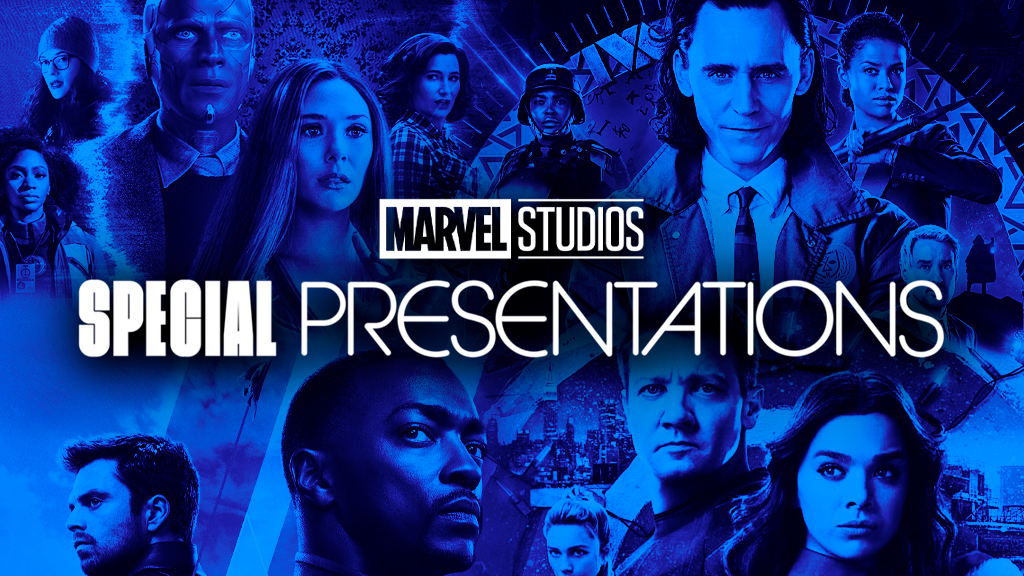
Marvel Studios Werewolf By Night debuted to praise from fans and critics alike, being hailed as a unique project for the studio in terms of both content and tone. The first of what’s expected to be many more Special Presentations for the studio, Michael Giacchino’s horror homage introduced a world of monsters and those that hunt them and was a little more violent than typical Marvel Studios’ fare. But being the first Special presentation and opening up a whole new world of characters and stories wasn’t all for the project as it also became the first Marvel Studios’ project on Disney Plus NOT to include some sort of post-credit tag.
Dating back to WandaVision, Marvel Studios has included at least one post-credit or mid-credit scene in every one of their Disney Plus streaming series, both live-action and animated. An argument can be made that the post-credit scenes have become a distraction, often taking away from the discourse around the body of the project and focusing on “what’s next.” And so despite rumors that actor Jaycob Maya would appear as lycanthrope Jake Gomez in a Werewolf By Night tag, he was nowhere to be found.
Giacchino recently stated that he had no intention of his project serving as a pilot for future horror installments, so it’s not entirely surprising that he put a bow on the story without teasing anything more. Sure, fans can wonder what Elsa, Jack and Ted might get up to next and exactly what the nature of the Bloodstone might be, but there were no promises made via a post-credit scene and that’s ok. Not even a “Jack will return” text appeared on screen. Too often, those promises aren’t kept or generate speculation that ultimately leads to disappointment. So while it might not mark the END of the tradition, it’s nice to see that the creators don’t feel beholden to it, allowing for them to use them as they see fit.
One of the nicest touches for Werewolf by Night was going for a black-and-white scheme. It not only made it stand out from the other entries in the Marvel Cinematic Universe, but it also made perfect use as a tribute to the 1930s and 1940s Hammer/Universal monster movies. It wouldn’t be the same project without the style and it still does add color in a clever manner later on. As it turns out, it wasn’t an easy path to convince Marvel Studios’ execs to go with this version as revealed by director Michael Giacchino.
The composer-turned-director highlighted that “in my mind, from the very beginning, it needed to be in black-and-white” but there was some skepticism. He doesn’t confirm if this was purely on the side of Marvel Studios president Kevin Feige, who seemingly also shared some uncertainty about the decision, but generally highlighted the “upper echelons” of the studio. Yet, he was so confined with the direction, he stated that he “had a special monitor” that was there purely to highlight the black-and-white aesthetic.
It seems it did take a bit to get the convincing, as it wouldn’t be until “maybe the third cut” that Feige was the one to agree on the direction. Special Presentations are the perfect way to try out new cinematic visual styles to add some diversity to how they approach their projects. Plus, WandaVision already gave us a black-and-white entry in the franchise which makes the uncertainty curious but that might be mainly due to that show also having in-universe reasonings with Wanda’s reality warping powers. Still, Giacchino‘s belief in the visual style was certainly a great one given how the project stands out from the rest.
With the release of Werewolf By Night, Marvel Studios has given us yet another format in which to experience and further explore the MCU. Following feature films, one-shots, and TV shows, fans have now been treated to its first Special Presentation, with The Guardians of the Galaxy Holiday Special, Marvel’s second go at the format, just a few weeks away. And one thing is certain: if it ends up being as well received as Werewolf By Night has been, the demand for further projects within the same framework is bound to rise.
James Gunn has stated that his upcoming Holiday Special will be under 40 minutes in length and considering that Werewolf clocks in at around 48 minutes (not counting end-credits) the basic parameters for this kind of project seem to be fairly straightforward. Tv-episode-length with a higher budget, and a more concise and focused script than a feature film. Could this structure become the go-to format for Marvel Studios when it comes to their Disney+ content? As with many debates, the truth usually lies somewhere in the middle.
Considering how most Marvel Studios Disney+ shows have been a bit lackluster, there is no doubt that there is still work to be done when adapting the MCU to an episodic format. The Special Presentation type of show does allow Marvel to keep its feature film formula—a formula that works more often than not—a bit more intact, but while that may serve particular stories, there is still much that can be gained by giving certain characters and storylines additional room to breathe by going the 6+ episode route. If anything, Special Presentations allow Marvel to have a sort of middle-ground between a feature film and a TV show, so that when the story does ask for a shorter runtime but still not garnering sufficient relevance for the big screen there is still a way to make it work. It wouldn’t be hard to picture a series like The Falcon and the Winter Soldier being developed as a one-hour tv special, telling the story of how both Sam and Bucky went from Endgame to Captain America: New World Order and Thunderbolts, respectively. The same case could be made for Hawkeye that, as FatWS, would take advantage of previously established characters to streamline the narrative, swiftly leading into the next project. WandaVision would perhaps be the exception since it took the episodic format to heart and made it intrinsic to its essence. As for all Marvel Studios series introducing titular heroes, along with their own set of side characters, from Moon Knight to Ms. Marvel and She-Hulk, the longer runtime provided by several episodes seems completely warranted. Taking time to properly explore their origin, in their own corner of the MCU, without all the noise provided by the evergrowing mob of characters that will eventually engulf them seems fair.
But while the story itself should be the main reason when choosing what format to go with, there are also more specific points working in favor of the new format. For one: talent availability. With the success of the Marvel formula, the franchise is either attracting A-listers to its key roles or turning unknown actors into household names. In either case, unless previously signed contracts so dictate, it will become increasingly hard to get the desired names to be completely available for the time that it takes to shoot the usual 6 to 9 episodes of a regular Marvel Studios series. By having the Special Presentation format available, the studios could keep production schedules shorter, stars happier, and probably even bring about a bit more of that Strange Alchemy that the Russo Brothersvalued so much (something that happens when characters who never interacted in previous projects share the screen for the first time) by making everyone’s schedule a bit more team-up prone.
There is also another issue, especially relevant when it comes to streaming services, that the Special Presentation format sort of bypasses, not on its own but due to the sheer volume of premium original Disney+ content. The importance of keeping active subscribers all-year round is a big reason for investing in episodic series to be a good business model. But since Disney+ already has other equally massive franchises that are aiming at pumping out content frequently, there is no reason for Disney, when looking at the bigger picture, to not be ok with a few Marvel shows becoming glorified one-shots and not having to drive online discourse for several weeks since there are other shows that will keep subscribers busy for that same period.
What is perhaps a bit more dubious, but that could actually be a reality, is what the shorter runtime (when compared to a TV series) might do in terms of rewatchability and how that relates to the ease with which Marvel properties have been able to enter the cultural zeitgeist since 2008. For years Marvel Studios made…movies. Fans had to wait months in-between projects and what did they do when a new one was about to premiere? They rewatched the previous ones. And with that, everything about the movies permeated the discourse, from the biggest set pieces to the smallest of dialogue lines. It feels difficult for the same thing to happen when instead of 120 minutes that can be easily experienced over, and over again, fans have to sit through double that same amount of time, especially when there is always something new coming right up. By trimming the actual minutes of content being released, Marvel might be doing themselves a favor since instead of trending due to having constantly something new out, they might give fans the pause to reconnect with the material in a way that’s way more sustainable in the long run, thus imbuing Marvel Studios projects with what made them relevant to begin with.
As for what the future holds for the Special Presentation format, only time can tell. But things are seemingly on the right track for it to become an MCU staple on Disney+.
Marvel Studios Werewolf By Night might be the first time Man-Thing has been present in the action, but breadcrumbs, hints and Easter eggs of the existence of the creature have existed for the better part of a decade. With Man-Thing, who Jack so lovingly refers to as Ted, now in the spotlight, a brief look back at his history, both recorded and imagined, is in order.
Iron Man 3
No, you didn’t miss Man-Thing in Iron Man 3; however, clues to his origin story could be found. In the comics, Ted Sallis was a scientist working on Project Gladiator, one of a billion attempts to recreate the Super Solider Serum flowing in the veins of Steve Rogers. Sallis’ research partner and lover, Ellen Brandt, was turned by A.I.M. and eventually tried to steal the research. Ted said no, Ted drank the formula, she shot Ted and Ted fell into the swamp. When he emerged from the swamp, he had become Man-Thing, obviously. Ted and Ellen had a less than happy reunion that led to Ellen’s face becoming horribly disfigured by the touch of Man-Thing because, as we all know, whatever knows fear burns at the touch of the Man-Thing!
In an MCU that’s seen a few attempts at recreating the Super Soldier Serum, it wouldn’t be too surprising to find out that Project Gladiator went down at some point in time. More than that, however, A.I.M. agent Ellen Brandt had a gnarly facial scar and a missing arm that could easily be retconned to have been the result of an encounter with Man-Thing! Given that Iron Man 3 took place in 2013, we can deduce that Ted has been Man-Thing for at least a decade assuming Werewolf By Night takes place in the MCU’s present day of 2025.
Thor: Raganarok
Having (not really) established that Ted operated as Man-Thing as early 2013 really does little to explain away how his face ended up on the Grandmaster’s palace on Sakaar in Thor: Ragnarok. As the Grandmaster says, time works a little differently there, but what you can be sure of is that at some point before the events of Thor: Ragnarok, Man-Thing was one of the Grandmaster’s Champions. It’s not clear under what circumstances he found himself participating in the Contest of Champions, but from Jack’s dialogue in Werewolf By Night, it’s clear that Ted has a bit of a habit of getting himself captured. Perhaps he found himself unwillfully part of the Contest, became champion and won his freedom. Whatever the case may be, assuming Werewolf By Night takes place in the MCU’s present day, Manny eventually found his way back to Earth.
Werewolf by Night
Man-Thing finds himself the prisoner of the vile Verusa as the events of Werewolf By Night begin to unfold. And while he has his revenge on her by burning her up and tossing her body across the great room of Bloodstone Manor, what’s more important in giving us clues about Ted’s excellent adventure is his heart-warming relationship with Jack. Michael Giacchino did a fantastic job of retrofitting Jack, Ted, Elsa and other characters, both seen and unseen, into the MCU’s history. The timeline isnt’ clear, but Jack’s been around for a while and he’s known Ted long enough to not only become besties with him but also save his butt more than once.
What’s Next
The existing relationship between Jack and Ted makes one ponder what other monsters exist within the shared universe who have also been on the receiving end of Jack’s help. If saving monsters, like Ted, is what Jack does in the MCU, it seems like he, Man-Thing and their new friend Elsa, might be likely to team-up again at some point. Putting those 3 together is enough for the foundations of The Legion of Monsters.
It’s also possible that Marvel Studios chooses to explore Man-Thing’s identity as the guardian of the Nexus of All Realities, a gateway located at a point where all of the many realities of the multiverse interest and can be accessed. The Multiverse Saga has just begun and isn’t set to end for three more years, meaning further exploration of the concept is sure to happen. Perhaps Man-Thing could appear in a project such as Loki Season 2 in a little less-monstrous capacity.
Werewolf by Night has finally found its way to Disney+. Marvel Studios has long kept mum on the project until D23 when they announced the project and the first teaser confirmed that a long-time Marvel character is finally making his Marvel Cinematic Universe debut. No, not the titular Werewolf but rather the quite popular Man-Thing. He also quickly became a fan favorite after the series’ release and a new behind-the-scenes image from the production has found its way online hinting that the character was practical.
In the BTS image shared by @halldehqs on Twitter, we get a look at the crew including director Michael Giacchino. What sticks out is the giant Man-Thing that is towering behind the crew with glowing red eyes. While there definitely was some CG use in the series, it looks like they had an actual practical suit on the set to bring the character to life. It definitely is a surprise given how Marvel makes use of CG for larger-than-life characters.
Giacchino did hint that they tried to take as many practical directions as they can. So, the fact that the character everyone assumed would be mostly CG had an actual suit is impressive. It’ll be interesting to see if perhaps the productions start integrating more practical elements moving forward, as Marvel Studios has always had the tendency to learn from each project they’ve worked on. We’ll have to see if we might see more of it in other Special Presentations moving forward as well.
Disney+ may have kicked off its streaming service with Star Wars and Marvel, but they have been quite busy expanding their available IPs. They purchased 20th Century Fox for a reason and aren’t wasting any time to also add a few other recognizable franchises to their list. Now, they are actively working on a new series based on the iconic Goosebumps franchise by R.L. Stine and it seems they already have their casting locked, as Justin Long is set to join the series.
The series will reportedly be inspired by five fo the popular Goosebumps books, and Disney has provided the following logline for the series.
The series follows a group of five high schoolers who unleash supernatural forces upon their town and must all work together — thanks to and in spite of their friendships, rivalries and pasts with each other — in order to save it, learning much about their own parents’ teenage secrets in the process.
Long is taking on the role of a school teacher, who ends up connected with a “decades-old supernatural murder” named Nathan Bratt. The series will seemingly adopt an overarching narrative rather than having each entry act as its own retelling of the iconic books. There have been quite a few adaptations throughout the years with Jack Black as a fictionalized version of Stine back in 2015. It even got a sequel that would release in 2018.
Marvel Studios’ first Special Presentation, Werewolf by Night, introduced fans to an unknown world of monsters, and perhaps just as important, the secret cabal of hunters who’ve spent their lives tracking them down. As one might expect, this collection of killers is both terrifying and eccentric, quickly making their mark on the Marvel Cinematic Universe as a group not to be reckoned with. However, some of these menacing murderers are more masterly than others, begging the question of who might be the best of them all. As such, Murphy’s Multiverse – home of fandom’s spookiest minds – has taken the liberty of digging in and breaking down every Monster Hunter the special has to offer, ranking them by order of skill and appearance.
6. Barasso
Daniel J. Watts‘ quiet monster hunter is ranked dead last for a few reasons, but none of them have to do with performance. Watts is actually quite charming in the role when he has his brief moments of dialogue and interaction, but otherwise, he doesn’t get to do very much. Despite surviving longer than most of the other characters on this list, Barasso sort of just stands around for most of Werewolf by Night‘s runtime. When he finally does get to put his skills to use, he’s slaughtered by the titular monster pretty quickly. The fact he sort of just exists without doing anything especially memorable puts him behind the rest of the pack, but maybe one day he’ll get to make a return appearance in another project. After all, Marvel Studios is scheduled to do quite a bit of time-jumping over the next few years.
5. Azarel
Eugenie Bondurant‘s Azarel is in a similar boat to Barasso, but gets the slight edge for at least having a memorable character design. The David Bowie-esque monster hunter is striking, and has a looming presence through the entirety of Werewolf by Night. Although they don’t get to show off their fun scythe-like weapon until the special’s climax, and are promptly expired by Marvel’s wolf-man, they do seem to have a suspicious beat on Gael Garcia Bernal’s Jack Russell from the very start. That alone shows signs of Azarel being pretty sharp, a trait that any good hunter should possess if they hope to make an impact in their field. Unfortunately, Azarel doesn’t get to do much more than look great and die trying, so they fall toward the bottom of the list.
4. Jovan
Kirk Thatcher‘s bombastic Jovan boasts frequently about his fifty-seven confirmed monster kills. His big personality and entertaining role as Jack’s first on-screen foil earn him a higher spot on this list than his fellow fallen hunters, even if he wasn’t able to make it out of Bloodstone Manor’s intricate maze alive. The axe-wielding maniac certainly makes an impression by befriending Mr. Russell before immediately trying to chop him in half, and his delightful comments about wishing he had a signature look likely endeared him to fans right off the bat. Also, being the first person killed by Man-Thing in the MCU is a pretty nice thing to have on the ole’ monster-hunting resume – if he were still among the living for it to matter.
3. Verussa Bloodstone
The true big bad of Werewolf by Night. At first, Harriet Sansom Harris’ Verussa Bloodstone appears to only be a mouthpiece for her recently deceased husband. However, circumstance leads to the revelation that Verussa is quite capable of hunting monsters on her own, and might have even been the true mastermind behind the Bloodstone dynasty. She’s certainly the most bloodthirsty of the bunch and might have killed her own step-daughter if Man-Thing didn’t intervene. The Bloodstone matriarch ranks third on the list as a perfectly cheesy villain with some of the best shots throughout the special.
2. Liorn
Leonardo Nam’s Liorn got to the second spot on this list by way of being oddly interesting without too big of a role. Helping matters, he happens to have the best death in the entire special, and his cool factor is undeniable. Another mostly silent monster hunter, Liorn gets a full-blown fight sequence with Laura Donelly’s Elsa Bloodstone that’s equal parts grotesque and breathtaking. It ends with him losing a hand and taking his own arrow through his head, which is awesome. Of all the hunters in Werewolf by Night who aren’t being obviously set up for a future in the MCU, Liorn is the one who probably most deserved a little more screen time. Rest in pieces to a true legend.
1. Elsa Bloodstone
This was a no-brainer, but it’s still worth throwing out there. Laura Donnelly’s Elsa Bloodstone is the runaway Most Valuable Player of Werewolf by Night, which is saying something when one considers how good Bernal and Man-Thing are throughout. She has some of the best fight choreography the MCU has ever seen, and could probably rival either Black Widow in hand-to-hand combat. She’s also ridiculously charming in an Addams Family sort of way. Hopefully, there will be plenty of Elsa in Marvel’s future. The world deserves more of whatever her deal is.
Special Mention: Ulysses Bloodstone
Ulysses Bloodstone is dead by the time Werewolf by Night begins, but he deserves a special mention if only because he was supposedly the greatest monster hunter to ever live. Viewers never get to see him in action, but a manor full of mementos and a legacy that haunts the entire monster-hunting community is probably enough evidence to prove he was as good at killing monsters as he was at graveyard humor. The comic book version of Ulysses was just as prolific as his MCU counterpart, and while fans may never get to see him as more than a talking corpse in live-action, it’s worth giving him the nod here as a genuine player in Marvel’s mortuary scene.
Much has been said about the apparent lack of connecting tissue uniting most of the MCU’s Phase 4. Even though the climax for Marvel’s post-Endgame storylines being pretty straightforward from the moment the Multiverse came into play, most fans only came to terms with it in July 2022. This was when Kevin Feige announced the upcoming Avengers: Secret Wars, scheduled to be released on November 7, 2025, and in a single instant, it became easy to unite every separate storyline into a single narrative thread, in a way only the Multiverse can.
But there are levels to this. If on the surface, in terms of character movement, things should be moving in closer together for the foreseeable future, mimicking the final days of the Infinity Saga, there might be more assembling going on. And Werewolf By Night, even as detached from the usual look and feel of the MCU as it is, with little to no connection to other projects besides, you know, being set in the same universe, will probably have something to offer in that regard.
Marvel Studios’ Shang-Chi and The Legend of The Ten Rings (2022)
Phase 4 has been all about reinventing and reframing legacy characters all while introducing new faces, both heroes and villains, to an evergrowing canvas of intertwined stories. But it is also quietly revealing strange new artifacts, with apparent similar origins albeit vastly different capabilities, that might come together play a part in the multiversal war that is to come. And this is where Werewolf By Night’s Bloodstone comes into play.
Both in Shang-Chi and The Legend of The Ten Rings and Ms. Marvel, we’ve been introduced to relics that have been slightly reinterpreted from their comic book origins, all while bringing them together in terms of origin. As for the Ten Rings, they were seen as too much like the Infinity Stones, as each ring initially had its own color and ability, and so not only their look but their previously mentioned origin was significantly changed, with the Shang-Chi post-credit scene hinting at an alien origin. As for Ms. Marvel’s bangle, it became the item that ultimately unlocked Kamala’s powers, unlike in the comics where she develops her superpowers when the Terrigen Mists are released. The bangle is, like the Ten Rings, also hinted at as having an alien origin since it’s mentioned that Kamala’s ancestor initially found it on the arm of a blue alien.
Marvel Studios’ Ms. Marvel (2022)
As for the Bloodstone (a.k.a. the Bloodgem), its comic book origin is, you guessed it, also alien. It is said to be the fragment of a meteorite that crashed on Earth somewhere around 8250 B.C, and that eventually founds its way onto the hands of Ulysses Bloodstone, who became immortal by being in possession of the stone. This could fit the powers of the Bloodstone as mentioned by Ulysses’s widow, Verusa, in Werewolf by Night:
What aspect of the Blood Stone are we after exactly? The strength it lends? The protection? Oh… longevity.
Verusa
Marvel Studios’ Werewolf by Night (2022)
The stone is described as a powerful supernatural relic, a weapon unlike any other, something that fits the profile—and likely the origin—of the other two artifacts mentioned above. If the future of the MCU will bring them all together to serve as instruments in the conflicts to come, remains to be seen. But whereas the Infinity Stones were meant to be wielded together, working in unison towards one single goal, having the Ten Rings, Kamala’s Cosmic Bangle, and the Bloodgem doing the same, even if achievable, might be a bit more tricky. But also incredibly more entertaining.
Werewolf by Night is now streaming, only on Disney+
One of Marvel Studios’ longest-kept “secrets” turns out to be perhaps one of the most triumphant projects of the Marvel Cinematic Universe’s Phase Four, if not the MCU as a whole. Formally announced only last month, Werewolf By Nightis Marvel Studios’ first foray into the “Special Presentation” format (in this case, a one-off feature less than an hour long) and without a doubt, this project is, indeed, enormously special. Werewolf By Night shines for several reasons, but its brilliance as a standalone story is the most obvious.
The first thing the viewer notices about Werewolf By Night is its aesthetic. Through its limited marketing, it is known that the feature was inspired by classic horror films of the 1930s and 40s. While the concept elicits immediate excitement from some, it of course risks overwhelming a story with a gimmick. Fortunately, the stylistic choices of this project were almost entirely in service of the story itself, and director Michael Giacchino achieves a near-perfect cocktail of stunning imagery, blocking, and overall texture. The use of black-and-white is an easy grab for an older or spookier look, but it was far more productive in Werewolf By Night than in most modern films that use the technique. The unique and rather all-consuming style certainly takes the viewer to a place easily associated with horror and monster stores, but it also removes one from the known Marvel universe. Consequently, the natural expectations the audience might place on the feature are almost reset, allowing a completely fresh experience.
The greatest achievement of Werewolf By Night is surely its excellence as its own story, disconnected from anything else. Whether in the comic book genre or elsewhere, there is something extremely refreshing about a short story that is able to be thoroughly enjoyed and leave a memorable impact on the viewer. Despite a limited runtime and plenty of moving parts, the feature does a phenomenal job telling a full story without invoking virtually any backstory. The triumph of Werewolf By Night is captured in the feeling of simplicity and ease it executes despite clearly arising from a relatively complex technical foundation. At the end of the day, the project is a wonderful standalone think piece that invokes plenty of metaphors and themes regarding what makes a monster.
However, given its inclusion in the MCU, there is little question that Werewolf By Night will ultimately be part of a larger narrative. Lucky for Marvel Studios, the feature doubles as an exciting introduction to a future Monsterverse considering it leaves the audiences with a litany of questions about the story’s and characters’ past and futures. If anything, Werewolf By Night could have benefitted from additional runtime purely due to the fact that there is enough action and intrigue to go around. An expanded rendition of the hunt itself would almost certainly be a riot, as a prolonged bottle-episode-type suspenseful action thriller would without a doubt rival the famous Daredevil hallway fight scene.
In fact, a certain sequence in Werewolf By Night already does. The amount of violence in the feature has been a key talking point ahead of its release. The project features, objectively, some of the most violent, brutal, and gory scenes in the MCU. Where those are utilized are done so in a way that serves the story—Werewolf By Night is not filled to the brim with blood and violence, but it stands out when on display in the best way. Similarly, the feature gives off plenty of notes of horror, but it is not an overwhelmingly “scary” or frightening piece. It is, however, extremely tense, suspenseful, and even uncomfortable at times like any good horror film.
Werewolf By Night further benefitted from its cast and character ensemble. Laura Donnelly as Elsa Bloodstone is, perhaps, the surprise standout of the feature. Not the title character and not given much fanfare, Donnelly’s portrayal comes off as effortless and she easily carries scenes in a way that cements Elsa as much more than she appears. Two rather different storylines crisscross throughout the special, and Elsa is the rock that holds them together. Gael García Bernal certainly hits the sweet spot as the mild-mannered and warm Jack Russell. The heart of the project resides in him, even if he were not (ultimately) the title character. Viewers should not worry about a “nice” Jack, as Bernal can flip the switch into the titular werewolf without a problem.
The rest of the cast is stellar, and the character designs are so spectacular as to stand out in a generally visually-stunning project. Harriet Sansom Harris supplies the particular brand of sinister that Werewolf By Night needs to achieve its delicious end result. The monster at the heart of it all will surely go on to be a new fan-favorite creature of the MCU, but the special does not forget that he is, indeed, a monster.
If Marvel Studios intended for Werewolf By Night to be a surprise, it is perhaps the best surprise a viewer could hope for. The special is incredibly unique on virtually all levels, and its short story format is one of the most fulfilling MCU experiences in years. Not all Marvel projects can benefit from, or achieve, the type of creative leap required to produce this feature. This special demonstrates that Marvel Studios should continue investing in “Special Presentations,” but Werewolf By Night is special enough on its own to be a one-and-done.
Cookie Consent
We use cookies to improve your experience on our site. By using our site, you consent to cookies.
This website uses cookies
Websites store cookies to enhance functionality and personalise your experience. You can manage your preferences, but blocking some cookies may impact site performance and services.
Essential cookies enable basic functions and are necessary for the proper function of the website.
Name
Description
Duration
Cookie Preferences
This cookie is used to store the user's cookie consent preferences.
30 days
These cookies are needed for adding comments on this website.
Name
Description
Duration
comment_author_email
Used to track the user across multiple sessions.
Session
comment_author_url
Used to track the user across multiple sessions.
Session
comment_author
Used to track the user across multiple sessions.
Session
Statistics cookies collect information anonymously. This information helps us understand how visitors use our website.
Google Analytics is a powerful tool that tracks and analyzes website traffic for informed marketing decisions.
Contains information related to marketing campaigns of the user. These are shared with Google AdWords / Google Ads when the Google Ads and Google Analytics accounts are linked together.
90 days
__utma
ID used to identify users and sessions
2 years after last activity
__utmt
Used to monitor number of Google Analytics server requests
10 minutes
__utmb
Used to distinguish new sessions and visits. This cookie is set when the GA.js javascript library is loaded and there is no existing __utmb cookie. The cookie is updated every time data is sent to the Google Analytics server.
30 minutes after last activity
__utmc
Used only with old Urchin versions of Google Analytics and not with GA.js. Was used to distinguish between new sessions and visits at the end of a session.
End of session (browser)
__utmz
Contains information about the traffic source or campaign that directed user to the website. The cookie is set when the GA.js javascript is loaded and updated when data is sent to the Google Anaytics server
6 months after last activity
__utmv
Contains custom information set by the web developer via the _setCustomVar method in Google Analytics. This cookie is updated every time new data is sent to the Google Analytics server.
2 years after last activity
__utmx
Used to determine whether a user is included in an A / B or Multivariate test.
18 months
_ga
ID used to identify users
2 years
_gali
Used by Google Analytics to determine which links on a page are being clicked
30 seconds
_ga_
ID used to identify users
2 years
_gid
ID used to identify users for 24 hours after last activity
24 hours
_gat
Used to monitor number of Google Analytics server requests when using Google Tag Manager
1 minute
Marketing cookies are used to follow visitors to websites. The intention is to show ads that are relevant and engaging to the individual user.
Pinterest Tag is a web analytics service that tracks and reports website traffic.