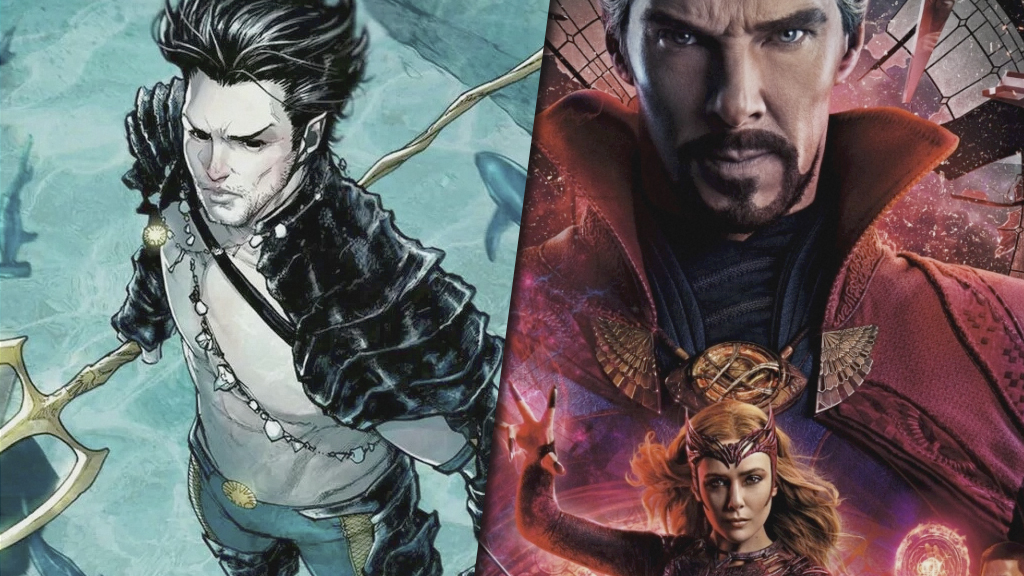
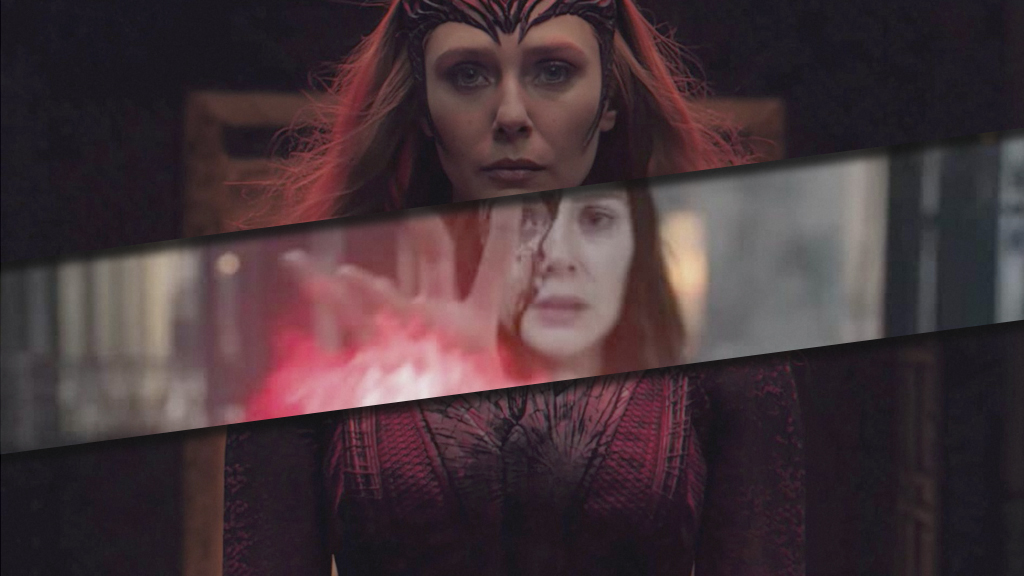
There has been an ongoing wait for confirmation that Namor will make his debut in the Marvel Cinematic Universe. It’s been months since the first rumors hit the web that he’ll play an antagonistic role in the upcoming Black Panther sequel, Wakanda Forever. Yet, while there still hasn’t been an official statement, it seems that he may have also almost made his debut in Doctor Strange in the Multiverse of Madness as part of the multiverse’s Illuminati.
In an interview with Variety, the film’s writer Michael Waldron has revealed that they have considered including Namor in their line-up. He was a founding member in the comics, which makes him a fitting addition but it looks like the studio had “other plans” for the character anyway and that is why he wasn’t prioritized.
[We] talked about him, because he’s certainly an original member of the Illuminati. But I think Marvel has other plans for him in the MCU. And so he didn’t make his way in this particular movie.Michael Waldron
He does highlight that Kevin Feige had a big part in even making the castings possible and bringing the team together, as they developed the idea.
That’s kind of a combination of us putting forth, “Well, what if we did this?” But also, Kevin’s as excited about this stuff as we are, so sometimes those ideas are coming from Kevin saying, “Well, what if we got so and so? I’m gonna do it! I’m gonna make the call!” So he’s as excited about all that stuff as any of us. It’s a big, geeky team effort to see what we can assemble for that team.
Michael Waldron
It’ll be interesting to see what my head our way and if the Illuminati even have a future beyond this film, especially given Strange’s encounter with them. Who knows if it also was meant to indirectly set up some elements moving forward but it does seem like a very self-contained element of the story to also poke fun at some of the fan requests of randomly adding characters. Still, the fact that we have further hints that Namor is going to appear somewhere else helps solidify his upcoming debut.
It’s crazy to think that after all that time, Doctor Strange in the Multiverse of Madness has finally been released in theaters. Wanda Maxmioff continued down a darker path since she got her hands on the Darkhold but still found it in herself to try and make up for her actions after a confrontation with Doctor Strange and America Chavez. As the film came to a close, she did one last heroic move to ensure that no one else would ever fall victim to the evil that lurks within the Darkhold.
Yet, it seemingly came at the cost of her life as the tower of worship came crumbling down upon her. We do briefly see a curious red flash that may indicate that she somehow made it out alive but nothing concrete. luckily, in an interview with Variety, Doctor Strange and Loki scribe Michael Waldron teased what her fate may have ended up being.
I think that’s up for interpretation. She made some kind of sacrificial act that destroyed the Darkhold in every universe, which is protecting Wanda in every universe from being seduced by the Darkhold. Whether she’s dead or not remains to be seen. I know what it’s like to love characters and to not want them to be gone and to hate when they do bad things. But that’s that’s part of the fun of watching stuff and getting swept up in it.
Michael Waldron
He definitely makes a good point about the joys of seeing these characters evolve. It does seem likely that Wanda will return in the future, but the question is where her character will be. We may be entering her final redemption arc as she uncovers the truth behind her past and perhaps uncovers a new layer to the Scarlet Witch that wasn’t kept within the Darkhold’s pages. There’s a lot of potential and it certainly seems like Elizabeth Olsen is on board if they are planning any future projects.
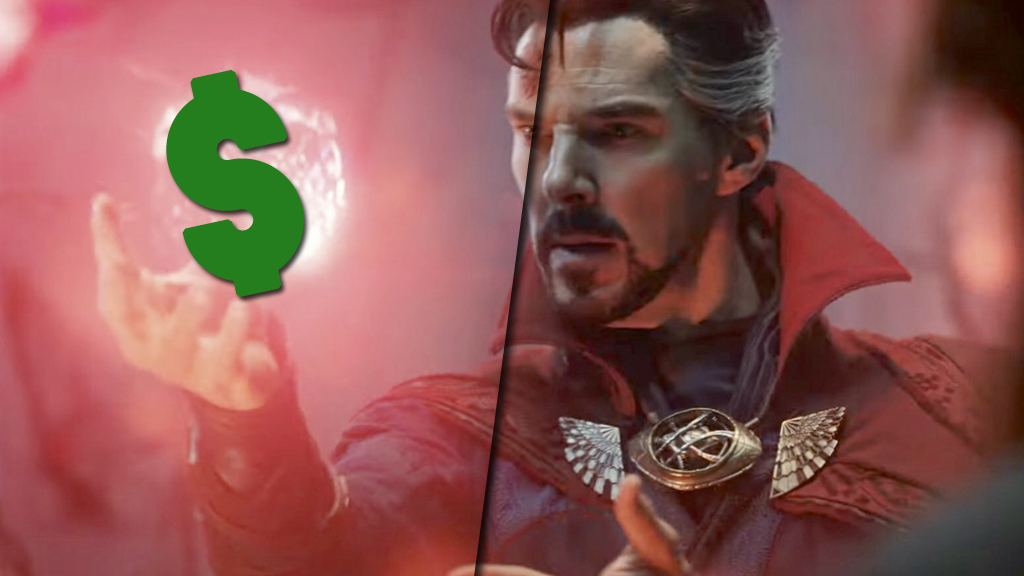
Doctor Strange in the Multiverse of Madness continues to dominate at the box office.
The latest film from Marvel Studios has already crossed $200 million at the domestic box office after earning $13.3 million on Monday. This brings the film to $200.7 million domestically as of yesterday. That’s well ahead of the first film, which finished its domestic run with $232 million in 2017. Multiverse of Madness’ numbers are on par with what Avengers: Age of Ultron did on its first Monday in 2015, which saw the film earn about $13.2 million and pulled that title through to $204.4 million after four days.
Going into its second weekend, box office experts are expecting a 60% decline for the film with estimates looking for a 3-day haul of approximately $74 million. With little to no competition, outside of Universal/Blumhouse’s Firestarter remake, the film should be able to retain the top spot at the box office for a second week and perhaps even longer. The biggest competition Multiverse of Madness will face will be over Memorial Day weekend when Top Gun: Maverick flies into theaters with estimates currently seeing the film looking to rake in between $75-$100 million over the course of its opening weekend.
Doctor Strange in the Multiverse of Madness should cross the $500 million mark at the worldwide box office by the end of the week. And it should easily top its predecessor – which finished with $677 million worldwide – by the end of its theatrical run. How high the film flies, however, remains to be seen. For now, fans can relive the Multiverse of Madness in theaters.
Ever since Doctor Strange in the Multiverse of Madness was announced, rumors have run rampant about a variety of possible cameos in the movie. The biggest name attached to the film at any point was megastar Tom Cruise, who was heavily rumored to appear as an alternate version of Tony Stark in a sequence involving the multiversal Illuminati. Whispers about Cruise started after the internet revived the fact the actor was originally slated to play Iron Man in the 2008 Marvel Studios film, before Robert Downey Jr. was eventually cast in the role. However, the movie’s writer Michael Waldron revealed in a recent interview with Rolling Stone that, while the idea of exploring this other timeline did come up, the Top Gun lead never actually the filmed anything for the Marvel Cinematic Universe.
Yeah, that was totally made up. I mean, there’s no cut footage of Tom Cruise! But I love Tom Cruise, and I said to [Marvel Studios president] Kevin [Feige] at one point, I was like, Could we get Tom Cruise’s Iron Man? I remember reading about that in Ain’t It Cool News back in the day, that Tom Cruise was going to be Iron Man… As it was being talked about online, I was like, Yeah, that’d be cool!
Michael Waldron
When pressed to reveal if Cruise had even been contacted about the opportunity, Waldron explained that the actor was already busy working on other projects:
Well, I mean, he was shooting Mission Impossible 7 and 8… I don’t believe so. I just don’t think it was ever an option, because of availability.
Michael Waldron
While sort of anticlimactic, these quotes should put to rest any speculation that Cruise was cut from the film’s final product. Luckily, there are plenty of exciting surprises that did make the movie, and you can see them for yourself in theaters now.
While Doctor Strange in the Multiverse of Madness remained shy of the $190M opening weekend, it did make quite a few waves by finishing at $187M. That is a small adjustment of $2M over the Sunday, but an increase is actually a good sign for the film’s legs with a B+ Audience CinemaScore rating. Worldwide, the film made a splash with $449.4M at the bo office, making almost half a billion in just its opening weekend. It’s an exciting prospect for theater owners that have been worried about just how long the pandemic would affect their business.
The film is not only Sam Raimi‘s biggest opening ever, but it’s now also the 11th biggest domestic opening in history and the seventh right behind Avengers: Age of Ultron, which was at $181.3M. As such, it’s the best performing second entry in a solo outing with Spider-Man: No Way Home holding the title for third entry with $260.1M. It’s now the second-best domestic release of the year and on its path to overtaking The Batman, which also garnered a fantastic $369.1M to date.
On Friday, it took in $90M which puts it as the seventh-biggest opening of all time, and entered the Top 10 best opening days for any MCU flick. While it’s likely going to be quite frontloaded, if it manages o keep a similar momentum that is seen with horror entries, we might be looking at a stronghold over the next weeks, but likely will echo a similar drop as Age of Ultron did.
Internationally, the film has pulled in $262.4M, which saw a slight adjustment down from its early Sunday estimates, which kept it at the overall worldwide release estimates. It’s now the sixth-highest opening worldwide going by like-by-like territories, which is no small accomplishment without a Chinese release. South Korea has been slowly becoming one of Marvel’s strongest opening locations with a massive $30M over the weekend.
There’s been an ongoing debate on the Internet ever since Martin Scorcese made a remark on how he views Marvel films, which originally was meant as a general view on the superhero industry that ended up focused on its strongest contender. Of course, the opinion of a veteran in the industry has left some waves with others jumping on board or even going against it, such as Nicolas Cage openly disagreeing with his uncle, Francis Ford Coppola, who shares a similar view to Scorcese on the matter.
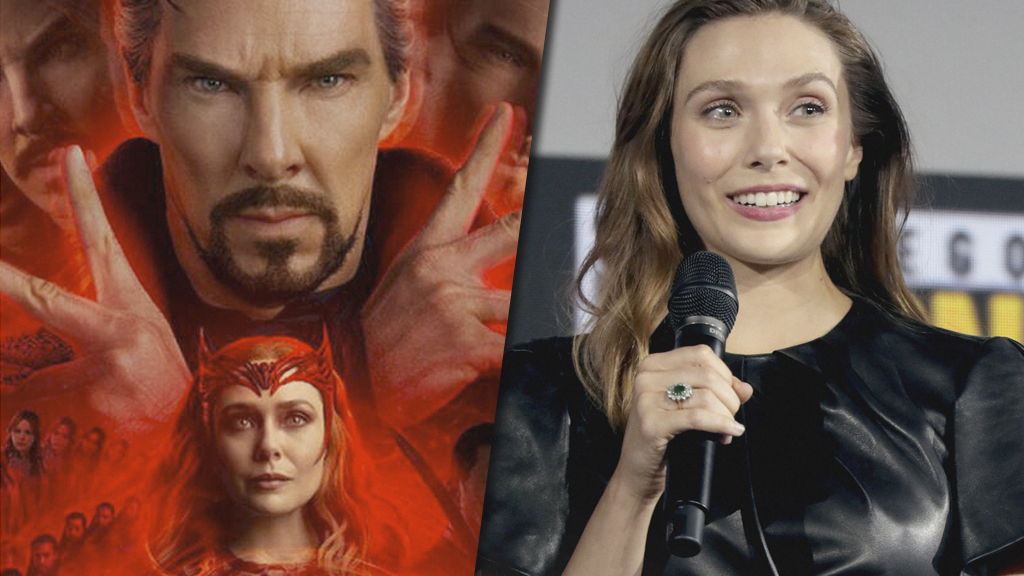
Yet, the debate goes on even if there’s no real benefit to anyone in “winning” the argument. With the release of Doctor Strange in the Multiverse of Madness, Elizabeth Olsen also threw her thoughts into the ring and highlighted an important aspect that gets overlooked in the discussion. Downplaying Marvel films as a “lesser type of art” as she puts it also diminishes the work of the people involved with the projects.
I’m not saying we’re making indie art films, but I just think it takes away from our crew, which bugs me. These are some of the most amazing set designers, costume designers, camera operators — I feel diminishing them with that kind of criticism takes away from all the people who do award-winning films, that also work on these projects
Elizabeth Olsen
She goes on to highlight that naturally, your approach as an actor is different as it is a different kind of film, to begin with. She once again highlights that throwing Marvel under the bus to somehow drag a wealth of talent down due to something one doesn’t deem art isn’t a fair discussion.
From an actor’s point of view, whatever, I get it; I totally understand that there’s a different kind of performance that’s happening. But I do think throwing Marvel under the bus takes away from the hundreds of very talented crew people. That’s where I get a little feisty about that.
Elizabeth Olsen
There likely is never going to be an end to this discussion, as one takes away what they want from the points made by various industry experts and those creatives working within the industry. Olsen‘s words ring important after a viral video has been making the round taking a quote of her facing anxiety with every new entry as some kind of statement on Marvel’s releases.
The same interview from Independent highlights that, as she simply tries to avoid the “pressure” of being a project’s main focus. No matter how one feels about the films and Marvel Studios as a company, there are still many talented people that found their beginning there and go on to develop many more films.
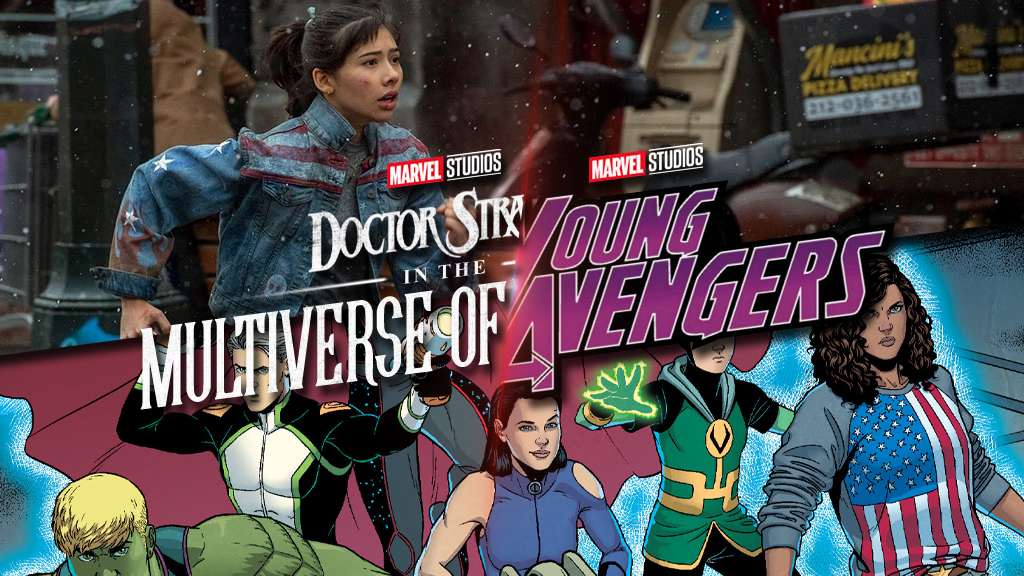
Between the Illuminati, Mount Wundagore, and Clea taking Doctor Strange into the Dark Dimension in the mid-credits scene, Doctor Strange in the Multiverse of Madness certainly left plenty of room for several more stories to continue. Another obvious example was the film’s introduction of Xochitl Gomez’s America Chavez, the dimension-hopping young heroine at the center of the movie’s plot.
As many know, America is an iconic Young Avenger in Marvel comics, so her presence definitely teases that concept. But while Multiverse of Madness generally kept her comic’s origin story intact, it appeared to make a major change that could impact the young hero’s journey going forward. It also left the character in a place that could hint at how the MCU might build a Young Avengers team.
Marvel Studios
America Chavez’s Origin
We only get a brief glimpse of America’s past early in Multiverse of Madness, but we know that she appears to come from an alternative universe or dimension. She does not specify further, but we also learn that she apparently has no variants. In an infinite multiverse, that would not make sense. It is likely that the place America is from in the MCU is outside of the multiverse, which would follow the comics.
Young Avengers #3 (2013)
Though it has since been retconned, America’s origin story began in the Utopian Parallel, which is a dimension outside of time and the multiverse and is inhabited only by women. Her powers come from the residual powers of a being called the Demiurge, who created the Utopian Parallel. In the comics, the dimension is threatened with destruction via black holes, but America’s mothers sacrificed themselves and essentially disintegrated into particles stretched across the multiverse. After this, America travels the multiverse looking to be a hero, because she believes the Utopian Parallel does not need salvation.
Young Avengers #3 (2013)
In the Doctor Strange sequel, America accidentally transports her moms into some random universes when she unintentionally used her powers as a child. While America is convinced they are dead, Doctor Strange reminds her that they could likely be out there somewhere. If her mothers are not dead, that could open up an entire storyline for America to go find them. Teases like this almost never amount to anything, so it is curious whether the heroine would get some solo time to explore that arc or if it could be something that ties into an eventual Young Avengers story.
America’s Magical Ending
The end of Multiverse of Madness sees America at Kamar-Taj, working on sorcery skills in a way reminiscent of Stephen Strange in the original Doctor Strange movie. Her main challenge in the film seemed to be controlling her existing portal-creating powers, so the tease that she may be on the path of a sorcerer is very interesting.
On one hand, it potentially sets up a mentor-mentee relationship between Doctor Strange and America Chavez similar to Clint Barton and Kate Bishop in Hawkeye. While this does not necessarily have any comics backing, it could be the MCU’s way to gradually bring in and develop the young characters in organic ways in other projects before jumping into a team event.
Young Avengers #9 (2013)
The fact that America now has some connection to magic could also hint at how other Young Avengers may be brought into the fold. On one hand, Wanda Maximoff’s son Billy later becomes the superhero Wiccan in the comics. Wiccan also becomes the same Demiurge that creates the Utopian Parallel, so Multiverse of Madness potentially connects America and Billy in several ways. With the Loki Disney+ franchise still going, there is also potential for Kid Loki to become a significant character in the MCU. Kid Loki, of course, has powers connected to magic as well, but he was also the character that brought America and Billy together in the first place. That arc ultimately saw the formation of the Young Avengers.
America’s connection to sorcery may make a future team-up of young heroes easier, considering she would already exist in spaces characters like Bully Maximoff and Kid Loki might. In addition, her potential relationship with Doctor Strange may allow her to stick around in various other projects before Marvel Studios is ready to take the leap into a true Young Avengers project.
Fans can see America Chavez in Doctor Strange in the Multiverse of Madness, which is now playing in theaters.
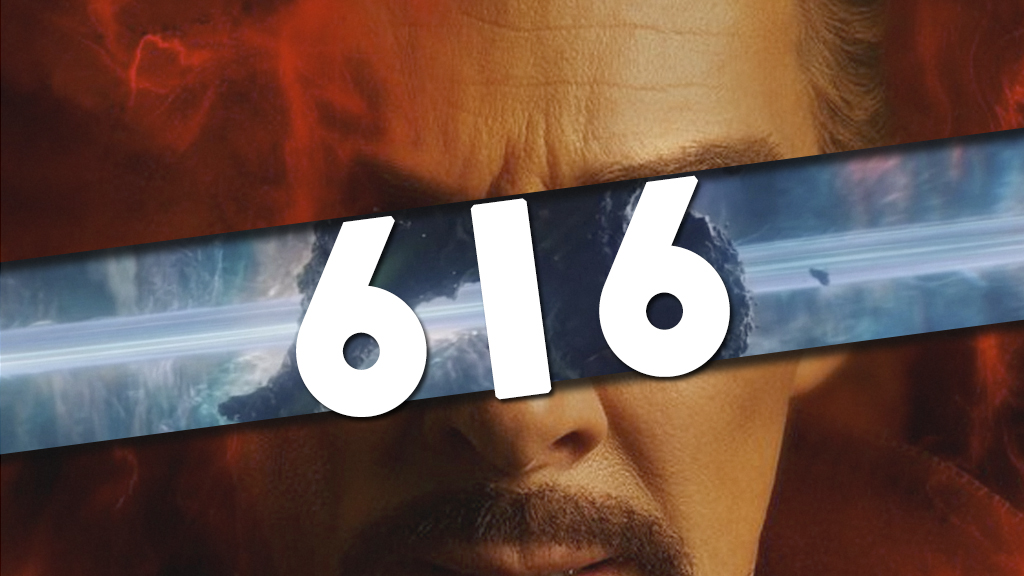
There’s been a surprising amount of discussion on what exactly the name is for the Marvel Cinematic Universe within the universe. As the comics’ main timeline was always called 616, it was given a unique number from fans over the years to make it stand out as a part of the greater multiverse. For years, fans have dubbed it 199999 but it looks like that has now officially changed quite a bit with the arrival of Doctor Strange in the Multiverse of Madness, and his exploration of the multiverse. We’ve now learned that there are indeed two incarnations of the 616 universe out there.
The article will include spoilers to Doctor Strange in the Multiverse of Madness. If you haven’t seen the film yet, only continue at your own risk.
Interestingly enough, it would imply that the comic multiverse is not part of this cinematic multiverse. When Strange lands in the universe of the Illuminati, he meets their Variant of Christine Palmer. While they discuss which reality they’re currently visiting, Palmer reveals that they’ve “decided” to designate their universe as the one known as 616. As we’ve seen in Loki, the storyline we’ve followed since the first Iron Man film back in 2008 was called the Sacred timeline, though no clear indication if it’s multiple universes that follow a strict storyline or just one specific one supervised by the TVA. After the events of that Disney+ series, the multiverse was unleashed and it opened the floodgates for Spider-Man: No Way Home and Multiverse of Madness.
For comic fans, this also opens up a bigger concept in the form that this franchise exists solely within its own multiverse. So, we shouldn’t expect elements from the comics to carry over or even to meet characters that have that kind of history. It’s a clever way of introducing viewers that have no real connection to the comics into this concept, as well as the trend of establishing 616 as the “main” timeline of the multiverse. The passion behind these creatives shows that they want to keep iconic phrasing and concepts from the comics, but the freedom to tell the universe the way they want to moving forward.
Doctor Strange in the Multiverse of Madness has garnered attention for many reasons. But one aspect of the sequel that has many fans debating is Wanda Maximoff’s Scarlet Witch and the character’s descent from hero to villain. While Maximoff was introduced to the MCU as a villain in Avengers: Age of Ultron and was certainly more of an antihero at best in WandaVision, some feel as though her redemptive arc at the end of that series does not square with where we find her in the Doctor Strange sequel.
As it turns out, actress Elizabeth Olsen also had a hard time with the transition. In an interview with Variety, the Emmy-nominated actress discussed her reaction to learning Wanda was the villain of Multiverse of Madness:
Well, I knew I was gonna be in “Doctor Strange,” but I thought I was gonna be, like, in an ensemble thing. So at first I think I was nervous and conflicted, because I hadn’t finished “WandaVision” yet, but we were almost finished. And I was like, “Oh my god, how do I make this all work together?” We got there; I got there. And it became an amazing opportunity to have people be won over by this woman in “WandaVision” and feel for her, and then, you know, manipulate them into this film, where they get to be on her side and then feel conflicted themselves. So I thought that was a great opportunity.
Elizabeth Olsen
Ultimately, Olsen understood Wanda’s dark journey from the end of WandaVision as being a result of the trauma that remained at the end of the series, particularly the loss of her twin boys. The actress went on to describe Wanda’s evolution:
I just wanted everything to feel like some version of an advancement, even if the advancement is someone feeling a different reaction to the pain and loss. We also haven’t seen her have a reaction to what happened in Westview. Even if we watched her go through trauma and loss, we haven’t seen her go through the loss of the children. I think, for any parent — I would assume, because I’m not one — the loss of the child would always be much harder than the loss of anyone else important in your life. I just wanted to make sure it was a constant evolution forward and not repetitive…How do we make this different but still part of the woman that we know?
Elizabeth Olsen
While fans will never stop debating whether Wanda’s arc was consistent enough, Olsen is suggesting that the extreme grief that audiences did not see after Wanda left WestView was the driving factor of her descent. The character’s corruption from the use of the Darkhold certainly would have influenced and turned those dark emotions into something much more volatile. So, the fact that Multiverse of Madness saw the Scarlet Witch using her full power to get what she believes she should rightfully have is not too hard to comprehend.
Doctor Strange in the Multiverse of Madness is playing in theaters worldwide.
The article will contain spoilers on Doctor Strange in the Multiverse of Madness. So only continue at your own risk if you haven’t had a chance to watch the film yet.
Now that Doctor Strange in the Multiverse of Madness is rounding out its debut weekend, the creators and stars are opening up about making the ambitious film. While Doctor Strange, as the title suggests, is the film’s main protagonist, it is also the sequel’s villain that turned a lot of heads. Wanda Maximoff and Scarlet Witch actress Elizabeth Olsen has been discussing her take on the complicated character.
One of the most memorable aspects of Multiverse of Madness is perhaps Wanda’s violent and ruthless killing of countless characters, including the star-studded Illuminati including John Krasinki’s Mr. Fantastic, Patrick Stewart’s Professor X, Hayley Atwell’s Captain Carter, Lashana Lynch’s Captain Marvel, Anson Mount’s Black Bolt. While killing off such a major ensemble is surely a lot for an MCU film, Olsen revealed in an interview with Variety that the final cut was more merciful than the original plan. The actress stated:
I was also supposed to kill more. I had a hard time with it. I was like, these are human beings and Wanda is okay with ending their lives? But I just had to buckle down and think all these people are in her way and she’s warned Doctor Strange not to get in her way. And he did. He didn’t listen. And so I just had to go from that point of view.
Elizabeth Olsen
The idea of the Scarlet Witch killing even more (probably) high-profile characters is not too crazy of a concept after the events of Multiverse of Madness. It certainly begs the question of who else may have been part of the Illuminati initially, or what other characters almost met their end in the Doctor Strange sequel.
It is also interesting how Olsen“had a hard time” with Wanda killing people. While viewers saw a redemptive arc for the character in WandaVision, the Scarlet Witch undoubtedly went on a darker path since the finale of that series. While some may find it hard to understand the character’s journey, Wanda’s corruption via the Darkhold had a strong role to play in the fall of the mother grieving her lost children.
Doctor Strange in the Multiverse of Madness is now playing in theaters worldwide.
We use cookies to improve your experience on our site. By using our site, you consent to cookies.
This website uses cookies
Websites store cookies to enhance functionality and personalise your experience. You can manage your preferences, but blocking some cookies may impact site performance and services.
Essential cookies enable basic functions and are necessary for the proper function of the website.
Name
Description
Duration
Cookie Preferences
This cookie is used to store the user's cookie consent preferences.
30 days
These cookies are needed for adding comments on this website.
Name
Description
Duration
comment_author_email
Used to track the user across multiple sessions.
Session
comment_author_url
Used to track the user across multiple sessions.
Session
comment_author
Used to track the user across multiple sessions.
Session
Statistics cookies collect information anonymously. This information helps us understand how visitors use our website.
Google Analytics is a powerful tool that tracks and analyzes website traffic for informed marketing decisions.
Contains information related to marketing campaigns of the user. These are shared with Google AdWords / Google Ads when the Google Ads and Google Analytics accounts are linked together.
90 days
__utma
ID used to identify users and sessions
2 years after last activity
__utmt
Used to monitor number of Google Analytics server requests
10 minutes
__utmb
Used to distinguish new sessions and visits. This cookie is set when the GA.js javascript library is loaded and there is no existing __utmb cookie. The cookie is updated every time data is sent to the Google Analytics server.
30 minutes after last activity
__utmc
Used only with old Urchin versions of Google Analytics and not with GA.js. Was used to distinguish between new sessions and visits at the end of a session.
End of session (browser)
__utmz
Contains information about the traffic source or campaign that directed user to the website. The cookie is set when the GA.js javascript is loaded and updated when data is sent to the Google Anaytics server
6 months after last activity
__utmv
Contains custom information set by the web developer via the _setCustomVar method in Google Analytics. This cookie is updated every time new data is sent to the Google Analytics server.
2 years after last activity
__utmx
Used to determine whether a user is included in an A / B or Multivariate test.
18 months
_ga
ID used to identify users
2 years
_gali
Used by Google Analytics to determine which links on a page are being clicked
30 seconds
_ga_
ID used to identify users
2 years
_gid
ID used to identify users for 24 hours after last activity
24 hours
_gat
Used to monitor number of Google Analytics server requests when using Google Tag Manager
1 minute
Marketing cookies are used to follow visitors to websites. The intention is to show ads that are relevant and engaging to the individual user.
Pinterest Tag is a web analytics service that tracks and reports website traffic.