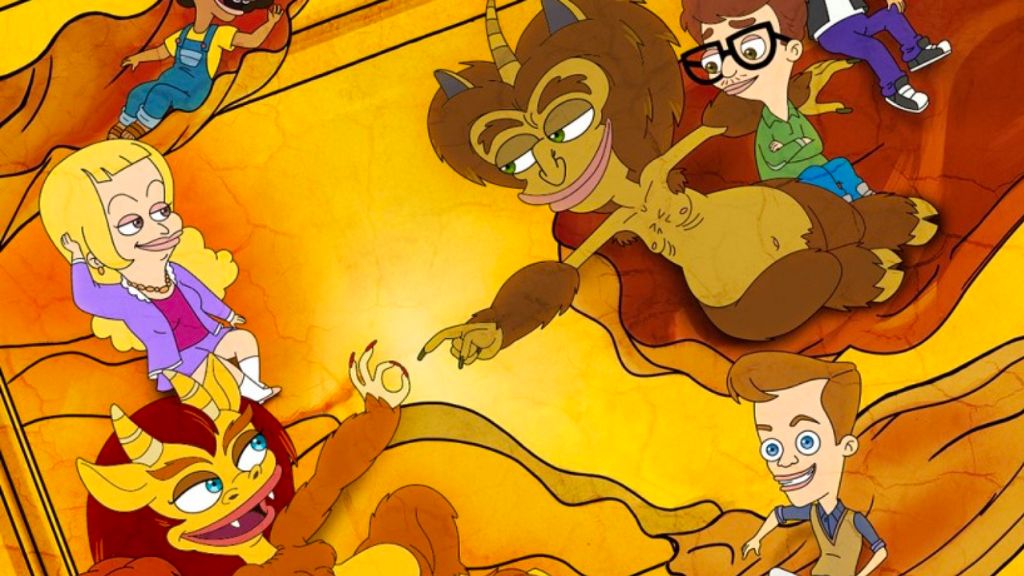
Seems Netflix is cleaning the house, as one of its longest-running shows is coming to an end. Nick Kroll and Andrew Goldberg’sBig Mouth has been renewed for an eighth season ahead of the release of its latest season. The big twist is that the show about kids going through their puberty, which manifests itself into different types of creatures, will be ending with that season.
But wait folks, there’s more as Human Ressources, a spinoff show of Big Mouth, is also set to return for a final season. It only got two seasons in total and the spinoff is set to arrive later this year. What does make this stand out is that Big Mouth’s eighth season also will act as a send-off to both entries due to how they connected in the past.
Kroll shared the following statement as a joke referencing the series coming to an end:
If you would have told adolescent Nick Kroll and Andrew Goldberg that middle school would take 8 years to finish, they would have been like ‘yeah, that sounds about right. This seems like it will never end.
Nick Kroll
With this cancelation, Big Mouth is the longest-running series in Netflix’s library of originals that isn’t categorized under Kids & Family. This renewal puts it ahead of Grace & Franky, which ran for a total of seven seasons. With a live-action adaptation of One Piece on the horizon, perhaps it might break its record given just how long the manga has been running; if it turns out to be quite popular of course.
The show’s popularity had many surprised given its very in-depth but fantastical look at hormones, becoming an adult, sexuality, and coming of age. Both entries combined have reached one billion hours viewed on Netflix and have been watched by 50M+ households.
The last few days have been rough for Netflix. Not only did they publicly have to acknowledge that they lost subscribers for the first time in over ten years, but they’ll face 2M more jumping ship by the next quarter. Subsequently, investors are furious and fearful as their shares have dropped by a scary amount. Many find themselves wondering what exactly has led to this sudden shift within the market, as streaming was seen as this bottomless potential with billions of subscribers. What seems like they have potentially reached their limit, may showcase a general trend that has been waiting to show its fangs over the years.
One thing is for sure, it’s not a good look for Netflix and there are many discussion points that can be made on what led to this current downward spiral. Netflix will still hold on to its top spot and we’re already seeing it with the decision to add an ad-supported version at a cheaper price. Yet, there’s one aspect that seems worth exploring and that is Netflix’s obsession with quantity. They are investing a lot of money in originals, which leads us to get a diverse selection of projects. Yet, it also led to the new perception of the streamer becoming a safe haven for canceled projects but sadly a new trend has arisen.
Oddly enough, they’ve become obsessed with swiftly canceling projects. While some select projects manage to have some sense of longevity, they manage to drop franchises that have even proven to be quite successful. When Bright was first released in 2017, it was one of their most-watched films. Yet, somehow the sequel was buried at one point without any fanfare, and we got a prequel Anime spinoff that had little to no marketing push. There are projects where we do get some news ahead of its release, but there’s a trend that a lot of it is creator-driven.
The biggest example of Netflix’s modern marketing approach was their live-action Cowboy Bebop series. While production did face quite the delay and an adaptation of such a cult classic was definitely going to face some backlash, it just suddenly arrived. Its release date was announced on August 23rd and would hit the streamer on November 19th. At the time we didn’t get a trailer to build up the excitement and it wasn’t until the 19th of October that we got a mini-episode titled The Lost Session. we wouldn’t get the actual trailer until the 27th with only a few more weeks before it hit Netflix.
By the time we got any actual promotion or the series, people’s opinions have already been made on what to expect and a new audience had barely any time to relate to it. Considering it was released on the 19th of November, it barely even got a few weeks before Netflix just dropped the axe on the series on December 9th. Early reports indicated that the production was going in expecting multiple seasons and it was cut short before it even got started. The issue is also we don’t know what exactly the metric is that they are going for, especially with newly established franchises. They seemingly banked on the addition of the anime which may have hurt the release more than anything else.
It almost creates this belief that existing IPs will always draw in an audience no matter what. Yes, Cowboy Bebop has an extensive following but it’s also quite a bit more niche than some might expect, especially given Netflix’s focus on worldwide viewership. They are currently working on two other projects with Avatar: The Last Airbender and One Piece that have strongly established audiences but would still require a certain amount of marketing to ensure fans that this will be a faithful adaptation while pulling in new audiences.
There’s also a strange inconsistency with how much marketing a project ends up getting. As we were speaking of building upon existing IPs, there is the series Human Resources, the spinoff of the animated series Big Mouth, that got released on March 18th. The series actually got the first teaser back on October 4th. Even if it was short, it had the strict advantage of building upon an already established franchise on the service even if the naming wouldn’t hint at a connection. Its official trailer dropped in January, which gave it multiple months of momentum ahead of its release. The Season 2 renewal wasn’t until a full month before an announcement was made.
Ironically, a project that already has a well-established audience is given more time than a project that only a select few really are aware of. The odd decision to drop many animation projects as a result of the current development creates this odd disconnect of what exactly Netflix’s end goal is. They seemingly are dogpiling project after project that get no more than one or, if they’re lucky, two seasons.
Even those that seem like sure-fire franchises to build upon are killed off before they even get a chance to get going. The life and death of a series, or even an entire franchise, ends faster before it even has a chance to start. With the amount of growing competition, it’ll get more and more difficult for this model to survive by only giving spinoffs time to grow and just wait and see if a new series, even if based on a new IP, will somehow end up becoming successful.
Once a show drops with every episode, there’s hard to no additional marketing at play to keep it alive. They pretty much just bank on the show living on their own without putting in the work to keep it so. Disney+, Amazon Prime, Peacock, and more are slowly leaning towards weekly releases as it keeps these series alive way more than a single release. Yes, viewers are complaining about it but it’s a sign of how these continued marketing attempts build up the momentum as we get more impatient for what lies at the end. Perhaps Cowboy Bebop could’ve had some more attention given to it if it was a weekly release, especially as it moved away from the more disconnected storylines of the original.
Yes, Squid Game technically was one of the most talked-about series for weeks but that was a lightning in-the-bottle moment. If Netflix is hoping to keep that kind of series as their ongoing pillar, they are putting all their eggs into a single basket. Competition is rising, the demand is higher than ever and growth can no longer be the only focus. Some people subscribe to their service for specific series and franchises. If they have the feeling it barely sticks around, they won’t either. Word-of-mouth depends if the series is a game-changer and only rarely do we see that happen.
We’re seeing a new era of television, as Netflix’s original model is potentially reaching its limit. We’re either going to see more hybrid models moving forward, as we slowly step back into elements that made broadcast television work. As legacy companies are getting their hands back on their projects and Netflix is more dependent on its originals to keep people watching, they might require the number of reasons that remain as binge-able as The Office, Friends, and more. As they are losing their usual library and may soon no longer have all the bit IPs they usually had available, investments will only continue to grow moving forward.
People come to watch The Ozark, but they stay to watch their favorite comfort show. At some point, they became so dependent on existing series, that the demand for newer ones has reached some rather questionable highs if they keep canceling shows out of convenience. perhaps shifting to more long-form storytelling with various stories unfolding and growing audiences across multiple seasons will benefit them moving forward. With Netflix’s Geeked Week on the horizon, perhaps we’ll see a new shift in how they tackle their projects moving forward.
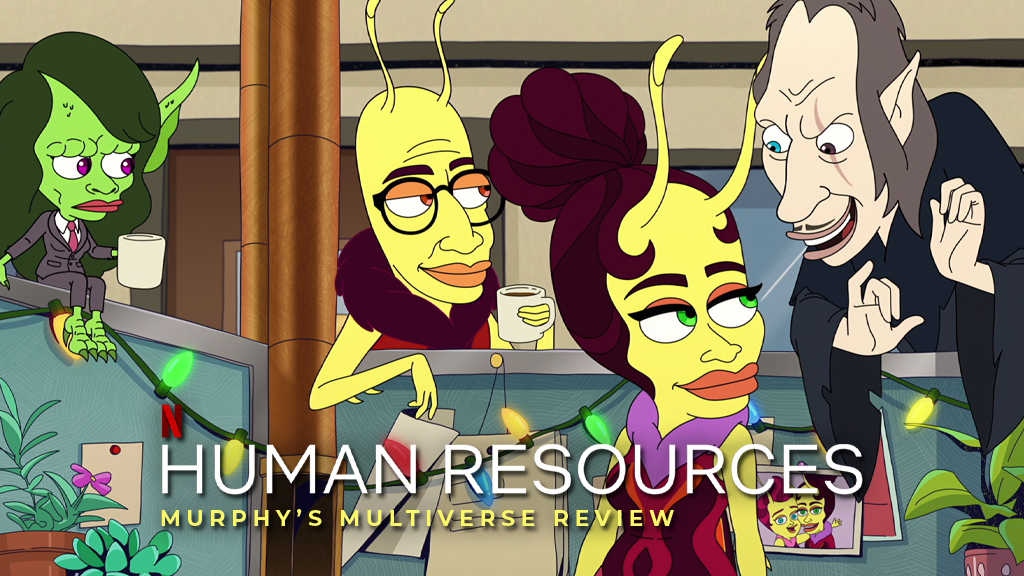
Netflix’s Big Mouth is a huge success for the streaming service. The story of a group of teens who find themselves struggling with puberty was a well-done take on the things adolescents often find themselves dealing with — mostly due to the inclusion of the often ridiculous hormone monsters. So, it’s not entirely surprising that Netflix moved ahead with a spinoff series focusing on not just the Hormone Monsters and the Shame Wizard, but the rest of the various creatures that make up the Human Resources department. While many might have felt that the fifth season of Big Mouth spent too much time establishing the spinoff, Human Resources manages to successfully craft a strong story without relying on its predecessor.
Part of what makes Human Resources such a delight to watch is that it truly tries to be its own thing. It might take an episode or two, but once the series finds its own voice? It establishes itself as one of Netflix’s best-animated series — and yes, that’s including Big Mouth. Although the Hormone Monsters feature frequently in Human Resources, this series moves beyond them. In fact, the entire first season has an impressively well-structured storyline that, while allowing for their explicit behavior, manages to succeed without relying on them. Instead, the Lovebugs take center stage this go-round, and while they could appear off-putting initially, by season’s end, the Lovebugs might just become a new fan favorite.
Human Resources revolves around various creatures — including the Lovebugs, Hormone Monsters, Logic Rocks and Shame Wizards — aiding humans journey through every aspect of life from puberty to childbirth to the twilight years. Unsurprisingly, though, as the series goes on, the creatures begin to find a bit of humanity within themselves, too. This is the type of animated series that, while being advertised as raunchy and funny, is more than meets the eye. It’s packed full of emotion, from grief, to love, to depression and acceptance. There’s a heck of a lot here to unpack, and yet, the series manages to tell such a well-balanced story within so few episodes. It’s honestly impressive just how well the writers handle the variety of topics and the massive cast of creatures.
Human Resources focuses on one individual for the most part and the creatures that try and help her journey through life. However, over the course of the series, we are slowly introduced to a few other key characters that’ll become entwined in the main storyline in various methods. The fascinating part about Human Resources is that it successfully plays the long game with its background characters. Some of these individuals are introduced merely as background characters at first, but by the end of Season 1, they become fully incorporated into the story with the series somehow successfully tackling their tales alongside Becca’s journey. It’s a juggling act and, somehow, the series juggles each storyline so wonderfully.
Big Mouth might’ve come first, and it might be a hit, but when it comes down to it? Human Resources is everything Big Mouth is and more, in all of the best ways. Romance. Grief. Love. Vulgarity. Comedy. It’s a mismatch of everything and it works so wonderfully. Just don’t be surprised when, by the season’s end, tears escape your eyes because the ending is an emotional one, and it earns every moment of emotion it delivers in the final episode.
Human Resources hits Netflix on March 18, 2022.
Cookie Consent
We use cookies to improve your experience on our site. By using our site, you consent to cookies.
This website uses cookies
Websites store cookies to enhance functionality and personalise your experience. You can manage your preferences, but blocking some cookies may impact site performance and services.
Essential cookies enable basic functions and are necessary for the proper function of the website.
Name
Description
Duration
Cookie Preferences
This cookie is used to store the user's cookie consent preferences.
30 days
These cookies are needed for adding comments on this website.
Name
Description
Duration
comment_author_email
Used to track the user across multiple sessions.
Session
comment_author_url
Used to track the user across multiple sessions.
Session
comment_author
Used to track the user across multiple sessions.
Session
Statistics cookies collect information anonymously. This information helps us understand how visitors use our website.
Google Analytics is a powerful tool that tracks and analyzes website traffic for informed marketing decisions.
Contains information related to marketing campaigns of the user. These are shared with Google AdWords / Google Ads when the Google Ads and Google Analytics accounts are linked together.
90 days
__utma
ID used to identify users and sessions
2 years after last activity
__utmt
Used to monitor number of Google Analytics server requests
10 minutes
__utmb
Used to distinguish new sessions and visits. This cookie is set when the GA.js javascript library is loaded and there is no existing __utmb cookie. The cookie is updated every time data is sent to the Google Analytics server.
30 minutes after last activity
__utmc
Used only with old Urchin versions of Google Analytics and not with GA.js. Was used to distinguish between new sessions and visits at the end of a session.
End of session (browser)
__utmz
Contains information about the traffic source or campaign that directed user to the website. The cookie is set when the GA.js javascript is loaded and updated when data is sent to the Google Anaytics server
6 months after last activity
__utmv
Contains custom information set by the web developer via the _setCustomVar method in Google Analytics. This cookie is updated every time new data is sent to the Google Analytics server.
2 years after last activity
__utmx
Used to determine whether a user is included in an A / B or Multivariate test.
18 months
_ga
ID used to identify users
2 years
_gali
Used by Google Analytics to determine which links on a page are being clicked
30 seconds
_ga_
ID used to identify users
2 years
_gid
ID used to identify users for 24 hours after last activity
24 hours
_gat
Used to monitor number of Google Analytics server requests when using Google Tag Manager
1 minute
Marketing cookies are used to follow visitors to websites. The intention is to show ads that are relevant and engaging to the individual user.
Pinterest Tag is a web analytics service that tracks and reports website traffic.