The search for Marc Spector’s third classic comics personality Jake Lockley continues through Moon Knight‘swild fourth episode. Clues and evidence in Episode 1, Episode 2, and Episode 3 honestly feel like enough of a confirmation that a third personality is coming. But we still have yet to be formally introduced. There may be fewer clues in Episode 4, but one in particular almost cannot be interpreted in any other way than… that’s Jake. While everyone knows that nothing is confirmed until it is confirmed, let’s take a look at perhaps the most unambiguous and in-your-face clue of the entire series.
The Extra Sarcophagus
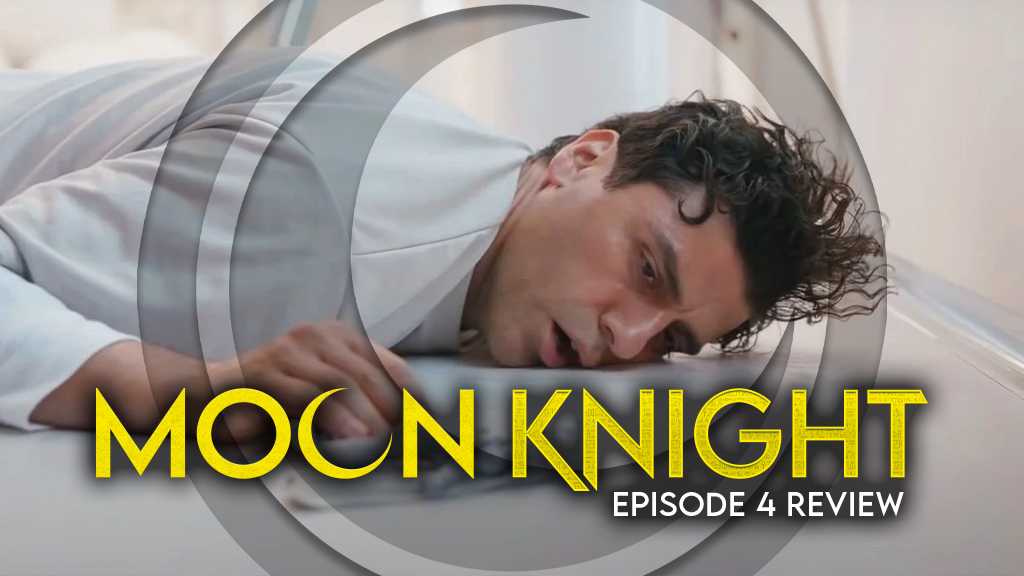
When Marc wakes up in some sort of mental institution or psych ward-looking place, he eventually escapes the room where the now Dr. Arthur Harrow appeared to be his psychologist. On his run through the halls of the institution, he comes upon a room with a lone sarcophagus. Someone inside was screaming for help and shaking it, trying to get out. Turns out Steven was trapped in there, and he and Marc hug when they reunite–it’s very sweet.
Flash forward about one minute, and they pass a room that has a very similar sarcophagus. They do not seem to notice it, but it is also moving as if someone was trapped inside. Considering Marc and Steven now both have bodies, it is easy to say that whatever place this institution is, it is not “real.” So, if Marc’s other personality Steven sort of manifested as being trapped in a sarcophagus in a room here, what other conclusion is there to draw from the fact that there was another? It is the least ambiguous hint Moon Knight has provided and the most psychologically symbolic as well that a third personality does in fact exist in this series.
While Moon Knight arguably “confirms” here that Marc and Steven are not the only personalities, it still is yet to be seen whether a third will actually make an appearance in the series. Hopefully Jake has some grand entrance, but it could be the series’ way of acknowledging the comics’ history and being coy with it, while maybe waiting to introduce Jake in another project considering Moon Knight already has many demanding moving parts to balance. Still, there have been so many hints over these four episodes, that it would definitely feel like a letdown if they did not lead to an actual appearance by the end of the series.
Only time will tell. But the first four episodes of Moon Knight are not streaming on Disney+.
The final few minutes of Moon Knight’s episode four gave audiences something to think about and figure out ahead of the final two episodes of the series. At first glance, it seems like the old “it was all a dream” sort of twist, where the character, in this case, Marc Spector, kept bringing real-life characters and details into a self-fabricated world. This would obviously deprive the events experienced until now of most of their meaning due to a lack of actual real-world impact, something that feels extremely dated. But in fact, Marvel should instead be using that classic trope to lead fans astray as what Marc wakes up to should actually be the dream itself.
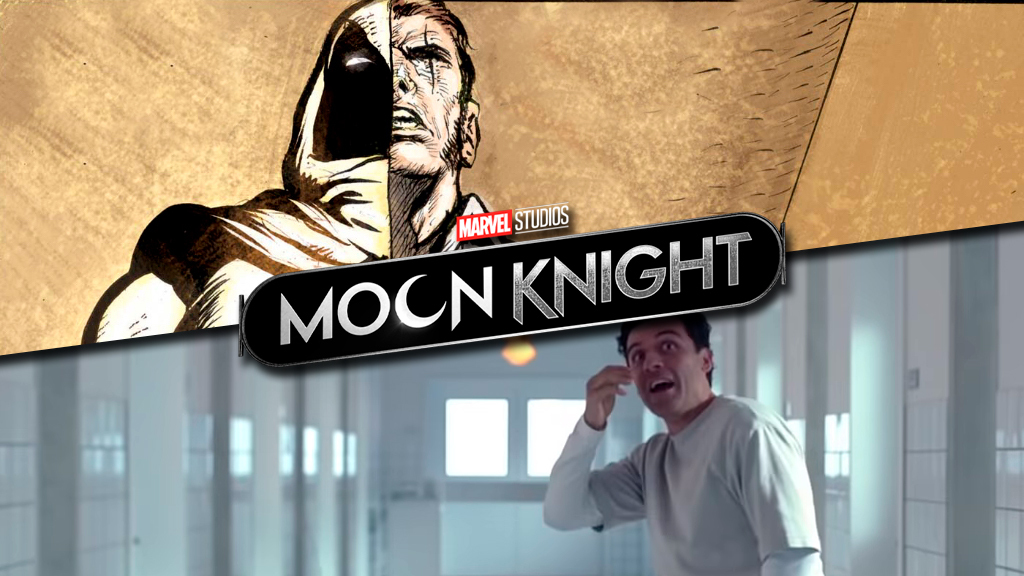
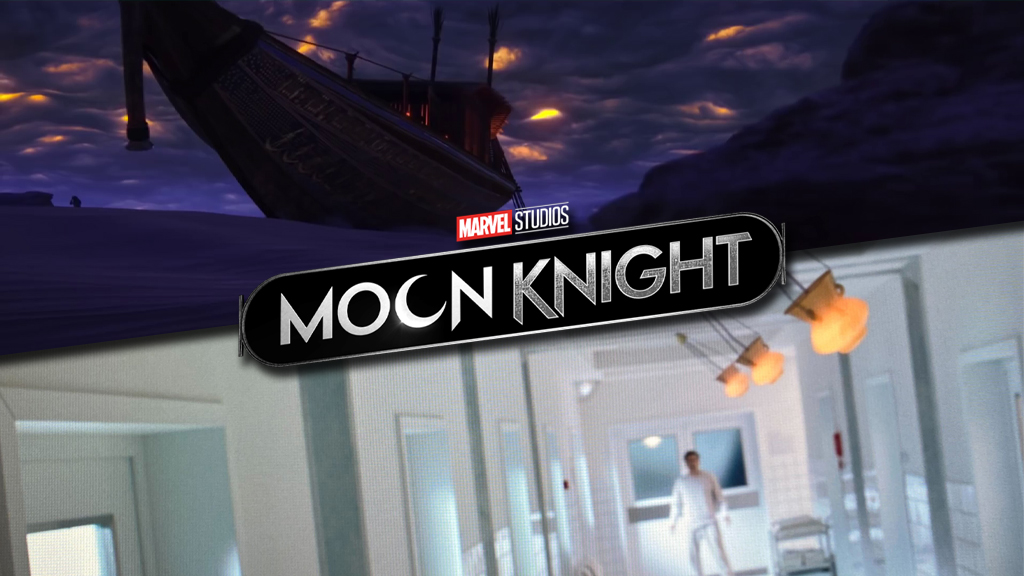
Following Harrow shooting Marc at Alexander the Great’s tomb, he wakes up in an institution, very similar to the one we see in the Lemire-Smallwood comic run. There, while trying to escape Harrow’s office, he comes to a long corridor that seems to tilt like it was on a moving vehicle, with the lamps and the medical carts moving accordingly. This should be enough to make us doubt the veracity of the reality presented to us. But it’s not until going back to some promotional footage that, not only does it become clear why the halls seem unstable but we also understand where Marc really is.
Marvel Studios’ Moon Knight
This shot in one of the promotional videos seemingly shows us a large funerary boat traveling through the desert. And this is where we will likely find Marc, even if all he sees around him, maybe as a coping mechanism, is a mental institution filled with details from his life. This fits the Egyptian mythology the show has been exploring as boats played a big role in ancient Egyptian funerary practices. Funerary boats were often used to deliver the deceased to the afterlife, with Anubis, the god of death, the afterlife, cemeteries, tombs, and the Underworld, having his own ship that traveled between the world of the living and that of the dead. It was while doing so that it would weigh the hearts of the deceased on Maat’s scales of truth and justice, hence judging the individual’s actions in life. If the heart was found to be heavy it was fed to Ammit, with the soul cast into darkness. On the other hand, if the scales were balanced, the deceased would be taken before Osiris who would welcome them into the afterlife.
Marvel Studios’ Moon Knight
All of this, besides feeling terribly consistent with what the show has shown us so far, might clearly hint at all past events being what is real, with the dreamlike state being what we see as the mental institution at the end of episode four. Marc and Steven (and Jake?) will eventually be judged in order for their spirit to move on, either to damnation or the afterlife. With Khonshu out of the picture, it seems unlikely that they will manage to come back from the dead, again. Or does it?
The first four episodes of Marvel Studios’ Moon Knight are now streaming only on Disney+.
Viewers finally got to see the Moon Knight episode that creators and critics have been teasing for weeks. The series’ fourth episode packs quite a lot into its runtime, but the only part that viewers are going to cling on to going forward is that twist of an ending. It was quite the exciting changeup, and it truly revamps the narrative on multiple levels and allows the psychological mystery setup to pay off dramatically. Comic book fans might recognize how eerily similar the psych ward at the end of the episode is to the popular Jeff Lemire-Greg Smallwood run, but it does not need that connection to carry its excitement forward. It does beg the question—between where the episode left the previous “reality” and where this new reality could go, how can Moon Knight possibly wrap this story up in a satisfying way with only two episodes left?
The episode pre-twist was notable for several reasons. It brought with it its own genre because with Khonshu out of the picture it turned into a more recognizable adventure a la Indiana Jones or Tomb Raider. Admittedly, it was not the most thrilling plotline the MCU had ever explored, but the wealth of Egyptian lore in Episode 4 was extremely interesting and packed a lot of potential into the series. Still, the pre-twist episode spent time adding major detail to not only the main story but also several of the characters. Had the episode not ended in a twist, there would have been a great deal of speculation leading out of this episode purely on the Arthur Harrow and Ammit plot. But, as we know, Harrow seemingly kills Marc Spector who drifts away through water only to reawaken someplace very different.
While the information in the pre-twist episode still, hopefully, brings value to the series later, it is difficult to expect any viewer to truly pay attention to that when Marc wakes up in what looks like a mental institution or psych ward. Everything we thought we knew is turned upside down, which brings the theme of wondering what is real and what isn’t back into the spotlight after the first episode. Moon Knight gave a sense of security with the reveal of Marc and Khonshu, and nothing had really suggested that they were not real or that the story was not taking place in reality. Now, Episode 4 spends its last ten minutes or so trying to convince you that none of it was real—sort of. The odd amount of Egyptian imagery and, of course, what looks like Egyptian goddess Taweret (whose stuffed animal we saw in the gift shop in Episode 1) suggests that this mental institution is not simply the true reality either.
So now Moon Knight is genuinely and beautifully under the “What is real?” umbrella. The already-phenomenal psychological aspect of the series will take center stage in a grand way going forward without a doubt. A psych ward—or some kind of projection of it—is the perfect place to dive deeper into the Marc/Steven psyche. There are many obvious Easter eggs (such as the cupcakes, Gus, maps, the adventure film, etc.) to suggest that what we watched of the series so far may have actually all been in Marc’s head. There is also a very eager extra sarcophagus like the one Steven was found in that has to be the most obvious tease of another personality of the entire series. Given how the episode ended, it looks like the next episode could have an escape-oriented theme with Marc and Steven working together as two different bodies. This is a perfect way to “bring to life” to both alters the amazing performance that Oscar Isaac has already put in with the characters so far. Watching them interact may very well be the highlight of Moon Knight.
While previous episodes felt as though they sometimes gave too little information or background on the major subjects of Marc Spector and Khonshu, it is almost certain that the events of Episode 4 and what it teases is coming will blow that whole issue wide open. We end in such an introspective place where the pieces of Marc’s life and mind are literally just scattered around him. It could be a perfect opportunity to journey into his mind and past.
As mentioned, the twist looks a whole lot like the Lemire-Smallwood run. That might mean the last two episodes of Moon Knight borrowed heavily from it. But even if the series does attempt a direct adaptation of the comic—which it almost certainly will not—it is not reasonable to fit that into two episodes. Even if the series seeks to merge elements of the Lemire-Smallwood story with the very original plot from the series so far, it still seems unlikely that two episodes is enough time. Overall, it is hard to picture how a twist of this magnitude could lead to a comprehensive and satisfying ending so quickly. Moon Knight could be another victim of the MCU Disney+ series curse of not quite sticking the landing. Or, it could keep surprising us like it has been.
In any event, Episode 4 might have just been the biggest “twist” of the entire MCU. Obviously some fans of the Moon Knight comics might feel less lost than those unfamiliar with them, but nearly the entirety of the first four episodes of Moon Knight were a far cry from how it looks like the series might try to tell the story from here on out. The jarring transitions between the two was one of the most enjoyably “What the f***?!” moments in MCU memory. It means that the series has to take the character’s psychological origins and backgrounds seriously story-wise and that requires going to places that other projects are usually uncomfortable with. There is certainly something wildly unnerving about what just happened in this episode. It is not unreasonably optimistic to think that the final two episodes of the series will make Moon Knight one of the most triumphant MCU installments.
Episode 3, “The Friendly Type”, really moved things along in the overall plot, including Arthur using the scarab to lead him to the site of Ammut’s tomb. At the behest of Khonshu, Marc tries to get the Ennead, a group of major Egyptian gods, to intervene with what Arthur is trying to do, but Arthur lies to them, leading the Ennead to warn Khonshu not to interfere further. To find the coordinates of the tomb, Khonshu turns back the sky to the night they locked Ammut away, angering the Ennead. As the episode ends, Khonshu is imprisoned, leaving Marc/Steven without his power.
Marc and Steven get way more comfortable with each other over the course of this episode, even willingly letting each other take over the body when it seems to serve them best. The episode also presents the clearest evidence that there might be a third personality within Marc’s mind. While interrogating a group of men, Marc is knocked out when Steven interferes with the questioning. When he wakes up, he’s in the middle of stabbing one of the men while another lies dead behind him. When Marc asks Steven what he’s done, he claims not to have done it either. In the comics there is another, more violent, personality named Jake. This could totally be his doing!
Arlyn’s Assumptions
In this next episode, I believe that they will end up finding Ammut’s tomb too late. I feel like Arthur will have already found it and dug it up. The other Egyptian gods have locked Khonshu away, which will obviously have a big impact on Marc and Steven seeing that Marc was just a corpse when Khonshu found him. I’m not sure how Marc survives. I have a bad feeling about this…
At the beginning of the episode, as Layla was getting her fake passport, we learn that her father was an archaeologist who was killed during an excavation in the desert. As Moon Knight clearly spends most of its time focused on Steven Grant and Marc Spector, it’s unclear how far back into Layla’s history the series will go. But the little we got is incredibly similar to the comics, and it also connects to Moon Knight’s origin. So, looking into what Episode 3 is referencing might give us a deeper understanding of Layla, Marc Spector, and Moon Knight.
Moon Knight #1 (1980)
Moon Knight #1 (1980)
Moon Knight #1 (1980)
Back in the day, when Marc Spector was still a mercenary, he worked for a man named Raoul Bushman, or the Bushman. He would become Moon Knight’s clear archenemy, but that is for another time. Bushman and Marc’s unit went on a raid of a newly discovered tomb in Sudan. Archaeologist Dr. Peter Alraune and his team—including his daughter Marlene—were the ones who discovered the tomb and were working at the site at the time of the raid.
Moon Knight #13 (2017)
Moon Knight #13 (2017)
Moon Knight #13 (2017)
While slightly varying versions of the events that took place to appear over the more than 40 years of Moon Knight comics, the traditional story finds Bushman murdering Dr. Alraune, and others, in front of Marlene. At this moment, Marc seems to have a moral crisis and is strongly opposed to Bushman’s murderous ways. Marc saves Marlene, who hates Marc at first, but is mortally wounded.
Moon Knight #1 (1980)
Moon Knight #14 (2017)
Moon Knight #14 (2017)
The next bit is, of course, at the core of all Moon Knight stories. In Moon Knight #1 (1980), Marlene brings Marc inside the tomb where he dies underneath a statute of Khonshu only to come back to life claiming to be the Fist of that same god. In Moon Knight (2016), Marc crawls into the tomb on his own without Marlene. After this, Marlene for some reason falls for Marc (and Steven, Jake, and Moon Knight) and they move in together in a Long Island mansion. Marlene supports Moon Knight’s vigilantism and they more or less (less) live happily ever after. In any event, the murder of Marlene’s father was always the connection between her and Marc.
Marvel Studios’ Moon Knight Episode 3
In Moon Knight, Layla is essentially a much-improved Marlene. So, the brief mention of Layla’s archaeologist father in Episode 3 is interesting for a few reasons. First, it could imply that Layla has a virtually identical backstory to Marlene’s in terms of the death of her father and connection to Marc Spector. However, Layla says that her father’s death was “lost to the sands”, implying that she does not know what happened. If that is the case, it begs the question of how she met Marc and whether she knows about his involvement with Bushman and the raid.
Moon Knight #4 (2016)
Whatever the case ends up being, it is fun to speculate elements of Moon Knight when the series makes clear references to the character’s or supporting characters’ comic book history. Layla’s father and his death may very likely play a significant role either in her relationship with Marc or in exploring the origin of Moon Knight in the series.
The first three episodes of Moon Knight are now streaming on Disney+.
As with any MCU adaptation, Moon Knight has not been a perfect match with the comics. This is, of course, not automatically a bad thing. When bringing the complicated subject matter to life, it’s often necessary to simplify a few elements for the sake of flow and time. One such example of this would be Moon Knight’s many alters. Typically, the character has at least three personalities living in his body at any given moment. Marc Spector and Steven Grant, who is currently learning to co-exist in the series, are usually accompanied by a third alter named Jake Lockley.
Though he hasn’t made his debut on Disney+ just yet, there have been plenty of hints that he could be on the way. If, or when, Lockley finally pops up on the screen, there will be quite a few lingering questions for him to answer. Viewers will likely wonder where he’s been all this time, what sort of life he leads, and whether or not he’s the one who mysteriously killed all those guys in Egypt. Most importantly, however, is a quandary that many may not even think to ponder. Assuming Lockley is able to summon the power of Khonshu in the same vein as Grant and Spector, what might his version of the iconic suit look like?
Moon Knight surprised longtime fans of the comics when its early marketing revealed that Mr. Knight would play a role in the show. The character is a newer alter in the books, having made his first appearance in 2014 as a variation of the Moon Knight identity who is a little less brutish and a little more sociable. Marvel Studios’ take on the character differs from this, instead of presenting the ‘Mr. Knight” appearance is a version of Khonshu’s Moon Knight armor tailored to fit Steven Grant’s personality. The white, three-piece suit has most of the same abilities as the classic outfit worn by Marc Spector, albeit with different weapons, and its presence is simply used to signify when Steven is the one in control.
So, the standard being set is that each one of the alters would ostensibly have its own Moon Knight design. Marc wears the classic, hooded vigilante suit and Steven dons the formal “Mr. Knight” attire. The outfits match their personalities, which might actually help in deducing what Jake’s official anti-hero look could be when the time comes. Moon Knight has been featured wearing a shockingly diverse set of threads over the course of his existence, so there are quite a bit of pre-existing designs the show has the ability to pull from. Yet, the first of the options presented in this article has never actually been drawn in the comics at all. Let’s dig in.
Jacke Lockley, Private Eye
It’s possible Jake Lockley has been under our noses the whole time. Early in the advertising process for Moon Knight, Marvel fans were shown three character posters featuring star Oscar Isaac. At first glance, they appeared to give the first glimpse of Marc Spector and his two superhero suits all in one place. However, now that audiences know Mr. Knight is actually Steven Grant and Moon Knight is Spector, the trio of images takes on a whole new meaning. What if Marvel actually gave the world its first look at all three avatars of Khonshu, and everyone simply failed to notice?
Jake Lockley has always been portrayed as the “man on the street” in the dynamic between alters. Where Spector is the skilled fighter and mercenary, while Grant is the intelligent one, Lockley is the private eye with his nose to the ground and street smarts up the wazoo. The series seems to be embracing the idea that Lockley is a violent, no-nonsense alter, emerging primarily when his specific skill set is needed and nothing much more. A flashy suit wouldn’t exactly help in extracting information with a low profile, so it tracks that Lockley’s preferred outfit would be something a little more unassuming and “street-level”, like the white hoodie and jacket in the poster above. Recent episodes of Moon Knight have had Marc and Steven wearing a remarkably similar outfits. So, this theory could already be shot. Though maybe the clothes were something picked by Jake off-screen, and he’s somewhere inside that psyche ready to pop the hood and get to work.
The Fist of Khonshu
This next theory is essentially the exact opposite of the last one. If Jake does in fact choose to wear some actual armor, there is one other iconic Moon Knight look that still needs to be covered in live-action. The character is famous for wearing all-white, but many of his suits throughout history have actually been predominantly black with white highlights. Even Moon Knight’s first-ever appearance had him wearing a darker color scheme than fans are accustomed to seeing, and it’s a look that’s made several notable comebacks in the decades since he was introduced. If the costumes worn by the alters in the show are meant to reflect their personalities, then what better way to display the darker nature of Jake Lockley than a suit that’s more black than white?
A version of the black suit was also used heavily in Jeff Lemire and Greg Smallwood‘s famous run on the character, which the show draws from heavily. It would be fairly cool to see all three looks from that stretch of the character’s history used in the same adaptation. Also, if Lockley plans on utilizing Khonshu’s armor when brutalizing his foes, his more “down-to-Earth” persona might come up with a suit that’s more tech-based in design than the supernatural wrappings of Marc Spector or the pretentious leisure-wear of Steven Grant.
Earth X
Now that The Punisher is on Disney+, maybe Marvel will stun us all and turn Jake Lockley’s Moon Knight into their next most efficient killer. A good way to do this would be to use a variation of the Earth X universe attire, which already resembles the MCU’s base suit for the character. The main thing separating this design from the original Marc Spector persona is a pair of semi-automatic Uzi pistols that this universe’s Moon Knight prefers to use over traditional Egyptian weaponry. Outfitting Lockley’s Khonshu avatar with heavy firepower may potentially feel out of place, but it would be in line with the alters trademark violence and do wonders to set him apart from Spector and Grant.
Ultimate
This one might be a long shot, but it’s still fun speculation. The Ultimate Moon Knight design has a little bit of everything, including the aforementioned concept of mixing black with white. It sort of comes off as a fun cross between Marc’s Moon Knight and Steven’s Mr. Knight, although it may be a bit too extravagant for the Jake Lockley alter to double down on. It’s mostly included here for two reasons: Marvel Studios has a long history of using the Ultimate comics as inspiration, and the Ultimate version of Moon Knight has an alarmingly aggressive personality that feels right at home with everything analyzed thus far. For example, he once threatened to cut Spider-Man’s throat out and really meant it. Yikes.
In the end, it’s important to remember this is all just fun speculation. Though his arrival feels imminent, Jake Lockley has yet to be confirmed by anyone involved with Moon Knight and may not end up being part of the project at all. Fortunately, that doesn’t mean fans can’t have a little fun playing guessing games with the future. If he does indeed make the cut, one can only hope he looks as good as his two bodily brothers.
One of the most significant characters in Moon Knight comics, other than Marc Spector and his alters, is Marlene Alarune. Marlene is Marc’s (and Steven’s) (and Jake’s) constant on-again-off-again romantic interest. She has been consistently present since Moon Knight #1 in 1980. While over 40 years of history saw plenty of changes to the character, overall, Marlene is not a great character. Moon Knight, though, apparently recognized the significance of her character and the ability for a love interest of Moon Knight to highlight Marc Spector’s dissociative identity disorder—we now have May Calamawy’s Layla El-Faouly. And Layla is great.
Marlene and Layla have different names, but their roles and pasts suggest that Layla is more or less a majorly upgraded Marlene. Obviously, both are love interests to Marc Spector. In the comics, Marlene was aware of Marc’s three identities and Moon Knight from the beginning. She generally dealt with it well, but at other times throughout her comics history, Marc’s DID was, reasonably, a source of frustration to say the least. Still, she has had relationships specifically with Marc, Steven, and Jake over time. More recently, she and Marc share a daughter named Diatrice, who was fathered by Jake, and Marc never knew for years. In Moon Knight, Layla is introduced as Marc’s soon-to-be ex-wife who was not aware of any identity other than Marc and Moon Knight. Marlene and Marc never married in the comics, but they often also had a rocky relationship.
Moon KnightMoon Knight
Marlene met Marc almost at the same time that Marc became Moon Knight. Marlene is the daughter of an archaeologist who was killed by Bushman when the villain and his crew (including mercenary Marc Spector) raided the tomb Marlene’s father had discovered. After Bushman killed the archaeologist, Marc apparently had a moment of moral reckoning and turned against Bushman, saving Marlene and getting himself killed then revived by Khonshu in the process. We do not know much about Layla’s past in Moon Knight, but we learned in Episode 3 that her father was an archaeologist and was killed at some point. That is incredibly unlikely to be a coincidence, but whether Layla otherwise has the same general backstory as Marlene is yet to be seen.
Marlene, it feels like, is a constant damsel in distress in the comics. She generally feels extremely superficial and it is just a given that Marc cares about her. There are times when she is non-stop jealous or angry for every action Marc takes, there are times she is at home waiting for Moon Knight when he gets back, there are times when they have broken up and he longs for her, and there are (again) many times where her being in trouble is half the plot or motivation of an issue. She has her moments, but Marlene just feels like an outdated trope that never quite evolved.
Layla, on the other hand, is certainly not a damsel in distress. She seems to know how to handle herself in a violent situation, sure. But she also arguably is the person leading the current plot in Moon Knight—without her knowledge and help, it is not clear how great at tracking down Ammut’s tomb Marc and Steven would be. Her knowledge of Ancient Egyptian artifacts and mythology is rivaled only by Steven, and she has connections in Egypt that seems to be able to get them anywhere. Layla seems weirdly OK with the DID thing Marc never told her about after getting to know Steven a little bit, but also is reasonably angry at Marc for several things. Of course, she mentioned early on that Marc and her fought side by side for the Scarab, only reaffirming that she can, at the very least, hold her own next to an ex-mercenary, Egyptian god avatar.
The only thing “damsel in distress” about Layla is perhaps the fact that Marc is trying to protect her from Khonshu. It does not seem like Layla even knows that Khonshu is interested in her as his next avatar. And to be fair, if Khonshu is interested in her as is next fist of vengeance, that says a lot about what she is capable of. There is also something to be said for the fact that Calamawy and Layla are Egyptian. While the role was not necessarily written for an Egyptian actress, the fact that the character can connect to that aspect of Moon Knight is valuable considering there are no other major Egyptian presences in front of the camera.
The first three episodes of Moon Knight are now streaming on Disney+.
Actor Paul Bettany has been around as long as the Marvel Cinematic Universe has existed. Initially the voice of Tony Stark’s A.I. J.A.R.V.I.S, Bettany debuted as Vision in Avengers: Age of Ultron. Most recently, we saw Bettany’s Vision in WandaVision, and the action ended the series as White Vision and he flew off to an unknown location.
With Doctor Strange in the Multiverse of Madness quickly approaching, fans wants answers now more than ever on who exactly will make surprise appearances in the film. With Vision’s connection to Wanda—who will play a major role as the Scarlet Witch in the film—it is natural that some wonder if some version of Vision, perhaps White Vision, will show up. In an appearance on The Late Show with Stephen Colbert, host Steven Colbert asked Bettany directly whether White Vision would appear in the Doctor Strange sequel. The actor responded:
This is a really great question. And, again, I said I was going to be entirely honest with you. You’re asking if… ‘Am I in Doctor Strange?’… Yes, no, yes, no, yes, no. I don’t know. Am I? What do you think?… I can neither confirm nor deny rumors that I am in said and aforementioned Doctor Strange.
Paul Bettany
It is only expected that MCU actors play coy about potential or rumored future appearances in Marvel Studios projects. Bettany may simply be teasing fans and taking advantage of all the surprise cameo fervor that has been going around for Multiverse of Madness. Still, plenty will read into the fact that he does say “yes” at some points in his answer, even if it is always followed by “no.”
Audiences will find out if Bettany or White Vision makes an appearance in Doctor Strange in the Multiverse of Madness when the film is released on May 6, 2022.
Moon Knight has been carving out its own story without relying on its comic book history to create a world to explore. Because of that, many classic characters from Moon Knight comics are either not present in the series or take the form of smaller cameos. Episode 3 just revealed another example of a classic Moon Knight character appearing in a subtle way. As with others, it may simply be a nod to the comics, but it might also tease the character’s return in the future.
Marvel Studios’ ‘Moon Knight’ Episode 3
Episode 3 introduces us to the late Gaspard Ulliel‘s Anton Mogart. Better known as the villain Midnight Man, Mogart in the comics was originally a rather corny costumed art and jewel thief who always struck at midnight. Very early on in Moon Knight lore, Mogart was seemingly killed, but actually survived but with a melted and deformed face. He returns, having been driven insane, to work with Moon Knight’s greatest villain Bushman. While he eventually dies many years later, his son Jeff Wilde (calling himself Midnight) becomes Moon Knight’s sidekick for a brief time before also becoming a villain.
Moon Knight
In Moon Knight, there is no mention of “Midnight Man,” but Anton Mogart is a significant figure in the episode. He is a very wealthy and connected man with an elaborate collection of black market artifacts, such as Senfu’s sarcophagus that Marc and Layla came to see. Layla notes that he keeps these things where only he can see them—in the comics, Mogart stole precious items just to own them rather than for the money. We last see Ulliel’s Mogart get hit by one of Moon Knight’s crescents. Whether that was fatal to the villain is ambiguous. There is certainly room for Mogart to return in Moon Knight or in future projects.
The first three episodes of Moon Knight are now streaming on Disney+.
Moon Knight seems to be doing a lot of things: an exploration of mental health, dense Ancient Egyptian mythology, and a classic superhero-needing villain. While Moon Knight is notably relatively disconnected from the greater Marvel Cinematic Universe, it might be building another corner of it. While Episode 3 confirms Khonshu’s home realm, there is a twist.
Episode 3 of the series confirmed that the realm known as the Overvoid. Also known as the Othervoid or Celestial Heliopolis, the Overvoid is the home dimension of beings known as the Ancient Egyptian gods. While in the Pyramid of Giza, Khonshu speaks through Marc Spector to the other avatars and their gods and tells them to return to Earth from the Overvoid or risk losing Earth.
Marvel Studios’ ‘Moon Knight’ Episode 3
This is significant in a few ways. First, the actual existence of the Overvoid expands on the MCU cosmos. The Overvoid is an Asgard-like realm. Its appearance as a large city built on a tiny planet is similar to Asgard’s. Its passage to Earth is a golden bridge through space, called the Path of the Gods, which is similar to the Asgardians’ Bifrost. The world of space gods that came to be revered by humans is expanding—with Norse gods and now Ancient Egyptian gods, beings like the Olympians could come later.
Moon KnightThor #300
More interesting for the potential events of Moon Knight, though, is the fact that Khonshu’s statement seems to imply that the gods can come and go willingly from the Overvoid. In the comics, that is just generally not true. In fact, the reason the gods use humans as avatars is specifically because they cannot have a physical presence on Earth. So usually, they are somewhat stuck in the Overvoid, but that may not be the case in Moon Knight. Considering Arthur Harrow is seeking out Ammit, this could have huge implications for the series.
The first three episodes of Moon Knight are now streaming on Disney+.
Cookie Consent
We use cookies to improve your experience on our site. By using our site, you consent to cookies.
This website uses cookies
Websites store cookies to enhance functionality and personalise your experience. You can manage your preferences, but blocking some cookies may impact site performance and services.
Essential cookies enable basic functions and are necessary for the proper function of the website.
Name
Description
Duration
Cookie Preferences
This cookie is used to store the user's cookie consent preferences.
30 days
These cookies are needed for adding comments on this website.
Name
Description
Duration
comment_author_email
Used to track the user across multiple sessions.
Session
comment_author_url
Used to track the user across multiple sessions.
Session
comment_author
Used to track the user across multiple sessions.
Session
Statistics cookies collect information anonymously. This information helps us understand how visitors use our website.
Google Analytics is a powerful tool that tracks and analyzes website traffic for informed marketing decisions.
Contains information related to marketing campaigns of the user. These are shared with Google AdWords / Google Ads when the Google Ads and Google Analytics accounts are linked together.
90 days
__utma
ID used to identify users and sessions
2 years after last activity
__utmt
Used to monitor number of Google Analytics server requests
10 minutes
__utmb
Used to distinguish new sessions and visits. This cookie is set when the GA.js javascript library is loaded and there is no existing __utmb cookie. The cookie is updated every time data is sent to the Google Analytics server.
30 minutes after last activity
__utmc
Used only with old Urchin versions of Google Analytics and not with GA.js. Was used to distinguish between new sessions and visits at the end of a session.
End of session (browser)
__utmz
Contains information about the traffic source or campaign that directed user to the website. The cookie is set when the GA.js javascript is loaded and updated when data is sent to the Google Anaytics server
6 months after last activity
__utmv
Contains custom information set by the web developer via the _setCustomVar method in Google Analytics. This cookie is updated every time new data is sent to the Google Analytics server.
2 years after last activity
__utmx
Used to determine whether a user is included in an A / B or Multivariate test.
18 months
_ga
ID used to identify users
2 years
_gali
Used by Google Analytics to determine which links on a page are being clicked
30 seconds
_ga_
ID used to identify users
2 years
_gid
ID used to identify users for 24 hours after last activity
24 hours
_gat
Used to monitor number of Google Analytics server requests when using Google Tag Manager
1 minute
Marketing cookies are used to follow visitors to websites. The intention is to show ads that are relevant and engaging to the individual user.
Pinterest Tag is a web analytics service that tracks and reports website traffic.