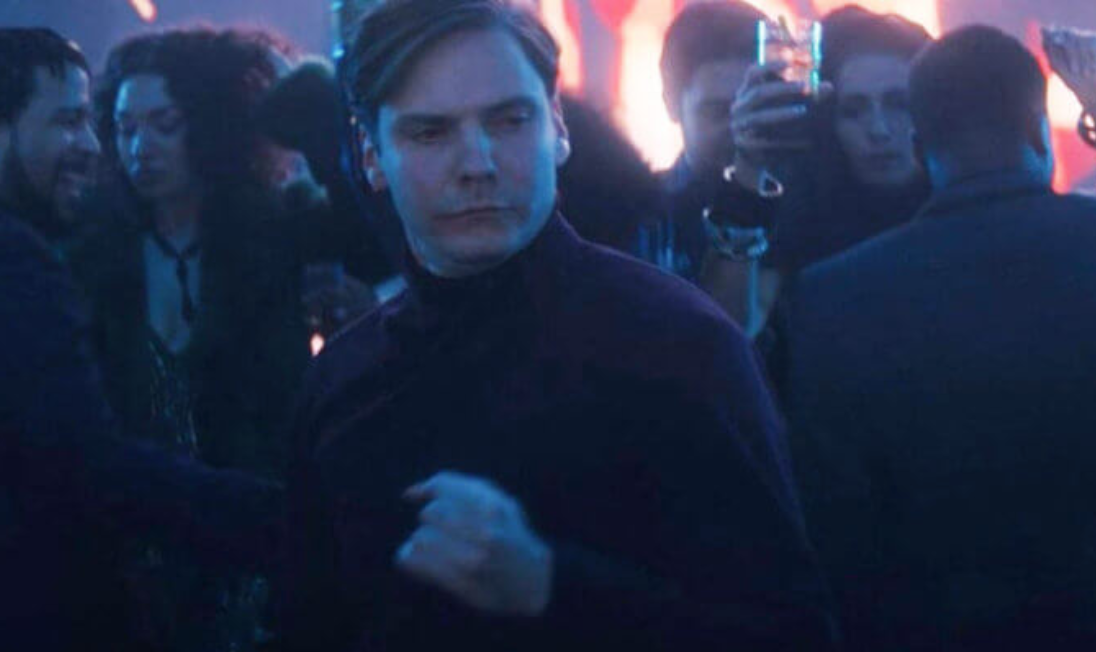
When Marvel Studios introduced the roster of characters set to appear in their 2024 Thunderbolts film, fans were immediately stunned by the absence of Baron Zemo from the team. In the Marvel Comics, the first iteration of characters to take on the mantle of Thunderbolts (like every Marvel Comics team, the roster has changed many times over the years) were led by Zemo under the guise of a hero known as Citizen V. With Zemo nowhere to be found among the members of this MCU-based team, fans began to wonder if Marvel Studios was simply withholding him from the public reveal to serve as a surprise later. After all, following the events of The Falcon and The Winter Soldier, there’s no readily recognizable reason that fans shouldn’t expect Zemo to return to the MCU.
Actor Daniel Bruhl took his performance as Zemo up a notch in the Disney Plus streaming series and was given much more to do than in his previous turn in the role, making the lack of Zemo even a little more confusing to fans. He danced, he fought, he betrayed, he came back…by the end of the series, it would be hard to argue that Zemo wasn’t among the highlights of it. With fans anxious to have him back in the role and no news about him being attached to any upcoming projects, Radio Times asked Bruhl if he could say whether or not fans might expect him to turn up in Thunderbolts when it hits theaters. Bruhl, unfortunately, didn’t give much away.
Even if I could… I couldn’t, you know. The only thing I can say, everybody knows – is I’m not dead!
Daniel Bruhl
Not only is Zemo not dead, his last scene in The Falcon and The Winter Soldier showed that he was still able to orchestrate large-scale operations from inside his prison cell in The Raft. Zemo, of course, is a man of great patience, so while he may not appear in the Thunderbolts, at least not as a member of the main team, it’s very likely there’s still some use for the character down the road which means fans will have to adopt his patience while they wait. But it does sound like Bruhl expects to revisit the character sometime soon.
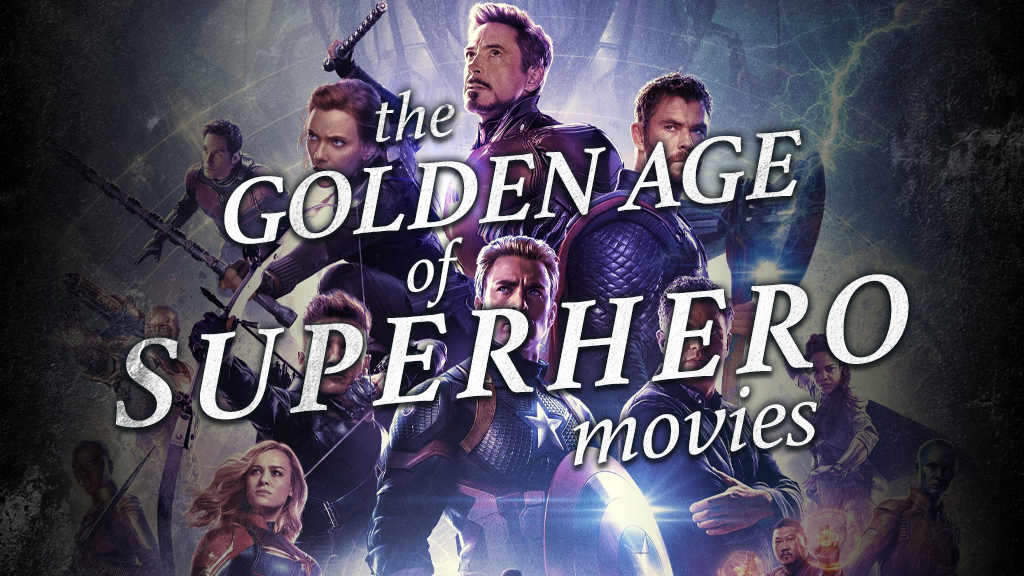
With the continued expansion of the Marvel Cinematic Universe and DC properties, more and more superhero movie and television content is being pumped into screens almost non-stop. New genres and formats are being explored and countless characters are being brought into live-action. So, we should be at the peak of the age of superhero movies, right? Unfortunately, it seems we have sailed right on through the Golden Age of Superhero Movies that took place in the 2010s.
This feature could not function without describing the massive and crucial impact that Marvel Studios and the MCU had on the superhero genre. However, other films began paving a path before 2008’s Iron Man. DC had been producing films, particularly based on Batman and Superman properties, for decades that had a clear cultural impact. Marvel, through Sony or Fox, had major hits like the Spider-Man and X-Men franchises. While the superhero movie genre had been present for some time, the MCU was the undeniable spark that caused the concept of the superhero movie to explode.
While Iron Man was the first of now many films in what became the MCU, the whole franchise did not pick up an insane amount of steam for several years. The early Phase One movies were—overall—OK. They existed as origin stories, but the superhero origin story had already been done nearly 3,333 times before. Everything changed when Avengers was released in 2012.
The crossover aspect is undeniably one of the key (if not the key) components that changed the way audiences engaged with the genre. While other superhero movies still trickled out around this time, no other franchise was combining four other franchises into one mega-franchise. The MCU was surely not the first to invoke the crossover strategy, but it certainly was the first to employ it on such a large scale. And luckily, Avengers was a smash hit and will remain one of the most culturally significant films of the early 21st century. Movies stopped becoming just movies—they were entire events and spectacles that transcended just a single film. At this point, “franchise” became the business term while “universe” because the one fans experienced.
The Infinity Saga experience, frankly, cannot be surpassed. The post-Avengers excitement leading the Avengers: Endgame was the definitive Golden Age of Superhero Movies. During this time, millions and millions of fans waited feverishly for the one or two movies the MCU dropped each year. Easter eggs and cameos felt like invaluable treasures as people started to stitch together this rich, magical fictional universe that entertained them like no other. The promise of some ultimate “finale” to the saga being lived through buoyed even some of the weaker installments. And, boy, was that finale spectacular.
At this point, there is no reason to overanalyze Avengers: Infinity Waror Endgame anymore. Regardless of contemporary or retrospective reviews or criticisms, virtually everyone who was a fan during that time can tell you those films were the hype of all hype. The iconic moments from those films we still conjure up frequently were the fruition of 11 years of storytelling, and every bit of the event was stylized as the definitive and ultimate moment of the unprecedented sensation that was the MCU.
Of course, the MCU did not stop. In fact, it is producing content at a rate that would even a 2018 fan would never believe. More characters that comic book fans never thought would ever make it to live-action are now here, living amongst the universe we feel we grew up or grew old in. There is something to be said, though, about the onslaught of content. The ever-warned-of “superhero fatigue” that some spoke of a decade ago may actually be creeping in. With often little to no chance to take a breath between MCU projects, each one has the potential to feel less and less special. The anticipation for the next project has weaned. Now, it is difficult to take in the entire MCU given how many hours of content exist. A casual fan may very well be overwhelmed, and new fans may have no idea how to actually get involved. Old fans may have had to abandon their annual MCU rewatch.
But Phase Four—and beyond—content has also produced some phenomenal projects. Many would agree that Spider-Man: No Way Home, Werewolf By Night, and She-Hulk are all gifts in their respective formats. But even with quality new projects, the expectations are clearly higher than they once were. Part of it is the high of Infinity Saga that so many keep chasing. However, the toxic online culture surrounding film discourse—particularly in the comic book genre—has felt out of hand since Phase Four began. Surely the Golden Age would not include thousands of people trash-talking every frame of a film, leading robust campaigns centered around hating women, and whining, complaining, and arguing about rumored post-credits scenes for much more important films that have not been released yet.
And while the MCU can now tell bigger and more fantastic stories with an increasing range of characters, it is almost inevitable that the overarching plot will be Marvel Studios’ answer to: “How do we go bigger and better than Endgame?” The infinite possibilities, cameos, and combinations of Avengers: Secret Wars will almost certainly be a proper answer to that question and the payoff will almost certainly be astronomical. But it will not be able to live up to the Infinity Saga finale. While the story is presumably unique and the cheer-worthy moments will be plenty, at the end of the day the MCU has already taken us through that journey. The build-up and surprises are expected, and the energy will never match that of 2018 and 2019.
This article focuses on the MCU for obvious reasons, but DC and the DCEU shot their own shots, though it was generally fumbled. So far in the post-Endgame time period, we have seen a DC that is fractured, confused, disorganized, chaotic, repetitive, and often mediocre. There are no doubt some standouts, including The Suicide Squad, Joker, and The Batman. But the fact that they remain as separate isolated incidents keep the DC Universe from thriving in the way that it could. Black Adam’s insistence that this is all set to change is empty until it happens. To be fair, the recent news that James Gunn and Peter Safran will lead a new “DC Studios” is something to keep an eye on. But either way, DC really missed the Golden Age boat at this point, unless they can turn it around and do something extraordinarily special.
The season finale was all about fourth wall breaking by doubling down on the few times Jen did just that in the previous episodes. She now literally breaks the fourth wall by breaking out of Disney+, going into the real Marvel Studios HQ all while demanding script changes from K.E.V.I.N., an in-joke for the Marvel Studios head Kevin Feige.
Marvel Studios’ She-Hulk: Attorney at Law Episode 9
Marvel Studios’ She-Hulk: Attorney at Law Episode 9
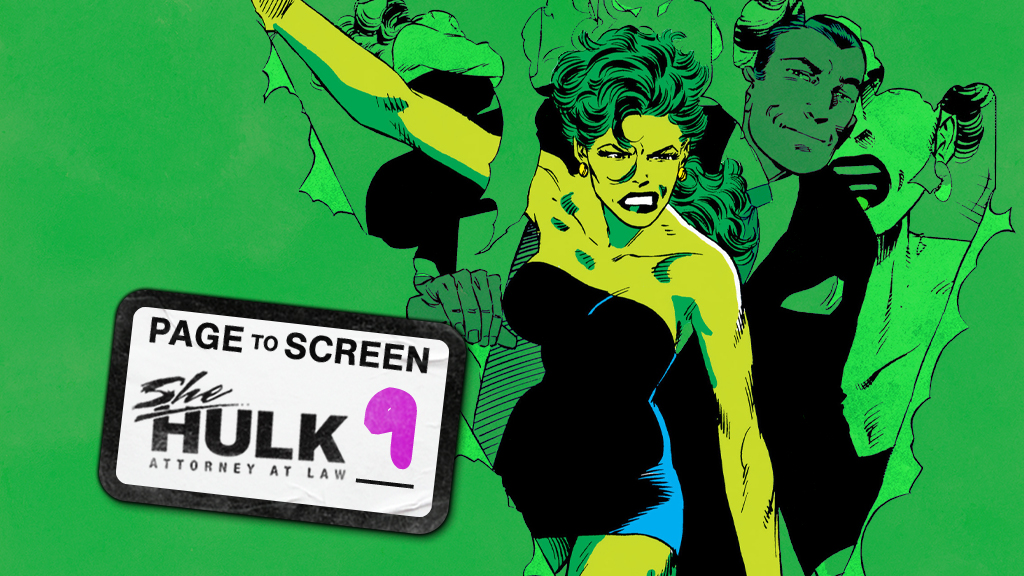
This, the breaking out not just to connect with the viewer/reader but going a step beyond and conversing with the creator itself, questioning his decisions and proposing something more to her liking, is fairly similar to what happened in the John Byrne’sThe Sensational She-Hulk #37. Here, Jen, after getting into a dispute with the Living Eraser, mishandles his Dimensionizers and erases herself blaming Byrne for such a poor decision.
The Sensational She-Hulk #37 (1992)
This serves as a prime example of the kind of impact that Byrne had on the character since, at the time Stan Lee wrote her first issue, 1980’s The Savage She-Hulk #1, her ability to step out of the comics wasn’t yet a thing. It wasn’t until Byrne’s iconic 1989 run that she truly became one of the most distinct Marvel characters by gaining such power. But instead of just breaking the fourth wall, Byrne’s She-Hulk made use of it. She tore pages apart so she could skip ahead to the villain more quickly and when things weren’t going her way she would request to basically skip over a fight she knew she would lose. She would even try to convince Byrne and the Marvel editors to change her looks whenever she felt her hair looked bad. The Sensational She-Hulk really made a tremendous contribution to both establishing a comic paradigm shift and dismantling comic book physics.
And the same can be said regarding the Marvel Cinematic Universe. Even if K.E.V.I.N. identified the programming error that allowed Jan to step out of the show into the real world, making sure to say to her that this was the last time she would be able to do that, there is no denying that the level of self-awareness the character may yet instill into the MCU is substantial. That is, if the other characters actually believe her on that, something that both She-Hulk: Attorney at Law and the comics hint at, as these panels from The Incredible Hulk #412 can attest to.
The Incredible Hulk #412 (1993)
If Marvel Studios ever decides to introduce a character that is also in on the gag, much as Marvel Comics did with her boyfriend Wyatt Wingfoot and the Blonde Phantom that decided to make a comeback as a She-Hulk sidekick while breaking the fourth wall herself, in The Sensational She-Hulk #4, there are surely a number of possible contenders. Even if this may somehow make Jen’s powers feel less unique, in the context of the MCU it is a concept that will surely thrive. With the upcoming Avengers: Secret Wars, why not introduce the idea of a universe where every single Marvel character grew bitter and disgruntled by knowing their free will, their freedom to do otherwise, and the power of self-determination was in the hands of a random writers’ room on Marvel Studios HQ?
The Sensational She-Hulk #4 (1989)
She-Hulk: Attorney at Law is now streaming, in its entirety, only on Disney+.
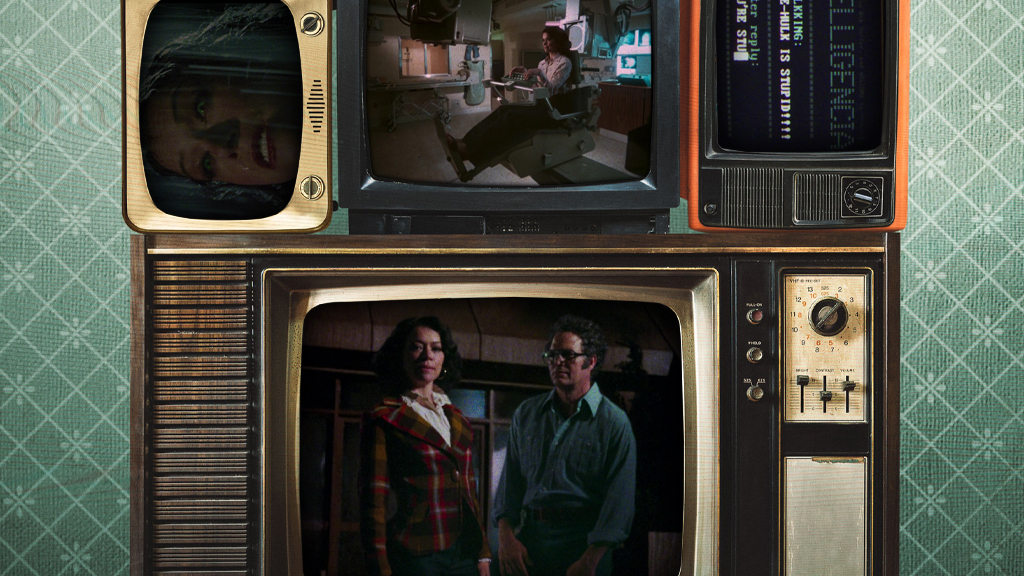
The big fourth wall break in the middle of the She-Hulk: Attorney at Law finale may be the most memorable part of the episode, but the very beginning was also iconic. The opening was a stellar homage to the opening credits of The Incredible Hulk television series starring Bill Bixby and Lou Ferrigno that aired on network television in the late 1970s and early 1980s. It was not too off-the-wall that the self-aware show would reference the classic Marvel show, but head writer Jessica Gao recently opened up about the somewhat surprising way it came about. Speaking to Comicbook.com, Gao said:
One day, out of the clear blue — this was post-lockdown, so everyone’s just working from home — my fiance, Truck Torrence, just walks into the room that I’m in working. And just announces, ‘I think you should do an opening that’s like an homage to the 1970s Incredible Hulk. That is all.’ And then he just walked out of the room. And I thought, ‘That’s a great idea,’ and then it just snowballed from there.
Jessica Gao
The idea luckily worked in practice at the end of the day. Even if some younger viewers did not immediately make the connection, most did and the aesthetic was absolutely on point. Gao continued:
And I am so tickled that we actually got to do it…[i]t looks fantastic. Our second unit director, who is also our stunt coordinator, Monique Ganderton, directed that. And you could tell that Tatiana and Mark had so much fun in those ’70s clothes. In the scripts I wrote ‘Ruffalo is in a Bill Bixby wig.’ But what was great is Mark naturally has this beautiful curly hair, so we didn’t need to put a wig on him. Like his hair naturally could support that wonderful ’70s volume.
Jessica Gao
She-Hulk: Attorney at Law is now streaming on Disney+.
Considering She-Hulk brought back major references to 2008’s maligned and often ignored The Incredible Hulk, many thought that additional characters from that movie might make an appearance. Specifically, some theorized that Tim Blake Nelson’s Samuel Sterns, who was last seen beginning his transformation into the supervillain known as The Leader, would be the overarching or background villain of the series, especially after he was announced to be returning in Captain America: New World Order.
While The Leader was nowhere to be found in She-Hulk, head writer Jessica Gao says he was in her original pitch for the series. Speaking to Comicbook.com, Gao stated:
In my original pitch, I did have The Leader in there. Just as an option, as a suggestion, you know?…[b]ut really, I can’t remember why [it was taken out]. I don’t remember if it was organically taken out, because we just came up with other stuff, or if we were told no. I honestly don’t remember. But there was thought about either bringing him back or doing some version of a new version of Leader, or some relation to him. But, I mean truly, this was three years ago, and the show has evolved so much that I don’t remember what actually happened.
Jessica Gao
Now having seen the full She-Hulk series, The Leader’s absence did not weighing heavily on the character or story. Still, Gao’s comments add fuel to the growing theory flames that Marvel Studios is plotting a grand and expansive Hulk-related plotline in the future.
She-Hulk: Attorney at Law is now streaming on Disney+.
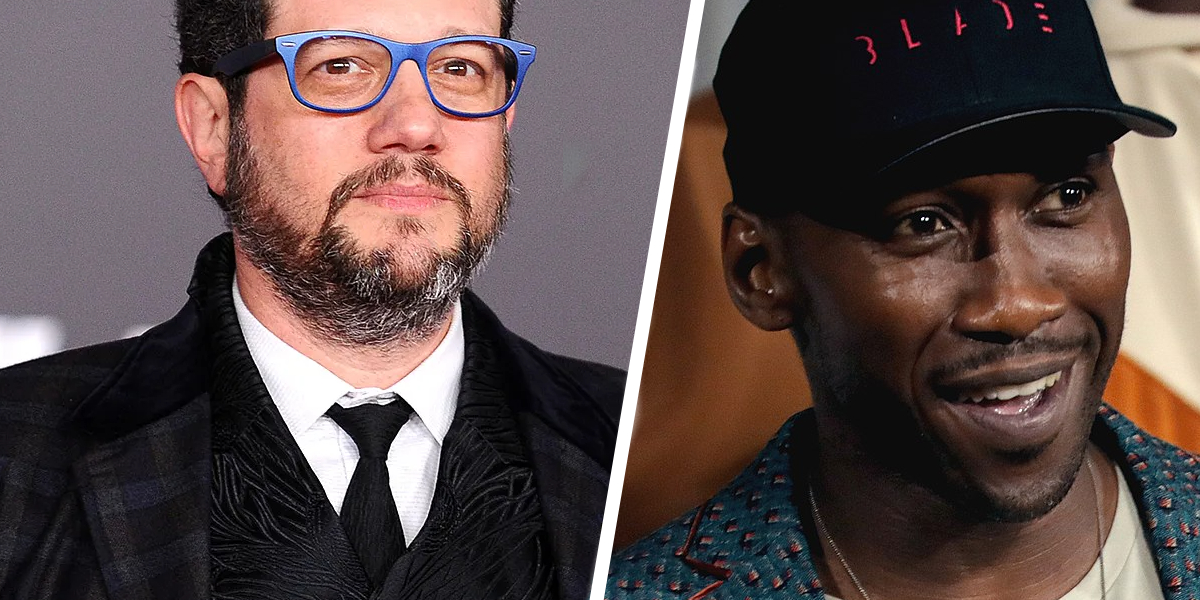
Production on the highly anticipated Mahershala Ali-led Blade movie is currently shut down after losing director Bassim Tariq. After Tariq’s departure, it was revealed that Beau DeMayo had agreed to rewrite the script. With the hiring of DeMayo, it was expected that Marvel Studios would quickly fill the director position, but instead, the studio has slowed down to “deepen the search” for a new director, while also taking time to further strengthen the film.
On Comicbook.com’s Phase Zero podcast, Giacchino addressed whether he could take the reins on Blade. Unfortunately for fans, it looks like the list of potential directors does not include the Werewolf By Night director. Giacchino expressed that Blade would conflict with some of his other projects in the works timing-wise:
“I mean, look, I love Blade. I think that’s an amazing, amazing character. It’s one of my favorites. But I feel like that thing is already in motion in a way that is like, and I’m in motion on other things as well, and there’s just– It’s a whole… you know. It’s just, timing-wise, it’s a little crazy. So I feel like, you know… I want that to be a great movie. I want that to be an awesome movie, because that character deserves it in a huge way. But yeah, right now, I mean, no.”
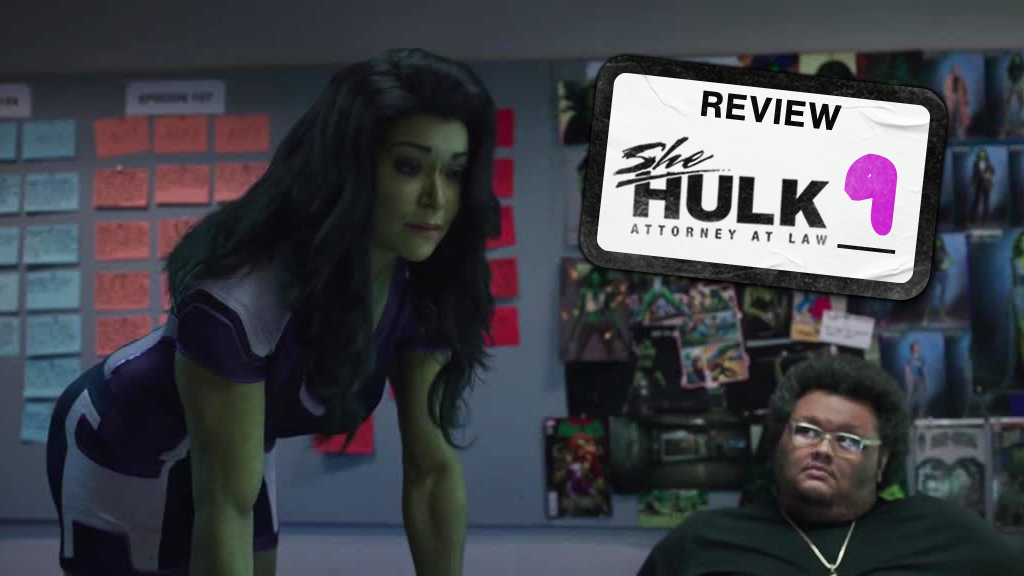
We have come to an end of yet another Marvel Cinematic Universe series, but this finale stands on its own. Since WandaVision, MCU series have been rather well known for either botching or just not following through with outstanding finales. How anyone feels about the She-Hulk: Attorney at Law finale is less straightforward than usual. While the word “unique” has been thrown around a lot in Phase Four, there is no other way to start the discussion.
Even though it did not take up the entire runtime, the massive fourth wall break in the finale has to be an instantly iconic moment in the MCU. To not only take the audience out of “the show” but to spend time with the titular character in Marvel Studios’ headquarters is beyond bonkers. Of course, the jarring transition from the regular program to She-Hulk breaking out of the Disney+ screen is incredible, and it lives up to the comic book version of her doing the same decades ago. The core potential of the character is released in the finale, and there are very few moments in the MCU that can genuinely say the same.
The humor stemming from the fourth wall break is not only laugh-out-loud funny, but it is peak She-Hulk. Throughout the season, the show makes jabs at tropes and the incessant presence of the internet’s yelling in every single moment of the contemporary MCU. Anyone on Twitter is familiar with this, and anyone with a brain knew that She-Hulk would provoke perhaps the most attention in that regard. Instead of winking at the audience about it, the artificial intelligence replacement for Kevin Feige (a joke worthy of its own review maybe) addresses it head-on. The MCU has an internet relations struggle. She-Hulk is a strong, confident woman. The two combined were meant to be together, but the way the finale actually embraces it is almost too good to be true.
The fourth wall break, without a doubt, is the finale. It may even beShe-Hulk. Still, that does not mean the finale as a whole deserves top marks. It is somewhat hard to separate the fourth wall break from anything else, both because of the inherent difficulty of that and because they addressed very different things. The break speaks to the essence and the heart of She-Hulk, and what better place to do that than in the finale? But the rest of the story is quite limited because of it.
Yes, it brings home the point that this is She-Hulk’s show, but it also made it clear that She-Hulk’s story—at least in Season One—did not do much more than what we already saw before this episode. That is not inherently bad, especially considering the show really wants to call itself a legal comedy. Plus, fans should have learned their lesson after WandaVision to not expect series finales to become the crossover, universe-shattering moments of their dreams. To that, She-Hulk said: here is Skaar. But plenty of plotlines arguably deserved more time and attention, and a longer version of how Jen cleared her name would have been very welcome. That in particular is the biggest loss of the finale’s choice, but at the end of the day, the fourth wall break is always the preferred option.
She-Hulk made waves as an MCU series. As one of the few MCU projects to feature a woman in the title role, it went beyond just basic representational work on that front. Women’s real experiences were either mentioned or actually discussed, and the first project the MCU felt comfortable throwing sex in was a project where a woman led that concept on-screen. But the series will also go down as the funniest Marvel Studios project to date and in many ways one of the most grounded in reality (which is ironic in plenty of ways). Jen was an actual, believable human, and the series made that the basis of everything, even the crazier elements. She-Hulk, arguably, was what many internet fans wanted Doctor Strange in the Multiverse of Cameos to be, and yet this was just the first season of a solo series. At the end of the day, there is not much else to say except: She-Hulk smashed.
Much happened—or didn’t, depending on how you look at it—in the She-Hulk: Attorney at Law finale. The series ended on an upbeat note, and Jen seems to have taken back her life after the dark ending of Episode 8 and the sad beginning of the final episode. One thing is for sure, though, and that is that the bonkers fourth wall break is undoubtedly an iconic Marvel Cinematic Universe moment from here on out. In it, there are a couple of moments that mention a She-Hulk Season 2. And while Loki is still the only series to get an official confirmation by the time the credits start rolling, we have may have gotten the next best thing.
When She-Hulk arrives in the writers’ room, she interrupts their conversation about what the second season should be. Specifically, one writer pitches the god-awful idea that the entire second season would be a dream sequence. Later, when She-Hulk is talking to K.E.V.I.N., a second season is once again brought up in a very matter-of-fact way.
While the fourth wall break does not appear to be Marvel Studios’ way of officially announcing something, the fact that a She-Hulk Season 2 was mentioned more than once in a “yeah, this is going to happen” way seems like a fairly obvious way the show may be teasing it. After all, robot Kevin Feige had plenty to say but certainly did not correct the Season 2 assumption. While the writers could have included the references as cheeky jokes—after all, the internet will surely start debating what every word in the fourth wall break meant—it did not play off as obviously as some of the other jokes in that sequence.
Like everything, we will have to wait and see if or when Marvel Studios decides to announce something like She-Hulk Season 2, but the writing may be on the wall. She-Hulk is also, conveniently, an incredibly second-season-friendly show with its ability to be a half-hour legal comedy. Whether it truly accomplished that in this first season is perhaps debatable, but the potential from this show and the comics’ source material is truly astounding. The episodes with Donny Blaze, Madisynn, and group villain therapy could easily become the norm in a second season, and those were standout episodes. There is a lot more lawyering Jen can do, and there is certainly a lot more She-Hulk smashing she can do.
All episodes of She-Hulk: Attorney at Law are now streaming on Disney+.
The She-Hulk: Attorney at Law finale had so much going on, that the surprise introduction of a major character at the very end almost did not pack much of a punch, perhaps because it has been rumored for quite some time. Still, the brief introduction of a new character likely has major implications for the Marvel Cinematic Universe going forward.
At the end of the She-Hulk finale, Bruce does eventually show back up (granted, he was axed from the messy climax after Jen went to clear things up with Marvel Studios). At the Walters’ family picnic, however, Bruce arrives with someone else in tow: his son, Skaar. For those unfamiliar with Skaar from the comics, this could be a wild twist. In general, it is a major inclusion in the MCU that will surely carry a lot with it. So, first, who is Skaar? And second, what does his presence mean for the MCU now?
In the comics, Skaar comes from a relationship the Hulk has while on Sakaar. He conceived a son with Caiera the Oldstrong, but after a ship explosion that killed Caieria, the Hulk believed that Skaar had died in the womb. Obviously, Skaar did in fact survive and was raised by his mother’s Shadow People on what was left of Sakaar. Eventually, he was exiled to Earth. And when he arrived, all he wanted to do was kill Bruce.
In live-action, it is not hard to imagine that something similar happened and our MCU Hulk fathered a child on Sakaar. We have a lot less information on who Skaar’s mother might be, the state of Sakaar, or why Skaar has come to Earth, however. The way his arrival was set up in She-Hulk, it almost came across as though Bruce went to Sakaar knowing that he had some sort of responsibility—maybe Skaar. It is also very likely he was not aware of Skaar before his return to the planet. In any event, he definitely brought his son with him and they seem chummy enough.
The most obvious prediction for how Skaar will factor into Phases 5 or 6 is as part of the rumored ‘World War Hulks’ project. She-Hulk seemed to tease that it could be part of the setup for that project or overarching storyline, given the Hulk blood fascination. The series did not end up going that route, but the implication is very clear: the MCU is about to get more hulks. What happens when the MCU gets a bunch of hulks?—probably some type of World War Hulk iteration. Skaar plays a significant role in that story, but the theories on how Marvel Studios might adapt it so far are endless since we are seemingly at an early stage of that process. However, given the casting of Tim Blake Nelson as The Leader in Captain America: New World Order, that movie might be a solid place to start.
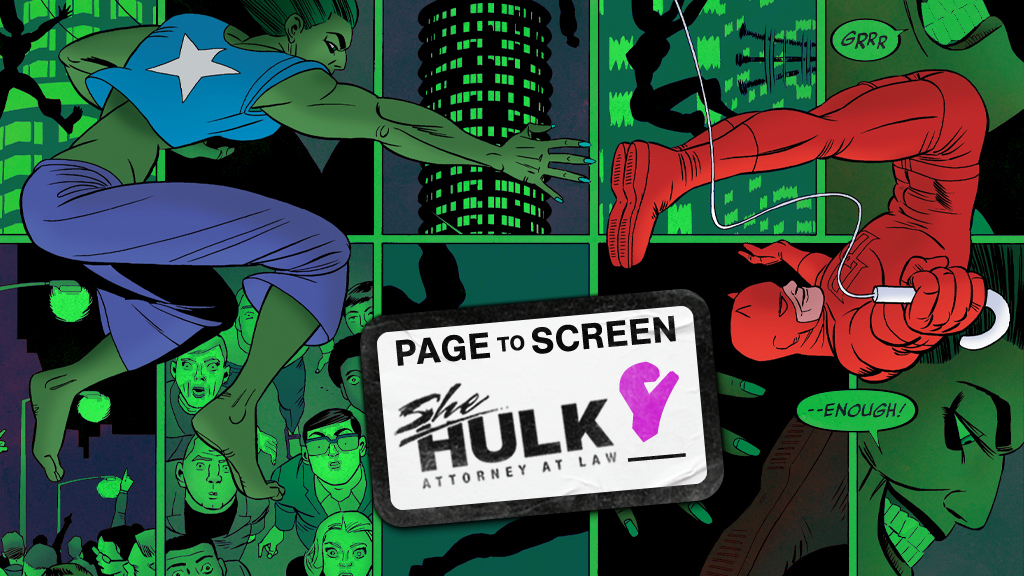
Episode 8 gave us the long-awaited Matt Murdock / Daredevil appearance, which bore some similarities with The Good Old Days story arc featured in the 2014/15 Charles Soule She-Hulk run. Soule, who like Walters and Murdock is an attorney himself, got both characters meeting on opposing sides of the court with a slightly different setup than what we got in She-Hulk: Attorney at Law.
Marvel Studios’ She-Hulk: Attorney at Law Episode 8
Marvel Studios’ She-Hulk: Attorney at Law Episode 8
In the show, Jen was oblivious as to who Murdock was, to the point of directing a “Who is this asshole?” to the camera. She later looked him up ahead of their meeting at the bar, but not only was she initially unaware of who Matt was, but she also had no idea Daredevil was even a thing. In the comic, they were already familiar with each other, so much so that even previously in the same run, Jen had gone to Matt looking for some legal advice when dealing with a case involving Doctor Doom and his son, Kristoff Vernard. She then sought to do the same when defending Captain America only to be turned down in a way that only made sense a few pages ahead when she enters the courtroom and finds Matt as the opposing counsel. Unlike in the show, the shock of him being there isn’t only on the reader/viewer but especially on her.
There is a lot more lawyering in the comic than in the show, with Jen’s client being a bit more high profile than Leapfrog. Captain America, who had recently seen the Super-Soldier Serum within his body being neutralized (in the Rick Remender run that would lead to Sam Wilson becoming the new Captain America), was being charged with wrongful death in a civil suit and had approached Jen to be the one to represent him. Murdock was then the attorney for the plaintiff, looking to get Steve Rogers convicted of the role he played in the death of his friend Samuel in the 1940s, a few years before Rogers was even Captain America.
Marvel Studios’ She-Hulk: Attorney at Law Episode 8
Marvel Studios’ She-Hulk: Attorney at Law Episode 8
Little did both Walters and Murdock know that Steve Rogers was (sort of) playing both sides. With his old age, he had enemies that would want to tarnish his legacy once he’d be gone, and that meant setting up the whole lawsuit situation. It wasn’t like he could just send in the Avengers to punch their way out of it since that would make it seem that he was indeed guilty of all charges. He had to find another way to not only avoid a conviction but to completely discredit the entire case. He then managed to get Murdock involved so that, in the public eye, everything was being done in order to convict him since Matt was regarded as being one of the best. As for Jennifer, as hard as he wanted Matt to go, he also needed someone equally as good on his side since, in his own words “I didn’t want to lose, you know.”
She-Hulk #9 (2014)She-Hulk #9 (2014)
Outside the courtroom, their late-night encounter also played a bit differently. In She-Hulk: Attorney at Law Jennifer left her apartment when trying to protect her client from being attacked, leading to her first confrontation with Daredevil and the eventual disclosure that Murdock was behind the mask.
Marvel Studios’ She-Hulk: Attorney at Law Episode 8
Marvel Studios’ She-Hulk: Attorney at Law Episode 8
In the comic, it was Matt that came to Jennifer in order to get her out of the house and into the Los Angeles night sky. But even if he felt that they both should unwind following an entire day stuck in a courtroom, dealing with a case that both were having a bit of trouble adjusting to, his true purpose was to try and free Jen of the feeling that Cap should be above the law, and that his conviction should be taken as a real possibility. It is here that Matt tells Jennifer that when he was asked to step into the role of prosecutor, Cap was the one who ok’d it, making Murdock promise not to pull any punches. This made it seem, for both Jen and Matt, that Cap might actually be guilty after all, and that it was all a weird way of him finally coming clean about past mistakes.
In the TV show, their late-night exploits lead them to Leapfrog’s secret-not-so-secret lair. After Matt explains that Patilio kidnapped Luke Jacobson the two work together to rescue the latter. They make quick work of the goons/henchmen defending the premises and get Jacobson to safety without breaking a sweat.
Marvel Studios’ She-Hulk: Attorney at Law Episode 8
Marvel Studios’ She-Hulk: Attorney at Law Episode 8
There’s a very similar occurrence in the comics that happens once the case was settled (go read the comics to know exactly how that transpired). We also got a Daredevil / She-Hulk team-up when Steve Rogers seemingly figures who might have been the mastermind behind the entire lawsuit situation. Dr. Faustus, an Austrian specialist in psychological manipulation seemingly had access to old Nazi information from the ’40s and was able to explore the events in order to hurt Cap’s image. When faced with this information, Jen and Matt do not hesitate and, with the case already closed, have no issue with breaking into Faustus’ compound and, much like in the show, getting it done in the blink of an eye.
She-Hulk #10 (2014)
In She-Hulk: Attorney at Law, following their day together—first in the courtroom, then at the bar, and finally rescuing Jacobson—Jen and Matt start making plans to meet up again after he goes back to New York since that would be his last night in LA. But, unlike in the comic run, that night out never happened since they skipped all of that and just…
Marvel Studios’ She-Hulk: Attorney at Law Episode 8
Marvel Studios’ She-Hulk: Attorney at Law Episode 8
In the book, it was almost the reverse situation. They also found themselves on the west coast (San Francisco, not LA, where Matt was living at the time) but it was Jen that had to go back to her practice in New York. When realizing that that would be her last night in town, Matt also asks Jen out, and they do end up going out, just not in the usual sense.
She-Hulk #4 (2014)
The first eight She-Hulk: Attorney at Law episodes are now streaming only on Disney+.
Cookie Consent
We use cookies to improve your experience on our site. By using our site, you consent to cookies.
This website uses cookies
Websites store cookies to enhance functionality and personalise your experience. You can manage your preferences, but blocking some cookies may impact site performance and services.
Essential cookies enable basic functions and are necessary for the proper function of the website.
Name
Description
Duration
Cookie Preferences
This cookie is used to store the user's cookie consent preferences.
30 days
These cookies are needed for adding comments on this website.
Name
Description
Duration
comment_author_email
Used to track the user across multiple sessions.
Session
comment_author_url
Used to track the user across multiple sessions.
Session
comment_author
Used to track the user across multiple sessions.
Session
Statistics cookies collect information anonymously. This information helps us understand how visitors use our website.
Google Analytics is a powerful tool that tracks and analyzes website traffic for informed marketing decisions.
Contains information related to marketing campaigns of the user. These are shared with Google AdWords / Google Ads when the Google Ads and Google Analytics accounts are linked together.
90 days
__utma
ID used to identify users and sessions
2 years after last activity
__utmt
Used to monitor number of Google Analytics server requests
10 minutes
__utmb
Used to distinguish new sessions and visits. This cookie is set when the GA.js javascript library is loaded and there is no existing __utmb cookie. The cookie is updated every time data is sent to the Google Analytics server.
30 minutes after last activity
__utmc
Used only with old Urchin versions of Google Analytics and not with GA.js. Was used to distinguish between new sessions and visits at the end of a session.
End of session (browser)
__utmz
Contains information about the traffic source or campaign that directed user to the website. The cookie is set when the GA.js javascript is loaded and updated when data is sent to the Google Anaytics server
6 months after last activity
__utmv
Contains custom information set by the web developer via the _setCustomVar method in Google Analytics. This cookie is updated every time new data is sent to the Google Analytics server.
2 years after last activity
__utmx
Used to determine whether a user is included in an A / B or Multivariate test.
18 months
_ga
ID used to identify users
2 years
_gali
Used by Google Analytics to determine which links on a page are being clicked
30 seconds
_ga_
ID used to identify users
2 years
_gid
ID used to identify users for 24 hours after last activity
24 hours
_gat
Used to monitor number of Google Analytics server requests when using Google Tag Manager
1 minute
Marketing cookies are used to follow visitors to websites. The intention is to show ads that are relevant and engaging to the individual user.
Pinterest Tag is a web analytics service that tracks and reports website traffic.