Fans are preparing to bid farewell to everyone’s favorite band of intergalactic misfits, with Summer 2023’s Guardians of the Galaxy Vol. 3 potentially marking the end of the Guardians as we know them. However, one of the group’s stars may believe that the end of the road for Groot in the Marvel Cinematic Universe has not yet arrived.
Guardians of the Galaxy’s Groot actor Vin Diesel shared a post on Instagram where he seems to indicate—or joke—that he believes Marvel Studios has plans to develop an MCU movie based on the talking tree’s homeworld.
After noting his niece’s love for the recent I Am Groot Disney+ shorts, Diesel ended the post on an interesting note:
“So my niece called me and said… thank you uncle Vin for making I Am Groot, haha… the shorts written and directed by the talented Kristin Lepore. It was a blast making, but it’s also a blast watching it with my angels. No wonder Marvel wants to make the Planet X movie. All love. #FloraColossi #AlphaGroot #PlanetX”
Vin Diesel
Planet X is the homeworld of the Flora colossus, the alien race from which Groot is descended, where the simplistic but loveable language of Groot is spoken. Fans may also recognize “Planet X” as the X-Men comic storyline by the same name, or the mutant safe haven also coined Planet X. While fans gets excited about an X-Men news, it is unclear how Diesel’s post would relate to mutants at all.
Diesel easily could have been joking about the potential for a Groot-centered film, as a solo film starring the loveable character seems unlikely in the currently known MCU slate. Still, nothing can ever be ruled out as a future installment given the rapid expansion of the MCU in the past couple of years.
With the release of Werewolf By Night, Marvel Studios has given us yet another format in which to experience and further explore the MCU. Following feature films, one-shots, and TV shows, fans have now been treated to its first Special Presentation, with The Guardians of the Galaxy Holiday Special, Marvel’s second go at the format, just a few weeks away. And one thing is certain: if it ends up being as well received as Werewolf By Night has been, the demand for further projects within the same framework is bound to rise.
James Gunn has stated that his upcoming Holiday Special will be under 40 minutes in length and considering that Werewolf clocks in at around 48 minutes (not counting end-credits) the basic parameters for this kind of project seem to be fairly straightforward. Tv-episode-length with a higher budget, and a more concise and focused script than a feature film. Could this structure become the go-to format for Marvel Studios when it comes to their Disney+ content? As with many debates, the truth usually lies somewhere in the middle.
Considering how most Marvel Studios Disney+ shows have been a bit lackluster, there is no doubt that there is still work to be done when adapting the MCU to an episodic format. The Special Presentation type of show does allow Marvel to keep its feature film formula—a formula that works more often than not—a bit more intact, but while that may serve particular stories, there is still much that can be gained by giving certain characters and storylines additional room to breathe by going the 6+ episode route. If anything, Special Presentations allow Marvel to have a sort of middle-ground between a feature film and a TV show, so that when the story does ask for a shorter runtime but still not garnering sufficient relevance for the big screen there is still a way to make it work. It wouldn’t be hard to picture a series like The Falcon and the Winter Soldier being developed as a one-hour tv special, telling the story of how both Sam and Bucky went from Endgame to Captain America: New World Order and Thunderbolts, respectively. The same case could be made for Hawkeye that, as FatWS, would take advantage of previously established characters to streamline the narrative, swiftly leading into the next project. WandaVision would perhaps be the exception since it took the episodic format to heart and made it intrinsic to its essence. As for all Marvel Studios series introducing titular heroes, along with their own set of side characters, from Moon Knight to Ms. Marvel and She-Hulk, the longer runtime provided by several episodes seems completely warranted. Taking time to properly explore their origin, in their own corner of the MCU, without all the noise provided by the evergrowing mob of characters that will eventually engulf them seems fair.
But while the story itself should be the main reason when choosing what format to go with, there are also more specific points working in favor of the new format. For one: talent availability. With the success of the Marvel formula, the franchise is either attracting A-listers to its key roles or turning unknown actors into household names. In either case, unless previously signed contracts so dictate, it will become increasingly hard to get the desired names to be completely available for the time that it takes to shoot the usual 6 to 9 episodes of a regular Marvel Studios series. By having the Special Presentation format available, the studios could keep production schedules shorter, stars happier, and probably even bring about a bit more of that Strange Alchemy that the Russo Brothersvalued so much (something that happens when characters who never interacted in previous projects share the screen for the first time) by making everyone’s schedule a bit more team-up prone.
There is also another issue, especially relevant when it comes to streaming services, that the Special Presentation format sort of bypasses, not on its own but due to the sheer volume of premium original Disney+ content. The importance of keeping active subscribers all-year round is a big reason for investing in episodic series to be a good business model. But since Disney+ already has other equally massive franchises that are aiming at pumping out content frequently, there is no reason for Disney, when looking at the bigger picture, to not be ok with a few Marvel shows becoming glorified one-shots and not having to drive online discourse for several weeks since there are other shows that will keep subscribers busy for that same period.
What is perhaps a bit more dubious, but that could actually be a reality, is what the shorter runtime (when compared to a TV series) might do in terms of rewatchability and how that relates to the ease with which Marvel properties have been able to enter the cultural zeitgeist since 2008. For years Marvel Studios made…movies. Fans had to wait months in-between projects and what did they do when a new one was about to premiere? They rewatched the previous ones. And with that, everything about the movies permeated the discourse, from the biggest set pieces to the smallest of dialogue lines. It feels difficult for the same thing to happen when instead of 120 minutes that can be easily experienced over, and over again, fans have to sit through double that same amount of time, especially when there is always something new coming right up. By trimming the actual minutes of content being released, Marvel might be doing themselves a favor since instead of trending due to having constantly something new out, they might give fans the pause to reconnect with the material in a way that’s way more sustainable in the long run, thus imbuing Marvel Studios projects with what made them relevant to begin with.
As for what the future holds for the Special Presentation format, only time can tell. But things are seemingly on the right track for it to become an MCU staple on Disney+.
Much has been said about the apparent lack of connecting tissue uniting most of the MCU’s Phase 4. Even though the climax for Marvel’s post-Endgame storylines being pretty straightforward from the moment the Multiverse came into play, most fans only came to terms with it in July 2022. This was when Kevin Feige announced the upcoming Avengers: Secret Wars, scheduled to be released on November 7, 2025, and in a single instant, it became easy to unite every separate storyline into a single narrative thread, in a way only the Multiverse can.
But there are levels to this. If on the surface, in terms of character movement, things should be moving in closer together for the foreseeable future, mimicking the final days of the Infinity Saga, there might be more assembling going on. And Werewolf By Night, even as detached from the usual look and feel of the MCU as it is, with little to no connection to other projects besides, you know, being set in the same universe, will probably have something to offer in that regard.
Marvel Studios’ Shang-Chi and The Legend of The Ten Rings (2022)
Phase 4 has been all about reinventing and reframing legacy characters all while introducing new faces, both heroes and villains, to an evergrowing canvas of intertwined stories. But it is also quietly revealing strange new artifacts, with apparent similar origins albeit vastly different capabilities, that might come together play a part in the multiversal war that is to come. And this is where Werewolf By Night’s Bloodstone comes into play.
Both in Shang-Chi and The Legend of The Ten Rings and Ms. Marvel, we’ve been introduced to relics that have been slightly reinterpreted from their comic book origins, all while bringing them together in terms of origin. As for the Ten Rings, they were seen as too much like the Infinity Stones, as each ring initially had its own color and ability, and so not only their look but their previously mentioned origin was significantly changed, with the Shang-Chi post-credit scene hinting at an alien origin. As for Ms. Marvel’s bangle, it became the item that ultimately unlocked Kamala’s powers, unlike in the comics where she develops her superpowers when the Terrigen Mists are released. The bangle is, like the Ten Rings, also hinted at as having an alien origin since it’s mentioned that Kamala’s ancestor initially found it on the arm of a blue alien.
Marvel Studios’ Ms. Marvel (2022)
As for the Bloodstone (a.k.a. the Bloodgem), its comic book origin is, you guessed it, also alien. It is said to be the fragment of a meteorite that crashed on Earth somewhere around 8250 B.C, and that eventually founds its way onto the hands of Ulysses Bloodstone, who became immortal by being in possession of the stone. This could fit the powers of the Bloodstone as mentioned by Ulysses’s widow, Verusa, in Werewolf by Night:
What aspect of the Blood Stone are we after exactly? The strength it lends? The protection? Oh… longevity.
Verusa
Marvel Studios’ Werewolf by Night (2022)
The stone is described as a powerful supernatural relic, a weapon unlike any other, something that fits the profile—and likely the origin—of the other two artifacts mentioned above. If the future of the MCU will bring them all together to serve as instruments in the conflicts to come, remains to be seen. But whereas the Infinity Stones were meant to be wielded together, working in unison towards one single goal, having the Ten Rings, Kamala’s Cosmic Bangle, and the Bloodgem doing the same, even if achievable, might be a bit more tricky. But also incredibly more entertaining.
Werewolf by Night is now streaming, only on Disney+
One of Marvel Studios’ longest-kept “secrets” turns out to be perhaps one of the most triumphant projects of the Marvel Cinematic Universe’s Phase Four, if not the MCU as a whole. Formally announced only last month, Werewolf By Nightis Marvel Studios’ first foray into the “Special Presentation” format (in this case, a one-off feature less than an hour long) and without a doubt, this project is, indeed, enormously special. Werewolf By Night shines for several reasons, but its brilliance as a standalone story is the most obvious.
The first thing the viewer notices about Werewolf By Night is its aesthetic. Through its limited marketing, it is known that the feature was inspired by classic horror films of the 1930s and 40s. While the concept elicits immediate excitement from some, it of course risks overwhelming a story with a gimmick. Fortunately, the stylistic choices of this project were almost entirely in service of the story itself, and director Michael Giacchino achieves a near-perfect cocktail of stunning imagery, blocking, and overall texture. The use of black-and-white is an easy grab for an older or spookier look, but it was far more productive in Werewolf By Night than in most modern films that use the technique. The unique and rather all-consuming style certainly takes the viewer to a place easily associated with horror and monster stores, but it also removes one from the known Marvel universe. Consequently, the natural expectations the audience might place on the feature are almost reset, allowing a completely fresh experience.
The greatest achievement of Werewolf By Night is surely its excellence as its own story, disconnected from anything else. Whether in the comic book genre or elsewhere, there is something extremely refreshing about a short story that is able to be thoroughly enjoyed and leave a memorable impact on the viewer. Despite a limited runtime and plenty of moving parts, the feature does a phenomenal job telling a full story without invoking virtually any backstory. The triumph of Werewolf By Night is captured in the feeling of simplicity and ease it executes despite clearly arising from a relatively complex technical foundation. At the end of the day, the project is a wonderful standalone think piece that invokes plenty of metaphors and themes regarding what makes a monster.
However, given its inclusion in the MCU, there is little question that Werewolf By Night will ultimately be part of a larger narrative. Lucky for Marvel Studios, the feature doubles as an exciting introduction to a future Monsterverse considering it leaves the audiences with a litany of questions about the story’s and characters’ past and futures. If anything, Werewolf By Night could have benefitted from additional runtime purely due to the fact that there is enough action and intrigue to go around. An expanded rendition of the hunt itself would almost certainly be a riot, as a prolonged bottle-episode-type suspenseful action thriller would without a doubt rival the famous Daredevil hallway fight scene.
In fact, a certain sequence in Werewolf By Night already does. The amount of violence in the feature has been a key talking point ahead of its release. The project features, objectively, some of the most violent, brutal, and gory scenes in the MCU. Where those are utilized are done so in a way that serves the story—Werewolf By Night is not filled to the brim with blood and violence, but it stands out when on display in the best way. Similarly, the feature gives off plenty of notes of horror, but it is not an overwhelmingly “scary” or frightening piece. It is, however, extremely tense, suspenseful, and even uncomfortable at times like any good horror film.
Werewolf By Night further benefitted from its cast and character ensemble. Laura Donnelly as Elsa Bloodstone is, perhaps, the surprise standout of the feature. Not the title character and not given much fanfare, Donnelly’s portrayal comes off as effortless and she easily carries scenes in a way that cements Elsa as much more than she appears. Two rather different storylines crisscross throughout the special, and Elsa is the rock that holds them together. Gael García Bernal certainly hits the sweet spot as the mild-mannered and warm Jack Russell. The heart of the project resides in him, even if he were not (ultimately) the title character. Viewers should not worry about a “nice” Jack, as Bernal can flip the switch into the titular werewolf without a problem.
The rest of the cast is stellar, and the character designs are so spectacular as to stand out in a generally visually-stunning project. Harriet Sansom Harris supplies the particular brand of sinister that Werewolf By Night needs to achieve its delicious end result. The monster at the heart of it all will surely go on to be a new fan-favorite creature of the MCU, but the special does not forget that he is, indeed, a monster.
If Marvel Studios intended for Werewolf By Night to be a surprise, it is perhaps the best surprise a viewer could hope for. The special is incredibly unique on virtually all levels, and its short story format is one of the most fulfilling MCU experiences in years. Not all Marvel projects can benefit from, or achieve, the type of creative leap required to produce this feature. This special demonstrates that Marvel Studios should continue investing in “Special Presentations,” but Werewolf By Night is special enough on its own to be a one-and-done.
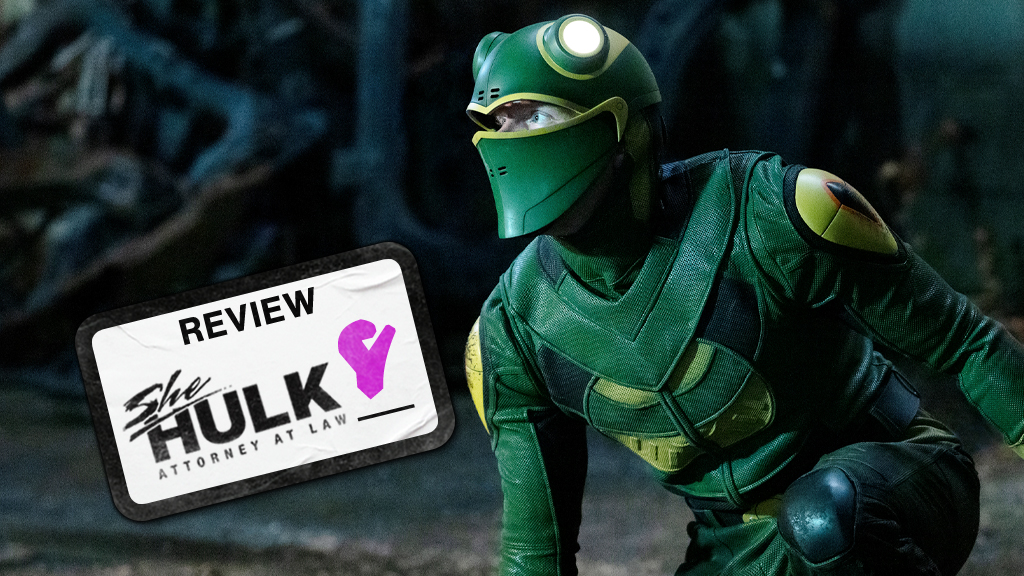
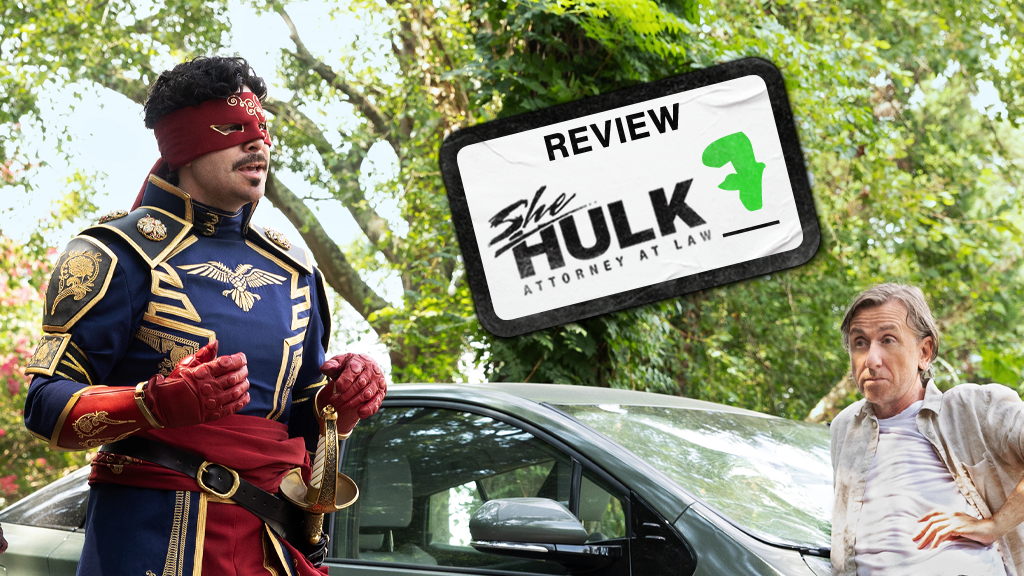
Given the fact that She-Hulk: Attorney at Law has received rather positive reviews each week, it feels somewhat monotonous to call “Ribbit and Rip It” the best episode of the series—but it cannot be avoided. Of course, the character ensemble in Episode 8 seems instantly iconic, but the episode hit every beat it could: lawyer, superhero, Daredevil, sexy hilarious, and dark. This episode can only be thoroughly enjoyed and yet it still ends on the heaviest and most cliff-hanging note of the series.
All eyes are on Charlie Cox’s return as Daredevil in the character’s first MCU appearance. While this is She-Hulk’s show—as we are reminded—anyone who tries to suggest that he was not the highlight of the episode is lying. Predictably, Jennifer Walters and Matt Murdock meet in court on opposing sides before meeting as superheroes. Cox truly embodies the role, and his love for the character and the return is incredibly palpable. Quite honestly, he came across as substantially more charismatic than the character has previously been—and that is a high compliment. Daredevil is lighter than fans of only the Daredevil Netflix show may be used to, but being funny as hell does not take away from the rest of the character which was on full display. Those that will continue to scream into the void about She-Hulk ruining Daredevil are on another planet.
While Murdock was the biggest player, Episode 8 highlights that She-Hulk works best when the titular character has a colorful cast to play around with. Leapfrog and Jacobson held their own in such a high-profile episode, and the ultimate result of all the moving pieces was sublimely paced, extremely funny, and it felt like a much bigger and more exciting show than it had been until now. Obviously, She-Hulk as a bona fide superhero is new and played a major role in that. The chemistry between Jen and Matt—presumably aided by the chemistry between Tatiana Maslany and Cox—created the best pairing of characters in a series riddled with great character interactions.
Despite being an overwhelmingly fun episode, the penultimate episode landed on a dark note with haste to lead into the finale. She-Hulk has not been shy about weaving in themes and jokes surrounding misogyny, but it felt like the darker elements that existed within the show truly hit in full force all at once. It is not easy to compete with Daredevil in an episode, but the ending managed to put up an impressive fight in that regard. Not only did Jen have her entire private life broadcast to everyone during what was perhaps the greatest moment of her career, but it came in the form of sexual shame and revenge porn—activities that tend to almost exclusively attack and cause extreme harm to women. The word “slut” is not uncommon in reality, but even in the context of She-Hulk it landed with a thud. The dark brilliance of the sequence is that She-Hulk, who is ordinarily invincible, can be a vulnerable target to destroy because she is a woman and there are dedicated ways for someone to pursue that without any kind of confrontation. We see Jen lose control of her anger—finally calling back to the first episode—becoming an enemy and a monster regardless of how justified and ordinary that level of anger would be in that situation.
At the end of the day, Episode 8 managed to do everything She-Hulk can seemingly tackle and pull off in just one episode. Daredevil’s introduction to the MCU was beautiful, and this episode does quite a lot for the character going forward. Even though the penultimate episode was almost certainly the most entertaining and witty episode of the entire series (and it is hard to see how the finale can top it), it also ended on the darkest and most emotional beat yet. Before the last few minutes, the fact that the finale was right around the corner felt rather empty. There is still a very minimal underlying HulkKing plot, but for the first time, it actually feels important to She-Hulk. It may very likely go on to set up other Hulk-related MCU projects in the future, but the damage inflicted to the main character from it is now the driving force of the remainder of the series. The finale is still a mysterious concept given the format of the show, but Episode 8 finally begins to truly define the hero She-Hulk will be in the MCU.
While Doctor Strange‘s travel through the Multiverse of Madness wasn’t as cameo-filled as many hoped, it still gave us some great bloody cameos. The return of Patrick Stewart as Chares Xavier stole the show alongside the fan-casting-turned-reality with John Krasinsky as Mr. Fantastic. Still, there’s always a little sense of what might have been when first teases came of what sadly had to get scrapped due to the pandemic.
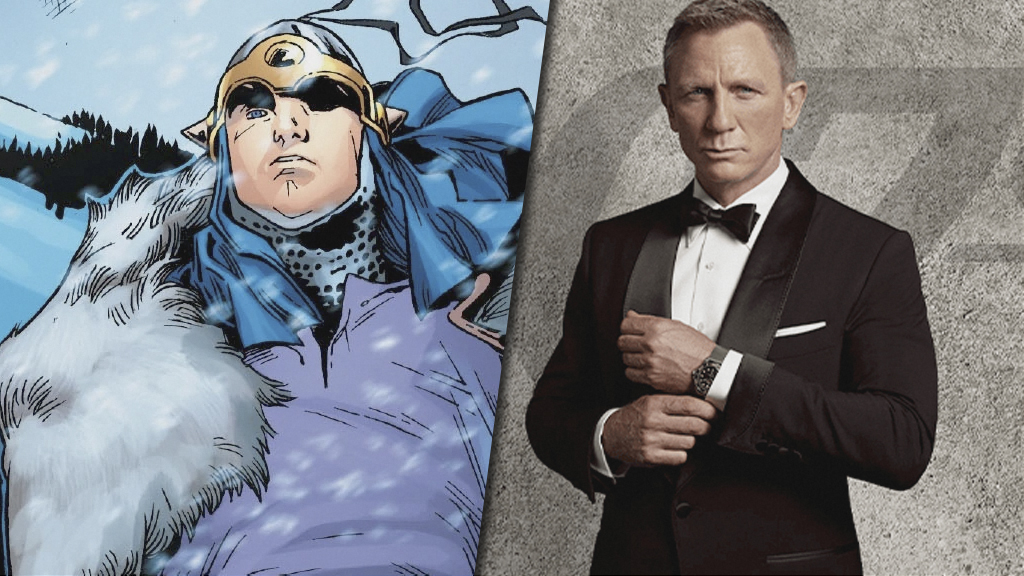
Among them was the MCU debut of Daniel Craig as Balder the Brave. Not only would he have been the Illuminati’s stand-in for Thor but also open up the Norse mythology. Of course, the biggest shame is that we almost had 007 but luckily concept artist Darrell Warner has given us a first look at what the character would’ve looked like if they managed to go through with it.
While it seems like a one-time chance to make it a reality, we’re still in the middle of Marvel Studios’ Multiverse Saga. So, there’s still a chance they might revisit the character in a future entry such as through Secret Wars. We still don’t know if this character actually ever existed in the mainline MCU.
So, we’ll see if they’ll potentially use him as a way to force Thor to explore more secrets that his father has kept from his family. Considering he got a surprise sister in Thor: Ragnarok, maybe a new half-brother is the perfect addition to pushing him further off the cliff after all the loss he had to endure up until now. Only time will tell if they will make this a reality after all.
As for episode 7, and much the previous week’s, there were a few new takes on less known comic characters. This time we got Man-Bull, El Águila, and Porcupine introduced into the MCU, all of which were already the focus of individual features by our own John Sabato. Taking a deep dive into how these characters were adapted to the small screen makes little sense now, so we decided to focus on three other villains with whom She-Hulk has a history that might end up getting adapted themselves in the future. Especially considering both present and future events within the overall MCU.
RED SHE-HULK
Red She-Hulk #66 (2013)
With the increased relevance to the MCU’s future that The Incredible Hulk has managed to gain in the past few months, with The Abomination coming back, and Tim Blake Nelson set to return as The Leader in Captain America: New World Order, it’s probably not that big of a stretch to think of a possible Red She-Hulk appearance down the line. Especially given how that particular movie will probably explore a potential explosion of Hulks in the MCU.
Even if the MCU’s Red Hulk might not turn out to be Thaddeus “Thunderbolt” Ross, due to the passing of the great William Hurt, why not bring back another character from the first Hulk outing, thus allowing Betty Ross to become Red She-Hulk?
Red She-Hulk #67 (2013)
Red She-Hulk shares many of her father Red Hulk’s abilities, including superhuman strength, which enables her to take on both the Hulk and She-Hulk. She can pierce even the thickest and most resistant skin with her razor-sharp claws and talons. Unlike her father, she can produce energy blasts, which she might use to devastating effect. Though this was only for a brief period in the comics, she could fly and had theoretically limitless strength in her form as the Harpy. She also could come to own her “big ass sword” that was initially presented to the Red She-Hulk during the “Fear Itself” storyline and was crafted by Tony Stark using Stark Industries repulsor technology and enchanted uru metal (the same material Mjölnir is made of) from the Real Eternal, Asgard.
ABSORBING MAN
She-Hulk #23 (2007)
With Titania becoming such a big focus point in She-Hulk: Attorney at Law, and with the apparentease with which superpowered people now show up in the MCU, why not bring someone close to her that also happens to have a history with She-Hulk? Absorbing Man fits the bill.
She-Hulk #23 (2007)
Crusher Creel, who we’ve already seen on the small screen in Marvel’s Agents of S.H.I.E.L.D., played by Brian Patrick Wade) has the power to imitate the matter and strength of anybody or anything nearby thanks to a mysterious potion. Most frequently, he duplicates the qualities of anything he touches, including solids, liquids, gases, and even energy sources. Over time, he learned tochoosewhichsubstancestoabsorb,andeven how to absorb multiple substances at once and combine their properties. During one of his encounters with She-Hulk, she realized that he could only ignore certain materials’ qualities if it wasn’t abundant. But drowning him in something that would be detrimental to his physical condition could then turn his powers, which could allow him to be the most powerful villain in the entire Marvel Universe, into weaknesses.
UNUM
She-Hulk: Cosmic Collision #1 (2008)
Another interesting foe that could come up against Jennifer Walters, is Unum. The cosmic entity Enmity (one of the Seven Friendless, a group of seven cosmic creatures) basically assembled the being Unum from the remains of many extraordinarily potent dead entities, including Dormammu. The Latin phrase “e Pluribus Unum” which means “out of many, one” is where the name of this enormous entity originates.
What makes her especially interesting in the context of the MCU is that Unum was established with the sole intent of eliminating all heroes, but initially focusing on female heroes, something that could lead down a compelling path in terms of storyline and real-world analogies. Unum was essentially invincible, but She-Hulk managed to defeat it and as a result of the revelation that Enmity was only using her as a tool for amusement, the mighty Unum turned against her creator, destroying her physical form, and committing suicide.
She-Hulk: Cosmic Collision #1 (2008)
It’s doubtful any of these characters might show up in the final two She-Hulk: Attorney at Law episodes, considering how Daredevil and perhaps even The Leader could be making appearances. But with Jen’s story continuing beyond the show, and with the series making it clear that no character of off limits, it shouldn’t take long for her rogues’ gallery to expand significantly in the not-so-far future. Either with these or other characters.
The first seven She-Hulk: Attorney at Law episodes are now streaming on Disney+.
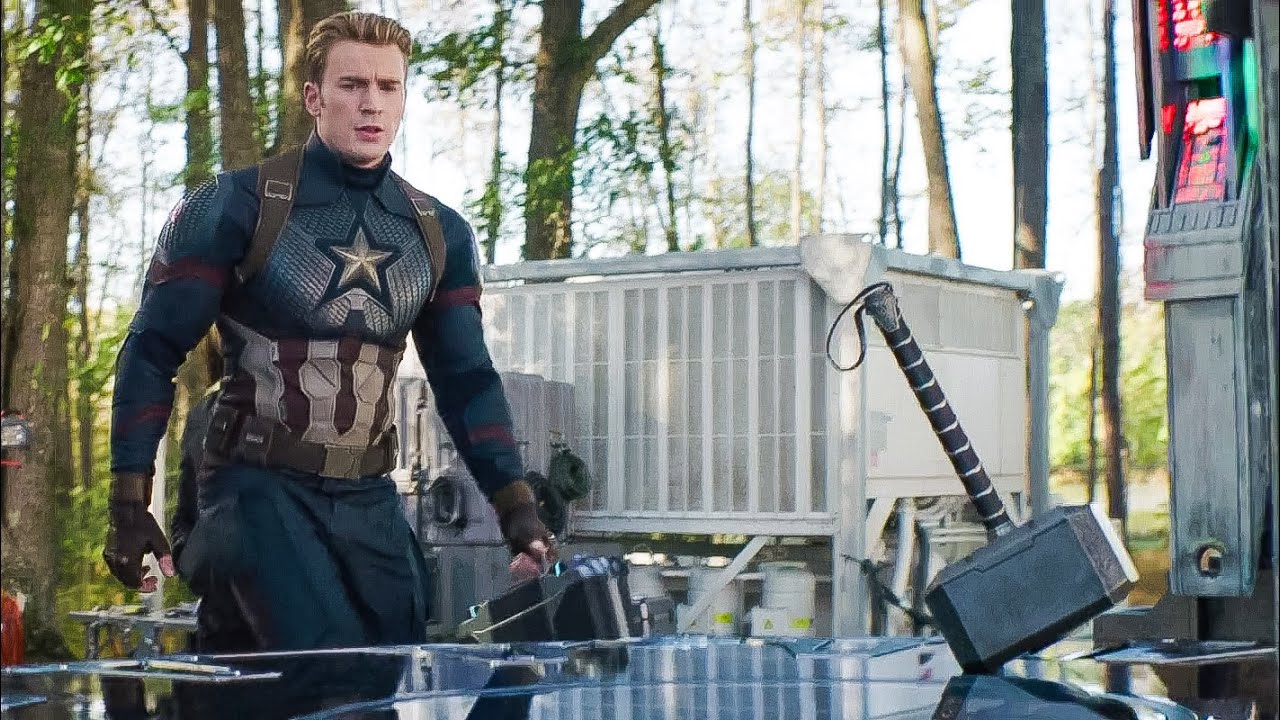
Upcoming Marvel Studios feature Captain America: New World Order will mark Anthony Mackie’s first time leading an MCU film as the Star-Spangled Avenger. Sam Wilson takes over the mantle from Chris Evans’ Steve Rogers in the wake of their last team-up effort in Avengers: Endgame and the events of The Falcon and the Winter Soldier. By all accounts, Evans, who also said goodbye to the MCU, has been unlikely to bring back his original Captain America character anytime soon.
Following Marvel Studios’ recent D23 presentation, Mackie joked that Sebastian Stan gets Wyatt Russell’s U.S. Agent in the upcoming Thunderbolts and expressed his desire to see Evans return in some manner. However, in a recent interview, Mackie had a more sobering take on the potential return, expressing Evans’ own views on where his future with Captain America rests.
Mackie discussed the possibility of Evans reprising his role as Steve Rogers in an interview with E! News, and he made a joke about how little Evans is focused on the MCU now:
Chris is so far gone from Marvel. Like, Marvel is not even in his radius. He’s so far gone. He’s enjoying life. He’s like an old retired dude.
Anthony Mackie
While a return in New World Order seems unlikely, an eventual Evans return is still unknown, especially with major cross-over films like Avengers: Secret Wars in the works. But, for the time being, Sam Wilson will shine as Captain America in the post-Infinity Saga MCU.
Captain America: New World Order will be released in theaters on May 3, 2024.
After finishing the seventh episode of She-Hulk: Attorney at Law, it is extremely natural to wonder—what is this show? For a series billed as a legal comedy, there certainly is no particular plethora of legal plotlines. In Episode 7, for example, there are none at all. For a “superhero show”, there can be a stunning lack of superheroics. So what is She-Hulk? That may not be an easy question to answer, but the series has a personality that connects everything at its core; that is not a given for most series. In any event, it is genuinely hard to care about picking apart every ounce of She-Hulk when Episode 7 was everything a reasonable person could want.
Some of the biggest, deepest laughs of She-Hulk come from this episode without a doubt. The level of comedy the series attained in some of its earlier, more legal-heavy episodes returns in a very different form. In a universe and franchise so focused on action, adventure, and high-concept stories, any person that has the capacity to feel joy can appreciate some D-list supervillains in group therapy helping out the protagonist get over a guy who did not text her back. That premise is absurd, and it can only work in a very specific context. Luckily, She-Hulk provides that context.
Nothing could be said about Episode 7 without emphasizing how amazing the supporting cast of characters is. Obviously, Tim Roth’s Emil Blonsky makes a welcome return after his last appearance in Episode 3 to continue the “Abomaste” gag. And while various legal cases brought out some interesting figures in the past, such as Donny Blaze, Mr. Immortal, or the shape-shifting light elf, Episode 7 absolutely knocks it out of the park. Man-Bull, El Águila, Porcupine, Saracen, Wrecker, and Blonksky all come through as colorful characters. The fact that such a group got to spend most of its time together and interacting with one another is simply a unique experience in the Marvel universe, which allows She-Hulk to bring out the inherent humor of corny comic book characters in a safe space both literally and figuratively.
A major theme running through She-Hulk is that Jen is constantly losing. Sure, she is a functional Hulk and landed a snazzy job, but episode after episode has emphasized that Jen the human is not enough. Her dating life is perhaps the prime example of that, and the episode’s focus on Josh building her up and then letting her down just hammered that theme more. The “twist” that Josh is actually a villain was perhaps one of the most obvious reveals, so it was smart that her emotions stemming from the rejection were in the spotlight while the dramatic reveal was only given a few seconds in the end. It was refreshing to see Jen get a personal “win” this episode when she has her emotional breakthrough at the Blonksy retreat with the friendly help of some memorable characters with their own identity struggles. In fact, self-identity seemed to be the core issue tying all of those people together in one way or another.
Since Jen now knows, apparently, that “Jen is great” alongside She-Hulk, perhaps that is the audience’s cue to prepare for less self-growth and more plot resolution going forward. Granted, there are only two episodes left in the season, so that may not be hard to guess. But it does potentially give away what kind of place Jen will be mentally when she has to eventually deal with the invisible HulkKing villain (to the extent She-Hulk itself will actually deal with a potential explosion of Hulks in the MCU), as well as when she inevitably comes across Charlie Cox’s Daredevil. Doubtless, many have suffered in agony for seven weeks with no Daredevil, but at least they can be grateful the show may combine them when Jen/She-Hulk is at her best.
Episode 6 presented itself as a tricky one when it came to finding a strong enough connection to She-Hulk comics. Both Mr. Immortal and Intelligencia had a somewhat meaningful presence in it but were already the focus of a couple of features from the past week. It was then time for something different. And much like Jen herself stated, in the starting sequence, that episode 6 was a “self-contained wedding episode”, why not try and make this a self-contained P2S feature? If an engagement featured in a She-Hulk comic can also be referenced, then that’s enough to justify the option. Let’s go with that.
Marvel Studios’ She-Hulk: Attorney at Law Episode 6
Marvel Studios’ She-Hulk: Attorney at Law Episode 6
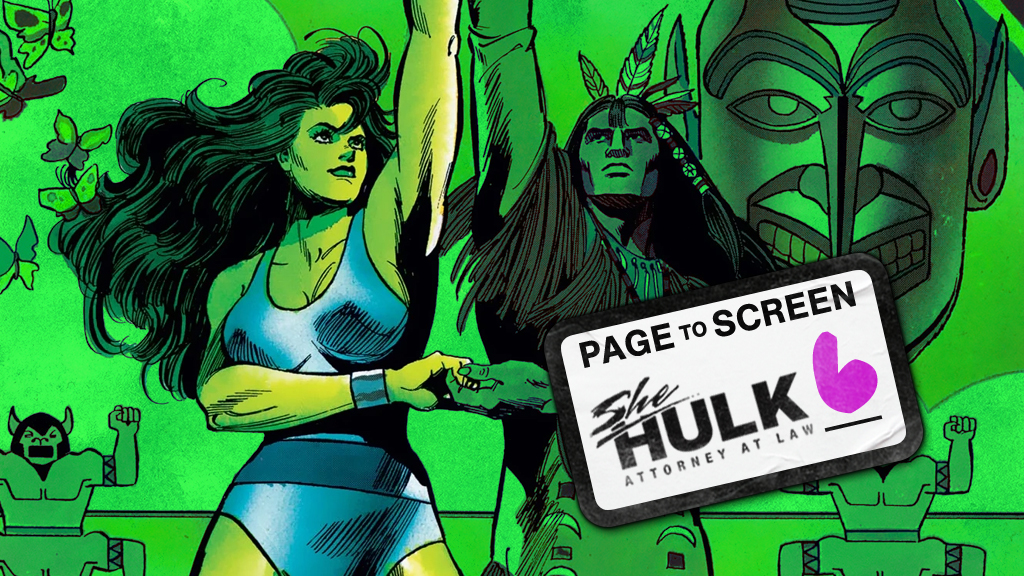
In 1989 Marvel published a two-part story entitled She-Hulk: Ceremony, that focused on Jen and Wyatt Wingfoot getting engaged. In the midst of it all both also had to help stop a madman attempting a mystical world conquest. Much as She-Hulk: Attorney at Law tries to focus on the comedic side of the character, this was a story that was initially intended to be a romantic comedy. But what began with the best of intentions turned out to be one of Marvel’s most clumsy attempts at giving feminism a much-needed spotlight.
She-Hulk: Ceremony #2 (1990)
The basic plot goes a little something like this:
While watching a TV soap opera, She-Hulk feels the need to become a mother. She decides to look for something to fill that “void she has discovered in her life” because she “feels empty.” In a baffling decision, she somehow sees her ex-boyfriend Wyatt Wingfoot (who she briefly dated when She-Hulk was a member of the Fantastic Four) as the only one who can help her. Wingfoot, a native American, is just beginning his legal education while still residing in the Baxter Building and is utterly shocked by being approached by Jen and being asked to father her children out of the blue.
By trying to appease the usual rom-com structure and conflicts, the story also ended up following the same clichés the genre usually features. She-Hulk thus ended up being portrayed as extremely bashful and uneasy about sharing her thoughts, very much unlike her usual honest, straightforward, and forthright character when it comes to her emotions. Another characterization that seems incredibly outdated is how the comic shows Jen as being very ambivalent regarding the right to choose to have an abortion or not, something she clearly states following a bomb threat at a local abortion clinic. This sort of tactlessness when it came to her character perhaps only came second to the disrespect towards native American culture with it being depicted in the most stereotypical fashion, filled with mystical nonsense, reducing it to a caricature.
In the end, and after finally defeating the big bad, Carlton Beatrice, Jen and Wyatt realize that they weren’t really in love with each other. They become aware that their engagement was (at least primarily) a result of a mystical basket (the story’s McGuffin) connecting them. They choose to separate with Jen making use of her legal expertise to assist in recovering Wyatt’s Keewazi Reservation which had been affected by the entire ordeal.
What does this have to do with She-Hulk: Attorney at Law? Not much. There’s Jen, there’s She-Hulk, there’s the idea of a wedding, there are fights and lots of nonsense (both the good and the wrong kind). But what ultimately sticks when revisiting such a story is just how much She-Hulk eventually evolved into a proper Marvel feminist icon, and how the Marvel Studios’ show manages to address several of the same issues in a much more respectful and gracious manner. With the show having such a strong sense of self-awareness, explicitly criticizing the misogynistic trends that, particularly on social media, surround female superheroes and female-led initiatives, She-Hulk has indeed come a long way in what it can add, as a character, to not to what comics and TV are concerned, but more importantly to the general discourse.
Marvel Studios’ She-Hulk: Attorney at Law Episode 6
Marvel Studios’ She-Hulk: Attorney at Law Episode 6
The first six episodes of She-Hulk: Attorney at Law are now streaming on Disney+.
Cookie Consent
We use cookies to improve your experience on our site. By using our site, you consent to cookies.
This website uses cookies
Websites store cookies to enhance functionality and personalise your experience. You can manage your preferences, but blocking some cookies may impact site performance and services.
Essential cookies enable basic functions and are necessary for the proper function of the website.
Name
Description
Duration
Cookie Preferences
This cookie is used to store the user's cookie consent preferences.
30 days
These cookies are needed for adding comments on this website.
Name
Description
Duration
comment_author_email
Used to track the user across multiple sessions.
Session
comment_author_url
Used to track the user across multiple sessions.
Session
comment_author
Used to track the user across multiple sessions.
Session
Statistics cookies collect information anonymously. This information helps us understand how visitors use our website.
Google Analytics is a powerful tool that tracks and analyzes website traffic for informed marketing decisions.
Contains information related to marketing campaigns of the user. These are shared with Google AdWords / Google Ads when the Google Ads and Google Analytics accounts are linked together.
90 days
__utma
ID used to identify users and sessions
2 years after last activity
__utmt
Used to monitor number of Google Analytics server requests
10 minutes
__utmb
Used to distinguish new sessions and visits. This cookie is set when the GA.js javascript library is loaded and there is no existing __utmb cookie. The cookie is updated every time data is sent to the Google Analytics server.
30 minutes after last activity
__utmc
Used only with old Urchin versions of Google Analytics and not with GA.js. Was used to distinguish between new sessions and visits at the end of a session.
End of session (browser)
__utmz
Contains information about the traffic source or campaign that directed user to the website. The cookie is set when the GA.js javascript is loaded and updated when data is sent to the Google Anaytics server
6 months after last activity
__utmv
Contains custom information set by the web developer via the _setCustomVar method in Google Analytics. This cookie is updated every time new data is sent to the Google Analytics server.
2 years after last activity
__utmx
Used to determine whether a user is included in an A / B or Multivariate test.
18 months
_ga
ID used to identify users
2 years
_gali
Used by Google Analytics to determine which links on a page are being clicked
30 seconds
_ga_
ID used to identify users
2 years
_gid
ID used to identify users for 24 hours after last activity
24 hours
_gat
Used to monitor number of Google Analytics server requests when using Google Tag Manager
1 minute
Marketing cookies are used to follow visitors to websites. The intention is to show ads that are relevant and engaging to the individual user.
Pinterest Tag is a web analytics service that tracks and reports website traffic.