Tag: Theory

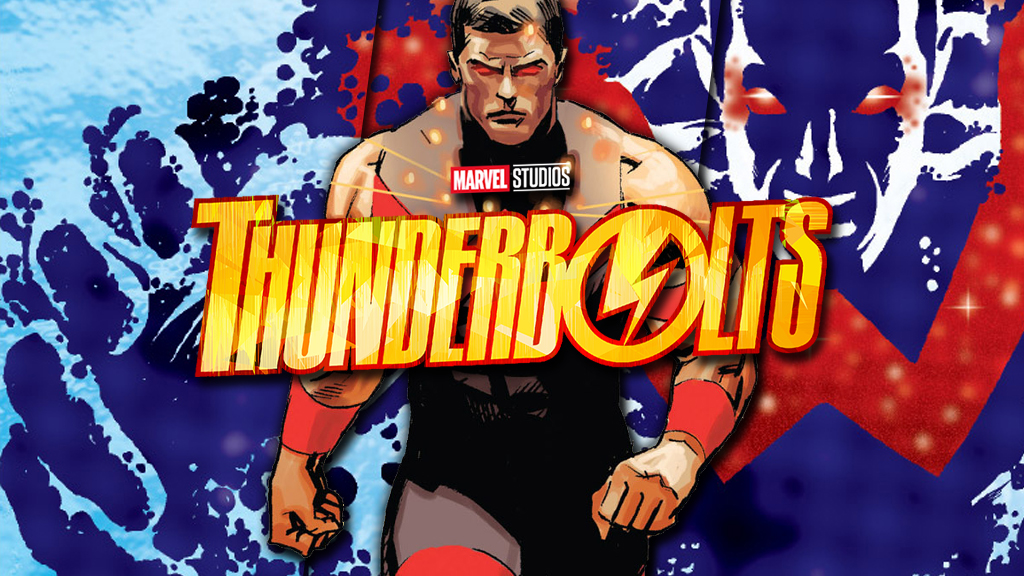
  • THEORY: Wonder Man Will Make His MCU Debut in ‘Thunderbolts’ 

    THEORY: Wonder Man Will Make His MCU Debut in ‘Thunderbolts’ 

    Wonder Man is coming to the Marvel Cinematic Universe, and his arrival might be a lot sooner than expected. The Hollywood Reporter revealed on Thursday that Community writer Andrew Guest and Shang-Chi director Destin Daniel Cretton will team up to give Simon Williams his own series on Disney+. Cameras are reportedly set to begin rolling in 2023, meaning fans can likely expect the character to make his live-action debut sometime in the following year. Although, should Marvel be inclined to have a little fun with the character’s origin, it’s possible audiences actually see Wonder Man in theaters by the end of next year.

    Early reports indicate the Wonder Man series will focus on his well-known career in Hollywood, an aspect of the character that has been a staple since it was introduced in the early 1980’s. At the time, after years of internal conflict and uncertainty about his future, Williams took his talents to Los Angeles and began an acting career, becoming known for performing dangerous stunts that only his invulnerable body could withstand. Despite this intriguing turn of events, however, Wonder Man has decades of material to work with pre-Hollywood. The character has existed since 1964, when he was introduced in The Avengers #9 as a new member of the Masters of Evil.

    Before he was a hero, Williams was the son of industrialist Sanford Williams, a rival of the world-famous Tony Stark. After his father’s death, Simon is outmatched by Stark and fears he’ll lose his family’s business, an anxiety that results in an ill-advised embezzlement scheme brought on by his villainous brother, Eric (a.k.a. the Grim Reaper). As it goes, Williams is caught, and is sent to prison with a hatred for Stark and his “bodyguard” Iron Man. Seeing an opportunity, Baron Zemo and the Enchantress, the two leading members of the Masters of Evil, spring Williams and offer him a deal – they turn him into a being with enough power to vanquish Stark and the Avengers, and he saves his company and gets revenge on the man who wronged him. Williams accepts, and an experimental procedure turns him into the ion-fueled superbeing known as Wonder Man.

    Of course, Williams quickly sees the wrong in this and reforms, but the brief antagonistic period of his life is perhaps among his most compelling eras. It would be a shame for the MCU to skip over this origin and jump straight to his days on the big screen. Luckily, a major project announced just days ago could very well be hiding its own Wonderous secret that allows for Simon’s story to be told in full. Thunderbolts, a film based on the team of supervillains who masquerade as heroes, was announced as being in development last Thursday by Variety. This is relevant to the Wonder Man conversation for one big, charming, fan-favorite reason: Baron Helmut Zemo, bad guy extraordinaire.

    As previously mentioned, Zemo played a big role in the creation of Wonder Man. He was the man responsible for the whole ion-human ordeal, and decades later, he would also be the person responsible for founding the anti-heroic Thunderbolts. It’s expected that Daniel Bruhl will reprise his role as the MCU’s take on Zemo in Thunderbolts, potentially leading a team comprised of members recruited by Julia Louis-Dreyfus‘ Contessa Val over the course of multiple Phase Four projects. The names linked to the Thunderbolts thus far give away a possible link to another team of Marvel characters assembled in the late 2000s, known as the Dark Avengers. That group, formed by Norman Osborn, was also a team of supervillains pretending to be good guys, but had each member take over the mantle of a pre-existing Avenger. For example, Venom took on the Spider-Man role while Bullseye wore Hawkeye’s classic costume. With Florence Pugh‘s Black Widow and Wyatt Russell‘s U.S. Agent already on the payroll, it seems completely believable that the MCU’s Thunderbolts might be some kind of amalgamation of the original comic book team and the Dark Avengers concept.

    Running through the potential roster, the MCU Thunderbolts already have their own Captain America and Black Widow, a Hulk in Tim Roth‘s Abomination, and probably even a Vision replacement with Hannah John-Kamen‘s Ghost. Regardless of all this, they lack an equivalent to the most powerful current Avenger, Brie Larson‘s Captain Marvel. In the same way the Masters of Evil once had Simon Williams infiltrate the Avengers with malicious intent, the MCU could have Zemo and Val offering a disgruntled Williams the chance to shine by succumbing to a new, experimental procedure that might turn him into Captain Marvel’s equal. In case anyone is confused at this point, the suggestion here is that audiences may very well see Wonder Man’s origin play out in Thunderbolts before he makes the jump to his own spin-off series.

    The timing of the two projects’ filming lines up well enough. It’s not confirmed when Thunderbolts will start production, but if Jake Schreier‘s project starts filming in Summer 2023, it would be on track for a mid-2024 release. As is often the case, the turn-around time on television projects tends to be quicker than with film, so if Wonder Man also begins filming around this date, or even slightly after, it could work out that the latter releases just after Thunderbolts and acts as a direct spin-off. The two could even film in tandem, as a way to more effectively utilize the time of some very busy leads like Bruhl and Pugh.

    This could also be a way for Marvel to include more characters from its larger repertoire. Wonder Man’s comic origin heavily features the original Enchantress, and if Marvel Studios wanted to follow suit, they could bring Sophia Di Martino‘s Sylvie into the fold as the Thunderbolts’ Asgardian representative. On top of this, Wonder Man will almost certainly feature Eric Williams in a supporting role, and the baddie brother of the Williams family could pop up alongside Simon in Thunderbolts initially, before terrorizing the world as Grim Reaper later. Maybe it’s an encounter with Zemo or Val in Thunderbolts that gets those Villainous wheels turning in the first place. Either way, the potential for an easy, world-building crossover is there, and it seems too good for Marvel Studios not to capitalize on while the getting is good.

    Special shoutout to Maggie from Collider for helping to build out this theory!
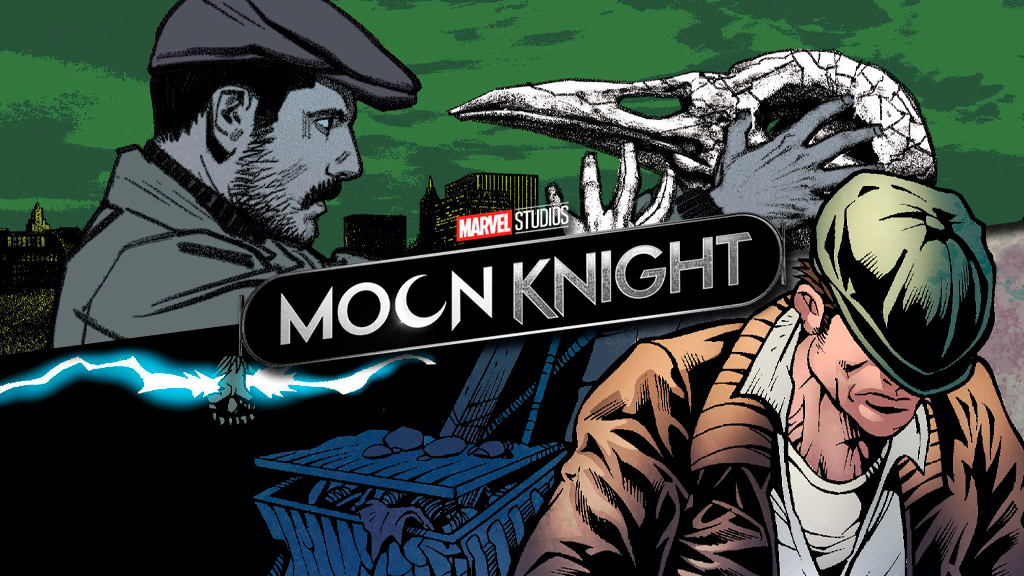
  • THEORY THURSDAY: This is How Jake Lockley Will Appear in the ‘Moon Knight’ Finale

    THEORY THURSDAY: This is How Jake Lockley Will Appear in the ‘Moon Knight’ Finale

    While the fifth and second-to-last episode of Moon Knight accomplished quite a lot, it kept fans hanging on one of the most theorized, anticipated, and likely inclusion of one specific thing: Marc Spector’s third personality, Jake Lockley. Every single episode of the series has included references and evidence that seem to point directly at another alter’s existence, and Oscar Isaac himself has seemingly confirmed this on multiple occasions. 

    Many are surprised that the alter (presumably named Jake Lockley given the comic book history) has still not fully appeared given that Moon Knight has only the finale remaining. After the events of Episode 5, there is reason to think that Jake will make his appearance in a bold way. This article explains my theory that Jake will be the personality that has full control of Marc’s body when he is resurrected in the finale. At the end, I do mention a couple of other easy ways for the personality to be revealed, though they are nowhere near as fun. 

    The Theory

    Looking at the endings of both Episodes 4 and 5, combined with some knowledge of the comics, Jake Lockley may take the reins immediately upon Marc’s resurrection. After Marc’s apparent double death, a resurrection of sorts clearly seems necessary in order for the story to move forward and conclude in any reasonable way. Episode 4 saw Marc be shot and killed by Arthur Harrow, and the psych ward twist and the events of Episode 5 seemingly confirm that he did, in fact, die. 

    The imagery of his death in the tomb is surprisingly reminiscent of one particular resurrection-based issue from 1991. Even without that reference, Episode 5 ended with the additional apparent deaths of both Steven and Marc individually. So, quite frankly, someone has to be brought back from the dead at some point. In the comics, it is Khonshu who does the resurrecting, but he is currently imprisoned. Since there are currently no obvious other contenders, it might be fair to assume that the god gets released in the finale before bringing Marc back. But his motives are still a little suspect.

    In any event, the real significance of the deaths is that both Marc and Steven died separately. This implies that their individual personalities also died, not just their physical body that also died prior to their journey through the Underworld. So, the focus on their deaths leaves one giant door open—Jake did not die. 

    Marvel Studios’ ‘Moon Knight’

    It’s helpful to look at the comics. The personalities are, by nature, their own people. Extremely relevant to this theory is the fact that in Moon Knight’s history, Jake specifically has survived after Marc “died,” and the same is true for other personalities. After Marc seemingly sacrifices himself in order to stop a villain, everyone assumes he is dead. But as his close friend Frenchie says, while Marc might be dead, Jake Lockley is not. Jake then goes on a non-Moon Knight action-adventure in Mexico as the sole personality. While Marc’s body presumably stayed alive, it is prime evidence that his alters can “die” at least for some time. Those that don’t (Jake), remain and take over some mental space that the others left behind.

    ‘Moon Knight’ (2006)
    ‘Moon Knight’ (2006)

    Basically, the idea is that when Marc’s body is resurrected—however that happens—it will be Jake as the sole personality in control, as he is the only one who did not die in the Underworld or make it into the final paradise. This would be a cool and a bit more unexpected way for the alter to reveal himself, as viewers could think initially that Marc and Steven have returned, only for a brand-new character to go into full-on attack mode.

    This theory could actually help explain why Marc’s scales balanced at the end of Episode 5. It seems to be explained by Steven’s death, considering Taweret told them that their hearts were “incomplete.” But, even with Steven out of the picture, it is almost certain that Jake exists given the extra sarcophagus at the end of Episode 4 in addition to consistent evidence throughout Moon Knight. So, if Jake is still around and Marc has not made peace or separated from all of his alters, it does not make a ton of sense that his scales balanced. My guess is that the moment the scales balanced is the moment Jake was resurrected back into the physical reality. In that situation, because Steven has died and Jake is no longer present in the Underworld, Marc is left alone. 

    Marvel Studios’ ‘Moon Knight’

    One of the big questions with Jake is whether he will have his own Moon Knight suit and what that might be. One of the theories is that the character poster for the series already showcases Jake in the middle, who is wearing some more casual gear rather than an elaborate suit. Interestingly, this theory supports that as well. Marc is killed by Harrow while wearing that exact outfit, so if Jake takes control after the resurrection, that is what he will already be wearing. 

    Marvel Studios

    The major loose end of this theory is where Marc and Steven come back into play. The mechanics of Moon Knight are not totally clear, and they may never be given the complexities of mental health and Ancient Egyptian deities coming together for rather complex metaphysical ideas. But a classic theme in Moon Knight comics is that Marc’s alters can never truly leave. While they may be gone for some time, they will always return. Perhaps Marc and Steven come back as eventual attachments to Jake’s personality. Or, the series finale could be so bold as to keep Jake as the primary identity for the bulk of the episode, only to tease the other two’s later return. 

    The Less Exciting Options

    To get it out of the way, the most straightforward approach to Jake’s appearance is still on the table. Considering that Jake has become known as the most violent and brutal alter in the comics, a very simple way he might appear is in a moment of great need for Marc and Steven. For example, if the two are losing in a major fight or even a final battle, Jake could dramatically come out of the woodwork to turn the tables. While that seems like a fairly obvious way to introduce the character, you can see it coming a mile away. Plus, it would likely mean that it would take some time for the finale to build up to it, which would mean he might get very little screen time at the end of the day. 

    Another less exciting option is for the series to leave Jake as either a brief cameo or lingering tease at the end of the finale. In this way, Marc and Steven would not have to share the spotlight in the final (probably) hour or so of Moon Knight. It would also leave the audience with a clear sense that the titular hero will return and have plenty to explore in the future. While these two options are certainly strong guesses, there is another avenue that the show has opened up that could bring Jake into the picture early and in full control.

    In any event, the Moon Knight finale is shaping up to be one to remember. The first five episodes of the series are currently streaming only on Disney+.

  • THEORY THURSDAY: Khonshu is ‘Moon Knight’s’ Big Bad

    THEORY THURSDAY: Khonshu is ‘Moon Knight’s’ Big Bad

    With the big twist at the end of Moon Knight Episode 4, the series is telling us to question everything we thought we knew. While Steven and Marc’s mental health certainly will come into play, it’s worth noting that the door is open for certain elements of the show to be drastically different from what we thought up until now. My guess is that the villain Moon Knight has set up so far, Arthur Harrow, is actually a red herring for the Big Bad of the series—Khonshu.

    It would be pretty bold to throw a villain twist in after the “what is reality?” twist we just got, but it could be fantastic. For one, it could easily work with what looks like a Lemire-Smallwood comics-run-inspired psych ward twist. But Khonshu as the series’ ultimate villain has a strong foundation in the comics, and it would improve upon the still vague and generic-feeling Arthur Harrow.

    Marvel Studios’ ‘Moon Knight’

    So first, why would Khonshu be the villain? As you know from Moon Knight, the lunar god isn’t exactly warm and fuzzy. He was banished and is now imprisoned by the other Egyptian gods of the Ennead. While his imprisonment was framed as a situation where Khonshu tried to do the right things while the others just ignored what needed to be done, perhaps there is much more going on. Weirdly, Harrow told the Ennead that Khonshu was actually the one who had him start looking for Ammit. Accusing Khonshu of now working due to jealousy and paranoia towards stopping him.

    While Harrow is obviously not looking like a good guy, he is a big advocate of honesty. Either way, the fact that we still know little to nothing about the Khonshu-Harrow relationship is suspicious. There is a very good chance whatever that Ammit-related history between the two is, it could fundamentally change how we look at Harrow’s mission and Khonshu’s interest in stopping him.

    So, yes, there are some shady open questions. But Khonshu has been helping Marc and Steven this whole time, right? From what we’ve seen, the god has not acted against either personality, but we know that Khonshu is actively interested in Layla as his next avatar. In that way, he does not seem overly enthused or pleased with Marc. I think that Moon Knight can and will reveal that Khonshu’s motives are similar to the god’s in the Lemire-Smallwood comics run—the same run that clearly inspired the end of Episode 4.

    Long story short, Khonshu puts Marc through psychological warfare because he wants to break Marc’s mind completely in order to take complete control of his body so that he would essentially have a direct presence on Earth. Moon Knight actually already teased this idea if we look back at what the series has told us so far.

    After Khonshu was banished, Harrow gives a dramatic speech to Khonshu’s stone statue. He specifically says to Khonshu, “if you hadn’t broken me completely, I never would have learned the value of healing.” So, the concept of Khonshu breaking his avatar “completely” has already been introduced. During the “trial” in the Pyramid of Giza, Harrow also suggested that Khonshu is taking advantage of Marc, who is clearly suffering from a dissociative identity disorder. That tracks with the theory that Khonshu, like in the comics, chose Marc because he knew his mind was “weak”, so he knew he had a better chance of breaking or controlling him.

    ‘Moon Knight’ (2016)

    Basically, Khonshu could be revealed as the ultimate or final villain in the next two episodes. It would be another dramatic twist, and it would make a more interesting story than Arthur Harrow. Don’t get me wrong, Ethan Hawke puts in a phenomenal performance, but Harrow and his motivation are unfortunately a bit generic. While that could just be something the rest of the series has to develop, it also would make Harrow a perfect red herring. Considering he has been killing people because a cane told him to, it’s less likely that he will be a surprisingly good guy.

    His goals and actions might just take a backseat to whatever Khonshu is up to—as noted above, there is something missing regarding the Ammit plot. We have not seen any version, memory, or depiction of Ammit. Harrow is a devout follower despite not being her avatar and never communicating with her considering she has been imprisoned for thousands of years. Khonshu is apparently the one who set Harrow on his Ammit-obsessed path in the first place. Whatever Khonshu’s interest in Ammit is, he might want control over Marc’s human body to carry out his own plans.

    The biggest issue with this theory, in my mind, is that Khonshu is currently imprisoned. It is not exactly clear who would set him free—my guess is Layla—but presumably, the god might be needed to resurrect Marc from the water he died in before the Episode 4 twist. The water resurrection is a whole theory of its own, but it assumes that everything that happened before the psych ward was not simply imagined and that Marc will come back to that “reality” eventually. If Khonshu does resurrect Marc, though, doesn’t that seem like he is friendly? Not necessarily if he still wants to use Marc as a seemingly “weak” mind to break—especially after Marc might go through the psych ward twist.

    ‘Moon Knight’ (2016)

    This theory also matches up with a common theme in Moon Knight comics. Often, Marc is at odds with Khonshu and his influence. He alongside Moon Knight (to the extent they can) leave Khonshu behind. The human and god are so connected that Khonshu always comes back again, but Marc frequently recognizes how toxic his guardian can be and tries to better his life by leaving him behind. In doing so, he continues to be Moon Knight. At a certain point, the hero/fighter/vigilante is in his personality, and he always wants to continue it. He just wants to do it on his own terms. That could be a perfect jumping-off point for MCU Moon Knight—Marc/Moon Knight saying goodbye to Khonshu to become the hero they actually want to be.

    ‘Moon Knight’ (2016)

    The first four episodes of Moon Knight are now streaming on Disney+.

  • How Yozora May Have Been Set-Up Since 2005’s ‘Kingdom Hearts 2’

    How Yozora May Have Been Set-Up Since 2005’s ‘Kingdom Hearts 2’

    I am an avid fan of the Kingdom Hearts franchise. At first, the base concept sold me, as I could never imagine how Final Fantasy would mesh with Disney. The first time I ever saw the game was on a demo disk that came with Final Fantasy X. I’ve fallen in love with the bizarre concepts introduced with each new entry ever since. The latest entry, Kingdom Hearts: Melody of Memory added a musical spin-off that, in classic Tetsuya Nomura-style, is canon to the ever-growing story of the franchise. What started with a young kid named Sora trying to save his friends from ever-lurking darkness has turned into quite the convoluted chaos. We git introduced to beings known as Nobodys, who are the bodies whose hearts turned into Heartless. Our Keyblade-wielding heroes can jump into dreams, back through time, and who knows what else nowadays. Yet, the latest revelation has given me a feeling that this may have been set-up in 2005.


    Keep in mind, if you haven’t played Kingdom Hearts: Melody of Memory yet, you will get spoiled for the major revelation in that game. Only continue at your own risk.

    The ending of Melody of Memory gave us an essential bit of information on what happened to Sora after he vanished. He now exists in a world beyond the light, darkness, and everything in-between. At first, they describe it as a fictional world known only as Unreality, or Quadratum. The name is Latin for Square, which connects to the new character revealed in Kingdom Hearts 3 Re:Mind named Yozora. His name translates to Night Sky in Japanese, which is the same in Latin for Noctis, who was originally the protagonist of Nomura‘s Final Fantasy Versus XIII. We briefly visit this location in the secret boss against Yozora, which looks like a replication of real-life Shibuya. We get introduced to it in the base game for the third entry, as Yozora was a video game character for our heroes. It fits with the fictional world description. It is a world beyond that of light, darkness, and everything in-between. In a way, it is fiction, as it never existed. There was a location we visited a long-time ago that actually might be connected to it.


    Now, playing around with that thought, I came to realize we visited a location that technically did not exist. It became the home base for the first incarnation of Organization XIII but was never really fleshed out. It only held the name The World that Never Was, where one could find the Dark City. We never really get a backstory on why this place was the hiding spot for the Nobodys in Kingdom Hearts 2, but it made for a memorable trip. I think many still remember Memory’s Skyscraper, where Sora and Roxas had their final confrontation in that game. It probably was chosen by Xemnas, who was the Nobody of our main protagonist, Xehanort. Going into detail on that character’s history will take quite a lot of time. The reason I bring this up connects to the post-credit sequence of Melody of Memory. Keyblade Master Yen Sid pointed out that the ancient masters could travel between realities, which means that Xehanort was aware Quadrantum existed.

    So, how does it all connect? I believe that The World That Never Was is a remnant pulled from Unreality through the Realm of Darkness. That caused it to turn into the Dark City. A newer character known only as Master of Masters, or MOM, shaped the moon above Quadrantum in a post-credit sequence, which fans know means he is after the True Kingdom Hearts. He may have passed on this knowledge to Xehanort at one point in history, as we briefly see them interact as master and student. This connection would also explain the mystery surrounding the Organization XIII member Luxord. So far, he is the one character who is still shrouded in mystery. Well, that was until the good ending from the Yozora fight. Robin Atkin Downes, who voices Luxord, reappears when Yozora awakes from his battle with Sora in Quadrantum. As such, we can only assume he may have been brought with the city when it turned into The World That Never Was. It’s just a theory, but if it turns out to be correct, I might repeat Luxord’s words from Re:Mind:

    Impressive, is it not?