Tag: TV Reviews

  • REVIEW: ‘How I Met Your Father’ Episode 8 – “The Perfect Shot”

    REVIEW: ‘How I Met Your Father’ Episode 8 – “The Perfect Shot”

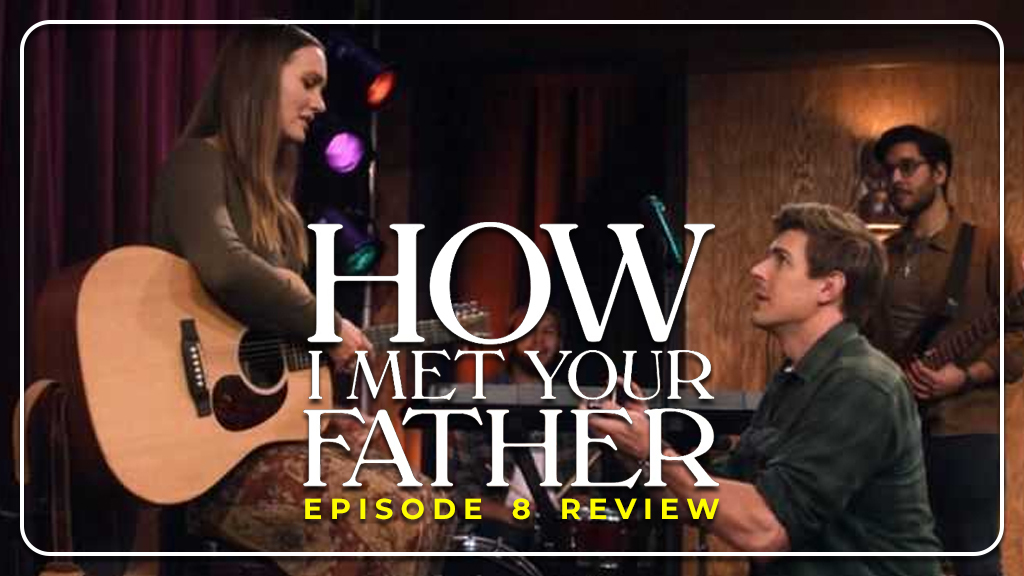
    The race for Sophie’s love is full steam ahead but now things are murky. We follow her as she continues her relationship hunting and further develops what she built with Drew. Yet, things take a turn in episode 8, as we see a relationship bloom rather unexpectedly. So, without further ado, let’s just dive in.

    The latest episode does start off slow, looking to be a typical sitcom story in the same vein as the previous one. Yet, as it progressed, however, I liked more and more of it. Random civilians on the streets are now getting involved in comedic moments, much like How I Met Your Mother. The silly humor was captivating whereas in some previous episodes it could get a little cringy. The character’s situations this time around were far more relatable, as instead of the usual pairings, this episode certainly changed some things up.

    Last week, I complained that for being in a relationship, Valentina and Charlie hadn’t had a lot of development ever since their heart to heart earlier in the season. Luckily, this week was different. While still presenting their relationship as a comedic duo, the two still managed to progress in this episode as Charlie begins to do things for Valentina that aren’t selfish. Compared to when we first saw him with his higher-than-thou attitude, it’s nice to see him break out of his shell more and more, especially when it comes to his love.

    Sid and Ellen have paired up this episode, as they attempted to cover for Jesse with his ex-girlfriend who has suddenly appeared. The two haven’t been majorly involved up until now, but as they are both the closest to Jesse–being his sister and best friend–it was nice to see them together to help her out. Speaking of his ex, it’s great to see her in the picture for some added tension going into the last two episodes, but I’ll dive deeper into that later on.

    The largest moments from the episode, of course, surrounded Sophie. But this time it did not only involve Drew. We know that Jesse has had a crush on Sophie since day one, but up until now, the two have agreed neither of them is ready for something serious and that they are better off as friends. However, this episode may put a knife in those plans. As Sophie suffers from drama with Drew, Jesse seizes the opportunity. No further spoilers on that, however.

    With Drew and Jesse both competing for Sophie now, and on more equal footing than before, Meredith, Jesse’s ex showing up, and multiple other suitors still in play, the final two episodes are definitely being set up for something big. I have said before that Ian, a gentleman that Sophie had an immediate connection with in the first episode, is definitely in play still and I feel he might make his return. I don’t see why they would have set him up with Sophie if they weren’t going to do something with him.

    Considering they did not know they were being renewed for a second season until after production was already over, I’m betting we see that comeback sooner rather than later. Having three established relationships in play, drama in at least two of them, and plenty of more possibly fathers out there, the race is on and more confusing than ever. This emotional attachment is definitely what the show needed, as it was what made How I Met Your Father so popular during its run time.

    The finale is just two weeks away, and I currently believe How I Met Your Father is on track for an unforgettable end to its first season. I currently cannot wait to see how all of these loose plotlines come together for what’s looking like a major decision for Sophie, and a possibly amazing twist for fans. The show needs to end on an iconic moment, as it is going up against How I Met Your Mother‘s original conclusion with Robin and Ted getting together, as well as the unfortunate break-up between Marshall and Lilly. That moment would set the tone for the entire rest of the show, with those iconic moments coming into play multiple times per season. It’ll surely keep viewers coming back week to week. Hopefully, How I Met Your Father will be able to deliver, and so far with what has been set up, I believe they can.
  • REVIEW: Netflix’s ‘The Andy Warhol Diaries’

    REVIEW: Netflix’s ‘The Andy Warhol Diaries’

    Fans of the legendary artist Andy Warhol quickly devoured The Andy Warhol Diaries when the book was first published in 1989. The 840-page paperback features the dictated memoirs of the American artist Andy Warhol that were posthumously published. The book took fans behind the scenes of Warhol’s life, with the last entry taking place just days ahead of his death in 1987. The diaries allow fans to see the world through Warhol’s eyes, from the famous people he spent time with to his life outside of the spotlight. There’s a reason he remains a consistent seller — the publication is a real treat for fans.

    Unfortunately, Netflix’s take on The Andy Warhol Diaries is a bit of a mess. It seems unsure of what it wants to tell and how exactly it wants to tell it. While it is based on the book of the same name, The Andy Warhol Diaries often feels like a story about everyone around him rather than Warhol himself. It seems to forget about Warhol and his legendary artwork, instead choosing to focus on his confidence issues and his unwillingness to comment on his sexuality publicly. With so much to Warhol and the legacy he left behind, it seems an odd thing to focus essentially the entire series on. And sadly, that’s not the strangest decision this documentary makes over the course of six episodes.

    The series uses a computer-generated take on Warhol’s voice to narrate the series. It’s rather off-putting, although it’s safe to presume it’s something Warhol would’ve been entirely fine with. (After all, he had dreams of being a robot.) As it’s an AI voice, it lacks any sense of emotion, coming off as monotone and dull. While I understand this is something the artist would have been behind, judging by what is said in the documentary series, it’s still an odd choice to make in a series that is so reliant on bringing in others to comment on Warhol. Had the series used footage of Warhol while he was alive and then added in the interviews, it would have flowed a lot better. And perhaps, it would have been a lot easier to endure.

    The Andy Warhol Diaries is produced by Ryan Murphy, and it clearly has a Murphy feel to it. When Murphy is at the top of his game, he can deliver some quality television. Sadly, The Andy Warhol Diaries is not among his strongest work. It’s frustrating, really. There are so many reasons as to why this series should’ve been more enjoyable than it was. It seems half-baked. The ideas are good, they’re just poorly executed.

    There is one minor bright spot in the series and that is the fourth episode, where we get to meet some of the other artists Warhol came into contact within New York in the 1980s. This part of the series allows fans to see Warhol appreciating artwork from those who would’ve been ignored otherwise because they didn’t belong to the typical white artist clique. While he might not have understood the artwork, he allows a light to shine on these young artists and their work. It’s a pretty important moment. If only the series was this strong and interesting for its entire run.

    Overall, The Andy Warhol Diaries is frustrating. It wastes its potential by focusing on the least interesting bits of this massive art icon. Warhol did some amazing things in his lifetime, it just seems odd to focus on his love life in a limited series on his life.

  • REVIEW: ‘The Boys’ Wishes It Was As Ambitious As ‘The Boys: Diabolical’

    REVIEW: ‘The Boys’ Wishes It Was As Ambitious As ‘The Boys: Diabolical’

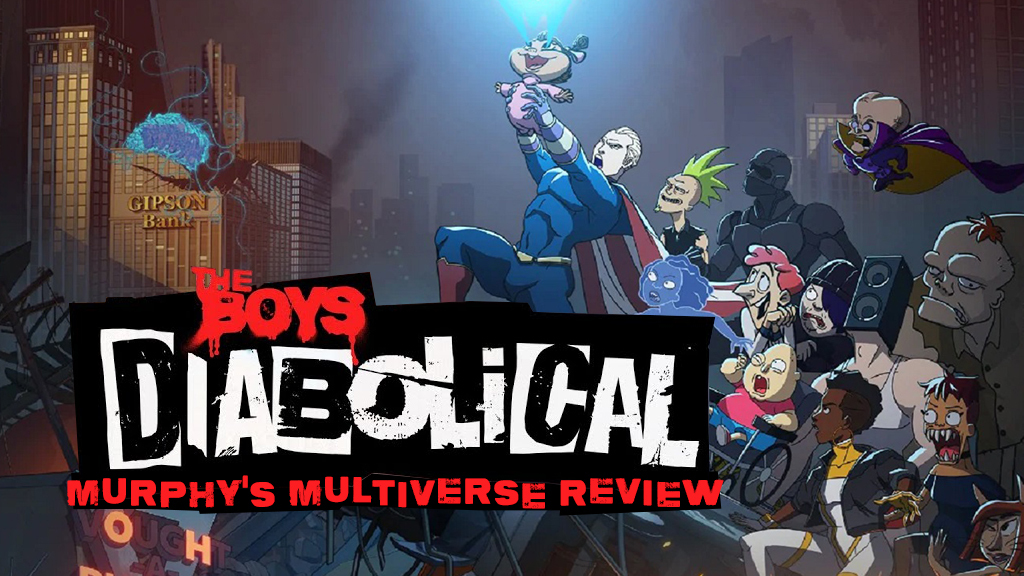
    Whether it’s telling underdog stories of the disenfranchised sticking it to the Man or making audiences feel disgusted by the real-world implications of superheroes, The Boys always delivers. Garth Ennis’ and Darick Robertson’s deviant and deconstructive superhero comic of the same name has expanded into enormous proportions under Amazon’s watchful eye, spawning a mega-hit TV show, two spin-offs, a web series, and yes, an actual canonical porno. The first of the spin-offs, an animated anthology series titled The Boys: Diabolical, proves to be a fantastic reckoning of the source material and preceding TV show’s blueprint that oftentimes exceeds it. 

    TV anthologies are in vogue at the moment, which for a universe as deep and loose as The Boys’ makes it an indisputable format to expand the canon. To helm this expansion, creators Seth Rogen and Evan Goldberg have enlisted Awkwafina, Andy Samberg, Ilana Glazer, Garth Ennis himself, and a few other writers to craft their own dastardly vignettes laid by the groundwork of The Boys, with each one exhibiting its own animation style and tonal quality. The resulting 8 short episodes tackle some of the most entertaining concepts about capes put to screen but it’s Diabolical’s thematic byproducts that make it heftier than its live-action counterpart. 

    In spite of the freedom afforded by the anthological format, Diabolical is bound by a single McGuffin: Compound V, the mysterious serum created by Vought International that turns people into superhumans. Compound V is used as a narrative device to frame most of these vignettes, centering it as a crux of ordinary life in The Boys universe.  In a span of 8 12-minute long shorts, Diabolical makes use of Compound V as a storytelling device more effectively than the entirety of The Boys’ two seasons as it epitomizes Vought’s corruption and malevolence that creeps into the lives of characters far removed from the larger-than-life antics of The Seven. 

    Rogen and Goldberg, known for their brand of edgy humor, open the season with a Looney Tunes-inspired riff on the beloved character that sold the first season to a lot of people, Laser Baby. The short puts aside the finer nuances of latter episodes in favor of mimicking the live-action show’s gore-y touchstones while laying the season’s foundation of unencumbered creativity. It’s right after this episode that Diabolical’s true qualities are displayed with Justin Roiland’s self-explanatory An Animated Short Where Pissed-Off Supes Kill Their Parents. The episode, done fully in the style of Roiland’s opus Rick and Morty, is a meta gut-busting commentary on the increasing absurdity of superhero powers that features Christian Slater voicing a character whose power is narrating things in real-time. 

    Diabolical cascades into further madness with two episodes from Ilana Glazer and Awkwafina that are explorations on loneliness. Glazer examines addiction and social media through the flask of Compound V in Boyd in 3D, a charming rom-com about a hapless man in love with his hopeless romantic neighbor. But it isn’t until Awkwafina’s BFFs that Diabolical reaches its stylistic apex. An anime brimming with children’s book flourishes, BFFs is tonally the most wholesome vignette of the bunch, as it tackles loneliness and friendship in a very encouraging light, while still observing the material’s dark humor. 

    Aisha Tyler’s succeeding Nubian vs. Nubian sees a superhero couple on the brink of divorce while their daughter saves their marriage with the help of the family nemesis. This family-friendly premise, however, is subverted by Tyler’s satirical and vulgar writing. For all its wholesome leanings, the episode bears a closer resemblance to the cult classic The Boondocks than with The Parent Trap. The big curveball of the season is John and Sun-hee. Written by Andy Samberg of all people, the vignette centers on an elderly Korean couple on the run from Vought. Samberg, against all odds, writes a deeply profound episode about hardship, love, and existentialism that taps into a spectrum of pathos that this universe has not touched upon previously.

    The show’s weakest episodes are ironically the ones that feel like deleted scenes from the live-action series. Garth Ennis, whom everything about this franchise is indebted to as its creator, gets a stab at adding a more personal touch to Rogen and Goldberg’s adaptation. True to the comic’s form, Hughie and Butcher actually look like their comic versions. Diabolical takes the authenticity a step further by having Simon Pegg, whose likeness and persona inspired the creation of Hughie, voice Hughie. But while Ennis’ episode gives audiences a glimpse of a wistful 1:1 recreation of the comic, it comes across as a mere tongue-in-cheek wink at diehards with nothing else to say about the material. 

    An underwhelming origin story for Homelander closes out Diabolical’s stellar season. It’s the episode that’s most tethered to the live-action show and, in some respects, functions as a pilot for a hypothetical animated extension of the series. Titled One Plus One Equals Two and written by Invincible scribe Simon Racioppa, its sole redeeming factor is the brief glimpse it gives to the troubled and tortured roots of the show’s best character. But within Diabolical’s framework, Racioppa’s episode pales in comparison to the ambition of the season. 

    Diabolical also follows the trend of celebrities voicing animated TV shows by assembling an ensemble of household names which includes the likes of Michael Cera, Christian Slater, Simon Pegg, and Don Cheadle among a dozen more. The marketing campaign for the show sells the enviable marquee of celebrity voice actors as its strongest asset but the actual episodes prove otherwise. Like Marvel Studios’ What If…?, Diabolical mistakenly assumes that performing in front of the camera and behind it are one and the same. That assumption is easily dispelled by the dismal voice performances of a handful of actors known for their on-screen acclaim. A portion of these performances border into the uncanny valley and sound like inauthentic digital recreations at times.

    Even in the face of its star-studded inconveniences, The Boys: Diabolical works. Simply by design, it surpasses the ambition and creativity of its live-action progenitor. It succeeds in remaining a singular piece of work while feeling essential to the deeper understanding of Ennis’ and Robertson’s twisted view of superheroes. If this is what The Boys’ spin-offs are going to be, fans are in luck.

  • REVIEW: IMDb TV’s ‘Bug Out’ is ‘Tiger King’ Lite

    REVIEW: IMDb TV’s ‘Bug Out’ is ‘Tiger King’ Lite

    In 2020, at the height of a global pandemic, the nation found a strange amount of comfort in the wild antics of living fake person Joe Exotic and his divisive rival Carole Baskin. Netflix introduced its subscribers to a secret, underground world of big cats and cutthroat politics by way of Tiger King, the once-limited documentary series that took popular culture by storm. While it’s hard to say exactly why that series was a hit with so many viewers, it feels like it had something to do with its willingness to proclaim “at least you’re not them” in a time when society really needed to hear it. Unfortunately for IMDb TV’s Bug Out, a new free-to-stream docuseries with equally ambitious “I bet you didn’t know these people existed” energy, that time has passed. Or at the very least, it probably won’t come back for ‘Tiger King Lite‘.

    It may be unfair to compare the underdog Bug Out to it’s wildly successful forefather, but it’s a hard thing to avoid when the new series is so obviously trying to accomplish all of the same things, albeit with a new skin. The overall concept is eerily similar, with a plot revolving around immense criminal activity that takes place within the confines of a universe the audience has presumably never seen before. Instead of giant midwestern compounds filled with deadly felines, viewers are taken inside of the suburban Philadelphia Insectarium, a building filled to the brim with wacky characters and exotic creepy crawlers. Here, we are told, is where an infamous bug heist took place, resulting in the theft of countless insects worth over $50,000 combined. The investigation into what may have happened, on the part of both the police detectives and the documentarians, opens a door into the unrevealed underworld of black market bug trafficking and all the unexpected worldwide connections that come with it.

    Much like Tiger King before it, Bug Out relies heavily on two things to keep the audience interested; slowly fleshing out it’s increasingly bizarre universe and embellishing the sort of larger-than-life personalities that inhabit it. The difference in the initial topic is, where King managed to bring all of it’s universal offshoots back to the main storyline, Bug often finds itself going on long tangents that lead to nowhere. While tales of the Mexican tarantula cartel and legendary Japanese butterfly dealers are certainly intriguing enough to keep people from changing the channel, they don’t really resolve in any sort of fulfilling payoff. The series’ four episodes often feel like multiple separate stories stacked on top of a base mystery that isn’t actually all that complicated. Latter revelations in the show’s prime case make it clear just how much of the production is simply exaggerated fluff, resulting in a diminished feeling that can only be described as the equivalent to “this meeting could have been an email.”

    As for the cast of Odd Fellows that viewers will meet along their journey, only a few of them are really able to live up to the entertaining heights the synopsis for the series promised. For the most part, these aren’t the cartoonish characters that make it easy for viewers to love or hate. Sure, there are a couple standouts that linger in the mind for a while after the credits roll. Yet, where King had a collection of vile ne’er-do-wells for the audience to rally against and a handful of benighted bystanders to get behind, Bug just has a lot of people who are doing their best. The majority of the interviewees had very little to do with the crimes at hand, and are mostly just normal folks impacted rather negatively by the actions of the documentary’s few major players. Of course, their appearances and interests may not align with the standards of the common man, but that alone does not make them appropriate storytelling fodder. Yes, there is a personal and professional rivalry that tries to be on par with Exotic and Baskin, but there just isn’t enough there to make the conflict soar.

    Ultimately, Bug Out is carried mostly by the pure delightful x-factor that comes with learning about an abnormal way of life. The docuseries goes to great lengths to convince the audience of its own merits, and ironically, its most lasting moments are found in the segues director Ben Feldman uses in an attempt to prove the main storyline’s worth. It wants so desperately to be the next big thing, it spends too much time trying to replicate what came before it. Every face worth remembering and concept most ingraining comes from the sidebars into the deeper world of the bug trade, where the documentary might have been better off focusing on. It’s not what the employees of the Philadelphia Insectarium have to do with the loss of 7,000 bugs that will keep people coming back after each and every episode. It’s what they dabble in during their free time, and in the museum’s back rooms, that’s truly worth watching.

  • REVIEW: Hulu’s ‘The Dropout’ is a Well-Done Exploration of the Theranos Scandal

    REVIEW: Hulu’s ‘The Dropout’ is a Well-Done Exploration of the Theranos Scandal

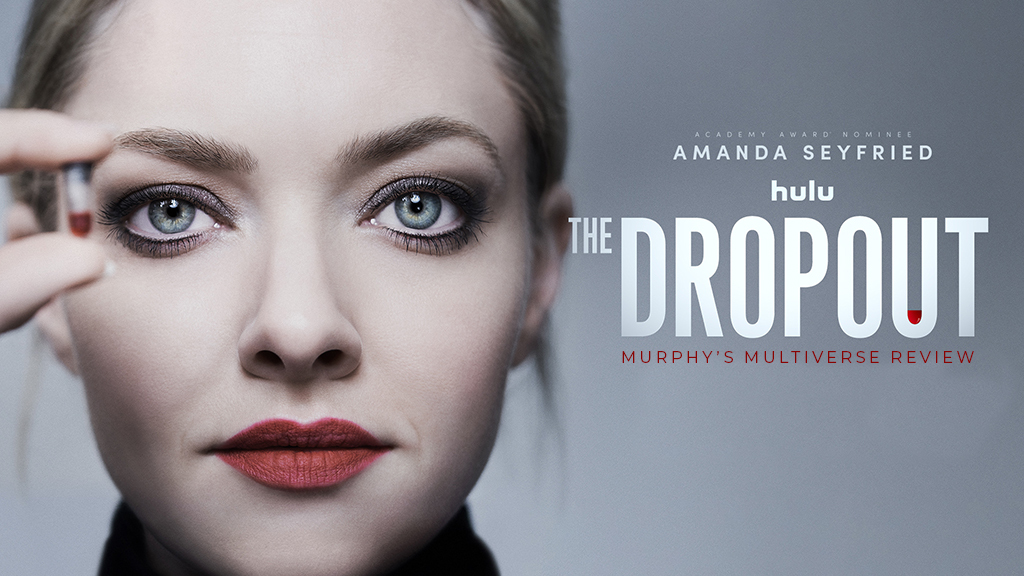
    The Dropout has all of the makings of an excellent series, and yet, it tends to fall just sort of being great. Amanda Seyfried does her best to carry the series, however, while she plays the role of Elizabeth Holmes with ease, her forced accent can at times be jarring. Even worse, the series tries to make Holmes the victim a fair amount of the time. However, despite its flaws, The Dropout is a well-done exploration of a well-known scandal, unlike Netflix’s Inventing Anna.

    With 7 episodes, The Dropout has a lot of story to pack in just seven hours. So, it shouldn’t be entirely surprising then that while Hulu is dubbing the show as a limited series, it’s evident there are plans for a second season. In most instances, this could be rather frustrating. In the case of The Dropout, though, it’s frustratingly understandable as the case is still seeing its day in court.

    The Dropout focuses on Seyfried’s Holmes, a young woman who idolizes Steve Jobs and wants to create a company after dropping out of Stanford. She’s the odd-duck out, so to speak, finding that she doesn’t belong among her peers. This only becomes more evident during a trip to China, where she eventually meets Naveen Andrews‘ Sunny. What Elizabeth doesn’t realize is that Sunny will change her life forever… and not necessarily for the better. The two soon find themselves romantically involved and, as Holmes launches Theranos after dropping out of college, she finds herself leaning on him often when things go wrong. 

    For those unfamiliar with Theranos and Holmes, it’s a massive story of fraud and deception. Not only did Holmes defraud her investors, including some big-name pharmacies, but she also deceived countless patients. It’s a fascinating story because of how conning she was; this was a woman who managed to be named the world’s youngest self-made woman billionaire by Forbes in 2014. She somehow managed to deceive some of the biggest businesses in the world, selling them simply on an idea rather than an actual product — and it was a lie that she continued to sell time and time again.

    Seyfried is a great actress, there’s no denying as much. However, the accent can make it hard to take her seriously at times. (There are moments, too, where she seems to share mannerisms with Kristen Stewart — and that’s not a dig at Stewart.) When she shines, though, she shines brightly. Her chemistry with Andrews is thrilling. Their toxic relationship is hard to look away from because of how well they play off one another. Outside of Seyfried and Andrews, the true shining star of the series is Stephen Fry‘s Ian Gibbons. The character has a tragic backstory in reality, one that the show doesn’t try to hide. Fry nails every bit of emotion, from anger to depression. He feels like the heart of the show. 

    Here’s the thing about The Dropout, though. As strong of a series it is, the ending is less than ideal. There is seemingly no ending. This is the problem with shows billed as limited series. With such a huge story, there’s so much to unpack, so the idea of a continuation does make sense. Still, there should have been a more conclusive ending. Instead, what should have been a shocking ending full of emotion, contained a happy ending for a story that has anything but.

    As for the look and feel of the series, The Dropout is a nice-looking series. From the color schemes to the framing of shots, The Dropout doesn’t try to ignore the minor details. Where it does fall short, though, is the score. For such a fascinating story, the music is anything but memorable. Thankfully, though, the soundtrack music sprinkled throughout is memorable, if only for Seyfried’s corny dancing.

    All in all, The Dropout is worth a watch. It’s a good exploration of Holmes and the story of Theranos. It isn’t without its flaws, but it is safe to say The Dropout is everything Netflix’s Inventing Anna should have been.

  • REVIEW: ’The Marvelous Mrs. Maisel’ Proves Timing is Everything

    REVIEW: ’The Marvelous Mrs. Maisel’ Proves Timing is Everything

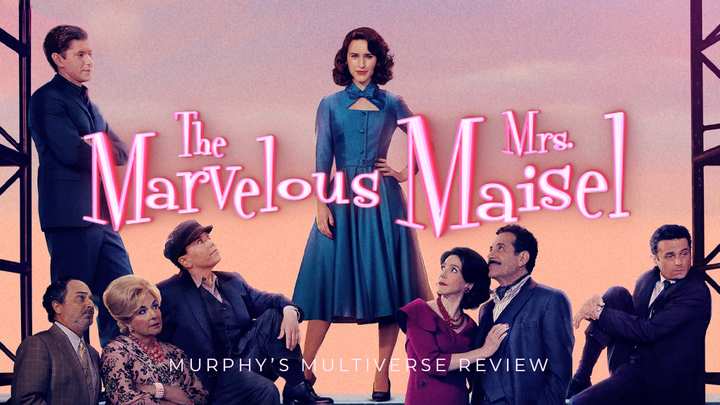
    Ever since its first, Emmy-award-winning episode dropped in March of 2017, The Marvelous Mrs. Maisel has thrived on timing. As has been mentioned on numerous occasions, the show moves at a speed that can only be described as “really fast.” Scenes transition like they’re stuck on LaGuardia’s moving walkway and characters speak at a tempo that could spin a windmill. It’s everything a high school drama director tells their students they should strive for, landing beat after beat in a tight, functioning hour. This exquisite meter is the series’ trademark, and its greatest secret weapon, as the writers seem to remember something the rest of us may have forgotten. In Maisel’s latest batch of episodes, Amy Sherman-Palladino reminds everyone that timing is sometimes most effective when slowed down.


    Everything is Bellmore”, the first of this week’s two new installments, is the show’s official tribute to Brian Tarantina. The actor, known for playing lovable Gaslight emcee Jackie, passed away unexpectedly in 2019. While Tarantina was undoubtedly a cornerstone for the series, one of those little unsung pieces that make the whole thing tick, it never felt like a surefire bet he’d get an entire episode made in his honor. One may have expected a line inserted quickly into an early-season episode, commenting on his absence with a little dedication card appearing after the credits. What one may not have expected was for the writers to take his death and turn it into one of the most poignant moments in Maisel’s entire run.

    Bellmore is a showcase for Alex Borstein, who steps up to deliver an unforgettable bit of acting during the episode’s climactic minutes. A lot of shows have a lot of scenes, where performers stand up to produce tears and spit out dramatic monologues, it’s simply par for the course. However, very few manage to achieve the raw authenticity that Borstein displays during her big moment. While the leads of Maisel may be wealthy Upper West Siders, the series always has truly been about the little guys. Jackie, and by extension Tarantina himself, was one of the little guys. As Susie points out, the man was a hard worker and lived a life full of immense ups and staggering downs. Like any person, he was simply out there trying his best. And yet, it never seemed good enough. No matter how hard he worked, or how many minor successes he had pulled off, his life still ended in a dirty, cramped, one-room apartment. Why? Because, as Maisel has always made apparent, timing is everything.

    Rachel Brosnahan, while magnificent as usual, has taken a back seat to her supporting cast, but it is still her storyline that thematically threads everything together. Now working at a strip club, the resolute protagonist makes it her mission in life to take an otherwise discount presentation and get it off the ground. Though production value does increase, at the end of the day, it’s still a strip club. Try as she might, Midge isn’t yet able to achieve the sort of fulfillment that she desires. Whether or not the club itself is part of the problem remains to be seen, but in the end it boils down to the commentary Bellmont and its follow-up “Interesting People on Christopher Street” are trying to make. Life is short, and sometimes the timing just doesn’t work out. Whether it’s whatever boat Jackie missed, Midge’s dependence on low-rent venues for creative freedom, or Susie’s refusal to do anything about her romantic life until she gets her business afloat, the idea of timing is ever looming.

    The other character who shoulders this theme, and who gets a little extra spotlight this week, is Tony Shalhoub‘s Abe Weissman. A personal favorite member of the cast, as his comedic timing is consistently top-notch, the former Monk star navigates two separate b-plots with sublime expertise. In both, Abe deals with the consequences of not knowing when he should and shouldn’t open his mouth. He publishes a devastating review of a play written by a family friend, resulting in the social exile of the Weissman couple from their community. His frets about the romantic history between his wife and best friend get Jason Alexander‘s Asher and himself in trouble with the federal government. It’s a lesson in balancing truth with timing, done with the mix of comedy and dramatics that only Maisel can pull off.

    Ultimately, this week’s duo of episodes is dedicated to the element that helps the show stand out in more ways than one. Pacing, music, production design, costumes, and everything in between are up to their usual snuff. From a filmmaking standpoint, the show only continues to prove the importance of timing. Only now, the story is starting to as well. Just remember, even if Midge is able to get the technical aspects of that strip to show up and ticking, she still finds a way to fall in the pit at the end.

  • REVIEW: ‘How I Met Your Father’ Episode 7 – “Rivka Rebel”

    REVIEW: ‘How I Met Your Father’ Episode 7 – “Rivka Rebel”

    Episode 7 of How I Met Your Father takes a break from Sophie’s love life and focuses instead on development with the core cast. Considering the two previous episodes were easily the best of the season, and were heavily involved with her love life, it is interesting going into an episode not fully knowing if it is going to land on the same level as those which directly preceded it.

    The episode follows each character as they try to develop in problem areas. Sophie and Valentina are tasked with performing a photoshoot for the head photographer of Sophie’s dream job. Meanwhile, Charlie and Ellen take on adjustment to living in New York, as well as Sid and Jesse spending the time dealing with procrastination. The duo pairings are already starting to seem like patterns. So far the cast is really falling into a weird place where each person has a best friend of the group and the cast all get together every few episodes to establish that they are a cohesive group. This has been ongoing, but I didn’t really catch onto it until this episode.

    Every episode pairs up Valentina and Sophie, Charlie and Ellen, and Sid and Jesse. Sure, we see them all interact, but when it comes to the personal moments where only two characters are there, it gets a bit underwhelming. This is largely because those types of relationships are being developed continuously while there is still no big development in other areas. Valentina and Charlie are a couple, but only two episodes have involved their relationship for example. Jesse is obviously in love with Sophie at this point, but we don’t see him actually do much about it, whether it is jealousy, chasing her, or any other type of emotion. This weird disconnect is my new big complaint about the show, not that there are many complaints, but I do hope we see this corrected in the final three episodes, or if not, in season 2.

    While the pairings have me critical, the actual development between the characters did progress well. Jesse is starting to move on from the tragic ending to his last relationship. Sid is getting closer to marrying Hannah, with them agreeing on more and more. Sophie is finding herself and taking leaps for what she wants. Valentina is admitting to her true feelings about where she is in life. And Ellen and Charlie are getting more comfortable with each other. I do like how the characters are progressing. Sophie is obviously the most interesting due to her being the main character, but Valentina and Jesse are early standouts. Valentina is quickly breaking away from the free-willed and confident character we were introduced to and becoming a very interesting character with lots of real-world problems and reactions, such as lying about how glamorous her life is to not worry her friends. Jesse is also great because of his struggle moving on from his ex, especially since it left him a semi-famous internet sensation. The struggles are very 21st century, relating to the target audience as much as it can, but it feels real all the same, especially as a twenty-something like myself.

    While we have talked about my major complaint about this episode, I do have a second. As I have stated before, the show really has no time to waste in its short 10 episode season, especially now as we near the end. However, this episode seemed like a disconnect from the really big momentum they had coming into it. Due to this, the episode felt like filler, even if it did help develop some of the main cast. I think this largely stems from my first complaint of the pairings being more of the same, since it is starting to be smaller and smaller jumps in development, we as viewers don’t perceive the new changes as well, and therefore the episode falls into this weird place that it feels like a filler episode despite being a normal episode for a traditional sitcom. Filler is usually an episode that does little to progress the plot, such as the rhyming episode in How I Met Your Mother‘s final season. While they can be fun, they have to be used in appropriate places. This episode doesn’t fit the filler category because it did develop the plot, but it just didn’t land as well as the last two episodes since there were no real standout moments.

    How I Met Your Father has definitely improved a lot since its premiere just a short few weeks ago. While almost every episode has gotten progressively better, there have been two small dips so far, and sadly, episode 7 feels like one of them. With only three episodes left, I feel like there could have been a better balance of time in this one, but hopefully, this means a killer winddown. I wouldn’t be surprised to see next week’s episode as another one like this, but that should hint at an amazing final two-episode performance. Let’s just hope I’m right and we don’t see a significant slide.

  • REVIEW: Netflix’s ‘Worst Roommate Ever’ Feels Like a Rehash

    REVIEW: Netflix’s ‘Worst Roommate Ever’ Feels Like a Rehash

    True crime documentaries are always a must-see. They’re thrilling and terrifying, but most importantly, they’re captivating because it’s more often than not, the circumstances behind the crimes are things we try to tell ourselves do not happen. Unfortunately, though, as true crime continues to become more popular, most big stories have already been covered in detail through other streamers or networks. In fact, true crime is what Investigation Discovery has built its entire brand on. So, it can be hard for shows like Worst Roommate Ever to feel fresh. This is, ultimately, what keeps it from being must-see television.

    While Worst Roommate Ever is a thrilling watch, one that’ll surely keep viewers hooked until the end, it’s nothing new. These stories – especially the first two – have been featured on Investigation Discovery, and Netflix’s approach offers little new for those that are familiar with these stories. It’s unfortunate, really, as the concept of Worst Roommate Ever is a great one. It just feels like a long rehash, making it hard to understand why it was greenlit to begin with.

    One subject featured in Worst Roommate Ever is Dorothea Puente. Those that follow true crime stories have probably heard about Puente. Throughout her life, she was responsible for committing numerous crimes against those she was meant to help. To say she is a monster would be putting it lightly. The problem with using Puente for the first episode, though, is that her story has been told time and time again. There’s The House is Innocent, World’s Most Evil Serial Killers, and The Boarding House all of which have tackled Puente’s crimes, so by the time “Call Me Grandma” comes around, viewers have probably already been made aware of the terrible things she has done.

    That isn’t to say the interviews don’t make the stories fascinating. In most instances, the interviews do enhance the stories being told. It’s just that most of them are so familiar, even those being interviewed have been showcased in previous documentaries or episodes on these terrible crimes. If Worst Roommate Ever took the same concept and, instead, opted to focus on smaller stories for a potential second season, it would only be beneficial. As it stands, though, Investigation Discovery has already tackled these stories and, honestly, it makes Netflix’s Worst Roommate Ever feel outdated.

    All in all, Worst Roommate Ever is still worth a watch — solely for the latter episodes. Beyond that, though, it feels like its trying too hard to do what has already been done. If the series should return for any future installments, it should opt to seek out smaller tales if it wants to rightfully claim its space among other great true crime.

  • REVIEW: ‘Vikings: Valhalla’ is a Slow Burn With Potential

    REVIEW: ‘Vikings: Valhalla’ is a Slow Burn With Potential

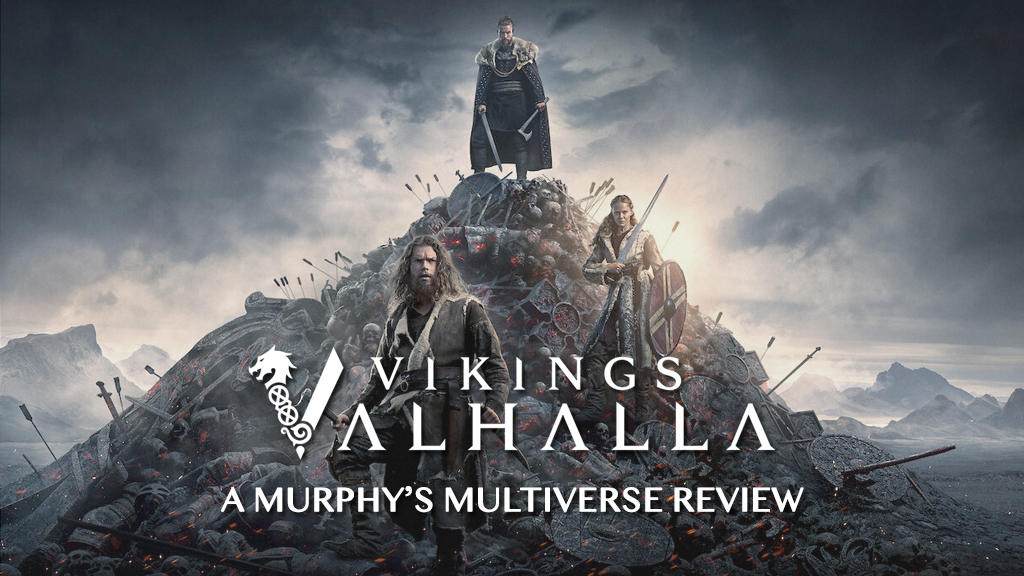
    Vikings: Valhalla is technically a spinoff to the original Vikings series, which ran from 2013 until 2020, but isn’t burdened by its legacy. The story takes off a century after Ragnar’s legacy and further explores the aftermath and history that surrounds the characters of Leif Eriksson (Sam Corlett), Freydís Eríksdóttir (Frida Gustavsson), and Harald Sigurdsson (Leo Suter). Not only does it explore the invasion of London but also the inner conflict between Christian and Pagan beliefs within the Viking community. Does it manage to offer a compelling story while continuing what made the Vikings franchise popular?

    I’ll confess that I’ve not seen the original series. So, I went into this blind and without much knowledge, but luckily the 100-year gap made it quite easy to jump in as a newcomer. You are quickly caught up with the main story, an opening text does hint at Ragnar and his story from the original before jumping directly into the conflict that defines this spinoff. The English royals betray the Vikings that lived in their land. As they gather for vengeance, the conflict between their changing culture also reaches a boiling püoint. In a way, it allows for an ongoing conflict within and outside of their ranks.

    This divide was the most compelling storyline throughout the season, especially with how its portrayed. It never is a simple “good or bad” view, but two beliefs at a constant front. We regularly see members of both sides pick a fight because of their difference, while the leadership struggles to keep them in line. It establishes a constant tension between the parties, which makes you wonder when or how people will try to take it out on each other. Yet, it also feels oddly held back by the series trying to juggle more than it can chew at times.

    In a way, the show drags early on and also rushes through storylines. There’s a lot of history here that is complex and worth exploring, but the way it goes from one plot point to the next, it kind of feels like a cliff notes version. You could perfectly split this season into two halves without really changing much, as it suddenly introduces new characters late into the game. While one of them might be my personal favorite just for his general attitude – I don’t want to spoil who that is – it still feels like some of these conflicts could’ve used more time.

    Leif Eriksson, whose history is very much defined by his discovery and not his war prowess, is certainly a kickass character but just along for the ride. His main storyline ties into the overall conflict but it feels somewhat unrealized. Outside of a literal symbol and a heartfelt goodbye, we don’t spend too much time with his conflict. This is war and it takes sacrifices. One of the highlights was seeing him come to grips with the loss and his potential new belief does make a very compelling storyline. Yet, it feels convenient when the story needs it rather than an actual arc throughout.

    Even Freydís’ storyline focused more on build-up than the end execution. Though I will say, I felt like she had the stronger arc throughout this season in comparison to everyone else. I especially loved exploring the Pagan culture and mystical elements surrounding her character. It helped her path stand out from the rest, as the actual England invasion was a bit rushed to get everyone to where they needed to be. They tried to tell so many storylines that it comes to the detriment of its pacing

    I quite enjoyed the back half – even if I believed it should’ve been its season overall to flesh it out more – and it made me happy that I sat through it. Yet, I struggled to get through the earlier episode. There are quite a few characters to keep track of, and it ends up overshadowing our main cast which should be the guiding light throughout the story. We not only have to keep up with our main cast, the Viking royalty, their goals, those that are Pagan and Christian, a side story with a compelling villain played by Asbjørn Krogh Nissen, and the English royalty.

    It’s this weird effect where a lot is happening yet it feels dragged out until suddenly it’s just resolved. Everything else about the series is well-made. The costume design is fantastic, even as many Vikings are similar in design, you can still pick out Leif from the crowd. It doesn’t shy away from brutality from that time, even as we’re watching Pagan rituals. It all comes together at the end, but some might’ve jumped ship as the series doesn’t truly get going until quite a few episodes in. As a weekly release, it could’ve been its detriment but the Netflix binge model may help it out. And with a second season on the horizon, perhaps the best parts are yet to come.

  • REVIEW: ‘The Legend of Vox Machina’ Closes One Door and Opens Another

    REVIEW: ‘The Legend of Vox Machina’ Closes One Door and Opens Another

    It’s not always easy to remain consistent. In life, sure, but especially in storytelling. Take HBO’s hit series Game of Thrones, for example. Once adored by fans the world over, most adulation for the show came skidding to a controversial halt when the final season failed to meet fans’ immense expectations. On the other side of the coin, one might find a series like Marvel’s Agents of S.H.I.E.L.D., which managed to find it’s footing in later seasons after a rough start out of the gate. Obviously, neither of these situations are ideal for a writer’s room. In the first scenario, you have years of hard work seemingly derailed by a single batch of faulty episodes. In the latter, you have a glorious comeback seen only by those who were willing to stick with the show through the worst of times. It is with immeasurable pleasure that I state The Legend of Vox Machina has avoided the second prognosis, and shows no signs of being diagnosed with the first anytime soon.

    In my last review of the series, it was mentioned that Vox Machina was doing an excellent job of bringing its multiple plot lines together towards a satisfying payoff. As the last three episodes of the season played out, they proved this theory was even more correct than initially believed. Nearly every major character on the show receives a proper conclusion to their arc, often overlapping with each other in ways not expected but wholly rewarding. It almost feels as though the story could not have happened this well on accident, despite its humble beginnings as a recorded tabletop game improvised among friends. There are also quite a few moments of genuine surprise sprinkled throughout the final first season installments, keeping the viewer on their toes and managing to avoid a lot of the unsavory finale tropes that plague multiple tales of the genre.

    The passion behind the project is so evident in the way its writers and performers take care of the titular group, each emotion felt by the main cast feeling as though the chaos was actually happening in the recording studio. These lively bits of vocal recording help to heighten the show’s finest moments, adding an extra push to triumphant climactic battles and forcing out that first teardrop in emotionally weighted scenes. Speaking of which, the finale of Vox Machina proves more than willing to venture in the direction of sadness than the early previews of the series ever suggested. After a full season of expertly executed bonding with the merry band of misfits, the surprisingly frequent instances of true drama hit fairly close to home. Yet, the adult cartoon is able to balance these bits with its signature humor and violence quite well, resulting in a wonderfully calculated assault of emotions on the audience.

    Perhaps the best aspect of the season’s close is the way it sets up the series promising future. With a second season already in the bag, it makes sense to leave the show off on some sort of tease for what’s to come. But what’s impressive is the way the Critical Role crew is able to leave their characters open for another chapter. So far, the plot has mostly revolved around the hidden personal life of emo gunslinger Percy de Rolo. As that story comes to a close, the door opens for another to begin, and the follow-up could center around any one of the team’s many intriguing members. All the remaining adventurers have been put into a position to succeed going forward, and I can’t wait to see where the series takes them next.