Marvel Studios’ strategy of utilizing Marvel Spotlight to create a distinction between their films and TV shows is continuing to move forward. The upcoming Wonder Man series is seemingly still alive after many rumors hinted it might be canceled. The series starring Yahya Abdul-Mateen II will now be under the new banner that highlights that this is an additional story part of the MCU but not something relevant to the major ongoing narrative.
We still know very little about the project but it did start production before the writer’s strike led to the production shutting down. Shang-Chi director Destin DanielCretton is set to direct the first two episodes and is acting as an executive producer on the Disney+ series. It’s unclear if the intentions of this being a standalone project were there from the beginning or if it’s part of the new direction for the production studio.
The announcement is part of the big reveal that the director has left the upcoming Avengers project behind to put his focus on other projects with the studio. Of course, we don’t know what exactly he else might be working on but it does seem like a move to allow the director some more time to work on other projects rather than rush out everything and neglect the long-awaited Avengers film.
While all eyes are on the demise of the MCU with The Marvels‘ disappointing opening due to a variety of reasons strongly affecting the market, it does look like their Disney+ series is showing that there’s a chance there’s, as expected, more to this story. The series finale for Loki has seen an increase from its initial viewership according to Disney+. It’s not a massive jump but it did see a jump from 10.9M in its premiere episode to 11.2M in its final entry.
That is not the biggest ending for a series in 2023 on Disney+ however, as the series was just behind The Mandalorian’s third season. Still, what is quite impressive is that Loki had a strong consistency throughout its six-episode run by pulling in an average of 11M. It should be noted that it’s difficult to compare streaming services’ viewership the success so we can only compare it to other series on the streaming service.
Loki remains one of the strongest entries on Disney+ for Marvel Studios and is likely a template for future projects moving forward. Of course, we don’t know what their future has in store exactly but it’s interesting to see these two sides to what Marvel Studios currently stands at. It further highlights that the box office performance represents a crossroads rather than the norm.
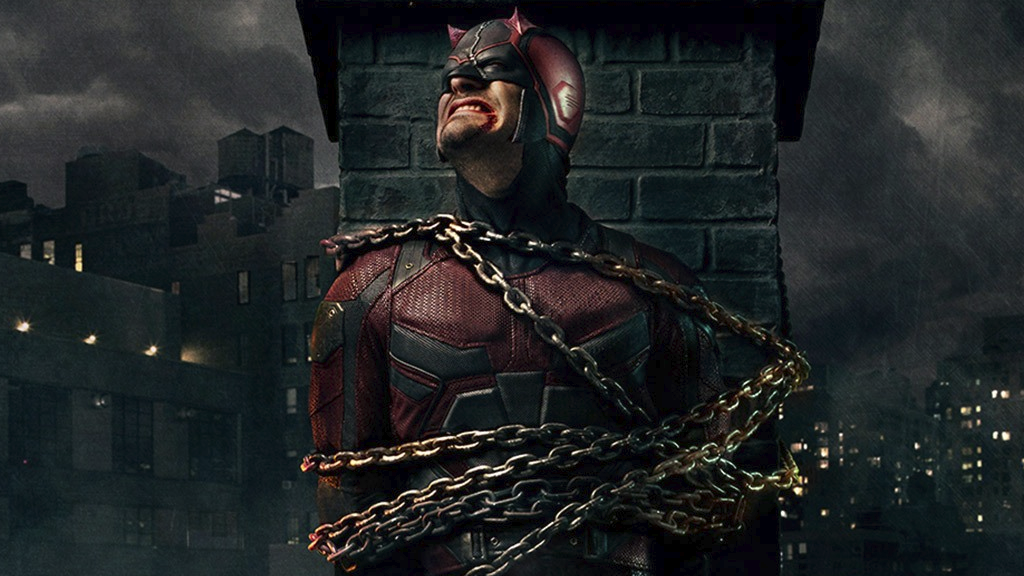
Some time ago, it was revealed that Marvel Studios is pulling back on the upcoming Disney+ series Daredevil: Born Again. They restarted the project with an actual showrunner in the form of former The Punisher’sDario Scardapane, who likely will bring his previous work to influence the series to be a bit closer to the version many are hoping to see revived from the original Netflix series.
That isn’t all, as Justin Benson and Aaron Moorehead, who have proven they are some of Marvel Studios’ best gets after Moon Knight and Loki Season 2, are also involved with the series. In an interview with The Wrap, they revealed that they have yet to start work on the project but are already diving deep into the franchise, comics, and Netflix series included.
It is day zero. We’re currently just consuming Daredevil content, not just the Netflix show but all the possible material. We’re just making our stew of information nice and thick.
Aaron Moorehead
They will be directing the remaining episodes from the series and it’ll be interesting to see if they have any involvement in getting the previous entries going as well. There’s a lot we don’t know about the adaptation just yet given that it’s taking a completely new direction. Very likely a bigger sign of Marvel Studios reshuffling their future releases.
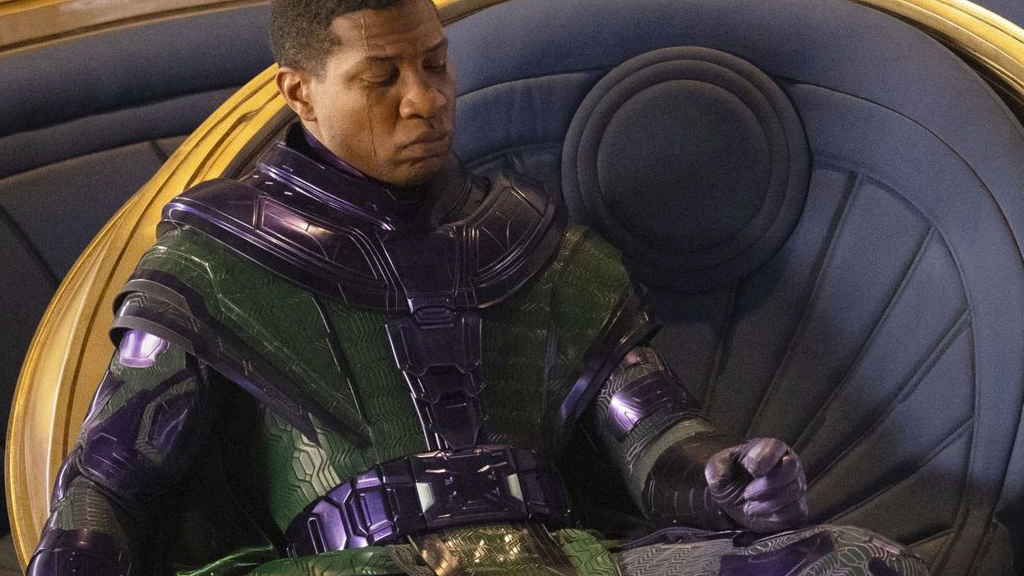
There’s been much debate online over the future of the Marvel Cinematic Universe. Many have already called it the end of an era after their first film in a while had a lower opening than even their 2008 release, but that doesn’t mean the production company is just going to sit around. The biggest challenge was that Jonathan Majors‘ Kang the Conqueror was going to be the main focus of the Multiverse Saga but as it turns out, they may be heading in a new direction.
Ant-Man and the Wasp: Quantumania writer Jeff Loveness is seemingly no longer involved with the first Avengers film, Avengers: The Kang Dynasty. A podcast episode of The Ringer’s House of R features writer Joanna Robinson who made the recent MCU book exploring the inner makings that made the studio what it is today. In it, she seemingly hints that Marvel Studios might be moving away from its original plans.
As this hasn’t been officially confirmed, it’s something we should take with a grain of salt but Loki definitely kept it open how they decide to move forward. They still have many options in how they tackle the entire storyline moving forward and there’s also a chance that they simply retitle the first Avengers film, or perhaps just jump straight into Secret Wars‘ storyline. They could turn whatever happened to the multiverse into a mystery film as these characters try to unravel what happened to their reality.
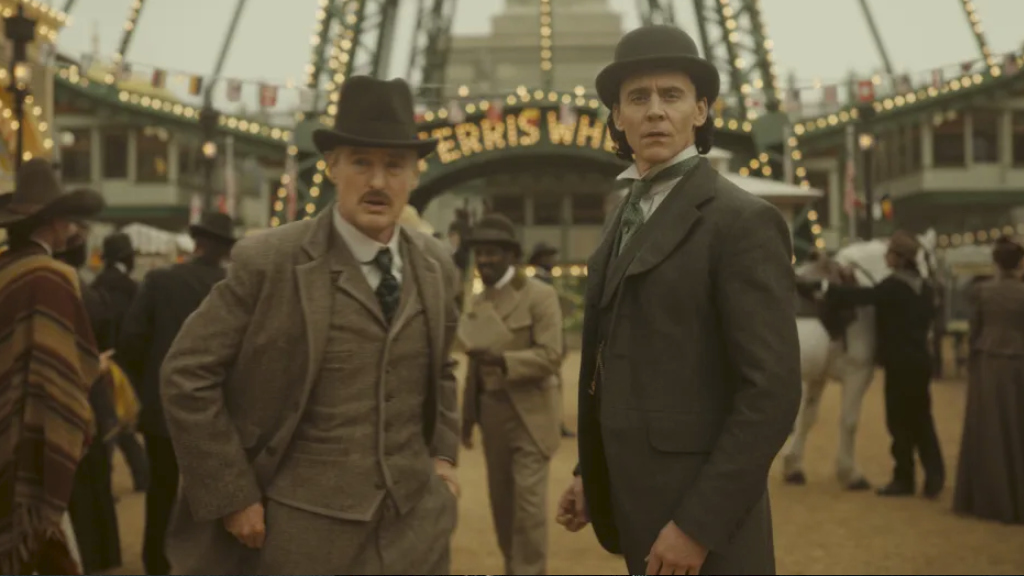
The reinvention of the God of Lies is complete. With a thrilling and satisfying finale to the second season of Loki, Tom Hiddleston has roundly addressed critics’ concerns (including my own) about how much could possibly have been left in the tank for a character who had already done so much. Hiddleston’s dedication to the character, a fantastic creative team that was fully dedicated to some ridiculous sci-fi concepts and held fast to their vision and a deep cast combined to provide 12 incredible episodes of streaming television including an astounding season (and likely series) finale.
Though it won’t be the last time we see Loki, “Glorious Purpose” was a wonderfully fitting bookend to the entire series (you’ll recall that the first episode of the series was also entitled “Glorious Purpose”). Loki’s journey into mystery led him right back to where Season 1 ended and put him face to face once again with He Who Remains who, sort of unsurprisingly, revealed that every step of said journey–including his own “death” and all the crazy bits that went on in Season 2–where engineered by him. Having spent centuries trying to save every reality and totally recreating himself along the way, Loki’s refusal to take He Who Remains final offer as an answer leads him to make a choice that nobody, including himself, could have ever predicted. No longer the conqueror or mischief maker, Loki reanimates the dead branches of reality and sets himself about the endless task of giving life to others at the expense of his own freedom. Free will outside of the boundaries set by He Who Remains.
As a finale to a season and the series, the episode lands because it ties up so many of the series’ threads nearly as neatly as Loki ties together the branched timelines. Loki is the MCU’s longest experiment with longform narration to date and it’s a tall task for any writing room to keep everything together over the course of nearly 12 hours of a series. Thankfully despite series creator Michael Waldron moving on, the studio maintained continuity by handing the keys to the show to one of Season 1’s most key contributors, Eric Martin. Resultant of that, Season 2 picked up where Season 1 left off, took the audience on a wild romp and then dropped them right back off in a familiar place with the main character in a familiar predicament.
For as complicated as the sci-fi weirdness of the show seemed to be, in the end, Loki remained a fairly straightforward character study of one of the MCU’s greatest characters. And powered by one of the MCU’s greatest talents in Hiddleston, Loki became the warm light for all mankind to share. In that regard, Loki was more than just a series that maintained continuity over 12 episodes; it was a reverential ode to every beat that has made the character so popular since he first appeared in 2011’s Thor. In just about every way, Loki is the MCU’s “Breaking Good” full of all the things that make stories great. Perhaps, in his big chair at the end of time, this was a story written by the God of Stories himself.
Here’s a rather fascinating surprise. It looks like Marvel Studios was tired of people complaining about what is and isn’t part of the mainline storyline and has established a new brand. As the internet complains about fatigue and “filler” in the build-up towards the grander storyline of the Marvel Cinematic Universe, it seems they decided to establish a “Marvel Spotlight” with a brand new fanfare composed by Michael Giacchino. Its name is inspired by the anthology comic book series from 1971 and gives them the opportunity to explore smaller stories without the weight of “having to watch it all” the internet claims.
Marvel Studios’ Head of Streaming Brad Winderbaum shared the following on the new branding:
Marvel Spotlight gives us a platform to bring more grounded, character-driven stories to the screen, and in the case of Echo, focusing on street-level stakes over larger MCU continuity. Just like comics fans didn’t need to read Avengers or Fantastic Four to enjoy a Ghost Rider Spotlight comic, our audience doesn’t need to have seen other Marvel series to understand what’s happening in Maya’s story.
Brad Winderbaum
You can listen to the fanfare here:
The opening intro for Marvel Spotlight, the MCU’s new label.
These projects will focus on more grounded, character-driven stories with street-level stakes. pic.twitter.com/OaylT8HLd4
It makes sense and gives people the opportunity to be a bit more selective in what is or isn’t relevant. Ironically, it seems that the “homework” accusations are technically solved with this but it does expect that people are informed of what exactly this branding means. In a way, this is also their version of the Marvel Knights branding used in the comics to introduce darker, more grounded storylines. We’ll see how they use it in the future.
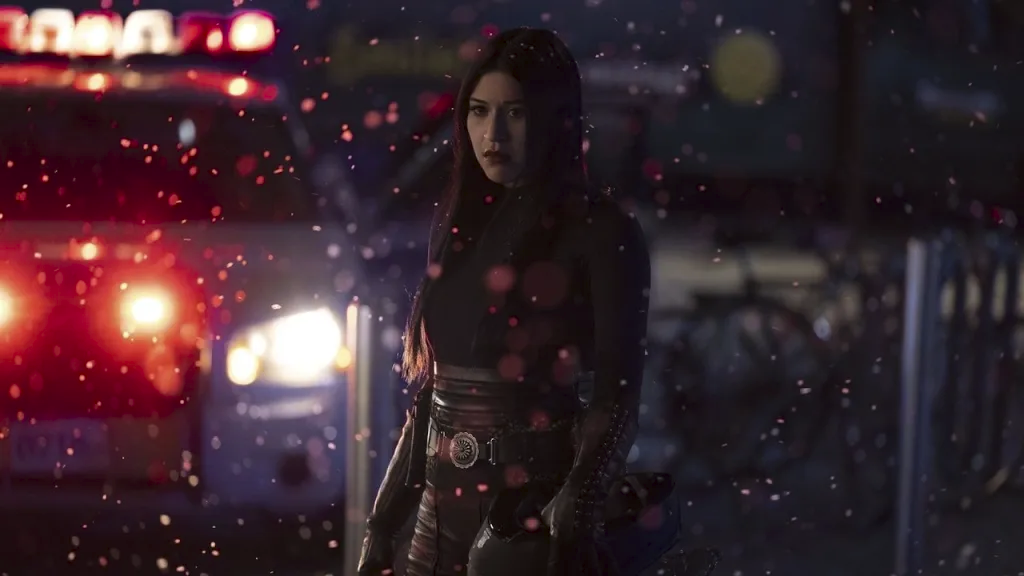
Surprising everyone: the first trailer for the next Disney+ series Echo has dropped. It dropped in quite a fashion, as not only is it now a Disney+ and Hulu simultaneous release, but it’s also going to be Marvel Studios’ first TV-MA release. So, we’ll have to wait for its binge-release in January to see if the story delivers on the MA promise.
In a small interview ahead of its release, director Sydney Freeland also teased that this version of the character might be quite a bit different from the comics. Echo was famous for her ability to copy anyone’s ability, which made her a formidable fighter against characters like Daredevil. It seems they have other plans for her according to the director.
Her power in the comics is she can copy anything, any movement, any whatever. It’s kind of lame. I will say, that is not her power.
Sydney Freeland
Details are still scarce on what exactly her new power set might be; if there even will be one but it’s definitely interesting that they are trying to head into a new direction with the character. We’ll see if we get some teases in the coming months. A January release is kind of fitting given it’s a sequel to Hawkeye, which was released in December.
As Loki nears the completion of its second season, it continues to stand as the nonpareil of what Marvel Studios television was initially intended to be and should endeavor to continue to be. Thanks in no small measure to the continued brilliance of Tom Hiddleston, the show continues, in modern parlance, to slap, slay and dish out weekly bangers. While it’s illogical, even preposterous, premise all but guarantees it’s not for everybody, Loki continues to embrace its place as a true sci-fi show and seems with each passing episode to submerge further into those depths. To that end, it’s no surprise that Season 2’s fifth episode, “Science/Fiction” turned out not only to be the most convoluted and nonsensical entry to date but also one of the series’ best and maybe one of Marvel Studios’ best episodic efforts.
As the penultimate episode of Season 2, “Science Fiction” does what penultimate episodes do. It makes real the consequences of the season’s ongoing concerns about the stability of the Temporal Loom which finally gave out in Episode 4’s cliffhanger. The destruction of the Loom, which refines raw time into the timelines where people live their lives, resulted in both the destruction of the TVA and, as revealed in Episode 5, the destruction of those timelines. When the Loom isn’t Looming, entire realities and their inhabitants are reduced to spaghetti, something that not even Sylvie, the colder-hearted Loki Variant, can abide. The loss of the Temporal Loom also puts Loki back in a familiar predicament as his time-slipping, thought to have been remedied in the season’s first episode, resumes albeit with an interesting twist as he bops about to different realities where familiar faces from the TVA are living their lives. By episode’s end and with the help of Ke Huy Quan’s A.D. Doug, PhD, Loki is empowered to control time-slipping, creates a bare-bones TVA and puts himself on the path to make an effort to save all of reality in the Season 2 finale. Job well done.
However, as part of Marvel’s longest longform episodic narrative to date, “Science/Fiction” serves as a linchpin not only for Season 2 but for the series as a whole. Season 2 head writer Eric Martin’s presence as a key contributor to Season 1 allowed for continuity of the creatives behind the series which means that the big ideas from the first six episodes are far from forgotten. Indeed, “Science/Fiction” may have just put Loki and Sylvie right in the same boat in which they found themselves when they met He Who Remains in the Citadel at the End of Time. In that meeting, He Who Remains offered the pair the power to be curators of the Sacred Timeline as his replacement as the man behind the curtain of the TVA. By assembling an all-new, all-different team and learning to slip time at will, Loki has put himself in position to prevent the destruction of the TVA (man, the time wimey stuff here is so fun–and painful–to think through) and, with no leadership left to speak of, take control. Take a bow, Al Ewing, as Loki is about to become the God of Stories.
There is, however, one fairly large question left to ponder as we wait for Episode 6: is Loki really writing this or any other story? Should Loki end up in charge of the TVA, isn’t that right where He Who Remains wanted him? Of course, as the God of Stories, Loki may somehow find a way to use Victor Timely’s Multiplier to allow the newly branched timelines to continue on but if not, if the decision is made keep all of reality intact by refining time back into the Sacred Timeline, won’t He Who Remains have accomplished exactly what he wanted? While he’s not the most trustworthy narrator, He Who Remains made it very clear that he was the architect of Loki’s existence and it was through his machinations that Loki ended up in the Citadel in the first place. As this Variant of Loki who has come so far on his road to redemption finally finds himself on the precipice of becoming the hero of all time, always, would Marvel Studios dare take his agency from him and reveal that he’s simply been He Who Remains marionette all along? With one episode left to go, it looks like we’ll all find out together just how much of this story has truly been written for Loki and how much has been written by him.
In a market increasingly filled with comic book adaptations, there truly is nothing quite like Amazon’s Invincible. Like Robert Kirkman‘s long-running comic book, the turbulent first season of Invincible took unsuspecting audiences by surprise and was almost universally well-received, something that’s just about impossible given the present climate around comic book-based media. Over two and a half years after Season 1’s debut, the first half of Season 2 is set to premiere on Amazon on Friday, November 3rd and the four episodes that comprise it are every bit as riotous, unrestrained and sublime as the hit first season.
While the savage and sanguinary nature of the superhero action depicted in the series attracts the lion’s share of attention, it’s hardly what makes Invincible great. Another Amazon superhero series, The Boys, is equally disruptive in that regard and is even more jarring in its live-action depiction of just how brutal superheroes can be when they unleash the true depths of their powers. Rather what truly sets Invincible apart and keeps it on top through the first four episodes of Season 2 is its ability to make the audience succumb to its pathos. That’s a consequence, of course, of having one of the most sympathetic and relatable main characters in the genre in Mark Grayson. As is the case with Peter Parker–a hero to whom Invincible is often compared and even teamed up with once–there’s as much time spent on Grayson’s everyday dilemmas as there is his time in the suit.
What truly makes it work is the fact that there’s so much overlap between the two. While Season 2 is absolutely loaded (almost bloated) with new plot elements, the first four episodes take place in the wake of Mark’s battle with his father, Nolan, aka Omni-Man. The revelation of Nolan’s true nature took as much, if not more, of a toll on Mark’s life as their fight did on Chicago. The sophomore season tracks Mark as he tries to re-anchor himself in his personal life while being pulled exponentially harder into the void as Earth’s savior that was created by his father’s disappearance. Gone, not forgotten and destined to return, Nolan has a major presence in the second season even before he’s seen on screen.
Further excavation and exploration of just why Invincible continues to work so well when other adaptations often fall short of expectations present an interesting possibility for other studios to consider. While it’s not a perfect one-to-one page-to-screen adaptation of the comics, Amazon’s Invincible is far more direct than any of the recent works presented by the competition. That’s almost certainly a result of having Kirkman, who created the character in 2003 and has curated him now for over two decades, deeply involved in the development of the series. While it’s not a hard and fast rule, nobody loves and understands characters quite like the people who created them. Kirkman’s role in overseeing the translation of the comic into the animated series has ensured that any changes made to the source material are in line with who the characters were intended to be. While it’s a show full of violence, gore and things you may wish you’d never seen, the love and care taken to develop, produce and present Invincible as an animated adventure gush forth in every episode.
If there’s anything to bemoan in the first part of Season 2 it’s that for as wonderful of a job as it does continuing Mark’s story and the story of the stories of the supporting cast, it also feels just a bit too busy. Interestingly enough, it’s Invincible’s coherence to comic book conventions that create that quandary. With plans for a third season already established, some of the screentime in Season 2 is spent introducing characters–I’m looking at you, Angstrom Levy–who played a role in the 144 issues of Kirkman’s comic but don’t really have much of a role in THIS season…at least so far. Truth be told, there’s no mountain to be made out of this molehill and most fans who aren’t familiar with the comics will likely forget about the characters and subplots entirely until they need to Google or rewatch episodes in order to remember.
Every bit as frenetic and enjoyable as its first season, Invincible Season 2 looks to be a can’t-miss/must-see for fans of the genre. From the animation style reminiscent of Saturday morning cartoons like Inspector Gadget and Transformers to the inclusion of iconic voice talents such as Mark Hamill and Peter Cullen, ’80s kid Kirkman is having a blast bringing his comic series to the screen and it shows.
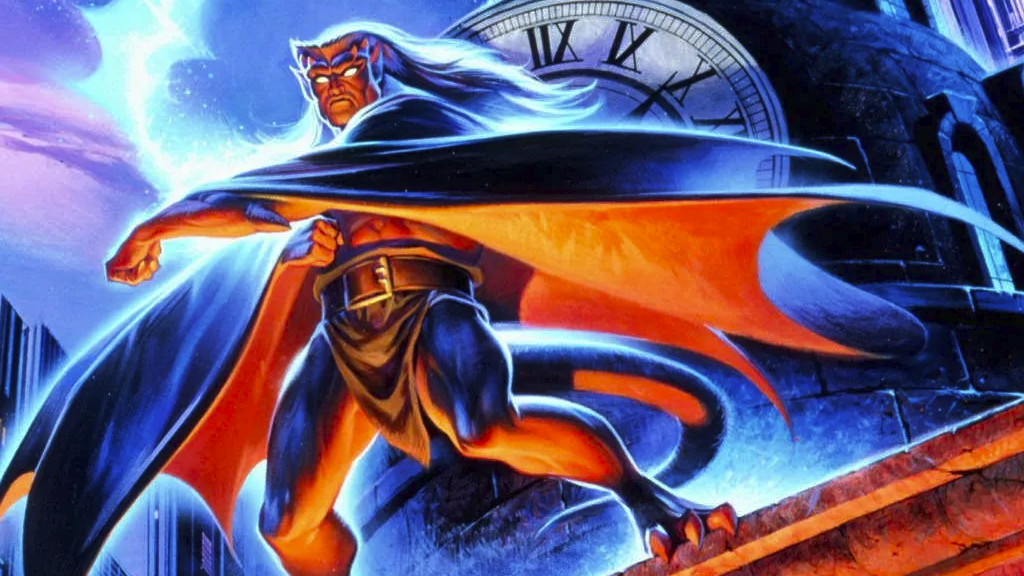
It seems that the iconic Disney cartoon from the 1990s is making its way to Disney+ once more, but this time as a live-action series. According to The Hollywood Reporter, Gary Dauberman and James Wan’s Atomic Monster is set to help develop the series based on the iconic series that featured, you guessed it, Gargoyles living in modern-day facing unlikely enemies. It’s in early development and it seems Wan alongside Michael Clear is attached to executive produce while Dauberman will act as showrunner and writer on the series. This also signifies the WGA contract moving Disney+ away from their head writer experiment.
Gargoyles ran for three seasons between 1994 to 1997, which saw a bunch of gargoyles end up in modern-day New York. They are released from a thousand-year curse and end up becoming the protectors of the city at night, as they are but simple statues during the day. Greg Weisman originally created the series and it became an iconic part of 90s’ cartoon culture alongside X-Men: The Animated Series and Batman: The Animated Series with is more adult themes.
It seems that Disney considered an adaptation back in 2010 but after the flop of The Sorcerer’s Apprentice, they did not move along anymore. Dauberman is a big get given his success with horror franchise Annabelle and his involvement with The Conjuring. He also made his directorial debut with Annabelle Comes Home, which opens up the possibility that he’ll also act as director on the series in some format, but that has not been confirmed in any way.
We use cookies to improve your experience on our site. By using our site, you consent to cookies.
This website uses cookies
Websites store cookies to enhance functionality and personalise your experience. You can manage your preferences, but blocking some cookies may impact site performance and services.
Essential cookies enable basic functions and are necessary for the proper function of the website.
Name
Description
Duration
Cookie Preferences
This cookie is used to store the user's cookie consent preferences.
30 days
These cookies are needed for adding comments on this website.
Name
Description
Duration
comment_author_email
Used to track the user across multiple sessions.
Session
comment_author_url
Used to track the user across multiple sessions.
Session
comment_author
Used to track the user across multiple sessions.
Session
Statistics cookies collect information anonymously. This information helps us understand how visitors use our website.
Google Analytics is a powerful tool that tracks and analyzes website traffic for informed marketing decisions.
Contains information related to marketing campaigns of the user. These are shared with Google AdWords / Google Ads when the Google Ads and Google Analytics accounts are linked together.
90 days
__utma
ID used to identify users and sessions
2 years after last activity
__utmt
Used to monitor number of Google Analytics server requests
10 minutes
__utmb
Used to distinguish new sessions and visits. This cookie is set when the GA.js javascript library is loaded and there is no existing __utmb cookie. The cookie is updated every time data is sent to the Google Analytics server.
30 minutes after last activity
__utmc
Used only with old Urchin versions of Google Analytics and not with GA.js. Was used to distinguish between new sessions and visits at the end of a session.
End of session (browser)
__utmz
Contains information about the traffic source or campaign that directed user to the website. The cookie is set when the GA.js javascript is loaded and updated when data is sent to the Google Anaytics server
6 months after last activity
__utmv
Contains custom information set by the web developer via the _setCustomVar method in Google Analytics. This cookie is updated every time new data is sent to the Google Analytics server.
2 years after last activity
__utmx
Used to determine whether a user is included in an A / B or Multivariate test.
18 months
_ga
ID used to identify users
2 years
_gali
Used by Google Analytics to determine which links on a page are being clicked
30 seconds
_ga_
ID used to identify users
2 years
_gid
ID used to identify users for 24 hours after last activity
24 hours
_gat
Used to monitor number of Google Analytics server requests when using Google Tag Manager
1 minute
Marketing cookies are used to follow visitors to websites. The intention is to show ads that are relevant and engaging to the individual user.
Pinterest Tag is a web analytics service that tracks and reports website traffic.