When HBO first announced their high-profile adaptation of Naughty Dog’s The Last of Us, it was made clear that not everything from the games would carry over into live-action. Neil Druckmann, creator of the franchise and one of the series’ leading producers, stated changes would have to be made to the story in the process of adapting it. Now, fans are getting their first idea as to what will be different when Joel and Ellie make their iconic trip across the country on television.
In an exclusive interview with Comic Book, series showrunner Craig Mazin revealed HBO’s take on The Last of Us will not include the infamous spores that helped spread the Cordyceps infection so quickly in the acclaimed video games:
Obviously, there are some big things that we know we’re keeping, of course, but then there are challenges from the game to the show that had to be considered. For instance, little things like the spores. In the game, there are these where you encounter spores and you need to put a gas mask on. In the world that we’re creating, if we put spores in the air, it would be pretty clear that they would spread around everywhere and everybody would have to wear a mask all the time and probably everybody would be completely infected by that point.
Craig Mazin
As Mazin mentions, both The Last of Us and The Last of Us Part II feature sections of gameplay where the players encounter Cordyceps spores floating in the air. The spores make it difficult to see clearly and are usually accompanied by loads of monsters. They also force the protagonists to use protective masks and flashlights to traverse infected areas. Mazin‘s reasoning for altering this aspect of the game’s aesthetic makes sense, and the creative went on to assure fans that he and Druckmann have come up with some sort of fitting alternative instead:
So, we challenged ourselves to come up with an interesting new way for the fungus to spread but mostly I think we just connected with the soul and spirit of the game. He, as the creator of the game, and me, as a fan of the game, we were caretakers on behalf of all the fans but also on behalf of all the people who haven’t played the game who need a television experience that is holistic and connected to itself and doesn’t feel like you ned to play a game to understand.
Craig Mazin
The Last of Us premieres on HBO on January 15th. It stars Pedro Pascal and Bella Ramsey as Joel and Ellie, with Gabriel Luna, Anna Torv, and Merle Dandridge rounding out the recurring cast.
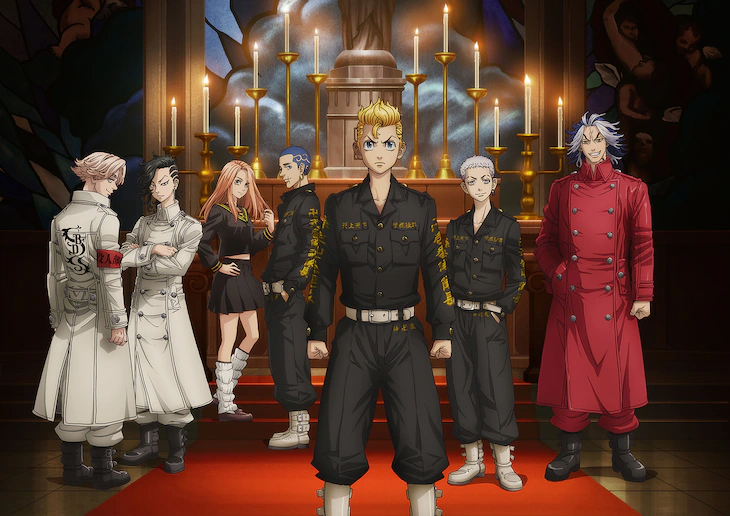
Get ready to mark your calendars because the highly anticipated Season 2 of Tokyo Revengers is finally premiering on January 7th as part of the Winter 2023 lineup of new anime releases. As some have been anxiously waiting to find out what happens next in this drama-filled series, here’s a quick recap of the first season and what to look forward to in the next.
What Happened So Far
It feels like an eternity since we last spent time in the world of Ken Wakui’s Tokyo Revengers. Toman and Valhalla now proudly stands at 450 people, with Kisaki hailed as a hero after the events of Bloody Halloween. Takemichi is now the leader of the first division while Chifuyu took over as his second-in-command. Then he travels to the present to learn that Toman has grown even more powerful and influential. However, in this timeline, Mikey has vanished and Draken has been executed with Kisaki left in charge. In the end, Kisaki kills adult Chifuyu and prepares to shoot Takemichi for opposing him for the past 12 years. He confesses to orchestrating Baji’s death and calls him “my hero” before the screen fades to black as a gunshot is the last sound left with the viewers.
What to Expect
The second season of the anime will adapt the “Christmas Showdown” Arc and will introduce a slew of new characters. Yet, there are also some major changes to the previous cast, as Tatsuhisa Suzuki, the original voice actor for Draken, was involved in a big cheating scandal and multiple suicide attempts. As a result, he has been replaced by Masaya Fukunishi. The new cast includes:
Mikako Komatsu will play Yuzuha Shiba.
Tomokazu Sugita will play Taiju Shiba.
Junya Enoki will play Inui Seisyu
Natsuki Hanae will play Kokonoi Hajime
Tasuku Hatanaka will play Hakkai Shiba
The next seasons’ new opening called “White Noise” has already been released with the song being performed by Official HiGE DANdism, which you can check out here:
Tokyo Revengers has become a popular series throughout the years and there’s a lot of excitement to see how they bring the second season to life. It’s upcoming release on January 7th will see the series. It’ll be made available on Hulu in the United States and on Star+ in the rest of the world. If you need to catch up, the first season is currently available on Netflix and Crunchyroll.
Not too long ago, we got our first tease for the upcoming second season of Loki. The story will pick up where we last left off, as Sylvie killed He Who Remains, a Variant of Kang the Conqueror, who was keeping the multiverse from branching out. It was our first meeting with Jonathan Majors‘s impressive take on the character that already left a lasting impression before we meet another Variant in Ant-Man and the Wasp. Quantumania.
We still have to wait a bit before we find out when to expect the release of the second season, but concept artist Wesley Burt took to his personal Instagram account to share a look at the finalized concept art for He Who Remains. He also pointed out that he was inspired by “a lounging Miles Davis at the end of time.” Of course, he also highlights the inclusion of He Who Remains and Immortus as inspiration from the comics.
It seems this work will be included in the upcoming Art of Loki book, which has traditionally been released alongside the various shows a few years later. So, it’s great that this tradition continues, and given how visually unique the Disney+ series was in comparison to the rest of the Marvel Cinematic Universe, it’ll be great to get a look behind-the-scenes at how they brought this unique vision to life. Now, we’re left with the question if Majors will return in the second season, as his Conqueror Variant was teased at the end of the series.
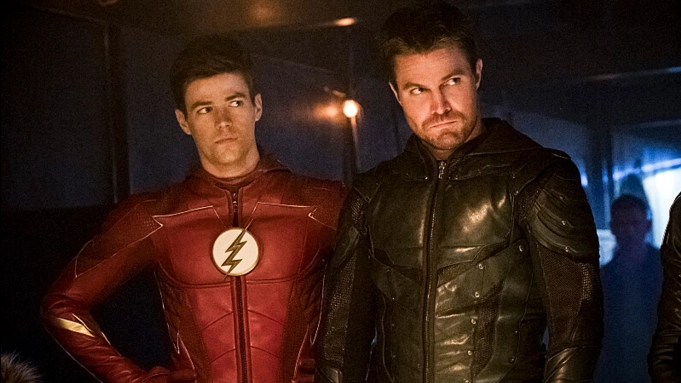
It seems like it’s pretty hard to keep Oliver Queen buried. Stephen Amell, cousin of True Jackson, VP star Robbie Amell and the actor responsible for bringing Green Arrow to life on television since 2012, has taken to his social media to confirm his return as the famed archer for The Flash‘s ninth and final season. He joins a slew of surprising comeback players in what’s looking like the end of an era for The CW’s slate of live-action DC properties. Javicia Leslie, whose Batwoman series was unexpectedly canceled after three seasons, will also reprise her role as Ryan Wilder in the last episodes of The Flash.
Amell teased the news on his Twitter account, posting a GIF of his character and Grant Gustin‘s Barry Allen from an earlier season with the caption “Of course I’m coming back.” He followed this with an Instagram image of himself on The Flash set with Gustin, saying, “When Barry calls…Oliver answers…”
The last time fans saw Amell as Queen was in the Arrow series finale, where the hero perished for – what viewers thought – was the last time. It’s not currently known what kind of role Queen will play in the last Flash season, but his return does not necessarily mean he’s playing the same Oliver that died in 2020’s Fadeout. The CW shows are notorious for their exploration of alternate worlds and timelines, and Amell has already played multiple versions of his protagonist across several series. A 2022 tie-in comic revealed there was a living variant of Queen on Earth-Prime, so perhaps that’s who Amell will end up appearing as.
A statement from The Flash executive producer Eric Wallace gives the final word on why the decision was made to bring Amell back for one last ride:
As soon as our final season was announced, we knew we wanted Stephen to come back and reprise his iconic role as Oliver Queen. After all, it was Oliver who originally launched Barry Allen on his heroic path.
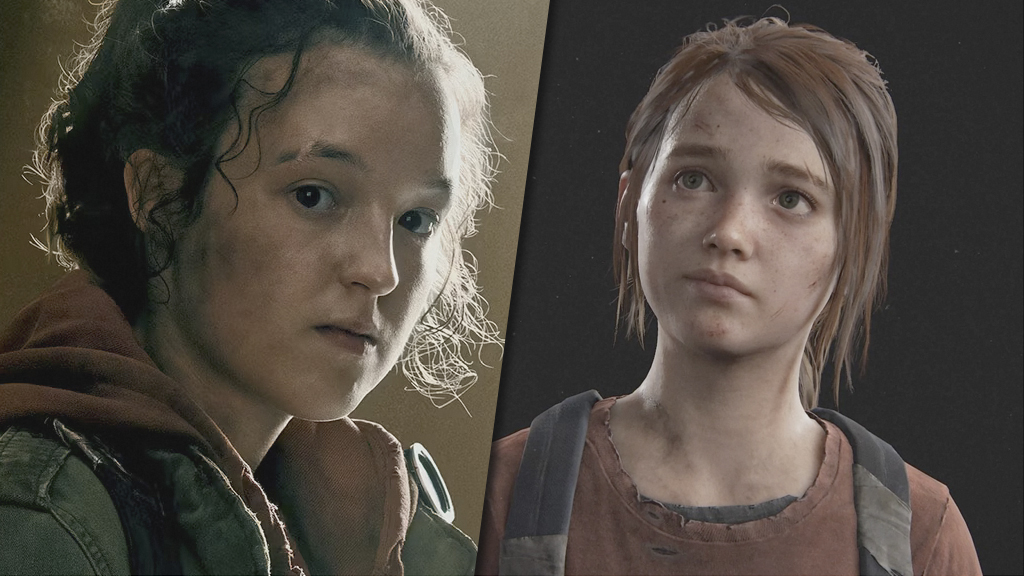
The Last of Us is almost here, as HBO brings the iconic gaming franchise to life. While they originally planned for it to be a film adaptation, Chernobyl‘s Craig Mazin ended up becoming an important part of pushing it toward a full-on HBO series. Now, we’re about to see Pedro Pascal and Bella Ramsey bring the iconic roles of Joel and Ellie to life. Surprisingly though, it seems that actress Ramsey was hesitant to take on the role.
I seriously considered that maybe I don’t want to be famous so I’m not going to do this show because it’s going to propel me to a place I don’t want to go to in terms of being seen and being known. I like to blend in and hide.
Bella Ramsey
Yet, it seems that Neil Druckmann, the creator of the original game series, instantly saw Ellie in her, which led to her getting the role for the HBO adaptation within a short period of time.
Bella felt so real. It was like Ellie realized in live action. It didn’t feel like watching an actor.
Neil Druckmann
We still have a little time before we get to see what Druckmann saw, but the teasers and trailers have been promising. She has the same energy that the character had in the original game, but she also has proven to have the range that may lead to an adaptation of the second season as well.
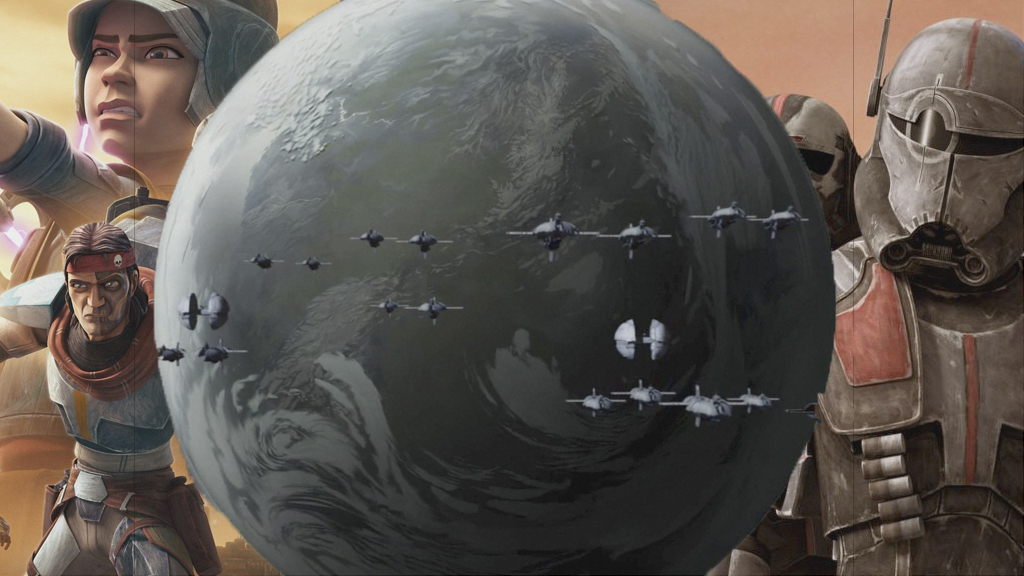
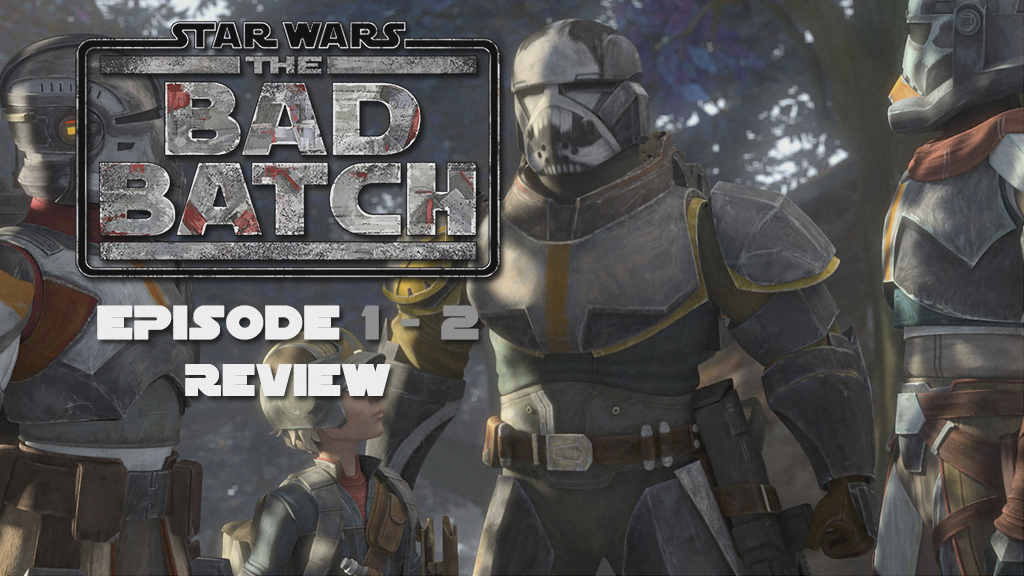
The Bad Batch are back and traversing the galaxy far, far away. Just as everyone expected, the premiere episodes of the animated series’ second season took the titular team of lovable rogue clones to places far and wide. What might have been a surprise, however, was where Dee Bradley Baker‘s Hunter and his comrades ended up. Spoils of War and its follow-up, Ruins of War, saw Clone Force 99 arrive on Serenno, a lesser-known planet that played a huge role in the events of Star Wars: The Clone Wars and several of it’s spin-off materials. Longtime fans of the franchise likely lit up at the mention of the planet’s name, but its status as a less-frequent setting in the Star Wars universe may have caused some confusion among casual viewers.
Serenno is a planet located in the Outer Rim Territories, placing it far away from the activities occurring in the central Core Worlds and the galaxy’s governance. As a result, Serenno essentially functioned with its own government for most of its history, making it a fairly independent location. According to legend, it was once ruled by the Sith Empire, until the eight Great Houses of the planet joined together to force the dastardly conquerors off world. The revolt was led by House Serenno, named for its patriarch, who was consequently named ruler of the planet. The people of Serenno also took to naming their homeworld after their greatest House, because apparently, a few honorary street signs wouldn’t have been enough.
House Serenno continued to rule the planet until, as The Bad Batch revealed, its societal demise following The Clone Wars. Its final leader was a man of complicated legacy and someone whose name should automatically ring a few bells for those who’ve seen the Star Wars films. Count Dooku, introduced in Episode II – Attack of the Clones and featured heavily throughout The Clone Wars series, was a member of the House Serenno family, ruler of Serenno, a former Jedi Master, and finally, the second-to-last Sith Apprentice to the legendary Darth Sidious.
Dooku was portrayed by the late Sir Christopher Lee in live-action and has been voiced by Corey Burton in animated form for over a decade. He was a major player in the events of the Clone Wars, founding the Confederacy of Independent Systems with other Separatist leaders and funding its infamous droid army with his family’s immense wealth. Tangentially, that makes Serenno one of the most important locations of the Clone Wars era, despite its minor usage in Clone Wars storytelling. It’s mentioned consistently, but has never been shown in live-action and was only the setting for a handful of Clone Wars episodes – seven, to be exact. It was also part of the plot for Star Wars: Dark Disciple, a novel based on an unproduced Clone Wars story arc, which would have given the planet more screen time had those episodes made it to air.
Count Dooku’s grand castle is the most recognizable aspect of Serenno among fans, as most scenes from The Clone Wars set on the planet played out in the villainous royal’s throne room. That room makes another appearance in The Bad Batch, which takes its time to flesh out the history of Serenno and give viewers their most comprehensive look at the Outer Rim marble yet. A native of the planet explains that Dooku was secretly using his people’s money to supplement the Separatist movement, which lead to an economic crisis they’ve not been able to recover from.
A huge benefit of projects like The Bad Batch is their placement in the universe’s timeline. The show’s existence between other major Star Wars properties gives it a chance to fill in the blanks where most audiences might not have even realized there was a space. Serenno and its past are important parts of Star Wars lore, and thanks to The Bad Batch, they have both now been threaded through multiple eras of storytelling.
While Rebels and Andor tell the story of how the early days of the Rebellion, The Bad Batch tells a darker, more grim story: one of the early days of the Empire. Set around 19 years before the Battle of Yavin, The Bad Batch takes place right on the heels of Order 66 and the end of The Clone Wars and puts on full display how the Empire began to grow into the type of tyrannical rule that characters like Saw Gerrera and Luthen Rael would ultimately seek to end. It’s animated, sure, but it’s no kids’ show, and Season 2 reminds the audience of that over the course of its heavy two-episode premiere.
After escaping from a mission gone wrong that serves to remind the audience of who is who on the team (and what their personalities are), the Bad Batch head back to their de facto headquarters on Ord Mantell. It’s a short reunion with Cid, their Trandoshan “benefactor”, as acting on a tip from Cid’s pirate friend, Phee (voiced by Wanda Sykes), the Batch finds themselves sent on a mission to a location familiar to fans of The Clone Wars: Castle Serenno, the home of Count Dooku and the now defunct (thanks to Vader) Separatist movement. With Dooku having lost his head, it seems the Empire has begun to collect his war chest and Cid wants her hands on whatever Clone Force 99 can get before it’s all gone. While Hunter isn’t too keen on the gig, the rest of the group is convinced it’s a job worth doing. Ultimately, Cid convinces Hunter with a bit of logic that sets the tone for one of the big themes of Season 2: the aggressive expansion of the Empire. With the Empire’s reach growing, this job could provide a big enough payday to get the team out of the game, giving them some freedom and providing a safe future for Omega.
While the Batch all agrees to head to Serenno, they aren’t all doing it for the same reasons. Echo agrees it was right to save Omega, but it has fundamentally changed their lives and while Hunter wishes to use the war chest to get out of the game to give Echo a better life, Echo believes the war chest should be used for…more war, only this time with Clone Force 99 taking it to the Empire. The Bad Batch aren’t the shining example of a modern family, but they are all each of them has and that includes Omega. The decision to keep Omega with them as they continue to run missions for Cid will certainly be a big part of the core of Season 2 and little time is wasted in reminding the audience that while she’s an enhanced clone (and still a big mystery), Omega is just a kid running the galaxy with some of its most wanted. To that end, Echo makes his point to Hunter that the life he’s trying to escape only exists because of Omega. Omega overhears and that sets into motion the events that lead to her being in danger quite a bit over the course of the two-episode premiere.
Once the headquarters for the Separatist movement under Dooku, Serenno has, like Kamino before it, been decimated by the Empire. The Batch’s mission to Serenno nicely explores the blurred lines between good and bad in a galaxy where everything has recently been upended. Echo’s desire to use the war chest to wage war confuses Omega, who can’t quite seem to understand how that’s any different than Dooku’s goals. Echo’s response of “depends on how we use it” doesn’t offer Omega the clarity she needs, but it also sets up events to come over the sophomore season of the series.
The mission goes a bit sideways, as you might expect, and the group gets split up. Omega, Tech and Echo find themselves in the company of Romar, a native of Serenno who survived the Empire’s ariel bombardment of the planet. Despite the extraordinary odds their facing, Omega’s insistence on completing the mission, which is a clear reaction to Echo’s comments about how she’s changed their lives, causes Romar to comment that this group of clones is much more like those still working for the Empire than they think. Romar continues to add some perspective to the group when he reminds Tech that he and many other inhabitants of Serenno were among Dooku’s first victims in building his rich war chest and that being a native of the planet makes him Serennian, not Separatist. Romar is a man, who like Hunter, can’t wait to put the past behind him, but that’s not something every Batcher is willing to do.
The two-episode premiere ends with the return of Season 1’s villain, Rampart, and a reminder of just how far the Empire is willing to go to establish its own version of order and truth to the galaxy. Rampart’s willingness to cover up the events of the Season 1 finale that saw Kamino destroyed are just a microcosm of the Empire’s “at all costs” approach and something that will certainly be an ongoing plot point in Season 2. It serves as a grim reminder of what these clones are up against as they try to make their own way in the galaxy. And ultimately “Spoils of War” and “Ruins of War” do a fine job of detailing how achieving that goal will be the Bad Batch’s toughest mission yet. The Bad Batch isn’t peddling hope; it’s building the world that almost ran out of it.
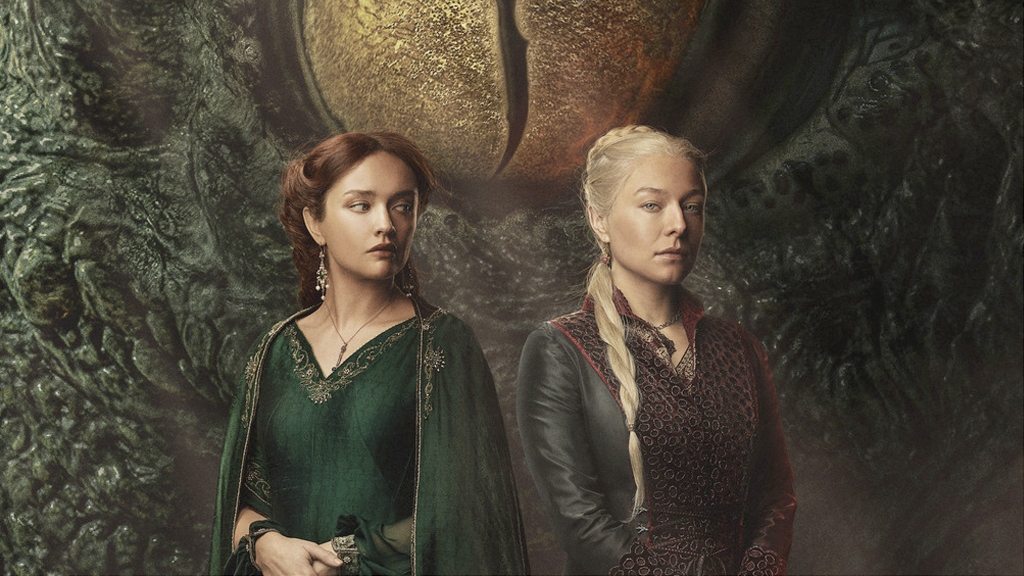
Shortly before the first season of House of the Dragon aired, one of its showrunners, Miguel Sapochnik, left the series. At the time, it left many scratching their heads on why exactly he ended up leaving the sure-fire hit series behind but most assumed he might have other projects he’s looking forward to tackle. Yet, it seems that the story is quite a bit different than initially expected.
Puck has revealed that the reason Sapochnik left House of the Dragon was due to his wife, Alexis Raben. HB seemingly denied her request of once again joining the producing team for the next season, which is surprising considering she already had a role in the first. She also appeared throughout four episodes of the series, but it seems that not allowing her to join the production was his main reason for leaving the HBO series.
There might be more details to the reasoning he left and why HBO would deny her involvement, but the show is still moving forward with a second season. Sapochnik’s farewell to the project was shared in a more positive light, but that could’ve just been a way to ensure this information doesn’t find its way online. It should be noted that Alan Taylor, a long-time Game of Thrones veteran, has joined the production around the time Sapochnik‘s leave was announced, but Ryan Condal remains as its sole showrunner now.
“Martial law” is such a funny phrase. At first glance, it definitely looks like “marital law”, but “marital law” and “martial law” are too very different ideas.
“Marital law” is something I joke about with Alex* – if you make me a promise, you stick to it.
“Martial law” is what happened to the country after Outbreak Day – a bunch of military assholes come steamrolling into town and take over, ranting about “maintaining order” and some other “here to keep peace” bullshit.
Unfortunately, their version of “peace” is what my political science classes would have described as “militant oppression.” The Federal Disaster Response Agency – FEDRA, if you’re lazy – and what was left of the government set up military rule in every Quarantine Zone nationwide once it was clear the situation was out of hand. We’re still in Buffalo, at the “Canalside QZ”, but we’ve heard about similar set-ups in Atlanta, Pittsburgh, Salt Lake City, Seattle, Denver, and Boston. Some of them are worse than others, and not all of them are still standing.
I’ve spent the better part of the last 6(!) years in QZ. Once the dust settled at UB, FEDRA raided the campus. I was huddled in that abandoned wing writing “Apocalypse 101”, the Great American Novel. According to the crumpled pages I just found at the bottom of an old bag, I made it to Rule #12 before I was forced into QZ and life regained a deranged sense of normalcy. I stopped thinking about “survival” and started thinking about keeping my head down. I watched FEDRA shoot innocents in the street. People I knew. For no real reason. All in the name of “civility.”
Now, though, it seems like I should start writing again. There’s a palpable sense of unrest in the QZ. They’ve told us there’s a food shortage, and we should only expect to receive half-rations for the foreseeable future. Anyone without the proper ration cards is on their own. Those of us they consider “able-bodied” are drafted and forced to work details inside and outside of the city. I work the wall. Shoot infected on sight. It’s pretty miserable, but these days, what isn’t?
Alex made friends with (smuggles alcohol to) one of the FEDRA agents, and when he drinks, he talks. QZ radio signals are dropping like flies. Recons say it’s hordes of infected and folks who’ve had enough. We’ve heard more and more about a rogue militia group attacking QZ’s, calling themselves “the Fireflies”. They want democracy back, and they want a cure for whatever the hell all of this is. Them and everyone else.
Thing is, if something like that happens here, Alex and I won’t be able to rely on QZ walls to keep us alive anymore. As bad as this place is, at least it’s kept out the infected. Luckily, should we end up on our own, my time faithfully guarding our hollowed grounds has taught me a thing or two about what we’d be up against. I was thinking about jotting down a guide for Alex to have, keep him safe, and then I remembered this journal. So, without further ado, my latest additions to “Apocalypse 101.” For everyone to enjoy. Six years in the making.
Types of Infected and How to Kill Them
There are really only a couple ways to be infected. You get bit, or you breathe in a bunch of parasitic spores that make you hack up a lung and turn your brain into plant-powered, flesh-eating mush. Once you’re infected, there’s no going back. That’s why FEDRA agents normally just shoot suspected infectees where they stand. False positive or not.
Runners
If you’ve got that Cordyceps in your system, you’ve got two days left of being you. After that, you’re one of them. You’ll lose control of yourself. Irritable, violent, twitchy. Skin pale, covered in lesions. Eyes glossed over, hair falling out. We call infected in this early stage “Runners“, because, well, they’re still fast. Agile. Erratic.
Runners are the easiest type of infected to kill, so long as you’re able to keep them separated. A horde of them will overrun you quick. It’s too much flailing at the same time. If you see more than a few Runners in any area, approach with caution and take them out silently.
Silence and patience are the keys to everything outside the walls.
All types of infected are triggered by loud noises; they make them go nuts. Most of them can’t see, but Runners can. Stay out of their line of sight unless you think you can take them on. Like I said, they’re pretty easy to bury. Aside from an insatiable need to eat every living thing they can find, they’re still mostly human. That means anything that could kill a person will kill a Runner. Gun to the torso, knife to the throat, baseball bat to the head. You name it.
It’s smart to clear your area of Runners because if you don’t, they’ll become something a lot worse. That being said, killing them has probably been the least enjoyable experience of my life. They’re still mostly human, which means a little bit of who they used to be is still in there somewhere. Runners cry, and they moan, and they screech. They know what they are now, but they can’t stop it. Some of them won’t even attack. They just stand there, hunched over, fighting themselves. It’s horrible. Like putting down a sick dog.
Stalkers
The Last of Us™ Part II_20200708100013
Honestly, my least favorite infected type. Insanely creepy. This is what you become in the weeks and months after infection. Somewhere between human and monster. You’ll likely hear a “Stalker” before you see them, and by the time you see them, it may be too late.
At this point in their infection, the Stalkers have begun growing a sort of fungal armor on their bodies. They’re stronger too, so you’re not gonna be able to kill them with your fists like a Runner, or sneak up behind them for a choke-out. In fact, stealth is probably not an option for you here at all. That’s their game, and they’re great at it.
Stalkers still have a little eyesight and they’ve got their speed. They love dark rooms and places to hide. The Cordyceps has spread to their neck and faces, so they can’t make human noises anymore. It’s just croaking sounds, and they use them as a form of echolocation. Once they know you’re there, they’ll start up their modus operandi. They hide behind corners, in walls, and crouch where you can’t see them. That croaking is the only thing that gives them away. When you turn your back, they’ll sprint to the next hiding spot. Closer and closer.
The best way to combat them is with a strategy of your own. Don’t charge them, or try to fight them head-on. You’ll lose. They travel better than you. Stay back, set traps, and plan every movement. If you can lure them out of hiding and into a pipe bomb, do that. If you can’t, strap up with the heaviest weapon you’ve got and wait until they jump at you. Follow the croaks and the one glowing eye until they’re near enough to fire a shotgun at. Just know what else might be in the room with you, and what the sudden sound of an explosive might do when it goes off.
You can throw bricks and bottles around to confuse them if you’d like. Make them think you’re somewhere else. But that doesn’t always work.
Clickers
These are the famous ones. The way people talk about them in QZ’s, you’d think they were the only ones. They’re certainly the most annoying. “Clickers” are what you get after about a year of letting human DNA stew with Cordyceps fungus. Stronger than the average person and nastier than a toilet after Mardi Gras.
Clickers get their name from the way they survive. With no eyes, they make clicking sounds to get around and hunt for prey. Echolocation, like the Stalkers. Only at this point, they’re more plants than humans. Shocking to look at. Usually very little clothing, on account of the fungal growths tearing through it all. No faces, just mushroom-like masses on top of wet cryptid bodies. They do have teeth, though. And they’re sharp.
All those growths make for a pretty solid form of protection. You could shoot one point-blank in the head, and the shrapnel wouldn’t even puncture the skull. You either need a lot of ammo or incredible precision to bring a Clicker down. If you can move quietly and get close, you can slip a knife, or shiv, under their fungal plating for an instant kill. This also applies to immaculate arrow shots. With no vision, you don’t have to hide from them. You just might want to avoid making a peep if they’re turned in your direction. Typically, a Clicker will just stand there and claw at it’s own face until it thinks about dinner. If it knows food is nearby, it won’t leave until it’s full.
Like any tree or garden before them, Clickers are very susceptible to fire. A well-tossed Molotov cocktail or fully-functional flamethrower will put an end to their misery if you can manage to get your hands on that sort of thing. Otherwise, it’s recommended you don’t engage unless well-equipped to blow through fungus. Especially if there’s more than one Clicker in the area. That’s just asking to die.
Bloaters
A “Bloater” is a Clicker left to rot for too long. Years of fungal build-up. Incredibly rare, and something you should hope never to see. Their name is well-earned. Massive, big-old turds. I’m talking bear-sized or bigger. Like, “you-stand-very-little-chance-of-walking-away” large.
Most of the tactics that apply to Clickers also apply here, only on steroids. Nobody has the kind of ammo needed to shoot one of these things to death, so your best route of action is to turn tail and get your ass out of wherever you are. If that’s not in the cards, you better hope you have specific, armor-piercing bullets loaded (a hunting rifle is surprisingly effective) or another tank for that flamethrower. Don’t even think about going hand-to-hand with a Bloater. It will literally rip your jaw out of your face and start beating you with it. These guys are brutal, physical, and hungry.
Keeping your distance won’t work against Bloaters either. It’s better than facing them up close, but they’ve got a special kind of growth that feels designed by Satan just to screw with us. A Bloater can grow bulbs of mycotoxin on its body, and if it knows you’re there, it will start whipping them across the room at you until you can’t breathe anymore. Rough.
Their only real weaknesses are these: they’re dumb and slow. You can trick them into hurting themselves if you’re smart enough about it. Let them ram into walls or walk into pools of gasoline. Fun stuff if you’re sick in the head.
Others
We’ve covered the main four stages of infection, but I have heard tell of other variants roaming different parts of the country. “Shamblers” are essentially just soaked Bloaters, which apparently exist in coastal cities. They’re so full of liquid they just spray their mycotoxin directly from their torso, no bulbs required. They explode when they die, too. So stay clear after they hit the ground.
The craziest rumor I’ve heard is that some infected can get all tangled up with each other, and grow into a single terrifying mass. Never seen it myself. No idea how you’d handle that predicament. Would probably have to take myself out if I ever came across it.
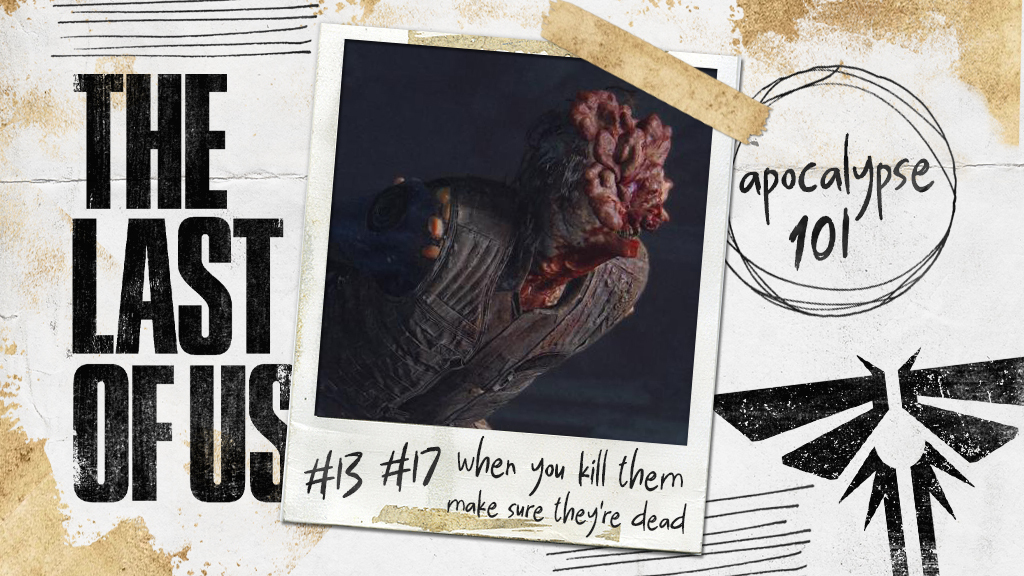
Rules #13-17, When You Kill Them Make Sure They’re Dead
Still reading? Good. All of that was wildly important. The infected are no joke, and knowing how to deal with them is one of the most important survival skills a person can have. In order to emphasize this, I’ve grouped the last four rules – each type of infected and how to kill them – under one umbrella. I’ve also named this section of “Apocalypse 101′ after something I make Alex promise every time he sneaks out of QZ. It’s part of our “marital law.”
When you kill them, make sure they’re dead.
*(I guess it’s been a while since I last wrote in here. I’ve got some life updates! Remember that shuffling I heard in the abandoned wing of UB? That was Alex. I wasn’t alone in there. He found himself a hiding spot and stuck to it, only leaving for supplies at night. He’s like a very handsome Stalker, who never once tried to kill me. We agreed to help each other survive, and found ourselves sharing a bed not long after. He’s been the one thing I’ve had since Outbreak Day. My only family. He hasn’t been drafted yet, but he keeps his days busy smuggling supplies in and out of the QZ. Big network of that growing underground. I hate it, but I trust him. We both know what we’re doing.
Almost makes me think we’d be better off living with the Clickers than FEDRA…)
Netflix has already been in the news for canceling another one of their major releases, but a report indicated it might even lose its biggest new release yet. The Addams Family reinterpretation took Wednesday Addams out of her usual family dynamic and put her in the middle of a murder mystery storyline at a boarding school. It was a massive hit with viewers and ended up even competing with Stranger Things for who holds the crown of most viewed series in its premiere week.
Yet, there was some uncertainty with Wednesday due to MGM being involved with the production. Metro-Goldwyn-Mayer’s recent purchase by Amazon had some wondering if they might want to bring this hit series to their own streaming service, Prime Video. A report by The Independent hinted at this being a grim possibility, but a new article by IndieWire seemingly debunks these claims.
They highlight that the deal between Netflix and MGM was done long before the studio was purchased. While they acknowledge that it’s not unheard of that a series jump to a different streaming service, but that this may simply be reactionary to the lack of renewal for the hit series. The various cancelations simply add to that usual concern similar to how theories started to make the rounds when The Sandman’s renewal was dragged out by the streamer. For now, it seems like the series is safe on Netflix and we’ll just have to wait for
We use cookies to improve your experience on our site. By using our site, you consent to cookies.
This website uses cookies
Websites store cookies to enhance functionality and personalise your experience. You can manage your preferences, but blocking some cookies may impact site performance and services.
Essential cookies enable basic functions and are necessary for the proper function of the website.
Name
Description
Duration
Cookie Preferences
This cookie is used to store the user's cookie consent preferences.
30 days
These cookies are needed for adding comments on this website.
Name
Description
Duration
comment_author_email
Used to track the user across multiple sessions.
Session
comment_author_url
Used to track the user across multiple sessions.
Session
comment_author
Used to track the user across multiple sessions.
Session
Statistics cookies collect information anonymously. This information helps us understand how visitors use our website.
Google Analytics is a powerful tool that tracks and analyzes website traffic for informed marketing decisions.
Contains information related to marketing campaigns of the user. These are shared with Google AdWords / Google Ads when the Google Ads and Google Analytics accounts are linked together.
90 days
__utma
ID used to identify users and sessions
2 years after last activity
__utmt
Used to monitor number of Google Analytics server requests
10 minutes
__utmb
Used to distinguish new sessions and visits. This cookie is set when the GA.js javascript library is loaded and there is no existing __utmb cookie. The cookie is updated every time data is sent to the Google Analytics server.
30 minutes after last activity
__utmc
Used only with old Urchin versions of Google Analytics and not with GA.js. Was used to distinguish between new sessions and visits at the end of a session.
End of session (browser)
__utmz
Contains information about the traffic source or campaign that directed user to the website. The cookie is set when the GA.js javascript is loaded and updated when data is sent to the Google Anaytics server
6 months after last activity
__utmv
Contains custom information set by the web developer via the _setCustomVar method in Google Analytics. This cookie is updated every time new data is sent to the Google Analytics server.
2 years after last activity
__utmx
Used to determine whether a user is included in an A / B or Multivariate test.
18 months
_ga
ID used to identify users
2 years
_gali
Used by Google Analytics to determine which links on a page are being clicked
30 seconds
_ga_
ID used to identify users
2 years
_gid
ID used to identify users for 24 hours after last activity
24 hours
_gat
Used to monitor number of Google Analytics server requests when using Google Tag Manager
1 minute
Marketing cookies are used to follow visitors to websites. The intention is to show ads that are relevant and engaging to the individual user.
Pinterest Tag is a web analytics service that tracks and reports website traffic.