Tag: Vision

  • Why ‘Vision Quest’ Would Be The Perfect ‘WandaVision’ Spin-Off

    Why ‘Vision Quest’ Would Be The Perfect ‘WandaVision’ Spin-Off

    Earlier today, it got revealed that Marvel Studios is starting to develop spin-offs for their various Disney+ shows. Hawkeye hasn’t even aired, but the newly introduced character Echo is already getting her series. Of course, this makes you wonder what other characters may potentially get a continuation on the streaming platform. Well, the more I thought about it, I came to realize that WandaVision offers a jumping-off point for a classic storyline that barely even gets scratched in the series. As such, we might see a series inspired by the title of the 1989 comic-run, Vision Quest. It would follow White Vision’s travel of accepting his true identity after the finale.


    Episode 290 - Back to the Future? , Star Wars and GOT, Jupiter's Legacy (Netflix) and WandaVision (almost done) - Podcast4Scifi


    The original storyline by John Byrne introduced a kidnapped and memory-wiped version of the Synthezoid. It was the storyline where the true identity of their children got revealed. We covered this aspect in the first released series by Marvel Studios. So, the upcoming series would pick up after the bout of philosophy. After discussing the classic philosophy of the Boat of Theseus, the two distinct versions of Vision start to bond over their existence. In a way, the version that Wanda created through her grief shares his memories with White Vision, and he declares: “I am Vision” before jetting off into the sky.

    The spin-off would take place directly afterward. We see White Vision waking up anew in an unknown world. Even with his memories restored, he is uncertain what to make of his existence, so he sets out to retrace his steps. He travels the world realizing how much has changed. It creates a disconnect between the memories he has and his urge to feel a connection with them. Sokovia is just a crater, but he isn’t there for the former city. Vision visits the forest where he had his last confrontation with his creator, Ultron. He starts to retrace his steps and recovers the bot that got left behind at that time. Only remnants are left, but it reveals that Ultron was still active in the empty shell.
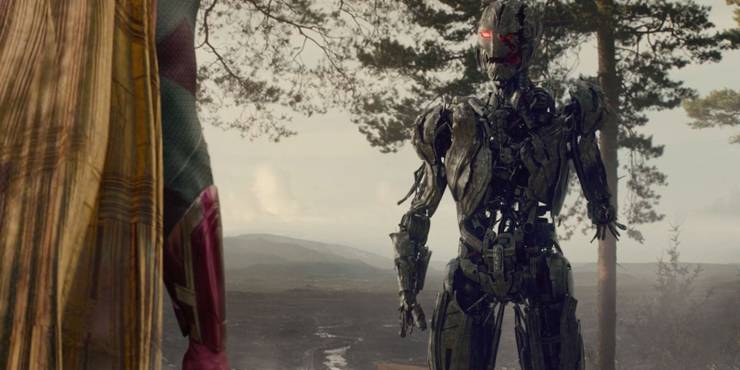


    Avengers: Did Vision Actually Kill Ultron In Age of Ultron?


    Together, they start to travel the world as they discuss the two opposing views of where the world is heading. They travel to New York City, where they see the former Avengers Tower in its new design from Spider-Man: Far From Home. They both start questioning how much the world has changed and if they can find a home in itUnlike other series, his story is more of a philosophical discussion on his existence. The conflict with Ultron comes from him questioning if Vision even is a personality. Unlike his WandaVision counterpart, he is trying to find the emotions hidden within the memories he has made. He ends up forming a bond with the remnant of Ultron as they start to uncover their humanity through each other’s company. If Marvel Studios really needs a villain, they could include Hayward trying to regain his former possession. Yet, I believe that this series doesn’t have to run for long, but would be a perfect short intermission before Vision makes his next major appearance.
  • How WandaVision’s 1980’s Episode Does The Sitcom-Meets-MCU Thing Right

    How WandaVision’s 1980’s Episode Does The Sitcom-Meets-MCU Thing Right

    After taking a break from the inner workings of Westview to explore the goings-on outside the town, WandaVision picked up right where it left off in sitcom history and tackled the 1980’s “On a Very Special Episode…”.

    I discussed at length in my “Now in Color” analysis about how the time period of the 1970s is incongruent with the episode’s pregnancy and childbirth storyline. People were still giving birth in that era, obviously, it just wasn’t as common a trope seen in sitcoms as the decades before and after it. Fortunately, this episode’s 1980’s theme works very well with the plot it plays backdrop to, and goes beyond period-accurate clothing, a Growing Pains living room replica, and a nice homage to the classic intro of that show and other 80’s sitcoms like Family Ties and Full House. This is the part of WandaVision I’d been looking forward to the most; the sitcom is in full swing but now we have the MCU mystery to juxtapose it against. The choices made in emulating and subverting tropes often seen in 80’s media are a key part of the story; they’re less fluffy and more meaty than some of the antics seen in earlier episodes.

    Kids Grow Up So Fast

    Image result for wandavision billy and tommy


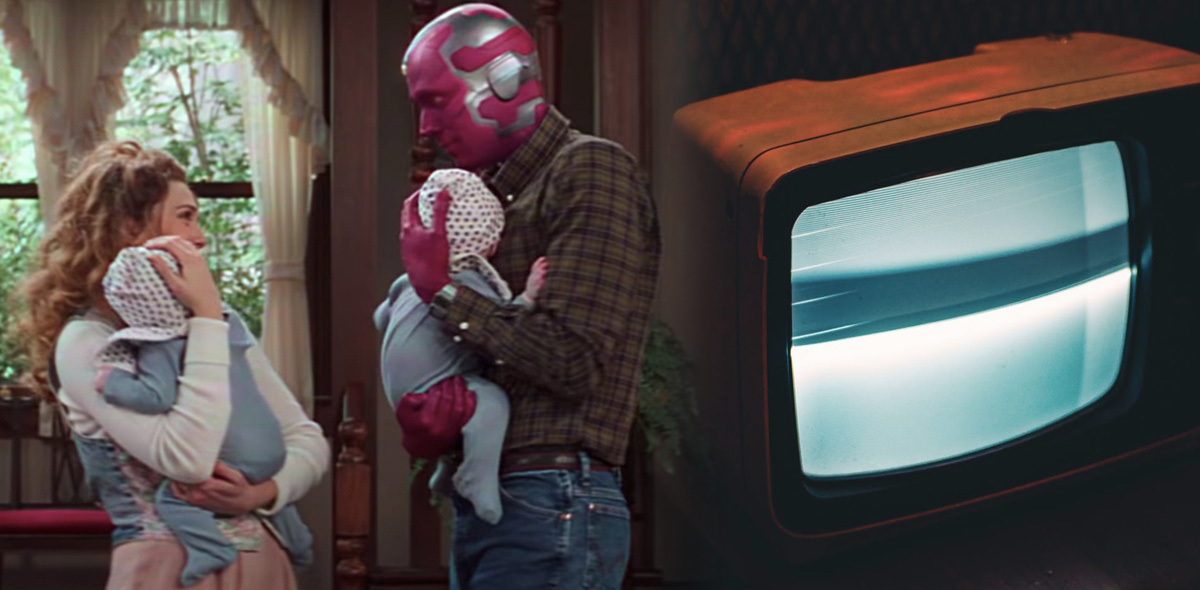
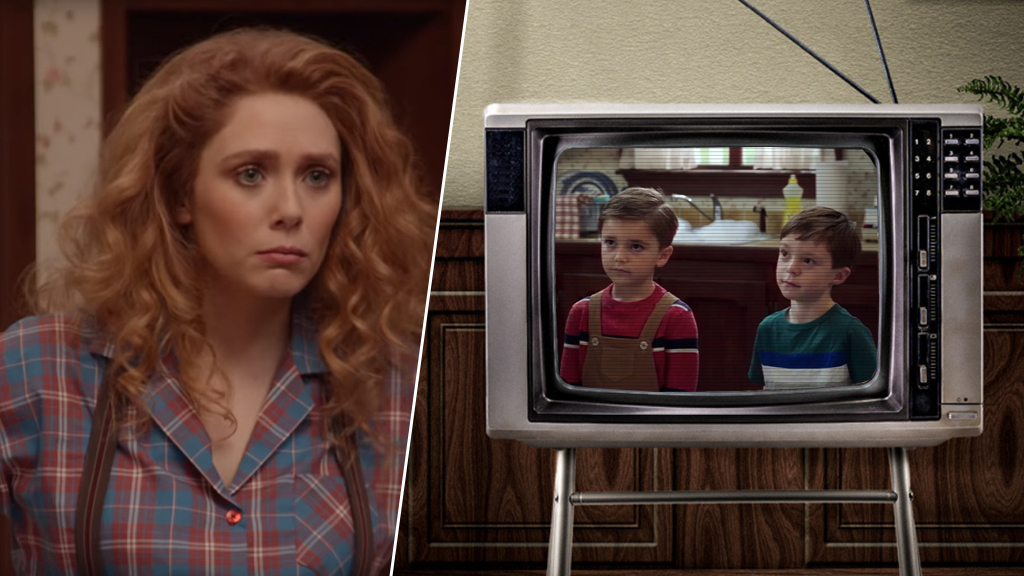
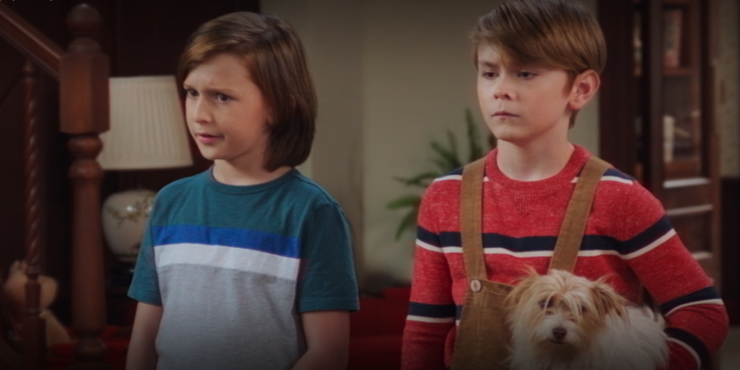
    To start off, we get to see Billy and Tommy at three different ages in this episode: babies, young children, and 10-year-olds. The babies suddenly advancing a few years in age during the show’s cold open is a nod to how many old sitcoms would introduce a new baby to the central family unit only to age them up a few years the next season, but it’s also a key part of the plot, as is the inclusion of the “can we keep him?” trope with the dog. Hopefully, this episode made a lot of viewers understand why Marvel chose to go all-out on the sitcom stuff and that it’s more than just a stylistic choice.

    The twins are 10 years old for most of the episode, which is just the right age for them to learn one of the cheesy life lessons that were a hallmark of 80’s family media, complete with some gentle, sappy music to underscore it. But of course, despite being the one to deliver said lesson to her children, it’s Wanda who is having the most trouble applying it to her life. While Westview is supposed to be an idyllic and quaint town, there are some sad things that can’t be fixed even there. But Wanda knows there’s a world outside of Westview, and things are a lot more complicated outside her self-imposed bubble. She says one thing to the boys about not being able to revive the dead, while simultaneously doing the opposite of what she’s preaching with Vision.

    The Bubble is Ready to Pop

    Wanda obviously wants everyone in town – especially her family – to live in ignorant bliss, but the façade is starting to crack. The S.W.O.R.D. team is figuring out increasingly effective ways to break in (this week they sent in what they wanted using technology from Westview’s current era so it wouldn’t be altered upon entry) and Vision is catching on to what Wanda is doing. The biggest subversion of an 80’s trope in this episode comes when Wanda rolls the credits on Vision’s concerns about their life but he continues his confrontation anyway, and eventually, the credits stop. Sitcoms may be known for their ability to resolve any problem in half an hour, but this scene makes it clear that those days are over in Westview.

    In discussing the episode’s presentation of how sitcom tropes aren’t really true-to-life I have to mention everyone’s favorite neighbor, Agnes. Her frequent and well-timed stops by Wanda and Vision’s home are still humorous, but Vision’s comments about how she shows up with exactly what the family needs, exactly when they need it point to something being up with her. We see early on in this episode that she definitely knows what’s up to a degree, but it seems like she’s more attuned to Wanda and her family more than everyone else in Westview and Vision pointing out how odd her convenient behavior is means we’re going to find out more about her down the line.

    WandaVision only has two more decades to cover (well maybe three if the 2000’s and 2010’s are combined). If these kinds of parallels between the era and the situation continue, the cynicism of the 1990’s and beyond is going to play a role in these next episodes and things are going to break down even further.

  • Where ‘WANDAVISION’ Soared – and Slipped – In Paying Tribute to the 70s

    Where ‘WANDAVISION’ Soared – and Slipped – In Paying Tribute to the 70s

    This week’s installment of WandaVision took us to another decade as the story was set in the fully-colored sitcom world of the 1970s. The transition from the black-and-white palette of the two premiere day episodes to this comparative rainbow of an aesthetic was far from the only change in the manner the decade of choice’s sitcom elements played into, though, so let’s take a look at how WandaVision tackled the era of the Third Great Awakening.

    Now in Color

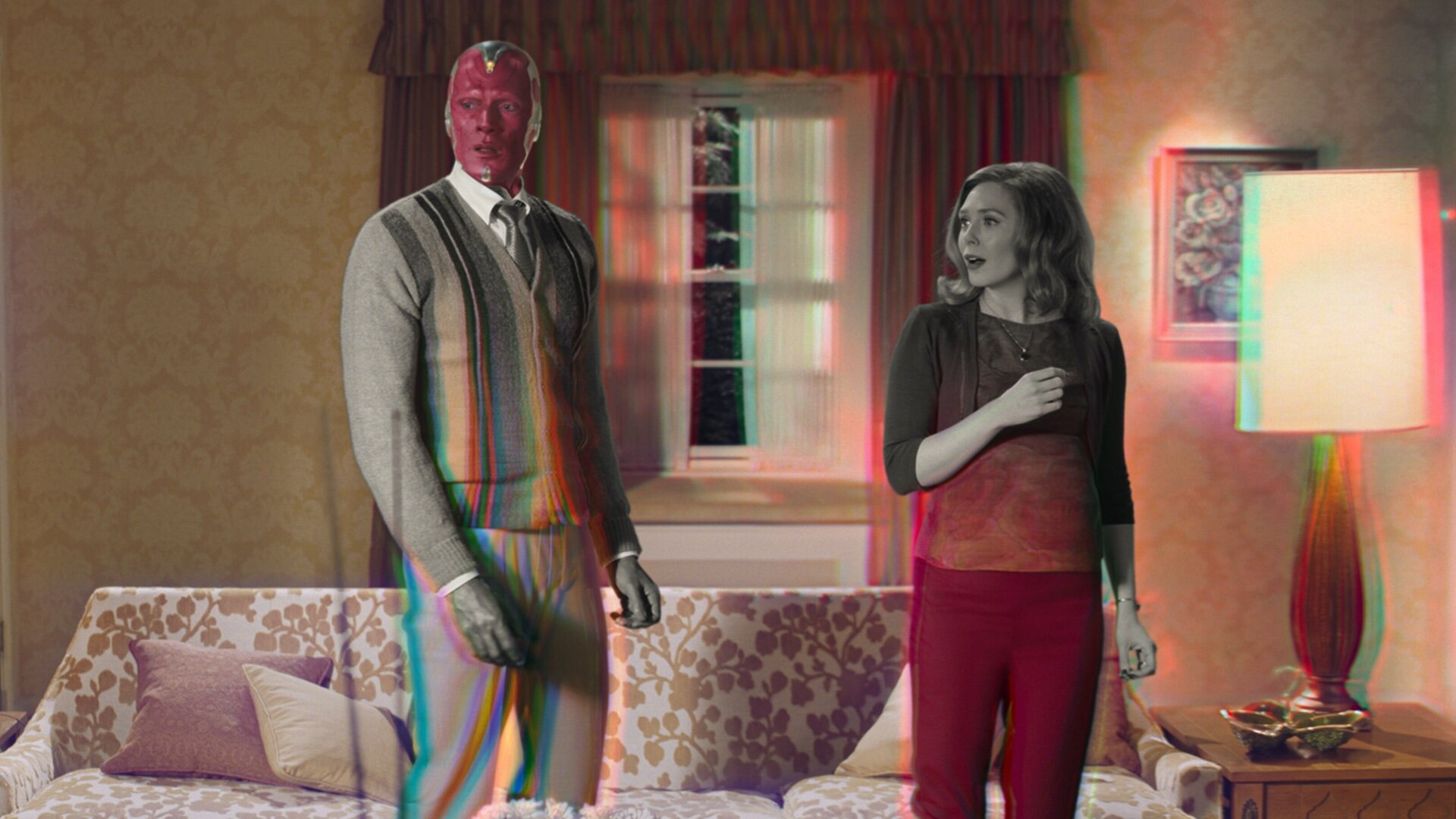
    I’ve already mentioned how this episode was the first time during the series in which we saw color other than the credits and ending of Episode 2. I appreciated that the palette of the 1970s was different from the one for the scene we saw at the end of the 1960s. That one was more muted with lots of neutrals like white, beige, and plenty of shades of brown, with only the colors seen on the characters and their clothing really popping out (most notably, the purple of Vision skin and the red of Wanda’s lips and clothing).

    Conversely, the 1970s is full of bright hues from Wanda’s multicolored striped number to many of the walls in the house. However, what I appreciated about this was that the designers went with colors that were particularly big in that decade, with plenty of yellows and oranges abound, as well as some darker greens and lighter blues. Here’s hoping that now that the show is in color, these deliberate palette decisions will continue every week to match the era.

    A Less Derivative Approach

    Aesthetically, the episode does a bang-up job at capturing the 1970s, especially the hairstyles and aforementioned color choices. When it comes to the area of sitcom-specific material, though, the episode is pretty light on that compared to the first two. A lot of Marvel fans have been waiting for more emphasis on the action and mystery elements of WandaVision, and while we got that this week the majority of the show was still rooted in the sitcom antics but didn’t feel like it was supposed to be paying homage to other shows for the most part.

    There are only two very obvious references to specific shows here: the house inspired by The Brady Bunch (which isn’t quite an exact recreation but it’s clear that an homage to the show is what they’re going for) and the theme song similar to The Partridge Familys “Come on Get Happy”, which can actually be heard in Marvel’s own Ant-Man and the Wasp. Unlike the previous two episodes it’s mostly just the music that’s similar; since the entire Partridge Family opening sequence consists of animation and stylized photos the only specific visual emulated in this opener is The Mary Tyler Moore Show’s sprawl of colored copies of the program’s name before transitioning into live-action footage.

    Unlike the first two decades, there’s no specific episode of a classic 70’s series like The Brady Bunch or The Jeffersons I could point to as the inspiration for this episode’s storyline. It seems like it’s almost supposed to be an homage to pregnancy and childbirth storylines, which have been present on sitcoms ever since their inception (though this episode is far enough along into the decades to allow the characters to acknowledge the pregnancy directly without having to dance around it with terms like “expecting” like they did back in the 1950s). I think this is actually a better method as it allows WandaVision to carve out its own identity rather than present itself as simply a tribute to old shows, but to do this after two episodes with more specific references makes this one feel as if there’s just a little something missing and I wish they would have just gone their own way a bit more from the get-go.

    The Dilemma of The Decade

    As I said, I appreciate the show going its own way with this episode but I think part of the way the sitcom elements contribute to the overall story is each potentially highlighting or offsetting a certain mood or attitude present in its episode. Ideally, this wouldn’t be directly lifting a story from a sitcom episode from that era, more like how the “wholesome” 1950s showcased Wanda and Vision’s innocence to the whole situation, and the changing attitudes of the 1960s taking the episode from silly fun to giving us (and the characters) a bit more of a hint as to the overall plot; the beds moving together and color being added to this world is intercut with clues as to what might really be going on.

    This sort of thing isn’t really present in the 70’s episode, but the creators were probably in a tough spot here. The sitcom eras naturally have to go in order (at least for now, since it appears Wanda will discover the ability to mix them up at some point as showcased by some of the trailers) so the birth of the babies had to happen now. But unlike the decades before and after it, the 1970s didn’t really have a lot of iconic sitcoms with babies in them, even ones focusing on family dynamics like the aforementioned Brady Bunch and Partridge Family.

     Women had also gained many opportunities in the working world by this point (which was nodded to in this week’s WandaVision via Geraldine telling a story about her job promotion) and things like divorce and single-parenthood were much less taboo. Therefore, a lot of the most popular shows of the era were workplace sitcoms like The Mary Tyler Moore Show, politically charged ones like All in the Family and Maude, or shows featuring non-nuclear family living situations like Diff’rent Strokes, Three’s Company, or The Odd Couple. So it’s understandable why the episode’s storyline doesn’t utilize a lot of 70s-based tropes, as they didn’t really fit with the whole childbirth plot.

    Hopefully, WandaVision will be able to find a nice balance between paying homage to shows of the past, telling its own story, and including more creepy and mysterious elements in its remaining three sitcom era-based episodes.

  • Analyzing the Influences of the 50s and 60s Episodes of ‘WANDAVISION’

    Analyzing the Influences of the 50s and 60s Episodes of ‘WANDAVISION’

    WandaVision has finally premiered on Disney+, which means we’ve finally got our first real showcase of the way the cast and crew incorporated various sitcoms into the story. Each of the first two episodes was not only rooted in a different decade, but a specific show from that decade…well, sort of.

    The 1950s

    Did You Catch This Easter Egg in the WANDAVISION Trailer? - Nerdist

    Episode 1 begins the series in the era which marked the dawn of television sitcoms: the 1950s. I was expecting a lot more imagery and references to the most iconic of 1950’s sitcoms, I Love Lucy, and that it would be the main inspiration behind the episode, but that show has been parodied and referenced so much that it seems almost like a cliche at this point and to do too much of that would have probably felt cartoonish.

    So I was totally game to see different way of taking on the era. But it was odd that the main overall inspiration for the 1950’s set episode is clearly The Dick Van Dyke Show…which first aired in 1961.

    Thankfully, the clothing, manner of speech, and music (“Yakety Yak” came out in 1959) are all grounded in the intended decade. The main things inspired from The Dick Van Dyke Show are the house set and the episode’s plot. While the storyline isn’t directly lifted from the series, the very first episode of Dick Van Dyke sees the show’s central couple attend a dinner party in order to impress the main character’s boss and being coerced into entertaining the guests at the event.

    The other element of the episode that is reminiscent Dick Van Dyke’s is the theme song, from the similar music and tune to the imagery, specifically the moment with Vision trying to carry Wanda into the house bridal-style but dropping her as he walks through the door without opening it. (On Dick Van Dyke the bridal carrying is ruined by tripping upon entering the house).

    The 1960s

    WandaVision Episode 2 Recap: 1960s Magic, for the Children | NDTV Gadgets  360

    The creators of WandaVision probably elected to pass off The Dick Van Dyke Show as a 1950’s series so they could reserve the 1960’s episode for the show most obviously suited to a show about Scarlet Witch, Bewitched.

    The references to Bewitched in this episode are similar to that of The Dick Van Dyke Show in the previous one. The set is very similar to the one seen on the classic sitcom, and the theme song for this era of WandaVision is mostly instrumental and the video for it is entirely animated. While Bewitched is the show most famous for this theme song format, several others of this era used it as well, including I Dream of Jeannie and Angel.

    Like the first, this episode’s plot also takes inspiration from the show it’s emulating; the Bewitched episode “It’s Magic” sees Samantha, the “witch” referenced in the show’s title, subbing in for a magician’s assistant at a charity show and secretly using magic in order to help him perform successfully despite his drunkenness.

    Another aspect of this episode’s storyline that also references Bewitched (and many other shows that were produced during the 1960s) is the change from black-and-white to color; Bewitched similarly began its run in black-and-white, but switched to color a few seasons into its run in 1966.

    Not a Crutch, But a Tool

    What I’m finding interesting about the sitcom elements of WandaVision is that some of the more minor references aren’t necessarily from shows that were on the air during the episode’s set time period. At one point in the first episode, Agnes brings a pineapple over for Wanda to use in the dinner party’s dessert, which some have speculated to be a reference to “The Pineapple Incident” on How I Met Your Mother (2005-2014). Later in the episode, a lobster appears as a door-knocker (which was not on the door when it was opened earlier in the show) which could be a reference to the famous lobster/soulmate comparison on Friends (1994-2004).

    So far it appears that WandaVision isn’t necessarily trying to make a lot of specific references to a bunch of famous sitcoms (other than the one inspiring the episode’s overall aesthetic and tone) but incorporating various tropes and using the style of the genre to tell its own story, which is ultimately the wisest decision for a show that will ultimately help propel the MCU forward.

  • Vision: The Story So Far

    Vision: The Story So Far

    After a year-long hiatus, WandaVision is ready to kick off the MCU’s Phase 4 in a massive way. So, we thought it might be a great time to recap fans on the various big players that will return in the upcoming series. In this article, we’re going to focus on a character that has been a part of the MCU since its conception back in 2008’s Iron Man. What once started as a simple voice-over job turned into something much bigger. So, without further ado, let’s kick off our blast to the past by exploring Vision’s history in the MCU.


    Vision was once Tony Stark’s artificial intelligence known as Just A Rather Very Intelligent System. Of course, it was an acronym inspired by his father’s butler, Edwin Jarvis. He ran security at Stark’s home before becoming an essential part of his Iron Man suit. It wasn’t until Avengers: Age of Ultron that he would become the android we know and love. After believing Jarvis got destroyed by his newly created A.I. known as Ultron, Stark found him subconsciously protecting nuclear codes. At the same time, Ultron created an organic body that would become his new vessel. Well, that was until the Avengers got their hand on it and decided to upload J.A.R.V.I.S. into the system. With some help from Thor, Vision is born and greets a new world. He went on to aid the rest of the Avengers in the Battle of Sokovia and got the upper hand above Ultron before joining the team officially. 

    In Captain America: Civil War, Vision acts more like the voice of reason (and inspirational quotes), convincing the Avengers that registering for the Sokovia Accords is a reasonable and smart decision. Trying to reduce tensions after Wanda lost control in Lagos, Vision was assigned to watch over her at the Avengers headquarters. During that time, the two managed to bond over their powers, the Mind Stone and Paprikash. Eventually, Hawkeye came in to recruit her for Cap’s side, but not without Vision trying to stop them. These events led to Wanda making the choice to temporarily incapacitated Vision and escaping with Clint. The pair met one last time in Germany, where both sides took a stand against each other. During the battle, Vision accidentally injured War Machine while aiming for Falcon.


     In Avengers: Infinity War, we find out that Vision had been evolving ever since he eloped with Wanda. During their time in hiding, they fell in love. Suddenly, the Black Order hunts down Vision for his Mind Stone and only managed to survive with some help from Steve Rogers, Black Widow, and Falcon. Their mission now becomes to find a way to safely remove the stone from Vision’s head without killing him. They seek refuge in Wakanda. Scientist and part-time princess Shuri uncovers a way to separate them but can’t finish it in time before the Black Order get in the way. Once Thanos arrives for the stone, he begs Wanda to destroy the stone in a last-ditch effort, as he proclaims he loves her. Sadly, Thanos already had the Time Stone in his possession and brought him back to life. Without mercy, he ripped the stone out of his head and left behind an empty grey husk.

    We all believed his story ended, but it seems to have only begun. From the trailers, it looks like Vision and Wanda are living their perfect lives. They are happily married, with kids, living peaceful, quiet lives in a suburban neighborhood. But there are still so many questions that remain from all of this. How is Vision back when he was destroyed during Avengers: Infinity War? Hopefully, all of these questions and more will get answered when we delve into the world of WandaVision this coming January 15th.


  • How the Unusual Marketing of ‘WANDAVISION’ Could Turn Off Potential Viewers

    How the Unusual Marketing of ‘WANDAVISION’ Could Turn Off Potential Viewers

    WandaVision’s marketing is a little different than it probably would have been had the show been released at a time when there wasn’t a pandemic going on. But the core stuff – namely, trailers and TV spots – has been rolled out in a pretty typical manner (based on the admittedly few precedents we have from Disney+ headlining shows, at least). We won’t know how well it’s working until the show actually premieres, but there’s a lot to look over in the meantime.

    WandaVision was shot mainly on soundstages and it has been said that Marvel Studios is even more invested than usual in preventing spoilers about it from getting out. And that sentiment has carried over to the trailers; unlike most MCU projects, WandaVision’s trailer isn’t really providing any plot details. Fans who have been following the development of the series have been able to understand what’s going on in most of the scenes that have been shown (the sitcom eras changing, S.W.O.R.D. trying to infiltrate, etc.) but for the general public seeing these ads during football or on Facebook, I have to imagine all of this is pretty confusing.

    New Posters for Marvel's WANDAVISION Tease Different Eras of TV Programing;  New Trailer Coming Soon — GeekTyrant

    Most of the marketing materials for WandaVision have focused on the changing eras of the sitcom world and songs that evoke feelings of nostalgia for many people but also may add to the sense of unease and mystery when played over some of the clips where things feel a bit…off, which seems to fit the tone of the project perfectly. There’s been a little bit of action and references to other Marvel projects teased, but not much. This has most likely been done not only to avoid spoilers, but also to prepare viewers for the difference in tone and style for much of the series. Those who have already seen the show’s first three episodes have commented that they firmly focus on the sitcom aspect rather than the fast-paced action typical of an MCU project. We’ve been told that’s coming as well, and the trailers have shown a little bit of it, but it’s definitely not something that’s going to be part of every episode.

    Marvel has put out a new TV spot or clip reel for WandaVision seemingly every day for the past month or so, but a lot of them are recycled footage of the same few clips. That’s admittedly pretty typical for marketing, but the trouble may come with the mix of showcasing a whole new style without telling viewers much about the story to hook them in. We’ve mostly just been shown bits of footage that show off Wanda and Vision in their outfits through the various decades with the same few vague audio clips. 

    Why Vision's Original Comics Costume Looks So Cheap In The MCU

    If this was an Avengers movie they could probably get away with this method no problem because the name alone creates massive hype. But this is a show about two previously side-characters in a style that may be jarring to a lot of Marvel fans. Those who follow Marvel updates know that all of this is going to lead into future projects like Doctor Strange in the Multiverse of Madness, but a lot of the general audience does not. If they could find a way to hint at this being big for the direction of the MCU while still preparing audiences for a new sort of setting with the sitcom stuff, that would have probably been the ideal way to go about it. But perhaps those on the fence about WandaVision will be more likely to give this series the benefit of the doubt considering there hasn’t been any new MCU content at all in the past year and a half. We’ll see how audiences respond to WandaVision when new episodes stream Fridays on Disney+ starting January 15.

  • Latest ‘WandaVision’ Preview Adds to the Show’s Core Mystery

    Latest ‘WandaVision’ Preview Adds to the Show’s Core Mystery

    Something interesting is happening on the official WandaVision Instagram account: old posts are changing! Specifically, the first of six nine-image grids uploaded of the different TV sets posted back on December 29, which originally featured an image of Wanda and Vision in the 1950s on the TV set in the middle has had that picture replaced by a video clip from the show’s first episode:


    https://www.instagram.com/p/CJZLE3Cg8Qr/

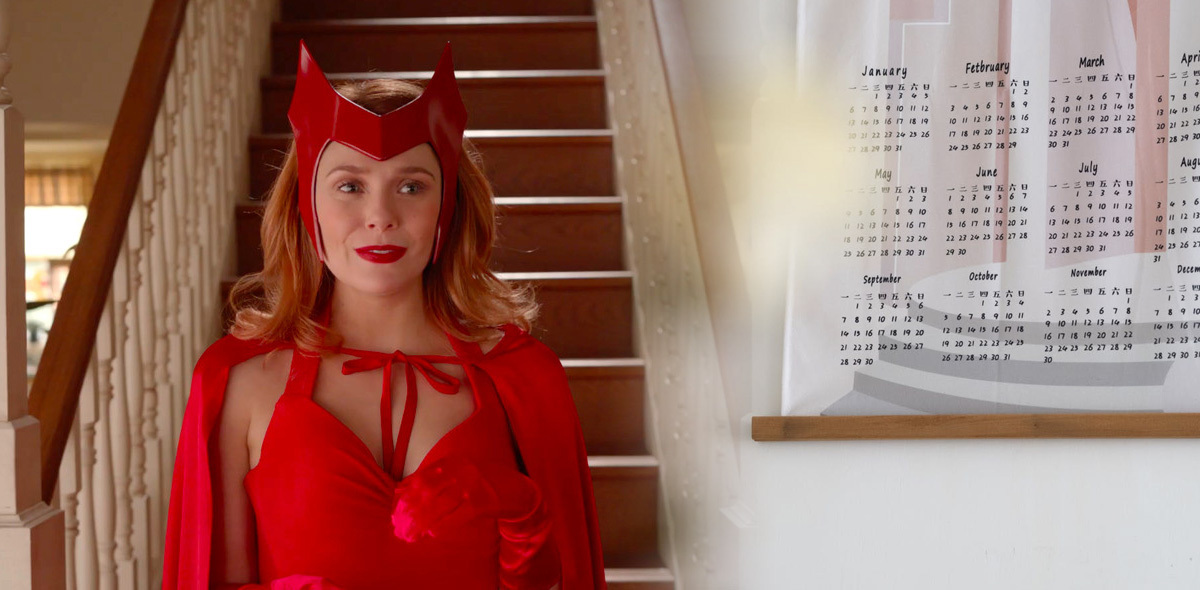
    The clip shows Vision (in his android form) noticing a heart drawn on a specific calendar date while asking Wanda about it. They believe that whatever the heart signifies could be important, but it’s clear that neither knows what that is (and they can’t admit it to each other). It may mark the couple’s anniversary, even though a previously-released preview showed them discuss that they have none. It could be that one of them noted their anniversary but managed to forget at some point. We also know the two host a dinner party in the first episode, so that could be the event marked by the heart. The wacky antics of forgetting about hosting guests for dinner and scrambling to work things out so none will the wiser certainly fits perfectly with the typical wacky antics of a 1950s sitcom.

    It also plays into something that got mentioned in the synopsis of the first episode. There is a chance this will surely be an essential part of the plot as the series moves forward: Wanda and Vision are in this idyllic world, but they can’t recall how they got there or their history within it. Perhaps the heart is connected to the overall mystery of the sitcom world. Something that is also noteworthy about the Instagram setup with the nine-image grid pictures is that today is the Monday of WandaVisions premiere week for which the 1950’s image changed into a video.

    There are five other TV grids posted on the account, but only three more days between now and Friday. Only three of the other pictures feature a picture of Wanda and Vision. I think Marvel will publish a 1960s clip on Tuesday, the 1980s will be on Wednesday, and Thursday will round it out with the 2000s before the first two episodes drop on Disney+ Friday. Be sure to check back here at Murphy’s Multiverse for more WandaVision updates as we head closer and closer to its launch!

    Source: Instagram

  • ‘WANDAVISION’ is Pivotal to the Future of Disney Plus and The MCU

    ‘WANDAVISION’ is Pivotal to the Future of Disney Plus and The MCU

    WandaVision has a tall order to fill. It’s not only the first Marvel project of Phase 4, it’s the first MCU streaming series and the first project released after a longer-than-expected year-and-a-half hiatus for the franchise. All of that makes for a lot of weight riding on this show’s shoulders.

    The scheduling for Phase 4 and beyond has gone through a lot of changes. Many of them have obviously been due to the COVID-19 pandemic, but there was shifting going on well before the crisis hit. For instance, had James Gunn not been fired (only to later be rehired) as director of Guardians of the Galaxy Vol. 3, it would have shot in early 2019 and most likely been the first project to be released in May 2020 (you know, if the pandemic didn’t happen).

    The third Guardians movie would have been a natural fit to open Phase 4, as the plan appeared to be for it to close the book on the current iteration of the team while introducing some new ideas as well (there was said to be some set-up for Eternals in the film’s original script, which has surely changed now that Guardians 3 is set to come out well after that movie). But the Gunn firing controversy happened, and now we have The Suicide Squad coming out this year and Guardians 3 postponed (presumably to 2023).

    Black Widow' Release Pulled Due to Coronavirus - Variety

    Since the early May (or sometimes late April) date is the prime one for Marvel Studios, the decision was made to drop the planned July 2020 release date and push Black Widow forward to the May one. To me, this never seemed like quite the right way to open Phase 4 (even though its place as the opener was circumstantial). Even though it would have worked in a similar way as Spider-Man: Far From Home to tie up some loose ends and set up some new stuff for the future, a midquel starring a character who has already died in the main timeline that appears to be a much smaller-scale project than the most recent ones being the big comeback after a relatively long break for the MCU just seemed a tad underwhelming. These concerns weren’t about the movie’s quality so much as the level of hype it could bring and “Marvel’s back, baby!” statement it could make not seeming as potentially impactful as other projects, for various reasons.

    Here’s the thing: The MCU keeps setting the bar higher and higher for itself, and it’s going to be hard for them to top it in terms of scale a la Avengers: Endgame, at least for awhile; for now they need to try to work on other ways to dazzle and surprise audiences. So after Guardians 3 moved back a few years and we started learning more about the first batch of MCU Disney+ series, I honestly wished Marvel would be able to get one of those done in time to be the project to kick off Phase 4, even though the shooting schedules clearly didn’t allow for it. All three of The Falcon and the Winter Soldier, WandaVision, and Loki looked to be exciting and future-building for the MCU, taking it to new places via new genres. And the new-to-the-MCU medium of streaming for these projects would help them get away from some of the inevitable comparisons to what we saw in the Infinity Saga and allow them to stand as their own sort of thing.

    Of these three, I would have chosen The Falcon and the Winter Soldier to be the first Phase 4 project out of the gate. (I know it’s because of production scheduling and the pandemic that it’s not going to be the first series anymore, but let’s pretend it was a possibility, okay?) There looks to be some level of focus on recovery from the Blip and setting things up for the MCU’s future. It looks like it’s going to be different enough to feel fresh and exciting, but not so different as to throw everyone into the deep end first thing and alienate potential viewers…which is a concern I have for what is actually going to be the Phase 4 opener, WandaVision.

    WandaVision: All the TV Sitcom Influences - IGN

    Don’t get me wrong, I’m very excited for WandaVision (even more than TF&TWS, actually). I’m glad the MCU is taking big swings with this show, and I expect it to be a critical hit. But those who have seen the first three episodes – including our own Charles Murphy – have said the episodes they were shown are very much focused on the domestic life of Wanda and Vision, and while that was pretty much what I expected based on interviews and promotional footage, I’m worried it’s going to be a turn-off to certain audiences. I can’t help but wonder what people who want a lot of action and big set pieces right out of the gate when getting their MCU fix, might feel when the first content they get in a year and a half is a 1950’s sitcom homage with no action and little supernatural or magical elements, especially when it seems like we’re going to be getting several weeks of these sitcom antics before getting to the more typical superhero fare.

    As I said, I’m personally very excited for all of this, and am glad the MCU is exploring new formats and genres. But this particular project being the first taste of Phase 4 – an era that is already sort of “primed for hate” no matter what it produces because what came before it was so well-received – is definitely a big risk. I do think it’s a better fit for the opener than, say, Black Widow would have been precisely because it’s going big in certain respects (likely in ways that are atypical) and I can only hope that MCU fans will keep an open mind about WandaVision (and the rest of the upcoming slate) and that it may even draw in some new viewers to the franchise. If this works out well for Marvel, we’re sure to get an even wider array of stories in the future.

  • Theory: Marvel Studios is Counting Down to a New ‘WANDAVISION’ Trailer

    Theory: Marvel Studios is Counting Down to a New ‘WANDAVISION’ Trailer

    Tick Tock.

    There’s an interesting premise that’s called the “Rule of Three”. The rule of three states that the first time you see/say/do something, it’s known as an isolated incident. If it occurs a second time, then that’s known as a coincidence. But if it happens a third time, then it becomes a pattern. The rule of three can be applied to many things in life. But today we’re going to be applying that logic to Marvel Studios’ recent activity concerning WandaVision. Now on November 12th, Marvel revealed the release date for WandaVision with this teaser of the TVs shifting through the eras:

    I had written up a piece about this trailer, breaking down its most important shots and details. So if you haven’t read up on that, check it out here. Now, Marvel Studios suspiciously started posting some content on Social Media recently. 2 days ago, they posted this poster, which is in turn, the last shot of the trailer they posted back in November.

    Then the day after (yesterday), they posted a second poster.

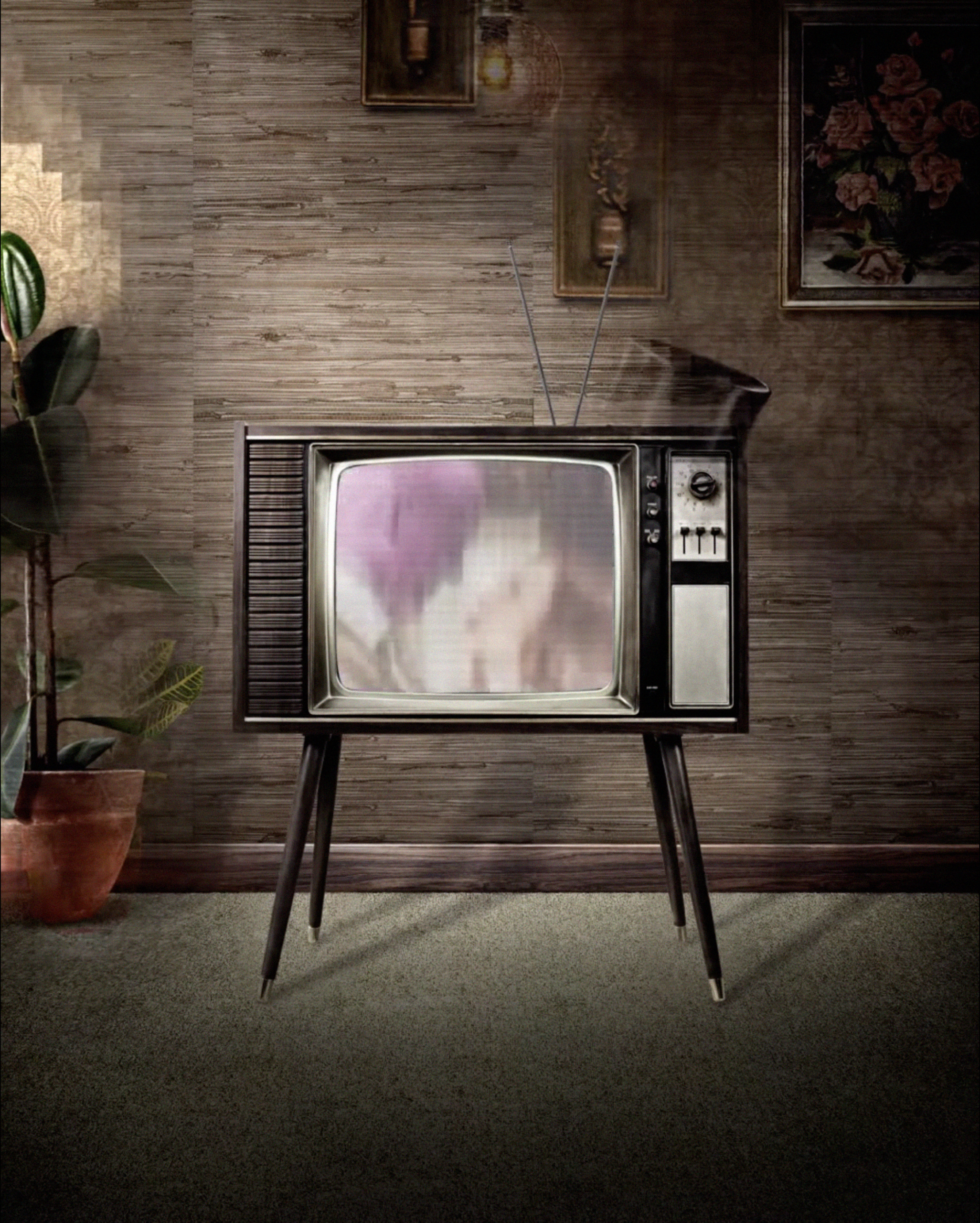
    Now a lot of people might not recognize the second poster but it was actually the second to last shot of the trailer, which is when the TV starts to go into static and the room starts to blend into another before going back to normal. Remember this shot?


    (*NOTE: Now here’s where things get interesting and I put my name as Superhero Theorist to good use. I’m writing this part the night before it happens at 11:54 pm my time. But I wanted to write this in case it does happen. If Marvel Studios posts another poster today at 2:00 pm my time (1:00 pm EST), and it follows the pattern in my head, then the next poster should be the one in the 70s).


    Present-day Superhero Theorist here and it turns out I was right. Marvel posted yet ANOTHER WandaVision poster today at exactly 2:00 pm my time, the one based on the 70s portion of the show.


    Ok. But what does it mean?

    Well, let’s start with the key points that make up this pattern. What do they have in common? Well:

    1. They’re all shots from the trailer Marvel posted back in November.
    2. They each belong to a particular era that will be explored in WandaVision. First with the 60s, then the 70s, and now the 80s.
    3. They’re going in progressive order from the trailer.

    Now, that last point is very important. They’re posting shots from the trailer from each era, every day for the past three days at 2:00 pm EST. There’s a pattern, which means the next posters for the next 2 days are going to be the last remaining shots from the trailer. Specifically, the 80’s and modern eras trailer shots shown below.

    But the most important part of all this is the progressivity of it all. It’s almost like they’re counting down to something as each day passes by. So, if we take into consideration the trailer from November, there are 6 key shots. And if it is a countdown, then each poster signifies a day in the countdown:

    1. The last shot [50’s] (posted on Friday)
    2. The glitch shot [60’s] (posted yesterday)
    3. The 70s shot (posted today)
    4. The 80s shot (might be posted tomorrow)
    5. The modern Halloween shot (might be posted on Tuesday)

    So, if Marvel Studios is indeed doing a countdown as I predict it’s doing, then what happens when the trailer shots/posters run out? That’s where things start to align. They could post another poster on Wednesday outside of the scope of Wanda’s Imagination and we step out of the realm of sitcoms and into the realm of the MCU. Or they could post another trailer, the day before Disney’s Investor Day on Dec. 10th to hype up the fans and investors for what’s to come. The focus of that event will be “the Company’s direct-to-consumer streaming services” aka Disney+. Now whether or not we will get another look at WandaVision before, or during Investor Day remains to be seen, though I find it hard to believe that Marvel posting these would be a coincidence. One way or another, I’m certain that we’re bound to get a new look at WandaVision soon.


    Official Plot Synopsis: Starring Elizabeth Olsen and Paul Bettany, “WandaVision” is a blend of classic television and the Marvel Cinematic Universe in which Wanda Maximoff and Vision—two super-powered beings living idealized suburban lives—begin to suspect that everything is not as it seems. The show features the return of Kat Dennings as Darcy Lewis & Randall Park as Agent Jimmy Woo, as well as the introduction of new faces, such as Teyonah Parris as an adult Monica Rambeau and Kathryn Hahn as the nosey neighbor, Agnes.


    WANDAVISION PREMIERES EXCLUSIVELY ON DISNEY+ ON JANUARY 15TH.

  • Theory Thursday: Breaking Down the Latest ‘WANDAVISION’ Teaser

    Theory Thursday: Breaking Down the Latest ‘WANDAVISION’ Teaser

    Breaking out that 20/20 Vision for 2021.


    After months of speculation, Marvel Studios finally revealed the release date for the upcoming Disney+ series; WandaVision. Along with that release date announcement, came a short teaser:


    Now at first glance, this looks like a normal moving poster or just a small teaser that you’d see on their Instagram stories just to promote the show. But we all know Marvel Studios better than that. Sometimes, they’ve been known in the past to sneak some secrets or teases here and there. So, let’s take a look at this small teaser for a moment and notice what we see.


    SHOT 1: 1960s


    The teaser opens up with a pretty straightforward shot. The scene is in black and white and it showcases Wanda and Vision in their 60s phase. This portion of the show is the one that we’ve seen the most of in teasers. It’s also been the segment of the show that we know more details about. We know it’s inspired by comedy classics from the ’60s like The Dick Van Dyke Show, Bewitched, The Twilight Zone, and I Love Lucy. We also know that it was filmed in front of a live studio audience. And it been the source of much of WandaVision’s promotional materials.


    SHOT 2: 1970s


    The next shot fast forwards to the next decade which would be the 1970s. While we know little about this era in particular, we know that at some point during this portion of the show we might see Wanda’s pregnancy start here and develop further along during this specific episode. We expect this era might be inspired by The Brady Bunch & All in the Family.


    SHOT 3: 1980s


    We eventually transition to the 1980s, where we see a standard 80s double knob TV, the color is finally present in the entirety of the room and the potted plant on the left changed. We know little about this era for the show but I predict this might be the part of the show where Wanda’s pregnancy is near her final trimester and she may give birth by the time we end our 80s tribute. I envision this era taking inspiration from Happy Days & The Golden Girls.


    SHOT 4: 1990s


    The 1990s is the other era that’s been heavily teased in the teasers. We know from this era that we’re going to see an episode centered around Halloween. We also expect the twins to have been born by this point in the series. This is also the segment in the series where i expect things might start to unravel for our two main heroes. I am definitely sensing a heavy reference of Full House for this episode in particular.


    SHOT 5: MULTIPLE ERAS (HIDDEN DETAILS)


    This is more of a “blink and you’ll miss it moment” in the teaser, where the TV starts spiraling out of control between images and it showcases all the eras in the TV that we had already seen previously, except 2 shots in particular. The one on the left looks to be from the 90s, when Wanda and Vision’s kid have already been born and the one on the right bears a resemblance to when Wanda and Vision start seeing the world change around them from black and white to color.


    You also take notice of a couple of things in those shots. Primarily, when the 90s era tries to go to the next era, as we mentioned before, the TV starts spiraling out of control between images and it showcases all the eras in the TV that we had already seen previously. But while it’s spiraling out of control, you notice a couple of key details in the surroundings that start to fade in, but are immediately pushed back and kept hidden. So, let’s look closer at the image and look at the things that stand out.


    You’ve got:


    • The Victorian Wallpaper and Rose Painting: That Victorian wallpaper and Rose painting resembles the wallpaper and painting from the image above on the right.  The one where Wanda and Vision start seeing the world change around them from black and white to color.


    • The weird lamp dangling above the TV: Notice that weird, teardrop lamp on top of the TV? Interesting lighting choice. Wanda Maximoff in particular has been known to have strange-looking lamps, particularly we can see them during the 1960s portion of the show, where we have a middle-eastern style lamp next to the front door. These styles of lamps also used to decorate Wanda’s room back in the Avengers Complex in Captain America: Civil War (2016). Fun detail no?


    SHOT 6: FINAL SHOT


    The final shot in the tease happens after everything went haywire and it just goes back to normal, revealing the release date of the show and the title card. A fun little detail about this shot is if you notice on the top left corner, the wall starts to peel off, revealing tv static. Very intriguing. Perhaps the teaser as a whole represented a metaphor for what might happen in the series.


    BONUS: THE TVs


    All of the TVs shown in the teaser are representative of their eras. But there was one TV that popped up for only about 5 frames before disappearing again.


    What’s interesting about this tv? Well, it’s actually not the TV itself, but rather what it’s on. This old TV stand on wheels is something commonly seen in hospitals. Interestingly enough, Charles talked about WandaVision filming inside a hospital about a year ago. So I’d check up on that if you need a refresher.


    Official Plot Synopsis: Starring Elizabeth Olsen and Paul Bettany, “WandaVision” is a blend of classic television and the Marvel Cinematic Universe in which Wanda Maximoff and Vision—two super-powered beings living idealized suburban lives—begin to suspect that everything is not as it seems. The show features the return of Kat Dennings as Darcy Lewis & Randall Park as Agent Jimmy Woo, as well as the introduction of new faces, such as Teyonah Parris as an adult Monica Rambeau and Kathryn Hahn as the nosey neighbor, Agnes.


    WANDAVISION PREMIERES EXCLUSIVELY ON DISNEY+ ON JANUARY 15TH.