Author: João RP

  • How Amazon and Marvel Studios Paved the Way for ‘Fear Agent’

    How Amazon and Marvel Studios Paved the Way for ‘Fear Agent’

    The Marvel Cinematic Universes’ success, which itself also stood on the shoulders of giants, has made it possible for studios to take chances on superhero comic adaptations that were unlikely to see the light of day a few years back. That also includes more mature stories. Awakening such an enormous audience for this type of content has allowed new projects to be given both the budget and attract the talent they managed to bring on in their current iterations. This development resulted in a comic series, like The Boys, getting adapted to the small screen without any compromise. Amazon understood that, nowadays, the risk behind this type of project isn’t all that much.


    Less than two years after The Boys premiered, Amazon and Seth Rogen‘s Point Grey Pictures tackled an Invincible adaptation continuing with this adult-oriented approach. Much like The Boys back in 2019, Invincible also received excellent reviews from critics and fans alike. It highlights that the general audience is comfortable with a more violent and adult approach when the source material also kept its integrity.

    This new R-rated environment for non-Marvel and non-DC comic adaptations that the time has come for Fear Agent to step into the frame. It finally was announced in January that Amazon won the bidding war for the comic series. The concept benefits from an optimal situation to properly showcase what made it an incredible comic series. Amazon and Point Grey Pictures have the perfect track record to develop the series. That way, we can expect the same type of attention and respect towards the source material that both previously mentioned shows got will remain a priority as audiences get introduced to the universe of Heath Huston, an alcoholic trucker turned alien exterminator.


    The comic series, which had a somewhat unconventional run by switching publishers midway through, tells the story of an alien invasion and its survivors. They dubbed themselves the Fear Agents as they try to drive the aliens off of their planet. But doing so meant that Heath had to commit alien genocide. As such, he got ostracized. Now, he makes his living as an alien exterminator with a bottle of whiskey at his side. The series deals with family loss, as Heath struggles to find his purpose in the universe as he goes through a series of adventures that end up presenting the possibility of getting back everything he once held dear.

    The result is a mish-mash of genres that range from sci-fi to western (much like the acclaimed Firefly). It plays with comedy to horror tropes, as it switches from drama to full-out action-adventure. If adapted in a way that respects the source material (something that Amazon and Point Grey Pictures seem to be talented in), it might turn into a bigger hit than the previously mentioned The Boys and Invincible. They can go beyond the super-hero tropes to explore uncharted territory and offering something truly unique. Its author, Rick Remender, has recently penned a deal to adapt Tokyo Ghost into a feature film. Unfortunately, the last adaptation of Deadly Class got canceled after its first season before gathering an immense following once it got picked up by Netflix internationally. The series is yet to have any of the cast announced, and its release date is still undisclosed, but it will hopefully stream exclusively on Amazon Prime soon.

    Source: Hollywood Reporter

  • ‘MOON KNIGHT’ Leads Spotted in Budapest as Production Ramps Up

    ‘MOON KNIGHT’ Leads Spotted in Budapest as Production Ramps Up

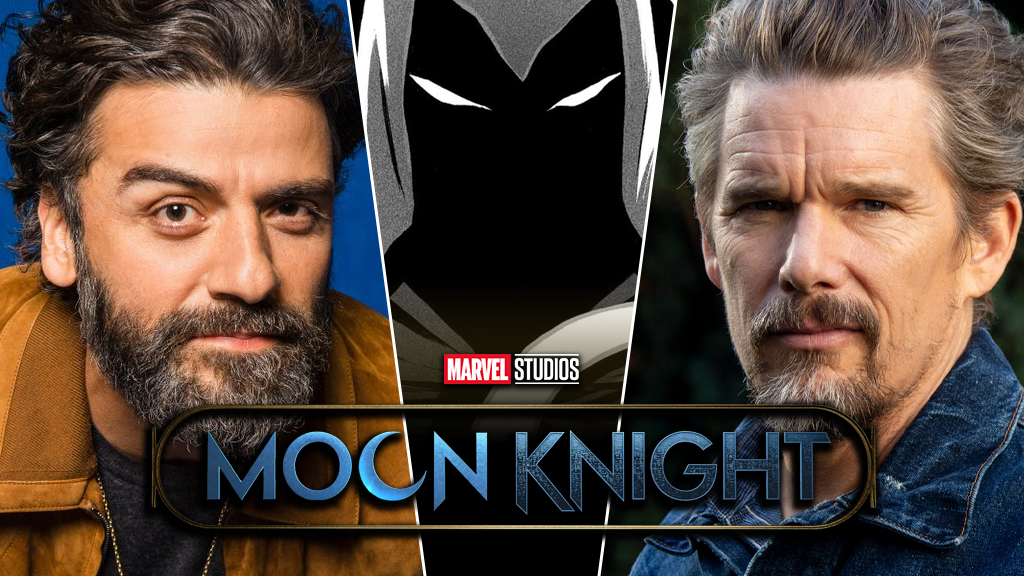
    The two biggest names attached to Marvel Studios’ upcoming Disney+ exclusive Moon Knight series have, as predicted, been spotted in Budapest, Hungary, as the show moves its production schedule along. A fan bumped into Oscar Isaac, playing the show’s titular character, and Ethan Hawke, whose role hasn’t yet been disclosed, while biking through a city park. He caught both actors in good spirits as the photo that was taken clearly shows.


    This marks Marvel Studios’ return to the Hungarian capital after Black Widow also shot there for a few weeks back in 2019. The Falcon and The Winter Soldier also spent a big amount of time shooting in nearby Prague in the Czech Republic (posing as Riga, Latvia), as eastern Europe locations have increasingly managed to make their way into the MCU. It’s a good sign that the film production company is seeking new ways to expand their franchise outside of their usual Atlanta shooting location.

    Moon Knight, which still doesn’t have an official release date, will probably premiere in 2022. It will take viewers inside the complicated mind of Marc Spector (Isaac), a former marine, as he deals with dissociative identity disorder (or does he?). The show will dive into Egyptian mythology, as Egyptian moon god Khonshu saves Spector after an unsuccessful mission in northern Africa, giving him a new lease on life. It is uncertain what role Ethan Hawke has, but we do know that he will be playing the main antagonist in the story. The Disney+ series may potentially become of one of Marvel Studios’ darkest and we cannot wait for it to release.

    Source: Instagram

  • ‘Obi-Wan Kenobi’: Ewan McGregor Sighted With His Iconic Beard

    ‘Obi-Wan Kenobi’: Ewan McGregor Sighted With His Iconic Beard

    With the Obi-Wan Kenobi Disney+ series getting ready to shoot, as the set video leak from the last couple of days made clear, Ewan McGregor is also starting to look the part. With shooting confirmed to be taking place in Los Angeles, McGregor was spotted hanging out in California with the Kenobi beard he famously sported in both Attack of the Clones and Revenge of the Sith. It’ll be interesting to see if he’ll keep the longer hair as well or he’ll cut it before the production starts.


    Obi-Wan Kenobi is set to take place in between episodes III and IV, at a time when Kenobi called Tatooine his home. If the show will be entirely set on that planet is still undisclosed, but the rumors that we will get a few flashbacks to the Clone Wars will most likely become a reality. We might explore his time before we were introduced to the iconic Jedi in The Phantom Menace.

    The show is set to reunite McGregor with Hayden Christensen returns to the world of Star Wars to play Anakin Skywalker/Darth Vader was confirmed at the 2020 Disney Investor Day presentation. As the production start date approached, Indira Varma and another 9 names were confirmed as being part o the cast, with Joel Edgerton and Bonnie Piesse reprising their roles from the Star Wars Prequels as Luke’s uncles. It’ll be interesting to explore this time that would lead to the moment that Luke started to explore beyond the desert planet he called home.

    Source: Instagram

  • Disney+ Unveils New ‘STAR WARS VINTAGE’ Branding for Classic Series and Films

    Disney+ Unveils New ‘STAR WARS VINTAGE’ Branding for Classic Series and Films

    Some time ago, Disney+ announced that Disney+ would be adding the original Star Wars: Clone Wars animated series alongside several Ewok properties. The time has finally come as the streaming service has now gone live with the collection. The curious thing is that they added an entirely new branding to make these stand out from the other films and series. It has now been titled the Star Wars Vintage CollectionIt looks like they are trying to distinguish between canon and non-canon features easier within the service while still offering both to viewers. They even added some unique visuals to make these series stand out in the service:


    We can now access several long-out-of-print or previously unavailable movies and series such as Caravan of Courage: An Ewok Adventure, Ewoks: The Battle for Endor, Story of the Faithful Wookiee, Ewoks, and Clone Wars 2D Micro-Series (both volumes). The Star Wars: Droids animated series, although absent from the service at the moment, is set to become available later this year.


    Disney continues to add this sort of legacy content to their streaming service as their previously signed contracts reach their end. They are getting one step closer to unifying the content under their streaming service, which offers a wide variety of properties that seemed long-forgotten. It will be interesting to see if they also start trying to add content that got scattered due to various deals. Here’s hoping we could see The Incredible Hulk or the Spider-Man series and films find their way home one day.

  • Tom Holland’s ‘UNCHARTED’ Film Delayed Slightly

    Tom Holland’s ‘UNCHARTED’ Film Delayed Slightly

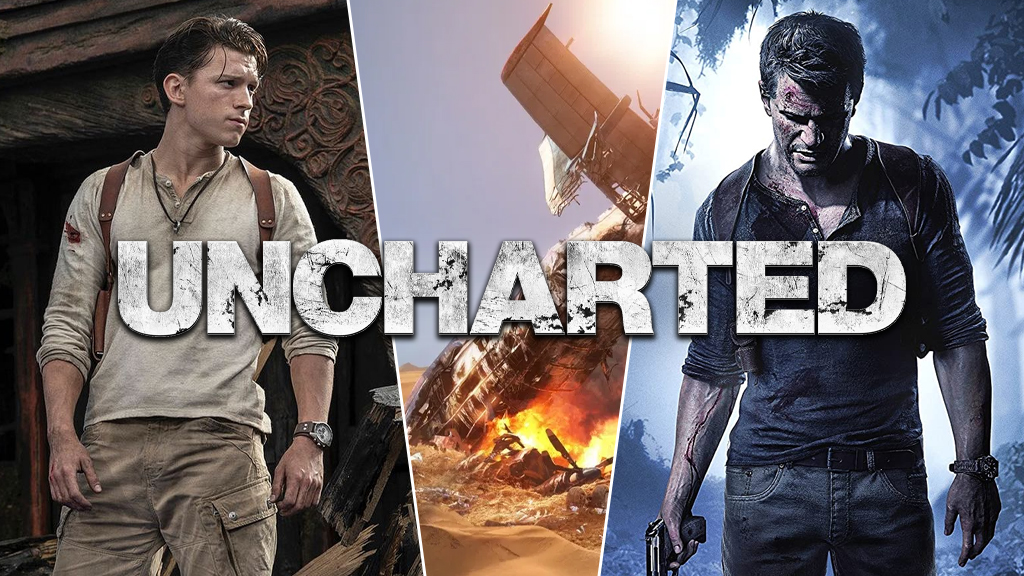
    According to a trade report, the upcoming Uncharted movie adaptation, starring Tom Holland, has seen its premiere date delayed by a week. The film is eyeing a February 18, 2022 release. After going through 2020, when every other week there was news of studios postponing their most relevant IPs for several months, this feels somewhat like a best-case scenario.

    The project, which is adapting one of the highest-regarded videogame franchises of the XXI century to the big screen, has had its fair share of delays, going back to its original release date of June 10, 2016. Since then, several directors have attempted to adapt the iconic gaming franchise. They also went through several actors for the Nathan Drake role. It was not until May 2017 that Holland officially signed on director Ruben Fleischer (Venom), who only got confirmed in late 2020. Mark WahlbergAntonio Banderas, and Sophia Taylor Ali joined the project at different stages, with Wahlberg playing Victor Sullivan, Nathan Drake’s friend, and mentor.


    Considering Holland and Wahlberg’s age, the movie will present us with a younger Nathan Drake than the one we found in the games, probably taking a few hints from the flashback sequences in both Uncharted 3: Drake’s Deception and Uncharted 4: A Thief’s End. We will witness the beginnings of their friendship. It could even end up being their first shared adventure. In the games, their relationship was already well established from the start, and after their first meeting in a flashback sequence in Uncharted 3, there is quite a gap in their story just waiting to get filled.

    Source: Variety

  • ‘FALCON AND THE WINTER SOLDIER’: The MCU in Madripoor and Beyond

    ‘FALCON AND THE WINTER SOLDIER’: The MCU in Madripoor and Beyond

    The fictional island of Madripoor is set to make its MCU debut in the Marvel Studios Disney Plus streaming series The Falcon and The Winter Soldier, perhaps even this very Friday. We’ll finally get to see how such an important location translates from the comics into live-action, and we very well might need to thank “The Blip” for such an opportunity.

    When Thanos snapped his fingers in Avengers: Infinity War the Marvel Cinematic Universe was forever changed. The Avengers managed to bring everyone back but certain things just weren’t able to be fixed by Earth’s Mightiest Heroes, as the five years it took them to do so took their toll. The Falcon and The Winter Soldier has already shown us how much things have changed even after half the world’s population came back, and in WandaVision, through Director Hayward, we got an idea of just how hard those five years were on everybody that had to endure them.

    You have no idea what it was like. What it took to keep the lights on.

    Madripoor
    Madripoor in “X-Treme X-Men” #11

    This extreme change in status-quo within the Marvel Universe gives Marvel Studios the perfect opportunity to justify how a place like Madripoor, basically unmentioned through twenty-three movies and one tv show, can all of a sudden become an integral part of the MCU. With half the world’s population gone it would make sense for countries to concentrate the entirety of their diminished military power closer to home where it would make the most difference. This would mean that super-powers like the US or organizations like NATO would stop being so involved in world affairs creating a power-vacuum in certain parts of the world that would tend to be filled by those seeking power on their own terms. This way a place like the “Principality of Madripoor” could have gained a level of economic and social relevance it just didn’t have before, justifying its absence from the storylines being told up to this point.

    Bagalia in “All-New Captain America” #2

    And just like Madripoor, there are several other locations from the comics that might very well be introduced into the MCU in the coming years using “The Blip” as the catalyst. By having areas around the globe without proper protection by the so-called good guys, places like Bagalia could pop up by being in the perfect situation to establish themselves as the sovereign island nation ruled by criminals we know from the comics, becoming a haven for the ill-intentioned. Also, a nation like Latveria, led by a ruthless ruler, could thrive in the conditions the world found itself in for five years. Not having mentioned it since 2008’s Iron Man would become a non-issue, since only after taking advantage of surrounding nations that might have been left to fend for themselves in the five years where there wasn’t so much oversight, did it become such a relevant player on the global stage.

    Latveria in “The Children’s Crusade” #4

    From a different perspective, and knowing how Marvel Studios enjoys approaching certain events and locations taken from the comics by giving them their own take, a place like the Blue Area of the Moon could also be something introduced using The Snap and the following five years that are yet mostly unexplored in the MCU. Its discovery might have prompted by an attempt to establish a defense system on the Moon with the prospect of keeping another alien invasion from reaching the planet in the future, and we could now be faced with a fully constructed human facility built in the previous five years, and perhaps even dealing with the Skrull, Kree, and Cotati background. Its development in secrecy might even have something to do with the theory that Steve Rogers “is in a secret base on the moon looking down over us”.

    The Blue Area of the Moon in “Empyre: Avengers” #0

    The bottom line is that there are a number of locations and even characters that would have had a hard time being introduced into the MCU after more than a decade without being acknowledged. But “The Blip”, besides having been an exceptional way to finish The Infinity Saga by taking The Avengers to their limits, just might prove to be the smartest thing Marvel Studios has ever done as it manages to set up an almost infinite amount of brand new possibilities for Phase 4 without having to retcon a single thing from past features.

  • ‘ZACK SNYDER’S JUSTICE LEAGUE’: Schrödinger’s Cut

    ‘ZACK SNYDER’S JUSTICE LEAGUE’: Schrödinger’s Cut

    Schrödinger’s cat is a thought experiment where a hypothetical cat may be considered simultaneously both alive and dead as a result of being linked to a random event that may or may not occur. In simple terms, if you place a cat and something that could kill the cat (a radioactive atom) in a box and sealed it, you would not know if the cat was dead or alive until you opened the box, so that until the box was opened, the cat was (in a sense) both “dead and alive”.

    The road to Zack Snyder’s Justice League was a long and tumultuous one. No matter what people make of the finished product, it’s hard to dissociate it from not only everything that happened since Snyder left the project in May 2017 but also from everything that, for the time being, doesn’t seem to be happening in what concerns the so-called Snyderverse. So being, all events, from Snyder leaving the project to the movie Joss Whedon ended up releasing in theaters, from Snyder Cut‘s HBO Max release to the apparent lack of a final chapter to the story, helped to shape the, if not lasting, at least the immediate impression made by the four-hour epic.

    Due to all of this, and much like the thought experiment that serves as the title to this article, the Snyder Cut seems to be in a situation/state that allows for apparently opposing conclusions to be verified and, for the time being, to surface as legitimate and valid outcomes of the entire endeavor.

    Introducing Characters

    Unlike what Marvel has mostly been doing for over ten years, out of the six Justice League members only one had a solo movie as its introduction into the cinematic universe. Wonder Woman and Batman were introduced in Batman v Superman while Cyborg, The Flash, and Aquaman (even if briefly featured also in Dawn of Justice) got their first real chance to shine in Justice League. Considering what it takes to introduce a character in a meaningful way, it becomes apparent that (with 2017’s Justice League being “exhibit number one”) with a regular theatrical release’s runtime this strategy is a hard one to pull off, validating the MCU strategy over the one DC went for. Even when introducing T’Challa and Peter Parker in Captain America: Civil War, their presence wasn’t meant to be as prominent as some of the others in order not to do the characters any disservice.

    But Snyder’s Justice League, with the help of the extended runtime that streaming allows for, was able to do a great job introducing both Cyborg and The Flash (but mostly Cyborg) even in such a packed script, by making them the heart of the movie (mostly Cyborg). It showed how meshing the origin story of a character (often of the most intense parts of one’s journey) with the continuing growth of others allows for a big emotional payoff, by having different personalities in different stages of development. It’s likely due to the runtime, but Snyder’s cut showed how the Marvel model of introducing main characters both is and isn’t the only way to go.

    The Runtime

    A four-hour movie seems like a lot because of one simple thing: it is. But what has been noticeable by coming into contact with the way many have approached the viewing experience of Zack Snyder’s Justice League is that many ended up watching the entire thing in one go instead of the two or three sessions they were expecting to have to schedule. And that can only speak in favor of how, when faced with an engrossing activity, viewers will allow themselves to experience it fully no matter how daunting it may seem at the start.

    Even if theatrical runtimes are often arranged in a way that allows for the biggest number of sessions every day, to sell more tickets, the idea that audiences can only be expected to pay attention for a very limited amount of time has also played a part in determining how long must a movie be. What we’ve now seen is that if the story needs it, and if the experience from a story standpoint is indeed improved (by allowing the introduction of relevant characters, arcs, and plot-points), studios should stop placing so many limits on what some directors can bring to the table. So being, and without losing track of what might make the most sense from a purely business point of view, the Snyder Cut has also shown us how that the same financial aspect of moviemaking can be safeguarded in a not so linear way. By making better movies, no matter if a bit longer than what is the usual norm, you end up opening up the possibility of bigger critical acclaim that, in these sort of blockbusters, more often than not tend to lead to better-received sequels and spin-offs. And that’s probably a more respectable way for studios to reach a bigger payday.

    It’s likely due to how it ended up being released as it’s hard to believe that a 4-hour cut would make its way to theaters worldwide in a regular theatrical release, but Snyder’s cut showed how the regular runtime (even if extended that to Endgame’s 181min) both is and isn’t the only way to go. Even if the bottom line ends up being the money earned.

    The Experience

    The most obvious takeaway for almost everybody after having watched Zack Snyder’s Justice League is that it is a much better experience, a much better movie, than the 2017 version. Every single character introduced in the movie ends being given a lot more substance, both heroes and villains. The plot itself makes a whole more sense as the reasons for character actions are properly explained and given time to mature in order to make sense within the frame of the story being told. The soundtrack is also a huge improvement from the one we got four years ago, with fewer callbacks to old themes and a composer focused on taking these characters forward, instead of being too relying on the past to make the score and the experience relevant.

    All of this is fueled by what we all got from the 2017 cut. By what we didn’t get out of it. So being, the sheer existence of the original theatrical cut, by having so many issues, sort of makes the Snyder Cut look better than it has any right to. But at the same time, Zack Snyder’s Justice League is also made worse by Whedon’s version of the movie, in what is yet another opposing takeaway, but by no means no less valid than the one mentioned before.

    Even if bringing a lot more to the table than the theatrical release, Zack Snyder’s Justice League suffers from an overall lack of novelty because, as bad as 2017’s cut was, the main characters are the same, the villains are basically the same and the story follows the same lines. One can only imagine how it would have been to watch it all for the first time in Snyder’s cut, and at the same time how not having experienced this latest version would make Whedon’s cut…not as bad. So, in a weird way, both versions of the movie make the other one look both better and worse, at the same time.


    The Schrödinger’s cat thought experiment can be quickly resolved by simply opening the box and checking in on the cat. There is no box to open in the case of Zack Snyder’s Justice League to know if its “cat” lives or dies, so the next best thing to do is to give it time. Maybe in a few years, with the process it took to allow for the movie to finally be released left behind, audiences will finally be able to look at this cut as a more normal cinematic experience with less baggage, something that for the time being is a bit hard to do. But if I had to guess, the cat will not only be alive, it’ll be thriving.

  • ‘007: No Time to Die’s Cary Fukunaga Adapting Rick Remender’s ‘TOKYO GHOST’

    ‘007: No Time to Die’s Cary Fukunaga Adapting Rick Remender’s ‘TOKYO GHOST’

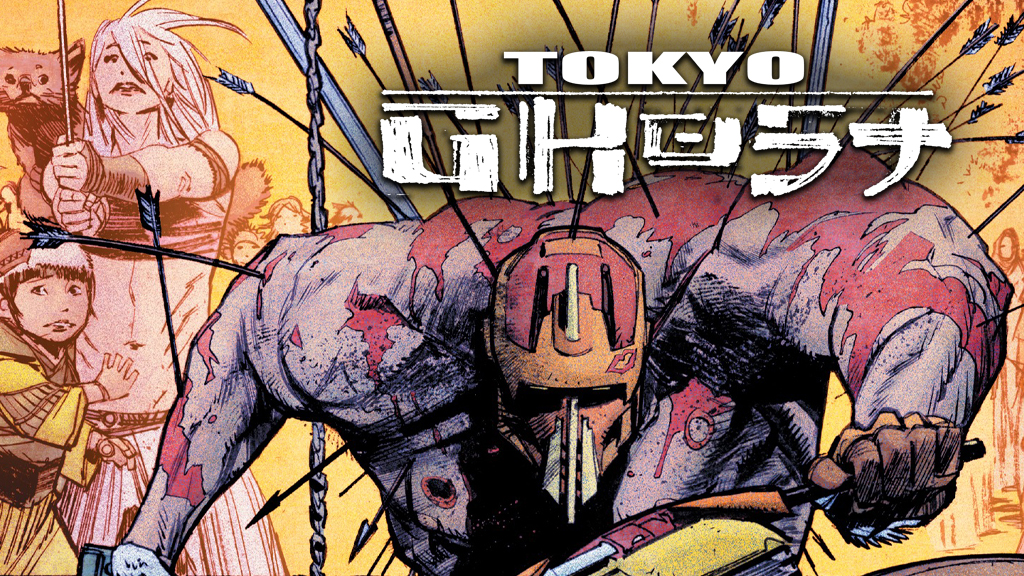
    The list of comic book adaptations in development continues to grow. Rick Remender‘s Tokyo Ghost is a classic cyberpunk comic. It takes place in a futuristic Los Angeles and in the garden nation of Tokyo. It is getting adapted to the big screen with Cary Fukunaga (007: No Time to Die) set to direct. Hollywood Reporter also confirmed that Fukunaga will serve as producer with Remender penning the script.


    The series, originally published by Image Comics, came out in 2015 and ended after its 10th issue. The story told in comic form is certainly something that, due to its structure, might allow for the development of not one but two movies. The original series ended with a massive cliffhanger. One might assume that it could go beyond the original story in subsequent chapters could become a reality. As a fan of the series, I certainly hope so.

    Remender also worked on 2018’s Deadly Class, a series adapting one of his best comic series. It got produced by the Russo Brothers that sadly got canceled after just one season. Ever since, it gathered a considerable following after being made available through Netflix, which allowed it to reach a larger audience. Fear Agent, another of Remender’s comics, is also being adapted by Seth Rogen’s production company for Amazon. He remains one of the most prolific comic book writers of the past decade. has developed several brilliant independent series (Black Science, Death or Glory, and Low, Scumbag to name a few) as well as a few books for Marvel, being one of the minds behind giving Sam Wilson the Captain America shield, something being currently developed in Disney+’s Falcon and the Winter Soldier.

    Source: Hollywood Reporter

  • Lots of MCU and DCU Talent up for Academy Awards

    Lots of MCU and DCU Talent up for Academy Awards

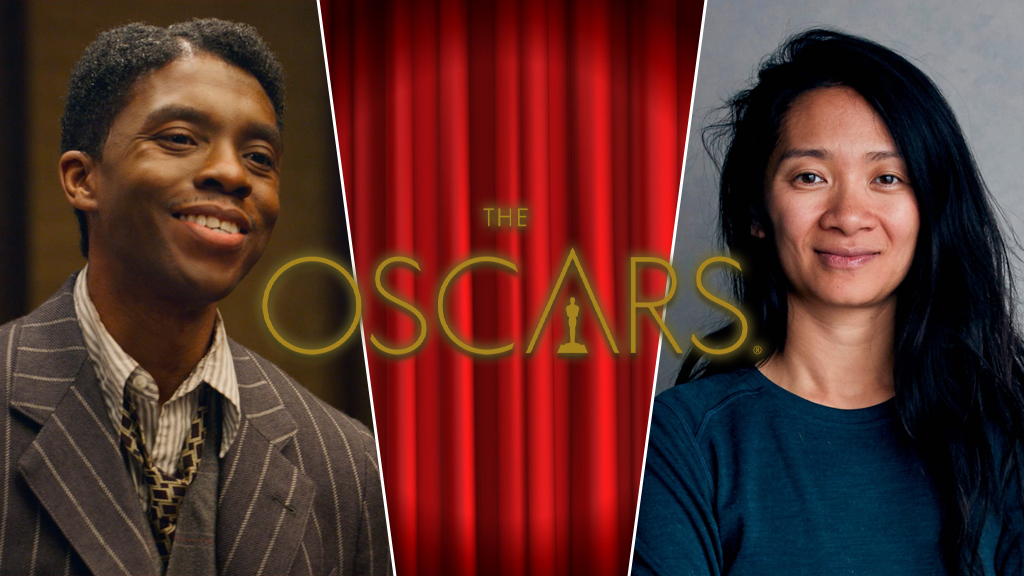
    The nominations for the 93rd Academy Awards are out as the film industry is seemingly fighting its way back to a more normal reality with cinemas across America opening back up. The biggest night in Hollywood in 2021 is set for April 26 and there is a lot that superhero movie fans can look forward to as the main categories are packed with talent that is a part of both the MCU and the DCU.

    Perhaps the name that deserves the most attention is that of Chloé Zhao, the director of the upcoming Marvel Studios sci-fi epic EternalsZhao‘s Nomadland has had an amazing award season so far, having won her the Golden Globe for Best Director and Best Motion Picture – Drama just last month. She now has the possibility to take home four Academy Awards as she is nominated for Best Director, Best Editing, Best Adapted Screenplay and, by being a producer of the movie, can also grab the Oscar for Best PictureNomadland is nominated for a further two awards, Best Cinematography and Best Actress (Frances McDormand).

    Black Panther’s director Ryan Coogler also has a chance to take home an award as he is one of the producers behind Judas and the Black Messiah which, as Nomadland, is nominated for Best Picture. In terms of acting, there are several names of which to take note. The late Chadwick Boseman and Odin himself, Anthony Hopkins, are nominated for Best Actors, for their roles in Ma Rainey’s Black Bottom and The Father, respectively. The George C. Wolfe directed movie also gave us an incredible performance by Viola Davis, the DCEU’s Amanda Waller, who is nominated for Best Actress. In terms of the awards for supporting roles, Glenn CloseGuardians of the Galaxy‘s Nova Prime Irani Rael, is up for Best Supporting Actress for her role in Ron Howard‘s Hillbilly Elegy, and another former Black Panther cast member, Daniel Kaluuya, is nominated for Best Supporting Actor following his performance in the aforementioned Judas and the Black Messiah.

    From outside of the MCU and from the current DCU being put to film, but still within the comic book movie realm, we can also find The Dark Knight Trilogy‘s Commissioner Gordon, Gary Oldman, as well as Venom’s Riz Ahmed, alongside Boseman and Hopkins in the Best Actor category.


  • How Marvel Studios Plans to Take the Fight to Superhero Fatigue

    How Marvel Studios Plans to Take the Fight to Superhero Fatigue

    It probably feels like a lifetime ago but it was only in 2017 that the MCU started releasing three feature films every year. By that time the franchise was approaching its 10th year with 17 movies under its belt and many started wondering just how long could Marvel Studios’ dominance at the box office truly last until audiences’ superhero fatigue managed to creep up on it. The following couple of years presented everyone with a resounding answer to that question as five out of the six movies released in that period surpassed the 1 billion dollar mark at the box-office, with two of those going over the 2 billion dollar mark while making Avengers: Endgame the highest-grossing movie of all time.

    By that point, and besides being the final chapter of a story being told since 2008 through 23 interconnected movies, the end of the Infinity Saga had audiences saying goodbye to arguably its two most important characters, Tony Stark and Steve Rogers, that had been at the forefront of the MCU since its inception. So being, Marvel Studios had a few problems on their plate as 2019 came to a close: How to reintroduce surviving characters making them a bigger presence within the franchise filling the void of the ones lost, how to make fans care for the new characters being introduced as they did the legacy ones, and most importantly how to maintain global audience interested in the MCU avoiding the aforementioned superhero fatigue to finally become a real thing, in what the MCU is concerned.

    A few of the issues mentioned above had already started being addressed head-on by taking a chance on characters like Black Panther and Captain Marvel, allowing for a larger and more diverse audience to feel embraced by the superhero cinematic universe Marvel created, all while keeping longtime fans engaged by diversifying the type of stories being told, the angles in which they were told, and the voices that told them. Phase 4 would be doubling-down on this idea of bringing into the franchise a much more diverse group of filmmakers (Cate ShortlandDestin Daniel CrettonChloé ZhaoNia DaCosta) and introducing characters like Shang-Chi, Ms. Marvel, She-Hulk, Ironheart, and the incredibly diverse cast of Eternals that are further living proof that the MCU is trying to evolve and become a much richer and relevant franchise by allowing so much different voices to shine through.

    But today, exactly one week after the WandaVision finale and one week before The Falcon and The Winter Soldier premiere, it’s becoming increasingly clear that, as contradictory as it may sound, another way Marvel Studios is trying to avoid superhero fatigue is by going all out and delivering ten projects in a single year. One would think that that would be against their interests as this means that there’ll be hardly a week throughout the year without some sort of new MCU content, but Marvel Studios is managing to circumvent that by turning inwards and redefining what the superhero genre can aspire to become. This way, instead of only releasing properties that could be described as being the generic superhero production and thus paving the way for audiences to quickly lose interest by the lack of novelty, they are expanding into sub-genres that are already a reality across the industry.

    As WandaVision played with sitcom tropes while combining romance, mystery, and drama, The Falcon and The Winter Soldier is set to be more of an action-thriller experience. Ms. Marvel could be categorized as a teen drama while Hawkeye (mystery-thriller), Eternals (action epic), Shang-Chi and the Legend of the Ten Rings (martial arts action film), and Loki (sci-fi adventure) will each have their particular characteristics, making each project fresh in its own right. Going beyond 2021 we’ll find the same being applied to shows like She-Hulk (courtroom drama) or movies such as Thor: Love and Thunder (space opera rock show). All of this seems to mean that Marvel Studios is thinking that, by diversifying, audiences won’t grow tired of what they have to offer in the same way they don’t get tired of movies and tv in general. Even if all properties are a part of a larger franchise, their particulars will allow all of them to be experienced without the added weight of being presented with the same formulaic concepts and narratives.

    Marvel Studios broke the mold for what franchises of this magnitude could become, and by keeping themselves in the public eye year-round but also understanding that a gimmick can only keep itself relevant for so much time, so much so that it’s not afraid to reinvent itself on the go (as we were able to see with WandaVision), is likely doing it again, before our very eyes.