The final few minutes of Moon Knight’s episode four gave audiences something to think about and figure out ahead of the final two episodes of the series. At first glance, it seems like the old “it was all a dream” sort of twist, where the character, in this case, Marc Spector, kept bringing real-life characters and details into a self-fabricated world. This would obviously deprive the events experienced until now of most of their meaning due to a lack of actual real-world impact, something that feels extremely dated. But in fact, Marvel should instead be using that classic trope to lead fans astray as what Marc wakes up to should actually be the dream itself.
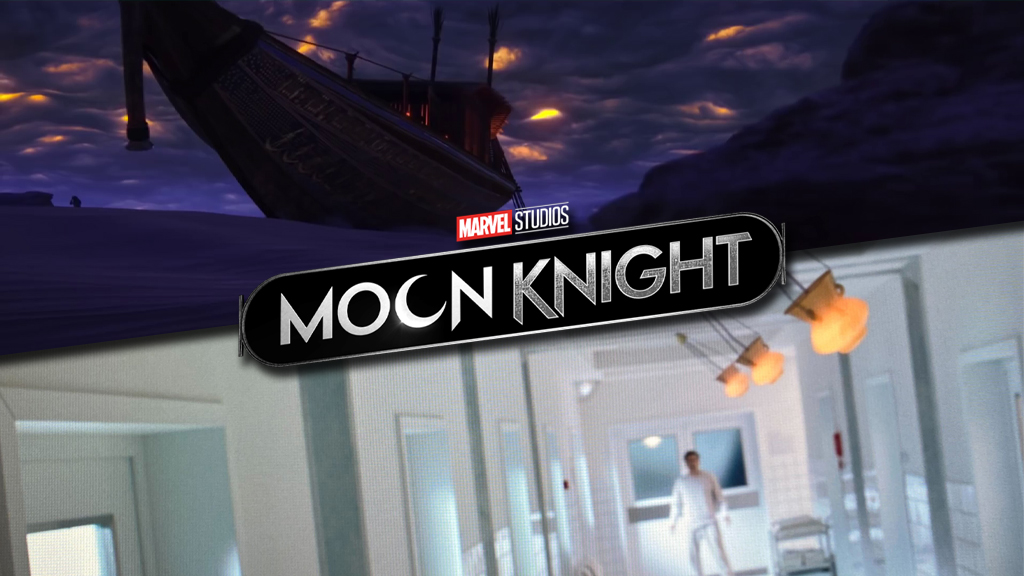
Following Harrow shooting Marc at Alexander the Great’s tomb, he wakes up in an institution, very similar to the one we see in the Lemire-Smallwood comic run. There, while trying to escape Harrow’s office, he comes to a long corridor that seems to tilt like it was on a moving vehicle, with the lamps and the medical carts moving accordingly. This should be enough to make us doubt the veracity of the reality presented to us. But it’s not until going back to some promotional footage that, not only does it become clear why the halls seem unstable but we also understand where Marc really is.
Marvel Studios’ Moon Knight
This shot in one of the promotional videos seemingly shows us a large funerary boat traveling through the desert. And this is where we will likely find Marc, even if all he sees around him, maybe as a coping mechanism, is a mental institution filled with details from his life. This fits the Egyptian mythology the show has been exploring as boats played a big role in ancient Egyptian funerary practices. Funerary boats were often used to deliver the deceased to the afterlife, with Anubis, the god of death, the afterlife, cemeteries, tombs, and the Underworld, having his own ship that traveled between the world of the living and that of the dead. It was while doing so that it would weigh the hearts of the deceased on Maat’s scales of truth and justice, hence judging the individual’s actions in life. If the heart was found to be heavy it was fed to Ammit, with the soul cast into darkness. On the other hand, if the scales were balanced, the deceased would be taken before Osiris who would welcome them into the afterlife.
Marvel Studios’ Moon Knight
All of this, besides feeling terribly consistent with what the show has shown us so far, might clearly hint at all past events being what is real, with the dreamlike state being what we see as the mental institution at the end of episode four. Marc and Steven (and Jake?) will eventually be judged in order for their spirit to move on, either to damnation or the afterlife. With Khonshu out of the picture, it seems unlikely that they will manage to come back from the dead, again. Or does it?
The first four episodes of Marvel Studios’ Moon Knight are now streaming only on Disney+.
Following the introduction of both Konshu and Ammit in the first couple of Moon Knight episodes, Marvel Studios took yet another step into the rich Egyptian mythology that’s being built into the MCU by giving us a glimpse of its take on a few more characters based on Egypt’s ancient deities. This isn’t the first foray into the realm of gods for Marvel Studios, but it could certainly prove to be yet another substantial stepping stone toward the MCU’s near future.
Marvel Studios’ Thor (2011)
In episode three of Marvel Studios’ Moon Knight, Marc Spector, as Khonshu’s avatar, gets summoned to a meeting-of-the-avatars of sorts set within the Great Pyramid of Giza (perhaps serving as the MCU’s Overvoid). There, we meet the avatars of five members of the Ennead, a “super group of Egyptian gods” as described by Steven Grant in episode one. Its name comes from the Greek Enneás, which means “the Nine”, meaning that Steve was indeed right in correcting the mistake made by the National Gallery in its own exhibit’s promotional material. Of the nine gods with a place at the gathering, only five took to their seats at the chamber: Horus, Isis, Tefnut, Osiris, and Hathor. Shu (mentioned by name in episode one) and Geb (featured in the exhibit’s poster) were notably absent. As for the remaining two seats, it seems fair to think that those would belong to both Khonshu and Ammit, making the MCU’s version of the Ennead complete.
Marvel Studios’ Moon Knight
As for what these gods represent, little is set in stone in terms of who they are and what their main focus is within the MCU. Even the historically accepted constitution of the Ennead differs from the one we got in Moon Knight, leaving just enough room for Marvel Studios to slightly adapt each of the gods’ characters to fit whichever storyline might suit them best down the line. It’s not unheard of to have a god have multiple fields of expertise (let us put it that way), as it is actually extremely normal for that to happen. This means that it’s all up to Marvel’s writing teams to figure out where to focus on when, and if, these characters are called upon once again.
The Heliopolitans
And this brings us to the future of not only Egyptian gods in the MCU but, considering how Pandora’s box has indeed been cracked open, the future of many other pantheons of deities of specific spiritual practices and geographical locations. And the appearance of some might be more surprising than others.
Thor: Love and Thunder is an obvious choice. But this project will not only bring back Asgardian gods into the fold, as it is apparently set to introduce at least one character from the Olympians as back in April 2021 Russel Crowe seemingly confirmed that he would be playing Zeus in the Thor sequel. This might open the door for several other representatives of the Greek pantheon such as Ares, Poseidon, Apollo, or perhaps even Hercules. By making Gorr, the God Butcher, the main antagonist of the fourth installment of the Thor franchise, it would be a shame if many new gods aren’t introduced in order to, you know, be butchered.
The Olympians
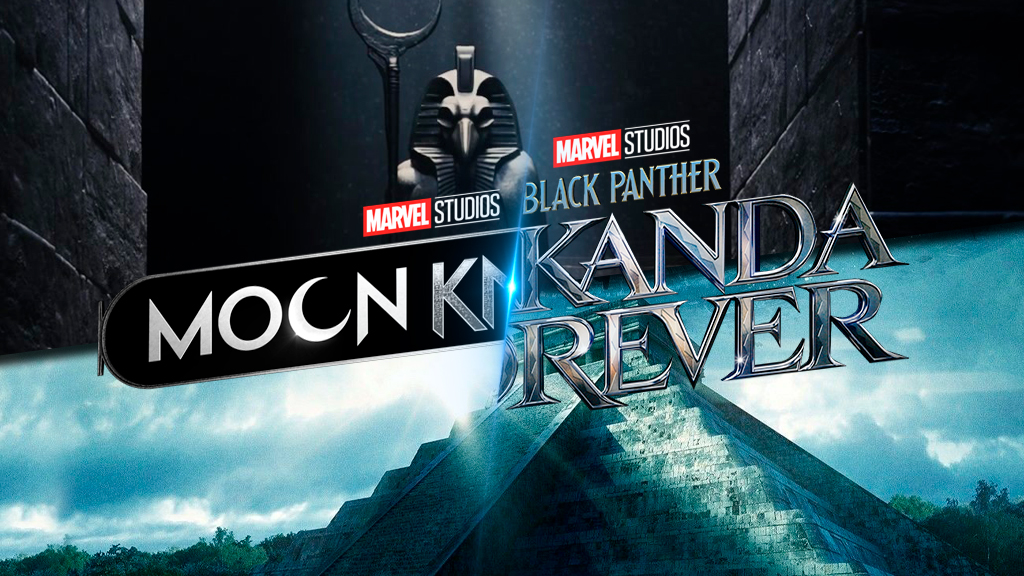
But another upcoming, and perhaps less obvious, MCU movie that might also hugely benefit from Marvel Studios embracing its mythology is none other than Black Panther: Wakanda Forever. As we already speculated last September, following the release of Shang-Chi and The Legend of the Ten Rings, the Black Panther sequel might very well decide to focus on the Aztec Empire making it serve as the grounded real-world connection to the mythical undersea kingdom of Atlantis. Going this route, and doubling down on the mythological unveiling within yet another culture depicted in the MCU, would mean opening the door to another, less recognizable, group of deities: The Tēteoh, a race of supernatural beings worshiped as gods by the Aztecs of ancient Central America, much like the Heliopolitans in Egypt or the Olympians in Greece.
The Tēteoh
Following the introduction of the titular characters in Eternals, continuing to explore the storyline possibilities set by the several Marvel pantheons, by characters beyond the realm of man, unconstrained and with a whole new set of motivations would certainly prove an interesting one. Especially because there are numerous groups left to explore: The Ahau (Mayan), The Akua (Polynesian). The Apu (Inca), The Daevas (Hindu), The Inua (Inuit), The Manidoog (Native American), and many more, including The Tuatha de Danaan and the Fomorians (both Celtic) who operate out of Otherworld, a place that is bound to make its MCU debut following the introduction of Dane Whitman, The Black Knight, in the aforementioned Eternals.
Marvel Studios’ Shang-Chi and the Legend of The Ten Rings
An interesting and easy way to justify how these characters have been on Earth all along even if we haven’t seen them or even acknowledge them before is to do what Shang-Chi and The Legend of The Ten Rings did with Ta Lo. In the comics, Ta Lo was a small “pocket” dimension adjacent to Earth, and it appears to be something quite similar in the MCU. It is described as a mystical dimension, inhabited by Chinese mythological creatures, that have managed to stay hidden not only by being difficult to access but especially by making it unclear to the outside world if it’s even a real place or not. And this is where Moon Knight‘s Heliopolis, as well as the Aztec Tlālōcān, the Greek Olympus, Otherworld, and many more otherwordly sites where gods roam, come to mind. They all share the common characteristic of being located on extradimensional realms, much like Ta Lo, with easy access to Earth through portals in the vicinity of where its inhabitants are worshipped by humans – places like Egypt, the Yucatán Peninsula, Mount Olympus in Greece, Stonehenge, and so on – making Earth the nexus of it all. A perfect answer as to how to bring the MCU to a new level of storytelling. Into The Age of Gods.
It was almost two months ago that Lucasfilm announced that the Obi-Wan Kenobi limited series would be premiering on May 25, 2022. This would mean missing out on May 4, Star Wars Day, while still landing the show’s premiere on a relevant Star Wars date, as the original Star Wars feature film premiered on May 25, 1977.
This has now changed as Obi-Wan himself, Ewan McGregor, announced that the premiere has been delayed a couple of days to the 27th, probably hinting at a weekly Friday release for the Deborah Chow directed series. But perhaps the biggest piece of news is that audiences worldwide will be greeted with a two-episode premiere, something Disney+ has done quite a few times, especially with Marvel Studios releases. While not being a huge shift, it allows Disney to circumvent the situation of having live-action series from two of its biggest franchises releasing on the same day. Marvel Studios’ Ms. Marvel has a June 8 premiere date meaning that had Kenobi kept its Wednesday slot, by its third week Kamala Khan would be joining the Wednesday party and eventually hurting both series’ numbers.
Obi-Wan Kenobi will mark the return of the aforementioned McGregor to the role, as well as see the return of both Hayden Christensen and Joel Edgerton to roles last played in Revenge of the Sith.
A likely new Marvel Studios production LLC formed a little less than two weeks ago seems to be a hint of just that. Its title, “Blind Faith Productions LLC”, feels like a perfectly condensed summary of two of Murdoch’s most defining characteristics, both physical and spiritual. But this does not mean that a new Daredevil project will debut any time soon as there’s no way of telling if the LLC is indeed for a Marvel project. As for the character of Matt Murdock, and quoting Charlie Cox himself, “expect to see him everywhere” while we wait for him to lead his own project.
Following the take on the character seen in the Netflix shows, there is still a lot to get to in terms of Daredevil storylines. The biggest selling point might be getting to witness his interactions with so many of the characters that have now become available to explore, from Echo to She-Hulk just to name a couple. But smaller details like having him don his iconic yellow suit may very well come into play. Yellow is obviously not the best color to wear while trying to remain unnoticed in the middle of the night while battling criminals (even if you can make the case for it being a great hoodie color) but bringing into the picture how it is meant as a tribute to his late father, besides a cool new look, it will certainly give us yet another layer for the character to expand and grow out from.
Limited liability companies are created to mitigate risk and keep the accounting for each project separate. More often than not, once the LLCs are established, the next step will be finding writers and eventually directors and/or showrunners, so we can only hope that that news will be coming out in the next few months.
I generally think the term “snub” is overused when applied to Oscar voting, because it implies intentionality that is often overwhelmed by the chaotic whims of the voting body. For example, I thought Simon Rex gave one of the best performances of the year in Red Rocket, but given the movie’s subject matter, unusual tone, and lack of other nominations, I think it’s fair to wonder if enough voters bothered to watch it, or really understood it. On the other hand, enough people in the writing branch and directing branch loved Licorice Pizza enough to nominate it in those categories, and it made the cut on the Best Picture ballot, where everyone votes, so it’s safe to say a fair number of folks watched that one–and liked it, too! So I do think it comes across as a snub that Alana Haim, the rock musician and first-time actress who helps anchor that movie, didn’t make it in for Best Actress. Granted, Best Actress has been one of the most consistently competitive categories these last few years, and these nominees were lighter on actresses impersonating real people than I feared. But it’s still three-fifths based-on-a-real-person performances (one of which — Kristen Stewart — I think is absolutely terrific and deserves to win) and, again, that does feel like a conscious decision, to rate Jessica Chastain‘s Tammy Faye Bakker or Nicole Kidman‘s Lucille Ball a higher degree of difficulty than Haim. I understand the thinking: Kidman and Chastain are both beloved, respected, talented performers pretending to be other performers–while Alana Haim is playing someone literally named Alana, whose real-life family plays her family in the movie, and so on. Yet what Haim does in Licorice Pizza is so complicated–funny, charming, angry, anguished, relatable, occasionally inscrutable–that attributing so much of the movie’s success to writer-director Paul Thomas Anderson doesn’t seem right to me (and I doubt it would seem right to him, either). And she does all of this as, essentially, a first-timer! Licorice Pizza is my favorite movie of 2021, and as much as I love Anderson, I don’t know if it would have hit me the same way without Alana Haim.
Mary Maerz
One of the most talked-about snubs is Denis Villeneuve not receiving a Best Director nod. I think Adam McKay also deserved a nomination in that same category for Don’t Look Up, or par with his nomination for Best Original Screenplay. But I also believe Cate Blanchett was overlooked for Best Supporting Actress for both Nightmare Alley and Don’t Look Up. Both managed to get Best Picture nominations with no acting nods, but she really stood out in both. Her character was a bit more comedic in Don’t Look Up, which is probably why none of the actors from the film ended up with nominations. But she was probably even more of a force in Nightmare Alley and carried that story.
Filip Mańka
Without a doubt, the biggest snub from this year’s Oscar Nominations is the absence of Denis Villeneuve in the Best Director category. Villeneuve is the creator, the architect for the biggest blockbuster of the year, which garnered 10 Academy Award nominations. The lack of a nomination in best director seems ridiculous and reprehensible, considering how strong Villeneuve’s presence was throughout the season, advertising Dunewith his name.Duneis an auteur film, steeped in Villeneuve‘s vision, which manifests itself in his revolutionary approach to IMAX and the portrayal of scale on-screen. As a big fan of the Canadian director’s work, I can say thatDuneis his most personal film, mixing many styles and dealing with themes close to his heart. A couple of years from now, we’ll be looking at the 2022 Oscars in disbelief that the mastermind behind one of the best sci-fi films hasn’t been nominated for an Oscar, while Kenneth Branagh has. The difference is that Dune will remain in Hollywood history, while Belfast will be forgotten by people relatively soon.
JJ Sabato
The biggest snub this year was for The Suicide Squad. I believe it should’ve been recognized for Best VFX and Best hair and makeup. For King Shark alone the film deserved this nomination, he looked incredible in every scene he was in and looked so real. Of course, Starro as well, him and his extensions as they rampaged through the streets of Corto Maltese. The makeup as well was incredible especially for characters like Polka Dot Man and Mongal. I think the VFX category this year just really dropped the ball when films like Godzilla Vs Kong, Eternals, and The Suicide Squad just were not acknowledged for their achievement in visual effects.
It’s been a weird couple years for movie theaters. Audiences have largely opted to experience their cinema from the safety and comfort of their own home, and who could blame them? There’s a global pandemic occurring at the moment. Yet, the wild success of blockbuster films like F9 and Spider-Man: No Way Home sort of put a limit on that argument. If everyone is willing to throw their lives on the line for big-budget action, were they ever really concerned at all? And if not, what type of movie will get them off their couch? The answer, apparently, is not The Green Knight. David Lowery’s epic retelling of the Arthurian classic was one of the most unique experiences I’ve ever had in a movie theater, for more reasons than one. From its heightened realism to its gripping Shakespearean dialogue, nearly every aspect of the film was executed to mesmerizing perfection. It is exactly the kind of project designed to simultaneously bait the Oscars and put people in theater seats. Which is why it’s so baffling Knight received exactly zero Academy nominations. If not for Best Picture, the movie should have at least scored noms for Adapted Screenplay or Cinematography. And Dev Patel? Robbed.
The biggest Oscar snub in my opinion is that they still haven’t added a new nomination category for stunt work in the industry. It’s an essential aspect of cinema and it still gets no recognition by what is claimed to be one of the biggest award ceremonies of the industry. There has been some amazing stunt work done throughout the year and it just seems like a shame that they still refuse to give it any love.
After what can perhaps be described as a rather lackluster series so far, The Book of Boba Fett has delivered not only its best episode yet, but probably one of the best Star Wars Disney+ episodes ever. It’s interesting how it managed that on an episode where the titular character doesn’t show up, even if the reasons for that tend to be pretty obvious. Let’s dive in.
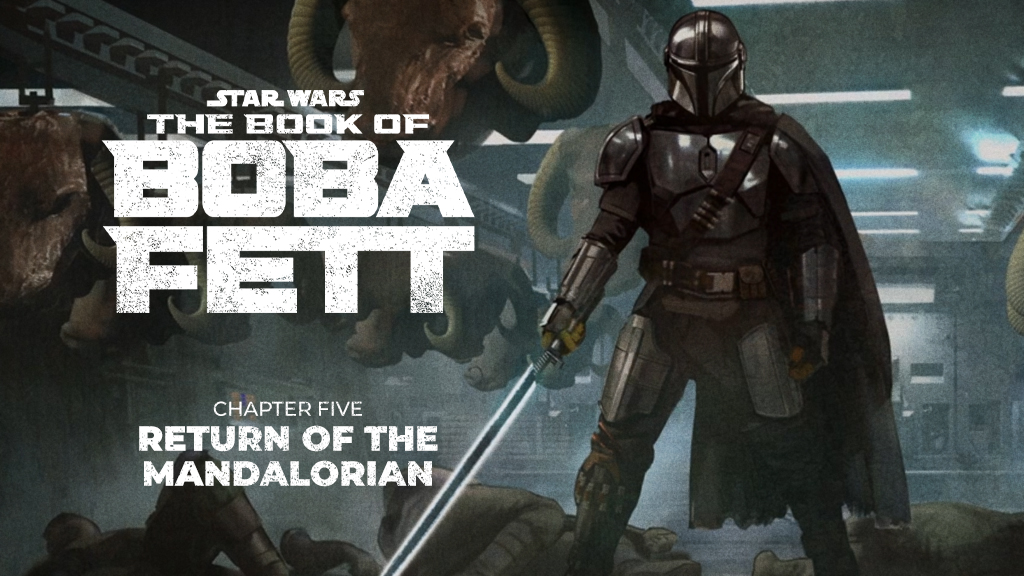
After the obvious hints on last week’s episode, it’s no surprise that Din Djarin finally made his debut on the show. And much like Ahsoka Tano’s introduction on Chapter 13 of The Mandalorian, we didn’t have to wait long for that to happen, with the series putting aside an endless tease and going straight into it. By giving us an entire episode following Din the show cashed in on the growing expectations to see what was to come next in the journeys of Din Djarin, following Grogu’s departure and his acquiring of the Darksaber. By expanding his story and also tying it with Boba Fett’s it managed to deliver a compelling addendum to both The Book of Boba Fett and The Mandalorian.
One might say that a few of the issues that have made The Book of Boba Fett pale in comparison to its predecessor might come to the (lack of) novelty of it all. Having a show not only set on Tatooine, perhaps the most uninteresting of the interesting planets of the Star Wars universe but also focusing half of your runtime on flashbacks that do little more than connecting dots one already knew existed doesn’t exactly invite the awe of discovery one often associates with Star Wars. With the flashbacks presumably ending in Chapter 4, given Boba Fett being finally healed of the injuries inflicted on him by the Sarlacc, it was now time to move forward and bring something new to the table.
This breath of fresh air is personified by the return of Din Djarin. His on-screen magnetism is perhaps best explained through the tracking shot set between 07:05 and 09:21. We follow him go up an elevator, delivering his bounty, collecting the information he needed, and then leaving, all on a single take, with the camera focusing on him at all times. The Disney+ shows have been known for doing something similar to what Peli Motto did with Din’s new ship when she states “Not a gram of fat on her!” in order to make it go faster. They always seem to be able to cut the superfluous shots and give us the bare essentials that the story needs in order to move forward at a more pleasant pace. So it is interesting to see an episode take its time with the reintroduction of a character so that when it’s done everybody had the opportunity to settle in and begin the episode on the same page. That can only speak of how much the character means to so many, even if it’s only been around for a little over two years.
By making Din Djarin the star of the show we managed to get off-planet and onto some new and interesting locations, one of the aspects where The Book of Boba Fett doesn’t really deliver. Elysium and Interstellar came to mind when we got to the city in space where Din delivers his bounty. But the references within the new and exciting location and action shots didn’t stop there as the flashbacks to the destruction of Mandalore was reminiscent of Terminator 2: Judgment Day with the KX-series security droids taking the place of the Terminators stepping on human skulls. All these references, combined with the connections to past Star Wars projects as seen when Din is testing out his Naboo N-1 Starfighter through Beggar’s Canyon, Motto’s BD droid, and a few more, could feel gratuitous but they all end up shining by flowing nicely into the plot and being used as an integral part of the story.
At the end of the day having a Din Djarin-centered episode also benefits his future endeavors. Besides setting up what is sure to be a transformative final act for The Book of Boba Fett, having Chapter 5 explore the present state of The Tribe, the group hidden in the Mandalorian covert in the sewers of Nevarro, first introduced and mostly destroyed in The Mandalorian, also perfectly sets up what a The Mandalorian season 3 might be all about by addressing the legacy of the Darksaber and how that impacts Din’s relationship with his fellow Mandalorians. With Din left on his own, and much like in his own show battling his teachings after realizing there were other ways to honor his Mandalorian background, his search for Grogu will now begin as he plans to deliver him his own mesh armor made out of beskar.
This chapter feels like one that jumpstarts the show from its lethargic state, giving it a much-needed energy boost as we get to the final two episodes with a greater sense of urgency, with more dynamic character dynamics on the horizon. The Book of Boba Fett might not be living up to the hype, but there is no reason why it can’t still surpass it.
With the increasing amount of exclusive Disney+ content coming from Lucasfilm and Marvel Studios in 2022, it has become somewhat of a puzzle to figure out how to fit everything they have to offer a single calendar year with the least amount of overlap. With this in mind, the latest issue of Star Wars Insider managed to add another piece to the said puzzle, as it announces that Star Wars: The Bad Batch season two will start streaming this spring, as shared by @WookieNews on Twitter
The first season of the Lucasfilmanimated show made its debut on May 4, 2021, a.k.a. Star Wars Day, something that could happen again in 2022. That same date for this year has long been rumored to be connected to the Obi-Wan Kenobi series debut, but it was never officially confirmed. Considering other Disney+ exclusives, May 4th is the expected day for Marvel Studios‘ Moon Knight to stream its finale after a six-episode season that starts on March 30th. This would depend if, unlike WandaVision and Hawkeye, Moon Knight sticks to a one-episode premiere, something that hasn’t been confirmed.
There’s precedent for Disney+ to be streaming content from their two biggest franchises at the same time, as long as one property is animated. This happened last year when the aforementioned The Bad Batch season one streamed alongside the entirety of Loki‘s first season. This means that a May 4 premiere for the animated show might still be on the table, even with the Marvel Studios series led by Oscar Isaac streaming that same day. With Disney+ usually releasing trailers for its upcoming shows two months ahead of its release, the release of The Bad Batch season 2 trailer might give us a better idea of when its premiere might actually be.
Chapter Four of The Book of Boba Fett hinted in a big way at the return of a familiar Mandalorian, Din Djarin, in one of the final episodes of the season. Boba is in need of some help facing up against the Pykes and his former ally, who he met during the events of The Mandalorian‘s second season. Let’s be honest, featuring the Ludwig Göransson score makes it pretty crystal clear Djarin will indeed be showing up.
It has long been rumored this cameo would occur, and the fact that Djarin is constantly wearing his helmet makes it easier for him to be featured since Pedro Pascal‘s presence on set would not be necessary. All he has to do is voice the role at a later date. This does not mean that it won’t be Pascal portraying the character, just that it wouldn’t be something a schedule conflict between production and the actor would be able to prevent. What remains to be seen is just how Djarin will travel through the galaxy after we witnessed the destruction of his ST-70 Assault Ship, the Razor Crest, at the hands of Moff Gideon’s artillery.
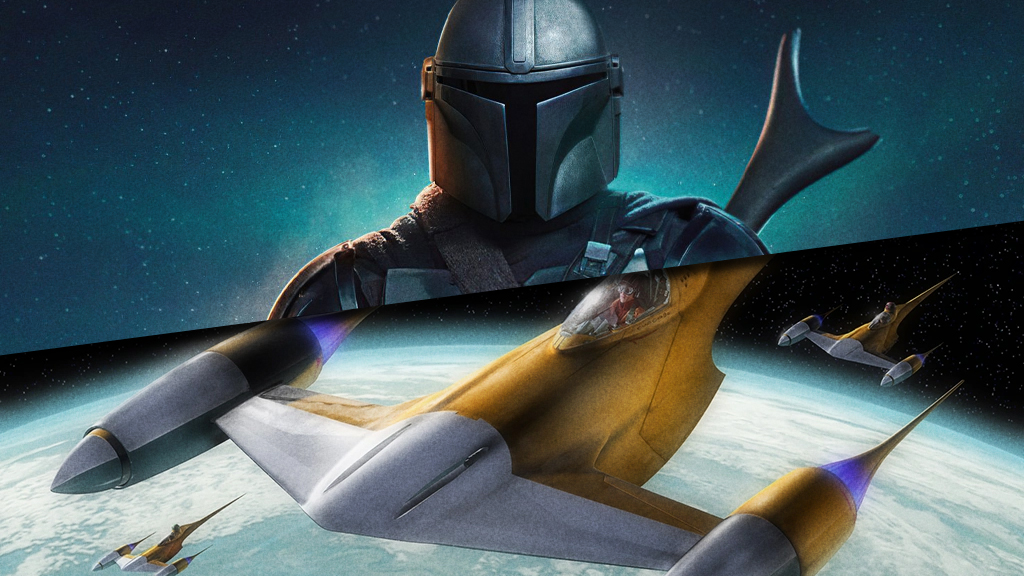
A rumor being shared by The Bespin Bulletin, following on-set reports going back over a year, states that Djarin will be seen piloting a Naboo N-1 Starfighter, first seen in Star Wars: Episode I – The Phantom Menace back in 1999. This could mean that Djarin would have left his bounty hunting days behind him as this ship isn’t exactly well known for its storage capacities. It would make it difficult to transport prisoners and carbonite slabs. Another possibility is that he might still be on the market for a ship similar to the Razor Crest, and the Naboo Starfighter is just a temporary means of getting around. It would certainly be interesting to see the ship ditching the usual yellow keeping its chrome look throughout, mirroring Djarin’s beskar armor.
If this rumor pans out it would be an extremely cool addition to the series and to this particular place in the timeline, as the ship has always been a fan-favorite ever since its debut on the big screen. It could even help to tease more prequel references, characters, even or locations in the upcoming The Mandalorian‘s third season, which is set to debut in the not so near future.
A show focusing on Boba Fett has always felt the optimal way to re-introduce the Star Wars criminal underworld to live-action Star Wars. Solo: A Star Wars Story took some steps in that direction but it only really seemed to skim the surface. But now, and considering Lucasfilm‘s track record when dealing with their Disney+ projects, we might be getting exactly what we wanted.
Following the tremendous success of The Mandalorian, Lucasfilm has decided to use an almost opposite strategy to the one Marvel Studios has been using since 2008 when introducing new characters/shows. Instead of having separate introductions before bringing them all together in the same feature, Lucasfilm has decided to branch out and use an established project to welcome new characters before giving them their own series. We’ve seen it happen with Ahsoka Tano, Boba Fett, and in all likelihood with Cara Dune and the Rangers of the New Republic project which was later abandoned.
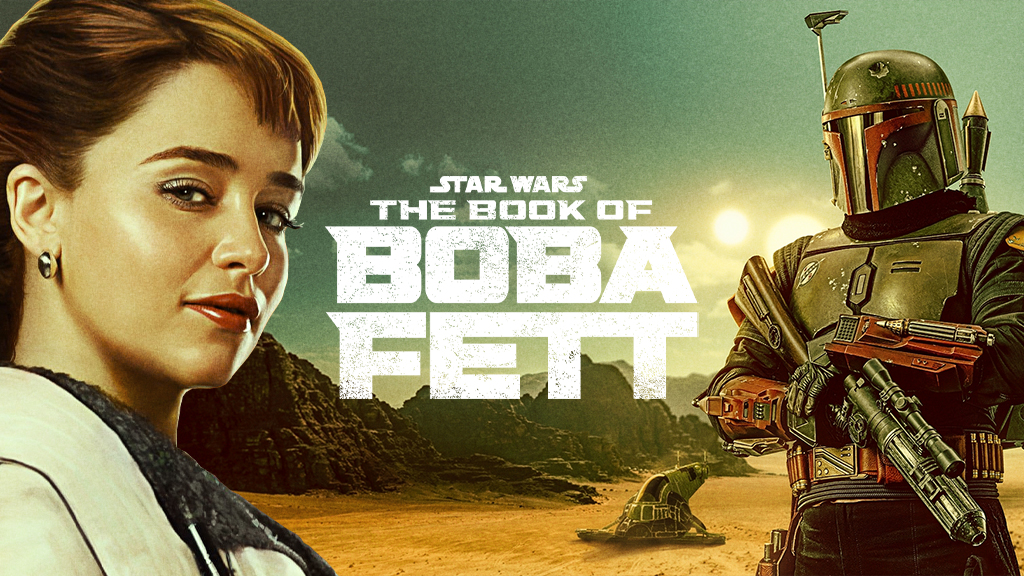
This would mean that having yet another show spin-off The Book of Boba Fett might be more than just a mere random possibility. And bringing into the fold comic book storylines (the same comics that first introduced us to Black Krrsantan) as well as rumors that have been circling about the possible return of a Solo: A Star Wars Story character (that has been prominently featured in the latest Star Wars comic crossover The War of the Bounty Hunters) we might just have found who might be showing up towards the end of the season. Emilia Clarke‘s Qi’ra.
Master Bib did not have the power of Jabba, so he relied on uneasy alliances to preserve his tribute and title.
8D8
Mayor has no power. Somebody else is behind that play.
Fennec Shand
There are already a few hints regarding how someone yet undisclosed is pulling the strings, with the only reason that Bib Fortuna managed to stay in power for as long as he did being that someone wanted him there. Watching the Pikes arrive on a starliner ahead of battle, meaning their forces are off-world, also helps to make everything seem to be about something even greater than Tatooine’s issues themselves. With Qi’ra’s importance in recent and upcoming comic runs as leader of the Crimson Dawn criminal syndicate hinting at a possible bigger role to play in the grand scheme of things, combined with her active role in the dismembering of the Hutt Council in The War of the Bounty Hunters which left the Hutt cartel without clear leadership making her be at odds with the remaining Hutts, all seem to play into the frictions The Book of Boba Fett has already established. An interesting new one would be her relationship with Fett since she was the one who managed to steal Han Solo’s frozen carbonite body from Fett before he got it to Jabba the Hutt.
Almost 20 years have passed in-universe since the events of Solo: A Star Wars Story (set around 10BBY) but given the way Qi’ra has been represented in comics, looking the same as she did back then, it wouldn’t be too hard to get Clarke to reprise the character without major appearance concerns. But even if her showing up might have her looking a bit older, that could perhaps hint at a future series focusing on herself but set in the past, set right after the ending to her on-screen debut.
Continuing with The Mandalorian‘s season 2 tradition of bringing into live-action Star Wars characters first introduced in another medium, The Book of Boba FettChapter 2 brought us the Wookie bounty hunter Black Krrsantan. Unlike Bo-Katan, Cobb Vanth, and Ahsoka Tano who either made their first appearances in animated form or in a novel, Black Krrsantan was first introduced in a comic book, 2015’s Darth Vader #1, back when Marvel Comics relaunched its Star Wars line.
It was there that Vader, doubting the Emperor’s true intentions following the events of A New Hope, requested that Jabba The Hut loaned him his two most reliable bounty hunters so that he could use them to conduct two separate investigations, without the Emperor’s knowledge. The two names brought forward were none other than Black Krrsantan and Boba Fett. While Fett was tasked with tracking down the rebel pilot responsible for the destruction of the Death Star, Black Krrsantan is ordered to find and capture an agent of the Emperor himself.
Throughout his comic book appearances, he crossed paths with a number of legacy characters besides Fett, including Ben Kenobi on the sands of Tatooine. At one time, tasked with the mission to capture Luke, he even crashed into the Millenium Falcon which lead to him meeting up with Han Solo, C-3PO, R2-D2, and eventually even fighting Chewbacca. But what eventually turned out to be one of his most meaningful connections to another character was his relationship with human female archaeologist Chelli Aphra, a.k.a. Doctor Aphra.
Aphra was also recruited by Darth Vader after the Battle of Yavin, unlike Black Krrsantan, perhaps due to her strong(er) moral compass, soon found herself running from the Sith Lord following his attempt to end her life after she was no longer of use. Black Krrsantan played an important role in all of this since it was him that managed to save Aphra only because she owed him money and letting her die was, simply put, a bad investment. He then stayed with her for a while, expecting her to comply with his demands and pay her due.
All through his chronicled adventures, Black Krrsantan has always presented himself as a ruthless and fierce warrior, and with his live-action debut apparently putting him up against the mighty Boba Fett, his former partner in crime, we are perhaps due a fight for the ages. If his presence in The Book of Boba Fett may open the door to a few other live-action character introductions, that remains to be seen. But even if Doctor Aphra might be seen as a long shot, characters like Triple-Zero and BT-1 who also have a history with the Wookie gladiator would also be extremely welcomed additions to live-action Star Wars.
Cookie Consent
We use cookies to improve your experience on our site. By using our site, you consent to cookies.
This website uses cookies
Websites store cookies to enhance functionality and personalise your experience. You can manage your preferences, but blocking some cookies may impact site performance and services.
Essential cookies enable basic functions and are necessary for the proper function of the website.
Name
Description
Duration
Cookie Preferences
This cookie is used to store the user's cookie consent preferences.
30 days
These cookies are needed for adding comments on this website.
Name
Description
Duration
comment_author_email
Used to track the user across multiple sessions.
Session
comment_author_url
Used to track the user across multiple sessions.
Session
comment_author
Used to track the user across multiple sessions.
Session
Statistics cookies collect information anonymously. This information helps us understand how visitors use our website.
Google Analytics is a powerful tool that tracks and analyzes website traffic for informed marketing decisions.
Contains information related to marketing campaigns of the user. These are shared with Google AdWords / Google Ads when the Google Ads and Google Analytics accounts are linked together.
90 days
__utma
ID used to identify users and sessions
2 years after last activity
__utmt
Used to monitor number of Google Analytics server requests
10 minutes
__utmb
Used to distinguish new sessions and visits. This cookie is set when the GA.js javascript library is loaded and there is no existing __utmb cookie. The cookie is updated every time data is sent to the Google Analytics server.
30 minutes after last activity
__utmc
Used only with old Urchin versions of Google Analytics and not with GA.js. Was used to distinguish between new sessions and visits at the end of a session.
End of session (browser)
__utmz
Contains information about the traffic source or campaign that directed user to the website. The cookie is set when the GA.js javascript is loaded and updated when data is sent to the Google Anaytics server
6 months after last activity
__utmv
Contains custom information set by the web developer via the _setCustomVar method in Google Analytics. This cookie is updated every time new data is sent to the Google Analytics server.
2 years after last activity
__utmx
Used to determine whether a user is included in an A / B or Multivariate test.
18 months
_ga
ID used to identify users
2 years
_gali
Used by Google Analytics to determine which links on a page are being clicked
30 seconds
_ga_
ID used to identify users
2 years
_gid
ID used to identify users for 24 hours after last activity
24 hours
_gat
Used to monitor number of Google Analytics server requests when using Google Tag Manager
1 minute
Marketing cookies are used to follow visitors to websites. The intention is to show ads that are relevant and engaging to the individual user.
Pinterest Tag is a web analytics service that tracks and reports website traffic.