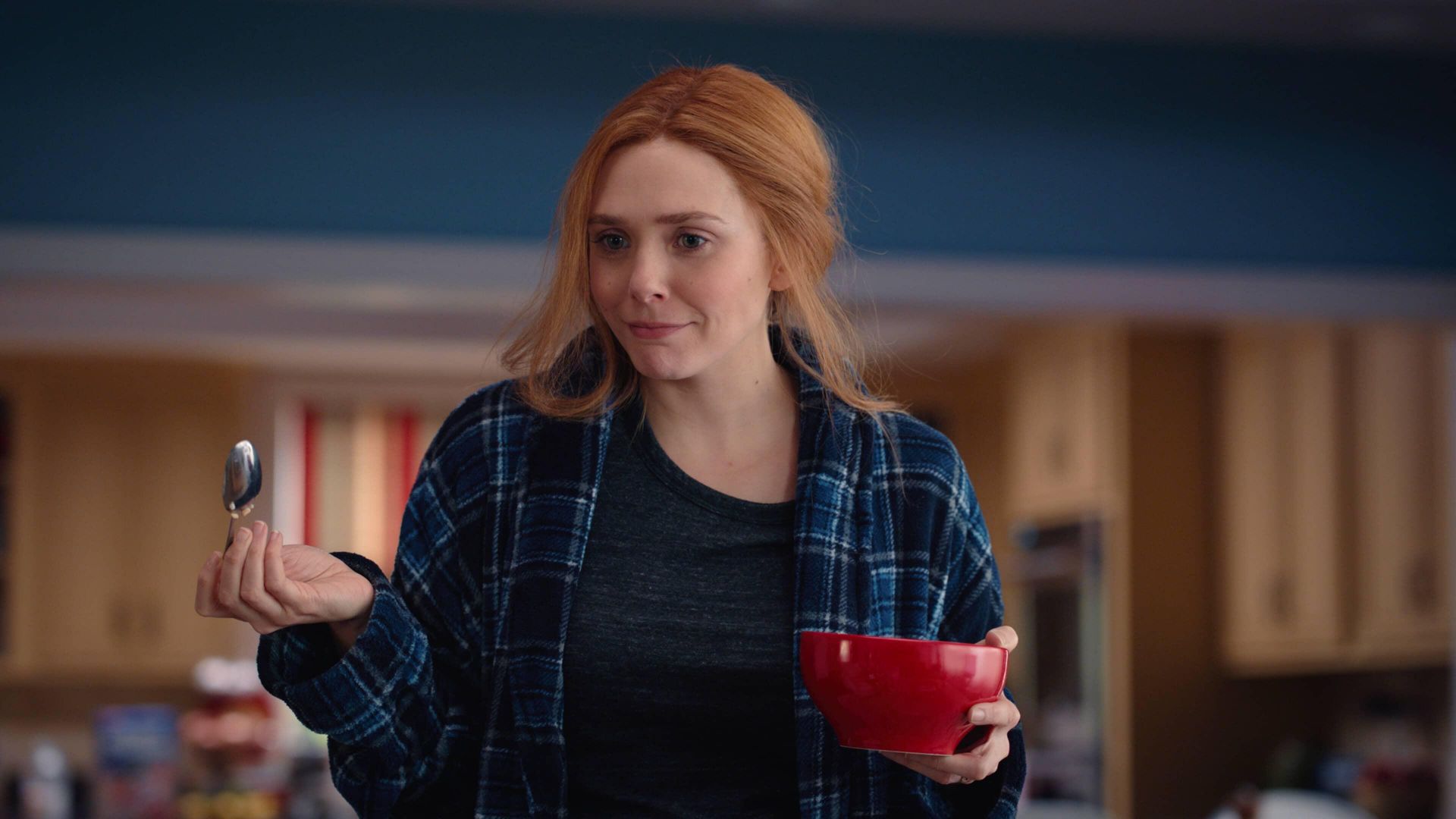
All the initial weirdness surrounding its approach to storytelling hasn’t stopped WandaVision from coming through with a big part of what the MCU Disney+ shows set out to accomplish: Substance-filled deeper dives into each character they decide to focus on. Something that the runtime of the movies never seemed to allow. At least not at this scale.
Even with the hexposition-heavy episode we got this week, that some might not enjoy, it’s hard not to acknowledge that every sequence was carefully set up so we, the viewers, got the payoff of all those years of either only getting glimpses or only hearing about Wanda’s tragic youth, and not less painful adulthood. But for that to happen it took slowing things down, spending time with the character every week, seeing her go through a somewhat mundane hexistence (I’ll stop), living her life, as we took it all in, sometimes not even fully understanding that what initially might have seemed to be holding back the plot of the show, is what made it even more meaningful in the end.
We all got to know characters like Tony Stark or Steve Rogers pretty well. Each had its own trilogy of films and was the central focus of more than one Avengers movie. As for Wanda and Vision, like most other MCU characters, they seemed to inhabit a smaller space where their own interests were rarely under the spotlight, where context was often lacking and their paths seemed to follow along with the story being told have little say in which steps to take next. But WandaVision, in that regard, is a gamechanger, to a point where one could argue that Wanda has now become one of the most examined MCU characters, something that served her well. We were given the chance, and the time, to follow her most profound life experiences that are just now culminating in was is sure to become a character-defining season finale, propelling The Scarlet Witch into Phase 4 of the MCU.
Taking into account how the character-study WandaVision ultimately became, making it clear how Wanda now has the potential to be one of the most interesting and complex inhabitants of the MCU, it’s perhaps safe to assume that other shows might follow its lead. Previously established characters that weren’t given the time to be properly presented to audiences, in all their intricacy, may get that change down the line, and new ones will use the combined runtime of their own show’s episodes to make the usual MCU origin-story something of the past, turning it into something bigger.
All it took for us to get here was for audiences to allow themselves to take things slower, not to rush to the end, and not to seek that every single question should be answered as fast as possible. Just like some great meals, if you leave it simmering you might just end up getting the best out of each ingredient. In Wanda’s case, we can now safely say we got to meet the real her, and not just the flashy Avenger we had grown accustomed to. Here’s hoping that the streaming side of the MCU lets us continue to do the same with others.
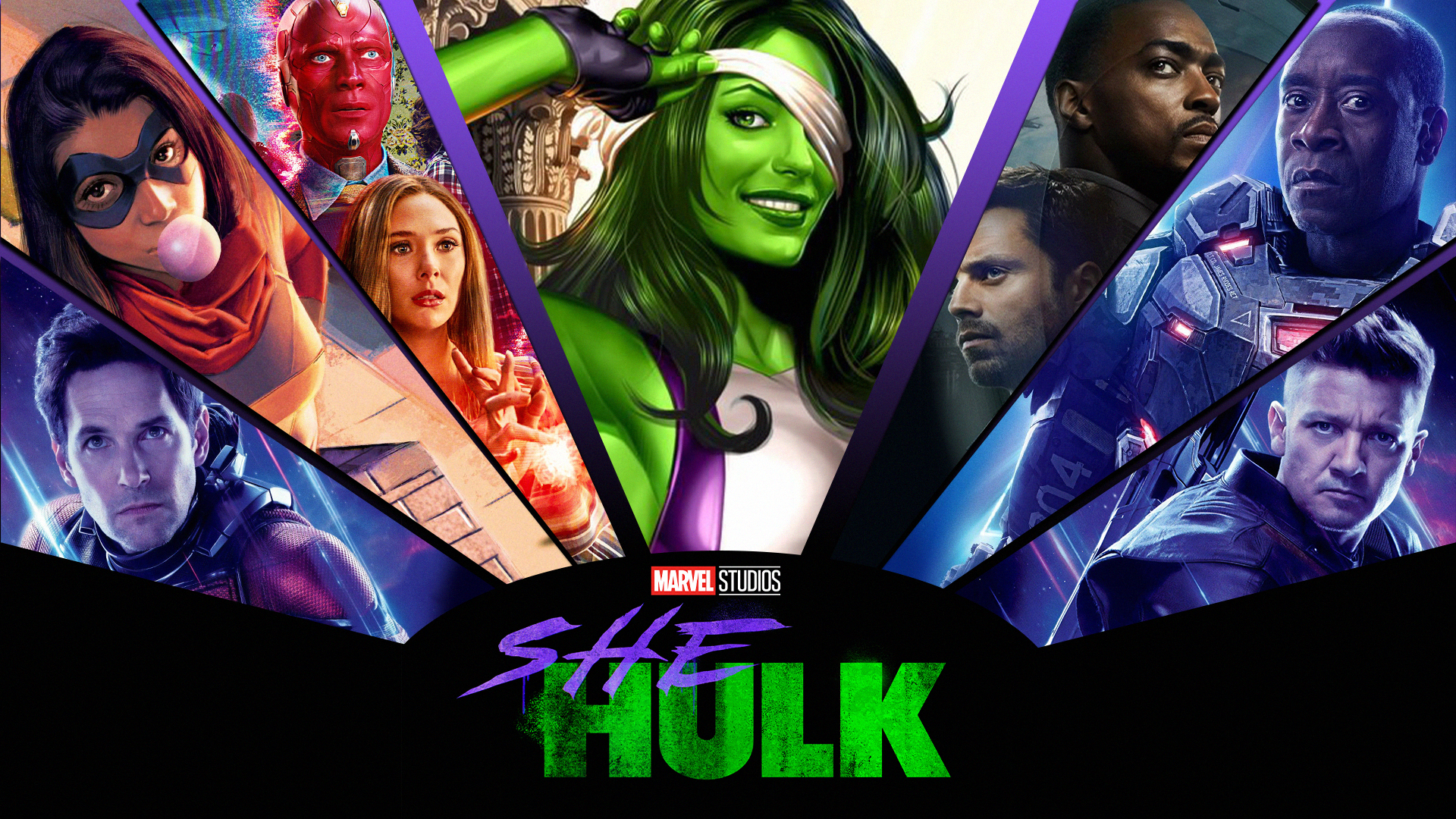
While everyone is focusing on the supernatural aspects of WandaVision, Marvel Studios will introduce a different perspective of Phase 4 in less than a month with The Falcon and The Winter Soldier. Just like how Wanda’s story is setting up, what I like to call, the Multiverse Arc of the MCU, I suspect that the next Disney+ show will possibly set up not just one but multiple arcs. For example, I imagine it will be a key piece in setting up the superpowered team known as The Thunderbolts. This set-up may not be the only thing that the upcoming series might tackle. I suspect that the Sokovia Accords might play an essential role in the story, which will start to unravel once She-Hulk releases.
If we look back at the series description, it highlights that the series will focus on superhuman legal cases. Now, if you consider everything that is happening in the MCU, by the time She-Hulk arrives on our television, which will presumably be in 2022. The superpowered community may lose face in the public eye as future events unfold. The Sokovia Accords are still in effect, as confirmed by Agent Jimmy Woo during an episode of WandaVision. So what does this all entail?
According to my current theory, She-Hulk may be based around Jennifer Walters presenting a case that the Sokovia Accords are unconstitutional. It might build-up to her asking the United Nations to revoke them. Introducing Jennifer Walters into the MCU at this moment is by no means an accident, and this show has the potential to showcase Walters’ abilities both in the courtroom and in battle. This story also sets up what was teased in the rest of the show’s description.
She-Hulk will welcome a host of Marvel characters to the series, including the Hulk, played by Mark Ruffalo, and the Abomination, played by Tim Roth.
Notice the keywords in that description hinting at a host of Marvel characters? It confirms that Banner and Blonsky will not be the only MCU characters in the show. I suspect that given the legal aspect of this show, we might see several MCU characters pop in as potential witnesses that can either make or break Walters’ case. Sam Wilson, Wanda Maximoff, Vision, Kamala Khan, James Rhodes, and any other Marvel Cinematic Universe hero could be called into the stand.
The CW has been no stranger to the superhero family story. From Arrow’s team and family drama to Black Lightning’s father/daughters with powers dynamic, the form and the format have been well established. Enter Superman & Lois which premiered this past Tuesday and gave a look at Clark Kent in a different light.
The show wastes no time with the often told Superman origin story and uses the first ten minutes as a refresher. One immediate observation is that this show appears to have a higher budget than its sister shows. It feels cinematic, and time isn’t wasted in showing Supes in action with physical combat and feats of strength. This takes place years after the events of Crisis on Infinite Earths, as Lois and Clark’s sons are teenagers. Jonathan (Jordan Elsass)is the cocky athlete and Jordan (Alex Garfin) is the angst ridden adolescent.
Tyler Hoechlin feels more comfortable and confident in the role of Superman than previous Arrowverse iterations. There’s a regal presence, an empathetic grace to his character that’s apparent early. Bitsie Tulloch’s Lois maintains the strong personality and inquisitive nature that is necessary for the character to succeed.
The show tackles the question of how can Superman be the hero the world needs and be a good father. Contextually you can make the argument that it’s different than other heroes as Superman is the world’s champion, not just a city or town. There are legitimate complications, particularly when Clark had never told his sons about his origins or their heritage. The classic sins of the father effect, except you can understand why Clark didn’t want to burden his sons with his own fears. As Lois and Clark disagree, he states, “It’s too dangerous for them to know.” Lois replies, “It’s more dangerous if they don’t.” All of this is magnified when Martha Kent dies due to a stroke which forces Clark to return to Smallville.
Later an incident takes place which forces Clark to reveal his origins to his sons which understandably upsets them. This is where the show gets interesting as there’s legitimate friction in trying to deal with the lies that Clark has told. Jordan Kent (who has powers) is someone to watch as moody and temperamental as he is, and Jonathan (who doesn’t at this point) is more self-assured. Their story arc is fascinating and potentially more compelling than anything else.
The other character who makes an impact immediately is Sam Lane (Dylan Walsh) who wants Superman available at all times and Lois realizes that Clark needs to be around more often. Just imagine Superman as a stay-at-home dad, funny right? As Lane states in the pilot, “You may have fallen in love with Clark Kent, but you married Superman. And Superman doesn’t get to have a normal life, no matter how much you want one for him.”
Going forward, the show’s main challenge as always is to sell the audience on not only the emotional aspect but the physical. We want to see Superman fight monsters, aliens, and all types of obstacles as action provides the discourse. We get that at the end of the pilot as Superman fights and loses to a Captain Luthor in a super suit. Is he from the future perhaps? It was a good cliffhanger to end the pilot on.
The man of tomorrow has a lot more on his plate than kryptonite and saving the world. As it turns out, both Clark and Lois have quite the challenge on their hands. Superman & Lois airs at 8pm every Tuesday on the CW.
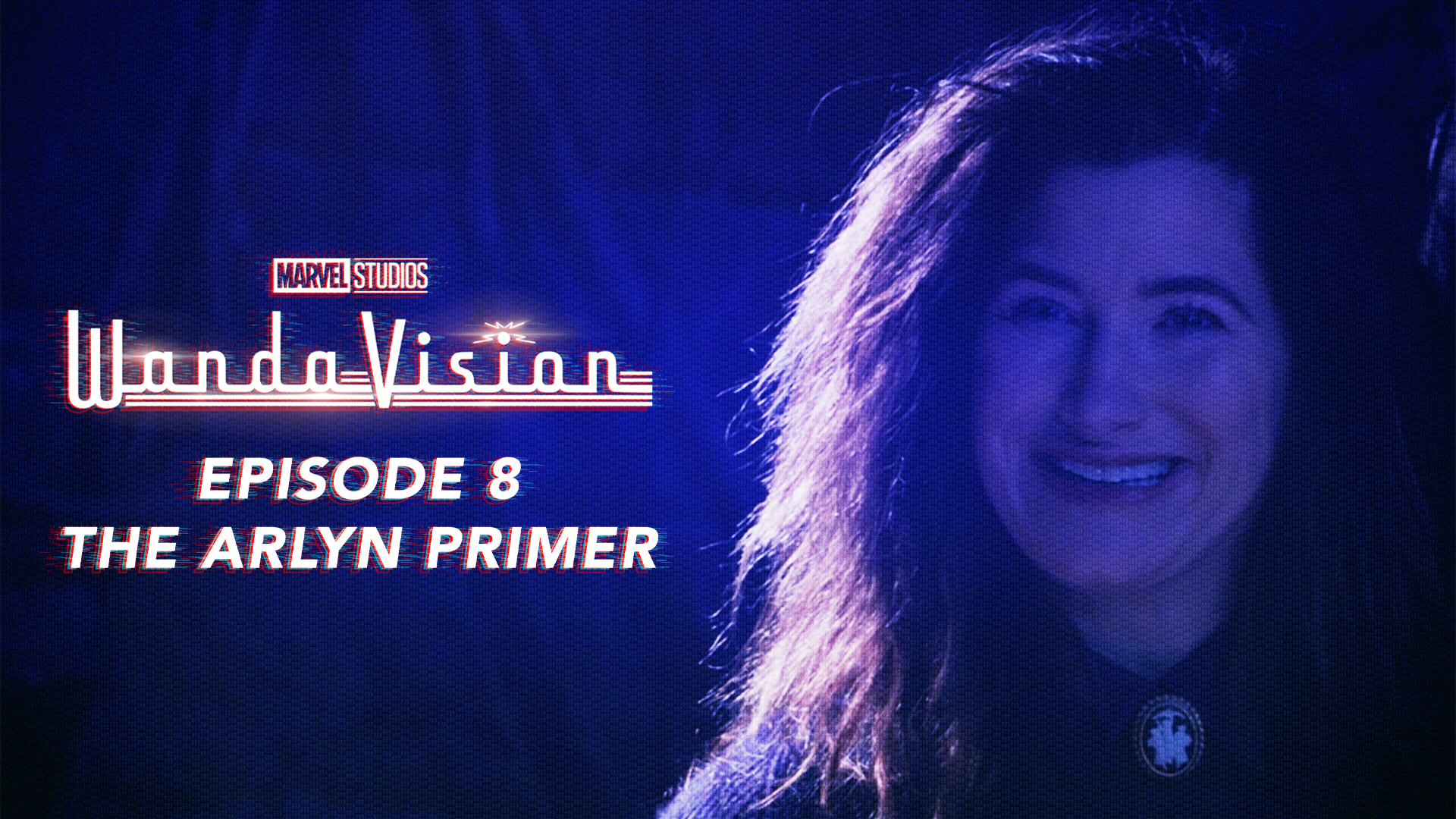
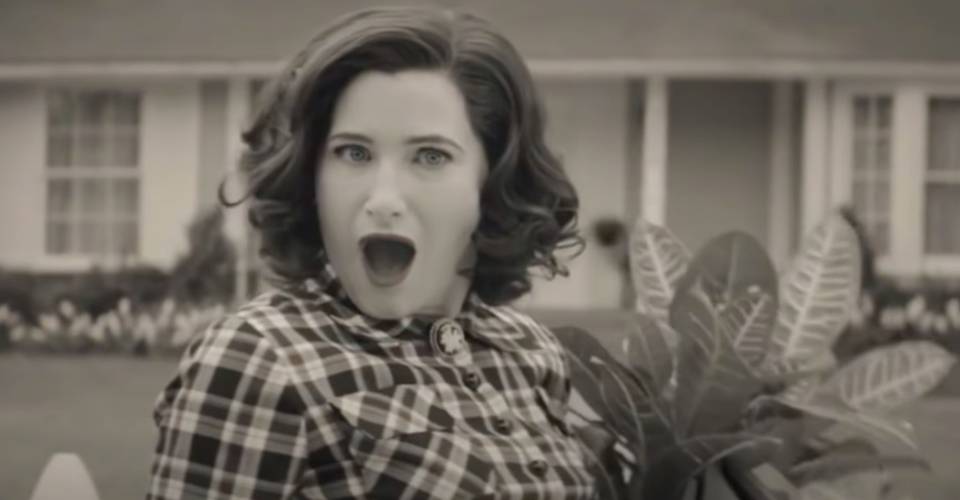
That last episode of WandaVisionwas CRAZY!!! All of the previous episodes had been very wild, but this episode was the most revealing so far. For instance, Vision met Darcy and now he knows that he is actually dead. Wanda was having a really bad day, so Agnes took the twins off her hands, we later see that Agnes has LITERALLY taken the kids off of Wanda’s hands as they are gone! That discovery led to the big reveal where we learned that Agnes is Agatha Harkness and was behind EVERYTHING. We also see a tiny glimpse of Monica’s powers. With only two episodes left we finally get an actual idea of what’s going on in Westview.
The first few episodes were told almost entirely from the perspective of Wanda and Vision, with a little bit of S.W.O.R.D’s perspective mixed in. As the series has progressed, we have seen more and more of S.W.O.R.D’s perspective. At this point, it is obvious that these two perspectives are about to collide over the next 2 episodes. When Agent Woo hacked into Hayward’s computer system, there was a project called Cataract which obviously has something to do with Vision. Since cataracts cloud your vision, Hayward definitely has something up his sleeve and may somehow be willing to use Vision to hurt Wanda.
Arlyn’s Assumptions
I have some thoughts on how Hayward might use Vision. I think he might have done something to Vision when they had him in the S.W.O.R.D. lab, like placing some device in his head that will flip a switch and allow Hayward to control him. Or maybe he could’ve taken out the “Jarvis” parts of Vision from Tony Stark making him “more” like what Ultron had in mind for him. Maybe Hayward’s whole purpose with Vision is to destroy Wanda.
Now we HAVE to talk about the twins. What happened to them? I believe that Agnes is going to try to take away Billy’s powers for herself. Maybe she plans to take all of the magic out of both of them. Tommy might not be as powerful as Billy, but given how they were born, he is still “magical.” About a year ago, my super awesome dad broke the news about Doctor Strange showing up in WandaVision. With all of the magic things going on in Westview, what kind of Sorcerer Supreme would he be if he didn’t show up? There are only two episodes left so something BIG has to happen very soon.
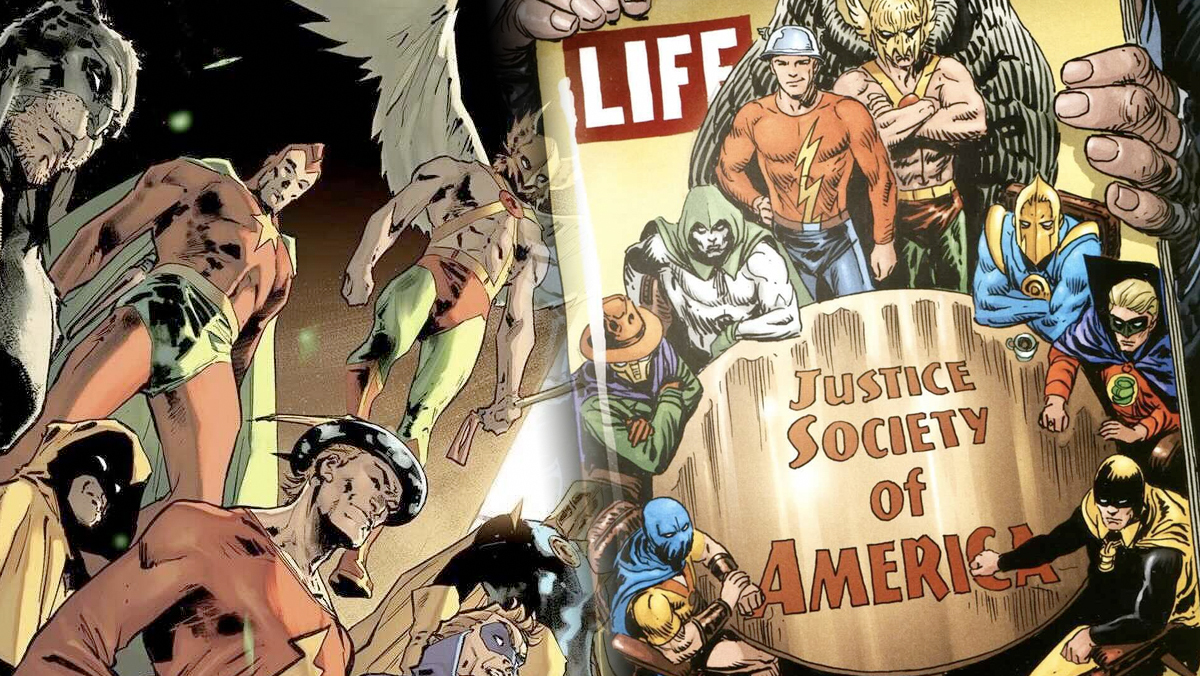
The Justice Society of America is known as one of the first superhero teams in comic history. They recently got brought back in DC’s Doomsday Clockevent. At one point, Doctor Manhattan erased them from the timeline. Yeah, I am not sure why either. The team has become somewhat of a hot topic, showing up in the recent Death Metal storyline and taking centerstage in CW’s Stargirl. We also got the confirmation that the JSA will be making their way to the DCEU in the highly anticipated Black Adam film.
The roster will consist of Doctor Fate, Hawkman, Cyclone, and Atom Smasher. With this news, many may begin to wonder why the team roster seems so small. Also, why is it missing so many key members that made the golden age so special? So far, we can figure out from the news of the upcoming film and knowledge of past iterations of the team that this probably isn’t the first incarnation of the JSA within the DCEU.
The first piece of evidence stems from a line said by Wonder Woman in Zack Snyder’s Justice League. In a conversation with Bruce, Diana tells Bruce that “They said the age of heroes would never come again”. It could be possibly referring to the gods of Olympus, but I feel as though the line could mean a whole lot more. Wonder Woman has been part of the JSA on multiple occasions. She even leads the team in the upcoming animated feature Justice Society: World War II. In Wonder Woman1984, Diana may have stayed out of the public eye, but she was still active in her efforts to help people.
In Adventure Comics #466, following the end of the war and a decline in supervillains, villain Per Degaton had taken full advantage of the Red Scare and coerced the US government into believing these masked heroes could serve as a threat to the country. Consequently, the government forced these heroes to reveal their identities if they wish to continue. The team concluded that to keep themselves and everyone they loved around them safe, the best course of action would be to retire and disband the Justice Society. This storyline could serve as a reason why Superman was one of the first heroes to pop up and why the US government had been so critical of Clark’s actions.
Another intriguing detail about the golden age team is the chosen roster for their upcoming appearance in Black Adam. It isn’t just the roster but also how they are going to get introduced in the film. These details come from casting info for a character known as Ma Hunkel, a member of the original JSA who will appear in the upcoming film. The breakdown states that Hunkel will be the caretaker in Hawkman’s museum. In Geoff John‘s run, she served a similar role. She was the caretaker of the JSA headquarters when they were brought back into the modern-day DC universe. Ma Hunkel’s inclusion isn’t the only brow raiser, as the roster itself includes characters known as Cyclone and Atom Smasher. They will be played by Quintessa Swindell and Noah Centineo respectively.
These iterations of the characters are early recruits like they were in John‘s team. The original lineup included iconic characters that have evolved and inspired new iterations, such as DC staples like Green Lantern and The Flash, two notable absences from this roster. These absences may serve to tell even more stories in the DCEU, such as period piece set during WW2 featuring iconic members such as Hourman, Dr. Midnite, Starman, Sandman, Johnny Thunder, Mr. Terrific, Wildcat, and more.
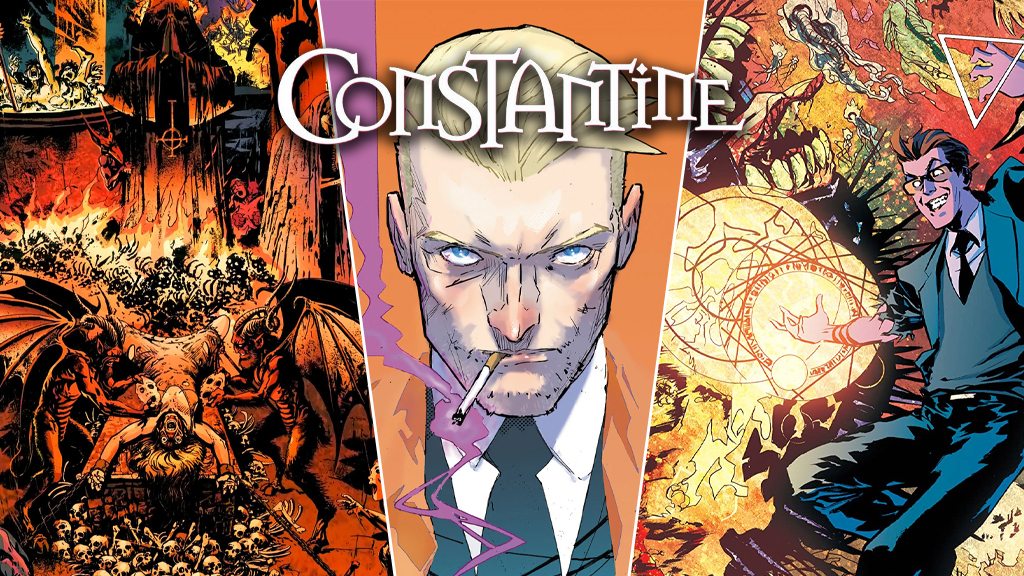
Earlier last year, news broke that J.J. Abrams and his production company, Bad Robot, had signed a deal with Warner media and HBO Max to develop series and films based around the characters of DC’s Justice League Dark. Just a few days ago, it was announced that Abrams had begun development on new series following John Constantine, everyone’s favorite demonologist, but it really depends on who you’re asking. The series is set to be written by Guy Bolton, who’s already written a pilot script for the project, and casting has begun with the production looking for a late ’20s, BIPOC actor to portray the character in the upcoming series and any spin-offs or team-ups that may happen down the line. While it’s currently unknown if the series will find itself in the mainline DCEU, Constantine is a character with a rich history and riveting stories, and we’ve thought up just a few that would make for great a great adaption.
Marks of Woe
One of the most recent stories featuring Constantine was written by Simon Spurrier and released late last year. The book John Constantine: Hellblazer features the characters return to the Sandman Universe, with Constantine finding himself taken from an Apocalyptic future and placed right back into his old stomping grounds of London. Upon his return, Constantine has come to realize that there’s been a bit of a supernatural outbreak and a local gang has become terrorized by these spirits. When the leader of said gang reaches out, with no dollar to his name, Constantine has no choice but to help exercise these spirits and send them back to where they came from. This seems like an easy task for Constantine, an open and shut exorcism like the good ol’ days, but things get much more unpredictable when John finds himself facing a younger version of the boy who was destined to become the most powerful mage of all time.
All His Engines
All His Engines was published back in January of 2005 and was written by Mike Carey. The Story once again finds John Constantine on the streets of London alongside his trusty Cabbie, Chas Chandler. John has returned to look into a mysterious bug going around the city that’s putting people into comas, including Chas’s granddaughter, Tricia. In an attempt to communicate with Tricia and find out what’s going on, the seance is interrupted by Beroul, a demon who’s set up his own personal Hell in California, who tells John and Chas to come there. In order to face Beroul, John Summons the Aztec god known as Mictlantecuhtli, who helps him summon the foes of Beroul in order to take him down. While this story still includes a heavy amount of biblical influence just on the art alone should tell you this story could be something truly horrifying and fit the vibe they’re trying to establish with this new take.
Going Down?
Constantine: The Hellblazer, written by the great James Tynion IV, features another great storyline with the character that would be perfect for a horror-inspired introduction of the character in this new “Dark Universe.” John Constantine is a very haunted man both literally and figuratively, and this story is one that sees him face his past, a very dark and muddy past. Suddenty, something has begun killing the ghost that haunts him, banished from the afterlife, and cast into oblivion. Returning to London, Constantine must reunite with Georgiana Snow, now an official paranormal consultant for the British Government, in an effort to stop who or what is killing ghosts and taking away their after-life.
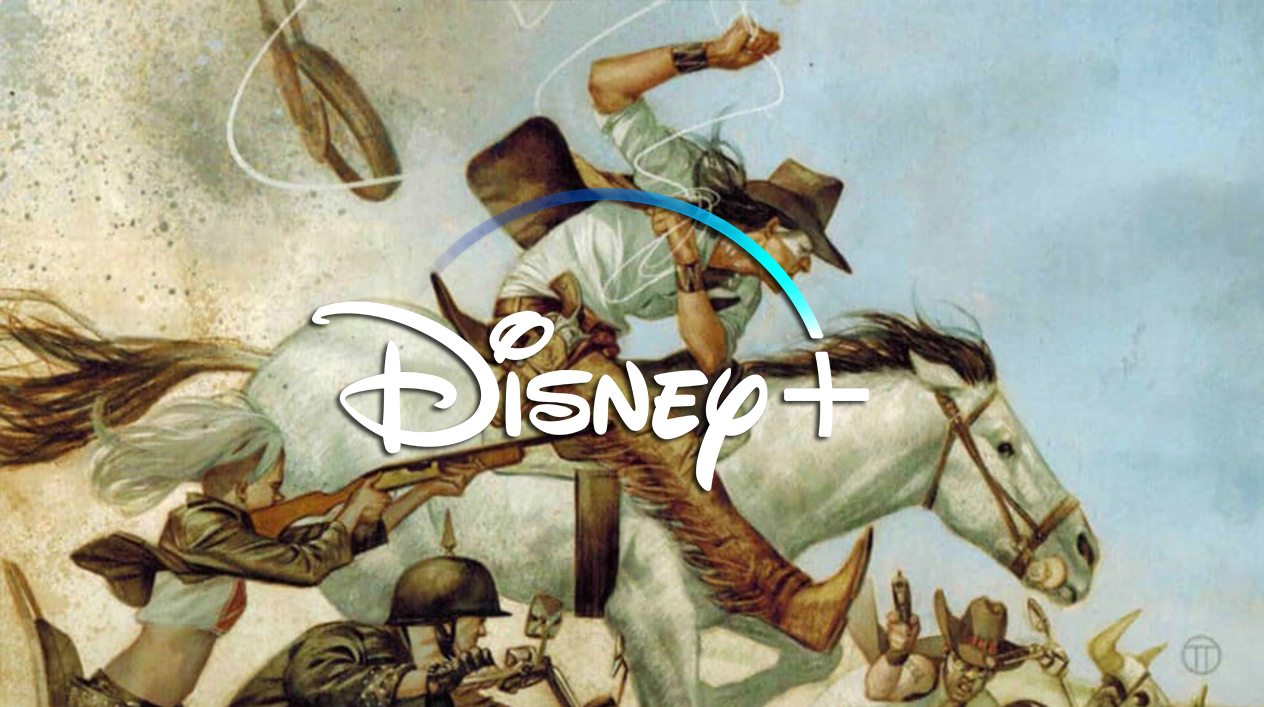
If there’s one thing we know Marvel Studios loves to do, it’s play with genres. From political spy thrillers to coming-of-age films, Kevin Feige and his team have tried it all. Well, let’s say they almost did. There is one that they’ve yet to dip their toes in, and it happens to be one of the oldest in the book. Somehow the Western genre, perhaps the earliest craze in American cinema, has eluded the world’s most popular production house. It was only a couple of years ago when one might have assumed this was because the general public’s love for the genre died with John Wayne. However, Marvel’s Disney-bedfellow Lucasfilm proved this was untrue with their surprise smash hit on Disney+, The Mandalorian. The series contains all the imagery and plotting of a textbook cowboy show. Yet by turning a few classic cliches turned on their head, it managed to make all the difference with audiences. If Marvel ever plans to explore the Wild West of their sprawling cinematic universe, they should look to do something similar. Luckily for them, they already have the perfect project hidden in the pages of their most obscure comics. I’m referring, of course, to the little-known Native American hero Red Wolf. A few years ago, the Black-Eyed Pea’s Taboo shared his excitement about the character and his importance for representation with a cosplay.
The pitch is simple. Marvel Studios’ Red Wolf would be the perfect Disney+ original series or film that gives fans a look at the Wild West through the eyes of a Native American. You can take the traditional concept of cowboys fighting off the “savage Indians” and flip it on its head. They can give us the tale of a Native American man fighting to maintain peace and his people’s way of life while portraying the traditionally heroic cowboys and military men as the antagonistic force throwing a wrench in it all. It would bring some much-needed Native representation to mainstream audiences, something Marvel is already working towards with the recent casting of Alaqua Cox as Echo. It also would create a new kind of Western that can play on all the classic angles with a fresh perspective. Now, I’m sure this raises a lot of questions, so let’s try to answer a few of them.
Who is Red Wolf?
Red Wolf has had a few different names and origins over the years, courtesy of multiple writers attempting to reboot the character frequently. Created by Roy Thomas in 1970 as William Talltrees, he was a modern-day descendant of the Cheyenne tribe. Shortly after, Red Wolf was retooled as an 18th century Western protagonist by Stan Lee. This new version, Marvel’s most prominent one, went by the name Johnny Wakely, a Native man raised by adoptive white parents after his biological family gets killed by the U.S. Army. On a quest to find his place in the world, Johnny ends up part of the Cavalry, and an ensuing conflict with his former people leads to him coming face-to-face with the Cheyenne God, Owayodata. The wolf spirit grants him enhanced human capabilities and the name of the deceased warrior known as Red Wolf as part of his second chance at life. From there on, he wanders the West, alongside his furry companion Lobo, helping those in need and grappling with his own identity. A few more variations of this same concept have come to fruition in the decades since, but the next most important debuted in 2015’s Secret Wars event. In an alternate Marvel reality set in 1872, Red Wolf was portrayed as a member of the Cheyenne Nation, who teams with sheriff Steve Rogers to save a town known as Timely and the tribes of the surrounding area. This Red Wolf ultimately becomes sheriff before accidentally being transported forward in time to the modern 616 universes.
Why not the Classic Cowboy?
Why shouldn’t Marvel Studios adapt one of their countless cowboy protagonists from the 40s and 50s? They could make a show about Kid Colt, Two-Gun Kid, Outlaw Kid, Rawhide Kid, Western Kid, or even the Apache Kid, who was white despite his title. The answer is in their names: they’re all the same. It’s always the same, a guy on horseback that you’ve seen in every Western movie, video game, and television series since the inception of the Spaghetti Western. Quite frankly, a project about one of them would be boring and repetitive. Red Wolf incorporates diversity into your storytelling, which inherently breeds creativity and innovation. Having a Native character in the lead role also opens up a real-world chance for Native actors, actresses, directors, and writers to show the entertainment industry what they’re capable of. I can only think of a handful of Native peoples working in the industry. It’s easy for gatekeepers to claim this is because there aren’t many Indigenous folks with the right credentials, but it’s more than likely that major Hollywood studios just haven’t opened their doors to let them in. The talent is there, yet the opportunity is not. Marvel could take a step towards changing this with Red Wolf.
What would Red Wolf be about?
I propose that Marvel take inspiration from both the Johnny Wakely and Secret Wars versions of the character for a live-action adaptation. The story takes place in 1872, where a man rediscovers and embraces his culture after years of being an outsider. It allows the protagonist to double as an audience surrogate, as we learn alongside him about the Cheyenne people and the legend of the Red Wolf. It also creates an interesting internal battle for Johnny, who gets caught between two worlds. He could even become a man of the law, where writers get a chance to explore what policing means for a person of color during that era. The villain could be a character usually shown to be a good man in old-school dime novels, like Kid Colt or Kid Cassidy, the latter of which was revealed as a white supremacist in 2000’s Blaze of Glory. It would be a great way to highlight the mistreatment of Natives in history and the subsequent glorification of the white men who killed them. The Agent Carter series confirms that Kid Colt existed at one point in MCU’s history and was treated as a hero by modern-day media. Another intriguing villain option would be the Phantom Rider. Despite premiering as a hero, the character’s comic design lends itself to KKK allegories. The infamous sexual assault storyline with the time-traveling West Coast Avengers proved that the character’s morals are less-than-ideal.
Don’t Forget Kushala
Finally, it would be a waste to explore Marvel’s 1800s from a Native viewpoint and not include Kushala. A very recent addition to the Marvel pantheon, Kushala is an Apache woman known as the Demon Rider, who managed to become her time period’s Ghost Rider and Sorcerer Supreme at the same time. With one character, Marvel Studios could connect their Western project to the Doctor Strange franchise as well as their upcoming supernatural projects, like Blade and the rumored Ghost Rider reboot. A Red Wolf project could only benefit from her inclusion, and her similar origin of parents killed by the U.S. Army would make her a fitting co-star fighting alongside Red Wolf. It would offer a close insight into the mythology of the Apache. There is so much potential with this simple concept that it would be a shame not to explore it in a Disney+ series or film.
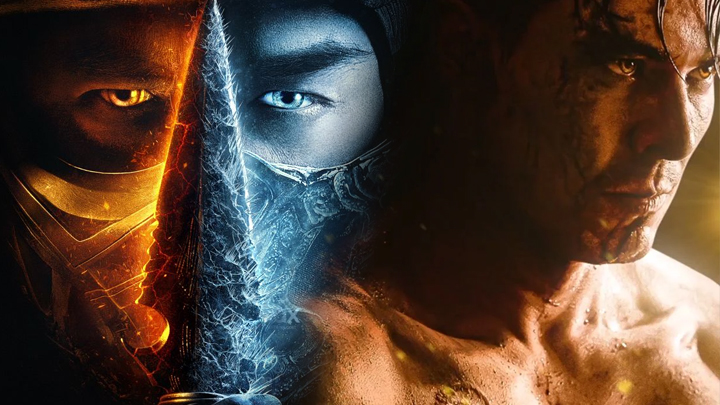
After a long wait, the Mortal Kombat trailer has finally released. It gave us a good look at the various iconic characters from gaming history in live-action. Not just that, but the trailer teased introduced us to a new character that is new to the franchise that started in 1992. Lewis Tan is playing a man named Cole Young, who seems to have a relevant role in the story. They don’t give away any real details besides the strange dragon birthmark on his chest. They are making a big deal to include this newcomer to such a degree he even got a motion poster alongside MK legacy characters. Lewis Tan is a great actor and a perfect addition to the franchise. It would make sense they want to highlight his inclusion. Yet, it makes you wonder: is there more to this character that they are teasing?
Unlike the first film adaptation, the film seems to be taking a unique direction with the story and isn’t jumping straight into the iconic tournament. It got teased briefly with a shot that alludes to the great Kung Lao, who won the last entry, but it seems the main focus is the ongoing conflict with Sub-Zero. He destroyed Jax’s arms, and it looks like there is a personal vendetta. What stands out is that there is a brief mention that Cole shares the same birthmark with their primary suspect, which implies a connection to Sub-Zero. What makes this so interesting is that they hide the iconic blue ninja’s identity in the trailers. Fans of the games will know that there are two that took on the role. Bi-Han was the first to hold the mantle before his younger brother Kuai Liang took over. It seems to imply that Cole might end up being Kuai, who got separated from Bi-Han at a young age. The big fight between Sub-Zero and Scorpion in an icy landscape reveals a third player, who seems to be Cole.
It almost seems like Sub-Zero was after him before Hanzo Hasashi uttered the iconic line to pull him back. We know that these two continue the fight in some manner, so there is a chance that there is a running red herring about who is trying to protect Cole. Scorpion also plays a role in the character’s backstory. Earlier in the trailer, we briefly see Cole staring into the mirror before getting interrupted by a range premonition with Scorpion. It seems to imply that Cole might have some connection to those events. So, as a result of the attack, Cole was cast out from the Lin Kuei, Sub-Zero’s clan. Perhaps Hasashi took his vengeance on the Chinese assassins for killing his family, and Bi-Han tried to hide his brother’s identity so he wouldn’t get targeted. The conflict between the two iconic ninjas may be at the center of this film’s story.
It would explain why the story moved away from focusing on Liu Kang, who usually is the stories’ protagonist. They want to switch it up and explore Cole to uncover his history. Perhaps he even learns to master his abilities. If they follow the game’s, Bi-Han’s fate may also be the motivation why Cole will enter the Mortal Kombat tournament. The battle between Scorpion and Sub-Zero has become a staple for the franchise, so they will probably continue fighting in future sequels. Sub-Zero’s introduction as a villain could lead to his potential downfall and future as a specter of darkness. His rivalry with Scorpion and his brother is one of the most iconic storylines of the franchise. It would make sense to try something new and focus on that development instead of going the usual destined warrior route with Liu Kang. I am excited to see which direction they are heading with this franchise once the reboot premieres in April.
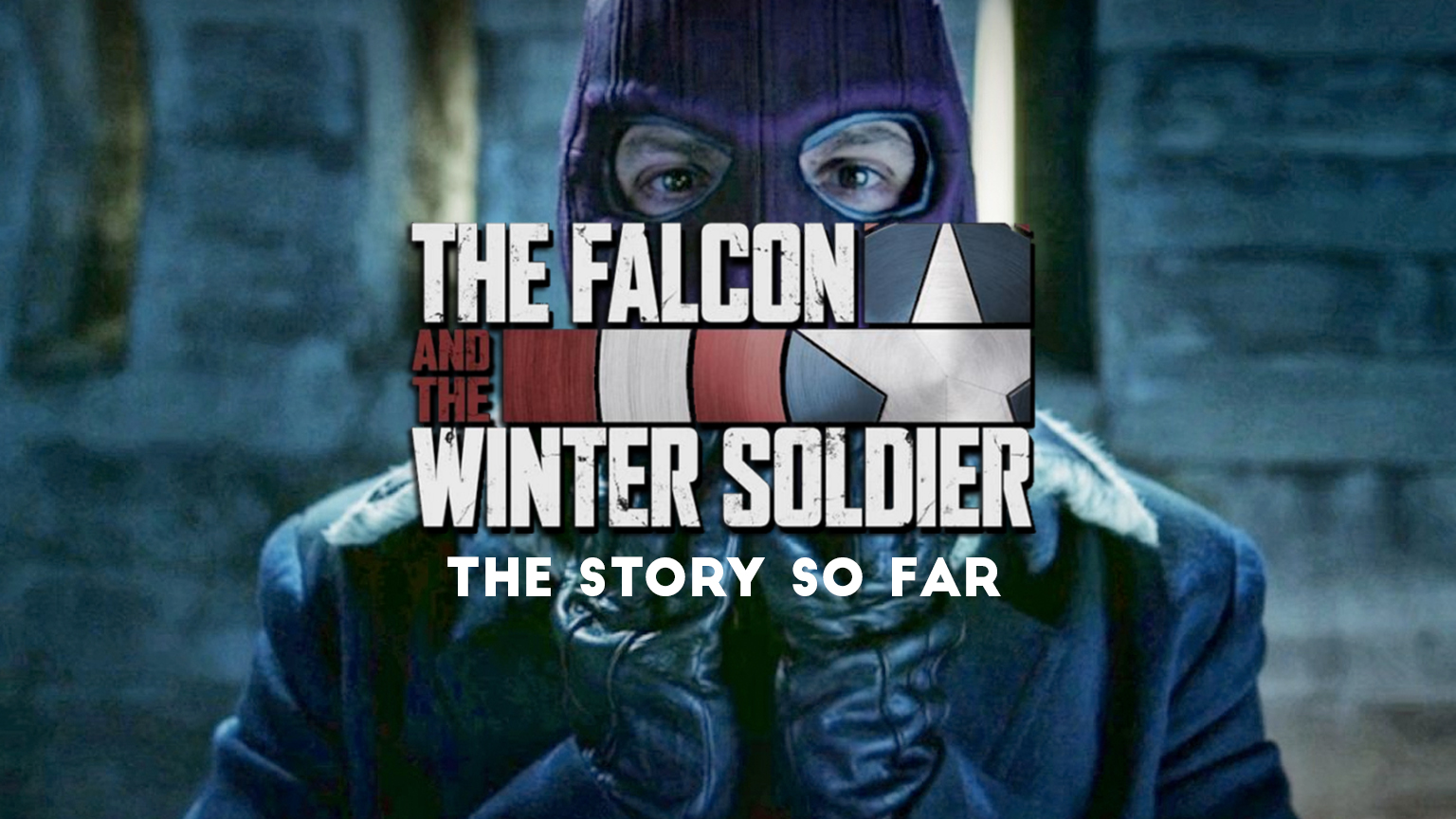
As we continue with our previews for The Falcon And The Winter Soldier characters, one of the most compelling returns is that of Helmut Zemo. Daniel Brühl‘s Zemo only appeared in one film, though you can easily make an argument that he had a substantial impact on the MCU. This guy broke up the Avengers without laying a hand on any of them. Zemo is one of the few villains who successfully reached his end goal in a film. There’s something intrigue about his return, so let’s take a look at how Zemo got here.
Captain America: Civil War introduces us to Helmut Zemo. He is a former Colonel of the Sokovian Armed Forces and the leader of EKO Scorpion. After the events of Avengers: Age of Ultron left Sokovia in crumbles, Zemo sought revenge for his family’s death. Knowing that he couldn’t fight the Avengers head-on, he focused on destroying the team with other means. To achieve his goal, he started hunting down a mission report on December 16th, 1991. Zemo found a book that contains the phrases to control Bucky, which he took after interrogating a former HYDRA goon.
He was the mastermind that coordinated the bombing of the UN in Vienna, which led to King T’Chaka’s death. It was around the same time the Sokovia Accords were signed, so tensions were high. His plan involved framing Bucky behind the explosion, which would start an internal struggle between Iron Man and Captain America. It led to the eventual arrest of the former Winter Soldier and Steve Rogers by the CIA.
It becomes the perfect opportunity for Zemo to use the book on Bucky, who goes on a rampage. He then plants the seed of him heading out to activate other HYDRA super-soldiers, which is why the Avengers fight at the Berlin airport. He waits his time at the base until Rogers, Stark, and Bucky arrive. There, he reveals that his plan was never about the soldiers. He killed them long before they showed up. The file he was looking for was to show Stark the night his parents die.
Now that he managed to destroy the Avengers from the inside, as Iron Man, Captain America, and Bucky duke it out, he sits in the snow. T’Challa, who learned there is no point in taking revenge, confronts the former Sokovian soldier on his action as he plays with a gun. The moment he tried to end his life, T’Challa jumped in to make sure he can’t go through with it. The last we saw of him, he was in the same cell that Bucky was imprisoned in. We will see how he escaped and decided to don his mask once the show airs on March 19th on Disney+.
With only two episodes of WandaVision to go, reality has finally caught up with Wanda, in more ways than one. Yes, the show finally reached the present day this week, just in time for the excitement and allure of Westview to disappear and become a much more cynical place.
With a couple of exceptions, WandaVision has used its sitcom structure to effectively highlight and/or subvert the feel of whatever time period Westview happens to be experiencing during the current episode. Long gone are the carefree days of the 1950s, and even the difficult lessons of the 1980s are too sugar-coated for the town by “Breaking the Fourth Wall.” All of these eras have had their blissful bubbles burst by one incident or another, and now Wanda is ready to give up on this one before it even starts. She’s not going to bother attempting to maintain hope and optimism in her children, either. She just wants some time to forget about everything, and it’s even sadder to think about when you remember that this was her whole motivation behind creating Westview in the first place.
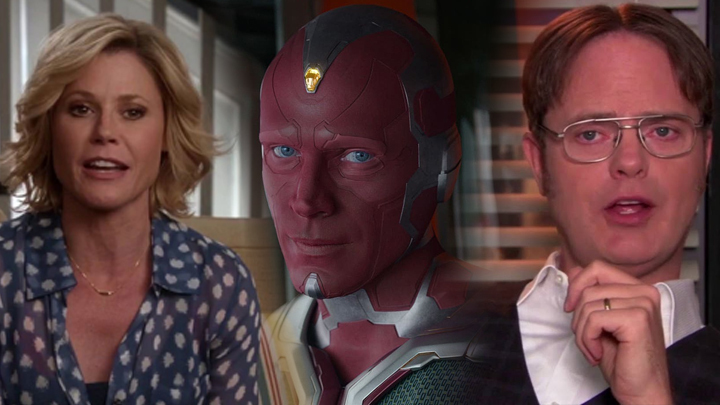
This cynical attitude isn’t the only modern sitcom trope present in this episode. The documentary style of television that was largely popularized by reality TV eventually made its mark on sitcoms like Modern Family and The Office with characters frequently breaking the fourth wall as if they’re speaking to an interviewer (the term “mockumentary” has been coined in reference to this) and there’s plenty of that to be found here. Even characters who are trapped in “real life” are somehow able to magically pop over to an interview location to speak to the audience this week, and of course this is eventually lampshaded before the episode is over. There’s even a point at which Vision simply looks into the “regular”, non-interview camera; also a common trope of the times.
The lack of lyrics – or even character shots – also fits in with modern-day sitcoms. But those disappointed by the final Anderson-Lopez theme tune being…uneventful were surprised when a theme song for a whole different side of the story capped off the episode.
After much fan speculation, “Agnes the Neighbor” was finally confirmed to be Agatha Harkness, a character lifted from Marvel Comics but considerably changed for WandaVision (most notably in that Agatha isn’t a villain in the comics). A montage of her evil deeds throughout the eras of Westview was accompanied by her very own theme song, which was very reminiscent of the one for The Munsters, a 1960’s sitcom about a family consisting of various types of monsters (not to be confused with The Addams Family, which ran during the exact same years and had nearly the same number of episodes).
“Breaking the Fourth Wall” was the last episode of WandaVision to focus on emulating a specific era of sitcoms, but as Agatha’s theme song demonstrated, that doesn’t necessarily mean all the references are done quite yet. This episode showed the magic maintaining Westview’s eras going haywire, and it’s very likely this will escalate as WandaVision hurdles toward its March 5 finale.
Cookie Consent
We use cookies to improve your experience on our site. By using our site, you consent to cookies.
This website uses cookies
Websites store cookies to enhance functionality and personalise your experience. You can manage your preferences, but blocking some cookies may impact site performance and services.
Essential cookies enable basic functions and are necessary for the proper function of the website.
Name
Description
Duration
Cookie Preferences
This cookie is used to store the user's cookie consent preferences.
30 days
These cookies are needed for adding comments on this website.
Name
Description
Duration
comment_author_email
Used to track the user across multiple sessions.
Session
comment_author_url
Used to track the user across multiple sessions.
Session
comment_author
Used to track the user across multiple sessions.
Session
Statistics cookies collect information anonymously. This information helps us understand how visitors use our website.
Google Analytics is a powerful tool that tracks and analyzes website traffic for informed marketing decisions.
Contains information related to marketing campaigns of the user. These are shared with Google AdWords / Google Ads when the Google Ads and Google Analytics accounts are linked together.
90 days
__utma
ID used to identify users and sessions
2 years after last activity
__utmt
Used to monitor number of Google Analytics server requests
10 minutes
__utmb
Used to distinguish new sessions and visits. This cookie is set when the GA.js javascript library is loaded and there is no existing __utmb cookie. The cookie is updated every time data is sent to the Google Analytics server.
30 minutes after last activity
__utmc
Used only with old Urchin versions of Google Analytics and not with GA.js. Was used to distinguish between new sessions and visits at the end of a session.
End of session (browser)
__utmz
Contains information about the traffic source or campaign that directed user to the website. The cookie is set when the GA.js javascript is loaded and updated when data is sent to the Google Anaytics server
6 months after last activity
__utmv
Contains custom information set by the web developer via the _setCustomVar method in Google Analytics. This cookie is updated every time new data is sent to the Google Analytics server.
2 years after last activity
__utmx
Used to determine whether a user is included in an A / B or Multivariate test.
18 months
_ga
ID used to identify users
2 years
_gali
Used by Google Analytics to determine which links on a page are being clicked
30 seconds
_ga_
ID used to identify users
2 years
_gid
ID used to identify users for 24 hours after last activity
24 hours
_gat
Used to monitor number of Google Analytics server requests when using Google Tag Manager
1 minute
Marketing cookies are used to follow visitors to websites. The intention is to show ads that are relevant and engaging to the individual user.
Pinterest Tag is a web analytics service that tracks and reports website traffic.