Category: Features

  • Meet the Skrulls: An Unlikely Family Dramedy in the MCU

    Meet the Skrulls: An Unlikely Family Dramedy in the MCU

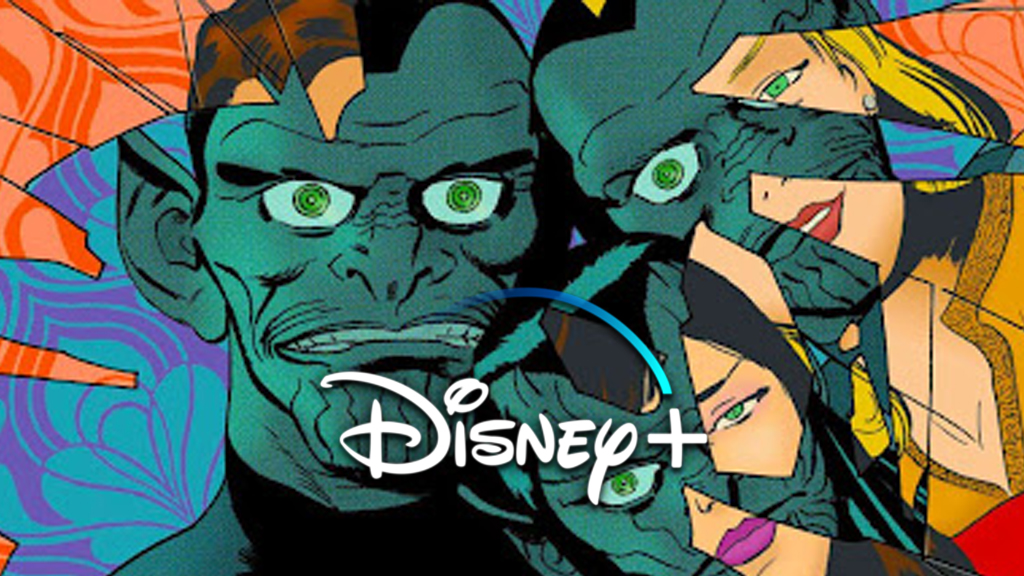
    The upcoming Secret Invasion series on Disney+ will explore the invasion by the Skrulls. We got our first introduction to the alien species during Captain Marvel, and they’ll take center stage once more in the upcoming Secret Invasion series. We’ve recently shared details that Ben Mendelsohn‘s Talos won’t be the only Skrull, and some don’t share his more peaceful mindset. So, we’re going to witness an invasion by the shape-shifting aliens soon, and potentially even beyond the Disney+ series. As such, it opens up the path to explore the life of Skrulls hiding amongst modern suburbia. So, the perfect sequel series would be an adaptation of the 2019 Meet the Skrulls.

    The comic series explored the life of the Warner family. They’ve lived a suburban life on Earth. Well, if you ignore the fact that they are Skrulls preparing Earth for an invasion. Robbie Thompson and Niko Henrichon brought a simple concept to life that took a look at aliens trying to fit in with humanity while keeping to accomplish their mission. Marvel Studios is no stranger to exploring a strange suburbia life with their first Disney+ venture of WandaVision. Yet, it explored a sitcom version of that kind of life, and now it’s time for Marvel Studios to embrace it.

    Meet the Skrulls #1 - Stories For Nerds

    Skrulls living in the suburbs while following their mission might seem simple, but it could also help flesh out the MCU. Why not have the parents work at Stark Industries or the WHIH news. That way, we can see the world that the bigger projects don’t normally share with us. This Disney+ series isn’t like Solar Opposites, where they are living as aliens in plain sight, but rather a group of Skrulls, who are paranoid of getting caught. It opens up to some comedic moments of them misunderstanding things, trying too hard to hide, or even letting loose at a party. Especially giving us insight into teenage Skrulls adjusting to life could bring out some dangerous situations.

    Of course, there’s also the drama of it taking place post-Secret Invasion. The world is aware of their presence and is on the hunt for the last splinter cells. So, the build-up to seeing what S.H.I.E.L.D.’s existence means to them. At one point, they are uncovered and have to survive an infiltration of their home. In a way humanizing the alien species that simply believed in their mission was for a good cause. Not only would we get a look from a more grounded perspective in the MCU, but also fully understand the motivation of the aliens. Perhaps they didn’t know they were just pawns but believing in something to keep their race alive. Can you truly trust everything you see and know?

  • Connecting Imaginary Dots: ‘Ant-Man and the Wasp: Quantumania’ Filming in Iceland

    Connecting Imaginary Dots: ‘Ant-Man and the Wasp: Quantumania’ Filming in Iceland

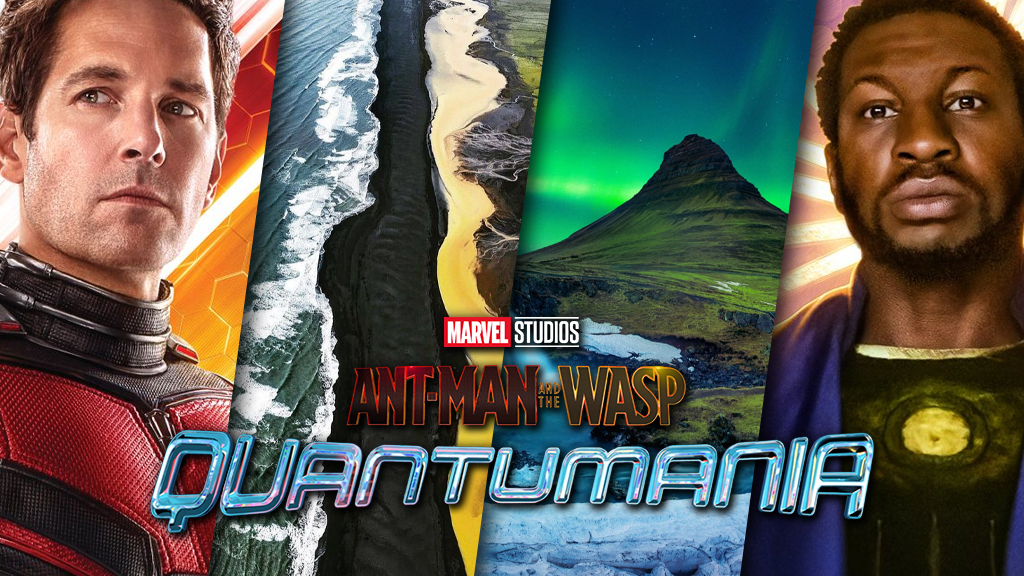
    Ant-Man and the Wasp: Quantumania is currently busy filming since late July as it’ll close out the trilogy that started back in 2015. Director Peyton Reed has teased some of its production, such as its use of The Mandalorian’s famous Volume, where he also worked on the Disney+ series the second season. Back in February, we even heard that they are filming something in Turkey, as revealed by its Tourism minister at the time. After some digging, some crumbs also seem to be hinting that production is heading to Iceland.

    The company TrueNorth has a list of films and TV series they work with on their website. It offers production services to help overseas studios film in the Nordics, which includes Norway, Faroe Islands, Greenland, Finland, and Iceland. TrueNorth has quite the filmography, as they’ve worked with The Mandalorian, Avengers: Endgame, Black Widow, Eurovision: The Story of Fire Saga, and many more in the past. In one of their latest updates, it seems that Ant-Man and the Wasp‘s third entry is also working with the company. They are listed after Mission: Impossible 7, which recently wrapped up production. Of course, it doesn’t pinpoint where exactly they were filming, but IMDb might have just the answer we need if we take a closer look at their Location Management.

    The listing does include a supervising location manager for Iceland by the name of Thor Kjartansson. Taking a look at his page, he’s no stranger to working with Marvel Studios, as he also had the same role in Iceland for the upcoming Doctor Strange in the Multiverse of Madness, Avengers: Endgame, and Captain America: Civil War. So, the updates may hint they are or already have filmed in Iceland. There’s a chance that production was done by the film’s second unit but either way the Icelandic landscape offers some beautiful backdrops for the upcoming threequel.

    Source: TrueNorth, Collider, IMDb, IMDb (Location Manager)

  • The JSA Has Their Hands Full on ‘STARGIRL’

    The JSA Has Their Hands Full on ‘STARGIRL’

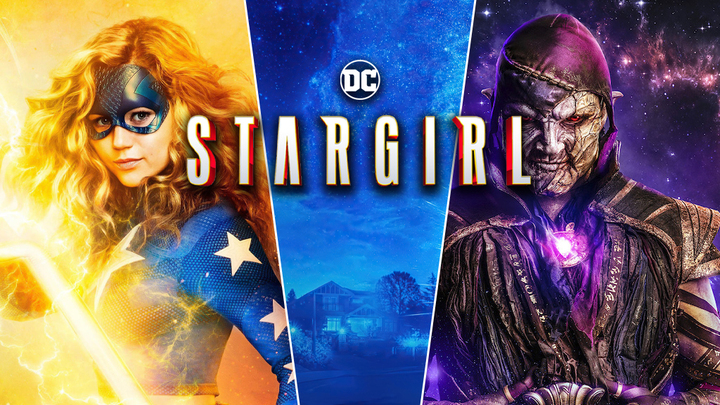
    On CW’s Stargirl, the Justice Society of America has an “it” factor. It’s partly what makes them such great heroes. Their inability to not know any better also helps to make them a formidable team. In the first season of Stargirl, the team fighting their way through inexperience was a big reason why they defeated the Injustice Society of America. Resolve and ignorance to the idea that they’re just kids. Now, they have a different problem, one that requires much more than a plucky attitude: Eclipso.

    Eclipso has been a villain that has not attacked Courtney, Yolanda, Rick, and Beth physically. Instead, he has attacked them psychologically, mentally, and emotionally. He’s fed on their fears and their doubts to the point that in this past episode Yolanda quit the team. Wildcat is no more. Her guilt over killing Brainwave last season has been on her mind ever since, and there’s no telling if she’ll ever recover.

    Yolanda goes to confession in the last episode, hoping for some absolution of her sin. What she gets is Eclipso making her believe in things that aren’t there… or are they? When we see Brainwave speak to her he says that his consciousness is in her mind. It’s enough to make Yolanda go mad.

    Courtney being the leader that she is attempts to get Yolanda to talk about these issues hoping that will help her heal. Unfortunately, when the group gets together, Beth isn’t definitive in her support which fractures the team more. The funny thing is, Beth, isn’t wrong for saying the words, “I don’t know.” How could she know? A secret like the one Courtney and Yolanda have kept is a difficult one to spring on the team.

    This is why Eclipso is so dangerous. He feeds on the questions, he revels in the cracks that were already in Yolanda’s psyche. Now, as the JSA is splintered, Eclipso is setting his sights on Beth who’s been struggling with her parents failing relationship. She could really use the help of Dr. Midnight. Nonetheless, as long as Eclipso is around Stargirl & Co. have their hands full. It’s going to take more than punching and kicking their way to win this fight.

    Stargirl‘s second season is currently airing on the CW Network every Tuesday. 

  • Stop Panicking: Breaking Down the Marvel Lawsuits

    Stop Panicking: Breaking Down the Marvel Lawsuits

    On Friday, news exploded that Marvel filed several lawsuits against the heirs of certain late comic book legends including Stan LeeSteve Ditko, and Gene Colan in order to keep full control of major Avengers characters such as Iron Man, Spider-Man, Doctor Strange, Ant-Man, Hawkeye, Black Widow, Falcon, Thor, and more. Misinformation and misunderstanding spread like wildfire, and headlines at times even suggested that these characters are at imminent risk of somehow being lost forever. 

    The internet, of course, immediately went up in arms at the thought that Marvel and Disney are on the cusp of losing iconic characters that we see daily in films, television, comics, toys, and everything in between. Some have even taken to social media to despair about how we are about to lose Spider-Man forever. There is good news—you can take a deep breath, and we’ll tell you why in our breakdown of the situation. If you take anything away from this let it be that the Avengers and friends are perfectly safe, but you should still probably care about what’s going on.

    The Lawsuits

    While Marvel’s lawsuits were filed yesterday, the dispute started well before then. The key point to understand is that Marvel has the right to use its comic book characters because the original creators of the characters—for example, Stan Lee—gave the company that right by allowing the publisher to have copyright protections for the property.

    Having copyright protections allows Marvel to exclusively use a character. DC can’t just start using Iron Man and neither can Hyundai without the go-ahead from Marvel. Without the transfer of copyright protections to Marvel, the exclusive right to use these characters would have remained with the individual creators. Right now, these creators are simply asking for copyright rights back from Marvel. 

    Marvel’s lawsuits are asking a court to declare that the creators have no legal right to reclaim copyright protections in these characters from the company. If Marvel wins, essentially nothing will change in the way the company gets to use the property. Very importantly, if Marvel, or Disney, loses this battle, it does not “lose” the characters. Marvel would lose full ownership of the characters but it is expected that the company would share ownership of the property with the creators’ estates. So, Marvel would still retain some rights in the characters, but the multi-billion-dollar corporation would have to share profits with the creators as co-owners.

    How Does It All Work?

    Multiple creators have notified Marvel in the past few months that the company’s copyrights on certain characters are legally about to expire—this is known as copyright termination. In copyright law, copyright protections are only granted for a certain period of time. The point of this is so that creative works can eventually be used freely by the public after creators have a chance to make money off of them. The precise time limit has changed throughout the decades, but under the Copyright Act of 1976, the duration of copyright protection became 56 years. So, the comic book creators here in theory have the legal right to terminate Marvel’s current copyrights if they choose to within a five-year window after the company has held the copyrights for more than 56 years. 

    For example, in August, the administrator of Ditko’s estate filed a notice of termination on Spider-Man, who first appeared in comic book form in 1962. Using the 56-year time frame, that would mean the window for copyright termination began in 2018 and will finish five years later in 2023. This is why some are panicking at the thought of Marvel losing Spider-Man in a couple of years. But as noted above, win or lose the legal battle, Spider-Man is surely going nowhere.

    The Characters Aren’t Going Anywhere

    If you are rooting for Marvel being able to use its characters, the good news is that you will be happy at the end of this legal fight pretty much no matter what. If you’re starting to question whether or not it seems right that creators have so few if any rights to their creations, you will probably be disappointed, but the fact that this type of conversation is being amplified is incredibly important (more on that below). 

    This is not the first comic book copyright termination debacle. The heirs that are currently going head to head with Marvel are being represented by attorney Marc Toberoff, who famously represented Superman creators Jerry Siegel and Joe Schuster in an unsuccessful termination attempt against DC. Interestingly, at the time, DC was represented by Dan Petrocelli who is now representing Disney and Marvel in this case. 

    Toberoff more importantly also took on a case eerily similar to the one at hand which involved Marvel. In the early 2010s, the attorney represented the estate of comic book legend Jack Kirby to determine whether he could terminate a copyright grant on Spider-Man, X-Men, The Incredible Hulk, and The Mighty Thor. While it never reached the Supreme Court, the courts below held that Kirby’s heirs were out of luck because the former Marvel freelancer had contributed his materials as a “work made for hire.” 

    In terms of copyright law, a work made for hire is a work—in this case, a character—that was created by an employee as part of their job. Considering that these creators generally were employed or had some working relationship with the publishers of the comic books that their characters found their way into, it seems like an easy fit. It’s not always that simple—however, Marvel has another trick up its sleeve. 

    Marvel will surely rely on their use of the “Marvel Method,” which was an in-house collaborative effort between writers and artists. Writers would discuss baseline ideas with artists being responsible for the more essential details. Importantly, if you believe in the Marvel Method, all of these classic characters currently up for termination were in theory created through this collaborative process using Marvel personnel and resources. 

    The simplest way of understanding the outcome is recognizing that Marvel has a very strong argument that all of these characters were created for Marvel. If a court finds that to be the case, the company will not lose its copyright protections. As explained, legal precedent is also on Marvel’s side. Disney also has a passion for settling legal disputes out of court—these creators might simply be paid off, to put it bluntly. The real question is whether or not we should want the current precedent to change.

    It’s All About How Creators Are Treated

    So now that we’re all on the same page that Spidey and friends aren’t about to disappear, do these lawsuits actually matter? The answer depends entirely on what you think the original creators of these iconic characters deserve all these decades later. Not only that, but it depends on what you think current and future creators should be owed. 

    It’s well known that Disney does not pay much at all to original creators even in light of the extreme financial success of their characters in the Marvel Cinematic Universe, among other channels. Earlier this year, former Captain America writer and Winter Solider co-creator Ed Brubaker spoke out about the lack of recognition and credit he and other creators receive in light of the big- and small-screen success of properties such as Captain America: The Winter Soldier and The Falcon and the Winter Soldier

    Whatever your viewpoints on employment, corporations, or law are, it’s undeniable how purely unfair it seems for a creator of Spider-Manfor example, to receive little if any meaningful compensation for their work that became a multi-billion-dollar franchise. While processes such as the “Marvel Method” might be great for business, they can also create an environment where the worker, writer, or artist is taken advantage of and credit is simply not given where credit is due.

    While this flurry of lawsuits will likely have little to no impact on how companies like Marvel control their copyright-protected properties, it does yet again reignite dialogue surrounding how creators are treated and compensated. The legal strategy being taken by the estates and heirs of legendary creators is not favored to win by a long shot, but perhaps incessantly knocking on Marvel’s and Disney’s door is the way forward. 

    Sources: The Hollywood Reporter, The Direct
  • Ranking ‘STAR WARS: VISIONS’ Episodes

    Ranking ‘STAR WARS: VISIONS’ Episodes

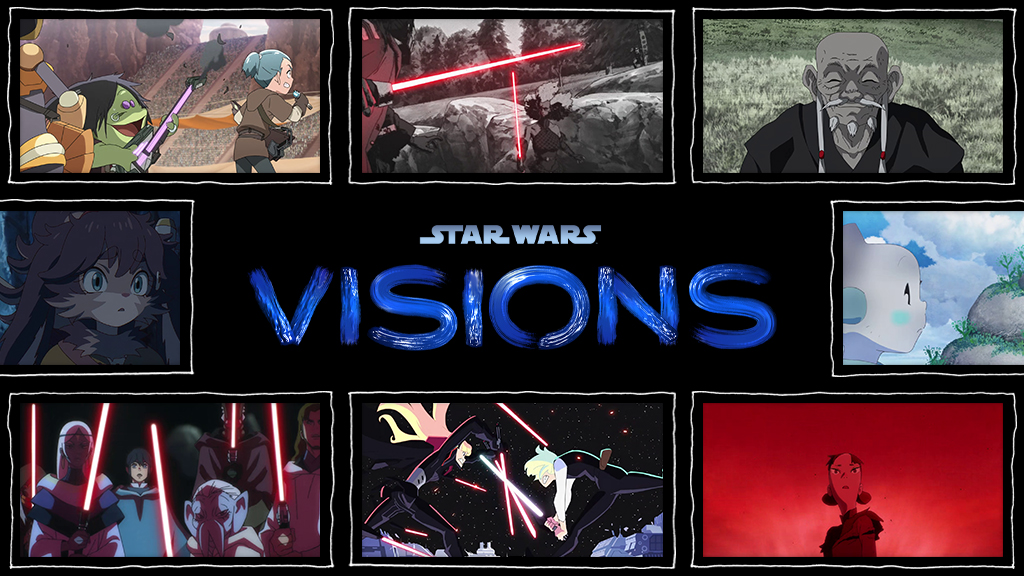
    The anime anthology series ‘Star Wars: Visions’ premiered earlier this week to generally favorable reviews (you can read ours here). With seven studios developing nine shorts between them, audiences were due for lots of variety in what concerns to tone, animation style, and overall feel for each of the episodes. Even the two repeating studios (Studio Trigger and Science SARU) managed to deliver immensely different projects, making this first batch of Visions (hopefully) feel fresh with every page turn.

    With each short being its own thing some clearly stand out, and even though ranking art of any sort sometimes feels a bit wrong, here is a ranking of our most enjoyable episodes:


    8 – 9

    With Star Wars being all about family, both the one you are born into and the one you find along the way, both The Village Bride and Lop & Ochō offer us different perspectives on such matters. Ultimately doing right by what you believe in, and not complacently accepting the ground rules you are presented with. Even if that means fighting your family or meddling in issues not your own. What both these episodes seem to lack is a sense of wonder, which makes you want to know more about the characters and locations we are shown.


    7

    The mystery ambiance is quick to grab the attention of the viewer, as we are left to wonder what sort of evil might be around the corner for the Jedi protagonists. The action set pieces aren’t all that inspired and thematically we left with the exploration of what the Prequels expanded upon, the smugness and lack of vision the Jedi demonstrated, something that allowed for a long-lost evil to resurface. It’s a pretty straightforward episode, one that doesn’t seem to lead anywhere, past its ending.


    6

    Feeling like a snapshot taken from a crazy Dragon Ball Z episode, The Twins gives us God-like force powers in Karre and Am (the Twins), where one can split an entire Star Destroyer using just a lightsaber. The entire episode is focused on their battle and how absolute power corrupts absolutely. Sadly, a lot of the emotional heft gets lost in the crazy spectacle which makes this episode feel a bit less special than the rest.


    5

    What’s not to like about a Jedi that decides to go into hiding only to try and turn himself into the biggest rockstar the galaxy has ever seen? Keeping in mind the tradition that all anime series should come with a kickass opening track, we are presented to a musical act hardly ever seen in the Star Wars universe. With special appearances by both Jabba The Hut and Boba Fett, we realize that music can ultimately save the galaxy. It may not be the best episode of the season but inarguably is the best representation of what Visions could be, unique perspectives and all.


    4

    One of the darker Star Wars: Visions shorts, Akakiri takes inspiration from Kurosawa‘s The Hidden Fortress, something Lucas also did in the late 70s when developing the first chapter of the Skywalker Saga. The ominous (but brilliant) soundtrack and animation style help to present the viewer an epic tragedy that echoes Anakin Skywalker’s fall from grace, with a likewise heartbreaking end.


    3

    In terms of visuals alone, this was the most intense episode, with its charcoal drawing look, that managed to bring to life the franchise’s Kurosawa DNA in an extraordinary way. This combined with the hints of brights lights and the dynamics of lightsaber fighting made for what is surely the poster child of the entire project. The story behind the main character only referred to as Ronin, can be further explored this October in its own novel written by Emma Mieko Candon.


    2

    Star Wars isn’t just the cool lightsaber fights, the technology, and aliens. While most of this is present in T0-B1, the feeling of pure happiness, the sense of wonder, hopefulness, and discovery, all distinctive Star Wars features, is what makes this particular episode stand out. Astro Boy and Le Petit Prince are both very much present in the exploration of the Star Wars universe we are taken on, personified in the title character.


    1

    Turning lightsabers into mood rings has never seemed like a better idea. Sure, it’s not exactly how we’ve learned lightsabers to work but the way it allows for a wonderful narrative to develop is not something to sneeze at. One of the biggest tells this was my favorite episode is that it’s, of all 9 of them, the one I wished could be continued in some shape or form.

  • Theory Thursday: Ultron Wants to Replace the Watcher in ‘What If…?’

    Theory Thursday: Ultron Wants to Replace the Watcher in ‘What If…?’

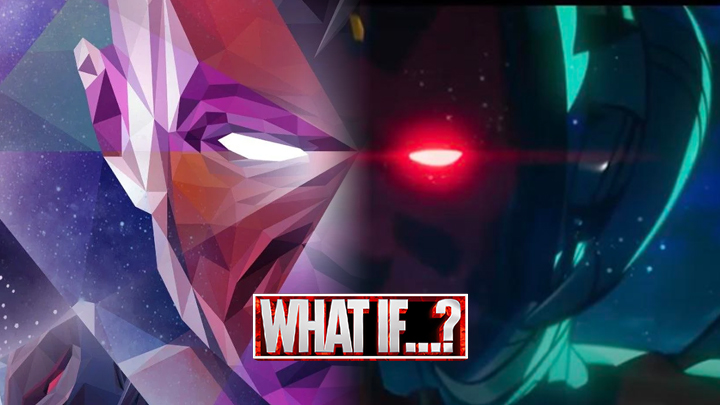
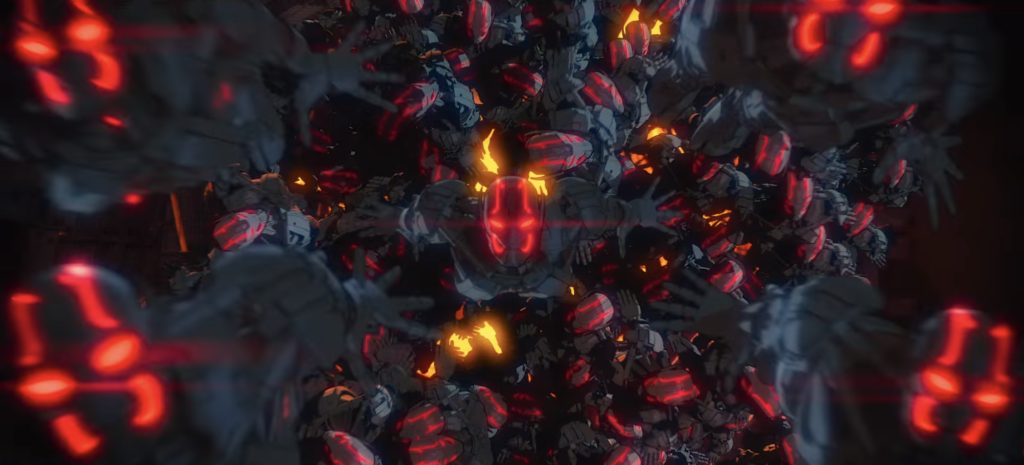
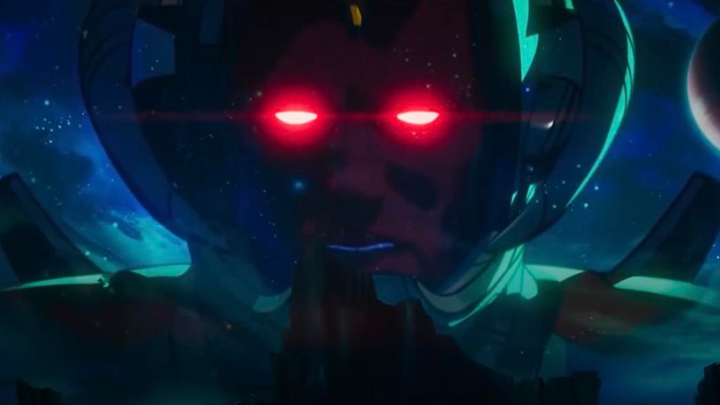
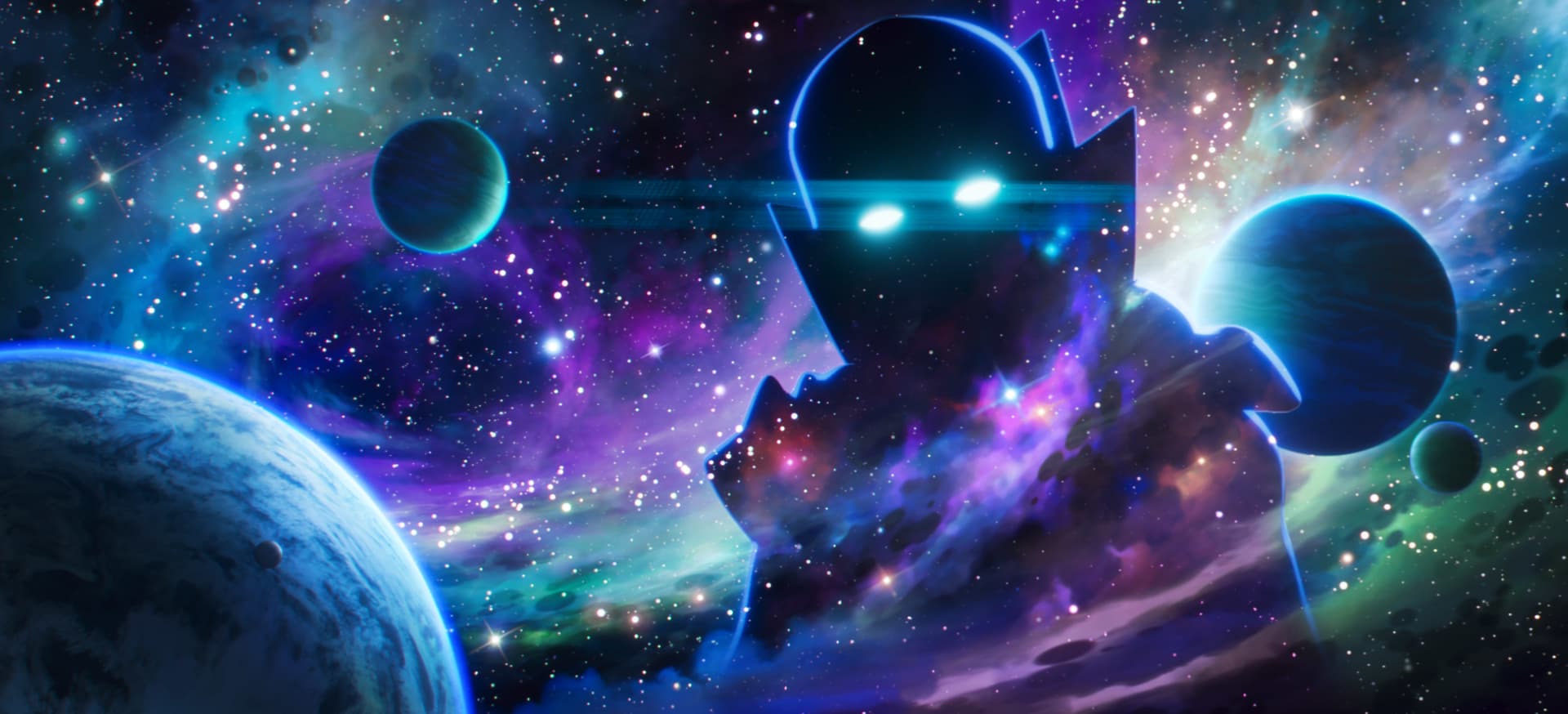
    The latest episode of What If…? finally unveiled the overarching plot that the series is building towards. After Thor made plans for a date, he and the Watcher were surprised by the welcoming of Ultron bots. From a mysterious portal, Ultron appeared in the body of Vision clad in the armor of his former shell. At that moment, the episode ends as even the all-knowing Watcher is confused that a once happy ending would get abrupted by tragedy once again. We, as viewers, are left wondering what his arrival means for the multiverse.

    There are a few things we can take away from his sudden introduction. Ultron managed to achieve his goal from Avengers: Age of Ultron by adding his consciousness into the new body. We still have no confirmation if James Spader is returning to voice the character, but he didn’t return to voice the character in Avengers: Damage Control VR and might have moved on from the franchise. Still, there’s some hope they convinced him to return while he is busy filming The Blacklist.

    He also is wielding all six Infinity Stones on his body, which he shouldn’t feel any side effects from due to his body not being organic. It also implies that this version of the character most likely succeeded in dropping Sokovia and wiping out Earth. We learn in the Age of Ultron that his primary goal is to create an empire of dust where only metal survives. If he achieved his goal on Earth, there’s the chance Thanos came after him due to possessing the Mind Stone. Once he fuses with the stone, he’ll felt the others and reunite them. It makes him one of the most formidable enemies within the multiverse.

    Marvel's WHAT IF...? Assembles the Guardians of the Multiverse for New  Hyundai Ad — GeekTyrant

    They might be taking inspiration from the time when Ultron became the leader of the Phalanx during Annihilation: Conquest and with the complete domination of the galaxy, he sets his eyes on the multiverse. Yet, not to annihilate organic life but to rule over them in the mightiest position there is. He’s the worst aspect of Tony Stark and believes he can control the future. The best way to do so would be to replace the Watcher.

    The reason for this theory is due to one single image potentially teasing his end goal. We see Vision in his Ultron armor floating above a scene. There’s a chance that the next episode ends with Ultron taking the Watcher’s position and narrating the final episode as the now fallen god-like entity summons together with the strongest warriors from across the multiverse. The consequences of him gaining the watchful eye of the entire multiverse but with the desire of intervention. Who knows what he would unleash if he obtained that power. If he wins, no place in the vast multiverse would be safe.

    Source: SuperHeroHype

  • REVIEW: ‘TITANS’ Season 3 Episode 9 – Souls

    REVIEW: ‘TITANS’ Season 3 Episode 9 – Souls

    Episode 9 of this season of Titans is extremely baffling. On one hand, it makes no sense at all and feels completely out of place. Combine that with how corny and ridiculous it is this episode should have been a write-off. But yet, like its main characters, it manages to keep itself alive and be one of the most enjoyable rides of the entire series. 

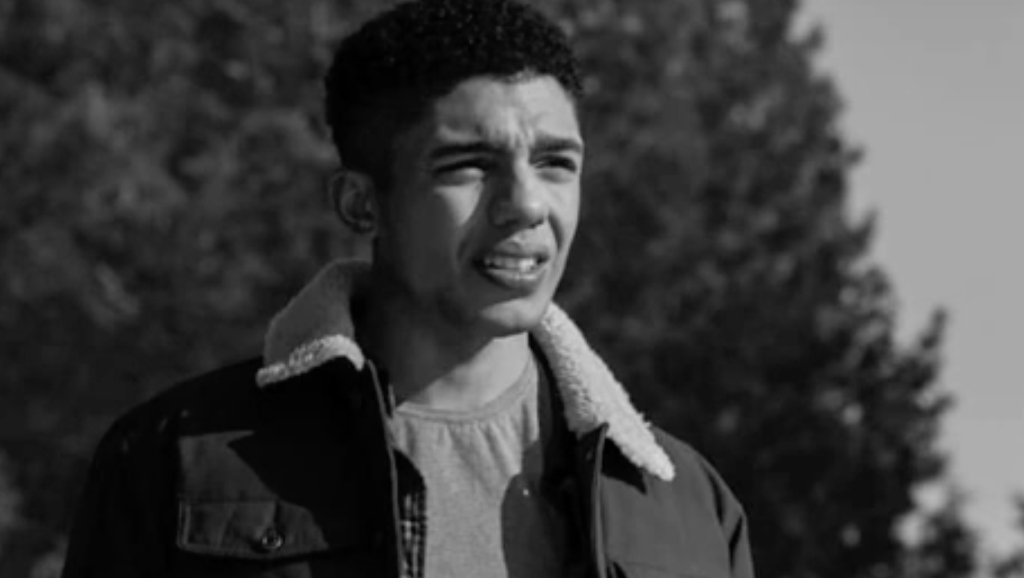
    The episode finds our main three (dead) characters—Tim Drake, Donna Troy, and Hank Hall—in the black-and-white area of the afterlife where they are supposed to be on a literal train that takes them to the “final place.” Inexplicably, Tim and Donna are on the train at the same time but jump off the train because Tim desperately wants to be alive. Outside of the train, there is an entire rural outskirts-of-a-small-town type of area that generally consists of wooded areas and a road. There, they happen to run into none other than ‘Livin’ On a Prayer’-blasting Hank Hall, who is some sort of purgatory outlaw. There’s plenty more that can be mentioned, but the concept is outright nonsensical and absolutely does not match the universe in which Titans has been placed. The premise comes off as one that could better belong in Doom Patrol. Maybe that’s why it was so much more fun to experience, but in the context of Titans it is downright bewildering, even apart from the extremely contrived and illogical circumstances of absolutely everything that happens in the black-and-white place. 

    As mentioned, though, the episode is quite the dark horse, and the mini-adventure our three heroes go on throughout the episode was genuinely enjoyable and only partly because of its “so bad it’s good” quality. The three main characters, arguably all very much side characters in the world of the living, had the best chemistry and presence of any characters this season. Hank and Donna easily outdid their previous incantations and newcomer Jay Lycurgo’s Tim was stellar in the limelight this episode. Alan Ritchson’s Hank, alone and sans obligatory Dawn, was the charming and entertaining character he always had the potential to be. Even Conor Leslie’s Donna, who previously always felt flat, had substantially more color (ironically) to her personality and presence and was much more compelling than the character who died last season. The dynamic between the three was solid and the episode brought some humor to the land of death. Donna’s acknowledgment and resentment of dying at a carnival was appreciated dark humor and even a recognition of where at least one creative choice Titans made went wrong. 

    Out in the colorful regular world, Rachel Roth is living with the Amazonians in Themyscira, wanting to bring Donna back to life. The idea that Rachel was able to simply decide to go to Themyscira and then live and train there as one of them is ridiculous. That aside, the character was both still annoyingly juvenile in blatantly disrespectful of the Amazonian culture at every possible moment, but seemed to have some sort of growth when she was, essentially, put in time out. Hopefully, her time here off-screen will be used as an excuse for her having better control of her powers going forward and make her less of a constant liability to the Titans. She did provide a lovely admission that the Titans never actually did much work when she was with them.

    While, as depicted, Donna and Tim seem to be able to simply will themselves back to life, it’s unclear if there is more behind their ability to do so. Hank didn’t make it over the bridge, however, one has to wonder what body he would have woken up as he previously exploded. Hank not returning made the most sense and at least gave some additional finality to that emotional arc, including a sweet reunion with his brother. Bringing any character back to life, especially so soon after their death, cheapens and lowers too many stakes, but Donna’s revival was entirely foreshadowed and Tim was too new and clearly significant to actually be removed from the story.

    Donna’s first course of business upon being reanimated after months was, for some completely unknown and likely absurd reason, to rescue Bruce Wayne from suicide by fire. Yes, Bruce has returned to the screen, and apparently, he is still generally deranged. He dramatically finalized a last will and testament and then set his castle on fire with him in it. At this point, the question still remains why Titans has such a Bruce Wayne complex and why we need to keep caring considering we have been told or shown time and time and time and time again that he is terrible. 

    Episode 9 still deserves a toast—despite being dealt a hand that should never be able to win, it managed to make the most of it. The premise and context of it all made less than zero sense and had no place in the currently established Titans universe, its story devices were lazy and corny, but it entertained like no other. So, here’s to this episode—and the viewer—having some fun.

  • REVIEW: ‘Doom Patrol’ Season 3 Episodes 1-3

    REVIEW: ‘Doom Patrol’ Season 3 Episodes 1-3

    The premiere of Season 3 of Doom Patrol picks up right after the cliffhanger that was the pandemic-induced Season 2 finale. While all still seems lost for the briefest moment, Dorothy quickly regains control of the Candlemaker by putting it in a sort of timeout “as long as it takes for us to be friends again.” It’s a quirky, maybe sweet, way to look at the relationship between the apocalypse and a hundred-year-old “little girl,” but the episode makes quick work of that entire arc. It feels too easy after all this time, but the series was probably just ready to move on. With Niles apparently dead, the characters and the viewers are also supposed to move on, but the next couple of episodes promise that he will continue to linger around for a bit.

    If Episode 1 does anything, it really goes character by character to remind us of where exactly they were literally and mentally the last time we saw them and sturdily place them on a new track. There’s definitely a lot going on, but arguably it’s a reflection of all the stuff going through the characters’ heads in light of their complex and contradictory feelings about the Chief’s death. Cliff is still resentful that his metal body is pretty terrible, but now his human brain seems to be letting him down, possibly with Parkinson’s. The Negative Spirit is taking Larry to space (for a very brief moment). Vic is dealing with the aftermath of his relationship with Roni, making it worse for himself by letting her get away with another crime. But Jane and Rita really do the most work.

    Jane’s story picks up in the Well right where we left her last season. She rescues Harry the stuffed lamb and her and the other personalities band together to take on “Miranda,” aka the manifestation of Kay’s psychological trauma, to make it to the surface the very moment “Miranda” steps off the real-world table to hang herself (themselves?). It’s an intense, but short, moment—it definitely sets the stage for Jane to change in some way having been affected by all of that journey built by Season 2. Her relationship with Kay is clearly different, and she seems much more tuned in to Kay than she ever was before. These first few episodes make it clear that Kay is starting to grow and is even trying to take care of Jane, rather than the other way around. The series’ ability to keep Jane’s narrative so high quality and long-running is insane. The very literal depiction of trauma manifesting in someone is pretty stunning. Even though they make Jane/Kay’s mind so supernatural, it honestly might be the most real and grounded part of the series if you cut back on taking it literally.

    Rita’s moments are less dramatic but certainly the most integral to the burgeoning plot. The episode makes an effort to tell us that the characters have a very messy grieving period to mush through with Niles’ death, but Rita represents this the most. As she tells Larry, “our relationship to the Chief was complex, I wouldn’t expect our reaction to his death to be anything but.” Coupled with her breakdown at community theatre rehearsal, she truly portrays this aspect the best by far. She discovers that Niles left her a key to a “secret”, which turns out to be an alarm for some sort of danger. Rita outright ignores the call to heroism, and her journey there is put in focus and set up for future episodes. Her general identity crisis that follows literally leaves her as a puddle that has to be carried around in a sack.

    The alarm turns out to be a woman who does not reveal anything about herself arriving in some time travel/underground drill machine. While it’s only practical to assume that she will be a significant villain called Madame Rouge, here she’s incredibly goofy, but her demeanor is just serious enough that she keeps some facets of threatening. The fact that she shape-shifts sets up countless potential snags for our heroes and may curiously tie into Rita’s own abilities.

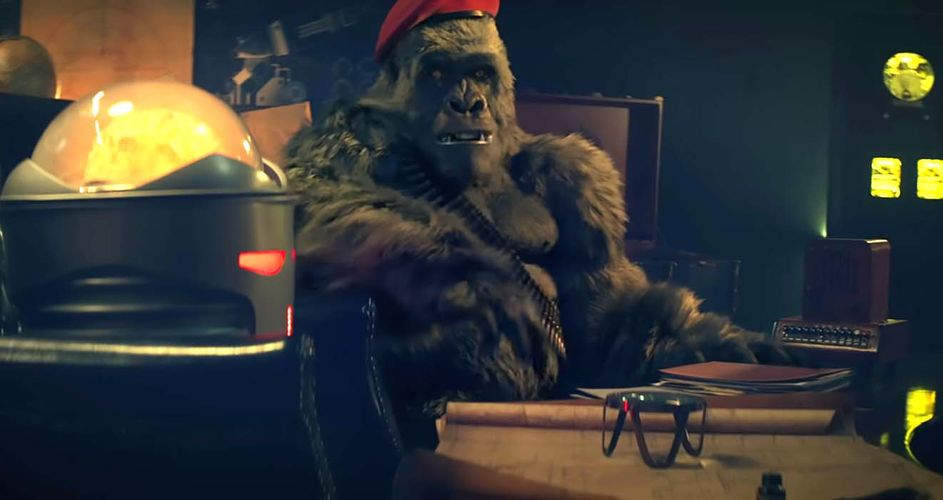
    Episode 2 sees the group take an uncomfortable vacation to a ghost town of a resort. The Brotherhood of Evil, along with the Brain and Monsieur Mallah, is briefly introduced, and we mostly get acquainted with Garguax, who was hired by the Brotherhood to assassinate a target that looks like Rita. After decades of no luck, he gives up and lives in peace at the same resort. When he and our main characters come face to face, the awkward banquet hall scene is both hilarious and meaningful concerning how the group talks to Garguax as well as how they talk amongst and about themselves. Vic is dead set on taking on obvious supervillains, while the rest of the group is adamant that they are not a super team.

    While Episode 2 was great in a very laid-back and comforting way, it also ended with them all being killed by Garguax’s still-eager henchman. Episode 3 is an absolute delight with the group navigating the afterlife. While Cliff, Vic, and Jane/Kay all visit family members, Rita is somehow still conscious and instead visits her ongoing self-identity problem once more: “He [Niles] literally handed me my destiny and I went on vacation.” The main players in the episode, though, are the Dead Boy Detectives who agree to help Dorothy and Larry bring back the rest of the team before they are truly, fully dead. Charles and Edwin, played by Sebastian Croft and Ty Tennant respectively, are delightful. After watching Episode 3, it is not all that surprising that ‘Dead Boy Detectives’ got an HBO Max pilot order. Add them to Larry’s mental breakdown and you’ve got a solid concoction. 

    Overall, one of the biggest concerns is how separate the heroes’ plot lines seem to have gotten last season Episodes 1 through 3 fluctuate on that. Doom Patrol generally does best when the characters are all very scrubbed together on shared absurd terrain. Episode 1 still felt too separated, but Episodes 2 and 3 represent the series’ skill at creating isolated adventures within kooky and fun newly-built worlds. It’s reminiscent of earlier Season 1 Doom Patrol where the group is placed in random situations with each other non-stop while the details of the story are driven by their own actions and personalities in contrast to the wild components happening around them. The first three episodes of the series are certainly promising for a fulfilling third season. Seeing where Madame Rouge and the Brotherhood of Evil take the villainous element from here will be integral, but the opening of Season 3 suggests that our team still has the knack for its classic, dark, absurd, and hysterical exploits. 

  • Disney+’s MCU Library Deserves a Commentary Track by ‘What If…?’s Jeffrey Wright as the Watcher

    Disney+’s MCU Library Deserves a Commentary Track by ‘What If…?’s Jeffrey Wright as the Watcher

    What If..? is a curious experiment into the multiverse. We get brief narrations by Jeffrey Wright as the Watcher throughout each episode. He never truly takes centerstage but rather is just a guiding voice. The first breaking of that rule is his brief interaction with Doctor Strange. Plus, he’ll likely return for future seasons, especially as a second one is already in development for next year. Still, he never takes away from the episode is only in the background, especially visually. Yet, Wright‘s narration is a highlight of the series and there sometimes’s a lack of it. There’s a way Disney+ and Marvel could offer more of his narration to promote the rewatch value of older MCU entries, such as adding a special commentary.

    Marvel Studios' 'What If…?': Jeffrey Wright Talks Voicing Marvel's Most  'Passionate Fan' with The Watcher | Marvel

    Considering he watches every part of the multiverse, he must’ve witnessed the Sacred Timeline at some point. In a way, Marvel Studios and Disney+ could bank on the Watcher’s role to offer some very creative new bonus material. Just imagine having a new Watcher narration added to each of the previously released Marvel Studios films. Not only do we get more of Jeffrey Wright, but also some fun jabs at past franchise changes. Why not have him mention that it’s odd that Don Cheadle‘s Rhodey looks different than before or reference that he preferred his multiversal counterpart.

    There’s a lot of potential just to have fun with it. Why not have him joined by another Watcher played by Kevin Feige? They may have discussions over story elements and how they connected back in later entries of the franchise. Offer some meta-commentary that plays with the conventions within the MCU. He’s seen the multiverse. So, why not let the narrator comment on how scenarios would’ve been different if this was in another universe. Teasing the endless possibilities of an ever-expanding franchise. Marvel Studios can have fun with it and it would be an amazing way to add something special to Disney+.

  • The History and Future of Superheroes at Award Shows

    The History and Future of Superheroes at Award Shows

    Superhero movies and television have dramatically increased in quantity in this early part of the 21st century. Where only the most iconic heroes used to be recognized by the general public – think Superman, Batman, Spider-Man – even non-comic book fans now can list their favorite superheroes by the dozen. While DC entertainment and its characters seem eternally well-known and loved, the change in the conversation around superheroes on screen is in no small part due to the wild success of the Marvel Cinematic Universe. 

    WandaVision" - Marvel-Sitcom auf Disney+: Vorort-Horror mit Superhelden -  DER SPIEGEL

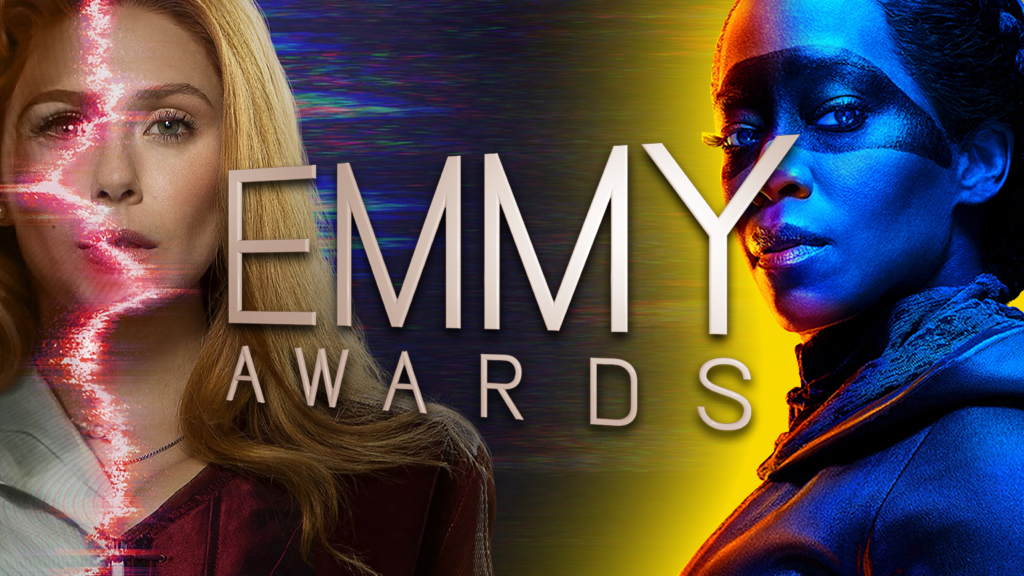
    Superheroes and their film and television exploits in particular have found their way into what feels like nearly every part of society. They routinely bring in over one billion dollars per film at the box office and inspire millions of fans. Still, the biggest award shows in the game, the Academy Awards and the Emmys, have long notoriously snubbed superheroes, or anything comic book-related. While WandaVision and The Falcon and the Winter Soldier have managed to secure Marvel Studios’ first Emmy nominations, its WandaVision’s astonishing 23 nominations – and currently 2 wins – are making headlines and history. So, is Marvel Studios’ first Emmy-winning series simply an anomaly? Almost certainly not. Looking at the history of how superhero visual entertainment has fared at major award shows, it’s pretty clear that the trend going forward is more critical recognition of the genre. In honor of WandaVision, let’s look at the Emmys. It’s an incredibly shortlist of winners.

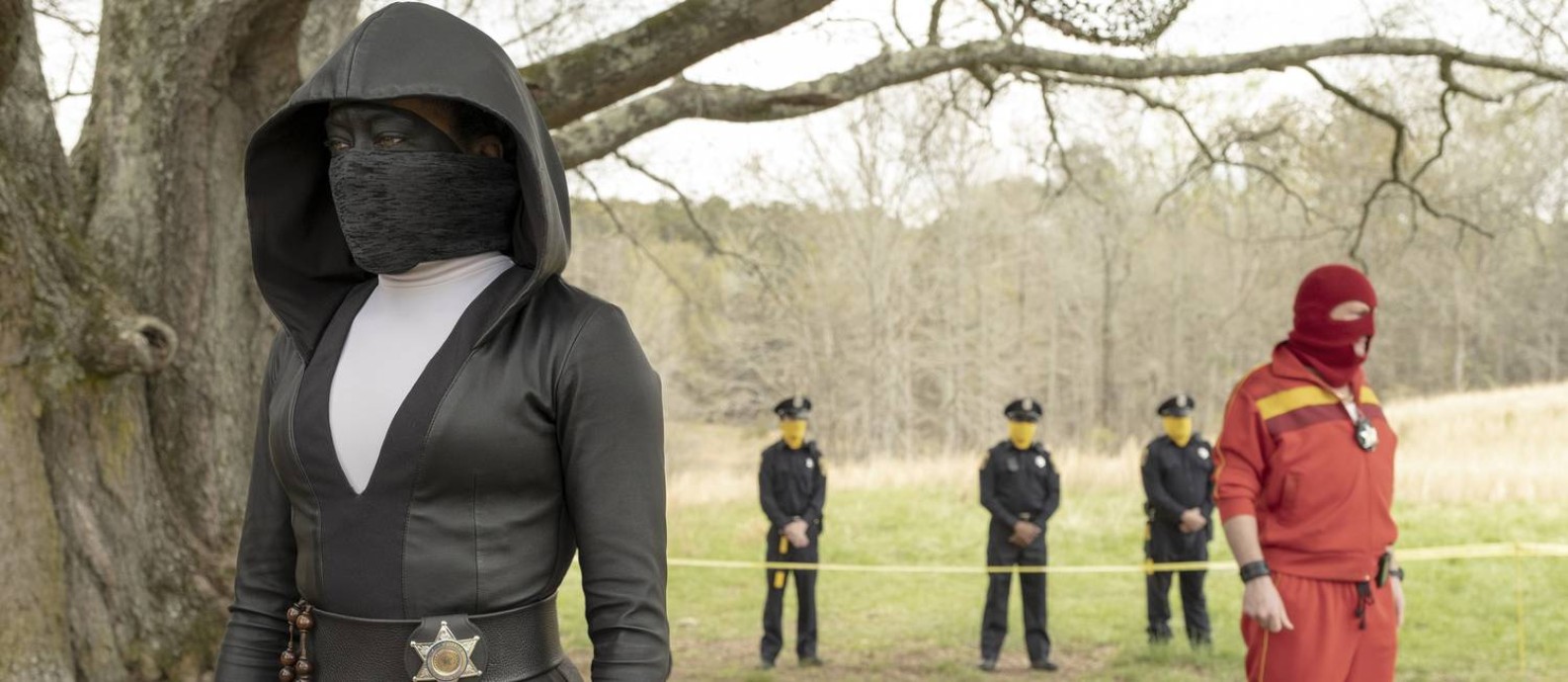
    In 1978, Mariette Hartley was nominated for Outstanding Lead Actress in a Drama Series for The Incredible Hulk and actually took home the same Emmy in 1979, marking the first nomination and win for a comic book superhero franchise. The Incredible Hulk’s success remained the only Emmy recognition for a whopping 42 years until DC’s Watchmen opened the floodgates in 2020. The series won 11 Emmys out of 26 nominations including Best Limited Series, Outstanding Lead Actress, Supporting Actor, and Outstanding Writing for a Limited Series. Watchmen’s resounding success after virtually no recognition of the genre hasn’t slipped away quietly.

    Watchmen': Damon Lindelof foge da adaptação fácil em versão para TV -  Jornal O Globo

    This year’s Emmys have recognized several comic book adaptation series including WandaVisionThe Falcon and the Winter SoldierThe Boys, and The Umbrella Academy. WandaVision (along with The Boys) also follows Watchmen’s recognition in major above-the-line categories. Those include Outstanding Lead Actress, Actor, Limited Series, Supporting Actress, Directing, and Writing (twice) for a Limited or Anthology Series. The door for comic book superhero movies apparently blew right open for the Television Academy. 

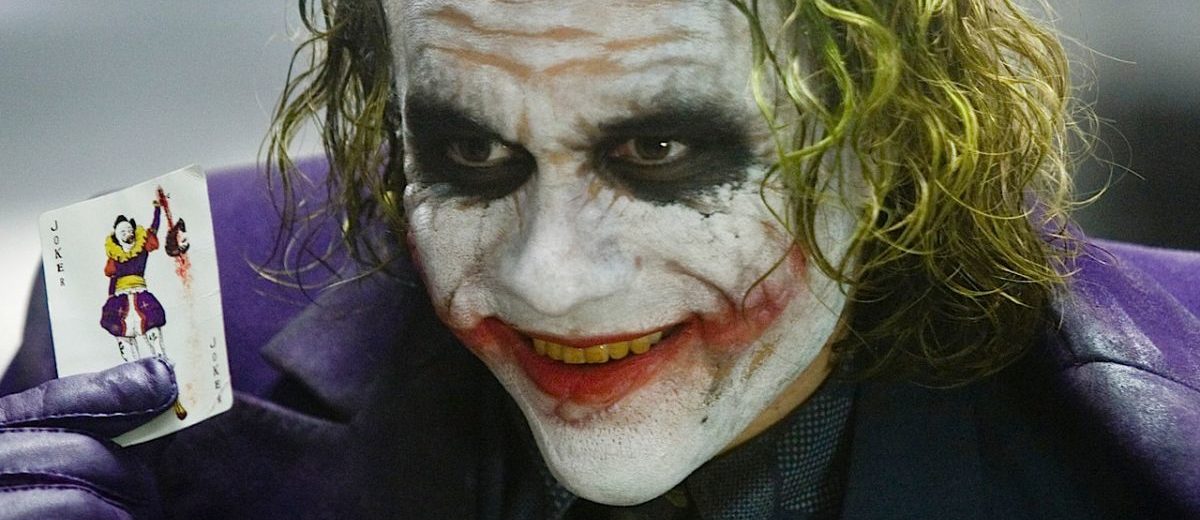
    Historically, superhero films have fared slightly better as the Academy Awards, or Oscars. Still, only nine comic book superhero movies have actually secured a win—and they are not at all what you would guess. Superhero movies have been recognized, generally, in technical categories, such as Best Makeup and Hairstyling, Visual Effects, etc. In fact, Suicide Squad (2016) is an Oscar-winner for the former category, and Spider-Man 2 also took home an award in the latter. Two wins have been as Best Animated Features. In 2009, The Dark Knight became the first to win an Oscar in a major, above-line category with Heath Ledger’s posthumous award for Best Supporting Actor, and boasted 8 total nominations.

    Joker Filmkritik: Da vergeht einem das Lachen

    It was not until ten years later in 2019 that Black Panther, among its seven nominations, became the first comic book superhero movie to be nominated for the coveted Best Picture category. It also took home 3 awards, giving Marvel Studios its first Oscars. In 2020, though, Joker, the iconic DC character made history again with a superhero record-breaking 11 nominations, including for Best Picture, Best Actor, Best Director, Best Adapted Screenplay, Best Editing, and Best Cinematography. The film nabbed only two awards though, including Best Score and Best Actor for Joaquin Phoenix’s performance. 

    It is clear that award shows are beginning to recognize the superhero genre. Still, it has not been a gradual increase over the decades. Instead, it arguably did not begin until the 2000s, and truly not until the late 2010s and early 2020s. As clear with this year’s Emmys, superhero film and television are finally getting the official acclaim that is arguably long overdue. The question is why, and more importantly, why so much seemingly all at once. Are superhero series and movies actually getting better or are more and more critics simply becoming fans themselves? The answer is probably both.

    Scorsese produziert Joker-Film für Warner - lauterfilme.de

    The superhero genre of the past was traditionally represented by flat “popcorn” flicks that simply brought comic book characters directly off the pages they came from. The goal was pure, simple entertainment with “shiny” action and larger-than-life science fiction-type stories devoid of much else. To some, the genre still carries that stigma and the assumption is that these movies and television series are nothing more than fun money-making ploys. However, as anyone who has watched enough of them can tell you, there is so much more going on lately.

    The sheer amount of films and shows have created an entirely new following and system of storytelling. An easy explanation is that, with countless properties being adapted and created, each one has to fight its way to being better than others in order for itself to stay afloat. A better explanation, though, is that the world has become so accustomed to superheroes and their stories that film and television makers can now shift their focus away from the classic empty but shiny plots to showcase and deliver deeper and more meaningful stories, using the genre as a vessel to do so.

    Black Panther - So hat sich T'Challa seit The First Avenger: Civil War  verändert

    While award shows have not traditionally been kind to comic book superheroes, the change can be seen, particularly just in the past few years. If this year’s Emmys, with WandaVision’s already noteworthy success, are any indication of what is to come, these beloved stories might be poised to be at the podium in record number in the near future.