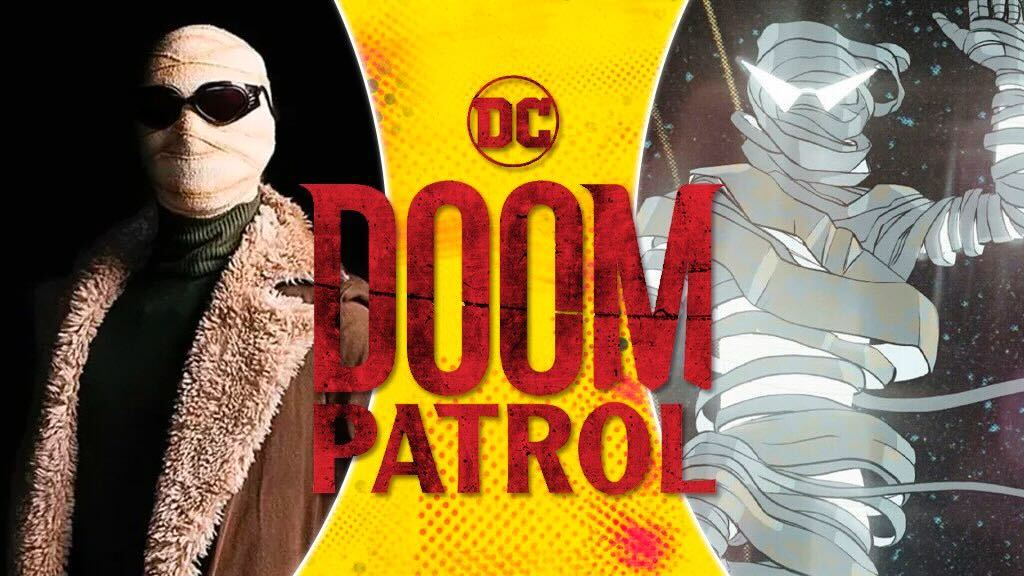
Larry Trainor, aka Negative Man, has been a constant member of the Doom Patrol since its inception – both in the comics and the series. The character has become quite the fan-favorite since his debut in Titans season 1, only growing more and more interesting as the series progressed. Things may never be the same for Negative Man, as the beginning of Season 3 saw Larry split off from The Negative Spirit, also known as Keeg Bovo, and begin to sprout an odd bump that’s got him baffled and quite worried.
Something is different this time around, ever since Season 1, it has been known that once the spirit and Larry separate, it renders Trainor immobile until Keeg bonds with him again. It feels almost as if something could’ve rooted the Negative Spirit out of Larry, possibly even taking its place.
However, this bump may not be much of a worry for Negative Man and could change his life forever. Fans of Gerard Way‘s run on Doom Patrol may know just what is going on with Larry this season, and how after three seasons, Negative Man may be no more. In Weight of The Worlds, Larry became much more accepting of his state and more comfortable with his new team, much like Doom Patrol‘s Negative Man has adapted and overcome throughout the past three seasons. In the comic, Larry sprouts some similar bumps revealed to be excessive positive energy within Larry’s body that had begun to build up and once supercharged by Lotion the Cat, pushes Keeg out, and turns Larry Trainor into the Positive Man.
It seems as though in the series, Keeg became aware of Larry’s new outlook on life and realized his time was up, with the positive energy beginning to take up much of Larry. In the comic, it was Larry’s dog, Hank, that provided him with all that positive energy, but I think here it could be the healing of his past trauma, realizing it wasn’t at fault with what happened with his family, and more importantly finding a new family that accepts him for who he is, especially Rita Farr.
Larry is probably one of the characters in Doom Patrol that really needs that push lately, and to see some significant development. With the new situation at Doom Manor and Larry really closing the chapter on much of his past, this new, much more positive path, seems adequate for him as one of the show’s most beloved team members.
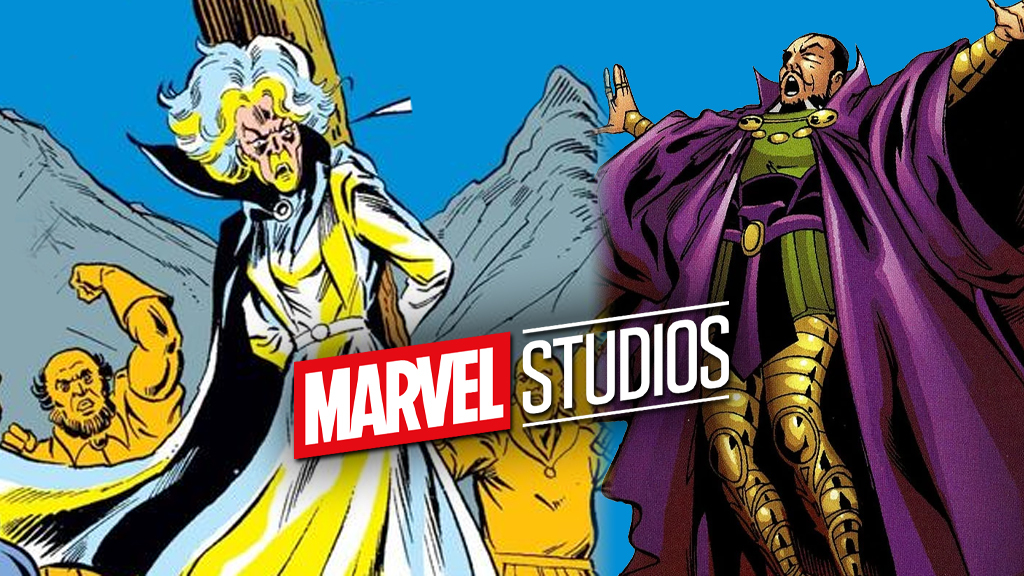
Last month, paperwork was filed by Disney to create a new limited liability production entity titled “Oakhaven Productions LLC.” At the time of discovery, we at Murphy’s Multiverse were prettyy stumped about what potential production this might be but today’s announcement that Marvel Studios is developing an Agatha Harnkess-centric series around star KathrynHahn may not only have solved that problem, but also give some clues as to what the series might end up being about.
At the time of discovery, our Google searches for Oakhaven produced little with any relevance to Marvel Studios, but did turn up what we thought was a funny coincidence: a Scooby-Doo reference. In 1998’s Scooby-Doo and the Witch’s Ghost, Scooby and the gang end up in the fictional town of Oakhaven, Massachusetts where all sorts of witch-related madness ensues. Oakhaven essentially serves as an analogue for Salem as Puritan-founded city where witches are persecuted. The dots aren’t too hard to connect here as Agatha Harnkness is not only a witch but one who, in the comics, was persecuted by Puritans in Salem before moving West and settling in the hidden Colorado town of New Salem.
While the plot of the new Disney Plus series hasn’t been revealed at this point, we know that Agatha was persecuted by her own coven of witches in Salem in 1693. We don’t catch up with her again until 2023 (or so), meaning we have about 330 years of potential stories to be told about where Agatha has been since stripping the power from her coven in 1693 and showing up in Westview in 2023. We can glean from WandaVision that she’s been set up in New Jersey for a while, but it’s possible her own series could shed some light on other places she’s been, potentially opening up the door for New Salem, and its interesting residents, to make their way into the MCU.
Foremost among those interesting residents is Agatha’s comic book son, Nicholas Scratch. Scratch was referenced as somewhat of an Easter egg in WandaVision, with Harnkness’ pet bunny sharing the name, but in the comics he was a powerful warlock in his own right who had less than a loving relationship with his mother. Marvel Studios has proven to love their family dramas and a mother-son drama might just be next on the list! With 330 years of time to fill, writer Jac Schaeffer could have a ton of fun introducing New Salem, Nicholas Scratch and some of its other colorful inhabitants while expanding on Agatha’s story and the mystical side of the MCU.
We’re nearing the end of Season 3 of Titans, which means the future is bright. Episode 11 makes sure to hold on to most if not all of the shortcomings the series has compiled this season and repeats many the same bad patterns that have pretty much been on a loop episode after episode. The remaining glimmer of hope is still Tim Drake, and his and Donna’s arc already greatly outshines everything else.
The main Gotham plot, if it can be found, is once more based on character choices that either come out of nowhere or have been visited unsuccessfully numerous times. The idea of Scarecrow going about drugging all of Gotham with an anti-fear chemical just to play a video that says the Titans are bad and Red Hood is good is disappointing to say the least. But now Jason’s aggressive interest in taking on Nightwing one-on-one to somehow prove that Red Hood is a hero is not only another situation where Jason has done a complete switch of character, but is so meaningless compared to everything else going on at this point. There is no need to worry about Jason being consistent, though, as by the end of the episode he has an internal crisis on being Red Hood.
Not to be outdone, Dick has gone all-in on being terrible. Not only have his terrible ideas gotten him and the Titans to the hiding places they currently reside in, the leader of this “family” stops at nothing to be able to fight Jason alone for absolutely no reason other than to just make it about himself. Shockingly, this gets him shot and then jumped by the dosed zombie-people of Gotham—not even Jason. Gar and Rachel, after needing a total of probably 45 minutes to learn about and then find a Lazarus Pit conveniently sitting open in a random abandoned building, pretty much hold up a neon sign that says, “Dick is going to die but we will put him in this pit and nothing matters.”
After letting Crane be the least threatening and most unnecessary villain around for the entire season, the show did put some type of effort into ramping up his crazy and violent side. The strange new complex about “the time for masks is over” somehow leads him to torturing the pizza guy and acting particularly manic. Why anyone cares whether this guy wears the Scarecrow mask or not is unknown at this time.
In another part of Gotham, Tim and Donna reunite in the world of the living. Tim’s character and Jay Lycurgo’s portrayal of him is what so much of Titans is unfortunately not—good. We get a better glimpse at Tim through his family, and the episode appears to be setting up a moment where the remaining “hold out” neighborhoods of Gotham revolt. It’s a much more compelling concept than the rest of the current plot, and the street-level and ordinary people aspect of it could be refreshing if it stays that way.
This episode seemed brilliantly self-aware that the series completely wrecks its most powerful characters for no reason. At least it can only be assumed it is aware considering it does it some more and somehow worse. For one thing, the best line of the episode is Conner telling Dick his is better than him in every way after kindly acting as Dick’s secretary. Because it would apparently be a shame for Superboy to be super, Dick promptly hits him and Krypto with some kryptonite so that the Titans can remain useless and he can get personal with Jason.
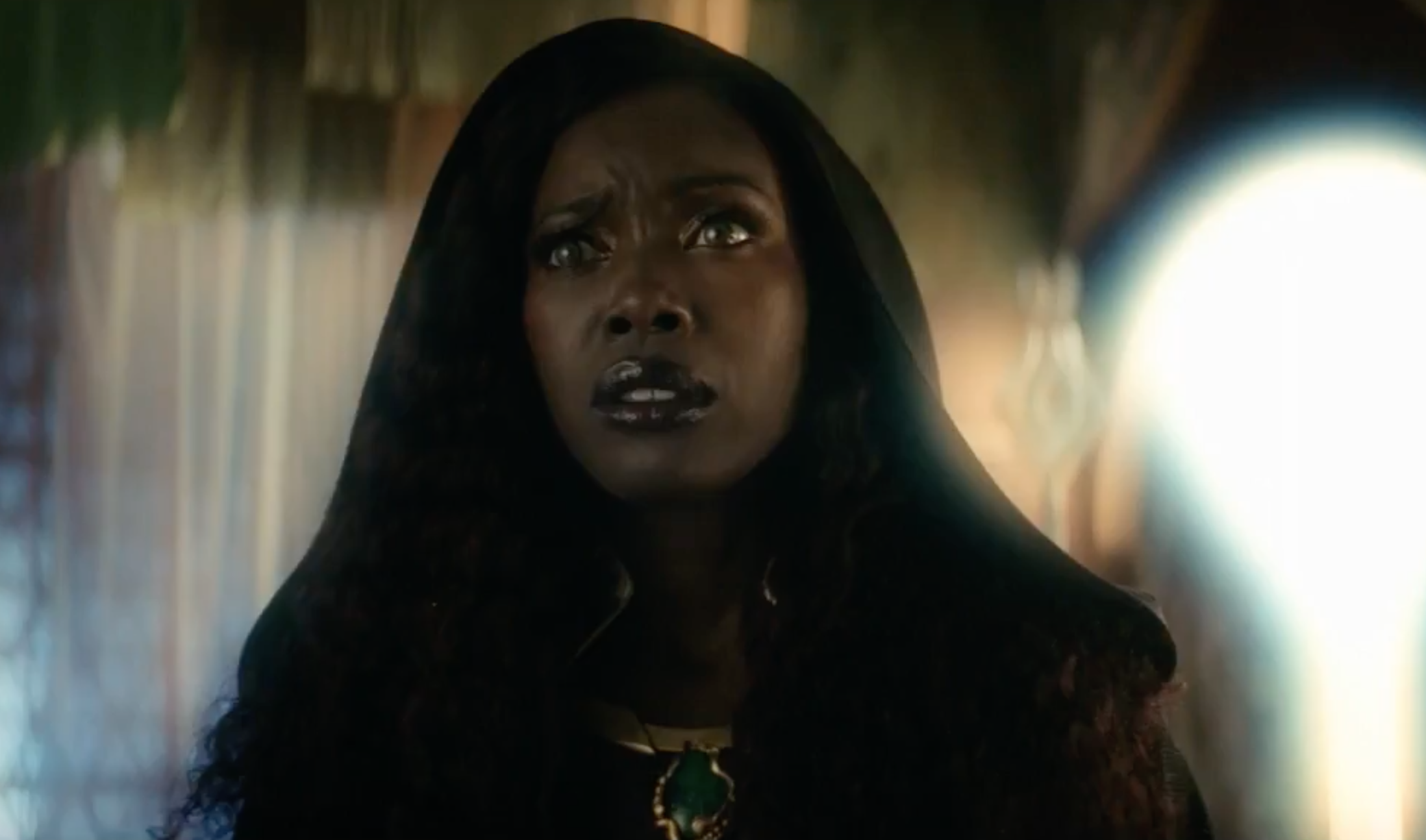
What they did to Starfire is almost unspeakable. Not only do we get some gnarly visions based on a random baby she saw in the street, but we learn that she was not born with the “fire”, her family used magic to give Blackfire’s fire to her, and now she unexplainably has new blue powers with no clear function or origin. It’s very difficult to understand why her new powers, which has “been with her all along”, are not even green–they won’t even let her be color-coordinated.Titans just won’t leave Starfire alone.
All in all, nothing much actually changed in the plot or in how the series tries to spin the plot. It is a rehash of the villains being all over the place with no real motivation or personality; Dick being a real hindrance to everything and everybody for no reason; and most good characters being reduced to nothing. Tim and Donna’s neighborhood war could be promising, but only if the rest of the Titans do not get involved.
Ever since it first premiered, Titans has struggled to handle all of the characters it insists on introducing every other episode. This first became evident in the first season when we were introduced to Beast Boy. He was an instant fan favorite but was quickly sidelined and used as the series’ punching bag. It only got worse in the follow-up season, as it continued to introduce more and more characters. The tragedy was that it only continued the trend when it introduced Superboy.
In his first appearance, Connor Kent stayed true to his origins. He’s a clone of Superman and Lex, who was created by Project Cadmus. While Joshua Orpin is in no way a bad fit for the role, the issue lies in that he’s not given anything to do. Even to this day, the character that can see through walls, punch holes through a wall, and so much more has no story arc.
We will tackle spoilers from Titan’s third season in the rest of this article. If you haven’t watched the series yet, only continue at your own risk.
In this season of Titans, we see Connor meander around Wayne manor. He only serves the story as a plot device. He even makes a device in hopes to stop the bomb that’s been bolted into Hanks’s chest. As such, he spends an entire episode doing nothing else. When he is unable to save Hank, he’s obviously quite distraught but the series quickly abandons that. Now, Superboy is suddenly in a relationship with Komand’r. There’s no real build-up outside of a minor flirt and oddly just happens.
This fling seems to only be used as a means to bring back a chipper versionConnor. At first, you just kind of assume Blackfire could be using Connors solar energy to restore her abilities. Our indication was the inclusion of purple energy around the room, but that doesn’t seem the be the case after all.
Titans had the chance to expand upon how Young Justice approached its Superboy, a person who didn’t know their place in the world. He was constantly at odds with himself as the models of his makeup are in a contrast, causing his excessive anger issues. Instead, this Connors genetic origin is used simply to push the story forward in a lackluster and uninspired way.
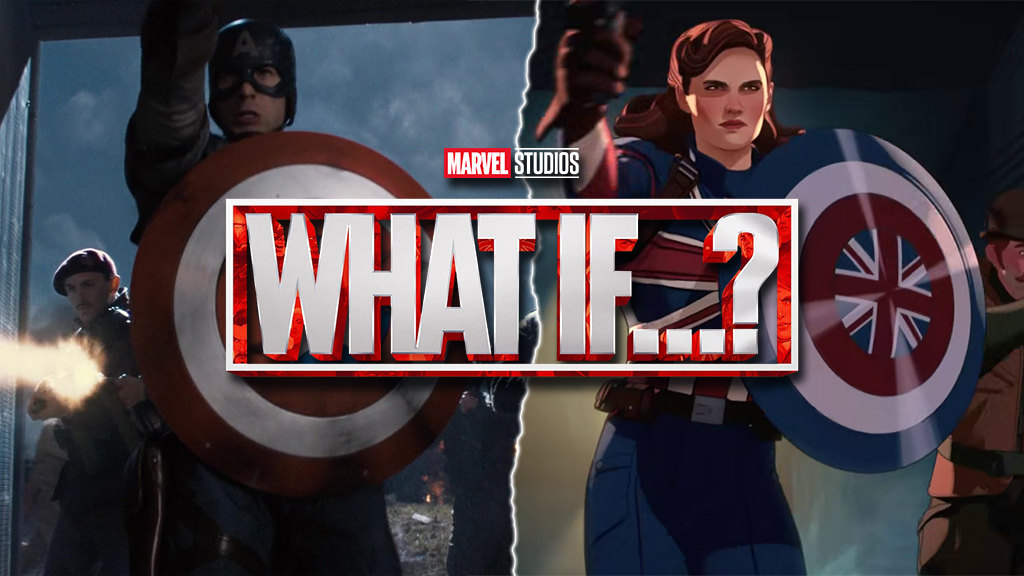
Today saw the release of the season finale of Marvel Studios’ first animated venture, What If…?. Over the course of 9 episodes, the show did its damnedest to play with the framework offered by 20+ films in the canon and the premise of an anthological format. The result is an unexpected mixed bag of stories that felt way too familiar. For a show that was supposed to explore the endless outcomes of the multiverse, we sure as hell got some glaringly familiar outcomes.
For example, Captain Carter is transported to the present-day, in time for the opening events of The Avengers, at the end of the pilot episode. It’s a deviation you’d think would massively impact the fate of the MCU; if Peggy is around to fight Loki as soon as he arrives on Earth, the world would be forever changed. Yet when we catch up to where she is in this finale, she’s somehow on the same path as Sacred Timeline Steve; headed to the Lemurian Star in a stealth suit to stop Batroc from hijacking the ship. The ripple effect should be way more monumental than the HYDRA Stomper showing up at the end.
Why is this the case when even the smallest of deviations can alter timelines in drastic ways?
To ask why from a story POV would be to tear apart the seams of Captain Carter’s timeline, which no one has time for. But to ask from the vantage of the show and all its episodes makes the answer clear: the show is more concerned with honoring the MCU’s past than it is carving its own future, for better or worse. It cares about giving audiences to point fingers at like that DiCaprio meme. A lot of the creative decisions in this show end up feeling like mandates because of how restrictive it feels. Every episode has to be about an existing movie. All the players involved must be characters in the canon. Episodes must have familiar MCU scenes.
That’s how you end up with a ludicrous subplot like using Arnim Zola, a primitive AI from the 1970s, to stop a superior technological cosmic being like Ultron. Why is that the solution in a multiverse of infinite possibilities? Why are they aping the notoriously dumb subplot of Independence Day? Why couldn’t it have been Kree or Skrull tech? Why didn’t the Watcher pluck out technology from another universe that would rival Ultron? It just had to be Zola because… reasons and to do something unfamiliar would be to go against the season’s grain.
When I took the job, one of my rules was let’s be free. We’re in the multiverse — we should be as free as can be and go and run into the wild, into the stories the movies will never do, into the stories the TV shows will never do, and show both Disney and the fans all the possibilities of these characters.
Head writer AC Bradley’s quote above feels naught given the outcome of the season. When every episode seems keen on covering the MCU’s greatest hits than making its own, it doesn’t feel exactly free. Sure, What If…? does take some interesting swings in imbuing genre tones into familiar episodes like turning Fury’s Big Week into a murder mystery or turning the first Doctor Strange movie into a tragic romance. But those tonal changes can only do so much when everything else plays out like movies fans have seen dozens of times.
It’s why the Killmonger episode feels somewhat empty. It throws in a wrench in the form of Tony Stark surviving his kidnapping but never explores it. What happens to a world without Iron Man? What would happen if Killmonger became a force for good? The show never really asks itself that. Instead, the events of Iron Man pan out in the dullest way possible. The events of Black Panther happen anyway when Killmonger ends up taking over Wakanda. It’s as if they just wanted to cover Iron Man and Black Panther in an episode to fill a quota.
It shouldn’t come as a surprise that my favorite episode of the season is the Star-Lord T’Challa one. Brushing aside that it’s a poignant piece of storytelling that beautifully sends off Chadwick Boseman as T’Challa into the aether, it’s the one that riffs the least on the MCU’s past. The episode feels fresh on a lot of levels and gives us macro ripple effects such as Thanos becoming a good guy and the universe becoming infinitely a better place. Sure, it recreates the iconic GOTG Morag scene but it’s an episode that lives and breathes on its own terms.
Lucasfilm’s far superior anthology series, Star Wars: Visions, celebrates the essence of Star Wars not by redoing The Phantom Menace or The Last Jedi but by creating new tales that revered George Lucas‘ resonant vision of a galaxy far, far away. The end result is an amazing tapestry of wildly original Star Wars stories that fans are already demanding spin-off shows for. The people who made those shows respected the greatest hits of the Star Wars universe and, in turn, made their own.
The first season of What If…? isn’t a bad one but it’s one that leaves a lot to be desired. That it’s Marvel Studios’ first animated anthological outing gives it somewhat of a pass but in order for the show to become greater in future seasons, it needs to start making its own hits instead of covering others.
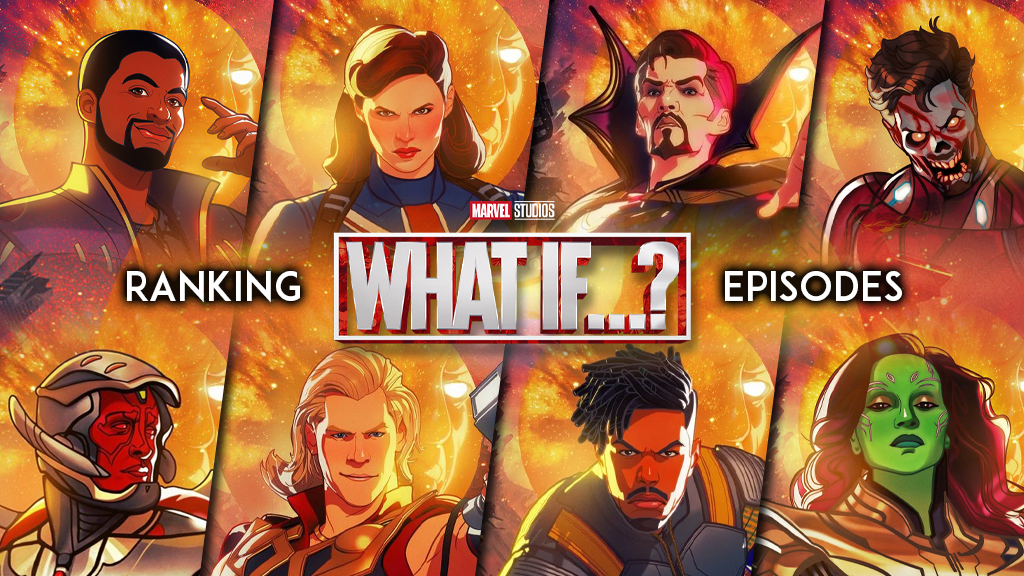
With Season 1 of What If… ? in the rearview mirror, it’s clear that the series certainly proved that it had more up its sleeve and more to offer its own multiverse than it seemed to early on. Marvel Studios’ first animated and anthology series was an unlikely candidate to be the first to truly delve into the newly opened multiverse, but What If… ? was specifically engineered to do just that. The episodes are a mixed bag, both because the series intended for them to be and because some fell short while others exceeded expectations. With that in mind, we rank all 9 episodes of What If… ? below:
9. What If… Captain Carter Were the First Avenger?
At the end of the day, What If… ?’s leading episode is the plainest and least interesting of all. The premise was simply the whole plot of Captain America: The First Avenger, and virtually the only change was Peggy and Steve switching places, more or less. While arguably it was designed well to introduce viewers to the concept of the series, the story itself was bland and a three-minute version probably would have had the same effect overall.
8. What If… Killmonger Rescued Tony Stark?
If Killmonger wasn’t such a great character and if Michael B. Jordan wasn’t Michael B. Jordan, this episode would have felt like a complete flop. Even though the premises are substantially altered, the episode somehow strongly embraces the restrictive concept of sticking closely to the Sacred Timeline source. In this case, it is both Iron Man and Black Panther, but it feels like the Captain Carter episode in terms of watching a condensed version of stories we already know. Killmonger’s deception and manipulation felt one-note pretty quickly, and the episode ends in a place that neither feels like a resolution nor a cliffhanger—it just sort of feels like it was cut off in the middle.
7. What If… the World Lost Its Mightiest Heroes?
Nick Fury’s Big Week is where we first were introduced to the idea of What If… ? routinely killing off major characters in order to make things feel different and add some sort of stakes to the plots that are so easily cast-off as hypotheticals. The theme of this episode is that there is always hope, and there will always be heroes willing to rise to the occasion. Samuel L. Jackson’s Nick Fury gets a much-appreciated spotlight, but otherwise, the story plays out so flat that the death of five Avengers doesn’t come across as upsetting. The elements of a solid murder mystery are present, but it just doesn’t execute in terms of delivering something deeper than a surface-level concept.
6. What If… Thor Were an Only Child?
The Party Thor episode is a great example of an episode that everyone can both completely agree and disagree on. There is no doubt that this episode was fun with its countless easter eggs, seemingly infinite cameos, and silly let’s-have-a-good-time energy. Whether or not that makes for a satisfying episode up for debate. While there’s nothing particularly wrong with the episode, there’s nothing particularly worthwhile either. At the end of the day, it feels more like empty fan service than anything else. To be fair, that’s what a lot of people wanted from the series.
5. What If… T’Challa Became a Star-Lord?
T’Challa’s episode is genuinely delightful on multiple levels. There is a certain warmth that comes from Chadwick Boseman’s leading voice performance, and his own energy and presence matches well with the episode’s point that T’Challa would have made the universe a much better place than it is. This competes with the zombies episode for the funniest episode, but it is undeniably the most comforting heartwarming episode the series put out. Its themes of family and belonging hit the right notes, and something about T’Challa reconnecting with Wakanda just makes this episode feel fulfilling.
4. What If… the Watcher Broke His Oath?
The finale did deliver a sense of resolution to the series and the Ultron arc that began last episode. While it was exciting to see pieces and characters of the multiverse come together in such a direct and desired way, the episode unfortunately felt shallow by completely ignoring the implications the series—and the multiverse as a whole—have on the main MCU timeline. The character team-up is gratifying, and the rag-tag group of multiversal heroes has a solid dynamic. There was a significant amount of humor that keeps the episode on a level apart from the previous episode, What If… Ultron Won?. Ultimately, while it is exciting, fast-paced, and delivered an epic showdown, the victory feels a bit cheap and the overall effect and punch of the episode did not quite meet its predecessor.
3.What If… Zombies?!
This episode was just great. We had a huge array of characters, and most of the ones that are not mindless zombies are characters often not given as much attention. Hudson Thanes’ Peter Parker was center stage and delivered on both humor and emotionality. So much of the episode, by nature, is violent and gruesome—it’s the closest thing the MCU has to horror at this point. Yet amongst the apocalyptic survival, the episode is also hilarious. As a result, it’s probably the most enjoyable to watch. It’s a great example of how the series can succeed by generally ignoring what the movies have done.
2. What If… Ultron Won?
The penultimate episode finally gave us something that made it feel like What If… ? has a point and can provide the type of storytelling that fits within the MCU rather than just having one-off mini-stories over and over again. The concept of the multiverse actually comes into play here for the first time, and the Watcher comes alive. Ultron is portrayed as the most powerful villain of the MCU, and it fits. The Ultron versus Watcher showdown is not only great because of the strength of the two characters, but it is visually and conceptually stunning as they punch their way through the multiverse. It also features some very human moments, but the real triumph of this episode is that we finally have the multiverse as an overarching concept to play with.
1. What If… Doctor Strange Lost His Heart Instead of His Hands?
The Doctor Strange episode was the first time the series felt like it had something particularly meaningful to offer. While still heavily anchored by the general events of Doctor Strange, it moves past this to intimately explore a dramatic reimagining of a character. The character-driven piece was shrouded by extremely compelling dark themes that are absent from the MCU at large. It was the definition of a tragedy drowning in grief, desperation, and defeat that resonated in the empty void that Doctor Strange left himself in at the end. Combine all of this with a mystical twist that Doctor Strange had been time-split in half, this episode was truly phenomenal.
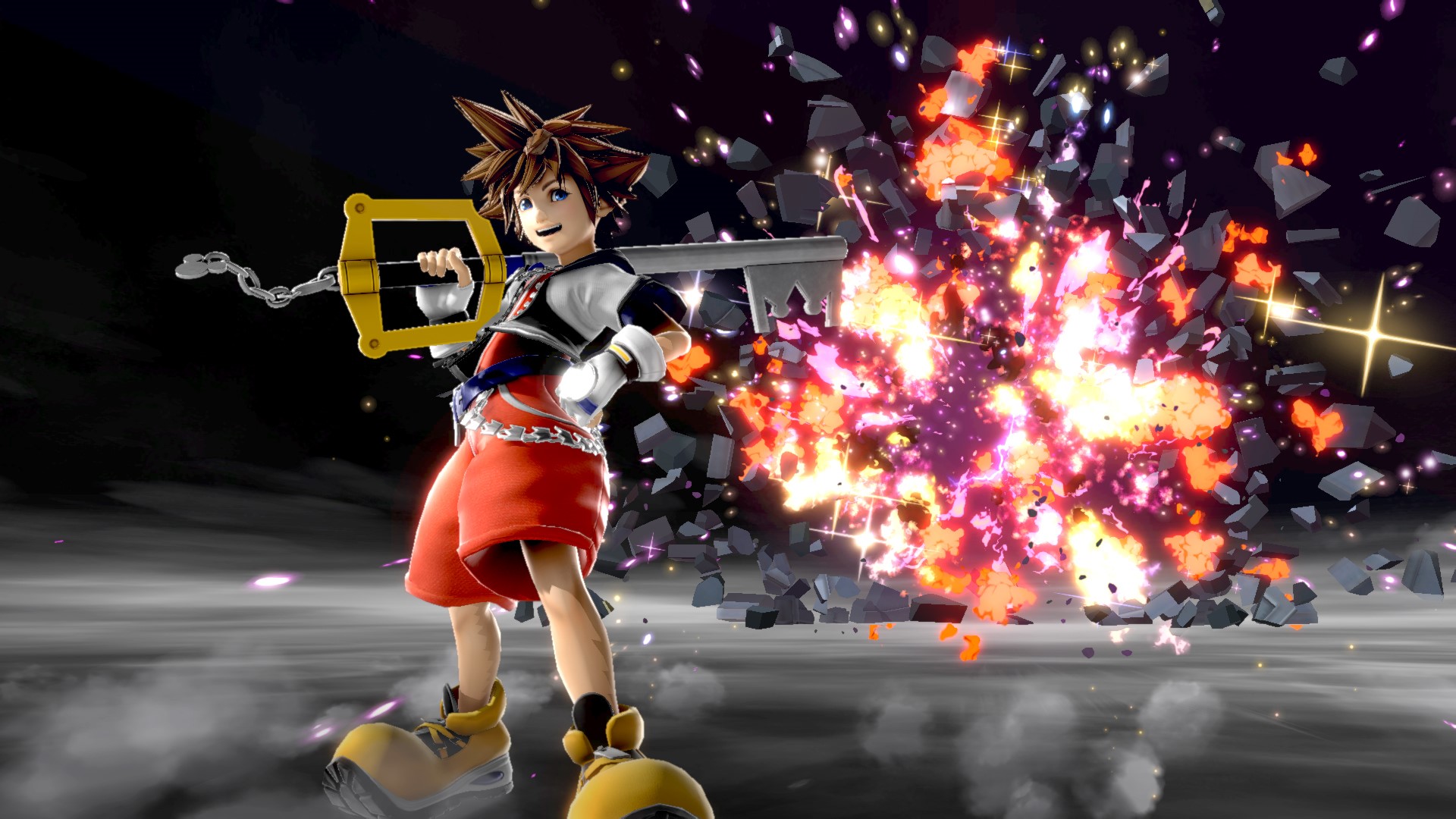
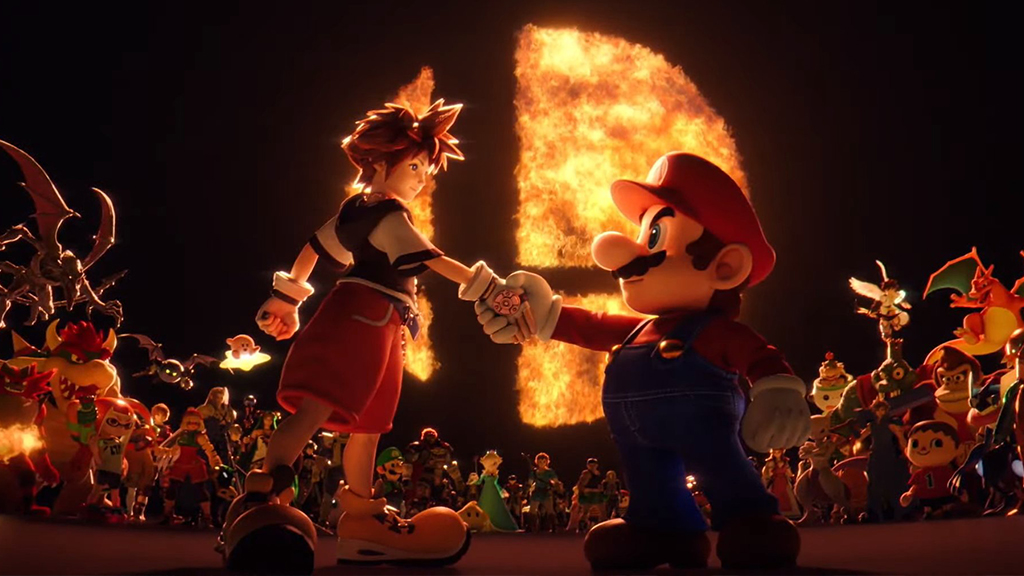
It’s crazy to see Sora from Kingdom Hearts officially joining Super Smash Bros. Not only did we find out he was the most requested character long before the current entry, Ultimate, ever released. the game’s director Masahiro Sakurai has always followed one strict rule when adding new fighters. They always originated from a video game. Sora surprisingly matches that bill, as he’s a Square-Enix character that enters Disney worlds. Yet, the fact he is part of this massive franchise is a bigger miracle than you might consider at first.
So, the bizarre aspect about Sora is the legal nightmare behind it. Yes, the game was produced by Square-Enix but in conjunction with Disney. As such, it technically belongs to both companies from a licensing perspective. If you noticed, there are no single Disney characters included or referenced in the preview. The only distinction is the Mickey Mouse symbol on his keyblade. Donald and Goofy didn’t even get to join Sora in his Final Smash. They’re also excluded from the Hollow Bastion stage, as they are normally present in the Dive to the Heart section. So, there were certainly cuts that had to be made throughout the process.
Sakurai also highlighted the difficulties of adding the character was only possible with help to make this a reality. Hell, they couldn’t even announce the most popular character due to fears of legal troubles. Supposedly, rumors are pointing to the rights having been completely taken over by Disney at some point with Square-Enix primarily acting as the game’s developer. Still, they’ll need a sign-off from both companies and their legal teams to include him in a third-party project. Our first hint at this complexity came to light in an interview with FinalFantasy XIV director Naoki Yoshida. He offered some insight after interest rose due to the Nier tie-in event.
As for a Kingdom Hearts crossover, for this idea, one of the troubles is that we have to coordinate with Disney, and so I feel that there would be so many hurdles and challenges around working with them, so I try not to think about a crossover with Kingdom Hearts.
Naoki Yoshida
If not even an in-house developed game like FFXIV won’t touch the franchise, it’s probably a legal nightmare for external developers to include him. There were many debates about who the final character might end up being and if it would be satisfying enough. Yet, the fact that the most popular voted character and one that seems like a statistical anomaly to ever find its way into another franchise like this is the perfect way to cap off the monolith. Plus, Mario being the one to bring him into the franchise is a beautifully poetic moment, as Kingdom Hearts came into existence the moment Square-Enix’s Shinji Hashimoto and Hironobu Sakaguchi discussed Super Mario 64.
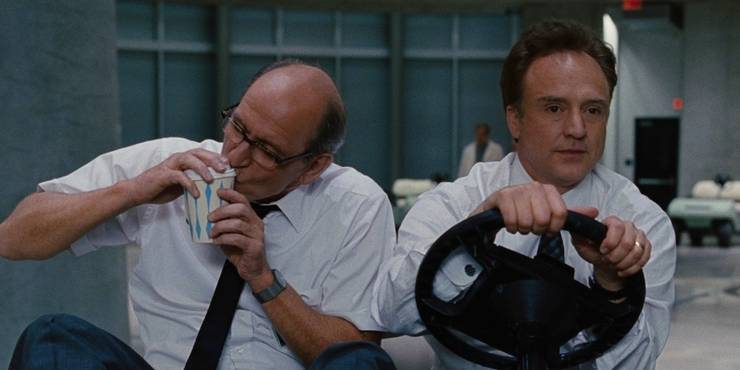
Spooky Season is upon us and like everyone else, the Murphys celebrate appropriately by cramming as many horror films into the month of October as possible. While we’re always on the lookout for new ones, there are those that have stood the test of time and are rewatched annually. One such film is 2011’s The Cabin in the Woods. Written by superhero standbys Drew Goddard and Joss Whedon and directed by Goddard and starring Chris Hemsworth (if I recall correctly, it was Hemsworth’s work in this film that made Whedon give him a vote of confidence for the role of Thor), The Cabin in the Woods took what seemed like a derivative and trope-laden slasher film and turned it into something deconstructionist and spectacular. From the 9-to-5 humdrum attitudes of Richard Jenkins and Bradley Whitford’s characters, Gary and Steve, as they supervise an ancient ritual to the shocking sub-basement of horrors, the film’s recipe of humor and horror make it a classic.
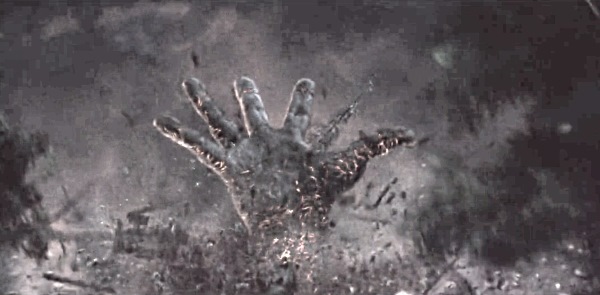
Whedon and Goddard have both gone on the record saying they were asked to do a sequel but neither of them felt that it was worth messing with what’s inarguably a perfect ending that sees the Ancient Ones rise and, presumably, destroy the world. I’m not here to convince those two to make that sequel because I agree that the ending is one that shouldn’t be messed with. However, my annual obsession with revisiting that film led me to believe that while a sequel isn’t in order, there might by some ways the mythology they created and the world they built are worth revisiting in other ways, especially in the age of the cinematic universe.
The Other Failed Rituals
As the film progresses, the audience comes to understand that the fate of the world hinges on the successful completion of the American ritual. The whore, the athlete, the scholar, the fool have to die to placate the Ancient Ones because the rituals in other countries have failed. Gary and Steve’s overconfidence in their abilities as the maestros of the ritual despite their monitors showing failed attempts in Sweden, Argentina and Spain and a desperate situation in Japan lead to some of the film’s funniest moments but also make it clear that there are other supervisors just like them in those countries. The film gives us very little information about the rituals in those areas, but we can glean enough to understand that each one probably has a very different and unique set of rules than the one in the U.S (for example, the Japanese ritual seems to depend on the death of children). If the U.S. ritual follows “cabin in the woods slasher-based” archetypes, the other rituals could follow other horror archetypes (a giant Kaiju-esque creature appears briefly in Argentina). Should Goddard and Whedon be so inspired, they could create films or an anthology in which they could satirize those genres to similar success. Rather than a sequel, it would simply be an exploration of events that took place either just prior to or simultaneously with the original.
The Buckners
The creepy basement in The Cabin in the Woods was full of all sorts of terrifying shit and, as we find out with the characters (why won’t they listen to Marty?!) those tempting artifacts end up being how the characters chose their means of death. In this case, after Dana reads a diary and chants some Latin (does nobody watch Evil Dead?), she brings a family of murderous zombies, the Buckners, to the surface to kill her and her friends. The diary itself is a good start to a Buckners prequel film that could flesh out the backstory of the Zombie Redneck Torture Family that won Maintenance and Ronald the Intern some cash in the ritual betting pool. We know the Buckners have a 100% clearance rate as a zombie family in the yearly Ritual, but seeing the faith-based, sadistic settlers (who may be in part based on the real life psycho serial killing family known as the Bloody Benders who, it is believed, killed at least a dozen people in Kansas in the early 1870s) at play in their hay day has the makings of a terrifying The Hills Have Eyes/Texas Chainsaw Massacre type of film that could spawn its own frightening franchise.
The Ancient Ones
The plot of The Cabin in the Woods revolves around the barely talked about and briefly seen Ancient Ones, a race of giant, god-like beings that once walked and pretty much owned the Earth. They live “below” and are kept satiated by the annual rituals which, as the film tells us, have existed since the beginning of time. Over time the rituals have grown more complex and seem to be more about keeping the Ancient Ones appropriately amused rather than full on the blood of the victims. This one might not make it at the box office, but a series developed around the Ancient Ones and how they acquired their violent appetites might be something people would want to see.
The Excellent Adventures of Gary and Steve
The everyday nature of dynamic and dialogue shared by Richard Jenkins and Bradley Whitford throughout the course of The Cabin in the Woods stands out in stark contrast to the wild events unfolding in the film. The Ritual, to these guys, is not only old hat but it’s how they pay the bills. As they prepare for the day, we see them go through the motions and hear Whitford’s Steve bemoan his wife’s baby-proofing strategy while being completely ignored by Jenkins’ Gary as he fixates on his coffee. A couple potential options present themselves here:
A film revisiting a previous year’s ritual at the cabin. This would allow for us to not only get more of Gary and Steve, but also give another one of the horrors locked away in The Organization’s sub-basement its time to shine except, of course, for the Merman.
A Gary and Steve commentary track that runs with the film but sees the two take tangent after tangent while the shocking events of the film take place.
The Merman
There just aren’t enough Creature From the Black Lagoon-type films out there but it is time that the Merman got his due. As the film draws to an end, Whitford’s Steve learns why the saying “be careful what you wish for” exists as he finally gets to lay eyes on the Merman he’s been longing to have selected to complete the Ritual…right before it kills him and expels his blood through its blow hole. As mentioned above, a film about a prior year’s ritual would present one option to give us more of Merman (we can assume he’s been summoned at least once in the somewhat recent past because Gary seems to have some knowledge of how nightmarish the cleanup is when Merman is done) but Whedon and Goddard could go beyond that and give fans something spectacular at a time and in a place when the Merman would have ruled his domain. If we can have an Aquaman film, we can have a Merman film! Hell, team him up with the unicorn and let’s get nuts.
The Cabin in the Woods is one of modern horror’s most complete and perfect films, so it’s easy to see why the creators wouldn’t tempt fate and mess with that perfection. On the other hand, if it’s satirical exploration of the slasher genre could be applied a decade later to another genre with the same love for the material that was shown here, fans not only of this film, but of horror in general, would be in for a treat.
The following article contains spoilers on the film’s plot, ending, andpost-credit sequence. If you still haven’t seen the film, only continue at your own risk.
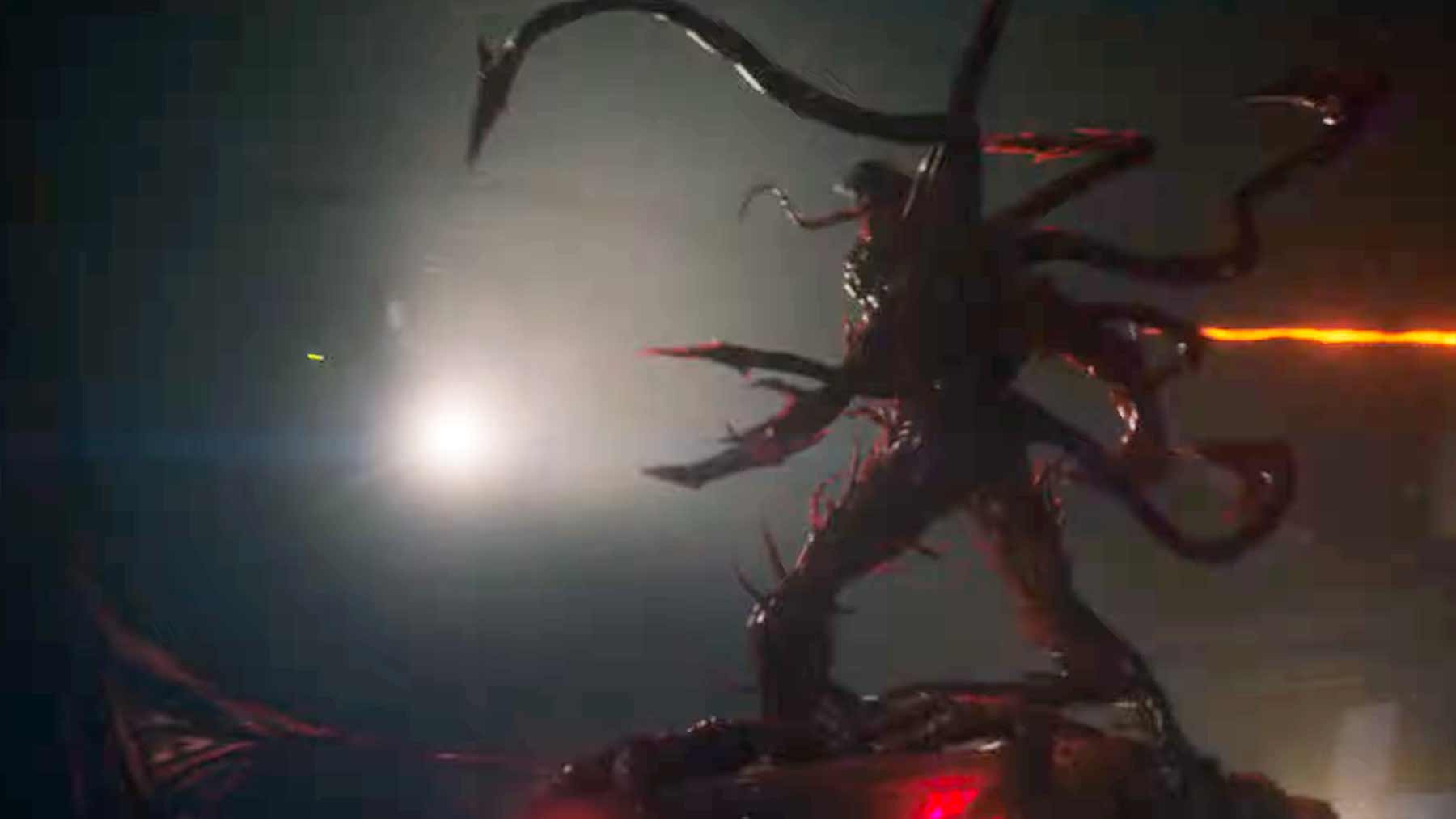
Perhaps the greatest strength of Venom: Let There Be Carnage is its willingness to embrace the absurd. A symbiote makes pancakes, a man licks a spider, and a combination of the two bellows the film’s title before credits roll. It’s pure scripted chaos, mixed with appropriately goofy performances from stars Tom Hardy and Woody Harrelson. This is why the film’s choice to not fully embrace its villain is so baffling.
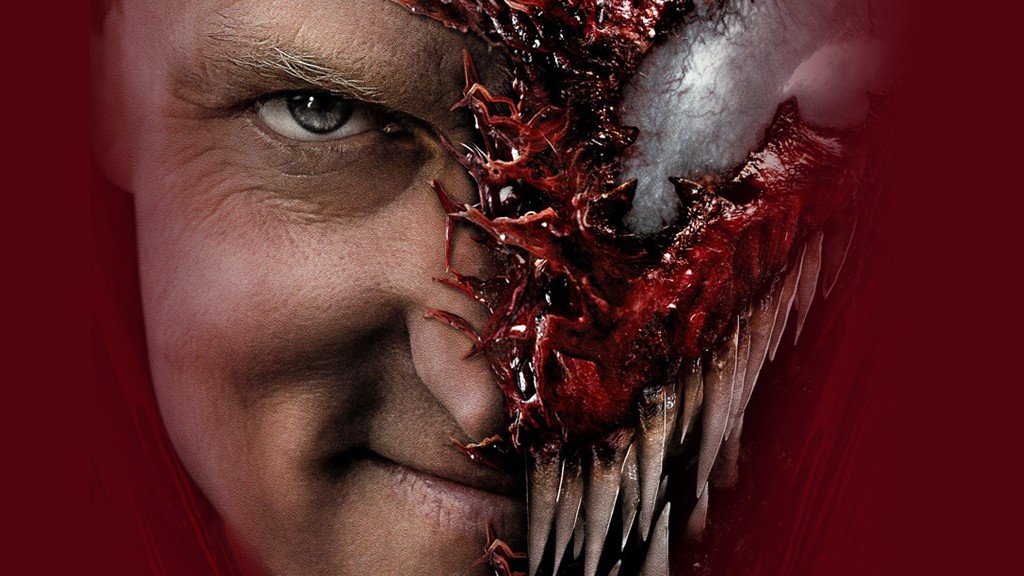
Carnage has long been one of Marvel’s meanest rogues, and that doesn’t change here. The red symbiote is portrayed as giddily sadistic and all-out ill-willed as one would hope. Yet, something about the character feels less imposing than it should. The lack of R-rated violence, which some fans have wondered about since the announcement, is an easy first guess when it comes to pinpointing the problem. Yet, it’s not a loss for blood that throws Carnage out of whack. It’s something much deeper than that, in connection to the film’s central themes. It’s the relationship between Carnage and host buddy Cletus Kasady that truly serves to incapacitate the first live-action adaptation of Venom’s greatest adversary.
It feels ridiculous to say, but Venom: Let There Be Carnage is a relationship drama first and comic book action second. This is not an issue with the movie, which actually uses the love and bond between protagonists Eddie Brock and Venom to its advantage on many occasions. Unfortunately, where the story knows exactly how to play to Eddie and Venom’s strengths, it fails to understand what makes Cletus and Carnage so unique. Whereas the Venom symbiote has spent much of it’s existence bouncing from host to host, viewing itself as a separate entity from the bodies it inhabits, the Carnage symbiote was born to one man and one man alone. Unlike his father, Carnage has never been a “we” guy, and neither has Cletus.
While Carnage’s erratic fighting style and lust for death are a major part of what makes him dangerous, it’s his absolute unified bond with Cletus that truly makes him so terrifying. Their perfect relationship is the chainmail protecting an already pretty-dang-powerful set of armor. In an attempt to make their antagonist more susceptible to defeat, and perhaps even a little more relatable to audiences, the film stripped the character of his hallmark and turned “them” into an emotionally cruel couple. This works to a degree for the movie’s lovesick, abused version of serial killer Kasady, but it certainly weakens the screen presence of a character that should have been among Sony’s biggest bad guys.
The link between Cletus and Carnage could have been used as a dark foil for Eddie and Venom. A sickened, Terminator-esque peek into what a symbiote can do when left unchecked or even urged on, by its host. The Carnage symbiote’s parricidal feelings towards Venom are hinted at but left unexplored, despite the overwhelming potential of balancing that hateful association with the loving parallel Venom finds in Eddie. All of this is thrown to the wayside so that Cletus may have a love interest of his own, acting as a mirrored reflection of Eddie’s own relationships and an easy out for concluding character arcs in the third act.
It’s almost shameful that the film chooses to end Carnage’s story so soon after it begins, with both host and symbiote receiving an unceremonious death at the hands of their progenitor and rival. At the very least, Let There Be Carnage had the potential to serve as a functional origin story for Carnage, with his more threatening aspects set to be fleshed out in a later franchise installment. Nevertheless, the multiversal implications of the film’s post-credits scene offer hope at another shot with Carnage down the line. It’s possible that audiences will one day see the character in all his merciless glory, but until then, we’re left with a take on Carnage that feels like a decent impression at best.
Cookie Consent
We use cookies to improve your experience on our site. By using our site, you consent to cookies.
This website uses cookies
Websites store cookies to enhance functionality and personalise your experience. You can manage your preferences, but blocking some cookies may impact site performance and services.
Essential cookies enable basic functions and are necessary for the proper function of the website.
Name
Description
Duration
Cookie Preferences
This cookie is used to store the user's cookie consent preferences.
30 days
These cookies are needed for adding comments on this website.
Name
Description
Duration
comment_author_email
Used to track the user across multiple sessions.
Session
comment_author_url
Used to track the user across multiple sessions.
Session
comment_author
Used to track the user across multiple sessions.
Session
Statistics cookies collect information anonymously. This information helps us understand how visitors use our website.
Google Analytics is a powerful tool that tracks and analyzes website traffic for informed marketing decisions.
Contains information related to marketing campaigns of the user. These are shared with Google AdWords / Google Ads when the Google Ads and Google Analytics accounts are linked together.
90 days
__utma
ID used to identify users and sessions
2 years after last activity
__utmt
Used to monitor number of Google Analytics server requests
10 minutes
__utmb
Used to distinguish new sessions and visits. This cookie is set when the GA.js javascript library is loaded and there is no existing __utmb cookie. The cookie is updated every time data is sent to the Google Analytics server.
30 minutes after last activity
__utmc
Used only with old Urchin versions of Google Analytics and not with GA.js. Was used to distinguish between new sessions and visits at the end of a session.
End of session (browser)
__utmz
Contains information about the traffic source or campaign that directed user to the website. The cookie is set when the GA.js javascript is loaded and updated when data is sent to the Google Anaytics server
6 months after last activity
__utmv
Contains custom information set by the web developer via the _setCustomVar method in Google Analytics. This cookie is updated every time new data is sent to the Google Analytics server.
2 years after last activity
__utmx
Used to determine whether a user is included in an A / B or Multivariate test.
18 months
_ga
ID used to identify users
2 years
_gali
Used by Google Analytics to determine which links on a page are being clicked
30 seconds
_ga_
ID used to identify users
2 years
_gid
ID used to identify users for 24 hours after last activity
24 hours
_gat
Used to monitor number of Google Analytics server requests when using Google Tag Manager
1 minute
Marketing cookies are used to follow visitors to websites. The intention is to show ads that are relevant and engaging to the individual user.
Pinterest Tag is a web analytics service that tracks and reports website traffic.


![WATCH] 'Titans' Season 2 Trailer: Meet Superboy & Krypto The Superdog – Deadline](https://deadline.com/wp-content/uploads/2019/08/screen-shot-2019-08-27-at-12.21.39-am.png?crop=0px%2C95px%2C2174px%2C1219px&resize=681%2C383)





/cdn.vox-cdn.com/uploads/chorus_image/image/69954219/Screen_Shot_2021_10_05_at_10.28.43_AM.0.png)