Tag: WandaVision

  • How ‘WandaVision’ Proves Matt Shakman is a Great Choice for ‘Fantastic Four’

    How ‘WandaVision’ Proves Matt Shakman is a Great Choice for ‘Fantastic Four’

    With the looming approach of D23 and the slew of major news that is likely to come from the event, many are anticipating an announcement on who will be directing Marvel Studios’ upcoming Fantastic Four film. Since Jon Watts stepped away from the project this past April, the question of who would helm this project has been ever-present in the cultural zeitgeist. This especially has risen again with the official announcement at San Diego Comic-Con of Fantastic Four kicking off Phase Six of the Marvel Cinematic Universe with a November 8, 2024 release date.

    Though it seems there may be an answer to this question with rumors gradually circulating that Matt Shakman will be overseeing Marvel’s first family. With this rumor coming to light, the response for the most part has been met with general optimism for what Shakman can bring to the table. Though the case can be taken one step further in that Matt Shakman would be a most fantastic (pun intended) choice to direct this film based alone on his previous experience with WandaVision.

    When looking at why Matt Shakman is aptly qualified to helm the Fantastic Four remake for the MCU, the most obvious place to start is the director’s previous experience with Marvel Studios. For starters, bringing in the director of one of their most critically-received Disney+ projects is bound to turn heads in anticipation. On top of it all, Shakman’s work on WandaVision has showcased his ability to cultivate strong family dynamics in a limited time. Themes pertaining to “family” are arguably the most important component when developing a Fantastic Four project, and he’s definitely proven to have a talent for it.

    Another notable component of WandaVision is the stylistic vintage pastiche it has to offer. The concept of visually recreating the aesthetics of classic sitcoms from the middle of the 20th century appealed greatly to make the series stand out during its run on Disney+. Considering there has been a contingent of fans that have long desired for Fantastic Four to be a period piece set in the 1960s to pair with the comic origins of the characters, it’s the perfect match.

    Whether or not Marvel Studios would move forward with that creative direction is one thing, but it’s possible that Shakman’s directorial vision from the previous Disney+ series could help influence some type of 1960s vibe to help make Fantastic Four standout within the Marvel Cinematic Universe.

    The other element that WandaVision also uses is its cosmic undertones, which the series maintained with the character arc of Monica Rambeau. One of the more surprising parts coming out of the series was how it leaned slightly more towards the concepts of science fiction in relation to Wanda’s supernatural abilities. Between the introduction of SWORD and the inclusion of Skrulls, WandaVision also has played an arguably equal part in setting up the cosmic side of the Marvel Cinematic Universe with that of the mystical and multiversal.

    With that in mind, it’s not a reach to think that Marvel Studios would at least consider Matt Shakman thanks to his experience with this corner of the universe. Given the X-Files-esque mystery elements of figuring out the science fiction phenomenon of the Hex, it would not be surprising if this type of intrigue is what Kevin Feige and his team would want from the cosmic exploration that is synonymous with the comic versions of the Fantastic Four. Even the way Monica gains her abilities stood out in a way that could inspire the way the Fantastic Four become Marvel’s first family.

    Ultimately if these rumors end up becoming true, fans of the Fantastic Four should be excited about the prospects of Matt Shakman as director. If his merits from WandaVision were strong enough to land him a position directing the next theatrical Star Trek film, then he is certainly qualified to step up and oversee one of Marvel Studios’ most important properties of the future.

  • ‘WandaVision’s Jimmy Woo Gets His Own Marvel Legends Figure, Available for Pre-Order

    ‘WandaVision’s Jimmy Woo Gets His Own Marvel Legends Figure, Available for Pre-Order

    The Marvel Studios’ series WandaVision may have ended its run on Disney+ nearly a year and a half ago, but the cultural impact the show has had on the Marvel Cinematic Universe fanbase continues to be evident. Now, a supporting character of the show is getting their own Marvel Legends action figure.

    Marvel Legends has made available for pre-order an action figure of Agent Jimmy Woo. Played by Randall Park, Woo first made an appearance in 2015’s Ant-Man before having a larger role in WandaVision. Woo has been a fan favorite in the MCU even with his limited screen time. The figure even includes alternate hand to recreate Agent Woo’s sleight-of-hand magic trick from the series. Check out the full figure below:

    Marvel Legends

    The Woo figure joins Marvel Legends figures of the Scarlet Witch and White Vision from WandaVision. Recently, a Ms. Marvel figure was revealed to be part of Hasbro’s Marvel Legends Infinity Ultron BAF wave, which also includes Kate Bishop, Clint Barton, Moon Knight, and Mr. Knight from other MCU Disney+ series.

    The Agent Jimmy Woo action figure is now available for pre-order ahead of a March 2023 release date.

    Source: Marvel Legends

  • Marvel Studios’ Disney+ Attracts a New Audience for the MCU

    Marvel Studios’ Disney+ Attracts a New Audience for the MCU

    With the Disney Earnings Call taking place for their third fiscal quarter, the public has received notable updates on where Disney stands in terms of its current business operations. Notably, official word has been revealed for Disney+’s ad-supported model which is scheduled to launch at the end of 2022. As well, the streaming service has defied the company’s own expectations and has added over 14 million new subscribers in the fiscal quarter.

    When laying out components to the success of Disney+, CEO Bob Chapek specifically took time to reference Marvel Studios’ output of series over the past year and a half as a major point of success. What he states is quite interesting as he highlights that they have measured an audience that watch these series before any other Marvel offering on the platform, as shared by Alex Zalben on Twitter.

    https://twitter.com/azalben/status/1557467286457487361

    With this bit of information from Chapek, it paints a promising picture of the overall direction the Marvel Cinematic Universe has taken in its fourth phase. It certainly seems to be the case that the audience that’s helped Marvel Studios produce some of the highest grossing films have followed them onto Disney+. And on top of that, the shows being able to attract new audience members that haven’t engaged with the Marvel Cinematic Universe prior is critical for the Disney-owned studio to maintain longevity moving forward.

    One could formulate the belief that the distinctly different genres that Marvel Studios has been able to adapt as a series (namely with the likes of WandaVision and Ms. Marvel) have become a large factor in its success. And with the upcoming release of She-Hulk: Attorney at Law, which will be Marvel’s first foray into the “legal comedy” genre, it remains to be seen how the new series will impact the subscriber base of the still-young streaming platform.

    She-Hulk: Attorney at Law is scheduled to premiere its first episode on Thursday, August 18.

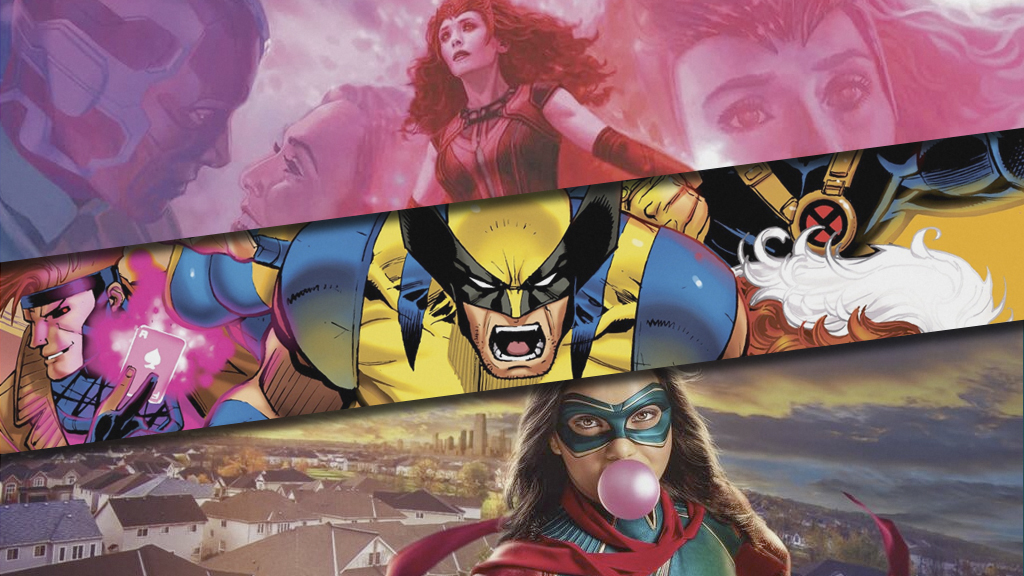
  • ‘WandaVision’ to ‘Ms. Marvel’: How Marvel Studios Pulled Off the Mutant Long-Con

    ‘WandaVision’ to ‘Ms. Marvel’: How Marvel Studios Pulled Off the Mutant Long-Con

    Here we are, in the middle of Year 2 of Marvel Studios’ Phase 4 rollout. Ms. Marvel has found her way into live-action with Iman Vellani taking on the role of the popular Muslim-American superhero. Earl yon, there were many concerns regarding the changes to her abilities and new direction for the character Plus, it made many wonders if the Inhumans part of her backstory would even get explored as the series seemingly hyperfocused on her connection to the wider MCU. Well, the final episode revealed that they are taking quite a different direction.

    Finally, ever since Disney acquired 20th Century Fox, the X-Men and Mutants have long been awaited in the franchise. While we’re seeing an “it wasn’t that bad” nostalgia making the rounds, there have been many theories on when exactly we’ll see the revelation of the mutants existing in the MCU. Little did we know, it would involve a character that was famously a NuHuman in the comics.

    What makes it stand out is that Marvel Studios played quite the long con with this revelation. Everyone had two very specific projects in mind that would lead to their arrival. The first was the assumption that WandaVision, especially with its House of M influences, would do a twist that unleashes the mutant gene throughout the world. Yet, nothing came of it. The series was surrounded by quite a few fan theories that didn’t turn out to be true, such as the arrival of Mephisto.

    So, everyone’s next best bet was the release of Doctor Strange in the Multiverse of Madness. Not only was Patrick Stewart‘s return as Professor X teased but also the concept of the multiverse taking centerstage. In a surprisingly personal storyline for Wanda and Strange, we do get our first official mutant in the MCU, but it is part of another dimension without any real hint on how he might tie into the world. The only thing is that his arrival is tied together with a familiar sound bit, the iconic X-Men ’97 theme song.

    While some would simply point out this being introduced for the sake of nostalgia, it actually turns out to play a key role in Marvel Studios’ strategy. They took the long route around and instead of just rushing them out, they keep their focus on what they had mapped out long before the purchase was even finalized. Yet, they also set the ideas that would slowly connect the pieces as necessary were actually set in the projects that people were annoyed didn’t flat out confirm it.

    WandaVision already introduced the concept of an inherent gene that is unlocked through an external source, in Wanda’s case the Mind Stone. It stands out that there is an implication that she’s used her hex powers long before they were truly unlocked and it simply sped up something that was already in her genetics. So, we technically already got the hint that she’s very likely a mutant even if it’s not directly spelled out.

    So, we have the base concept hinted at and all we really need is a true indicator. Luckily, Doctor Strange introduced us to the MCU’s leitmotif for the mutants. Instead of inventing a new one that some might not truly connect with the concept, they used elements from one that was quite popular back in the day. It’s not purely for nostalgic reasons, but it also is easy for many viewers to make the connections. So, Professor X’s arrival with that leitmotif sets up the first use of the wording “mutation” within the MCU in Ms. Marvel.

    No matter how you feel about Phase 4, Marvel Studios has slowly left the small details that would eventually build up to the grand confirmation. Mutants are coming and it’s not a coincidence that many different elements played a role throughout Phase 4. The only question now remains on what exactly may be the next step for their arrival. While we still don’t have an announcement for an X-Men film, the rumors surrounding Namor’s arrival in Black Panther: Wakanda Forever is possibly another step in their introduction, as he was known as “the first mutant” in the comics due to debuting in 1939. So, perhaps the puzzle pieces were always there.

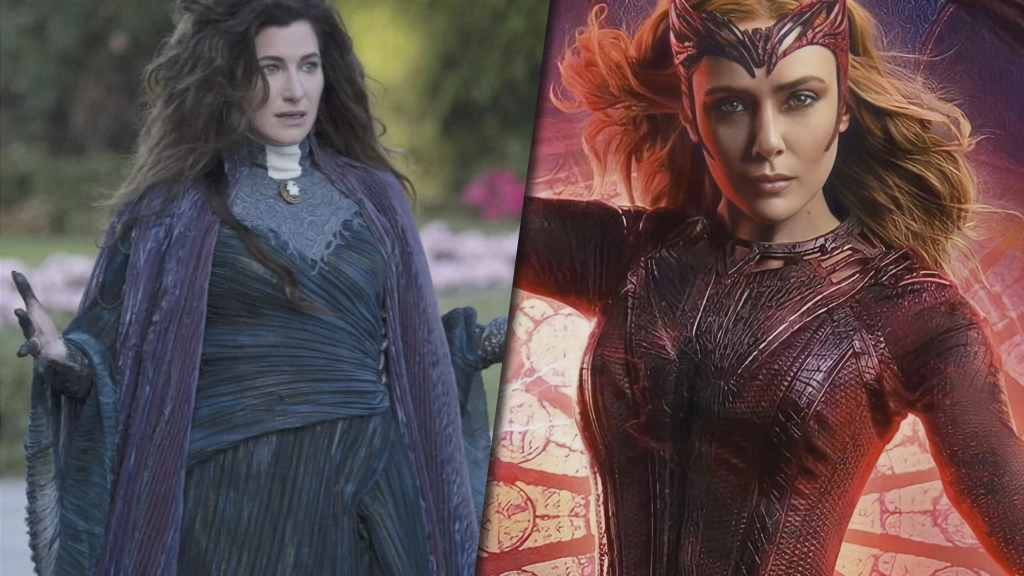
  • ‘Agatha: House of Harkness’ Adds 3 Writers, Eyes 2023 Release

    ‘Agatha: House of Harkness’ Adds 3 Writers, Eyes 2023 Release

    The writer’s room is filling up for Marvel Studios WandaVision spinoff, Agatha: House of Harkness. Announced at the first ever Disney Plus Day in November 2021, the Kathryn Hahn-lead streamer is being created by Jac Schaeffer, who developed Hahn’s Harkness for WandaVision. With an eye on getting production underway this Fall, Schaeffer has been assembling her writer’s room and it looks as though she’s put together quite a collection of talent, all of whom she worked with before on WandaVision. According to their Writer’s Guild of America West bios, Peter Cameron, Laura Donney and Cameron Squires will all contribute to Agatha: House of Harkness.

    Cameron co-wrote Episodes 5 and 6 of WandaVision, respectively titled “On a Very Special Episode” and “All-New Halloween Spooktacular”, which took the cast through the 80s and 90s and saw Evan Peters‘ Ralph Bohner appear as “Pietro.” Cameron also worked on Marvel Studios’ most recent streaming series, Moon Knight.

    Agatha Harkness 'WandaVision' Spin-Off in The Works at Disney+ - The  DisInsider

    Donney is credited with writing Episode 8 of WandaVision, “Previously On”, which was one of the strongest episodes of the series. “Previously On” provided some backstory for Agatha and effectively detailed Wanda’s true origins via flashbacks. It’s likely that Donney’s work on Episode 8 may well have provided some of the meat for what would eventually become Agatha: House of Harkness.

    Like Donney, Squires has a writing credit for one episode of WandaVision: Episode 7, “Breaking the Fourth Wall.” That episode, which riffed heavily on Modern Family and, to a lesser extent, The Office, revealed that Hahn’s nosy neighbor lady Agnes, was actually the powerful witch Agatha Harkness and, most importantly, responsible for killing Sparky!

    Each of the writer’s bios also clearly indicate that the first season of Agatha: House of Harkness is classified as a “comedy” (WandaVision was classified as a drama) and is expected to stream in “2023-2024.” A late-2023 release date lines up incredibly well with the known tentative start of production on the Disney Plus series, but it will likely be sometime in the second half of next year before a firm release date for the series is pinned down.

    Source: WGA

  • Elizabeth Olsen’s Wanda Won’t Appear in Agatha’s ‘WandaVision’ Spinoff

    Elizabeth Olsen’s Wanda Won’t Appear in Agatha’s ‘WandaVision’ Spinoff

    WandaVision may have set up Scarlet Witch’s storyline going into Doctor Strange in the Multiverse of Madness, but it also set up a new spinoff focused on Kathryn Hahn‘s Agatha Harkness. The fittingly titled Agatha: House of Harkness will continue the storyline of the now-trapped Agatha, who is still stuck living in Westview. It made us wonder if we might expect a return of Elizabeth Olsen to that series, but she swiftly debunked it in an interview with Good Morning America.

    I mean, I would do anything with Hahn, yeah. No, I’m not appearing in it, not as far as I’m aware, but I love that woman so much. That entire show was just filled with lots of joy, it was great.

    Elizabeth Olsen

    While it’s a shame they won’t build upon their relationship from the previous entry, given how Multiverse of Madness ends it does seem unlikely she might show up in that series. Of course, it’s also great to use this as a way to further explore Agatha as a character on her own terms rather than just continue their relationship as the basis of her entire character dynamic. Even the Echo spinoff is fully moving away from Hawkeye even if that’s the series she was introduced in. So, we’ll see just what the future has in store for Agatha moving forward.

    Source: YouTube via The Direct

  • Elizabeth Olsen on [SPOILER]’s Absence in ‘Doctor Strange 2’

    Elizabeth Olsen on [SPOILER]’s Absence in ‘Doctor Strange 2’

    The upcoming article will spoil some story elements from the latest Doctor Strange film. If you want to remain unspoiled in the Multiverse of Madness, then only continue at your own risk.

    Doctor Strange in the Multiverse of Madness introduces us to Wanda after the Darkhold took full control over her hopes and dreams. She’s looking for a way to travel throughout the multiverse in hopes that she can reunite with her children. Yet, many might have wondered why there’s a noticeable absence of her other family member, Vision.

    We do see a multiversal representation of her kids but she seemingly isn’t actively looking for her husband either. In an interview with Collider, Elizabeth Olsen not only talks about how many people she could end up looking for in the multiverse but also why the version we meet is seemingly on her own. She is asked if Wanda wouldn’t want to bring back more people from her past, and she goes on to highlight that:

    There’s a whole list of things, like my brother, my parents. I think the main reason when we would talk about if there is this multiverse, and in the version of the universe this woman wasn’t with Vision. We liked having that be a mystery. For some reason he’s not in her world. I always thought of her as more of a domestic Wanda. They got divorced. They’re separated. She’s not wearing a wedding band for a reason. Like those kinds of things. We liked the idea of her being on her own. The idea really is that the most important thing once you become a mother in the world are your children, and that’s why.

    Elizabeth Olsen

    It definitely seems like this aspect builds upon what the ending of WandaVision gives us. Not only was she able to say her farewell to Vision but her focus on her kids is exactly what the Darkhold had focused on when it started influencing her mind. The fact she’s completely focused on her kids and a multiverse where it’s only them may highlight that her good intentions were being manipulated greatly by the evil book of sorcery in her possession. It’ll be interesting to see if the Scarlet Witch may have a bigger story to tell.

    Source: Collider

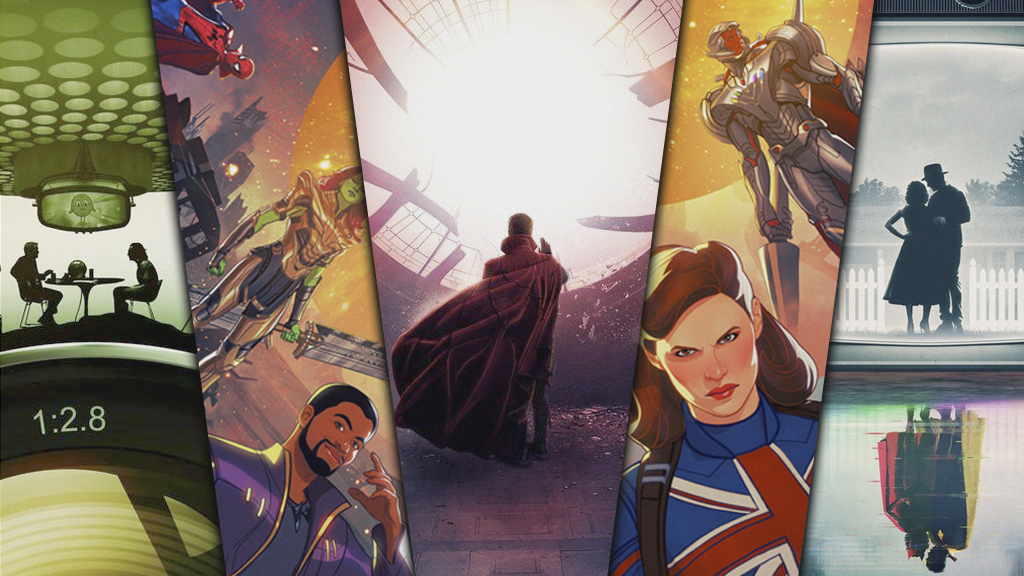
  • How ‘Doctor Strange 2’ Proves the Disney+ Series Aren’t a Must-Watch to Keep Up

    How ‘Doctor Strange 2’ Proves the Disney+ Series Aren’t a Must-Watch to Keep Up

    There’s been a lot of discourse over the “homework” necessary to enjoy the latest Marvel Studios film, Doctor Strange in the Multiverse of Madness. Various articles are making their way online stating that one should watch Loki, What If…?, WandaVision, Spider-Man: No Way Home, and many more films to fully understand what is going on in Multiverse of Madness. Yet, even as someone who actively watches every new entry, wants to tell those that worry it might become too convoluted, there’s nothing to worry about. You don’t have to watch any of those projects to enjoy the latest films.

    We’ve generally noticed a trend that many Marvel Studios sequels don’t necessarily pick up where the first film left us off. As many might remember, Spider-Man: Far From Home is more a sequel to Avengers: Endgame than it is Homecoming. While it does build upon those story threads, the main arc builds around the death of Tony Stark. At the time of its release, there were some concerns that this might negatively affect the viewing experience but the film had a rather simple approach to solving that very issue. The film quickly catches us up in the beginning with a montage of those events, while also easing viewers into the narrative core of the story.

    Multiverse of Madness does the very same, as we get a very simple setup that helps us understand the motivations of the characters. We get a short line of dialogue on Strange’s choice of passing on the time stone in Infinity War, as well as the events that followed. So, we’re quickly caught up with where we last left off with his character development. At a later point, we even get a brief mention of Spider-Man that not only highlights how the end of No Way Home negates any necessity for this one, but it mainly helps those that wondered how the spell affected people’s perception of Peter Parker.

    Now, the big elephant in the room is the way the show handles the Disney+ series. They are the biggest additional and this is the first film that directly follows up on the events of one. You read that right, it follows up the events of one. While some articles claim to watch Loki and What If…? helps with the multiverse concept, there is no moment that Multiverse of Madness directly references the events of those Disney+ series. What If…? merely gets an indirect reference in the form of Captain Carter, who very likely is a different version altogether, while the God of Mischief’s storyline has no direct influence on the series.

    Some might argue that the inclusion of Kang and unleashing the multiverse would play a role in the story, but that’s not necessarily true. Loki, to this day, is more about his journey with the consequence of Sylvie’s actions being that the flat circle of time that represented the Sacred Timeline has been unleashed into the multiverse. Her actions indirectly would cause the fact that America Chavez even would come into existence and travel throughout the multiverse is possible. Yet, no one in the story is aware of that fact and neither would the viewer. Even if Michael Waldron wrote both projects, he’s mainly used it to set the ground rules for the multiverse, that’s all.

    In the same vein, that would mean you’re required to have watched all of Inhumans to understand why a guy named Blackagar Boltagon is sitting among the Illuminati and is played by Anson Mount. Or, you’d have to be aware of the fact that John Krasinski has been the most popular fan-cast to play Mr. Fantastic in the Marvel Cinematic Universe to fully understand why he’s in the film. Their inclusion has a meta-narrative included that doesn’t require everyone to fully understand it but creates the curiosity for those that know and don’t know who they are.

    Technically, the only Disney+ series that would be “required” is WandaVision due to how the film directly sets up the storyline from that series. Yet, the film swiftly goes through what a viewer needs to know. We see her wake up from a dream, which we find out is an alternative reality, where she lives with Billy and Tommy. While the characters were introduced in the Disney+ series, one could easily take away that these dreams are haunting her and creating this obsession with wanting her children back. She’s very vocal about it and Strange even mentions the events of Westview before we get a natural conversation on those events.

    Yes, you’ll get a full picture of why she wants her children but her story arc in this film and even the introduction of the Darkhold don’t fully require you to have watched the series. We swiftly get an introduction and viewers can easily fill in the blanks on why she has it in her possession. No one is required to fully understand how she got it, just that it is quite dangerous to own. What some might consider “required viewing” is the additional context for those that stuck around with the franchise.

    The “homework” narrative is something that we’ve created ourselves due to the interconnectivity of this franchise. Many feared that it could follow in the footsteps of the comics, which had multiple tie-in comic storylines, event stories, and additional ongoing series to keep up with for a full picture. Yet, one could argue that Marvel Studios found a good balance in how they use their Disney+ series and character cameos. To be fair, they’ve already been handling this balance across multiple franchises in the past.

    To give a comparison, the Iron Man trilogy explored Tony’s place in the world but he also had an additional arc explored in all Avengers films that worked in tandem with each other. Ultron was fallout from his own personal trilogy, but the concept of self-sacrifice was one specific to the Avengers films, which lead to Endgame’s final sacrifice. His story in Captain America: Civil War also helped bridge going into Infinity War, where we learned about those events with a quick joke about them breaking up “like a band” and everyone is swiftly caught up. Even Tony and Peter Parker’s relationship was more continued from Civil War and didn’t harp too much on their journey in Homecoming. Everything you need to know for that specific film was provided, the rest is just additional context.

    Marvel has learned to use dialogue and humor to swiftly catch people up without having to have seen every entry in their franchise. Even character introductions are set up in a way that you quickly know what they are all about, such as when Thor: Ragnarok showcases Strange’s abilities and has Thor mock the magician to help viewers know what he’s all about. Disney+ is simply a new format that adds some additional stories to the mix but doesn’t force anyone that isn’t interested to watch it just like you didn’t need to have watched Doctor Strange to enjoy his role in Ragnarok.

    They also are able to avoid the issue comic readers face for one specific reason: scheduling. Disney+ projects and their films are mapped out in advance. So, we only have a limited amount of projects released in-between films. When the pandemic hit, they’ve adapted story elements to fit their new timeline, which highlights how they use the format to keep the franchise from bloating with too many projects airing at the same time, something the Arrowverse suffered with 22+ episodes for multiple shows each season.

    Marvel Studios also seemingly gives specific types of films a different purpose. Solo films are there to explore new character arcs. It is why Multiverse of Madness is still Doctor Strange’s film as his arc is the main focus throughout, similar to how Civil War handled it. Wanda has her own storyline weaved throughout, but she functions as a force that also pushes Strange forward. While he had an important role in the MCU before, it never further pushed him as a character like it did now but only used what we know from the 2016 version as a base.

    The film still acts as a sequel to Scott Derrickson’s introduction of the character by making specific callbacks, such as the watch, adding context to a joke from the first film, highlighting Strange’s love for old rock, and so much more. It still manages to build upon the arc from his original film, by focusing on his worst character trait and tendency to be the one to fix everything, which highlights that after all his time in the MCU, he still has something to learn.

    What Marvel Studios can truly embrace with their model is that sequels aren’t shackled by linear storytelling from one entry to the next. If they followed older formats, the next film would’ve set up a new villain that may have a connection to Kamar-Taj or need an entire origin arc, and may wait a while before it explores something as out there as the multiverse. Plus, we’d have to ease viewers into the many spells that he’s learned throughout. Yet, we’re at a point where the spells aren’t the thing that needs to be explored in their complexity, context clues are spread throughout the MCU, and the focus remains on the multiverse.

    There is the drawback of tie-ins and set-ups muddling some plot elements, but Multiverse of Madness is, at its core, very much a Doctor Strange story, no matter if it hit as well as intended or not. In a way, it doesn’t even fully require you to watch the original 2016, as all-important context clues and story elements are eased in through context clues and dialogue. While watching previous entries certainly helps viewers get the full context, the films still worked as standalone pieces that help guide those in by highlighting what they need to know early on.

    So, there’s no need to panic if a new “viewer’s guide” tells you what you should or have to watch beforehand. If you’re interested to learn more, take it as supplemental material, but there’s no worry that every new project release is necessary to fully enjoy a new entry into the MCU. Just because some franchises dabble in similar concepts, it doesn’t make it a necessity to watch, and sometimes even trailers include all the information you need going in.

  • Elizabeth Olsen on WandaVision Fan Theories: “We Should Have Done That!”

    Elizabeth Olsen on WandaVision Fan Theories: “We Should Have Done That!”

    When WandaVision first debuted, fans were unsure of what to expect. Not only was it a unique series that would take Wanda across various decades, but it was the first series produced by Marvel Studios, leaving fans to theorize with each new episode. The common theory, of course, was that Mephisto would appear. However, there was one other theory that fans speculated over for weeks – whether or not Evan Peters’ Quicksilver was from the multiverse.

    While we were the first to break the news that Peters would appear in the series, even we were unsure how Peters’ Quicksilver would debut within the Marvel Cinematic Universe. Would he be the new Pietro going forward? Or was his role merely a cameo? Unfortunately, though, in the end, Peters’ Quicksilver was essentially a throwaway as the actor was later revealed to be playing the role of Ralph Bohner who was under the influence of Agatha Harkness. For fans, it was a frustrating reveal. As it turns out, though, Scarlet Witch actress Elizabeth Olsen wishes they’d gone that route with the character.

    In a recent interview with The Independent, Olsen noted that she found many of the fan theories surrounding WandaVision to be clever. “I love fan theories ‘cause I always think they’re very clever. There are usually ones where I’m like, ‘S***, we should have done that!”

    She specifically noted the theories surrounding Peters’ Pietro. “There was one where they thought we were bringing in the Multiverse with the Pietro character, with Evan [Peters.],” she explained. “The sad thing is, when we were doing WandaVisionbefore Covid, that was not part of the docket yet, and then itkind of overlapped when we finished the show. So we could have actually gone back and fixed or adjusted that. I thought that could have been cool to make Pietro a part of the Multiverse.”

    While certain fan theories regarding WandaVision didn’t come to fruition, the expansion upon the multiverse in Doctor Strange in the Multiverse of Madness is sure to open plenty of doors going forward.

    Source: The Independent.

  • Sam Raimi Describes Changing ‘Doctor Strange in the Multiverse of Madness’ Based On Other MCU Projects

    Sam Raimi Describes Changing ‘Doctor Strange in the Multiverse of Madness’ Based On Other MCU Projects

    Doctor Strange in the Multiverse of Madness may be the first Marvel Cinematic Universe project with “multiverse” in the title, but it’s certainly not the first to tackle the topic. The movie is set to continue some of the plotlines established in both Wandavision and Spider-Man: No Way Home, and will utilize several elements first introduced in Loki. Keeping this in mind made things a little more complicated for director Sam Raimi, who had to juggle more than just his own project when developing plotlines. Luckily, the filmmaker is pretty sure everything turned out for the best, and even had some help from writer Michael Waldron along the way:

    It was a fun challenge, and a little scary. Most of the work was done by [screenwriter] Michael Waldron, who is a really big fan of the Marvel Comics and has friends on the WandaVision writing staff, so we would communicate with each other, the WandaVision team and ours and the Spider Man: No Way Home team, and we would keep abreast of their changes. And even while we were shooting, they were shooting, and we’d be making changes based on changes that they made, because we really wanted this to be the next installment. We really wanted it to be a really good — not sequel, but a very logical next step for the fans.

    Sam Raimi

    This could partially explain why Multiverse of Madness underwent so many reshoots during production. The MCU seems to be an ever-changing beast, like any good comic book universe, and the next solo Doctor Strange adventure still has to fit somewhere between the lines. It also likely didn’t help that Multiverse of Madness was originally scheduled to premiere before No Way Home, which meant the way both films referenced each other would have had to be changed to accommodate the new timeline. Thankfully, it seems like this level of studio adjustment worked out better for Raimi than it did when he was making Spider-Man 3 in 2007.

    Check out Multiverse of Madness when it hits theaters on May 6.

    Source: Fandom