Author: Mary Maerz

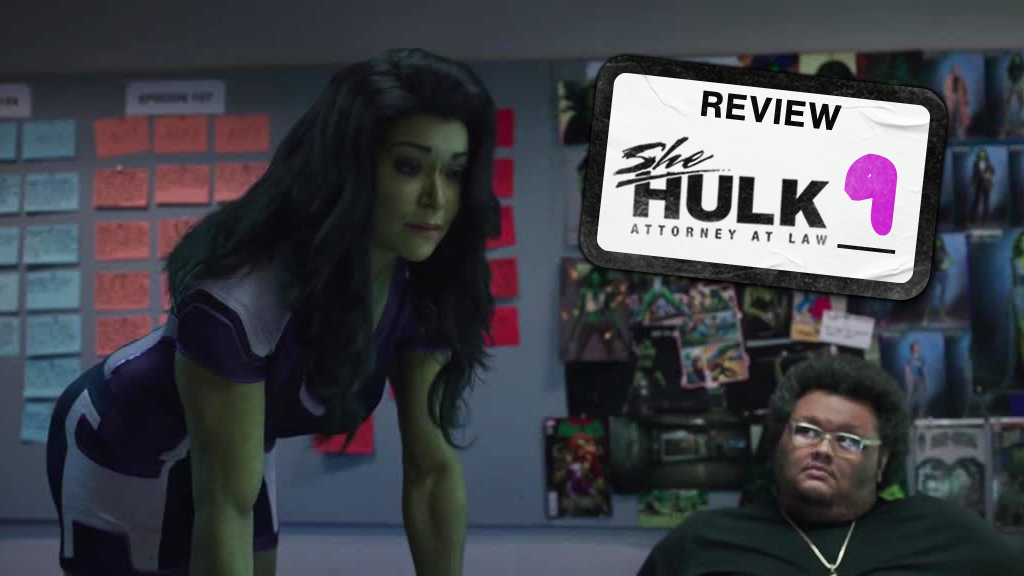
  • REVIEW: ‘She-Hulk: Attorney at Law’ Finale

    REVIEW: ‘She-Hulk: Attorney at Law’ Finale

    We have come to an end of yet another Marvel Cinematic Universe series, but this finale stands on its own. Since WandaVision, MCU series have been rather well known for either botching or just not following through with outstanding finales. How anyone feels about the She-Hulk: Attorney at Law finale is less straightforward than usual. While the word “unique” has been thrown around a lot in Phase Four, there is no other way to start the discussion.

    Even though it did not take up the entire runtime, the massive fourth wall break in the finale has to be an instantly iconic moment in the MCU. To not only take the audience out of “the show” but to spend time with the titular character in Marvel Studios’ headquarters is beyond bonkers. Of course, the jarring transition from the regular program to She-Hulk breaking out of the Disney+ screen is incredible, and it lives up to the comic book version of her doing the same decades ago. The core potential of the character is released in the finale, and there are very few moments in the MCU that can genuinely say the same.

    The humor stemming from the fourth wall break is not only laugh-out-loud funny, but it is peak She-Hulk. Throughout the season, the show makes jabs at tropes and the incessant presence of the internet’s yelling in every single moment of the contemporary MCU. Anyone on Twitter is familiar with this, and anyone with a brain knew that She-Hulk would provoke perhaps the most attention in that regard. Instead of winking at the audience about it, the artificial intelligence replacement for Kevin Feige (a joke worthy of its own review maybe) addresses it head-on. The MCU has an internet relations struggle. She-Hulk is a strong, confident woman. The two combined were meant to be together, but the way the finale actually embraces it is almost too good to be true.

    The fourth wall break, without a doubt, is the finale. It may even be She-Hulk. Still, that does not mean the finale as a whole deserves top marks. It is somewhat hard to separate the fourth wall break from anything else, both because of the inherent difficulty of that and because they addressed very different things. The break speaks to the essence and the heart of She-Hulk, and what better place to do that than in the finale? But the rest of the story is quite limited because of it.

    Yes, it brings home the point that this is She-Hulk’s show, but it also made it clear that She-Hulk’s story—at least in Season One—did not do much more than what we already saw before this episode. That is not inherently bad, especially considering the show really wants to call itself a legal comedy. Plus, fans should have learned their lesson after WandaVision to not expect series finales to become the crossover, universe-shattering moments of their dreams. To that, She-Hulk said: here is Skaar. But plenty of plotlines arguably deserved more time and attention, and a longer version of how Jen cleared her name would have been very welcome. That in particular is the biggest loss of the finale’s choice, but at the end of the day, the fourth wall break is always the preferred option.

    She-Hulk made waves as an MCU series. As one of the few MCU projects to feature a woman in the title role, it went beyond just basic representational work on that front. Women’s real experiences were either mentioned or actually discussed, and the first project the MCU felt comfortable throwing sex in was a project where a woman led that concept on-screen. But the series will also go down as the funniest Marvel Studios project to date and in many ways one of the most grounded in reality (which is ironic in plenty of ways). Jen was an actual, believable human, and the series made that the basis of everything, even the crazier elements. She-Hulk, arguably, was what many internet fans wanted Doctor Strange in the Multiverse of Cameos to be, and yet this was just the first season of a solo series. At the end of the day, there is not much else to say except: She-Hulk smashed.
  • The ‘She-Hulk’ Finale May Have Confirmed a Season 2

    The ‘She-Hulk’ Finale May Have Confirmed a Season 2

    Much happened—or didn’t, depending on how you look at it—in the She-Hulk: Attorney at Law finale. The series ended on an upbeat note, and Jen seems to have taken back her life after the dark ending of Episode 8 and the sad beginning of the final episode. One thing is for sure, though, and that is that the bonkers fourth wall break is undoubtedly an iconic Marvel Cinematic Universe moment from here on out. In it, there are a couple of moments that mention a She-Hulk Season 2. And while Loki is still the only series to get an official confirmation by the time the credits start rolling, we have may have gotten the next best thing.

    When She-Hulk arrives in the writers’ room, she interrupts their conversation about what the second season should be. Specifically, one writer pitches the god-awful idea that the entire second season would be a dream sequence. Later, when She-Hulk is talking to K.E.V.I.N., a second season is once again brought up in a very matter-of-fact way.

    While the fourth wall break does not appear to be Marvel Studios’ way of officially announcing something, the fact that a She-Hulk Season 2 was mentioned more than once in a “yeah, this is going to happen” way seems like a fairly obvious way the show may be teasing it. After all, robot Kevin Feige had plenty to say but certainly did not correct the Season 2 assumption. While the writers could have included the references as cheeky jokes—after all, the internet will surely start debating what every word in the fourth wall break meant—it did not play off as obviously as some of the other jokes in that sequence.

    Like everything, we will have to wait and see if or when Marvel Studios decides to announce something like She-Hulk Season 2, but the writing may be on the wall. She-Hulk is also, conveniently, an incredibly second-season-friendly show with its ability to be a half-hour legal comedy. Whether it truly accomplished that in this first season is perhaps debatable, but the potential from this show and the comics’ source material is truly astounding. The episodes with Donny Blaze, Madisynn, and group villain therapy could easily become the norm in a second season, and those were standout episodes. There is a lot more lawyering Jen can do, and there is certainly a lot more She-Hulk smashing she can do.

    All episodes of She-Hulk: Attorney at Law are now streaming on Disney+.

  • ‘She-Hulk’: Skaar’s Introduction Explained

    ‘She-Hulk’: Skaar’s Introduction Explained

    The She-Hulk: Attorney at Law finale had so much going on, that the surprise introduction of a major character at the very end almost did not pack much of a punch, perhaps because it has been rumored for quite some time. Still, the brief introduction of a new character likely has major implications for the Marvel Cinematic Universe going forward.

    At the end of the She-Hulk finale, Bruce does eventually show back up (granted, he was axed from the messy climax after Jen went to clear things up with Marvel Studios). At the Walters’ family picnic, however, Bruce arrives with someone else in tow: his son, Skaar. For those unfamiliar with Skaar from the comics, this could be a wild twist. In general, it is a major inclusion in the MCU that will surely carry a lot with it. So, first, who is Skaar? And second, what does his presence mean for the MCU now?

    In the comics, Skaar comes from a relationship the Hulk has while on Sakaar. He conceived a son with Caiera the Oldstrong, but after a ship explosion that killed Caieria, the Hulk believed that Skaar had died in the womb. Obviously, Skaar did in fact survive and was raised by his mother’s Shadow People on what was left of Sakaar. Eventually, he was exiled to Earth. And when he arrived, all he wanted to do was kill Bruce.

    In live-action, it is not hard to imagine that something similar happened and our MCU Hulk fathered a child on Sakaar. We have a lot less information on who Skaar’s mother might be, the state of Sakaar, or why Skaar has come to Earth, however. The way his arrival was set up in She-Hulk, it almost came across as though Bruce went to Sakaar knowing that he had some sort of responsibility—maybe Skaar. It is also very likely he was not aware of Skaar before his return to the planet. In any event, he definitely brought his son with him and they seem chummy enough.

    The most obvious prediction for how Skaar will factor into Phases 5 or 6 is as part of the rumored ‘World War Hulks’ project. She-Hulk seemed to tease that it could be part of the setup for that project or overarching storyline, given the Hulk blood fascination. The series did not end up going that route, but the implication is very clear: the MCU is about to get more hulks. What happens when the MCU gets a bunch of hulks?—probably some type of World War Hulk iteration. Skaar plays a significant role in that story, but the theories on how Marvel Studios might adapt it so far are endless since we are seemingly at an early stage of that process. However, given the casting of Tim Blake Nelson as The Leader in Captain America: New World Order, that movie might be a solid place to start.

  • A Potential ‘Moon Knight’ Season 2 Could Feature ‘Werewolf By Night’ Characters

    A Potential ‘Moon Knight’ Season 2 Could Feature ‘Werewolf By Night’ Characters

    After the raging success of Marvel Studios’ first Special Presentation, Werewolf by Night, fans are anxiously awaiting Jack Russell’s, Ted Sallis’ (Man-Thing), and Elsa Bloodstone’s returns to the Marvel Cinematic Universe. The special itself appeared to open the door to the MCU’s monsterverse, but it has also been confirmed that Werewolf By Night has no intention of being a pilot for future series. Of course, there are Midnight Sons and Legion of Monsters rumors and theories. And there’s always Blade, though the film is in a rough spot after recently losing its director. But perhaps the answer—or one of the answers—is a bit less obvious. After star Oscar Isaac’s comments that there is more Moon Knight in the MCU’s future, it may not be too farfetched to think that characters from the monster special could appear in a potential second season of that series.

    The most obvious connection Moon Knight has to these characters is that his first appearance was as an adversary in Werewolf by Night #32 in 1975. Originally, Moon Knight was written as a mercenary hired to capture Russell, which explains his moon-themed persona and silver weapons. By the end of his original two-issue appearance, Moon Knight changes course and helps the titular werewolf instead. From here, the character went on to have his own solo and team-up careers unrelated to Werewolf by Night. Moon Knight’s connections to Man-Thing and Elsa Bloodstone are less obvious, though the three of them were all part of a relatively recent Midnight Sons lineup in the Damnation crossover event. Still, Man-Thing’s connection to the Nexus of All Realities makes his general presence in the MCU’s Multiverse Saga make sense, and Jack and Ted were set up as a pair in Werewolf by Night.

    While Marc Spector has a colorful resume, he is not particularly well known for his connection to monsters. As such, there are not many clear storylines from the comics that a Moon Knight Season 2 could adapt from the comics. But without a doubt, Moon Knight is the first character aside from Doctor Strange to truly open up the paranormal and supernatural worlds of the MCU. That aspect of the universe is gaining more steam, but in terms of seeing Werewolf by Night or related characters sooner rather than later, there do not seem to be a lot of obvious options at this moment. Phase 6 is almost entirely unannounced, and so is a second season of Moon Knight. Still, an appearance in the series might be fundamental to the steady rise of the monsterverse and its related projects.

    While Moon Knight is not generally found constantly battling or working with monsters, the vigilante is certainly not foreign to them. In the series alone, the character had to face some rather monsterous Ancient Egyptain-themed creatures, and the finale was aptly titled, “Gods and Monsters.” The supernatural angle of the character was definitively established in Moon Knight. In the comics, the actual existence of Khonshu is sometimes debated as the stories play around with Marc Spector’s unique mental state. But in the MCU, Khonshu’s presence and related supernatural truths are presented as fact. While, so far, the live-action of the character has been limited to the very specific Egyptian god-focused aspect of the supernatural, Moon Knight has ample reason to encounter more. After all, a key component of the vigilante in print is that, as the Fist of Khonshu, he is a protector of those who travel at night—and plenty of things go bump in the night.

    While nighttime is clearly special for Moon Knight and monsters alike, the concept also highlights the stylistic compatibility of characters like Werewolf by Night and Moon Knight. Both rely on supernatural themes, but the series and Werewolf by Night are noticeably some of the MCU’s darkest projects both literally and figuratively. The potential seedy and gritty vigilante life of Marc Spector, Khonshu’s ghostly presence, and surreal psychological components could easily accommodate some additional bizarre components. Even more, Moon Knight’s character and Werwolf by Night have a reputation of (by MCU standards) particularly brutal or gruesome violence.

    For these reasons, it would not be entirely surprising if Werewolf by Night, Man-Thing, or other related characters made some type of appearance in a second season of Moon Knight. They likely would not be a major part of the full season, but rather could be integrated in a similar way to Moon Knight’s comics introduction. If the MCU’s Marc Spector does take on the vigilante lifestyle as expected, perhaps he has run ins with various beings causing havoc, including an out-of-control Werewolf by Night. It is easy to picture Marc Spector being hostile to monster-type creatures before understanding that they are not necessarily villains, which could be a vital moment in the building of teams like the Midnight Sons or Legion of Monsters or crossover of related characters. Or, perhaps the hero gets caught up in the Bloodstone’s longer narrative in the MCU, as the likely alien relic ties together the MCU’s supernatural side before the big events of Avengers: The Kang Dyanasty and Avengers: Secret Wars.

    Only time will tell if Marvel Studios announces a second season of Moon Knight. Either way, fans will get much more of all of these characters in the MCU’s future.

  • New ‘Madame Web’ Set Video Teases Fight With a New Spider-Man

    New ‘Madame Web’ Set Video Teases Fight With a New Spider-Man

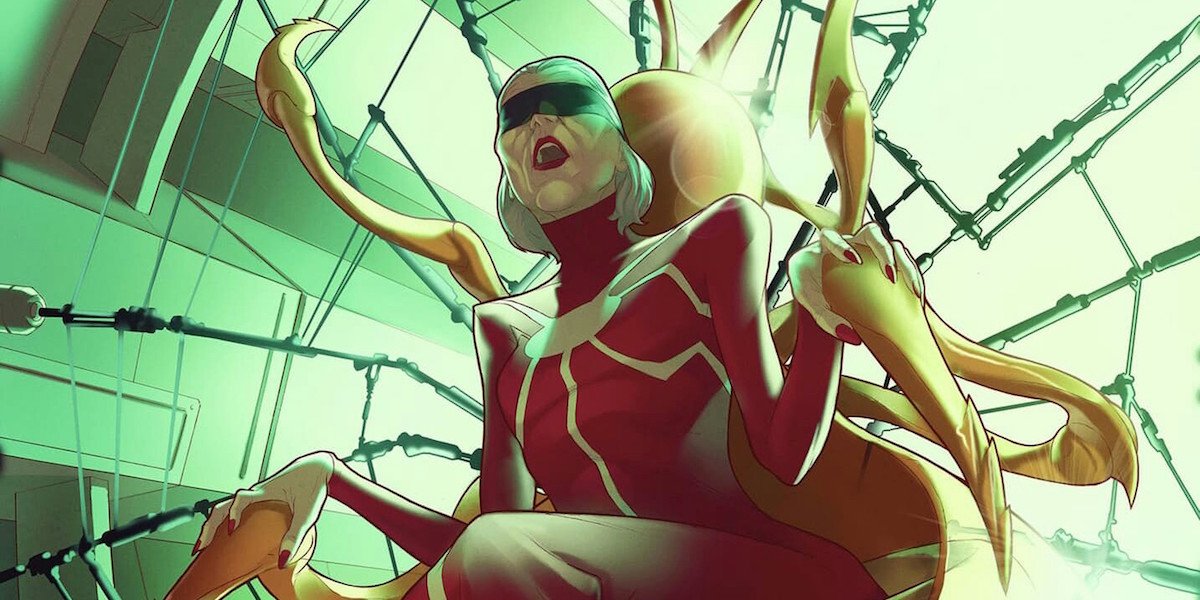
    The star-studded and again-delayed Madame Web has not had a particularly secretive production. Recently, a batch of set photos allegedly show Tahar Rahim’s stunt double going up against Dakota Johnson’s and Celeste O’Connor’s characters. The photos clearly show Rahim’s stunt double dressed in what appears to be an alternate Spider-Man suit.

    Now, there is a new video of what appears to be O’Connor’s stunt double filming what could be the same or similarly-set scene. The double appears to be harnessed up to apparently “fight a new Spider-Man.” As previously noted, the “new Spider-Man” that appeared in previous photos may be Ezekiel Sims, a character who, in the comics, had similar powers to Spider-Man, wore a Spidey suit (that looked significantly different than the one seen on set), and occasionally clashed with other Spider-related people. Whether Rahim is Sims or not is yet to be seen.

    There may be a possibility that yet another “new Spider-Man” is off-screen in the leaked set video. Not a lot is known about Madame Web, but many rumors and theories point to a multiversal connection. That is not too surprising given the titular character’s connection in the comics, and Sony’s attempts to get audiences excited about its own universe of specifically Spider-Man-related characters apart from the much more popular Marvel Cinematic Universe. Although the 2018 animated film Spider-Man: Into the Spider-Verse probably already did it better, Sony may be introducing a type of live-action Spider-Verse of its own. After the Spiderpeople crossover in the MCU’s Spider-Man: No Way Home, there is no ruling out that Sony’s characters may pop up at some point in Phases 5 or 6 of the MCU’s Multiverse Saga.

    Madame Web is scheduled to hit theaters on February 16, 2024.

    Source: YouTube

  • Vin Diesel Says Marvel Studios Interested In a Groot ‘Planet X’ Movie

    Vin Diesel Says Marvel Studios Interested In a Groot ‘Planet X’ Movie

    Fans are preparing to bid farewell to everyone’s favorite band of intergalactic misfits, with Summer 2023’s Guardians of the Galaxy Vol. 3 potentially marking the end of the Guardians as we know them. However, one of the group’s stars may believe that the end of the road for Groot in the Marvel Cinematic Universe has not yet arrived.

    Guardians of the Galaxy’s Groot actor Vin Diesel shared a post on Instagram where he seems to indicate—or joke—that he believes Marvel Studios has plans to develop an MCU movie based on the talking tree’s homeworld. 

    After noting his niece’s love for the recent I Am Groot Disney+ shorts, Diesel ended the post on an interesting note:

    “So my niece called me and said… thank you uncle Vin for making I Am Groot, haha… the shorts written and directed by the talented Kristin Lepore. It was a blast making, but it’s also a blast watching it with my angels. No wonder Marvel wants to make the Planet X movie. All love. #FloraColossi #AlphaGroot #PlanetX”

    Vin Diesel

    Planet X is the homeworld of the Flora colossus, the alien race from which Groot is descended, where the simplistic but loveable language of Groot is spoken. Fans may also recognize “Planet X” as the X-Men comic storyline by the same name, or the mutant safe haven also coined Planet X. While fans gets excited about an X-Men news, it is unclear how Diesel’s post would relate to mutants at all. 

    Diesel easily could have been joking about the potential for a Groot-centered film, as a solo film starring the loveable character seems unlikely in the currently known MCU slate. Still, nothing can ever be ruled out as a future installment given the rapid expansion of the MCU in the past couple of years.

    Source: Instagram

  • REVIEW: ‘Werewolf By Night’

    REVIEW: ‘Werewolf By Night’

    One of Marvel Studios’ longest-kept “secrets” turns out to be perhaps one of the most triumphant projects of the Marvel Cinematic Universe’s Phase Four, if not the MCU as a whole. Formally announced only last month, Werewolf By Night is Marvel Studios’ first foray into the “Special Presentation” format (in this case, a one-off feature less than an hour long) and without a doubt, this project is, indeed, enormously special. Werewolf By Night shines for several reasons, but its brilliance as a standalone story is the most obvious.

    The first thing the viewer notices about Werewolf By Night is its aesthetic. Through its limited marketing, it is known that the feature was inspired by classic horror films of the 1930s and 40s. While the concept elicits immediate excitement from some, it of course risks overwhelming a story with a gimmick. Fortunately, the stylistic choices of this project were almost entirely in service of the story itself, and director Michael Giacchino achieves a near-perfect cocktail of stunning imagery, blocking, and overall texture. The use of black-and-white is an easy grab for an older or spookier look, but it was far more productive in Werewolf By Night than in most modern films that use the technique. The unique and rather all-consuming style certainly takes the viewer to a place easily associated with horror and monster stores, but it also removes one from the known Marvel universe. Consequently, the natural expectations the audience might place on the feature are almost reset, allowing a completely fresh experience.

    The greatest achievement of Werewolf By Night is surely its excellence as its own story, disconnected from anything else. Whether in the comic book genre or elsewhere, there is something extremely refreshing about a short story that is able to be thoroughly enjoyed and leave a memorable impact on the viewer. Despite a limited runtime and plenty of moving parts, the feature does a phenomenal job telling a full story without invoking virtually any backstory. The triumph of Werewolf By Night is captured in the feeling of simplicity and ease it executes despite clearly arising from a relatively complex technical foundation. At the end of the day, the project is a wonderful standalone think piece that invokes plenty of metaphors and themes regarding what makes a monster.

    However, given its inclusion in the MCU, there is little question that Werewolf By Night will ultimately be part of a larger narrative. Lucky for Marvel Studios, the feature doubles as an exciting introduction to a future Monsterverse considering it leaves the audiences with a litany of questions about the story’s and characters’ past and futures. If anything, Werewolf By Night could have benefitted from additional runtime purely due to the fact that there is enough action and intrigue to go around. An expanded rendition of the hunt itself would almost certainly be a riot, as a prolonged bottle-episode-type suspenseful action thriller would without a doubt rival the famous Daredevil hallway fight scene.

    In fact, a certain sequence in Werewolf By Night already does. The amount of violence in the feature has been a key talking point ahead of its release. The project features, objectively, some of the most violent, brutal, and gory scenes in the MCU. Where those are utilized are done so in a way that serves the story—Werewolf By Night is not filled to the brim with blood and violence, but it stands out when on display in the best way. Similarly, the feature gives off plenty of notes of horror, but it is not an overwhelmingly “scary” or frightening piece. It is, however, extremely tense, suspenseful, and even uncomfortable at times like any good horror film.

    Werewolf By Night further benefitted from its cast and character ensemble. Laura Donnelly as Elsa Bloodstone is, perhaps, the surprise standout of the feature. Not the title character and not given much fanfare, Donnelly’s portrayal comes off as effortless and she easily carries scenes in a way that cements Elsa as much more than she appears. Two rather different storylines crisscross throughout the special, and Elsa is the rock that holds them together. Gael García Bernal certainly hits the sweet spot as the mild-mannered and warm Jack Russell. The heart of the project resides in him, even if he were not (ultimately) the title character. Viewers should not worry about a “nice” Jack, as Bernal can flip the switch into the titular werewolf without a problem.

    The rest of the cast is stellar, and the character designs are so spectacular as to stand out in a generally visually-stunning project. Harriet Sansom Harris supplies the particular brand of sinister that Werewolf By Night needs to achieve its delicious end result. The monster at the heart of it all will surely go on to be a new fan-favorite creature of the MCU, but the special does not forget that he is, indeed, a monster.

    If Marvel Studios intended for Werewolf By Night to be a surprise, it is perhaps the best surprise a viewer could hope for. The special is incredibly unique on virtually all levels, and its short story format is one of the most fulfilling MCU experiences in years. Not all Marvel projects can benefit from, or achieve, the type of creative leap required to produce this feature. This special demonstrates that Marvel Studios should continue investing in “Special Presentations,” but Werewolf By Night is special enough on its own to be a one-and-done.

  • REVIEW: ‘She-Hulk: Attorney at Law’ Episode 8

    REVIEW: ‘She-Hulk: Attorney at Law’ Episode 8

    Given the fact that She-Hulk: Attorney at Law has received rather positive reviews each week, it feels somewhat monotonous to call “Ribbit and Rip It” the best episode of the series—but it cannot be avoided. Of course, the character ensemble in Episode 8 seems instantly iconic, but the episode hit every beat it could: lawyer, superhero, Daredevil, sexy hilarious, and dark. This episode can only be thoroughly enjoyed and yet it still ends on the heaviest and most cliff-hanging note of the series.

    All eyes are on Charlie Cox’s return as Daredevil in the character’s first MCU appearance. While this is She-Hulk’s show—as we are reminded—anyone who tries to suggest that he was not the highlight of the episode is lying. Predictably, Jennifer Walters and Matt Murdock meet in court on opposing sides before meeting as superheroes. Cox truly embodies the role, and his love for the character and the return is incredibly palpable. Quite honestly, he came across as substantially more charismatic than the character has previously been—and that is a high compliment. Daredevil is lighter than fans of only the Daredevil Netflix show may be used to, but being funny as hell does not take away from the rest of the character which was on full display. Those that will continue to scream into the void about She-Hulk ruining Daredevil are on another planet.

    While Murdock was the biggest player, Episode 8 highlights that She-Hulk works best when the titular character has a colorful cast to play around with. Leapfrog and Jacobson held their own in such a high-profile episode, and the ultimate result of all the moving pieces was sublimely paced, extremely funny, and it felt like a much bigger and more exciting show than it had been until now. Obviously, She-Hulk as a bona fide superhero is new and played a major role in that. The chemistry between Jen and Matt—presumably aided by the chemistry between Tatiana Maslany and Cox—created the best pairing of characters in a series riddled with great character interactions.

    Despite being an overwhelmingly fun episode, the penultimate episode landed on a dark note with haste to lead into the finale. She-Hulk has not been shy about weaving in themes and jokes surrounding misogyny, but it felt like the darker elements that existed within the show truly hit in full force all at once. It is not easy to compete with Daredevil in an episode, but the ending managed to put up an impressive fight in that regard. Not only did Jen have her entire private life broadcast to everyone during what was perhaps the greatest moment of her career, but it came in the form of sexual shame and revenge porn—activities that tend to almost exclusively attack and cause extreme harm to women. The word “slut” is not uncommon in reality, but even in the context of She-Hulk it landed with a thud. The dark brilliance of the sequence is that She-Hulk, who is ordinarily invincible, can be a vulnerable target to destroy because she is a woman and there are dedicated ways for someone to pursue that without any kind of confrontation. We see Jen lose control of her anger—finally calling back to the first episode—becoming an enemy and a monster regardless of how justified and ordinary that level of anger would be in that situation.

    At the end of the day, Episode 8 managed to do everything She-Hulk can seemingly tackle and pull off in just one episode. Daredevil’s introduction to the MCU was beautiful, and this episode does quite a lot for the character going forward. Even though the penultimate episode was almost certainly the most entertaining and witty episode of the entire series (and it is hard to see how the finale can top it), it also ended on the darkest and most emotional beat yet. Before the last few minutes, the fact that the finale was right around the corner felt rather empty. There is still a very minimal underlying HulkKing plot, but for the first time, it actually feels important to She-Hulk. It may very likely go on to set up other Hulk-related MCU projects in the future, but the damage inflicted to the main character from it is now the driving force of the remainder of the series. The finale is still a mysterious concept given the format of the show, but Episode 8 finally begins to truly define the hero She-Hulk will be in the MCU.

  • Anthony Mackie Comments on the Possibility of a Chris Evans Return in ‘Captain America 4’

    Anthony Mackie Comments on the Possibility of a Chris Evans Return in ‘Captain America 4’

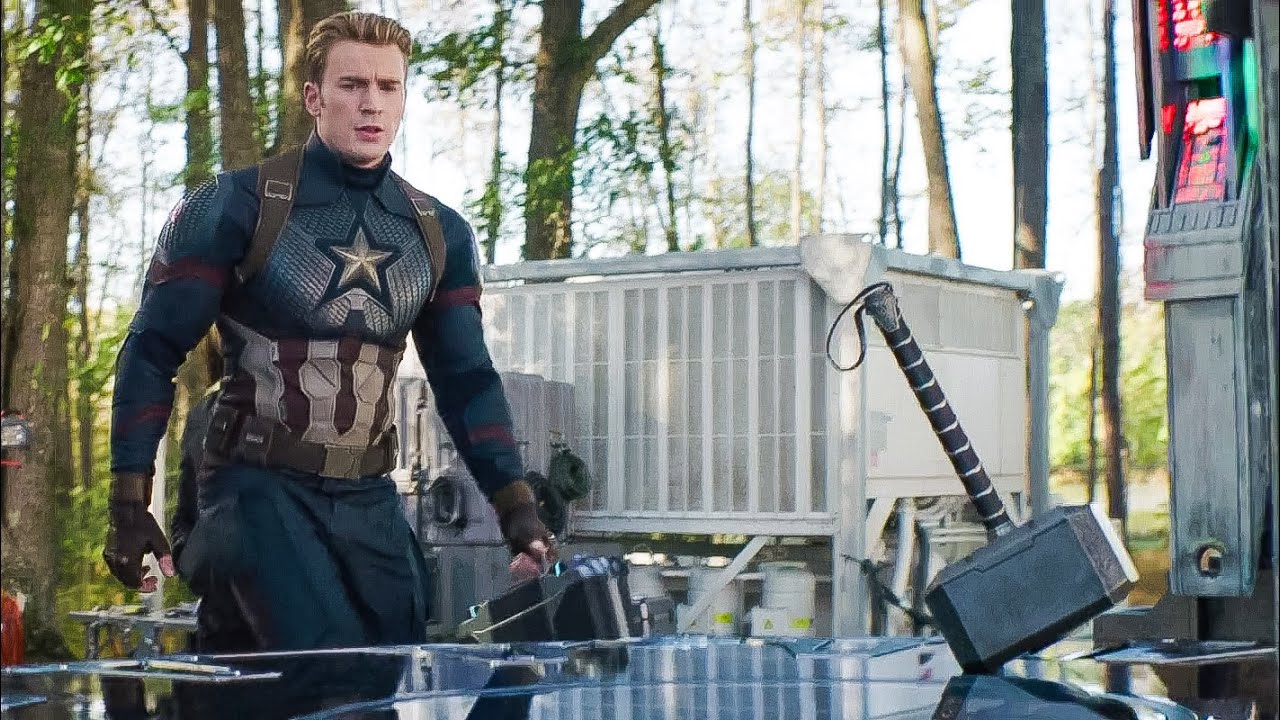
    Upcoming Marvel Studios feature Captain America: New World Order will mark Anthony Mackie’s first time leading an MCU film as the Star-Spangled Avenger. Sam Wilson takes over the mantle from Chris Evans’ Steve Rogers in the wake of their last team-up effort in Avengers: Endgame and the events of The Falcon and the Winter Soldier. By all accounts, Evans, who also said goodbye to the MCU, has been unlikely to bring back his original Captain America character anytime soon.

    Following Marvel Studios’ recent D23 presentation, Mackie joked that Sebastian Stan gets Wyatt Russell’s U.S. Agent in the upcoming Thunderbolts and expressed his desire to see Evans return in some manner. However, in a recent interview, Mackie had a more sobering take on the potential return, expressing Evans’ own views on where his future with Captain America rests.

    Mackie discussed the possibility of Evans reprising his role as Steve Rogers in an interview with E! News, and he made a joke about how little Evans is focused on the MCU now:

    Chris is so far gone from Marvel. Like, Marvel is not even in his radius. He’s so far gone. He’s enjoying life. He’s like an old retired dude.

    Anthony Mackie

    While a return in New World Order seems unlikely, an eventual Evans return is still unknown, especially with major cross-over films like Avengers: Secret Wars in the works. But, for the time being, Sam Wilson will shine as Captain America in the post-Infinity Saga MCU.

    Captain America: New World Order will be released in theaters on May 3, 2024.

    Source: E! News

  • REVIEW: ‘She-Hulk: Attorney at Law’ Episode 7

    REVIEW: ‘She-Hulk: Attorney at Law’ Episode 7

    After finishing the seventh episode of She-Hulk: Attorney at Law, it is extremely natural to wonder—what is this show? For a series billed as a legal comedy, there certainly is no particular plethora of legal plotlines. In Episode 7, for example, there are none at all. For a “superhero show”, there can be a stunning lack of superheroics. So what is She-Hulk? That may not be an easy question to answer, but the series has a personality that connects everything at its core; that is not a given for most series. In any event, it is genuinely hard to care about picking apart every ounce of She-Hulk when Episode 7 was everything a reasonable person could want.

    Some of the biggest, deepest laughs of She-Hulk come from this episode without a doubt. The level of comedy the series attained in some of its earlier, more legal-heavy episodes returns in a very different form. In a universe and franchise so focused on action, adventure, and high-concept stories, any person that has the capacity to feel joy can appreciate some D-list supervillains in group therapy helping out the protagonist get over a guy who did not text her back. That premise is absurd, and it can only work in a very specific context. Luckily, She-Hulk provides that context.

    Nothing could be said about Episode 7 without emphasizing how amazing the supporting cast of characters is. Obviously, Tim Roth’s Emil Blonsky makes a welcome return after his last appearance in Episode 3 to continue the “Abomaste” gag. And while various legal cases brought out some interesting figures in the past, such as Donny Blaze, Mr. Immortal, or the shape-shifting light elf, Episode 7 absolutely knocks it out of the park. Man-Bull, El Águila, Porcupine, Saracen, Wrecker, and Blonksky all come through as colorful characters. The fact that such a group got to spend most of its time together and interacting with one another is simply a unique experience in the Marvel universe, which allows She-Hulk to bring out the inherent humor of corny comic book characters in a safe space both literally and figuratively.

    A major theme running through She-Hulk is that Jen is constantly losing. Sure, she is a functional Hulk and landed a snazzy job, but episode after episode has emphasized that Jen the human is not enough. Her dating life is perhaps the prime example of that, and the episode’s focus on Josh building her up and then letting her down just hammered that theme more. The “twist” that Josh is actually a villain was perhaps one of the most obvious reveals, so it was smart that her emotions stemming from the rejection were in the spotlight while the dramatic reveal was only given a few seconds in the end. It was refreshing to see Jen get a personal “win” this episode when she has her emotional breakthrough at the Blonksy retreat with the friendly help of some memorable characters with their own identity struggles. In fact, self-identity seemed to be the core issue tying all of those people together in one way or another.

    Since Jen now knows, apparently, that “Jen is great” alongside She-Hulk, perhaps that is the audience’s cue to prepare for less self-growth and more plot resolution going forward. Granted, there are only two episodes left in the season, so that may not be hard to guess. But it does potentially give away what kind of place Jen will be mentally when she has to eventually deal with the invisible HulkKing villain (to the extent She-Hulk itself will actually deal with a potential explosion of Hulks in the MCU), as well as when she inevitably comes across Charlie Cox’s Daredevil. Doubtless, many have suffered in agony for seven weeks with no Daredevil, but at least they can be grateful the show may combine them when Jen/She-Hulk is at her best.