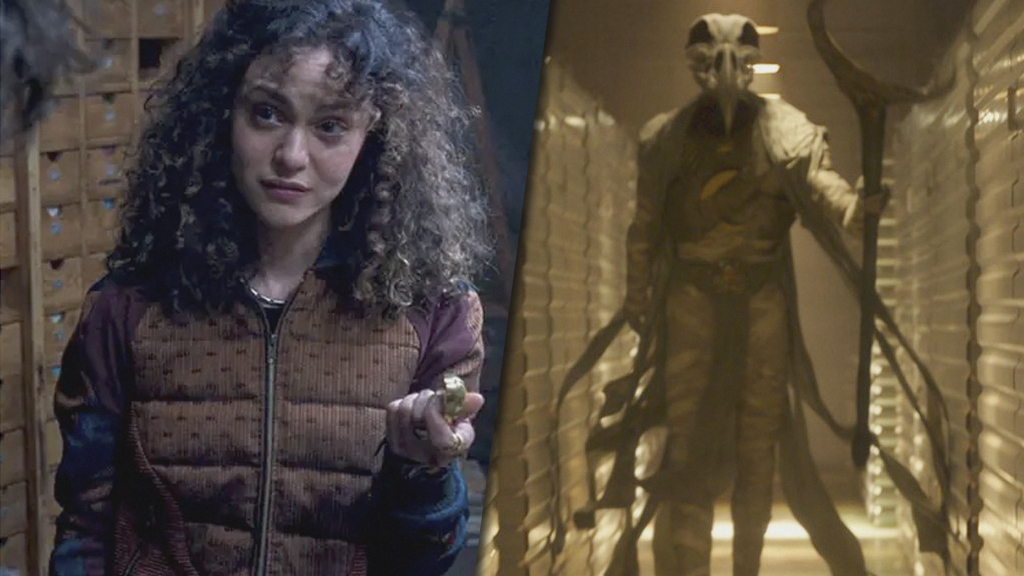
After another episode of Moon Knight has arrived and that also means we once again get a brand new set of Funko Pops. This time around, we got our first look at not only Layla but also Khonshu. The Egyptian deity looks extremely detailed though we can’t see if his head is directly connected to the body, or they went with a similar design to what we see in the show. He also comes with a new glow-up version that is now available to pre-order.
The Funko Pops have been great additions for collectors, especially as we get new ones with each episode. Considering we’ve seen Layla and Khonshu in the previous episode, it looks like we’ll never know when something might find its way online and what the upcoming episodes might have in store for us. As their adventure in Egypt continues, who knows who else we might meet along the way besides the various Avatars we met in the previous episode.
We still have three more episodes to go. So, there are a lot of opportunities to explore what the future has in store not only for Moon Knight but also for the MCU. The recent Emmy submissions continued to push the fact that this series is more of a limited series rather than one to feature multiple seasons, but Loki is the only one with multiple seasons so far. So, we’ll see what the future has in store.
Following the introduction of both Konshu and Ammit in the first couple of Moon Knight episodes, Marvel Studios took yet another step into the rich Egyptian mythology that’s being built into the MCU by giving us a glimpse of its take on a few more characters based on Egypt’s ancient deities. This isn’t the first foray into the realm of gods for Marvel Studios, but it could certainly prove to be yet another substantial stepping stone toward the MCU’s near future.
Marvel Studios’ Thor (2011)
In episode three of Marvel Studios’ Moon Knight, Marc Spector, as Khonshu’s avatar, gets summoned to a meeting-of-the-avatars of sorts set within the Great Pyramid of Giza (perhaps serving as the MCU’s Overvoid). There, we meet the avatars of five members of the Ennead, a “super group of Egyptian gods” as described by Steven Grant in episode one. Its name comes from the Greek Enneás, which means “the Nine”, meaning that Steve was indeed right in correcting the mistake made by the National Gallery in its own exhibit’s promotional material. Of the nine gods with a place at the gathering, only five took to their seats at the chamber: Horus, Isis, Tefnut, Osiris, and Hathor. Shu (mentioned by name in episode one) and Geb (featured in the exhibit’s poster) were notably absent. As for the remaining two seats, it seems fair to think that those would belong to both Khonshu and Ammit, making the MCU’s version of the Ennead complete.
Marvel Studios’ Moon Knight
As for what these gods represent, little is set in stone in terms of who they are and what their main focus is within the MCU. Even the historically accepted constitution of the Ennead differs from the one we got in Moon Knight, leaving just enough room for Marvel Studios to slightly adapt each of the gods’ characters to fit whichever storyline might suit them best down the line. It’s not unheard of to have a god have multiple fields of expertise (let us put it that way), as it is actually extremely normal for that to happen. This means that it’s all up to Marvel’s writing teams to figure out where to focus on when, and if, these characters are called upon once again.
The Heliopolitans
And this brings us to the future of not only Egyptian gods in the MCU but, considering how Pandora’s box has indeed been cracked open, the future of many other pantheons of deities of specific spiritual practices and geographical locations. And the appearance of some might be more surprising than others.
Thor: Love and Thunder is an obvious choice. But this project will not only bring back Asgardian gods into the fold, as it is apparently set to introduce at least one character from the Olympians as back in April 2021 Russel Crowe seemingly confirmed that he would be playing Zeus in the Thor sequel. This might open the door for several other representatives of the Greek pantheon such as Ares, Poseidon, Apollo, or perhaps even Hercules. By making Gorr, the God Butcher, the main antagonist of the fourth installment of the Thor franchise, it would be a shame if many new gods aren’t introduced in order to, you know, be butchered.
The Olympians
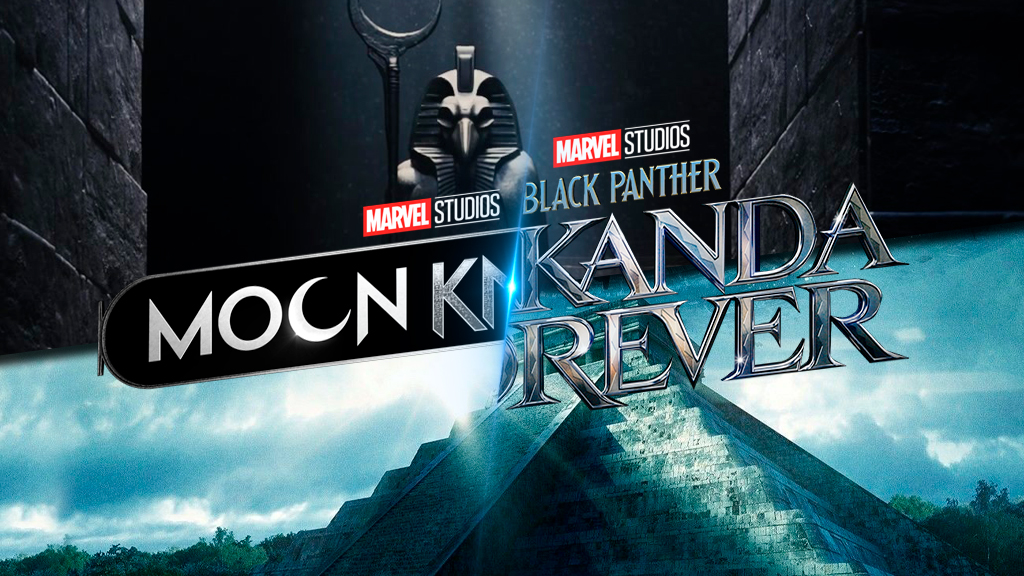
But another upcoming, and perhaps less obvious, MCU movie that might also hugely benefit from Marvel Studios embracing its mythology is none other than Black Panther: Wakanda Forever. As we already speculated last September, following the release of Shang-Chi and The Legend of the Ten Rings, the Black Panther sequel might very well decide to focus on the Aztec Empire making it serve as the grounded real-world connection to the mythical undersea kingdom of Atlantis. Going this route, and doubling down on the mythological unveiling within yet another culture depicted in the MCU, would mean opening the door to another, less recognizable, group of deities: The Tēteoh, a race of supernatural beings worshiped as gods by the Aztecs of ancient Central America, much like the Heliopolitans in Egypt or the Olympians in Greece.
The Tēteoh
Following the introduction of the titular characters in Eternals, continuing to explore the storyline possibilities set by the several Marvel pantheons, by characters beyond the realm of man, unconstrained and with a whole new set of motivations would certainly prove an interesting one. Especially because there are numerous groups left to explore: The Ahau (Mayan), The Akua (Polynesian). The Apu (Inca), The Daevas (Hindu), The Inua (Inuit), The Manidoog (Native American), and many more, including The Tuatha de Danaan and the Fomorians (both Celtic) who operate out of Otherworld, a place that is bound to make its MCU debut following the introduction of Dane Whitman, The Black Knight, in the aforementioned Eternals.
Marvel Studios’ Shang-Chi and the Legend of The Ten Rings
An interesting and easy way to justify how these characters have been on Earth all along even if we haven’t seen them or even acknowledge them before is to do what Shang-Chi and The Legend of The Ten Rings did with Ta Lo. In the comics, Ta Lo was a small “pocket” dimension adjacent to Earth, and it appears to be something quite similar in the MCU. It is described as a mystical dimension, inhabited by Chinese mythological creatures, that have managed to stay hidden not only by being difficult to access but especially by making it unclear to the outside world if it’s even a real place or not. And this is where Moon Knight‘s Heliopolis, as well as the Aztec Tlālōcān, the Greek Olympus, Otherworld, and many more otherwordly sites where gods roam, come to mind. They all share the common characteristic of being located on extradimensional realms, much like Ta Lo, with easy access to Earth through portals in the vicinity of where its inhabitants are worshipped by humans – places like Egypt, the Yucatán Peninsula, Mount Olympus in Greece, Stonehenge, and so on – making Earth the nexus of it all. A perfect answer as to how to bring the MCU to a new level of storytelling. Into The Age of Gods.
One of the most significant characters in Moon Knight comics, other than Marc Spector and his alters, is Marlene Alarune. Marlene is Marc’s (and Steven’s) (and Jake’s) constant on-again-off-again romantic interest. She has been consistently present since Moon Knight #1 in 1980. While over 40 years of history saw plenty of changes to the character, overall, Marlene is not a great character. Moon Knight, though, apparently recognized the significance of her character and the ability for a love interest of Moon Knight to highlight Marc Spector’s dissociative identity disorder—we now have May Calamawy’s Layla El-Faouly. And Layla is great.
Marlene and Layla have different names, but their roles and pasts suggest that Layla is more or less a majorly upgraded Marlene. Obviously, both are love interests to Marc Spector. In the comics, Marlene was aware of Marc’s three identities and Moon Knight from the beginning. She generally dealt with it well, but at other times throughout her comics history, Marc’s DID was, reasonably, a source of frustration to say the least. Still, she has had relationships specifically with Marc, Steven, and Jake over time. More recently, she and Marc share a daughter named Diatrice, who was fathered by Jake, and Marc never knew for years. In Moon Knight, Layla is introduced as Marc’s soon-to-be ex-wife who was not aware of any identity other than Marc and Moon Knight. Marlene and Marc never married in the comics, but they often also had a rocky relationship.
Moon KnightMoon Knight
Marlene met Marc almost at the same time that Marc became Moon Knight. Marlene is the daughter of an archaeologist who was killed by Bushman when the villain and his crew (including mercenary Marc Spector) raided the tomb Marlene’s father had discovered. After Bushman killed the archaeologist, Marc apparently had a moment of moral reckoning and turned against Bushman, saving Marlene and getting himself killed then revived by Khonshu in the process. We do not know much about Layla’s past in Moon Knight, but we learned in Episode 3 that her father was an archaeologist and was killed at some point. That is incredibly unlikely to be a coincidence, but whether Layla otherwise has the same general backstory as Marlene is yet to be seen.
Marlene, it feels like, is a constant damsel in distress in the comics. She generally feels extremely superficial and it is just a given that Marc cares about her. There are times when she is non-stop jealous or angry for every action Marc takes, there are times she is at home waiting for Moon Knight when he gets back, there are times when they have broken up and he longs for her, and there are (again) many times where her being in trouble is half the plot or motivation of an issue. She has her moments, but Marlene just feels like an outdated trope that never quite evolved.
Layla, on the other hand, is certainly not a damsel in distress. She seems to know how to handle herself in a violent situation, sure. But she also arguably is the person leading the current plot in Moon Knight—without her knowledge and help, it is not clear how great at tracking down Ammut’s tomb Marc and Steven would be. Her knowledge of Ancient Egyptian artifacts and mythology is rivaled only by Steven, and she has connections in Egypt that seems to be able to get them anywhere. Layla seems weirdly OK with the DID thing Marc never told her about after getting to know Steven a little bit, but also is reasonably angry at Marc for several things. Of course, she mentioned early on that Marc and her fought side by side for the Scarab, only reaffirming that she can, at the very least, hold her own next to an ex-mercenary, Egyptian god avatar.
The only thing “damsel in distress” about Layla is perhaps the fact that Marc is trying to protect her from Khonshu. It does not seem like Layla even knows that Khonshu is interested in her as his next avatar. And to be fair, if Khonshu is interested in her as is next fist of vengeance, that says a lot about what she is capable of. There is also something to be said for the fact that Calamawy and Layla are Egyptian. While the role was not necessarily written for an Egyptian actress, the fact that the character can connect to that aspect of Moon Knight is valuable considering there are no other major Egyptian presences in front of the camera.
The first three episodes of Moon Knight are now streaming on Disney+.
Marvel fans have been eager to learn what the future might hold for Hailee Steinfeld’s Kate Bishop, and a recent development has revealed it may not include a second season of Hawkeye. The studio is hard at work campaigning for its slate of Disney+ shows for the next awards season, with series like Loki, Moon Knight, and the aforementioned Hawkeye all up for nominations. What’s interesting is that while Loki, which has a confirmed second season on the way, was submitted in the “Drama” category, both Hawkeye and Moon Knight were only entered into the “Limited Series” field. This has added fuel to the fire of speculation that neither show will receive a second season, an honor that has thus far only been bestowed upon Loki and Marvel’s animated What If…?.
Actor Oscar Isaac recently caused a stir when he revealed he was not signed up for any further appearances as Marc Spector after the completion of Moon Knight. Similarly, the lack of any sort of progress on another installment of Hawkeye has caused concern that the show might have been a one-and-done. Obviously, even if standard second seasons never occur, the Marvel formula would likely still allow for the protagonists’ stories to continue in other projects and spin-offs, like the upcoming Hawkeye by-product Echo.
Of course, this doesn’t completely rule out the possibility of continuations for the programs. Marvel apparently attempted to submit Loki as a “Limited Series” before the second season announcement forced the studio to place it elsewhere. The remaining choices for Marvel Studios were to categorize the TomHiddleston series as either “Drama” or “Comedy,” with the former being a less competitive field. It’s still entirely feasible that Hawkeye and MoonKnight eventually get their episodic sequels, this news just seems to imply that Marvel Studios has no plans for second seasons in the near future.
Moon Knight has been carving out its own story without relying on its comic book history to create a world to explore. Because of that, many classic characters from Moon Knight comics are either not present in the series or take the form of smaller cameos. Episode 3 just revealed another example of a classic Moon Knight character appearing in a subtle way. As with others, it may simply be a nod to the comics, but it might also tease the character’s return in the future.
Marvel Studios’ ‘Moon Knight’ Episode 3
Episode 3 introduces us to the late Gaspard Ulliel‘s Anton Mogart. Better known as the villain Midnight Man, Mogart in the comics was originally a rather corny costumed art and jewel thief who always struck at midnight. Very early on in Moon Knight lore, Mogart was seemingly killed, but actually survived but with a melted and deformed face. He returns, having been driven insane, to work with Moon Knight’s greatest villain Bushman. While he eventually dies many years later, his son Jeff Wilde (calling himself Midnight) becomes Moon Knight’s sidekick for a brief time before also becoming a villain.
Moon Knight
In Moon Knight, there is no mention of “Midnight Man,” but Anton Mogart is a significant figure in the episode. He is a very wealthy and connected man with an elaborate collection of black market artifacts, such as Senfu’s sarcophagus that Marc and Layla came to see. Layla notes that he keeps these things where only he can see them—in the comics, Mogart stole precious items just to own them rather than for the money. We last see Ulliel’s Mogart get hit by one of Moon Knight’s crescents. Whether that was fatal to the villain is ambiguous. There is certainly room for Mogart to return in Moon Knight or in future projects.
The first three episodes of Moon Knight are now streaming on Disney+.
Throughout its first three episodes, Moon Knight has solidified that it, at the very least, feels substantially different from the vast majority of Marvel Studios’ projects. Generally speaking, this is a positive — why anyone would want the Marvel Cinematic Universe’s 33rd entry to be as similar to the rest as possible is a mystery. Moon Knight stands out with its ability to make the viewer feel as though they know just about as much as its original, in-the-dark protagonist; its heavy reliance on Egyptian mythology and imagery; and its focus on the development of its main character(s). Still, this unique take is not without its growing pains.
For one, a lot of important background information seems to have been generally skipped over. There are a few very brief moments of dialogue that attempt to explain Marc Spector, Moon Knight, and Khonshu, but everything moves on without an actual understanding. Is this the result of the series trying to be a better origin story by avoiding the predictability of traditional origin stories? Most likely, yes. There is far too much background to remain unaddressed, and it seems entirely intentional that there are no flashbacks or long expositions. The viewer is almost kept as up-to-speed as Steven is at all times, which is a unique and potentially intricate way of exploring a nonlinear narrative. Halfway into Moon Knight, it is still too soon to tell how exactly it will pay off.
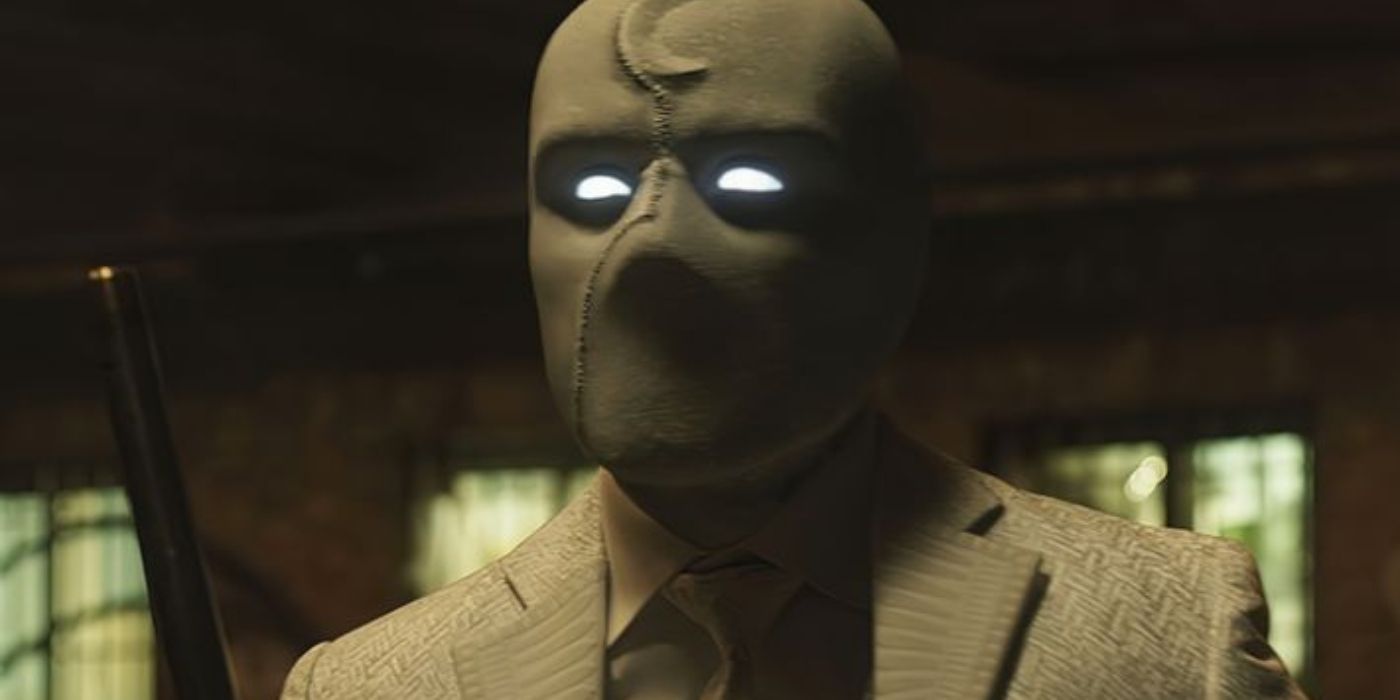
While there is often not enough lore, at times in Episode 3 there felt like too much. The meeting-of-the-avatars scene felt out of place. While the concept of Egyptian deities and human avatars had remained sort of “small” in terms of its presence within the series, this moment really took it to a dramatic next level of complexity that the show did not feel ready for, nor that truly felt needed. It does go to show, though, that Moon Knight and Khonshu are part of a much bigger thing, and that bigger thing is not a fan of Khonshu. That leaves Marc as the odd avatar out as well, further emphasizing that the character is on the fringes of virtually any environment he is in. When Khonshu is imprisoned at the end of the episode, it leaves Marc and Steven without the ability to summon suits or hear the god. But considering how limited some of that was anyway, it does not feel like it had the type of impact it should if the viewers are meant to truly feel affected by that.
Moon Knight definitely feels more akin to drama with supernatural elements rather than an action-adventure. That fits with the notion that the show is truly a character study, but it can be a bit hard to reconcile with the general branding and advertisement, which certainly put the suited-up Moon Knight in more of a spotlight than the series has to date. Quite frankly, the Marc Spector-level element of the character has almost always been much more interesting than the vigilante one, but there is some amount of tension between natural expectations and watching the story play out. It could certainly be guessed that the series itself doesn’t exactly know where it stands in terms of its own focus and scope. While some might find it more difficult to sink into an MCU series with different tones and narrative themes, Oscar Isaac’s performance alone should be enough to convince anyone to give it a real shot.
In any event, the pacing of this episode remains impressively consistent in terms of how well the plot progresses. Whether one likes the story at any given moment or not, it moves at such a strong pace that keeps the puzzle building quickly enough that nothing feels stale. Everything is always moving, and even the quieter moments stay dynamic. Anything that tries to combine darker tones with humor will meet resistance, but Steven Grant’s intrinsic humor—and Mr. Knight’s by relation—are some of the highlights of this episode and the series as a whole and add to the exciting current of Moon Knight.
Worth mentioning is how great of an addition May Calamawy’s Layla is to the series, and it was highlighted in this episode. Romantic leads have a tendency to be shallow introductions that, at best, add to the main character’s presence rather than providing anything new. While that is not necessarily always a negative thing, Layla avoids that problem completely as she both adds to Isaac’s character(s) and is a genuinely meaningful part of the story. On one hand, the character actually provides an Egyptian connection to the Isaac and Ethan Hawke-led show that extensively incorporates Egyptian mythology, symbology, and setting. Her background in stealing already-stolen relics makes her one of the most useful people around this very relic and artifact-heavy scavenger hunt of a series. She also plays into the Marc-Steven dynamic, as her interactions with newly-met Steven emphasize the differences (and similarities) between the two personalities. The fact that we’ve heard that Khonshu is interested in having her as his avatar is growing to be a much more interesting premise.
The action scenes in this episode are relatively few, and they again do not live up to the wide expectation that this show was meant to be substantially more violent than other projects. There are some solid moments, like when Marc punches the guy licking the knife, but it continues to utilize slow motion at odd times that can take you out of the action. These scenes do imply that Marc is rather violent, as Steven stopped him from slashing that dude’s throat. Still, he often held back—and the episode teases that there may be more to Marc and Steven than we know, as both seem to blackout while their body kills several people.
Overall the third episode of Moon Knight is on par with the tone and character-level scope of the first two but with the underlying Egyptian deity and Arthur Harrow danger getting closer and closer each minute. This episode tackles supernatural lore more than the previous two, which does cause the balance between “superhero show” and “character study” to change, though watching Steven Grant, Marc Spector, Mr. Knight, and Moon Knight all in a power struggle to both save the world and not lapse into insanity is genuinely a special treat that can only likely exist in a genre-fuzzy world.
Moon Knight seems to be doing a lot of things: an exploration of mental health, dense Ancient Egyptian mythology, and a classic superhero-needing villain. While Moon Knight is notably relatively disconnected from the greater Marvel Cinematic Universe, it might be building another corner of it. While Episode 3 confirms Khonshu’s home realm, there is a twist.
Episode 3 of the series confirmed that the realm known as the Overvoid. Also known as the Othervoid or Celestial Heliopolis, the Overvoid is the home dimension of beings known as the Ancient Egyptian gods. While in the Pyramid of Giza, Khonshu speaks through Marc Spector to the other avatars and their gods and tells them to return to Earth from the Overvoid or risk losing Earth.
Marvel Studios’ ‘Moon Knight’ Episode 3
This is significant in a few ways. First, the actual existence of the Overvoid expands on the MCU cosmos. The Overvoid is an Asgard-like realm. Its appearance as a large city built on a tiny planet is similar to Asgard’s. Its passage to Earth is a golden bridge through space, called the Path of the Gods, which is similar to the Asgardians’ Bifrost. The world of space gods that came to be revered by humans is expanding—with Norse gods and now Ancient Egyptian gods, beings like the Olympians could come later.
Moon KnightThor #300
More interesting for the potential events of Moon Knight, though, is the fact that Khonshu’s statement seems to imply that the gods can come and go willingly from the Overvoid. In the comics, that is just generally not true. In fact, the reason the gods use humans as avatars is specifically because they cannot have a physical presence on Earth. So usually, they are somewhat stuck in the Overvoid, but that may not be the case in Moon Knight. Considering Arthur Harrow is seeking out Ammit, this could have huge implications for the series.
The first three episodes of Moon Knight are now streaming on Disney+.
If anything in Moon Knight has virtually confirmed that Jake Lockley exists, it is the scene in Episode 3 where Marc and Steven both blackout while fighting a group of people. Previously, we saw Steven blackout when (presumably) Marc took control of the body, but we have never before been presented with a situation where we know neither of them could have been in control. During the fight, Marc and Steven blackout and reawaken to quite the massacre–they violently killed everyone they had been fighting. They both claim they were not responsible, which means someone else was. Considering in the comics Jake is often the most violent, brutal, and remorseless personality, it makes all too much sense that Jake could have taken over to do what had to be done to get them out of that situation.
Marvel Studios’ ‘Moon Knight’ Episode 3
“That Wasn’t Me”
While Marc Spector has certainly been portrayed as much more violent than Steven Grant, his actions do not align with the type of violence suggested by the blackout mentioned above. He has his moments, sure, like when Steven seemingly stops Marc before Marc slashes someone’s throat. But even in this episode, there are numerous times he specifically holds back while fighting. Another exciting tidbit for Jake Lockley searchers comes before the main blackout, where Marc encounters a group he had previously fought on the roof (and ultimately pretty brutally kicked the s*** out of).
He wants to talk to them for information, but they try to run because they are scared of him after the fight. He yells at them, “That wasn’t me!” Well, if Marc is trying to say whatever added violence came over him during the rooftop fight was not him, who was it? We know it was not Steven. There was not a blackout on the roof, but this goes along with previous clues that perhaps Jake takes over when it appears Marc loses his emotional/anger control and gets hyper-violent as he did briefly in the last episode.
Arthur Harrow Definitely Seems to Know There are More Personalities
We do not know with certainty how much Arthur Harrow knows about our protagonists. But it seems to be much more than he shows on the surface. There is very little doubt that when he used his Ammit cane to try and judge Steven in Episode 1, he learned a lot about (at least) Steven and Marc. Episode 3 confirms that he learned at least some of Marc’s past–perhaps his memories–from this. Harrow tells Layla that he knows her father was murdered and that Marc is not telling her the truth about it. From what we have seen, there is no other way Harrow could know about Marc’s involvement in something like that unless the cane process showed him.
So why is this interesting? If he saw Marc by reading Steven, he could have seen other personalities that existed. While telling the court of avatars that Marc is unwell, he notes: “We have no idea how many personalities he might have.” This is reminiscent of the last episode as well, where he makes a similar comment that can be read as Harrow having knowledge of other personalities of Marc and Steven. If he had no reason to believe there were more than the two, it seems unlikely he would keep referencing more than the two he has met. Plus, it could be another subtle nod from the writers that more personalities are possible.
Marvel Studios’ ‘Moon Knight’ Episode 3
The first three episodes of Moon Knight are now streaming on Disney+.
Episode 2 really helped us get a better understanding of who Steven and Marc are. We learn that Marc is a mercenary who was killed and resurrected by Khonshu. As Steven learned more about Marc and how they are sharing a body, the two began to work together a little better. The episode also provides an opportunity to get to know more about what Arthur wanted. Arthur tells Marc that he used to be Khonshu’s avatar, but now he’s chosen to work for Ammut and dish out her brand of preemptive justice rather than Khonshu’s more traditional punishments. And so much of this episode dives deep down into Arthur’s plan of freeing Ammut, which involves the scarab that is a compass to her tomb.
Steven had a problem with the idea of punishing people before they commit their crimes which causes a huge fight leading up to a pretty cool reveal: Steven and Marc can each summon their own, different suits. Steven wears the “Mr. Knight” suit while Marc wears the traditional Moon Knight “armor” suit. We also learned way more about Layla, who used to be married to Marc and knows about the suit, but doesn’t know about Steven. When she first meets up with Steven, she thinks that it is just a cover for Marc.
Arlyn’s Assumptions
At the end of episode 2, Marc ended up in Egypt. Marc’s goal is to find the tomb of Ammut before Harrow has the chance. This is obviously going to cause an issue and they will most likely end up fighting. I feel like there will be more issues because Steven is not okay with being the man in the mirror, meaning they will most likely be fighting for control the whole time. There will also be a conflict between Marc and Layla, seeing that Marc just up and left her and never reached out.
If Moon Knight has proven anything, it is that it can hide easter eggs and cameos as well as any other MCU installment. Previously, we have seen a Frenchie reference and Crawley cameos in the first two episodes, and there are several potential hints at Marc Spector’s third alter from the comics, Jake Lockley. Another set of cameos came in Episode 2, and unlike the others, these come from one specific Moon Knight comics run. Could the cameos be a hint at what is to come in Moon Knight, or are they just nods to a very popular Moon Knight story?
Marvel Studios’ ‘Moon Knight’
The two police officers that come to Steven’s flat and later reveal themselves to be working for Arthur Harrow are listed in the credits and being named “Bobbi” and “Billy”. In the poplar Jeff Lemire and Greg Smallwood run, Billy and Bobby are orderlies in what appears to be a mental instutition that Marc Spector finds himself in. They work for the hospital’s Dr. Emmet, who is later revealed to be some sort of incarnation of Ammit. The Lemire-Smallwood run is very heavy on Moon Knight’s psychological instability, so it constantly jumps between different “realities” that Spector experiences, making him (and the reader) question what is or is not real. The visuals can accordingly be rather trippy, and Billy and Bobby sometimes appear with jackal heads rather than in human form.
Moon Knight #1 (2016)
Does this mean anything for Moon Knight? It is always possible that the series might continue to take inspiration from the Lemire-Smallwood run, and the psychological and reality-questioning nature of the live-action series so far certainly carries some of the essence of that Moon Knight comics arc. Still, Moon Knight has so far not adopted virtually any major aspect of the run. The fact that Billi and Bobby are clear cameos from that specific story is interesting, though, as they are not characters with deep Moon Knight history like the other cameos the series has offered. Only time will tell if the writers used these cameos as a way to tease the future of Moon Knight, or if they were simply a fun way to reference the comics.
The first two episodes of Moon Knight are now streaming on Disney+.
Cookie Consent
We use cookies to improve your experience on our site. By using our site, you consent to cookies.
This website uses cookies
Websites store cookies to enhance functionality and personalise your experience. You can manage your preferences, but blocking some cookies may impact site performance and services.
Essential cookies enable basic functions and are necessary for the proper function of the website.
Name
Description
Duration
Cookie Preferences
This cookie is used to store the user's cookie consent preferences.
30 days
These cookies are needed for adding comments on this website.
Name
Description
Duration
comment_author_email
Used to track the user across multiple sessions.
Session
comment_author_url
Used to track the user across multiple sessions.
Session
comment_author
Used to track the user across multiple sessions.
Session
Statistics cookies collect information anonymously. This information helps us understand how visitors use our website.
Google Analytics is a powerful tool that tracks and analyzes website traffic for informed marketing decisions.
Contains information related to marketing campaigns of the user. These are shared with Google AdWords / Google Ads when the Google Ads and Google Analytics accounts are linked together.
90 days
__utma
ID used to identify users and sessions
2 years after last activity
__utmt
Used to monitor number of Google Analytics server requests
10 minutes
__utmb
Used to distinguish new sessions and visits. This cookie is set when the GA.js javascript library is loaded and there is no existing __utmb cookie. The cookie is updated every time data is sent to the Google Analytics server.
30 minutes after last activity
__utmc
Used only with old Urchin versions of Google Analytics and not with GA.js. Was used to distinguish between new sessions and visits at the end of a session.
End of session (browser)
__utmz
Contains information about the traffic source or campaign that directed user to the website. The cookie is set when the GA.js javascript is loaded and updated when data is sent to the Google Anaytics server
6 months after last activity
__utmv
Contains custom information set by the web developer via the _setCustomVar method in Google Analytics. This cookie is updated every time new data is sent to the Google Analytics server.
2 years after last activity
__utmx
Used to determine whether a user is included in an A / B or Multivariate test.
18 months
_ga
ID used to identify users
2 years
_gali
Used by Google Analytics to determine which links on a page are being clicked
30 seconds
_ga_
ID used to identify users
2 years
_gid
ID used to identify users for 24 hours after last activity
24 hours
_gat
Used to monitor number of Google Analytics server requests when using Google Tag Manager
1 minute
Marketing cookies are used to follow visitors to websites. The intention is to show ads that are relevant and engaging to the individual user.
Pinterest Tag is a web analytics service that tracks and reports website traffic.