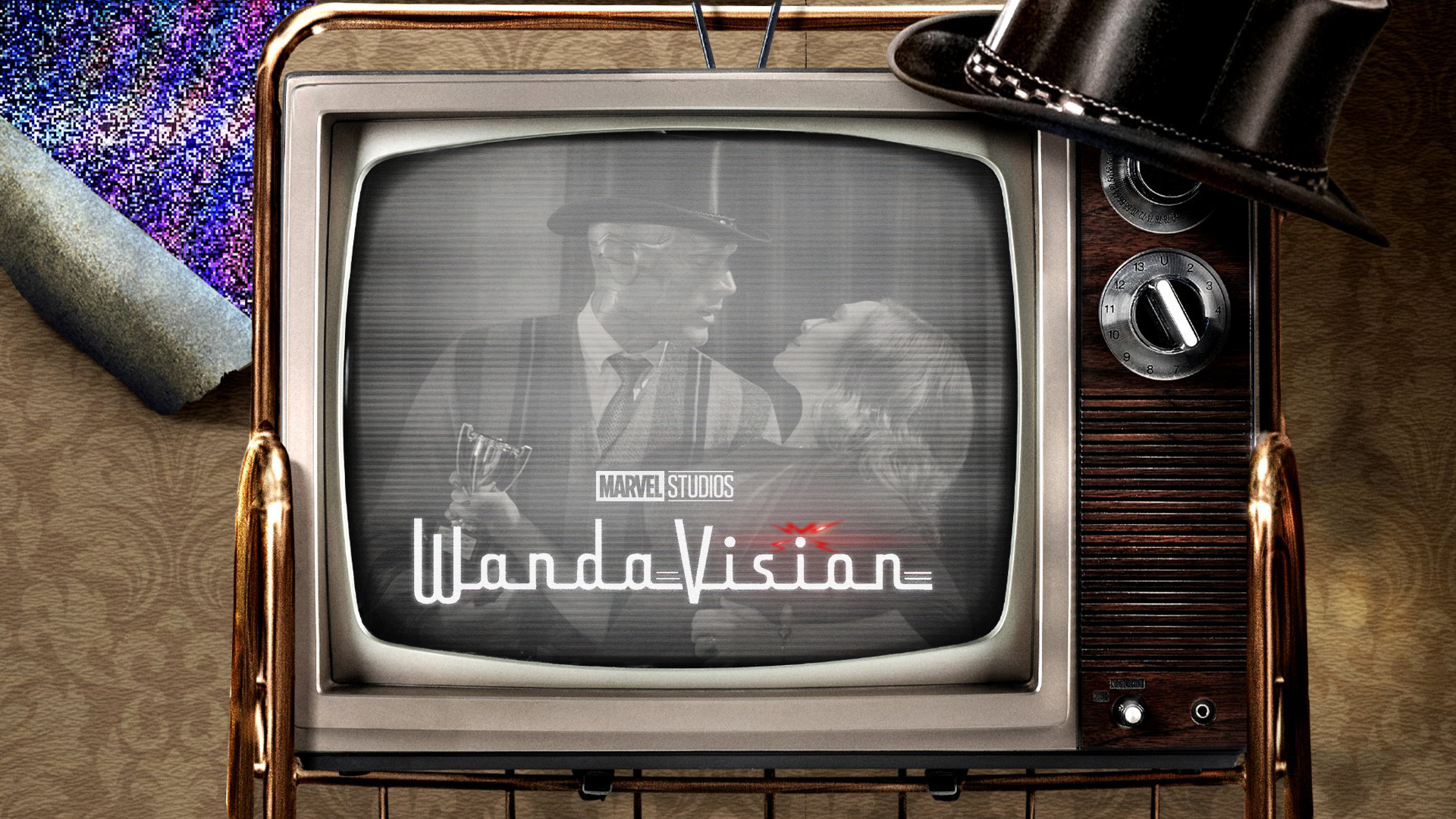
The mystery has begun to unravel. Westview’s cracks are beginning to show. Wanda’s vision of a seemingly picture-perfect, all-American town is starting to fade. The previous two episodes teased Wanda’s hold on this town and that she may be the one in control. Her selfish motivation is leading her down a dark path. Last week, I theorized that the town could be a malformed version of New Salem and that the inhabitants were members of the coven residing within that town. As such, they quite possibly could be survivors of the Salem Witch Trials. It looks like this week’s episode might be adding to that very theory.
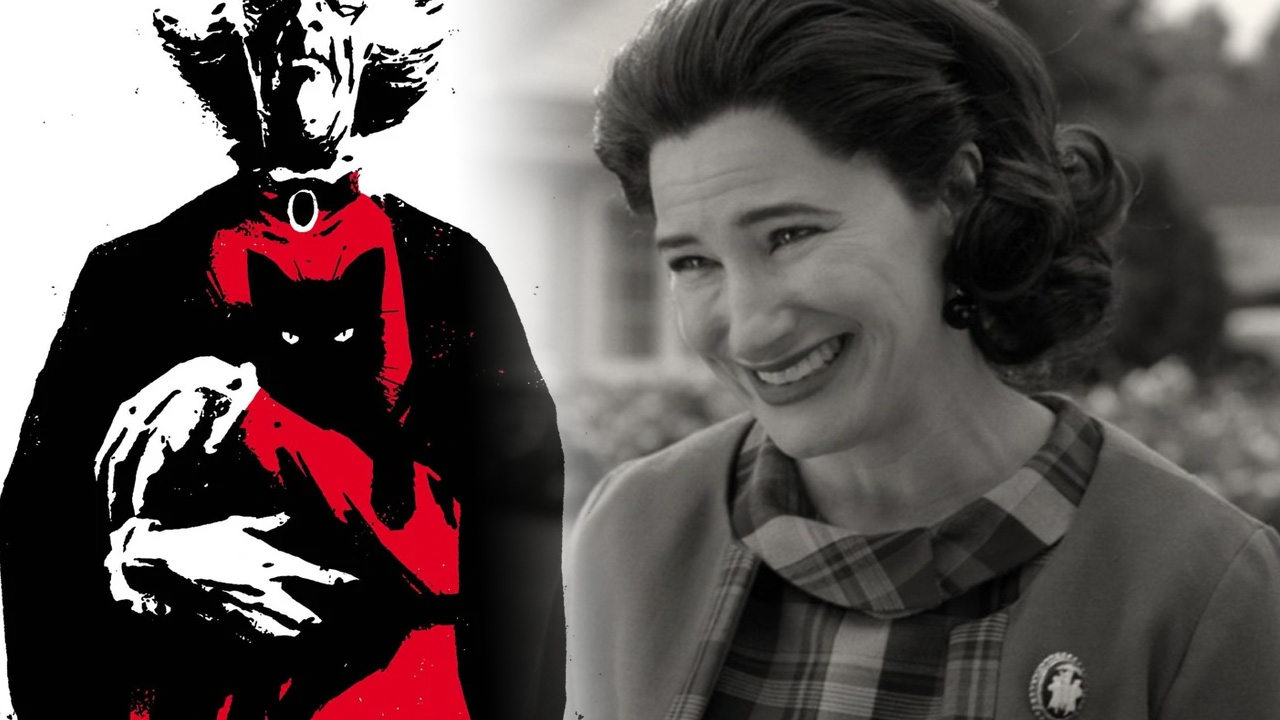
In a previous episode, a brief bit of banter from Agnes mentions that her husband Ralph would not remember their anniversary, which was June 2nd. For those that don’t know, that was the day the Salem witch trials began in 1692. If Agnes is indeed Agatha Harkness, which is the current assumption, that would make Agnes a survivor of those events. Perhaps to save the rest of her coven, she may have made a deal with the devil. The running theme surrounding children in the last two episodes could also connect to her. Any deal with the devil comes at a price. In the comics, her son’s name was Nicholas Scratch. It is the same name she refers to her bunny, who could be her son disguised as an animal. Going by the line from the previous episode, he might also be a sacrifice forced to take that form.
How does this all connect to the latest episode? It has become quite obvious that things are much more off than they were last week in Westview. It is because the episode reveals that Agnes might know much more than she’s letting on. Our nosy neighbor only has a brief appearance in the latest episode. Yet, it is one of the most memorable scenes. She seemed worried about leaving Wanda and Geraldine alone as if something might go wrong. She even interrupts Herb so he won’t reveal anything. I believe this could play right into my theory from last week that the townspeople are members of a coven. The worried look on Agnes’ face comes from the fact that there’s an intruder within their midst who could throw off their entire plan.
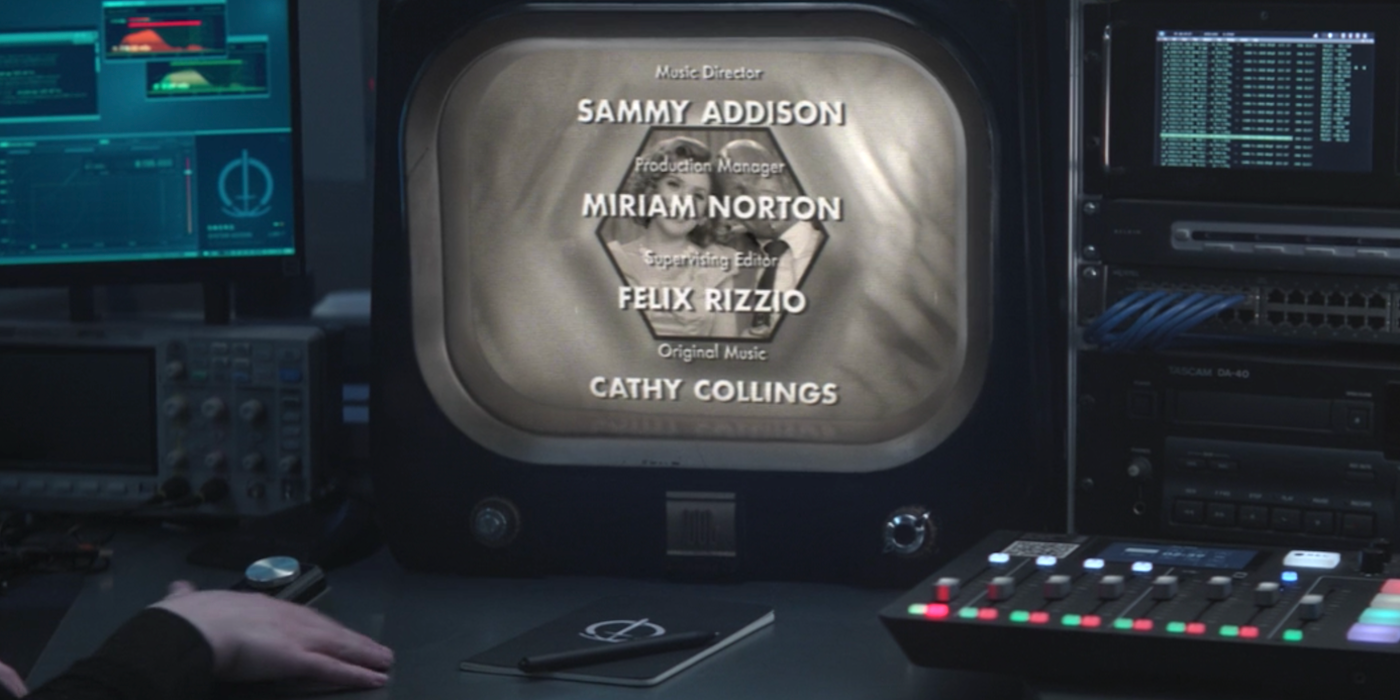
It seems to be following the storyline we’ve seen in the comics. Wanda’s children, Tommy and Billy, were shaped from shards of Mephisto’s soul. Mephisto could be crafting the perfect life and family for Wanda to tear it away from her. He wants to break her mind to make her his ally. Mephisto saw an opportunity in Wanda and used her grief to his advantage. I think the main point behind all these events is to misdirect the viewers. So, they make Wanda look like the one in control. In reality, someone else is sitting in the dark and is in full control. It’s just like how Agnes once again referred to her mysterious husband. We are slowly about to unravel the mystery, especially now that we saw how massive S.W.O.R.D.’s operation was around the bubble. We are inching closer to the story behind Agnes’ influence and if the devil is truly in the details.
WandaVision is truly unique among Marvel Studios’ projects. We have gotten used to what defines a Marvel film. Even as they dabbled with different types of genres, it still was somewhat recognizable. Expectations are the set-up So, their first attempt at a TV series on Disney+ took many by surprise. It is a slower-paced show that only offers glimpses of a larger mystery that is lurking underneath the sitcom-inspired facade. At some point, Wanda ends up in a different dimension that shifts through different eras of television comedy. There, we meet a very-much-alive Vision, wh seems oblivious to what is happening around him. Head writer Jac Schaeffer has no interest in holding our hand. It started to remind me of a series that is near and dear to my heart, Lost.
Why am I making this comparison? The simple reason is how both shows approach their format. The J.J. Abrams‘s directed pilot took a similar approach back in 2005. This fact is especially noteworthy in how it builds its overarching mystery. Most of its episode focuses on the character of Jack Shephard. We are distracted by the airplane crash as the primary mystery before the island takes center stage. We retrace his steps, get to know the ensemble cast, and try to figure out how they landed on the island. It wasn’t until later in the episode that we learn of what this series is all about. Just like WandaVision, we get a two-parter to start the series. The first merely hints at something being off before the second starts unraveling it.
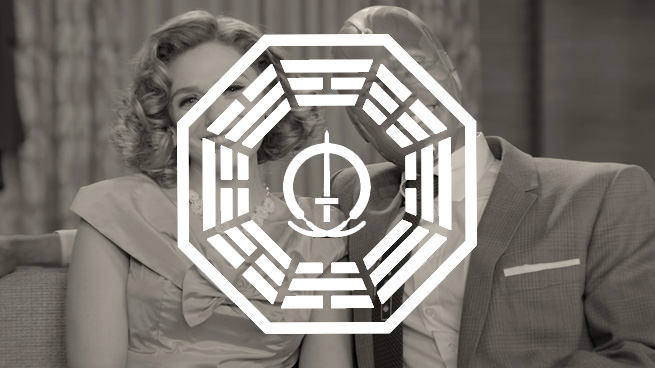
Now, with the release of the third episode, the truth is starting to take center stage. Just like Lost, the mystery will take over as the series continues. There is also the existence of a strange governmental facility that features throughout the overarching storyline. The DHARMA Initiative was to the island what SWORD is to Westview, as they seek a way to reach Wanda. The difference is that WandaVision is more subtle in its approach, as no dead pilot is hanging in a tree to warn us of a monster that is hiding. I mean, we almost had a man suffocate on what looked to be a strawberry. In a way, their first Disney+ outing is similar to J. J. Abrams‘ fascination with The Mystery Box storytelling. There are so many different mysteries that connect one way or another, may it be the overall setting, Wanda going through pregnancy in 24 hours, and Vision being alive.
There are tiny details in the background that add to the overall mystery, such as subtle touches in Agnes’ clothes. One of the Lost showrunners, Damon Lindelof carried over this approach into his latest series, Watchmen. If you pay close attention to the set dressing, dialogue, and various other subtle moments you can predict the show’s direction. Schaeffer has done something similar by twisting our familiarity with sitcom tropes and clichés. We know something is wrong but not quite sure what it may be. Even if the first few episodes don’t quite click, the bigger picture or mystery is keeping you going and may enhance previous viewings. We are just at the beginning of opening the mystery box and we’ll see how it comes toge
The first two episodes of WandaVision covered a lot of ground. In episode one, Wanda and Vision got married, Wanda made a new friend, Agnes, Vision got a job at Computational Services inc. In the second episode, Wanda and Vision were making every effort to fit in. Vision went to a neighborhood watch meeting to be “one of the guys.” During that meeting, he swallowed a piece of gum and got all wacky. Meanwhile, Wanda went to a planning committee meeting where she first met Geraldine, played by Teyonah Parris, who we know was cast as Monica Rambeau. Wanda and Vision even won an award at the talent show. Dor most of the time, Wanda and Vision were living the American dream in Westview.
However, there were a lot of weird things in these two episodes. Even though Wanda and Vision’s life seems to be nice and easy, something isn’t right here. Almost Immediately it is obvious things aren’t quite right, such as when they can’t remember why there is a heart on the calendar. They are confused and can’t seem to remember a lot. When Agnes comes over to say hello to her new neighbors, Wanda can’t seem to answer any questions about her life. While at work, it’s obvious Vision doesn’t know what they do at his job. When Vision’s boss comes over for dinner, they can’t answer anything about themselves like when they were married, or where they moved from. At the end of the first episode, things got even weirder when we realized that their “show” was being observed by a S.W.O.R.D. agent.
The strangeness carries into episode two with the loud banging outside their bedroom. It continued when Wanda found a S.W.O.R.D. logo on a helicopter, which was in color when everything else was black and white, in the rosebushes of their house. When Wanda was at the committee meeting she stayed after to help Dottie clean up, during this time the radio started saying “Wanda, who is doing to you?!”. Whatever happened with the radio seemed to make Dottie snap out of some sort of trance. Finally, at the end of the second episode, when Wanda and Vision found out they were having a baby, they were interrupted by another loud bang. Outside they saw a man in a beekeeper suit with the S.W.O.R.D. logo and it was here things got even weirder when we saw Wanda “rewind” time. There are also those creepy commercials that have led fans to develop a lot of crazy theories. Both episodes gave plenty of hints that Wanda and Vision’s American dream might be more of an American nightmare.
Arlyn’s Assumptions
Wanda’s rapidly advancing pregnancy means that the long-awaited debut of Billy and Tommy is going to happen soon. In the comics, the twins have a very complicated back story, so the question is will it play out in WandaVision? Are they going to go into the complicated comic book storyline or will they create their own unique path in the MCU? I think Marvel Studios might make it a little easier and let the kids travel between whatever reality it is that they are into the real world. Wanda hasn’t figured out who Geraldine actually is, but she is bound to find out as we’ve seen in the trailer and it didn’t seem like Wanda would be too happy about it. It doesn’t seem like it’s going to be too long before the happy couple’s bubble bursts.
The third episode of WandaVision streams tomorrow on Disney Plus.
With the debut of WandaVision last week, the first 2 episodes certainly left viewers with a lot more questions than answers. Why is everything in black and white? Why are we in the past? Why is there a laugh track? How did Wanda rewind the tape? All very valid questions. But perhaps one of the most important ones being asked is, Who is Dottie? There have been a number of theories popping up here and there. Some believe Dottie is the leader of her own cult or coven of witches in Westview. Others believe she is the sorceress Clea. Others think she may actually be the supernatural being known as Mephisto. I actually have another interesting idea in regards to who Dottie may be. But for this character, we’re going to have to dig deep into the Marvel Comics lore.
Dottie is…Arcanna Jones
Arcanna Jones is a very classic Marvel Comics character, dating back to her debut in the 1980s, as part of the Squadron Supreme. While very little of her personal history is known, she has 1 unique characteristic: Arcanna was born with magical abilities. And not only that, but she is a full-on sorceress. Arcanna has magical ability over the elements of nature, earth, air, fire, and water, as well as the ability to cast illusions. Perhaps her connection to nature is why her roses are “divine” and “grow under penalty of death.” But how did I come to this conclusion? There’s one key character that connects it all together.
Phil Jones looks more than meets the eye.
At first glance, Phil Jones looks like the stereotypical side character of the show. But I assure you, he’s far from it. In the comics, Phil Jones is actually Arcanna’s husband and in WandaVision, we know that Phil Jones is married to Dottie. So perhaps in this new reality inside WandaVision, Arcanna underwent a similar change to that of Kathryn Hann’s Agnes, whom many believe to be Agatha Harkness, and assumed a new identity as Dottie.
What do you guys think? Is Dottie Arcanna? Or someone else?
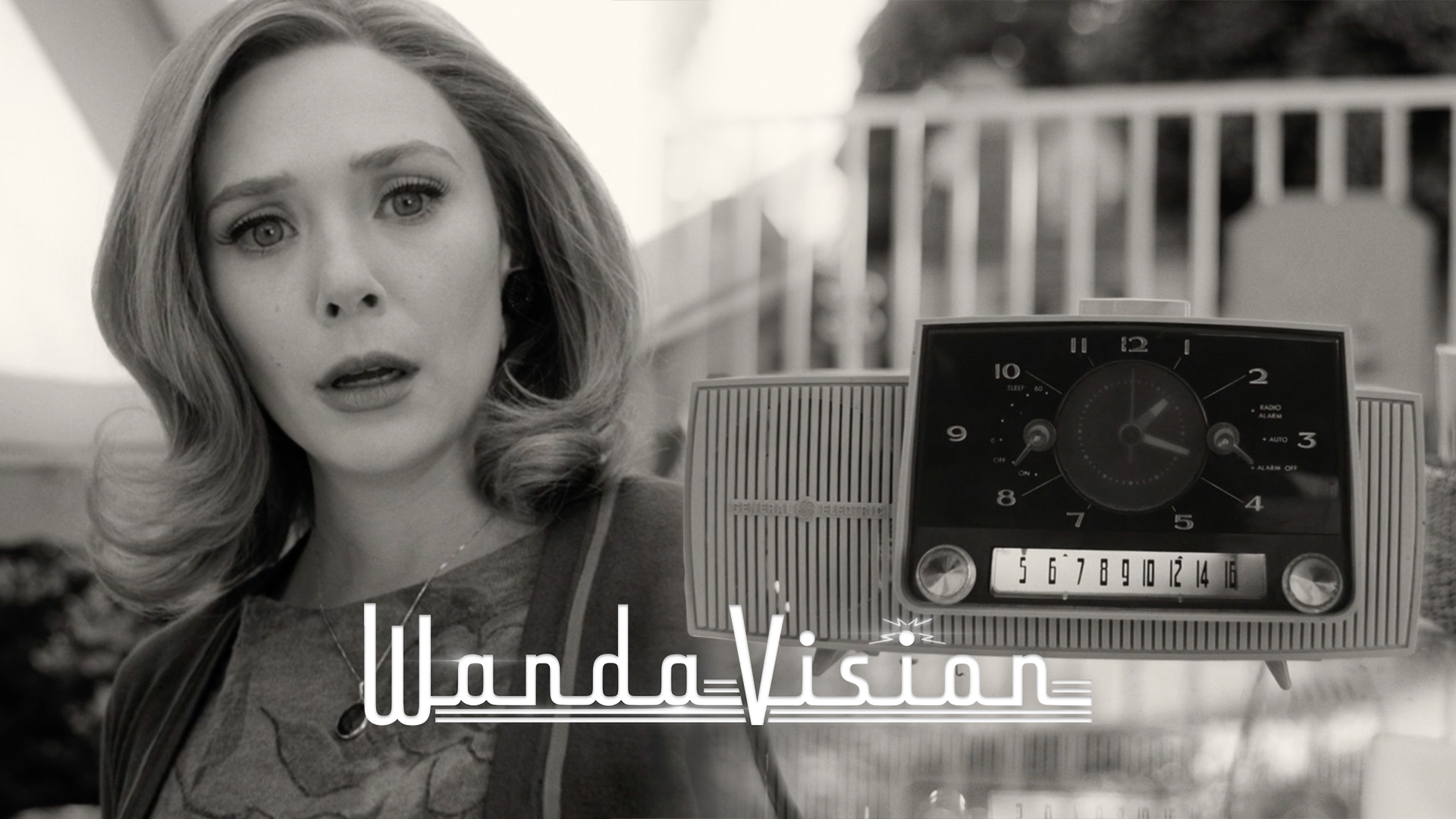
“Who’s doing this to you Wanda?” a voice crackles over the vintage 1950’s radio as Wanda gapes at it, shocked to hear someone speaking to her through it, and into her sitcom reality before it inexplicably smokes and blows up. Or more specifically, Wanda blows it up. Because in a twist not even the great detective Jimmy Woo, or S.W.O.R.D. saw coming: Wanda is doing this to Wanda.
Now, you may ask: “Why doesn’t S.W.O.R.D. or Woo know it’s her doing it all then?” A possible explanation is that they believe her to be one of the good ones again after that big half the universe at stake battle with Thanos, and they just naturally assume that this strange phenomena is another villain trying to hurt her. There is also the very strong possibility that they were not yet aware of the extent and true nature of Wanda’s powers, or that she was even remotely capable of changing the entire visual aesthetic of a suburban town, building that big red hex field around it, and taking control of all its citizens. While Wanda is super powerful, this is a significantly more complex and astonishing power than simply moving objects and blasting enemies. So from their point of view, it’s the most likely scenario that someone else is doing this to Wanda and the town. So they seek her out in an effort to figure out how to help.
Your next question might be: “But what about Agnes/Agatha?! What about Mephisto?! What about *insert villain here*?! One of them must be up to something!” Bear in mind, I’m not saying that at some point someone or something wicked won’t (this way) come into the picture to take advantage of Wanda and this whole situation. Because I definitely have strong suspicions that will happen. What I am saying is that for now, as far as episode one and two of WandaVision goes, I believe Wanda is in charge of and responsible for every stitch of this. For the time being anyway, Wanda is doing this to Wanda.
Let’s start with that ill-fated radio I mentioned earlier. Everything was sunshine and monochrome daisies, music was playing, she was getting some pointers laced with animosity from Dottie, (for the moment, posing as Westview’s resident Mean Girl), when the darn thing started buzzing and bursting Wanda’s alternate reality bubble by asking her what in the Sam Hill is going on?! So Wanda blew it up! It was messing with her vibe, it was breaking her fourth wall. Most importantly, it was taking her out of the fantasy that her beloved dreambot Vision is still alive and they are married and living happily ever after in TV land. Simply put, that gosh darn radio had it coming.
Further evidence that Wanda is in charge comes up in the first episode of WandaVision as well. Wanda is clearly trying to get her and Vision’s story straight pretty early on with Agnes, as she tries to think of a good reason the heart was marked on the calendar, among other details of their lives in this sitcom. Agnes runs through the possibilities as if Wanda is trying to think of it herself on the fly. At first, she’s simply playing out the fantasy and working on this week’s hilarity-filled storyline. A similar guessing game goes on between Vision and his co-worker about their job. It’s not long before, in typical “uh-oh these crazy mixed-up kids” sitcom fashion, Vision comes to a very different conclusion about the heart on their kitchen calendar than Wanda does. His conclusion being that it’s meant to remind them about a special dinner to impress his very demanding boss Mr. Hart and his wife, while Wanda deduces that it must be their anniversary.
The interesting question here to me, is whether or not Wanda is “writing” this part of Vision alone within her fantasy, perhaps whilst sitting on the couch staring at the boob tube, trying to think of the types of stories she was used to seeing in these classic shows. But is she working out everything in her head almost like a fan fiction writer might about their favorite shows and characters, or has she has actually given Vision enough life and free will within the fantasy to act for himself some of the time? And what about his body? Has she reanimated him somehow or is he completely an imaginary figure within this world? What about the other characters? Real and controlled or completely imaginary?
Certain sneak peeks in the trailers and other clues within both episodes seem to indicate that the cast of characters within Westview, are real people but controlled, with some degree of consciousness about their plight, and that they are being largely controlled by Wanda for the purposes of her fantasy. Yes, I would argue, even Dottie and Agnes are being controlled by Wanda for the sake of her story, at least at this point in the series. For instance, you will notice that just prior to the radio blowing up, Dottie asks Wanda, in a much more frightened and confused tone than the confident and kind of bitchy one she had before, “Who is that? Who are you?” It’s as if Dottie momentarily breaks out of the control Wanda had, due to the radio interruption, and reverted to her true self. There are also moments within the trailer where a woman putting up clothing on a line is crying, as if she’s trapped in the moment, and another where Agnes is asking, with a bit more fragility in her voice, “Are you here to help us?” All are indicators the characters are being forced to do things against their wills.
Only time will tell the degree to which Vision has life and power over his own actions within this fantasy. I will say though, that Vision’s free will seems limited within the context of this first episode at least. And if Vision has not actually been given at least a degree of life and free-thinking, through Wanda’s imagination and machinations, it seems from previews of future episodes that he does gain more free will later on as he realizes something strange is going on and goes to investigate.
One reason I question the degree of Vision’s free will early on lies within the first episode, during dinner with the Harts. A few months ago, Edward (@superherotheor1) and I had a conversation in prep for one of his articles about the Harts’ dinner date with Vision and Wanda. In our discussion, I brought up the idea that Wanda is the author of the story of this 1950’s show. Anyone who has ever written fictional stories themselves knows, it doesn’t just come spilling out onto the page, you have to plan it, and sort out details and build worlds. Our lovely Ms. Maximoff has a distinct advantage over pretty much all writers of this world, in that she can change her own reality around her, rather than having to just picture it in her head. Wanda’s world she’s building is based on sitcoms and her love of Vision, but the devil is in the details. Coming up with just the right details, that make sense for a story, can be frustrating at times, and cause you to stop and start and stop again with a story. So when the Harts start to ask too many questions, this flusters Wanda quite a bit and starts to break her out of her fantasy. She takes out her frustrations almost on herself, at first, through Arthur Hart. Because she has control over both the citizens and the fantasy within the world, Arthur’s anger, pounding the table, and demanding answers of her is more like an extension of her own frustration with not knowing all the right answers to best continue the fantasy. But Wanda does not want to be taken out of this world of make-believe by the frustration of all these unanswered questions, so she changes the subject by causing him to choke on his dinner.
Wanda goes a little Darth Vader on Mr. Hart in this story and for a moment changes the storyline to get out of answering questions she hasn’t fully worked out. The reason it’s so very clear to me that it is her doing it, is the faces of the other two actors in the scene. This scene is also the main reason I question the degree of Vision’s free will within the first episode. As Mr. Hart is on the floor choking and clearly in distress, Vision looks at her obediently, and yet, concerned. If he were fully in control, the Vision we all know and love would most certainly immediately save the man. But it’s all up to the little Mrs. here. So he sits and watches her, and waits, as he pleads to her with his eyes. On the other side of the table, Mrs. Hart repeats the words “stop it, stop it, stop it.” At first, she says it as if it’s a joke being played by her cantankerous husband, but then her attention shifts to Wanda. Debra Jo Rupp does something special here, a layering of emotion that creeps across her face and seeps into her voice. I take note of this bit of acting because I can really see there how her character is being forced to play a part, to paste on a smile and get behind the whole charade. As the scene turns more ominous and possibly deadly, there is a look of terror growing in her eyes and her voice combined with the forced facade of continuing to act as Wanda wants her. Then you see that Mrs. Hart has turned from saying “stop it” to her husband as if he’s joking to begging Wanda specifically to stop it, stop it before her husband chokes to death. It certainly gets real there for a moment. Thankfully Wanda comes back from the “dark side” and she allows Vision to save Arthur. Inexplicably, Mr. Hart gets up, Mrs. Hart too, and heads out as if nothing terrible had very nearly happened. Arthur even suggests they talk about a promotion for Vision which causes the studio audience to cheer. While this successfully changes the subject and the tone of the episode back to the lighter-hearted tone it had begun with, there remains something more ominous lurking in the underbelly throughout the end of the second episode, as we now have to wonder how far Wanda will go to make her Wanda and Vision wedded bliss fantasy, her reality.
As we’ve seen so far, the commitment to making the first 2 episodes of WandaVision as authentic to the sitcoms of old was pretty next-level. Whether it was the live studio audience, the aspect ratio of the screen or even the audio, it was clear that a great deal of effort was expended both in the planning and execution of making these sitcoms as close to the “real deal” as possible. No network sitcom would be complete without some great advertising and product placement targeting the subconscious of the viewer. To that end, Marvel Studios prepared an impressive and unexpected ad campaign based around the tragedies that have befallen Wanda Maximoff.
These have been widely broken down and discussed but with another episode of WandaVision just a couple of days away, it’s a good time to get your gears spinning again in anticipation of the continued trip through Wanda’s tragic past. So far, both episodes of WandaVision have had short commercials hosted by actors Ithamar Enriquez and Victoria Blade. While they’re definitely following the script of 50’s and 60’s TV commercials, the couple themselves are a bit of an enigma and have been the source of some pretty wild and pretty great theories, including one of great interest: that the commercial hosts are the parents of Wanda and Pietro Maximoff. In all of Marvel Comics there’s probably no more muddled, twisted and retconned backstory than that of Quicksilver and the Scarlet Witch. It seems like most casual fans are under the impression that their father is the classic X-Men villain Magneto, but that’s not been the case for some time, and in fact, in current continuity, Wanda and Pietro are no longer mutants dating back to 2014’s AXIS event. While it’s highly unlikely that Enriquez is Magneto incognito, the case could be made that he’s some version of Django Maximoff, the brother of the twins’ mother, Natalya, and the man that raised them as his own children. If that’s the case, it’s possible that Blade is playing either his wife, Marya, or, more intriguingly, his sister Natalya.
As explained in James Robinson’s 2015 Scarlet Witch, Natalya Maximoff was herself an incredibly powerful witch herself from a line of witches who each held the title of Scarlet Witch before Wanda inherited it. A panel from Robinson’s series was among the many we found in the background of the Expanding the Universe documentary, indicating that it was likely a book that had some influence on the development of WandaVision. The One-Above-All himself has told us that this series will explore the backstory of Wanda and see her truly become the Scarlet Witch, so it’s not completely ridiculous to think that we might just be meeting (or already have met) Wanda’s mother.
As for the nature of the commercials themselves, while it’s clear that they are alluding to the tragedies that have befallen Wanda, there’s certainly some more subtext to them than that. The toaster in the first commercial has widely been interpreted as analogous to the bomb that Wanda and Pietro talked about in Avengers: Age of Ultron, but the tagline (“Forget the past, this is your future”) is clearly aimed less at viewers and more at Wanda herself. The Strucker watch in the second commercial is a clear call back to the time she spent being experimented on by Baron Strucker and Doctor List, but its appearance in an episode that reveals time isn’t quite right (Wanda appears visibly pregnant the morning after she and Vision get it on) is also probably relevant.
As we move forward, we can certainly expect to see other tragedies relived (the deaths of her brother and Vision sure to be among them), but let’s also continue to pay attention to the hints to Wanda being trapped, apparently against her will, which are coming through in classic commercial attacks on the subconscious.
WandaVision has finally premiered on Disney+, which means we’ve finally got our first real showcase of the way the cast and crew incorporated various sitcoms into the story. Each of the first two episodes was not only rooted in a different decade, but a specific show from that decade…well, sort of.
The 1950s
Episode 1 begins the series in the era which marked the dawn of television sitcoms: the 1950s. I was expecting a lot more imagery and references to the most iconic of 1950’s sitcoms, I Love Lucy, and that it would be the main inspiration behind the episode, but that show has been parodied and referenced so much that it seems almost like a cliche at this point and to do too much of that would have probably felt cartoonish.
So I was totally game to see different way of taking on the era. But it was odd that the main overall inspiration for the 1950’s set episode is clearly The Dick Van Dyke Show…which first aired in 1961.
Thankfully, the clothing, manner of speech, and music (“Yakety Yak” came out in 1959) are all grounded in the intended decade. The main things inspired from The Dick Van Dyke Show are the house set and the episode’s plot. While the storyline isn’t directly lifted from the series, the very first episode of Dick Van Dyke sees the show’s central couple attend a dinner party in order to impress the main character’s boss and being coerced into entertaining the guests at the event.
The other element of the episode that is reminiscent Dick Van Dyke’s is the theme song, from the similar music and tune to the imagery, specifically the moment with Vision trying to carry Wanda into the house bridal-style but dropping her as he walks through the door without opening it. (On Dick Van Dyke the bridal carrying is ruined by tripping upon entering the house).
The 1960s
The creators of WandaVision probably elected to pass off The Dick Van Dyke Show as a 1950’s series so they could reserve the 1960’s episode for the show most obviously suited to a show about Scarlet Witch, Bewitched.
The references to Bewitched in this episode are similar to that of The Dick Van Dyke Show in the previous one. The set is very similar to the one seen on the classic sitcom, and the theme song for this era of WandaVision is mostly instrumental and the video for it is entirely animated. While Bewitched is the show most famous for this theme song format, several others of this era used it as well, including I Dream of Jeannie and Angel.
Like the first, this episode’s plot also takes inspiration from the show it’s emulating; the Bewitched episode “It’s Magic” sees Samantha, the “witch” referenced in the show’s title, subbing in for a magician’s assistant at a charity show and secretly using magic in order to help him perform successfully despite his drunkenness.
Another aspect of this episode’s storyline that also references Bewitched (and many other shows that were produced during the 1960s) is the change from black-and-white to color; Bewitched similarly began its run in black-and-white, but switched to color a few seasons into its run in 1966.
Not a Crutch, But a Tool
What I’m finding interesting about the sitcom elements of WandaVision is that some of the more minor references aren’t necessarily from shows that were on the air during the episode’s set time period. At one point in the first episode, Agnes brings a pineapple over for Wanda to use in the dinner party’s dessert, which some have speculated to be a reference to “The Pineapple Incident” on How I Met Your Mother (2005-2014). Later in the episode, a lobster appears as a door-knocker (which was not on the door when it was opened earlier in the show) which could be a reference to the famous lobster/soulmate comparison on Friends (1994-2004).
So far it appears that WandaVision isn’t necessarily trying to make a lot of specific references to a bunch of famous sitcoms (other than the one inspiring the episode’s overall aesthetic and tone) but incorporating various tropes and using the style of the genre to tell its own story, which is ultimately the wisest decision for a show that will ultimately help propel the MCU forward.
Stories get told through many mediums, such as movies, television, video games, and so on. There is, however, a large misconception that stories are merely just words one character says to another or the overall plot. In reality, that is far from the truth. Many different things go into making a story happen, especially when it comes to mediums like film or television. There’s the cinematography, sound design, set design, character interactions, and so much more. WandaVision‘s first two episodes provided something rare in terms of cinematography. Their attention to detail is outstanding, so why don’t we take a closer look at how far Marvel Studios went with this series.
Here is a spoiler warning for WandaVision’s first two episodes. If you haven’t watched the show yet, then only continue at your own risk.
The Aspect Ratio
Aspect Ratio is defined as the ratio of an image’s width to its height. Simply put, it’s the way we see films when we’re either watching them on the television or an IMAX screen in cinemas. Most movies tend to have an aspect ratio of 2.35 nowadays, which many might recognize from their cinema visit. This ratio wasn’t always the case, as back in the day, aspect ratios actually would vary quite a lot. Back in the day, the standard was 4.3, which is that square image many might remember from their childhood. Marvel’s attention to detail already shows itself at the very beginning of WandaVision, when the Marvel Studios fanfare changes from a 2.35 ratio into black and white 4.3.
I find the use of the aspect ratio to have both a literal and symbolic meaning. The literal meaning is Marvel Studios’ commitment to recreating the various sitcom eras, so they opted to follow the aspect ratio dependent on the tribute. I do believe there’s also a symbolic meaning behind it. At the end of WandaVision‘s first episode, credits start to roll and reveal that someone is watching this sitcom reality. As such, the aspect ratio converts back from 4.3 to the standard 2.35 as it zooms out into a SWORD lab. It turns the 4.3 ratios into a figurative prison. That is why the real world is in familiar 2.35, which is a curious notion to ponder.
The Camera Work
Stories are only as good as the lens that conveys them. WandaVision does exemplary work at pulling it off. In their way to pay homage and recreate the different eras of television sitcoms, Matt Shakman went off to make something that felt authentic and natural to the times, and you can see that in several ways in these past two episodes. For example, in the first episodes, you’ll notice that the camera work followed the I Love Lucy and The Dick van Dyke Show 3-camera approach. Each camera has a deep focus, which means that everything from the background to the foreground remains in focus at all times. You won’t find any flashy or dramatic camera movements, as they only pan to the left or the right with some cuts in between.
The second episode’s Bewitched approach introduced a shallow focus with more close-ups of the actors. As the episode progresses, you’ll notice that the camera work modernizes the instant that the outside world seeps in. There is a glance in the first episode when Mr. Hart starts choking on his food. When he asks Wanda and Vision why they came to WestView, the camera is still in that immobile position, with all four people at the dinner table in frame. It’s not until Mrs. Hart tells Arthur to stop it for a second time that we see the camera angles come in with the slow zoom and the shallow focus. Even the lighting on set turns dark. Once Vision helps Mr. Hart, everything returns to the sitcom format as if nothing happened.
The Effects Work
It even shows in their approach to utilizing technology from the sitcom era they are exploring. In an age where CGI is so commonly used nowadays for even the simplest of things, Matt Shakman went out of his way to use strings and wires to prop all these set pieces up. It sold the authenticity of the first episode and could easily be mistaken for an episode of Bewitched. It makes the episode feel authentic, as they aren’t taking the easy way out. They are committed to recreating these sitcoms in a way that anyone would instantly recognize the inspiration. Everyone involved in this production did their homework and it shows. We’ve only got a glimpse with these first two episodes, so we can expect a lot more authenticity with each era we visit.
It has been made somewhat clear, through TV spots and such, that WandaVisionis set in a sort of Pocket Reality. We take it that it was something created by Wanda’s own reality-warping powers even if the implications of it all, on the outside world, might escape her. The fact that she was able to rewind the action at the sight of the “beekeeper” shows us she is still a bit in control, but the way we constantly S.W.O.R.D. (Agent Jimmy Woo?) trying to contact her, asking “Who is doing this to you?” shows us that she probably is being coerced by someone else. Even if she isn’t aware of it.
Having Wanda stuck in a situation like this might bring a lot of both physical or metaphysical rewards to whoever is behind it. But to Wanda herself, the rewards are the perfect life she never had the chance to live. With Vision and her children by her side, she couldn’t be happier, even if it’s all a fabrication. This way, with her subconscious drawing from the sitcoms that shaped her “perfect life” ideals, she avoids the real world at all costs, the one filled with death and loss, while trying to remain impervious to whatever might stand in her happiness’ way.
But we’ve already seen how S.W.O.R.D. is actively trying to get in contact with her inside that fictitious bubble. The outside world probably isn’t being able to deal with the situation she helped create, and she must be convinced to fight against whatever is compelling her to keep up the charade. This won’t be an easy task since it would mean for her to lose The Vision once again, and to lose the children and the life she envisioned having with the love of her life. She would have to face the reality that she wouldn’t be able to have it all, no matter what. She will have to destroy her life in order for others, that might not really appreciate her for being different, might have a chance to live. For a regular person, this would already be extremely hard to deal with. For someone like Wanda, that already had to endure so much loss throughout her life, that has the power to warp reality itself, this might just be the tipping point, and it might break her.
Her next appearance is set to be in Doctor Strange: In The Multiverse of Madness. If the events of WandaVisiondo indeed go the way we’re expecting, Wanda might be a very different character by the time the Doctor Strange sequel comes around, and we should be contemplating the possibility of her being (one of) that movie’s antagonist(s).
Cookie Consent
We use cookies to improve your experience on our site. By using our site, you consent to cookies.
This website uses cookies
Websites store cookies to enhance functionality and personalise your experience. You can manage your preferences, but blocking some cookies may impact site performance and services.
Essential cookies enable basic functions and are necessary for the proper function of the website.
Name
Description
Duration
Cookie Preferences
This cookie is used to store the user's cookie consent preferences.
30 days
These cookies are needed for adding comments on this website.
Name
Description
Duration
comment_author_email
Used to track the user across multiple sessions.
Session
comment_author_url
Used to track the user across multiple sessions.
Session
comment_author
Used to track the user across multiple sessions.
Session
Statistics cookies collect information anonymously. This information helps us understand how visitors use our website.
Google Analytics is a powerful tool that tracks and analyzes website traffic for informed marketing decisions.
Contains information related to marketing campaigns of the user. These are shared with Google AdWords / Google Ads when the Google Ads and Google Analytics accounts are linked together.
90 days
__utma
ID used to identify users and sessions
2 years after last activity
__utmt
Used to monitor number of Google Analytics server requests
10 minutes
__utmb
Used to distinguish new sessions and visits. This cookie is set when the GA.js javascript library is loaded and there is no existing __utmb cookie. The cookie is updated every time data is sent to the Google Analytics server.
30 minutes after last activity
__utmc
Used only with old Urchin versions of Google Analytics and not with GA.js. Was used to distinguish between new sessions and visits at the end of a session.
End of session (browser)
__utmz
Contains information about the traffic source or campaign that directed user to the website. The cookie is set when the GA.js javascript is loaded and updated when data is sent to the Google Anaytics server
6 months after last activity
__utmv
Contains custom information set by the web developer via the _setCustomVar method in Google Analytics. This cookie is updated every time new data is sent to the Google Analytics server.
2 years after last activity
__utmx
Used to determine whether a user is included in an A / B or Multivariate test.
18 months
_ga
ID used to identify users
2 years
_gali
Used by Google Analytics to determine which links on a page are being clicked
30 seconds
_ga_
ID used to identify users
2 years
_gid
ID used to identify users for 24 hours after last activity
24 hours
_gat
Used to monitor number of Google Analytics server requests when using Google Tag Manager
1 minute
Marketing cookies are used to follow visitors to websites. The intention is to show ads that are relevant and engaging to the individual user.
Pinterest Tag is a web analytics service that tracks and reports website traffic.